

Building the Field of Health Policy and Systems Research: Framing the Questions
Open accessThe DOI matches its Crossref record; 26 of the 26 references it cites were found in a registry or an index.
Abstract
The Policy Forum allows health policy makers around the world to discuss challenges and
Overview
The claims and statistics of this paper haven’t been checked yet.
Free: it reads the open-access text and checks the first 5 claims that cite a source we can check. Create a free account to check every claim.
Integrity signals
Registry
Cites
Statistics
Figures
Verification
Claims the paper makes
The claims and statistics of this paper haven’t been checked yet.
Free: it reads the open-access text and checks the first 5 claims that cite a source we can check. Create a free account to check every claim.
Claims other papers make about this one
Each is checked against this paper’s own text: does it say what the citing paper says it does?
The source backs part of the claim, not all of it — or backs it for a different population, condition or comparison.
In the citing paper
“The formal establishment of a Mental Health Desk facilitated coordination across fragmented administrative units and enhanced the visibility of mental health within routine planning processes, consistent with governance theories emphasizing institutional legitimacy and bureaucratic alignment (Sheikh et al. 2011).”
From Government-led scale-up of task-shifted mental health services in Lagos State, Nigeria: a mixed-methods descriptive-explanatory case study (2026) · cites this paper as Sheikh et al. 2011
Experimental — accuracy not yet measuredThe source backs part of the claim, not all of it — or backs it for a different population, condition or comparison.
In the citing paper
“Disentangling the relative contributions of project facilitation, senior political commitment, and ambient health sector dynamics remains inherently difficult in embedded implementation research, where the programme and the system it seeks to change are not cleanly separable (Sheikh et al. 2011).”
From Government-led scale-up of task-shifted mental health services in Lagos State, Nigeria: a mixed-methods descriptive-explanatory case study (2026) · cites this paper as Sheikh et al. 2011
Experimental — accuracy not yet measuredThe source backs part of the claim, not all of it — or backs it for a different population, condition or comparison.
In the citing paper
“Variability in execution, continued dependence on individual champions, procurement delays, and fiscal uncertainty underscore the uneven nature of embedding, consistent with observations from other LMIC health system strengthening efforts (Sheikh et al. 2011).”
From Government-led scale-up of task-shifted mental health services in Lagos State, Nigeria: a mixed-methods descriptive-explanatory case study (2026) · cites this paper as Sheikh et al. 2011
Experimental — accuracy not yet measured
Self-check
Percentages, sums and reported differences re-computed from the paper’s own numbers.
The self-check needs the paper’s full text.
Citations
Cites
Reforming the health sector in developing countries: the central role of policy analysis
WALT, G., & GILSON, L. (1994) · Health Policy and Planning · doi:10.1093/heapol/9.4.353 · Cited by 1,439 · cited 1×
“Increasingly, however, it has been understood to encompass, importantly, the processes of decision-making at all levels of the health system and the wider influences that underpin the prioritisation of policy issues, the formulation of policy, the processes of bringing them alive in practice, and their evaluation [3].”
BackgroundSelf-citationTrust and the development of health care as a social institution
Gilson, L. (2003) · Social Science & Medicine · doi:10.1016/s0277-9536(02)00142-9 · Cited by 1,193
Self-citationSystems thinking for health systems strengthening.
de Savigny, D., & Adam, T. (2009) · Cited by 1,074
Limits to Medicine: Medical Nemesis: The Expropriation of Health
Illich, I. (1976) · Equinox Publishing eBooks · doi:10.1558/isbn.9780714521206 · Cited by 820
Health literacy: addressing the health and education divide
Kickbusch, I. S. (2001) · Health Promotion International · doi:10.1093/heapro/16.3.289 · Cited by 750
Sundquist, J. L. (1973) · Political Science Quarterly · doi:10.2307/2148170 · Cited by 472
(1981) · Cited by 378
Accounting for EBM: Notions of evidence in medicine
Lambert, H. (2006) · Social Science & Medicine · doi:10.1016/j.socscimed.2005.11.023 · Cited by 320
Building the Field of Health Policy and Systems Research: Social Science Matters
Gilson, L., Hanson, K., Sheikh, K., Agyepong, I. A., Ssengooba, F., & Bennett, S. (2011) · PLoS Medicine · doi:10.1371/journal.pmed.1001079 · Cited by 319
Self-citationLimits to medicine. Medical nemesis: the expropriation of health
Smith, R. (2003) · Journal of Epidemiology and Community Health · doi:10.1136/jech.57.12.928 · Cited by 280
Cited by
Items 201–300 of 484
Tama, E., Khayoni, I., Goodman, C. A., Ogira, D., Chege, T., Gitau, N., & Wafula, F. (2021) · International Journal of Health Policy and Management · doi:10.34172/ijhpm.2021.90 · Cited by 14
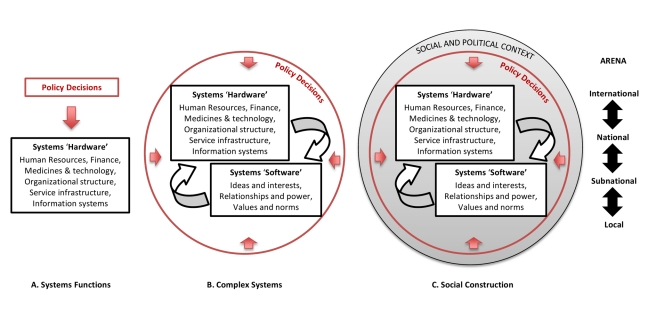
“29 What is striking from our findings is that an effective inspection system involves much more than these “hardware” elements; it depends on a wide range of relational and cultural factors – the “software” of the system 30,31 – which have a crucial impact on the system’s perceived legitimacy,…”
Pillay, S., Duncan, M., & de Vries, P. J. (2022) · Frontiers in Psychiatry · doi:10.3389/fpsyt.2022.907093 · Cited by 21
“In health systems research, Gilson and colleagues (27) pointed to the importance of understanding any given system in a “whole-system” way, including the “hardware” elements (e.”
BackgroundShawar, Y. R., Neill, R., Kunnuji, M. O. N., Manoj, M., & Shiffman, J. (2023) · BMJ Global Health · doi:10.1136/bmjgh-2022-010895 · Cited by 18
Rodríguez, D., Neel, A. H., Mahendradhata, Y., Deressa, W. A., Owoaje, E., Akinyemi, O. O., Sarker, M., Mafuta, E. M., Gupta, S. D., Salehi, A. S., et al. (2021) · Health Policy and Planning · doi:10.1093/heapol/czab044 · Cited by 15
“the interests, values and norms, and power dynamics that underpin system function (Sheikh et al., 2011)] have both stymied polio eradication and mediated the initiative’s effects on health systems (Mshelia et al.”
BackgroundPhillimore, P., Sibai, A. M., Rizk, A., Maziak, W., Ünal, B., Rmeileh, N. M. A., Romdhane, H. B., Fouad, F. M., Khader, Y. S., Bennett, K., et al. (2019) · Global Health Action · doi:10.1080/16549716.2019.1569838 · Cited by 14
“elastic term like ‘capacity building’ [13,19]; how to integrate diverse disciplines, along with the challenges associated with methodological pluralism [20]; and”
BackgroundChilala, S., Silumbwe, A., Zulu, J. M., Tetui, M., Bulawayo, M., Chewe, M., & Hangoma, P. (2024) · BMC Health Services Research · doi:10.1186/s12913-024-11697-3 · Cited by 13
“By adopting this framework, this study was able to comprehensively explore both the tangible and intangible factors affecting time to TB notification as well as assess the performance of local health systems with regards to TB services [30] (Fig.”
BackgroundMethodInfluentialMayhew, S., Warren, C., Ndwiga, C., Narasimhan, M., Wilcher, R., Mutemwa, R., Abuya, T., & Colombini, M. (2020) · The Lancet HIV · doi:10.1016/s2352-3018(20)30201-0 · Cited by 16
Wishnia, J., & Goudge, J. (2020) · BMJ Global Health · doi:10.1136/bmjgh-2020-003524 · Cited by 13
Bozzani, F. M., Diaconu, K., Gomez, G. B., Karat, A. S., Kielmann, K., Grant, A. D., & Vassall, A. (2021) · Health Policy and Planning · doi:10.1093/heapol/czab155 · Cited by 13
“in the form of physical inputs shortages (human resources, diagnostic equipment and consumables, drugs), or through its ‘software’, as factors influencing the decision-making process (such as equity and other political and social considerations) (Sheikh et al., 2011).”
BackgroundDoherty, T., Lewin, S. A., Kinney, M. V., Sanders, D. M., Mathews, C., Daviaud, E., Goga, A. E., Bhana, A., Besada, D., Vanleeuw, L., et al. (2018) · BMJ Global Health · doi:10.1136/bmjgh-2018-000741 · Cited by 13
Onwujekwe, O. E., Etiaba, E., Mbachu, C. O., Arize, I., Nwankwor, C. A., Ezenwaka, U., Okeke, C. C., Ezumah, N., & Uzochukwu, B. S. C. (2020) · PLoS ONE · doi:10.1371/journal.pone.0238365 · Cited by 16
“There is a current need to build the capacity of HPSR in LMICs as this encompasses the processes of decision-making at all levels of the health system.[7, 17, 18] HPSR enables the identification of gaps in capacity, barriers to efficient functioning and effective performance of the health system and methods by which t…”
BackgroundDugle, G., Wulifan, J. K., Tanyeh, J. P., & Quentin, W. (2020) · Health Research Policy and Systems · doi:10.1186/s12961-020-00556-2 · Cited by 13
Karim, A., de Savigny, D., Awor, P., Muñoz, D. C., Mäusezahl, D., Tshefu, A. K., Ngaima, S., Enebeli, U. U., Isiguzo, C., Nsona, H., et al. (2022) · BMJ Global Health · doi:10.1136/bmjgh-2022-008493 · Cited by 14
“103 These expressions emanate primarily from key stakeholders and can exert profound influence in shaping program outcomes.”
Das, P., Newton-Lewis, T., Khalil, K., Rajadhyaksha, M., & Nagpal, P. (2021) · Social Science & Medicine · doi:10.1016/j.socscimed.2021.114489 · Cited by 15
Maser, B., Force, L. M., Friedrich, P. M., Antillón‐Klussmann, F., Arora, R. S., Herrera, C. A., Galindo, C. R., Atun, R. A., & Denburg, A. (2019) · Journal of Cancer Policy · doi:10.1016/j.jcpo.2019.100208 · Cited by 13
Leroi, I., Dolphin, H., Dinh, R., Foley, T., Kennelly, S., Kinchin, I., Ó’Caoimh, R., O’Dowd, S., O’Philbin, L., O’Reilly, S., et al. (2024) · BMC Health Services Research · doi:10.1186/s12913-024-11019-7 · Cited by 14
“We acknowledge that the implementation of any healthcare model requires both system ‘hardware’ (tangible components such as infrastructure and workforce) and system ‘software’ (intangible components such as human values and power dynamics) [22].”
MethodUsing best-worst scaling to inform policy decisions in Africa: a literature review
Beres, L. K., Campoamor, N. B., Hawthorn, R. L., Mugambi, M. L., Mulabe, M., Vhlakis, N., Kabongo, M., Schuster, A. L. R., & Bridges, J. F. P. (2024) · BMC Public Health · doi:10.1186/s12889-024-20068-w · Cited by 12
“Health policies govern both health systems hardware (e.g., human resources, finance, medicines and technologies) and software (e.g., values, norms, power dynamics) by constraining or facilitating individual, organizational, and community actions and experiences [1–3].”
BackgroundBrooks, C., Mirzoev, T. N., Chowdhury, D., Deuri, S. P., & Madill, A. (2023) · Health Policy and Planning · doi:10.1093/heapol/czad038 · Cited by 17
“(Sheikh et al., 2011), has been identified as the next area of development for evidence-to-policy frameworks.”
BackgroundThe Connections Matter: Bi-Directional Learning in Program Evaluation and Practice-Oriented Research
Douglas, S. R., Page, A. C., Moltu, C., Kyron, M. J., & Satterthwaite, T. (2023) · Administration and Policy in Mental Health and Mental Health Services Research · doi:10.1007/s10488-023-01304-8 · Cited by 11
“Systems frameworks, such as the hardware-software framework (Sheikh et al., 2011 ) provide a way of framing both the tangible structures and resources of a program set within the larger health system context with the softer factors associated with the people (e.g., norms, motivations, power flows).”
Onwujekwe, O. E., Etiaba, E., Mbachu, C. O., Ezenwaka, U., Chikezie, I., Arize, I., Nwankwor, C. A., & Uzochukwu, B. S. C. (2019) · Globalization and Health · doi:10.1186/s12992-019-0530-6 · Cited by 11
“There is also the gap in evidence of complex interventions in health to improve knowledge of what works for whom and in what context [6, 7].”
BackgroundInfluentialGerrits, R. G., Mulyanto, J., Wammes, J. D., van den Berg, M. J., Klazinga, N., & Kringos, D. S. (2020) · BMC Health Services Research · doi:10.1186/s12913-020-05624-5 · Cited by 11
“Due to the different research questions and methodologies applied, the research studies presented in HSR should adhere to the standards set by reporting guidelines and tools designed specifically for the field [30].”
MethodBibliometric Analysis of Health Services Research in Otolaryngology Journals
Sun, G. H. (2012) · Otolaryngology · doi:10.1177/0194599812454405 · Cited by 15
Arakelyan, S., MacGregor, H., Voce, A. S., Seeley, J., Grant, A. D., & Kielmann, K. (2022) · PLOS Global Public Health · doi:10.1371/journal.pgph.0000964 · Cited by 10
“Recent health systems frameworks offer a way of examining the dynamic inter-relationships between ‘hardware’ elements (human resources, medicine and technology, organisational structures, service infrastructure, information systems, financing) and ‘software’ elements (relationships and power, values and norms, ideas a…”
Introduction: Accountability for Health Equity: Galvanising a Movement for Universal Health Coverage
Nelson, E. M., Bloom, G., & Shankland, A. (2018) · IDS Bulletin · doi:10.19088/1968-2018.131 · Cited by 11
Hamon, J. K., Hoyt, J., Krishnaratne, S., Ariko, A. B., Morukileng, J., Spilotros, N., Mbembe, M., Marcus, S., & Webster, J. (2022) · PLoS ONE · doi:10.1371/journal.pone.0269690 · Cited by 10
“important implications for service delivery as it calls attention to the critical influence that ‘software elements’ of the health system [35], such as trust and provider behaviour, have on clients’ perceptions of quality, and consequently on their willingness to return to a health facility to seek FP services when th…”
BackgroundMwamba, C., Beres, L. K., Mukamba, N., Jere, L., Foloko, M., Lumbo, K., Sikombe, K., Simbeza, S., Mody, A., Pry, J. M., et al. (2023) · Journal of the International AIDS Society · doi:10.1002/jia2.26114 · Cited by 12
“between cadres constrain HCW−patient interactions [38].”
Lê, G., Mirzoev, T. N., Orgill, M., Erasmus, E., Lehmann, U., Okeyo, S., Goudge, J., Maluka, S. O., Uzochukwu, B. S. C., Aikins, M., et al. (2014) · Health Research Policy and Systems · doi:10.1186/1478-4505-12-59 · Cited by 10
“The importance of health policy and systems research and analysis (HPSR +A) has been increasingly recognised over the last decade [1-5] (for this paper, we use the acronym HPSR +A to include analysis (+A) in recognition that the field encompasses various forms of analysis undertaken by different actors).”
MethodSelf-citationSpace and place for WHO health development dialogues in the African Region
Kirigia, J. M., Nabyonga‐Orem, J., & Dovlo, D. Y. T. (2016) · BMC Health Services Research · doi:10.1186/s12913-016-1452-0 · Cited by 10
“[9] that the ideas, values and norms, and affinities and power that guide actions and underpin the relationships among the systems’ actors and”
BackgroundThe Western Cape HPSR Journal Club Team (2020) · International Journal of Health Policy and Management · doi:10.34172/ijhpm.2020.128 · Cited by 12
“An embedded HPSR hub – a collaboration between 2 universities[2] – was established in 2012 to, amongst other things, draw ‘the tacit knowledge of experienced practitioners into the task of better understanding health policy and health systems, and how to strengthen policy implementation and system performance’ (CHESAI…”
BackgroundBurger, N., & Gilson, L. (2025) · Health Policy and Planning · doi:10.1093/heapol/czaf001 · Cited by 9
“The hardware represents the visible, infrastructural, and concrete components of the sys-tem, while the software represents the factors that guide actions and underpin relationships, such as ideas, interests, relationships and power, values, and norms (Sheikh et al. 2011).”
InfluentialSelf-citationPogodina, V. A., Babenko, A. I., & Татаурова, Е. А. (2019) · Health Care of the Russian Federation · doi:10.18821/0044-197x-2016-60-1-44-49 · Cited by 9
Glandon, D. M., Paina, L., & Hoe, C. (2021) · BMJ Global Health · doi:10.1136/bmjgh-2021-005849 · Cited by 9
McGivern, G., Wafula, F., Seruwagi, G. K., Kiefer, T., Musiega, A., Nakidde, C., Ogira, D., Gill, M., & English, M. (2024) · Human Resources for Health · doi:10.1186/s12960-024-00891-3 · Cited by 13
“Implementing decon-centrated regulation requires new regulatory ‘hardware’ (resources, structures, and technologies) and ‘software’ (cultures, values, relationships, and trust) [54–56].”
BackgroundAgyepong, I. A., Anniah, K., Aikins, M., Akweongo, P., Esena, R. K., & Mirzoev, T. N. (2015) · Ghana Medical Journal · doi:10.4314/gmj.v49i3.12 · Cited by 9
“Non academic and administrative staff were younger with a mean age (SD) of 34 (11) and a median age of 31; as compared to academic staff whose mean age (SD) was 47 (10) and median age 47.”
BackgroundSelf-citationRabbat, M. E., El‐Jardali, F., Fadlallah, R., Soror, S. H. A., Ahmadnezhad, E., Badr, E. E., & Dabis, J. (2021) · Public Health Research & Practice · doi:10.17061/phrp3142119 · Cited by 9
Mutale, W., Cleary, S., Olivier, J., Chilengi, R., & Gilson, L. (2018) · BMC Health Services Research · doi:10.1186/s12913-018-3619-3 · Cited by 12
“This included an active process of questioning and checking in inquiry (asking how and why things happened and not only what happened, checking answers to questions to identify further issues that needed to be followed up to deepen understanding of the experience); a constant process of conceptualising and reconceptua…”
BackgroundSelf-citationCOVID-19 and people who use drugs; seizing opportunity in times of chaos
Wisse, E., Burke-Shyne, N., Chang, J., & Southwell, M. (2021) · International Journal of Drug Policy · doi:10.1016/j.drugpo.2020.103097 · Cited by 9
Salman, A. A., Whyle, E. B., de Oliveira, L. C., & Olivier, J. (2025) · Journal of Immigrant and Minority Health · doi:10.1007/s10903-025-01693-y · Cited by 11
“…understanding that health systems operate at the complex intersections between their organisational structure and their hardware elements (human resources, finance, medicines and technology, service delivery) and software elements (ideas and interest, relationships, power, norms, and values) [40].”
Health Policy and Systems Responses to Forced Migration: An Introduction
Bozorgmehr, K., Biddle, L., Razum, O., & Roberts, B. (2020) · Springer eBooks · doi:10.1007/978-3-030-33812-1_1 · Cited by 11
The social networks of hospital staff: A realist synthesis
Blacklock, C., Darwin, A., English, M., McKnight, J., Hinton, L., Harriss, E., & Wong, G. (2022) · Journal of Health Services Research & Policy · doi:10.1177/13558196221076699 · Cited by 9
Medicalisation and Ayurveda: the need for pluralism and balance in global health systems
Porter, J., Mathpati, M. M., Payyappallimana, U., & Shankar, D. (2021) · Journal of Ayurveda and Integrative Medicine · doi:10.1016/j.jaim.2021.06.014 · Cited by 8
Paichadze, N., Cook, E. K., Rosen, H. E., Kurtovic, S., & Hyder, A. A. (2025) · Health Research Policy and Systems · doi:10.1186/s12961-024-01254-z · Cited by 7
Négrini, S., Kiekens, C., Furia, M. J. D., Minozzi, S., Ryan, R. E., Arienti, C., Parkhill, A., Côté, P., Gimigliano, F., Sabariego, C., et al. (2025) · European Journal of Physical and Rehabilitation Medicine · doi:10.23736/s1973-9087.24.08833-6 · Cited by 7
Quintana, A., Mayhew, S., Kovats, S., & Gilson, L. (2025) · Oxford Open Climate Change · doi:10.1093/oxfclm/kgaf014 · Cited by 9
Self-citation[Priorities for health policy and systems research focused on human resources in health].
Revéiz, L., Chapman, E., Flórez, C. E. P., & Torres, R. (2013) · PubMed · Cited by 7
Apontamentos para estudo de sistemas de saúde: análise multifacetada e agravos traçadores
Campos, R. T. O., Campos, G. W. D. S., Amaral, C. E. M., & Tanaka, O. Y. (2020) · Revista de Saúde Pública · doi:10.11606/s1518-8787.2020054002055 · Cited by 8
Technical assistance: a practical account of the challenges in design and implementation
Nastase, A., Rajan, A., French, B., & Bhattacharya, D. (2020) · Gates Open Research · doi:10.12688/gatesopenres.13205.1 · Cited by 10
“There is a recognition that whilst the building blocks – which are seen as the ‘hardware’ of a system – are of course important, so are the people in the system – the ‘software’ (Sheikh et al., 2011).”
Thinking with complexity in evaluation: A case study review
Roche, C., Brown, G., Clune, S., Shields, N., & Lewis, V. J. (2021) · Evaluation Journal of Australasia · doi:10.1177/1035719x211008263 · Cited by 7
“The intricacies of health and social development projects also require engagement with the project components, context and people (Sheikh et al., 2011).”
BackgroundInfluentialDas, P., Ramani, S., Newton-Lewis, T., Nagpal, P., Khalil, K., Gharai, D., Das, S., & Kammowanee, R. (2022) · Sexual and Reproductive Health Matters · doi:10.1080/26410397.2022.2031598 · Cited by 9
“2).(13) Intangible software operates as unwritten scripts that are enacted through hierarchies and power disparities within a health system.”
BackgroundGuest editor conclusion: research agenda-setting for faith and health in development – where to now?
Olivier, J. (2017) · Development in Practice · doi:10.1080/09614524.2017.1332164 · Cited by 7
“Some of the authors apply a “health systems” lens (a disciplinary perspective that intentionally straddles development and public health; see Sheikh et al. 2011), and is designed to address complex problems.”
BackgroundWelcome to Global Implementation Research and Applications
Bertram, R. M., Edwards, D., Engell, T., Kerns, S. E. U., Øvretveit, J., Andrade, R. M. R., Sarkies, M., & Williams, C. R. (2021) · Global Implementation Research and Applications · doi:10.1007/s43477-021-00006-3 · Cited by 9
Ziegler, S., & Bozorgmehr, K. (2024) · International Journal for Equity in Health · doi:10.1186/s12939-024-02251-y · Cited by 6
“…understanding of systems differs from the widespread understanding of socio-technical systems in the field of health policy and systems research [39], since in his theory systems are defined by the distinction they create – through their operations – between themselves and their environment…”
BackgroundWilley, B., Paintain, L. S., Mangham‐Jefferies, L., Car, J., & Schellenberg, J. (2012) · Cited by 12
Lynch, K. A., Omisore, A. D., Famurewa, O. C., Olasehinde, O. O., Odujoko, O. O., Vera, J. A., Kingham, T. P., Alatise, O. I., Egberongbe, A. A., Morris, E. A., et al. (2021) · International Journal of Qualitative Methods · doi:10.1177/16094069211002421 · Cited by 7
“Participatory research has the potential to elicit new understandings and to shift the framing of global health from a “top down” approach to a horizontal, and sustainable, collaboration (Sheikh et al., 2011).”
Hamon, J. K., Kambanje, M., Pryor, S., Kaponda, A. S., Mwale, E., Mayhew, S., Webster, J., & Burchett, H. (2022) · Health Policy and Planning · doi:10.1093/heapol/czac048 · Cited by 6
Vanhamel, J., Reyniers, T., Vuylsteke, B., Callens, S. F. J., Nöstlinger, C., Veld, D. H. I. ‘., Kenyon, C. R., Praet, J. T. V., Libois, A., Vincent, A., et al. (2024) · Journal of the International AIDS Society · doi:10.1002/jia2.26260 · Cited by 6
“In particular, our study highlights the crucial role of providers’ commitment, values and interactions—also referred to as systems “software” [40, 41]— as essential enablers of effective service integration [42–44].”
BackgroundKoay, A. C. C., & Devitt, C. (2024) · Qualitative Health Research · doi:10.1177/10497323241302239 · Cited by 6
“A multi-method qualitative case study was undertaken, involving stakeholder engagement, documentary analysis, and semi-structured elite interviews (Sheikh et al., 2011; Yin, 2009).”
Healthcare Policy and Governance in International Perspective
Kuhlmann, E., Blank, R. H., Bourgeault, I. L., & Wendt, C. (2015) · Palgrave Macmillan UK eBooks · doi:10.1057/9781137384935_1 · Cited by 6
Negin, J., Martiniuk, A. L. C., Morgan, C., Davies, P., & Zwi, A. B. (2012) · BMC International Health and Human Rights · doi:10.1186/1472-698x-12-14 · Cited by 7
“Health system issues such as financing, health workforce, and the role of external actors are likely to be distinct between developing and developed countries even if some lessons have value for both settings [27].”
BackgroundMarten, M. G. (2015) · Global Public Health · doi:10.1080/17441692.2015.1094707 · Cited by 6
Macarayan, E. R. K., Balabanova, D., & Gotsadze, G. (2019) · Health Policy and Planning · doi:10.1093/heapol/czz086 · Cited by 6
“…iterative process in which local stakeholders, rather than donors or external experts, take the lead in adapting evidence-based solutions to local political and cultural contexts (Sundewall et al. , 2011), promoting locally generated research is important to inform critical policy decisions.”
BackgroundBulawayo, M., Silumbwe, A., Munakampe, M. N., Nawa, M., Musabula, J., Chewe, M., Mweemba, C., Michelo, C., & Hangoma, P. (2020) · BMC Health Services Research · doi:10.1186/s12913-020-05935-7 · Cited by 7
Towards reimagined technical assistance: the current policy options and opportunities for change
Nastase, A., Rajan, A., French, B., & Bhattacharya, D. (2020) · Gates Open Research · doi:10.12688/gatesopenres.13204.2 · Cited by 6
“(Sheikh et al ., 2011).”
MacKay, D., Freeman, N. S., Boyle, J. A., Campbell, S., McLean, A., Peiris, D., Corpus, S., Connors, C. M., Moore, E., Wenitong, M., et al. (2021) · International Journal of Gynecology & Obstetrics · doi:10.1002/ijgo.13850 · Cited by 6
“All rights reserved which ‘hardware’ components of health systems, such as information systems and human resources, interact with ‘software’ components including ideas and interests, relationships and power, and values and norms [29].”
BackgroundEvaluation as evolution: a Darwinian proposal for health policy and systems research
Martiniuk, A. L. C., Abímbọ́lá, Ṣ., & Zwarenstein, M. (2015) · Health Research Policy and Systems · doi:10.1186/s12961-015-0007-x · Cited by 7
“[16-18].”
The State of Health Policy and Systems Research: Reflections From the 2018 5th Global Symposium
Hanson, K., Rasanathan, K., & George, A. S. (2019) · Health Policy and Planning · doi:10.1093/heapol/czz113 · Cited by 6
“Health policy and systems research (HPSR) is now well-established as a field, facilitating interdisciplinary and engaged research and practice to strengthen health systems (de Savigny and Adam, 2009; Sheikh et al., 2011; Gilson 2012; Loewenson et al., 2014; George et al., 2017; Gilson et al., 2018), with growing under…”
BackgroundSelf-citationWhat can Education Systems Research Learn from Health Systems Research?
Hanson, K. (2015) · doi:10.35489/bsg-rise-wp_2015/003 · Cited by 8
Self-citationAdewuya, A. O., Ola, B., Coker, O., Atilola, O., Olibamoyo, O., Lebimoyo, A., & Oladipo, O. (2026) · Health Policy and Planning · doi:10.1093/heapol/czag033 · Cited by 6
“Parallel debates within global health, particularly in relation to vertically funded human immunodeficiency virus (HIV) programmes, have highlighted both the potential and the limits of disease-specific initiatives as vehicles for broader sys-tem strengthening (Sheikh et al. 2011).”
InfluentialKagwanja, N., Gilson, L., Tsofa, B., Olivier, J., Leli, H., & Molyneux, S. C. (2024) · PLOS Global Public Health · doi:10.1371/journal.pgph.0002814 · Cited by 5
“System hardware are visible and quantifiable components [17] and are more frequently reported on, while system software [both tangible and intangible] are less frequently reported on yet are critical to the performance of health systems.”
Self-citationAivalli, P., Hebbar, P. B., Mbachu, C. O., Srinivas, P. N., Abímbọ́lá, Ṣ., & Dada, S. (2025) · Health Policy and Planning · doi:10.1093/heapol/czaf080 · Cited by 5
“…often focus on effectiveness regardless of context, failing to account for these intricate social, political, and institutional factors (DeGroff and Cargo 2009, Sheikh et al. 2011, Adam et al. 2012, Adam and de Savigny 2012, Peters et al. 2013, Prashanth et al. 2013, Jones 2018, Roche et al. 2021).”
Xue, Y., Ruan, Z., Ung, C. O. L., Lai, Y., & Hu, H. (2023) · BMC Public Health · doi:10.1186/s12889-023-15890-7 · Cited by 7
“HPSR has received remarkable research attention mainly because the health system strengthening is considered as the core to achieving tremendous advancements in all the health systems at different levels and promoting population health [43, 44].”
BackgroundOkeke, C. C., Uguru, N. P., Uzochukwu, B. S. C., & Onwujekwe, O. E. (2025) · SSM - Health Systems · doi:10.1016/j.ssmhs.2025.100052 · Cited by 5
Bisimwa, G. B., Makali, S. L., Karemere, H. B., Molima, C. E. N., Nunga, R., Iyeti, A. M., & Chenge, F. M. (2021) · African Journal of Primary Health Care & Family Medicine · doi:10.4102/phcfm.v13i1.2869 · Cited by 5
The price of a woman: Re-examining the use of financial incentives for women’s health in India
Mohindra, K. S. (2019) · Global Public Health · doi:10.1080/17441692.2019.1629608 · Cited by 6
“…on JSY are re-visited from a critical perspective, which is important to avoid viewing health systems as ‘vehicles for technological solutions rather than being grounded in political and social contexts with underlying power structures, interests, and interdependencies’ (Sheikh et al., 2011, p. 4).”
BackgroundAn exclusive health policy education: Original insights from KSA
Al-Mubarak, S. (2022) · Journal of Taibah University Medical Sciences · doi:10.1016/j.jtumed.2022.01.004 · Cited by 5
“However, health policy is increasingly understood to encompass decision-making processes, policy processes and the influences of policy issues.(4) Generally, as a field, health policy connects appropriate knowledge to applications within healthcare settings.”
BackgroundResultGore, R., FOX, A. M., Goldberg, A. B., & Bärnighausen, T. (2014) · Global Public Health · doi:10.1080/17441692.2014.881523 · Cited by 9
“Recent approaches to analysing health policy and health systems emphasise taking a relational view, that is, focusing on how relations among actors as well as actors’ values and beliefs shape policy decisions (Sheikh et al., 2011; Walt et al., 2008).”
BackgroundFraming Universal Health Coverage in Kenya: An Interpretive Analysis of Health Financing Politics
Koon, A. (2017) · LSHTM Research Online (London School of Hygiene and Tropical Medicine) · doi:10.17037/pubs.04398421 · Cited by 8
The positioning of policy documents in the field of health policy and systems research
Al-Mubarak, S. (2025) · Health Research Policy and Systems · doi:10.1186/s12961-025-01344-6 · Cited by 5
“Journals’ approach to bounding their scope to specific countries or regions can be explained by the context-bounded nature of the HPSR field [9, 24].”
Equitable mosaic: the ideal for medical pluralism
Lakshmi, J. K. (2025) · Philosophy Ethics and Humanities in Medicine · doi:10.1186/s13010-025-00185-z · Cited by 4
“A foundational framework in health policy and systems research describes health systems as constituted of ‘hardware’ and ‘software’: [5, 6] Health system Philosophy, Ethics, and Humanities in Medicine software and hardware on the establishment of medically pluralistic practice, and calls for…”
Defor, S., Mukinda, F. K., Bocoum, F. Y., Johnson, E., Agyepong, I. A., & Lehmann, U. (2025) · Health Research Policy and Systems · doi:10.1186/s12961-025-01417-6 · Cited by 4
Self-citationRoura, M., Capa, E., Appelt, B., Lecomte, M., Fernandez, M., Schmets, G., & Porignon, D. (2024) · BMJ Global Health · doi:10.1136/bmjgh-2024-015536 · Cited by 4
Blaas, C., Salazar, M., & Saulnier, D. D. (2025) · SSM - Health Systems · doi:10.1016/j.ssmhs.2025.100148 · Cited by 6
Niedner, M. F. (2016) · Pediatric Clinics of North America · doi:10.1016/j.pcl.2015.12.006 · Cited by 6
Ethical challenges in designing and implementing health systems research: Experiences from the field
Hyder, A. A., & Krubiner, C. (2016) · AJOB Empirical Bioethics · doi:10.1080/23294515.2016.1182236 · Cited by 4
“As such, HSR employs analytical approaches from a variety of methodological traditions, making it a multi- and interdisciplinary field drawing upon economics, political science, anthropology, epidemiology, and sociology (Remme et al. 2010; Sheikh et al. 2011).”
BackgroundInfluentialKline, N. (2021) · Social Science & Medicine · doi:10.1016/j.socscimed.2021.114498 · Cited by 6
Hamon, J. K., Kambanje, M., Pryor, S., Kaponda, A. S., Mwale, E., Webster, J., Burchett, H., & Mayhew, S. (2022) · SSM - Qualitative Research in Health · doi:10.1016/j.ssmqr.2022.100159 · Cited by 5
Fallah, R., Maleki, M., Aryankhesal, A., & Haghdoost, A. A. (2023) · International Journal of Preventive Medicine · doi:10.4103/ijpvm.ijpvm_1_22 · Cited by 4
“The typology of articulated questions [Table 2] was based upon macro‑level analysis [22] that generally encompasses the architecture and oversight of systems.”
MethodSmith, A. J., & Wilby, K. J. (2020) · Journal of Primary Health Care · doi:10.1071/hc20039 · Cited by 4
“Taking a health services research approach to this problem provides an all-encompassing view of the problem, including the social, political, economic and cultural factors that may influence effective and efficient service delivery.(4) Finding gaps in practice or policy may help identify how to optimise health service…”
BackgroundShultz, T., Gabriel, S., Hussein, M. R., Swint, J., ElBoray, M., Peter, A., Zeinhom, Z., Abbas, H., Anwar, S., & Zhang, W. (2024) · medRxiv · doi:10.1101/2024.08.04.24311459 · Cited by 4
Wanyama, C. W., Blacklock, C., Jepkosgei, J., English, M., Hinton, L., McKnight, J., Molyneux, S. C., Boga, M., Musitia, P. M., & Wong, G. (2023) · BMJ Open · doi:10.1136/bmjopen-2022-066150 · Cited by 3
Boydell, V., Steyn, P. S., Cordero, J. P., Habib, N., Nguyen, M. H., Nai, D., Shamba, D., Fuseini, K., Mrema, S., & Kiarie, J. N. (2023) · BMC Health Services Research · doi:10.1186/s12913-023-09971-x · Cited by 3
“Others regard the performance of the health system as the product of interactions between system ‘hardware’ (such as infrastructure, medicines and workforce) and the ‘software’ (the more latent components such as human values, power dynamics and norms) [10].”
BackgroundHealth Policy and Planning in Health Management System
Shelowi, H. A. (2023) · Journal of Medical Science And clinical Research · doi:10.18535/jmscr/v11i11.12 · Cited by 3
Health policy and systems research priority-setting exercise in Ethiopia: a collaborative approach
Amare, G., Endehabtu, B. F., Atnafu, A., Gezie, L. D., Gurmu, K. K., Getachew, T., & Tilahun, B. C. (2024) · Health Research Policy and Systems · doi:10.1186/s12961-024-01198-4 · Cited by 4
Tougri, H., Compaoré, R., Yaméogo, W. M. E., Congo, B., Coulibaly, A., Belemsaga, D. Y., Meda, I. B., Kpebo, D. O., Bicaba, I., Ndour, M., et al. (2025) · Archives of Public Health · doi:10.1186/s13690-025-01540-4 · Cited by 4
“Analysis of these health policies helps understand the functioning of organizational programs and policies in the health system and the efficiency of health systems in making health services accessible to beneficiaries [8].”
How policy entrepreneurs solve local health problems in the global South: an exploratory study
Mhazo, A. T., Maponga, C. C., & Abímbọ́lá, Ṣ. (2025) · Health Policy and Planning · doi:10.1093/heapol/czaf033 · Cited by 4
“…context of growing concern over the coloniality of imported knowledge (Abimbola and Pai 2020) amidst a clarion call from literature that ‘knowledge from the global South is in the global South’ (Abimbola 2023) and disquiet over the dominance of donor-driven research agendas (Sheikh et al. 2011).”
Enhancing Health Policy Administration in LMICs: Dr. LJW Fellowship Program Insights (2021–2023)
Kim, B., Kim, Y., Park, J. S., Choi, S. H., Kim, S. H., Rajaguru, V., Jung, H., & Kim, T. H. (2025) · Annals of Global Health · doi:10.5334/aogh.4648 · Cited by 3
Women in Health Systems Leadership: Demystifying the Labyrinth
Zeinali, Z. (2022) · Springer eBooks · doi:10.1007/978-3-030-84498-1_18 · Cited by 4
The People-Centred Approach to Policymaking: Re-Imagining Evidence-Based Policy in Nigeria
Ndu, M. N., Ariba, O., & Ohuruogu, A. (2022) · Global Implementation Research and Applications · doi:10.1007/s43477-022-00040-9 · Cited by 3
Srinivas, P. N., Seshadri, T., Velho, N., Babu, G. R., Madegowda, C., Basappa, Y. C., Majgi, S. M., & Bhat, D. (2023) · Wellcome Open Research · doi:10.12688/wellcomeopenres.19190.1 · Cited by 3
Sriram, V. M., & Keshri, V. R. (2023) · International Journal of Health Policy and Management · doi:10.34172/ijhpm.2023.7826 · Cited by 3
Metadata
- Authors
- Sheikh, K., Gilson, L., Agyepong, I. A., Hanson, K., Ssengooba, F., & Bennett, S.
- Affiliations
- Public Health Foundation of India (IN)
- University of Cape Town (ZA)
- London School of Hygiene & Tropical Medicine (GB)
- Makerere University (UG)
- Johns Hopkins University (US)
- Corresponding author
- Sheikh, Kabir
- Venue
- PLoS Medicine
- Publisher
- Public Library of Science (PLoS)
- Published
- 2011-08-16
- Volume
- 8
- Issue
- 8
- Pages
- e1001073
- ISSN
- 1549-1277 (ISSN-L)
- 1549-1676
- PMC
- PMC3156683
- OpenAlex
- W2082481117
- Cited by
- 443
- References
- 26
- Citations by year
- 2026: 35 · 2025: 36 · 2024: 30 · 2023: 31 · 2022: 38 · 2021: 44 · 2020: 52 · 2019: 26 · 2018: 23 · 2017: 27 · 2016: 25 · 2015: 27 · 2014: 22 · 2013: 11 · 2012: 13
- FWCI
- 29.09
- Type
- journal article
- Language
- en
- Open access
- gold
- doi.org
- Locations
- PLoS Medicine (publishedVersion, cc-by)
- Europe PMC (PubMed Central) (publishedVersion, cc-by)
- PubMed Central (publishedVersion, cc-by)
- PubMed (publishedVersion)
- LSHTM Research Online (London School of Hygiene and Tropical Medicine) (acceptedVersion)
- DOAJ (DOAJ: Directory of Open Access Journals) (submittedVersion, cc-by-sa)
- Figshare (submittedVersion, cc-by)
- Open University of Cape Town (University of Cape Town) (submittedVersion, cc-by)
- OpenDocs (Institute of Development Studies) (submittedVersion, cc-by)
- Topics
- Health Sciences › Medicine › Public Health, Environmental and Occupational Health › Healthcare Systems and Practices
- Health Sciences › Health Professions › General Health Professions › Health Policy Implementation Science
- Health Sciences › Medicine › Public Health, Environmental and Occupational Health › Healthcare Systems and Reforms
- Keywords
- health policy research, health systems research, research agenda, research questions, health policy development
- MeSH terms
- Delivery of Health Care, Developing Countries, Health Policy, Health Services Research, Humans, National Health Programs, Surveys and Questionnaires
About these checks
Registry, retraction, Cites and statistics results are computed, not judged, with one exception: a printed reference that no index lists is read once by a model before it counts as a citation error. Claims are extracted by a model and kept only when their quote appears verbatim in the text; each cited source is then checked, with a model’s help, for whether it says what the claim relies on. Those verdicts can be wrong — read the claim’s quote and the cited source before relying on one.
Statistics and arithmetic are recomputed, not judged.
Confidence bands are shown only for fields calibrated on our annotated test set. None is calibrated yet, so no band is shown.
What counts as a claim ›How we measure confidence ›How we check this ›
Are you an author, or do you see a problem with this page? Request a review
Data sources
Bibliographic data: Semantic Scholar, OpenAlex, Crossref.
Contains information from the Semantic Scholar Academic Graph Datasets, made available under the ODC Attribution License (ODC-BY 1.0).
Semantic Scholar’s data is described in: Kinney, R., et al. (2023). The Semantic Scholar Open Data Platform. arXiv:2301.10140.
