

Building the Field of Health Policy and Systems Research: Framing the Questions
Open accessThe DOI matches its Crossref record; 26 of the 26 references it cites were found in a registry or an index.
Abstract
The Policy Forum allows health policy makers around the world to discuss challenges and
Overview
The claims and statistics of this paper haven’t been checked yet.
Free: it reads the open-access text and checks the first 5 claims that cite a source we can check. Create a free account to check every claim.
Integrity signals
Registry
Cites
Statistics
Figures
Verification
Claims the paper makes
The claims and statistics of this paper haven’t been checked yet.
Free: it reads the open-access text and checks the first 5 claims that cite a source we can check. Create a free account to check every claim.
Claims other papers make about this one
Each is checked against this paper’s own text: does it say what the citing paper says it does?
The source backs part of the claim, not all of it — or backs it for a different population, condition or comparison.
In the citing paper
“The formal establishment of a Mental Health Desk facilitated coordination across fragmented administrative units and enhanced the visibility of mental health within routine planning processes, consistent with governance theories emphasizing institutional legitimacy and bureaucratic alignment (Sheikh et al. 2011).”
From Government-led scale-up of task-shifted mental health services in Lagos State, Nigeria: a mixed-methods descriptive-explanatory case study (2026) · cites this paper as Sheikh et al. 2011
Experimental — accuracy not yet measuredThe source backs part of the claim, not all of it — or backs it for a different population, condition or comparison.
In the citing paper
“Disentangling the relative contributions of project facilitation, senior political commitment, and ambient health sector dynamics remains inherently difficult in embedded implementation research, where the programme and the system it seeks to change are not cleanly separable (Sheikh et al. 2011).”
From Government-led scale-up of task-shifted mental health services in Lagos State, Nigeria: a mixed-methods descriptive-explanatory case study (2026) · cites this paper as Sheikh et al. 2011
Experimental — accuracy not yet measuredThe source backs part of the claim, not all of it — or backs it for a different population, condition or comparison.
In the citing paper
“Variability in execution, continued dependence on individual champions, procurement delays, and fiscal uncertainty underscore the uneven nature of embedding, consistent with observations from other LMIC health system strengthening efforts (Sheikh et al. 2011).”
From Government-led scale-up of task-shifted mental health services in Lagos State, Nigeria: a mixed-methods descriptive-explanatory case study (2026) · cites this paper as Sheikh et al. 2011
Experimental — accuracy not yet measured
Self-check
Percentages, sums and reported differences re-computed from the paper’s own numbers.
The self-check needs the paper’s full text.
Citations
Cites
Reforming the health sector in developing countries: the central role of policy analysis
WALT, G., & GILSON, L. (1994) · Health Policy and Planning · doi:10.1093/heapol/9.4.353 · Cited by 1,439 · cited 1×
“Increasingly, however, it has been understood to encompass, importantly, the processes of decision-making at all levels of the health system and the wider influences that underpin the prioritisation of policy issues, the formulation of policy, the processes of bringing them alive in practice, and their evaluation [3].”
BackgroundSelf-citationTrust and the development of health care as a social institution
Gilson, L. (2003) · Social Science & Medicine · doi:10.1016/s0277-9536(02)00142-9 · Cited by 1,193
Self-citationSystems thinking for health systems strengthening.
de Savigny, D., & Adam, T. (2009) · Cited by 1,074
Limits to Medicine: Medical Nemesis: The Expropriation of Health
Illich, I. (1976) · Equinox Publishing eBooks · doi:10.1558/isbn.9780714521206 · Cited by 820
Health literacy: addressing the health and education divide
Kickbusch, I. S. (2001) · Health Promotion International · doi:10.1093/heapro/16.3.289 · Cited by 750
Sundquist, J. L. (1973) · Political Science Quarterly · doi:10.2307/2148170 · Cited by 472
(1981) · Cited by 378
Accounting for EBM: Notions of evidence in medicine
Lambert, H. (2006) · Social Science & Medicine · doi:10.1016/j.socscimed.2005.11.023 · Cited by 320
Building the Field of Health Policy and Systems Research: Social Science Matters
Gilson, L., Hanson, K., Sheikh, K., Agyepong, I. A., Ssengooba, F., & Bennett, S. (2011) · PLoS Medicine · doi:10.1371/journal.pmed.1001079 · Cited by 319
Self-citationLimits to medicine. Medical nemesis: the expropriation of health
Smith, R. (2003) · Journal of Epidemiology and Community Health · doi:10.1136/jech.57.12.928 · Cited by 280
Cited by
Disrupting gender norms in health systems: making the case for change
Hay, K., McDougal, L., Percival, V., Henry, S., Klugman, J., Wurie, H., Raven, J., Shabalala, F., Fielding-Miller, R., Dey, A., et al. (2019) · The Lancet · doi:10.1016/s0140-6736(19)30648-8 · Cited by 442
Access to medicines from a health system perspective
Bigdeli, M., Jacobs, B., Tomson, G., Laing, R., Ghaffar, A., Dujardin, B., & Van Damme, W. (2013) · Health Policy and Planning · doi:10.1093/heapol/czs108 · Cited by 348
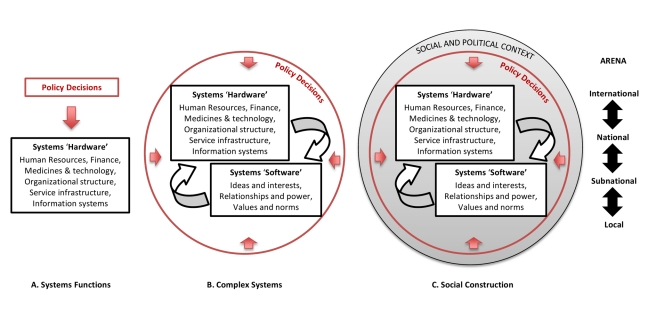
“International, national, sub-national and local levels necessary for a complex social construct of health systems (Sheikh et al. 2011) are adequately schematized in the five levels of our framework.”
BackgroundMethodInfluentialSystems thinking for strengthening health systems in LMICs: need for a paradigm shift
Adam, T., & de Savigny, D. (2012) · Health Policy and Planning · doi:10.1093/heapol/czs084 · Cited by 330
“Understanding and working with complexity requires a paradigm shift from linear, reductionist approaches to dynamic and holistic approaches that appreciate the multifaceted and interconnected relationships among health system components, as well as the views, interests and power of its different actors and stakeholder…”
BackgroundBuilding the Field of Health Policy and Systems Research: Social Science Matters
Gilson, L., Hanson, K., Sheikh, K., Agyepong, I. A., Ssengooba, F., & Bennett, S. (2011) · PLoS Medicine · doi:10.1371/journal.pmed.1001079 · Cited by 319
“The first paper in this series on building the field of Health Policy and Systems Research (HPSR) in low- and middleincome countries (LMICs) [1] outlined the scope and questions of the field and highlighted the key challenges and opportunities it is currently facing.”
Self-citationGilson, L., Barasa, E., Nxumalo, N., Cleary, S., Goudge, J., Molyneux, S., Tsofa, B., & Lehmann, U. (2017) · BMJ Global Health · doi:10.1136/bmjgh-2016-000224 · Cited by 251
Self-citationThe emergence of global attention to health systems strengthening
Hafner, T., & Shiffman, J. (2013) · Health Policy and Planning · doi:10.1093/heapol/czs023 · Cited by 253
“This led to three articles in PLOS Medicine by health policy and systems researchers outlining a research agenda for the field (Bennett et al. 2011; Gilson et al. 2011; Sheikh et al. 2011).”
Political Analysis for Health Policy Implementation
Campos, P. A., & Reich, M. R. (2019) · Health Systems & Reform · doi:10.1080/23288604.2019.1625251 · Cited by 232
“because few political analyses have been conducted of health policy implementation in low- and middle-income countries (LMICs).(2,3) This article examines one aspect of implementa-”
BackgroundResearch for Universal Health Coverage
Dye, C., Reeder, J. C., & Terry, R. F. (2013) · Science Translational Medicine · doi:10.1126/scitranslmed.3006971 · Cited by 220
Framing and the health policy process: a scoping review
Koon, A. D., Hawkins, B., & Mayhew, S. H. (2016) · Health Policy and Planning · doi:10.1093/heapol/czv128 · Cited by 203
“For this reason, HPSR scholars have called for more research on the health policy process in order to understand the clash of values that determines the mix of policy considerations and collectively contributes towards the achievement of shared health objectives (Bennett et al. 2011; Sheikh et al. 2011).”
BackgroundBarasa, E. W., Cloete, K., & Gilson, L. (2017) · Health Policy and Planning · doi:10.1093/heapol/czx118 · Cited by 227
“Hardware includes the familiar ‘building blocks’ such as infrastructure, commodities, human resources and finances (Sheikh et al. 2011).”
BackgroundInfluentialSelf-citationEnding preventable maternal and newborn mortality and stillbirths
Chou, D., Daelmans, B., Jolivet, R. R., Kinney, M., & Say, L. (2015) · BMJ · doi:10.1136/bmj.h4255 · Cited by 207
Kok, M. C., Broerse, J. E. W., Theobald, S., Ormel, H., Dieleman, M., & Taegtmeyer, M. (2017) · Human Resources for Health · doi:10.1186/s12960-017-0234-z · Cited by 201
“factors are divided into “hardware” and “software” [19] and are coupled with hardware and software elements of”
BackgroundMethodKok, M. C., Ormel, H., Broerse, J. E. W., Kane, S., Namakhoma, I., Otiso, L., Sidat, M., Kea, A. Z., Taegtmeyer, M., Theobald, S., et al. (2017) · Global Public Health · doi:10.1080/17441692.2016.1174722 · Cited by 183
“The ‘software’ – the ideas and interests, values and norms, relationships and power – is also part of the health system and critical for its performance (Sheikh et al., 2011; Sheikh, George, & Gilson, 2014).”
BackgroundMethodPeople-centred science: strengthening the practice of health policy and systems research
Sheikh, K., George, A., & Gilson, L. (2014) · Health Research Policy and Systems · doi:10.1186/1478-4505-12-19 · Cited by 183
“These include attributes of the so-called hardware of health systems – technical, financial, and material resources – that are shaped and driven by human choices and ingenuity; health system software – ideas, interests, values, norms, and relationships; and the interplay between the software and hardware [5,19].”
BackgroundSelf-citationBuilding the Field of Health Policy and Systems Research: An Agenda for Action
Bennett, S., Agyepong, I. A., Sheikh, K., Hanson, K., Ssengooba, F., & Gilson, L. (2011) · PLoS Medicine · doi:10.1371/journal.pmed.1001081 · Cited by 159
“This kind of game-changing research often challenges assumptions and established ways of working, and for this reason it may be neglected or actively resisted by powerful global and national actors [9].”
BackgroundSelf-citationHealth systems frameworks in their political context: framing divergent agendas
van Olmen, J., Marchal, B., Damme, W. V., Kegels, G., & Hill, P. (2012) · BMC Public Health · doi:10.1186/1471-2458-12-774 · Cited by 172
“At the same time, health systems research is becoming better defined, with more attention for quality and rigorous scientific methods [1,3-6].”
BackgroundManaging the public–private mix to achieve universal health coverage
McPake, B., & Hanson, K. (2016) · The Lancet · doi:10.1016/s0140-6736(16)00344-5 · Cited by 181
Self-citationKayesa, N. K., & Shung-King, M. (2020) · Health Policy OPEN · doi:10.1016/j.hpopen.2020.100024 · Cited by 161
“HPA aids in the understanding of how organizational programs and policies in the health system function and how efficient health systems are in making health services accessible to beneficiaries [54].”
Backgroundvan Olmen, J., Criel, B., Bhojani, U. M., Marchal, B., Belle, S. V., Chenge, M. F., Hoerée, T., Pirard, M., Damme, W. V., & Kegels, G. (2012) · Health Culture and Society · doi:10.5195/hcs.2012.71 · Cited by 167
“The scientific community has oriented itself towards health systems research, presently defining and developing the domain (Bennett et al. 2011;Gilson et al. 2011;Mills 2011;Sheikh et al. 2011).”
Background10 best resources on power in health policy and systems in low- and middle-income countries
Sriram, V. M., Topp, S. M., Schaaf, M., Mishra, A., Flores, W., Rajasulochana, S. R., & Scott, K. (2018) · Health Policy and Planning · doi:10.1093/heapol/czy008 · Cited by 149
Alami, H., Lehoux, P., Fleet, R. P., Fortin, J., Liu, J., Attieh, R., Cadeddu, S. B. M., Samri, M. A., Savoldelli, M., & Ahmed, M. A. A. (2021) · Frontiers in Public Health · doi:10.3389/fpubh.2021.671833 · Cited by 145
““Software” refers to the ideas, values, interests and norms, as well as the power dynamics and affinities that underlie the relationships between the actors, elements and levels of the system (28, 29).”
BackgroundWitter, S., Toonen, J., Meessen, B., Kagubare, J., Fritsche, G. B., & Vaughan, K. (2013) · BMC Health Services Research · doi:10.1186/1472-6963-13-367 · Cited by 120
“Wider ‘systems software’ [24] – ideas and interests, relationships and power, values and norms – will also affect how PBF is embedded and operated, and its down-stream effects.”
BackgroundRoncarolo, F., Boivin, A., Denis, J.-L., Hébert, R., & Lehoux, P. (2017) · BMC Health Services Research · doi:10.1186/s12913-017-2585-5 · Cited by 106
Ayorinde, A., Williams, I., Mannion, R., Song, F., Skrybant, M., Lilford, R. J., & Chen, Y. (2020) · PLoS ONE · doi:10.1371/journal.pone.0227580 · Cited by 127
“With increasing recognition of the importance of HSDR has come increased scrutiny [5].”
BackgroundScientometric trends and knowledge maps of global health systems research
Yao, Q., Chen, K., Yao, L., Lyu, P., Yang, T., Luo, F., Chen, S., He, L., & Liu, Z. (2014) · Health Research Policy and Systems · doi:10.1186/1478-4505-12-26 · Cited by 127
“On the other hand, definitions of health systems have been based mainly on the utility of achieving health outcomes [7].”
BackgroundInfluentialChallenges and opportunities for healthcare workers in a rural district of Chad
Jaeger, F. N., Béchir, M., Harouna, M., Moto, D. D., & Utzinger, J. (2018) · BMC Health Services Research · doi:10.1186/s12913-017-2799-6 · Cited by 115
“As such, the health workforce is considered an integral part of hardware essential to health services performance [10].”
BackgroundWakida, E. K., Akena, D., Okello, E. S., Kinengyere, A., Kamoga, R., Mindra, A., Obua, C., & Talib, Z. M. (2017) · Systematic Reviews · doi:10.1186/s13643-017-0561-0 · Cited by 105
“Furthermore, health systems have both the hardware (human resources, finance, medicines and technology, service infrastructure, and information system) as well as the software (ideas and interests, relationships and power, values and norms) [20] at whose center are people.”
BackgroundHealth system preparedness for emerging infectious diseases: A synthesis of the literature
Palagyi, A., Marais, B. J., Abímbọ́lá, Ṣ., Topp, S. M., McBryde, E. S., & Negin, J. (2019) · Global Public Health · doi:10.1080/17441692.2019.1614645 · Cited by 100
“The ‘software’ encompasses the ideas and interests, values and norms, and affinities and power dynamics that guide actions and underpin the relationships among system actors and elements (Sheikh et al., 2011).”
BackgroundMethodInfluentialHeller, D. J., Kumar, A., Kishore, S. P., Horowitz, C. R., Joshi, R., & Vedanthan, R. (2019) · JAMA Network Open · doi:10.1001/jamanetworkopen.2019.16545 · Cited by 113
Li, Y., Ying, C., Sufang, G., Brant, P., Bin, L., & Hipgrave, D. (2013) · Bulletin of the World Health Organization · doi:10.2471/blt.11.097998 · Cited by 93
Institutional analysis of health system governance
Abímbọ́lá, Ṣ., Negin, J., Martiniuk, A. L. C., & Jan, S. (2017) · Health Policy and Planning · doi:10.1093/heapol/czx083 · Cited by 114
“By ‘approach’ we mean how governance is framed in order to be studied, and identifying these approaches was informed by the ‘hardware–software’ framework of what constitutes a health system (Sheikh et al. 2011).”
BackgroundMethodKhan, M. S., Rego, S., Rajal, J. B., Bond, V. A., Fatima, R., Isani, A. K., Sutherland, J. S., & Kranzer, K. (2021) · PLoS ONE · doi:10.1371/journal.pone.0244936 · Cited by 105
“288 289 Complex health systems consist of both hardware(infrastructure, commodities, human 290 resources and finances) and software (knowledge, values, norms, and feelings that shape 291 health service delivery) (21).”
BackgroundGeorge, A. S., Scott, K., Garimella, S., Mondal, S., Ved, R. R., & Sheikh, K. (2015) · Social Science & Medicine · doi:10.1016/j.socscimed.2015.03.049 · Cited by 112
“Emphasis on understanding context in HPSR (Walt and Gilson, 1994) is part of what distinguishes it as a social science subject (Sheikh et al., 2011).”
BackgroundSelf-citationTopp, S. M., & Chipukuma, J. M. (2015) · Health Policy and Planning · doi:10.1093/heapol/czv041 · Cited by 98
“Power asymmetries Tacit knowledge HCW, health care worker; MOH, Ministry of Health a range of human actors, PHCs are complex, adaptive and social systems in their own right (Sheikh et al. 2011; Topp et al. 2014).”
BackgroundResilience capacities of health systems: Accommodating the needs of Palestinian refugees from Syria
Alameddine, M. S., Fouad, F. M., Diaconu, K., Jamal, Z., Lough, G., Witter, S., & Ager, A. (2018) · Social Science & Medicine · doi:10.1016/j.socscimed.2018.10.018 · Cited by 101
“(2017) posit that these macro-level capacities are sustained, and indeed deployed most successfully, by health systems that effectively leverage knowledge of their own resources – both ‘hard’ and ‘soft’ (Sheikh et al., 2011) – when either anticipating or responding to shocks; engage actors beyond the formal and public…”
BackgroundKinney, M. V., Walugembe, D. R., Wanduru, P., Waiswa, P., & George, A. S. (2021) · Health Policy and Planning · doi:10.1093/heapol/czab011 · Cited by 102
“Among the fewer studies that explore the ‘software’ elements in the health system, such as the power dynamics, ideas, values and norms (Sheikh et al. 2011), it is clear that people, their relationships and communication channels are at the heart of the implementation process; yet their subjective experiences and relat…”
BackgroundWitter, S., Sheikh, K., & Schleiff, M. (2022) · BMJ Global Health · doi:10.1136/bmjgh-2021-008115 · Cited by 102
Self-citationLearning from intersectoral action beyond health: a meta-narrative review
Mondal, S., Van Belle, S., & Maioni, A. (2021) · Health Policy and Planning · doi:10.1093/heapol/czaa163 · Cited by 77
“The hardware elements refer to the provision of funds, human resources, management systems, adequate service delivery, that are concrete and measurable, whereas software elements include cultural aspects of ideas, values, interests, norms that guide the interaction (Sheikh et al., 2011).”
BackgroundMbau, R., & Gilson, L. (2018) · Global Health Action · doi:10.1080/16549716.2018.1462579 · Cited by 91
“elements of the health system refer to the intangible aspects that govern functions and relationships within the health system such as ideas, values, interests, power and norms [10] as well as organisational culture [9].”
BackgroundSelf-citationMasefield, S. C., Megaw, A., Barlow, M., White, P. C. L., Altink, H., & Grugel, J. B. (2020) · Health Research Policy and Systems · doi:10.1186/s12961-020-00577-x · Cited by 82
Action learning for health system governance: the reward and challenge of co-production
Lehmann, U., & Gilson, L. (2014) · Health Policy and Planning · doi:10.1093/heapol/czu097 · Cited by 84
“…importance because health policies and health systems are themselves social and political constructs, as is evident from the WHO strategy and other articles and documents published in the last few years (Bennett et al. 2011; Gilson et al. 2011; Sheikh et al. 2011; Adam and de Savigny 2012).”
BackgroundSelf-citationErasmus, E., Orgill, M., Schneider, H. M., & Gilson, L. (2014) · Health Policy and Planning · doi:10.1093/heapol/czu063 · Cited by 102
“Yet for this area of health research there is clear need for theory-driven exploratory (Sheikh et al. 2011) and explanatory (Gilson and Raphaely 2008) research.”
BackgroundInfluentialSelf-citationShocks, stress and everyday health system resilience: experiences from the Kenyan coast
Kagwanja, N., Waithaka, D., Nzinga, J., Tsofa, B., Boga, M., Leli, H., Mataza, C., Gilson, L., Molyneux, S. C., & Barasa, E. (2020) · Health Policy and Planning · doi:10.1093/heapol/czaa002 · Cited by 95
“We identified stressors spanning across hardware and software health system elements (Aragon, 2010; Sheikh et al., 2011) originating within the health system, such as staff absenteeism and tensions across management levels and others originating outside the health system such as political interference.”
BackgroundMethodSelf-citationBergström, A., Skeen, S., Đức, D. M., Blandón, E. Z., Estabrooks, C. A., Gustavsson, P. J., Hoa, D. T. P., Källestål, C., Målqvist, M., Nga, N. T., et al. (2015) · Implementation Science · doi:10.1186/s13012-015-0305-2 · Cited by 87
“contextual issues, including the ideas, values, norms and power relations that determine health system performance [8].”
BackgroundNzinga, J., Boga, M., Kagwanja, N., Waithaka, D., Barasa, E., Tsofa, B., Gilson, L., & Molyneux, S. C. (2021) · Health Policy and Planning · doi:10.1093/heapol/czab056 · Cited by 90
“Important new elements included an introduction to systems thinking and health system complexity (Ortiz Aragón, 2010; De Savigny and Adam, 2009; Sheikh et al., 2011), including the interaction of hardware and software elements within any organizational system (Table 1).”
BackgroundSelf-citationFrom favours to entitlements: community voice and action and health service quality in Zambia
Schaaf, M., Topp, S. M., & Ngulube, M. (2017) · Health Policy and Planning · doi:10.1093/heapol/czx024 · Cited by 84
Stakeholder analysis of the Programme for Improving Mental health carE (PRIME): baseline findings
Makan, A. J., Fekadu, A., Murhar, V., Luitel, N. P., Kathree, T., Ssebunya, J., & Lund, C. (2015) · International Journal of Mental Health Systems · doi:10.1186/s13033-015-0020-z · Cited by 81
“interdisciplinary field encompassing the policy realm, acknowledging the interconnections between policy and health systems, and highlighting the social and political nature of healthcare [5].”
BackgroundShroff, Z. C., Javadi, D., Gilson, L., Kang, R., & Ghaffar, A. (2017) · Health Research Policy and Systems · doi:10.1186/s12961-017-0261-1 · Cited by 79
“The process of developing such a common understanding must be carried out through an open and transparent process to ensure inputs from the range of disciplines making up HPSR and dispel the fear of ‘disciplinary capture’ by positivist research traditions [36].”
BackgroundSelf-citationPracticing governance towards equity in health systems: LMIC perspectives and experience
Gilson, L., Lehmann, U., & Schneider, H. M. (2017) · International Journal for Equity in Health · doi:10.1186/s12939-017-0665-0 · Cited by 83
“Fourth, and finally, the papers provide rich insights into, and deepen understanding of, the ways in which health system hardware and software [25] combine to influence governance practices and shape health system functioning [26].”
BackgroundSelf-citationPolitics and practices of global health: Critical ethnographies of health systems
Storeng, K. T., & Mishra, A. (2014) · Global Public Health · doi:10.1080/17441692.2014.941901 · Cited by 82
“…research, however, has a long way to go before it establishes methodological rigour and liberates itself from the threat of ‘disciplinary capture’ by dominant health research traditions driven by utilitarian or instrumental views of health systems and policies (Bennet, 2007; Sheikh et al., 2011).”
BackgroundBozorgmehr, K., McKee, M., Muscat, N. A., Bartovic, J., Campos-Matos, I., Gerganova, T.-I., Hannigan, A., Janković, J., Kállayová, D., Kaplan, J., et al. (2023) · The Lancet Regional Health - Europe · doi:10.1016/j.lanepe.2023.100744 · Cited by 80
“Implementing changes in HIS requires considering complex factors, 76 including dependencies, norms, power relations, resources, legal frameworks, trust and technology (Fig.”
BackgroundSchneider, H. M., & Nxumalo, N. (2017) · International Journal for Equity in Health · doi:10.1186/s12939-017-0565-3 · Cited by 82
“These roles include not just the design of new systems — the “hardware” of governance, but also managing actor relationships and generating political support — the “software” of governance [31].”
BackgroundTopp, S. M., Chipukuma, J. M., & Hanefeld, J. (2015) · Health Policy and Planning · doi:10.1093/heapol/czu029 · Cited by 58
“Critically, the framework emphasizes the mutually constitutive nature of the physical and material, and behavioural and relational components of a health system, for understanding its overall performance (K. Sheikh et al. 2011).”
BackgroundInfluentialPercival, V., Richards, E., Wurie, H. R., Namakula, J., Ssali, S., & Theobald, S. (2018) · Globalization and Health · doi:10.1186/s12992-018-0401-6 · Cited by 75
Karamagi, H. C., Tumusiime, P., Titi-Ofei, R., Droti, B., Kipruto, H., Nabyonga‐Orem, J., Seydi, A. B.-W., Zawaira, F. R., Schmets, G., & Cabore, J. W. (2021) · BMJ Global Health · doi:10.1136/bmjgh-2020-004618 · Cited by 69
Chol, C., Negin, J., García‐Basteiro, A. L., Gebrehiwot, T. G., Debru, B., Chimpolo, M., Agho, K., Cumming, R. G., & Abímbọ́lá, Ṣ. (2018) · Global Health Action · doi:10.1080/16549716.2018.1517931 · Cited by 64
“that there may be less tangible reasons for improved outcomes (software) [141].”
BackgroundTopp, S. M., Tully, J., Cummins, R., Graham, V. E., Yashadhana, A., Elliott, L. M., & Taylor, S. (2022) · Social Science & Medicine · doi:10.1016/j.socscimed.2022.114984 · Cited by 61
Aivalli, P., Dada, S., Gilmore, B., Srinivas, P. N., & Brún, A. D. (2025) · Health Policy and Planning · doi:10.1093/heapol/czaf022 · Cited by 63
“Political economy perspectives further illuminate how global actors, donor priorities, and national policies interact to influence local decision-making structures (Sheikh et al. 2011, ADAM and De Savigny 2012).”
Mayhew, S., Kyamusugulwa, P. M., Bindu, K. K., Richards, P. M., Kiyungu, C., & Balabanova, D. (2021) · Risk Management and Healthcare Policy · doi:10.2147/rmhp.s219295 · Cited by 66
“Health systems scholarship also distinguishes between hardware components (structures and inputs, including emergency funding and resources) and software which encompasses less tangible (but fundamental) elements like trust, power and relationships between people, that shape institutions, affect how systems function a…”
BackgroundNeedle in a Haystack: Natural Language Processing to Identify Serious Illness
Udelsman, B. V., Chien, I., Ouchi, K., Brizzi, K. T., Tulsky, J. A., & Lindvall, C. J. (2018) · Journal of Palliative Medicine · doi:10.1089/jpm.2018.0294 · Cited by 57
Schneider, H. M., Schaay, N., Dudley, L., Goliath, C. D., & Qukula, T. (2015) · BMC Health Services Research · doi:10.1186/s12913-015-1109-4 · Cited by 55
“Using a systems perspective that focuses both on the structure (the “hardware”) and actor mind-sets and relationships (“software”) [15] of CBS, it appraises the current system with the view to highlighting the key dilemmas and challenges faced by health system stewards in reshaping community based services in new ways.”
BackgroundGrépin, K. A., Pinkstaff, C. B., Shroff, Z. C., & Ghaffar, A. (2017) · Health Research Policy and Systems · doi:10.1186/s12961-017-0224-6 · Cited by 55
The evolution of the field of Health Policy and Systems Research and outstanding challenges
Bennett, S., Frenk, J. M., & MILLS, A. J. (2018) · Health Research Policy and Systems · doi:10.1186/s12961-018-0317-x · Cited by 56
Self-citationSchneider, H. M., English, R., Tabana, H., Padayachee, T., & Orgill, M. (2014) · BMC Health Services Research · doi:10.1186/s12913-014-0609-y · Cited by 64
“It thus has planning, design, communication and political management elements that encompass both the “hardware” and “software” of health systems [12].”
BackgroundUnmasking the open secret of posting and transfer practices in the health sector
Schaaf, M., & Freedman, L. P. (2013) · Health Policy and Planning · doi:10.1093/heapol/czt091 · Cited by 58
“Moreover, if we seek health systems that are more than mechanistic delivery systems, but that are a means to reaffirm the citizenship and entitlements of those who work within them and those who are served by them, then health systems ‘software’ is at the core of our work (Sheikh et al. 2011).”
BackgroundDaivadanam, M., Ingram, M., Annerstedt, K. S., Parker, G., Bobrow, K., Dolovich, L. R., Gould, G. S., Riddell, M. A., Vedanthan, R., Webster, J. L., et al. (2019) · PLoS ONE · doi:10.1371/journal.pone.0214454 · Cited by 66
Mirzoev, T. N., Le, G., Green, A., Orgill, M., Komba, A., Esena, R. K., Nyapada, L., Uzochukwu, B. S. C., Amde, W. K., Nxumalo, N., et al. (2013) · Health Policy and Planning · doi:10.1093/heapol/czt065 · Cited by 54
“In understanding the scope of HPSRþA work, we explored two thematic areas: (1) scope of research and teaching activities, including issues of quality assurance and (2) networking, communication and GRIPP.”
BackgroundInfluentialSelf-citationPelletier, D. L., Porter, C., Aarons, G. A., Wuehler, S. E., & Neufeld, L. M. (2013) · Advances in Nutrition · doi:10.3945/an.112.003160 · Cited by 57
“One dimension relates to the entity being implemented, with some work focusing on the implementation of evidence-based interventions (232) and other work focusing more broadly on the implementation of a wide range of innovations, practices, policies, and programs (213,242).”
BackgroundResultInfluentialEthics of health policy and systems research: a scoping review of the literature
Pratt, B., Paul, A., Hyder, A. A., & Ali, J. (2017) · Health Policy and Planning · doi:10.1093/heapol/czx003 · Cited by 56
“It is an evolving field, whose boundaries, definitions and characteristics are still being discussed and debated (Bennett et al. 2011; Sheikh et al. 2011; Gilson 2012).”
Conceptual framework for systemic capacity strengthening for health policy and systems research
Mirzoev, T. N., Topp, S. M., Afifi, R., Fadlallah, R., Obi, F. A., & Gilson, L. (2022) · BMJ Global Health · doi:10.1136/bmjgh-2022-009764 · Cited by 49
Self-citationHealth systems reforms in Singapore: A qualitative study of key stakeholders
Ong, S. E., Tyagi, S., Lim, J. M., Chia, K. S., & Legido‐Quigley, H. (2018) · Health Policy · doi:10.1016/j.healthpol.2018.02.005 · Cited by 49
“It incorporates elements of Sheikh et al’s concept of health systems hardware and software (21).”
MethodAsefa, A., McPake, B., Langer, A., Bohren, M. A., & Morgan, A. (2020) · Sexual and Reproductive Health Matters · doi:10.1080/26410397.2020.1854153 · Cited by 58
Bigdeli, M., Zafar, S., Hafeez, A., & Ghaffar, A. (2013) · PLoS ONE · doi:10.1371/journal.pone.0059158 · Cited by 56
“Indeed, Gilson et al [18] argue that a challenge of Health Policy and System Research is to initiate public debate around research findings and whereby support policy and system change.”
BackgroundWhyle, E. B., & Olivier, J. (2020) · Health Policy and Planning · doi:10.1093/heapol/czaa038 · Cited by 57
Srinivas, P. N., Marchal, B., Macq, J., Kegels, G., & Criel, B. (2014) · Frontiers in Public Health · doi:10.3389/fpubh.2014.00089 · Cited by 54
Global Justice and Health Systems Research in Low- and Middle-Income Countries
Pratt, B., & Hyder, A. A. (2015) · The Journal of Law Medicine & Ethics · doi:10.1111/jlme.12202 · Cited by 49
Mayhew, S., Sweeney, S., Warren, C., Collumbien, M., Ndwiga, C., Mutemwa, R., Lut, I., Initiative, I., Colombini, M., & Vassall, A. (2017) · Health Policy and Planning · doi:10.1093/heapol/czx097 · Cited by 52
“Notions of ‘trust’ in management-provider relations have also been recognized as important (Gilson et al. 2005; Gilson 2006).”
BackgroundInfluentialBorghi, J., & Brown, G. W. (2022) · Global Policy · doi:10.1111/1758-5899.13081 · Cited by 57
“The Building Blocks framework focuses on resources and structures and less on the power relations between actors and institutions, which play an equally important role in defining health systems (Sheikh et al., 2011) and building resilience (Kruk et al.”
BackgroundPatient-centred innovation to ensure access to diabetes care in Cambodia: the case of MoPoTsyo
van Olmen, J., Eggermont, N., van Pelt, M. H., Heang, H., Man, J. D., Schellevis, F., Peters, D. H., & Bigdeli, M. (2016) · Journal of Pharmaceutical Policy and Practice · doi:10.1186/s40545-016-0050-1 · Cited by 49
“The analysis takes into account essential context elements, the dynamic nature of the implementation, and the perspectives of direct and indirect stakeholders [15–17].”
BackgroundTuberculosis infection prevention and control: why we need a whole systems approach
Kielmann, K., Karat, A. S., Zwama, G., Colvin, C. J., Swartz, A., Voce, A. S., Yates, T., MacGregor, H., McCreesh, N., Kallon, I. I., et al. (2020) · Infectious Diseases of Poverty · doi:10.1186/s40249-020-00667-6 · Cited by 50
COVID-19: Can this crisis be transformative for global health?
Casale, M. (2020) · Global Public Health · doi:10.1080/17441692.2020.1811366 · Cited by 44
Learning health systems: pathways to progressPreprint
Sheikh, K. (2023) · OSF Preprints (OSF Preprints) · doi:10.31219/osf.io/z7ydr · Cited by 46
Self-citationPerformance management in complex adaptive systems: a conceptual framework for health systems
Newton-Lewis, T., Munar, W. A., & Chanturidze, T. (2021) · BMJ Global Health · doi:10.1136/bmjgh-2021-005582 · Cited by 49
Community health workers at the dawn of a new era: 10. Programme performance and its assessment
Kok, M. C., Crigler, L., Musoke, D., Ballard, M., Hodgins, S., & Perry, H. B. (2021) · Health Research Policy and Systems · doi:10.1186/s12961-021-00758-2 · Cited by 57
“Methods In this discussion paper, we address CHW programme performance and how it is assessed from a systems perspective, acknowledging that health systems are complex social arrangements [31].”
BackgroundIs ‘mainstreaming AYUSH’ the right policy for Meghalaya, northeast India?
Albert, S., & Porter, J. (2015) · BMC Complementary and Alternative Medicine · doi:10.1186/s12906-015-0818-x · Cited by 42
“Health Policy and Systems Research has been described as a field that is driven by questions that arise from the ground [83].”
BackgroundScott, V., & Gilson, L. (2017) · International Journal for Equity in Health · doi:10.1186/s12939-017-0660-5 · Cited by 44
Self-citationScott, V., Schaay, N., Olckers, P., Nqana, N., Lehmann, U., & Gilson, L. (2014) · Health Policy and Planning · doi:10.1093/heapol/czu073 · Cited by 51
“In South Africa, as in many LMICs (Oliveira-Cruz et al. 2003; Atun et al. 2010), primary health services are still strongly organized around programmatic interventions which allow high burden disease conditions to be prioritized in services offered at community and health facility levels.”
BackgroundMethodInfluentialSelf-citationPerformance-based financing in three humanitarian settings: principles and pragmatism
Bertone, M. P., Jacobs, E., Toonen, J., Akwataghibe, N., & Witter, S. (2018) · Conflict and Health · doi:10.1186/s13031-018-0166-9 · Cited by 41
“1), which helps to highlight the key nodes where adaptations happen, the contextual drivers of adaptation, and the organisational elements that enable or facilitate adaptation and may sustain PBF programmes, focusing on ‘hardware’ and ‘software’ elements of the health system [50].”
BackgroundScott, K., George, A. S., Harvey, S. A., Mondal, S., Patel, G., Ved, R., Garimella, S., & Sheikh, K. (2017) · PLoS ONE · doi:10.1371/journal.pone.0182982 · Cited by 40
Self-citationIntroducing visual participatory methods to develop local knowledge on HIV in rural South Africa
Brooks, C., D’Ambruoso, L., Kazimierczak, K. A., Ngobeni, S., Twine, R., Tollman, S. M., Kahn, K., & Byass, P. (2017) · BMJ Global Health · doi:10.1136/bmjgh-2016-000231 · Cited by 43
“The local political cultures and practices are how policies get implemented’.(79) It follows that participatory research adopting a focus on implementation, health inequalities and coproduction can help to understand how health is shaped in health systems.”
BackgroundMacGregor, H., McKenzie, A., Jacobs, T., & Ullauri, A. (2018) · Globalization and Health · doi:10.1186/s12992-018-0351-z · Cited by 48
“An appreciation of these aspects and the interconnections of ‘software’ components (such as skills, leadership, values, and relationships), as well as the functional building blocks or ‘hardware’ [22], are all key to understanding processes of and responses to change [22, 23].”
BackgroundBrown, G., Reeders, D., Cogle, A., Madden, A., Kim, J., & O’Donnell, D. (2018) · Frontiers in Public Health · doi:10.3389/fpubh.2018.00231 · Cited by 44
Tagoe, N., Molyneux, S. C., Pulford, J., Murunga, V. I., & Kinyanjui, S. (2019) · BMJ Global Health · doi:10.1136/bmjgh-2018-001318 · Cited by 43
Duku, S. K. O., van Dullemen, C. E., & Fenenga, C. (2015) · Journal of Aging & Social Policy · doi:10.1080/08959420.2015.1056650 · Cited by 40
“…communicated to health workers and the general population, and ensured that non-poor groups did not abuse the policy (Bennett & Gilson, 2001; Ekman, 2004; Fenenga et al., 2014; Gilson et al., 2000; Gilson, Russell, & Rauyajin et al., 1998; Jui-Fen & Hasiao, 2003; Kutzin, 2001; Sheikh et al., 2011).”
BackgroundWhere is the policy in health policy and systems research agenda?
Ghaffar, A., Gilson, L., Tomson, G. B., Viergever, R. F., & Røttingen, J. (2015) · Bulletin of the World Health Organization · doi:10.2471/blt.15.156281 · Cited by 44
Self-citationYakubu, K., Shanthosh, J., Adebayo, K. O., Peiris, D., & Joshi, R. (2023) · PLOS Global Public Health · doi:10.1371/journal.pgph.0000717 · Cited by 50
“Our approach also recognises the need for relational (“soft-ware”) aspects that should be considered in understanding the scope of SHW migration governance [70, 71].”
BackgroundNyikuri, M., Tsofa, B., Okoth, P., Barasa, E., & Molyneux, S. C. (2017) · International Journal for Equity in Health · doi:10.1186/s12939-017-0607-x · Cited by 48
“Therefore more broadly, drawing on governance ideas from the policy implementation literature, the paper contributes to the still limited literature on the important role mid level managers play in organization change and more specifically in times of politically driven health sector reforms in LMICs [20, 43].”
BackgroundZwama, G., Diaconu, K., Voce, A. S., O’May, F., Grant, A. D., & Kielmann, K. (2021) · BMJ Global Health · doi:10.1136/bmjgh-2020-004735 · Cited by 45
Justice: a key consideration in health policy and systems research ethics
Pratt, B., Wild, V., Barasa, E., Kamuya, D., Gilson, L., Hendl, T., & Molyneux, S. C. (2020) · BMJ Global Health · doi:10.1136/bmjgh-2019-001942 · Cited by 52
Self-citationHealth research systems: promoting health equity or economic competitiveness?
Pratt, B., & Loff, B. (2011) · Bulletin of the World Health Organization · doi:10.2471/blt.11.092007 · Cited by 45
Metadata
- Authors
- Sheikh, K., Gilson, L., Agyepong, I. A., Hanson, K., Ssengooba, F., & Bennett, S.
- Affiliations
- Public Health Foundation of India (IN)
- University of Cape Town (ZA)
- London School of Hygiene & Tropical Medicine (GB)
- Makerere University (UG)
- Johns Hopkins University (US)
- Corresponding author
- Sheikh, Kabir
- Venue
- PLoS Medicine
- Publisher
- Public Library of Science (PLoS)
- Published
- 2011-08-16
- Volume
- 8
- Issue
- 8
- Pages
- e1001073
- ISSN
- 1549-1277 (ISSN-L)
- 1549-1676
- PMC
- PMC3156683
- OpenAlex
- W2082481117
- Cited by
- 443
- References
- 26
- Citations by year
- 2026: 35 · 2025: 36 · 2024: 30 · 2023: 31 · 2022: 38 · 2021: 44 · 2020: 52 · 2019: 26 · 2018: 23 · 2017: 27 · 2016: 25 · 2015: 27 · 2014: 22 · 2013: 11 · 2012: 13
- FWCI
- 29.09
- Type
- journal article
- Language
- en
- Open access
- gold
- doi.org
- Locations
- PLoS Medicine (publishedVersion, cc-by)
- Europe PMC (PubMed Central) (publishedVersion, cc-by)
- PubMed Central (publishedVersion, cc-by)
- PubMed (publishedVersion)
- LSHTM Research Online (London School of Hygiene and Tropical Medicine) (acceptedVersion)
- DOAJ (DOAJ: Directory of Open Access Journals) (submittedVersion, cc-by-sa)
- Figshare (submittedVersion, cc-by)
- Open University of Cape Town (University of Cape Town) (submittedVersion, cc-by)
- OpenDocs (Institute of Development Studies) (submittedVersion, cc-by)
- Topics
- Health Sciences › Medicine › Public Health, Environmental and Occupational Health › Healthcare Systems and Practices
- Health Sciences › Health Professions › General Health Professions › Health Policy Implementation Science
- Health Sciences › Medicine › Public Health, Environmental and Occupational Health › Healthcare Systems and Reforms
- Keywords
- health policy research, health systems research, research agenda, research questions, health policy development
- MeSH terms
- Delivery of Health Care, Developing Countries, Health Policy, Health Services Research, Humans, National Health Programs, Surveys and Questionnaires
About these checks
Registry, retraction, Cites and statistics results are computed, not judged, with one exception: a printed reference that no index lists is read once by a model before it counts as a citation error. Claims are extracted by a model and kept only when their quote appears verbatim in the text; each cited source is then checked, with a model’s help, for whether it says what the claim relies on. Those verdicts can be wrong — read the claim’s quote and the cited source before relying on one.
Statistics and arithmetic are recomputed, not judged.
Confidence bands are shown only for fields calibrated on our annotated test set. None is calibrated yet, so no band is shown.
What counts as a claim ›How we measure confidence ›How we check this ›
Are you an author, or do you see a problem with this page? Request a review
Data sources
Bibliographic data: Semantic Scholar, OpenAlex, Crossref.
Contains information from the Semantic Scholar Academic Graph Datasets, made available under the ODC Attribution License (ODC-BY 1.0).
Semantic Scholar’s data is described in: Kinney, R., et al. (2023). The Semantic Scholar Open Data Platform. arXiv:2301.10140.
