

The Midwives Service Scheme in Nigeria
Open accessThe DOI matches its Crossref record; 7 of the 8 references it cites were found in a registry or an index.
Abstract
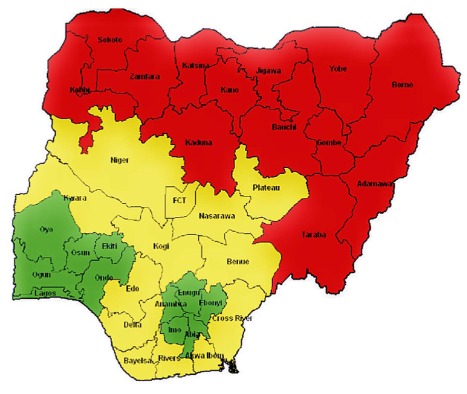
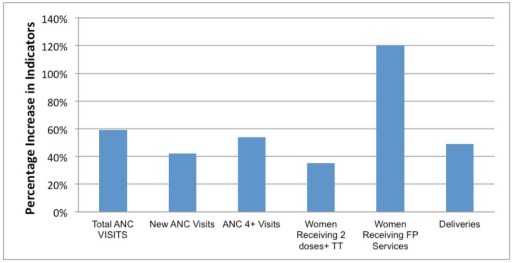
Maternal, newborn, and child health indices in Nigeria vary widely across geopolitical zones and between urban and rural areas, mostly due to variations in the availability of skilled attendance at birth. To improve these indices, the Midwives Service Scheme (MSS) in Nigeria engaged newly graduated, unemployed, and retired midwives to work temporarily in rural areas. The midwives are posted for 1 year to selected primary care facilities linked through a cluster model in which four such facilities with the capacity to provide basic essential obstetric care are clustered around a secondary care facility with the capacity to provide comprehensive emergency obstetric care. The outcome of the MSS 1 year on has been an uneven improvement in maternal, newborn, and child health indices in the six geopolitical zones of Nigeria. Major challenges include retention, availability and training of midwives, and varying levels of commitment from state and local governments across the country, and despite the availability of skilled birth attendants at MSS facilities, women still deliver at home in some parts of the country.
Overview
The claims and statistics of this paper haven’t been checked yet.
Free: it reads the open-access text and checks the first 5 claims that cite a source we can check. Create a free account to check every claim.
Integrity signals
Registry
Cites
Statistics
Figures
Verification
Claims the paper makes
The claims and statistics of this paper haven’t been checked yet.
Free: it reads the open-access text and checks the first 5 claims that cite a source we can check. Create a free account to check every claim.
Claims other papers make about this one
Each is checked against this paper’s own text: does it say what the citing paper says it does?
The source backs part of the claim, not all of it — or backs it for a different population, condition or comparison.
In the citing paper
“Midwifery personnel in rural Nigeria, Niger and Ghana, were typically young and single and rarely had a social connection with the community to which they were deployed. They were often not accepted by the community due to their age, and had little opportunity for marriage or starting a family [35, 37, 38].”
From What Prevents Quality Midwifery Care? A Systematic Mapping of Barriers in Low and Middle Income Countries from the Provider Perspective (2016) · cites this paper as [37]
Experimental — accuracy not yet measuredThe check wasn’t confident either way, so it gives no verdict — never disputed.
In the citing paper
“Social isolation was reported by midwifery personnel in different contexts [29, 32, 35, 37–40].”
From What Prevents Quality Midwifery Care? A Systematic Mapping of Barriers in Low and Middle Income Countries from the Provider Perspective (2016) · cites this paper as [37]
Experimental — accuracy not yet measured
Self-check
Percentages, sums and reported differences re-computed from the paper’s own numbers.
The self-check needs the paper’s full text.
Citations
Cites
Nigeria Demographic and Health Survey 2008
Macro, I. (2009) · Cited by 2,063
Strategies for reducing maternal mortality: getting on with what works
Campbell, O. M., & Graham, W. J. (2006) · The Lancet · doi:10.1016/s0140-6736(06)69381-1 · Cited by 1,785 · cited 1×
“While task shifting has offered a costeffective expansion of the overall HRH pool, skilled attendance at birth is essential to reducing the burden of maternal mortality [8].”
BackgroundGoing to scale with professional skilled care
Koblinsky, M., Matthews, Z., Hussein, J., Mavalankar, D., Mridha, M. K., Anwar, I., Achadi, E., Adjei, S., Padmanabhan, P., & van Lerberghe, W. (2006) · The Lancet · doi:10.1016/s0140-6736(06)69382-3 · Cited by 475 · cited 2×
“mary health care (PHC) facilities [5].”
BackgroundRapid Expansion of the Health Workforce in Response to the HIV Epidemic
Samb, B., Celletti, F., Holloway, J., Van Damme, W., De Cock, K. M., & Dybul, M. (2007) · New England Journal of Medicine · doi:10.1056/nejmsb071889 · Cited by 182 · cited 1×
“Efforts to better reach underserved communities have been on task shifting to community health workers (CHWs) [7].”
BackgroundMaternal Mortality in Nigeria: The Real Issues
Harrison, K. A. (1997) · African Journal of Reproductive Health · doi:10.2307/3583270 · Cited by 123 · cited 1×
“Health indices in Nigeria vary widely across geopolitical zones (See Box 1) and socioeconomic groups [3].”
BackgroundThompson, J. E., Fullerton, J. T., & Sawyer, A. J. (2011) · Midwifery · doi:10.1016/j.midw.2011.04.001 · Cited by 117
Betrán, A. P., Wojdyla, D., Posner, S. F., & Gülmezoglu, A. M. (2005) · BMC Public Health · doi:10.1186/1471-2458-5-131 · Cited by 111 · cited 1×
“mortality decrease [8,9].”
Cited by
Items 101–143 of 143
Obum, O. E., & Kelana, B. W. Y. (2023) · International Journal of Academic Research in Business and Social Sciences · doi:10.6007/ijarbss/v13-i1/16189 · Cited by 5
Olutade-Babatunde, O., van der Kwaak, A., Tejan, Y. S., & Christian, B.-I. N. (2025) · medtigo Journal of Medicine · doi:10.63096/medtigo3062315 · Cited by 1
Taylor, Y. J., Laditka, J. N., Laditka, S. B., Huber, L. R. B., & Racine, E. F. (2019) · Health Care For Women International · doi:10.1080/07399332.2018.1522317 · Cited by 2
Adoption of the National Health Insurance Scheme and Its Influence on Organizational Commitment
Unachukwu, J. C., Sajuyigbe, A. S., & Odebiyi, I. I. (2020) · Business Perspective Review · doi:10.38157/business-perspective-review.v2i3.171 · Cited by 3
Oyebode, T. A., Hassan, Z., Afolaranmi, T., Umar, M. T., Magaji, F. A., Pawa, M., Akande, P. A., Sagay, S. A., Gwamna, J., Okonkwo, P., et al. (2021) · International Journal of HIV/AIDS Prevention Education and Behavioural Science · doi:10.11648/j.ijhpebs.20210701.13 · Cited by 1
“MDG interventions homogenized Nigerian women by being blind to diversities of multiethnic society possessing varying cultural norms that intersect with health, but adopted uniform approach across communities, with no visible attempts at engaging men/boys, who determine SRH outcomes of women concluded [38].”
Backgroundbem, A., & Boniface, F. (2023) · Malaysian Mental Health Journal · doi:10.26480/mmhj.02.2023.72.79 · Cited by 1
Dirisu, O., Akinola, A., Okereke, E., Unumeri, G., Suleiman, I. K., Jibril, A., & Eluwa, G. (2019) · doi:10.31899/rh6.1000 · Cited by 4
Expanding Access to Health Facility Delivery in Nigeria: Progress, Challenges and OpportunitiesPreprint
Ajayi, A. I., Awopegba, O. E., Obisesan, M. T., Nwogwugwu, C., & Owolabi, E. O. (2021) · Research Square · doi:10.21203/rs.3.rs-275633/v1 · Cited by 1
“Besides this, the state embarked on improving its primary health care infrastructure, and 64 midwives were recruited for the state under the federal government's Midwives Service Scheme, being the rst state to sign a memorandum of understanding (22).”
BackgroundAdewuyi, E. O., Auta, A., Omonaiye, O., Adewuyi, M. I., Olutuase, V. O., Adefemi, K., Odeyemi, O. A., Zhao, Y., Tessema, G. A., & Pereira, G. F. (2025) · medRxiv · doi:10.1101/2025.05.31.25328693 · Cited by 1
Analyzing and Interpreting Research in Health Education
Inegbenebor, U. (2013) · International Journal of Basic Applied and Innovative Research/International Journal of Basic, Applied and Innovative Research.
Adewole, D. A., Adebayo, A. M., & Obembe, T. A. (2014) · International journal of nursing
Mitchell, K., Wegner, M. N., Langer, A., & Editors, T. P. M. (2013) · PLoS Medicine · doi:10.1371/journal.pmed.1001559
“In the first year, the Quality of Maternal Health Care Collection included 18 original articles that examined topics such as the quality of care provided to women experiencing severe maternal morbidity in Ghana [1], the role of the ‘‘Midwives Service Scheme’’ in Nigeria [2], a prospective pilot study of the World Heal…”
BackgroundOgundeji, Y. K., Ohiaeri, N., & Olubajo, O. (2015) · The Internet Journal of Public Health
Oladepo, O., Okereke, E., & Akinola, A. (2018) · doi:10.31899/rh6.1035
Okereke, E., Zubairu, I., Nsekpong, U., Unumeri, G., Suleiman, I. K., & Jibril, A. (2019) · doi:10.31899/rh6.1002
Ogidan, O. C. (2020) · Journal of Medical Science And clinical Research · doi:10.18535/jmscr/v8i3.09
“Despite the interventions, studies continue to show that existing strategies to save mothers’ lives had been less successful especially as Nigeria’s maternal mortality profile still remains unacceptably high (Abimbola et al., 2012; Kana, Doctor, Peleteiro, Lunet & Barros,2015).”
BackgroundUtoo, B., Unazi, E., Ao, O., & Utoo, P. (2020) · Journal of BioMedical Research and Clinical Practice · doi:10.46912/jbrcp.158
Ongundele Oluwasegun, J. (2020) · Research Publications (Maastricht University) · doi:10.26481/dis.20201105oo
Amodu, O. C. (2020) · ERA: Education and Research Archive (University of Alberta) · doi:10.7939/r3-v52s-6h63 · Cited by 1
Adewole, D. A., Bello, S., Okunola, O. O., & Owoaje, E. (2021) · Nigerian Journal of Medicine · doi:10.4103/njm.njm_37_21 · Cited by 2
Banke-Thomas, A. O., & Eboreime, E. (2022) · Routledge eBooks · doi:10.4324/9781003128373-8 · Cited by 2
Gadzama, A., Sondorp, E., Mathew, M., & Esomonu, S. N. (2022) · Journal of Community Medicine and Primary Health Care · doi:10.4314/jcmphc.v34i3.4
Oyeyipo, O. M. (2023) · British Journal of Contemporary Education · doi:10.52589/bjce-fozx1zpl
Babalola, S. A., & Ajewole, I. C. (2023) · International Journal of Medical Science and Clinical Research Studies · doi:10.47191/ijmscrs/v3-i7-34
Ogbodo, O. C., & Ossai, E. N. (2023) · Clinical Case Reports and Studies · doi:10.59657/2837-2565.brs.23.066
Agiri, U. A., Dienye, P. O., Adjugah, J. U., & Ndubuisi-Igwilo, O. (2023) · Nigerian Journal of Medicine · doi:10.4103/njm.njm_136_23
Abbani, A. Y., Sawangdee, Y., Widyastari, D. A., & Hunchangsith, P. (2025) · BMJ Open · doi:10.1136/bmjopen-2024-086121 · Cited by 1
Egwuaba, E. U., & Adeyi, S. (2025) · International Journal of Clinical and Experimental Medical Sciences · doi:10.11648/j.ijcems.20251105.13
Okereke, E., Unumeri, G., Akinola, A., Eluwa, G., & Adebajo, S. (2020) · Figshare · doi:10.6084/m9.figshare.12332459
Odejimi, A. W., Quinley, J., Eluwa, G., Kunnuji, M. O. N., Wammanda, R. D., Weiss, W., James, F., Bello, M., Ogunlewe, A., King, R., et al. (2022) · Figshare · doi:10.6084/m9.figshare.20012196
Uzochukwu, B. S. C., Onyedinma, C., Okeke, C., Onwujekwe, O., Manzano, A., Ebenso, B., Etiaba, E., Ezuma, N. N., & Mirzoev, T. (2020) · Figshare · doi:10.6084/m9.figshare.12978564
Odejimi, A. W., Quinley, J., Eluwa, G., Kunnuji, M. O. N., Wammanda, R. D., Weiss, W., James, F., Bello, M., Ogunlewe, A., King, R., et al. (2022) · Figshare · doi:10.6084/m9.figshare.20012199
Manana, P. N., Jewett, S., & Munhenga, G. (2025) · Malaria Journal · doi:10.1186/s12936-025-05678-y
“Similarly, studies in Kenya and Nigeria reported on CE evaluations where daytime out-reach missed employed adults, resulting in lower exposure among working-age men and women [27, 28].”
A conceptual Paper on TISHIP and Moopen’s Golden Triangle of Ideal Healthcare Benefits for Students
Akpan, S. S. (2026) · Turkish Research Journal of Academic Social Science · doi:10.59372/turajas.1494323
Diara, J. C., Ugwueke, I. V., & Uneke, C. J. (2026) · Research Square · doi:10.21203/rs.3.rs-9389883/v1
Agbawodikeizu, P. U., & Ekoh, P. C. (2026) · Social Work in Health Care · doi:10.1080/00981389.2026.2675222
“…Neonatal, and Child Health (MNCH) through initiatives such as the Midwives Service Scheme (MSS) in 2009, and the Subsidy Reinvestment and Empowerment Program for Maternal and Child Health in January 2012 (Abimbola et al., 2012; Oduenyi et al., 2019; Okere et al., 2015; Onwujekwe et al., 2020).”
Onuorah, U. M., Nwuzoh, M. I., Onukansi, F. O., Anokwuru, C. C., Ikhuoria, O. V., Obi, C. G., & Eneh, S. C. (2026) · Frontiers in Health Services · doi:10.3389/frhs.2026.1804247 · Cited by 1
Enhancing Patient Care Through Clinical Autonomy: Evidence from International Studies
Clark, E. (2026) · Advanced practice in nursing · doi:10.1007/978-3-032-21458-4_8
Ucho, M., Okelu, P., Faheem, S., Adeola, I., Ansong, A., Vieira, D., Ryan, N., Gyamfi, J., & Peprah, E. K. (2026) · Frontiers in Health Services · doi:10.3389/frhs.2026.1886853
“In addition, given Nigeria’s reliance on task-shifting strategies, investments in midwife-led emergency obstetric care are particularly critical (78, 79).”
Metadata
- Authors
- Abimbola, S., Okoli, U., Olubajo, O., Abdullahi, M. J., & Pate, M. A.
- Affiliations
- National Primary Health Care Development Agency (NG)
- Duke University (US)
- Venue
- PLoS Medicine
- Publisher
- Public Library of Science (PLoS)
- Published
- 2012-05-01
- Volume
- 9
- Issue
- 5
- Pages
- e1001211
- ISSN
- 1549-1277 (ISSN-L)
- 1549-1676
- PMC
- PMC3341343
- OpenAlex
- W2072114590
- Cited by
- 144
- References
- 8
- Citations by year
- 2026: 10 · 2025: 9 · 2023: 11 · 2022: 11 · 2021: 9 · 2020: 20 · 2019: 14 · 2018: 10 · 2017: 12 · 2016: 10 · 2015: 12 · 2014: 7 · 2013: 8 · 2012: 1
- FWCI
- 7.80
- Type
- journal article
- Language
- en
- Open access
- gold
- doi.org
- Locations
- PLoS Medicine (publishedVersion, cc-by)
- Europe PMC (PubMed Central) (publishedVersion, cc-by)
- PubMed Central (publishedVersion, cc-by)
- PubMed (publishedVersion)
- DOAJ (DOAJ: Directory of Open Access Journals) (submittedVersion, cc-by-sa)
- Topics
- Health Sciences › Medicine › Pediatrics, Perinatology and Child Health › Global Maternal and Child Health
- Health Sciences › Medicine › Public Health, Environmental and Occupational Health › Global Health Workforce Issues
- Health Sciences › Medicine › Obstetrics and Gynecology › Maternal and Perinatal Health Interventions
- Keywords
- skilled birth attendance, midwife retention, rural health workforce, cluster model, emergency obstetric care, maternal health, newborn health, child health, home birth, midwifery education, Nigeria
- MeSH terms
- Workforce, Adult, Child, Female, Humans, Infant, Newborn, Maternal Health Services, Midwifery, Nigeria, Obstetric Nursing, Pregnancy, Primary Health Care, Rural Population, Outcome Assessment, Health Care
About these checks
Registry, retraction, Cites and statistics results are computed, not judged, with one exception: a printed reference that no index lists is read once by a model before it counts as a citation error. Claims are extracted by a model and kept only when their quote appears verbatim in the text; each cited source is then checked, with a model’s help, for whether it says what the claim relies on. Those verdicts can be wrong — read the claim’s quote and the cited source before relying on one.
Statistics and arithmetic are recomputed, not judged.
Confidence bands are shown only for fields calibrated on our annotated test set. None is calibrated yet, so no band is shown.
What counts as a claim ›How we measure confidence ›How we check this ›
Are you an author, or do you see a problem with this page? Request a review
Data sources
Bibliographic data: Semantic Scholar, OpenAlex, Crossref.
Contains information from the Semantic Scholar Academic Graph Datasets, made available under the ODC Attribution License (ODC-BY 1.0).
Semantic Scholar’s data is described in: Kinney, R., et al. (2023). The Semantic Scholar Open Data Platform. arXiv:2301.10140.
