

Timing and Completeness of Trial Results Posted at ClinicalTrials.gov and Published in Journals
Open accessThe DOI matches its Crossref record; 39 of the 40 references it cites were found in a registry or an index.
Abstract
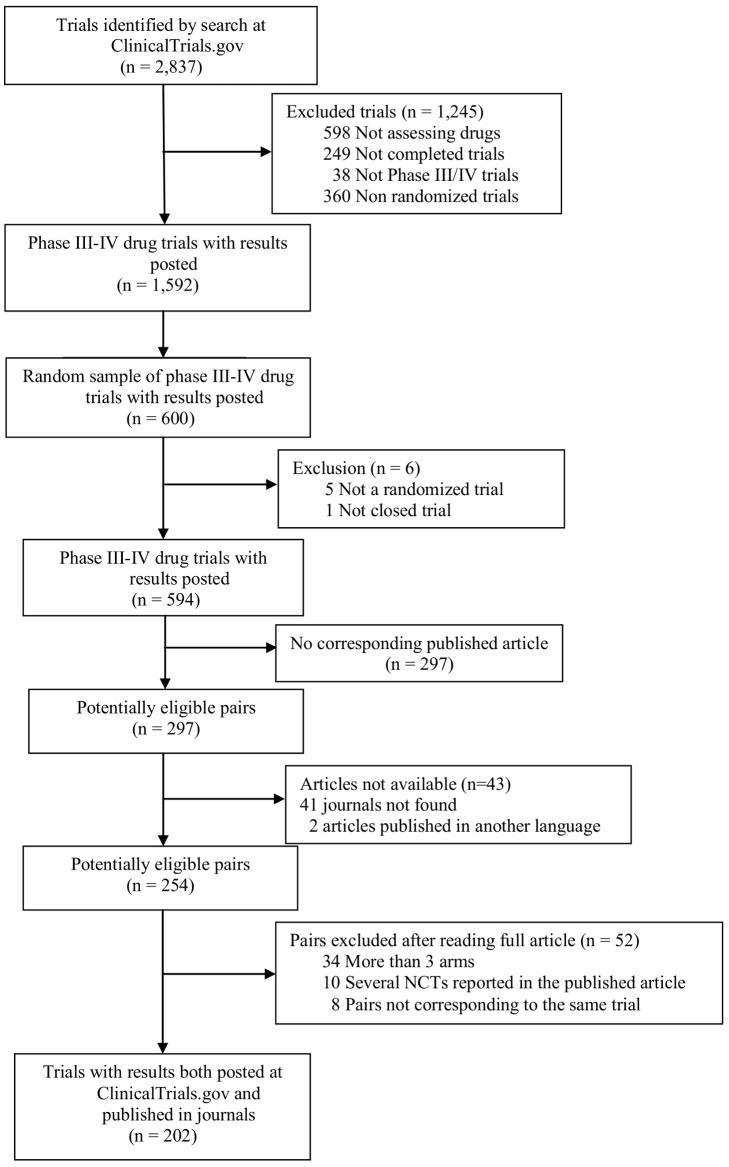
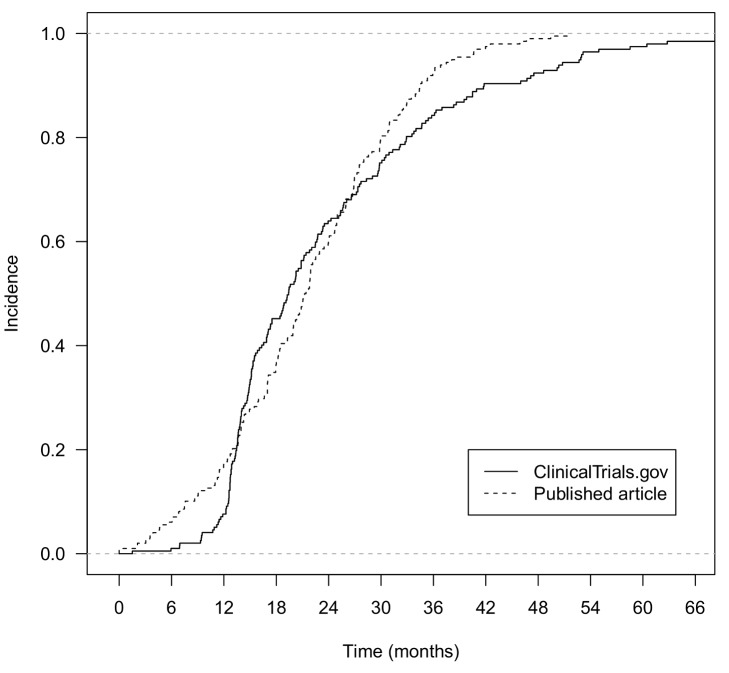
BACKGROUND: The US Food and Drug Administration Amendments Act requires results from clinical trials of Food and Drug Administration-approved drugs to be posted at ClinicalTrials.gov within 1 y after trial completion. We compared the timing and completeness of results of drug trials posted at ClinicalTrials.gov and published in journals. METHODS AND FINDINGS: We searched ClinicalTrials.gov on March 27, 2012, for randomized controlled trials of drugs with posted results. For a random sample of these trials, we searched PubMed for corresponding publications. Data were extracted independently from ClinicalTrials.gov and from the published articles for trials with results both posted and published. We assessed the time to first public posting or publishing of results and compared the completeness of results posted at ClinicalTrials.gov versus published in journal articles. Completeness was defined as the reporting of all key elements, according to three experts, for the flow of participants, efficacy results, adverse events, and serious adverse events (e.g., for adverse events, reporting of the number of adverse events per arm, without restriction to statistically significant differences between arms for all randomized patients or for those who received at least one treatment dose). From the 600 trials with results posted at ClinicalTrials.gov, we randomly sampled 50% (n = 297) had no corresponding published article. For trials with both posted and published results (n = 202), the median time between primary completion date and first results publicly posted was 19 mo (first quartile = 14, third quartile = 30 mo), and the median time between primary completion date and journal publication was 21 mo (first quartile = 14, third quartile = 28 mo). Reporting was significantly more complete at ClinicalTrials.gov than in the published article for the flow of participants (64% versus 48% of trials, p<0.001), efficacy results (79% versus 69%, p = 0.02), adverse events (73% versus 45%, p<0.001), and serious adverse events (99% versus 63%, p<0.001). The main study limitation was that we considered only the publication describing the results for the primary outcomes. CONCLUSIONS: Our results highlight the need to search ClinicalTrials.gov for both unpublished and published trials. Trial results, especially serious adverse events, are more completely reported at ClinicalTrials.gov than in the published article.
Overview
The claims and statistics of this paper haven’t been checked yet.
Free: it reads the open-access text and checks the first 5 claims that cite a source we can check. Create a free account to check every claim.
Integrity signals
Registry
Cites
Statistics
Figures
Verification
Claims the paper makes
The claims and statistics of this paper haven’t been checked yet.
Free: it reads the open-access text and checks the first 5 claims that cite a source we can check. Create a free account to check every claim.
Claims other papers make about this one
Each is checked against this paper’s own text: does it say what the citing paper says it does?
The cited source says what the claim attributes to it.
In the citing paper
“Clinical trial registries are an important source of information for tracking clinical trials from their inception through to their reporting, and have been used to measure publication bias and outcome reporting bias.”
From Systematic review protocol assessing the processes for linking clinical trial registries and their published results (2016) · cites this paper as [7]
Self-check
Percentages, sums and reported differences re-computed from the paper’s own numbers.
The self-check needs the paper’s full text.
Citations
Cites
R: A Language and Environment for Statistical Computing
R Core Team (2025) · doi:10.32614/r.manuals · Cited by 352,181
Cochrane Handbook for Systematic Reviews of Interventions: Cochrane Book Series
(2008) · doi:10.1002/9780470712184 · Cited by 25,048
CONSORT 2010 Statement: updated guidelines for reporting parallel group randomised trials
the CONSORT Group, Schulz, K. F., Altman, D. G., & Moher, D. (2010) · BMC Medicine · doi:10.1186/1741-7015-8-18 · Cited by 13,371
Cochrane Handbook for Systematic Reviews of Interventions Version 5.0.1. The Cochrane Collaboration
Higgins, J. P. T., Green, S. R., & Higgins, J. P. T. (2008) · Cited by 7,247
CONSORT 2010 statement: updated guidelines for reporting parallel group randomized trials
Schulz, K. F., Altman, D. G., Moher, D., & for the CONSORT Group* (2010) · Annals of Internal Medicine · doi:10.7326/0003-4819-152-11-201006010-00232 · Cited by 3,824
Publication bias in clinical research
Easterbrook, P. J., Gopalan, R., Berlin, J. A., & Matthews, D. R. (1991) · The Lancet · doi:10.1016/0140-6736(91)90201-y · Cited by 3,109
Selective publication of antidepressant trials and its influence on apparent efficacy
Turner, E. H., Matthews, A. M., Linardatos, E., Tell, R. A., & Rosenthal, R. (2008) · New England Journal of Medicine · doi:10.1056/nejmsa065779 · Cited by 2,435
Avoidable waste in the production and reporting of research evidence
Chalmers, I., & Glasziou, P. (2009) · The Lancet · doi:10.1016/s0140-6736(09)60329-9 · Cited by 2,208
Chan, A.-W., Hróbjartsson, A., Haahr, M. T., Gøtzsche, P. C., & Altman, D. G. (2004) · JAMA · doi:10.1001/jama.291.20.2457 · Cited by 1,845
Better Reporting of Harms in Randomized Trials: An Extension of the CONSORT Statement
Ioannidis, J. P. A., Evans, S. J. W., Gøtzsche, P. C., O'Neill, R. T., Altman, D. G., Schulz, K., Moher, D., & for the CONSORT Group* (2004) · Annals of Internal Medicine · doi:10.7326/0003-4819-141-10-200411160-00009 · Cited by 1,593 · cited 1×
“The reporting of adverse events observed at a certain frequency or threshold rate has been previously outlined as poor reporting practice [37].”
Background
Cited by
Items 101–200 of 279
Dunn, A. G., Coiera, E. W., & Bourgeois, F. T. (2017) · Journal of Clinical Epidemiology · doi:10.1016/j.jclinepi.2017.12.007 · Cited by 24
“This includes determining which clinical studies remain unpublished [8-12], or comparing registered outcomes with what is reported in published articles [13-21].”
ResultA web-based tool for automatically linking clinical trials to their publications
Smalheiser, N. R., & Holt, A. W. (2022) · Journal of the American Medical Informatics Association · doi:10.1093/jamia/ocab290 · Cited by 20
Improving transparency of clinical trials
Dal‐Ré, R. (2015) · Trends in Pharmacological Sciences · doi:10.1016/j.tips.2014.10.012 · Cited by 20
Focus on sharing individual patient data distracts from other ways of improving trial transparency
Hoffmann, T., Glasziou, P., Beller, E., Goldacre, B., & Chalmers, I. (2017) · BMJ · doi:10.1136/bmj.j2782 · Cited by 20
“Indeed, information on participant flow, efficacy, and adverse events in trials is reported more promptly and in a higher proportion of trials in trial registries than in most reports published in journals.(19,20) It is reasonably simple to do, requires a similar format to that required for publication in a journal ar…”
BackgroundDeVito, N. J., Morley, J., Smith, J. A., Drysdale, H., Goldacre, B., & Heneghan, C. (2024) · BMJ Medicine · doi:10.1136/bmjmed-2023-000738 · Cited by 18
Pansieri, C., Pandolfini, C., & Bonati, M. R. (2015) · European Journal of Clinical Pharmacology · doi:10.1007/s00228-015-1897-9 · Cited by 21
“Quality checks of new records, performed by those who manage the registries, along with the more recent concept of rendering CSRs public, have some positive effects, at least in terms of data completeness [54].”
BackgroundDeveloping timely insights into comparative effectiveness research with a text-mining pipeline
Chang, M., Chang, M., Reed, J. Z., Milward, D., Xu, J. J., & Cornell, W. D. (2016) · Drug Discovery Today · doi:10.1016/j.drudis.2016.01.012 · Cited by 18
Christensen, R., Maxwell, L. J., Jüni, P., Tovey, D. I., Williamson, P. R., Boers, M., Goel, N., Buchbinder, R., MARCH, L. M., Terwee, C. B., et al. (2015) · The Journal of Rheumatology · doi:10.3899/jrheum.141384 · Cited by 19
Nonregistration, Discontinuation, and Nonpublication of Randomized Trials: A Systematic Review
Speich, B., Heravi, A. T., Schönenberger, C., Hausheer, L., Gryaznov, D., Busse, J. W., Covino, M., Lohner, S., Chiaborelli, M., Schwenke, J. M., et al. (2025) · JAMA Network Open · doi:10.1001/jamanetworkopen.2025.24440 · Cited by 23
Glass, H. E., Glass, L. M., & DiFrancesco, J. J. (2014) · Therapeutic Innovation & Regulatory Science · doi:10.1177/2168479014551643 · Cited by 17
Han, X., Williams, S., & Zuckerman, B. L. (2018) · PLoS ONE · doi:10.1371/journal.pone.0196545 · Cited by 18
Yarborough, M. A. (2019) · Science and Engineering Ethics · doi:10.1007/s11948-019-00170-8 · Cited by 18
Half of US clinical trials go unpublished
Jones, N. (2013) · Nature · doi:10.1038/nature.2013.14286 · Cited by 17
Wang, S., Šuster, S., Baldwin, T., & Verspoor, K. M. (2022) · Journal of Medical Internet Research · doi:10.2196/38859 · Cited by 17
“…time to publish and instead focused on other tasks, whether there were changing interests or disagreements between coauthors, whether researchers believed that a journal was unlikely to accept their work, and whether financial problems or other contractual issues prevented publication [15,60-62].”
Čihorić, N., Tsikkinis, A., Miguélez, C. G., Strnad, V., Soldatović, I., Ghadjar, P., Jeremic, B. M., Pra, A. D., Aebersold, D. M., & Lössl, K. (2016) · Radiation Oncology · doi:10.1186/s13014-016-0624-8 · Cited by 16
“In addition some data are more accurate within the database as compared to the published data [29, 30].”
ResultShepshelovich, D., Goldvaser, H., Wang, L., & Razak, A. R. A. (2017) · Investigational New Drugs · doi:10.1007/s10637-017-0549-6 · Cited by 17
“Approximately half of the early phase trials submitted as abstracts to annual meetings of the American Society of Clinical Oncology (ASCO) are not subsequently published in peer-reviewed journals [2–4], comparable with non-cancer studies in general [5].”
BackgroundScherer, R. W., Huynh, L. Y., Ervin, A., & Dickersin, K. (2015) · PLoS ONE · doi:10.1371/journal.pone.0130619 · Cited by 17
“However, reporting results from all outcomes named in the protocol is not required [6] nor do all registered trials post results [9, 10].”
BackgroundIs it time for computable evidence synthesis?
Dunn, A. G., & Bourgeois, F. T. (2020) · Journal of the American Medical Informatics Association · doi:10.1093/jamia/ocaa035 · Cited by 16
Blanco, D., Donadio, M. V. F., & Cadellans-Arróniz, A. (2024) · Research Integrity and Peer Review · doi:10.1186/s41073-024-00147-7 · Cited by 16
“Additionally, reporting the results of RCTs in a structured way on the platform Clinicaltrials.gov has been shown to improve the completeness of reporting (15).”
BackgroundBeytout, Q., Afach, S., Guelimi, R., Sbidian, É., & Cleach, L. L. (2024) · Journal of Clinical Epidemiology · doi:10.1016/j.jclinepi.2024.111406 · Cited by 14
Serpas, V., Raghav, K. P. S., Halperin, D. M., Yao, J. C., & Overman, M. J. (2018) · BMC Medical Research Methodology · doi:10.1186/s12874-018-0627-2 · Cited by 14
“gov registration is poor, and despite previous guidelines and requirements trial registration has remained suboptimal [14, 15].”
BackgroundSupporting study registration to reduce research waste
Purgar, M., Glasziou, P., Klanjšček, T., Nakagawa, S., & Čulina, A. (2024) · Nature Ecology & Evolution · doi:10.1038/s41559-024-02433-5 · Cited by 17
Karimian, Z., Mavoungou, S., Salem, J., Tubach, F., & Dechartres, A. (2020) · BMC Cancer · doi:10.1186/s12885-020-07518-5 · Cited by 13
Self-citationChen, K. Y., Borglund, E. M., Postema, E. C., Dunn, A. G., & Bourgeois, F. T. (2022) · Clinical Trials · doi:10.1177/17407745221093567 · Cited by 14
“gov and 20 months for publications.(17) Analyses assessing trials across a variety of interventions have also reported more complete reporting for flow of participants, efficacy results, adverse events, and serious adverse events.”
BackgroundResultPeng, S., Ying, A. F., Tai, B. C., & Soo, R. A. (2020) · Translational Lung Cancer Research · doi:10.21037/tlcr-20-246 · Cited by 14
Availability of Results of Trials Studying Pancreatic Adenocarcinoma over the Past 10 Years
Pellat, A., Boutron, I., & Ravaud, P. (2022) · The Oncologist · doi:10.1093/oncolo/oyac156 · Cited by 14
Self-citationShowell, M. G., Buckman, S., Berber, S., Allah, N. A., Patterson, B., Cole, S., Farquhar, C. M., & Jordan, V. (2023) · PLoS ONE · doi:10.1371/journal.pone.0279926 · Cited by 15
Jurić, D., Pranić, S. M., Tokalić, R., Milat, A. M., Mudnić, I., Pavličević, I., & Marušić, A. (2018) · Journal of Clinical Epidemiology · doi:10.1016/j.jclinepi.2018.07.017 · Cited by 14
Rowhani-Farid, A., Hong, K., Grewal, M., Reynolds, J., Zhang, A. D., Wallach, J. D., & Ross, J. S. (2022) · BMJ Evidence-Based Medicine · doi:10.1136/bmjebm-2022-111989 · Cited by 11
Fain, K. M., Rajakannan, T., Tse, T., Williams, R. J., & Zarin, D. A. (2018) · JAMA Internal Medicine · doi:10.1001/jamainternmed.2018.0263 · Cited by 11
Clinical trial registration and publication in acupuncture studies: a systematic review
MATSUURA, Y., Welch, N. T., SAKAI, T., & Tsutani, K. (2020) · Integrative Medicine Research · doi:10.1016/j.imr.2020.01.008 · Cited by 12
Bashir, R., & Dunn, A. G. (2016) · BMJ Open · doi:10.1136/bmjopen-2016-013048 · Cited by 10
“information to be extracted includes the following: (1) the number of trial registry entries examined or identified in the study; (2) the number of published trial reports examined or identified in the study; (3) the trial registry or registries used; (4) the purpose of the study (such as measuring publication bias, o…”
MethodQuality of reporting of adverse events in clinical trials of covid-19 drugs: systematic review
Madi, K., Flumian, C., Olivier, P., Sommet, A., & Montastruc, F. (2023) · BMJ Medicine · doi:10.1136/bmjmed-2022-000352 · Cited by 10
Discordant information on blinding in trial registries and published research: a systematic review
Zhang, F., Zhu, Y., Zhao, S., Zhang, Q., Tao, H., Wu, Y., & Jia, P. (2024) · JAMA Network Open · doi:10.1001/jamanetworkopen.2024.52274 · Cited by 8
The Ethical Implications for Humans in Light of the Poor Predictive Value of Animal Models
Greek, R. (2014) · International Journal of Clinical Medicine · doi:10.4236/ijcm.2014.516129 · Cited by 11
Understanding adverse drug reactions: An overview
Greener, M. (2014) · Nurse Prescribing · doi:10.12968/npre.2014.12.4.189 · Cited by 10
Adherence to clinical trial registration in countries of Latin America and the Caribbean, 2015
García-Vello, P., Smith, E., Elias, V. M., Florez-Pinzon, C., & Revéiz, L. (2018) · Revista Panamericana de Salud Pública · doi:10.26633/rpsp.2018.44 · Cited by 10
“Previous studies have found that publication rates tend to be higher for CT registered after completion versus those registered prior to completion or with an unknown study status (20).”
BackgroundReporting Results of Research Involving Human Subjects: An Ethical Obligation
Alley, A. B., Seo, J., & Hong, S. (2015) · Journal of Korean Medical Science · doi:10.3346/jkms.2015.30.6.673 · Cited by 10
“gov] requires results reporting and one study found that the results in the registry, especially serious adverse events, were more complete than the results in published articles (18).”
ResultDal‐Ré, R. (2014) · Medicina Clínica · doi:10.1016/j.medcli.2014.01.030 · Cited by 10
Ali, S., Alghamdi, M. A., Alzhrani, J. A. S., & Vol, E. B. D. (2017) · Contemporary Clinical Trials Communications · doi:10.1016/j.conctc.2017.05.008 · Cited by 10
Shepshelovich, D., Yelin, D., Gafter-Gvili, A., Goldman, S., Avni, T., & Yahav, D. (2018) · Clinical Microbiology and Infection · doi:10.1016/j.cmi.2018.02.010 · Cited by 10
Transparency in risk regulation : the case of the European Medicines Agency
Balog‐Way, D. H. P. (2017) · Research Portal (King's College London) · Cited by 14
Using the concept of “deserved trust” to strengthen the value and integrity of biomedical research
Yarborough, M. A. (2020) · Accountability in Research · doi:10.1080/08989621.2020.1855427 · Cited by 10
“Too many trial results are never published or, if they are, too often only partial, possibly misleading, results get disseminated (Riveros et al. 2013; Strand et al. 2017; Hakala, Fergusson, and Kimmelman 2017; Jefferson and Jorgensen 2018; Goldacre et al. 2018).”
Fan, R., Zheng, Y., Zhou, R., Beeraka, N. M., Sukocheva, O. A., Zhao, R., Li, S., Zhao, X. Y., Liu, C., He, S., et al. (2023) · Frontiers in Medicine · doi:10.3389/fmed.2023.1203346 · Cited by 8
He, Z., Yang, L., Li, X., & Du, J. (2025) · EClinicalMedicine · doi:10.1016/j.eclinm.2024.103066 · Cited by 12
Positive Outcome Bias in the Influential Otolaryngology Clinical Trial Literature
Yang, H., Tsai, M., Mukdad, L. A., & John, M. A. S. (2023) · Otolaryngology · doi:10.1002/ohn.562 · Cited by 8
Dissemination of Registered COVID-19 Clinical Trials (DIRECCT): a cross-sectional study
Salholz‐Hillel, M., Pugh-Jones, M., Hildebrand, N., Schult, T. A., Schwietering, J., Grabitz, P., Carlisle, B. G., Goldacre, B. M., Strech, D., & DeVito, N. (2023) · BMC Medicine · doi:10.1186/s12916-023-03161-6 · Cited by 8
Professional medical writing support: The need of the day
Sharma, S. (2018) · Perspectives in Clinical Research · doi:10.4103/picr.picr_47_18 · Cited by 9
Žuljević, M. F., Mijatović, A., Orhanović, R., Goasdoué, G., & Gujinović, D. (2026) · Journal of Clinical Epidemiology · doi:10.1016/j.jclinepi.2026.112170 · Cited by 8
Thiele, C., Hirschfeld, G. H. F., & von Brachel, R. (2021) · Scientometrics · doi:10.1007/s11192-021-04111-w · Cited by 7
Gaertner, J., Weingärtner, V., Lange, S., Hausner, E., Gerhardus, A., Simon, S. T., Voltz, R., Becker, G., & Schmacke, N. (2015) · PLoS ONE · doi:10.1371/journal.pone.0136640 · Cited by 7
Dechartres, A., Bond, E. G., Scheer, J., Riveros, C., Atal, I., & Ravaud, P. (2016) · BMC Medicine · doi:10.1186/s12916-016-0740-1 · Cited by 10
“Previous studies showed that it allows access to results not yet published and to more complete results than in corresponding published articles [24–26].”
ResultSelf-citationSalem, J., Éderhy, S., & Dechartres, A. (2021) · European Journal of Cancer · doi:10.1016/j.ejca.2021.05.017 · Cited by 8
“gov especially adverse events and serious adverse events are generally more completely reported.(10) Therefore, reperforming a more comprehensive meta-analysis with methods adapted to rare events and search of clinical trial registers as ClinicalTrials.”
BackgroundSelf-citationPradhan, R., Garnick, K., Barkondaj, B., Jordan, H. S., Ash, A. S., & Yu, H. (2018) · Journal of Clinical Epidemiology · doi:10.1016/j.jclinepi.2018.05.024 · Cited by 6
“gov can be explained by its coverage of unpublished trial reports as evidenced in previous research [52].”
ResultChinese medicine formulas for nonalcoholic fatty liver disease: Overview of systematic reviews
Dai, L., Zhou, W., Zhong, L. L. D., Tang, X.-D., & Ji, G. (2020) · World Journal of Clinical Cases · doi:10.12998/wjcc.v9.i1.102 · Cited by 8
Do Published Data in Trials Assessing Cancer Drugs Reflect the Real Picture of Efficacy and Safety?
Lv, J.-W., Chen, Y., Zhou, G., Liu, X., Guo, Y., Mao, Y., Ma, J., & Sun, Y. H. (2017) · Journal of the National Comprehensive Cancer Network · doi:10.6004/jnccn.2017.7002 · Cited by 10
Open Payments and the US Clinical Landscape
Glass, H. E. (2020) · Therapeutic Innovation & Regulatory Science · doi:10.1007/s43441-019-00067-5 · Cited by 6
“The average patient duration in a given study has increased though, primarily because of the increased amount of time spent by patients in the growing number of oncology studies.(2-6) Similarly, the percentage of sites and studies located in the traditional areas of North America and Europe has barely changed in recen…”
BackgroundDeVito, N., Drysdale, H., McKee, M., & Goldacre, B. M. (2021) · Tobacco Control · doi:10.1136/tobaccocontrol-2020-056221 · Cited by 7
Pellat, A., Boutron, I., & Ravaud, P. (2022) · BMC Cancer · doi:10.1186/s12885-022-09334-5 · Cited by 7
“gov registry than in the published articles [17].”
BackgroundSelf-citationFactors associated with successful phase III trials for solid tumors: A systematic review
Otsuka, Y., Kaneko, M., & Narukawa, M. (2021) · Contemporary Clinical Trials Communications · doi:10.1016/j.conctc.2021.100855 · Cited by 5
Methods for assessing inverse publication bias of adverse events
Xing, X., Xu, C. Q., Amer, F. M. A., Shi, L., Zhu, J., & Lin, L. (2024) · Contemporary Clinical Trials · doi:10.1016/j.cct.2024.107646 · Cited by 6
Struthers, C., Harwood, J., de Beyer, J. A., Logullo, P., & Collins, G. S. (2025) · BMC Medical Research Methodology · doi:10.1186/s12874-025-02518-0 · Cited by 8
“Interventions showing most promise have been active, providing additional review and feedback to authors [27, 28, 29, 34 31].”
Results Reporting and Early Termination of Childhood Obesity Trials Registered on ClinicalTrials.gov
Wang, X., Long, Y., Liu, Y., Huang, J., & Du, L. (2022) · Frontiers in Pediatrics · doi:10.3389/fped.2022.860610 · Cited by 5
“We put off the primary completion date by 1 year, as both NIH regulations and trial reporting policies required sponsors or researchers to submit results data within 1 year of the primary completion date (22, 25).”
BackgroundWright, D. N. M., Williams, E., Bryce, C., le May, A., Stein, K., Milne, R., & Walley, T. (2018) · Health Research Policy and Systems · doi:10.1186/s12961-018-0339-4 · Cited by 5
Martinić-Cezar, I. J., & Marušić, A. (2019) · Trials · doi:10.1186/s13063-019-3781-x · Cited by 8
Pandolfini, C., & Bonati, M. R. (2018) · Trials · doi:10.1186/s13063-018-2910-2 · Cited by 4
Differences in pediatric versus adult clinical trial characteristics for atopic dermatitis
Agnihotri, G., Lio, P., & Lee, K. C. (2021) · Pediatric Dermatology · doi:10.1111/pde.14658 · Cited by 4
“Topical corticosteroids 18 (9) 8 (16) 10 (6)”
Maru, S., Kuwatsuru, R., Matthias, M. D., & Simpson, R. J. (2025) · Journal of Medical Internet Research · doi:10.2196/60148 · Cited by 6
“…[15], completed trials (45.9%; 311/677 within 2 years) [19], trials by US-based academic medical centers (35.9%; 1560/4347 within 2 years) [14], phase III-IV RCTs of drug interventions (50%; 297/594) [16], and trials approved by a hospital ethics committee in Spain (31%; 38/123 within 3 years).”
InfluentialBolshete, P. (2017) · Ancient Science of Life · doi:10.4103/asl.asl_44_17 · Cited by 5
Walters, J. R., & Light, K. (2021) · Australian Journal of Agricultural Research · doi:10.1071/cp20534 · Cited by 4
“Medical-based clinical trials have among the longest lag times (Riveros et al. 2013), whereas in the biological sciences (including agriculture), it may be a little as 6 weeks (The Open Agriculture Journal, https:// openagriculturejournal.com/quick-track-option.php), although this is thought to be…”
BackgroundWarner, F. M., Bailey, N. G. N., Scheuren, P. S., Lütolf, R., McGregor, R., Banga, R., Hsieh, J., & Kramer, J. L. K. (2021) · Spinal Cord · doi:10.1038/s41393-021-00699-1 · Cited by 4
Stazić, P., Jurić, D., Turić, A., Šošić, A., Marušić, A., & Roguljić, M. (2023) · Journal of Comparative Effectiveness Research · doi:10.57264/cer-2023-0058 · Cited by 6
Piacentino, D., Ogirala, A., Lew, R., Loftus, G., Worden, M., Koblan, K. S., & Hopkins, S. C. (2023) · Advances in Therapy · doi:10.1007/s12325-023-02695-8 · Cited by 4
“The missing data are typically safety-related [49].”
Fixing flaws in science must be professionalized
Goldacre, B. M., & Brown, T. (2015) · Journal of Clinical Epidemiology · doi:10.1016/j.jclinepi.2015.06.018 · Cited by 6
Half of drug trials with results on ClinicalTrials.gov are not published in journals
Mayor, S. (2013) · BMJ · doi:10.1136/bmj.f7219 · Cited by 4
Are Phase 3 Clinical Trials Really Becoming More Complex?
Glass, H. E., DiFrancesco, J. J., Glass, L. M., & Tran, P. T. (2015) · Therapeutic Innovation & Regulatory Science · doi:10.1177/2168479015583725 · Cited by 4
Pharmaceutical Organizational Size and Phase 3 Clinical Trial Completion Times
Glass, H. E., Glass, L. M., Tran, P. T., & Alghamdi, H. (2016) · Therapeutic Innovation & Regulatory Science · doi:10.1177/2168479016648733 · Cited by 4
McCormick, C., Waller, D., Elghzali, A., Corwin, L., Harris, T., Hazlitt, R., Archer, D. B., Ford, A. I., & Vassar, M. B. (2025) · Regional Anesthesia & Pain Medicine · doi:10.1136/rapm-2025-107055 · Cited by 4
Obrist, R. (2015) · Swiss Medical Weekly · doi:10.4414/smw.2015.14120 · Cited by 3
Availability of results of interventional studies assessing colorectal cancer from 2013 to 2020
Pellat, A., Boutron, I., & Ravaud, P. (2022) · PLoS ONE · doi:10.1371/journal.pone.0266496 · Cited by 3
“Similarly, despite public registration, about 50% of randomized controlled trials (RCTs) results are never published [15].”
BackgroundSelf-citationShowell, M. G., Farquhar, C. M., Greenwood, G., & Jordan, V. (2023) · BMJ Open · doi:10.1136/bmjopen-2023-072446 · Cited by 5
Rivero‐de‐Aguilar, A., Pérez‐Ríos, M., Mascareñas‐García, M., Ruano‐Raviña, A., Ross, J. S., Acción, B. C., & Varela‐Lema, L. (2024) · Multiple Sclerosis Journal · doi:10.1177/13524585241273089 · Cited by 3
“These findings confirm the usefulness of this registry as a means of counteracting publication bias and early accessing information that is bound for publication, 16,19 which is especially relevant for clinicians seeking to be up-to-date.”
Li, J., Yu, X., Gao, L., Xin, L., Wang, Y., Guo, F., & Hua, F. (2024) · Journal of Oral Rehabilitation · doi:10.1111/joor.13904 · Cited by 4
A rare homozygous form of phosphohexose isomerase.
Papiha, S. S., Roberts, D. F., & Chhaparwal, B. C. (1974) · Europe PMC (PubMed Central) · Cited by 3
Decullier, É., Tang, P. V., Huot, L., & Maisonneuve, H. (2021) · Scientometrics · doi:10.1007/s11192-020-03775-0 · Cited by 3
Riley, S. P., Swanson, B. T., Sawyer, S. F., & Brismée, J. (2016) · Journal of Manual & Manipulative Therapy · doi:10.1080/10669817.2016.1253561 · Cited by 3
Zhang, J., Bierer, B. E., Spall, H. G. C. V., Liu, Y., Bai, X., Thabane, L., Lip, G. Y. H., Sun, X., Moher, D., & Li, G. (2025) · BMC Medicine · doi:10.1186/s12916-025-04328-z · Cited by 3
Elghzali, A., Chaudhry, M., Khan, S. M., Khan, A., & Vassar, M. B. (2025) · Scientific Reports · doi:10.1038/s41598-025-24290-3 · Cited by 2
Shaughnessy, D. P., Krishan, A., Naaman, K., Beckwith, A., Qureshı, R., & Li, T. (2026) · Journal of Clinical Epidemiology · doi:10.1016/j.jclinepi.2026.112401 · Cited by 2
The mystery of India’s missing clinical trial results
Dasgupta, S. (2020) · BMJ · doi:10.1136/bmj.m4835 · Cited by 2
Sengar, M., Hopman, W. M., Mohyuddin, G. R., Goodman, A. M., Gyawali, B., Mukherji, D., Hammad, N., Pramesh, C. S., Aggarwal, A. K., Sullivan, R. J., et al. (2023) · ecancermedicalscience · doi:10.3332/ecancer.2023.1558 · Cited by 4
Implementability and impact in clinical research and the role of clinical trial networks
Teede, H. J., Best, K. P., Bloomfield, F. H., Cass, A., Cohen, P. A., Crengle, S. M., Harris‐Brown, T., Jan, S., Johnson, D. W., Keogh, S. J., et al. (2024) · The Medical Journal of Australia · doi:10.5694/mja2.52444 · Cited by 2
Pool, L., Luyten, C. R. D. P., van der Pluijm, R. W., Soentjens, P. H. P., Hänscheid, T., Grobusch, M. P., & Visser, B. J. (2024) · Malaria Journal · doi:10.1186/s12936-024-05115-6 · Cited by 2
“…controlled trials in other fields registered on ClinicalTrials.gov, which found that the median duration from the primary completion date to the first public posting of results on ClinicalTrials. gov was 19 months, and publication in a peer-reviewed journal took 21 months (~ 640 days) [33].”
BackgroundTereshchenko, L. G., Manyara, A. M., Ciani, O., Sodeke, S. O., Bradford, C., Santangeli, P., Kapadia, S. R., Wazni, O. M., Narayan, S. M., Chugh, S. S., et al. (2025) · Heart Rhythm · doi:10.1016/j.hrthm.2025.02.038 · Cited by 2
Promoting informed health choices: the long and winding road
Oxman, A. D., Chalmers, I., & Glasziou, P. (2025) · Journal of the Royal Society of Medicine · doi:10.1177/01410768251384317 · Cited by 2
“41 Those outcomes that are published are more likely to report favourable results.”
Characteristics of clinical trials associated with early results reporting at ClinicalTrials.gov
Bashir, R., & Dunn, A. G. (2022) · Contemporary Clinical Trials · doi:10.1016/j.cct.2022.106785 · Cited by 2
Friedman, L. M., Furberg, C. D., DeMets, D. L., Reboussin, D. M., & Granger, C. B. (2015) · Springer eBooks · doi:10.1007/978-3-319-18539-2_22 · Cited by 2
A Pilot Study on Result Reporting Rates from Clinical Trials of Regenerative Medicine
Negoro, T., Okura, H., Hayashi, S., Arai, T., & Matsuyama, A. (2023) · Tissue Engineering Part B Reviews · doi:10.1089/ten.teb.2022.0126 · Cited by 2
“15,16 This may raise another ethical issue if more investigators avoid reporting results to ClinicalTrials.gov in favor of publishing results in journals, which is an easier option.”
Reasons for missing evidence in rehabilitation meta-analyses: a cross-sectional meta-research study
Lazzarini, S. G., Yousif, M. S., Bargeri, S., Castellini, G., & Gianola, S. (2023) · BMC Medical Research Methodology · doi:10.1186/s12874-023-02064-7 · Cited by 2
“…rehabilitation field should be made publicly available at ClinicalTrials.gov or at any other registry within one year as it already is for trials on drugs and devices [39], since it has been shown that results at ClinicalTrials.gov seem to be more completely reported than in published reports [40].”
ResultCharacterizing Current Registration of Phase 3 Crossover Trials on ClinicalTrials.gov
Zeng, L. (2015) · Cited by 2
Metadata
- Authors
- Riveros, C., Dechartres, A., Perrodeau, E., Haneef, R., Boutron, I., & Ravaud, P.
- Affiliations
- Inserm (FR)
- Venue
- PLoS Medicine
- Publisher
- Public Library of Science (PLoS)
- Published
- 2013-12-03
- Volume
- 10
- Issue
- 12
- Pages
- e1001566
- ISSN
- 1549-1277 (ISSN-L)
- 1549-1676
- PMC
- PMC3849189
- OpenAlex
- W2035759032
- Cited by
- 269
- References
- 40
- Citations by year
- 2026: 8 · 2025: 21 · 2024: 22 · 2023: 17 · 2022: 16 · 2021: 18 · 2020: 19 · 2019: 22 · 2018: 29 · 2017: 27 · 2016: 21 · 2015: 28 · 2014: 17 · 2013: 3
- FWCI
- 25.13
- Type
- journal article
- Language
- en
- Open access
- gold
- doi.org
- Licence
- Locations
- PLoS Medicine (publishedVersion, cc-by)
- Europe PMC (PubMed Central) (publishedVersion, cc-by)
- PubMed Central (publishedVersion, cc-by)
- PubMed (publishedVersion)
- RePEc: Research Papers in Economics (publishedVersion)
- DOAJ (DOAJ: Directory of Open Access Journals) (submittedVersion, cc-by-sa)
- Figshare (submittedVersion, cc-by)
- Columbia Academic Commons (Columbia University)
- Topics
- Health Sciences › Nursing › Issues, ethics and legal aspects › Pharmaceutical industry and healthcare
- Social Sciences › Library and Information Sciences › Academic Publishing and Open Access
- Social Sciences › Decision Sciences › Statistics, Probability and Uncertainty › Meta-analysis and systematic reviews
- Keywords
- ClinicalTrials.gov, drug trials, clinical trial registration, time to publication, serious adverse events, adverse event reporting, reporting completeness, randomized controlled trials, unpublished trials
- MeSH terms
- Clinical Trials as Topic, Humans, Publishing, Time Factors, United States, Databases, Factual
About these checks
Registry, retraction, Cites and statistics results are computed, not judged, with one exception: a printed reference that no index lists is read once by a model before it counts as a citation error. Claims are extracted by a model and kept only when their quote appears verbatim in the text; each cited source is then checked, with a model’s help, for whether it says what the claim relies on. Those verdicts can be wrong — read the claim’s quote and the cited source before relying on one.
Statistics and arithmetic are recomputed, not judged.
Confidence bands are shown only for fields calibrated on our annotated test set. None is calibrated yet, so no band is shown.
What counts as a claim ›How we measure confidence ›How we check this ›
Are you an author, or do you see a problem with this page? Request a review
Data sources
Bibliographic data: Semantic Scholar, OpenAlex, Crossref.
Contains information from the Semantic Scholar Academic Graph Datasets, made available under the ODC Attribution License (ODC-BY 1.0).
Semantic Scholar’s data is described in: Kinney, R., et al. (2023). The Semantic Scholar Open Data Platform. arXiv:2301.10140.
