

Timing and Completeness of Trial Results Posted at ClinicalTrials.gov and Published in Journals
Open accessThe DOI matches its Crossref record; 39 of the 40 references it cites were found in a registry or an index.
Abstract
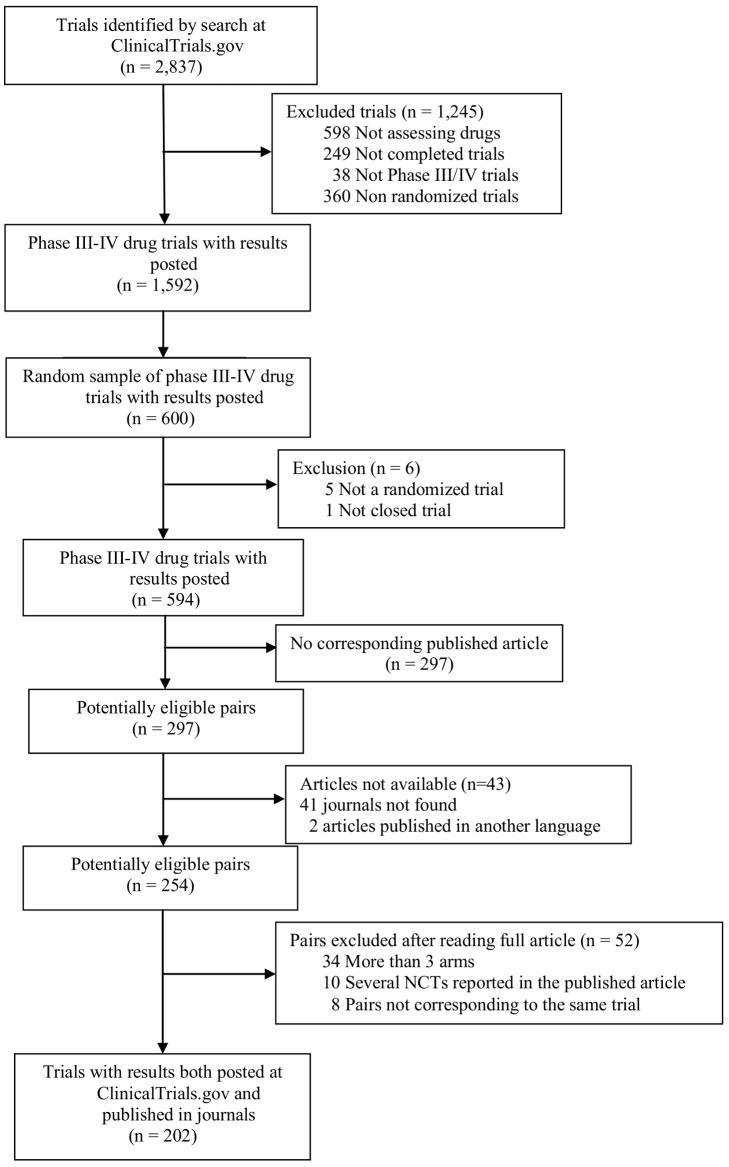
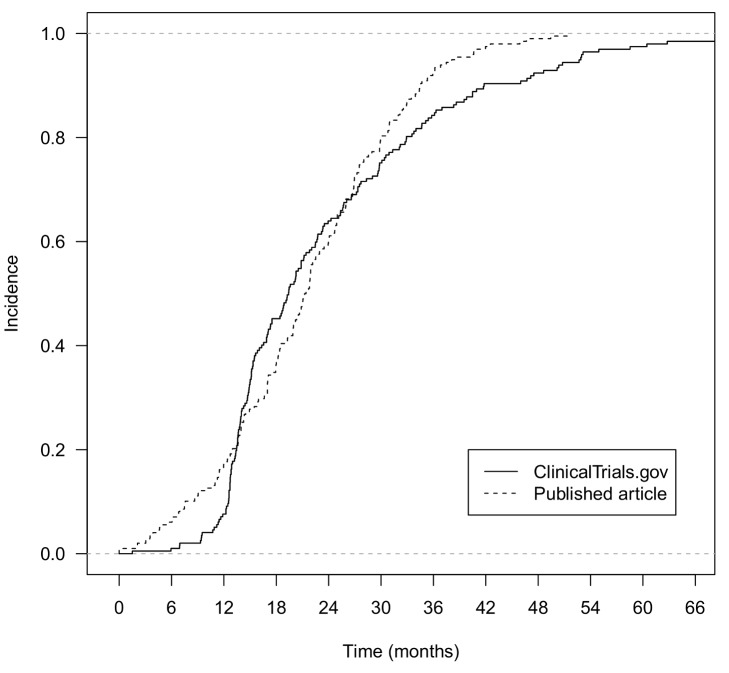
BACKGROUND: The US Food and Drug Administration Amendments Act requires results from clinical trials of Food and Drug Administration-approved drugs to be posted at ClinicalTrials.gov within 1 y after trial completion. We compared the timing and completeness of results of drug trials posted at ClinicalTrials.gov and published in journals. METHODS AND FINDINGS: We searched ClinicalTrials.gov on March 27, 2012, for randomized controlled trials of drugs with posted results. For a random sample of these trials, we searched PubMed for corresponding publications. Data were extracted independently from ClinicalTrials.gov and from the published articles for trials with results both posted and published. We assessed the time to first public posting or publishing of results and compared the completeness of results posted at ClinicalTrials.gov versus published in journal articles. Completeness was defined as the reporting of all key elements, according to three experts, for the flow of participants, efficacy results, adverse events, and serious adverse events (e.g., for adverse events, reporting of the number of adverse events per arm, without restriction to statistically significant differences between arms for all randomized patients or for those who received at least one treatment dose). From the 600 trials with results posted at ClinicalTrials.gov, we randomly sampled 50% (n = 297) had no corresponding published article. For trials with both posted and published results (n = 202), the median time between primary completion date and first results publicly posted was 19 mo (first quartile = 14, third quartile = 30 mo), and the median time between primary completion date and journal publication was 21 mo (first quartile = 14, third quartile = 28 mo). Reporting was significantly more complete at ClinicalTrials.gov than in the published article for the flow of participants (64% versus 48% of trials, p<0.001), efficacy results (79% versus 69%, p = 0.02), adverse events (73% versus 45%, p<0.001), and serious adverse events (99% versus 63%, p<0.001). The main study limitation was that we considered only the publication describing the results for the primary outcomes. CONCLUSIONS: Our results highlight the need to search ClinicalTrials.gov for both unpublished and published trials. Trial results, especially serious adverse events, are more completely reported at ClinicalTrials.gov than in the published article.
Overview
The claims and statistics of this paper haven’t been checked yet.
Free: it reads the open-access text and checks the first 5 claims that cite a source we can check. Create a free account to check every claim.
Integrity signals
Registry
Cites
Statistics
Figures
Verification
Claims the paper makes
The claims and statistics of this paper haven’t been checked yet.
Free: it reads the open-access text and checks the first 5 claims that cite a source we can check. Create a free account to check every claim.
Claims other papers make about this one
Each is checked against this paper’s own text: does it say what the citing paper says it does?
The cited source says what the claim attributes to it.
In the citing paper
“Clinical trial registries are an important source of information for tracking clinical trials from their inception through to their reporting, and have been used to measure publication bias and outcome reporting bias.”
From Systematic review protocol assessing the processes for linking clinical trial registries and their published results (2016) · cites this paper as [7]
Self-check
Percentages, sums and reported differences re-computed from the paper’s own numbers.
The self-check needs the paper’s full text.
Citations
Cites
R: A Language and Environment for Statistical Computing
R Core Team (2025) · doi:10.32614/r.manuals · Cited by 352,181
Cochrane Handbook for Systematic Reviews of Interventions: Cochrane Book Series
(2008) · doi:10.1002/9780470712184 · Cited by 25,048
CONSORT 2010 Statement: updated guidelines for reporting parallel group randomised trials
the CONSORT Group, Schulz, K. F., Altman, D. G., & Moher, D. (2010) · BMC Medicine · doi:10.1186/1741-7015-8-18 · Cited by 13,371
Cochrane Handbook for Systematic Reviews of Interventions Version 5.0.1. The Cochrane Collaboration
Higgins, J. P. T., Green, S. R., & Higgins, J. P. T. (2008) · Cited by 7,247
CONSORT 2010 statement: updated guidelines for reporting parallel group randomized trials
Schulz, K. F., Altman, D. G., Moher, D., & for the CONSORT Group* (2010) · Annals of Internal Medicine · doi:10.7326/0003-4819-152-11-201006010-00232 · Cited by 3,824
Publication bias in clinical research
Easterbrook, P. J., Gopalan, R., Berlin, J. A., & Matthews, D. R. (1991) · The Lancet · doi:10.1016/0140-6736(91)90201-y · Cited by 3,109
Selective publication of antidepressant trials and its influence on apparent efficacy
Turner, E. H., Matthews, A. M., Linardatos, E., Tell, R. A., & Rosenthal, R. (2008) · New England Journal of Medicine · doi:10.1056/nejmsa065779 · Cited by 2,435
Avoidable waste in the production and reporting of research evidence
Chalmers, I., & Glasziou, P. (2009) · The Lancet · doi:10.1016/s0140-6736(09)60329-9 · Cited by 2,208
Chan, A.-W., Hróbjartsson, A., Haahr, M. T., Gøtzsche, P. C., & Altman, D. G. (2004) · JAMA · doi:10.1001/jama.291.20.2457 · Cited by 1,845
Better Reporting of Harms in Randomized Trials: An Extension of the CONSORT Statement
Ioannidis, J. P. A., Evans, S. J. W., Gøtzsche, P. C., O'Neill, R. T., Altman, D. G., Schulz, K., Moher, D., & for the CONSORT Group* (2004) · Annals of Internal Medicine · doi:10.7326/0003-4819-141-10-200411160-00009 · Cited by 1,593 · cited 1×
“The reporting of adverse events observed at a certain frequency or threshold rate has been previously outlined as poor reporting practice [37].”
Background
Cited by
Gray literature: An important resource in systematic reviews
Paez, A. (2017) · Journal of Evidence-Based Medicine · doi:10.1111/jebm.12266 · Cited by 1,459
Increasing value and reducing waste: addressing inaccessible research
Chan, A.-W., Song, F., Vickers, A., Jefferson, T., Dickersin, K., Gøtzsche, P. C., Krumholz, H. M., Ghersi, D., & van der Worp, H. B. (2014) · The Lancet · doi:10.1016/s0140-6736(13)62296-5 · Cited by 887
Grey literature: An important resource in systematic reviews
Páez, A. (2017) · Journal of Evidence-Based Medicine · doi:10.1111/jebm.12265 · Cited by 606
Dealing with the positive publication bias: Why you should really publish your negative results
Mlinarić, A., Horvat, M., & Šupak Smolčić, V. (2017) · Biochemia Medica · doi:10.11613/bm.2017.030201 · Cited by 514
“Clinical trials’ results, especially studies with serious adverse events, often remain unpublished (23).”
BackgroundMedical Student Research: An Integrated Mixed-Methods Systematic Review and Meta-Analysis
Amgad, M., Man Kin Tsui, M., Liptrott, S. J., & Shash, E. (2015) · PLOS ONE · doi:10.1371/journal.pone.0127470 · Cited by 326
“gov had no corresponding journal publication [113].”
DeVito, N. J., Bacon, S., & Goldacre, B. (2020) · The Lancet · doi:10.1016/s0140-6736(19)33220-9 · Cited by 336
Trial Reporting in ClinicalTrials.gov — The Final Rule
Zarin, D. A., Tse, T., Williams, R. J., & Carr, S. (2016) · New England Journal of Medicine · doi:10.1056/nejmsr1611785 · Cited by 332
Neurofeedback with fMRI: A critical systematic review
Thibault, R. T., MacPherson, A., Lifshitz, M., Roth, R. R., & Raz, A. (2018) · NeuroImage · doi:10.1016/j.neuroimage.2017.12.071 · Cited by 312
Golder, S., Loke, Y. K., Wright, K., & Norman, G. (2016) · PLOS Medicine · doi:10.1371/journal.pmed.1002127 · Cited by 277
“Comparisons of the Number of AEs in Matched Published and Unpublished Sources There were 11 included studies that compared the actual numbers of adverse events, such as number of deaths or number of suicides [16,18,22,25,26,28,34,36,38,40,46] (S4 Table) (although in 2 studies the numbers were not explicitly reported).”
BackgroundInfluentialConsidering bias and conflicts of interest among the included studies
Boutron, I., Page, M. J., Higgins, J. P., Altman, D. G., Lundh, A., Hróbjartsson, A., & on behalf of the Cochrane Bias Methods Group (2019) · Cochrane Handbook for Systematic Reviews of Interventions · doi:10.1002/9781119536604.ch7 · Cited by 258
Self-citationUpdate on Trial Registration 11 Years after the ICMJE Policy Was Established
Zarin, D. A., Tse, T., Williams, R. J., & Rajakannan, T. (2017) · New England Journal of Medicine · doi:10.1056/nejmsr1601330 · Cited by 239
Williams, R. J., Tse, T., DiPiazza, K., & Zarin, D. A. (2015) · PLOS ONE · doi:10.1371/journal.pone.0127242 · Cited by 226
Publication bias in meta‐analyses from the Cochrane Database of Systematic Reviews
Kicinski, M., Springate, D. A., & Kontopantelis, E. (2015) · Statistics in Medicine · doi:10.1002/sim.6525 · Cited by 210
CONSORT 2025 explanation and elaboration: updated guideline for reporting randomised trials
Hopewell, S., Chan, A.-W., Collins, G. S., Hróbjartsson, A., Moher, D., Schulz, K. F., Tunn, R., Aggarwal, R., Berkwits, M., Berlin, J. A., et al. (2025) · BMJ · doi:10.1136/bmj-2024-081124 · Cited by 205
Self-citationGoldacre, B., DeVito, N. J., Heneghan, C., Irving, F., Bacon, S., Fleminger, J., & Curtis, H. (2018) · BMJ · doi:10.1136/bmj.k3218 · Cited by 186
How to avoid common problems when using ClinicalTrials.gov in research: 10 issues to consider
Tse, T., Fain, K. M., & Zarin, D. A. (2018) · BMJ · doi:10.1136/bmj.k1452 · Cited by 188
Dwan, K., Altman, D. G., Clarke, M., Gamble, C., Higgins, J. P. T., Sterne, J. A. C., Williamson, P. R., & Kirkham, J. J. (2014) · PLoS Medicine · doi:10.1371/journal.pmed.1001666 · Cited by 187
“[31], found that in 20% (9/45) of RCTs there were discrepancies due to different types of analysis (i.”
BackgroundQuantifying Sex Bias in Clinical Studies at Scale With Automated Data Extraction
Feldman, S., Ammar, W., Lo, K., Trepman, E., van Zuylen, M., & Etzioni, O. (2019) · JAMA Network Open · doi:10.1001/jamanetworkopen.2019.6700 · Cited by 177
SPIRIT 2025 explanation and elaboration: updated guideline for protocols of randomised trials
Hróbjartsson, A., Boutron, I., Hopewell, S., Moher, D., Schulz, K. F., Collins, G. S., Tunn, R., Aggarwal, R., Berkwits, M., Berlin, J. A., et al. (2025) · BMJ · doi:10.1136/bmj-2024-081660 · Cited by 171
Self-citationBafeta, A., Koh, M., Riveros, C., & Ravaud, P. (2018) · Annals of Internal Medicine · doi:10.7326/m18-0343 · Cited by 162
“Discussion of benefit–harm balance 110 (29) 39 (29) 52 (27) 19 (36)”
Self-citation10-Year Update on Study Results Submitted to ClinicalTrials.gov
Zarin, D. A., Fain, K. M., Dobbins, H. D., Tse, T., & Williams, R. J. (2019) · New England Journal of Medicine · doi:10.1056/nejmsr1907644 · Cited by 154
Scoping review on interventions to improve adherence to reporting guidelines in health research
Blanco, D., Altman, D., Moher, D., Boutron, I., Kirkham, J. J., & Cobo, E. (2019) · BMJ Open · doi:10.1136/bmjopen-2018-026589 · Cited by 154
“6 However, completeness of reporting improved remarkably when RGs were actively implemented by editors (eg, if editors perform a completeness of reporting check of the manuscript(117)) and when research results were posted in a tabular format without discussion or conclusions.(47) Future randomised trials should consi…”
BackgroundResultSelf-citationTang, E., Ravaud, P., Riveros, C., Perrodeau, E., & Dechartres, A. (2015) · BMC Medicine · doi:10.1186/s12916-015-0430-4 · Cited by 128
“Despite the extension of the Consolidated Standards of Reporting Trials (CONSORT) statement published in 2004, which provides guidelines on reporting harms-related data [7], reporting of safety data in published articles of clinical trials continues to be suboptimal [5, 16, 19, 20], with poor adherence to the statemen…”
BackgroundMethodSelf-citationZwierzyna, M., Davies, M., Hingorani, A. D., & Hunter, J. (2018) · BMJ · doi:10.1136/bmj.k2130 · Cited by 127
Song, F., Loke, Y. K., & Hooper, L. (2014) · PLoS ONE · doi:10.1371/journal.pone.0110418 · Cited by 130
“For example, clinical trial registries may provide a conventional platform to record the methods and results of failed trials [78].”
Mayo‐Wilson, E., Li, T., Fusco, N., Dickersin, K., & for the MUDS investigators (2018) · Research Synthesis Methods · doi:10.1002/jrsm.1277 · Cited by 114
“Registries may also include data about potential harms that cannot be obtained through other sources.(16) The utility of trial registrations could be improved if a greater proportion of clinical trials were registered,(17,18) accurate, and up‐to‐date and if results were posted for a greater proportion of trials.”
BackgroundHarms are assessed inconsistently and reported inadequately Part 2: nonsystematic adverse events
Mayo-Wilson, E., Fusco, N., Li, T., Hong, H., Canner, J. K., Dickersin, K., Bertizzolo, L., Cowley, T., Doshi, P., Ehmsen, J., et al. (2019) · Journal of Clinical Epidemiology · doi:10.1016/j.jclinepi.2019.04.020 · Cited by 109
Baudard, M., Yavchitz, A., Ravaud, P., Perrodeau, E., & Boutron, I. (2017) · BMJ · doi:10.1136/bmj.j448 · Cited by 107
“34 However, one important limitation of this search is the lack of availability of the results for completed trials and the low level of details on the methodological quality recorded in the registries.”
BackgroundSelf-citationReporting of Results in ClinicalTrials.gov and High-Impact Journals
Becker, J. E., Krumholz, H. M., Ben-Josef, G., & Ross, J. S. (2014) · JAMA · doi:10.1001/jama.2013.285634 · Cited by 100
Non-publication and delayed publication of randomized trials on vaccines: survey
Manzoli, L., Flacco, M. E., D'Addario, M., Capasso, L., De Vito, C., Marzuillo, C., Villari, P., & Ioannidis, J. P. A. (2014) · BMJ · doi:10.1136/bmj.g3058 · Cited by 99
Searching clinical trials registers: guide for systematic reviewers
Hunter, K. E., Webster, A. C., Page, M. J., Willson, M., McDonald, S., Berber, S., Skeers, P., Tan-Koay, A. G., Parkhill, A., & Seidler, A. L. (2022) · BMJ · doi:10.1136/bmj-2021-068791 · Cited by 85
Do feasibility studies contribute to, or avoid, waste in research?
Morgan, B., Hejdenberg, J., Hinrichs, S., & Armstrong, D. (2018) · PLoS ONE · doi:10.1371/journal.pone.0195951 · Cited by 102
Toward a Science of Tumor Forecasting for Clinical Oncology
Yankeelov, T. E., Quaranta, V., Evans, K. J., & Rericha, E. C. (2015) · Cancer Research · doi:10.1158/0008-5472.can-14-2233 · Cited by 92
“Clinical trials too frequently lead to inconclusive and confusing results such that approximately half are never even published in the peer reviewed literature (2).”
Hughes, S., Cohen, D., & Jaggi, R. (2014) · BMJ Open · doi:10.1136/bmjopen-2014-005535 · Cited by 72
“…with other recent analyses demonstrating more complete outcomes information in registered clinical trial summaries compared to published journal articles, 9 although examination of full clinical study reports reveals that both of the latter sources suffer from incomplete reporting of key data.”
BackgroundResultInfluentialHarms Reporting in Randomized Controlled Trials of Interventions Aimed at Modifying Microbiota
Bafeta, A., Koh, M., Riveros, C., & Ravaud, P. (2019) · Annals of Internal Medicine · doi:10.7326/l18-0562 · Cited by 76
Self-citationMazurak, N., Broelz, E., Storr, M., & Enck, P. (2015) · Journal of Neurogastroenterology and Motility · doi:10.5056/jnm15071 · Cited by 71
“However, we are aware of the fact that this may be biased by the respective authors that tend to underestimate or undervalue negative results, for instance in comparison to registered trial reports.(81,82) We found that 14 of the 27 studies reported negative outcome on global symptoms, however individual symptoms (blo…”
ResultHow to Get All Trials Reported: Audit, Better Data, and Individual Accountability
Goldacre, B. (2015) · PLOS Medicine · doi:10.1371/journal.pmed.1001821 · Cited by 70
“gov [2] and contain less complete information on methods, results, and adverse events [11].”
Avoidable waste of research related to outcome planning and reporting in clinical trials
Yordanov, Y., Dechartres, A., Atal, I., Tran, V.-T., Boutron, I., Créquit, P., & Ravaud, P. (2018) · BMC Medicine · doi:10.1186/s12916-018-1083-x · Cited by 76
Self-citationLi, G., Abbade, L. P. F., Nwosu, I., Jin, Y., Leenus, A., Maaz, M., Wang, M., Bhatt, M., Zielinski, L., Sanger, N., et al. (2018) · BMC Medical Research Methodology · doi:10.1186/s12874-017-0465-7 · Cited by 70
“Riveros, 2013 [37] More complete reporting was found in registry than in full reports for selection flow of participants (64% vs 48%), efficacy findings (79% vs 69%), adverse events (73% vs 45%), and serious adverse events (99% vs 63%).”
BackgroundBoutron, I., Créquit, P., Williams, H. C., Meerpohl, J. J., Craig, J. C., & Ravaud, P. (2020) · Journal of Clinical Epidemiology · doi:10.1016/j.jclinepi.2020.01.024 · Cited by 70
“About 50% of RCTs are never published [38].”
BackgroundSelf-citationBayesian persuasion with costly messages
Nguyen, A., & Tan, T. Y. (2021) · Journal of Economic Theory · doi:10.1016/j.jet.2021.105212 · Cited by 65
Harms are assessed inconsistently and reported inadequately part 1: systematic adverse events
Mayo-Wilson, E., Fusco, N., Li, T., Hong, H., Canner, J. K., Dickersin, K., Bertizzolo, L., Cowley, T., Doshi, P., Ehmsen, J., et al. (2019) · Journal of Clinical Epidemiology · doi:10.1016/j.jclinepi.2019.04.022 · Cited by 63
Pharmaceutical companies’ policies on access to trial data, results, and methods: audit study
Goldacre, B., Lane, S., Mahtani, K. R., Heneghan, C., Onakpoya, I., Bushfield, I., & Smeeth, L. (2017) · BMJ · doi:10.1136/bmj.j3334 · Cited by 61
Jones, C. W., Keil, L. G., Weaver, M. A., & Platts-Mills, T. F. (2014) · Systematic Reviews · doi:10.1186/2046-4053-3-126 · Cited by 61
Tan, A. L., Porcher, R., Créquit, P., Ravaud, P., & Dechartres, A. (2017) · Journal of Clinical Oncology · doi:10.1200/jco.2016.71.2109 · Cited by 63
Self-citationWieschowski, S., Riedel, N., Wollmann, K., Kahrass, H., Müller-Ohlraun, S., Schuermann, C., Kelley, S., Kszuk, U., Siegerink, B., Dirnagl, U., et al. (2019) · Journal of Clinical Epidemiology · doi:10.1016/j.jclinepi.2019.06.002 · Cited by 60
“Finally, we did not compare whether results reported in published papers were consistent with results reported at the registry website [33, 34].”
ResultCôté, P., Hartvigsen, J., Axén, I., Leboeuf‐Yde, C., Corso, M., Shearer, H. M., Wong, J. J., Marchand, A.-A., Cassidy, J. D., French, S., et al. (2021) · Chiropractic & Manual Therapies · doi:10.1186/s12998-021-00362-9 · Cited by 58
Maruani, A., Boutron, I., Baron, G., & Ravaud, P. (2014) · BMJ · doi:10.1136/bmj.g5579 · Cited by 57
Self-citationAutomatic extraction of quantitative data from ClinicalTrials.gov to conduct meta-analyses
Pradhan, R., Hoaglin, D. C., Cornell, M., Liu, W., Wang, V., & Yu, H. (2019) · Journal of Clinical Epidemiology · doi:10.1016/j.jclinepi.2018.08.023 · Cited by 51
“( 27) Second, besides including all primary outcomes, ClinicalTrials.gov has been shown to include a wider range of safety data than journal articles.”
BackgroundThaler, K. J., Kien, C., Nußbaumer-Streit, B., Noord, M. V., Griebler, U., Klerings, I., & Gartlehner, G. (2015) · Journal of Clinical Epidemiology · doi:10.1016/j.jclinepi.2015.01.008 · Cited by 55
Evaluating the Completeness of ClinicalTrials.gov
Stergiopoulos, S., Getz, K. A., & Blazynski, C. (2018) · Therapeutic Innovation & Regulatory Science · doi:10.1177/2168479018782885 · Cited by 48
Monsarrat, P., Vergnes, J., Planat‐Benard, V., Ravaud, P., Kémoun, P., Sensebé, L., & Casteilla, L. (2016) · Stem Cells Translational Medicine · doi:10.5966/sctm.2015-0329 · Cited by 49
Self-citationBashir, R., Bourgeois, F. T., & Dunn, A. G. (2017) · Systematic Reviews · doi:10.1186/s13643-017-0518-3 · Cited by 47
Eagle, A. J., Christianson, L. E., Cook, R. L., Harmel, R. D., Miguez, F. E., Qian, S. S., & Ruiz Diaz, D. A. (2017) · Agronomy Journal · doi:10.2134/agronj2017.04.0215 · Cited by 47
“Because only about 50% of these results are ever published (Riveros et al., 2013), there is a significant amount of data being saved from possible loss simply by being placed in the repository.”
BackgroundAméliorer les pratiques et l'organisation des soins : méthodologie des revues systématiques
Zaugg, V., Korb‐Savoldelli, V., Sabatier, B., & Durieux, P. (2014) · Santé Publique · doi:10.3917/spub.145.0655 · Cited by 65
“L’interrogation de ces bases de données permet de mettre en évidence d’éventuelles études réalisées mais non publiées réali-sation, ce qui permet de disposer des données les plus exhaustives possible [7].”
Kohler, M., Haag, S., Biester, K., Brockhaus, A. C., McGauran, N., Grouven, U., Kolsch, H., Seay, U., Horn, H., Moritz, G., et al. (2015) · BMJ · doi:10.1136/bmj.h796 · Cited by 43
Jones, C. W., Safferman, M. R., Adams, A., & Platts‐Mills, T. F. (2017) · BMJ Open · doi:10.1136/bmjopen-2017-017719 · Cited by 50
Massey, P. R., Wang, R., Prasad, V. K., Bates, S. E., & Fojo, T. (2016) · The Oncologist · doi:10.1634/theoncologist.2015-0516 · Cited by 42
“Alargepercentageofclinical trial resultsremainunpublishedinthe biomedical literature long after their data reachmaturity [1–6].”
BackgroundPranić, S. M., & Marušić, A. (2015) · Journal of Clinical Epidemiology · doi:10.1016/j.jclinepi.2015.07.007 · Cited by 46
Obstacles to the reuse of study metadata in ClinicalTrials.gov
Miron, L., Gonçalves, R. S., & Musen, M. A. (2020) · Scientific Data · doi:10.1038/s41597-020-00780-z · Cited by 41
“…and protecting human subjects, they are also an invaluable source of metadata about clinical trials for systematic reviews, adverse events 10,11 , and analyses about funding sources 12–16 , study design 17,19,22 , time to publication following study completion 11,23–26 , geographical…”
BackgroundMethodResultInfluentialMayo-Wilson, E., Fusco, N., Hong, H., Li, T., Canner, J. K., & Dickersin, K. (2019) · Trials · doi:10.1186/s13063-019-3581-3 · Cited by 35
The Relative Age Effect at Different Age Periods in Soccer: A Meta-Analysis
Bozděch, M., Agricola, A., & Zháněl, J. (2023) · Perceptual and Motor Skills · doi:10.1177/00315125231210585 · Cited by 38
“…of the broader sport environment in which the RAE manifests (including legislative and leadership factors and awareness of RAE issues), as this environment is continually evolving, and a comprehensive assessment was not practically feasible (Riveros et al., 2013; Song et al., 2009, 2010).”
BackgroundFuture of evidence ecosystem series: 2. current opportunities and need for better tools and methods
Créquit, P., Boutron, I., Meerpohl, J., Williams, H. C., Craig, J., & Ravaud, P. (2020) · Journal of Clinical Epidemiology · doi:10.1016/j.jclinepi.2020.01.023 · Cited by 36
“posted rather than reported in a published journal article [16].”
BackgroundSelf-citationSpeich, B., Gloy, V., Klatte, K., Gryaznov, D., Heravi, A. T., Ghosh, N., Marian, I. R., Lee, H., Mansouri, A., Lohner, S., et al. (2021) · JAMA Network Open · doi:10.1001/jamanetworkopen.2021.28898 · Cited by 40
Nelson, J. T., Tse, T., Puplampu-Dove, Y., Golfinopoulos, E., & Zarin, D. A. (2023) · JAMA · doi:10.1001/jama.2023.2351 · Cited by 37
Delays in the Publication of Important Clinical Trial Findings in Oncology
Qunaj, L., Jain, R. H., Atoria, C. L., Gennarelli, R. L., Miller, J. E., & Bach, P. B. (2018) · JAMA Oncology · doi:10.1001/jamaoncol.2018.0264 · Cited by 42
Lima, I. C. G. D. S., Maior, L. D. F. S., Gueiros, L. A., Leão, J. C., Higino, J. S., & Carvalho, A. A. T. (2021) · Clinical Oral Investigations · doi:10.1007/s00784-020-03743-1 · Cited by 37
Going Beyond “Not Enough Time”: Barriers to Preparing Manuscripts for Academic Medical Journals
Oshiro, J., Caubet, S. L., Viola, K. E., & Huber, J. M. (2020) · Teaching and Learning in Medicine · doi:10.1080/10401334.2019.1659144 · Cited by 32
“96 General Internal Medicine 53 (23) 4 (8) 3 (11) Radiation Oncology 7 (3) 3 (6) 2 (7) Gastroenterology 7 (3) 2 (4) 1 (4) Other 149 (65) 44 (83) 22 (79) Academic Rank v(2)(3, N1⁄4 92) 1⁄4 2.”
Wong, E. K., Lachance, C. C., Page, M. J., Watt, J. A., Veroniki, A. A., Straus, S. E., & Tricco, A. C. (2019) · BMJ Open · doi:10.1136/bmjopen-2019-031138 · Cited by 36
Most systematic reviews of adverse effects did not include unpublished data
Golder, S., Loke, Y. K., Wright, K., & Sterrantino, C. (2016) · Journal of Clinical Epidemiology · doi:10.1016/j.jclinepi.2016.05.003 · Cited by 30
de Vries, Y. A., Roest, A. M., Beijers, L., Turner, E. H., & de Jonge, P. (2016) · European Neuropsychopharmacology · doi:10.1016/j.euroneuro.2016.09.370 · Cited by 34
Perlmutter, A. S., Tran, V.-T., Dechartres, A., & Ravaud, P. (2017) · Annals of Oncology · doi:10.1093/annonc/mdw682 · Cited by 31
Self-citationJones, C. W., Braz, V. A., McBride, S. M., Roberts, B. W., & Platts‐Mills, T. F. (2016) · BMJ Open · doi:10.1136/bmjopen-2016-013649 · Cited by 31
Preventive Behavioral Health Programs in Primary Care: A Systematic Review
Brown, C. L., Bignall, W. J. R., & Ammerman, R. T. (2018) · PEDIATRICS · doi:10.1542/peds.2017-0611 · Cited by 33
Thelwall, M. A., & Kousha, K. (2016) · Scientometrics · doi:10.1007/s11192-016-2112-1 · Cited by 35
“This is a conservative approach given that articles publishing clinical trials results tend to appear about 2 years after the trial data collection has finished (Riveros et al. 2013).”
BackgroundBush, J. T., Wasunna, M. K., Alves, F. P., Alvar, J., Olliaro, P., OTIENO, M. F., Sibley, C. H., Wourgaft, N. S., & Guerin, P. J. (2017) · PLoS neglected tropical diseases · doi:10.1371/journal.pntd.0005781 · Cited by 31
Making research articles fit for purpose: structured reporting of key methods and findings
Altman, D. G. (2015) · Trials · doi:10.1186/s13063-015-0575-7 · Cited by 30
“gov, especially harms, are more complete than those in corresponding journal articles reporting the same trials [23,24].”
BackgroundBaudart, M., Ravaud, P., Baron, G., Dechartres, A., Haneef, R., & Boutron, I. (2016) · BMC Medicine · doi:10.1186/s12916-016-0551-4 · Cited by 32
“showed that results are more completely reported in registries than in publications [21, 23] and that discrepancies between the ClinicalTrials.”
BackgroundResultSelf-citationCanestaro, W. J., Hendrix, N., Bansal, A., Sullivan, S. D., Devine, E. B., & Carlson, J. J. (2017) · Journal of Clinical Epidemiology · doi:10.1016/j.jclinepi.2017.08.004 · Cited by 32
Nandal, S., & Burt, T. (2017) · International Journal of Molecular Sciences · doi:10.3390/ijms18020448 · Cited by 31
Missing clinical trial data: the evidence gap in primary data for potential COVID-19 drugs
Rodgers, F., Pepperrell, T., Keestra, S., & Pilkington, V. (2021) · Trials · doi:10.1186/s13063-021-05024-y · Cited by 30
Alexandre, J., Boismoreau, L., Morice, P., Sassier, M., Silva, A. D., Plane, A., Font, J., Milliez, P., Legallois, D., & Dolladille, C. (2023) · JACC CardioOncology · doi:10.1016/j.jaccao.2022.11.019 · Cited by 26
“gov and in published papers, the authors considered it very unlikely that a large screening in MEDLINE, the Cochrane Central Register, or Web of Science would have resulted in the identification of eligible cancer trials with available AF reporting.(19) The summary annualized incidence rates of AF reporting are likely…”
BackgroundDeVito, N. J., Bacon, S., & Goldacre, B. (2018) · bioRxiv (Cold Spring Harbor Laboratory) · doi:10.1101/266452 · Cited by 24
Transparency and reporting characteristics of COVID-19 randomized controlled trials
Kapp, P., Esmail, L., Ghosn, L., Ravaud, P., & Boutron, I. (2022) · BMC Medicine · doi:10.1186/s12916-022-02567-y · Cited by 25
“Clinical Trials, ANZCTR - Australian New Zealand Clinical Trial registry)[25].”
Self-citationAI-enabled clinical decision support tools for mental healthcare: A product review
Kleine, A., Kokje, E., Hummelsberger, P., Lermer, E., Schaffernak, I., & Gaube, S. (2024) · Artificial Intelligence in Medicine · doi:10.1016/j.artmed.2024.103052 · Cited by 29
“Most of the studies did not provide any information on interim analyses, trial outcome changes, and additional exploratory analyses, such as subgroup or adjusted analyses, making it difficult for other researchers or practitioners to accurately interpret the results [110].”
Brænd, A. M., Straand, J., Jakobsen, R. B., & Klovning, A. (2016) · BMJ Open · doi:10.1136/bmjopen-2015-010535 · Cited by 25
“gov have been disclosed,(31) 32 and adverse drug events are typically incompletely reported in journal papers.(31) 32 So far, complete clinical study reports are not commonly available,(26) and the study reports we found in sponsors’ trial registries were only summaries.”
BackgroundComparison of reporting phase I trial results in ClinicalTrials.gov and matched publications
Shepshelovich, D., Goldvaser, H., Wang, L., Razak, A. R. A., & Bedard, P. L. (2017) · Investigational New Drugs · doi:10.1007/s10637-017-0510-8 · Cited by 25
Chen, L., Su, Y., Quan, L., Zhang, Y., & Du, L. (2019) · Frontiers in Pharmacology · doi:10.3389/fphar.2018.01574 · Cited by 25
The Use of Patient-Reported Outcome Measures in Phase I Oncology Clinical Trials
Coleman, R. L., Beck, J. T., Baranda, J. C., Jacobs, I. A., Smoyer, K. E., Lee, L. J., Askerova, Z., McGinnis, J. M., & Ganti, A. K. (2021) · Oncology · doi:10.1159/000514874 · Cited by 26
Slack, M. K., Martin, J. R., Worede, L., & Islam, S. R. (2016) · American Journal of Pharmaceutical Education · doi:10.5688/ajpe806100 · Cited by 25
Reporting summary results in clinical trial registries: updated guidance from WHO
Chan, A.-W., Karam, G., Pymento, J., Askie, L. M., da Silva, L. R., Aymé, S., Taylor, C. M., Hooft, L., Ross, A. L., & Moorthy, V. (2025) · The Lancet Global Health · doi:10.1016/s2214-109x(24)00514-x · Cited by 24
Quality assurance of drugs used in clinical trials: proposal for adapting guidelines
Newton, P. N., Schellenberg, D. M., Ashley, E. A., Ravinetto, R., Green, M. D., ter Kuile, F. O., Tabernero, P., White, N. J., & Guerin, P. J. (2015) · BMJ · doi:10.1136/bmj.h602 · Cited by 24
McEntire, R., Szalkowski, D., Butler, J., Kuo, M. S., Chang, M., Chang, M., Freeman, D., McQuay, S., Patel, J. H., McGlashen, M. L., et al. (2016) · Drug Discovery Today · doi:10.1016/j.drudis.2016.03.006 · Cited by 23
Increasing value and reducing research waste in obstetrics: towards woman‐centered research
Townsend, R., Duffy, J. M., & Khalil, A. A. (2020) · Ultrasound in Obstetrics and Gynecology · doi:10.1002/uog.20294 · Cited by 23
The European clinical trials regulation (No 536/2014): changes and challenges
Scavone, C., di Mauro, G., Pietropaolo, M., Alfano, R., Berrino, L., Rossi, F., Tomino, C., & Capuano, A. (2019) · Expert Review of Clinical Pharmacology · doi:10.1080/17512433.2019.1680282 · Cited by 22
Underreporting of Research Biopsies from Clinical Trials in Oncology
Parseghian, C. M., Raghav, K. P. S., Wolff, R. A., Ensor, J., Yao, J. C., Ellis, L. M., Tam, A. L., & Overman, M. J. (2017) · Clinical Cancer Research · doi:10.1158/1078-0432.ccr-17-1449 · Cited by 22
“selective reporting of clinical trial results.(28-31) Not only does a failure to report violate implied contracts with patients who participate in clinical trials and regulatory agencies who oversee these clinical trials, but it also leads to biased estimates of the impact of research”
Salandra, R. (2018) · Research Policy · doi:10.1016/j.respol.2018.04.005 · Cited by 24
“This practice, concerning the entire suppression of a research paper, has been discussed in many studies, with recent estimates indicating that the results of half of clinical trials are never published (Lexchin et al., 2003; Bekelman et al., 2003; Dwan et al., 2008; Mcgauran et al., 2010; Song et al., 2010; Lee et al…”
ResultPaladin, I., & Pranić, S. M. (2022) · BMC Medical Research Methodology · doi:10.1186/s12874-022-01730-6 · Cited by 24
DeVito, N., & Goldacre, B. M. (2022) · Clinical Trials · doi:10.1177/17407745211073483 · Cited by 22
“Finally, we only cover specific aspects of data quality on the EUCTR linked closely to regulator responsibilities and not the overall quality or accuracy of registered information about trial design and conduct.(45,46)”
MethodMinneci, P. C., & Deans, K. J. (2018) · Seminars in Pediatric Surgery · doi:10.1053/j.sempedsurg.2018.10.003 · Cited by 22
Metadata
- Authors
- Riveros, C., Dechartres, A., Perrodeau, E., Haneef, R., Boutron, I., & Ravaud, P.
- Affiliations
- Inserm (FR)
- Venue
- PLoS Medicine
- Publisher
- Public Library of Science (PLoS)
- Published
- 2013-12-03
- Volume
- 10
- Issue
- 12
- Pages
- e1001566
- ISSN
- 1549-1277 (ISSN-L)
- 1549-1676
- PMC
- PMC3849189
- OpenAlex
- W2035759032
- Cited by
- 269
- References
- 40
- Citations by year
- 2026: 8 · 2025: 21 · 2024: 22 · 2023: 17 · 2022: 16 · 2021: 18 · 2020: 19 · 2019: 22 · 2018: 29 · 2017: 27 · 2016: 21 · 2015: 28 · 2014: 17 · 2013: 3
- FWCI
- 25.13
- Type
- journal article
- Language
- en
- Open access
- gold
- doi.org
- Licence
- Locations
- PLoS Medicine (publishedVersion, cc-by)
- Europe PMC (PubMed Central) (publishedVersion, cc-by)
- PubMed Central (publishedVersion, cc-by)
- PubMed (publishedVersion)
- RePEc: Research Papers in Economics (publishedVersion)
- DOAJ (DOAJ: Directory of Open Access Journals) (submittedVersion, cc-by-sa)
- Figshare (submittedVersion, cc-by)
- Columbia Academic Commons (Columbia University)
- Topics
- Health Sciences › Nursing › Issues, ethics and legal aspects › Pharmaceutical industry and healthcare
- Social Sciences › Library and Information Sciences › Academic Publishing and Open Access
- Social Sciences › Decision Sciences › Statistics, Probability and Uncertainty › Meta-analysis and systematic reviews
- Keywords
- ClinicalTrials.gov, drug trials, clinical trial registration, time to publication, serious adverse events, adverse event reporting, reporting completeness, randomized controlled trials, unpublished trials
- MeSH terms
- Clinical Trials as Topic, Humans, Publishing, Time Factors, United States, Databases, Factual
About these checks
Registry, retraction, Cites and statistics results are computed, not judged, with one exception: a printed reference that no index lists is read once by a model before it counts as a citation error. Claims are extracted by a model and kept only when their quote appears verbatim in the text; each cited source is then checked, with a model’s help, for whether it says what the claim relies on. Those verdicts can be wrong — read the claim’s quote and the cited source before relying on one.
Statistics and arithmetic are recomputed, not judged.
Confidence bands are shown only for fields calibrated on our annotated test set. None is calibrated yet, so no band is shown.
What counts as a claim ›How we measure confidence ›How we check this ›
Are you an author, or do you see a problem with this page? Request a review
Data sources
Bibliographic data: Semantic Scholar, OpenAlex, Crossref.
Contains information from the Semantic Scholar Academic Graph Datasets, made available under the ODC Attribution License (ODC-BY 1.0).
Semantic Scholar’s data is described in: Kinney, R., et al. (2023). The Semantic Scholar Open Data Platform. arXiv:2301.10140.
