

Reporting of Adverse Events in Published and Unpublished Studies of Health Care Interventions: A Systematic Review
Open accessThe DOI matches its Crossref record; 54 of the 54 references it cites were found in a registry or an index.
Abstract
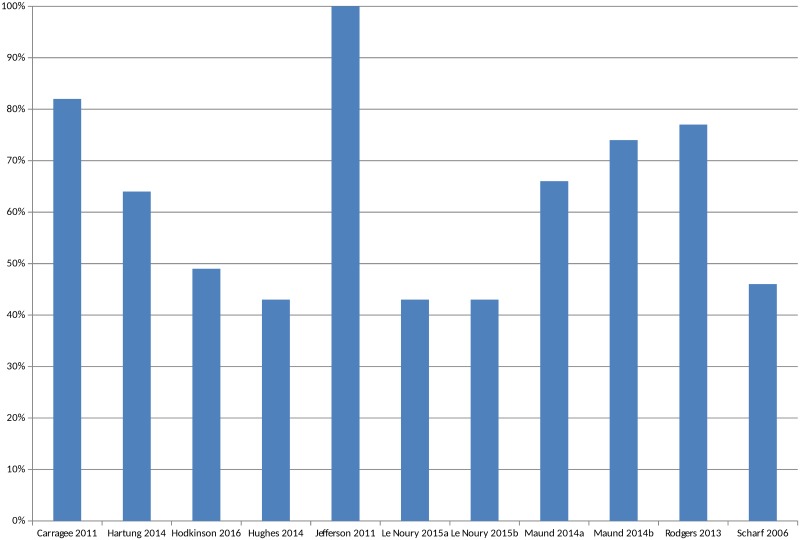
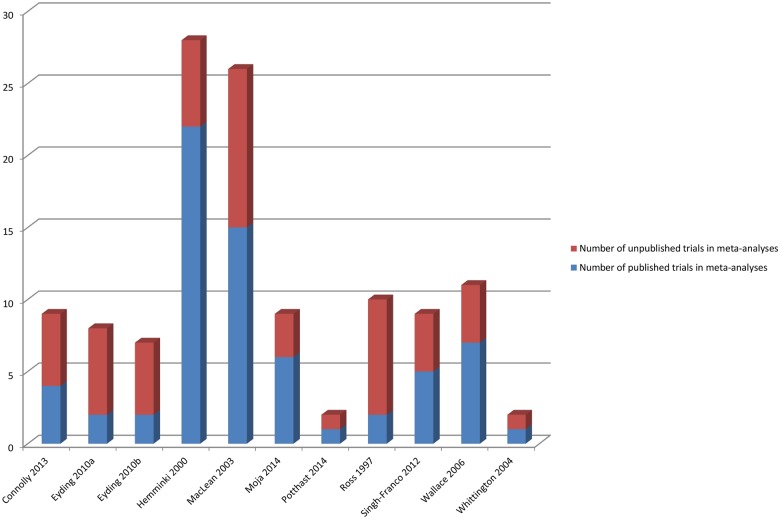
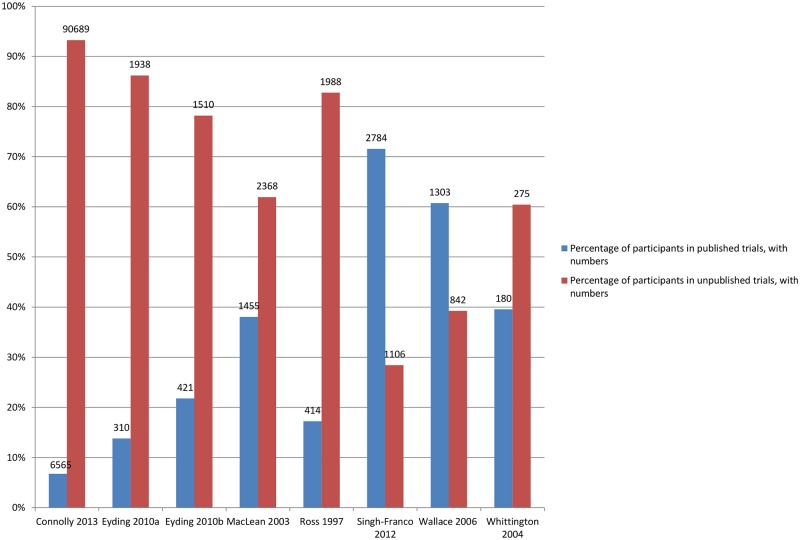
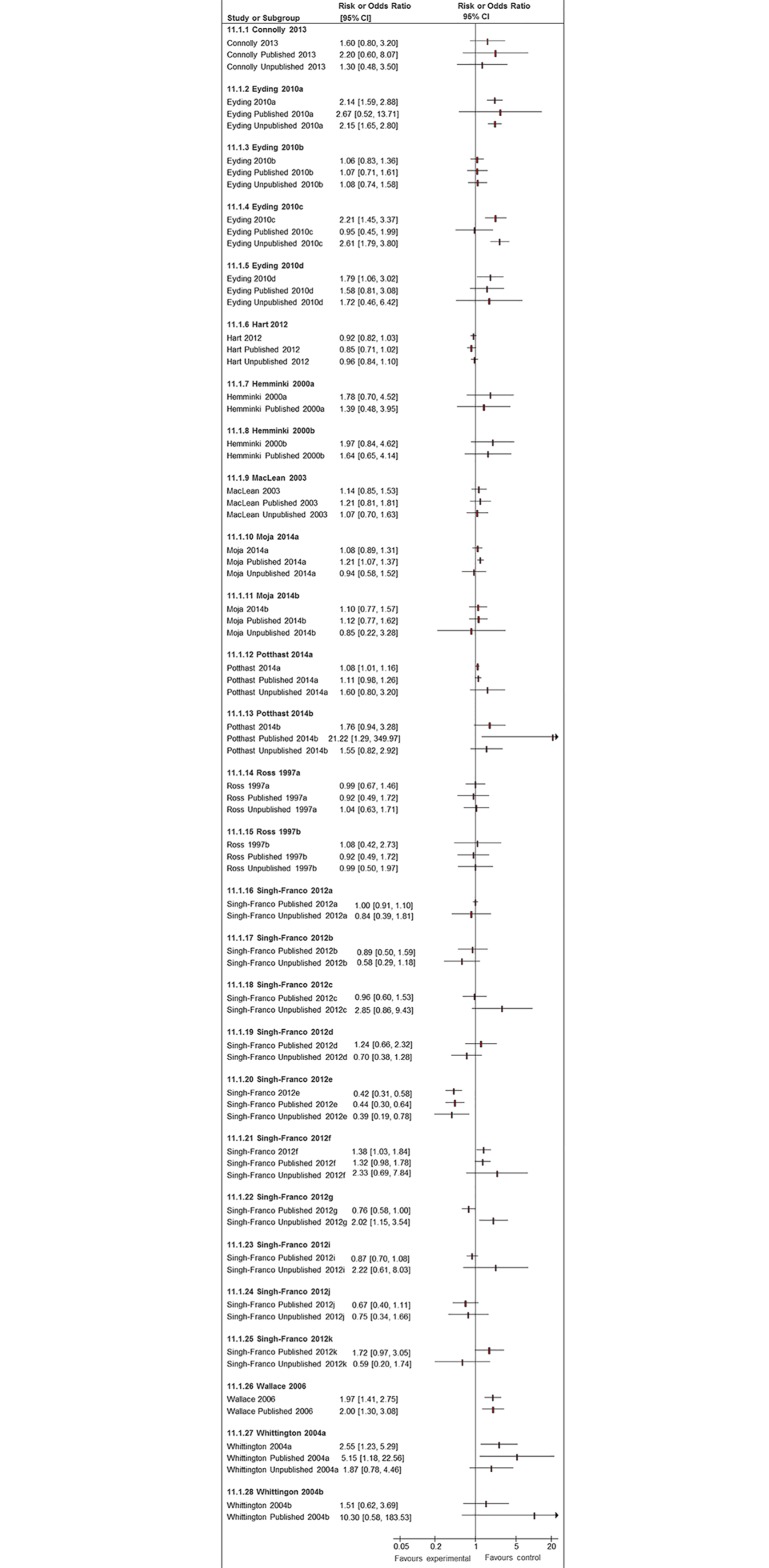
BACKGROUND: We performed a systematic review to assess whether we can quantify the underreporting of adverse events (AEs) in the published medical literature documenting the results of clinical trials as compared with other nonpublished sources, and whether we can measure the impact this underreporting has on systematic reviews of adverse events. METHODS AND FINDINGS: Studies were identified from 15 databases (including MEDLINE and Embase) and by handsearching, reference checking, internet searches, and contacting experts. The last database searches were conducted in July 2016. There were 28 methodological evaluations that met the inclusion criteria. Of these, 9 studies compared the proportion of trials reporting adverse events by publication status. The median percentage of published documents with adverse events information was 46% compared to 95% in the corresponding unpublished documents. There was a similar pattern with unmatched studies, for which 43% of published studies contained adverse events information compared to 83% of unpublished studies. A total of 11 studies compared the numbers of adverse events in matched published and unpublished documents. The percentage of adverse events that would have been missed had each analysis relied only on the published versions varied between 43% and 100%, with a median of 64%. Within these 11 studies, 24 comparisons of named adverse events such as death, suicide, or respiratory adverse events were undertaken. In 18 of the 24 comparisons, the number of named adverse events was higher in unpublished than published documents. Additionally, 2 other studies demonstrated that there are substantially more types of adverse events reported in matched unpublished than published documents. There were 20 meta-analyses that reported the odds ratios (ORs) and/or risk ratios (RRs) for adverse events with and without unpublished data. Inclusion of unpublished data increased the precision of the pooled estimates (narrower 95% confidence intervals) in 15 of the 20 pooled analyses, but did not markedly change the direction or statistical significance of the risk in most cases. The main limitations of this review are that the included case examples represent only a small number amongst thousands of meta-analyses of harms and that the included studies may suffer from publication bias, whereby substantial differences between published and unpublished data are more likely to be published. CONCLUSIONS: There is strong evidence that much of the information on adverse events remains unpublished and that the number and range of adverse events is higher in unpublished than in published versions of the same study. The inclusion of unpublished data can also reduce the imprecision of pooled effect estimates during meta-analysis of adverse events.
Overview
The claims and statistics of this paper haven’t been checked yet.
Free: it reads the open-access text and checks the first 5 claims that cite a source we can check. Create a free account to check every claim.
Integrity signals
Registry
Cites
Statistics
Figures
Verification
Claims the paper makes
The claims and statistics of this paper haven’t been checked yet.
Free: it reads the open-access text and checks the first 5 claims that cite a source we can check. Create a free account to check every claim.
Claims other papers make about this one
Each is checked against this paper’s own text: does it say what the citing paper says it does?
The check wasn’t confident either way, so it gives no verdict — never disputed.
In the citing paper
“For example, Mayo-Wilson et al. found that depending on whether the study data source was a journal article, conference abstract, regulatory document, or individual participant dataset, they were able to produce a meta-analytic result showing that an agent was effective for pain relief in some instances and ineffective in others 36”
From Investigating and dealing with publication bias and other reporting biases in meta-analyses of health research: a review (2021) · cites this paper as [36]
Experimental — accuracy not yet measured
Self-check
Percentages, sums and reported differences re-computed from the paper’s own numbers.
The self-check needs the paper’s full text.
Citations
Cites
GRADE: an emerging consensus on rating quality of evidence and strength of recommendations
Guyatt, G. H., Oxman, A. D., Vist, G. E., Kunz, R., Falck-Ytter, Y., Alonso-Coello, P., & Schünemann, H. J. (2008) · BMJ · doi:10.1136/bmj.39489.470347.ad · Cited by 23,305 · cited 1×
“We also found that the inclusion of unpublished data often leads to more precise risk estimates (with narrower 95% confidence intervals), thus representing higher evidence strength according to the GRADE (Grades of Recommendation, Assessment, Development and Evaluation) classification, in which strength of evidence is…”
ResultHoffmann, T. C., Glasziou, P. P., Boutron, I., Milne, R., Perera, R., Moher, D., Altman, D. G., Barbour, V., Macdonald, H., Johnston, M., et al. (2014) · BMJ · doi:10.1136/bmj.g1687 · Cited by 10,548
Carragee, E. J., Hurwitz, E. L., & Weiner, B. K. (2011) · The Spine Journal · doi:10.1016/j.spinee.2011.04.023 · Cited by 1,395 · cited 4×
“In three instances, the numbers of adverse events were the same [18,25,28], whilst in another three instances (all from the same study), the numbers of gastrointestinal and/or digestive or neurological and/or nervous system adverse events were higher in the published trial [28].”
BackgroundResultInfluentialWhittington, C. J., Kendall, T., Fonagy, P., Cottrell, D., Cotgrove, A., & Boddington, E. (2004) · The Lancet · doi:10.1016/s0140-6736(04)16043-1 · Cited by 1,058 · cited 1×
“A total of 11 studies considered named adverse events [18,19,24,25,28–31,37,39,42], with 8 looking at both named adverse events and all adverse events [16,18,25,28,31,37,39,42].”
Finding What Works in Health Care: Standards for Systematic Reviews
Eden, J., Levit, L. A., Berg, A. O., & Morton, S. C. (2013) · Cited by 948
Eyding, D., Lelgemann, M., Grouven, U., Harter, M., Kromp, M., Kaiser, T., Kerekes, M. F., Gerken, M., & Wieseler, B. (2010) · BMJ · doi:10.1136/bmj.c4737 · Cited by 588 · cited 2×
“of increased risk (published studies alone) became statistically significant after unpublished data was added (Eyding 2010a [20], Eyding 2010c [20], and Singh-Franco 2012e [39]).”
BackgroundCompliance with Results Reporting at ClinicalTrials.gov
Anderson, M. L., Chiswell, K., Peterson, E. D., Tasneem, A., Topping, J., & Califf, R. M. (2015) · New England Journal of Medicine · doi:10.1056/nejmsa1409364 · Cited by 380
Le Noury, J., Nardo, J. M., Healy, D., Jureidini, J., Raven, M., Tufanaru, C., & Abi-Jaoude, E. (2015) · BMJ · doi:10.1136/bmj.h4320 · Cited by 329 · cited 6×
“There were 11 included studies that compared the actual numbers of adverse events, such as number of deaths or number of suicides [16,18,22,25,26,28,34,36,38,40,46] (S4 Table) (although in 2 studies the numbers were not explicitly reported).”
BackgroundResultInfluentialPrayle, A. P., Hurley, M. N., & Smyth, A. R. (2012) · BMJ · doi:10.1136/bmj.d7373 · Cited by 290
Finding What Works in Health Care: Standards for Systematic Reviews
Committee on Standards for Systematic Reviews of Comparative Effectiveness Research, Board on Health Care Services, & Institute of Medicine (2011) · doi:10.17226/13059 · Cited by 289
Research works printed but not linked: 3
- Hart BL, Lundh A, Bero LA. Adding unpublished Food and Drug Administration (FDA) data changes the results of meta-analyses. Poster presentation at the 19th Cochrane Colloquium; 2011 Oct 19–22; Madrid, Spain. 2011; 344: 128– 129.
- Pang C, Loke Y. Publication bias: Extent of unreported outcomes in conference abstracts and journal articles when compared with the full report in the GSK trials register. Br J Clin Pharmacol. 2011; 71(6): 984.
- Hodkinson A. Assessment of harms in clinical trials [PhD thesis]. Liverpool: University of Liverpool; 2015. http://repository.liv.ac.uk/2023762/
Cited by
Industry sponsorship and research outcome
Lundh, A., Lexchin, J., Mintzes, B., Schroll, J. B., & Bero, L. (2017) · Cochrane Database of Systematic Reviews · doi:10.1002/14651858.mr000033.pub3 · Cited by 1,697
Why clinical trial outcomes fail to translate into benefits for patients
Heneghan, C., Goldacre, B., & Mahtani, K. R. (2017) · Trials · doi:10.1186/s13063-017-1870-2 · Cited by 404
“A further review of 11 studies comparing adverse events in published and unpublished documents reported that 43% to 100% (median 64%) of adverse events (including outcomes such as death or suicide) were missed when journal publications were solely relied on [45].”
BackgroundHartling, L., Featherstone, R., Nuspl, M., Shave, K., Dryden, D. M., & Vandermeer, B. (2017) · BMC Medical Research Methodology · doi:10.1186/s12874-017-0347-z · Cited by 324
“Other methods research has also observed the contribution of unpublished studies to reduce or change effect estimates of SRs [9–12] and to expose underestimates of harms in published studies [10, 12, 13].”
MethodPage, M. J., Sterne, J. A. C., Higgins, J. P. T., & Egger, M. (2021) · Research Synthesis Methods · doi:10.1002/jrsm.1468 · Cited by 294
Junqueira, D. R., Zorzela, L., Golder, S., Loke, Y., Gagnier, J. J., Julious, S. A., Li, T., Mayo-Wilson, E., Pham, B., Phillips, R., et al. (2023) · BMJ · doi:10.1136/bmj-2022-073725 · Cited by 281
Self-citationPEER umbrella systematic review of systematic reviews: Management of osteoarthritis in primary care.
Ton, J., Perry, D., Thomas, B., Allan, G. M., Lindblad, A. J., McCormack, J. P., Kolber, M. R., Garrison, S., Moe, S., Craig, R., et al. (2020) · PubMed Central · Cited by 274
Schmucker, C. M., Blümle, A., Schell, L. K., Schwarzer, G., Oeller, P., Cabrera, L., von Elm, E., Briel, M., Meerpohl, J. J., & on behalf of the OPEN consortium (2017) · PLOS ONE · doi:10.1371/journal.pone.0176210 · Cited by 227
“In the up-dated version of the review (Golder et al 2016[24]), the number of included studies could not be derived.”
BackgroundResultCONSORT 2025 explanation and elaboration: updated guideline for reporting randomised trials
Hopewell, S., Chan, A.-W., Collins, G. S., Hróbjartsson, A., Moher, D., Schulz, K. F., Tunn, R., Aggarwal, R., Berkwits, M., Berlin, J. A., et al. (2025) · BMJ · doi:10.1136/bmj-2024-081124 · Cited by 205
Kim, A. Y., Marduy, A., de Melo, P. S., Gianlorenco, A. C., Kim, C. K., Choi, H., Song, J.-J., & Fregni, F. (2022) · Scientific Reports · doi:10.1038/s41598-022-25864-1 · Cited by 195
Jankelson, L., Karam, G., Becker, M. L., Chinitz, L. A., & Tsai, M.-C. (2020) · Heart Rhythm · doi:10.1016/j.hrthm.2020.05.008 · Cited by 184
Breeksema, J. J., Kuin, B. W., Kamphuis, J., van den Brink, W., Vermetten, E., & Schoevers, R. A. (2022) · Journal of Psychopharmacology · doi:10.1177/02698811221116926 · Cited by 178
“…AEs are not always pre-specified, the range of potential reactions can be broad, reporting can be erratic, and terminology is often inconsistent (Golder et al., 2016, 2019) and includes side effects, toxic effects, adverse effects, treatment-emergent AEs (TEAEs), adverse drug reactions,…”
BackgroundDrucker, A. M., Morra, D. E., Prieto-Merino, D., Ellis, A. G., Yiu, Z. Z. N., Rochwerg, B., Di Giorgio, S., Arents, B. W. M., Burton, T., Spuls, P. I., et al. (2022) · JAMA Dermatology · doi:10.1001/jamadermatol.2022.0455 · Cited by 171
Albasri, A., Hattle, M., Koshiaris, C., Dunnigan, A., Paxton, B., Fox, S. E., Smith, M., Archer, L., Levis, B., Payne, R. A., et al. (2021) · BMJ · doi:10.1136/bmj.n189 · Cited by 163
Drucker, A. M., Ellis, A. G., Bohdanowicz, M., Mashayekhi, S., Yiu, Z. Z. N., Rochwerg, B., Di Giorgio, S., Arents, B. W. M., Burton, T., Spuls, P. I., et al. (2020) · JAMA Dermatology · doi:10.1001/jamadermatol.2020.0796 · Cited by 159
Export sales forecasting using artificial intelligence
Sohrabpour, V., Oghazi, P., Toorajipour, R., & Nazarpour, A. (2021) · Technological Forecasting and Social Change · doi:10.1016/j.techfore.2020.120480 · Cited by 156
“Obtaining access to adequate data can cause problems in many ways, such as delays in access and the type of data (nonstandard formats), and it can place heavy demands on the project ’ s resources (Golder et al., 2016; Schroll et al., 2016; Strom et al., 2016; Wieseler et al., 2013).”
BackgroundAdverse Events in Studies of Classic Psychedelics: A Systematic Review and Meta-Analysis
Hinkle, J. T., Graziosi, M., Nayak, S. M., & Yaden, D. B. (2024) · JAMA psychiatry · doi:10.1001/jamapsychiatry.2024.2546 · Cited by 156
Shah, A., Donovan, K., Seeley, C., Dickson, E. A., Palmer, A. J. R., Doree, C. J., Brunskill, S. J., Reid, J., Acheson, A. G., Sugavanam, A., et al. (2021) · JAMA Network Open · doi:10.1001/jamanetworkopen.2021.33935 · Cited by 167
Thanarajasingam, G., Minasian, L. M., Baron, F., Cavalli, F., de Claro, R. A., Dueck, A. C., El‐Galaly, T. C., Everest, N., Geißler, J., Gisselbrecht, C., et al. (2018) · The Lancet Haematology · doi:10.1016/s2352-3026(18)30051-6 · Cited by 152
Adverse events in people taking macrolide antibiotics versus placebo for any indication
Hansen, M. P., Scott, A. M., McCullough, A. R., Thorning, S., Aronson, J. K., Beller, E., Glasziou, P., Hoffmann, T., Clark, J. M., & Mar, C. D. (2019) · Cochrane Database of Systematic Reviews · doi:10.1002/14651858.cd011825.pub2 · Cited by 158
Lineberry, N., Berlin, J. A., Mansi, B., Glasser, S., Berkwits, M., Klem, C., Bhattacharya, A., Citrome, L., Enck, R., Fletcher, J., et al. (2016) · BMJ · doi:10.1136/bmj.i5078 · Cited by 113
Mayo‐Wilson, E., Li, T., Fusco, N., Dickersin, K., & for the MUDS investigators (2018) · Research Synthesis Methods · doi:10.1002/jrsm.1277 · Cited by 114
Post-finasteride syndrome: a surmountable challenge for clinicians
Traish, A. M. (2020) · Fertility and Sterility · doi:10.1016/j.fertnstert.2019.11.030 · Cited by 137
Harms are assessed inconsistently and reported inadequately Part 2: nonsystematic adverse events
Mayo-Wilson, E., Fusco, N., Li, T., Hong, H., Canner, J. K., Dickersin, K., Bertizzolo, L., Cowley, T., Doshi, P., Ehmsen, J., et al. (2019) · Journal of Clinical Epidemiology · doi:10.1016/j.jclinepi.2019.04.020 · Cited by 109
Baudard, M., Yavchitz, A., Ravaud, P., Perrodeau, E., & Boutron, I. (2017) · BMJ · doi:10.1136/bmj.j448 · Cited by 107
“32 However, to our knowledge the impact of searching trial registries in terms of identifying trials and their inclusion in the analysis when results are available has never been evaluated.”
BackgroundCitrome, L. (2017) · Journal of Clinical Psychopharmacology · doi:10.1097/jcp.0000000000000665 · Cited by 92
Drucker, A. M., Lam, M., Prieto‐Merino, D., Malek, R., Ellis, A. G., Yiu, Z. Z. N., Rochwerg, B. N., Giorgio, S. D., Arents, B. W. M., Mohan, T., et al. (2024) · JAMA Dermatology · doi:10.1001/jamadermatol.2024.2192 · Cited by 116
Antenatal magnesium sulphate and adverse neonatal outcomes: A systematic review and meta-analysis
Shepherd, E., Salam, R. A., Manhas, D., Synnes, A. R., Middleton, P., Makrides, M., & Crowther, C. A. (2019) · PLoS Medicine · doi:10.1371/journal.pmed.1002988 · Cited by 110
Harms are assessed inconsistently and reported inadequately part 1: systematic adverse events
Mayo-Wilson, E., Fusco, N., Li, T., Hong, H., Canner, J. K., Dickersin, K., Bertizzolo, L., Cowley, T., Doshi, P., Ehmsen, J., et al. (2019) · Journal of Clinical Epidemiology · doi:10.1016/j.jclinepi.2019.04.022 · Cited by 63
Onakpoya, I. J., Lee, J. J., Mahtani, K. R., Aronson, J. K., & Heneghan, C. J. (2020) · British Journal of Clinical Pharmacology · doi:10.1111/bcp.14210 · Cited by 75
“CSRs are used by drug regulators to assess the benefits and harms of new medicines before they grant marketing licences, and they provide more comprehensive data on trial methods and results than journal publications.(8,9) There has been no previous assessment of the benefit–harm profile of N-B based on evidence from…”
BackgroundRiemer, T., Fuentes, L. E. V., Algharably, E. A. E., Schäfer, M. S., Mangelsen, E., Fürtig, M.-A., Bittner, N., Bär, A., Touis, L. Z., Wachtell, K., et al. (2021) · Hypertension · doi:10.1161/hypertensionaha.120.16590 · Cited by 97
Junqueira, D. R., Zorzela, L., Golder, S., Loke, Y., Gagnier, J. J., Julious, S. A., Li, T., Mayo-Wilson, E., Pham, B., Phillips, R., et al. (2023) · Journal of Clinical Epidemiology · doi:10.1016/j.jclinepi.2023.04.005 · Cited by 67
Self-citationSafety of transcranial direct current stimulation: Evidence based update 2016
Godinho, M. M., Junqueira, D. R., Castro, M. L., Loke, Y. K., Golder, S., & Neto, H. P. (2017) · Brain stimulation · doi:10.1016/j.brs.2017.07.001 · Cited by 76
“As much as 95% of the information regarding adverse events remains unpublished and information of higher complexity in regards to harms may be found in unpublished versions of the same published study [9].”
BackgroundSelf-citationThe Cochrane HPV vaccine review was incomplete and ignored important evidence of bias
Jørgensen, L., Gøtzsche, P. C., & Jefferson, T. (2018) · BMJ Evidence-Based Medicine · doi:10.1136/bmjebm-2018-111012 · Cited by 77
“More importantly, harms cannot be assessed reliably in published trial documents—especially in journal publications of industry-funded trials where even serious harms often are missing.(21) One reason may be the space restrictions that most medical journals have.”
Buawangpong, N., Teekachunhatean, S., & Koonrungsesomboon, N. (2020) · Pharmacology Research & Perspectives · doi:10.1002/prp2.644 · Cited by 65
Gray, C. M., Grimson, F., Layton, D., Pocock, S., & Kim, J. (2020) · Drug Safety · doi:10.1007/s40264-020-00944-1 · Cited by 65
“The under-reporting and recording of non-serious adverse events in RWD is well known [35].”
BackgroundHarms in Systematic Reviews Paper 1: An introduction to research on harms
Qureshi, R., Mayo-Wilson, E., & Li, T. (2022) · Journal of Clinical Epidemiology · doi:10.1016/j.jclinepi.2021.10.023 · Cited by 63
Izcovich, A., Siemieniuk, R. A. C., Bartoszko, J. J., Ge, L., Zeraatkar, D., Kum, E., Qasim, A., Khamis, A. M., Rochwerg, B. N., Agoritsas, T., et al. (2022) · BMJ Open · doi:10.1136/bmjopen-2020-048502 · Cited by 66
Wang, C., Li, C.-H., Hsieh, R. W., Fan, C., Hsu, T.-C., Chang, W.-C., Hsu, W., Lin, Y.-Y., & Lee, C. (2019) · Expert Opinion on Drug Safety · doi:10.1080/14740338.2019.1577820 · Cited by 72
“Publication bias [94] could jeopardize the validity of metaanalyses.”
BackgroundKakemam, E., Hajizadeh, A., Azarmi, M., Zahedi, H., Gholizadeh, M., & Roh, Y. S. (2021) · Journal of Nursing Management · doi:10.1111/jonm.13257 · Cited by 77
Thomsen, S. N., Lahart, I. M., Thomsen, L. M., Fridh, M. K., Larsen, A. T. S., Mau‐Sørensen, M., Bolam, K. A., Fairman, C. M., Christensen, J. F., & Simonsen, C. (2023) · EClinicalMedicine · doi:10.1016/j.eclinm.2023.101937 · Cited by 67
Hansford, H. J., Parmenter, B. J., McLeod, K. A., Wewege, M. A., Smart, N. A., Schutte, A. E., & Jones, M. D. (2021) · Hypertension Research · doi:10.1038/s41440-021-00720-3 · Cited by 69
“Publication bias or selective omission of data is of particular concern regarding adverse events, which have been shown to be significantly higher in unpublished studies [35].”
ResultTomasik, B., Bieńkowski, M., Braun, M., Popat, S., & Dziadziuszko, R. (2021) · Lung Cancer · doi:10.1016/j.lungcan.2021.06.004 · Cited by 63
Gasim, M., Bernstein, C. N., Graff, L. A., Patten, S. B., El-Gabalawy, R. M., Sareen, J., Bolton, J. M., Marriott, J. J., Fisk, J. D., & Marrie, R. A. (2018) · Multiple Sclerosis and Related Disorders · doi:10.1016/j.msard.2018.09.008 · Cited by 63
Mohiuddin, M., Blyth, F., Degenhardt, L. J., Forti, M. D., Eccleston, C., Haroutounian, S., Moore, A., Rice, A. S. C., Wallace, M. S., Park, R., et al. (2020) · Pain · doi:10.1097/j.pain.0000000000002000 · Cited by 63
“com/PAIN/B116) and was developed with careful consideration of previous reviews of cannabinoid-related harms, as well as previous generic approaches to harms reviews.(50) In addition to the reviews identified by this search strategy, additional reviews identified by hand searching of the reviewed articles, and other l…”
MethodAutomatic extraction of quantitative data from ClinicalTrials.gov to conduct meta-analyses
Pradhan, R., Hoaglin, D. C., Cornell, M., Liu, W., Wang, V., & Yu, H. (2019) · Journal of Clinical Epidemiology · doi:10.1016/j.jclinepi.2018.08.023 · Cited by 51
“(28) Moreover, by asking trialists to follow the MedDRA terminology to report adverse events, ClinicalTrials.gov imposes definitional uniformity in safety reporting.”
BackgroundHodkinson, A., Dietz, K. C., Lefebvre, C., Golder, S., Jones, M., Doshi, P., Heneghan, C., Jefferson, T., Boutron, I., & Stewart, L. (2018) · Systematic Reviews · doi:10.1186/s13643-018-0766-x · Cited by 49
Self-citationLamas, J. R., Fernández, C. I., Tornero-Esteban, P., Lópiz, Y., Rodríguez‐Rodríguez, L., Ortega, L. M., Fernández‐Gutiérrez, B., & Marco, F. (2019) · Trials · doi:10.1186/s13063-019-3504-3 · Cited by 48
“It is also necessary to consider that, in general, the reporting of adverse effects in the literature is biased to favor positive results [18].”
BackgroundFiroozeei, T. S., Feizi, A., Rezaeizadeh, H., Zargaran, A., Roohafza, H., & Karimi, M. (2021) · Complementary Therapies in Medicine · doi:10.1016/j.ctim.2021.102679 · Cited by 56
A Systematic Review on Nerve-Related Adverse Effects following Mandibular Nerve Block Anesthesia
Aquilanti, L., Mascitti, M., Togni, L., Contaldo, M., Rappelli, G., & Santarelli, A. (2022) · International Journal of Environmental Research and Public Health · doi:10.3390/ijerph19031627 · Cited by 51
“investigated published versus unpublished studies, finding that a median of 43% of published studies reported adverse event data, in comparison to a median of 83% of unpublished studies [39].”
ResultVignali, J. D., Pak, K., Beverley, H. R., DeLuca, J. P., Downs, J. W., Kress, A. T., Sadowski, B. W., & Selig, D. J. (2023) · Journal of Xenobiotics · doi:10.3390/jox13020017 · Cited by 64
“This is of particular importance given adverse events may be underreported in a clinical trial setting, further highlighting the need for continued pharmacovigilance after trial completion [74].”
BackgroundAnalgesic treatments in people with dementia - how safe are they? A systematic review
Erdal, A., Ballard, C. G., Vahia, I. V., & Husebo, B. S. (2019) · Expert Opinion on Drug Safety · doi:10.1080/14740338.2019.1614166 · Cited by 48
Landschaft, A., Antweiler, D., Mackay, S., Kugler, S., Rüping, S., Wrobel, S., Höres, T., & Allende-Cid, H. (2024) · International Journal of Medical Informatics · doi:10.1016/j.ijmedinf.2024.105531 · Cited by 41
Jørgensen, L., Gøtzsche, P. C., & Jefferson, T. (2020) · Systematic Reviews · doi:10.1186/s13643-019-0983-y · Cited by 45
Pharmaceutical drug development: high drug prices and the hidden role of public funding
Annett, S. (2020) · Biologia Futura · doi:10.1007/s42977-020-00025-5 · Cited by 51
Xu, C., Fan, S., Tian, Y., Liu, F., Furuya-Kanamori, L., Clark, J., Zhang, C., Li, S., Lin, L., Chu, H., et al. (2025) · BMJ · doi:10.1136/bmj-2024-082068 · Cited by 39
Self-citationMore than one-third of systematic reviews did not fully report the adverse events outcome
Parsons, R., Golder, S., & Watt, I. S. (2018) · Journal of Clinical Epidemiology · doi:10.1016/j.jclinepi.2018.12.007 · Cited by 46
Self-citationFragment reattachment after complicated crown‐root fractures of anterior teeth: A systematic review
Khandelwal, P., Srinivasan, S., Arul, B., & Natanasabapathy, V. (2020) · Dental Traumatology · doi:10.1111/edt.12602 · Cited by 53
Hijacked evidence-based medicine: stay the course and throw the pirates overboard
Ioannidis, J. P. A. (2017) · Journal of Clinical Epidemiology · doi:10.1016/j.jclinepi.2017.02.001 · Cited by 50
“[7] Golder S, Loke YK, Wright K, Norman G.”
BackgroundLindner, N., Kuwabara, A., & Holt, T. (2021) · Systematic Reviews · doi:10.1186/s13643-021-01644-2 · Cited by 47
“number of adverse events and system failures, and this is likely to be an underestimate as harms may be underreported [52].”
BackgroundMayo-Wilson, E., Fusco, N., Hong, H., Li, T., Canner, J. K., & Dickersin, K. (2019) · Trials · doi:10.1186/s13063-019-3581-3 · Cited by 35
Peryer, G., Golder, S., Junqueira, D. R., Vohra, S., Loke, Y. K., & on behalf of the Cochrane Adverse Effects Methods Group (2019) · Wiley eBooks · doi:10.1002/9781119536604.ch19 · Cited by 45
Self-citationSponsorship bias in clinical trials: growing menace or dawning realisation?
Jefferson, T. (2020) · Journal of the Royal Society of Medicine · doi:10.1177/0141076820914242 · Cited by 43
“Two other reviews of comparison studies looked specifically at how harms were reported in publications and their regulatory submission counterparts and came to similar conclusions.(32,33) At the time of writing, the assessment by Golder et al.”
ResultPrehospital Cardiac Arrest Airway Management: An NAEMSP Position Statement and Resource Document
Carlson, J. N., Colella, M. R., Daya, M. R., Maio, V. J. D., Nawrocki, P., Nikolla, D. A., & Bosson, N. (2022) · Prehospital Emergency Care · doi:10.1080/10903127.2021.1971349 · Cited by 35
“Adverse events associated with medical interventions are not consistently reported in the literature (40).”
BackgroundSirikul, W., Buawangpong, N., Pinyopornpanish, K., & Siviroj, P. (2024) · BMC Geriatrics · doi:10.1186/s12877-024-05551-8 · Cited by 52
Reporting harms more transparently in trials of cancer drugs
Gyawali, B., Shimokata, T., Honda, K., & Ando, Y. (2018) · BMJ · doi:10.1136/bmj.k4383 · Cited by 36
Fisher, A., Fralick, M., Filion, K. B., Dell’Aniello, S., Douros, A., Tremblay, É., Shah, B. R., Ronksley, P. E., Alessi‐Severini, S., Hu, N., et al. (2020) · Diabetes Obesity and Metabolism · doi:10.1111/dom.14082 · Cited by 40
Qureshı, R., Mayo-Wilson, E., Rittiphairoj, T., McAdams‐DeMarco, M., Güallar, E., & Li, T. (2021) · Journal of Clinical Epidemiology · doi:10.1016/j.jclinepi.2021.10.024 · Cited by 39
Drucker, A. M., Lam, M., Elsawi, R., Prieto‐Merino, D., Malek, R., Ellis, A. G., Yiu, Z. Z. N., Rochwerg, B. N., Giorgio, S. D., Arents, B. W. M., et al. (2023) · British Journal of Dermatology · doi:10.1093/bjd/ljad393 · Cited by 33
Are cancer patients better off if they participate in clinical trials? A mixed methods study
Nielsen, Z. E., Eriksson, S., Harsløf, L. B. S., Petri, S., Helgesson, G., Mangset, M., & Godskesen, T. (2020) · BMC Cancer · doi:10.1186/s12885-020-06916-z · Cited by 35
Lane, S., Lynn, E., & Shakir, S. (2018) · BMJ Open · doi:10.1136/bmjopen-2017-019759 · Cited by 33
“However, it is widely accepted that under-reporting of ADRs occurs in both spontaneous reporting systems and the published literature, for reasons such as publication bias, which impedes signal detection by pharmacovigilance.(19) 20 Furthermore, while spontaneous ADR reports are an effective method of identifying safe…”
Junqueira, D. R., Bennett, D., Huh, S. Y., Fahrbach, K. R., Neupane, B., & Betts, M. B. (2023) · Drugs in R&D · doi:10.1007/s40268-023-00413-x · Cited by 43
Missing clinical trial data: the evidence gap in primary data for potential COVID-19 drugs
Rodgers, F., Pepperrell, T., Keestra, S., & Pilkington, V. (2021) · Trials · doi:10.1186/s13063-021-05024-y · Cited by 30
Cochrane Sustainable Healthcare: evidence for action on too much medicine
Johansson, M., Bero, L. A., Bonfill, X., Bruschettini, M., Garner, S. E., Glenton, C., Harris, R., Jørgensen, K. J., Levinson, W. S., Lotfi, T., et al. (2019) · Cochrane Database of Systematic Reviews · doi:10.1002/14651858.ed000143 · Cited by 30
Jørgensen, L., Gøtzsche, P. C., & Jefferson, T. (2018) · Systematic Reviews · doi:10.1186/s13643-018-0675-z · Cited by 28
“- Mean participants per multicentre study 2388 [20; 34,206] 2073 [20; 34,206] 2692 [67; 14,840] 6450 [900; 12,000] 2745 [75; 20,000] NA 2745 [75; 20,000] NA NA”
Reporting summary results in clinical trial registries: updated guidance from WHO
Chan, A.-W., Karam, G., Pymento, J., Askie, L. M., da Silva, L. R., Aymé, S., Taylor, C. M., Hooft, L., Ross, A. L., & Moorthy, V. (2025) · The Lancet Global Health · doi:10.1016/s2214-109x(24)00514-x · Cited by 24
Strengthening the reporting of harms of all interventions in clinical trials
Shaheed, C. A., Maher, C. G., Furmage, A., Hoffmann, T., & McLachlan, A. J. (2022) · The Medical Journal of Australia · doi:10.5694/mja2.51755 · Cited by 30
Kuo, H., Chen, C., Hsu, A. Y., Wang, Y., Lin, C., Hsia, N., Tsai, Y., & Wei, J. C. (2024) · Frontiers in Immunology · doi:10.3389/fimmu.2023.1302293 · Cited by 24
“It is important to note that ICI studies frequently rely on adverse event reporting by clinical investigators, rendering them susceptible to potential bias stemming from incomplete reporting or monitoring (25).”
Notificación de incidentes relacionados con la atención a la salud en un hospital docente
da Silva, V. A., Mota, R. S., Barros, A. D. S., Fernandes, A. R. G., Sant’Anna, M. V., & dos Santos, M. R. N. B. (2021) · Enfermería Global · doi:10.6018/eglobal.450481 · Cited by 23
“As informações obtidas a partir das notificações são determinantes para tomadores de decisão, responsáveis pela elaboração e gestão de políticas de segurança, profissionais de saúde e pacientes(9), podendo subsidiar a implementação de melhorias organizacionais(6,10).”
Lawani, M. A., Valéra, B., Fortier-Brochu, É., Légaré, F., Carmichael, P., Côté, L., Voyer, P., Kröger, E., Witteman, H. O., Rodríguez, C., et al. (2017) · Systematic Reviews · doi:10.1186/s13643-017-0446-2 · Cited by 24
“This highlights the need for improved reporting of the negative impacts of interventions, hinting to publication bias issue [46].”
BackgroundChandler, R. E. (2019) · BMJ · doi:10.1136/bmj.l2268 · Cited by 23
Comparative Safety of Drugs Targeting the Nitric Oxide Pathway in Pulmonary Hypertension
Khouri, C., Lepelley, M., Roustit, M., Montastruc, F., Humbert, M. J. C., & Cracowski, J. (2017) · CHEST Journal · doi:10.1016/j.chest.2017.12.008 · Cited by 25
Kamp, C. B., Petersen, J. J., Faltermeier, P., Juul, S., Siddiqui, F., Moncrieff, J., Horowitz, M. A., Hengartner, M. P., Kirsch, I., Gluud, C. N., et al. (2024) · Epidemiology and Psychiatric Sciences · doi:10.1017/s2045796024000520 · Cited by 26
“Furthermore, unpublished data were included in the analyses to increase the validity of our results (Golder et al. , 2016; Higgins et al. , 2022; Maund et al. , 2014; Tang et al. , 2015).”
Kearns, B., Cooper, K. L., Orr, M., Essat, M., Hamilton, J. A., & Cantrell, A. J. (2022) · Neuropsychiatric Disease and Treatment · doi:10.2147/ndt.s356414 · Cited by 22
“This is of particular importance as rates of adverse events may be underreported in the literature.(54) This underreporting would not be identified via quality assessment tools.”
BackgroundKamp, C. B., Petersen, J. J., Faltermeier, P., Juul, S., Siddiqui, F., Barbateskovic, M., Kristensen, A. T., Moncrieff, J., Horowitz, M. A., Hengartner, M. P., et al. (2024) · BMJ Mental Health · doi:10.1136/bmjment-2023-300730 · Cited by 29
Gotosa, J., Kodzwa, J. J., Nyamangara, J., & Gwenzi, W. (2019) · International Journal of Plant Production · doi:10.1007/s42106-019-00045-9 · Cited by 23
Honvo, G., Bannuru, R. R., Bruyère, O., Rannou, F., Herrero‐Beaumont, G., Uebelhart, D., Cooper, C. C., Arden, N., Conaghan, P. G., Reginster, J., et al. (2019) · Drugs & Aging · doi:10.1007/s40266-019-00667-8 · Cited by 24
Traish, A. M. (2018) · Current Sexual Health Reports · doi:10.1007/s11930-018-0161-6 · Cited by 22
Roitsch, J., Gumpert, M., Springle, A. P., & Raymer, A. M. (2020) · Reading & Writing Quarterly · doi:10.1080/10573569.2019.1708221 · Cited by 31
Anderson, J. M., Howard, C., Staggs, J., Steele, R. J., Strasser, T., Small, T. J., Vassar, M. B., & Checketts, J. X. (2022) · The Journal of Arthroplasty · doi:10.1016/j.arth.2022.06.004 · Cited by 17
Cheligeer, C., Wu, G., Lee, S. “., Pan, J., Southern, D. A., Martin, E. A., Sapiro, N., Eastwood, C. A., Quan, H., & Xu, Y. (2023) · JMIR Medical Informatics · doi:10.2196/48995 · Cited by 20
“However, these methodologies, while widely used, present challenges due to the time-consuming nature of ICD coding and manual chart reviews, potentially causing delays in recording and detecting AEs [15,16].”
MethodRajšić, S., Treml, B., Rugg, C., Innerhofer, N., Eckhardt, C., & Breitkopf, R. (2024) · Transplantation · doi:10.1097/tp.0000000000005133 · Cited by 17
“74 This could have led to an overestimation of good outcomes, particularly the high graft survival rates found in our work.”
Exposure to pesticides and the risk of hypothyroidism: a systematic review and meta-analysis
Sirikul, W., & Sapbamrer, R. (2023) · BMC Public Health · doi:10.1186/s12889-023-16721-5 · Cited by 22
Gates, A., Caldwell, P. H. Y., Curtis, S. J., Dans, L. F., Fernandes, R. M., Hartling, L., Kelly, L. E., Vandermeer, B., Williams, K. J., Woolfall, K., et al. (2019) · BMJ Paediatrics Open · doi:10.1136/bmjpo-2018-000426 · Cited by 19
“Similarly, a review of adverse event reporting in published and unpublished reports of studies of healthcare interventions found strong evidence that much of the information on adverse events remains unpublished.(28)”
ResultPradhan, R., & Singh, S. (2018) · Drug Safety · doi:10.1007/s40264-018-0666-y · Cited by 19
Challenges of independent assessment of potential harms of HPV vaccines
Jørgensen, L., Doshi, P., Gøtzsche, P. C., & Jefferson, T. (2018) · BMJ · doi:10.1136/bmj.k3694 · Cited by 15
Paludan‐Müller, A. S., Créquit, P., & Boutron, I. (2021) · BMC Medicine · doi:10.1186/s12916-021-01955-0 · Cited by 21
“Our finding of non-publication of RCTs and poor reporting of harms in publications is also in accordance with previous findings [113].”
ResultHealthcare costs and mortality associated with serious fluoroquinolone‐related adverse reactions
Kuula, L. S. M., Backman, J. T., & Blom, M. L. (2022) · Pharmacology Research & Perspectives · doi:10.1002/prp2.931 · Cited by 16
Long-term harms from previous use of selective serotonin reuptake inhibitors: A systematic review
Danborg, P. B., Valdersdorf, M., & Gøtzsche, P. C. (2019) · International Journal of Risk & Safety in Medicine · doi:10.3233/jrs-180046 · Cited by 14
“Inadequate reporting of harms, even serious harms like deaths, is a general problem for psychiatric drug trials [6, 8, 45, 46], and the discrepancy between data in clinical study reports and in journal publications is disturbing [7, 12, 47, 48].”
BackgroundXu, C., Zhang, F., Doi, S. A. R., Furuya‐Kanamori, L., Lin, L., Chu, H., Yang, X., Li, S., Zorzela, L., Golder, S., et al. (2024) · BMC Medicine · doi:10.1186/s12916-024-03300-7 · Cited by 17
“Fourth, poor reporting of harms may impact the representativeness of the current study, as empirical evidence showed that only 43% of published trials reported harms data [40].”
BackgroundSelf-citationOrgan Donation from Patients Receiving Extracorporeal Membrane Oxygenation: A Systematic Review
Rajšić, S., Treml, B., Innerhofer, N., Eckhardt, C., Spurnić, A. R., & Breitkopf, R. (2024) · Journal of Cardiothoracic and Vascular Anesthesia · doi:10.1053/j.jvca.2024.03.020 · Cited by 14
Metadata
- Authors
- Golder, S., Loke, Y. K., Wright, K., & Norman, G.
- Affiliations
- University of York (GB)
- University of East Anglia (GB)
- University of Manchester (GB)
- Corresponding author
- Golder, Su
- Venue
- PLOS Medicine
- Publisher
- Public Library of Science (PLoS)
- Published
- 2016-09-20
- Volume
- 13
- Issue
- 9
- Pages
- e1002127
- ISSN
- 1549-1277 (ISSN-L)
- 1549-1676
- PMC
- PMC5029817
- OpenAlex
- W2523042213
- Cited by
- 277
- References
- 54
- Citations by year
- 2026: 27 · 2025: 33 · 2024: 39 · 2023: 26 · 2022: 19 · 2021: 28 · 2020: 40 · 2019: 23 · 2018: 21 · 2017: 17 · 2016: 4
- FWCI
- 7.78
- Type
- journal article
- Language
- en
- Open access
- gold
- doi.org
- Licence
- Locations
- PLoS Medicine (publishedVersion, cc-by)
- PubMed Central (publishedVersion, cc-by)
- PubMed (publishedVersion)
- RePEc: Research Papers in Economics (publishedVersion)
- White Rose Research Online (University of Leeds, The University of Sheffield, University of York) (acceptedVersion)
- UEA Digital Repository (University of East Anglia) (acceptedVersion)
- DOAJ (DOAJ: Directory of Open Access Journals) (submittedVersion, cc-by-sa)
- Figshare (submittedVersion, cc-by)
- Research Explorer (The University of Manchester) (submittedVersion, cc-by)
- Funders
- National Institute for Health Research (2014-07-041)
- Topics
- Social Sciences › Decision Sciences › Statistics, Probability and Uncertainty › Meta-analysis and systematic reviews
- Health Sciences › Nursing › Issues, ethics and legal aspects › Pharmaceutical industry and healthcare
- Life Sciences › Pharmacology, Toxicology and Pharmaceutics › Toxicology › Pharmacovigilance and Adverse Drug Reactions
- Keywords
- underreporting of adverse events, publication bias, adverse event reporting, clinical trial registries
- MeSH terms
- Clinical Trials as Topic, Humans, Review Literature as Topic, Meta-Analysis as Topic, Publication Bias, Risk Assessment, Drug-Related Side Effects and Adverse Reactions
About these checks
Registry, retraction, Cites and statistics results are computed, not judged, with one exception: a printed reference that no index lists is read once by a model before it counts as a citation error. Claims are extracted by a model and kept only when their quote appears verbatim in the text; each cited source is then checked, with a model’s help, for whether it says what the claim relies on. Those verdicts can be wrong — read the claim’s quote and the cited source before relying on one.
Statistics and arithmetic are recomputed, not judged.
Confidence bands are shown only for fields calibrated on our annotated test set. None is calibrated yet, so no band is shown.
What counts as a claim ›How we measure confidence ›How we check this ›
Are you an author, or do you see a problem with this page? Request a review
Data sources
Bibliographic data: Semantic Scholar, OpenAlex, Crossref.
Contains information from the Semantic Scholar Academic Graph Datasets, made available under the ODC Attribution License (ODC-BY 1.0).
Semantic Scholar’s data is described in: Kinney, R., et al. (2023). The Semantic Scholar Open Data Platform. arXiv:2301.10140.
