

Reporting of Adverse Events in Published and Unpublished Studies of Health Care Interventions: A Systematic Review
Open accessThe DOI matches its Crossref record; 54 of the 54 references it cites were found in a registry or an index.
Abstract
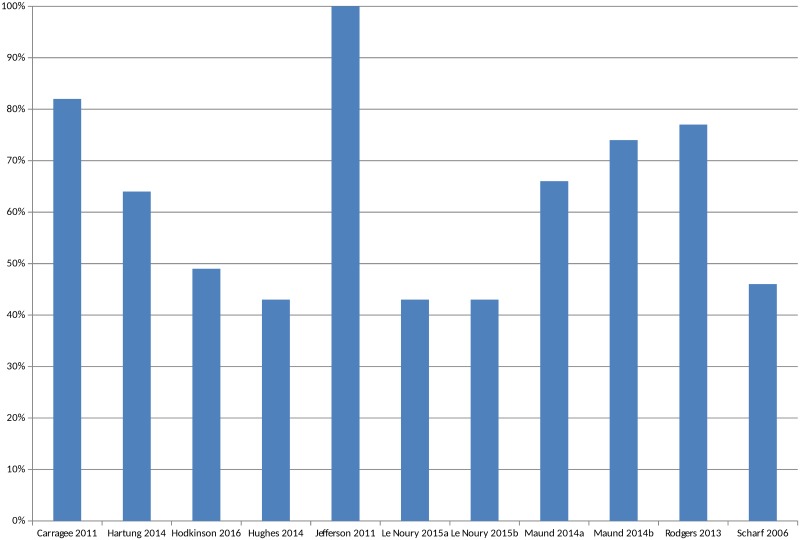
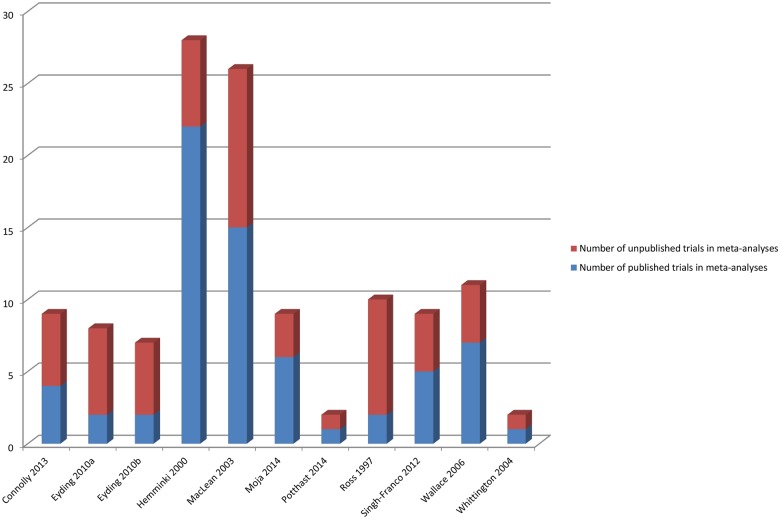
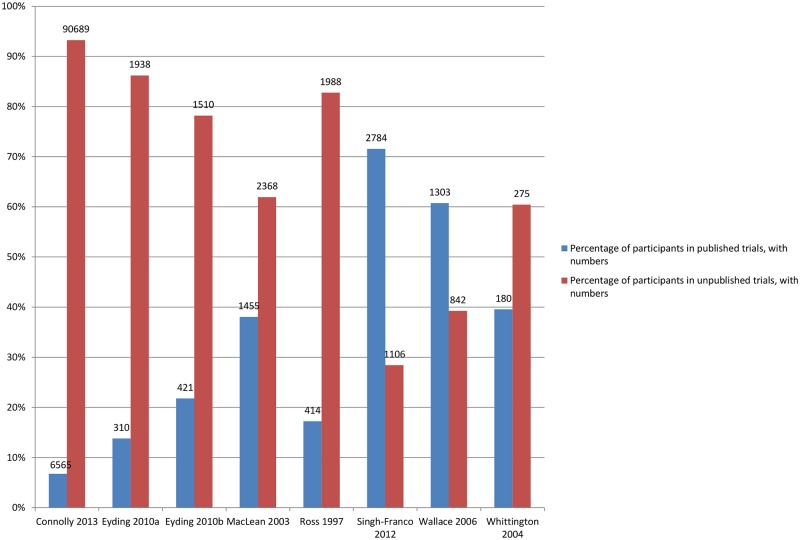
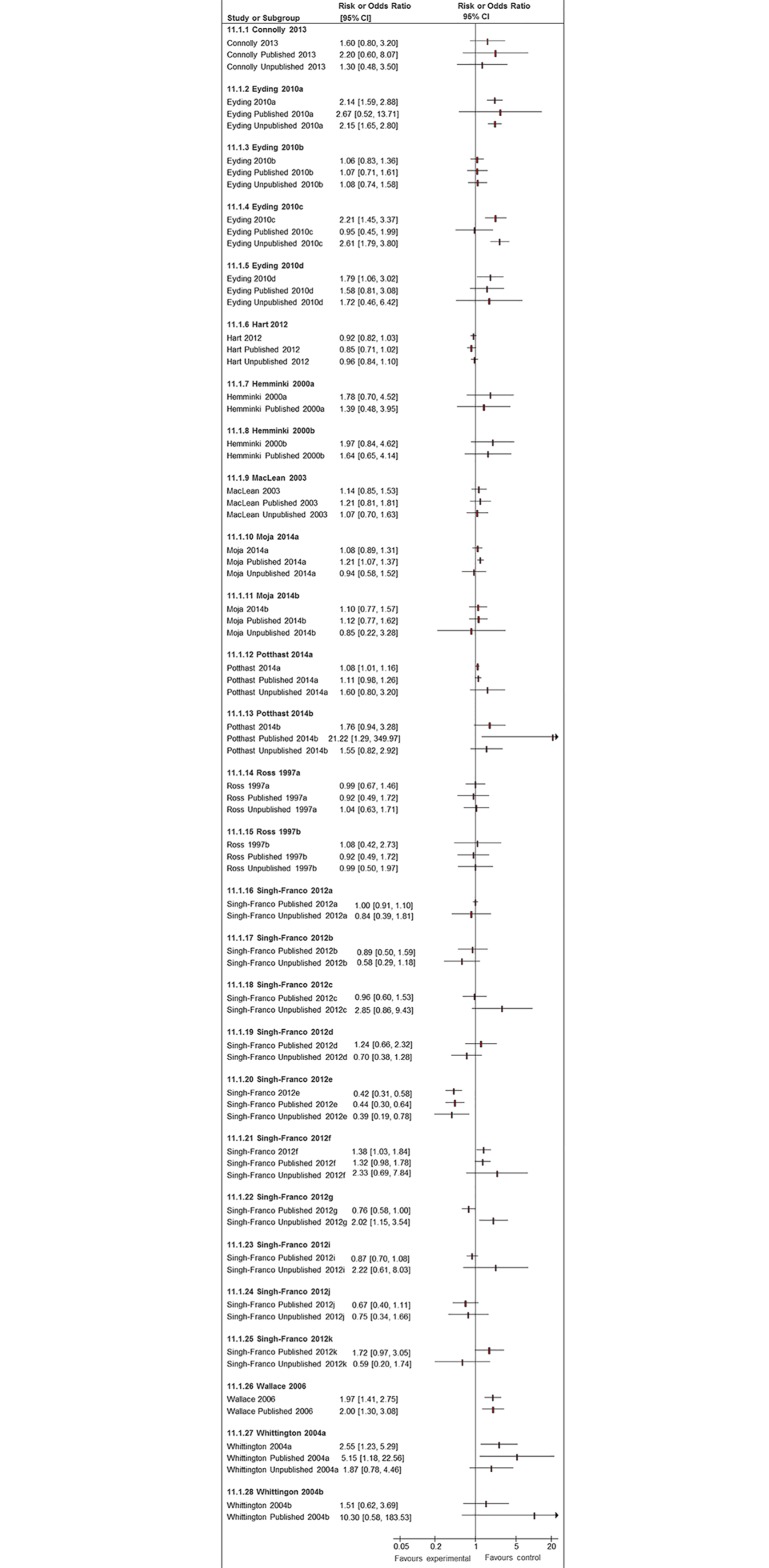
BACKGROUND: We performed a systematic review to assess whether we can quantify the underreporting of adverse events (AEs) in the published medical literature documenting the results of clinical trials as compared with other nonpublished sources, and whether we can measure the impact this underreporting has on systematic reviews of adverse events. METHODS AND FINDINGS: Studies were identified from 15 databases (including MEDLINE and Embase) and by handsearching, reference checking, internet searches, and contacting experts. The last database searches were conducted in July 2016. There were 28 methodological evaluations that met the inclusion criteria. Of these, 9 studies compared the proportion of trials reporting adverse events by publication status. The median percentage of published documents with adverse events information was 46% compared to 95% in the corresponding unpublished documents. There was a similar pattern with unmatched studies, for which 43% of published studies contained adverse events information compared to 83% of unpublished studies. A total of 11 studies compared the numbers of adverse events in matched published and unpublished documents. The percentage of adverse events that would have been missed had each analysis relied only on the published versions varied between 43% and 100%, with a median of 64%. Within these 11 studies, 24 comparisons of named adverse events such as death, suicide, or respiratory adverse events were undertaken. In 18 of the 24 comparisons, the number of named adverse events was higher in unpublished than published documents. Additionally, 2 other studies demonstrated that there are substantially more types of adverse events reported in matched unpublished than published documents. There were 20 meta-analyses that reported the odds ratios (ORs) and/or risk ratios (RRs) for adverse events with and without unpublished data. Inclusion of unpublished data increased the precision of the pooled estimates (narrower 95% confidence intervals) in 15 of the 20 pooled analyses, but did not markedly change the direction or statistical significance of the risk in most cases. The main limitations of this review are that the included case examples represent only a small number amongst thousands of meta-analyses of harms and that the included studies may suffer from publication bias, whereby substantial differences between published and unpublished data are more likely to be published. CONCLUSIONS: There is strong evidence that much of the information on adverse events remains unpublished and that the number and range of adverse events is higher in unpublished than in published versions of the same study. The inclusion of unpublished data can also reduce the imprecision of pooled effect estimates during meta-analysis of adverse events.
Overview
The claims and statistics of this paper haven’t been checked yet.
Free: it reads the open-access text and checks the first 5 claims that cite a source we can check. Create a free account to check every claim.
Integrity signals
Registry
Cites
Statistics
Figures
Verification
Claims the paper makes
The claims and statistics of this paper haven’t been checked yet.
Free: it reads the open-access text and checks the first 5 claims that cite a source we can check. Create a free account to check every claim.
Claims other papers make about this one
Each is checked against this paper’s own text: does it say what the citing paper says it does?
The check wasn’t confident either way, so it gives no verdict — never disputed.
In the citing paper
“For example, Mayo-Wilson et al. found that depending on whether the study data source was a journal article, conference abstract, regulatory document, or individual participant dataset, they were able to produce a meta-analytic result showing that an agent was effective for pain relief in some instances and ineffective in others 36”
From Investigating and dealing with publication bias and other reporting biases in meta-analyses of health research: a review (2021) · cites this paper as [36]
Experimental — accuracy not yet measured
Self-check
Percentages, sums and reported differences re-computed from the paper’s own numbers.
The self-check needs the paper’s full text.
Citations
Cites
GRADE: an emerging consensus on rating quality of evidence and strength of recommendations
Guyatt, G. H., Oxman, A. D., Vist, G. E., Kunz, R., Falck-Ytter, Y., Alonso-Coello, P., & Schünemann, H. J. (2008) · BMJ · doi:10.1136/bmj.39489.470347.ad · Cited by 23,305 · cited 1×
“We also found that the inclusion of unpublished data often leads to more precise risk estimates (with narrower 95% confidence intervals), thus representing higher evidence strength according to the GRADE (Grades of Recommendation, Assessment, Development and Evaluation) classification, in which strength of evidence is…”
ResultHoffmann, T. C., Glasziou, P. P., Boutron, I., Milne, R., Perera, R., Moher, D., Altman, D. G., Barbour, V., Macdonald, H., Johnston, M., et al. (2014) · BMJ · doi:10.1136/bmj.g1687 · Cited by 10,548
Carragee, E. J., Hurwitz, E. L., & Weiner, B. K. (2011) · The Spine Journal · doi:10.1016/j.spinee.2011.04.023 · Cited by 1,395 · cited 4×
“In three instances, the numbers of adverse events were the same [18,25,28], whilst in another three instances (all from the same study), the numbers of gastrointestinal and/or digestive or neurological and/or nervous system adverse events were higher in the published trial [28].”
BackgroundResultInfluentialWhittington, C. J., Kendall, T., Fonagy, P., Cottrell, D., Cotgrove, A., & Boddington, E. (2004) · The Lancet · doi:10.1016/s0140-6736(04)16043-1 · Cited by 1,058 · cited 1×
“A total of 11 studies considered named adverse events [18,19,24,25,28–31,37,39,42], with 8 looking at both named adverse events and all adverse events [16,18,25,28,31,37,39,42].”
Finding What Works in Health Care: Standards for Systematic Reviews
Eden, J., Levit, L. A., Berg, A. O., & Morton, S. C. (2013) · Cited by 948
Eyding, D., Lelgemann, M., Grouven, U., Harter, M., Kromp, M., Kaiser, T., Kerekes, M. F., Gerken, M., & Wieseler, B. (2010) · BMJ · doi:10.1136/bmj.c4737 · Cited by 588 · cited 2×
“of increased risk (published studies alone) became statistically significant after unpublished data was added (Eyding 2010a [20], Eyding 2010c [20], and Singh-Franco 2012e [39]).”
BackgroundCompliance with Results Reporting at ClinicalTrials.gov
Anderson, M. L., Chiswell, K., Peterson, E. D., Tasneem, A., Topping, J., & Califf, R. M. (2015) · New England Journal of Medicine · doi:10.1056/nejmsa1409364 · Cited by 380
Le Noury, J., Nardo, J. M., Healy, D., Jureidini, J., Raven, M., Tufanaru, C., & Abi-Jaoude, E. (2015) · BMJ · doi:10.1136/bmj.h4320 · Cited by 329 · cited 6×
“There were 11 included studies that compared the actual numbers of adverse events, such as number of deaths or number of suicides [16,18,22,25,26,28,34,36,38,40,46] (S4 Table) (although in 2 studies the numbers were not explicitly reported).”
BackgroundResultInfluentialPrayle, A. P., Hurley, M. N., & Smyth, A. R. (2012) · BMJ · doi:10.1136/bmj.d7373 · Cited by 290
Finding What Works in Health Care: Standards for Systematic Reviews
Committee on Standards for Systematic Reviews of Comparative Effectiveness Research, Board on Health Care Services, & Institute of Medicine (2011) · doi:10.17226/13059 · Cited by 289
Research works printed but not linked: 3
- Hart BL, Lundh A, Bero LA. Adding unpublished Food and Drug Administration (FDA) data changes the results of meta-analyses. Poster presentation at the 19th Cochrane Colloquium; 2011 Oct 19–22; Madrid, Spain. 2011; 344: 128– 129.
- Pang C, Loke Y. Publication bias: Extent of unreported outcomes in conference abstracts and journal articles when compared with the full report in the GSK trials register. Br J Clin Pharmacol. 2011; 71(6): 984.
- Hodkinson A. Assessment of harms in clinical trials [PhD thesis]. Liverpool: University of Liverpool; 2015. http://repository.liv.ac.uk/2023762/
Cited by
Items 201–281 of 281
Christensen, R., Berthelsen, D. B., Tugwell, P., Golder, S., Qureshi, R., Mayo‐Wilson, E., Simon, L. S., Kwong, J. S., Williamson, P. R., & Vohra, S. (2026) · Journal of Clinical Epidemiology · doi:10.1016/j.jclinepi.2026.112218 · Cited by 3
Self-citationO'Sullivan, J., Dawson, S., Cooper, C., & Higgins, J. P. T. (2026) · Research Synthesis Methods · doi:10.1017/rsm.2026.10086 · Cited by 1
“9 However, a comprehensive search that goes beyond journal articles is time-consuming and resource-intensive.”
Shi, W., Kaewsanmung, S., Kiratipaisarl, W., & Sapbamrer, R. (2026) · BMC Public Health · doi:10.1186/s12889-026-27640-6 · Cited by 1
“Moreover, studies reporting significant associations may be more likely to be published than those with null findings [145, 146], potentially inflating the magnitude of pooled estimates.”
From Where to What: The Geo-Intervention Modelling Framework
Wen, R., & Li, S. (2026) · ISPRS International Journal of Geo-Information · doi:10.3390/ijgi15070292
Large Language Models and Adverse Event Detection Within Immunotherapy Clinical Trials
Elia, M. V., Friesner, I. D., Kwon, D. H.-M., Ni, L., Sinha, S., Ishiyama, Y., Zack, T. I., Bridge, M., Fong, L. H., & Hong, J. C. (2026) · JAMA Network Open · doi:10.1001/jamanetworkopen.2026.31840 · Cited by 1
Secondary Analysis of Individual Patient-Level Clinical Trial Data: A Primer
Kim, D. (2021) · Munich studies on innovation and competition · doi:10.1007/978-3-030-86778-2_3 · Cited by 1
Τσεκούρα, Μ., Matzaroglou, C., Xergia, S. A., Dionyssiotis, Y., Tsepis, E., Sakellari, V., & Billis, E. V. (2024) · Journal of Frailty Sarcopenia and Falls · doi:10.22540/jfsf-09-089 · Cited by 2
Reporting Quality of Adverse Events in Temporomandibular Disorders Treatment: A Systematic Review
Li, C., Li, Y., Zheng, Y., Li, W., Wo, P., Park, J. W., Wang, J., & Xiong, X. (2025) · Oral Diseases · doi:10.1111/odi.70032 · Cited by 1
“In most cases, the deficiency of standardized protocols could lead to neglecting evaluation of event severity and causality (Golder et al. 2016).”
Inadequate evaluation of potential side effects of sildenafil in preterm stopped Dutch trial
Bijl, D., & Healy, D. (2020) · International Journal of Risk & Safety in Medicine · doi:10.3233/jrs-202003 · Cited by 1
“From the literature it is well known that the information available in the summary of product characteristics does not reflect the scientific knowledge that is available in the community [15].”
Kaur, K. K., Allahbadia, G. N., & Singh, M. (2020) · Archives of Urology · doi:10.22259/2638-5228.0301003
Accidental lipid overdose in a preterm infant: A case report
Ryan, M. S., McIntyre, J., Bramwell, L. &. D., & Ojha, S. (2023) · Journal of Neonatal-Perinatal Medicine · doi:10.3233/npm-231221 · Cited by 1
“Publicationbiasesagainst nullhypothesesor“negative”resultsarewell-known inmedicine[27,28],includingthoseregardingdrug errors[28].”
Research roundup: November 2016
Greener, M. (2016) · Nurse Prescribing · doi:10.12968/npre.2016.14.11.534
Hanna, M. (2019) · Springer eBooks · doi:10.1007/978-3-030-02955-5_11
Paludan‐Müller, A. S., Jørgensen, K. J., & Goetzsche, P. C. (2020) · medRxiv · doi:10.1101/2020.05.18.20100917
Tziatzios, G., Triantafyllou, K., & Gkolfakis, P. (2020) · Annals of Gastroenterology · doi:10.20524/aog.2020.0505 · Cited by 1
“Arguably, the consequences of publication bias have been studied in relation to meta-analyses of randomized controlled trials, while its effect when observational studies are included is less clear [6].”
BackgroundTan, X., Kern, D. M., & Cepeda, M. S. (2020) · Therapeutic Innovation & Regulatory Science · doi:10.1007/s43441-020-00237-w
Von der Evidenz zur Empfehlung – die Kunst, Leitlinienempfehlungen zu begründen
Nothacker, M. (2021) · Der Urologe · doi:10.1007/s00120-021-01493-w
Medical Benefit-Risk Determination
Perakslis, E. D., & Stanley, M. (2021) · Oxford University Press eBooks · doi:10.1093/oso/9780197503133.003.0002
Responses of physicians to an objective safety and quality knowledge test: a cross-sectional study
BURKE, H. B., & King, H. B. (2021) · BMJ Open · doi:10.1136/bmjopen-2020-040779
Adverse events underreported in published data
(2016) · Reactions Weekly · doi:10.1007/s40278-016-21562-2
Hanna, M. (2019) · Springer eBooks · doi:10.1007/978-3-030-02955-5_60
de Broca, A. (2019) · Éthique & Santé · doi:10.1016/j.etiqe.2019.01.002
Botelho, M. S., Bolfi, F., Leite, R. G. O. F., Leite, M. S. F., Banzato, L. R., Soares, L. T., Olivatti, T. O. F., Mangolim, A. S., Oliveira, F. R. K., Abbade, L. P. F., et al. (2020) · Research Square · doi:10.21203/rs.3.rs-75518/v1
DTB Select: 12 | December 2016
(2016) · Drug and Therapeutics Bulletin · doi:10.1136/dtb.2016.12.0440
“Drug Safety Update 2014; 8 (2): A2 [online].”
Hanna, M. (2019) · Springer eBooks · doi:10.1007/978-3-030-02955-5_1
Under-reporting of safety data – cause for concern
Gajbhiye, S. (2022) · Journal of Postgraduate Medicine · doi:10.4103/jpgm.jpgm_326_22
“[6] The sponsor has access to a clinical database and must meet the larger responsibility to report safety information to all stakeholders.”
Interpreting and Implementing Evidence for Quality Research
Cahan, E. M., & Shea, K. G. (2022) · Springer eBooks · doi:10.1007/978-3-031-07105-8_13
Breeksema, J. J. (2024) · University of Groningen research database (University of Groningen / Centre for Information Technology) · doi:10.33612/diss.912040905 · Cited by 1
Elgharably, A. N., Desai, K., Nevill, A. M., Vance, A., Lester, J., Bonfiglio, E., Rigby, C., Forrester, A., Ogrodnik, P. J., Faint, J. M., et al. (2024) · BMJ Innovations · doi:10.1136/bmjinnov-2024-001248
Xu, C., Fan, S., Furuya‐Kanamori, L., Li, S., Lin, L., Chu, H., Golder, S., Loke, Y. K., & Vohra, S. (2024) · BMC Medicine · doi:10.1186/s12916-024-03621-7 · Cited by 1
“In addition, based on the study by Su et al., safety outcomes were only reported in 43% of the published trials, and the majority did not report any safety outcome [42].”
BackgroundSelf-citationDeveloping a Strategy to Prevent Poor Quality and Misleading Research
Crombie, I. (2021) · Wiley eBooks · doi:10.1002/9781394322183.ch8
Sources of Bias in Randomised Controlled Trials
Crombie, I. (2021) · Wiley eBooks · doi:10.1002/9781394322183.ch2
Appendix 2: Initiatives to Improve the Quality of Research
Crombie, I. (2021) · Wiley eBooks · doi:10.1002/9781394322183.app2
Türkmen, C., Sacu, S., Furukawa, Y., de Cates, A. N., Schoevers, R. A., Kamphuis, J., Chevance, A., Weisz, J. R., Emslie, G. J., Strawn, J. R., et al. (2025) · medRxiv · doi:10.1101/2025.04.02.25324485
Cho, M., & Kim, M. Y. (2025) · Journal of Korean Biological Nursing Science · doi:10.7586/jkbns.25.068
“This suggests that when relying solely on published literature, approximately 64% of all adverse events could be omitted from analyses [17].”
Georganakis, I., Koretsi, V., Eliades, T., & Koletsi, D. (2025) · European Journal of Orthodontics · doi:10.1093/ejo/cjaf105
“…designs, which are often built on healthy populations less likely to present an adverse event, or limited follow-up of the study participants, which potentially limits the amount of time one is monitored and hampers the potential of the trial to spot rare events and record harm outcomes [2, 3].”
Lindner, N., Kuwabara, A., & Holt, T. (2021) · Figshare · doi:10.6084/m9.figshare.14570084
Sachse, T., Kanji, S., Thabet, P., Schmiedl, S., Thürmann, P., Guirguis, F., Sajwani, S., Gauthier, M.-F., Lunny, C., Mathes, T., et al. (2024) · Figshare · doi:10.6084/m9.figshare.26607562
Siddiqui, F., Barbateskovic, M., Juul, S., Katakam, K. K., Munkholm, K., Gluud, C., & Jakobsen, J. C. (2021) · Figshare · doi:10.6084/m9.figshare.14759517
Vardić, A., Puljak, L., Galić, T., Viskić, J., Kuliš, E., & Peričić, T. P. (2024) · Figshare · doi:10.6084/m9.figshare.26644009
Miguens Blanco, J., Borghese, F., McHugh, N. J., Kelleher, P., Sengupta, R., Marchesi, J. R., & Abraham, S. (2020) · Figshare · doi:10.6084/m9.figshare.13212242
Sachse, T., Kanji, S., Thabet, P., Schmiedl, S., Thürmann, P., Guirguis, F., Sajwani, S., Gauthier, M.-F., Lunny, C., Mathes, T., et al. (2024) · Figshare · doi:10.6084/m9.figshare.26607571
Sirikul, W., & Sapbamrer, R. (2024) · Figshare · doi:10.6084/m9.figshare.26620078
Sachse, T., Kanji, S., Thabet, P., Schmiedl, S., Thürmann, P., Guirguis, F., Sajwani, S., Gauthier, M.-F., Lunny, C., Mathes, T., et al. (2024) · Figshare · doi:10.6084/m9.figshare.26607568
Steegmans, P. A. J., Di Girolamo, N., Bipat, S., & Reynders, R. M. (2024) · Figshare · doi:10.6084/m9.figshare.26601580
Xu, C., Zhang, F., Doi, S. A. R., Furuya‐Kanamori, L., Lin, L., Chu, H., Yang, X., Li, S., Zorzela, L., Golder, S., et al. (2024) · Figshare · doi:10.6084/m9.figshare.26686050
Self-citationSteegmans, P. A. J., Di Girolamo, N., Bipat, S., & Reynders, R. M. (2024) · Figshare · doi:10.6084/m9.figshare.26601589
Vardić, A., Puljak, L., Galić, T., Viskić, J., Kuliš, E., & Peričić, T. P. (2024) · Figshare · doi:10.6084/m9.figshare.26644012
Plöderl, M., Horowitz, M. A., & Hengartner, M. P. (2023) · Zürcher Hochschule für Angewandte Wissenschaften digital collection (Zurich University of Applied Sciences) · doi:10.21256/zhaw-28790
Engelbak Nielsen, Z., Eriksson, S., Schram Harsløf, L. B., Petri, S., Helgesson, G., Mangset, M., & Godskesen, T. E. (2020) · Figshare · doi:10.6084/m9.figshare.12276737
Steegmans, P. A. J., Di Girolamo, N., Bipat, S., & Reynders, R. M. (2024) · Figshare · doi:10.6084/m9.figshare.26601586
Siddiqui, F., Barbateskovic, M., Juul, S., Katakam, K. K., Munkholm, K., Gluud, C., & Jakobsen, J. C. (2021) · Figshare · doi:10.6084/m9.figshare.14759514
Vardić, A., Puljak, L., Galić, T., Viskić, J., Kuliš, E., & Peričić, T. P. (2023) · Figshare · doi:10.6084/m9.figshare.24628103
Sachse, T., Kanji, S., Thabet, P., Schmiedl, S., Thürmann, P., Guirguis, F., Sajwani, S., Gauthier, M.-F., Lunny, C., Mathes, T., et al. (2024) · Figshare · doi:10.6084/m9.figshare.26607559
Litke, N. A., Wensing, M., Miksch, A., & Krug, K. (2020) · Figshare · doi:10.6084/m9.figshare.12720064
Vardić, A., Puljak, L., Galić, T., Viskić, J., Kuliš, E., & Peričić, T. P. (2024) · Figshare · doi:10.6084/m9.figshare.24628192
Sachse, T., Kanji, S., Thabet, P., Schmiedl, S., Thürmann, P., Guirguis, F., Sajwani, S., Gauthier, M.-F., Lunny, C., Mathes, T., et al. (2024) · Figshare · doi:10.6084/m9.figshare.26607565
Steegmans, P. A. J., Di Girolamo, N., Bipat, S., & Reynders, R. M. (2024) · Figshare · doi:10.6084/m9.figshare.26601583
Sirikul, W., & Sapbamrer, R. (2024) · Figshare · doi:10.6084/m9.figshare.26620081
Ray, K., Rowsey, K., Kramer, L., Kee, M. D., Flores, H., Wise, A., Garrett, M., Rucker, B., Newhardt, R., Beaman, J., et al. (2025) · Journal of Psychopharmacology · doi:10.1177/02698811251399554
“Publication bias is well-documented by Golder et al. (2016)—for example, published clinical trial documents contain less than half of the adverse events found in unpublished sources (46% vs. 95%).”
Camasso, N., Herring, G. R., Keefer, K., Sherry, R., Elghzali, A., Harris, T., Archer, D. B., Ford, A. I., & Vassar, M. B. (2026) · JBJS Open Access · doi:10.2106/jbjs.oa.25.00346
“Following previous studies, entries such as “ 0 ” or “ reported, not calculated ” were counted as reported, whereas nonmandated fi elds, such as the Medical Dictionary for Regulatory Activities (MedDRA), were excluded from the score 31,32 .”
Farber, C., Jackson, C., Renteria, K. M., Rivers, C., Ritter, J., Muraida, J., Koh, G. Y., Zhu, J. W. O. L., & Lane, M. A. (2026) · Nutrition · doi:10.1016/j.nut.2026.113149
Jackson, J. E., Morton, J. P. I., Kirkman, A., Harrington, T., Aledeh, M., & Kotera, Y. (2026) · Mental Health & Prevention · doi:10.1016/j.mhp.2026.200492 · Cited by 3
ENDOPHTHALMITIS INCIDENCE AFTER VITRECTOMY
McGrath, R., Mulcahy, L. T., Abri, A. A., Whitlow, S., Brennan, N., & Connell, P. R. O. (2026) · Retina · doi:10.1097/iae.0000000000004810
Improve harms reporting in trials of microelectronic retinal implants
Hallum, L. E., & Cloherty, S. L. (2026) · Therapeutic Advances in Ophthalmology · doi:10.1177/25158414261422895
“7 Alqahtani et al. also report that ‘adverse events [were] mostly treatable and declining over time ’ [emphasis added].”
Gallifant, J., Chen, S., Shin, K.-Y., Kellogg, K. C., Doyle, P. F., Guo, J., Ye, B., Warrington, A. P., Zhai, B. K., Hadfield, M. J., et al. (2026) · Nature Cancer · doi:10.64898/2026.02.26.26347179 · Cited by 1
Lutze, T., Kirby, K., Hazlitt, R., Sherry, R., Elghzali, A., Harris, T., Archer, D. B., Ford, A. I., & Vassar, M. (2026) · Otolaryngology · doi:10.1002/ohn.70159
“16 For patients with chronic, medically refractory sinonasal disease, treatment decisions often hinge on detailed safety pro fi les, especially when comparing long ‐ term biologic therapy, repeated endoscopic sinus surgery, or novel device ‐ based interventions.”
Fontana, M., & Trujillo, C. R. C. (2026) · ECNU Review of Education · doi:10.1177/20965311261421966 · Cited by 1
“It is also advisable to consult databases that include reviews, such as the Cochrane Database of Systematic Reviews (CDSR) and the Database of Abstracts of Reviews of Effects (DARE) (for a comprehensive list, see Golder et al., 2016).”
Yisha, Z., Fan, Z., Furuya‐Kanamori, L., Tian, Y., Loke, Y. K., Peng, Z., Lin, L., Golder, S., Chu, H., Vohra, S., et al. (2026) · Journal of Clinical Epidemiology · doi:10.1016/j.jclinepi.2026.112276
Self-citationSharifan, A., Harrod, C., Dobrescu, A. I., & Gartlehner, G. (2026) · Journal of Clinical Epidemiology · doi:10.1016/j.jclinepi.2026.112285
Rowe, M., Dinh, M., Sherry, R., Keefer, K., Hazlitt, R., Elghzali, A., Archer, D. B., Ford, A. I., & Vassar, M. B. (2026) · Clinical Drug Investigation · doi:10.1007/s40261-026-01561-z
“Following prior work, entries such as “0” or “rnc” (reported, not calculated) were considered reported, while nonmandated fields (e.g., Medical Dictionary for Regulatory Activities [MedDRA]) were excluded [32, 33].”
Martinić-Cezar, I. J., Pranić, S. M., Tavra, A., & Marušić, A. (2026) · Journal of Clinical Medicine · doi:10.3390/jcm15103981
“Previous systematic evaluations have demonstrated substantial variability in the completeness, structure, and detail of adverse event reporting across randomized trials [47,48].”
Scheibler, F., Albrecht, M., Bühn, S., Danner, M., Günther, J., Hinneburg, I., Marbach-Breitrück, E., Rahn, A. C., Rummer, A., & Weise, A. (2026) · Zeitschrift für Evidenz Fortbildung und Qualität im Gesundheitswesen · doi:10.1016/j.zefq.2026.04.009
Felipe, M. M. M., de la Cruz, A. D. C. D., Cedillo, L. M., & Ríos, A. E. J. (2026) · International Journal of Research in Dermatology · doi:10.18203/issn.2455-4529.intjresdermatol20261940
Braem, M. J. A., Lins, M., Bergh, A. V. D., Verhelst, F., Willes, L., & Collier, E. (2026) · Biomedicines · doi:10.3390/biomedicines14071652
Hengartner, M. P., Rennwald, A., Senn, O., Neuner-Jehle, S., & Horowitz, M. A. (2026) · Psychotherapy and Psychosomatics · doi:10.1159/pps/aemag002
Scheller, M., Frenser, M., Valembois, J., & Fischer, T. (2026) · Frontiers in Nutrition · doi:10.3389/fnut.2026.1829954
Moreira, M., Marques, A., Duque, D., Vilhena, E., & Carvalho, V. (2026) · SeGAH ... IEEE ... International Conference on Serious Games and Applications for Health/IEEE International Conference on Serious Games and Applications for Health · doi:10.1109/segah69272.2026.11653308
“Compounding this issue, another interesting study demonstrates that unpublished versions of papers report adverse effects more comprehensively and accurately than their published counterpart [12], and this could be a contributing factor.”
Beyond maximum grade: key regulatory considerations in adverse event reporting
Tzogani, K., El‐Galaly, T. C., Everest, N., Gisselbrecht, C., Mitsuiki, N., Nagai, S., Thompson, R., & Thanarajasingam, G. (2026) · The Lancet Haematology · doi:10.1016/s2352-3026(26)00168-7
Hu, X., 赵淑蓉, Zhang, D., & Meng, X. (2026) · Frontiers in Neurology · doi:10.3389/fneur.2026.1982226
Metadata
- Authors
- Golder, S., Loke, Y. K., Wright, K., & Norman, G.
- Affiliations
- University of York (GB)
- University of East Anglia (GB)
- University of Manchester (GB)
- Corresponding author
- Golder, Su
- Venue
- PLOS Medicine
- Publisher
- Public Library of Science (PLoS)
- Published
- 2016-09-20
- Volume
- 13
- Issue
- 9
- Pages
- e1002127
- ISSN
- 1549-1277 (ISSN-L)
- 1549-1676
- PMC
- PMC5029817
- OpenAlex
- W2523042213
- Cited by
- 277
- References
- 54
- Citations by year
- 2026: 27 · 2025: 33 · 2024: 39 · 2023: 26 · 2022: 19 · 2021: 28 · 2020: 40 · 2019: 23 · 2018: 21 · 2017: 17 · 2016: 4
- FWCI
- 7.78
- Type
- journal article
- Language
- en
- Open access
- gold
- doi.org
- Licence
- Locations
- PLoS Medicine (publishedVersion, cc-by)
- PubMed Central (publishedVersion, cc-by)
- PubMed (publishedVersion)
- RePEc: Research Papers in Economics (publishedVersion)
- White Rose Research Online (University of Leeds, The University of Sheffield, University of York) (acceptedVersion)
- UEA Digital Repository (University of East Anglia) (acceptedVersion)
- DOAJ (DOAJ: Directory of Open Access Journals) (submittedVersion, cc-by-sa)
- Figshare (submittedVersion, cc-by)
- Research Explorer (The University of Manchester) (submittedVersion, cc-by)
- Funders
- National Institute for Health Research (2014-07-041)
- Topics
- Social Sciences › Decision Sciences › Statistics, Probability and Uncertainty › Meta-analysis and systematic reviews
- Health Sciences › Nursing › Issues, ethics and legal aspects › Pharmaceutical industry and healthcare
- Life Sciences › Pharmacology, Toxicology and Pharmaceutics › Toxicology › Pharmacovigilance and Adverse Drug Reactions
- Keywords
- underreporting of adverse events, publication bias, adverse event reporting, clinical trial registries
- MeSH terms
- Clinical Trials as Topic, Humans, Review Literature as Topic, Meta-Analysis as Topic, Publication Bias, Risk Assessment, Drug-Related Side Effects and Adverse Reactions
About these checks
Registry, retraction, Cites and statistics results are computed, not judged, with one exception: a printed reference that no index lists is read once by a model before it counts as a citation error. Claims are extracted by a model and kept only when their quote appears verbatim in the text; each cited source is then checked, with a model’s help, for whether it says what the claim relies on. Those verdicts can be wrong — read the claim’s quote and the cited source before relying on one.
Statistics and arithmetic are recomputed, not judged.
Confidence bands are shown only for fields calibrated on our annotated test set. None is calibrated yet, so no band is shown.
What counts as a claim ›How we measure confidence ›How we check this ›
Are you an author, or do you see a problem with this page? Request a review
Data sources
Bibliographic data: Semantic Scholar, OpenAlex, Crossref.
Contains information from the Semantic Scholar Academic Graph Datasets, made available under the ODC Attribution License (ODC-BY 1.0).
Semantic Scholar’s data is described in: Kinney, R., et al. (2023). The Semantic Scholar Open Data Platform. arXiv:2301.10140.
