

Sustained effectiveness and cost-effectiveness of Counselling for Alcohol Problems, a brief psychological treatment for harmful drinking in men, delivered by lay counsellors in primary care: 12-month follow-up of a randomised controlled trial
Open accessThe DOI matches its Crossref record; 44 of the 44 references it cites were found in a registry or an index.
Abstract
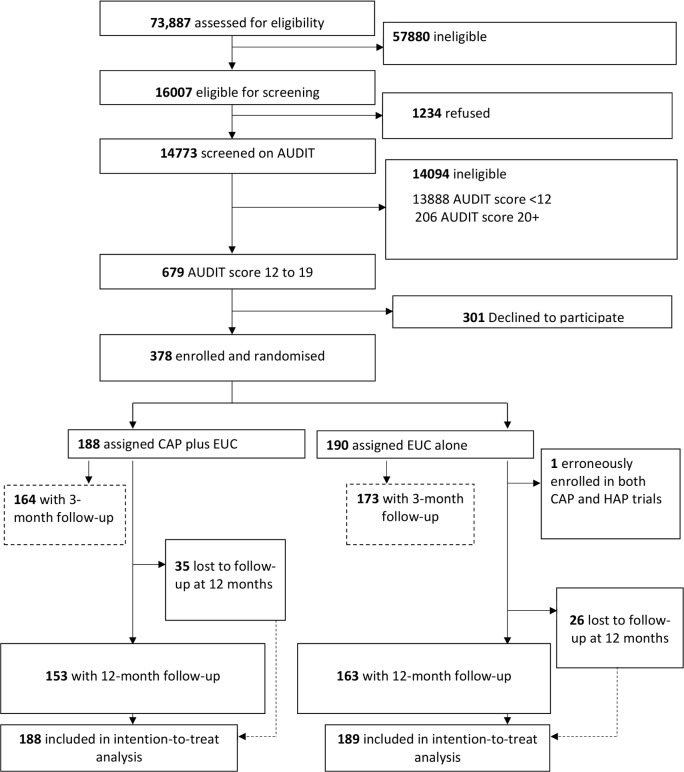
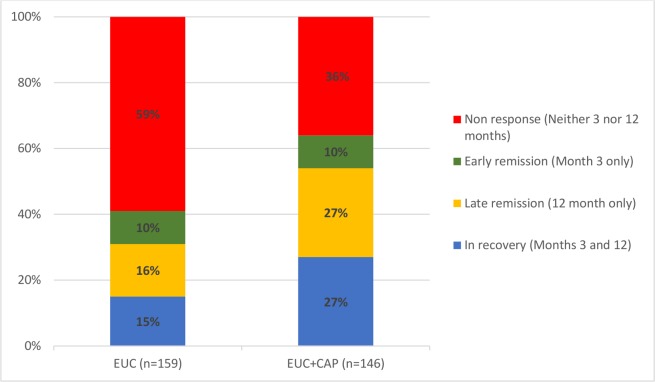
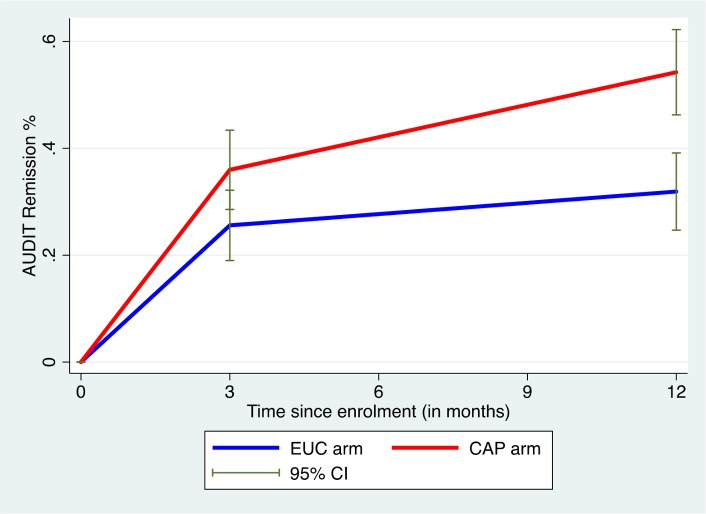
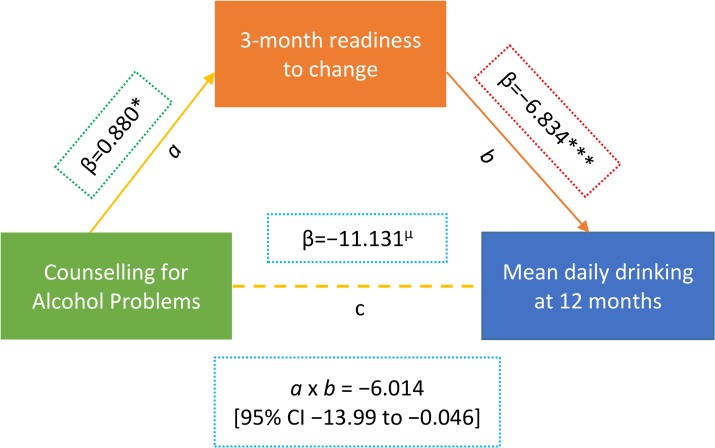
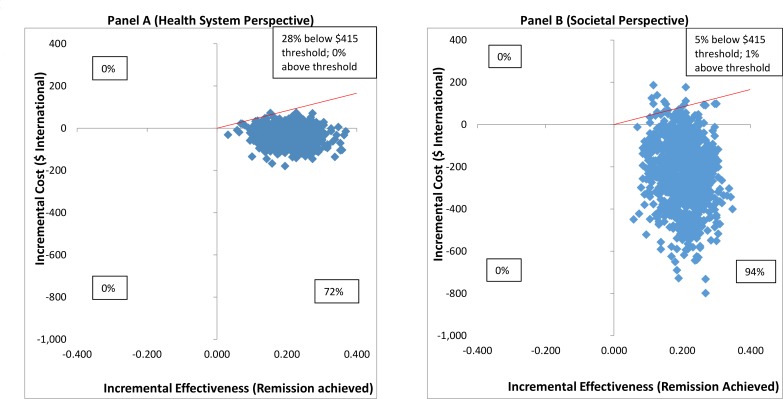
BACKGROUND: Counselling for Alcohol Problems (CAP), a brief intervention delivered by lay counsellors, enhanced remission and abstinence over 3 months among male primary care attendees with harmful drinking in a setting in India. We evaluated the sustainability of the effects after treatment termination, the cost-effectiveness of CAP over 12 months, and the effects of the hypothesized mediator 'readiness to change' on clinical outcomes. METHODS AND FINDINGS: Male primary care attendees aged 18-65 years screening with harmful drinking on the Alcohol Use Disorders Identification Test (AUDIT) were randomised to either CAP plus enhanced usual care (EUC) (n = 188) or EUC alone (n = 189), of whom 89% completed assessments at 3 months, and 84% at 12 months. Primary outcomes were remission and mean standard ethanol consumed in the past 14 days, and the proposed mediating variable was readiness to change at 3 months. CAP participants maintained the gains they showed at the end of treatment through the 12-month follow-up, with the proportion with remission (AUDIT score < 8: 54.3% versus 31.9%; adjusted prevalence ratio [aPR] 1.71 [95% CI 1.32, 2.22]; p < 0.001) and abstinence in the past 14 days (45.1% versus 26.4%; adjusted odds ratio 1.92 [95% CI 1.19, 3.10]; p = 0.008) being significantly higher in the CAP plus EUC arm than in the EUC alone arm. CAP participants also fared better on secondary outcomes including recovery (AUDIT score < 8 at 3 and 12 months: 27.4% versus 15.1%; aPR 1.90 [95% CI 1.21, 3.00]; p = 0.006) and percent of days abstinent (mean percent [SD] 71.0% [38.2] versus 55.0% [39.8]; adjusted mean difference 16.1 [95% CI 7.1, 25.0]; p = 0.001). The intervention effect for remission was higher at 12 months than at 3 months (aPR 1.50 [95% CI 1.09, 2.07]). There was no evidence of an intervention effect on Patient Health Questionnaire 9 score, suicidal behaviour, percentage of days of heavy drinking, Short Inventory of Problems score, WHO Disability Assessment Schedule 2.0 score, days unable to work, or perpetration of intimate partner violence. Economic analyses indicated that CAP plus EUC was dominant over EUC alone, with lower costs and better outcomes; uncertainty analysis showed a 99% chance of CAP being cost-effective per remission achieved from a health system perspective, using a willingness to pay threshold equivalent to 1 month's wages for an unskilled manual worker in Goa. Readiness to change level at 3 months mediated the effect of CAP on mean standard ethanol consumption at 12 months (indirect effect -6.014 [95% CI -13.99, -0.046]). Serious adverse events were infrequent, and prevalence was similar by arm. The methodological limitations of this trial are the susceptibility of self-reported drinking to social desirability bias, the modest participation rates of eligible patients, and the examination of mediation effects of only 1 mediator and in only half of our sample. CONCLUSIONS: CAP's superiority over EUC at the end of treatment was largely stable over time and was mediated by readiness to change. CAP provides better outcomes at lower costs from a societal perspective. TRIAL REGISTRATION: ISRCTN registry ISRCTN76465238.
Overview
The claims and statistics of this paper haven’t been checked yet.
Free: it reads the open-access text and checks the first 5 claims that cite a source we can check. Create a free account to check every claim.
Integrity signals
Registry
Cites
Statistics
Figures
Verification
Claims the paper makes
The claims and statistics of this paper haven’t been checked yet.
Free: it reads the open-access text and checks the first 5 claims that cite a source we can check. Create a free account to check every claim.
Claims other papers make about this one
Each is checked against this paper’s own text: does it say what the citing paper says it does?
The source backs part of the claim, not all of it — or backs it for a different population, condition or comparison.
In the citing paper
“There is a growing evidence on the effectiveness of non-specialist health workers, including lay counsellors, in delivering frontline psychological interventions for a range of disorders including alcohol use disorders in LMICs.”
From Brief interventions for alcohol use disorders in low- and middle-income countries: barriers and potential solutions (2022) · cites this paper as [67]
Experimental — accuracy not yet measuredThe source backs part of the claim, not all of it — or backs it for a different population, condition or comparison.
In the citing paper
“In one of the first randomized controlled trials of brief motivational interviewing in any LMIC, a brief treatment delivered by lay counsellors to harmful drinkers in India led to positive and sustained effects on remission and abstinence, and was also demonstrated to be cost-saving from a health systems’ perspective [67, 68].”
From Brief interventions for alcohol use disorders in low- and middle-income countries: barriers and potential solutions (2022) · cites this paper as [67]
Experimental — accuracy not yet measuredThe cited source says what the claim attributes to it.
In the citing paper
“Other modes of delivery revealed that lay counselor–delivered interventions had significant differences between intervention and control [67,71,75]”
From Patient-level interventions to reduce alcohol-related harms in low- and middle-income countries: A systematic review and meta-summary (2022) · cites this paper as [71]
The cited source says what the claim attributes to it.
In the citing paper
“effectiveness of lay-counsellor delivered and primary-care based models for treatment of harmful drinking [67, 68]”
From Brief interventions for alcohol use disorders in low- and middle-income countries: barriers and potential solutions (2022) · cites this paper as [67]
Self-check
Percentages, sums and reported differences re-computed from the paper’s own numbers.
The self-check needs the paper’s full text.
Citations
Cites
SAUNDERS, J. B., AASLAND, O. G., BABOR, T. F., DE LA FUENTE, J. R., & GRANT, M. (1993) · Addiction · doi:10.1111/j.1360-0443.1993.tb02093.x · Cited by 13,597
Lim, S. S., Vos, T., Flaxman, A. D., Danaei, G., Shibuya, K., Adair-Rohani, H., AlMazroa, M. A., Amann, M., Anderson, H. R., Andrews, K. G., et al. (2012) · The Lancet · doi:10.1016/s0140-6736(12)61766-8 · Cited by 11,805
Whiteford, H. A., Degenhardt, L., Rehm, J., Baxter, A. J., Ferrari, A. J., Erskine, H. E., Charlson, F. J., Norman, R. E., Flaxman, A. D., Johns, N., et al. (2013) · The Lancet · doi:10.1016/s0140-6736(13)61611-6 · Cited by 6,006
MacKinnon, D. P., Fairchild, A. J., & Fritz, M. S. (2007) · Annual Review of Psychology · doi:10.1146/annurev.psych.58.110405.085542 · Cited by 5,688 · cited 1×
“The Monte Carlo method for assessing mediation (MCMAM) [26] was used for assessing the mediating effects of readiness to change assessed at 3 months on the 12-month primary outcome of mean standard ethanol consumption over the previous 14 days for the sub-sample of participants for whom the mediating variable data had…”
MethodJaeschke, R., Singer, J., & Guyatt, G. H. (1989) · Controlled Clinical Trials · doi:10.1016/0197-2456(89)90005-6 · Cited by 4,982
Motivational Interviewing: Helping People Change
Tober, G. (2013) · Alcohol and Alcoholism · doi:10.1093/alcalc/agt010 · Cited by 4,268
(2013) · Cited by 2,393
Moyer, A., Finney, J. W., Swearingen, C. E., & Vergun, P. (2002) · Addiction · doi:10.1046/j.1360-0443.2002.00018.x · Cited by 1,092
Allocation concealment in randomised trials: defending against deciphering
Schulz, K. F., & Grimes, D. A. (2002) · The Lancet · doi:10.1016/s0140-6736(02)07750-4 · Cited by 923 · cited 1×
“either of 2 intervention arms (EUC or CAP plus EUC) after completion of the baseline assessments, using sequentially numbered opaque sealed envelopes [18].”
MethodPatel, V., Chisholm, D., Parikh, R., Charlson, F. J., Degenhardt, L., Dua, T., Ferrari, A. J., Hyman, S., Laxminarayan, R., Levin, C., et al. (2016) · The Lancet · doi:10.1016/s0140-6736(15)00390-6 · Cited by 889 · cited 1×
“There is substantial evidence for the effectiveness of brief psychological treatments for AUDs [6], and, with larger effect sizes in studies that have excluded dependent drinkers [7], such interventions are recommended for scaling up in primary care [8].”
BackgroundSelf-citation
Cited by
Le, P. D., Eschliman, E. L., Grivel, M. M., Tang, J., Cho, Y. G., Yang, X., Tay, C., Li, T., Bass, J., & Yang, L. H. (2022) · Implementation Science · doi:10.1186/s13012-021-01179-z · Cited by 233
van Ginneken, N., Chin, W. Y., Lim, Y. C., Ussif, A., Singh, R., Shahmalak, U., Purgato, M., Rojas-García, A., Uphoff, E., McMullen, S., et al. (2021) · Cochrane Database of Systematic Reviews · doi:10.1002/14651858.cd009149.pub3 · Cited by 188
Weobong, B., Weiss, H. A., McDaid, D., Singla, D. R., Hollon, S. D., Nadkarni, A., Park, A.-L., Bhat, B., Katti, B., Anand, A., et al. (2017) · PLOS Medicine · doi:10.1371/journal.pmed.1002385 · Cited by 135
“The ecological validity of the trial was enhanced by the fact that the lay counsellors had no prior professional mental health training (as would be the case in most real-world settings) and that they were concurrently delivering a completely different PT for harmful drinking (as would be the case in actual practice)…”
BackgroundSelf-citationJordans, M. J. D., Luitel, N. P., Garman, E., Kohrt, B. A., Rathod, S. D., Shrestha, P., Komproe, I. H., Lund, C., & Patel, V. (2019) · British Journal of Psychiatry · doi:10.1192/bjp.2018.300 · Cited by 89
Self-citationNadkarni, A., Garber, A., Costa, S., Wood, S., Kumar, S., MacKinnon, N., Ibrahim, M., Velleman, R. D. B., Bhatia, U., Fernandes, G., et al. (2019) · Drug and Alcohol Dependence · doi:10.1016/j.drugalcdep.2019.04.031 · Cited by 98
“…or harmful use) >13 (alcohol dependence) Jonas (2014) India >8 (hazardous use) Women: >13 (alcohol dependence) Men: >15 (alcohol dependence) Nadkarni (2017a, 2017b); Patel (2014) India 12-19 (harmful use) Pal (2007) India 8 or 9 (hazardous use) >10 (alcohol dependence) Sau (2017) India…”
BackgroundInfluentialSelf-citationPsychological care in low-resource settings for adolescents
Galagali, P. M., & Brooks, M. J. (2020) · Clinical Child Psychology and Psychiatry · doi:10.1177/1359104520929741 · Cited by 100
“Projects in India and Zimbabwe have emerged as leaders in task shifting using lay counsellors among LMIC and HIC alike (Chibanda et al., 2016; Patel, 2017).”
BackgroundMental health interventions by lay counsellors: a systematic review and meta-analysis
Connolly, S. M., Vanchu-Orosco, M., Warner, J., Seidi, P. A.-M., Edwards, J., Boath, E., & Irgens, A. C. (2021) · Bulletin of the World Health Organization · doi:10.2471/blt.20.269050 · Cited by 120
“…as leaders within their communities (i) 2 full days of training in thought field therapy; and (ii) supervision by study authors during treatments Nadkarni et al. (2017)46 (i) Counsellors were adults with no prior professional training or qualification in the field of mental health, they had…”
BackgroundInfluentialAsher, L., Birhane, R., Teferra, S., Milkias, B., Worku, B., Habtamu, A., Kohrt, B. A., & Hanlon, C. (2021) · PLOS ONE · doi:10.1371/journal.pone.0246158 · Cited by 74
“This approach has been used successfully alongside non-specialist provider delivered psychological interventions for perinatal depression, harmful drinking and severe depression in India using the Therapy Quality Scale or other bespoke instruments [17,33,43,44].”
MethodGhosh, A., Singh, P., Das, N., Pandit, P. M., Das, S., & Sarkar, S. (2022) · Addiction · doi:10.1111/add.15613 · Cited by 73
Tol, W. A., Murray, S. M., Lund, C., Bolton, P., Murray, L. K., Davies, T., Haushofer, J., Orkin, K., Witte, M., Salama, L., et al. (2019) · BMC Women's Health · doi:10.1186/s12905-019-0728-z · Cited by 60
“[47, 48] studied the benefits of a motivational interviewing-based intervention with male problem drinkers in primary care in Goa, India, and found benefits at 12 months for remission (adjusted prevalence ratio 1.”
BackgroundInfluentialSelf-citationClosing the treatment gap for alcohol use disorders in low- and middle-income countries
Nadkarni, A., Gandhi, Y., Bhatia, U., & Velleman, R. (2023) · Cambridge Prisms: Global Mental Health · doi:10.1017/gmh.2022.57 · Cited by 46
“…therapy (CBT) delivered to participants in a range of settings such as hospitals, emergency departments, primary care, and specialist clinics for patients with HIV or tuberculosis (Nattala et al., 2010; Shin et al., 2013; Daengthoen et al., 2014; Nadkarni et al., 2017b; Papas et al., 2021).”
BackgroundSelf-citationPadmanathan, P., Hall, K., Moran, P., Jones, H. E., Gunnell, D., Carlisle, V., Lingford-Hughes, A., & Hickman, M. (2020) · Comprehensive Psychiatry · doi:10.1016/j.comppsych.2019.152135 · Cited by 41
Staton, C. A., Vissoci, J. R. N., El-Gabri, D., Adewumi, K., Concepcion, T., Elliott, S. A., Evans, D. R., Galson, S. W., Pate, C. T., Reynolds, L. M., et al. (2022) · PLOS Medicine · doi:10.1371/journal.pmed.1003961 · Cited by 41
“Nadkarni and colleagues (2017) [71] India Brief Intervention Harmful drinking in males in primary care 377 Low AUDIT Abstinence Amount of consumption”
BackgroundInfluentialWitt, K., Chitty, K. M., Wardhani, R., Värnik, A., Leo, D. D., & Kõlves, K. (2021) · Drug and Alcohol Dependence · doi:10.1016/j.drugalcdep.2021.108885 · Cited by 39
Magidson, J. F., Kleinman, M. B., Bradley, V. D., Anvari, M. S., Abidogun, T. M., Belcher, A. M., Greenblatt, A. D., Dean, D., Hines, A. C., Seitz‐Brown, C. J., et al. (2022) · International Journal of Drug Policy · doi:10.1016/j.drugpo.2022.103813 · Cited by 36
Nadkarni, A., Bhatia, U., Bedendo, A., de Paula, T. C. S., de Andrade Tostes, J. G., Segura-Garcia, L., Tiburcio, M., & Andréasson, S. (2022) · International Journal of Mental Health Systems · doi:10.1186/s13033-022-00548-5 · Cited by 28
“the Alcohol Use Disorders Identification Test) [79], and effectiveness of lay-counsellor delivered and primary-care based models for treatment of harmful drinking [67, 68].”
BackgroundSelf-citationMadhombiro, M., Dube, B., Dube, M., Zunza, M., Chibanda, D., Rusakaniko, S., & Seedat, S. (2019) · Addiction Science & Clinical Practice · doi:10.1186/s13722-019-0143-7 · Cited by 25
Doty, B., Bass, J., Ryan, T., Zhang, A. W., & Wilcox, H. C. (2022) · BMJ Open · doi:10.1136/bmjopen-2021-055000 · Cited by 35
Mental health challenges and perceived risks among female sex workers in Nairobi, Kenya
Panneh, M., Gafos, M., Nyariki, E., Liku, J., Shah, P., Kabuti, R., Wanjiru, M., Beksinska, A., Pollock, J. C. S., Champions, T. M. F. S., et al. (2022) · BMC Public Health · doi:10.1186/s12889-022-14527-5 · Cited by 34
“The study team also provided depression (Healthy Activity Programme) [30] and harmful drinking (Counselling for Alcohol Problems) [31] brief psychological intervention training to HIV testing and treatment counsellors based at each of the seven SWOP clinics and participants could access additional support from these c…”
MethodNadkarni, A., Weiss, H. A., Velleman, R., McCambridge, J., McDaid, D., Park, A., Murthy, P., Weobong, B., Bhat, B., & Patel, V. (2019) · Addiction · doi:10.1111/add.14630 · Cited by 22
“A definitive randomised controlled trial (RCT) demonstrated the cost-effectiveness of CAP delivered by NSHWs for harmful drinkers (defined by Alcohol Use Disorder Identification [AUDIT] score of 12-19) in routine primary health-care settings in India [17, 18].”
BackgroundInfluentialSelf-citationFuhr, D. C., Bogdanov, S., Tol, W. A., Nadkarni, A., & Roberts, B. (2021) · Intervention · doi:10.4103/intv.intv_27_20 · Cited by 28
Self-citationLund, C., Orkin, K., Witte, M., Walker, J., Davies, T., Haushofer, J., Murray, S. M., Bass, J., Murray, L. K., Tol, W. A., et al. (2024) · National Bureau of Economic Research · doi:10.3386/w32423 · Cited by 41
Self-citationHyland, K., Hammarberg, A., Hedman‐Lagerlöf, E., Johansson, M., Lindner, P., & Andréasson, S. (2023) · Addiction · doi:10.1111/add.16157 · Cited by 22
Singla, D. R., Hollon, S. D., Velleman, R. D. B., Weobong, B., Nadkarni, A., Fairburn, C. G., Bhat, B., Gurav, M., Anand, A., McCambridge, J., et al. (2019) · Psychological Medicine · doi:10.1017/s0033291718003963 · Cited by 17
“…the Counselling for Alcohol Problems (CAP) Program – a brief, motivational interviewing (MI)-informed PT for harmful drinkers (Nadkarni et al., 2015) – was found to be more effective than EUC in increasing abstinence and remission rates at 3-months post-enrollment (Nadkarni et al., 2017a, b).”
BackgroundMethodResultSelf-citationPrabhu, S., McFall, A. M., Mehta, S. H., Srikrishnan, A. K., Kumar, M. S., Anand, S., Shanmugam, S., Celentano, D. D., Lucas, G. M., & Solomon, S. S. (2019) · Clinical Infectious Diseases · doi:10.1093/cid/ciz175 · Cited by 19
Interventions to prevent alcohol use: systematic review of economic evaluations
Le, L. K., Faller, J., Chatterton, M. L., Perez, J. K., Chiotelis, O., Tran, H. N. Q., Sultana, M., Hall, N. Y., Lee, Y. Y., Chapman, C., et al. (2023) · BJPsych Open · doi:10.1192/bjo.2023.81 · Cited by 17
“22,23 CEA ( n = 11) was commonly used followed by combinations of multiple frameworks ( n = 8), CBA ( n = 4), CUA ( n = 4) and ROIs ( n = 3).”
Mutyambizi-Mafunda, V., MYERS, B. J., Sorsdahl, K. R., Chanakira, E., Lund, C., & Cleary, S. (2022) · Health Policy and Planning · doi:10.1093/heapol/czac069 · Cited by 17
“…threshold (minimum wage for the region) was applied for both the health system and societal perspectives showing a greater likelihood of cost-effectiveness under the societal perspective when productivity losses were included (Nadkarni et al., 2017) (Table 3 and Supplementary Materials Table S6).”
BackgroundMethodResultInfluentialHassan, A. A., Ibrahim, A. M., & Nadkarni, A. (2024) · Drug and Alcohol Dependence · doi:10.1016/j.drugalcdep.2024.111093 · Cited by 16
Self-citationUnderstanding the costs and economic impact of mental disorders in South Asia: A systematic review
McDaid, D., Vidyasagaran, A. L., Nasir, M., Walker, S., Wright, J. M., Muliyala, K. P., Thekkumkara, S. N., Huque, R., Faisal, M. R., Benkalkar, S., et al. (2024) · Asian Journal of Psychiatry · doi:10.1016/j.ajp.2024.104239 · Cited by 21
Self-citationZewdu, S., Hanlon, C., Fekadu, A., Medhin, G., & Teferra, S. (2022) · Journal of Substance Abuse Treatment · doi:10.1016/j.jsat.2021.108636 · Cited by 12
Greene, M. C., Kane, J., Alto, M., Giusto, A., Lovero, K., Stockton, M., McClendon, J., Nicholson, T., Wainberg, M. L., Johnson, R. M., et al. (2023) · Cochrane Database of Systematic Reviews · doi:10.1002/14651858.cd013350.pub2 · Cited by 11
Mootz, J. J., Fennig, M., Giusto, A. M., Mumey, A., Greene, M. C., & Wainberg, M. L. (2023) · Cambridge Prisms Global Mental Health · doi:10.1017/gmh.2023.62 · Cited by 13
Bhatia, U., Velleman, R. D. B., Velleman, G., Garber, A., Catalano, A., & Nadkarni, A. (2022) · Cambridge Prisms Global Mental Health · doi:10.1017/gmh.2022.41 · Cited by 10
“However, there is an extensive evidence base of the effectiveness of non-specialist health worker-delivered mental health interventions in LMICs (van Ginneken et al., 2013; Nadkarni et al., 2017; Patel et al., 2017; Singla et al., 2017).”
BackgroundSelf-citationThe Cost-Effectiveness of Community Health Workers in Primary Health Care: A Systematic Review
Iseghem, T. V., Vroonen, L., de Beeck, E. O., Meertens, A., Masquillier, C., Wouters, E., & Verhaeghe, N. (2025) · Value in Health · doi:10.1016/j.jval.2025.09.004 · Cited by 16
Vanderburg, J. L., Bhattarai, S., Ferrarone, P., Giri, P., Lamb, M. M., Giardina, A. A., Hampanda, K., Gaynes, B. N., Matergia, M., & Cruz, C. M. (2021) · Global Public Health · doi:10.1080/17441692.2021.2002924 · Cited by 9
“In the context of mental health, previous work has demonstrated that lay counsellor-led care could result in improved recovery from common mental disorders and has been repeatedly validated among adults (Nadkarni et al., 2017; Patel et al., 2010; van Ginneken et al., 2013).”
BackgroundVanderburg, J. L., Dukpa, C., Rauniyar, A. K., Giri, P., Bhattarai, S., Thapa, A., Gaynes, B. N., Hampanda, K., Lamb, M. M., Matergia, M., et al. (2022) · Frontiers in Pediatrics · doi:10.3389/fped.2022.807178 · Cited by 9
Nichol, B., Rodrigues, A., Wilson, R., & Haighton, C. (2023) · Health & Social Care in the Community · doi:10.1155/2023/2928228 · Cited by 6
Shah, K. H., Singh, M., Kotwani, P., Tyagi, K., Pandya, A., Saha, S., Saxena, D. B., & Rajshekar, K. (2022) · Frontiers in Public Health · doi:10.3389/fpubh.2022.831254 · Cited by 7
Park, S., Cubillos, L., Martínez‐Camblor, P., Bartels, S. M., Torrey, W. C., John, D. T., Cepeda, M., Bell, K. R., Castro, S., Suárez‐Obando, F., et al. (2023) · Psychiatric Services · doi:10.1176/appi.ps.20220267 · Cited by 7
Sinha, A., Kohli, A., Ghosh, A., & Basu, D. (2022) · Asian Journal of Psychiatry · doi:10.1016/j.ajp.2022.103138 · Cited by 6
Williams, P. P., Erasmus, J., MYERS, B. J., Nadkarni, A., & Fuhr, D. C. (2023) · Frontiers in Psychiatry · doi:10.3389/fpsyt.2023.1203835 · Cited by 6
Self-citationMagidson, J. F., Bradley, V. D., Anane, J. S., Kleinman, M. B., Felton, J. W., Hines, A. C., Baskar, R., Greenblatt, A. D., Dean, D., Anvari, M. S., et al. (2025) · Frontiers in Public Health · doi:10.3389/fpubh.2025.1637846 · Cited by 5
Yang, L. H., Bass, J. K., Le, P. D., Singh, R., Gurung, D., Velasco, P. R., Grivel, M. M., Susser, E., Cleland, C. M., Alvarado, R., et al. (2024) · BMC Health Services Research · doi:10.1186/s12913-024-11783-6 · Cited by 7
Desrosiers, A., Schafer, C., Bond, L., Akinsulure‐Smith, A. M., Hinton, M., Vandi, A., & Betancourt, T. S. (2023) · Cambridge Prisms Global Mental Health · doi:10.1017/gmh.2023.36 · Cited by 6
Thirthalli, J., Sivakumar, P. T., & Gangadhar, B. N. (2018) · JAMA Psychiatry · doi:10.1001/jamapsychiatry.2018.2898 · Cited by 6
Trapero‐Bertran, M., Gil-Doménech, D., & Vargas‐Martínez, A. M. (2021) · Adicciones · doi:10.20882/adicciones.1649 · Cited by 6
Addictive Behaviours in Adolescent Boys: Developing A Low-Cost Care Model in India
Ameen, S., Sanish, A., Babu, J., Thundathil, D. T., Thomas, M. M., Louismary, B., & Thekkekalam, L. J. (2025) · Indian Journal of Psychological Medicine · doi:10.1177/02537176251358098 · Cited by 2
Aldridge, L. R., Garman, E. C., Patenaude, B., Bass, J., Jordans, M. J. D., & Luitel, N. P. (2022) · BMC Health Services Research · doi:10.1186/s12913-022-08969-1 · Cited by 4
“The psychotherapy provided in TG + P was an adapted version of the Healthy Activity Programme [42], an evidence-based behavioral activation treatment developed in India to be delivered over six to eight weekly sessions.”
MethodEmenyonu, N. I., Kekibiina, A., Woolf‐King, S. E., Kyampire, C., Fatch, R., Dawson-Rose, C. S., Muyindike, W. R., & Hahn, J. A. (2022) · JMIR Formative Research · doi:10.2196/35015 · Cited by 2
“Brief interventions to reduce alcohol use have shown efficacy in reducing drinking by 15% to 30% one year after the intervention, as well as good feasibility and cost-effectiveness in primary care settings worldwide [21-28].”
BackgroundPlanning research in psychosocial interventions
Ambekar, A., & Mongia, M. (2018) · Indian Journal of Psychiatry · doi:10.4103/psychiatry.indianjpsychiatry_27_18 · Cited by 4
Yang, L. H., Bass, J. K., Le, P. D., Singh, R., Gurung, D., Velasco, P. R., Grivel, M. M., Susser, E., Cleland, C. M., Alvarado, R., et al. (2024) · Research Square · doi:10.21203/rs.3.rs-3877031/v1 · Cited by 2
Lund, C., Orkin, K., Witte, M., Walker, J., Davies, T., Haushofer, J., Murray, S. M., Bass, J., Murray, L. K., Tol, W. A., et al. (2024) · SSRN Electronic Journal · doi:10.2139/ssrn.4826030 · Cited by 3
Self-citationSriramalu, S. B., Elangovan, A. R., Isaac, M., & Raman, K. J. (2024) · Indian Journal of Social Psychiatry · doi:10.4103/ijsp.ijsp_147_23 · Cited by 1
Rangel, R., Brown, A. D., Galea, J. T., Rai, S., Ross, N., Raji, M., Shrestha, P., Cheng, B., Akellot, J., & Kohrt, B. A. (2025) · PLOS Global Public Health · doi:10.1371/journal.pgph.0005123 · Cited by 1
“The CAP manual does not specify educational requirements for helpers, but in India, the counsellors had no background in mental health, had at least a secondary school education and fluency in local languages; in Nepal, counsellors had at least a high school education [28,30,31].”
InfluentialThe state of cost-utility analysis in India: A systematic review
Khurana, T., Gupta, A., & Rathi, H. (2021) · Perspectives in Clinical Research · doi:10.4103/picr.picr_256_20 · Cited by 4
Zadey, S. (2023) · PLOS Global Public Health · doi:10.1371/journal.pgph.0002017 · Cited by 3
“For instance, CAP included people with a score in the 12–19 range on AUDIT while the HAP study included those with a PHQ-9 score greater than 14 [10, 11].”
BackgroundMethodInfluentialOdokonyero, R. F., Nakasujja, N., Turiho, A. K., Sanyu, N., Muyindike, W. R., Nansera, D., Semitala, F. C., Kamya, M. R., Katahoire, A., Hahn, J. A., et al. (2024) · Addiction Science & Clinical Practice · doi:10.1186/s13722-024-00495-1 · Cited by 1
“Within primary HIV care settings, the HIV care provider (HCP) is well placed to deal with issues of unhealthy alcohol consumption especially among young people living with HIV (YPLH), since they are clinicians, peer supporters and gatekeepers [19].”
BackgroundAddiction Research in South Asia
Jha, A., Sharma, A. K., & Mahadevan, J. (2024) · Springer eBooks · doi:10.1007/978-981-97-6619-2_13 · Cited by 1
Dung, N. T. T., Säfsten, E., Andersson, F., & Galanti, M. R. (2021) · Nordic Studies on Alcohol and Drugs · doi:10.1177/14550725211007823 · Cited by 1
“A randomised trial conducted among adult harmful drinkers compared the effectiveness of usual care with counselling for alcohol problems (multi-session counselling based on motivational interview) (Nadkarni et al., 2017).”
BackgroundResultCommunity Management of Substance Use Disorders: Past, Present, and Future
Sharma, K., Mahintamani, T., Subodh, B., & Basu, D. (2021) · Indian Journal of Social Psychiatry · doi:10.4103/ijsp.ijsp_314_21 · Cited by 1
Mental health for all: enhancing implementation of mental health task sharing globally
Dev, S. (2021) · Digital Repository Service (Northeastern University) · doi:10.17760/d20416628 · Cited by 1
Lund, C., Orkin, K., Witte, M., Walker, J., Davies, T., Haushofer, J., Murray, S. M., Bass, J., Murray, L. K., Tol, W. A., et al. (2024) · SSRN Electronic Journal · doi:10.2139/ssrn.4868762 · Cited by 1
Self-citationDigital Health Screening in Persons with HIV in Uganda to Increase Alcohol Reporting (Preprint)Preprint
Emenyonu, N. I., Kekibiina, A., Woolf‐King, S. E., Kyampire, C., Fatch, R., Dawson-Rose, C. S., Muyindike, W. R., & Hahn, J. A. (2021) · doi:10.2196/preprints.35015
Desrosiers, A., Schafer, C., Bond, L., et al. (2023) · Cambridge Prisms Global Mental Health · doi:10.1017/gmh.2023.36.pr12
Desrosiers, A., Schafer, C., Bond, L., et al. (2023) · Cambridge Prisms Global Mental Health · doi:10.1017/gmh.2023.36.pr9
Desrosiers, A., Schafer, C., Bond, L., et al. (2023) · Cambridge Prisms Global Mental Health · doi:10.1017/gmh.2023.36.pr8
Desrosiers, A., Schafer, C., Bond, L., et al. (2023) · Cambridge Prisms Global Mental Health · doi:10.1017/gmh.2023.36.pr11
Desrosiers, A., Schafer, C., Bond, L., et al. (2023) · Cambridge Prisms Global Mental Health · doi:10.1017/gmh.2023.36.pr7
Desrosiers, A., Schafer, C., Bond, L., et al. (2023) · Cambridge Prisms Global Mental Health · doi:10.1017/gmh.2023.36.pr3
Desrosiers, A., Schafer, C., Bond, L., et al. (2023) · Cambridge Prisms Global Mental Health · doi:10.1017/gmh.2023.36.pr4
Desrosiers, A., Schafer, C., Bond, L., et al. (2023) · Cambridge Prisms Global Mental Health · doi:10.1017/gmh.2023.36.pr5
Desrosiers, A. (2023) · Cambridge Prisms Global Mental Health · doi:10.1017/gmh.2023.36.pr6
Desrosiers, A. (2023) · Cambridge Prisms Global Mental Health · doi:10.1017/gmh.2023.36.pr1
Desrosiers, A., Schafer, C., Bond, L., et al. (2023) · Cambridge Prisms Global Mental Health · doi:10.1017/gmh.2023.36.pr2
Desrosiers, A. (2023) · Cambridge Prisms Global Mental Health · doi:10.1017/gmh.2023.36.pr10
Bhatia, U., Velleman, R. D. B., Nadkarni, A., Shinde, S., Shah, A. H., & Patel, V. (2023) · Alcohol · doi:10.1016/j.alcohol.2023.12.002
Self-citationPrimary Care Interventions in Male Mental Health and Suicide Prevention: A Systematic Review
Ahmed, A. E., Magfouri, M. K., Alamer, A. S., Alqurqush, N. A., Alzayedi, T. H., Alshehri, R., Marar, F. H. A., Alyabis, H., Neazy, F. A., & Alahmari, M. A. (2025) · Cureus · doi:10.7759/cureus.94944 · Cited by 2
“The Indian RCTs evaluating the Counselling for Alcohol Problems intervention demonstrated strong methodological rigor with appropriate randomization, complete data, and fidelity monitoring [6,12].”
Odokonyero, R. F., Nakasujja, N., Turiho, A. K., Sanyu, N., Muyindike, W. R., Nansera, D., Semitala, F., Kamya, M. R., Katahoire, A., Hahn, J. A., et al. (2024) · Figshare · doi:10.6084/m9.figshare.26945217
Purohit, N., Singh, S., Ambekar, A., Duseja, A. K., Mishra, A. K., Rao, G. N., Soundappan, K., Kotwal, A., & Prinja, S. (2026) · Addiction · doi:10.1111/add.70469
“Furthermore, there is growing evidence on the effectiveness of non-specialist health workers in delivering frontline interventions for AUD in LMICs [60].”
Mihaljcic, T., Weingarten, N., & Hartmann, M. (2026) · British Food Journal · doi:10.1108/bfj-02-2025-0242
Williams, P. P., Lange, I. L., Erasmus, J., Erasmus‐Claassen, L., Saleem, M., Reigl, L. S., Wolf, M., Schaub, S., Buck, C., Nadkarni, A., et al. (2026) · Pilot and Feasibility Studies · doi:10.1186/s40814-026-01932-5
“CAP is currently the only available evidence-based alcohol-focused brief therapy designed to be delivered in community settings by lay counsellors in a low-and middle-income country (LMIC) [9] and was highly effective in reducing alcohol use at 3-months and 12-months among men in India [8, 10].”
Self-citation
Metadata
- Authors
- Nadkarni, A., Weiss, H. A., Weobong, B., McDaid, D., Singla, D. R., Park, A.-L., Bhat, B., Katti, B., McCambridge, J., Murthy, P., King, M., Wilson, G. T., Kirkwood, B., Fairburn, C. G., Velleman, R., & Patel, V.
- Affiliations
- London School of Hygiene & Tropical Medicine (GB)
- London School of Economics and Political Science (GB)
- University of Toronto (CA)
- Sangath (IN)
- University of York (GB)
- National Institute of Mental Health and Neurosciences (IN)
- University College London (GB)
- Rutgers, The State University of New Jersey (US)
- University of Oxford (GB)
- Harvard University (US)
- Corresponding author
- Patel, Vikram
- ORCID
- Venue
- PLOS Medicine
- Publisher
- Public Library of Science (PLoS)
- Published
- 2017-09-12
- Volume
- 14
- Issue
- 9
- Pages
- e1002386
- ISSN
- 1549-1277 (ISSN-L)
- 1549-1676
- PMC
- PMC5595289
- OpenAlex
- W2750033985
- Cited by
- 80
- References
- 44
- Citations by year
- 2026: 3 · 2025: 5 · 2024: 10 · 2023: 22 · 2022: 14 · 2021: 14 · 2020: 1 · 2019: 8 · 2018: 2 · 2017: 1
- FWCI
- 2.57
- Type
- journal article
- Language
- en
- Open access
- gold
- doi.org
- Licence
- Locations
- PLoS Medicine (publishedVersion, cc-by)
- PubMed Central (publishedVersion, cc-by)
- PubMed (publishedVersion)
- Pure (University of Bath) (publishedVersion, cc-by)
- White Rose Research Online (University of Leeds, The University of Sheffield, University of York) (acceptedVersion)
- LSHTM Research Online (London School of Hygiene and Tropical Medicine) (acceptedVersion)
- London School of Economics and Political Science Research Online (London School of Economics and Political Science) (submittedVersion)
- The University of Bath Online Publications Store (The University of Bath) (submittedVersion, cc-by)
- London School of Economics and Political Science Theses Online (London School of Economics and Political Science) (submittedVersion)
- Digital Access to Scholarship at Harvard (DASH) (Harvard University) (submittedVersion, cc-by)
- RePEc: Research Papers in Economics (submittedVersion)
- DOAJ (DOAJ: Directory of Open Access Journals) (submittedVersion, cc-by-sa)
- UCL Discovery (University College London) (submittedVersion)
- Figshare (submittedVersion, cc-by)
- Greater South Information System
- Funders
- Wellcome Trust (091834)
- Topics
- Health Sciences › Medicine › Epidemiology › Substance Abuse Treatment and Outcomes
- Health Sciences › Medicine › Pathology and Forensic Medicine › Alcohol Consumption and Health Effects
- Health Sciences › Medicine › Psychiatry and Mental health › Mental Health Treatment and Access
- Keywords
- brief psychological intervention, hazardous drinking, alcoholism, lay counselors, primary care, men, abstinence, remission, readiness to change, treatment sustainability, cost-effectiveness, alcohol screening, auditing, India, alcohol consumption reduction, mediation analysis, relapse prevention
- MeSH terms
- Adolescent, Adult, Aged, Alcohol Drinking, Alcoholism, Cost-Benefit Analysis, Counseling, Delivery of Health Care, Follow-Up Studies, Health Promotion, Humans, India, Male, Middle Aged, Primary Health Care, Psychotherapy, Treatment Outcome, Young Adult
About these checks
Registry, retraction, Cites and statistics results are computed, not judged, with one exception: a printed reference that no index lists is read once by a model before it counts as a citation error. Claims are extracted by a model and kept only when their quote appears verbatim in the text; each cited source is then checked, with a model’s help, for whether it says what the claim relies on. Those verdicts can be wrong — read the claim’s quote and the cited source before relying on one.
Statistics and arithmetic are recomputed, not judged.
Confidence bands are shown only for fields calibrated on our annotated test set. None is calibrated yet, so no band is shown.
What counts as a claim ›How we measure confidence ›How we check this ›
Are you an author, or do you see a problem with this page? Request a review
Data sources
Bibliographic data: Semantic Scholar, OpenAlex, Crossref.
Contains information from the Semantic Scholar Academic Graph Datasets, made available under the ODC Attribution License (ODC-BY 1.0).
Semantic Scholar’s data is described in: Kinney, R., et al. (2023). The Semantic Scholar Open Data Platform. arXiv:2301.10140.
