

Effectiveness of the Common Elements Treatment Approach (CETA) in reducing intimate partner violence and hazardous alcohol use in Zambia (VATU): A randomized controlled trial
Open accessThe DOI matches its Crossref record; 51 of the 53 references it cites were found in a registry or an index.
Abstract
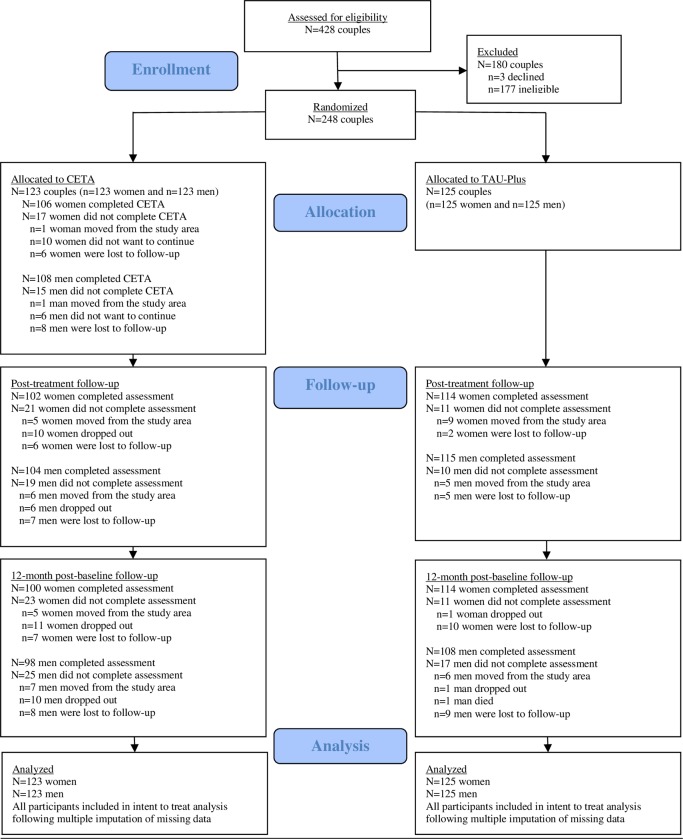
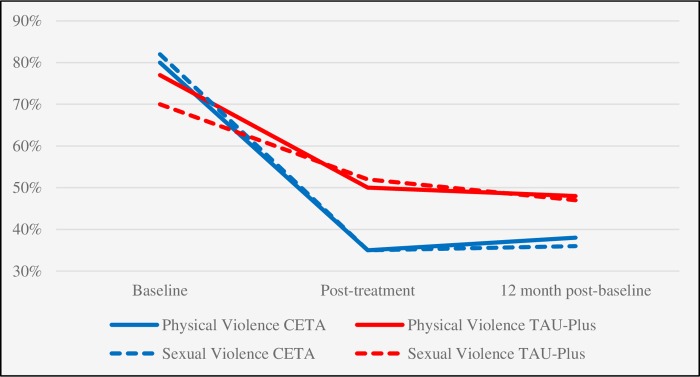
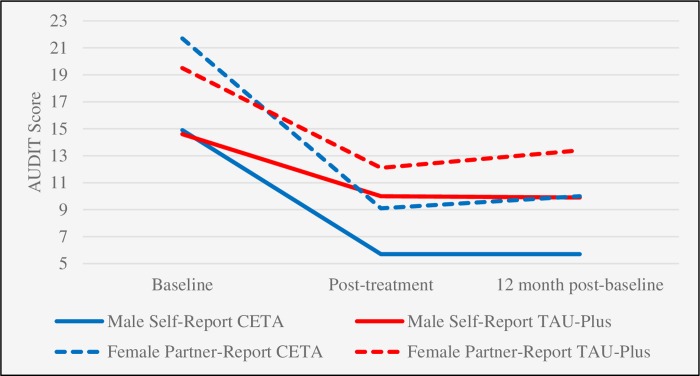
BACKGROUND: Both intimate partner violence (IPV) and alcohol misuse are highly prevalent, and partner alcohol misuse is a significant contributor to women's risk for IPV. There are few evidence-based interventions to address these problems in low- and middle-income countries (LMICs). We evaluated the effectiveness of an evidence-based, multi-problem, flexible, transdiagnostic intervention, the Common Elements Treatment Approach (CETA) in reducing (a) women's experience of IPV and (b) their male partner's alcohol misuse among couples in urban Zambia. METHODS AND FINDINGS: This was a single-blind, parallel-assignment randomized controlled trial in Lusaka, Zambia. Women who reported moderate or higher levels of IPV and their male partners with hazardous alcohol use were enrolled as a couple and randomized to CETA or treatment as usual plus safety checks (TAU-Plus). The primary outcome, IPV, was assessed by the Severity of Violence Against Women Scale (SVAWS) physical/sexual violence subscale, and the secondary outcome, male alcohol misuse, by the Alcohol Use Disorders Identification Test (AUDIT). Assessors were blinded. Analyses were intent-to-treat. Primary outcome assessments were planned at post-treatment, 12 months post-baseline, and 24 months post-baseline. Enrollment was conducted between May 23, 2016, and December 17, 2016. In total, 123 couples were randomized to CETA, 125 to TAU-Plus. The majority of female (66%) and a plurality of male (48%) participants were between 18 and 35 years of age. Mean reduction in IPV (via SVAWS subscale score) at 12 months post-baseline was statistically significantly greater among women who received CETA compared to women who received TAU-Plus (-8.2, 95% CI -14.9 to -1.5, p = 0.02, Cohen's d effect size = 0.49). Similarly, mean reduction in AUDIT score at 12 months post-baseline was statistically significantly greater among men who received CETA compared to men who received TAU (-4.5, 95% CI -6.9 to -2.2, p < 0.001, Cohen's d effect size = 0.43). The Data and Safety Monitoring Board recommended the trial be stopped early due to treatment effectiveness following the 12-month post-baseline assessment, and CETA was offered to control participants. Limitations of the trial included the lack of a true control condition (i.e., that received no intervention), self-reported outcomes that may be subject to social desirability bias, and low statistical power for secondary IPV outcomes. CONCLUSIONS: Results showed that CETA was more effective than TAU-Plus in reducing IPV and hazardous alcohol use among high-risk couples in Zambia. Future research and programming should include tertiary prevention approaches to IPV, such as CETA, rather than offering only community mobilization and primary prevention. TRIAL REGISTRATION: The trial was registered on ClinicalTrials.gov (NCT02790827).
Overview
The claims and statistics of this paper haven’t been checked yet.
Free: it reads the open-access text and checks the first 5 claims that cite a source we can check. Create a free account to check every claim.
Integrity signals
Registry
Cites
Statistics
Figures
Verification
Claims the paper makes
The claims and statistics of this paper haven’t been checked yet.
Free: it reads the open-access text and checks the first 5 claims that cite a source we can check. Create a free account to check every claim.
Claims other papers make about this one
Each is checked against this paper’s own text: does it say what the citing paper says it does?
The source backs part of the claim, not all of it — or backs it for a different population, condition or comparison.
In the citing paper
“RCTs for the CETA conducted in Thailand [32], Zambia [33], Iraq [34], Iraqi Kurdistan [35], Colombia [36], and Somalia [37] have all indicated significant positive effects on mental health outcomes for men, women and children.”
From Psychological Interventions for Survivors of Intimate Partner Violence in Humanitarian Settings: An Overview of the Evidence and Implementation Considerations (2022) · cites this paper as [33]
Experimental — accuracy not yet measuredThe source backs part of the claim, not all of it — or backs it for a different population, condition or comparison.
In the citing paper
“which in turn suggests that mental health programming alone may reduce the likelihood of IPV [33,38]”
From Psychological Interventions for Survivors of Intimate Partner Violence in Humanitarian Settings: An Overview of the Evidence and Implementation Considerations (2022) · cites this paper as [33]
Experimental — accuracy not yet measuredThe cited source says what the claim attributes to it.
In the citing paper
“Most commonly, interventions used MI techniques [22,23,61,69,72,83] or cognitive behavioral therapy (CBT) [53,64,68,77,78,87].”
From Patient-level interventions to reduce alcohol-related harms in low- and middle-income countries: A systematic review and meta-summary (2022) · cites this paper as [68]
The cited source says what the claim attributes to it.
In the citing paper
“There is evidence for effectively addressing the incidence of GBV after incorporating safety planning and substance use programming for partners concurrently receiving the CETA, which in turn suggests that mental health programming alone may reduce the likelihood of IPV [33,38].”
The cited source says what the claim attributes to it.
In the citing paper
“Evidence suggests that addressing men’s mental health and substance issues may decrease the likelihood of violence perpetration [33].”
Self-check
Percentages, sums and reported differences re-computed from the paper’s own numbers.
The self-check needs the paper’s full text.
Citations
Cites
A Coefficient of Agreement for Nominal Scales
Cohen, J. (1960) · Educational and Psychological Measurement · doi:10.1177/001316446002000104 · Cited by 42,398
A heteroskedasticity-consistent covariance matrix estimator and a direct test for heteroskedasticity
White, H. (1980) · Econometrica · doi:10.2307/1912934 · Cited by 25,861 · cited 2×
“This method, also known as a “sandwich” variance estimator, follows methods first described by Huber [47] and White [48].”
MethodSAUNDERS, J. B., AASLAND, O. G., BABOR, T. F., DE LA FUENTE, J. R., & GRANT, M. (1993) · Addiction · doi:10.1111/j.1360-0443.1993.tb02093.x · Cited by 13,597 · cited 15×
“Alcohol use, a secondary outcome, was measured with AUDIT [41].”
MethodInfluentialMultiple imputation using chained equations: Issues and guidance for practice
White, I. R., Royston, P., & Wood, A. M. (2011) · Statistics in Medicine · doi:10.1002/sim.4067 · Cited by 9,792 · cited 1×
“We followed recommendations by White and colleagues of performing a number of imputations approximately equivalent to the amount of missing data; we therefore imputed 17 datasets [45].”
Method(1967) · Project Euclid (Cornell University) · Cited by 4,720
Multiple imputation by chained equations: what is it and how does it work?
Azur, M. J., Stuart, E. A., Frangakis, C., & Leaf, P. J. (2011) · International Journal of Methods in Psychiatric Research · doi:10.1002/mpr.329 · Cited by 3,542
Garcia-Moreno, C., Jansen, H. A., Ellsberg, M., Heise, L., & Watts, C. H. (2006) · The Lancet · doi:10.1016/s0140-6736(06)69523-8 · Cited by 3,176
Relapse Prevention: Maintenance Strategies in the Treatment of Addictive Behaviors
Washton, A. M. (1986) · Journal of Studies on Alcohol · doi:10.15288/jsa.1986.47.260 · Cited by 2,527
Physical and mental health effects of intimate partner violence for men and women
Coker, A. L., Davis, K. E., Arias, I., Desai, S., Sanderson, M., Brandt, H. M., & Smith, P. H. (2002) · American Journal of Preventive Medicine · doi:10.1016/s0749-3797(02)00514-7 · Cited by 2,258
A Systematic Review of Risk Factors for Intimate Partner Violence
Capaldi, D. M., Knoble, N. B., Shortt, J. W., & Kim, H. K. (2012) · Partner Abuse · doi:10.1891/1946-6560.3.2.231 · Cited by 1,844
Research works printed but not linked: 4
- Inter-Agency Standing Committee. Guidelines for integrating gender-based violence interventions in humanitarian action: reducing risk, promoting resilience and aiding recovery. Geneva: Inter-Agency Standing Committee; 2015.
- World Health Organization. Violence prevention: the evidence Preventing violence by reducing the availability and harmful use of alcohol. Geneva: World Health Organization; 2009.
- United Nations. Sustainable development goal 5: achieve gender equality and empower all women and girls. New York: United Nations; 2018.
- StataCorp. Stata Statistical Software. Release 15. College Station (TX): StataCorp; 2017.
Cited by
Items 101–139 of 139
Figge, C. J., Kane, J. C., Skavenski, S. V. W., Haroz, E. E., Mwenge, M., Munthali, S., Aldridge, L. R., Vinikoor, M. J., Sharma, A., Inoue, S., et al. (2022) · Research Square · doi:10.21203/rs.3.rs-1321327/v1 · Cited by 1
Self-citationZheng, A., Kane, J. C., Munthali, S., Metz, K. L., Sardana, S., Greener, R., Mngadi, S., Manganye, P., Long, L. C., Thea, D. M., et al. (2025) · medRxiv · doi:10.1101/2025.11.13.25340160 · Cited by 1
Self-citationMetz, K. L., Figge, C. J., Alto, M. E., Kane, J. C., & Murray, L. K. (2021) · Springer eBooks · doi:10.1007/978-3-319-70134-9_145-1
Self-citationKaysen, D. L., van Stolk‐Cooke, K., Kaminer, D., et al. (2022) · Cambridge Prisms Global Mental Health · doi:10.1017/gmh.2022.63.pr10
Kaysen, D. L. (2022) · Cambridge Prisms Global Mental Health · doi:10.1017/gmh.2022.63.pr8
Kaysen, D. L., van Stolk‐Cooke, K., Kaminer, D., et al. (2022) · Cambridge Prisms Global Mental Health · doi:10.1017/gmh.2022.63.pr9
Kaysen, D. L., van Stolk‐Cooke, K., Kaminer, D., et al. (2022) · Cambridge Prisms Global Mental Health · doi:10.1017/gmh.2022.63.pr11
Kaysen, D. L., van Stolk‐Cooke, K., Kaminer, D., et al. (2022) · Cambridge Prisms Global Mental Health · doi:10.1017/gmh.2022.63.pr7
Kaysen, D. L., van Stolk‐Cooke, K., Kaminer, D., et al. (2022) · Cambridge Prisms Global Mental Health · doi:10.1017/gmh.2022.63.pr12
Kaysen, D. L., van Stolk‐Cooke, K., Kaminer, D., et al. (2022) · Cambridge Prisms Global Mental Health · doi:10.1017/gmh.2022.63.pr6
Kaysen, D. L., van Stolk‐Cooke, K., Kaminer, D., et al. (2022) · Cambridge Prisms Global Mental Health · doi:10.1017/gmh.2022.63.pr5
Kaysen, D. L. (2022) · Cambridge Prisms Global Mental Health · doi:10.1017/gmh.2022.63.pr1
Kaysen, D. L., van Stolk‐Cooke, K., Kaminer, D., et al. (2022) · Cambridge Prisms Global Mental Health · doi:10.1017/gmh.2022.63.pr3
Kaysen, D. L., van Stolk‐Cooke, K., Kaminer, D., et al. (2022) · Cambridge Prisms Global Mental Health · doi:10.1017/gmh.2022.63.pr2
Kaysen, D. L., van Stolk‐Cooke, K., Kaminer, D., et al. (2022) · Cambridge Prisms Global Mental Health · doi:10.1017/gmh.2022.63.pr4
Substance Abuse, Personality Disorders, and Severe Mental Illness
Emmelkamp, P. M. G. (2023) · Springer eBooks · doi:10.1007/978-3-031-34078-9_9
Venturo‐Conerly, K. E., Fitzpatrick, O. M., & Weisz, J. R. (2023) · Elsevier eBooks · doi:10.1016/b978-0-323-99613-6.00004-1 · Cited by 1
Kirk, K., Mathur, S., & Pulerwitz, J. (2023) · doi:10.31899/sbsr2023.1055
Mootz, J. J., dos Santos, P. F., Moridi, L., dos Santos, K., Weissman, M. M., Oliffe, J. L., Stith, S. M., Khan, S., Feliciano, P., Suleman, A., et al. (2024) · Cambridge Prisms Global Mental Health · doi:10.1017/gmh.2024.92 · Cited by 1
“While couple members were treated individually, the study found that the intervention was more successful in improving these problems than treatment as usual (Murray et al., 2020).”
MethodResultIndividualized Psychotherapy: A Review
Uzun, N. B., & Yorulmaz, O. (2025) · Psikiyatride Guncel Yaklasimlar - Current Approaches in Psychiatry · doi:10.18863/pgy.1518900
Hapazari, J. (2024) · Corvinus Journal of Sociology and Social Policy · doi:10.14267/cjssp.2024.2.7
Bourey, C., Murray, S. M., Tol, W. A., Bass, J., Ba, A., Mahenge, B., Munthali, S., & Falb, K. (2025) · The Lancet Global Health · doi:10.1016/s2214-109x(25)00191-3 · Cited by 2
“35 Only a few studies have been done in conflict-affected settings, and the results have been mixed.”
Self-citationZheng, A., Kane, J. C., Mngadi-Ncube, S., Fox, M. P., Manganye, P., Long, L. C., Metz, K. L., Sardana, S., Alto, M. E., Greener, R., et al. (2025) · medRxiv · doi:10.1101/2025.10.14.25337970
Self-citationOgbonnaya, I. N., Nakigudde, J., Naigino, R., Stockman, J. K., Chung, Y., Nantongo, M., Marsiglia, F. F., Hahn, J. A., Wechsberg, W. M., Mwebembezi, A., et al. (2025) · Contemporary Clinical Trials · doi:10.1016/j.cct.2025.108136
Miller, A. P., Mugamba, S., & Kiene, S. M. (2025) · Sustainable development goals series · doi:10.1007/978-3-031-98528-7_7
Boettcher, J., Heinrich, M., Boettche, M., Burchert, S., Glaesmer, H., Gouzoulis‐Mayfrank, E., Heeke, C., Hernek, M., Knaevelsrud, C., Konnopka, A., et al. (2024) · Figshare · doi:10.6084/m9.figshare.26658565
Aldridge, L. R., Kemp, C. G., Bass, J., Danforth, K., Kane, J. C., Hamdani, S. U., Marsch, L. A., Uribe-Restrepo, J. M., Nguyen, A. J., Bolton, P. A., et al. (2022) · Figshare · doi:10.6084/m9.figshare.19801935
Self-citationJohnson, L. F., Kubjane, M., de Voux, A., Ohrnberger, J., & Tlali, M. (2023) · Figshare · doi:10.6084/m9.figshare.23804924
Gibbs, A., Mkhwanazi, S., Khaula, S., Washington, L., & Sikweyiya, Y. M. (2026) · Journal of Interpersonal Violence · doi:10.1177/08862605251408126
Nelson, L., Lopez, L. M., Archuleta, S., Skavenski, S. V. W., Kushman, E., Martin, L., Mitchell, K., Leffler, E., Werwie, T. R., Kemp, C. G., et al. (2026) · BMC Public Health · doi:10.1186/s12889-026-26593-0
“This monitoring system has been used in CETA’s previous trials [14, 55–57].”
Papola, D., Patania, F., Pedersen, G. A., Patel, A., Cristofalo, D., Purgato, M., Patel, V., & Barbui, C. (2026) · Journal of Behavioral and Cognitive Therapy · doi:10.1016/j.jbct.2026.100590 · Cited by 1
Piolanti, A., & Foran, H. M. (2026) · Trauma Violence & Abuse · doi:10.1177/15248380261440354
Belay, G. M., Lam, K. K. W., Liu, Q., Mao, T., Mak, Y. W., & Ho, K. Y. (2026) · Journal of Medical Internet Research · doi:10.2196/83896
“…motivational interviewing [30,37-39], integrated family and cognitive behavioral therapy [40], combined motivational enhancement therapy and cognitive behavioral therapy [41], common elements treatment approaches [42], guided self-change [35], and home-based ecologically based family therapy [36].”
Gustafson, E. L., Quezada, N., Blaisdell, K. N., Bobadilla, G., Stiles‐Shields, C., McCabe, K., Ignoffo, S., Kidambi, A., Staszko, G., Medina, B., et al. (2026) · Implementation Science Communications · doi:10.1186/s43058-026-00980-5
“…Sinai’s patient population identified mental health as the CETA has demonstrated effectiveness in addressing depression, anxiety, trauma, and intimate partner violence in randomized controlled trials across multiple cultural contexts, including Thailand, Iraq, Zambia, and Colombia [30, 32–34].”
Self-citationMiller, A. P., Saldana, C. D. R., Kiene, S. M., Menya, E., Figge, C. J., Sentongo, H. L., Byansi, W., Mugamba, S., Kalani, K., Tuhebwe, D., et al. (2026) · PLOS Global Public Health · doi:10.1371/journal.pgph.0006566
“Its modular design allows flexibility in both content and delivery, enabling components to be tailored to individual or group needs, symptom severity, and developmental stage [19].”
Self-citationGreene, M. C., Loongo, H., Metz, K. L., Shawa, M., Mtongo, N., Lukoma, I., Chiluba, P., Chibemba, V., Kamono, S., Mushabati, N., et al. (2026) · The Lancet Global Health · doi:10.1016/j.langlo.2026.103989
Self-citationFox, M. P., Kane, J. C., Mngadi-Ncube, S., Zheng, A., Metz, K. L., Manganye, P., Long, L. C., Greener, R., Sardana, S. M., Allen, T., et al. (2026) · Journal of the International AIDS Society · doi:10.1002/jia2.70172
“CETA has shown effectiveness at improving mental health and reducing IPV in clinical trials in Iraq [ 24 ], Thailand [ 25 ], Zambia [ 26, 27 ] and Colombia [ 28 ].”
Self-citationJewkes, R. K., Ramsoomar, L., Mahlangu, P., Chirwa, E. D., & Gibbs, A. (2026) · SSM - Mental Health · doi:10.1016/j.ssmmh.2026.100697
“…methods drawn from cognitive behavioural therapy and often the methods overlapped with those for treating substance misuse (Wechsberg et al., 2013; Murray et al., 2020 skills (I statements and assertive communication), causes of conflict and conflict de-escalation, and some analysed and discussed…”
Kuschel, I., Wilkin-Krug, L. C. M., Schmahl, C. G., Habel, U., Reif, A., & Barnes-Scheufler, C. V. (2026) · Research Square · doi:10.21203/rs.3.rs-10993922/v1
Metadata
- Authors
- Murray, L. K., Kane, J. C., Glass, N., Skavenski van Wyk, S., Melendez, F., Paul, R., Kmett Danielson, C., Murray, S. M., Mayeya, J., Simenda, F., & Bolton, P.
- Affiliations
- Johns Hopkins University (US)
- University Teaching Hospital (ZM)
- Ministry of Health (ZM)
- Corresponding author
- Murray, Laura K.
- ORCID
- Venue
- PLOS Medicine
- Publisher
- Public Library of Science (PLoS)
- Published
- 2020-04-17
- Volume
- 17
- Issue
- 4
- Pages
- e1003056
- ISSN
- 1549-1277 (ISSN-L)
- 1549-1676
- PMC
- PMC7164585
- OpenAlex
- W3017165077
- Semantic Scholar
- b6f19de823ed10e061925f765c68e2b854f12e11
- Cited by
- 139
- References
- 53
- Citations by year
- 2026: 14 · 2025: 10 · 2024: 21 · 2023: 20 · 2022: 43 · 2021: 22 · 2020: 6
- FWCI
- 12.58
- Type
- journal article
- Language
- en
- Open access
- gold
- doi.org
- Licence
- Locations
- PLoS Medicine (publishedVersion, cc-by)
- PubMed Central (publishedVersion, cc-by)
- PubMed (publishedVersion)
- RePEc: Research Papers in Economics (submittedVersion)
- DOAJ (DOAJ: Directory of Open Access Journals) (submittedVersion, cc-by-sa)
- Figshare (submittedVersion, cc-by)
- Funders
- The UK Department for International Development and the South Africa Medical Research Council (52069)
- Topics
- Social Sciences › Health › Intimate Partner and Family Violence
- Health Sciences › Medicine › Epidemiology › Substance Abuse Treatment and Outcomes
- Social Sciences › Gender Studies › Sexual Assault and Victimization Studies
- Keywords
- Common Elements Treatment Approach, intimate partner violence, hazardous drinking, couple-based interventions, transdiagnostic treatment, violence against women, Zambia, low- and middle-income countries, early trial termination, treatment effectiveness, sexual violence, physical violence, addiction treatment, Lusaka
- MeSH terms
- Intimate Partner Violence, Adolescent, Adult, Aged, Alcohol Drinking, Alcoholism, Female, Follow-Up Studies, Humans, Male, Middle Aged, Zambia, Cognitive Behavioral Therapy, Single-Blind Method, Treatment Outcome, Young Adult
About these checks
Registry, retraction, Cites and statistics results are computed, not judged, with one exception: a printed reference that no index lists is read once by a model before it counts as a citation error. Claims are extracted by a model and kept only when their quote appears verbatim in the text; each cited source is then checked, with a model’s help, for whether it says what the claim relies on. Those verdicts can be wrong — read the claim’s quote and the cited source before relying on one.
Statistics and arithmetic are recomputed, not judged.
Confidence bands are shown only for fields calibrated on our annotated test set. None is calibrated yet, so no band is shown.
What counts as a claim ›How we measure confidence ›How we check this ›
Are you an author, or do you see a problem with this page? Request a review
Data sources
Bibliographic data: Semantic Scholar, OpenAlex, Crossref.
Contains information from the Semantic Scholar Academic Graph Datasets, made available under the ODC Attribution License (ODC-BY 1.0).
Semantic Scholar’s data is described in: Kinney, R., et al. (2023). The Semantic Scholar Open Data Platform. arXiv:2301.10140.
