

Effectiveness of the Common Elements Treatment Approach (CETA) in reducing intimate partner violence and hazardous alcohol use in Zambia (VATU): A randomized controlled trial
Open accessThe DOI matches its Crossref record; 51 of the 53 references it cites were found in a registry or an index.
Abstract
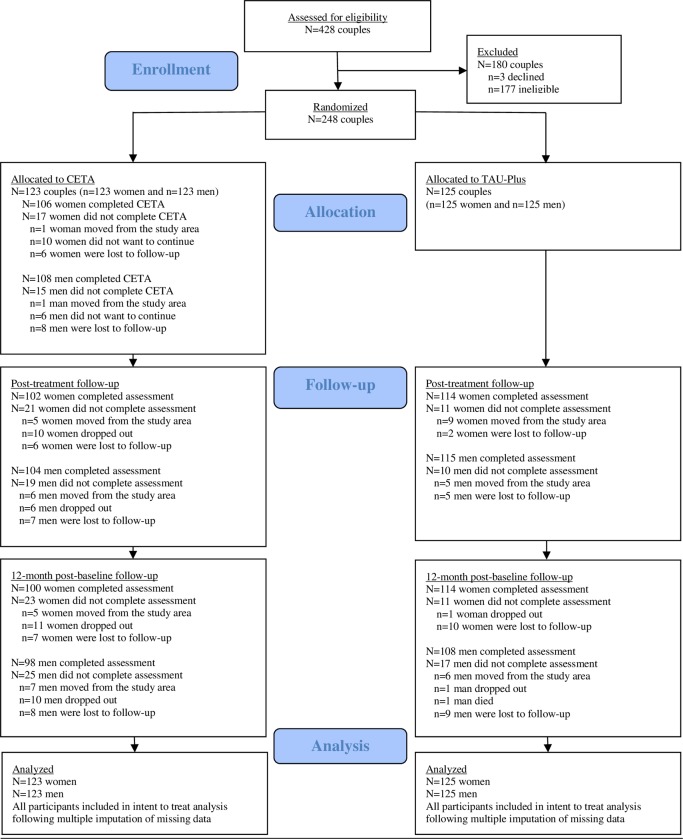
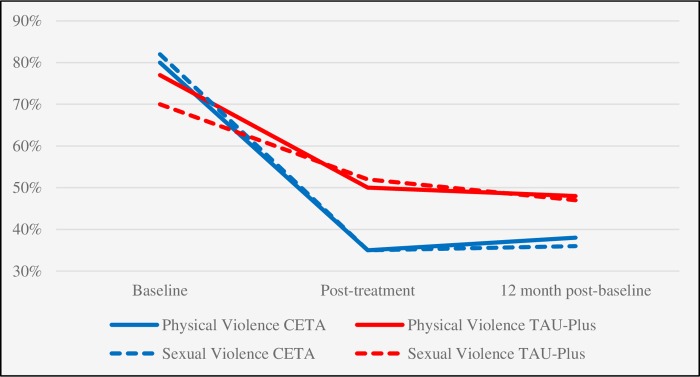
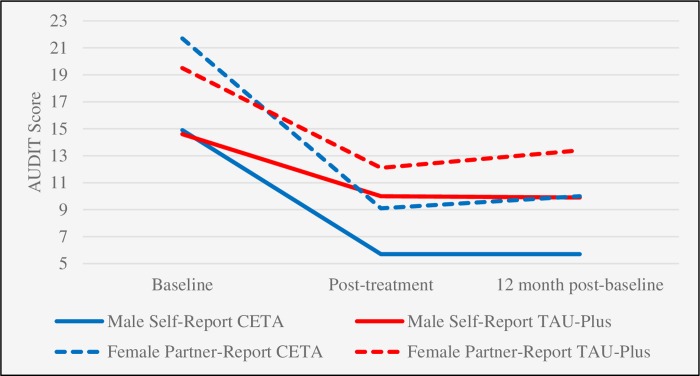
BACKGROUND: Both intimate partner violence (IPV) and alcohol misuse are highly prevalent, and partner alcohol misuse is a significant contributor to women's risk for IPV. There are few evidence-based interventions to address these problems in low- and middle-income countries (LMICs). We evaluated the effectiveness of an evidence-based, multi-problem, flexible, transdiagnostic intervention, the Common Elements Treatment Approach (CETA) in reducing (a) women's experience of IPV and (b) their male partner's alcohol misuse among couples in urban Zambia. METHODS AND FINDINGS: This was a single-blind, parallel-assignment randomized controlled trial in Lusaka, Zambia. Women who reported moderate or higher levels of IPV and their male partners with hazardous alcohol use were enrolled as a couple and randomized to CETA or treatment as usual plus safety checks (TAU-Plus). The primary outcome, IPV, was assessed by the Severity of Violence Against Women Scale (SVAWS) physical/sexual violence subscale, and the secondary outcome, male alcohol misuse, by the Alcohol Use Disorders Identification Test (AUDIT). Assessors were blinded. Analyses were intent-to-treat. Primary outcome assessments were planned at post-treatment, 12 months post-baseline, and 24 months post-baseline. Enrollment was conducted between May 23, 2016, and December 17, 2016. In total, 123 couples were randomized to CETA, 125 to TAU-Plus. The majority of female (66%) and a plurality of male (48%) participants were between 18 and 35 years of age. Mean reduction in IPV (via SVAWS subscale score) at 12 months post-baseline was statistically significantly greater among women who received CETA compared to women who received TAU-Plus (-8.2, 95% CI -14.9 to -1.5, p = 0.02, Cohen's d effect size = 0.49). Similarly, mean reduction in AUDIT score at 12 months post-baseline was statistically significantly greater among men who received CETA compared to men who received TAU (-4.5, 95% CI -6.9 to -2.2, p < 0.001, Cohen's d effect size = 0.43). The Data and Safety Monitoring Board recommended the trial be stopped early due to treatment effectiveness following the 12-month post-baseline assessment, and CETA was offered to control participants. Limitations of the trial included the lack of a true control condition (i.e., that received no intervention), self-reported outcomes that may be subject to social desirability bias, and low statistical power for secondary IPV outcomes. CONCLUSIONS: Results showed that CETA was more effective than TAU-Plus in reducing IPV and hazardous alcohol use among high-risk couples in Zambia. Future research and programming should include tertiary prevention approaches to IPV, such as CETA, rather than offering only community mobilization and primary prevention. TRIAL REGISTRATION: The trial was registered on ClinicalTrials.gov (NCT02790827).
Overview
The claims and statistics of this paper haven’t been checked yet.
Free: it reads the open-access text and checks the first 5 claims that cite a source we can check. Create a free account to check every claim.
Integrity signals
Registry
Cites
Statistics
Figures
Verification
Claims the paper makes
The claims and statistics of this paper haven’t been checked yet.
Free: it reads the open-access text and checks the first 5 claims that cite a source we can check. Create a free account to check every claim.
Claims other papers make about this one
Each is checked against this paper’s own text: does it say what the citing paper says it does?
The source backs part of the claim, not all of it — or backs it for a different population, condition or comparison.
In the citing paper
“RCTs for the CETA conducted in Thailand [32], Zambia [33], Iraq [34], Iraqi Kurdistan [35], Colombia [36], and Somalia [37] have all indicated significant positive effects on mental health outcomes for men, women and children.”
From Psychological Interventions for Survivors of Intimate Partner Violence in Humanitarian Settings: An Overview of the Evidence and Implementation Considerations (2022) · cites this paper as [33]
Experimental — accuracy not yet measuredThe source backs part of the claim, not all of it — or backs it for a different population, condition or comparison.
In the citing paper
“which in turn suggests that mental health programming alone may reduce the likelihood of IPV [33,38]”
From Psychological Interventions for Survivors of Intimate Partner Violence in Humanitarian Settings: An Overview of the Evidence and Implementation Considerations (2022) · cites this paper as [33]
Experimental — accuracy not yet measuredThe cited source says what the claim attributes to it.
In the citing paper
“Most commonly, interventions used MI techniques [22,23,61,69,72,83] or cognitive behavioral therapy (CBT) [53,64,68,77,78,87].”
From Patient-level interventions to reduce alcohol-related harms in low- and middle-income countries: A systematic review and meta-summary (2022) · cites this paper as [68]
The cited source says what the claim attributes to it.
In the citing paper
“There is evidence for effectively addressing the incidence of GBV after incorporating safety planning and substance use programming for partners concurrently receiving the CETA, which in turn suggests that mental health programming alone may reduce the likelihood of IPV [33,38].”
The cited source says what the claim attributes to it.
In the citing paper
“Evidence suggests that addressing men’s mental health and substance issues may decrease the likelihood of violence perpetration [33].”
Self-check
Percentages, sums and reported differences re-computed from the paper’s own numbers.
The self-check needs the paper’s full text.
Citations
Cites
A Coefficient of Agreement for Nominal Scales
Cohen, J. (1960) · Educational and Psychological Measurement · doi:10.1177/001316446002000104 · Cited by 42,398
A heteroskedasticity-consistent covariance matrix estimator and a direct test for heteroskedasticity
White, H. (1980) · Econometrica · doi:10.2307/1912934 · Cited by 25,861 · cited 2×
“This method, also known as a “sandwich” variance estimator, follows methods first described by Huber [47] and White [48].”
MethodSAUNDERS, J. B., AASLAND, O. G., BABOR, T. F., DE LA FUENTE, J. R., & GRANT, M. (1993) · Addiction · doi:10.1111/j.1360-0443.1993.tb02093.x · Cited by 13,597 · cited 15×
“Alcohol use, a secondary outcome, was measured with AUDIT [41].”
MethodInfluentialMultiple imputation using chained equations: Issues and guidance for practice
White, I. R., Royston, P., & Wood, A. M. (2011) · Statistics in Medicine · doi:10.1002/sim.4067 · Cited by 9,792 · cited 1×
“We followed recommendations by White and colleagues of performing a number of imputations approximately equivalent to the amount of missing data; we therefore imputed 17 datasets [45].”
Method(1967) · Project Euclid (Cornell University) · Cited by 4,720
Multiple imputation by chained equations: what is it and how does it work?
Azur, M. J., Stuart, E. A., Frangakis, C., & Leaf, P. J. (2011) · International Journal of Methods in Psychiatric Research · doi:10.1002/mpr.329 · Cited by 3,542
Garcia-Moreno, C., Jansen, H. A., Ellsberg, M., Heise, L., & Watts, C. H. (2006) · The Lancet · doi:10.1016/s0140-6736(06)69523-8 · Cited by 3,176
Relapse Prevention: Maintenance Strategies in the Treatment of Addictive Behaviors
Washton, A. M. (1986) · Journal of Studies on Alcohol · doi:10.15288/jsa.1986.47.260 · Cited by 2,527
Physical and mental health effects of intimate partner violence for men and women
Coker, A. L., Davis, K. E., Arias, I., Desai, S., Sanderson, M., Brandt, H. M., & Smith, P. H. (2002) · American Journal of Preventive Medicine · doi:10.1016/s0749-3797(02)00514-7 · Cited by 2,258
A Systematic Review of Risk Factors for Intimate Partner Violence
Capaldi, D. M., Knoble, N. B., Shortt, J. W., & Kim, H. K. (2012) · Partner Abuse · doi:10.1891/1946-6560.3.2.231 · Cited by 1,844
Research works printed but not linked: 4
- Inter-Agency Standing Committee. Guidelines for integrating gender-based violence interventions in humanitarian action: reducing risk, promoting resilience and aiding recovery. Geneva: Inter-Agency Standing Committee; 2015.
- World Health Organization. Violence prevention: the evidence Preventing violence by reducing the availability and harmful use of alcohol. Geneva: World Health Organization; 2009.
- United Nations. Sustainable development goal 5: achieve gender equality and empower all women and girls. New York: United Nations; 2018.
- StataCorp. Stata Statistical Software. Release 15. College Station (TX): StataCorp; 2017.
Cited by
Oram, S., Fisher, H. L., Minnis, H., Seedat, S., Walby, S., Hegarty, K., Rouf, K., Angénieux, C., Callard, F., Chandra, P. S., et al. (2022) · The Lancet Psychiatry · doi:10.1016/s2215-0366(22)00008-6 · Cited by 331
Self-citationGibbs, A., Dunkle, K., Ramsoomar, L., Willan, S., Jama Shai, N., Chatterji, S., Naved, R., & Jewkes, R. (2020) · Global Health Action · doi:10.1080/16549716.2020.1739845 · Cited by 171
“The RCT evaluation showed significant impacts on reducing IPV, symptoms of common mental disorders and alcohol use [66].”
Lwamba, E., Shisler, S., Ridlehoover, W., Kupfer, M., Tshabalala, N., Nduku, P., Langer, L., Grant, S., Sonnenfeld, A., Anda, D., et al. (2022) · Campbell Systematic Reviews · doi:10.1002/cl2.1214 · Cited by 163
Travers, Á., McDonagh, T., Cunningham, T., Armour, C., & Hansen, M. (2021) · Clinical Psychology Review · doi:10.1016/j.cpr.2021.101974 · Cited by 187
Jewkes, R., Willan, S., Heise, L., Washington, L., Shai, N., Kerr-Wilson, A., Gibbs, A., Stern, E., & Christofides, N. (2021) · International Journal of Environmental Research and Public Health · doi:10.3390/ijerph182212129 · Cited by 88
“VATU in Zambia was psychotherapeutic in nature and delivered to women experiencing severe violence, and their male partner [26].”
BackgroundKeith, T., Hyslop, F., & RICHMOND, R. L. (2022) · Trauma Violence & Abuse · doi:10.1177/15248380211068136 · Cited by 101
Ceccarelli, C., Prina, E., Muneghina, O., Jordans, M. J. D., Barker, E. D., Miller, K. E., Singh, R. K., Acartürk, C., Sorsdhal, K., Cuijpers, P. J., et al. (2022) · Epidemiology and Psychiatric Sciences · doi:10.1017/s2045796022000580 · Cited by 70
Bogdanov, S., Augustinavicius, J., Bass, J., Metz, K. L., Skavenski, S. V. W., Singh, N. S., Moore, Q., Haroz, E. E., Kane, J. C., Doty, B., et al. (2021) · Cambridge Prisms Global Mental Health · doi:10.1017/gmh.2021.27 · Cited by 73
“This is true of the global mental health literature overall: most LMIC intervention trials, both clinic- and community-based, have been conducted in Africa with few in Asia and Latin America (Chibanda et al., 2015; Purgato et al., 2018).”
BackgroundInfluentialSelf-citationSabri, B., Sellke, R., Smudde, M., Bourey, C., & Murray, S. M. (2022) · Trauma Violence & Abuse · doi:10.1177/15248380221126181 · Cited by 68
“One intervention significantly reduced physical IPV among women but had no significant impact on reducing sexual or psychological abuse (Kapiga et al., 2019).”
BackgroundInfluentialSelf-citationSingh, N. S., Bogdanov, S., Doty, B., Haroz, E. E., Girnyk, A., Чернобровкіна, В., Murray, L. K., Bass, J., & Bolton, P. A. (2021) · American Journal of Orthopsychiatry · doi:10.1037/ort0000537 · Cited by 71
Self-citationAldridge, L. R., Kemp, C. G., Bass, J., Danforth, K., Kane, J. C., Hamdani, S. U., Marsch, L. A., Uribe-Restrepo, J. M., Nguyen, A. J., Bolton, P. A., et al. (2022) · Implementation Science Communications · doi:10.1186/s43058-022-00301-6 · Cited by 51
“For the two studies in Zambia, researchers from one administered the mhIST only to providers [36] while in the other, researcher administered the mhIST only to intervention recipients [37].”
MethodSelf-citationHatcher, A. M., Page, S., van Eck, L. A., Pearson, I., Fielding-Miller, R. K., Mazars, C., & Stöckl, H. (2022) · PLOS Global Public Health · doi:10.1371/journal.pgph.0000479 · Cited by 61
Kane, J. C., Sharma, A., Murray, L. K., Chander, G., Kanguya, T., Skavenski, S., Chitambi, C., Lasater, M. E., Paul, R., Cropsey, K., et al. (2022) · AIDS and Behavior · doi:10.1007/s10461-021-03408-4 · Cited by 49
Self-citationRamsoomar, L., Gibbs, A., Chirwa, E. D., Dunkle, K., & Jewkes, R. (2021) · BMJ Open · doi:10.1136/bmjopen-2021-049282 · Cited by 49
Olff, M., Hein, I. M., Amstadter, A. B., Armour, C., Birkeland, M. S., Bui, É., Cloître, M., Ehlers, A., Ford, J. D., Greene, T., et al. (2025) · European Journal of Psychotraumatology · doi:10.1080/20008066.2025.2458406 · Cited by 76
“There is also growing evidence of the effectiveness of transdiagnostic interventions for trauma survivors in LMICs, addressing a range of mental and behavioural health difficulties simultaneously (Bonilla-Escobar et al., 2018; Murray et al., 2020; Rah-man et al., 2016).”
Babcock, J. C., Gallagher, M. W., Richardson, A., Godfrey, D. A., Reeves, V. E., & D'Souza, J. (2024) · Clinical Psychology Review · doi:10.1016/j.cpr.2024.102437 · Cited by 72
Staton, C. A., Vissoci, J. R. N., El-Gabri, D., Adewumi, K., Concepcion, T., Elliott, S. A., Evans, D. R., Galson, S. W., Pate, C. T., Reynolds, L. M., et al. (2022) · PLOS Medicine · doi:10.1371/journal.pmed.1003961 · Cited by 41
“0) in couples with intimate partner violence [68].”
BackgroundMethodInfluentialMicklitz, H. M., Glass, C. M., Bengel, J., & Sander, L. (2023) · Trauma Violence & Abuse · doi:10.1177/15248380231169481 · Cited by 62
Wainberg, M. L., Gouveia, M. L., Stockton, M. A., Feliciano, P., Suleman, A., Mootz, J. J., Mello, M., Fiks Salem, A., Greene, M. C., Bezuidenhout, C., et al. (2021) · Evidence Based Mental Health · doi:10.1136/ebmental-2020-300199 · Cited by 33
“17 18–20”
BackgroundChatterji, S., & Heise, L. (2021) · SSM - Mental Health · doi:10.1016/j.ssmmh.2021.100038 · Cited by 36
Interventions to Prevent Intimate Partner Violence: A Systematic Review and Meta-Analysis
Alsina, E., Browne, J. L., Gielkens, D., Noorman, M. A. J., & de Wit, J. B. F. (2023) · Violence Against Women · doi:10.1177/10778012231183660 · Cited by 50
“This also precluded blinding intervention deliverers to study conditions (e.g., Javalkar et al., 2019; also see Kapiga et al., 2019; Maman et al., 2020; Murray et al., 2020).”
BackgroundNull, C., Hombrados, J. G., (3ie), I. I. F. I. E., Kremer, M. R., Meeks, R. C., Miguel, E. A., & Zwane, A. P. (2012) · doi:10.23846/sr1003 · Cited by 50
Compendium of dyadic intervention techniques (DITs) to change health behaviours: a systematic review
Maio, S. D., Villinger, K., Knoll, N., Scholz, U., Stadler, G., Gawrilow, C., & Berli, C. (2024) · Health Psychology Review · doi:10.1080/17437199.2024.2307534 · Cited by 31
Logie, C. H., Okumu, M., Malama, K., Mwima, S., Hakiza, R., Kiera, U. M., & Kyambadde, P. (2022) · BMJ Global Health · doi:10.1136/bmjgh-2021-006583 · Cited by 39
Kaminer, D., Booysen, D. D., Ellis, K., Kristensen, C. H., Patel, A., Robjant, K., & Sardana, S. M. (2024) · Journal of Traumatic Stress · doi:10.1002/jts.23031 · Cited by 26
Fuhr, D. C., Bogdanov, S., Tol, W. A., Nadkarni, A., & Roberts, B. (2021) · Intervention · doi:10.4103/intv.intv_27_20 · Cited by 28
Atkins, D. L., Cumbe, V., Muanido, A., Manaca, N., Fumo, H., Chiruca, P., Hicks, L., & Wagenaar, B. H. (2021) · Journal of Substance Abuse Treatment · doi:10.1016/j.jsat.2021.108441 · Cited by 22
Filiatreau, L. M., Giovenco, D., Twine, R., Gómez-Olivé, F. X., Kahn, K., Haberland, N. A., & Pettifor, A. E. (2020) · Journal of the International AIDS Society · doi:10.1002/jia2.25654 · Cited by 20
“The Zvandiri programme, which began as a single support group in Zambia, aims to ensure the physical, social and mental well-being of YLWH to improve HIV care outcomes.”
BackgroundGlobal mental health and HIV care: gaps and research priorities
Senn, T. E., Greenwood, G. L., & Rao, V. R. (2021) · Journal of the International AIDS Society · doi:10.1002/jia2.25714 · Cited by 22
“This transdiagnostic intervention, consisting of common techniques underlying depression, anxiety and substance use treatment [16], improved mental health, substance use and intimate partner violence in a recent randomized controlled trial [16,17], but needs more investigation in terms of HIV outcomes [18].”
MethodLakin, D. P., García-Moreno, C., & Roesch, E. (2022) · International Journal of Environmental Research and Public Health · doi:10.3390/ijerph19052916 · Cited by 18
“# Addressing hypervigilance to accurately assess current risk for IPV.”
BackgroundInfluentialFerrari, G., Rueda, S. T., Chirwa, E. D., Gibbs, A., Orangi, S., Barasa, E., Tawiah, T. A. S., Prah, R. K. D., Hitimana, R., Daviaud, E., et al. (2022) · PLoS Medicine · doi:10.1371/journal.pmed.1003827 · Cited by 29
“All but the Pakistani and Kenyan interventions measured sexual and/or physical IPV among adults [5,6,16,31,32] as their primary outcome.”
BackgroundMethodKaysen, D. L., van Stolk‐Cooke, K., Kaminer, D., Greene, M. C., López‐Castro, T., & Kane, J. C. (2022) · Cambridge Prisms Global Mental Health · doi:10.1017/gmh.2022.63 · Cited by 21
“In the first trial, CETA significantly reduced alcohol use among both women and men in families with ongoing interpersonal violence and among whom PTSD was highly prevalent (Murray et al., 2020).”
BackgroundSelf-citationSilva, P., & Pereira, H. (2023) · Behavioral Sciences · doi:10.3390/bs13070579 · Cited by 40
Conroy, A. A., Ruark, A. H., Mulauzi, N., Mkandawire, J., Darbes, L. A., Hahn, J. A., Neilands, T. B., Tebbetts, S., & Ssewamala, F. M. (2024) · Social Science & Medicine · doi:10.1016/j.socscimed.2024.117407 · Cited by 20
Belay, G. M., Mak, Y. W., Wong, F. K. Y., Lam, K. K. W., Liu, Q., Yang, F., Mao, T., Wu, C. S. T., & Ho, K. Y. (2024) · Frontiers in Public Health · doi:10.3389/fpubh.2024.1371497 · Cited by 25
Pauley, A., Metcalf, M., Buono, M., Rent, S. M., Mikindo, M., Sawe, Y., Kilasara, J., MNS-FNP, A., Bosche, J., Staton, C. A., et al. (2024) · PLOS Global Public Health · doi:10.1371/journal.pgph.0002382 · Cited by 18
Prado, E. L., Sebayang, S. K., Adawiyah, S. R., Alcock, K., Ullman, M. T., Muadz, H., & Shankar, A. H. (2021) · Social Science & Medicine · doi:10.1016/j.socscimed.2021.114396 · Cited by 29
“Another is to train non-specialist community front-line workers to provide services based on proven interventions, such as cognitive behavioral therapy, interpersonal therapy, supportive therapy, and group therapy (Murray et al., 2020).”
BackgroundGreene, M. C., Scognamiglio, T., Likindikoki, S. L., Misinzo, L., Njau, T., Bonz, A. G., Ventevogel, P., Mbwambo, J. K. K., & Tol, W. A. (2022) · Global Public Health · doi:10.1080/17441692.2022.2029926 · Cited by 22
“Recent evidence from Zambia showed that providing psychological intervention activities to address mental health of men (e.g. alcohol misuse and posttraumatic stress) can reduce IPV perpetration (Murray et al., 2020) and have sustained effects (Kane et al., 2021).”
BackgroundMwenge, M., Figge, C. J., Metz, K. L., Kane, J. C., Kohrt, B. A., Pedersen, G. A., Sikazwe, I. T., Skavenski, S. V. W., Munthali, S., & Murray, L. K. (2022) · Journal of Public Health in Africa · doi:10.4081/jphia.2022.2201 · Cited by 21
“CETA is a flexible, modular, scalable, and evidencebased therapy method designed for lay clinicians to treat co-morbid mental health issues in low- and middle-income nations.(17)”
MethodSelf-citationDo Gender-Based Violence Interventions Consider the Impacts of Climate Change? A Systematic Review
Allen, E. M., Munala, L., & Ward-Rannow, J. (2023) · Trauma Violence & Abuse · doi:10.1177/15248380231214793 · Cited by 20
Inoue, S., Chitambi, C., Vinikoor, M. J., Kanguya, T., Murray, L. K., Sharma, A., Chander, G., Paul, R., Mwenge, M., Munthali, S., et al. (2021) · Drug and Alcohol Dependence · doi:10.1016/j.drugalcdep.2021.109156 · Cited by 17
Self-citationSTARC-SUD – Adaptation of a transdiagnostic intervention for refugees with substance use disorders
Lotzin, A., Lindert, J., Koch, T., Liedl, A., & Schäfer, I. (2021) · Clinical Psychology in Europe · doi:10.32872/cpe.5329 · Cited by 19
“CETA effectively reduced hazardous alcohol use in an at-risk sample for interpersonal violence in Zambia (Murray et al., 2020).”
BackgroundInfluentialBrockie, T., Haroz, E. E., Nelson, K. E., Cwik, M. F., Decker, E., Ricker, A., Littlepage, S., Mayhew, J., Wilson, D. H., Wetsit, L., et al. (2021) · BMC Public Health · doi:10.1186/s12889-021-12272-9 · Cited by 19
Murray, S. M., Skavenski, S. V. W., Metz, K. L., Munthali, S., Mwenge, M., Kane, J. C., Alto, M. E., Venturo‐Conerly, K. E., Wasil, A. R., Fine, S. L., et al. (2020) · Social Science & Medicine · doi:10.1016/j.socscimed.2020.113458 · Cited by 19
Self-citationVinikoor, M. J., Sikazwe, I. T., Sharma, A., Kanguya, T., Chipungu, J., Murray, L. K., Chander, G., Cropsey, K. L., Bosomprah, S., Mulenga, L., et al. (2022) · AIDS Care · doi:10.1080/09540121.2022.2092589 · Cited by 17
“For example, Common Elements Treatment Approach, an evidence-based and transdiagnostic cognitive-behavioral therapy (Murray et al., 2020), was recently discussed for possible use within Zambian HIV programs funded by the Presidents Emergency Plan for AIDS Relief.”
Self-citationMiedema, S. S., Stamatakis, C. E., Tracy, A. J., Hegle, J., Kamagaté, F., McOwen, J., Augusto, Â. D. R., Manuel, P., Coomer, R., Kambona, C., et al. (2023) · Child Abuse & Neglect · doi:10.1016/j.chiabu.2023.106494 · Cited by 17
“…Elements Treatment Approach (CETA) trains lay providers to treat a range of common mental and behavioral health problems associated with poor HIV prevention and treatment outcomes and has demonstrated effectiveness in reducing HIV risk behaviors in African LMIC contexts (Murray et al., 2020).”
BackgroundKane, J. C., Glass, N. E., Bolton, P. A., Mayeya, J., Paul, R., Mwenge, M., & Murray, L. K. (2021) · Cambridge Prisms Global Mental Health · doi:10.1017/gmh.2021.2 · Cited by 15
Self-citationWechsberg, W. M., van der Drift, I. M., Howard, B. N., MYERS, B. J., Browne, F. A., Bonner, C. P., Carney, T., Ndirangu, J., & Washio, Y. (2022) · International Journal of Environmental Research and Public Health · doi:10.3390/ijerph19148661 · Cited by 16
“This study also used counselors in male–female pairs to recruit heterosexual couples in which the woman reported experiencing recent IPV and measured gender norms as a secondary outcome [72].”
BackgroundMethodInfluentialKeynejad, R. C., Bitew, T., Sorsdahl, K., Myers, B., Honikman, S., Medhin, G., Deyessa, N., Mulushoa, A., Fekadu, E., Howard, L. M., et al. (2023) · PLOS Global Public Health · doi:10.1371/journal.pgph.0002054 · Cited by 12
Greene, M. C., Kane, J., Alto, M., Giusto, A., Lovero, K., Stockton, M., McClendon, J., Nicholson, T., Wainberg, M. L., Johnson, R. M., et al. (2023) · Cochrane Database of Systematic Reviews · doi:10.1002/14651858.cd013350.pub2 · Cited by 11
Self-citationSaunders, K. R. K., Landau, S., Howard, L. M., Fisher, H. L., Arseneault, L., McLeod, G. F. H., & Oram, S. (2021) · Social Psychiatry and Psychiatric Epidemiology · doi:10.1007/s00127-021-02183-w · Cited by 18
“Although alcohol misuse was not found to mediate the relationship between depression and IPV perpetration, it is a known risk factor for IPV perpetration that should also be considered an intervention target [56].”
BackgroundMunthali, S., Figge, C. J., Metz, K. L., Kane, J. C., Skavenski, S. V. W., Mwenge, M., Kohrt, B. A., Pedersen, G. A., Sikazwe, I. T., & Murray, L. K. (2022) · Frontiers in Public Health · doi:10.3389/fpubh.2022.906509 · Cited by 13
Self-citationNguyen, V., Kertesz, M., Davidson, J., Humphreys, C., & Laslett, A. (2023) · Advances in Dual Diagnosis · doi:10.1108/add-07-2022-0021 · Cited by 11
Meeting men’s mental health needs during COVID-19 and beyond: a global health imperative
Gottert, A., Shattuck, D. C., Pulerwitz, J., Betron, M. L., McLarnon, C., Wilkins, J. D., Tseng, T., & on behalf of the Interagency Gender Working Group Male Engagement Task Force (2022) · BMJ Global Health · doi:10.1136/bmjgh-2021-008297 · Cited by 12
Hatcher, A. M., Page, S., van Eck, L. A., Pearson, I., Fielding-Miller, R. K., Mazars, C., & Stöckl, H. (2022) · medRxiv · doi:10.1101/2022.04.20.22274085 · Cited by 10
“For example, among men, addressing mental health and alcohol misuse seems to be a promising way to limit VAWG perpetration [50-52].”
BackgroundGibbs, A., Mkhwanazi, S., Ramsoomar, L., Willan, S., & Jewkes, R. K. (2024) · Social Science & Medicine · doi:10.1016/j.socscimed.2024.117144 · Cited by 15
“…interventions in other settings have demonstrated the benefit of alcohol-focused violence prevention interventions (Giusto and Puffer, 2018; Murray et al., 2020), and that these work through multiple pathways, including reducing alcohol consumption, reducing conflict over finances and…”
InfluentialKeynejad, R. C., Fenta, T. B., Sorsdahl, K. R., MYERS, B. J., Honikman, S., Mulushoa, A., Demissie, M., Deyessa, N., Howard, L. M., & Hanlon, C. (2023) · Psychotherapy Research · doi:10.1080/10503307.2023.2222899 · Cited by 14
“…attending a 2017 consensus meeting highlighted interpersonal psychotherapy (IPT; Bolton et al., 2003; Verdeli et al., 2003; WHO, 2020), the common elements treatment approach (CETA; Murray et al., 2020a), and problem-solving therapy (PST; Malouff et al., 2007) as most promising for this context.”
BackgroundFine, S. L., Kane, J. C., Murray, S. M., Skavenski, S. V. W., Paul, R., & Murray, L. K. (2021) · Drug and Alcohol Dependence · doi:10.1016/j.drugalcdep.2021.108995 · Cited by 13
“CETA was then offered to all control participants, who therefore did not participate in the 24-month post-baseline assessment (Murray et al., 2020).”
BackgroundMethodInfluentialSelf-citationGibbs, A., Chirwa, E. D., & Dunkle, K. (2022) · Journal of Interpersonal Violence · doi:10.1177/08862605221084738 · Cited by 9
Pluess, M., McEwen, F. S., Biazoli, C. E., Chehade, N., Bosqui, T. J., Skavenski, S. V. W., Murray, L. K., Weierstall‐Pust, R., Bolton, P. A., & Karam, E. G. (2024) · Conflict and Health · doi:10.1186/s13031-024-00616-2 · Cited by 8
“Importantly, the effect size of 0.33 is at the lower end of detected effect sizes for previous evaluations of CETA which range from 0.30 to 2.40 [63–66].”
BackgroundInfluentialSelf-citationPsychiatric comorbidity and psychosocial stressors among people initiating HIV care in Cameroon
Parcesepe, A. M., Filiatreau, L. M., Ebasone, P. V., Dzudié, A., Pence, B. W., Wainberg, M. L., Yotebieng, M., Anastos, K., Pefura-Yone, E. W., Nsame, D., et al. (2022) · PLoS ONE · doi:10.1371/journal.pone.0270042 · Cited by 13
Cuneo, A. G., Vaillant, J., Koussoubé, E., Pierotti, R. S., Falb, K., & Kabeya, R. (2023) · PLoS ONE · doi:10.1371/journal.pone.0282339 · Cited by 7
“Recent transdiagnostic cognitive behavior therapy interventions have demonstrated that treating all these problems concurrently can lead to reductions in men’s use of IPV [14, 15].”
BackgroundKurvinen, M., Ekström, A. M., & Deuba, K. (2025) · Women s Health · doi:10.1177/17455057251326416 · Cited by 11
“45 Living in Karnali province more than doubled the odds for anxiety, depression, and suicidal ideation compared to residing in Bagmati.”
Figge, C. J., Kane, J. C., Skavenski, S. V. W., Haroz, E. E., Mwenge, M., Munthali, S., Aldridge, L. R., Vinikoor, M. J., Sharma, A., Inoue, S., et al. (2022) · Trials · doi:10.1186/s13063-022-06319-4 · Cited by 9
“Recruitment by home-based care workers connected to partner sites is a process used previously by the research group to help identify, connect, and assure that those in need get services and mirrors how the program could recruit clients in a real-world setting [67, 68].”
MethodSelf-citationRabie, S., Tomlinson, M., Almirol, E. A., Stewart, J., Skiti, Z., Weiss, R. E., Vogel, L., & Rotheram‐Borus, M. J. (2022) · AIDS and Behavior · doi:10.1007/s10461-022-03819-x · Cited by 6
“However, similar to the successful alcohol treatment with transdiagnostic approaches [51] and generic intervention strategies [58], this approach builds on intervention strategies common across evidence-based strategies.”
BackgroundYosep, I., Hikmat, R., Mardhiyah, A., & Lukman, M. (2022) · Healthcare · doi:10.3390/healthcare11010125 · Cited by 16
“[29] To reduce negative impact of sexual violence Australia RCT 35 students Common Elements Treatment Approach Effectively reduce negative impact and improve quality of life on victims of sexual violence”
BackgroundJohnson, L. F., Kubjane, M., de Voux, A., Ohrnberger, J., & Tlali, M. (2023) · BMC Infectious Diseases · doi:10.1186/s12879-023-08470-y · Cited by 9
“More formally, the norm score is defined in terms of the Gender Equitable Men’s (GEM) scale [43], a scale based on attitudes to IPV, male sexual dominance, and gender roles in the home, which has been used in South Africa and elsewhere [15, 21, 44].”
BackgroundInfluentialInterventions to promote social cohesion in Sub-Saharan Africa
King, E., & Samii, C. (2012) · doi:10.23846/sr1012 · Cited by 7
Clark, C. J., Al‐Hamdan, Z. M., Bawadi, H. A., Alsalem, H., Hamadneh, J., Abualhaija, A., Hadd, A. R., Spencer, R. A., Bergenfeld, I., & Hall‐Clifford, R. (2024) · Reproductive Health · doi:10.1186/s12978-024-01860-8 · Cited by 6
“A recently published trial of a cou-ples-focused cognitive behavioral intervention in Zambia showed significant reduction in women’s experience of IPV and men’s use of hazardous alcohol consumption [32].”
BackgroundKnudsen, K. S., Becker, K. D., Guan, K., Gellatly, R., Patel, V., Malik, K., Boustani, M. M., Mathur, S., & Chorpita, B. F. (2021) · Journal of Evaluation in Clinical Practice · doi:10.1111/jep.13623 · Cited by 7
Nguyen, A. J., Russell, T., Skavenski, S. V. W., Bogdanov, S., Lomakina, K., Іванюк, І. В., Aldridge, L. R., Bolton, P. A., Murray, L. K., & Bass, J. (2023) · Global Health Science and Practice · doi:10.9745/ghsp-d-22-00488 · Cited by 13
Self-citationPulerwitz, J., McClair, T. L., Gottert, A., Shabangu, P., Cawood, C., Chipeta, E. K., & Mathur, S. (2022) · AIDS · doi:10.1097/qad.0000000000003224 · Cited by 6
“Increased access to mental health services for men would facilitate coping mechanisms around the trauma that often results from exposure to violence/adverse events [37,38].”
BackgroundGagnon, K. W., Levy, S. M., Figge, C. J., Wolford‐Clevenger, C., Murray, L. K., Kane, J. C., Bosomprah, S., Sharma, A., Nghiem, V. T. H., Chitambi, C., et al. (2023) · Contemporary Clinical Trials Communications · doi:10.1016/j.conctc.2023.101123 · Cited by 4
Self-citationEngell, T., Helland, S. S., Vira, E. G., Berg, S., Kvamme, L. S., Kjøbli, J., Bergseth, J., Brenne, I., Nes, R. B., Røysamb, E., et al. (2025) · BMC Health Services Research · doi:10.1186/s12913-025-12661-5 · Cited by 3
“Despite such severe challenges in scaling effective mental il prevention and treatment to reach populations in need, evidence-informed interventions evidently have elements and features that can effectively address mental health issues [10–12].”
Hershow, R. B., Reyes, H. L. M. N., Hà, T. V., Chander, G., Mai, N. V. T., Sripaipan, T., Dowdy, D. W., Latkin, C. A., Hutton, H. E., Pettifor, A. E., et al. (2021) · Addiction · doi:10.1111/add.15496 · Cited by 4
Stern, E. A., & Levtov, R. (2026) · Public Health · doi:10.1016/j.puhe.2026.106223 · Cited by 4
Hershow, R. B., Reyes, H. L. M., Hà, T. V., Chander, G., Mai, N. V. T., Sripaipan, T., Frangakis, C., Dowdy, D. W., Latkin, C. A., Hutton, H. E., et al. (2020) · Drug and Alcohol Dependence · doi:10.1016/j.drugalcdep.2020.108098 · Cited by 5
“Clinic-based psychosocial counseling interventions targeting men with hazardous alcohol use in the United States and Zambia effectively reduced IPV perpetration (Murray et al., 2020; O’Farrell et al., 2003; Stuart et al., 2003), offering a promising IPV prevention strategy to test in low-resource settings.”
BackgroundMootz, J. J., dos Santos, P. F., dos Santos, K., Stith, S. M., Wainberg, M. L., & Oliffe, J. L. (2024) · SSM - Mental Health · doi:10.1016/j.ssmmh.2024.100297 · Cited by 7
“They found that CETA performed better than treatment as usual in reductions of IPV and alcohol use (Murray et al., 2020).”
Laslett, A., Cook, M., Ramsoomar, L., Morojele, N. K., & Waleewong, O. (2024) · The International Journal of Alcohol and Drug Research · doi:10.7895/ijadr.471 · Cited by 5
Figge, C. J., Somba, M., Aloyce, Z., Minja, A., Fawzi, M. C. S., Temu, J., & Kaaya, S. (2022) · International Journal on Child Maltreatment Research Policy and Practice · doi:10.1007/s42448-022-00123-y · Cited by 3
Russette, H., Grubin, F., Ingalls, A., Martin, L., Leonard, A., Kushman, E., Cisler, A., Leffler, E., Herman, A., & Haroz, E. (2022) · Infant Mental Health Journal · doi:10.1002/imhj.22012 · Cited by 2
Miller, A. P., Appa, A. A., Muyindike, W. R., Fatch, R., Kekibiina, A., Beesiga, B., Adong, J., Emenyonu, N. I., Marson, K. G., Getahun, M., et al. (2024) · Violence Against Women · doi:10.1177/10778012231225229 · Cited by 2
“Uganda ’ s COVID-19 Essential Services Committee (in alignment with recommendations from the African Union) established guidelines for creating and integrating gender-responsive programming into COVID-19 national responses, which included the development of standard operating procedures to ensure continuity of care an…”
InfluentialGrimes, K. E. L., Ebasone, P. V., Dzudié, A., Nash, D., Pence, B. W., Wainberg, M. L., Yotebieng, M., Ajeh, R. A., & Parcesepe, A. M. (2024) · PLoS ONE · doi:10.1371/journal.pone.0304114 · Cited by 3
Chipungu, J., Smith, H., Mwamba, C., Haambokoma, M., Sharma, A., Savory, T., Musheke, M., Pry, J. M., Bolton‐Moore, C., Sikazwe, I. T., et al. (2024) · PLOS Global Public Health · doi:10.1371/journal.pgph.0003094 · Cited by 3
Lee, N., Osborne, M. C., Massetti, G. M., Watson, A. E. N., & Brown, S. (2021) · Violence Against Women · doi:10.1177/10778012211038973 · Cited by 3
“In addition, mental health interventions that build resilience among those who experience violence and address the psychological impacts of violence have been successfully implemented in Thailand and Zambia, and may be appropriate for Nigeria (Bolton et al., 2014; Murray et al., 2015, 2020).”
BackgroundJewkes, R. K. (2022) · The Lancet Psychiatry · doi:10.1016/s2215-0366(22)00146-8 · Cited by 3
Massazza, A., Eaton, J., Elshazly, M., Charlson, F., & Augustinavicius, J. (2022) · Intervention · doi:10.4103/intv.intv_30_21 · Cited by 4
Kane, J. C., Kamanga, M., Skavenski, S. V. W., Murray, L. K., Shawa, M., Bwalya, B., Metz, K. L., Paul, R., Mushabati, N., Ventevogel, P., et al. (2023) · Intervention · doi:10.4103/intv.intv_21_22 · Cited by 5
“…anxiety, trauma symptoms, functional impairment and unhealthy alcohol use (Bogdanov et al., 2021; Bonilla-Escobar et al., 2018; Kane et al., 2022; Murray et al., 2014, 2020; Weiss et al., 2015) (www.cetaglobal.org), including with displaced populations (Bolton et al., 2014; Murray et al., 2018).”
BackgroundSelf-citation", Lassi, Z. S., & Haider, B. A. (2012) · doi:10.23846/sr1014 · Cited by 9
Metz, K. L., Figge, C. J., Alto, M. E., Kane, J. C., & Murray, L. K. (2021) · Springer eBooks · doi:10.1007/978-3-030-57296-9_145 · Cited by 2
Self-citationBoettcher, J., Heinrich, M., Boettche, M., Burchert, S., Glaesmer, H., Gouzoulis‐Mayfrank, E., Heeke, C., Hernek, M., Knaevelsrud, C., Konnopka, A., et al. (2024) · Trials · doi:10.1186/s13063-023-07845-5 · Cited by 1
Rangel, R., Brown, A. D., Galea, J. T., Rai, S., Ross, N., Raji, M., Shrestha, P., Cheng, B., Akellot, J., & Kohrt, B. A. (2025) · PLOS Global Public Health · doi:10.1371/journal.pgph.0005123 · Cited by 1
“CETA has been used with Burmese refugees in Thailand [80], survivors of systematic violence in Colombia [82] and Iraq [81], and dyads of men engaged in hazardous alcohol use and women who experienced intimate partner violence (IPV) in Zambia [83].”
InfluentialMiller, A. P., Nakigozi, G. F., Menya, E., Figge, C. J., Lukwata, H., Byansi, W., Mugamba, S., Tuhebwe, D., Murray, L. K., Nalugoda, F. K., et al. (2025) · SSM - Mental Health · doi:10.1016/j.ssmmh.2025.100569 · Cited by 1
“…anxiety, trauma, violence, functional impairment, unhealthy alcohol use, and risky behaviors has been established in over 6 randomized trials (Bogdanov et al., 2021; Bolton et al., 2014; Murray et al., 2018; Murray et al., 2020; Weiss et al., 2015), in addition to multiple other implementations.”
Self-citationZheng, A., Kane, J. C., Mngadi-Ncube, S., Fox, M. P., Manganye, P., Long, L. C., Metz, K. L., Sardana, S. M., Alto, M. E., Greener, R., et al. (2026) · BMJ Mental Health · doi:10.1136/bmjment-2025-302246 · Cited by 1
“Based on power calculations from previous CETA trials where the primary outcomes were mental health-based, 14 we believed this sample size was sufficient to estimate at least a medium effect size (Cohen’s d=0.5) for the mental health and IPV outcomes.”
InfluentialSelf-citationJohnston, I., Robinson, A. L., Dahlby, L., Smith, E., Kumar, S. M., Gilchrist, E., Parkes, S., & Gilchrist, G. (2026) · Trauma Violence & Abuse · doi:10.1177/15248380261437078 · Cited by 1
Programas educacionais para casais: uma revisão sistemática da literatura
Dias, A. Y. M. D. S., Weber, L. N. D., Philippsen, M., de Barros, B. E., & Rodrigues, N. D. (2023) · Research Society and Development · doi:10.33448/rsd-v12i2.38481 · Cited by 3
Lasater, M. E., Kanguya, T., Chipungu, J., Kane, J. C., Skavenski, S. V. W., Murray, L. K., Vinikoor, M. J., & Sharma, A. (2023) · SSM - Mental Health · doi:10.1016/j.ssmmh.2023.100195 · Cited by 2
Self-citationRöhr, A.-K., Kohn, N., Bergs, R., Clemens, B., Lampert, A., Spehr, M., Habel, U., & Wagels, L. (2024) · Scientific Reports · doi:10.1038/s41598-024-57585-y · Cited by 2
Fine, S. L., Augustinavicius, J., Barnabas, E., Poli, M. K., Tierney, D. W., & Bolton, P. A. (2024) · Journal of Pacific Rim Psychology · doi:10.1177/18344909241249593 · Cited by 2
“Not only was CETA highly effective for both outcomes (Murray et al., 2020), but these effect sizes were largest among those who reported more severe depressive symptoms at baseline (Fine et al., 2021), suggesting the promise of integrated approaches for tackling both mental and behavioral health…”
Self-citationMurray, L. K., Kane, J. C., Bolton, P. A., Skavenski, S. V. W., Mayeya, J., Alfonso, Y. N., Webb, S., & Bishai, D. M. (2020) · Health Policy and Planning · doi:10.1093/heapol/czaa154 · Cited by 1
Self-citation
Metadata
- Authors
- Murray, L. K., Kane, J. C., Glass, N., Skavenski van Wyk, S., Melendez, F., Paul, R., Kmett Danielson, C., Murray, S. M., Mayeya, J., Simenda, F., & Bolton, P.
- Affiliations
- Johns Hopkins University (US)
- University Teaching Hospital (ZM)
- Ministry of Health (ZM)
- Corresponding author
- Murray, Laura K.
- ORCID
- Venue
- PLOS Medicine
- Publisher
- Public Library of Science (PLoS)
- Published
- 2020-04-17
- Volume
- 17
- Issue
- 4
- Pages
- e1003056
- ISSN
- 1549-1277 (ISSN-L)
- 1549-1676
- PMC
- PMC7164585
- OpenAlex
- W3017165077
- Semantic Scholar
- b6f19de823ed10e061925f765c68e2b854f12e11
- Cited by
- 139
- References
- 53
- Citations by year
- 2026: 14 · 2025: 10 · 2024: 21 · 2023: 20 · 2022: 43 · 2021: 22 · 2020: 6
- FWCI
- 12.58
- Type
- journal article
- Language
- en
- Open access
- gold
- doi.org
- Licence
- Locations
- PLoS Medicine (publishedVersion, cc-by)
- PubMed Central (publishedVersion, cc-by)
- PubMed (publishedVersion)
- RePEc: Research Papers in Economics (submittedVersion)
- DOAJ (DOAJ: Directory of Open Access Journals) (submittedVersion, cc-by-sa)
- Figshare (submittedVersion, cc-by)
- Funders
- The UK Department for International Development and the South Africa Medical Research Council (52069)
- Topics
- Social Sciences › Health › Intimate Partner and Family Violence
- Health Sciences › Medicine › Epidemiology › Substance Abuse Treatment and Outcomes
- Social Sciences › Gender Studies › Sexual Assault and Victimization Studies
- Keywords
- Common Elements Treatment Approach, intimate partner violence, hazardous drinking, couple-based interventions, transdiagnostic treatment, violence against women, Zambia, low- and middle-income countries, early trial termination, treatment effectiveness, sexual violence, physical violence, addiction treatment, Lusaka
- MeSH terms
- Intimate Partner Violence, Adolescent, Adult, Aged, Alcohol Drinking, Alcoholism, Female, Follow-Up Studies, Humans, Male, Middle Aged, Zambia, Cognitive Behavioral Therapy, Single-Blind Method, Treatment Outcome, Young Adult
About these checks
Registry, retraction, Cites and statistics results are computed, not judged, with one exception: a printed reference that no index lists is read once by a model before it counts as a citation error. Claims are extracted by a model and kept only when their quote appears verbatim in the text; each cited source is then checked, with a model’s help, for whether it says what the claim relies on. Those verdicts can be wrong — read the claim’s quote and the cited source before relying on one.
Statistics and arithmetic are recomputed, not judged.
Confidence bands are shown only for fields calibrated on our annotated test set. None is calibrated yet, so no band is shown.
What counts as a claim ›How we measure confidence ›How we check this ›
Are you an author, or do you see a problem with this page? Request a review
Data sources
Bibliographic data: Semantic Scholar, OpenAlex, Crossref.
Contains information from the Semantic Scholar Academic Graph Datasets, made available under the ODC Attribution License (ODC-BY 1.0).
Semantic Scholar’s data is described in: Kinney, R., et al. (2023). The Semantic Scholar Open Data Platform. arXiv:2301.10140.
