

Associations between breast cancer survivorship and adverse mental health outcomes: A matched population-based cohort study in the United Kingdom
Open accessThe DOI matches its Crossref record; 36 of the 36 references it cites were found in a registry or an index.
Abstract
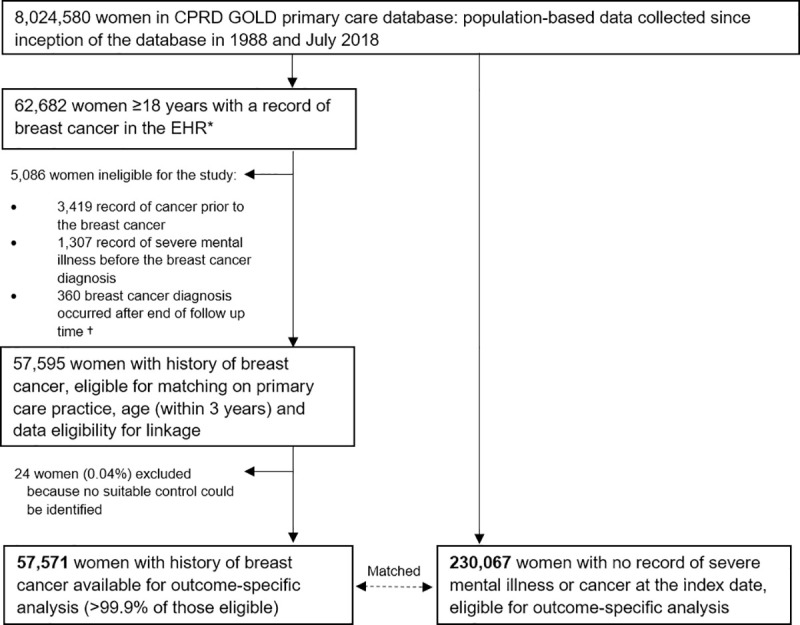
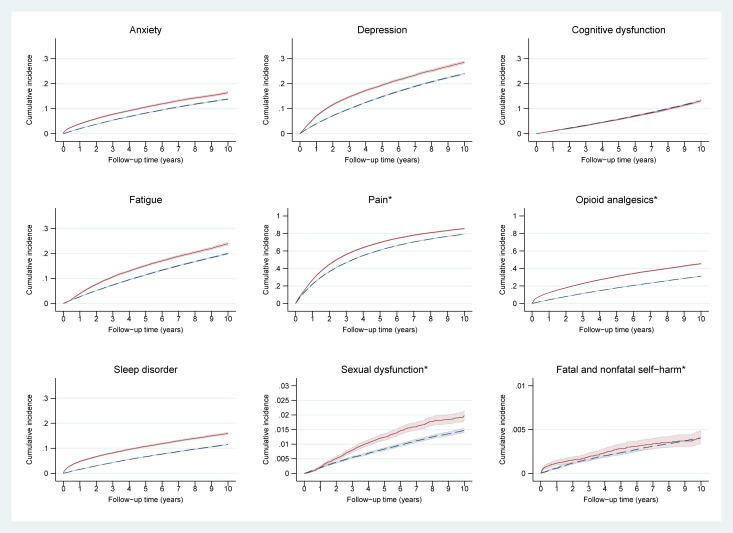
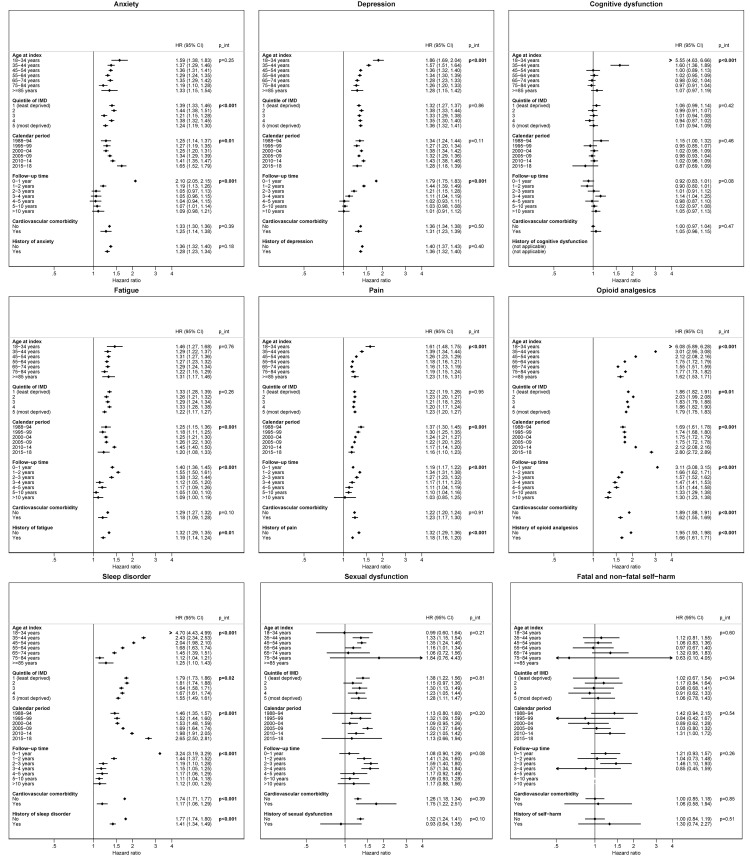
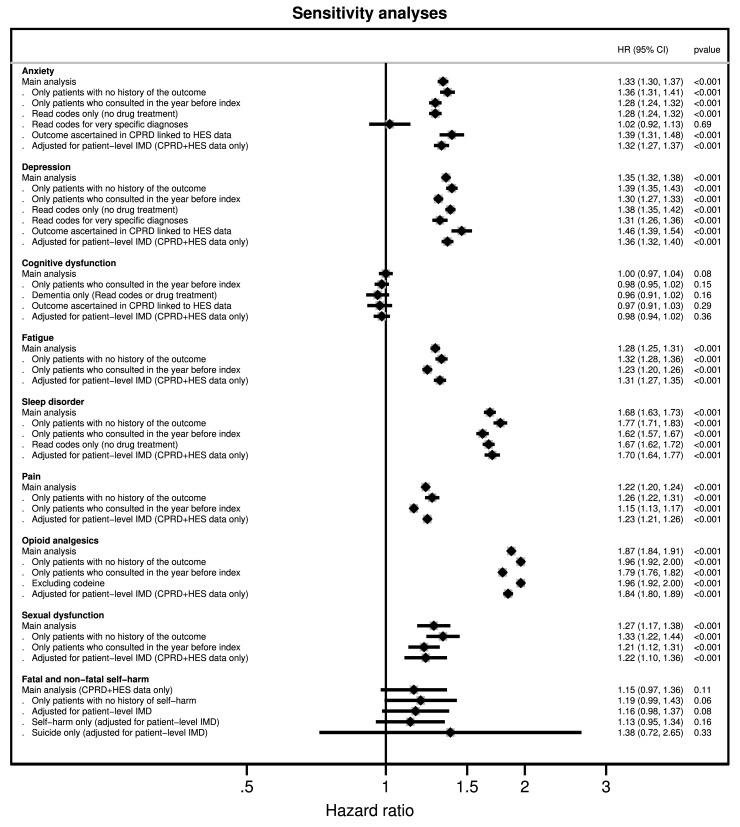
Background: Breast cancer is the most common cancer diagnosed in women globally, and 5-year net survival probabilities in high-income countries are generally >80%. A cancer diagnosis and treatment are often traumatic events, and many women struggle to cope during this period. Less is known, however, about the long-term mental health impact of the disease, despite many women living several years beyond their breast cancer and mental health being a major source of disability in modern societies. The objective of this study was to quantify the risk of several adverse mental health–related outcomes in women with a history of breast cancer followed in primary care in the United Kingdom National Health Service, compared to similar women who never had cancer. Methods and findings: We conducted a matched cohort study using data routinely collected in primary care across the UK to quantify associations between breast cancer history and depression, anxiety, and other mental health–related outcomes. All women with incident breast cancer in the Clinical Practice Research Datalink (CPRD) GOLD primary care database between 1988 and 2018 ( N = 57,571, mean = 62 ± 14 years) were matched 1:4 to women with no prior cancer ( N = 230,067) based on age, primary care practice, and eligibility of the data for linkage to hospital data sources. Cox models were used to estimate associations between breast cancer survivorship and each mental health–related outcome, further adjusting for diabetes, body mass index (BMI), and smoking and drinking status at baseline. Breast cancer survivorship was positively associated with anxiety (adjusted hazard ratio (HR) = 1.33; 95% confidence interval (CI): 1.29–1.36; p < 0.001), depression (1.35; 1.32–1.38; p < 0.001), sexual dysfunction (1.27; 1.17–1.38; p < 0.001), and sleep disorder (1.68; 1.63–1.73; p < 0.001), but not with cognitive dysfunction (1.00; 0.97–1.04; p = 0.88). Positive associations were also found for fatigue (HR = 1.28; 1.25–1.31; p < 0.001), pain (1.22; 1.20–1.24; p < 0.001), receipt of opioid analgesics (1.86; 1.83–1.90; p < 0.001), and fatal and nonfatal self-harm (1.15; 0.97–1.36; p = 0.11), but CI was wide, and the relationship was not statistically significant for the latter. HRs for anxiety and depression decreased over time ( p -interaction <0.001), but increased risks persisted for 2 and 4 years, respectively, after cancer diagnosis. Increased levels of pain and sleep disorder persisted for 10 years. Younger age was associated with larger HRs for depression, cognitive dysfunction, pain, opioid analgesics use, and sleep disorders ( p -interaction <0.001 in each case). Limitations of the study include the potential for residual confounding by lifestyle factors and detection bias due to cancer survivors having greater healthcare contact. Conclusions: In this study, we observed that compared to women with no prior cancer, breast cancer survivors had higher risk of anxiety, depression, sleep problems, sexual dysfunction, fatigue, receipt of opioid analgesics, and pain. Relative risks estimates tended to decrease over time, but anxiety and depression were significantly increased for 2 and 4 years after breast cancer diagnosis, respectively, while associations for fatigue, pain, and sleep disorders were elevated for at least 5–10 years after diagnosis. Early diagnosis and increased awareness among patients, healthcare professionals, and policy makers are likely to be important to mitigate the impacts of these raised risks.
Overview
The claims and statistics of this paper haven’t been checked yet.
Free: it reads the open-access text and checks the first 5 claims that cite a source we can check. Create a free account to check every claim.
Integrity signals
Registry
Cites
Statistics
Figures
Verification
Claims the paper makes
The claims and statistics of this paper haven’t been checked yet.
Free: it reads the open-access text and checks the first 5 claims that cite a source we can check. Create a free account to check every claim.
Self-check
Percentages, sums and reported differences re-computed from the paper’s own numbers.
The self-check needs the paper’s full text.
Citations
Cites
James, S. L., Abate, D., Abate, K. H., Abay, S. M., Abbafati, C., Abbasi, N., Abbastabar, H., Abd-Allah, F., Abdela, J., Abdelalim, A., et al. (2018) · The Lancet · doi:10.1016/s0140-6736(18)32279-7 · Cited by 13,867
Vos, T., Abajobir, A. A., Abate, K. H., Abbafati, C., Abbas, K. M., Abd-Allah, F., Abdulkader, R. S., Abdulle, A. M., Abebo, T. A., Abera, S. F., et al. (2017) · The Lancet · doi:10.1016/s0140-6736(17)32154-2 · Cited by 13,220
Data Resource Profile: Clinical Practice Research Datalink (CPRD)
Herrett, E., Gallagher, A. M., Bhaskaran, K., Forbes, H., Mathur, R., van Staa, T., & Smeeth, L. (2015) · International Journal of Epidemiology · doi:10.1093/ije/dyv098 · Cited by 2,667 · cited 1×
“We conducted a matched cohort study using data from the UK Clinical Practice Research Datalink (CPRD) GOLD primary care database (July 2018 version), which contains anonymised electronic health records data from 761 general practitioners’ (GPs) practices in England, Wales, Northern Ireland, and Scotland [9] and is bro…”
MethodSelf-citationValidation and validity of diagnoses in the General Practice Research Database: a systematic review
Herrett, E., Thomas, S. L., Schoonen, W. M., Smeeth, L., & Hall, A. J. (2010) · British Journal of Clinical Pharmacology · doi:10.1111/j.1365-2125.2009.03537.x · Cited by 1,109 · cited 1×
“CPRD GOLD primary care data have been shown to have good validity for both cancer and mental health outcomes [36,37].”
MethodWefel, J. S., Vardy, J., Ahles, T., & Schagen, S. B. (2011) · The Lancet Oncology · doi:10.1016/s1470-2045(10)70294-1 · Cited by 998 · cited 1×
“For cognitive dysfunction, we found no suggestion of an association except in the youngest patients (18 to 34 years), in contrast with other studies that have estimated 13% to 70% of breast cancer patients to be affected by this outcome within 2 years of treatment [33].”
ResultWhite, I. R., & Carlin, J. B. (2010) · Statistics in Medicine · doi:10.1002/sim.3944 · Cited by 744 · cited 1×
“former smoker) and drinking status (never drinker, current drinker, and former drinker), were estimated for all outcomes in complete cases analyses; multiple imputation was not used, as the missingness was considered likely to be missing not at random in a primary care setting [22,23], and complete case analysis minim…”
Methodde Moor, J. S., Mariotto, A. B., Parry, C., Alfano, C. M., Padgett, L., Kent, E. E., Forsythe, L., Scoppa, S., Hachey, M., & Rowland, J. H. (2013) · Cancer Epidemiology, Biomarkers & Prevention · doi:10.1158/1055-9965.epi-12-1356 · Cited by 670 · cited 1×
“9 million in the United States and 570,000 in the UK, with numbers projected to rise further [1,2].”
BackgroundProjections of cancer prevalence in the United Kingdom, 2010–2040
Maddams, J., Utley, M., & Møller, H. (2012) · British Journal of Cancer · doi:10.1038/bjc.2012.366 · Cited by 440
Carreira, H., Williams, R., Müller, M., Harewood, R., Stanway, S., & Bhaskaran, K. (2018) · JNCI: Journal of the National Cancer Institute · doi:10.1093/jnci/djy177 · Cited by 416 · cited 4×
“Increased risks of other mental health outcomes including suicide and neurocognitive and sexual dysfunctions have also been observed; existing evidence on sleep disturbance is insufficient to draw conclusions [5].”
BackgroundInfluentialSelf-citationPatient experiences with communication about sex during and after treatment for cancer
Flynn, K. E., Reese, J. B., Jeffery, D. D., Abernethy, A. P., Lin, L., Shelby, R. A., Porter, L. S., Dombeck, C. B., & Weinfurt, K. P. (2012) · Psycho-Oncology · doi:10.1002/pon.1947 · Cited by 320 · cited 1×
“Increased awareness is also needed among healthcare professionals to improve detection of the mental health conditions and may help communication between patients and clinicians, particularly about sex-related issues, which appears to be poor [41].”
Background
Research works printed but not linked: 1
- Breast Cancer Now—The research & care charity. Eight in ten with breast cancer not told about possible impact on mental health (data from Breast Cancer Care survey by Quality Health). London. 2019. Available from: https://breastcancernow.org/about-us/media/press-releases/eight-in-ten-breast-cancer-not-told-about-possible-impact-mental.
Cited by
Salam, A., Woodman, A., Chu, A., Al-Jamea, L. H., Islam, M. R., Sagher, M., Sager, M., & Akhtar, M. (2022) · Cancer Epidemiology · doi:10.1016/j.canep.2022.102111 · Cited by 71
Zhang, J., Wang, N., Zheng, Y., Yang, B., Wang, S., Wang, X., Pan, B., & Wang, Z. (2022) · Journal of Advanced Research · doi:10.1016/j.jare.2022.06.006 · Cited by 58
“Besides, a cohort study also demonstrated that frequent depression and negative emotional experiences were risk factors for early onset breast cancer [16].”
BackgroundDimauro, I., Grazioli, E., Antinozzi, C., Duranti, G., Arminio, A., Mancini, A., Greco, E. A., Caporossi, D., Parisi, A., & Luigi, L. D. (2021) · International Journal of Environmental Research and Public Health · doi:10.3390/ijerph18189834 · Cited by 47
“To date, women with a history of BC represent the largest group of cancer survivors in high-income countries [7]; thus, it becomes a category of patients who require an increasingly demanding management.”
BackgroundFoster, M., & Niedzwiedz, C. L. (2021) · BMC Cancer · doi:10.1186/s12885-021-08409-z · Cited by 28
“One paper examining the influence of cardiovascular co-morbidity found no increased risk of depression amongst those with a comorbidity compare to without [15].”
BackgroundKoç, Z., Kaplan, E., & Tanrıverdi, D. (2024) · Journal of Telemedicine and Telecare · doi:10.1177/1357633x211069663 · Cited by 33
Gao, L., Cao, Y., Cao, X., Shi, X., Lei, M., Su, X., & Liu, Y. (2023) · The Spine Journal · doi:10.1016/j.spinee.2023.05.009 · Cited by 38
Chang, T., Hung, C., Huang, P.-C., Hsu, C., & Yen, T. (2022) · International Journal of Environmental Research and Public Health · doi:10.3390/ijerph191912815 · Cited by 36
“Depression and suicide rates are high among breast cancer survivors [28].”
BackgroundLange, M., Richmond, R. C., Eastwood, S. V., & Davies, N. M. (2024) · BMJ Open · doi:10.1136/bmjopen-2023-080479 · Cited by 30
Mendes-Santos, C., Nunes, F., Weiderpass, E., Santana, R., & Andersson, G. (2022) · JMIR Cancer · doi:10.2196/33550 · Cited by 19
Lahiji, M. R., Sajadian, A. S., Haghighat, S., Zarrati, M., Dareini, H., Lahiji, M. R., & Razmpoosh, E. (2022) · Supportive Care in Cancer · doi:10.1007/s00520-022-07237-6 · Cited by 24
“35, respectively) in comparison with cancer-free controls [2].”
BackgroundKim, S. Y., Lee, Y., & Koh, S. B. (2022) · International Journal of Environmental Research and Public Health · doi:10.3390/ijerph19148615 · Cited by 21
“Most previous studies on mental health problems of women who have experienced cancer focused on breast cancer [15,18,19], health-related behavior, and quality of life at a certain point in time [2,9,10,17] and identified the relationship over a short-term survival period of fewer than five years [3,20,21].”
BackgroundDai, D., Coetzer, H., Zion, S. R., & Malecki, M. J. (2022) · Cancer Control · doi:10.1177/10732748221140691 · Cited by 17
“The relative risks estimate tended to decrease overtime, but anxiety and depression were significantly increased for 2 and 4 years after breast cancer diagnosis, respectively.(20) Like our study, 31.”
BackgroundBurden of late effects in a nationwide sample of long‐term breast cancer survivors
Smedsland, S. K., Falk, R. S., Reinertsen, K. V., Kiserud, C. E., Brekke, M., Bøhn, S., Dahl, A. A., & Vandraas, K. F. (2023) · Cancer · doi:10.1002/cncr.35019 · Cited by 15
“The included LEs were reported by more than 20% of BCSs, with fear of cancer recurrence (56%), pain (47%), cognitive dysfunction (43%), sleep disturbances (34%), arm problems (32%), and fatigue (32”
BackgroundChapman, B., Derakshan, N., & Grunfeld, E. A. (2022) · British Journal of Health Psychology · doi:10.1111/bjhp.12623 · Cited by 15
MCM3AP-AS1: An Indispensable Cancer-Related LncRNA
Yu, X., Zheng, Q., Zhang, Q., Zhang, S., He, Y., & Guo, W. (2021) · Frontiers in Cell and Developmental Biology · doi:10.3389/fcell.2021.752718 · Cited by 15
“Breast Cancer Breast cancer is one of the most common types of malignancy in women worldwide (Liang et al., 2020; Carreira et al., 2021; Han et al., 2021).”
BackgroundGuntupalli, A. M., Selvamani, Y., MacLennan, S. J., & Dilip, T. R. (2022) · BMC Cancer · doi:10.1186/s12885-022-10111-7 · Cited by 14
“Evidence also indicates functional limitations and poor mental health, such as depression [8, 9], cognitive impairment, and dementia [10].”
BackgroundHeinrich, R., Schilling, G., Wojtyna, E., Arnold, D., Geisler, S. M., Kley, S., Grudzinski, P., Księżak, M., & Schoenfelder, T. (2024) · Psycho-Oncology · doi:10.1002/pon.70003 · Cited by 11
Cheng, L., Chen, Y., He, J., Cheng, X., Wang, Y., Lin, X., Huang, Z., Miao, X., & Xia, S. (2025) · Nutrients · doi:10.3390/nu17060957 · Cited by 12
“…to the life-threatening and traumatic nature of cancer diagnosis and treatment, breast cancer patients are highly susceptible to mental disorders [2], and depressive symptoms (DepS) are common in breast cancer patients, with a global prevalence of 30.2% [3], usually peaking during adjuvant…”
InfluentialLefkowitz, D. (2022) · Social Science & Medicine · doi:10.1016/j.socscimed.2022.115184 · Cited by 10
Kittel, J. A., Seplaki, C. L., van Wijngaarden, E., Richman, J., Magnuson, A. M., & Conwell, Y. (2023) · The International Journal of Psychiatry in Medicine · doi:10.1177/00912174231165184 · Cited by 11
Evidence-Based Guidance for Breast Cancer Survivorship
Cathcart-Rake, E. J., & Ruddy, K. J. (2022) · Hematology/Oncology Clinics of North America · doi:10.1016/j.hoc.2022.08.019 · Cited by 9
Bryl, K., Chimonas, S. C., Li, X., Li, Q. S., & Mao, J. J. J. (2023) · Breast Cancer Research and Treatment · doi:10.1007/s10549-023-06981-5 · Cited by 7
“1 3 problems than the general population due treatment-induced hormonal changes commonly seen with adjuvant aromatase inhibitor (AI) therapies [2, 3, 6].”
BackgroundNoyen, L. V., Markovitz, S. E., Broers, N. J., & Peters, M. L. (2022) · Journal of Psychosocial Oncology Research and Practice · doi:10.1097/or9.0000000000000085 · Cited by 10
“In general, prevalence rates were found to be considerably lower when based on a clinical diagnosis than when based on a dimensional scale with a cutoff point.([8]) Our longitudinal design also revealed that a higher prevalence at the long-term follow-up does not necessarily mean persistence of initial complaints.”
BackgroundResultLiu, L., Hu, J.-H., Pan, J., Liu, H., Ji, F., & Peng, K. (2023) · International Journal of General Medicine · doi:10.2147/ijgm.s421265 · Cited by 7
“With advances in treatment, the mortality rate of breast cancer has declined; however, survivors often suffer from adverse mental health outcomes, such as depression and anxiety.(2) Recent studies showed that the prevalence rate of depressive symptoms ranged from 9% to 66% and of anxiety”
BackgroundImpact of a Breast Cancer Diagnosis on Finances and Marital Status in Young Women
Hamlish, T., Foster, M. L., Strom, S., Jaber, R., & Hughes, M. C. (2025) · BMC Women s Health · doi:10.1186/s12905-025-03607-4 · Cited by 7
Depression and anxiety in patients with breast cancer receiving radiotherapy: a longitudinal study
Wang, S.-J., Feng, X., Zhang, W., Sun, G.-Y., Fang, H., Hao, J., Tang, Y., Li, T., Qi, S., Song, Y.-W., et al. (2025) · Therapeutic Advances in Medical Oncology · doi:10.1177/17588359251345930 · Cited by 8
Mafla-España, M. A., & Cauli, O. (2025) · Diseases · doi:10.3390/diseases13030080 · Cited by 7
“In this sense, a population-based cohort study that assessed the risk of various adverse mental health outcomes in women with a history of BC compared to women who had never had the disease revealed that survival was positively associated with anxiety and depression [12].”
Non-cancer risks among female breast cancer survivors: a matched cohort study in Japan
Kawamura, C., Bhaskaran, K., Konishi, T., Sagara, Y., Bando, H., Shinozaki, T., Nojiri, S., Adomi, M., Wong, A. Y. S., Tamiya, N., et al. (2025) · The Lancet Regional Health - Western Pacific · doi:10.1016/j.lanwpc.2025.101519 · Cited by 8
“5,32,33 Treatment with chemotherapy is also known to be a risk factor for mental health diseases.”
Self-citationPérez, A. M. L., Collado‐Mateo, D., Nieto, I., Mayo, X., Hinojo, C., Ferré, A. D. J., & Jiménez, A. (2025) · Psycho-Oncology · doi:10.1002/pon.70348 · Cited by 5
“The cumulative effects of long‐term treatments can exacerbate these difficulties, further impacting their mental health and survivorship [4].”
Halemani, K., Vitale, E., Thimmappa, L., Dhiraaj, S., & Shetty, A. P. (2026) · Journal of Affective Disorders · doi:10.1016/j.jad.2026.121541 · Cited by 4
Korecki, J. R., Ganz, P. A., Partridge, A. H., Wolff, A. C., Petersen, L., Crespi, C. M., & Bower, J. E. (2024) · JCO Oncology Practice · doi:10.1200/op.23.00617 · Cited by 5
The risk of dementia in breast cancer survivors: a meta-analysis of observational studies
Tan, S., Yang, J., Guo, G., Hong, S., Guo, L., & Situ, H. (2025) · Annals of Medicine · doi:10.1080/07853890.2025.2529579 · Cited by 5
“Three cohorts [17,19,27] offered information on breast cancer patients’ risk of all-cause dementia compared with healthy people.”
Wong, S. S. S., Liu, T. W., & Ng, S. S. M. (2023) · European Journal of Oncology Nursing · doi:10.1016/j.ejon.2023.102399 · Cited by 6
Warrington, L., Absolom, K. L., Baxter, P. D., Bojke, C., Clarke, G., Crossfield, S. S. R., Johnston, C., Martin, A., McInerney, C. D., Saalmink, G., et al. (2024) · Journal of Cancer Survivorship · doi:10.1007/s11764-024-01708-x · Cited by 6
Mudiyanselage, S. P. K., Tsai, Y., Liu, W., Tsai, Y., & Ko, N. (2025) · Journal of Affective Disorders · doi:10.1016/j.jad.2025.02.027 · Cited by 7
The impact of sleep on breast cancer-specific mortality: a Mendelian randomisation study
Hayes, B., Fleming, L., Mahmoud, O., Martin, R. M., Lawlor, D. A., Robinson, T., & Richmond, R. C. (2025) · BMC Cancer · doi:10.1186/s12885-025-13681-4 · Cited by 6
“…to overall wellbeing and these findings provide some reassurance to patients with breast cancer, who often experience significant anxiety around their sleep [55], that there does not appear to be any harmful effects of sleep duration, quality or circadian timing on breast cancer-specific mortality.”
Ribi, K., Cole, B. F., Fleming, G. F., Walley, B. A., Francis, P. A., Abdi, E. A., Burstein, H. J., Cheng, K. C., Chia, S., Dakhil, S. R., et al. (2025) · Cancer · doi:10.1002/cncr.70094 · Cited by 3
Wang, X., Shen, M., Zhang, Q., Wang, X., Zhang, H., Li, T., Hu, Y., Xia, F., & Liao, L. (2022) · Gland Surgery · doi:10.21037/gs-22-454 · Cited by 2
“Moreover, breast cancer survivorship was positively associated with anxiety (HR =1.33; 95% CI: 1.29–1.36; P<0.001) and depression (HR =1.35; 95% CI: 1.32–1.38; P<0.001) (35).”
InfluentialConcerns of Women With Breast Cancer During Their Therapy in Iran: A Qualitative Investigation
Sadidi, N., Shahesmaeili, A., Shahrbabaki, P. M., Zakeri, M. A., Khandani, B. K., & Haghdoost, A. A. (2025) · European Journal of Cancer Care · doi:10.1155/ecc/3157813 · Cited by 2
Feder, K. M., Ingwersen, K. G., Rahr, H. B., Egebæk, H. K., Stokholm, L., & Lautrup, M. D. (2025) · Journal of Cancer Survivorship · doi:10.1007/s11764-025-01815-3 · Cited by 2
“These impairments have been shown to have a negative impact on quality of life (QoL) including physical, psychological, and social domains [9, 10].”
Lange, M., Birnie, K., Richmond, R. C., Shapland, C. Y., Eastwood, S. V., Tilling, K. M., & Davies, N. M. (2025) · BMJ · doi:10.1136/bmj-2025-085962 · Cited by 2
“60 We have also fully reported the outcome definitions and code lists that we used in this study (see supplementary text S3 and https://github.com/MeldeLange/dst_cprd, respectively).”
Bao, F., Yu, L., Zhang, X., & Mu, Q. (2025) · PeerJ · doi:10.7717/peerj.18888 · Cited by 3
“Conversely, other studies indicate that breast cancer is associated with an increased risk of dementia ( Baxter et al., 2009 ; Blanchette et al., 2020 ; Bromley et al., 2019 ; Carreira et al., 2021 ; Raji et al., 2009 ; Thompson et al., 2021 ; Wennberg et al., 2023 ).”
El-Khoury, F., Mino, J., Deschamps, N., Lopez, C., Menvielle, G., & Dargent‐Molina, P. (2024) · BMJ Open · doi:10.1136/bmjopen-2023-081447 · Cited by 1
Panda, T. K., Swami, M. K., Suthar, N., Pareek, P., Vishnoi, J. R., & Singh, K. (2024) · Australasian Psychiatry · doi:10.1177/10398562241306950 · Cited by 3
Thomas, R. L., Houle, S., Egan, M. Y., Gifford, W., Grassau, P. A., KING, J. A. C., Boulanger, J., Rheault, A., & Séguin, K. (2025) · Health Promotion Practice · doi:10.1177/15248399251340410 · Cited by 1
“For example, women 5 to 10 years postbreast cancer are at significantly higher risk of cognitive dysfunction, fatigue, lymphedema, pain, sexual dysfunction, anxiety, and depression (Carreira et al., 2021; Hill et al., 2014).”
Mullins, M. A., Wang, T., Furgal, A. K. C., Hamilton, A. S., Ward, K. C., Hawley, S. T., Radhakrishnan, A., & Wallner, L. P. (2025) · Cancer · doi:10.1002/cncr.70181 · Cited by 2
“10,13,15 20 In addition, it is unknown whether specific subgroups of patients are at greater risk of worse PCP engagement and communication further into survivorship.”
Bradley-Garcia, M., Tanguay, A. F. N., & Sekeres, M. J. (2026) · BMC Women s Health · doi:10.1186/s12905-026-04325-1 · Cited by 4
Carta, M. G., & Nardi, A. E. (2026) · Frontiers in Psychiatry · doi:10.3389/fpsyt.2026.1751310 · Cited by 1
“The risk is higher in prostate (82 – 84), breast (85, 86), and lung cancers (87 – 89).”
Chinese people's experience of cancer in the UK: a reflexive thematic analysis
Mok, C. L. M., Lai, H. Y., & Williams, A. C. D. C. (2026) · Frontiers in Psychology · doi:10.3389/fpsyg.2026.1745349 · Cited by 1
Spears, S., & Steele-Moses, S. K. (2022) · Clinical journal of oncology nursing · doi:10.1188/22.cjon.210-214 · Cited by 1
Padilla-Ruiz, M., Miguel, A. G., Rivas‐Ruiz, F., Martínez-Casanova, M. C., Jansana, A., Prados‐Torres, A., Poblador‐Plou, B., del Cura-González, I., Sanz‐Cuesta, T., Ibáñez, B., et al. (2022) · Research Square · doi:10.21203/rs.3.rs-2329665/v1 · Cited by 1
The Impact of Sleep on Breast Cancer-Specific Mortality: A Mendelian Randomisation StudyPreprint
Hayes, B. L., Fleming, L., Mahmoud, O., Martin, R. M., Lawlor, D. A., Robinson, T., & Richmond, R. C. (2023) · medRxiv · doi:10.1101/2023.06.07.23291014 · Cited by 1
Wang, X., Shen, M., Zhang, Q., Wang, X., Zhang, H., Li, T., Hu, Y., Xia, F., & Liao, L. (2021) · Research Square · doi:10.21203/rs.3.rs-1202932/v2
Association Between Depression and Breast Cancer: TNF/TNFRSF1β and LEP/LEPR AxisPreprint
Lin, J.-Y., Cui, G., Jiang, W., Lin, Z., Lan, X., Zhou, D., & Yao, G. (2022) · Research Square · doi:10.21203/rs.3.rs-1185995/v1
Liao, L. (2022) · Research Square · doi:10.21203/rs.3.rs-1202932/v1
Pearlman (2022) · OBG Management · doi:10.12788/obgm.0172
Wang, X., Shen, M., Zhang, Q., Wang, X., Zhang, H., Li, T., Hu, Y., Xia, F., & Liao, L. (2022) · Research Square · doi:10.21203/rs.3.rs-1202932/v3
Jin, K. (2022) · European Journal of Preventive Cardiology · doi:10.1093/eurjpc/zwac303
Gonçalves, M. C. T., Haberman, M. R., Porter, E., & Conceição, R. C. (2023) · European Conference on Antennas and Propagation · doi:10.23919/eucap57121.2023.10133807
“Although survival rates are generally high, especially in high-income countries, most women that undergo breast cancer treatment struggle with psychological trauma, such as body image disturbances and dissatisfaction [2-4].”
Backgroundde Lange, M. A., Richmond, R. C., Eastwood, S. V., & Davies, N. M. (2023) · medRxiv · doi:10.1101/2023.09.07.23295191
Feng, Y., Lin, F., & Huang, M. (2023) · Proceedings of Anticancer Research · doi:10.26689/par.v7i6.5669
“This approach proves beneficial for postoperative recovery and pain reduction [11] .”
BackgroundA influência mútua entre o tratamento do câncer de mama e os transtornos mentais em pacientes idosas
rosemberg, E. T., Pereira, L. M. B., Jales, R. G., Bley, V. T., Naves, M. F. M., Assis, P. H. S. D. L., Fernandes, G. P., & Dantas, R. A. E. (2024) · Revista Eletrônica Acervo Médico · doi:10.25248/reamed.e15244.2024
Kawamura, C., Bhaskaran, K., Konishi, T., Sagara, Y., Bando, H., Shinozaki, T., Nojiri, S., Adomi, M., Wong, A. Y. S., Tamiya, N., et al. (2024) · medRxiv · doi:10.1101/2024.10.10.24315278
Self-citationPrice, S. N., Crawford, S. L., Swanson, L. M., Hood, M. M., & Avis, N. E. (2024) · Journal of Cancer Survivorship · doi:10.1007/s11764-024-01715-y · Cited by 3
“…worse maintenance, higher prevalence of sleep disorders, and greater insomnia severity) among BCS compared to non-cancer controls [9, 10, 16–19], while others have not (including longitudinal analyses of subjective sleep maintenance from the Study of Women’s Health Across the Nation…”
Incident mental disorders after breast cancer: A matched population-based cohort
Koric, A., Chang, C.-P. E., Henry, N. L., Dodson, M., Newman, M. G., Date, A. P., Deshmukh, V. G., & Hashibe, M. (2025) · Journal of Psychosomatic Research · doi:10.1016/j.jpsychores.2025.112108 · Cited by 1
A Web of Science-Based Bibliometric Analysis Study of Breast Cancer and PsychologyPreprint
Lu, G., Yang, S., Chen, J., Jia, H., Cao, T., Hu, X., Xia, T., Qiu, K., Zhang, L., & Chen, X. (2025) · SSRN Electronic Journal · doi:10.2139/ssrn.5225809
Lange, M., Birnie, K., Richmond, R. C., Shapland, C. Y., Eastwood, S. V., Tilling, K. M., & Davies, N. M. (2025) · medRxiv · doi:10.1101/2025.05.14.25327580
Suruji, M. (2025) · Journal of Health Psychology Research · doi:10.11560/jhpr.240805205
Guntupalli, A. M., Selvamani, Y., MacLennan, S. J., & Dilip, T. R. (2022) · Figshare · doi:10.6084/m9.figshare.21384388
Foster, M. E., & Niedzwiedz, C. L. (2021) · Figshare · doi:10.6084/m9.figshare.14707990
Effects of Exercise on Upper Limb Functionality in Breast Cancer Patients: A Systematic Review
Cornelius, C. A., Kuan, G., Ng, J. H., See, M. H., & Kok, L. Y. (2025) · Lecture notes in bioengineering · doi:10.1007/978-981-96-8757-2_26
Ng, H. S., Beckmann, K., Li, M., Roder, D. M., & Koczwara, B. (2025) · Psycho-Oncology · doi:10.1002/pon.70366
Liu, L., Zheng, X., Cheng, H., & Zhang, M. (2026) · Open Journal of Internal Medicine · doi:10.4236/ojim.2026.162018
Long‐Term Side Effects of Breast Cancer Treatments: A Systematic Review
Babaee, E., Soheyli, M., & Nafissi, N. (2026) · The Breast Journal · doi:10.1155/tbj/6873605
“Anxiety, depression, posttraumatic stress, and persistent cancer-related fatigue are prevalent among survivors, afecting overall well-being and functional capacity [10, 11].”
InfluentialHerpes zoster risk among female survivors of breast cancer in Japan
Kawamura, C., Shimada, K., Bhaskaran, K., Konishi, T., Sagara, Y., Bando, H., Shinozaki, T., Nojiri, S., Adomi, M., Wong, A. Y. S., et al. (2026) · Breast Cancer Research · doi:10.1186/s13058-026-02345-1
Self-citationYang, C., Li, J., Wen, Y., He, P., & Zeng, Q. (2026) · Depression and Anxiety · doi:10.1155/da/9076098
Deng, Y., Chen, Y., Mo, J., 梁音音, Yu, S., & Bai, X. (2026) · Frontiers in Oncology · doi:10.3389/fonc.2026.1927287
Metadata
- Authors
- Carreira, H., Williams, R., Funston, G., Stanway, S., & Bhaskaran, K.
- Affiliations
- London School of Hygiene & Tropical Medicine (GB)
- Clinical Practice Research Datalink (GB)
- University of Cambridge (GB)
- Royal Marsden NHS Foundation Trust (GB)
- Corresponding author
- Carreira, Helena
- Venue
- PLOS Medicine
- Publisher
- Public Library of Science (PLoS)
- Published
- 2021-01-07
- Volume
- 18
- Issue
- 1
- Pages
- e1003504
- ISSN
- 1549-1277 (ISSN-L)
- 1549-1676
- PMC
- PMC7822529
- OpenAlex
- W3120655593
- Cited by
- 78
- References
- 36
- Citations by year
- 2026: 9 · 2025: 22 · 2024: 9 · 2023: 10 · 2022: 23 · 2021: 5
- FWCI
- 4.28
- Type
- journal article
- Language
- en
- Update notices
- new_version (2021-01-22)
- Open access
- gold
- doi.org
- Licence
- Locations
- PLoS Medicine (publishedVersion, cc-by)
- Europe PMC (PubMed Central) (publishedVersion, cc-by)
- PubMed Central (publishedVersion, cc-by)
- PubMed (publishedVersion)
- LSHTM Research Online (London School of Hygiene and Tropical Medicine) (acceptedVersion)
- DOAJ (DOAJ: Directory of Open Access Journals) (submittedVersion, cc-by-sa)
- Apollo (University of Cambridge) (submittedVersion, cc-by)
- Apollo (cc-by)
- Funders
- Medical Research Council (MR/M016234/1)
- Wellcome Trust (107731/Z/15/Z)
- Royal Society (107731/Z/15/Z)
- MHRA Clinical Practice Research Datalink (MR/M016234/1)
- Topics
- Health Sciences › Medicine › Oncology › Cancer survivorship and care
- Health Sciences › Medicine › Oncology › Global Cancer Incidence and Screening
- Health Sciences › Medicine › Pediatrics, Perinatology and Child Health › Childhood Cancer Survivors' Quality of Life
- Keywords
- breast cancer survivorship, mental health outcomes, depression, anxiety, sexual dysfunction, sleep disorders, fatigue, cancer pain, cognitive impairment, primary care follow-up
- MeSH terms
- Survivorship, Mental Disorders, Breast Neoplasms, Female, United Kingdom, Humans, Middle Aged, Risk, Incidence
About these checks
Registry, retraction, Cites and statistics results are computed, not judged, with one exception: a printed reference that no index lists is read once by a model before it counts as a citation error. Claims are extracted by a model and kept only when their quote appears verbatim in the text; each cited source is then checked, with a model’s help, for whether it says what the claim relies on. Those verdicts can be wrong — read the claim’s quote and the cited source before relying on one.
Statistics and arithmetic are recomputed, not judged.
Confidence bands are shown only for fields calibrated on our annotated test set. None is calibrated yet, so no band is shown.
What counts as a claim ›How we measure confidence ›How we check this ›
Are you an author, or do you see a problem with this page? Request a review
Data sources
Bibliographic data: Semantic Scholar, OpenAlex, Crossref.
Contains information from the Semantic Scholar Academic Graph Datasets, made available under the ODC Attribution License (ODC-BY 1.0).
Semantic Scholar’s data is described in: Kinney, R., et al. (2023). The Semantic Scholar Open Data Platform. arXiv:2301.10140.
