

Association of accelerometer-derived sleep measures with lifetime psychiatric diagnoses: A cross-sectional study of 89,205 participants from the UK Biobank
Open accessThe DOI matches its Crossref record; 56 of the 56 references it cites were found in a registry or an index.
Abstract
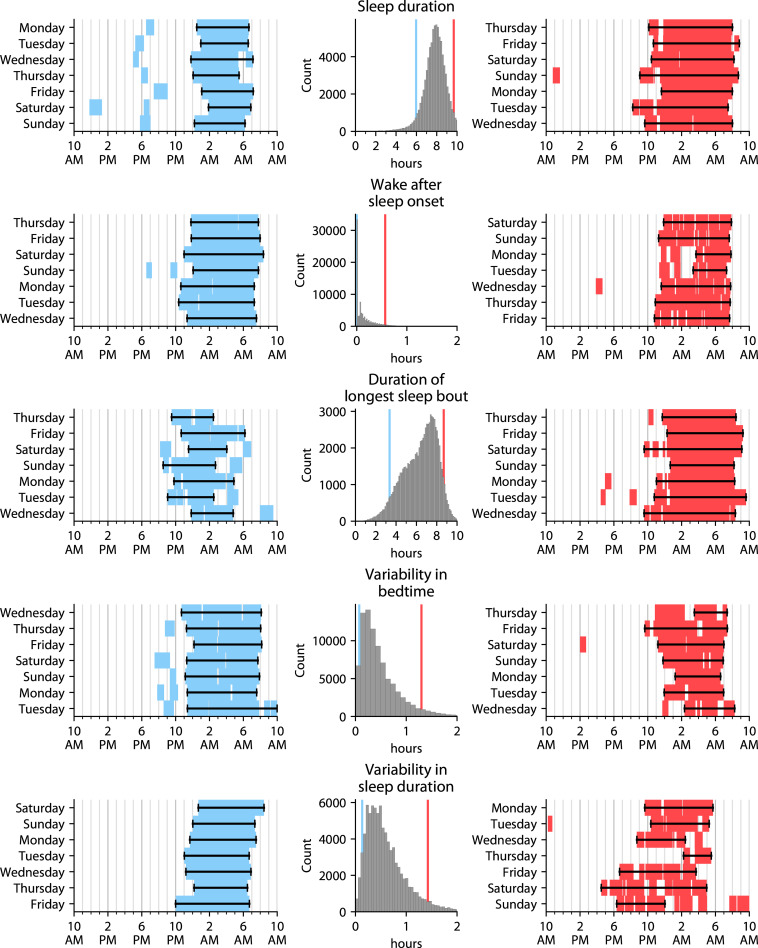
Background: Sleep problems are both symptoms of and modifiable risk factors for many psychiatric disorders. Wrist-worn accelerometers enable objective measurement of sleep at scale. Here, we aimed to examine the association of accelerometer-derived sleep measures with psychiatric diagnoses and polygenic risk scores in a large community-based cohort. Methods and findings: In this post hoc cross-sectional analysis of the UK Biobank cohort, 10 interpretable sleep measures—bedtime, wake-up time, sleep duration, wake after sleep onset, sleep efficiency, number of awakenings, duration of longest sleep bout, number of naps, and variability in bedtime and sleep duration—were derived from 7-day accelerometry recordings across 89,205 participants (aged 43 to 79, 56% female, 97% self-reported white) taken between 2013 and 2015. These measures were examined for association with lifetime inpatient diagnoses of major depressive disorder, anxiety disorders, bipolar disorder/mania, and schizophrenia spectrum disorders from any time before the date of accelerometry, as well as polygenic risk scores for major depression, bipolar disorder, and schizophrenia. Covariates consisted of age and season at the time of the accelerometry recording, sex, Townsend deprivation index (an indicator of socioeconomic status), and the top 10 genotype principal components. We found that sleep pattern differences were ubiquitous across diagnoses: each diagnosis was associated with a median of 8.5 of the 10 accelerometer-derived sleep measures, with measures of sleep quality (for instance, sleep efficiency) generally more affected than mere sleep duration. Effect sizes were generally small: for instance, the largest magnitude effect size across the 4 diagnoses was β = −0.11 (95% confidence interval −0.13 to −0.10,p= 3 × 10−56, FDR = 6 × 10−55) for the association between lifetime inpatient major depressive disorder diagnosis and sleep efficiency. Associations largely replicated across ancestries and sexes, and accelerometry-derived measures were concordant with self-reported sleep properties. Limitations include the use of accelerometer-based sleep measurement and the time lag between psychiatric diagnoses and accelerometry. Conclusions: In this study, we observed that sleep pattern differences are a transdiagnostic feature of individuals with lifetime mental illness, suggesting that they should be considered regardless of diagnosis. Accelerometry provides a scalable way to objectively measure sleep properties in psychiatric clinical research and practice, even across tens of thousands of individuals.
Overview
The claims and statistics of this paper haven’t been checked yet.
Free: it reads the open-access text and checks the first 5 claims that cite a source we can check. Create a free account to check every claim.
Integrity signals
Registry
Cites
Statistics
Figures
Verification
Claims the paper makes
The claims and statistics of this paper haven’t been checked yet.
Free: it reads the open-access text and checks the first 5 claims that cite a source we can check. Create a free account to check every claim.
Claims other papers make about this one
Each is checked against this paper’s own text: does it say what the citing paper says it does?
In the citing paper
“sleep diaries have a low correlation with objective device-measured sleep parameters3,4”
From Self-supervised learning of accelerometer data provides new insights for sleep and its association with mortality (2024) · cites this paper as [4]
In the citing paper
“existing actigraphy-based sleep studies on large health datasets have only focused on the differentiation between sleep and wakefulness4,9–11 without evaluating variations in the stages of sleep.”
From Self-supervised learning of accelerometer data provides new insights for sleep and its association with mortality (2024) · cites this paper as [4]
Self-check
Percentages, sums and reported differences re-computed from the paper’s own numbers.
The self-check needs the paper’s full text.
Citations
Cites
Controlling the False Discovery Rate: A Practical and Powerful Approach to Multiple Testing
Benjamini, Y., & Hochberg, Y. (1995) · Journal of the Royal Statistical Society Series B: Statistical Methodology · doi:10.1111/j.2517-6161.1995.tb02031.x · Cited by 109,482
Hamilton, M. (1960) · Journal of Neurology, Neurosurgery & Psychiatry · doi:10.1136/jnnp.23.1.56 · Cited by 32,817
Vos, T., Lim, S. S., Abbafati, C., Abbas, K. M., Abbasi, M., Abbasifard, M., Abbasi-Kangevari, M., Abbastabar, H., Abd-Allah, F., Abdelalim, A., et al. (2020) · The Lancet · doi:10.1016/s0140-6736(20)30925-9 · Cited by 19,358
A new depression scale designed to be sensitive to change
Montgomery, S. A., & Åsberg, M. (1979) · British Journal of Psychiatry · doi:10.1192/bjp.134.4.382 · Cited by 13,962
Second-generation PLINK: rising to the challenge of larger and richer datasets
Chang, C. C., Chow, C. C., Tellier, L. C., Vattikuti, S., Purcell, S. M., & Lee, J. J. (2015) · Gigascience · doi:10.1186/s13742-015-0047-8 · Cited by 12,709
The UK Biobank resource with deep phenotyping and genomic data
Bycroft, C., Freeman, C., Petkova, D., Band, G., Elliott, L. T., Sharp, K., Motyer, A., Vukcevic, D., Delaneau, O., O’Connell, J., et al. (2018) · Nature · doi:10.1038/s41586-018-0579-z · Cited by 8,876
LD Score regression distinguishes confounding from polygenicity in genome-wide association studies
Schizophrenia Working Group of the Psychiatric Genomics Consortium, Bulik-Sullivan, B. K., Loh, P.-R., Finucane, H. K., Ripke, S., Yang, J., Patterson, N., Daly, M. J., Price, A. L., & Neale, B. M. (2015) · Nature Genetics · doi:10.1038/ng.3211 · Cited by 5,559
Fry, A., Littlejohns, T. J., Sudlow, C., Doherty, N., Adamska, L., Sprosen, T., Collins, R., & Allen, N. E. (2017) · American Journal of Epidemiology · doi:10.1093/aje/kwx246 · Cited by 3,979
eQTLGen, Wray, N. R., 23andMe, the Major Depressive Disorder Working Group of the Psychiatric Genomics Consortium, Ripke, S., Mattheisen, M., Trzaskowski, M., Byrne, E. M., Abdellaoui, A., Adams, M. J., et al. (2018) · Nature Genetics · doi:10.1038/s41588-018-0090-3 · Cited by 3,005
Self-Reported and Measured Sleep Duration: How Similar Are They?
Lauderdale, D. S., Knutson, K. L., Yan, L. L., Liu, K., & Rathouz, P. J. (2008) · Epidemiology · doi:10.1097/ede.0b013e318187a7b0 · Cited by 1,565
Cited by
The sleep–circadian interface: A window into mental disorders
Meyer, N., Lok, R., Schmidt, C., Kyle, S. D., McClung, C. A., Cajochen, C., Scheer, F. A. J. L., Jones, M. W., & Chellappa, S. L. (2024) · Proceedings of the National Academy of Sciences · doi:10.1073/pnas.2214756121 · Cited by 219
Lockdown strictness and mental health effects among older populations in Europe
García‐Prado, A., González, P., & Rebollo‐Sanz, Y. F. (2022) · Economics & Human Biology · doi:10.1016/j.ehb.2022.101116 · Cited by 64
Yuan, H., Plekhanova, T., Walmsley, R., Reynolds, A. C., Maddison, K. J., Bucan, M., Gehrman, P., Rowlands, A., Ray, D. W., Bennett, D., et al. (2024) · npj Digital Medicine · doi:10.1038/s41746-024-01065-0 · Cited by 40
“Furthermore,existingactigraphy-basedsleepstudiesonlarge health datasets have only focused on the differentiation between sleep and wakefulness 4,9 – 11 without evaluating variations in the stages of sleep.”
BackgroundLyall, L. M., Sangha, N., Zhu, X., Lyall, D. M., Ward, J., Strawbridge, R. J., Cullen, B., & Smıth, D. J. (2023) · Journal of Affective Disorders · doi:10.1016/j.jad.2023.04.138 · Cited by 47
He, Q., Liu, S., Feng, Z., Li, T., Chu, J., Hu, W., Chen, X., Han, Q., Sun, N., Sun, H., et al. (2022) · Nutrition Metabolism and Cardiovascular Diseases · doi:10.1016/j.numecd.2022.05.020 · Cited by 29
A systematic review of passive data for remote monitoring in psychosis and schizophrenia
Bladon, S., Eisner, E., Bucci, S., Oluwatayo, A., Martin, G. P., Sperrin, M., Ainsworth, J. D., & Faulkner, S. (2025) · npj Digital Medicine · doi:10.1038/s41746-025-01451-2 · Cited by 37
Opposing brain signatures of sleep in task-based and resting-state conditions
Abdelhack, M., Zhukovsky, P., Milic, M. S., Harita, S., Wainberg, M., Tripathy, S. J., Griffiths, J. D., Hill, S., & Felsky, D. (2023) · Nature Communications · doi:10.1038/s41467-023-43737-7 · Cited by 16
“Beyondassociations with brain function,sleep quantity and quality are also linked to symptoms of mental illness 13 – 15 , and the biological mechanisms of these links have been explored with neuroimaging.”
Self-citationAssociation between longitudinal change of sleep patterns and the risk of cardiovascular diseases
He, L., Ma, T., Wang, X., Cheng, X., & Bai, Y. (2024) · SLEEP · doi:10.1093/sleep/zsae084 · Cited by 18
Shared brain and genetic architectures between mental health and physical activity
Zhang, W., Paul, S. E., Winkler, A. M., Bogdan, R., & Bijsterbosch, J. D. (2022) · Translational Psychiatry · doi:10.1038/s41398-022-02172-w · Cited by 18
Smevik, H., Habli, S., Saksvik, S. B., Kliem, E., Evensmoen, H. R., Conde, V., Petroni, A., Asarnow, R. F., Dennis, E. L., Eikenes, L., et al. (2023) · Cerebral Cortex · doi:10.1093/cercor/bhad024 · Cited by 17
“Both cognitive control dysfunction and sleep-wake disturbances are transdiagnostic risk factors for developing mental health problems (McTeague et al. 2016; Freeman et al. 2020; Wainberg et al. 2021), and associated with negative outcomes across neurological and psychiatric disorders (Goschke 2013; Snyder et al.”
BackgroundSleep Health at the Genomic Level: Six Distinct Factors and Their Relationships With Psychopathology
Morrison, C. L., Winiger, E. A., Rieselbach, M. M., Vetter, C., Wright, K. P., LeBourgeois, M. K., & Friedman, N. P. (2022) · Biological Psychiatry Global Open Science · doi:10.1016/j.bpsgos.2022.07.002 · Cited by 16
“The first genetic study to look at multiple domains of objective sleep health with psychiatric disorders found that polygenic risk scores for depression significantly predicted measures of sleep quality, naps, and variability; polygenic risk scores for BP significantly predicted wake-up time and variability; and polyg…”
BackgroundClayborne, Z. M., Dopko, R. L., Wang, C., Betancourt, M. T., Roberts, K. C., & Capaldi, C. A. (2023) · Health Promotion and Chronic Disease Prevention in Canada · doi:10.24095/hpcdp.43.5.04 · Cited by 21
Carpenter, J. S., Crouse, J. J., Park, S. H., Shin, M., Tonini, E., Guo, W., Merikangas, K. R., Iorfino, F., Leroux, A., Nichles, A., et al. (2025) · Journal of Psychiatric Research · doi:10.1016/j.jpsychires.2025.03.003 · Cited by 19
Wang, Y., Wen, Q., Luo, S., Tang, L., Zhan, S., Cao, J., Wang, S., & Chen, Q. (2025) · Health Data Science · doi:10.34133/hds.0161 · Cited by 16
“…antipsychotics, or anxiolytics at baseline [ 18 ]; (c) those whose accelerome-ter-wearing period included a daylight-saving time change or who woke up in the afternoon on an average day [ 23 , 24 ]; and (d) those who were lost or developed diseases within the first 2 years of follow-up.”
Perrault, A. A., Kebets, V., Kuek, N. M. Y., Cross, N. E., Tesfaye, R., Pomares, F. B., Li, J., Chee, M. W. L., Dang‐Vu, T. T., & Yeo, B. T. T. (2025) · PLoS Biology · doi:10.1371/journal.pbio.3003399 · Cited by 18
“…study conducted in a large community-based cohort (i.e., UK Biobank) that found that lifetime diagnoses of psychopathology and psychiatric polygenic risk scores were more strongly associated with accelerometer-derived measures of sleep quality (i.e., fragmentation) than sleep duration per se [71].”
Alam, M. S. B., Lameesa, A., Sharmin, S., Afrin, S., Ahmed, S. F., Nikoo, M. R., & Gandomi, A. H. (2025) · Digital Communications and Networks · doi:10.1016/j.dcan.2025.04.001 · Cited by 9
Actigraphy monitoring in anxiety disorders: A mini-review of the literature
Pastre, M., & López‐Castromán, J. (2022) · Frontiers in Psychiatry · doi:10.3389/fpsyt.2022.984878 · Cited by 14
Hutchinson, K. A., Karmali, S. A., Abi‐Jaoude, J., Edwards, T. A., & Homsy, C. (2022) · Journal of Burn Care & Research · doi:10.1093/jbcr/irac039 · Cited by 11
Sleep Traits Causally Affect the Brain Cortical Structure: A Mendelian Randomization Study
Chen, Y., Lyu, S., Wang, X., Yi, S., Liu, P., & Liu, J. (2023) · Biomedicines · doi:10.3390/biomedicines11082296 · Cited by 9
“Significant correlations were found between different psychiatric disorders and multiple sleep indicators, and the greatest correlation was found between depressive disorders and sleep efficiency [34].”
BackgroundIanculescu, M., Alexandru, A., & Paraschiv, E.-A. (2023) · Healthcare · doi:10.3390/healthcare11040608 · Cited by 9
“The connection between sleep and mental health is considered bi-directional, as low quality of sleep can lead to poor mental health and vice versa [74].”
BackgroundPhillips, E. M., Goldberg, E. L., Brock, R. L., Hamburger, E., Nelson, J. M., Mason, W. A., Espy, K. A., & Nelson, T. D. (2024) · JAACAP Open · doi:10.1016/j.jaacop.2024.06.001 · Cited by 10
“27 This suggests that focusing solely on mean sleep duration may not provide a comprehensive understanding of the link between sleep and psychopathology.”
InfluentialJuda, M., Pater, J., Mistlberger, R. E., & Schütz, C. G. (2022) · Journal of Dual Diagnosis · doi:10.1080/15504263.2022.2157694 · Cited by 6
“In a cross-sectional analysis of actigraphy data from the UK Biobank (N¼ 89,205), Wainberg et al. (2021) found sleep pattern differences to be the norm among patients with lifetime psychiatric diagnoses (major depressive disorder, anxiety disorders, bipolar disorder/mania, and schizophrenia…”
BackgroundResultMa, J., Chen, J., Yang, Y., Li, H., & Wang, Y. (2022) · BMC Psychiatry · doi:10.1186/s12888-022-04431-y · Cited by 7
“, showed a significant increase in daytime napping frequency among schizophrenia patients [18], but the bidirectional causality between the more daytime napping frequency and schizophrenia is unclear.”
BackgroundMultivariate genome-wide association study of sleep health demonstrates unity and diversity
Morrison, C. L., Winiger, E. A., Wright, K. P., & Friedman, N. P. (2023) · SLEEP · doi:10.1093/sleep/zsad320 · Cited by 7
Postpartum Sleep Quality as a Predictor of Physical and Mental Fatigue in Breatfeeding Women
Uludağ, E., Gökşen, D. F. Y., & Özkan, S. (2022) · Journal of Turkish Sleep Medicine · doi:10.4274/jtsm.galenos.2022.38278 · Cited by 7
Morrone, C. D., Tsang, A. A., Giorshev, S. M., Craig, E. E., & Yu, W. H. (2023) · Frontiers in Aging Neuroscience · doi:10.3389/fnagi.2022.952101 · Cited by 7
Bibliometric and visual analysis of circadian rhythms in depression from 2004 to 2024
Zhou, C., Ji, S., Zhang, A., Yu, H., Liu, C., & Li, S. (2025) · Annals of General Psychiatry · doi:10.1186/s12991-025-00565-x · Cited by 4
“Sleep pattern differences have also been found to be a transdiagnostic feature of individuals with lifetime mental illness, emphasizing the critical role of circadian rhythms and sleep patterns in mental health [40].”
The Interplay Between Sleep and Mental Health: A Genetic Perspective
Kozhemiako, N., Mita, C., Panagiotaropoulou, G., Lewis, K. S., Sofer, T., & Purcell, S. (2025) · Biological Psychiatry · doi:10.1016/j.biopsych.2025.06.024 · Cited by 7
“Actigraphy measures were associated with an MDD PGS in the UK Biobank, revealing lower sleep efficiency, more nighttime wakefulness, frequent naps, and higher bedtime variability with higher PGS(41).”
Hacohen, M., Levy, A., Kaiser, H., Snyder, L. G., Amatya, A., Gundersen, B. B., Spiro, J. E., & Dinstein, I. (2025) · Nature Neuroscience · doi:10.1038/s41593-025-02146-3 · Cited by 7
“Most wearable device studies use similar criteria to identify the main sleep period per night before including data in their analyses 62–64 .”
Narcolepsy as a potential risk factor for Schizophrenia
Eghtedarian, R., Tervi, A. M., Jones, S. E., FinnGen, Palotie, A. V., Daly, M. J., Riley-Gills, B., Jacob, H. J., Viollet, C., Petrovski, S., et al. (2025) · Translational Psychiatry · doi:10.1038/s41398-025-03259-w · Cited by 5
Self-citationSleep and schizophrenia polygenic scores in non-affective and affective psychotic disorders
Cederlöf, E., Torniainen‐Holm, M., Kämpe, A. J., Ahola‐Olli, A., Kantojärvi, K., Lähteenvuo, M., Ahti, J., Hietala, J. A., Häkkinen, K., Isometsä, E. T., et al. (2025) · Psychological Medicine · doi:10.1017/s0033291725000844 · Cited by 3
“One study with a general population sample, including a subsample of patients with schizophrenia, found associations between PGS SZ and early morning awakenings, reduced sleep efficiency, and increased napping (Wainberg et al., 2021).”
Rahimi-Eichi, H., Baker, J. T., Fjell, A. M., & Buckner, R. L. (2025) · SLEEP Advances · doi:10.1093/sleepadvances/zpaf079 · Cited by 6
“That is, some o f the genetic variation associated with dementia risk may be related to mechanistic links involvingsleepthatareassociatedwithhealththroughoutlifeand may indirectly reflect risk for cognitive decline.”
Hubungan Antara Kualitas Tidur dengan Gangguan Cemas pada Mahasiswa Selama Masa Pandemi COVID-19
Kusuma, I. G. N. A. W., Surya, S. C., Aryadi, I. P. H., Sanjiwani, M. I. D., & Sudira, P. G. (2022) · Jurnal Epidemiologi Kesehatan Komunitas · doi:10.14710/jekk.v7i2.13804 · Cited by 13
Kang, S. J., Guo, W., Zipunnikov, V. M., Glaus, J., Lamers, F., Strippoli, M. F., Marques-Vidal, P. M., Vaucher, J., Harpe, R. D. L., Vollenweider, P., et al. (2025) · Journal of Affective Disorders · doi:10.1016/j.jad.2025.02.065 · Cited by 3
Yuan, H., Plekhanova, T., Walmsley, R., Reynolds, A. C., Maddison, K. J., Bucan, M., Gehrman, P., Rowlands, A., Ray, D. W., Bennett, D., et al. (2023) · doi:10.1101/2023.07.07.23292251 · Cited by 3
Perrault, A. A., Kebets, V., Kuek, N. M. Y., Cross, N. E., Tesfaye, R., Pomares, F. B., Li, J., Chee, M. W. L., Dang‐Vu, T. T., & Yeo, B. T. T. (2024) · bioRxiv (Cold Spring Harbor Laboratory) · doi:10.21203/rs.3.rs-4078779/v1 · Cited by 3
“…recent study in a large community-based cohort (i.e., UK Biobank) that found that lifetime diagnoses of psychopathology and psychiatric polygenic risk scores were more strongly associated with accelerometer-derived measures of sleep quality (i.e., fragmentation) than with sleep duration per se 54 .”
BackgroundPreventive circadian medicine: improving health with sleep checkups
Minami, Y., Kishi, A., & Ueda, H. R. (2025) · npj Biological Timing and Sleep · doi:10.1038/s44323-025-00047-z · Cited by 3
“Accelerometer-derived sleep data collected by wearables is considered a promising digital bio-marker for mood disorders 20,21 .”
Haruna, M., Fujita, M., Matsuzaki, M., Shiraishi, M., Hikita, N., Suetsugu, Y., Sato, Y., Yonezawa, K., Tanaka, M., Ohori, R., et al. (2025) · Methods and Protocols · doi:10.3390/mps8060128 · Cited by 2
“Axivity is a three-axis accelerometer that has been used in various studies, including the UK Biobank study [53,54].”
Beaupre, L. M., Wainberg, M., Zai, C. C. H., Milic, M. S., Felsky, D., Brown, G. M., Goldstein, B. I., Tripathy, S. J., Kennedy, J. L., & Gonçalves, V. F. (2022) · Journal of Psychiatric Research · doi:10.1016/j.jpsychires.2022.11.010 · Cited by 2
Self-citationThe Swiss Sleep House Bern—A New Approach to Sleep Medicine
Duss, S. B., Vorster, A. P. A., Urech, A., Schmitt, W. J., Beck, J., Hilt, D., Gnarra, O., van der Meer, J., Tüzün, M., Berger, T., et al. (2024) · Clinical and Translational Neuroscience · doi:10.3390/ctn8010014 · Cited by 2
Khan, A., Minbay, M., Attia, Z., Ay, A. A., & Ingram, K. K. (2024) · Brain Sciences · doi:10.3390/brainsci14121282 · Cited by 2
“We did not consider the effects of circadian light hygiene or patterns of physical activity on addiction risk, although these factors could be significant predictors of psychological disorders [98–100].”
Sleep monitoring in mental health goes digital
Barnes, K. (2021) · Communications Medicine · doi:10.1038/s43856-021-00050-y · Cited by 2
Association of whole-person eigen-polygenic risk scores with Alzheimer’s disease
Kharaghani, A., Tio, E. S., Milic, M. S., Bennett, D. A., Jager, P. L. D., Schneider, J. A., Sun, L., & Felsky, D. (2024) · Human Molecular Genetics · doi:10.1093/hmg/ddae067 · Cited by 1
Self-citationNapping and psychiatric disorders: A systematic review
Bianchi, S., Mauries, S., Heiligenstein, C., Maruani, J., & Geoffroy, P. A. (2025) · Sleep Medicine Reviews · doi:10.1016/j.smrv.2025.102197 · Cited by 1
Moebus, M., & Holz, C. (2025) · BMC Public Health · doi:10.1186/s12889-025-24794-7 · Cited by 3
“Similar to related studies [30, 62], we find that individuals affected by mental disorders sleep significantly differently to healthy individuals.”
Woll, S., Müther, J., Birkenmaier, D., Biri, G. I., Ebner‐Priemer, U., & Giurgiu, M. (2026) · Sensors · doi:10.3390/s26123688 · Cited by 1
Karakteristik Kualitas Tidur Pasien ESRD yang Menjalani Hemodialisis
Wahyuni, T., Nelwati, N., & Rahmiwati, R. (2022) · Jurnal Keperawatan Silampari · doi:10.31539/jks.v6i1.4668 · Cited by 6
Clayborne, Z. M., Dopko, R. L., Wang, C., Betancourt, M. T., Roberts, K. C., & Capaldi, C. A. (2023) · Promotion de la santé et prévention des maladies chroniques au Canada · doi:10.24095/hpcdp.43.5.04f · Cited by 1
Mobile Devices, Connected Objects, and Sensors
Mondragón-González, S. L., Burguière, E., & N’Diaye, K. (2023) · Neuromethods · doi:10.1007/978-1-0716-3195-9_12 · Cited by 3
Gardea‐Resendez, M., Breitinger, S. A., Walker, A., Harper, L., Xiong, A. E., Stoppel, C. J., Volety, R., Raman, J., Byun, J. S., Langholm, C., et al. (2024) · Journal of Psychiatric Practice · doi:10.1097/pra.0000000000000820 · Cited by 4
“25,26 While we hypothesized that the smart ring ’ s comfort and wearability would facilitate regular use, the 2 participants with depressive disorders who were provided with smartwatches initially displayed more regular use at nighttime.”
Allen, T. B., Williams, K. A., Anderson, J. L., & McCoy, K. T. (2025) · Archives of Psychiatric Nursing · doi:10.1016/j.apnu.2025.151969 · Cited by 1
Smevik, H., Habli, S., Saksvik, S. B., Kliem, E., Evensmoen, H. R., Conde, V., Petroni, A., Asarnow, R. F., Dennis, E. L., Eikenes, L., et al. (2022) · bioRxiv (Cold Spring Harbor Laboratory) · doi:10.1101/2022.10.28.512671
Doherty, A., Yuan, H., Plekhanova, T., Walmsley, R., Reynolds, A., Maddison, K., Bucan, M., Gehrman, P., Rowlands, A., Ray, D., et al. (2023) · doi:10.21203/rs.3.rs-3275989/v1
Ma, J., Chen, J., Yang, Y., Li, H., & Wang, Y. (2023) · Figshare · doi:10.6084/m9.figshare.22612421
Confinement policies: controlling contagion without compromising mental health
García‐Prado, A., González, P., & Rebollo‐Sanz, Y. F. (2024) · Applied Economics · doi:10.1080/00036846.2024.2364100
“Depression and anxiety are common mental health disorders, while insomnia prevalence has been found to be associated with measurements of worse physical and mental health(Fernandez-Mendoza and Vgontzas 2023; Wainberg et al. 2021).”
谢, 睿. (2024) · Advances in Clinical Medicine · doi:10.12677/acm.2024.1482377
Kovtun, O., & Rosenthal, S. J. (2024) · PLOS mental health. · doi:10.1371/journal.pmen.0000124
Chen, N., Hyat, M., Zhu, J., Dey, A. K., & Forsyth, J. K. (2026) · Biological Psychiatry · doi:10.1016/j.biopsych.2026.03.354
Xi, Z., Wang, X., Chen, W., Wang, Z., & Wang, C. (2026) · Medicine · doi:10.1097/md.0000000000047785
“[37,38] However, the relationship between depression and insomnia remains unclear, and current evidence tends to support a bidirectional course in which insomnia can predict the onset of depression, and depression can predict the onset of insomnia.”
Schlafgesundheit in der Lifestyle-Psychiatrie: Was können wir tun?
Vorster, A. P. A. (2026) · Nervenheilkunde · doi:10.1055/a-2682-7066
Peng, S., Guo, Y., Wang, W., Jiang, G., Liu, Q., Lu, C., Zhong, X., & Guo, L. (2026) · The World Journal of Biological Psychiatry · doi:10.1080/15622975.2026.2656652
“Future studies should complement self-reported assessments with objective sleep measurement methods, such as wrist-worn actigraphy or polysomnography, to improve the accuracy and validity of sleep measurement (Wainberg et al. 2021).”
Xing, J., Lin, X., Zhang, Y., Tang, Y., Yang, T., Zhuang, W., Tao, F., Xu, X. S., & Yuan, M. (2026) · Sleep Health · doi:10.1016/j.sleh.2026.03.010
Lee, Y., Jeong, B., Han, C. E., & Jeong, H. (2026) · Frontiers in Psychiatry · doi:10.3389/fpsyt.2026.1849140
“Consistent with recent studies emphasizing that variability may be a more critical predictor than mean activity levels alone (19, 40), our 2-hour binning approach proved highly effective in capturing non-linear shifts and patient-speci fi c physiological variability that daily aggregated data might…”
Liu, B., Liang, Z., Li, X., Jin, H., Li, R., Zhang, H., Wang, J., Tan, R., Xi, Y., Jiang, Y., et al. (2026) · Molecular Psychiatry · doi:10.1038/s41380-026-03776-0
Effects of theta burst stimulation on sleep quality in psychiatric disorders: A systematic review
Hui, J., Wong, S., Hilton, M., Husain, M. I., & Blumberger, D. M. (2026) · Transcranial magnetic stimulation . · doi:10.1016/j.transm.2026.100333
Metadata
- Authors
- Wainberg, M., Jones, S. E., Beaupre, L. M., Hill, S. L., Felsky, D., Rivas, M. A., Lim, A. S. P., Ollila, H. M., & Tripathy, S. J.
- Affiliations
- Centre for Addiction and Mental Health (CA)
- University of Helsinki (FI)
- Stanford University (US)
- Sunnybrook Health Science Centre (CA)
- Broad Institute (US)
- Corresponding author
- Tripathy, Shreejoy J.
- ORCID
- Venue
- PLOS Medicine
- Publisher
- Public Library of Science (PLoS)
- Published
- 2021-10-12
- Volume
- 18
- Issue
- 10
- Pages
- e1003782
- ISSN
- 1549-1277 (ISSN-L)
- 1549-1676
- PMC
- PMC8509859
- OpenAlex
- W3207056408
- Cited by
- 64
- References
- 56
- Citations by year
- 2026: 9 · 2025: 17 · 2024: 12 · 2023: 12 · 2022: 13 · 2021: 1
- FWCI
- 9.41
- Type
- journal article
- Language
- en
- Open access
- gold
- doi.org
- Licence
- Locations
- PLoS Medicine (publishedVersion, cc-by)
- PubMed Central (publishedVersion, cc-by)
- PubMed (publishedVersion)
- DOAJ (DOAJ: Directory of Open Access Journals) (submittedVersion, cc-by-sa)
- Työväentutkimus Vuosikirja (submittedVersion)
- Funders
- kavli foundation
- krembil foundation
- camh discovery fund
- mclaughlin foundation
- nserc (RGPIN-2020-05834, DGECR-2020-00048)
- cihr (NGN-171423)
- michael and sonja koerner foundation new scientist program
- Topics
- Social Sciences › Psychology › Experimental and Cognitive Psychology › Sleep and related disorders
- Life Sciences › Neuroscience › Endocrine and Autonomic Systems › Circadian rhythm and melatonin
- Social Sciences › Psychology › Experimental and Cognitive Psychology › Mental Health Research Topics
- Keywords
- sleep patterns, accelerometer-measured sleep, mental illness, major depressive disorder, anxiety disorders, bipolar disorder, schizophrenia spectrum disorders, sleep efficiency, sleep duration, polygenic risk score, objective sleep measurement, UK Biobank, NAP, wake after sleep onset, socioeconomic status
- MeSH terms
- Adult, Aged, Mental Disorders, Cross-Sectional Studies, Female, United Kingdom, Humans, Male, Middle Aged, Risk Factors, Sleep, Reproducibility of Results, Cohort Studies, Biological Specimen Banks, Multifactorial Inheritance, Self Report, Accelerometry
About these checks
Registry, retraction, Cites and statistics results are computed, not judged, with one exception: a printed reference that no index lists is read once by a model before it counts as a citation error. Claims are extracted by a model and kept only when their quote appears verbatim in the text; each cited source is then checked, with a model’s help, for whether it says what the claim relies on. Those verdicts can be wrong — read the claim’s quote and the cited source before relying on one.
Statistics and arithmetic are recomputed, not judged.
Confidence bands are shown only for fields calibrated on our annotated test set. None is calibrated yet, so no band is shown.
What counts as a claim ›How we measure confidence ›How we check this ›
Are you an author, or do you see a problem with this page? Request a review
Data sources
Bibliographic data: Semantic Scholar, OpenAlex, Crossref.
Contains information from the Semantic Scholar Academic Graph Datasets, made available under the ODC Attribution License (ODC-BY 1.0).
Semantic Scholar’s data is described in: Kinney, R., et al. (2023). The Semantic Scholar Open Data Platform. arXiv:2301.10140.
