

Drug-induced orthostatic hypotension: A systematic review and meta-analysis of randomised controlled trials
Open accessThe DOI matches its Crossref record; 35 of the 35 references it cites were found in a registry or an index.
Abstract
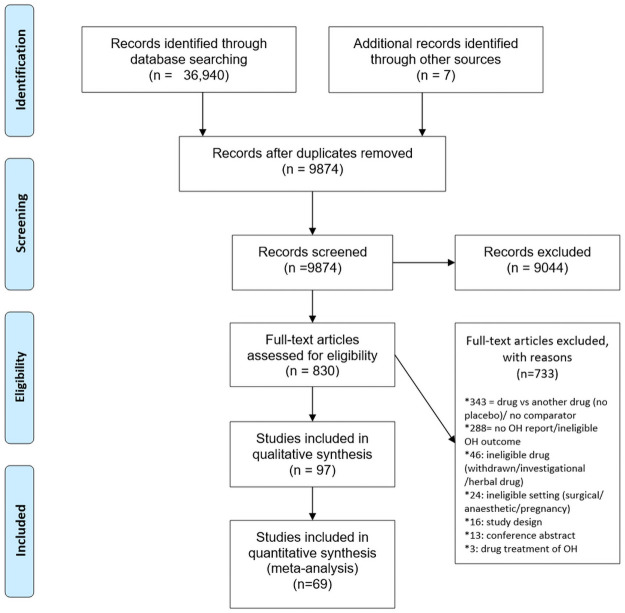
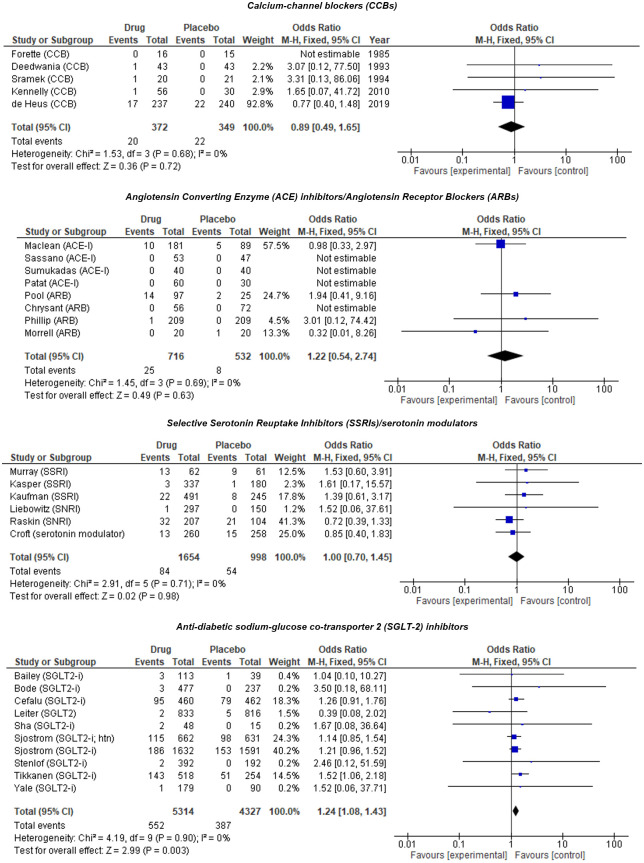
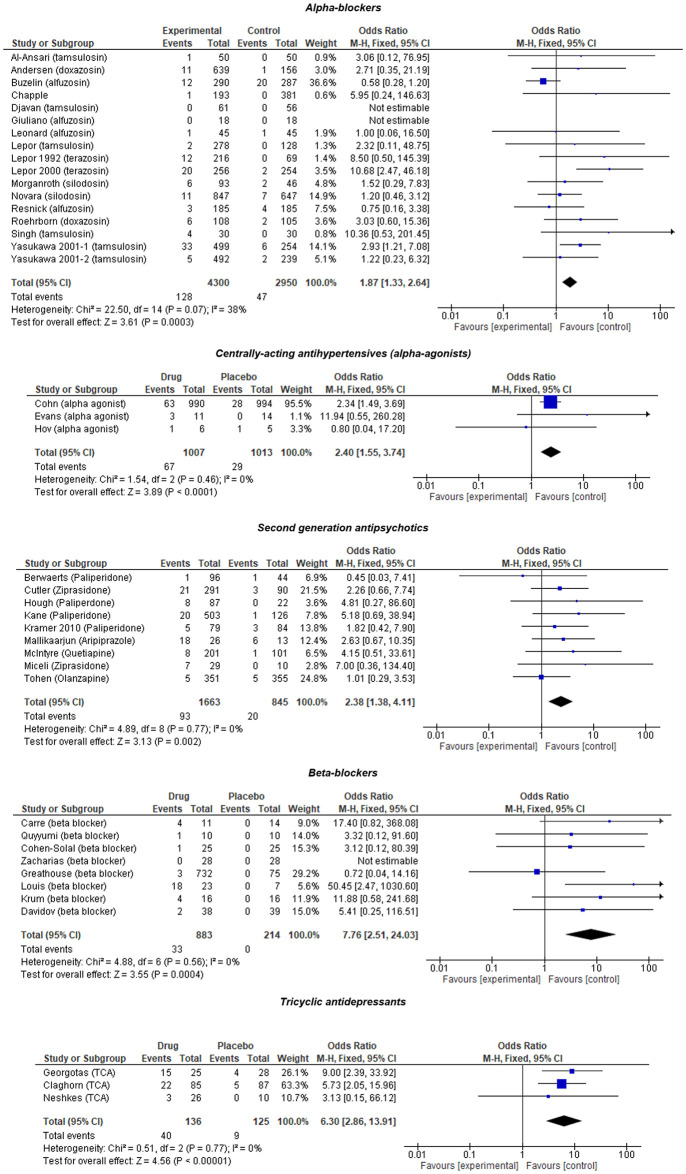
Background: Drug-induced orthostatic hypotension (OH) is common, and its resulting cerebral hypoperfusion is linked to adverse outcomes including falls, strokes, cognitive impairment, and increased mortality. The extent to which specific medications are associated with OH remains unclear. Methods and findings: We conducted a systematic review and meta-analysis to evaluate the extent to which specific drug groups are associated with OH. EMBASE, MEDLINE, and Web of Science databases were searched from inception through 23 November 2020. Placebo-controlled randomised controlled trials (RCTs) on any drug reporting on OH as an adverse effect in adults (≥18 years) were eligible. Three authors extracted data on the drug, OH, dose, participant characteristics, and study setting. The revised Cochrane risk-of-bias tool for randomised trials (RoB 2) was used to appraise evidence. Summary odds ratios (ORs) were estimated for OH using fixed effects Mantel–Haenszel statistics. We conducted subgroup analysis on validity of OH measurement, drug dose, risk of bias, age, and comorbidity. The Grading of Recommendations Assessment, Development, and Evaluation (GRADE) tool was used to summarise the certainty of evidence. Of 36,940 citations, 69 eligible RCTs were included in the meta-analysis comprising 27,079 participants. Compared with placebo, beta-blockers and tricyclic antidepressants were associated with increased odds of OH (OR 7.76 [95% CI 2.51, 24.03]; OR 6.30 [95% CI 2.86, 13.91]). Alpha-blockers, antipsychotics, and SGLT-2 inhibitors were associated with up to 2-fold increased odds of OH, compared to placebo. There was no statistically significant difference in odds of OH with vasodilators (CCBs, ACE inhibitors/ARBs, SSRIs), compared to placebo. Limitations of this study are as follows: data limited to placebo-controlled studies, (excluding head-to-head trials), many RCTs excluded older participants; therefore results may be amplified in older patients in the clinical setting. The study protocol is publicly available on PROSPERO (CRD42020168697). Conclusions: Medications prescribed for common conditions (including depression, diabetes, and lower urinary tract symptoms) were associated with significantly increased odds of OH. Drugs causing sympathetic inhibition were associated with significantly increased odds of OH, while most vasodilators were associated with small nonsignificant differences in odds of OH, compared to placebo. Drugs targeting multiple parts of the orthostatic blood pressure (BP) reflex pathway (e.g. sympathetic inhibition, vasodilation, cardio-inhibitory effects) may carry cumulative risk, suggesting that individuals with polypharmacy could benefit from postural BP monitoring.
Overview
The claims and statistics of this paper haven’t been checked yet.
Free: it reads the open-access text and checks the first 5 claims that cite a source we can check. Create a free account to check every claim.
Integrity signals
Registry
Cites
Statistics
Figures
Verification
Claims the paper makes
The claims and statistics of this paper haven’t been checked yet.
Free: it reads the open-access text and checks the first 5 claims that cite a source we can check. Create a free account to check every claim.
Claims other papers make about this one
Each is checked against this paper’s own text: does it say what the citing paper says it does?
The source backs part of the claim, not all of it — or backs it for a different population, condition or comparison.
In the citing paper
“Some drugs can impair exercise engagement and adaptation, necessitating adjustments in exercise prescriptions, behavioral support, and monitoring.”
From Global consensus on optimal exercise recommendations for enhancing healthy longevity in older adults (ICFSR) (2025) · cites this paper as [570]
Experimental — accuracy not yet measuredThe check wasn’t confident either way, so it gives no verdict — never disputed.
In the citing paper
“For example, psychotropics that cause sedation, fatigue, cognitive deficits, mobility impairment, depression, and anorexia may be replaced by aerobic or PRT [[569], [570], [571], [572]].”
From Global consensus on optimal exercise recommendations for enhancing healthy longevity in older adults (ICFSR) (2025) · cites this paper as [570]
Experimental — accuracy not yet measuredIn the citing paper
“For example, psychotropics that cause sedation, fatigue, cognitive deficits, mobility impairment, depression, and anorexia may be replaced by aerobic or PRT [[569], [570], [571], [572]].”
From Global consensus on optimal exercise recommendations for enhancing healthy longevity in older adults (ICFSR) (2025) · cites this paper as [570]
Self-check
Percentages, sums and reported differences re-computed from the paper’s own numbers.
The self-check needs the paper’s full text.
Citations
Cites
RoB 2: a revised tool for assessing risk of bias in randomised trials
Sterne, J. A. C., Savović, J., Page, M. J., Elbers, R. G., Blencowe, N. S., Boutron, I., Cates, C. J., Cheng, H.-Y., Corbett, M. S., Eldridge, S. M., et al. (2019) · BMJ · doi:10.1136/bmj.l4898 · Cited by 34,787
Cochrane Handbook for Systematic Reviews of Interventions: Cochrane Book Series
(2008) · doi:10.1002/9780470712184 · Cited by 25,048
GRADE: an emerging consensus on rating quality of evidence and strength of recommendations
Guyatt, G. H., Oxman, A. D., Vist, G. E., Kunz, R., Falck-Ytter, Y., Alonso-Coello, P., & Schünemann, H. J. (2008) · BMJ · doi:10.1136/bmj.39489.470347.ad · Cited by 23,305 · cited 1×
“The Grading of Recommendations Assessment, Development, and Evaluation (GRADE) tool [22] was used to summarise the certainty of evidence.”
MethodCochrane Handbook for Systematic Reviews of Interventions
Higgins, J. P. T., Green, S., & Ben Van Den, A. (2020) · International Coaching Psychology Review · doi:10.53841/bpsicpr.2020.15.2.123 · Cited by 5,670
McGuinness, L. A., & Higgins, J. P. T. (2021) · Research Synthesis Methods · doi:10.1002/jrsm.1411 · Cited by 5,579 · cited 1×
“Using the revised Cochrane risk-of-bias tool for randomised trials (RoB 2) [18,19], CB assessed all articles for risk of bias, and 3 reviewers (DN, HH, and SM) independently assessed 10% of articles.”
MethodFreeman, R., Wieling, W., Axelrod, F. B., Benditt, D. G., Benarroch, E., Biaggioni, I., Cheshire, W. P., Chelimsky, T., Cortelli, P., Gibbons, C. H., et al. (2011) · Clinical Autonomic Research · doi:10.1007/s10286-011-0119-5 · Cited by 1,697 · cited 1×
“Orthostatic hypotension (OH), defined as a reduction in systolic blood pressure (BP) of�20 mm Hg or diastolic BP of�10 mm Hg within 3 minutes of assuming an erect posture [1], is estimated to affect 30% to 70% of older adults [2] and is commonly associated with use of medications [3].”
BackgroundFreeman, R., Wieling, W., Axelrod, F. B., Benditt, D. G., Benarroch, E., Biaggioni, I., Cheshire, W. P., Chelimsky, T., Cortelli, P., Gibbons, C. H., et al. (2011) · Autonomic Neuroscience · doi:10.1016/j.autneu.2011.02.004 · Cited by 1,243
Essentials of Medical Pharmacology
Tripathi, K. (2008) · Jaypee Brothers Medical Publishers (P) Ltd. eBooks · doi:10.5005/jp/books/10282 · Cited by 1,032
Essentials of Medical Pharmacology
Tripathi, K. (1994) · Indian Journal of Pharmacology · doi:10.4103/ijpha_1994262_166 · Cited by 886
Scheen, A. J. (2015) · Drugs · doi:10.1007/s40265-014-0337-y · Cited by 554
Research works printed but not linked: 2
- OpenPrescribing.net. EBM DataLab. University of Oxford; 2017 [cited 2021 Sept 15].
- National Institute for Health and Care Excellence. Depression in adults: recognition and management [NICE CG90]. 2009 [cited 2021 Sept 15]. https://www.nice.org.uk/guidance/cg90. 31990491
Cited by
Risk Assessment and Prevention of Falls in Older Community-Dwelling Adults: A Review
Colón-Emeric, C. S., McDermott, C. L., Lee, D. S., & Berry, S. D. (2024) · JAMA · doi:10.1001/jama.2024.1416 · Cited by 278
Izquierdo, M., de Souto Barreto, P., Arai, H., Bischoff-Ferrari, H. A., Cadore, E. L., Cesari, M., Chen, L.-K., Coen, P. M., Courneya, K. S., Duque, G., et al. (2025) · The Journal of nutrition, health and aging · doi:10.1016/j.jnha.2024.100401 · Cited by 273
Orthostatic Hypotension: Management of a Complex, But Common, Medical Problem
Fedorowski, A., Ricci, F., Hamrefors, V., Sandau, K. E., Chung, T., Muldowney, J. A. S., Gopinathannair, R., & Olshansky, B. (2022) · Circulation Arrhythmia and Electrophysiology · doi:10.1161/circep.121.010573 · Cited by 161
Juraschek, S. P., Cortez, M. M., Flack, J. M., Ghazi, L., Kenny, R. A., Rahman, M., Spikes, T. A., Shibao, C. A., & Biaggioni, I. (2024) · Hypertension · doi:10.1161/hyp.0000000000000236 · Cited by 110
“101 Tizanidine, commonly prescribed in the United States as a central muscle relaxant, is a central sympa-tholytic related to clonidine that can induce a clinical picture of neurogenic OH with abnormal cardiovascular reflexes, especially among those taking strong CYP1A2 inhibitors.”
BackgroundSex Differences in Hypertension and Its Management Throughout Life
Yeo, W.-J., Abraham, R., Surapaneni, A., Schlosser, P., Ballew, S. H., Özkan, B., Flaherty, C. M., Yu, B., Bonventre, J. V., Parikh, C. R., et al. (2024) · Hypertension · doi:10.1161/hypertensionaha.124.22980 · Cited by 85
“…that adults over the age of 60 years could be treated with less aggressive treatment goals (<150/90 mm Hg compared with <140/90 mm Hg). antihyper-tension medications may induce or worsen orthostatic hypotension, 49–51 resulting in an increased risk of falling, especially in older individuals.”
Drug-Induced Cognitive Impairment
Reimers, A., Odin, P., & Ljung, H. (2024) · Drug Safety · doi:10.1007/s40264-024-01506-5 · Cited by 69
“It is also seen with vasodilating nitrates, tricyclic antidepressants, antipsychotics, dopaminergic antiparkinsonian drugs, benzodiazepines, opioids, and SGLT-2 inhibitors [249–253].”
Smolderen, K. G. E., Samaan, Z., Decker, C., Collins, T. C., Lazar, R. M., Itoga, N. K., & Mena‐Hurtado, C. (2023) · Circulation · doi:10.1161/cir.0000000000001178 · Cited by 51
Raber, I., Belanger, M. J., Farahmand, R., Aggarwal, R., Chiu, N., Rifai, M. A., Jacobsen, A. P., Lipsitz, L. A., & Juraschek, S. P. (2022) · Hypertension · doi:10.1161/hypertensionaha.122.18557 · Cited by 46
Hypertensive heart disease in older patients: considerations for clinical practice
Camafort, M., Kasiakogias, A., Agabiti‐Rosei, E., Masi, S., Iliakis, P., Bénétos, A., Jeong, J., Lee, H., Muiesan, M. L., Sudano, I., et al. (2025) · European Journal of Internal Medicine · doi:10.1016/j.ejim.2024.12.034 · Cited by 38
Recent Advances and Future Directions in Syncope Management: A Comprehensive Narrative Review
Martone, A. M., Parrini, I., Ciciarello, F., Galluzzo, V., Cacciatore, S., Massaro, C., Giordano, R., Giani, T., Landi, G., Gulizia, M. M., et al. (2024) · Journal of Clinical Medicine · doi:10.3390/jcm13030727 · Cited by 32
“…heart failure [30], or other cardiovascular and non-cardiovascular diseases [31,32], as well as drugs causing sympathetic inhibition (e.g., antipsychotics via α 1 and d2, antidepressants via antimuscarinic activity), vasodilation, cardio-inhibitory effects, or volume depletion (diuretics) [33].”
BackgroundA Correlative Relationship Between Heart Failure and Cognitive Impairment: A Narrative Review
Park, M. S., & Kim, E. J. (2023) · Journal of Korean Medical Science · doi:10.3346/jkms.2023.38.e334 · Cited by 36
“107”
Does Mandala Art Improve Psychological Well-Being in Patients? A Systematic Review
Zhang, M.-Q., Liu, X., & Huang, Y. (2023) · Journal of Integrative and Complementary Medicine · doi:10.1089/jicm.2022.0780 · Cited by 37
Izquierdo, M., Ramírez‐Vélez, R., & Singh, M. F. (2025) · The Lancet Healthy Longevity · doi:10.1016/j.lanhl.2025.100763 · Cited by 37
Syncope in the Emergency Department: A Practical Approach
Furlan, L., Jacobitti, G., Gianni, F., Solbiati, M., Mancusi, C., & Costantino, G. (2024) · Journal of Clinical Medicine · doi:10.3390/jcm13113231 · Cited by 23
“OH may also be caused by chronic conditions such as neurodegenerative diseases, diabetes, hypertension, cancer and medications such as diuretics, beta-blockers, vasodilators, phenothiazines, antidepressants, SGLT-2 inhibitors and many others [36].”
BackgroundNew horizons in the ageing autonomic nervous system: orthostatic hypotension and supine hypertension
Dani, M., Taraborrelli, P., Panagopoulos, D., Dirksen, A., Torocastro, M., Sutton, R., & Lim, P. B. (2022) · Age and Ageing · doi:10.1093/ageing/afac150 · Cited by 29
“3, and αblockers, antipsychotics and SGLT2 inhibitors also conferring increased risk [25].”
BackgroundDonnell, D. O., Romero‐Ortuño, R., Kennelly, S., O’Neill, D. J., Donoghue, P. O., Lavan, A. H., Cunningham, C. J., McElwaine, P., Kenny, R. A., & Briggs, R. (2023) · Age and Ageing · doi:10.1093/ageing/afad005 · Cited by 28
“OH is often related to culprit medications, such as anti-hypertensives [50] or antidepressants [51], which could be rationalised.”
BackgroundThe association between diuretics and falls in older adults: A systematic review and meta-analysis
Bai, X., Han, B., Zhang, M., Liu, J., Cui, Y., & Jiang, H. (2023) · Geriatric Nursing · doi:10.1016/j.gerinurse.2023.05.009 · Cited by 28
Battini, V., Cocco, M., Barbieri, M. A., Powell, G., Carnovale, C., Clementi, E., Bate, A., & Sessa, M. (2024) · Drug Safety · doi:10.1007/s40264-024-01430-8 · Cited by 18
“From this analysis, it appeared that the disproportionality signal was confounded by age and co-reported drugs [23, 24].”
Seifert, J., Reinhard, M. A., Bleich, S., Erfurth, A., Greil, W., Toto, S., Grohmann, R., & Glocker, C. (2024) · Annals of General Psychiatry · doi:10.1186/s12991-024-00530-0 · Cited by 24
Hypertension and orthostatic hypotension in the elderly: a challenging balance
Wiersinga, J. H. I., Jansen, S., Peters, M. J. L., Rhodius‐Meester, H. F. M., Trappenburg, M. C., Claassen, J. A. H. R., & Muller, M. (2024) · The Lancet Regional Health - Europe · doi:10.1016/j.lanepe.2024.101154 · Cited by 35
“78”
InfluentialAdverse events related to alpha-blockers: analysis of real-life data from Eudra-Vigilance
Cicione, A. M., Nacchia, A., Baldassarri, V., Tema, G., Rovesti, L. M., Mancini, E., Guarnotta, G., Voglino, O. A., FRANCO, A., D’Annunzio, S., et al. (2023) · Minerva Urology and Nephrology · doi:10.23736/s2724-6051.23.05225-4 · Cited by 14
Orthostatic hypotension: Review and expert position statement
Vidal‐Petiot, E., Pathak, A., Azulay, J.-P., Traon, A. P., & Hanon, O. (2023) · Revue Neurologique · doi:10.1016/j.neurol.2023.11.001 · Cited by 21
Antihypertensive medication in frail older adults: A narrative review through a deprescribing lens
Kraut, R. Y., Lundby, C., Бабенко, О., Kamal, A., & Sadowski, C. A. (2022) · American Heart Journal Plus Cardiology Research and Practice · doi:10.1016/j.ahjo.2022.100166 · Cited by 17
“Literature, including intervention and observational studies, consistently suggests that among the antihypertensive drug classes, it is the beta-blockers, alpha-blockers, and diuretics that increase the risk of orthostatic hypotension [75,76].”
BackgroundStrumia, M., Vidal, J., Cestac, P., Sallerin, B., Hanon, O., Rouch, L., & for the S.AGES Investigators (2023) · Journal of the American Geriatrics Society · doi:10.1111/jgs.18571 · Cited by 15
Non-invasive Vagus Nerve Simulation in Postural Orthostatic Tachycardia Syndrome
Chakraborty, P., Farhat, K., Morris, L. M., Whyte, S., Yu, X., & Stavrakis, S. (2023) · Arrhythmia & Electrophysiology Review · doi:10.15420/aer.2023.20 · Cited by 15
Dyer, A. H., Murphy, C., Dolphin, H., Morrison, L., Briggs, R., LAWLOR, B. A., Kennelly, S., NILVAD Study Group, Segurado, R., Kennelly, S., et al. (2024) · European Geriatric Medicine · doi:10.1007/s41999-023-00910-x · Cited by 14
“In addition, we evaluated medication lists for culprit medications which have established effects on BP/OH [14].”
Efficacy and Safety of Iloperidone in Bipolar Mania: A Double-Blind, Placebo-Controlled Study
Torres, R., Czeisler, E. L., Chadwick, S. R., Stahl, S. M., Smieszek, S. P., Xiao, C., Polymeropoulos, C. M., Birznieks, G., & Polymeropoulos, M. H. (2024) · The Journal of Clinical Psychiatry · doi:10.4088/jcp.23m14966 · Cited by 15
Adverse Cardiovascular Effects of Psychotropic Medications
Androshchuk, V., Montarello, N., & Rajani, R. (2025) · British Journal of Hospital Medicine · doi:10.12968/hmed.2024.0773 · Cited by 15
The factors determining early mobilization in elderly patients undergoing total knee replacement
Hung, L.-L., Chen, Y., Wang, Y.-T., & Wang, S.-P. (2025) · BMC Geriatrics · doi:10.1186/s12877-025-05772-5 · Cited by 16
“The postoperative blood pressure may be affected by pain, medications [26], hypovolemia caused by dehydration and blood loss [22], as well as postoperative systemic inflammatory response syndrome (SIRS) Fig.”
Longitudinal association of SGLT2 inhibitors and GLP-1RAs on falls in persons with type 2 diabetes
Suzuki, Y., Suzuki, H., Maruo, K., Matsuda, T., Murayama, Y., Sugano, Y., Osaki, Y., Iwasaki, H., Sekiya, M., Hada, Y., et al. (2025) · Scientific Reports · doi:10.1038/s41598-025-91101-0 · Cited by 13
“The odds ratio for orthostatic hypotension due to SGLT2 inhibitor intake was reported as 1.24 (95% confidence interval: 1.08–1.43) compared with the control group 27 .”
InfluentialGitman, V., Maxwell, C. J., & Gamble, J. (2025) · Computers in Biology and Medicine · doi:10.1016/j.compbiomed.2025.110464 · Cited by 10
Kalayjian, A., Laszlo, K., Fassler, M., Schonrock, Z., Delarose, K. E., Ly, A. M., English, C., & Cirrincione, L. R. (2023) · Journal of the American Pharmacists Association · doi:10.1016/j.japh.2023.10.005 · Cited by 11
Bhanu, C., Petersen, I., Orlu, M., Davis, D. H. J., Sofat, R., Bazo‐Alvarez, J. C., & Walters, K. R. (2023) · Pharmacoepidemiology and Drug Safety · doi:10.1002/pds.5730 · Cited by 12
“10,34 Age also increases susceptibility to orthostatic hypotension through age-related physiological changes 4 and changes to the pharmacokinetics of a drug (e.g., how the drug is processed and excreted), increasing susceptibility to side effects.”
BackgroundInfluentialSelf-citationChapelle, C., Lavallée, É., Vallée, M., & Descazeaud, A. (2024) · World Journal of Urology · doi:10.1007/s00345-023-04699-z · Cited by 8
Srinivas, V., Choubey, U., Kapparath, S., Shaik, T. A., Singh, B. P., Mahmood, R., Garg, N., Aggarwal, P., & Jain, R. (2024) · Cardiology in Review · doi:10.1097/crd.0000000000000636 · Cited by 12
Dong, J.-Y., Ju, J. H., & Yang, Y.-M. (2023) · Medicine · doi:10.1097/md.0000000000034818 · Cited by 8
Ögren, J., Mooe, T., & Irewall, A.-L. (2024) · PLoS ONE · doi:10.1371/journal.pone.0298435 · Cited by 7
“There is evidence that antihypertensives treatment causing sympathetic inhibition is associated with an increased risk of OH [33].”
BackgroundAlwhaibi, M., & Balkhi, B. S. (2025) · Health and Quality of Life Outcomes · doi:10.1186/s12955-025-02422-7 · Cited by 6
“For example, the use of some antidepressant medications, such as tricyclic antidepressants, may cause orthostatic hypotension [15].”
D’Ippolito, I., Carlucci, M. A., D’Amato, C., Lauro, D., & Spallone, V. (2024) · Endocrine Practice · doi:10.1016/j.eprac.2024.06.008 · Cited by 6
Correlations between serotonin impairments and clinical indices in multiple system atrophy
Nagao, R., Mizutani, Y., Shima, S., Ueda, A., Ito, M., Yoshimoto, J., & Watanabe, H. (2023) · European Journal of Neurology · doi:10.1111/ene.16158 · Cited by 4
“However, a meta-analysis revealed that SSRI use does not increase orthostatic hypotension frequency in the general population, irrespective of age [29].”
BackgroundKlop, M., Maier, A. B., Meskers, C. G. M., Steiner, J. M., Helsloot, D. O., Wezel, R. J. A. V., Claassen, J. A. H. R., & de Heus, R. A. A. (2024) · Experimental Gerontology · doi:10.1016/j.exger.2024.112461 · Cited by 8
“First, different classes of AHT have different mechanisms of action: some have been linked to an increased risk of OH (beta-blockers) (Bhanu et al., 2021), and others to a reduced risk of OH (ARBs, ACE inhibitors) (Yee and Struthers, 1998).”
BackgroundProgress of non‐motor symptoms in early‐onset Parkinson's disease
Zhang, F., Luo, A., Liao, S., Liu, M., Zhang, J., & Xu, Z. (2024) · Ibrain · doi:10.1002/ibra.12180 · Cited by 7
“67,68 Approximately 36% of patients with EOPD are diagnosed with orthostatic hypotension with supine hypertension and those with supine hypertension are at a greater risk of developing orthostatic hypotension.”
Wu, P.-S., Chao, C., Hsiao, C.-H., Yang, C.-F., Lee, Y., Lin, H., Yeh, C., Lee, L., Huang, K., Lee, M., et al. (2024) · Journal of the Formosan Medical Association · doi:10.1016/j.jfma.2024.09.022 · Cited by 12
Gagaouzova, B. S., van der Stam, A. H., Johansson, M., van Rossum, I. A., Kerkhof, F. I., Reijntjes, R. H. A. M., van Houwelingen, M. J., Thijs, R. D., Fedorowski, A., & van Dijk, J. G. (2024) · Journal of Hypertension · doi:10.1097/hjh.0000000000003832 · Cited by 6
“Hemodynamic analysis”
Identification of potentially causative drugs associated with hypotension: A scoping review
Sari, N., Jaehde, U., & Wermund, A. M. (2024) · Archiv der Pharmazie · doi:10.1002/ardp.202400564 · Cited by 5
Zhang, H., Wang, Q., Li, J., Zhou, J., & Chen, Q. (2025) · Colloids and Surfaces B Biointerfaces · doi:10.1016/j.colsurfb.2025.115314 · Cited by 5
Pharmacologic Treatment of Hypertension in Older Adults
Todd, O. M., Knight, M., Jacobs, J. A., Derington, C. G., Sheppard, J. P., & Bress, A. P. (2024) · Clinics in Geriatric Medicine · doi:10.1016/j.cger.2024.04.004 · Cited by 5
Rivasi, G., Capacci, M., Re, L. M. D., Ambrosino, I., Ceolin, L., Liccardo, A., Bisignano, M. F., D’Ambrosio, G., Ceccarelli, G., Matteucci, G., et al. (2025) · Drugs & Aging · doi:10.1007/s40266-025-01196-3 · Cited by 8
“However, psychoactive medications such as benzodiazepines, antip-sychotics and antidepressants may likewise be associated with OH, although their hypotensive effects are frequently overlooked in research studies and in clinical practice [14, 15].”
Delayed orthostatic hypotension in Parkinson’s disease and in the general ageing population
Caliò, B., Leys, F., Matteucci, G., Campese, N., Rivasi, G., Göbel, G., Testa, G. D., Granata, R., Dürr, S., Ndayisaba, J., et al. (2025) · Age and Ageing · doi:10.1093/ageing/afaf187 · Cited by 5
Management of Orthostatic Hypotension: A Review
Moloney, D. J., Youssef, A., & Okamoto, L. E. (2026) · JAMA Internal Medicine · doi:10.1001/jamainternmed.2026.0284 · Cited by 5
Orthostatic Hypotension and Diabetes
Cuspidi, C., Gherbesi, E., Sala, C., & Tadić, M. (2022) · Updates in hypertension and cardiovascular protection · doi:10.1007/978-3-031-13009-0_29 · Cited by 2
Balasundaram, B., Loh, S. Y., Rosario, B. H., Tun, M. H., Ooi, C. H., Li, F., & Bishara, D. (2023) · Delirium · doi:10.56392/001c.87943 · Cited by 3
Kujawska, A., Bromage, S., Simões, J. A., Zupkauskienė, J., McMahon, N. F., Zalewski, P., & Kujawski, S. (2024) · Heliyon · doi:10.1016/j.heliyon.2024.e25615 · Cited by 5
“In addition, potential side effects of further treatments should be examined, as, for instance, multiple commonly prescribed drugs might induce orthostatic hypotension [66].”
BackgroundBernal, A., Márquez, E., Flores-Sumoza, M., Cuesta, S. A., Mora, J. R., Paz, J. L., Mendoza, A. M., Macías, J. D. R., Salazar, F., Insuasty, D., et al. (2024) · International Journal of Molecular Sciences · doi:10.3390/ijms252312649 · Cited by 3
Verbič, M. D., Brvar, M., & Kos, M. K. (2023) · Acta Pharmaceutica · doi:10.2478/acph-2023-0013 · Cited by 3
Sturdivant, T., & Allen-Thomas, K. (2022) · Nursing Made Incredibly Easy! · doi:10.1097/01.nme.0000899392.70376.a2 · Cited by 3
Huang, S., Chen, M., Zhu, T., Lei, X., Li, Q., & Chen, X. (2025) · Geriatric Nursing · doi:10.1016/j.gerinurse.2025.103582 · Cited by 3
Owen, C. M., & Frith, J. (2025) · British Journal of Hospital Medicine · doi:10.12968/hmed.2024.0956 · Cited by 2
Liu, Y., Sommer, I. E., Schoretsanitis, G., Hamers, I. M. H., Scheurink, T. A. W., Begemann, M., Gangadin, S. S., van Beveren, N. J. M., Sommer, I. E., de Haan, L., et al. (2026) · European Neuropsychopharmacology · doi:10.1016/j.euroneuro.2026.112769 · Cited by 4
Treating hearts and minds: adverse cardiovascular effects of psychiatric medications
Raja, A., Leslie, S. J., Buist, E., Rushworth, G. F., Megson, I. L., & McNamara, N. (2026) · Therapeutic Advances in Drug Safety · doi:10.1177/20420986261418947 · Cited by 4
“8,98 However, OH has been reported as an uncommon adverse effect (0.1%– 1% incidence) for some SSRIs (e.g. fluoxetine, paroxetine and fluvoxamine) by EMC.”
InfluentialCheng, H., Yeh, C., Wu, C., Chen, M. Y., Chang, Y., Tsai, H.-H., Chen, Z.-W., Lee, H.-C., Pan, H., Hsu, R.-Y., et al. (2026) · Journal of the Formosan Medical Association · doi:10.1016/j.jfma.2026.09.040 · Cited by 2
Loh, G. O. K., Wong, E. Y. L., Tan, Y., Hong, C.-W., Ng, R.-S., Syed, H., & Khiang, P. K. (2022) · Drug Development and Industrial Pharmacy · doi:10.1080/03639045.2022.2125985 · Cited by 2
Taner, R., Aşçı, H., Uysal, D., Aşcı, S., Ünlü, M. D., OĞUZOĞLU, A. S., Çömlekçı, S., & Özmen, Ö. (2023) · SDÜ Tıp Fakültesi Dergisi · doi:10.17343/sdutfd.1343406 · Cited by 3
Walters, K. R., Orlu, M., Davis, D. H. J., Sofat, R., & Petersen, I. (2025) · British Journal of General Practice · doi:10.3399/bjgp.2024.0429 · Cited by 5
“13,31 A recent systematic review on drug-induced PH in RCTs found that SSRIs were not associated with PH. 10 However, this evidence was based on trials in a younger population (with an average age of 57 years versus a mean age of 71 years in this study).”
InfluentialSelf-citationAutonomic Dysfunction and Orthostatic Hypotension
Shibao, C. A., Juraschek, S. P., & Biaggioni, I. (2023) · Elsevier eBooks · doi:10.1016/b978-0-323-88369-6.00041-4 · Cited by 1
Wu, Y., Peng, H., Xu, R. P., Hua, Y., & Zhang, Y. (2025) · The Journal of Frailty & Aging · doi:10.1016/j.tjfa.2025.100061 · Cited by 4
Pouya, K., Vejdani, R., Taheri, M., Marandi, P. H., Aliar, F., Hakimi, P., & Azizi, H. (2025) · BMC Anesthesiology · doi:10.1186/s12871-025-03337-y · Cited by 1
“In the use of inhaled anesthetics, a high concentration of the drug is required to significantly minimize intraoperative complications, which can result in liver or kidney damage [15, 16].”
Egyed, A., Kiss, D. J., Pável, Z., Rajna, K., Gaitonde, S. A., Dubiel, M., Loza, M. I., Szűcs, E., Borbély, É., Hajna, Z., et al. (2025) · European Journal of Medicinal Chemistry Reports · doi:10.1016/j.ejmcr.2025.100302 · Cited by 2
Progress in the pharmacological management of vasovagal syncope
Giambusso, V. G., Rafanelli, M., & Sheldon, R. S. (2025) · Expert Review of Clinical Pharmacology · doi:10.1080/17512433.2025.2596875 · Cited by 1
Autonomic dysfunction in patients with wild-type transthyretin amyloidosis
Kleinveld, V. E. A., Wanschitz, J., Hotter, A., Horlings, C. G. C., Leys, F., Ungericht, M., Pölzl, G., Granata, R., Fanciulli, A., & Löscher, W. N. (2026) · Journal of Neurology · doi:10.1007/s00415-025-13604-0 · Cited by 1
“…of increasing neuro-humoral therapy (e.g., by use of beta-blockers) to counteract chronic excessive sympathetic activity and neurohormonal activation [8], while in cardiovascular autonomic failure, such an excessive blockade of the sympathetic nervous system may worsen orthostatic hypotension [9].”
Eiswirth, E., & Salib-Barrios, M. (2026) · The Journal for Nurse Practitioners · doi:10.1016/j.nurpra.2026.105766 · Cited by 1
Orthostatic hypotension and complaints: not a clear-cut relation
Gagaouzova, B. S., van Rossum, I. A., Kerkhof, F. I., Thijs, R. D., & van Dijk, J. G. (2026) · Clinical Autonomic Research · doi:10.1007/s10286-026-01222-3 · Cited by 1
“…a combination of both, and BP-decreasing drugs were classified as primarily inhibiting sympathetic activity, primarily causing vasodilatation, other, or a combination; we established previously that medication did not affect the haemodynamic pattern of OH in this population in a major way [15, 16].”
Orthostatic hypotension in elderly: Do you measure orthostatic and clinostatic blood pressure?
Cacciatore, S., Spadafora, L., & Landi, F. (2022) · Heart Vessels and Transplantation · doi:10.24969/hvt.2022.349 · Cited by 1
Fi, B., Veltishchev, D. Y., Volel, B. A., Garganeeva, N. P., Kopylov, F. Y., Lareva, N. V., Medvedev, V. E., Mosolov, S. N., Petrova, M. M., Петрунько, О. В., et al. (2025) · Kardiologiia · doi:10.18087/cardio.2025.6.n2921 · Cited by 3
Surma, S., & Zembala, M. O. (2023) · Choroby Serca i Naczyń · doi:10.5603/chsin.2022.0019 · Cited by 1
Schizophrenia and Related Psychoses
(2025) · Wiley eBooks · doi:10.1002/9781119870203.mpg001.pub2 · Cited by 2
Orthostatic Hypotension: An Overlooked but Clinically Decisive Entity
Jain, G., Singhal, S., Goyal, L. K., & Mathur, A. (2022) · Journal of The Indian Academy of Geriatrics · doi:10.4103/jiag.jiag_24_22
Ju, W., Li, J., Qiu, L., & Wu, J. (2022) · Research Square · doi:10.21203/rs.3.rs-2217567/v1
van Stappen, J. (2023) · Bohn Stafleu van Loghum eBooks · doi:10.1007/978-90-368-2962-5_3
Kujawska, A., Kujawski, S., Dani, M., Miglis, M. G., Hallman, D., Fudim, M., Soysal, P., Husejko, J., Hajec, W., Skierkowska, N., et al. (2023) · Scientific Reports · doi:10.1038/s41598-023-46947-7 · Cited by 2
“Medications are commonly associated with OH, particularly antihypertensives and psychoactive medications 37 .”
BackgroundYang, Z., Liu, J., Meng, F., Zhang, L., Zhen, Y., Wang, K., Chen, N., & Zhao, B. (2024) · Research Square · doi:10.21203/rs.3.rs-3899152/v1
Gałuszka, J., Kaiserová, M., Zapletalová, J., & Táborský, M. (2024) · Medicína pro praxi · doi:10.36290/med.2023.053
Schwindel bei älteren Menschen in der Hausarztpraxis
Trabert, J. (2024) · MMW - Fortschritte der Medizin · doi:10.1007/s15006-024-4065-2
Trabert, J. (2025) · Zeitschrift für Gerontologie und Geriatrie · doi:10.1007/s00391-024-02404-2
Trabert, J. (2025) · HNO · doi:10.1007/s00106-025-01618-z
Thompson, W., McCarthy, L. M., & Farrell, B. J. (2025) · Advanced clinical pharmacy - research, development and practical applications/Advanced clinical pharmacy - research, development and practical applications · doi:10.1007/978-3-031-77314-3_3
Use of Dexmetomidine in Controlled Hypotension in Dacryocystorhinostomy Surgery: Review Article
(2025) · The Egyptian Journal of Hospital Medicine · doi:10.21608/ejhm.2025.430483
Balasundaram, B., Widjaya, M., Li, F., Tan, E. Y., Ong, A. M., Chan, T. C. T., Tang, C. T., Kwok, C. S. N., Tun, M. H., Dhesi, J. K., et al. (2025) · Delirium · doi:10.56392/001c.127919
Developing a nomogram to identify patients at risk of orthostatic hypotension in Chinese patients
Zheng, S., Pan, M., Wu, P., & Cai, W. (2025) · Blood Pressure Monitoring · doi:10.1097/mbp.0000000000000760
Liampas, I., Demiri, S., Stamati, P., Lazarou, L., Michailides, C., Marogianni, C., Tsika, A., Siokas, V., & Dardiotis, E. (2025) · European Geriatric Medicine · doi:10.1007/s41999-025-01259-z · Cited by 3
“…were associated with elevated odds, whereas ARBs were linked to reduced odds. β-blockers and diuretics have been related to orthostatic hypotension [43, 44] and muscular weakness [45, 46]; these associations may also explain their relationship with motor signs, postural instability and impaired…”
Pleiotropic Effects of Renal Disease Management: Role of SGLT2 Inhibitors
Calderón-Lojero, I. O., Valdez-Ortiz, R., & Sanchez-Pozos, K. A. (2025) · BENTHAM SCIENCE PUBLISHERS eBooks · doi:10.2174/9789815305692125010018
Trabert, J. (2025) · Die Ophthalmologie · doi:10.1007/s00347-025-02342-3
Sagynbaeva, A. C., & Конради, А. О. (2025) · Arterial’naya Gipertenziya (Arterial Hypertension) · doi:10.18705/1607-419x-2025-2531
Orthostatic hypotension in type 2 diabetes: Prevalence and risk factors
Seker, A., & Durmuş, N. Ş. (2026) · Medicina Clínica (English Edition) · doi:10.1016/j.medcli.2025.107281 · Cited by 1
Pharmacology for Physical Therapists
Balogun, S. T., Balogun, J. A., & Balogun, O. I. (2025) · Springer eBooks · doi:10.1007/978-3-031-86558-9_26
How to Approach and Manage Orthostatic Hypotension
Alsararatee, H. H., Qamar, I., Ahmed, K., Bilkis, F., & Sarwar, M. A. (2026) · British Journal of Hospital Medicine · doi:10.31083/bjhm50654
Gilmore, S., Wallace, E., & Doherty, A. S. (2026) · Drugs & Aging · doi:10.1007/s40266-026-01293-x
“Antihypertensive agents are more commonly associated with dizziness [11, 13] and orthostatic hypotension, with a reported effect estimate of 1.97 (95% CI 1.67–2.32) [11, 14, 15]; however, they can also induce nausea [11].”
InfluentialLi, Z., Yang, R., Cui, X., Rong, S., Chen, X., He, C., Li, Y., Zhang, P., Nie, K., Wang, L., et al. (2026) · Journal of Neurology · doi:10.1007/s00415-026-13759-4
Ding, X., Vadini, V., Kim, C., Bu, F., Chen, H. Y., Chai, Y., Duarte‐Salles, T., Hsu, J. C., Khera, R., Lau, W. C. Y., et al. (2026) · medRxiv · doi:10.64898/2026.04.10.26350252
Akbulut, H., & Kalav, S. (2026) · BMC Geriatrics · doi:10.1186/s12877-026-07435-5
“Drug-induced OH is another common factor [5] and taking multiple drugs may lead to a higher risk [48, 50].”
Metadata
- Authors
- Bhanu, C., Nimmons, D., Petersen, I., Orlu, M., Davis, D., Hussain, H., Magammanage, S., & Walters, K.
- Affiliations
- University College London (GB)
- UCL School of Pharmacy (GB)
- MRC Unit for Lifelong Health and Ageing (GB)
- Corresponding author
- Bhanu, Cini
- Venue
- PLOS Medicine
- Publisher
- Public Library of Science (PLoS)
- Published
- 2021-11-09
- Volume
- 18
- Issue
- 11
- Pages
- e1003821
- ISSN
- 1549-1277 (ISSN-L)
- 1549-1676
- PMC
- PMC8577726
- OpenAlex
- W3212865282
- Cited by
- 116
- References
- 35
- Citations by year
- 2026: 28 · 2025: 31 · 2024: 27 · 2023: 21 · 2022: 9
- FWCI
- 3.43
- Type
- journal article
- Language
- en
- Open access
- gold
- doi.org
- Licence
- Locations
- PLoS Medicine (publishedVersion, cc-by)
- Europe PMC (PubMed Central) (publishedVersion, other-oa)
- PubMed Central (publishedVersion, cc-by)
- PubMed (publishedVersion)
- RePEc: Research Papers in Economics (submittedVersion)
- DOAJ (DOAJ: Directory of Open Access Journals) (submittedVersion, cc-by-sa)
- UCL Discovery (University College London) (submittedVersion)
- Funders
- Dunhill Medical Trust (RTF1906\131)
- Topics
- Health Sciences › Medicine › Cardiology and Cardiovascular Medicine › Cardiovascular Syncope and Autonomic Disorders
- Health Sciences › Medicine › Geriatrics and Gerontology › Pharmaceutical Practices and Patient Outcomes
- Health Sciences › Health Professions › Physical Therapy, Sports Therapy and Rehabilitation › Balance, Gait, and Falls Prevention
- Keywords
- orthostatic hypotension, beta-blockers, tricyclic antidepressants, alpha-blockers, antipsychotic drugs, SGLT2 inhibitors, cerebral hypoperfusion, falls, adverse drug reactions, drug dosing, older adults, cardiovascular drugs, antihypertensive drugs, diabetes mellitus
- MeSH terms
- Angiotensin-Converting Enzyme Inhibitors, Antidepressive Agents, Humans, Hypotension, Orthostatic, Placebos, Antipsychotic Agents, Vasodilator Agents, Randomized Controlled Trials as Topic, Angiotensin Receptor Antagonists
About these checks
Registry, retraction, Cites and statistics results are computed, not judged, with one exception: a printed reference that no index lists is read once by a model before it counts as a citation error. Claims are extracted by a model and kept only when their quote appears verbatim in the text; each cited source is then checked, with a model’s help, for whether it says what the claim relies on. Those verdicts can be wrong — read the claim’s quote and the cited source before relying on one.
Statistics and arithmetic are recomputed, not judged.
Confidence bands are shown only for fields calibrated on our annotated test set. None is calibrated yet, so no band is shown.
What counts as a claim ›How we measure confidence ›How we check this ›
Are you an author, or do you see a problem with this page? Request a review
Data sources
Bibliographic data: Semantic Scholar, OpenAlex, Crossref.
Contains information from the Semantic Scholar Academic Graph Datasets, made available under the ODC Attribution License (ODC-BY 1.0).
Semantic Scholar’s data is described in: Kinney, R., et al. (2023). The Semantic Scholar Open Data Platform. arXiv:2301.10140.
