

Efficient Non-Viral Ocular Gene Transfer with Compacted DNA Nanoparticles
Open accessThe DOI matches its Crossref record; 60 of the 60 references it cites were found in a registry or an index.
Abstract
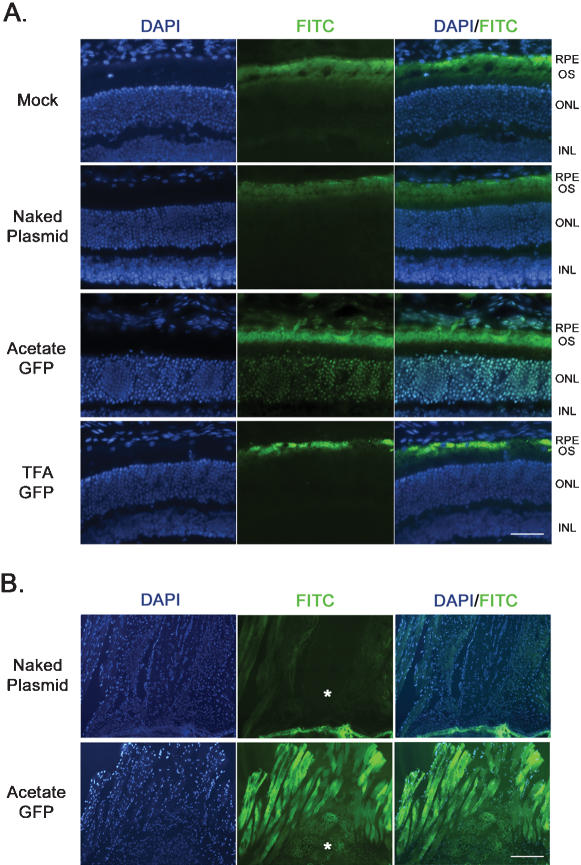
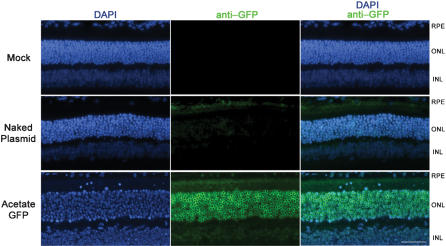
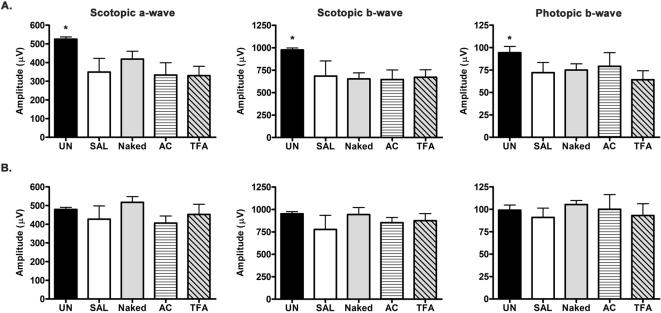
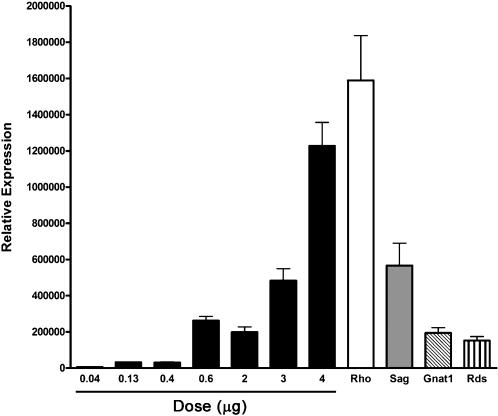
BACKGROUND: The eye is an excellent candidate for gene therapy as it is immune privileged and much of the disease-causing genetics are well understood. Towards this goal, we evaluated the efficiency of compacted DNA nanoparticles as a system for non-viral gene transfer to ocular tissues. The compacted DNA nanoparticles examined here have been shown to be safe and effective in a human clinical trial, have no theoretical limitation on plasmid size, do not provoke immune responses, and can be highly concentrated. METHODS AND FINDINGS: Here we show that these nanoparticles can be targeted to different tissues within the eye by varying the site of injection. Almost all cell types of the eye were capable of transfection by the nanoparticle and produced robust levels of gene expression that were dose-dependent. Most impressively, subretinal delivery of these nanoparticles transfected nearly all of the photoreceptor population and produced expression levels almost equal to that of rod opsin, the highest expressed gene in the retina. CONCLUSIONS: As no deleterious effects on retinal function were observed, this treatment strategy appears to be clinically viable and provides a highly efficient non-viral technology to safely deliver and express nucleic acids in the retina and other ocular tissues.
Overview
The claims and statistics of this paper haven’t been checked yet.
Free: it reads the open-access text and checks the first 5 claims that cite a source we can check. Create a free account to check every claim.
Integrity signals
Registry
Cites
Statistics
Figures
Verification
Claims the paper makes
The claims and statistics of this paper haven’t been checked yet.
Free: it reads the open-access text and checks the first 5 claims that cite a source we can check. Create a free account to check every claim.
Claims other papers make about this one
Each is checked against this paper’s own text: does it say what the citing paper says it does?
The source backs part of the claim, not all of it — or backs it for a different population, condition or comparison.
In the citing paper
“Administration of CMV.eGFPDNA incorporated into nanoparticles showed robust expression in the retina after two days, but the expression was not detectable after two weeks [59].”
From Recombinant Adeno-Associated Viral Vectors (rAAV)-Vector Elements in Ocular Gene Therapy Clinical Trials and Transgene Expression and Bioactivity Assays (2020) · cites this paper as [59]
Experimental — accuracy not yet measuredThe source backs part of the claim, not all of it — or backs it for a different population, condition or comparison.
In the citing paper
“Single-molecule DNA nanoparticles compacted by polyethylene glycol (PEG)-substituted lysine peptides (CK30-PEG) have been used to carry payloads up to 20 kb in size,82,83 with several groups demonstrating their safety in BALB/c mice and rds+/− Rho-/- or Abca4-/- mouse models of retinal degeneration.82–86”
From Gene Therapy for Retinal Degenerative Diseases: Progress, Challenges, and Future Directions (2023) · cites this paper as [83]
Experimental — accuracy not yet measuredIn the citing paper
“In addition to phagocytosing photoreceptor outer segments in vivo, RPE can take up large naked DNA or DNA NPs by phagocytosis [26,27].”
From The Ocular Gene Delivery Landscape (2021) · cites this paper as [27]
Self-check
Percentages, sums and reported differences re-computed from the paper’s own numbers.
The self-check needs the paper’s full text.
Citations
Cites
Complement factor H polymorphism in age-related macular degeneration
Klein, R. J., Zeiss, C., Chew, E. Y., Tsai, J.-Y., Sackler, R. S., Haynes, C., Henning, A. K., SanGiovanni, J. P., Mane, S. M., Mayne, S. T., et al. (2005) · Science · doi:10.1126/science.1109557 · Cited by 4,492
Progress and problems with the use of viral vectors for gene therapy
Thomas, C. E., Ehrhardt, A., & Kay, M. A. (2003) · Nature Reviews Genetics · doi:10.1038/nrg1066 · Cited by 2,501 · cited 1×
“Although viral vectors also have been successful in alleviating hereditary retinal degeneration in mice [12,21], they can be limited by cell tropism, the size of the expression cassette to be transferred, and host immunity to repeat infections [22,23].”
BackgroundComplement factor H polymorphism and age-related macular degeneration
Edwards, A. O., Ritter, R., Abel, K. J., Manning, A., Panhuysen, C., & Farrer, L. A. (2005) · Science · doi:10.1126/science.1110189 · Cited by 2,449
Complement factor H variant increases the risk of age-related macular degeneration
Haines, J. L., Hauser, M. A., Schmidt, S., Scott, W. K., Olson, L. M., Gallins, P., Spencer, K. L., Kwan, S. Y., Noureddine, M., Gilbert, J. R., et al. (2005) · Science · doi:10.1126/science.1110359 · Cited by 2,424 · cited 1×
“[55–58].”
Pegaptanib, a targeted anti-VEGF aptamer for ocular vascular disease
Ng, E. W. M., Shima, D. T., Calias, P., Cunningham, E. T., Guyer, D. R., & Adamis, A. P. (2006) · Nature Reviews Drug Discovery · doi:10.1038/nrd1955 · Cited by 1,588 · cited 1×
“recurring injections to maintain this inhibitory effect [59–61].”
BackgroundRaper, S. E., Chirmule, N., Lee, F. S., Wivel, N. A., Bagg, A., Gao, G.-P., Wilson, J. M., & Batshaw, M. L. (2003) · Molecular Genetics and Metabolism · doi:10.1016/j.ymgme.2003.08.016 · Cited by 1,498 · cited 1×
“Additionally, concerns regarding the safety of using viral vectors in human patients have been raised and some trials have resulted in oncogenesis or even mortality [22,24–26].”
BackgroundIdentification of a Gene That Causes Primary Open Angle Glaucoma
Stone, E. M., Fingert, J. H., Alward, W. L. M., Nguyen, T. D., Polansky, J. R., Sunden, S. L. F., Nishimura, D., Clark, A. F., Nystuen, A., Nichols, B. E., et al. (1997) · Science · doi:10.1126/science.275.5300.668 · Cited by 1,433 · cited 1×
“Many disease-causing mutations and their contribution to the pathogenesis of ocular diseases including cataracts, glaucoma, and retinitis pigmentosa have been well characterized [1–5].”
BackgroundGene therapy restores vision in a canine model of childhood blindness
Acland, G. M., Aguirre, G. D., Ray, J., Zhang, Q., Aleman, T. S., Cideciyan, A. V., Pearce-Kelling, S. E., Anand, V., Zeng, Y., Maguire, A. M., et al. (2001) · Nature Genetics · doi:10.1038/ng0501-92 · Cited by 1,202 · cited 1×
“Bennett and colleagues used adeno-associated virus to express the RPE65 cDNA which restored retinal function and has successfully persisted over 3 years [18–20].”
MethodOtt, M. G., Schmidt, M., Schwarzwaelder, K., Stein, S., Siler, U., Koehl, U., Glimm, H., Kühlcke, K., Schilz, A., Kunkel, H., et al. (2006) · Nature Medicine · doi:10.1038/nm1393 · Cited by 1,051
Bi, A., Cui, J., Ma, Y.-P., Olshevskaya, E., Pu, M., Dizhoor, A. M., & Pan, Z.-H. (2006) · Neuron · doi:10.1016/j.neuron.2006.02.026 · Cited by 771 · cited 1×
“lacking photoreceptors [52].”
Research works printed but not linked: 1
- Kowalczyk TH Pasumarthy MK Gedeon C Hyatt S Payne JM Muhammad O Moen RC Cooper MJ 2001 Type of polylysine counterion influences morphology and biological function of condensed DNA. Mol Ther 3 S359
Cited by
Items 101–200 of 212
Next-Generation Nanomedicine Approaches for the Management of Retinal Diseases
Mahaling, B., Low, S. W. Y., Ch, S., Addi, U. R., Ahmad, B. U., Connor, T. B., Mohan, R. R., Biswas, S., & Chaurasia, S. S. (2023) · Pharmaceutics · doi:10.3390/pharmaceutics15072005 · Cited by 37
Adenovirus Vectors Targeting Distinct Cell Types in the Retina
Sweigard, J. H., Cashman, S. M., & Kumar‐Singh, R. (2010) · Investigative Ophthalmology & Visual Science · doi:10.1167/iovs.09-4367 · Cited by 36
“However, it is not consistent with that reported for nonviral gene delivery vectors in which the inner segments lack GFP expression.(30) To our knowledge, this is the first report of robust photoreceptorspecific transgene expression from an adenovirus vector.”
ResultA Review of Gene, Drug and Cell-Based Therapies for Usher Syndrome
French, L. S., Mellough, C., Chen, F. K., & Carvalho, L. S. (2020) · Frontiers in Cellular Neuroscience · doi:10.3389/fncel.2020.00183 · Cited by 36
Lee, H., & Noh, H. (2023) · Gels · doi:10.3390/gels9090718 · Cited by 36
Recent Developments in Gene Therapy for Neovascular Age-Related Macular Degeneration: A Review
Finocchio, L., Zeppieri, M., Gabai, A., Toneatto, G., Spadea, L., & Salati, C. (2023) · Biomedicines · doi:10.3390/biomedicines11123221 · Cited by 34
“DNA nanoparticles consisting of a single molecule, compacted using polyethylene glycol (PEG)-substituted lysine peptides (CK30-PEG), have been utilized for transporting payloads of up to 20 kb in size [132,133].”
MethodMitra, R. N., Zheng, M., Weiss, E. R., & Han, Z. (2017) · Biomaterials · doi:10.1016/j.biomaterials.2017.12.004 · Cited by 32
“The 4e8 nm widths of two DNA NPs revealed their critical potential to transfect cells and penetrate to the nucleus through the permeable nuclear membrane pore (diameter ~25 nm) as demonstrated previously [46,47].”
Non-viral episomal modification of cells using S/MAR elements
Argyros, O., Wong, S., & Harbottle, R. P. (2011) · Expert Opinion on Biological Therapy · doi:10.1517/14712598.2011.582035 · Cited by 34
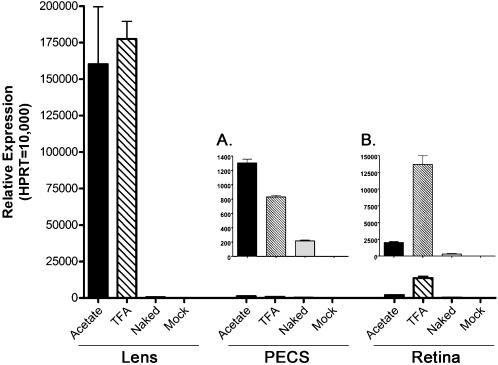
“Highest expression was observed in the lens [66] while only modest expression was found in the retina and very little expression was detected in the pigment epithelia/choroid/sclera (PECS).”
BackgroundNanoparticle-based delivery for the treatment of inner ear disorders
Pyykkö, I. V., Zou, J., Zhang, W., & Zhang, Y. (2011) · Current Opinion in Otolaryngology & Head & Neck Surgery · doi:10.1097/moo.0b013e32834aa3a8 · Cited by 32
The Ocular Gene Delivery Landscape
Sahu, B., Chug, I., & Khanna, H. (2021) · Biomolecules · doi:10.3390/biom11081135 · Cited by 28
“In addition to phagocytosing photoreceptor outer segments in vivo, RPE can take up large naked DNA or DNA NPs by phagocytosis [26,27].”
BackgroundNeuroprotective therapies in glaucoma: I. Neurotrophic factor delivery
Nafissi, N., & Földvári, M. (2015) · Wiley Interdisciplinary Reviews Nanomedicine and Nanobiotechnology · doi:10.1002/wnan.1361 · Cited by 32
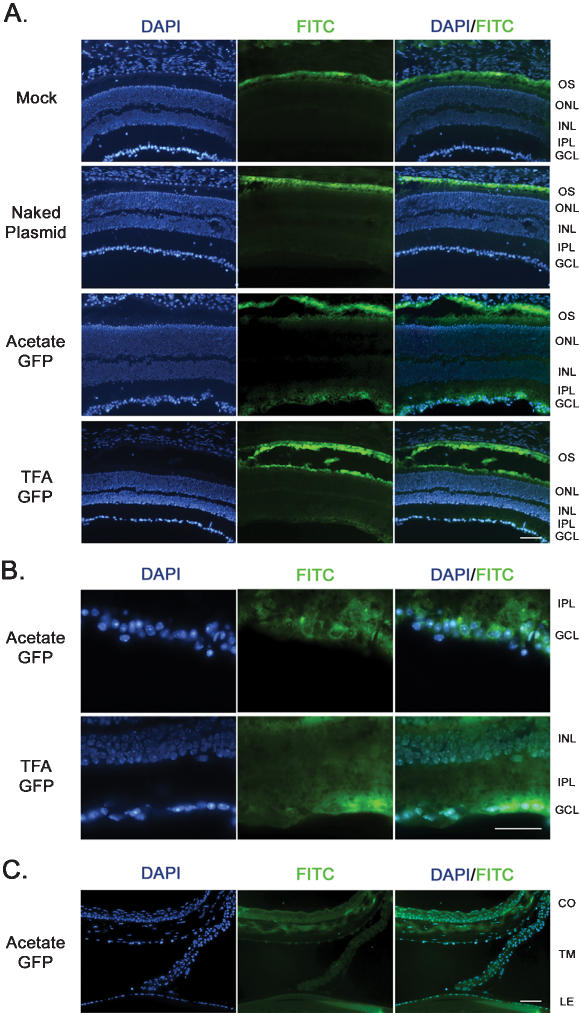
“The compact DNA-nanoparticles TFAGFP and AC-GFP were administered by different routes into mouse model and it was shown that intravitreal and subretinal injection of both nanoparticles confirm high GFP expression in RPE, RGCs, and photoreceptor cells.(99)More recently POD (peptide for ocular delivery) nanoparticles we…”
BackgroundNanotechnology and glaucoma: little particles for a big disease
Pita-Thomas, D. W., & Goldberg, J. L. (2013) · Current Opinion in Ophthalmology · doi:10.1097/icu.0b013e32835cfe92 · Cited by 31
“Another group demonstrated that intravitreal injection of polyethylene glycol-substituted lysine peptide nanoparticles complexed with plasmid DNA could achieve transduction of cells in tissues throughout the eye, including the trabecular meshwork [68].”
BackgroundSherry, D. M., Murray, A. R., Kanan, Y., Arbogast, K. L., Hamilton, R. A., Fliesler, S. J., Burns, M. E., Moore, K. L., & Al‐Ubaidi, M. R. (2010) · European Journal of Neuroscience · doi:10.1111/j.1460-9568.2010.07431.x · Cited by 29
“Quantitative real-time PCR (qRT-PCR) was performed as previously described (Farjo et al., 2006).”
MethodRegenerative nanomedicine and the treatment of degenerative retinal diseases
Zarbin, M. A., Montemagno, C. D., Leary, J. F., & Ritch, R. H. (2011) · Wiley Interdisciplinary Reviews Nanomedicine and Nanobiotechnology · doi:10.1002/wnan.167 · Cited by 29
Nanomedicine in the application of uveal melanoma
You, S., Luo, J., Grossniklaus, H. E., Gou, M., Meng, K., & Zhang, Q. (2016) · International Journal of Ophthalmology · doi:10.18240/ijo.2016.08.20 · Cited by 30
Thumann, G., Stöcker, M., Maltusch, C., Salz, A. K., Barth, S., Walter, P., & Johnen, S. (2009) · Gene Therapy · doi:10.1038/gt.2009.124 · Cited by 29
Caruso, R. C., Aleman, T. S., Cideciyan, A. V., Roman, A. J., Sumaroka, A., Mullins, C. L., Boye, S. L., Hauswirth, W. W., & Jacobson, S. G. (2010) · Investigative Opthalmology & Visual Science · doi:10.1167/iovs.10-5559 · Cited by 26
Nanoparticle-mediated gene therapy as a novel strategy for the treatment of retinoblastoma
Mandal, M., Banerjee, I., & Mandal, M. (2022) · Colloids and Surfaces B Biointerfaces · doi:10.1016/j.colsurfb.2022.112899 · Cited by 28
Nano-vectors for the ocular delivery of nucleic acid-based therapeutics
Khar, R. K., Warsi, M. H., Akhter, S., Ahmad, F., Jain, G. K., Mallick, N., & Pathan, S. (2010) · Indian Journal of Pharmaceutical Sciences · doi:10.4103/0250-474x.84575 · Cited by 26
“The interest of polymeric nanoparticles to deliver nucleic acids into the retina was a result of in vitro and in vivo studies demonstrating transretinal movement of plasmidloaded PLA and PLGA nanoparticles after intravitreal injection, with a preferential localization in the RPE cells[41].”
BackgroundMethodInfluentialNon-Viral Vectors for Gene Delivery
Bansal, A., & Himanshu (2018) · Nanoscience & Nanotechnology-Asia · doi:10.2174/2210681208666180110154233 · Cited by 26
Stimuli Responsive, Programmable DNA Nanodevices for Biomedical Applications
Singh, U., Morya, V., Datta, B., Ghoroi, C., & Bhatia, D. D. (2021) · Frontiers in Chemistry · doi:10.3389/fchem.2021.704234 · Cited by 27
Can Ultrasound Solve the Transport Barrier of the Neural Retina?
Peeters, L., Lentacker, I., Vandenbroucke, R. E., Lucas, B., Demeester, J., Sanders, N. N., & Smedt, S. C. D. (2008) · Pharmaceutical Research · doi:10.1007/s11095-008-9684-2 · Cited by 27
Dasari, B., Cashman, S. M., & Kumar‐Singh, R. (2017) · Molecular Therapy — Nucleic Acids · doi:10.1016/j.omtn.2017.06.004 · Cited by 26
“The shape and size of peptide/DNA nanoparticles have been found to depend on whether the peptide is equilibrated with trifluoroacetic acid (TFA) or with ammonium acetate (AmAc) prior to DNA compaction.(21) We, however, have not observed a difference in nanoparticle structure when PEG-S-POD was equilibrated in either b…”
BackgroundKansara, V. S., Cooper, M. J., Sesenoglu‐Laird, O., Muya, L. W., Moen, R. C., & Ciulla, T. A. (2020) · Translational Vision Science & Technology · doi:10.1167/tvst.9.13.21 · Cited by 25
Self-citationDNA Nanoparticles: Detection of Long-Term Transgene Activity in Brain using Bioluminescence Imaging
Yurek, D. M., Fletcher, A. M., McShane, M., Kowalczyk, T. H., Padegimas, L., Weatherspoon, M. R., Kaytor, M. D., Cooper, M. J., & Ziady, A. G. (2011) · Molecular Imaging · doi:10.2310/7290.2010.00053 · Cited by 24
Self-citationGene Therapy to the Retina and the Cochlea
Crane, R., Conley, S. M., Al‐Ubaidi, M. R., & Naash, M. I. (2021) · Frontiers in Neuroscience · doi:10.3389/fnins.2021.652215 · Cited by 25
Self-citationRedefining tissue engineering for nanomedicine in ophthalmology
Ellis-Behnke, R. G., & Jonas, J. B. (2010) · Acta Ophthalmologica · doi:10.1111/j.1755-3768.2010.01982.x · Cited by 24
“2007) and other aspects of gene-related ocular therapy (Martin et al. 2003; Farjo et al. 2006; Naash et al. 2006), intraocular antiviral therapies (Irache et al.”
BackgroundPensado, A., Diaz-Corrales, F. J. J., de la Cerda, B., Valdés-Sánchez, L., del Boz, A. A., Rodríguez–Martínez, D., García-Delgado, A. B., Seijo, B., Bhattacharya, S. S., & Sánchez, A. (2016) · Nanomedicine Nanotechnology Biology and Medicine · doi:10.1016/j.nano.2016.06.007 · Cited by 23
The Future of Nanomaterials Tackling the Challenge of Delivering Nucleic Acids to the Retina
Hurst, J., Adams, F., & Schnichels, S. (2024) · Advanced Functional Materials · doi:10.1002/adfm.202407173 · Cited by 24
Prea, S. M., Chan, E. C., Dusting, G. J., Vingrys, A. J., Bui, B. V., & Liu, G. (2015) · Journal of Ophthalmology · doi:10.1155/2015/201726 · Cited by 25
“ticles [77] and the φC31 integrase system [78] and avoid the”
Jiang, L., Frederick, J. M., & Baehr, W. (2014) · Frontiers in Molecular Neuroscience · doi:10.3389/fnmol.2014.00025 · Cited by 22
“…express the shRNAs in mouse photoreceptors, we tested four currently used gene delivery vectors: a peptide/polymer nanoparticle (CK30PEG; Farjo et al., 2006), recombinant adenovirus (Ad5 RGD; Cashman et al., 2007; Sweigard et al., 2010), recombinant AAV2 (Wu et al., 2006), and…”
MethodLipid nanoparticle technology-mediated therapeutic gene manipulation in the eyes
Wang, T., Yu, T., Liu, Q., Sung, T., & Higuchi, A. (2024) · Molecular Therapy — Nucleic Acids · doi:10.1016/j.omtn.2024.102236 · Cited by 22
Rim formation is not a prerequisite for distribution of cone photoreceptor outer segment proteins
Conley, S. M., Al‐Ubaidi, M. R., Han, Z., & Naash, M. I. (2014) · The FASEB Journal · doi:10.1096/fj.14-251397 · Cited by 18
“These NPs were generated as described previously (18), and have been shown to effectively drive RDS gene expression in photoreceptors as soon as 2 d postinjection (15, 16).”
MethodSelf-citationGene Therapy in Corneal Transplantation
Qazi, Y., & Hamrah, P. (2013) · Seminars in Ophthalmology · doi:10.3109/08820538.2013.825297 · Cited by 20
“a larger vector-carrying capacity enabling delivery of genes too large for the AAV vector, while exhibiting comparable gene expression efficiency and sustainable gene and protein expression profiles.(144,151,152)”
BackgroundYurek, D. M., Hasselrot, U., Sesenoglu‐Laird, O., Padegimas, L., & Cooper, M. J. (2017) · Nanomedicine Nanotechnology Biology and Medicine · doi:10.1016/j.nano.2017.06.010 · Cited by 18
Self-citationNanoparticle‐motivated gene delivery for ophthalmic application
Mitra, R. N., Zheng, M., & Han, Z. (2015) · Wiley Interdisciplinary Reviews Nanomedicine and Nanobiotechnology · doi:10.1002/wnan.1356 · Cited by 21
Zhang, W., Zhang, Y., Sood, R., Ranjan, S. K., Surovtseva, E. V., Ahmad, A., Kinnunen, P. K. J., Pyykkö, I. V., & Zou, J. (2010) · The Journal of Gene Medicine · doi:10.1002/jgm.1537 · Cited by 18
“Nanoparticles are one of the most promising gene carriers among the nonviral gene delivery vectors [16,17].”
BackgroundRepublished review: Gene therapy for ocular diseases
Liu, M. M., Tuo, J., & Chan, C. (2011) · Postgraduate Medical Journal · doi:10.1136/pgmj.2009.174912rep · Cited by 18
Zheng, M., Mitra, R. N., Weiss, E. R., & Han, Z. (2019) · Molecular Therapy · doi:10.1016/j.ymthe.2019.11.031 · Cited by 14
RPE based gene and cell therapy for inherited retinal diseases: A review
Sanie‐Jahromi, F., & Nowroozzadeh, M. H. (2022) · Experimental Eye Research · doi:10.1016/j.exer.2022.108961 · Cited by 13
Immune responses in retinal gene therapy: challenges, mechanisms, and future strategies
Ma, Y., & Shen, Y. (2025) · Frontiers in Immunology · doi:10.3389/fimmu.2025.1664968 · Cited by 15
“In parallel, compacted DNA nanoparticles (CK30-PEG) demonstrated high level photoreceptor and RPE expression in mice and favorable ocular safety in vivo , offering a non-viral plasmid platform with large cargo capacity (115).”
ConVRgence (VRIC) Virtual Reality International Conference Proceedings
Richir, S. (2020) · International Journal of Virtual Reality · doi:10.20870/ijvr.2020...3316 · Cited by 15
Applications of Nanobiotechnology in Ophthalmology – Part I
Nguyẽ̂n, P., Meyyappan, M., & Yiu, S. C. (2010) · Ophthalmic Research · doi:10.1159/000279436 · Cited by 11
“Hereditary retinal degeneration is a heterogeneous group of disorders causing progressive irreversible dystrophies of the neuroretina and the RPE, resulting in a loss of vision. Currently, no definitive treatment exists. A therapeutic approach using nonviral nanoparticulate gene therapy is being investigated in the re…”
BackgroundGene Therapy in the Retinal Degeneration Slow Model of Retinitis Pigmentosa
Cai, X., Conley, S. M., & Naash, M. I. (2009) · Advances in experimental medicine and biology · doi:10.1007/978-1-4419-1399-9_70 · Cited by 12
“Our data shown here and previously (Farjo et al. 2006) demonstrate that CK30PEG nanoparticles can efficiently transfect both mitotic and post-mitotic cells and induce rapid-onset and sustain gene expression.”
BackgroundResultSelf-citationStem cell transplantation as a progressing treatment for retinitis pigmentosa
Shabanan, S. H., Seyedmirzaei, H., Barnea-Cramer, A. O., Hanaei, S., & Rezaei, N. (2022) · Cell and Tissue Research · doi:10.1007/s00441-021-03551-3 · Cited by 11
Nanocarriers, Progenitor Cells, Combinational Approaches, and New Insights on the Retinal Therapy
Pishavar, E., Luo, H., Bolander, J., Atala, A., & Ramakrishna, S. (2021) · International Journal of Molecular Sciences · doi:10.3390/ijms22041776 · Cited by 10
“Different studies have been demonstrated in preclinical trials using Adeno-associated virus (AAV)-based therapies for Stargardt disease and juvenile retinosc isis [27].”
BackgroundResultInfluentialNanotherapy for Neural Retinal Regeneration
Yu, C., Dong, L., Lv, Y., Shi, X., Zhang, R., Zhou, W., Wu, H., Li, H., Li, Y., Zhou, L., et al. (2025) · Advanced Science · doi:10.1002/advs.202409854 · Cited by 13
In Vivo Gene Delivery with l -Tyrosine Polyphosphate Nanoparticles
Ditto, A. J., Reho, J. J., Shah, K. N., Smolen, J. A., Holda, J. H., Ramirez, R., & Yun, Y. (2013) · Molecular Pharmaceutics · doi:10.1021/mp300623a · Cited by 10
Highly compacted pH-responsive DNA nanoparticles mediate transgene silencing in experimental glioma
Kim, A. J., Woodworth, G. F., Boylan, N. J., Suk, J. S., & Hanes, J. S. (2014) · Journal of Materials Chemistry B · doi:10.1039/c4tb00559g · Cited by 11
“Highly compacted DNA nanoparticles, composed of 30-mer lysine conjugated to polyethylene glycol (PEG) via a single cysteine moiety (CK30PEG), represent a promising non-viral technology that has demonstrated remarkable effectiveness in delivering genes to the brain, eyes and lungs with minimal toxicity and immunogenici…”
BackgroundRetinal Degenerations: Planning for the Future
Berson, E. L. (2007) · Advances in experimental medicine and biology · doi:10.1007/978-0-387-74904-4_2 · Cited by 12
“Nanoparticle technology has been recently described as a non-viral approach for gene transfer to ocular tissues (Farjo et al., 2006).”
BackgroundIdentification of Key Residues Determining Isomerohydrolase Activity of Human RPE65
Takahashi, Y., Moiseyev, G. P., & Ma, J.-X. (2014) · Journal of Biological Chemistry · doi:10.1074/jbc.m114.558619 · Cited by 10
“Several vectors for gene delivery, such as adenovirus (28, 29), recombinant adeno-associated virus (19, 29 –33), lentivirus (29, 34 –36), plasmid incorporated in nanoparticles (37), and plasmid DNA with electroporation (38, 39) have been used to deliver intact DNA (or reporter genes) to the ocular tissues.”
MethodRelieving Bottlenecks in RNA Drug Discovery for Retinal Diseases
Sullivan, J. M., Yau, E. H., Taggart, R. T., Butler, M. C., & Kolniak, T. A. (2011) · Advances in experimental medicine and biology · doi:10.1007/978-1-4614-0631-0_20 · Cited by 10
“1997) and nanoparticles, which have properties of synthetic viruses (Farjo et al. 2006), offer potential for high transduction efficiency to promote PTGS expression in as many diseased cells as possible.”
BackgroundThe Promise of Nanomedicine for Ocular Disease
Thomson, H. A., & Lotery, A. J. (2009) · Nanomedicine · doi:10.2217/nnm.09.43 · Cited by 9
Sun, W., Fletcher, D., Heeckeren, R. V., & Davis, P. B. (2012) · Journal of drug targeting · doi:10.3109/1061186x.2012.712128 · Cited by 9
“DNA plasmids are condensed by PEG-CK 30 into charge neutral, unimolecular DNA nanoparticles (DNA NPs) that are stable, non-toxic and capable of transgene delivery to several cell types in vitro and in vivo (Farjo et al., 2006; Liu et al., 2003; Yurek et al., 2009; Ziady et al., 2003a, 2003b; Konstan et al., 2004).”
BackgroundTerapia gênica em distrofias hereditárias de retina
Côco, M., Han, S. W., & Sallum, J. M. F. (2009) · Arquivos Brasileiros de Oftalmologia · doi:10.1590/s0004-27492009000400026 · Cited by 14
Pillay, V., Choonara, Y. E., & du Toit, L. C. (2016) · Springer eBooks · doi:10.1007/978-3-319-29346-2_18 · Cited by 8
Nanoengineered biomaterials for retinal repair
Patel, B. B., Sharma, A. D., Mammadova, N., Sandquist, E. J., Uz, M., Mallapragada, S. K., & Sakaguchi, D. S. (2018) · Elsevier eBooks · doi:10.1016/b978-0-12-813355-2.00010-7 · Cited by 8
Gene therapy for age-related macular degeneration: potential, feasibility, and pitfalls
Berkowitz, S. T., & Finn, A. P. (2024) · Current Opinion in Ophthalmology · doi:10.1097/icu.0000000000001043 · Cited by 9
Binder, C., Cashman, S. M., & Kumar‐Singh, R. (2013) · PLoS ONE · doi:10.1371/journal.pone.0082295 · Cited by 8
“We have not been able to reconcile these different observations regarding CK30 NPs despite significant effort, including the use of reagents from the same source [39] as the original study (data not shown).”
BackgroundPeynshaert, K., Devoldere, J., Smedt, S. C. D., & Remaut, K. (2023) · Expert Opinion on Drug Delivery · doi:10.1080/17425247.2023.2167979 · Cited by 7
Zulliger, R., Watson, J. N., Al‐Ubaidi, M. R., Padegimas, L., Sesenoglu‐Laird, O., Cooper, M. J., & Naash, M. I. (2018) · Advances in experimental medicine and biology · doi:10.1007/978-3-319-75402-4_14 · Cited by 8
Self-citationNanoparticles for Gene Delivery into Stem Cells and Embryos
Pushp, P., Kaur, R., Lee, H. T., & Gupta, M. K. (2012) · Advances in polymer science · doi:10.1007/12_2012_194 · Cited by 7
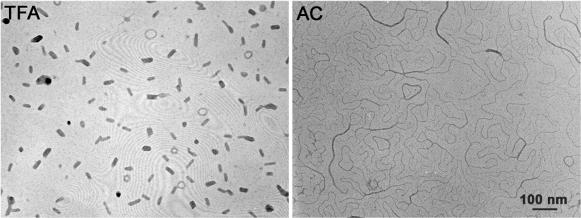
“Studies have shown that naked DNA (~1,200 nm [2]) can acquire toroidal (~50 nm [3]), ellipsoidal (~22 50 nm [4]), rod-shaped (~8–11 200 nm [4]) and spherical (~130 nm [2]) configuration upon compaction by polycations such as spermine, CK30-PEG trifluoroacetate, CK30PEG acetate and PEG-POD, respectively, in the nanomet…”
BackgroundNon-viral gene therapy for Leber’s congenital amaurosis: progress and possibilities
Abdulsalam, L., Mordecai, J., & Ahmad, I. (2024) · Nanomedicine · doi:10.1080/17435889.2024.2443387 · Cited by 7
CURRENT THERAPEUTIC STRATEGIES FOR HUMAN USHER SYNDROME
Overlack, N., Goldmann, T., Wolfrum, U., & Nagel‐Wolfrum, K. (2011) · Cited by 6
Zarbin, M. A., Leary, J. F., Montemagno, C. D., Ritch, R. H., & Humayun, M. S. (2012) · Elsevier eBooks · doi:10.1016/b978-1-4557-0737-9.00036-9 · Cited by 7
Qtaish, N. A., Villate-Beitia, I., Gallego, I., Martínez, G., Soto‐Sánchez, C., Sainz-Ramos, M., López-Méndez, T. B., Paredes, A. J., Chichón, F. J., Zamarreño, N., et al. (2023) · International Journal of Pharmaceutics · doi:10.1016/j.ijpharm.2023.122968 · Cited by 6
Nanotechnology in Ophthalmology
Petrovic, N. T., Petrovic, M. J., Srećković, S., Jovanović, S., Todorović, D., & Vulovic, T. S. (2017) · Springer eBooks · doi:10.1007/978-3-319-56979-6_11 · Cited by 7
You, S., Zhou, H., Yang, S., Wu, S., Chen, X., Zhang, R., Chen, W., Wang, H., & Mo, X. (2023) · Journal of Ocular Pharmacology and Therapeutics · doi:10.1089/jop.2022.0114 · Cited by 4
“30 By applying transscleral PUS, the concentrations of NaF in the retina–choroid and vitreous were 2.45 and 3.15 times, respectively, greater than those without transscleral PUS application, indicating that the transscleral PUS application improves the transscleral drug delivery.”
InfluentialSound Packing DNA: packing open circular DNA with low-intensity ultrasound
Park, D., Jung, B.-K., Park, H., Lee, H., Lee, G., Park, J., Shin, U., Won, J. H., Jo, Y. J., Chang, J. W., et al. (2015) · Scientific Reports · doi:10.1038/srep09846 · Cited by 4
Gene Therapy Using Genomic DNA
Han, Z. (2018) · Elsevier eBooks · doi:10.1016/b978-0-12-809813-4.00003-x · Cited by 4
Application Prospects for Synthetic Nanoparticles in Optogenetic Retinal Prosthetics
Rotov, A. Y., Romanov, I. S., Tarakanchikova, Y. V., & Astakhova, L. A. (2021) · Journal of Evolutionary Biochemistry and Physiology · doi:10.1134/s0022093021060132 · Cited by 4
“An experiment on intravitreal injection of nanoparticles carrying a plasmid that encodes a fluorescent marker under a nonspecific promoter confirmed this assumption, because the expression of green fluorescent protein (GFP) was observed primarily in ganglion cells [66].”
BackgroundLiu, X., Brandt, C. R., Rasmussen, C. A., & Kaufman, P. L. (2007) · Expert Review of Ophthalmology · doi:10.1586/17469899.2.2.227 · Cited by 4
Corneal Gene Therapy in Veterinary Medicine: A Review
Bosiack, A. P. (2013) · Journal of Veterinary Science & Technology · doi:10.4172/2157-7579.s8-001 · Cited by 4
“They tend to be less immunogenic and cytotoxic than viral vectors [28].”
BackgroundNanotechnology for Gene Delivery to the Eye
Singh, S. R., Kompella, U. B., & Formulation Scientist, W. P. (2009) · European Ophthalmic Review · doi:10.17925/eor.2009.03.01.7 · Cited by 4
Du, J., Du, L. F., Li, F. H., Zheng, X. Z., Li, H. L., Qiu, S., & Wu, Y. (2011) · Asian Biomedicine · doi:10.5372/1905-7415.0505.077 · Cited by 4
“Application of ultrasound with microbubbles in ocular gene delivery Compared to most other tissues of the body, the eye is an excellent candidate for gene therapy as it is easily accessible and immune-privileged [35].”
BackgroundThe Contribution of Nanomedicine in Ocular Oncology
Spyratou, E., Margarita, T., Droulias, A., Zachou, M.-E., & EFSTATHOPOULOS, E. P. (2025) · Cancers · doi:10.3390/cancers17071186 · Cited by 4
“For example, plasmid DNA (pDNA) for the Enhanced Green Fluorescent Protein (EGFP) compacted with PEG-substituted lysine peptides was successfully transferred to the retina by Farjo et al. in 2006 [114].”
Gene Therapy for Ocular Diseases
Kim, B. J., & Waheed, N. K. (2012) · Oxford University Press eBooks · doi:10.1093/med/9780195326147.003.0052 · Cited by 3
Nonviral gene therapy for age-related macular degeneration
Thumann, G. (2011) · Expert Review of Ophthalmology · doi:10.1586/eop.10.83 · Cited by 2
The arrival of genetic engineering
Arulmuthu, E. R., Williams, D., & Versteeg, H. K. (2009) · IEEE Engineering in Medicine and Biology Magazine · doi:10.1109/memb.2008.931015 · Cited by 2
Gene Therapy for Retinal Disease
Bennett, J., & Maguire, A. M. (2012) · Elsevier eBooks · doi:10.1016/b978-1-4557-0737-9.00034-5 · Cited by 2
Effect of Drugs and Nanoformulation on Ocular Cells in Various Disease States
Paikra, S. K., Bag, J., & Mishra, M. (2020) · Springer eBooks · doi:10.1007/978-3-030-41858-8_12 · Cited by 2
Regenerative nanomedicine applications for neurodegenerative diseases of central nervous system
Alkhalifa, H., Alshebber, E., & Taurin, S. (2020) · Elsevier eBooks · doi:10.1016/b978-0-12-820466-5.00012-0 · Cited by 2
Microbubbles used for Drug Delivery System
Heer, H., Kaur, V. P., Rathor, S., Aamir, S., & Singh, C. (2021) · Wiley eBooks · doi:10.1002/9781119711698.ch6 · Cited by 2
Prazeres, D. M. F. (2011) · Wiley eBooks · doi:10.1002/9780470939918.ch6 · Cited by 2
DNA packing by low-intensity ultrasound
Park, D., Song, G., Park, H., Lee, M. H., Jang, J.-Y., Hs, K., Cw, K., & Seo, J. (2015) · IEEE International Ultrasonics Symposium · doi:10.1109/ultsym.2015.0295 · Cited by 1
A Review of Personalised Molecular Medicine for the Treatment of Corneal Disorders
Courtney, D. G., Thakur, A., Ma, N., Moore, J. E., & Moore, T. (2015) · International Journal of Ophthalmology & Eye Science · doi:10.19070/2332-290x-si02002 · Cited by 1
Viral vector-mediated RNA interference in the retina
Georgiadis, A. (2010) · UCL Discovery (University College London)
Einsatz von Nanopartikeln in der Augenheilkunde
Hahn, I., Heiduschka, P., Endl, E., & Eter, N. (2011) · Der Ophthalmologe · doi:10.1007/s00347-011-2400-3
Gene therapy for corneal graft survival
Bárcia, R. N., & Kazlauskas, A. (2007) · Expert Review of Ophthalmology · doi:10.1586/17469899.2.3.409
INTERNATIONAL JOURNAL OF PHARMACY & LIFE SCIENCES Microbubble and its applications
Maske, S. K., Shalini, D. J. F., Kale, V. S., Raut, B., & Chintale, G. A. (2012) · International Journal of Pharmacy and Life Sciences
Intranasal delivery of pGDNF nanoparticles for Parkinson's disease
Harmon, B. T. (2013) · Digital Repository Service (Northeastern University) · doi:10.17760/d20003327
Cellular Uptake of DNA Nanoparticles and Regulation of Cell Surface Nucleolin
Chen, X. (2009) · OhioLink ETD Center (Ohio Library and Information Network)
Nanoecological Threats of Nanofood and Nanoparticles
Kharlamova, G., Kharlamov, O., & Bondarenko, M. E. (2014) · NATO science for peace and security series. A, Chemistry and biology · doi:10.1007/978-94-017-9697-2_47
Anti-Angiogenic Gene Therapy: Basic Science and Challenges for Translation into the Clinic
Lange, C., & Bainbridge, J. W. (2016) · Essentials in ophthalmology/Essentials ophthalmology · doi:10.1007/978-3-319-24097-8_11
Nanoparticle-Mediated Delivery of Angiogenic Inhibitors in Diabetic Retinopathy
Farjo, K. M., Farjo, R. A., Wassel, R. A., & Ma, J. (2012) · Science Publishers eBooks · doi:10.1201/b11775-21
Self-citationNanosystem in Ocular Bioenvironment
Dilnawaz, F., & Sahoo, S. K. (2016) · Springer eBooks · doi:10.1007/978-3-319-29346-2_23
Animal Models to Evaluate Nanoparticulate Ocular Drug Delivery Systems
Broadwater, A., Hirani, A., & Pathak, Y. V. (2016) · Springer eBooks · doi:10.1007/978-3-319-29346-2_19
Beitia, V., & Ilia, A. (2018) · Communities in ADDI (Universidad del Pais Vasco)
Pulmonary Diseases: Polymeric Gene Delivery Carriers
Gao, X., Vollmer, R. R., & Li, S. (2016) · Taylor & Francis eBooks · doi:10.1081/e-ebpp-120052277
(2017) · Elsevier eBooks · doi:10.1016/b978-0-323-51256-5.00022-8
Jain, K. K. (2012) · Humana Press eBooks · doi:10.1007/978-1-61779-983-9_13
Metadata
- Authors
- Farjo, R., Skaggs, J., Quiambao, A. B., Cooper, M. J., & Naash, M. I.
- Affiliations
- University of Oklahoma Health Sciences Center (US)
- Copernicus Therapeutics (United States) (US)
- Corresponding author
- Naash, Muna I.
- Venue
- PLoS ONE
- Publisher
- Public Library of Science (PLoS)
- Published
- 2006-12-20
- Volume
- 1
- Issue
- 1
- Pages
- e38
- ISSN
- 1932-6203 (ISSN-L)
- PMC
- PMC1762345
- OpenAlex
- W2075139742
- Cited by
- 208
- References
- 60
- Citations by year
- 2026: 1 · 2025: 4 · 2024: 4 · 2023: 10 · 2022: 4 · 2021: 9 · 2020: 8 · 2019: 3 · 2018: 9 · 2017: 12 · 2016: 11 · 2015: 14 · 2014: 17 · 2013: 14 · 2012: 18
- FWCI
- 4.89
- Type
- journal article
- Language
- en
- Open access
- gold
- doi.org
- Locations
- PLoS ONE (publishedVersion, cc-by)
- PubMed (publishedVersion)
- DOAJ (DOAJ: Directory of Open Access Journals) (submittedVersion, cc-by-sa)
- Funders
- Foundation Fighting Blindness
- Research to Prevent Blindness
- Oklahoma Center for the Advancement of Science and Technology
- National Institutes of Health (EY12190)
- National Eye Institute (P30EY012190, R56EY010609, R03EY016201, EY10609, EY016201, R01EY010609)
- Topics
- Life Sciences › Biochemistry, Genetics and Molecular Biology › Molecular Biology › RNA Interference and Gene Delivery
- Health Sciences › Medicine › Ophthalmology › Retinal Development and Disorders
- Life Sciences › Pharmacology, Toxicology and Pharmaceutics › Pharmaceutical Science › Advanced Drug Delivery Systems
- Keywords
- non-viral gene delivery, ocular gene therapy, subretinal injection, retinal gene delivery, immune privilege, ocular tissues
- MeSH terms
- Animals, Base Sequence, DNA, Recombinant, Drug Carriers, Eye, Humans, Mice, Inbred BALB C, Microscopy, Fluorescence, Recombinant Proteins, Retina, RNA, Messenger, Tissue Distribution, Transfection, Genetic Therapy, Gene Expression, DNA Primers, Gene Transfer Techniques, Green Fluorescent Proteins, Mice, Nanoparticles
About these checks
Registry, retraction, Cites and statistics results are computed, not judged, with one exception: a printed reference that no index lists is read once by a model before it counts as a citation error. Claims are extracted by a model and kept only when their quote appears verbatim in the text; each cited source is then checked, with a model’s help, for whether it says what the claim relies on. Those verdicts can be wrong — read the claim’s quote and the cited source before relying on one.
Statistics and arithmetic are recomputed, not judged.
Confidence bands are shown only for fields calibrated on our annotated test set. None is calibrated yet, so no band is shown.
What counts as a claim ›How we measure confidence ›How we check this ›
Are you an author, or do you see a problem with this page? Request a review
Data sources
Bibliographic data: Semantic Scholar, OpenAlex, Crossref.
Contains information from the Semantic Scholar Academic Graph Datasets, made available under the ODC Attribution License (ODC-BY 1.0).
Semantic Scholar’s data is described in: Kinney, R., et al. (2023). The Semantic Scholar Open Data Platform. arXiv:2301.10140.
