

Efficient Non-Viral Ocular Gene Transfer with Compacted DNA Nanoparticles
Open accessThe DOI matches its Crossref record; 60 of the 60 references it cites were found in a registry or an index.
Abstract
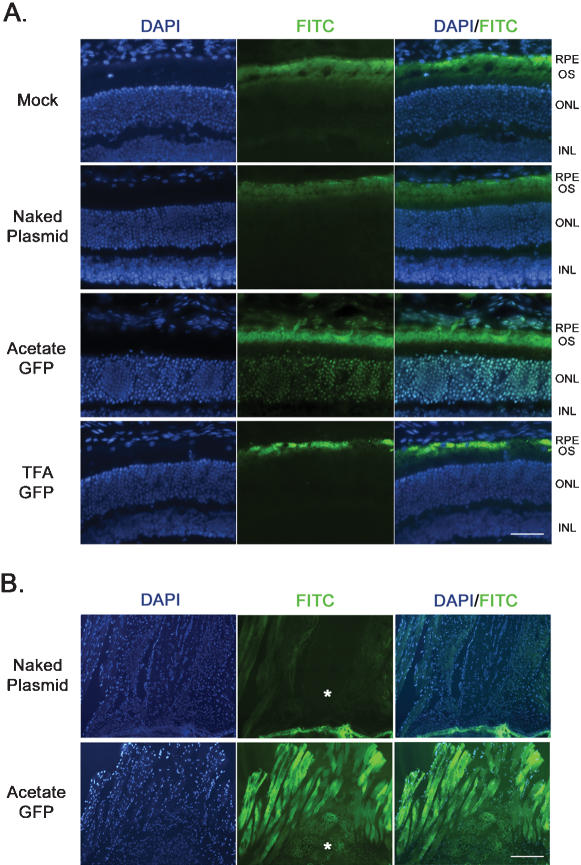
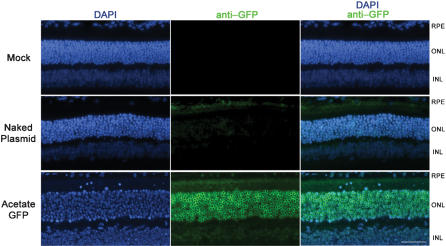
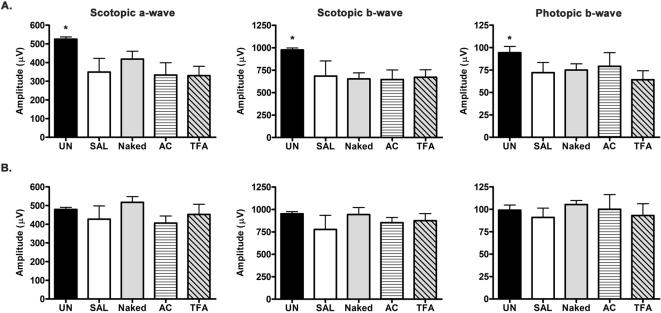
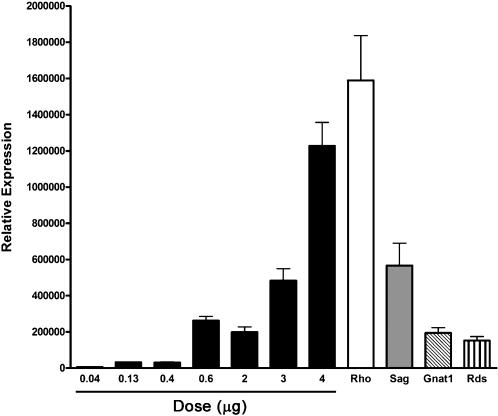
BACKGROUND: The eye is an excellent candidate for gene therapy as it is immune privileged and much of the disease-causing genetics are well understood. Towards this goal, we evaluated the efficiency of compacted DNA nanoparticles as a system for non-viral gene transfer to ocular tissues. The compacted DNA nanoparticles examined here have been shown to be safe and effective in a human clinical trial, have no theoretical limitation on plasmid size, do not provoke immune responses, and can be highly concentrated. METHODS AND FINDINGS: Here we show that these nanoparticles can be targeted to different tissues within the eye by varying the site of injection. Almost all cell types of the eye were capable of transfection by the nanoparticle and produced robust levels of gene expression that were dose-dependent. Most impressively, subretinal delivery of these nanoparticles transfected nearly all of the photoreceptor population and produced expression levels almost equal to that of rod opsin, the highest expressed gene in the retina. CONCLUSIONS: As no deleterious effects on retinal function were observed, this treatment strategy appears to be clinically viable and provides a highly efficient non-viral technology to safely deliver and express nucleic acids in the retina and other ocular tissues.
Overview
The claims and statistics of this paper haven’t been checked yet.
Free: it reads the open-access text and checks the first 5 claims that cite a source we can check. Create a free account to check every claim.
Integrity signals
Registry
Cites
Statistics
Figures
Verification
Claims the paper makes
The claims and statistics of this paper haven’t been checked yet.
Free: it reads the open-access text and checks the first 5 claims that cite a source we can check. Create a free account to check every claim.
Claims other papers make about this one
Each is checked against this paper’s own text: does it say what the citing paper says it does?
The source backs part of the claim, not all of it — or backs it for a different population, condition or comparison.
In the citing paper
“Administration of CMV.eGFPDNA incorporated into nanoparticles showed robust expression in the retina after two days, but the expression was not detectable after two weeks [59].”
From Recombinant Adeno-Associated Viral Vectors (rAAV)-Vector Elements in Ocular Gene Therapy Clinical Trials and Transgene Expression and Bioactivity Assays (2020) · cites this paper as [59]
Experimental — accuracy not yet measuredThe source backs part of the claim, not all of it — or backs it for a different population, condition or comparison.
In the citing paper
“Single-molecule DNA nanoparticles compacted by polyethylene glycol (PEG)-substituted lysine peptides (CK30-PEG) have been used to carry payloads up to 20 kb in size,82,83 with several groups demonstrating their safety in BALB/c mice and rds+/− Rho-/- or Abca4-/- mouse models of retinal degeneration.82–86”
From Gene Therapy for Retinal Degenerative Diseases: Progress, Challenges, and Future Directions (2023) · cites this paper as [83]
Experimental — accuracy not yet measuredIn the citing paper
“In addition to phagocytosing photoreceptor outer segments in vivo, RPE can take up large naked DNA or DNA NPs by phagocytosis [26,27].”
From The Ocular Gene Delivery Landscape (2021) · cites this paper as [27]
Self-check
Percentages, sums and reported differences re-computed from the paper’s own numbers.
The self-check needs the paper’s full text.
Citations
Cites
Complement factor H polymorphism in age-related macular degeneration
Klein, R. J., Zeiss, C., Chew, E. Y., Tsai, J.-Y., Sackler, R. S., Haynes, C., Henning, A. K., SanGiovanni, J. P., Mane, S. M., Mayne, S. T., et al. (2005) · Science · doi:10.1126/science.1109557 · Cited by 4,492
Progress and problems with the use of viral vectors for gene therapy
Thomas, C. E., Ehrhardt, A., & Kay, M. A. (2003) · Nature Reviews Genetics · doi:10.1038/nrg1066 · Cited by 2,501 · cited 1×
“Although viral vectors also have been successful in alleviating hereditary retinal degeneration in mice [12,21], they can be limited by cell tropism, the size of the expression cassette to be transferred, and host immunity to repeat infections [22,23].”
BackgroundComplement factor H polymorphism and age-related macular degeneration
Edwards, A. O., Ritter, R., Abel, K. J., Manning, A., Panhuysen, C., & Farrer, L. A. (2005) · Science · doi:10.1126/science.1110189 · Cited by 2,449
Complement factor H variant increases the risk of age-related macular degeneration
Haines, J. L., Hauser, M. A., Schmidt, S., Scott, W. K., Olson, L. M., Gallins, P., Spencer, K. L., Kwan, S. Y., Noureddine, M., Gilbert, J. R., et al. (2005) · Science · doi:10.1126/science.1110359 · Cited by 2,424 · cited 1×
“[55–58].”
Pegaptanib, a targeted anti-VEGF aptamer for ocular vascular disease
Ng, E. W. M., Shima, D. T., Calias, P., Cunningham, E. T., Guyer, D. R., & Adamis, A. P. (2006) · Nature Reviews Drug Discovery · doi:10.1038/nrd1955 · Cited by 1,588 · cited 1×
“recurring injections to maintain this inhibitory effect [59–61].”
BackgroundRaper, S. E., Chirmule, N., Lee, F. S., Wivel, N. A., Bagg, A., Gao, G.-P., Wilson, J. M., & Batshaw, M. L. (2003) · Molecular Genetics and Metabolism · doi:10.1016/j.ymgme.2003.08.016 · Cited by 1,498 · cited 1×
“Additionally, concerns regarding the safety of using viral vectors in human patients have been raised and some trials have resulted in oncogenesis or even mortality [22,24–26].”
BackgroundIdentification of a Gene That Causes Primary Open Angle Glaucoma
Stone, E. M., Fingert, J. H., Alward, W. L. M., Nguyen, T. D., Polansky, J. R., Sunden, S. L. F., Nishimura, D., Clark, A. F., Nystuen, A., Nichols, B. E., et al. (1997) · Science · doi:10.1126/science.275.5300.668 · Cited by 1,433 · cited 1×
“Many disease-causing mutations and their contribution to the pathogenesis of ocular diseases including cataracts, glaucoma, and retinitis pigmentosa have been well characterized [1–5].”
BackgroundGene therapy restores vision in a canine model of childhood blindness
Acland, G. M., Aguirre, G. D., Ray, J., Zhang, Q., Aleman, T. S., Cideciyan, A. V., Pearce-Kelling, S. E., Anand, V., Zeng, Y., Maguire, A. M., et al. (2001) · Nature Genetics · doi:10.1038/ng0501-92 · Cited by 1,202 · cited 1×
“Bennett and colleagues used adeno-associated virus to express the RPE65 cDNA which restored retinal function and has successfully persisted over 3 years [18–20].”
MethodOtt, M. G., Schmidt, M., Schwarzwaelder, K., Stein, S., Siler, U., Koehl, U., Glimm, H., Kühlcke, K., Schilz, A., Kunkel, H., et al. (2006) · Nature Medicine · doi:10.1038/nm1393 · Cited by 1,051
Bi, A., Cui, J., Ma, Y.-P., Olshevskaya, E., Pu, M., Dizhoor, A. M., & Pan, Z.-H. (2006) · Neuron · doi:10.1016/j.neuron.2006.02.026 · Cited by 771 · cited 1×
“lacking photoreceptors [52].”
Research works printed but not linked: 1
- Kowalczyk TH Pasumarthy MK Gedeon C Hyatt S Payne JM Muhammad O Moen RC Cooper MJ 2001 Type of polylysine counterion influences morphology and biological function of condensed DNA. Mol Ther 3 S359
Cited by
Items 201–212 of 212
Jain, K. K. (2017) · Springer eBooks · doi:10.1007/978-1-4939-6966-1_13
Nonviral PDMAEMA Vectors Efficiently Express PDE6β in a Mouse Model of Retinitis PigmentosaPreprint
Bitoque, D. B., Calado, S. M., da Costa, A. M. R., & Silva, G. A. (2023) · bioRxiv (Cold Spring Harbor Laboratory) · doi:10.1101/2023.05.04.538567
“PDMAEMA has been shown to efficiently transfect the neural retina [8] and, as we have described, the retinal pigment epithelium [7], which is the ideal target for several retinal pathologies.”
BackgroundTransient CRISPR-Cas delivery for therapeutic gene editing in the retina
Botto, C. (2022) · theses.fr (ABES) · doi:10.70675/b0c6037fz0240z4844z9036z7867f920dadc
Wilson, D. W., Gouda, M., Meester, F. D., Takahashi, T., Singh, R. B., Tuli, H. S., & Buttar, H. S. (2025) · Elsevier eBooks · doi:10.1016/b978-0-443-22300-6.00035-8
Development of PEGylated polyacridine peptides for in vivo gene delivery of plasmid DNA
Fernandez, C. A., Rice, K. G., Donovan, M. D., Giangrande, P. H., & Salem, A. K. (2010) · doi:10.17077/etd.psia9cn7
Koschany, A. S. (2023) · University of Regensburg Publication Server (University of Regensburg) · doi:10.5283/epub.55142
Pathophysiology and gene therapy of the optic neuropathy in Wolfram Syndrome
Jagodzinska, J. (2016) · theses.fr (ABES) · doi:10.70675/d5ad003czb010z456bz8738za3feee533351
“An exception are CK30PEG nanoparticles that proved effective, non-toxic and non-immunogenic, with a long-term episomal transduction of large transgenes in humans (Farjo et al., 2006; Liu et al., 2003; Trapani et al., 2014); hence their relative popularity.”
BackgroundEvolution dirigée de virus adéno-associés pour un transfert de gène efficace dans le système visuel
Planul, A. (2017) · theses.fr (ABES) · doi:10.70675/c9b178a1z8ba4z4451za409z4e80a603376f · Cited by 1
Development of safe and efficient aav vectors for retinal gene therapy
Khabou, H. (2018) · theses.fr (ABES) · doi:10.70675/aa896663z9772z4d87z9bd1z247af1f0e3f1
Goyal, S., & Vanita, V. (2026) · Elsevier eBooks · doi:10.1016/b978-0-443-43986-5.00042-4
Vertebrate opsin-based optogenetics for highly sensitive vision restoration
Rucli, M. (2024) · theses.fr (ABES) · doi:10.70675/3d316836ze86bz4f4ezbd75z8217449fe0e7
Jamet, A. J. (2026) · DalSpace (Dalhousie University)
Metadata
- Authors
- Farjo, R., Skaggs, J., Quiambao, A. B., Cooper, M. J., & Naash, M. I.
- Affiliations
- University of Oklahoma Health Sciences Center (US)
- Copernicus Therapeutics (United States) (US)
- Corresponding author
- Naash, Muna I.
- Venue
- PLoS ONE
- Publisher
- Public Library of Science (PLoS)
- Published
- 2006-12-20
- Volume
- 1
- Issue
- 1
- Pages
- e38
- ISSN
- 1932-6203 (ISSN-L)
- PMC
- PMC1762345
- OpenAlex
- W2075139742
- Cited by
- 208
- References
- 60
- Citations by year
- 2026: 1 · 2025: 4 · 2024: 4 · 2023: 10 · 2022: 4 · 2021: 9 · 2020: 8 · 2019: 3 · 2018: 9 · 2017: 12 · 2016: 11 · 2015: 14 · 2014: 17 · 2013: 14 · 2012: 18
- FWCI
- 4.89
- Type
- journal article
- Language
- en
- Open access
- gold
- doi.org
- Locations
- PLoS ONE (publishedVersion, cc-by)
- PubMed (publishedVersion)
- DOAJ (DOAJ: Directory of Open Access Journals) (submittedVersion, cc-by-sa)
- Funders
- Foundation Fighting Blindness
- Research to Prevent Blindness
- Oklahoma Center for the Advancement of Science and Technology
- National Institutes of Health (EY12190)
- National Eye Institute (P30EY012190, R56EY010609, R03EY016201, EY10609, EY016201, R01EY010609)
- Topics
- Life Sciences › Biochemistry, Genetics and Molecular Biology › Molecular Biology › RNA Interference and Gene Delivery
- Health Sciences › Medicine › Ophthalmology › Retinal Development and Disorders
- Life Sciences › Pharmacology, Toxicology and Pharmaceutics › Pharmaceutical Science › Advanced Drug Delivery Systems
- Keywords
- non-viral gene delivery, ocular gene therapy, subretinal injection, retinal gene delivery, immune privilege, ocular tissues
- MeSH terms
- Animals, Base Sequence, DNA, Recombinant, Drug Carriers, Eye, Humans, Mice, Inbred BALB C, Microscopy, Fluorescence, Recombinant Proteins, Retina, RNA, Messenger, Tissue Distribution, Transfection, Genetic Therapy, Gene Expression, DNA Primers, Gene Transfer Techniques, Green Fluorescent Proteins, Mice, Nanoparticles
About these checks
Registry, retraction, Cites and statistics results are computed, not judged, with one exception: a printed reference that no index lists is read once by a model before it counts as a citation error. Claims are extracted by a model and kept only when their quote appears verbatim in the text; each cited source is then checked, with a model’s help, for whether it says what the claim relies on. Those verdicts can be wrong — read the claim’s quote and the cited source before relying on one.
Statistics and arithmetic are recomputed, not judged.
Confidence bands are shown only for fields calibrated on our annotated test set. None is calibrated yet, so no band is shown.
What counts as a claim ›How we measure confidence ›How we check this ›
Are you an author, or do you see a problem with this page? Request a review
Data sources
Bibliographic data: Semantic Scholar, OpenAlex, Crossref.
Contains information from the Semantic Scholar Academic Graph Datasets, made available under the ODC Attribution License (ODC-BY 1.0).
Semantic Scholar’s data is described in: Kinney, R., et al. (2023). The Semantic Scholar Open Data Platform. arXiv:2301.10140.
