

Genome-Wide Survey and Developmental Expression Mapping of Zebrafish SET Domain-Containing Genes
Open accessThe DOI matches its Crossref record; 83 of the 83 references it cites were found in a registry or an index.
Abstract
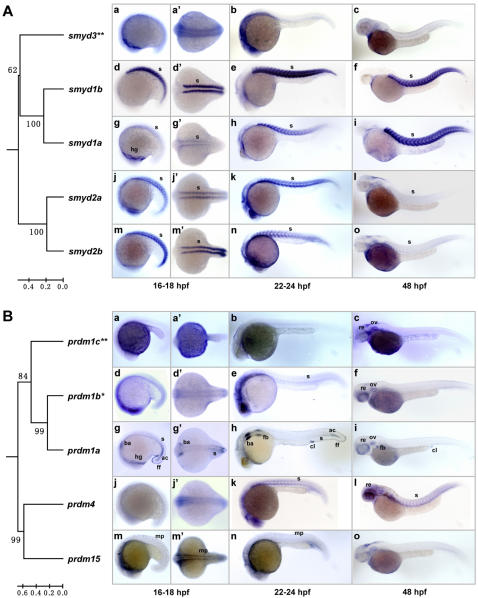
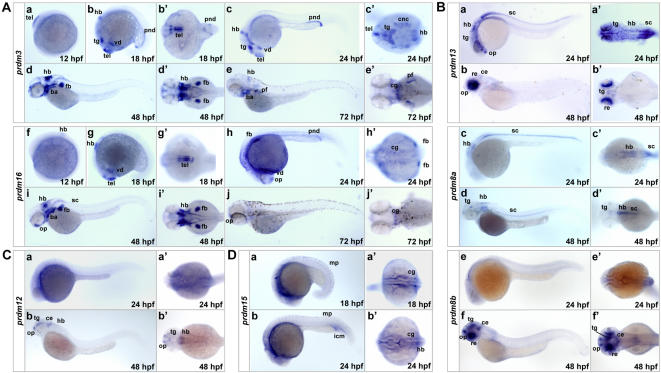
SET domain-containing proteins represent an evolutionarily conserved family of epigenetic regulators, which are responsible for most histone lysine methylation. Since some of these genes have been revealed to be essential for embryonic development, we propose that the zebrafish, a vertebrate model organism possessing many advantages for developmental studies, can be utilized to study the biological functions of these genes and the related epigenetic mechanisms during early development. To this end, we have performed a genome-wide survey of zebrafish SET domain genes. 58 genes total have been identified. Although gene duplication events give rise to several lineage-specific paralogs, clear reciprocal orthologous relationship reveals high conservation between zebrafish and human SET domain genes. These data were further subject to an evolutionary analysis ranging from yeast to human, leading to the identification of putative clusters of orthologous groups (COGs) of this gene family. By means of whole-mount mRNA in situ hybridization strategy, we have also carried out a developmental expression mapping of these genes. A group of maternal SET domain genes, which are implicated in the programming of histone modification states in early development, have been identified and predicted to be responsible for all known sites of SET domain-mediated histone methylation. Furthermore, some genes show specific expression patterns in certain tissues at certain stages, suggesting the involvement of epigenetic mechanisms in the development of these systems. These results provide a global view of zebrafish SET domain histone methyltransferases in evolutionary and developmental dimensions and pave the way for using zebrafish to systematically study the roles of these genes during development.
Overview
The claims and statistics of this paper haven’t been checked yet.
Free: it reads the open-access text and checks the first 5 claims that cite a source we can check. Create a free account to check every claim.
Integrity signals
Registry
Cites
Statistics
Figures
Verification
Claims the paper makes
The claims and statistics of this paper haven’t been checked yet.
Free: it reads the open-access text and checks the first 5 claims that cite a source we can check. Create a free account to check every claim.
Self-check
Percentages, sums and reported differences re-computed from the paper’s own numbers.
The self-check needs the paper’s full text.
Citations
Cites
Gapped BLAST and PSI-BLAST: a new generation of protein database search programs
Altschul, S. (1997) · Nucleic Acids Research · doi:10.1093/nar/25.17.3389 · Cited by 73,302 · cited 1×
“By searching the SMART (Simple Modular Architecture Research Tool) domain database [35] and PSI-BLAST [36] analysis of NCBI (National Center of Biotechnology Information) non-redundant protein database, followed by extracting the chromosomal location of the entries and removing the redundancies, 47 and 29 SET domain p…”
MethodThompson, J. (1997) · Nucleic Acids Research · doi:10.1093/nar/25.24.4876 · Cited by 38,993 · cited 1×
“The amino acid sequences of SET domains were aligned with ClustalX 1.83 program”
MethodInfluentialStages of embryonic development of the zebrafish
Kimmel, C. B., Ballard, W. W., Kimmel, S. R., Ullmann, B., & Schilling, T. F. (1995) · Developmental Dynamics · doi:10.1002/aja.1002030302 · Cited by 12,037 · cited 2×
“During the early development of zebrafish embryos, several major developmental and cellular processes (including initiation of zygotic transcription, differentiation of three germ layers and organogenesis) occur by 72 hour postfertilization (hpf) [55].”
BackgroundMethodMEGA3: Integrated software for Molecular Evolutionary Genetics Analysis and sequence alignment
Kumar, S. (2004) · Briefings in Bioinformatics · doi:10.1093/bib/5.2.150 · Cited by 11,756 · cited 2×
“Minimum Evolution and Maximum Parsimony methods) to construct the trees [41], similar results were consistently reproduced.”
MethodResultChromatin modifications and their function
Kouzarides, T. (2007) · Cell · doi:10.1016/j.cell.2007.02.005 · Cited by 10,883
Jenuwein, T., & Allis, C. D. (2001) · Science · doi:10.1126/science.1063127 · Cited by 9,756 · cited 1×
“. Recently, a “histone code” hypothesis has been proposed to explain how different histone modifications can result in distinct chromatin-regulated functions”
BackgroundThe language of covalent histone modifications
Strahl, B. D., & Allis, C. D. (2000) · Nature · doi:10.1038/47412 · Cited by 8,679 · cited 1×
“Recently, a ‘‘histone code’’ hypothesis has been proposed to explain how different histone modifications can result in distinct chromatin-regulated functions [5,6].”
BackgroundPrediction of complete gene structures in human genomic DNA
Burge, C., & Karlin, S. (1997) · Journal of Molecular Biology · doi:10.1006/jmbi.1997.0951 · Cited by 4,228 · cited 1×
“The retrieved entries were clustered and aligned with CAT (Clustering and Alignment Tools) program [39], successively followed by manual edit, alignment with zebrafish genome assemblies, gene prediction with GENSCAN program [40], and BLAST search of zebrafish EST database.”
MethodSMART, a simple modular architecture research tool: Identification of signaling domains
Schultz, J., Milpetz, F., Bork, P., & Ponting, C. P. (1998) · Proceedings of the National Academy of Sciences · doi:10.1073/pnas.95.11.5857 · Cited by 3,599 · cited 1×
“By searching the SMART (Simple Modular Architecture Research Tool) domain database [35] and PSI-BLAST [36] analysis of NCBI (National Center of Biotechnology Information) non-redundant protein database, followed by extracting the chromosomal location of the entries and removing the redundancies, 47 and 29 SET domain p…”
MethodPfam: clans, web tools and services
Finn, R. D. (2006) · Nucleic Acids Research · doi:10.1093/nar/gkj149 · Cited by 2,302 · cited 2×
“Use of alternative databases such as Pfam [37] and PROSITE [38] provided consistent results.”
Result
Cited by
Items 101–127 of 127
Prdm15 acts upstream of Wnt4 signaling in anterior neural development of Xenopus laevis
Saumweber, E., Mzoughi, S., Khadra, A., Werberger, A., Schumann, S., Guccione, E., Schmeißer, M. J., & Kühl, S. J. (2024) · Frontiers in Cell and Developmental Biology · doi:10.3389/fcell.2024.1316048 · Cited by 5
Butler, P., Lawton, M. P., Chapin, R. E., Hollingshead, B. D., Leach, K. L., Nambiar, P. R., Pletcher, M. T., & Yang, A. H. (2015) · Royal Society of Chemistry eBooks · doi:10.1039/9781782628484-00288 · Cited by 5
Shiomi, T., Muto, A., Hozumi, S., Kimurâ, H., & Kikuchi, Y. (2017) · ZOOLOGICAL SCIENCE · doi:10.2108/zs160032 · Cited by 5
Robinson, B. W., Germanò, G., Song, Y., Abrams, J., Scott, M. O., Guariento, I., Tiso, N., Argenton, F., Basso, G., Rhodes, J., et al. (2010) · British Journal of Haematology · doi:10.1111/j.1365-2141.2010.08398.x · Cited by 8
Guo, Z., Zhang, L., Li, Y., Wu, S., Wang, S., Zhang, L., & Bao, Z. (2020) · Comparative Biochemistry and Physiology Part B Biochemistry and Molecular Biology · doi:10.1016/j.cbpb.2020.110434 · Cited by 8
Yette, G. A., Stewart, S., & Stankunas, K. (2021) · bioRxiv (Cold Spring Harbor Laboratory) · doi:10.1101/2020.12.31.424918 · Cited by 6
“…confirm reports ezh2 mRNA is maternally deposited and highly expressed throughout the first five days of zebrafish development (Chrispijn et al., 2018; San et al., 2018; San et al., 2016; Sun et al., 2008; White et al., 2017). ezh2 expression then progressively decreases through larval development.”
BackgroundResultInfluentialPrdm16 regulates the postnatal fate of embryonic radial glia via Vcam1-dependent mechanisms
Li, J., Godoy, M. I., Lu, Y., Zhang, A. J., Diamante, G., Rathbun, E. M., Tian, M., Ahn, I. S., Cebrián‐Silla, A., Álvarez-Buylla, A., et al. (2025) · Nature Communications · doi:10.1038/s41467-025-60895-y · Cited by 10
“Intriguingly, Prdm16 , while expressed in mice after birth, is not expressed post egg hatching in zebra fi sh 53 .”
Self-citationChen, S., Liu, D., Chen, B., Li, Z., Chang, B., Xu, C., Li, N., Feng, C., Hu, X., Wang, W., et al. (2024) · Frontiers of Medicine · doi:10.1007/s11684-024-1095-1 · Cited by 4
Self-citationLi, J., Godoy, M. I., Zhang, A. J., Diamante, G., Ahn, I. S., Cebrián‐Silla, A., Álvarez-Buylla, A., Yang, X., Novitch, B. G., & Zhang, Y. (2023) · bioRxiv (Cold Spring Harbor Laboratory) · doi:10.1101/2023.02.14.528567 · Cited by 4
Self-citationYue, B., Wang, H., Huang, Y., Li, S., Ma, W., Liu, Q., & Changwei, S. (2024) · Gene · doi:10.1016/j.gene.2024.148199 · Cited by 3
Ruminant-specific multiple duplication events of PRDM9 before speciation
Padhi, A., Shen, B., Jiang, J., Zhou, Y., Liu, G. E., & Ma, L. (2017) · BMC Evolutionary Biology · doi:10.1186/s12862-017-0892-4 · Cited by 6
“Despite the critical role of the PRDM gene family in early development and reproduction [41] little is known about the evolutionary history of these genes.”
BackgroundXu, R., Li, S., Chien, C., Zhong, Y., Xiao, H., Fang, S., & Du, S. (2024) · Molecular and Cellular Biology · doi:10.1080/10985549.2024.2402660 · Cited by 3
“26,27 Loss of smyd1a alone had little effect on muscle development and cell differentiation.”
Erika, D. Z., Bartollino, S., & Bruno, M. (2017) · Insights in Biology and Medicine · doi:10.29328/journal.hjbm.1001007 · Cited by 3
“In fact, the PR domain has diverged signi icantly from the SET domain [48-51] and most PR domains lack the H/RxxNHxC motif required for methyltransferase activity [52,53].”
BackgroundThreonine dehydrogenase regulates neutrophil homeostasis but not H3K4me3 levels in zebrafish
Li, N., Wang, Z., Zhang, F., Feng, C., Chen, Y., Liu, D., Chen, S.-B., Jin, Y., Zhang, Y., Xie, Y., et al. (2024) · FEBS Journal · doi:10.1111/febs.17138 · Cited by 2
Self-citationPreparation and pharmacodynamic evaluation of isorhamnetin-Soluplus-TPGS mixed micelles
Li, T., Li, J., Wang, Q., Gong, M., Wang, X., Jiang, X., Hua, Q., Ji, H., Toreniyazov, E., Yu, J., et al. (2024) · Journal of Nanoparticle Research · doi:10.1007/s11051-024-06139-4 · Cited by 2
Novel KMT5B de novo variants disrupt DNA damage response in intellectual disability
Hu, X., Tao, R., Wang, Y. Z., Lin, X., Ye, C., Yang, L. J., & Huang, H. (2025) · QJM · doi:10.1093/qjmed/hcaf327 · Cited by 1
Evolutionary genomics and adaptive evolution of the hedgehog gene family in vertebrates
Pereira, J. (2012) · Portuguese National Funding Agency for Science, Research and Technology (RCAAP Project by FCT) · doi:10.34626/y4h5-c132
Functional analysis of Prdm14 during Xenopus embryogenesis
Berndt, R. P. (2016) · eDiss (Georg-August-Universität Göttingen) · doi:10.53846/goediss-5704 · Cited by 1
Functional Characterization Of The Novel Prdm Gene Apox In Tribolium Castaneum
Wang, X. (2016) · Human Biology
New Insights into the Regulation of Hematopoietic Stem Cell Self-Renewal.
Jones, M. (2015) · Deep Blue (University of Michigan)
The functions of SETD5 and miR-221 in embryonic stem cell differentiation
Chen, T. (2017) · Digital Commons-TMC (Texas Medical Center)
Molecular pathogenesis underlying syndromic forms of primary microcephaly
Rosin, N. (2020) · eDiss (Georg-August-Universität Göttingen) · doi:10.53846/goediss-7794
Nürnberger, J. I. (2019) · Faculty Opinions – Post-Publication Peer Review of the Biomedical Literature · doi:10.3410/f.735152734.793563005 · Cited by 1
Recent Papers on Zebrafish and Other Aquarium Fish Models
(2008) · Zebrafish · doi:10.1089/zeb.2008.9995
Mukherjee, S., Mohanty, A. K., Chakraborty, S., Rao, U., Rao, S. B., Chinnadurai, R. K., & Poddar, A. (2026) · Bioresource Technology Reports · doi:10.1016/j.biteb.2026.102870
Maternal effects on oocyte quality in farmed Atlantic halibut (Hippoglossus hippoglossus L.)
Mommens, M. (2012) · St Andrews Research Repository (St Andrews Research Repository)
Metadata
- Authors
- Sun, X.-J., Xu, P.-F., Zhou, T., Hu, M., Fu, C.-T., Zhang, Y., Jin, Y., Chen, Y., Chen, S.-J., Huang, Q.-H., Liu, T. X., & Chen, Z.
- Affiliations
- Shanghai Jiao Tong University (CN)
- Corresponding author
- Liu, Ting Xi
- Chen, Zhu
- Venue
- PLoS ONE
- Publisher
- Public Library of Science (PLoS)
- Published
- 2008-01-30
- Volume
- 3
- Issue
- 1
- Pages
- e1499
- ISSN
- 1932-6203 (ISSN-L)
- PMC
- PMC2200798
- OpenAlex
- W2018012535
- Cited by
- 127
- References
- 83
- Citations by year
- 2026: 1 · 2025: 2 · 2024: 6 · 2023: 7 · 2022: 1 · 2021: 7 · 2020: 11 · 2019: 9 · 2018: 10 · 2017: 10 · 2016: 7 · 2015: 9 · 2014: 8 · 2013: 6 · 2012: 9
- FWCI
- 3.29
- Type
- journal article
- Language
- en
- Open access
- gold
- doi.org
- Locations
- PLoS ONE (publishedVersion, cc-by)
- PubMed Central (publishedVersion, cc-by)
- PubMed (publishedVersion)
- DOAJ (DOAJ: Directory of Open Access Journals) (submittedVersion, cc-by-sa)
- Figshare (submittedVersion, cc-by)
- Funders
- Samuel Waxman Cancer Research Foundation
- National Natural Science Foundation of China (30370334)
- Chinese Academy of Sciences
- Topics
- Life Sciences › Biochemistry, Genetics and Molecular Biology › Molecular Biology › Epigenetics and DNA Methylation
- Life Sciences › Biochemistry, Genetics and Molecular Biology › Molecular Biology › Developmental Biology and Gene Regulation
- Life Sciences › Biochemistry, Genetics and Molecular Biology › Molecular Biology › Genomics and Chromatin Dynamics
- Keywords
- SET domain proteins, histone lysine methylation, histone methyltransferase, zebrafish, embryonic development, gene family evolution, gene duplication, paralogs, orthologs, clusters of orthologous groups, maternal genes, developmental gene expression, epigenetic regulation
- MeSH terms
- Animals, Biological Evolution, Humans, Phylogeny, Zebrafish, Genome, Genomic Imprinting, Gene Expression Regulation, Developmental, Reverse Transcriptase Polymerase Chain Reaction
About these checks
Registry, retraction, Cites and statistics results are computed, not judged, with one exception: a printed reference that no index lists is read once by a model before it counts as a citation error. Claims are extracted by a model and kept only when their quote appears verbatim in the text; each cited source is then checked, with a model’s help, for whether it says what the claim relies on. Those verdicts can be wrong — read the claim’s quote and the cited source before relying on one.
Statistics and arithmetic are recomputed, not judged.
Confidence bands are shown only for fields calibrated on our annotated test set. None is calibrated yet, so no band is shown.
What counts as a claim ›How we measure confidence ›How we check this ›
Are you an author, or do you see a problem with this page? Request a review
Data sources
Bibliographic data: Semantic Scholar, OpenAlex, Crossref.
Contains information from the Semantic Scholar Academic Graph Datasets, made available under the ODC Attribution License (ODC-BY 1.0).
Semantic Scholar’s data is described in: Kinney, R., et al. (2023). The Semantic Scholar Open Data Platform. arXiv:2301.10140.
