

Trait-Like Brain Activity during Adolescence Predicts Anxious Temperament in Primates
Open accessThe DOI matches its Crossref record; 36 of the 37 references it cites were found in a registry or an index.
Abstract
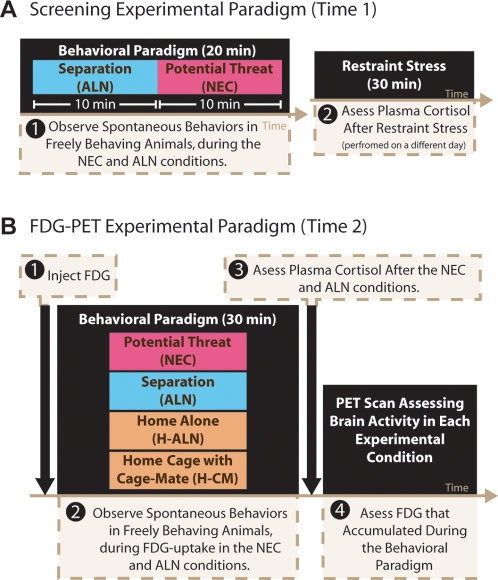
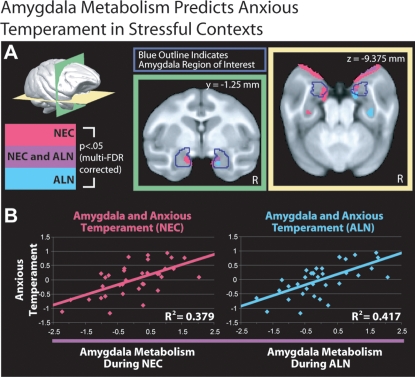
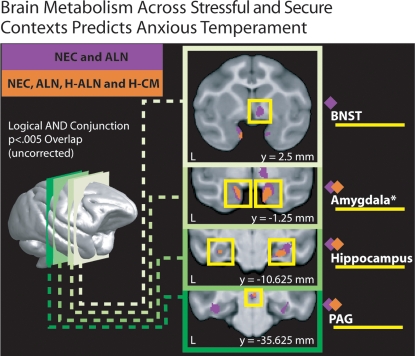
Early theorists (Freud and Darwin) speculated that extremely shy children, or those with anxious temperament, were likely to have anxiety problems as adults. More recent studies demonstrate that these children have heightened responses to potentially threatening situations reacting with intense defensive responses that are characterized by behavioral inhibition (BI) (inhibited motor behavior and decreased vocalizations) and physiological arousal. Confirming the earlier impressions, data now demonstrate that children with this disposition are at increased risk to develop anxiety, depression, and comorbid substance abuse. Additional key features of anxious temperament are that it appears at a young age, it is a stable characteristic of individuals, and even in non-threatening environments it is associated with increased psychic anxiety and somatic tension. To understand the neural underpinnings of anxious temperament, we performed imaging studies with 18-fluoro-deoxyglucose (FDG) high-resolution Positron Emission Tomography (PET) in young rhesus monkeys. Rhesus monkeys were used because they provide a well validated model of anxious temperament for studies that cannot be performed in human children. Imaging the same animal in stressful and secure contexts, we examined the relation between regional metabolic brain activity and a trait-like measure of anxious temperament that encompasses measures of BI and pituitary-adrenal reactivity. Regardless of context, results demonstrated a trait-like pattern of brain activity (amygdala, bed nucleus of stria terminalis, hippocampus, and periaqueductal gray) that is predictive of individual phenotypic differences. Importantly, individuals with extreme anxious temperament also displayed increased activity of this circuit when assessed in the security of their home environment. These findings suggest that increased activity of this circuit early in life mediates the childhood temperamental risk to develop anxiety and depression. In addition, the findings provide an explanation for why individuals with anxious temperament have difficulty relaxing in environments that others perceive as non-stressful.
Overview
The claims and statistics of this paper haven’t been checked yet.
Free: it reads the open-access text and checks the first 5 claims that cite a source we can check. Create a free account to check every claim.
Integrity signals
Registry
Cites
Statistics
Figures
Verification
Claims the paper makes
The claims and statistics of this paper haven’t been checked yet.
Free: it reads the open-access text and checks the first 5 claims that cite a source we can check. Create a free account to check every claim.
Claims other papers make about this one
Each is checked against this paper’s own text: does it say what the citing paper says it does?
The source backs part of the claim, not all of it — or backs it for a different population, condition or comparison.
In the citing paper
“in young monkeys individual differences in Ce metabolism are trait-like and predict substantial variation in the AT phenotype10-13.”
From Evolutionarily conserved prefrontal-amygdalar dysfunction in early-life anxiety (2014) · cites this paper as [10]
Experimental — accuracy not yet measuredThe cited source says what the claim attributes to it.
In the citing paper
“Our results align with imaging studies in nonhuman primates (77) and humans (66) reporting stronger BNST responses in individuals with elevated anxiety-related behaviors.”
From Sexual differentiation of neural mechanisms of stress sensitivity during puberty (2023) · cites this paper as [77]
In the citing paper
“There is considerable evidence that the high-risk AT phenotype is attenuated by anxiolytic compounds14-15 and expressed similarly in children and young monkeys3, 10.”
From Evolutionarily conserved prefrontal-amygdalar dysfunction in early-life anxiety (2014) · cites this paper as [10]
Self-check
Percentages, sums and reported differences re-computed from the paper’s own numbers.
The self-check needs the paper’s full text.
Citations
Cites
Jenkinson, M., Bannister, P., Brady, M., & Smith, S. (2002) · NeuroImage · doi:10.1006/nimg.2002.1132 · Cited by 11,888 · cited 3×
“Images in standard space were segmented into the probability of gray-matter, whitematter and CSF using FSL-fast [32].”
MethodLeDoux, J. E. (2000) · Annual Review of Neuroscience · doi:10.1146/annurev.neuro.23.1.155 · Cited by 8,444
Zhang, Y., Brady, M., & Smith, S. (2001) · IEEE Transactions on Medical Imaging · doi:10.1109/42.906424 · Cited by 6,982 · cited 1×
“Images in standard space were segmented into the probability of gray-matter, whitematter and CSF using FSL-fast [32].”
MethodThresholding of statistical maps in functional neuroimaging using the false discovery rate
Genovese, C. R., Lazar, N. A., & Nichols, T. (2002) · NeuroImage · doi:10.1006/nimg.2001.1037 · Cited by 4,923
The amygdala: vigilance and emotion
Davis, M., & Whalen, P. J. (2001) · Molecular Psychiatry · doi:10.1038/sj.mp.4000812 · Cited by 2,882 · cited 2×
“These results suggest that anxious temperament involves a neural circuit that is consistent with that previously characterized in preclinical mechanistic studies of stress and anxiety [18,19].”
BackgroundResultAnalysis of fMRI Time-Series Revisited
Friston, K. J., Holmes, A. P., Poline, J.-B., Grasby, P. J., Williams, S. C. R., Frackowiak, R. S. J., & Turner, R. (1995) · NeuroImage · doi:10.1006/nimg.1995.1007 · Cited by 2,502 · cited 2×
“Statistical Analyses Across subject statistical analyses were performed using an adapted version of Fmristat [33,34] (http://www.math.mcgill.ca/ keith/fmristat/; http://brainimaging.waisman.wisc.edu/,fox/ multistatic/).”
MethodValid conjunction inference with the minimum statistic
Nichols, T., Brett, M., Andersson, J., Wager, T., & Poline, J.-B. (2005) · NeuroImage · doi:10.1016/j.neuroimage.2004.12.005 · Cited by 1,880 · cited 2×
“005, twotailed uncorrected’’) and computed a logical AND conjunction of the significant regions [16].”
MethodCognitive neuroscience of emotional memory
LaBar, K. S., & Cabeza, R. (2006) · Nature Reviews Neuroscience · doi:10.1038/nrn1825 · Cited by 1,834 · cited 1×
“The hippocampus is involved in memory and hypothalamic-pituitary regulation [21,22], the BNST, considered part of the extended amygdala, mediates anxiety and is involved in autonomic and HPA regulation [20,21], and the PAG mediates defensive behaviors including BI or freezing [23].”
BackgroundAutomated Image Registration: I. General Methods and Intrasubject, Intramodality Validation
Woods, R. P., Grafton, S. T., Holmes, C. J., Cherry, S. R., & Mazziotta, J. C. (1998) · Journal of Computer Assisted Tomography · doi:10.1097/00004728-199801000-00027 · Cited by 1,707 · cited 2×
“The brain-extracted MRI images in original space were then transformed to match this study-specific template using both linear 12-parameter affine, and 5th order non-linear transformation using Automated Image Registration (AIR; http://bishopw.loni.ucla.edu/air5/) [31].”
MethodBiological Bases of Childhood Shyness
Kagan, J., Reznick, J. S., & Snidman, N. (1988) · Science · doi:10.1126/science.3353713 · Cited by 1,577 · cited 2×
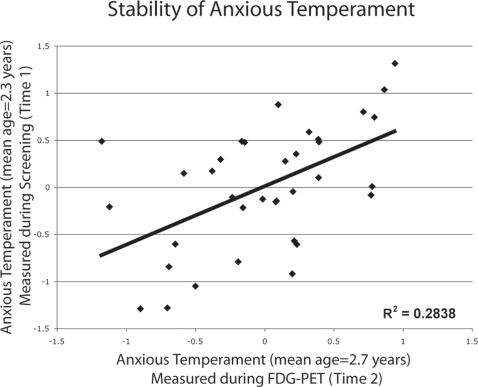
“Since anxious temperament in children is relatively stable, we examined the extent to which this composite measure of stress responsivity was correlated with the 35 monkeys’ composite measure of stress-related behavior and physiology that was collected 4.3 months earlier during their initial assessment [3, 13 ].”
BackgroundMethodInfluential
Cited by
Items 101–138 of 138
Aday, J. S., & Carlson, J. M. (2017) · Medical Hypotheses · doi:10.1016/j.mehy.2017.09.002 · Cited by 18
Self‐Injurious behavior in rhesus macaques: Issues and challenges
Novak, M. A. (2020) · American Journal of Primatology · doi:10.1002/ajp.23222 · Cited by 16
“Initially, our focus was on anxious temperament, a trait‐like phenotype (Fox et al., 2008) associated with reduced central serotonergic activity and with the short allele of the serotonin transporter gene (Lesch et al., 1996).”
BackgroundJacobs, J. T., Maior, R. S., Waguespack, H. F., Campos-Rodríguez, C., Forcelli, P. A., & Málková, L. (2023) · Journal of Neuroscience · doi:10.1523/jneurosci.2090-22.2023 · Cited by 14
Mueller, S. A. L., Oler, J. A., Roseboom, P. H., Aggarwal, N., Kenwood, M. M., Riedel, M. K., Elam, V. R., Olsen, M. E., DiFilippo, A. H., Christian, B. T., et al. (2023) · Current Research in Neurobiology · doi:10.1016/j.crneur.2023.100111 · Cited by 16
“In this regard, we developed a nonhuman primate (NHP) model of anxious temperament to further investigate mechanisms underlying the neural alterations and pathological behaviors that are associated with ADs in humans (Fox et al., 2008).”
BackgroundMethodSelf-citationPrincipal domains of quantitative anxiety trait in subjects with lifetime history of mania
Contreras, J., Hare, E., Escamilla, M., & Raventós, H. (2011) · Journal of Affective Disorders · doi:10.1016/j.jad.2011.06.036 · Cited by 14
“Milder anxiety phenotypes such as anxious temperament (increased behavioral and physiological reactivity to mildly threatening stimuli) have also been documented not only in humans but also in primates (Fox et al., 2008).”
BackgroundFeola, B., Flook, E. A., Gardner, H., Phan, K. L., Gwirtsman, H. E., Olatunji, B. O., & Blackford, J. U. (2023) · Journal of Traumatic Stress · doi:10.1002/jts.22918 · Cited by 14
Temperament characteristics in patients with panic disorder and their first-degree relatives
Altınbaş, G., Altınbaş, K., Gülöksüz, S. A., Gülöksüz, S., Aydemır, Ö., & Özgen, G. (2015) · Comprehensive Psychiatry · doi:10.1016/j.comppsych.2015.03.008 · Cited by 12
“In particular, anxious temperament is characterized as a phenotype of increased psychological and behavioral responses to the emergent stimuli that has been shaped during the early childhood period [10,11].”
BackgroundNerve injury alters restraint-induced activation of the basolateral amygdala in male rats
Kang, J. W. M., Mor, D., & Keay, K. A. (2021) · Brain Structure and Function · doi:10.1007/s00429-021-02235-6 · Cited by 10
Threat Responses in Schizophrenia: A Negative Valence Systems Framework
Feola, B., Moussa‐Tooks, A. B., Sheffield, J. M., Heckers, S., Woodward, N. D., & Blackford, J. U. (2024) · Current Psychiatry Reports · doi:10.1007/s11920-023-01479-9 · Cited by 10
“In rodents, the BNST was shown to mediate hypervigilance and arousal, consistent with anxiety-like symptoms [73]; in non-human primates, greater activation in the BNST during potential threat is associated with more anxious behavior [74].”
Medina, A., Torres, J., Kazama, A. M., Bachevalier, J., & Raper, J. (2020) · Behavioral Neuroscience · doi:10.1037/bne0000360 · Cited by 8
Kenwood, M. M., Oler, J. A., Tromp, D., Fox, A. S., Riedel, M. K., Roseboom, P. H., Brunner, K. G., Aggarwal, N., Murray, E. A., & Kalin, N. H. (2022) · Oxford Open Neuroscience · doi:10.1093/oons/kvac016 · Cited by 7
“…NHPs using the no-eye-contact condition (NEC) of the human intruder paradigm in conjunction with fluorodeoxyglucose positron emission tomography (FDG-PET) imaging have characterized a distributed neural circuit in which variation in metabolism is associated with individual differences in AT [4–6].”
MethodSelf-citationEarly life adversity in primates: Behavioral, endocrine, and neural effects
Tromp, D., Fox, A. S., Riedel, M. K., Oler, J. A., Zhou, X., Roseboom, P. H., Alexander, A. L., & Kalin, N. H. (2024) · Psychoneuroendocrinology · doi:10.1016/j.psyneuen.2023.106953 · Cited by 9
“Methods have previously been described (Fox et al., 2008; Oler et al., 2010), and are detailed in the Supplement.”
MethodInfluentialSelf-citationGene expression in the primate orbitofrontal cortex related to anxious temperament
Kenwood, M. M., Souaiaia, T., Kovner, R., Fox, A. S., French, D. A., Oler, J. A., Roseboom, P. H., Riedel, M. K., Mueller, S. A. L., & Kalin, N. H. (2023) · Proceedings of the National Academy of Sciences · doi:10.1073/pnas.2305775120 · Cited by 7
“S2 A ) which is comparable to r values from previous studies in our lab assessing AT’s stability across time (32, 33) and consistent with the interpretation of AT as trait.”
ResultSelf-citationOne of a kind: the neurobiology of individuality.
Davidson, R. J. (2014) · PubMed Central · Cited by 12
Self-citationDepue, R. A., & Fu, Y. (2012) · Psychodynamic Psychiatry · doi:10.1521/pdps.2012.40.1.131 · Cited by 4
Sibbach, B. M., Karim, H. T., Lo, D., Kasibhatla, N. P., Santini, T., Weber, J. C., Ibrahim, T. S., & Banihashemi, L. (2023) · Brain Structure and Function · doi:10.1007/s00429-023-02713-z · Cited by 7
“…interest in the BNST, its role in fear and threat-related processes (Avery et al. 2016; Sullivan et al. 2004; Davis et al. 2010; Sink et al. 2013; Fox et al. 2008, 2018; Shackman et al. 2017), and resultant implications in anxiety (Davis et al. 2010; Walker and Davis 1997; Fendt et al. 2003) and…”
BackgroundAccrombessi, G., Galineau, L., Tauber, C., Sérrière, S., Moyer, E., Brizard, B., Guisquet, A. L., Surget, A., & Belzung, C. (2022) · Translational Psychiatry · doi:10.1038/s41398-022-02119-1 · Cited by 7
“Interestingly, this link between anxiety and the increased activity of the amygdala has also been found in adolescent primates using functional neuroimaging [83].”
MethodHashemi, M. M., Zhang, W., Kaldewaij, R., Koch, S. B. J., Jonker, R., Figner, B., Klumpers, F., & Karin Roelofs, A. (2019) · bioRxiv (Cold Spring Harbor Laboratory) · doi:10.1101/554840 · Cited by 5
Jevtović‐Todorović, V. (2021) · British Journal of Anaesthesia · doi:10.1016/j.bja.2020.12.019 · Cited by 5
Neuroscience Approaches in Social and Personality Psychology
Amodio, D. M., & Harmon‐Jones, E. (2012) · Oxford University Press eBooks · doi:10.1093/oxfordhb/9780195398991.013.0006 · Cited by 7
What Does Animal (Nonhuman) Research Tell Us About Social Deprivation and Social Isolation?
Zeytinoglu, S., & Fox, N. A. (2021) · Wiley eBooks · doi:10.1002/9781119576457.ch4 · Cited by 4
Holley, D., Campos, L., Drzewiecki, C. M., Zhang, Y., Capitanio, J. P., & Fox, A. S. (2024) · Translational Psychiatry · doi:10.1038/s41398-024-02858-3 · Cited by 3
Self-citationGonzales, H. K., O’Reilly, M. F., Lang, R. B., Sigafoos, J., Lancioni, G. E., Kajian, M., Kuhn, M., Longino, D., Rojeski, L., & Watkins, L. (2014) · Developmental Neurorehabilitation · doi:10.3109/17518423.2014.941117 · Cited by 3
“Five studies measured adrenocorticoptropic hormone (ACTH), with elevated levels indicating anxiety [26, 42, 55, 69, 97].”
BackgroundShared neural codes for eye-gaze and valencePreprint
Pryluk, R., Shohat, Y., Morozov, A., Friedman, D., Taub, A. H., & Paz, R. (2019) · bioRxiv (Cold Spring Harbor Laboratory) · doi:10.1101/736462 · Cited by 2
Aggarwal, N., Oler, J. A., Tromp, D., Roseboom, P. H., Riedel, M. K., Elam, V. R., Brotman, M. A., & Kalin, N. H. (2023) · Neuropsychopharmacology · doi:10.1038/s41386-023-01686-1 · Cited by 1
“The detection limit de fi ned by the lowest standard was 1 mg/dL. Prior to analysis, cortisol values were residualized for the time of day at which they were collected.”
MethodSelf-citationThe Central Extended Amygdala Guides Survival-Relevant Tradeoffs for Action SelectionPreprint
Holley, D., & Fox, A. S. (2022) · doi:10.31234/osf.io/z9w3t · Cited by 1
Self-citationHarro, J., O’Leary, A., Norden, M., Liiver, K., Kanarik, M., Garcia-Horsman, A., Sakson, S., Kupper, P., Laugus, K., Korulu, Ş., et al. (2025) · bioRxiv (Cold Spring Harbor Laboratory) · doi:10.1101/2025.03.16.643460 · Cited by 1
Behavioral and physiological assessment of an animal model of post-traumatic stress disorder
Goswami, S. (2013) · doi:10.7282/t3qc01g3
“Another noteworthy line of investigation focuses on variations in anxious temperaments in monkeys (Kalin, 2003; Fox et al., 2008).”
BackgroundMale Behaviors I: Brain Areas Regulating Male Behaviors
Sharma, M., Chadda, R. K., Anish, P. K., & Kumar, A. (2017) · Springer eBooks · doi:10.1007/978-981-10-3695-8_17
Conditioned Place Preference In The Male Wistar-Kyoto Rat
Dennis, T. S. (2011) · UTA ResearchCommons (University of Texas Arlington)
Perspectiva genética nas perturbações da ansiadade
Pinheiro, R. P. S. (2012) · Portuguese National Funding Agency for Science, Research and Technology (RCAAP Project by FCT) · doi:10.34626/f68n-hq65
Contributions of Genetically Defined Cell Populations in the Extended Amygdala to Emotional Behavior
Mazzone, C. M. (2017) · Carolina Digital Repository (University of North Carolina at Chapel Hill) · doi:10.17615/mn8w-xr58
Rujescu, D. (2010) · Faculty Opinions – Post-Publication Peer Review of the Biomedical Literature · doi:10.3410/f.5005956.6717054
Wood, E. K., Halter, C. M., Byrne, E., Baron, Z., Forvil, M., Marett, L., Smith, E., Hafen, E., Hepworth, E., Johnson, M., et al. (2024) · Developmental Psychology · doi:10.1037/dev0001652 · Cited by 1
Insights into the Neurobiology of Behavioral Inhibition from Nonhuman Primate Models
Campos, L., Drzewiecki, C. M., & Fox, A. S. (2024) · Current topics in behavioral neurosciences · doi:10.1007/7854_2024_561
Self-citationMin, J. J., Bao, J., Baik, J. Y., Wen, J., Zhao, Y., Thompson, P. M., Shen, L., & Duong-Tran, D. A. (2025) · medRxiv · doi:10.1101/2025.10.26.25338821
The Development of Trait Anxiety in Nonhuman Primates During the First Year of Life
Puralewski, R., Aggarwal, N., Oler, J. A., Roseboom, P. H., Parkins, L., Riedel, M. K., Boettcher, C., & Kalin, N. H. (2026) · Developmental Science · doi:10.1111/desc.70133
“In contrast to rodent species, rhesus monkeys have a well-developed prefrontal cortex, which plays an important role in integrating cognitive and emotional processes that are critical for the adaptive and maladaptive regulation of anxiety (Kenwood et al. 2022 ).”
InfluentialSelf-citationHarro, J., O’Leary, A., Norden, M., Liiver, K., Kanarik, M., Garcia-Horsman, A., Sakson, S., Kupper, P., Laugus, K., Korulu, Ş., et al. (2026) · Molecular Psychiatry · doi:10.1038/s41380-026-03753-7 · Cited by 1
Metadata
- Authors
- Fox, A. S., Shelton, S. E., Oakes, T. R., Davidson, R. J., & Kalin, N. H.
- Affiliations
- University of Wisconsin–Madison (US)
- Corresponding author
- Kalin, Ned H.
- Venue
- PLoS ONE
- Publisher
- Public Library of Science (PLoS)
- Published
- 2008-07-02
- Volume
- 3
- Issue
- 7
- Pages
- e2570
- ISSN
- 1932-6203 (ISSN-L)
- PMC
- PMC2430534
- OpenAlex
- W2122334403
- Cited by
- 138
- References
- 37
- Citations by year
- 2026: 2 · 2025: 2 · 2024: 6 · 2023: 7 · 2022: 5 · 2021: 7 · 2020: 7 · 2019: 11 · 2018: 4 · 2017: 9 · 2016: 12 · 2015: 11 · 2014: 11 · 2013: 8 · 2012: 13
- FWCI
- 10.43
- Type
- journal article
- Language
- en
- Open access
- gold
- doi.org
- Locations
- PLoS ONE (publishedVersion, cc-by)
- PubMed Central (publishedVersion, cc-by)
- PubMed (publishedVersion)
- DOAJ (DOAJ: Directory of Open Access Journals) (submittedVersion)
- Funders
- National Institute of Mental Health (MH046729, MH052354, P50MH052354, P50MH069315, MH069315, R01MH046729)
- Topics
- Social Sciences › Psychology › Experimental and Cognitive Psychology › Anxiety, Depression, Psychometrics, Treatment, Cognitive Processes
- Life Sciences › Neuroscience › Behavioral Neuroscience › Stress Responses and Cortisol
- Life Sciences › Neuroscience › Cellular and Molecular Neuroscience › Neurotransmitter Receptor Influence on Behavior
- Keywords
- anxious temperament, behavioral inhibition, rhesus monkeys, amygdala, bed nucleus of the stria terminalis, hippocampus, periaqueductal gray, neural correlates of anxiety, individual differences, depression risk, stress response, brain glucose metabolism
- MeSH terms
- Animals, Anxiety, Behavior, Animal, Brain, Female, Humans, Macaca mulatta, Male, Temperament, Positron-Emission Tomography
About these checks
Registry, retraction, Cites and statistics results are computed, not judged, with one exception: a printed reference that no index lists is read once by a model before it counts as a citation error. Claims are extracted by a model and kept only when their quote appears verbatim in the text; each cited source is then checked, with a model’s help, for whether it says what the claim relies on. Those verdicts can be wrong — read the claim’s quote and the cited source before relying on one.
Statistics and arithmetic are recomputed, not judged.
Confidence bands are shown only for fields calibrated on our annotated test set. None is calibrated yet, so no band is shown.
What counts as a claim ›How we measure confidence ›How we check this ›
Are you an author, or do you see a problem with this page? Request a review
Data sources
Bibliographic data: Semantic Scholar, OpenAlex, Crossref.
Contains information from the Semantic Scholar Academic Graph Datasets, made available under the ODC Attribution License (ODC-BY 1.0).
Semantic Scholar’s data is described in: Kinney, R., et al. (2023). The Semantic Scholar Open Data Platform. arXiv:2301.10140.
