

Vaccination against GIP for the Treatment of Obesity
Open accessThe DOI matches its Crossref record; 48 of the 48 references it cites were found in a registry or an index.
Abstract
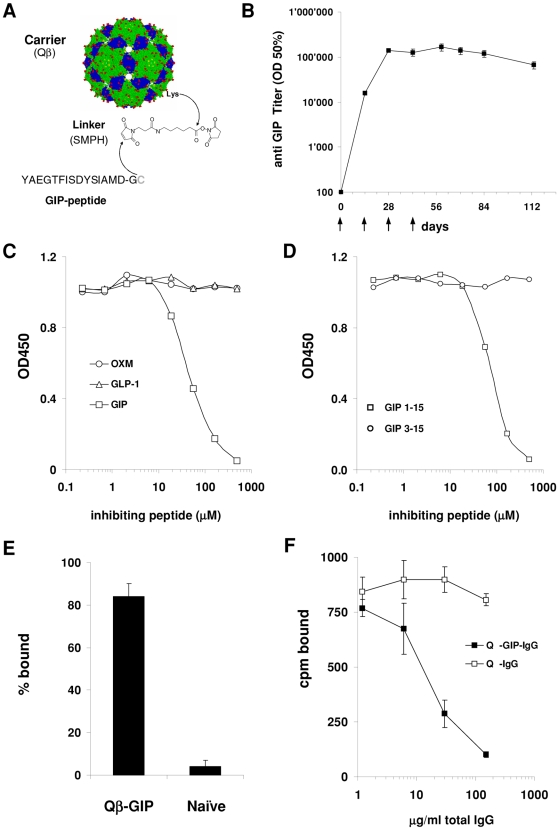
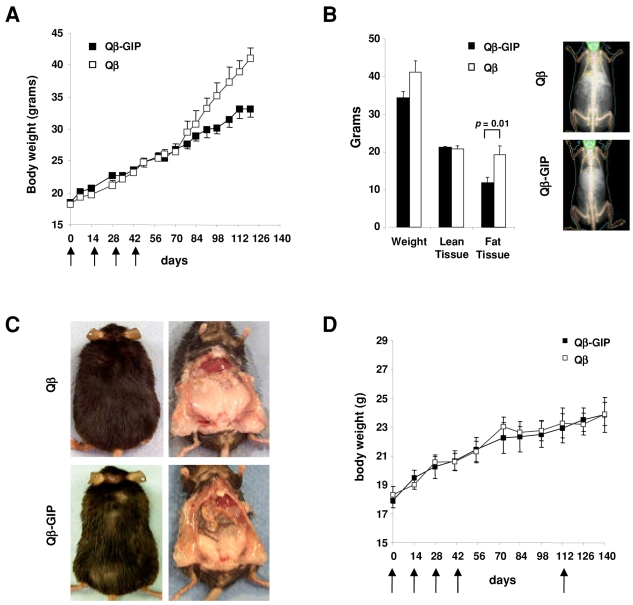
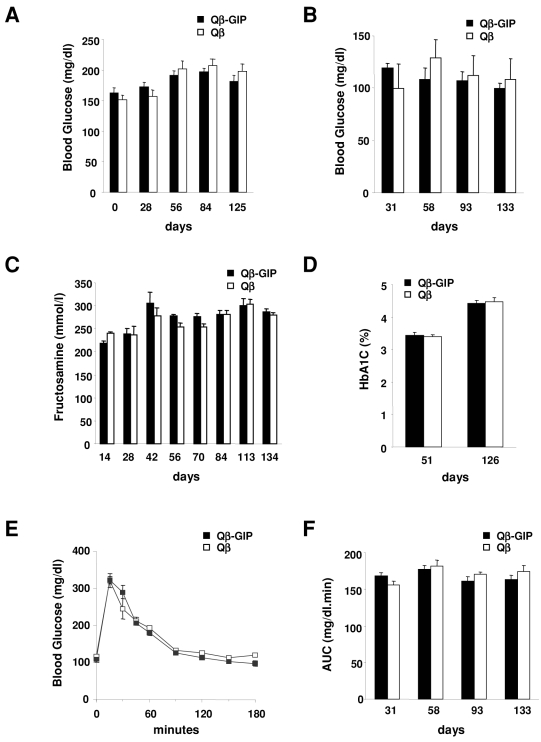
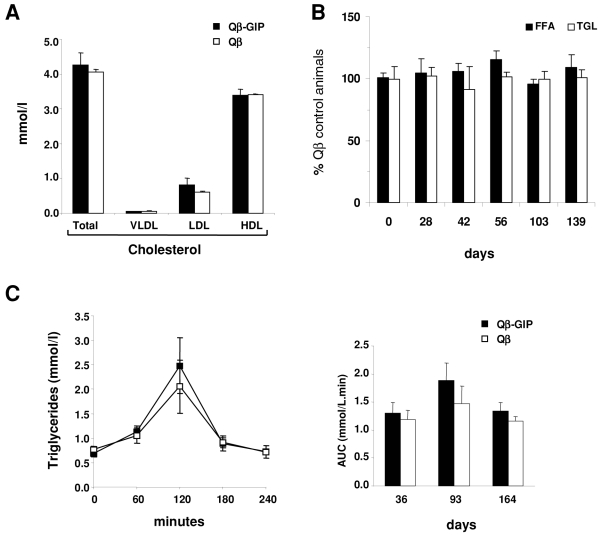
BACKGROUND: According to the WHO, more than 1 billion people worldwide are overweight and at risk of developing chronic illnesses, including cardiovascular disease, type 2 diabetes, hypertension and stroke. Current therapies show limited efficacy and are often associated with unpleasant side-effect profiles, hence there is a medical need for new therapeutic interventions in the field of obesity. Gastric inhibitory peptide (GIP, also known as glucose-dependent insulinotropic polypeptide) has recently been postulated to link over-nutrition with obesity. In fact GIP receptor-deficient mice (GIPR(-/-)) were shown to be completely protected from diet-induced obesity. Thus, disrupting GIP signaling represents a promising novel therapeutic strategy for the treatment of obesity. METHODOLOGY/PRINCIPAL FINDINGS: In order to block GIP signaling we chose an active vaccination approach using GIP peptides covalently attached to virus-like particles (VLP-GIP). Vaccination of mice with VLP-GIP induced high titers of specific antibodies and efficiently reduced body weight gain in animals fed a high fat diet. The reduction in body weight gain could be attributed to reduced accumulation of fat. Moreover, increased weight loss was observed in obese mice vaccinated with VLP-GIP. Importantly, despite the incretin action of GIP, VLP-GIP-treated mice did not show signs of glucose intolerance. CONCLUSIONS/SIGNIFICANCE: This study shows that vaccination against GIP was safe and effective. Thus active vaccination may represent a novel, long-lasting treatment for obesity. However further preclinical safety/toxicology studies will be required before the therapeutic concept can be addressed in humans.
Overview
The claims and statistics of this paper haven’t been checked yet.
Free: it reads the open-access text and checks the first 5 claims that cite a source we can check. Create a free account to check every claim.
Integrity signals
Registry
Cites
Statistics
Figures
Verification
Claims the paper makes
The claims and statistics of this paper haven’t been checked yet.
Free: it reads the open-access text and checks the first 5 claims that cite a source we can check. Create a free account to check every claim.
Claims other papers make about this one
Each is checked against this paper’s own text: does it say what the citing paper says it does?
The source backs part of the claim, not all of it — or backs it for a different population, condition or comparison.
In the citing paper
“GIP antagonism is also a potential obesity treatment as in preclinical studies improved the metabolic profile and reduced food intake [54–56].”
From What is the pipeline for future medications for obesity? (2025) · cites this paper as [55]
Experimental — accuracy not yet measured
Self-check
Percentages, sums and reported differences re-computed from the paper’s own numbers.
The self-check needs the paper’s full text.
Citations
Cites
Kopelman, P. G. (2000) · Nature · doi:10.1038/35007508 · Cited by 4,795 · cited 1×
“society [1].”
Morgenstern, J. P., & Land, H. (1990) · Nucleic Acids Research · doi:10.1093/nar/18.12.3587 · Cited by 2,101 · cited 1×
“The PCR product was then cloned into pBP [48].”
MethodNauck, M. A., Heimesaat, M. M., Orskov, C., Holst, J. J., Ebert, R., & Creutzfeldt, W. (1993) · Journal of Clinical Investigation · doi:10.1172/jci116186 · Cited by 1,651 · cited 1×
“Interestingly, GIP has been reported to have a reduced incretin effect in type II diabetic patients whereas the insulinotropic effect of GLP is preserved in this patient population [43–45].”
BackgroundBeneficial health effects of modest weight loss.
Dj, G. (1992) · PubMed · Cited by 1,263
Inhibition of gastric inhibitory polypeptide signaling prevents obesity
Miyawaki, K., Yamada, Y., Ban, N., Ihara, Y., Tsukiyama, K., Zhou, H., Fujimoto, S., Oku, A., Tsuda, K., Toyokuni, S., et al. (2002) · Nature Medicine · doi:10.1038/nm727 · Cited by 963 · cited 4×
“These findings are in accordance with previous findings in GIPR mice showing little [17] or no difference [32] in age-related body weight gain in mice fed normal chow.”
BackgroundResultInfluentialSTIMULATION OF INSULIN SECRETION BY GASTRIC INHIBITORY POLYPEPTIDE IN MAN. 1
Dupre, J., Ross, S. A., Watson, D., & Brown, J. C. (1973) · The Journal of Clinical Endocrinology & Metabolism · doi:10.1210/jcem-37-5-826 · Cited by 860 · cited 1×
“Likewise, the incretin activity of GIP and GLP1 is well established in humans [37–39].”
BackgroundJohnson, R. N., Metcalf, P. A., & Baker, J. R. (1983) · Clinica Chimica Acta · doi:10.1016/0009-8981(83)90078-5 · Cited by 763 · cited 1×
“Fructosamine levels provide a retrospective reading of blood glucose for the 2 weeks prior to measurement [30,31].”
BackgroundThe Influence of Antigen Organization on B Cell Responsiveness
Bachmann, M. F., Rohrer, U. H., Kündig, T. M., Bürki, K., Hengartner, H., & Zinkernagel, R. M. (1993) · Science · doi:10.1126/science.8248784 · Cited by 717 · cited 1×
“We have previously shown that antigens displayed on highly repetitive viral surfaces can break B cell tolerance [21] and epitopes displayed on the surface of virus-”
BackgroundSelf-citationNauck, M. A., Meininger, G., Sheng, D., Terranella, L., Stein, P. P., & Sitagliptin Study 024 Group (2007) · Diabetes, Obesity and Metabolism · doi:10.1111/j.1463-1326.2006.00704.x · Cited by 667 · cited 1×
“Based on these observations DPP-IV inhibitors have been developed and drugs like Sitagliptin and Vildagliptin are now on the market as a novel class of type II diabetes drugs [40–42].”
BackgroundEarly Mortality Among Medicare Beneficiaries Undergoing Bariatric Surgical Procedures
Flum, D. R. (2005) · JAMA · doi:10.1001/jama.294.15.1903 · Cited by 633 · cited 1×
“surgery [8].”
Cited by
Items 101–135 of 135
Regulation of feeding and therapeutic application of bioactive peptides
Ueno, H., Zhang, W., & Nakazato, M. (2022) · Pharmacology & Therapeutics · doi:10.1016/j.pharmthera.2022.108187 · Cited by 7
“…vaccination with GIP, monoclonal antibodies against GIP receptors, and GIP receptor-KO mice resulted in less weight gain than their respective control groups, especially in HFD (Boylan, Glazebrook, Tatalovic, & Wolfe, 2015; Fulurija et al., 2008; McClean et al., 2007; Miyawaki et al., 2002).”
Invisible work, actors, and knowledge: An analysis of a clinical trial for a vaccine to stop smoking
Wolters, A., de Wert, G. M. W. R., van Schayck, O. C. P., & Horstman, K. (2018) · BioSocieties · doi:10.1057/s41292-018-0136-x · Cited by 7
Bourinbaiar, A. S., & Jirathitikal, V. (2010) · Lipids in Health and Disease · doi:10.1186/1476-511x-9-14 · Cited by 7
“Nevertheless, in the past 20 years many experimental approaches, especially vaccines directed against various immunogenic entities involved in lipid metabolism, have demonstrated success in animal models [7-10].”
BackgroundDuodenal enteroendocrine cells and GIP as treatment targets for obesity and type 2 diabetes
Bailey, C. J., & Flatt, P. R. (2024) · Peptides · doi:10.1016/j.peptides.2024.171168 · Cited by 6
Emerging Pharmacotherapies to Fight Obesity and Related Disorders
Handjieva‐Darlenska, T. (2014) · Journal of Obesity & Weight loss Therapy · doi:10.4172/2165-7904.1000226 · Cited by 6
“[25] vaccinated mice by attaching GIP to virus-like particles which induced an immune response and protected against endogenous GIP.”
BackgroundInfluentialMindfulness in Positive Clinical Psychology
Shapiro, S. L., de Sousa, S., & Hauck, C. (2016) · Wiley eBooks · doi:10.1002/9781118468197.ch25 · Cited by 6
Senolytic Vaccines from the Central and Peripheral Tolerance Perspective
Vasilieva, M. I., Shatalova, R., Matveeva, K., Shindyapin, V., Minskaia, E., Ivanov, R., & Shevyrev, D. (2024) · Vaccines · doi:10.3390/vaccines12121389 · Cited by 5
“Preclinical studies, mice [46] Ghrelin A common porcine–rat–human ghrelin sequence is conjugated to BSA and emulsified in Freund’s incomplete adjuvant and diethylaminoethyldextran.”
Evaluating classifier combination in object classification
Hou, J., Xu, E., Xia, Q., & Qi, N. (2014) · Pattern Analysis and Applications · doi:10.1007/s10044-014-0366-x · Cited by 5
Jacobi, S. F., Khajavi, N., Kleinau, G., Teumer, A., Scheerer, P., Homuth, G., Völzke, H., Wiegand, S., Kühnen, P., Krude, H., et al. (2019) · Diabetes Obesity and Metabolism · doi:10.1111/dom.13634 · Cited by 7
Pharmacological Approaches in Obesity Treatment
Erden, E. E., YAZICI, Z. G., KILIÇ, C., Aydın, S., & Kılıç, F. S. (2022) · OSMANGAZİ JOURNAL OF MEDICINE · doi:10.20515/otd.1093390 · Cited by 4
Vaccines for metabolic diseases: current perspectives
Monteiro, M. P., Morais, T., Andrade, S., & Pereira, S. S. (2014) · Vaccine Development and Therapy · doi:10.2147/vdt.s47623 · Cited by 4
“This anti-GIP vaccine has been shown to protect against diet-induced weight gain due to decreased fat accumulation and increased energy expenditure, similar to the effects observed after chemical blockade of the receptor 134 (Table 4).”
Does Neuroimaging Provide Evidence of Meditation-Mediated Neuroplasticity?
Clausen, S. S., Crawford, C. C., & Ives, J. A. (2013) · Studies in neuroscience, consciousness and spirituality · doi:10.1007/978-3-319-01634-4_7 · Cited by 4
Noninfectious Disease Vaccines
El-Turabi, A., & Bachmann, M. F. (2017) · Elsevier eBooks · doi:10.1016/b978-0-323-35761-6.00040-7 · Cited by 3
Self-citationFuture Perspectives in the Management of Obesity
Garcha, S. C., & Kalra, S. (2025) · Springer eBooks · doi:10.1007/978-981-96-1651-0_6 · Cited by 2
Zhang, C. Y., Boylan, M. O., Arakawa, H., & Wolfe, M. M. (2019) · Peptides · doi:10.1016/j.peptides.2019.170227 · Cited by 1
Yoder, S. M. (2010) · OhioLink ETD Center (Ohio Library and Information Network) · Cited by 1
Incretins: new targets for the prevention of diabetes and obesity
Neff, K., & le Roux, C. W. (2013) · Clinical Lipidology · doi:10.2217/clp.12.80 · Cited by 1
Lifestyle Vaccines and Public Health: Exploring Policy Options for a Vaccine to Stop Smoking
Wolters, A., de Wert, G. M. W. R., van Schayck, O. C. P., & Horstman, K. (2016) · Public Health Ethics · doi:10.1093/phe/phw004 · Cited by 1
“Vaccination for combating the ‘new epidemics’, such as smoking, hypertension, diabetes and obesity (Fulurija et al., 2008; Bachmann and Jennings, 2011) is an innovative, experimental strategy that might become available for public health goals.”
BackgroundHenry, J., & Slutzky, H. (2016) · Elsevier eBooks · doi:10.1016/b978-0-08-100555-2.00007-2 · Cited by 1
Azegami, T., & Itoh, H. (2019) · Springer eBooks · doi:10.1007/978-981-32-9628-2_4 · Cited by 1
Immunotherapeutic Approach to the Treatment and Prevention of Obesity
Azegami, T., & Itoh, H. (2020) · Springer eBooks · doi:10.1007/978-3-030-53370-0_22 · Cited by 1
Differences in GIP Receptor Expression by Feeding Status in the Mouse Brain
Song, D. K., Jung, N., Sung, Y., Hong, Y. S., & Lee, H. (2025) · International Journal of Molecular Sciences · doi:10.3390/ijms26031142 · Cited by 1
RNA Interference (RNAi) for Functional Genomics Studies and as a Tool for Crop Protection
Essigmann, B., Paget, E., & Schmitt, F. (2012) · Wiley eBooks · doi:10.1002/9783527655908.ch5 · Cited by 1
Tian, J., Wang, Y., Ning, L. I. N., Zou, D., & Sun, S.-H. (2010) · Academic Journal of Second Military Medical University · doi:10.3724/sp.j.1008.2009.01230
Merchant, C. E. (2011) · cIRcle (University of British Columbia) · doi:10.14288/1.0105089
“Importantly, despite the incretin action of GIP, VLP-GIP-treated mice did not show signs of glucose intolerance (Fulurija et al., 2008).”
BackgroundInfluentialLord, S. A. (2017) · Essential clinical social work series · doi:10.1007/978-3-319-43842-9_8
Spirituality for Individual Success
Beehner, C. G. (2018) · Palgrave studies in workplace spirituality and fulfillment · doi:10.1007/978-3-319-77806-8_5
Noninfectious disease vaccines
Saudan, P., & Bachmann, M. F. (2013) · Elsevier eBooks · doi:10.1016/b978-1-4557-0090-5.00057-4
Self-citationUtilising the therapeutic potential of xenin and related molecules for diabetes and obesity
Craig, S. L. (2020) · Ulster University Research Portal (Ulster University)
Glucagon‐Like Peptide‐1 Receptor Activators
Wagner, M., Evers, A., Bossart, M., & Konkar, A. A. (2021) · Wiley eBooks · doi:10.1002/0471266949.bmc268
Noninfectious Disease Vaccines
Speiser, D. E., El-Turabi, A., & Bachmann, M. F. (2023) · Elsevier eBooks · doi:10.1016/b978-0-323-79058-1.00042-6
Self-citationChapter 7. Medical Conditions and Weight
(2010) · American Psychiatric Association Publishing eBooks · doi:10.1176/appi.books.9781615378050.lg07
FAIRsharing record for: Virus Particle Explorer
FAIRsharing Team, & McQuilton, P. (2022) · FAIRsharing.org · doi:10.25504/fairsharing.45e0f5
Enteroendocrine peptides in intestinal inflammation
Moran, G. W. (2011) · OpenGrey (Institut de l'Information Scientifique et Technique)
Metadata
- Authors
- Fulurija, A., Lutz, T. A., Sladko, K., Osto, M., Wielinga, P. Y., Bachmann, M. F., & Saudan, P.
- Affiliations
- University of Zurich (CH)
- Corresponding author
- Saudan, Philippe
- Venue
- PLoS ONE
- Publisher
- Public Library of Science (PLoS)
- Published
- 2008-09-09
- Volume
- 3
- Issue
- 9
- Pages
- e3163
- ISSN
- 1932-6203 (ISSN-L)
- PMC
- PMC2525840
- OpenAlex
- W2059556576
- Cited by
- 136
- References
- 48
- Citations by year
- 2025: 6 · 2024: 4 · 2023: 2 · 2022: 3 · 2021: 4 · 2020: 11 · 2019: 15 · 2018: 6 · 2017: 9 · 2016: 12 · 2015: 6 · 2014: 7 · 2013: 10 · 2012: 10
- FWCI
- 4.57
- Type
- journal article
- Language
- en
- Open access
- gold
- doi.org
- Locations
- PLoS ONE (publishedVersion, cc-by)
- PubMed Central (publishedVersion, cc-by)
- PubMed (publishedVersion)
- Zurich Open Repository and Archive (University of Zurich) (acceptedVersion, cc-by)
- UWA Profiles and Research Repository (University of Western Australia) (submittedVersion, other-oa)
- DOAJ (DOAJ: Directory of Open Access Journals) (submittedVersion, cc-by-sa)
- Figshare (submittedVersion, cc-by)
- Zurich Open Repository and Archive (University of Zurich) (submittedVersion, cc-by)
- Zurich Open Repository and Archive (University of Zurich)
- Funders
- Universität Zürich
- Topics
- Life Sciences › Neuroscience › Endocrine and Autonomic Systems › Regulation of Appetite and Obesity
- Health Sciences › Medicine › Pharmacology (medical) › Pharmacology and Obesity Treatment
- Health Sciences › Medicine › Endocrinology, Diabetes and Metabolism › Adipokines, Inflammation, and Metabolic Diseases
- Keywords
- obesity, glucose-dependent insulinotropic polypeptide, GIP receptor, active immunization, virus-like particles, obesity treatment, high-fat diet, weight gain, fat deposition, impaired glucose tolerance, incretin signaling
- MeSH terms
- Animals, Body Weight, Cricetulus, Gastric Inhibitory Polypeptide, Cricetinae, Homeostasis, Humans, Mice, Inbred C57BL, Mice, Transgenic, Obesity, Vaccines, Signal Transduction, CHO Cells, 3T3 Cells, Lipid Metabolism, Mice
About these checks
Registry, retraction, Cites and statistics results are computed, not judged, with one exception: a printed reference that no index lists is read once by a model before it counts as a citation error. Claims are extracted by a model and kept only when their quote appears verbatim in the text; each cited source is then checked, with a model’s help, for whether it says what the claim relies on. Those verdicts can be wrong — read the claim’s quote and the cited source before relying on one.
Statistics and arithmetic are recomputed, not judged.
Confidence bands are shown only for fields calibrated on our annotated test set. None is calibrated yet, so no band is shown.
What counts as a claim ›How we measure confidence ›How we check this ›
Are you an author, or do you see a problem with this page? Request a review
Data sources
Bibliographic data: Semantic Scholar, OpenAlex, Crossref.
Contains information from the Semantic Scholar Academic Graph Datasets, made available under the ODC Attribution License (ODC-BY 1.0).
Semantic Scholar’s data is described in: Kinney, R., et al. (2023). The Semantic Scholar Open Data Platform. arXiv:2301.10140.
