

Vaccination against GIP for the Treatment of Obesity
Open accessThe DOI matches its Crossref record; 48 of the 48 references it cites were found in a registry or an index.
Abstract
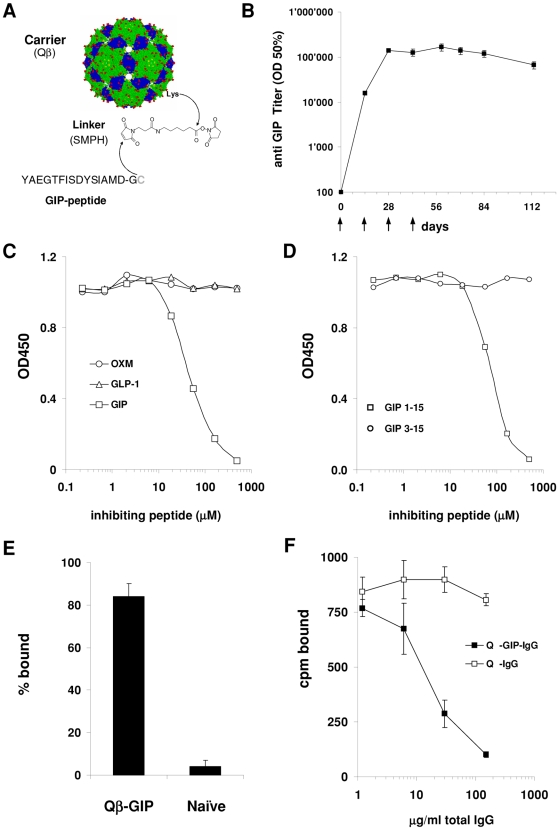
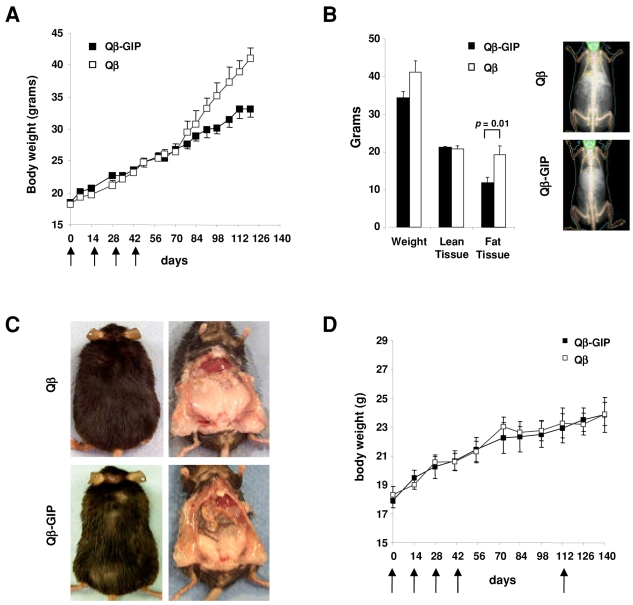
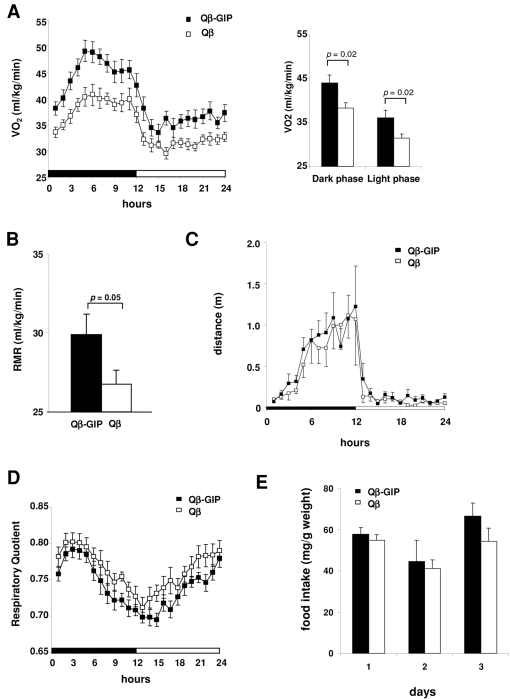
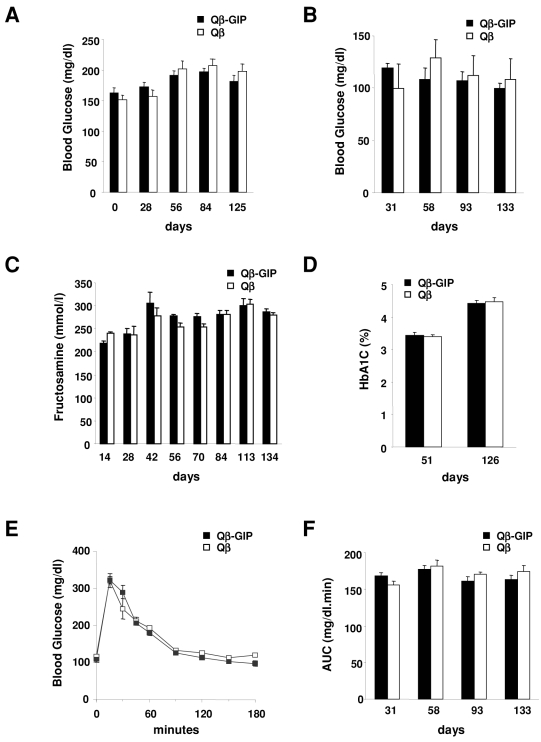
BACKGROUND: According to the WHO, more than 1 billion people worldwide are overweight and at risk of developing chronic illnesses, including cardiovascular disease, type 2 diabetes, hypertension and stroke. Current therapies show limited efficacy and are often associated with unpleasant side-effect profiles, hence there is a medical need for new therapeutic interventions in the field of obesity. Gastric inhibitory peptide (GIP, also known as glucose-dependent insulinotropic polypeptide) has recently been postulated to link over-nutrition with obesity. In fact GIP receptor-deficient mice (GIPR(-/-)) were shown to be completely protected from diet-induced obesity. Thus, disrupting GIP signaling represents a promising novel therapeutic strategy for the treatment of obesity. METHODOLOGY/PRINCIPAL FINDINGS: In order to block GIP signaling we chose an active vaccination approach using GIP peptides covalently attached to virus-like particles (VLP-GIP). Vaccination of mice with VLP-GIP induced high titers of specific antibodies and efficiently reduced body weight gain in animals fed a high fat diet. The reduction in body weight gain could be attributed to reduced accumulation of fat. Moreover, increased weight loss was observed in obese mice vaccinated with VLP-GIP. Importantly, despite the incretin action of GIP, VLP-GIP-treated mice did not show signs of glucose intolerance. CONCLUSIONS/SIGNIFICANCE: This study shows that vaccination against GIP was safe and effective. Thus active vaccination may represent a novel, long-lasting treatment for obesity. However further preclinical safety/toxicology studies will be required before the therapeutic concept can be addressed in humans.
Overview
The claims and statistics of this paper haven’t been checked yet.
Free: it reads the open-access text and checks the first 5 claims that cite a source we can check. Create a free account to check every claim.
Integrity signals
Registry
Cites
Statistics
Figures
Verification
Claims the paper makes
The claims and statistics of this paper haven’t been checked yet.
Free: it reads the open-access text and checks the first 5 claims that cite a source we can check. Create a free account to check every claim.
Claims other papers make about this one
Each is checked against this paper’s own text: does it say what the citing paper says it does?
The source backs part of the claim, not all of it — or backs it for a different population, condition or comparison.
In the citing paper
“GIP antagonism is also a potential obesity treatment as in preclinical studies improved the metabolic profile and reduced food intake [54–56].”
From What is the pipeline for future medications for obesity? (2025) · cites this paper as [55]
Experimental — accuracy not yet measured
Self-check
Percentages, sums and reported differences re-computed from the paper’s own numbers.
The self-check needs the paper’s full text.
Citations
Cites
Kopelman, P. G. (2000) · Nature · doi:10.1038/35007508 · Cited by 4,795 · cited 1×
“society [1].”
Morgenstern, J. P., & Land, H. (1990) · Nucleic Acids Research · doi:10.1093/nar/18.12.3587 · Cited by 2,101 · cited 1×
“The PCR product was then cloned into pBP [48].”
MethodNauck, M. A., Heimesaat, M. M., Orskov, C., Holst, J. J., Ebert, R., & Creutzfeldt, W. (1993) · Journal of Clinical Investigation · doi:10.1172/jci116186 · Cited by 1,651 · cited 1×
“Interestingly, GIP has been reported to have a reduced incretin effect in type II diabetic patients whereas the insulinotropic effect of GLP is preserved in this patient population [43–45].”
BackgroundBeneficial health effects of modest weight loss.
Dj, G. (1992) · PubMed · Cited by 1,263
Inhibition of gastric inhibitory polypeptide signaling prevents obesity
Miyawaki, K., Yamada, Y., Ban, N., Ihara, Y., Tsukiyama, K., Zhou, H., Fujimoto, S., Oku, A., Tsuda, K., Toyokuni, S., et al. (2002) · Nature Medicine · doi:10.1038/nm727 · Cited by 963 · cited 4×
“These findings are in accordance with previous findings in GIPR mice showing little [17] or no difference [32] in age-related body weight gain in mice fed normal chow.”
BackgroundResultInfluentialSTIMULATION OF INSULIN SECRETION BY GASTRIC INHIBITORY POLYPEPTIDE IN MAN. 1
Dupre, J., Ross, S. A., Watson, D., & Brown, J. C. (1973) · The Journal of Clinical Endocrinology & Metabolism · doi:10.1210/jcem-37-5-826 · Cited by 860 · cited 1×
“Likewise, the incretin activity of GIP and GLP1 is well established in humans [37–39].”
BackgroundJohnson, R. N., Metcalf, P. A., & Baker, J. R. (1983) · Clinica Chimica Acta · doi:10.1016/0009-8981(83)90078-5 · Cited by 763 · cited 1×
“Fructosamine levels provide a retrospective reading of blood glucose for the 2 weeks prior to measurement [30,31].”
BackgroundThe Influence of Antigen Organization on B Cell Responsiveness
Bachmann, M. F., Rohrer, U. H., Kündig, T. M., Bürki, K., Hengartner, H., & Zinkernagel, R. M. (1993) · Science · doi:10.1126/science.8248784 · Cited by 717 · cited 1×
“We have previously shown that antigens displayed on highly repetitive viral surfaces can break B cell tolerance [21] and epitopes displayed on the surface of virus-”
BackgroundSelf-citationNauck, M. A., Meininger, G., Sheng, D., Terranella, L., Stein, P. P., & Sitagliptin Study 024 Group (2007) · Diabetes, Obesity and Metabolism · doi:10.1111/j.1463-1326.2006.00704.x · Cited by 667 · cited 1×
“Based on these observations DPP-IV inhibitors have been developed and drugs like Sitagliptin and Vildagliptin are now on the market as a novel class of type II diabetes drugs [40–42].”
BackgroundEarly Mortality Among Medicare Beneficiaries Undergoing Bariatric Surgical Procedures
Flum, D. R. (2005) · JAMA · doi:10.1001/jama.294.15.1903 · Cited by 633 · cited 1×
“surgery [8].”
Cited by
Pushko, P., Pumpens, P., & Grens, E. (2013) · Intervirology · doi:10.1159/000346773 · Cited by 5,950
How May GIP Enhance the Therapeutic Efficacy of GLP-1?
Samms, R. J., Coghlan, M. P., & Sloop, K. W. (2020) · Trends in Endocrinology & Metabolism · doi:10.1016/j.tem.2020.02.006 · Cited by 419
Turcot, V., Lu, Y., Highland, H. M., Schurmann, C., Justice, A. E., Fine, R. S., Bradfield, J. P., Esko, T., Giri, A., Graff, M., et al. (2018) · Nature Genetics · doi:10.1038/s41588-017-0011-x · Cited by 409
“Blocking GIP signaling using a vaccination approach in mice on a high-fat diet reduces weight gain, mainly through reduced fat accumulation, mediated by increased energy expenditure 57 .”
Having a word with yourself: neural correlates of self-criticism and self-reassurance.
Longe, O., Maratos, F. A., Gilbert, P., Evans, G., Volker, F., Rockliff, H., & Rippon, G. (2010) · NeuroImage · doi:10.1016/j.neuroimage.2009.09.019 · Cited by 403
Glucose-Dependent Insulinotropic Polypeptide
Christensen, M., Vedtofte, L., Holst, J. J., Vilsbøll, T., & Knop, F. K. (2011) · Diabetes · doi:10.2337/db11-0979 · Cited by 353
What is the pipeline for future medications for obesity?
Melson, E., Ashraf, U., Papamargaritis, D., & Davies, M. J. (2025) · International Journal of Obesity · doi:10.1038/s41366-024-01473-y · Cited by 332
Adriaenssens, A. E., Biggs, E. K., Darwish, T., Tadross, J., Sukthankar, T., Girish, M., Polex-Wolf, J., Lam, B. Y., Zvetkova, I., Pan, W., et al. (2019) · Cell Metabolism · doi:10.1016/j.cmet.2019.07.013 · Cited by 324
“Though GIPR antagonists have inhibited weight gain in animal models (Boylan et al., 2015; Fulurija et al., 2008; Killion et al., 2018; McClean et al., 2007), the therapeutic utility of GIPR antagonism in humans is yet to be determined.”
BackgroundGlucagon-like peptide-1 receptor co-agonists for treating metabolic disease.
Baggio, L. L., & Drucker, D. J. (2021) · Molecular Metabolism · doi:10.1016/j.molmet.2020.101090 · Cited by 299
Optimized GIP analogs promote body weight lowering in mice through GIPR agonism not antagonism
Mroz, P. A., Finan, B., Gelfanov, V., Yang, B., Tschöp, M. H., DiMarchi, R. D., & Perez-Tilve, D. (2019) · Molecular Metabolism · doi:10.1016/j.molmet.2018.12.001 · Cited by 229
“Mouse models of diminished GIP activity, including GIPR knockout mice [10], immunization against GIP [11,12], enteroendocrine K cell ablation [13], and chemical antagonism [14,15] have shown reduced or delayed body weight gain in rodents exposed to obesogenic diets.”
BackgroundVersatile Virus-Like Particle Carrier for Epitope Based Vaccines
Tissot, A. C., Renhofa, R., Schmitz, N., Cielens, I., Meijerink, E., Ose, V., Jennings, G. T., Saudan, P., Pumpens, P., & Bachmann, M. F. (2010) · PLoS ONE · doi:10.1371/journal.pone.0009809 · Cited by 206
“Remarkably, the highly repetitive display allows to elicit strong antibody responses even against self-antigens [15–20].”
BackgroundSelf-citationKim, S.-J., Nian, C., Karunakaran, S., Clee, S. M., Isales, C. M., & McIntosh, C. H. S. (2012) · PLoS ONE · doi:10.1371/journal.pone.0040156 · Cited by 182
“ablation [26] or vaccination against GIP [27] may be beneficial”
BackgroundReappraisal of GIP Pharmacology for Metabolic Diseases
Finan, B., Müller, T. D., Clemmensen, C., Perez-Tilve, D., DiMarchi, R. D., & Tschöp, M. H. (2016) · Trends in Molecular Medicine · doi:10.1016/j.molmed.2016.03.005 · Cited by 180
Ngamaba, K. H., & Soni, D. (2017) · Journal of Religion and Health · doi:10.1007/s10943-017-0481-2 · Cited by 170
Targeting the glucagon receptor family for diabetes and obesity therapy
Cho, Y. M., Merchant, C. E., & Kieffer, T. J. (2012) · Pharmacology & Therapeutics · doi:10.1016/j.pharmthera.2012.05.009 · Cited by 159
The application of virus-like particles as vaccines and biological vehicles
Yan, D., Wei, Y., Guo, H., & Sun, S. (2015) · Applied Microbiology and Biotechnology · doi:10.1007/s00253-015-7000-8 · Cited by 130
“For immunotherapeutics, which represent a new promising class of vaccines developed to treat chronic diseases (Fulurija et al. 2008; Rohn et al. 2006; Sonderegger et al. 2006; Spohn et al. 2007), therapeutic vaccination has demonstrated that it involves active clearance of an infectious agent, infected cells, and espe…”
BackgroundMagnesium in Health and Disease
Romani, A. (2013) · Metal ions in life sciences · doi:10.1007/978-94-007-7500-8_3 · Cited by 163
Irwin, N., & Flatt, P. R. (2009) · Diabetologia · doi:10.1007/s00125-009-1422-8 · Cited by 134
“This resulted in production of GIP antibodies and protection against diet-induced obesity with significantly reduced body fat stores [ 17 ].”
BackgroundPositive affect: nature and brain bases of liking and wanting
Nguyen, D. P., Naffziger, E. E., & Berridge, K. C. (2021) · Current Opinion in Behavioral Sciences · doi:10.1016/j.cobeha.2021.02.013 · Cited by 172
Immunodrugs: Therapeutic VLP-Based Vaccines for Chronic Diseases
Jennings, G. T., & Bachmann, M. F. (2008) · The Annual Review of Pharmacology and Toxicology · doi:10.1146/annurev-pharmtox-061008-103129 · Cited by 139
Self-citationChu, L. (2010) · Stress and Health · doi:10.1002/smi.1289 · Cited by 113
Incretins: their physiology and application in the treatment of diabetes mellitus
Tasyurek, H. M., Altunbas, H. A., Balci, M. K., & Sanlioglu, S. (2014) · Diabetes/Metabolism Research and Reviews · doi:10.1002/dmrr.2501 · Cited by 121
Disruption of GIP/GIPR axis in human adipose tissue is linked to obesity and insulin resistance
Ceperuelo-Mallafré, V., Duran, X., Pachón, G., Roche, K., Garrido-Sánchez, L., Vilarrasa, N., Tinahones, F. J., Vicente, V., Pujol, J., Vendrell, J., et al. (2014) · The Journal of Clinical Endocrinology & Metabolism · doi:10.1210/jc.2013-3350 · Cited by 112
Sparre‐Ulrich, A. H., Hansen, L. S., Svendsen, B., Christensen, M., Knop, F. K., Hartmann, B., Holst, J. J., & Rosenkilde, M. M. (2016) · British Journal of Pharmacology · doi:10.1111/bph.13323 · Cited by 114
Glucose-dependent insulinotropic polypeptide (GIP)
Müller, T. D., Adriaenssens, A. E., Ahrén, B., Blüher, M., Birkenfeld, A. L., Campbell, J. E., Coghlan, M. P., D’Alessio, D. D., Deacon, C. F., DelPrato, S., et al. (2025) · Molecular Metabolism · doi:10.1016/j.molmet.2025.102118 · Cited by 114
K-cells and Glucose-Dependent Insulinotropic Polypeptide in Health and Disease
Cho, Y. M., & Kieffer, T. J. (2010) · Vitamins and hormones · doi:10.1016/b978-0-12-381517-0.00004-7 · Cited by 111
Diet: Friend or Foe of Enteroendocrine Cells: How It Interacts with Enteroendocrine Cells
Morán‐Ramos, S., Tovar, A. R., & Torres, N. (2012) · Advances in Nutrition · doi:10.3945/an.111.000976 · Cited by 111
“These and other data suggest that GIP as is a metabolically thrifty gene and postulate it as possible link between overnutrition and obesity (31,33,34).”
BackgroundKillion, E. A., Lu, S.-C., Fort, M., Yamada, Y., Véniant, M. M., & Lloyd, D. J. (2020) · Endocrine Reviews · doi:10.1210/endrev/bnz002 · Cited by 94
Incretins in obesity and diabetes
Chia, C. W., & Egan, J. M. (2020) · Annals of the New York Academy of Sciences · doi:10.1111/nyas.14211 · Cited by 93
Pharmacological Characterization of Human Incretin Receptor Missense Variants
Fortin, J., Schroeder, J. C., Zhu, Y., Beinborn, M., & Kopin, A. S. (2009) · Journal of Pharmacology and Experimental Therapeutics · doi:10.1124/jpet.109.160531 · Cited by 99
“weight and to protect against glucose intolerance in animals that were fed a high-fat diet (Gault et al., 2007; Fulurija et al., 2008).”
Glucose-dependent insulinotropic polypeptide (GIP) receptor antagonists as anti-diabetic agents
Gasbjerg, L. S., Gabe, M. B. N., Hartmann, B., Christensen, M. B., Knop, F. K., Holst, J. J., & Rosenkilde, M. M. (2018) · Peptides · doi:10.1016/j.peptides.2017.11.021 · Cited by 85
Ravn, P., Madhurantakam, C., Kunze, S., Matthews, E., Priest, C., O'Brien, S., Collinson, A., Papworth, M., Fritsch-Fredin, M., Jermutus, L., et al. (2013) · Journal of Biological Chemistry · doi:10.1074/jbc.m112.426288 · Cited by 86
Sparre-Ulrich, A. H., Gabe, M. N., Gasbjerg, L. S., Christiansen, C. B., Svendsen, B., Hartmann, B., Holst, J. J., & Rosenkilde, M. M. (2017) · Biochemical Pharmacology · doi:10.1016/j.bcp.2017.02.012 · Cited by 81
The True Story and Advantages of RNA Phage Capsids as Nanotools
Pumpens, P., Renhofa, R., Dišlers, A., Kozlovska, T., Ose, V., Pushko, P., Tārs, K., Grens, E., & Bachmann, M. F. (2016) · Intervirology · doi:10.1159/000449503 · Cited by 76
Self-citationThe Role of GIP Receptor in the CNS for the Pathogenesis of Obesity
Fukuda, M. (2021) · Diabetes · doi:10.2337/dbi21-0001 · Cited by 69
Virus‐based nanoparticles as platform technologies for modern vaccines
Lee, K. L., Twyman, R. M., Fiering, S., & Steinmetz, N. F. (2016) · Wiley Interdisciplinary Reviews Nanomedicine and Nanobiotechnology · doi:10.1002/wnan.1383 · Cited by 75
“This approach has been tested in numerous disease models, including rheumatoid arthritis, osteoporosis,(178,182) experimental autoimmune encephalitis,(180) myocarditis,(183) and obesity.(184) Many of these diseases are currently treated by passive immunotherapy, i.”
MethodPhysiological roles of the GIP receptor in murine brown adipose tissue
Beaudry, J. L., Kaur, K. D., Varin, E. M., Baggio, L. L., Cao, X., Mulvihill, E. E., Bates, H. E., Campbell, J. E., & Drucker, D. J. (2019) · Molecular Metabolism · doi:10.1016/j.molmet.2019.08.006 · Cited by 70
“The findings that GIP immunoneutralization [39] or blockade of the GIPR with antibodies [11] reproduces the resistance to diet-induced obesity phenotype localizes some of the metabolic actions of the GIPR to peripheral tissues, as these antibodies are unlikely to block GIPR signaling in the central nervous system.”
BackgroundHolst, J. J., Albrechtsen, N. J. W., Rosenkilde, M. M., & Deacon, C. F. (2019) · Comprehensive Physiology · doi:10.1002/cphy.c180013 · Cited by 54
Mindfulness‐Based Awareness and Compassion: Predictors of Counselor Empathy and Anxiety
Fulton, C. L., & Cashwell, C. S. (2015) · Counselor Education and Supervision · doi:10.1002/ceas.12009 · Cited by 70
Gastric inhibitory polypeptide immunoneutralization attenuates development of obesity in mice
Boylan, M. O., Glazebrook, P. A., Tatalovic, M., & Wolfe, M. M. (2015) · American Journal of Physiology-Endocrinology and Metabolism · doi:10.1152/ajpendo.00345.2015 · Cited by 65
“Attenuated nutrient storage appears to protect the mice from developing obesity and other abnormalities associated with the metabolic syndrome, including insulin resistance, type 2 diabetes mellitus, fatty liver, and dyslipidemia (7, 22).”
BackgroundMethodInfluentialReimann, F., & Gribble, F. M. (2016) · Journal of Diabetes Investigation · doi:10.1111/jdi.12478 · Cited by 64
Mindfulness, Self-Compassion, and Counselor Characteristics and Session Variables
Fulton, C. L. (2016) · Journal of Mental Health Counseling · doi:10.17744/mehc.38.4.06 · Cited by 48
Bergmann, N. C., Gasbjerg, L. S., Heimbürger, S. M., Krogh, L. S. L., Dela, F., Hartmann, B., Holst, J. J., Jessen, L., Christensen, M. B., Vilsbøll, T., et al. (2020) · Diabetes Care · doi:10.2337/dc19-0578 · Cited by 62
“Infusions Synthetic human GIP (1-42) (;96% purity) was purchased from Bachem care.”
MethodMindfulness meditation regulates anterior insula activity during empathy for social pain.
Laneri, D., Krach, S., Paulus, F. M., Kanske, P., Schuster, V., Sommer, J., & Müller‐Pinzler, L. (2017) · Human Brain Mapping · doi:10.1002/hbm.23646 · Cited by 61
Speakman, J. R. (2013) · Human Heredity · doi:10.1159/000353585 · Cited by 68
Doing and Being: Mindfulness, Health, and Quiet Ego Characteristics Among Buddhist Practitioners
Wayment, H. A., Wiist, B., Sullivan, B. M., & Warren, M. (2010) · Journal of Happiness Studies · doi:10.1007/s10902-010-9218-6 · Cited by 68
Glucose‐dependent insulinotropic polypeptide signaling in pancreatic β‐cells and adipocytes
McIntosh, C. H., Widenmaier, S., & Kim, S. (2012) · Journal of Diabetes Investigation · doi:10.1111/j.2040-1124.2012.00196.x · Cited by 57
Irwin, N., Gault, V., & Flatt, P. R. (2010) · Expert Opinion on Investigational Drugs · doi:10.1517/13543784.2010.513381 · Cited by 53
“Furthermore, immunisation of mice against GIP protects against diet-induced obesity [77] and is associated with improved glucose homeostasis and metabolic status in ob/ob mice [78].”
BackgroundCeddia, R. P., & Collins, S. (2020) · Clinical Science · doi:10.1042/cs20190579 · Cited by 54
Ugleholdt, R., Pedersen, J., Bassi, M. R., Füchtbauer, E.-M., Jørgensen, S. M., Kissow, H.-L., Nytofte, N., Poulsen, S. S., Rosenkilde, M. M., Seino, Y., et al. (2011) · Journal of Biological Chemistry · doi:10.1074/jbc.m111.311779 · Cited by 49
Pathak, V., Gault, V. A., Flatt, P. R., & Irwin, N. (2014) · Molecular and Cellular Endocrinology · doi:10.1016/j.mce.2014.10.025 · Cited by 48
The case for a contemplative philosophy of education
Repetti, R. (2010) · New Directions for Community Colleges · doi:10.1002/cc.411 · Cited by 58
Pedersen, J., Ugleholdt, R. K., Jørgensen, S. M., Windeløv, J. A., Grunddal, K. V., Schwartz, T. W., Füchtbauer, E. M., Poulsen, S. S., Holst, P. J., & Holst, J. J. (2013) · American Journal of Physiology-Endocrinology and Metabolism · doi:10.1152/ajpendo.00547.2011 · Cited by 43
“(15) that disrupted GIP signaling due to vaccination against GIP protected against diet induced obesity but did not affect glucose metabolism.”
BackgroundGasbjerg, L. S., Rosenkilde, M. M., Meier, J. J., Holst, J. J., & Knop, F. K. (2023) · Diabetes, Obesity and Metabolism · doi:10.1111/dom.15216 · Cited by 41
Self-Compassion as a Mediator of Mindfulness and Compassion for Others
Fulton, C. L. (2018) · Counseling and Values · doi:10.1002/cvj.12072 · Cited by 51
Insights into incretin-based therapies for treatment of diabetic dyslipidemia
Stemmer, K., Finan, B., DiMarchi, R. D., Tschöp, M. H., & Müller, T. D. (2020) · Advanced Drug Delivery Reviews · doi:10.1016/j.addr.2020.05.008 · Cited by 43
“Indeed, therapeutic approaches based on immunization against GIP [253,254] or GIP antagonism showed promising anti-obesogenic effects in mice [255] and in humans [256,257].”
BackgroundBankard, J. (2015) · Journal of Religion and Health · doi:10.1007/s10943-014-9999-8 · Cited by 44
Mining incretin hormone pathways for novel therapies
Wideman, R. D., & Kieffer, T. J. (2009) · Trends in Endocrinology and Metabolism · doi:10.1016/j.tem.2009.02.005 · Cited by 42
Jayasekara, H., MacInnis, R. J., Williamson, E., Hodge, A. M., Clendenning, M., Rosty, C., Walters, R., Room, R., Southey, M. C., Jenkins, M. A., et al. (2016) · International Journal of Cancer · doi:10.1002/ijc.30568 · Cited by 40
Gut hormone GIP induces inflammation and insulin resistance in the hypothalamus
Fu, Y., Kaneko, K., Lin, H.-Y., Mo, Q., Xu, Y., Suganami, T., Ravn, P., & Fukuda, M. (2020) · Endocrinology · doi:10.1210/endocr/bqaa102 · Cited by 38
Gabe, M. B. N., van der Velden, W. J. C., Smit, F. X., Gasbjerg, L. S., & Rosenkilde, M. M. (2020) · Peptides · doi:10.1016/j.peptides.2019.170224 · Cited by 37
“14 Many approaches have been applied to develop potent and efficacious GIPR antagonists to study GIP physiology such as GIP or GIPR antibodies and even a vaccination against GIP in animal studies has been described [80-84].”
Gut: A key player in the pathogenesis of type 2 diabetes?
Muscogiuri, G., Balercia, G., Barrea, L., Cignarelli, A., Giorgino, F., Holst, J. J., Laudisio, D., Orio, F., Tirabassi, G., & Colao, A. (2018) · Critical Reviews in Food Science and Nutrition · doi:10.1080/10408398.2016.1252712 · Cited by 37
“GIP (Fulurija et al., 2008) may be beneficial treatments for obe-”
BackgroundRöhn, T. A., Ralvenius, W. T., Paul, J., Borter, P., Hernandez, M., Witschi, R., Grest, P., Zeilhofer, H. U., Bachmann, M. F., & Jennings, G. T. (2010) · The Journal of Immunology · doi:10.4049/jimmunol.1000030 · Cited by 35
Self-citationUsing the lymphatics to study nutrient absorption and the secretion of gastrointestinal hormones
Kohan, A. B., Yoder, S. M., & Tso, P. (2011) · Physiology & Behavior · doi:10.1016/j.physbeh.2011.04.056 · Cited by 35
“Therefore, GIP receptor antagonists and inhibitors have become attractive targets for potential anti-obesity therapies [33, 34].”
BackgroundComparison of liraglutide versus other incretin‐related anti‐hyperglycaemic agents
Blonde, L., & Montanya, E. (2012) · Diabetes Obesity and Metabolism · doi:10.1111/j.1463-1326.2012.01575.x · Cited by 34
“Lastly, in animal studies, GIP has been linked with obesity through over-nutrition [68].”
BackgroundRegazzo, D., Barbot, M., Scaroni, C. M., Albiger, N. M. E., & Occhi, G. (2020) · Reviews in Endocrine and Metabolic Disorders · doi:10.1007/s11154-019-09536-6 · Cited by 33
Vogel, C. I., Scherag, A., Brönner, G., Nguyen, T. T., Wang, H.-J., Grallert, H., Bornhorst, A., Rosskopf, D., Völzke, H., Reinehr, T., et al. (2009) · BMC Medical Genetics · doi:10.1186/1471-2350-10-19 · Cited by 30
“Recently, a study in mice [20] showed that vaccination against GIP prevents its binding to the GIP receptor, consequently reducing body weight gain under high fat diets.”
BackgroundSauber, J., Grothe, J., Behm, M., Scherag, A., Grallert, H., Illig, T., Hinney, A., Hebebrand, J., Wiegand, S., Grüters, A., et al. (2010) · European Journal of Endocrinology · doi:10.1530/eje-10-0444 · Cited by 35
McEwan, K., Gilbert, P., Dandeneau, S., Lipka, S., Maratos, F. A., Paterson, K. B., & Baldwin, M. W. (2014) · PLoS ONE · doi:10.1371/journal.pone.0088783 · Cited by 34
Caregiver Burden and Depression Among Chinese Family Caregivers: the Role of Self-compassion
Xu, S., Zhang, H., & Wang, J. (2020) · Mindfulness · doi:10.1007/s12671-020-01378-7 · Cited by 29
Shimazu‐Kuwahara, S., Harada, N., Yamane, S., Joo, E., Sankoda, A., Kieffer, T. J., & Inagaki, N. (2017) · Molecular Metabolism · doi:10.1016/j.molmet.2017.01.006 · Cited by 28
“These findings are bolstered by studies demonstrating that reducing circulating GIP levels with K-cell ablation [20], disruption of GIP gene expression [21], immunoneutralization [22], or vaccination against GIP [23] also reduced weight gain in mice following high fat diet, without impairing glucose homeostasis.”
BackgroundIrwin, N., Gault, V. A., O’Harte, F. P. M., & Flatt, P. R. (2020) · Peptides · doi:10.1016/j.peptides.2019.170203 · Cited by 27
Lord, S. A. (2017) · Australian and New Zealand Journal of Family Therapy · doi:10.1002/anzf.1201 · Cited by 30
Adaptive selection of an incretin gene in Eurasian populations
Chang, C. L., Cai, J. J., Lo, C., Amigo, J., Park, J.-I., & Hsu, S. Y. (2010) · Genome Research · doi:10.1101/gr.110593.110 · Cited by 26
“Abnormal regulation of GIP signaling leads to altered carbohydrate metabolism and lipid accumulation at the enteroinsular and enteroadipocyte axis, respectively (Miyawaki et al. 2002; Fulurija et al. 2008; Isken et al. 2008; Kim and Egan 2008).”
BackgroundRynda‐Apple, A., Dobrinen, E., McAlpine, M., Read, A., Harmsen, A. L., Richert, L. E., Calverley, M., Pallister, K. B., Voyich, J. M., Wiley, J. A., et al. (2012) · American Journal Of Pathology · doi:10.1016/j.ajpath.2012.03.018 · Cited by 25
“In addition, VLPs have been used as a platform for targeting cells(16) and as a delivery vehicle to present the immune system with fused or conjugated heterologous epitopes,(25) and even to induce autoantibodies to self molecules involved in chronic diseases.(25,26) The work reported by our laboratory adds yet another…”
Won, Y., Han, W., & Kim, D. Y. (2011) · Journal of the Optical Society of America A · doi:10.1364/josaa.28.002026 · Cited by 24
Ablation of Leptin Signaling to Somatotropes: Changes in Metabolic Factors that Cause Obesity
Akhter, N., Odle, A. K., Allensworth‐James, M. L., Haney, A. C., Syed, M., Cozart, M. A., Chua, S. C., Kineman, R. D., & Childs, G. V. (2012) · Endocrinology · doi:10.1210/en.2012-1331 · Cited by 25
“GIP, also known as the glucose-dependent insulinotropic peptide, is a 42-amino acid peptide synthesized by K cells in the mucosa of the duodenum and the jejunum (72, 73).”
BackgroundGenetic influence on variation in serum uric acid in American Indians: the strong heart family study
Voruganti, V. S., Göring, H. H. H., Mottl, A. K., Franceschini, N., Haack, K., Laston, S., Almasy, L. A., Fabsitz, R. R., Lee, E. T., Best, L. G., et al. (2009) · Human Genetics · doi:10.1007/s00439-009-0716-8 · Cited by 21
Mindfulness as a Promoter of Adaptive Development in Adolescence
Amada, N. M., & Shane, J. (2018) · Adolescent Research Review · doi:10.1007/s40894-018-0096-1 · Cited by 23
The role of GIPR in food intake control
James-Okoro, P.-P., Lewis, J. E., Gribble, F. M., & Reimann, F. (2025) · Frontiers in Endocrinology · doi:10.3389/fendo.2025.1532076 · Cited by 23
Metallothioneins in Prion- and Amyloid-Related Diseases
Adam, P., Křížková, S., Heger, Z., Babula, P., Pekařík, V., Vaculovičová, M., Gomes, C. M., Kizek, R., & Adam, V. (2016) · Journal of Alzheimer s Disease · doi:10.3233/jad-150984 · Cited by 22
West, J. A., Ghosh, S. S., Parkes, D. G., Tsakmaki, A., Grønlund, R. V., Pedersen, P. J., MAGGS, D. G., Rajagopalan, H., & Bewick, G. A. (2021) · PLoS ONE · doi:10.1371/journal.pone.0249239 · Cited by 19
“Several different GIPR antagonists have been identified including vaccines against GIP [36, 37], GIP neutralising antibodies [38], antibodies against the GIPR [39, 40] and antagonist peptides [41– 44] (for a detailed summary of these studies see [35]).”
BackgroundPerry, R., Craig, S., Ng, M., Gault, V. A., Flatt, P. R., & Irwin, N. (2019) · Clinical Medicine Insights Endocrinology and Diabetes · doi:10.1177/1179551419875453 · Cited by 20
Bourinbaiar, A. S., & Jirathitikal, V. (2010) · Vaccine · doi:10.1016/j.vaccine.2010.01.032 · Cited by 19
“Current studies of obesity vaccines have shown the promise with ghrelin and gastric inhibitory polypeptide (GIP) as candidate targets for weight control [7,8].”
BackgroundProglucagon-derived peptides: human physiology and therapeutic potential
Gasbjerg, L. S., Nielsen, C. K., Suppli, M. P., Grøndahl, M. F. G., Holst, J. J., Knop, F. K., Jeppesen, P. B., & Lund, A. (2025) · Physiological Reviews · doi:10.1152/physrev.00057.2024 · Cited by 22
Lee, D., Lee, W. J., Choi, S.-H., Jang, J.-H., & Kang, D.-H. (2020) · Medicine · doi:10.1097/md.0000000000021027 · Cited by 16
Antibodies in metabolic diseases
Ahrens, B. (2011) · New Biotechnology · doi:10.1016/j.nbt.2011.03.022 · Cited by 20
Monteiro, M. P. (2014) · Human Vaccines & Immunotherapeutics · doi:10.4161/hv.27537 · Cited by 16
Trophozoite stage infected erythrocyte contents analysis by use of spectral imaging LED microscope
Zoueu, J. T., & Zan, S. G. T. (2011) · Journal of Microscopy · doi:10.1111/j.1365-2818.2011.03548.x · Cited by 14
Irwin, N., Montgomery, I. A., O'Harte, F. P. M., Frizelle, P. A., & Flatt, P. R. (2012) · International Journal of Obesity · doi:10.1038/ijo.2012.179 · Cited by 14
Tian, J. ‐., Wang, Y., Lin, N., Guo, Y., Sun, S., & Zou, D.-C. (2010) · Scandinavian Journal of Immunology · doi:10.1111/j.1365-3083.2010.02400.x · Cited by 12
Ohta, Y., Kamide, K., Hanada, H., Morimoto, S., Nakahashi, T., Takiuchi, S., Ishimitsu, T., Tsuchihashi, T., Soma, M., Katsuya, T., et al. (2019) · Hypertension Research · doi:10.1038/s41440-019-0356-x · Cited by 12
Boer, G. A., Hunt, J. E., Gabe, M. B. N., Windeløv, J. A., Sparre‐Ulrich, A. H., Hartmann, B., Holst, J. J., & ROSENKILDE, M. M. (2022) · British Journal of Pharmacology · doi:10.1111/bph.15894 · Cited by 13
“Furthermore, active immunization against GIP has, in preclinical studies, shown to induce weight loss in obese mice (Fulurija et al., 2008), although not all studies could show this effect (Irwin et al., 2012).”
BackgroundRieger, T. R., & Musante, C. J. (2016) · European Journal of Pharmaceutical Sciences · doi:10.1016/j.ejps.2016.05.006 · Cited by 10
Hosoda, Y., Okahara, F., Mori, T., Deguchi, J., Ota, N., Osaki, N., & Shimotoyodome, A. (2017) · Food & Nutrition Research · doi:10.1080/16546628.2017.1361778 · Cited by 11
Cheng, F. K., & Tse, S. S.-K. (2013) · International Journal for the Advancement of Counselling · doi:10.1007/s10447-013-9202-z · Cited by 13
The evolution of the therapeutic concept ‘GIP receptor antagonism’
Koefoed-Hansen, F., Helsted, M. M., Kizilkaya, H. S., Lund, A., ROSENKILDE, M. M., & Gasbjerg, L. S. (2025) · Frontiers in Endocrinology · doi:10.3389/fendo.2025.1570603 · Cited by 9
“As seen for the GIP receptor knockout mice, VLP-GIP ef fi ciently reduced body weight gain in animals on a high-fat diet (69), supporting that the GIP receptor plays a role in developing obesity.”
Buddhism and Positive Psychology
Cassaniti, J. (2014) · Cross-cultural advancements in positive psychology · doi:10.1007/978-94-017-8950-9_6 · Cited by 12
Plant Virus-Based Nanotechnologies
Wen, A. M., Lee, K. L., & Steinmetz, N. F. (2019) · Women in engineering and science · doi:10.1007/978-3-030-19951-7_5 · Cited by 9
Lafferty, R. A., Flatt, P. R., Gault, V. A., & Irwin, N. (2024) · Journal of Endocrinology · doi:10.1530/joe-23-0339 · Cited by 8
“…peptides, as a means to stimulate active endogenous antibody generation, is an efficacious method of improving obesity-related diabetes in rodents (Fulurija et al. 2008, Irwin et al. 2009 a , b , 2012, Montgomery et al. 2010, Wolfe et al. 2023), although suitability of this approach in humans is…”
MethodGlucose-dependent insulinotropic polypeptide - a new link in the development of obesity
Shestakova, E. A., Ильин, А. В., Shestakova, M. V., & Dedov, I. I. (2015) · Obesity and metabolism · doi:10.14341/omet2015116-19 · Cited by 8
Metadata
- Authors
- Fulurija, A., Lutz, T. A., Sladko, K., Osto, M., Wielinga, P. Y., Bachmann, M. F., & Saudan, P.
- Affiliations
- University of Zurich (CH)
- Corresponding author
- Saudan, Philippe
- Venue
- PLoS ONE
- Publisher
- Public Library of Science (PLoS)
- Published
- 2008-09-09
- Volume
- 3
- Issue
- 9
- Pages
- e3163
- ISSN
- 1932-6203 (ISSN-L)
- PMC
- PMC2525840
- OpenAlex
- W2059556576
- Cited by
- 136
- References
- 48
- Citations by year
- 2025: 6 · 2024: 4 · 2023: 2 · 2022: 3 · 2021: 4 · 2020: 11 · 2019: 15 · 2018: 6 · 2017: 9 · 2016: 12 · 2015: 6 · 2014: 7 · 2013: 10 · 2012: 10
- FWCI
- 4.57
- Type
- journal article
- Language
- en
- Open access
- gold
- doi.org
- Locations
- PLoS ONE (publishedVersion, cc-by)
- PubMed Central (publishedVersion, cc-by)
- PubMed (publishedVersion)
- Zurich Open Repository and Archive (University of Zurich) (acceptedVersion, cc-by)
- UWA Profiles and Research Repository (University of Western Australia) (submittedVersion, other-oa)
- DOAJ (DOAJ: Directory of Open Access Journals) (submittedVersion, cc-by-sa)
- Figshare (submittedVersion, cc-by)
- Zurich Open Repository and Archive (University of Zurich) (submittedVersion, cc-by)
- Zurich Open Repository and Archive (University of Zurich)
- Funders
- Universität Zürich
- Topics
- Life Sciences › Neuroscience › Endocrine and Autonomic Systems › Regulation of Appetite and Obesity
- Health Sciences › Medicine › Pharmacology (medical) › Pharmacology and Obesity Treatment
- Health Sciences › Medicine › Endocrinology, Diabetes and Metabolism › Adipokines, Inflammation, and Metabolic Diseases
- Keywords
- obesity, glucose-dependent insulinotropic polypeptide, GIP receptor, active immunization, virus-like particles, obesity treatment, high-fat diet, weight gain, fat deposition, impaired glucose tolerance, incretin signaling
- MeSH terms
- Animals, Body Weight, Cricetulus, Gastric Inhibitory Polypeptide, Cricetinae, Homeostasis, Humans, Mice, Inbred C57BL, Mice, Transgenic, Obesity, Vaccines, Signal Transduction, CHO Cells, 3T3 Cells, Lipid Metabolism, Mice
About these checks
Registry, retraction, Cites and statistics results are computed, not judged, with one exception: a printed reference that no index lists is read once by a model before it counts as a citation error. Claims are extracted by a model and kept only when their quote appears verbatim in the text; each cited source is then checked, with a model’s help, for whether it says what the claim relies on. Those verdicts can be wrong — read the claim’s quote and the cited source before relying on one.
Statistics and arithmetic are recomputed, not judged.
Confidence bands are shown only for fields calibrated on our annotated test set. None is calibrated yet, so no band is shown.
What counts as a claim ›How we measure confidence ›How we check this ›
Are you an author, or do you see a problem with this page? Request a review
Data sources
Bibliographic data: Semantic Scholar, OpenAlex, Crossref.
Contains information from the Semantic Scholar Academic Graph Datasets, made available under the ODC Attribution License (ODC-BY 1.0).
Semantic Scholar’s data is described in: Kinney, R., et al. (2023). The Semantic Scholar Open Data Platform. arXiv:2301.10140.
