

Rhythmicity in Mice Selected for Extremes in Stress Reactivity: Behavioural, Endocrine and Sleep Changes Resembling Endophenotypes of Major Depression
Open accessThe DOI matches its Crossref record; 85 of the 85 references it cites were found in a registry or an index.
Abstract
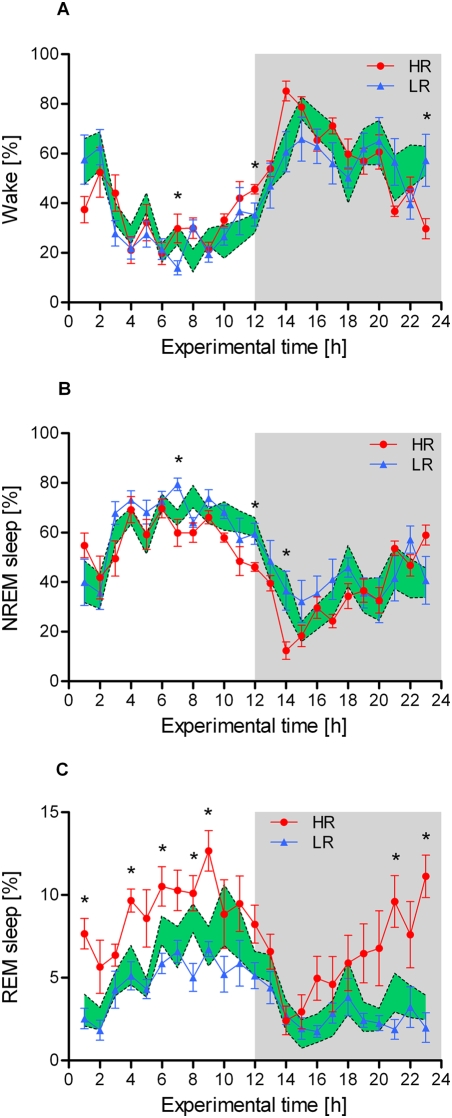
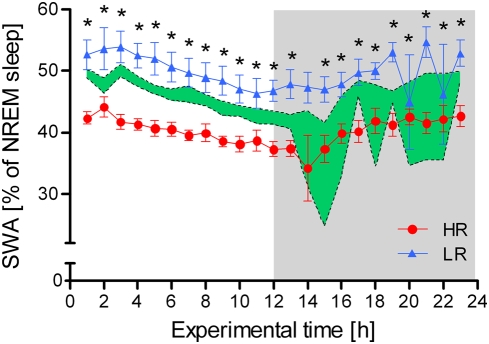
BACKGROUND: Dysregulation of the hypothalamic-pituitary-adrenal (HPA) axis, including hyper- or hypo-activity of the stress hormone system, plays a critical role in the pathophysiology of mood disorders such as major depression (MD). Further biological hallmarks of MD are disturbances in circadian rhythms and sleep architecture. Applying a translational approach, an animal model has recently been developed, focusing on the deviation in sensitivity to stressful encounters. This so-called 'stress reactivity' (SR) mouse model consists of three separate breeding lines selected for either high (HR), intermediate (IR), or low (LR) corticosterone increase in response to stressors. METHODOLOGY/PRINCIPLE FINDINGS: In order to contribute to the validation of the SR mouse model, our study combined the analysis of behavioural and HPA axis rhythmicity with sleep-EEG recordings in the HR/IR/LR mouse lines. We found that hyper-responsiveness to stressors was associated with psychomotor alterations (increased locomotor activity and exploration towards the end of the resting period), resembling symptoms like restlessness, sleep continuity disturbances and early awakenings that are commonly observed in melancholic depression. Additionally, HR mice also showed neuroendocrine abnormalities similar to symptoms of MD patients such as reduced amplitude of the circadian glucocorticoid rhythm and elevated trough levels. The sleep-EEG analyses, furthermore, revealed changes in rapid eye movement (REM) and non-REM sleep as well as slow wave activity, indicative of reduced sleep efficacy and REM sleep disinhibition in HR mice. CONCLUSION/SIGNIFICANCE: Thus, we could show that by selectively breeding mice for extremes in stress reactivity, clinically relevant endophenotypes of MD can be modelled. Given the importance of rhythmicity and sleep disturbances as biomarkers of MD, both animal and clinical studies on the interaction of behavioural, neuroendocrine and sleep parameters may reveal molecular pathways that ultimately lead to the discovery of new targets for antidepressant drugs tailored to match specific pathologies within MD.
Overview
The claims and statistics of this paper haven’t been checked yet.
Free: it reads the open-access text and checks the first 5 claims that cite a source we can check. Create a free account to check every claim.
Integrity signals
Registry
Cites
Statistics
Figures
Verification
Claims the paper makes
The claims and statistics of this paper haven’t been checked yet.
Free: it reads the open-access text and checks the first 5 claims that cite a source we can check. Create a free account to check every claim.
Claims other papers make about this one
Each is checked against this paper’s own text: does it say what the citing paper says it does?
The source backs part of the claim, not all of it — or backs it for a different population, condition or comparison.
In the citing paper
“Stress, thus, influences sleep physiology and dream patterns and may cause both immediate and long-lasting sleep disruption (364–366), which may, in turn, enhance maladaptive stress regulation (367).”
From Developmental Trajectories of Early Life Stress and Trauma: A Narrative Review on Neurobiological Aspects Beyond Stress System Dysregulation (2019) · cites this paper as [365]
Experimental — accuracy not yet measured
Self-check
Percentages, sums and reported differences re-computed from the paper’s own numbers.
The self-check needs the paper’s full text.
Citations
Cites
Nonparametric Statistics for the Behavioral Sciences
Guitton, H., & Siegel, S. (1958) · Revue économique · doi:10.2307/3498751 · Cited by 35,245
Analyzing Tables of Statistical Tests
Rice, W. R. (1989) · Evolution · doi:10.2307/2409177 · Cited by 14,571
ANALYZING TABLES OF STATISTICAL TESTS
Rice, W. R. (1989) · Evolution · doi:10.1111/j.1558-5646.1989.tb04220.x · Cited by 14,547
Rechtschaffen, A. (1968) · Medical Entomology and Zoology · Cited by 12,675
Allan Hobson, J. (1969) · Electroencephalography and Clinical Neurophysiology · doi:10.1016/0013-4694(69)90021-2 · Cited by 5,192
Stress and the brain: from adaptation to disease
de Kloet, E. R., Joëls, M., & Holsboer, F. (2005) · Nature Reviews Neuroscience · doi:10.1038/nrn1683 · Cited by 4,621
Self-citationTwo-Process Model of Sleep Regulation
(2009) · Encyclopedia of Neuroscience · doi:10.1007/978-3-540-29678-2_6166 · Cited by 3,899 · cited 1×
“The regulation of SWA itself was proposed to be a function of the ‘Two Process Model’ [74], depending on the interaction of processes S (sleep dependent) and C (circadian).”
BackgroundThe Neuroendocrinology of Stress: A Never Ending Story
Lightman, S. L. (2008) · Journal of Neuroendocrinology · doi:10.1111/j.1365-2826.2008.01711.x · Cited by 3,566
Nonparametric Statistics : for the Behavioral Sciences
Siegel, S. (1956) · UCLA - Biblioteca de Ciencias y Tecnologia Felix Morales Bueno · Cited by 3,287
Nestler, E. J., Barrot, M., DiLeone, R. J., Eisch, A. J., Gold, S. J., & Monteggia, L. M. (2002) · Neuron · doi:10.1016/s0896-6273(02)00653-0 · Cited by 3,217
Research works printed but not linked: 1
- 53. Armitage R, Hoffmann R. Sleep electrophysiology of major depressive disorders. Curr Rev Mood Anx Disord. 1997;1:139–151.
Cited by
Non-invasive measurement of glucocorticoids: Advances and problems
Palme, R. (2019) · Physiology & Behavior · doi:10.1016/j.physbeh.2018.11.021 · Cited by 605
Self-citationStress Hormone Regulation: Biological Role and Translation into Therapy
Holsboer, F., & Ising, M. (2010) · Annual Review of Psychology · doi:10.1146/annurev.psych.093008.100321 · Cited by 473
“These animals were studied in a sleep-electroencephalogram laboratory for mice, where it was shown that those mice with the highest corticosterone response to stress had the highest REM sleep increase, confirming the strong link between HPA activation and REM sleep (Touma et al. 2009).”
BackgroundSelf-citationAgorastos, A., Pervanidou, P., Chrousos, G. P., & Baker, D. G. (2019) · Frontiers in Psychiatry · doi:10.3389/fpsyt.2019.00118 · Cited by 385
Wake and sleep EEG provide biomarkers in depression
Steiger, A., & Kimura, M. (2010) · Journal of Psychiatric Research · doi:10.1016/j.jpsychires.2009.08.013 · Cited by 302
Self-citationTouma, C., Gassen, N. C., Herrmann, L., Cheung-Flynn, J., Büll, D. R., Ionescu, I. A., Heinzmann, J.-M., Knapman, A., Siebertz, A., Depping, A.-M., et al. (2011) · Biological Psychiatry · doi:10.1016/j.biopsych.2011.07.023 · Cited by 273
Self-citationMongrain, V., Hernandez, S. A., Pradervand, S., Dorsaz, S., Curie, T., Hagiwara, G., Gip, P., Heller, H. C., & Franken, P. (2010) · Sleep · doi:10.1093/sleep/33.9.1147 · Cited by 196
Jobert, M., Wilson, F. J., Ruigt, G. S. F., Brunovsky, M., Prichep, L. S., Drinkenburg, W. H. I. M., & The IPEG Pharmaco-EEG Guideline Committee (2012) · Neuropsychobiology · doi:10.1159/000343478 · Cited by 185
Circadian rhythms and mood regulation: insights from pre-clinical models
McClung, C. A. (2011) · European Neuropsychopharmacology · doi:10.1016/j.euroneuro.2011.07.008 · Cited by 169
“The HR mice show altered circadian locomotor activity, sleep disturbances, early morning wakening, and lowered amplitude glucocorticoid rhythms which make the HR mice reminiscent of depressed human patients (Touma et al. 2009).”
BackgroundCircadian rhythms and depression: Human psychopathology and animal models
Kronfeld-Schor, N., & Einat, H. (2012) · Neuropharmacology · doi:10.1016/j.neuropharm.2011.08.020 · Cited by 166
“…behavioral facets of depression (Touma et al., ythms and depression: Human psychopathology and animal models, 2008), combined with reduced amplitude of the daily glucocorticoid rhythm, changes in sleep architecture including REM and nonREM sleep as well as slow wave activity (Touma et al., 2009).”
BackgroundInfluentialTreatment-resistant depression: are animal models of depression fit for purpose?
Willner, P., & Belzung, C. (2015) · Psychopharmacology · doi:10.1007/s00213-015-4034-7 · Cited by 164
“HR mice display a hyperactive coping style (decreased floating in the FST), while LR mice show the opposite pattern (Touma et al. 2008, 2009; Knapman et al. 2010; Mattos et al. 2013).”
BackgroundAgorastos, A., Pervanidou, P., Chrousos, G. P., & Kolaitis, G. A. (2018) · HORMONES · doi:10.1007/s42000-018-0065-x · Cited by 157
Stress and Depression: Preclinical Research and Clinical Implications
Bartolomucci, A., & Leopardi, R. (2009) · PLoS ONE · doi:10.1371/journal.pone.0004265 · Cited by 111
“experimentally determined in animals models, including for anhedonia [30], locomotor disturbances [29,42,44,53], anxiety [44,53], sleep pattern [29], and learning/memory [44,53].”
BackgroundMethodKimura, M., Müller-Preuss, P., Lu, A., Wiesner, E., Flachskamm, C., Wurst, W., Holsboer, F., & Deussing, J. M. (2010) · Molecular Psychiatry · doi:10.1038/mp.2009.46 · Cited by 111
Self-citationMultilevel Interactions of Stress and Circadian System: Implications for Traumatic Stress
Agorastos, A., Nicolaides, N. C., Bozikas, V. P., Chrousos, G. P., & Pervanidou, P. (2020) · Frontiers in Psychiatry · doi:10.3389/fpsyt.2019.01003 · Cited by 88
Pillai, A. G., de Jong, D., Kanatsou, S., Krugers, H., Knapman, A., Heinzmann, J.-M., Holsboer, F., Landgraf, R., Joëls, M., & Touma, C. (2012) · PLoS ONE · doi:10.1371/journal.pone.0038971 · Cited by 75
“These studies revealed clearly increased trough corticosterone levels in HR mice, resulting in a flattened diurnal rhythm of HPA axis activity [27,29].”
BackgroundSelf-citationIngestion of theanine, an amino acid in tea, suppresses psychosocial stress in mice
Unno, K., Iguchi, K., Tanida, N., Fujitani, K., Takamori, N., Yamamoto, H., Ishii, N., Nagano, H., Nagashima, T., Hara, A., et al. (2013) · Experimental Physiology · doi:10.1113/expphysiol.2012.065532 · Cited by 69
“Interestingly, the relevance of depression to a flattening in the circadian rhythm of corticosterone has been reported (Solberg et al. 2001; Leitch et al. 2003; Touma et al. 2009).”
BackgroundKnapman, A., Heinzmann, J.-M., Hellweg, R., Holsboer, F., Landgraf, R., & Touma, C. (2009) · Journal of Psychiatric Research · doi:10.1016/j.jpsychires.2009.11.014 · Cited by 73
“On the other hand the LR mice display similarities to the atypical subtype of depression, such as a hyporeactive HPA axis, a more passive coping style, increased aggressive behavior and increased body weight (Touma et al., 2008, 2009).”
BackgroundSelf-citationMolecular genetics of hypothalamic–pituitary–adrenal axis activity and function
Mormede, P., Foury, A., Barat, P., Corcuff, J., Terenina, E., Marissal‐Arvy, N., & Moisan, M. (2011) · Annals of the New York Academy of Sciences · doi:10.1111/j.1749-6632.2010.05902.x · Cited by 65
Neuroscience-driven discovery and development of sleep therapeutics
Dresler, M., Spoormaker, V. I., Beitinger, P., Czisch, M., Kimura, M., Steiger, A., & Holsboer, F. (2014) · Pharmacology & Therapeutics · doi:10.1016/j.pharmthera.2013.10.012 · Cited by 63
Self-citationMind and body: how the health of the body impacts on neuropsychiatry
Renoir, T., Hasebe, K., & Gray, L. J. (2013) · Frontiers in Pharmacology · doi:10.3389/fphar.2013.00158 · Cited by 72
Christiansen, S., Bouzinova, E. V., Palme, R., & Wiborg, O. (2012) · Stress · doi:10.3109/10253890.2011.654370 · Cited by 55
Self-citationSleep disturbances in highly stress reactive mice: Modeling endophenotypes of major depression
Fenzl, T., Touma, C., Romanowski, C. P., Ruschel, J., Holsboer, F., Landgraf, R., Kimura, M., & Yassouridis, A. (2011) · BMC Neuroscience · doi:10.1186/1471-2202-12-29 · Cited by 52
“For HR mice increased GC concentrations during the entire light period as well as at the end of the dark period were shown [37], pointing towards an increased HPA axis activity.”
BackgroundMethodInfluentialSelf-citationAgorastos, A., & Olff, M. (2020) · European Journal of Psychotraumatology · doi:10.1080/20008198.2020.1833644 · Cited by 59
TASK-3 as a potential antidepressant target
Gotter, A. L., Santarelli, V. P., Doran, S. M., Tannenbaum, P. L., Kraus, R. L., Rosahl, T. W., Meziane, H., Montial, M., Reiss, D. R., Wessner, K., et al. (2011) · Brain Research · doi:10.1016/j.brainres.2011.08.021 · Cited by 46
“…of depression where elevated REM sleep is associated with despair behavior in distinct genetic mouse strains (El Yacoubi et al., 2003), and with stress-induced depressive behavior that track with elevated levels of corticosterone (Dugovic et al., 1999; Dugovic et al., 2000; Touma et al., 2009).”
BackgroundResultInfluentialRappeneau, V., Wilmes, L., & Touma, C. (2020) · Molecular and Cellular Neuroscience · doi:10.1016/j.mcn.2020.103555 · Cited by 52
Self-citationKnapman, A., Kaltwasser, S. F., Martins‐de‐Souza, D., Holsboer, F., Landgraf, R., Turck, C. W., Czisch, M., & Touma, C. (2012) · European Journal of Neuroscience · doi:10.1111/j.1460-9568.2011.07968.x · Cited by 44
“…activity rhythm and cognitive functions of these mice revealed phenotypic similarities with behavioral changes observed in patients suffering from MD, particularly when the sub-types of melancholic and atypical depression are considered (Touma et al., 2008, 2009; Knapman et al., 2010a,b).”
BackgroundResultSelf-citationPapale, L. A., Paul, K. N., Sawyer, N. T., Manns, J. R., Tufik, S., & Escayg, A. (2010) · Journal of Biological Chemistry · doi:10.1074/jbc.m109.090084 · Cited by 44
Agorastos, A., & Linthorst, A. C. E. (2016) · Journal of Pineal Research · doi:10.1111/jpi.12330 · Cited by 41
“Acute and chronic stress exposure may cause both immediate and long-lasting sleep disruption [38, 44, 45] which may, in turn, enhance maladaptive stress regulation [46].”
BackgroundLepschy, M., Touma, C., & Palme, R. (2010) · Laboratory Animals · doi:10.1258/la.2009.009082 · Cited by 40
Self-citationGenetic predisposition for high stress reactivity amplifies effects of early-life adversity
McIlwrick, S., Rechenberg, A., Matthes, M., Burgstaller, J., Schwarzbauer, T., Chen, A., & Touma, C. (2016) · Psychoneuroendocrinology · doi:10.1016/j.psyneuen.2016.04.023 · Cited by 49
Self-citationKnapman, A., Heinzmann, J.-M., Holsboer, F., Landgraf, R., & Touma, C. (2010) · Neurobiology of Learning and Memory · doi:10.1016/j.nlm.2010.04.010 · Cited by 41
Self-citationBoxelaere, M. V., Clements, J., Callaerts, P., D’Hooge, R., & Callaerts‐Vegh, Z. (2017) · PLoS ONE · doi:10.1371/journal.pone.0188537 · Cited by 37
Sleep Phenotyping in a Mouse Model of Extreme Trait Anxiety
Jakubcakova, V., Flachskamm, C., Landgraf, R., & Kimura, M. (2012) · PLoS ONE · doi:10.1371/journal.pone.0040625 · Cited by 35
“Another example, the highly stress reactive (HR) mice based upon hypothalamic-pituitaryadrenal axis hyperreactivity in response to restrain stress, displays reduced sleep efficacy and increased REM sleep [8,13].”
BackgroundSelf-citationEffects of environmental manipulations in genetically targeted animal models of affective disorders
Renoir, T., Pang, T. Y., & Hannan, A. J. (2013) · Neurobiology of Disease · doi:10.1016/j.nbd.2012.04.003 · Cited by 30
Lifetime Dependent Variation of Stress Hormone Metabolites in Feces of Two Laboratory Mouse Strains
Kolbe, T., Palme, R., Tichy, A., & Rülicke, T. (2015) · PLoS ONE · doi:10.1371/journal.pone.0136112 · Cited by 34
“Therefore, a permanent light-dark rhythm and a specified time for sampling should be selected in order to measure reproducible and comparable experimental data [6, 7].”
BackgroundSelf-citationRein, T., Ambrée, O., Fries, G. R., Rappeneau, V., Schmidt, U., & Touma, C. (2019) · Elsevier eBooks · doi:10.1016/b978-0-12-813333-0.00009-3 · Cited by 35
Self-citationCircadian Rhythms in Mood Disorders
Scott, M. R., & McClung, C. A. (2021) · Advances in experimental medicine and biology · doi:10.1007/978-3-030-81147-1_9 · Cited by 33
Muniandy, Y. (2018) · Zebrafish · doi:10.1089/zeb.2018.1562 · Cited by 30
“99,100 The term endophenotype indicates a series of behavioral characteristics that are associated with an altered processes involved in a particular illnesses.”
Fulda, S., Romanowski, C. P. N., Becker, A., Wetter, T. C., Kimura, M., & Fenzl, T. (2011) · BMC Neuroscience · doi:10.1186/1471-2202-12-110 · Cited by 39
“Characterization of sleep in mouse models of depression has shown REM sleep facilitation and increased sleep fragmentation that resemble endophenotypes of depressed patients [84-88].”
Self-citationHeinzmann, J.-M., Kloiber, S. M., Mattos, G. E., Bielohuby, M., Schmidt, M. V., Palme, R., Holsboer, F., Uhr, M., Ising, M., & Touma, C. (2014) · Psychoneuroendocrinology · doi:10.1016/j.psyneuen.2014.07.008 · Cited by 32
Self-citationSleep electroencephalography as a biomarker in depression
Steiger, A., Pawlowski, M. A., & Kimura, M. (2015) · ChronoPhysiology and Therapy · doi:10.2147/cpt.s41760 · Cited by 31
“in more REM sleep than the other lines with intermediate or low stress reactivity.(127,128) The amount of non-REM sleep”
Self-citationHuzard, D., Rappeneau, V., Meijer, O. C., Touma, C., Arango-Lievano, M., Garabedian, M. J., & Jeanneteau, F. D. (2020) · Stress · doi:10.1080/10253890.2020.1806226 · Cited by 24
“…circadian activity patterns, sleep architecture, and neuronal functions resembling the symptomatology seen in patients suffering from the melancholic and atypical subtypes of depression, respectively (Fenzl et al., 2011; Heinzmann et al., 2014; Knapman et al., 2010; Touma et al., 2008, 2009).”
BackgroundSelf-citationMattos, G. E., Heinzmann, J.-M., Norkowski, S., Helbling, J., Minni, A., Moisan, M., & Touma, C. (2013) · Journal of Endocrinology · doi:10.1530/joe-13-0255 · Cited by 25
Self-citationFowler, L. A., & Kumte, N. I. (2022) · SN Social Sciences · doi:10.1007/s43545-022-00323-w · Cited by 23
“Extensive research has demonstrated that both acute and chronic stress can result in detrimental changes in sleep (Lavie 2001; Philbert et al. 2011; Touma et al. 2009).”
BackgroundMethodHeinzmann, J.-M., Thoeringer, C. K., Knapman, A., Palme, R., Holsboer, F., Uhr, M., Landgraf, R., & Touma, C. (2010) · Journal of Neuroendocrinology · doi:10.1111/j.1365-2826.2010.02062.x · Cited by 27
Self-citationRepeated Use of Surrogate Mothers for Embryo Transfer in the Mouse
Kolbe, T., Palme, R., Touma, C., & Rülicke, T. (2011) · Biology of Reproduction · doi:10.1095/biolreprod.111.092445 · Cited by 22
Self-citationMcIlwrick, S., Pohl, T. T., Chen, A., & Touma, C. (2017) · Frontiers in Cellular Neuroscience · doi:10.3389/fncel.2017.00009 · Cited by 22
“All tests were performed between 08:00 and 13:00 h, when the animals’ CORT levels are in the circadian trough (Ishida et al., 2005; Touma et al., 2009).”
BackgroundInfluentialSelf-citationThe Interrelations Between Sleep, Anger, and Loss of Aggression Control
Kamphuis, J., & Lancel, M. (2015) · Elsevier eBooks · doi:10.1016/b978-0-12-417188-6.00012-8 · Cited by 28
Sleep and slow-wave activity in depressed adolescent boys: a preliminary study
Santangeli, O., Porkka‐Heiskanen, T., Virkkala, J., Castaneda, A. E., MARTTUNEN, M. J., Paunio, T., & Urrila, A. S. (2017) · Sleep Medicine · doi:10.1016/j.sleep.2017.06.029 · Cited by 24
“Studies in rodent models of depression have also shown decreased SWA during both spontaneous and recovery sleep [52,53] and, further, in early-life stress models a decline in all frequency ranges, including the SWA range, has been reported [54].”
BackgroundPeripheral Biomarkers in Animal Models of Major Depressive Disorder
Carboni, L. (2013) · Disease Markers · doi:10.1155/2013/284543 · Cited by 20
Heinzmann, J.-M., Kloiber, S. M., Mattos, G. E., Bielohuby, M., Palme, R., Holsboer, F., Uhr, M., Ising, M., Touma, C., & McIlwrick, S. (2015) · Psychoneuroendocrinology · doi:10.1016/j.psyneuen.2015.07.542 · Cited by 17
Self-citationMalkesman, O., Asaf, T., Shbiro, L., Goldstein, A., Maayan, R., Weizman, A., Kinor, N., Okun, E., Sredni, B., Yadid, G., et al. (2009) · Advances in Pharmacological Sciences · doi:10.1155/2009/405107 · Cited by 18
“This is based on two characteristics: hypercortisolism—most consistent neuroendocrine alteration observed in patients with melancholic depression [16] and anhedonic-like behavior— the core symptom of the melancholic subtype of major depressive disorder [17].”
MethodAccessing and Mining Data from Large-Scale Mouse Phenotyping Projects
Morgan, H., Simon, M., & Mallon, A. (2012) · International review of neurobiology · doi:10.1016/b978-0-12-398323-7.00003-3 · Cited by 13
Variation in stress reactivity affects cage-induced stereotypies in female CD-1 (ICR) mice
Engel, A. K. J., Gross, A. N.-M., Richter, S. H., Rommen, J., Touma, C., & Würbel, H. (2011) · Applied Animal Behaviour Science · doi:10.1016/j.applanim.2011.04.017 · Cited by 12
Self-citationWeidt, A., Gygax, L., Palme, R., Touma, C., & König, B. (2018) · Physiology & Behavior · doi:10.1016/j.physbeh.2018.02.039 · Cited by 9
Self-citationSleep and Circadian Rhythm Disruption in Psychosis
Peirson, S. N., & Foster, F. (2015) · Wiley eBooks · doi:10.1002/9781118467831.ch18 · Cited by 9
Lipowska, M. M., Sadowska, E. T., Palme, R., & Koteja, P. (2022) · Scientific Reports · doi:10.1038/s41598-022-06060-7 · Cited by 9
Self-citationAntidepressant treatment differentially affects the phenotype of high and low stress reactive mice
Surget, A., Nieuwenhuijzen, P. S. V., Heinzmann, J.-M., Knapman, A., McIlwrick, S., Westphal, W.-P., Touma, C., & Belzung, C. (2016) · Neuropharmacology · doi:10.1016/j.neuropharm.2016.07.007 · Cited by 9
Self-citationDeveloping translational animal models of cancer-related fatigue
Meagher, M. W. (2010) · Cambridge University Press eBooks · doi:10.1017/cbo9780511780868.016 · Cited by 6
Rappeneau, V., Koti, P. S., Wilmes, L., Widner-Andrä, R., Busch, K. B., & Touma, C. (2023) · European Journal of Neuroscience · doi:10.1111/ejn.16044 · Cited by 5
“All tests were performed between 08:00 and 13:00 h, when the animals’ CORT levels are in the circadian trough (Ishida et al., 2005; Touma et al., 2009).”
Self-citationKowalik, A., Kiernozek, E., Kulińczak, M., Brodaczewska, K. K., Kozłowska, E., Gieczewska, K. B., Riccardi, C., & Drela, N. (2013) · Journal of Neuroimmunology · doi:10.1016/j.jneuroim.2013.04.024 · Cited by 7
“, 2006), whereas in mice, as a species that is active at night, the peak of their production is observed in the evening (Romero, 2002; Malisch et al., 2008; Touma et al., 2009; Bellet and Sassone-Corsi, 2010).”
BackgroundRappeneau, V., Tobinski, A.-M., Guevara, L. M. C., Meyer, N., Jüngling, K., & Touma, C. (2025) · Behavioural Brain Research · doi:10.1016/j.bbr.2025.115530 · Cited by 4
Self-citationCircadian Post-transcriptional Control of Metabolism
Green, C. B. (2016) · Research and perspectives in endocrine interactions · doi:10.1007/978-3-319-27069-2_5 · Cited by 4
“…cancer (Fu et al. 2002; Gorbacheva et al. 2005; Hoffman et al. 2009, 2010a, b; Ozturk et al. 2009; Kang et al. 2010), cardiovascular disease (Curtis et al. 2007; Reilly et al. 2007) and sleep and affective disorders (Toh et al. 2001; Kripke et al. 2009; Srinivasan et al. 2009; Touma et al. 2009).”
BackgroundChen, X., Zhang, C., He, Y., Liu, Y., Kaihua, X., & Sun, F. (2026) · Geriatrics and gerontology international/Geriatrics & gerontology international · doi:10.1111/ggi.70340 · Cited by 3
Avian urate spheres: A non-invasive method to biomonitor environmental pollution and stress in birds
Clapp, J. (2016) · OpenGrey (Institut de l'Information Scientifique et Technique) · doi:10.13140/rg.2.1.4415.5927 · Cited by 3
González-Trujano, E., Domínguez, F., Gallardo, J. M., Guerra‐Araiza, C., Segura-Uribe, J. J., & Orozco-Suárez, S. A. (2016) · Springer eBooks · doi:10.1007/978-3-319-14021-6_4 · Cited by 5
BACE1 regulates sleep–wake cycle through both enzymatic and non–enzymatic actions
Heininger, H., Feng, X., Altunkaya, A., Zheng, F., Stockinger, F., Wefers, B., Müller, S. A., Giesbertz, P., Tschirner, S. K., Shqau, D., et al. (2025) · EMBO Reports · doi:10.1038/s44319-025-00604-4 · Cited by 2
Self-citationZernig, G., Ghareh, H., & Berchtold, H. (2022) · Biology · doi:10.3390/biology11020291 · Cited by 1
“, rats, by (1) quantifying stress levels through fecal corticosterone or cortisol metabolites (FCM) concentrations [6-9] and by (2) performing a behavioral assay, i.”
MethodChelini, M. O. M., de Oliveira, C. A., & Otta, E. (2011) · Pesquisa Veterinária Brasileira · doi:10.1590/s0100-736x2011000500015 · Cited by 1
Consequences of chronic psychosocial stress in male wistar rats
Nyuyki, K. D. (2013) · University of Regensburg Publication Server (University of Regensburg) · doi:10.5283/epub.27726 · Cited by 2
Steiger, A. (2022) · Elsevier eBooks · doi:10.1016/b978-0-12-822963-7.00218-8 · Cited by 1
Psychobiological Investigation on Sociosexual Behavior in Male: Preclinical and Clinical Studies
Dadomo, H. (2009) · DSpaceUnipr (University of Parma)
Efeito do estresse social sobre o comportamento materno do hamster Sírio (Mesocricetus auratus)
Chelini, M. O. M. (2010) · Digital Library of Theses and Dissertations (Universidade de São Paulo) · doi:10.11606/t.47.2010.tde-22032010-110353
Gómez-Lázaro, E. (2014) · Communities in ADDI (University of the Basque Country) · Cited by 1
Psychiatric Disturbances of Attention
Cohen, R. A. (2013) · Springer eBooks · doi:10.1007/978-0-387-72639-7_17
Mood rhythms and circadian medicine for mood disorders
Zürcher, A., Beba, F., & Oster, H. (2026) · Pharmacopsychiatry · doi:10.1055/a-2949-6177
Metadata
- Authors
- Touma, C., Fenzl, T., Ruschel, J., Palme, R., Holsboer, F., Kimura, M., & Landgraf, R.
- Affiliations
- Max Planck Institute of Psychiatry (DE)
- Max Planck Society (DE)
- University of Veterinary Medicine Vienna (AT)
- Corresponding author
- Touma, Chadi
- Venue
- PLoS ONE
- Publisher
- Public Library of Science (PLoS)
- Published
- 2009-01-29
- Volume
- 4
- Issue
- 1
- Pages
- e4325
- ISSN
- 1932-6203 (ISSN-L)
- PMC
- PMC2627900
- OpenAlex
- W2049479975
- Cited by
- 77
- References
- 85
- Citations by year
- 2026: 2 · 2025: 2 · 2023: 1 · 2022: 4 · 2021: 1 · 2020: 4 · 2019: 2 · 2018: 4 · 2017: 3 · 2016: 6 · 2015: 6 · 2014: 2 · 2013: 7 · 2012: 8
- FWCI
- 4.21
- Type
- journal article
- Language
- en
- Open access
- gold
- doi.org
- Locations
- PLoS ONE (publishedVersion, cc-by)
- PubMed Central (publishedVersion, cc-by)
- PubMed (publishedVersion)
- DOAJ (DOAJ: Directory of Open Access Journals) (submittedVersion, cc-by-sa)
- Max Planck Institute for Plasma Physics (submittedVersion)
- MPG.PuRe (Max Planck Society) (submittedVersion)
- Funders
- Max-Planck-Gesellschaft
- Topics
- Life Sciences › Neuroscience › Behavioral Neuroscience › Stress Responses and Cortisol
- Life Sciences › Neuroscience › Cognitive Neuroscience › Sleep and Wakefulness Research
- Life Sciences › Neuroscience › Endocrine and Autonomic Systems › Circadian rhythm and melatonin
- Keywords
- stress reactivity, major depressive disorder, endophenotypes, hypothalamic-pituitary-adrenal axis, corticosterone, sleep architecture, slow-wave activity, locomotor activity, mouse model, selective breeding, sleep EEG, biomarkers
- MeSH terms
- Animals, Behavior, Animal, Circadian Rhythm, Corticosterone, Darkness, Major Depressive Disorder, Depressive Disorder, Major, Endocrine System, Exploratory Behavior, Feces, Glucocorticoids, Hypothalamo-Hypophyseal System, Male, Motor Activity, Periodicity, Phenotype, Pituitary-Adrenal System, Sleep, Stress, Psychological, Wakefulness, Mice
About these checks
Registry, retraction, Cites and statistics results are computed, not judged, with one exception: a printed reference that no index lists is read once by a model before it counts as a citation error. Claims are extracted by a model and kept only when their quote appears verbatim in the text; each cited source is then checked, with a model’s help, for whether it says what the claim relies on. Those verdicts can be wrong — read the claim’s quote and the cited source before relying on one.
Statistics and arithmetic are recomputed, not judged.
Confidence bands are shown only for fields calibrated on our annotated test set. None is calibrated yet, so no band is shown.
What counts as a claim ›How we measure confidence ›How we check this ›
Are you an author, or do you see a problem with this page? Request a review
Data sources
Bibliographic data: Semantic Scholar, OpenAlex, Crossref.
Contains information from the Semantic Scholar Academic Graph Datasets, made available under the ODC Attribution License (ODC-BY 1.0).
Semantic Scholar’s data is described in: Kinney, R., et al. (2023). The Semantic Scholar Open Data Platform. arXiv:2301.10140.
