

The DOI matches its Crossref record; 64 of the 66 references it cites were found in a registry or an index.
IL-6 Mediated Degeneration of Forebrain GABAergic Interneurons and Cognitive Impairment in Aged Mice through Activation of Neuronal NADPH Oxidase
Open accessAbstract
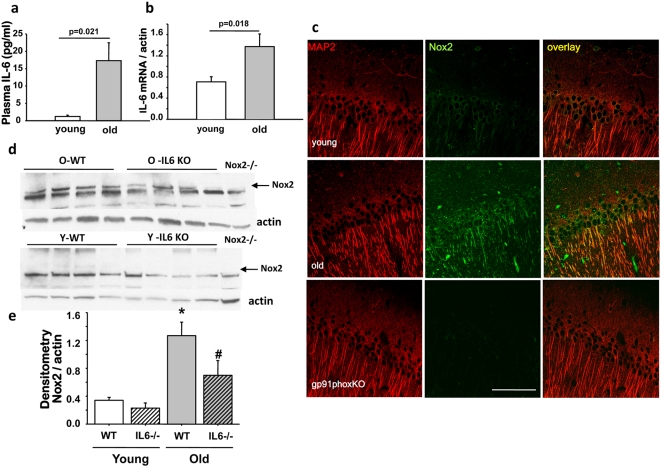
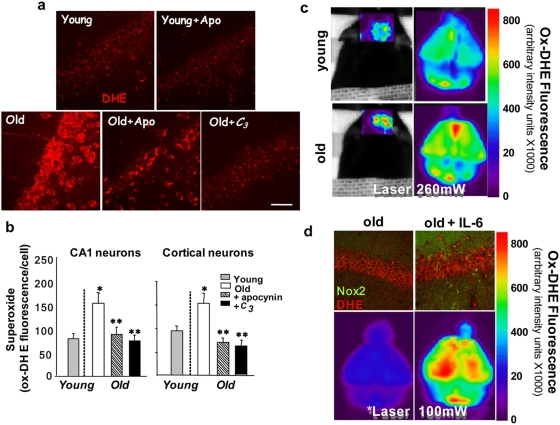
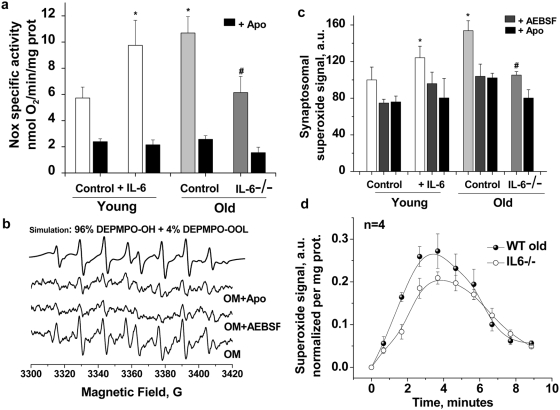
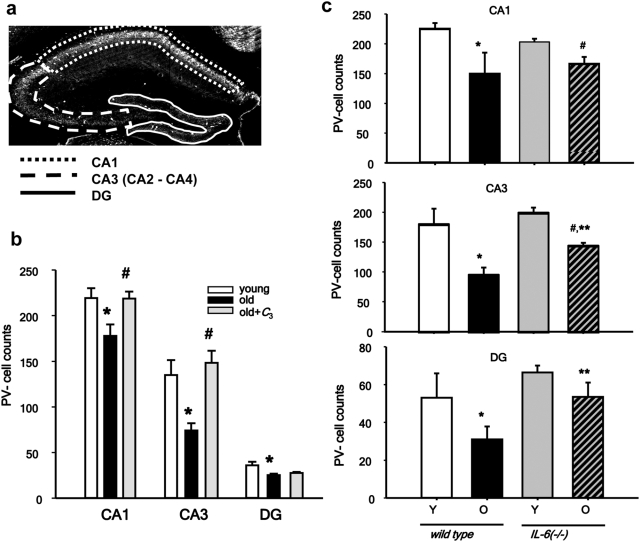
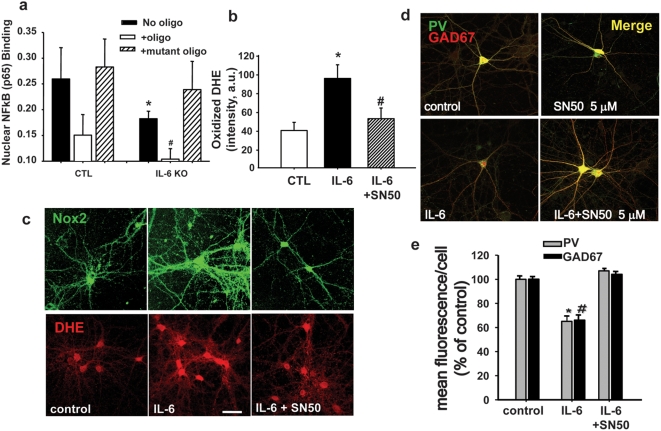
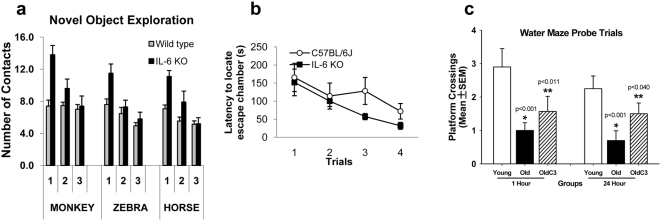
BACKGROUND: Multiple studies have shown that plasma levels of the pro-inflammatory cytokine interleukin-6 (IL-6) are elevated in patients with important and prevalent adverse health conditions, including atherosclerosis, diabetes, obesity, obstructive sleep apnea, hypertension, and frailty. Higher plasma levels of IL-6, in turn, increase the risk of many conditions associated with aging including age-related cognitive decline. However, the mechanisms underlying this association between IL-6 and cognitive vulnerability remain unclear. METHODS AND FINDINGS: We investigated the role of IL-6 in brain aging in young (4 mo) and aged (24 mo) wild-type C57BL6 and genetically-matched IL-6(-/-) mice, and determined that IL-6 was necessary and sufficient for increased neuronal expression of the superoxide-producing immune enzyme, NADPH-oxidase, and this was mediated by non-canonical NFkappaB signaling. Furthermore, superoxide production by NADPH-oxidase was directly responsible for age-related loss of parvalbumin (PV)-expressing GABAergic interneurons, neurons essential for normal information processing, encoding, and retrieval in hippocampus and cortex. Targeted deletion of IL-6 or elimination of superoxide by chronic treatment with a superoxide-dismutase mimetic prevented age-related loss of PV-interneurons and reversed age-related cognitive deficits on three standard tests of spatial learning and recall. CONCLUSIONS: Present results indicate that IL-6 mediates age-related loss of critical PV-expressing GABAergic interneurons through increased neuronal NADPH-oxidase-derived superoxide production, and that rescue of these interneurons preserves cognitive performance in aging mice, suggesting that elevated peripheral IL-6 levels may be directly and mechanistically linked to long-lasting cognitive deficits in even normal older individuals. Further, because PV-interneurons are also selectively affected by commonly used anesthetic agents and drugs, our findings imply that IL-6 levels may predict adverse CNS effects in older patients exposed to these compounds through specific derangements in inhibitory interneurons, and that therapies directed at lowering IL-6 may have cognitive benefits clinically.
Overview
The claims and statistics of this paper haven’t been checked yet.
Run the check — free, no account needed. It reads the open-access text and checks the sources it cites.
Integrity signals
Registry
Cites
Statistics
Figures
Verification
Claims the paper makes
The claims and statistics of this paper haven’t been checked yet.
Run the check — free, no account needed. It reads the open-access text and checks the sources it cites.
Claims other papers make about this one
Each is checked against this paper’s own text: does it say what the citing paper says it does?
In the citing paper
“IL-6 is likely signaling through STAT3 [96].”
From Parvalbumin interneuron vulnerability and brain disorders (2021) · cites this paper as [96]
Self-check
Percentages, sums and reported differences re-computed from the paper’s own numbers.
The self-check needs the paper’s full text.
Citations
Cites
The NOX Family of ROS-Generating NADPH Oxidases: Physiology and Pathophysiology
Bedard, K., & Krause, K.-H. (2007) · Physiological Reviews · doi:10.1152/physrev.00044.2005 · Cited by 6,989
Synaptic mechanisms of synchronized gamma oscillations in inhibitory interneuron networks
Bartos, M., Vida, I., & Jonas, P. (2007) · Nature Reviews Neuroscience · doi:10.1038/nrn2044 · Cited by 2,070
Neural plasticity in the ageing brain
Burke, S. N., & Barnes, C. A. (2005) · Nature reviews. Neuroscience · doi:10.1038/nrn1809 · Cited by 1,709
Walston, J., Hadley, E. C., Ferrucci, L., Guralnik, J. M., Newman, A. B., Studenski, S. A., Ershler, W. B., Harris, T., & Fried, L. P. (2006) · Journal of the American Geriatrics Society · doi:10.1111/j.1532-5415.2006.00745.x · Cited by 1,605
Age-Associated Increased Interleukin-6 Gene Expression, Late-Life Diseases, and Frailty
Ershler, W. B., & Keller, E. T. (2000) · Annual Review of Medicine · doi:10.1146/annurev.med.51.1.245 · Cited by 1,282
Daynes, R. A., Araneo, B. A., Ershler, W. B., Maloney, C., Li, G. Z., & Ryu, S. Y. (1993) · The Journal of Immunology · doi:10.4049/jimmunol.150.12.5219 · Cited by 1,264
Pattern Separation in the Human Hippocampal CA3 and Dentate Gyrus
Bakker, A., Kirwan, C. B., Miller, M. I., & Stark, C. E. L. (2008) · Science · doi:10.1126/science.1152882 · Cited by 1,050
Neurologic disease induced in transgenic mice by cerebral overexpression of interleukin 6.
Campbell, I. L., Abraham, C. R., Masliah, E., Kemper, P., Inglis, J. D., Oldstone, M. B., & Mucke, L. (1993) · Proceedings of the National Academy of Sciences · doi:10.1073/pnas.90.21.10061 · Cited by 1,006
Top-down suppression deficit underlies working memory impairment in normal aging
Gazzaley, A., Cooney, J. W., Rissman, J., & D'Esposito, M. (2005) · Nature Neuroscience · doi:10.1038/nn1543 · Cited by 934
Inflammatory mediators in the elderly
Krabbe, K. S., Pedersen, M., & Bruunsgaard, H. (2004) · Experimental Gerontology · doi:10.1016/j.exger.2004.01.009 · Cited by 928
Functional analysis of Nox4 reveals unique characteristics compared to other NADPH oxidases
Martyn, K. D., Frederick, L. M., von Loehneysen, K., Dinauer, M. C., & Knaus, U. G. (2006) · Cellular Signalling · doi:10.1016/j.cellsig.2005.03.023 · Cited by 783
Apocynin Is Not an Inhibitor of Vascular NADPH Oxidases but an Antioxidant
Heumüller, S., Wind, S., Barbosa-Sicard, E., Schmidt, H. H. H. W., Busse, R., Schröder, K., & Brandes, R. P. (2008) · Hypertension · doi:10.1161/hypertensionaha.107.100214 · Cited by 735
Interleukin-6 in Aging and Chronic Disease: A Magnificent Pathway
Maggio, M. G., Guralnik, J. M., Longo, D. L., & Ferrucci, L. (2006) · The Journals of Gerontology Series A · doi:10.1093/gerona/61.6.575 · Cited by 696
Hexameric Structure and Assembly of the Interleukin-6/IL-6 α-Receptor/gp130 Complex
Boulanger, M. J., Chow, D., Brevnova, E. E., & García, K. C. (2003) · Science · doi:10.1126/science.1083901 · Cited by 658
NOX4 activity is determined by mRNA levels and reveals a unique pattern of ROS generation
Serrander, L., Cartier, L., Bedard, K., Banfi, B., Lardy, B., Plastre, O., Sienkiewicz, A., Fórró, L., Schlegel, W., & Krause, K.-H. (2007) · Biochemical Journal · doi:10.1042/bj20061903 · Cited by 627
Yang, J., Liao, X., Agarwal, M. K., Barnes, L., Auron, P. E., & Stark, G. R. (2007) · Genes & Development · doi:10.1101/gad.1553707 · Cited by 611
Ketamine-Induced Loss of Phenotype of Fast-Spiking Interneurons Is Mediated by NADPH-Oxidase
Behrens, M. M., Ali, S. S., Dao, D. N., Lucero, J., Shekhtman, G., Quick, K. L., & Dugan, L. L. (2007) · Science · doi:10.1126/science.1148045 · Cited by 585
Self-citationTrikha, M., Corringham, R. E., Klein, B., & Rossi, J. (2003) · PubMed · Cited by 506
Interleukin‐6: A Cytokine for Gerontolgists
Ershler, W. B. (1993) · Journal of the American Geriatrics Society · doi:10.1111/j.1532-5415.1993.tb02054.x · Cited by 475
Age differences in spatial memory in a virtual environment navigation task
Moffat, S. D., Zonderman, A. B., & Resnick, S. M. (2001) · Neurobiology of Aging · doi:10.1016/s0197-4580(01)00251-2 · Cited by 403
Virtual navigation in humans: the impact of age, sex, and hormones on place learning
Driscoll, I. F., Hamilton, D. A., Yeo, R. A., Brooks, W. M., & Sutherland, R. J. (2005) · Hormones and Behavior · doi:10.1016/j.yhbeh.2004.11.013 · Cited by 394
Molecular mechanisms of aging-associated inflammation.
Sarkar, D., & Fisher, P. (2006) · Cancer Letters · doi:10.1016/j.canlet.2005.04.009 · Cited by 379
NADPH Oxidases of the Brain: Distribution, Regulation, and Function
Infanger, D. W., Sharma, R. V., & Davisson, R. L. (2006) · Antioxidants and Redox Signaling · doi:10.1089/ars.2006.8.1583 · Cited by 365
Neurocognitive aging: prior memories hinder new hippocampal encoding
Wilson, I. A., Gallagher, M., Eichenbaum, H., & Tanila, H. (2006) · Trends in Neurosciences · doi:10.1016/j.tins.2006.10.002 · Cited by 362
Stefanska, J., & Pawliczak, R. (2008) · Mediators of Inflammation · doi:10.1155/2008/106507 · Cited by 357
A model of hippocampal memory encoding and retrieval: GABAergic control of synaptic plasticity
Paulsen, O., & Moser, E. I. (1998) · Trends in Neurosciences · doi:10.1016/s0166-2236(97)01205-8 · Cited by 345
Behavioral functions of the CA3 subregion of the hippocampusPreprint
Kesner, R. P. (2007) · Learning & Memory · doi:10.1101/lm.688207 · Cited by 337
Kinney, J. W., Davis, C. N., Tabarean, I., Conti, B., Bartfai, T., & Behrens, M. M. (2006) · The Journal of Neuroscience · doi:10.1523/jneurosci.4722-05.2006 · Cited by 329
Self-citationWallenstein, G. V., & Hasselmo, M. E. (1997) · Journal of Neurophysiology · doi:10.1152/jn.1997.78.1.393 · Cited by 299
Transthyretin protects Alzheimer's mice from the behavioral and biochemical effects of Aβ toxicity
Buxbaum, J. N., Ye, Z., Reixach, N., Friske, L., Levy, C. L., Das, P., Golde, T. E., Masliah, E., Roberts, A. R., & Bartfai, T. (2008) · Proceedings of the National Academy of Sciences · doi:10.1073/pnas.0712197105 · Cited by 293
Self-citationChoi, D., Pennathur, S., Perier, C., Tieu, K., Teismann, P., Wu, D.-C., Jackson-Lewis, V. R., Vila, M., Vonsattel, J., Heinecke, J. W., et al. (2005) · Journal of Neuroscience · doi:10.1523/jneurosci.0970-05.2005 · Cited by 286
Sources and Targets of Reactive Oxygen Species in Synaptic Plasticity and Memory
Kishida, K. T., & Klann, E. (2006) · Antioxidants and Redox Signaling · doi:10.1089/ars.2007.9.233 · Cited by 267
Sources and Targets of Reactive Oxygen Species in Synaptic Plasticity and Memory
Kishida, K. T., & Klann, E. (2006) · Antioxidants and Redox Signaling · doi:10.1089/ars.2007.9.ft-8 · Cited by 258
The role of the dentate gyrus, CA3a,b, and CA3c for detecting spatial and environmental novelty
Hunsaker, M. R., Rosenberg, J. S., & Kesner, R. P. (2008) · Hippocampus · doi:10.1002/hipo.20464 · Cited by 252
Interleukin-6 Mediates the Increase in NADPH-Oxidase in the Ketamine Model of Schizophrenia
Behrens, M. M., Ali, S. S., & Dugan, L. L. (2008) · The Journal of Neuroscience · doi:10.1523/jneurosci.4457-08.2008 · Cited by 241
Self-citationCirculating interleukin‐6 mediates the febrile response to localised inflammation in rats
Cartmell, T., Poole, S., Turnbull, A. V., Rothwell, N. J., & Luheshi, G. N. (2000) · The Journal of Physiology · doi:10.1111/j.1469-7793.2000.00653.x · Cited by 233
NADPH oxidase immunoreactivity in the mouse brain
Serrano, F., Kolluri, N., Wientjes, F. B., Card, J. P., & Klann, E. (2003) · Brain Research · doi:10.1016/s0006-8993(03)03364-x · Cited by 216
A carboxyfullerene SOD mimetic improves cognition and extends the lifespan of mice
Quick, K. L., Ali, S. S., Arch, R. H., Xiong, C., Wozniak, D. F., & Dugan, L. L. (2006) · Neurobiology of Aging · doi:10.1016/j.neurobiolaging.2006.09.014 · Cited by 185
Self-citationInterleukin-6 Covaries Inversely With Cognitive Performance Among Middle-Aged Community Volunteers
Marsland, A. L., Petersen, K. L., Sathanoori, R., Muldoon, M. F., Neumann, S. A., Ryan, C. M., Flory, J. D., & Manuck, S. B. (2006) · Psychosomatic Medicine · doi:10.1097/01.psy.0000238451.22174.92 · Cited by 182
Molecular and cellular biology of interleukin-6 and its receptor
Keller, E. T. (1996) · Frontiers in bioscience · doi:10.2741/a136 · Cited by 180
Bermejo, P., Martín-Aragón, S., Benedí, J., Susín, C., Felici, E., Gil, P., Ribera, J. M., & Villar, Á. M. (2008) · Immunology Letters · doi:10.1016/j.imlet.2008.02.002 · Cited by 178
Kishida, K. T., Hoeffer, C. A., Hu, D., Pao, M., Holland, S. M., & Klann, E. (2006) · Molecular and Cellular Biology · doi:10.1128/mcb.00269-06 · Cited by 162
Giuliani, N., Sansoni, P., Girasole, G., Vescovini, R., Passeri, G., Passeri, M., & Pedrazzoni, M. (2001) · Experimental Gerontology · doi:10.1016/s0531-5565(00)00220-5 · Cited by 151
Bu, J. (2003) · Experimental Neurology · doi:10.1016/s0014-4886(03)00094-3 · Cited by 137
The role of the dorsal CA3 hippocampal subregion in spatial working memory and pattern separation
Gilbert, P. E., & Kesner, R. P. (2006) · Behavioural Brain Research · doi:10.1016/j.bbr.2006.01.002 · Cited by 133
Maki, R. A., Tyurin, V. A., Lyon, R. C., Hamilton, R. L., DeKosky, S. T., Kagan, V. E., & Reynolds, W. F. (2008) · Journal of Biological Chemistry · doi:10.1074/jbc.m807731200 · Cited by 127
Ali, S. S., Xiong, C., Lucero, J. D., Behrens, M. M., Dugan, L. L., & Quick, K. L. (2006) · Aging Cell · doi:10.1111/j.1474-9726.2006.00252.x · Cited by 124
Self-citationJackman, K. A., Miller, A. A., Silva, T. M. D., Crack, P. J., Drummond, G. R., & Sobey, C. G. (2009) · British Journal of Pharmacology · doi:10.1111/j.1476-5381.2008.00073.x · Cited by 120
Regulation of interleukin-6 gene expression in brain of aged mice by nuclear factor κB
Ye, S.-M., & Johnson, R. W. (2001) · Journal of Neuroimmunology · doi:10.1016/s0165-5728(01)00316-2 · Cited by 103
Rat hippocampal GABAergic molecular markers are differentially affected by ageing
Vela, J. M., Gutiérrez, A., Vitórica, J., & Ruano, D. (2003) · Journal of Neurochemistry · doi:10.1046/j.1471-4159.2003.01681.x · Cited by 102
Preliminary Evidence for Subdimensions of Geriatric Frailty: The MacArthur Study of Successful Aging
Sarkisian, C. A., Gruenewald, T. L., Boscardin, W. J., & Seeman, T. E. (2008) · Journal of the American Geriatrics Society · doi:10.1111/j.1532-5415.2008.02041.x · Cited by 91
Interleukin-6, β-amyloid peptide and NMDA interactions in rat cortical neurons
Qiu, Z., & Gruol, D. L. (2003) · Journal of Neuroimmunology · doi:10.1016/s0165-5728(03)00158-9 · Cited by 79
Age-related deficits in mice performing working memory tasks in a water maze.
Magnusson, K. R., Scruggs, B., Aniya, J., Wright, K. C., Ontl, T., Xing, Y., & Bai, L. (2003) · Behavioral Neuroscience · doi:10.1037/0735-7044.117.3.485 · Cited by 77
Object recognition analysis in mice using nose-point digital video tracking
Benice, T. S., & Raber, J. (2007) · Journal of Neuroscience Methods · doi:10.1016/j.jneumeth.2007.11.002 · Cited by 74
Luebke, J. I., & Rosene, D. L. (2003) · The Journal of Comparative Neurology · doi:10.1002/cne.10668 · Cited by 60
Changes in the expression of the NR2B subunit during aging in macaque monkeys
Bai, L., Hof, P. R., Standaert, D. G., Xing, Y., Nelson, S. E., Young, A. B., & Magnusson, K. R. (2003) · Neurobiology of Aging · doi:10.1016/s0197-4580(03)00091-5 · Cited by 59
Hippocampal memory and plasticity in superoxide dismutase mutant mice
Thiels, E., & Klann, E. (2002) · Physiology & Behavior · doi:10.1016/s0031-9384(02)00900-9 · Cited by 44
Neurodegeneration and peroxidases
Everse, J., & Coates, P. W. (2007) · Neurobiology of Aging · doi:10.1016/j.neurobiolaging.2007.10.007 · Cited by 42
Aged APP23 mice show a delay in switching to the use of a strategy in the Barnes maze
Prut, L., Abramowski, D., Krucker, T., Levy, C. L., Roberts, A. J., Staufenbiel, M., & Wießner, C. (2007) · Behavioural Brain Research · doi:10.1016/j.bbr.2007.01.017 · Cited by 42
Self-citationde Erausquin, G. A., Hyrc, K., Dorsey, D. A., Mamah, D. T., Dokucu, M. E., Mascó, D. H., Walton, T., Dikranian, K. T., Soriano‐Navarro, M., García‐Verdugo, J. M., et al. (2003) · Molecular Pharmacology · doi:10.1124/mol.63.4.784 · Cited by 38
Self-citationγ‐aminobutyric acidergic interneuron vulnerability to aging in canine prefrontal cortex
Pugliese, M., Carrasco, J. L., Geloso, M. C., Mascort, J., Michetti, F., & Mahy, N. (2004) · Journal of Neuroscience Research · doi:10.1002/jnr.20223 · Cited by 36
Superoxide Dismutase and Hippocampal Function: Age and Isozyme Matter
Hu, D., Klann, E., & Thiels, E. (2006) · Antioxidants and Redox Signaling · doi:10.1089/ars.2007.9.201 · Cited by 36
Hunsaker, M. R., Tran, G. T., & Kesner, R. P. (2008) · Hippocampus · doi:10.1002/hipo.20429 · Cited by 35
Hall, D. J., Han, S.-H., & Dugan, L. L. (2009) · Proceedings of SPIE, the International Society for Optical Engineering/Proceedings of SPIE · doi:10.1117/12.808598 · Cited by 1
Self-citation
Research works printed but not linked: 1
- L Serrander, 2007, NOX4 activity is determined by mRNA levels and reveals a unique pattern of ROS generation., Biochem J
Cited by
Sorted by citations
Frailty and cognitive impairment—A review of the evidence and causal mechanisms
Robertson, D. A., Savva, G. M., & Kenny, R. A. (2013) · Ageing Research Reviews · doi:10.1016/j.arr.2013.06.004 · Cited by 784
Fillman, S. G., Cloonan, N., Catts, V. S., Miller, L. C., Wong, J., McCrossin, T., Cairns, M., & Weickert, C. S. (2013) · Molecular Psychiatry · doi:10.1038/mp.2012.110 · Cited by 609
Oxidative stress in schizophrenia: An integrated approach
Bitanihirwe, B. K. Y., & Woo, T.-U. W. (2010) · Neuroscience & Biobehavioral Reviews · doi:10.1016/j.neubiorev.2010.10.008 · Cited by 482
AMPK dysregulation promotes diabetes-related reduction of superoxide and mitochondrial function
Dugan, L. L., You, Y.-H., Ali, S. S., Diamond-Stanic, M. K., Miyamoto, S., Declèves, A., Andreyev, A. Y., Quach, T., Ly, S., Shekhtman, G., et al. (2013) · Journal of Clinical Investigation · doi:10.1172/jci66218 · Cited by 457
Self-citationInterleukin-6, a mental cytokine
Spooren, A., Kolmus, K., Laureys, G., Clinckers, R., De Keyser, J., Haegeman, G., & Gerlo, S. (2011) · Brain Research Reviews · doi:10.1016/j.brainresrev.2011.01.002 · Cited by 352
Metadata
- Authors
- Dugan, L. L., Ali, S. S., Shekhtman, G., Roberts, A. J., Lucero, J., Quick, K. L., & Behrens, M. M.
- Affiliations
- University of California San Diego (US)
- Scripps Research Institute (US)
- Corresponding author
- Dugan, Laura L.
- Venue
- PLoS ONE
- Publisher
- Public Library of Science (PLoS)
- Published
- 2009-05-13
- Volume
- 4
- Issue
- 5
- Pages
- e5518
- ISSN
- 1932-6203 (ISSN-L)
- PMC
- PMC2678193
- OpenAlex
- W2000833088
- Cited by
- 165
- References
- 66
- Citations by year
- 2026: 4 · 2025: 8 · 2024: 9 · 2023: 10 · 2022: 9 · 2021: 12 · 2020: 9 · 2019: 11 · 2018: 10 · 2017: 10 · 2016: 12 · 2015: 11 · 2014: 11 · 2013: 13 · 2012: 7
- FWCI
- 5.52
- Type
- journal article
- Language
- en
- Open access
- gold
- doi.org
- Locations
- PLoS ONE (publishedVersion, cc-by)
- Europe PMC (PubMed Central) (publishedVersion, other-oa)
- PubMed Central (publishedVersion, cc-by)
- PubMed (publishedVersion)
- DOAJ (DOAJ: Directory of Open Access Journals) (submittedVersion, cc-by-sa)
- Figshare (submittedVersion, cc-by)
- Funders
- Larry L. Hillblom Foundation
- National Institutes of Health (NS057096)
- National Institute on Aging (K25AG026379, R21AG030320, AG030320)
- National Institute of Neurological Disorders and Stroke (P30NS057096, NS057096)
- Topics
- Life Sciences › Neuroscience › Neurology › Neuroinflammation and Neurodegeneration Mechanisms
- Life Sciences › Neuroscience › Biological Psychiatry › Tryptophan and brain disorders
- Life Sciences › Neuroscience › Cellular and Molecular Neuroscience › Antioxidants, Aging, Portulaca oleracea
- Keywords
- interleukin-6, brain aging, GABAergic interneurons, parvalbumin interneurons, NADPH oxidase, superoxide, non-canonical NF-κB signaling, age-related cognitive decline, neuroinflammation, superoxide dismutase mimetic, spatial learning and memory
- MeSH terms
- NADPH Oxidase 2, Aging, Animals, Cell Nucleus, Cognition, gamma-Aminobutyric Acid, Interneurons, Membrane Glycoproteins, Mice, Transgenic, Nerve Degeneration, Neurons, Parvalbumins, Superoxide Dismutase, Synaptosomes, Interleukin-6, Prosencephalon, NADPH Oxidases, Mice
About these checks
Registry, retraction, Cites and statistics results are computed, not judged, with one exception: a printed reference that no index lists is read once by a model before it counts as a citation error. Claims are extracted by a model and kept only when their quote appears verbatim in the text; each cited source is then checked, with a model’s help, for whether it says what the claim relies on. Those verdicts can be wrong — read the claim’s quote and the cited source before relying on one.
Statistics and arithmetic are recomputed, not judged.
Confidence bands are shown only for fields calibrated on our annotated test set. None is calibrated yet, so no band is shown.
What counts as a claim ›How we measure confidence ›How we check this ›
Are you an author, or do you see a problem with this page? Request a review
