

The DOI matches its Crossref record; 64 of the 66 references it cites were found in a registry or an index.
IL-6 Mediated Degeneration of Forebrain GABAergic Interneurons and Cognitive Impairment in Aged Mice through Activation of Neuronal NADPH Oxidase
Open accessAbstract
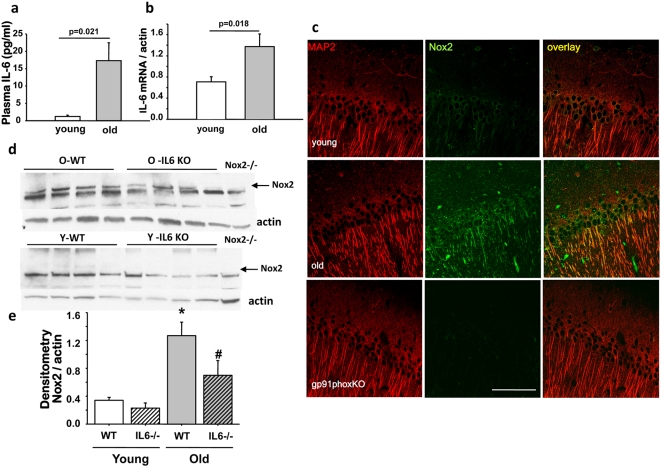
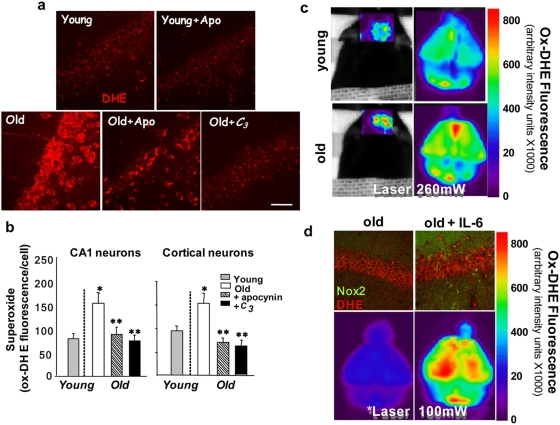
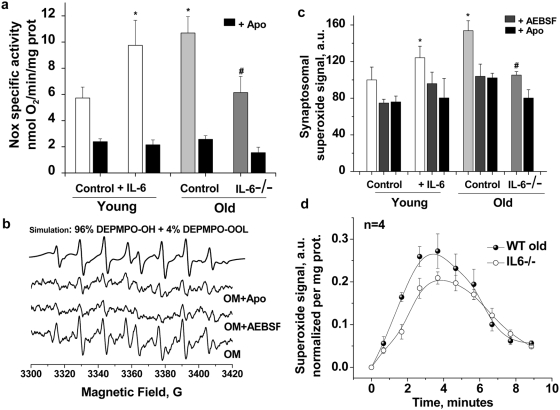
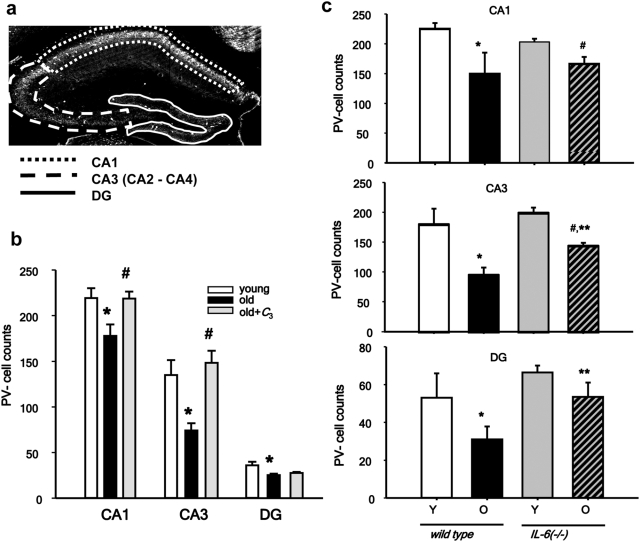
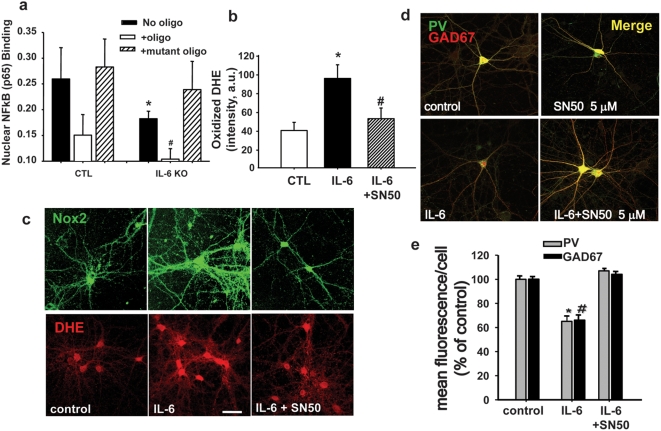
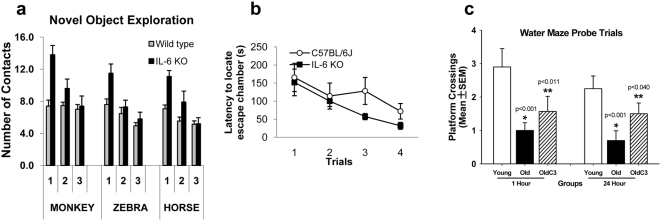
BACKGROUND: Multiple studies have shown that plasma levels of the pro-inflammatory cytokine interleukin-6 (IL-6) are elevated in patients with important and prevalent adverse health conditions, including atherosclerosis, diabetes, obesity, obstructive sleep apnea, hypertension, and frailty. Higher plasma levels of IL-6, in turn, increase the risk of many conditions associated with aging including age-related cognitive decline. However, the mechanisms underlying this association between IL-6 and cognitive vulnerability remain unclear. METHODS AND FINDINGS: We investigated the role of IL-6 in brain aging in young (4 mo) and aged (24 mo) wild-type C57BL6 and genetically-matched IL-6(-/-) mice, and determined that IL-6 was necessary and sufficient for increased neuronal expression of the superoxide-producing immune enzyme, NADPH-oxidase, and this was mediated by non-canonical NFkappaB signaling. Furthermore, superoxide production by NADPH-oxidase was directly responsible for age-related loss of parvalbumin (PV)-expressing GABAergic interneurons, neurons essential for normal information processing, encoding, and retrieval in hippocampus and cortex. Targeted deletion of IL-6 or elimination of superoxide by chronic treatment with a superoxide-dismutase mimetic prevented age-related loss of PV-interneurons and reversed age-related cognitive deficits on three standard tests of spatial learning and recall. CONCLUSIONS: Present results indicate that IL-6 mediates age-related loss of critical PV-expressing GABAergic interneurons through increased neuronal NADPH-oxidase-derived superoxide production, and that rescue of these interneurons preserves cognitive performance in aging mice, suggesting that elevated peripheral IL-6 levels may be directly and mechanistically linked to long-lasting cognitive deficits in even normal older individuals. Further, because PV-interneurons are also selectively affected by commonly used anesthetic agents and drugs, our findings imply that IL-6 levels may predict adverse CNS effects in older patients exposed to these compounds through specific derangements in inhibitory interneurons, and that therapies directed at lowering IL-6 may have cognitive benefits clinically.
Overview
The claims and statistics of this paper haven’t been checked yet.
Run the check — free, no account needed. It reads the open-access text and checks the sources it cites.
Integrity signals
Registry
Cites
Statistics
Figures
Verification
Claims the paper makes
The claims and statistics of this paper haven’t been checked yet.
Run the check — free, no account needed. It reads the open-access text and checks the sources it cites.
Claims other papers make about this one
Each is checked against this paper’s own text: does it say what the citing paper says it does?
In the citing paper
“IL-6 is likely signaling through STAT3 [96].”
From Parvalbumin interneuron vulnerability and brain disorders (2021) · cites this paper as [96]
Self-check
Percentages, sums and reported differences re-computed from the paper’s own numbers.
The self-check needs the paper’s full text.
Citations
Cites
The NOX Family of ROS-Generating NADPH Oxidases: Physiology and Pathophysiology
Bedard, K., & Krause, K.-H. (2007) · Physiological Reviews · doi:10.1152/physrev.00044.2005 · Cited by 6,989
Synaptic mechanisms of synchronized gamma oscillations in inhibitory interneuron networks
Bartos, M., Vida, I., & Jonas, P. (2007) · Nature Reviews Neuroscience · doi:10.1038/nrn2044 · Cited by 2,070
Neural plasticity in the ageing brain
Burke, S. N., & Barnes, C. A. (2005) · Nature reviews. Neuroscience · doi:10.1038/nrn1809 · Cited by 1,709
Walston, J., Hadley, E. C., Ferrucci, L., Guralnik, J. M., Newman, A. B., Studenski, S. A., Ershler, W. B., Harris, T., & Fried, L. P. (2006) · Journal of the American Geriatrics Society · doi:10.1111/j.1532-5415.2006.00745.x · Cited by 1,605
Age-Associated Increased Interleukin-6 Gene Expression, Late-Life Diseases, and Frailty
Ershler, W. B., & Keller, E. T. (2000) · Annual Review of Medicine · doi:10.1146/annurev.med.51.1.245 · Cited by 1,282
Daynes, R. A., Araneo, B. A., Ershler, W. B., Maloney, C., Li, G. Z., & Ryu, S. Y. (1993) · The Journal of Immunology · doi:10.4049/jimmunol.150.12.5219 · Cited by 1,264
Pattern Separation in the Human Hippocampal CA3 and Dentate Gyrus
Bakker, A., Kirwan, C. B., Miller, M. I., & Stark, C. E. L. (2008) · Science · doi:10.1126/science.1152882 · Cited by 1,050
Neurologic disease induced in transgenic mice by cerebral overexpression of interleukin 6.
Campbell, I. L., Abraham, C. R., Masliah, E., Kemper, P., Inglis, J. D., Oldstone, M. B., & Mucke, L. (1993) · Proceedings of the National Academy of Sciences · doi:10.1073/pnas.90.21.10061 · Cited by 1,006
Top-down suppression deficit underlies working memory impairment in normal aging
Gazzaley, A., Cooney, J. W., Rissman, J., & D'Esposito, M. (2005) · Nature Neuroscience · doi:10.1038/nn1543 · Cited by 934
Inflammatory mediators in the elderly
Krabbe, K. S., Pedersen, M., & Bruunsgaard, H. (2004) · Experimental Gerontology · doi:10.1016/j.exger.2004.01.009 · Cited by 928
Research works printed but not linked: 1
- L Serrander, 2007, NOX4 activity is determined by mRNA levels and reveals a unique pattern of ROS generation., Biochem J
Cited by
Sorted by citations
Frailty and cognitive impairment—A review of the evidence and causal mechanisms
Robertson, D. A., Savva, G. M., & Kenny, R. A. (2013) · Ageing Research Reviews · doi:10.1016/j.arr.2013.06.004 · Cited by 784
Fillman, S. G., Cloonan, N., Catts, V. S., Miller, L. C., Wong, J., McCrossin, T., Cairns, M., & Weickert, C. S. (2013) · Molecular Psychiatry · doi:10.1038/mp.2012.110 · Cited by 609
Oxidative stress in schizophrenia: An integrated approach
Bitanihirwe, B. K. Y., & Woo, T.-U. W. (2010) · Neuroscience & Biobehavioral Reviews · doi:10.1016/j.neubiorev.2010.10.008 · Cited by 482
AMPK dysregulation promotes diabetes-related reduction of superoxide and mitochondrial function
Dugan, L. L., You, Y.-H., Ali, S. S., Diamond-Stanic, M. K., Miyamoto, S., Declèves, A., Andreyev, A. Y., Quach, T., Ly, S., Shekhtman, G., et al. (2013) · Journal of Clinical Investigation · doi:10.1172/jci66218 · Cited by 457
Self-citationInterleukin-6, a mental cytokine
Spooren, A., Kolmus, K., Laureys, G., Clinckers, R., De Keyser, J., Haegeman, G., & Gerlo, S. (2011) · Brain Research Reviews · doi:10.1016/j.brainresrev.2011.01.002 · Cited by 352
Inflammation in Alzheimer’s disease: Lessons learned from microglia-depletion models
Spangenberg, E. E., & Green, K. N. (2017) · Brain, Behavior, and Immunity · doi:10.1016/j.bbi.2016.07.003 · Cited by 352
New Insights on NOX Enzymes in the Central Nervous System
Nayernia, Z., Jaquet, V., & Krause, K.-H. (2014) · Antioxidants & Redox Signaling · doi:10.1089/ars.2013.5703 · Cited by 279
Food reward, hyperphagia, and obesity
Berthoud, H.-R., Lenard, N. R., & Shin, A. C. (2011) · American Journal of Physiology-Regulatory, Integrative and Comparative Physiology · doi:10.1152/ajpregu.00028.2011 · Cited by 275
Neuroinflammation and neurodegeneration in overnutrition-induced diseases
Cai, D. (2013) · Trends in Endocrinology & Metabolism · doi:10.1016/j.tem.2012.11.003 · Cited by 256
Parvalbumin interneuron vulnerability and brain disorders
Ruden, J. B., Dugan, L. L., & Konradi, C. (2021) · Neuropsychopharmacology · doi:10.1038/s41386-020-0778-9 · Cited by 194
Self-citationLanz, T. A., Reinhart, V., Sheehan, M. J., Rizzo, S. J. S., Bove, S. E., James, L. C., Volfson, D., Lewis, D. A., & Kleiman, R. J. (2019) · Translational Psychiatry · doi:10.1038/s41398-019-0492-8 · Cited by 215
Autism spectrum disorder causes, mechanisms, and treatments: focus on neuronal synapses
Won, H., Mah, W., & Kim, E. (2013) · Frontiers in Molecular Neuroscience · doi:10.3389/fnmol.2013.00019 · Cited by 217
Steullet, P., Cabungcal, J.-H., Kulak, A., Kraftsik, R., Chen, Y., Dalton, T. P., Cuenod, M., & Do, K. Q. (2010) · The Journal of Neuroscience · doi:10.1523/jneurosci.3857-09.2010 · Cited by 202
Ahmad, M. H., Fatima, M., & Mondal, A. C. (2018) · Journal of Clinical Neuroscience · doi:10.1016/j.jocn.2018.10.034 · Cited by 201
Novel Therapeutic Approaches for Alzheimer’s Disease: An Updated Review
Yu, T.-W., Lane, H., & Lin, C. (2021) · International Journal of Molecular Sciences · doi:10.3390/ijms22158208 · Cited by 190
Takao, K., Kobayashi, K., Hagihara, H., Ohira, K., Shoji, H., Hattori, S., Koshimizu, H., Umemori, J., Toyama, K., Nakamura, H. K., et al. (2013) · Neuropsychopharmacology · doi:10.1038/npp.2013.38 · Cited by 173
Powell, S. B., Sejnowski, T. J., & Behrens, M. M. (2012) · Neuropharmacology · doi:10.1016/j.neuropharm.2011.01.049 · Cited by 164
Self-citationCellular and temporal expression of NADPH oxidase (NOX) isotypes after brain injury
Cooney, S. J., Bermudez-Sabogal, S. L., & Byrnes, K. R. (2013) · Journal of Neuroinflammation · doi:10.1186/1742-2094-10-155 · Cited by 168
Khalifa, A. R. M., Abdel‐Rahman, E. A., Mahmoud, A. M., Ali, M. H., Noureldin, M., Saber, S. H., Mohsen, M., & Ali, S. S. (2017) · Physiological Reports · doi:10.14814/phy2.13125 · Cited by 154
Self-citationRengel, K. F., Pandharipande, P. P., & Hughes, C. G. (2018) · La Presse Médicale · doi:10.1016/j.lpm.2018.03.012 · Cited by 149
Sudduth, T. L., Powell, D. K., Smith, C. D., Greenstein, A. W., & Wilcock, D. M. (2013) · Journal of Cerebral Blood Flow & Metabolism · doi:10.1038/jcbfm.2013.1 · Cited by 144
Jung, J. E., Kim, G. S., & Chan, P. H. (2011) · Stroke · doi:10.1161/strokeaha.111.626648 · Cited by 127
PET Imaging of Microglial Activation—Beyond Targeting TSPO
Janssen, B., Vugts, D. J., Windhorst, A. D., & Mach, R. H. (2018) · Molecules · doi:10.3390/molecules23030607 · Cited by 127
Being overweight is associated with hippocampal atrophy: the PATH Through Life Study
Cherbuin, N., Sargent‐Cox, K. A., Fraser, M. A., Sachdev, P. S., & Anstey, K. J. (2015) · International Journal of Obesity · doi:10.1038/ijo.2015.106 · Cited by 119
Sex-related differences in oxidative stress and neurodegeneration
Tenkorang, M. A. A., Snyder, B., & Cunningham, R. L. (2017) · Steroids · doi:10.1016/j.steroids.2017.12.010 · Cited by 118
Factors Predisposing to Coma and Delirium
Skrobik, Y. K., Léger, C., Cossette, M., Michaud, V., & Turgeon, J. (2013) · Critical Care Medicine · doi:10.1097/ccm.0b013e318275d014 · Cited by 109
Hyperglycemia magnifies Schwann cell dysfunction and cell death triggered by PA-induced lipotoxicity
Padilla, A., Descorbeth, M., Almeyda, A. L., Payne, K. J., & León, M. A. D. (2010) · Brain Research · doi:10.1016/j.brainres.2010.11.013 · Cited by 107
Cahill‐Smith, S., & Li, J. (2014) · British Journal of Clinical Pharmacology · doi:10.1111/bcp.12357 · Cited by 109
Garcia-Oscos, F., Salgado, H., Hall, S., Thomas, F., Farmer, G. E., Bermeo, J., Galindo, L. C., Ramirez, R. D., D'Mello, S., Rose-John, S., et al. (2012) · Biological Psychiatry · doi:10.1016/j.biopsych.2011.11.018 · Cited by 105
Redox Signaling in Neurotransmission and Cognition During Aging
Kumar, A., Yegla, B., & Foster, T. C. (2017) · Antioxidants and Redox Signaling · doi:10.1089/ars.2017.7111 · Cited by 106
Teixeira-Santos, L., Albino‐Teixeira, A., & Pinho, D. (2020) · Pharmacological Research · doi:10.1016/j.phrs.2020.105280 · Cited by 108
NADPH oxidases: redox regulation of cell homeostasis and disease
Kračun, D., Lopes, L. R., Cifuentes-Pagano, E., & Pagano, P. J. (2025) · Physiological Reviews · doi:10.1152/physrev.00034.2023 · Cited by 114
Neuroinflammation in Post-Traumatic Epilepsy: Pathophysiology and Tractable Therapeutic Targets
Sharma, R., Leung, W. L., Zamani, A., O'Brien, T. J., Casillas-Espinosa, P. M., & Semple, B. D. (2019) · Brain Sciences · doi:10.3390/brainsci9110318 · Cited by 104
Ben‐Azu, B., Aderibigbe, A. O., Ajayi, A. M., Eneni, A.-E. O., Omogbiya, I. A., Owoeye, O., Umukoro, S., & Iwalewa, E. O. (2019) · International Immunopharmacology · doi:10.1016/j.intimp.2019.02.052 · Cited by 97
Valencia, A., Sapp, E., Kimm, J. S., McClory, H., Reeves, P., Alexander, J. S., Ansong, K. A., Masso, N., Frosch, M. P., Kegel, K. B., et al. (2012) · Human Molecular Genetics · doi:10.1093/hmg/dds516 · Cited by 95
RetractedBarnes, S. A., Pinto-Duarte, A., Kappe, A., Zembrzycki, A., Metzler, A., Mukamel, E. A., Lucero, J., Wang, X., Sejnowski, T. J., Markou, A., et al. (2015) · Molecular Psychiatry · doi:10.1038/mp.2015.113 · Cited by 92
Self-citationThe Plasma Membrane: A Platform for Intra- and Intercellular Redox Signaling
Nordzieke, D. E., & Medraño-Fernandez, I. (2018) · Antioxidants · doi:10.3390/antiox7110168 · Cited by 90
Chronic Kidney Disease and Cognitive Impairment: The Kidney-Brain Axis
Xie, Z., Tong, S., Chu, X., Feng, T., & Geng, M. (2022) · Kidney Diseases · doi:10.1159/000524475 · Cited by 101
Mudò, G., Frinchi, M., Nuzzo, D., Scaduto, P., Plescia, F., Massenti, M. F., Carlo, M. D., Cannizzaro, C., Cassata, G., Cicero, L. L., et al. (2019) · Journal of Neuroinflammation · doi:10.1186/s12974-019-1417-4 · Cited by 87
Evidence that Meningeal mast cells can worsen stroke pathology in mice.
Arac, A., Grimbaldeston, M. A., Nepomuceno, A. R. B., Olayiwola, O., Pereira, M. P., Nishiyama, Y., Tsykin, A., Goodall, G. J., Schlecht, U., Vogel, H., et al. (2014) · The American Journal of Pathology · doi:10.1016/j.ajpath.2014.06.003 · Cited by 74
Uric Acid Induces Cognitive Dysfunction through Hippocampal Inflammation in Rodents and Humans
Shao, X., Lu, W., Gao, F., Li, D., Hu, J., Li, Y., Zuo, Z., Jie, H., Zhao, Y., & Cen, X. (2016) · Journal of Neuroscience · doi:10.1523/jneurosci.1480-16.2016 · Cited by 86
Senescent endothelial cells: Potential modulators of immunosenescence and ageing
Pantsulaia, I., Ciszewski, W. M., & Niewiarowska, J. (2016) · Ageing Research Reviews · doi:10.1016/j.arr.2016.05.011 · Cited by 82
Donegan, J. J., Girotti, M., Weinberg, M. S., & Morilak, D. A. (2014) · The Journal of Neuroscience · doi:10.1523/jneurosci.3968-13.2014 · Cited by 77
Hou, C., Hsieh, C., Li, S., Lee, H. S., Graham, T. J. A., Xu, K., Weng, C.-C., Doot, R. K., Chu, W., Chakraborty, S. K., et al. (2017) · ACS Chemical Neuroscience · doi:10.1021/acschemneuro.7b00385 · Cited by 76
Self-citationNeuroinflammatory Signaling in the Pathogenesis of Alzheimer’s Disease
Uddin, M. S., Kabir, M. T., Jalouli, M., Rahman, M. A., Jeandet, P., Behl, T., Alexiou, A. T., Albadrani, G. M., Abdel‐Daim, M. M., Perveen, A., et al. (2021) · Current Neuropharmacology · doi:10.2174/1570159x19666210826130210 · Cited by 76
Stress, sensitive periods, and substance abuse
Andersen, S. L. (2019) · Neurobiology of Stress · doi:10.1016/j.ynstr.2018.100140 · Cited by 92
Li, H., Ip, S., Yuan, Q., Zheng, G., Tsim, K. W. K., Dong, T. T.-X., Lin, G., Han, Y., Liu, Y., Xian, Y., et al. (2019) · Brain Behavior and Immunity · doi:10.1016/j.bbi.2019.08.194 · Cited by 70
Chronic intermittent cold stress sensitizes neuro-immune reactivity in the rat brain
Girotti, M., Donegan, J. J., & Morilak, D. A. (2011) · Psychoneuroendocrinology · doi:10.1016/j.psyneuen.2011.02.008 · Cited by 72
Neuroinflammation, Early-Life Adversity, and Brain Development
Andersen, S. L. (2022) · Harvard Review of Psychiatry · doi:10.1097/hrp.0000000000000325 · Cited by 73
Athilingam, P. R., Moynihan, J. A., Chen, L., D’Aoust, R., Groer, M. E., & Kip, K. E. (2012) · Congestive Heart Failure · doi:10.1111/chf.12007 · Cited by 70
Ags (2015) · Journal of the American Geriatrics Society · doi:10.1111/jgs.13406 · Cited by 70
Guo, T., Fang, J., Tong, Z. Y., He, S., & Luo, Y. (2020) · Frontiers in Neuroscience · doi:10.3389/fnins.2020.00028 · Cited by 67
Molecular Mechanisms Underlying Neuroinflammation Elicited by Occupational Injuries and Toxicants
Pathak, D., & Sriram, K. (2023) · International Journal of Molecular Sciences · doi:10.3390/ijms24032272 · Cited by 72
Liang, G., Kow, A. S. F., Yusof, R., Tham, C. L., Ho, Y.-C., & Lee, M. T. (2024) · Biomedicines · doi:10.3390/biomedicines12010184 · Cited by 68
Food reward functions as affected by obesity and bariatric surgery
Shin, A. C., & Berthoud, H. R. (2011) · International Journal of Obesity · doi:10.1038/ijo.2011.147 · Cited by 68
Insulin dysfunction and allostatic load in bipolar disorder
Brietzke, E. M., Kapczinski, F. P., Grassi‐Oliveira, R., Grande, I., Vieta, E., & McIntyre, R. S. (2011) · Expert Review of Neurotherapeutics · doi:10.1586/ern.10.185 · Cited by 64
Neuroinflammatory and autonomic mechanisms in diabetes and hypertension
Han, C., Rice, M. W., & Cai, D. (2016) · American Journal of Physiology-Endocrinology and Metabolism · doi:10.1152/ajpendo.00012.2016 · Cited by 66
The Impact of Frailty in the Elderly on the Outcome of Surgery in the Aged
Brown, N. A., & Zenilman, M. E. (2010) · Advances in Surgery · doi:10.1016/j.yasu.2010.05.014 · Cited by 60
Glycogen synthase kinase-3 regulates inflammatory tolerance in astrocytes
Beurel, E., & Jope, R. S. (2010) · Neuroscience · doi:10.1016/j.neuroscience.2010.05.044 · Cited by 59
Interleukin-10 protects against aging-induced endothelial dysfunction
Kinzenbaw, D. A., Chu, Y., Silva, R. A. P., Didion, S. P., & Faraci, F. M. (2013) · Physiological Reports · doi:10.1002/phy2.149 · Cited by 58
Chronic stress, hippocampus and parvalbumin-positive interneurons: what do we know so far?
Zaletel, I. V., Filipović, D., & Puškaš, N. (2016) · Reviews in the Neurosciences · doi:10.1515/revneuro-2015-0042 · Cited by 57
Hall, D. J., Han, S.-H., Chepetan, A. M., Inui, E. G., Rogers, M., & Dugan, L. L. (2011) · Journal of Cerebral Blood Flow & Metabolism · doi:10.1038/jcbfm.2011.119 · Cited by 57
Self-citationÇalışkan, G., French, T., Lacalle, S. E., del Ángel, M., Steffen, J., Heimesaat, M. M., Dunay, I. R., & Stork, O. (2021) · Brain Behavior and Immunity · doi:10.1016/j.bbi.2021.10.007 · Cited by 58
Liu, F., Yang, L., Sun, X., Zhang, H., Pan, W. X., Wang, X., Yang, J., Ji, M., & Yuan, H. (2015) · Molecular Neurobiology · doi:10.1007/s12035-015-9571-x · Cited by 54
Schiavone, S., Mhillaj, E., Neri, M., Morgese, M. G., Tucci, P., Bove, M., Valentino, M., Di Giovanni, G., Pomara, C., Turillazzi, E., et al. (2017) · Molecular Neurobiology · doi:10.1007/s12035-016-9791-8 · Cited by 55
Wang, L., Shiraki, A., Itahashi, M., Akane, H., Abe, H., Mitsumori, K., & Shibutani, M. (2013) · Toxicological Sciences · doi:10.1093/toxsci/kft183 · Cited by 52
Influence of glutamatergic and GABAergic neurotransmission on obstructive sleep apnea
Kaczmarski, P., Sochal, M., Strzelecki, D., Białasiewicz, P., & Gabryelska, A. (2023) · Frontiers in Neuroscience · doi:10.3389/fnins.2023.1213971 · Cited by 54
Wu, Y., Yao, J., & Feng, K. (2020) · Neurochemical Research · doi:10.1007/s11064-019-02931-0 · Cited by 50
Navigating IL-6: From molecular mechanisms to therapeutic breakthroughs
Swaroop, A. K., Negi, P., Kar, A., Mariappan, E., Natarajan, J., Namboori, P. K. K., & Selvaraj, J. (2024) · Cytokine & Growth Factor Reviews · doi:10.1016/j.cytogfr.2023.12.007 · Cited by 48
Xu, T., Shen, X., Sun, L., Chen, Y., Zhang, B., Huang, D., & Li, W. (2018) · International Journal of Molecular Medicine · doi:10.3892/ijmm.2018.4005 · Cited by 48
Schmalbach, B., Lepsveridze, E., Djogo, N., Papashvili, G., Kuang, F., Leshchyns’ka, I., Sytnyk, V., Nikonenko, A. G., Dityatev, A. E., Jakovčevski, I., et al. (2015) · Journal of Neurochemistry · doi:10.1111/jnc.13284 · Cited by 46
The specific impact of uremic toxins upon cognitive domains: a review
Franco, Á. D. O., Starosta, R. T., & Roriz‐Cruz, M. (2018) · Brazilian Journal of Nephrology · doi:10.1590/2175-8239-jbn-2018-0033 · Cited by 52
Jaehne, E. J., & Baune, B. T. (2013) · Behavioural Brain Research · doi:10.1016/j.bbr.2013.12.006 · Cited by 46
Schiavone, S., Neri, M., Mhillaj, E., Morgese, M. G., Cantatore, S., Bové, M., Riezzo, I., Tucci, P., Pomara, C., Turillazzi, E., et al. (2016) · Translational Psychiatry · doi:10.1038/tp.2016.76 · Cited by 45
Garcia-Oscos, F., Peña, D., Housini, M., Cheng, D., Lopez, D., Borland, M. S., Salgado-Delgado, R., Salgado, H., D’Mello, S., Kilgard, M. P., et al. (2015) · Brain, Behavior, and Immunity · doi:10.1016/j.bbi.2014.07.020 · Cited by 43
Choi, D., & Lee, J. (2017) · International Journal of Molecular Sciences · doi:10.3390/ijms18112500 · Cited by 41
Thakurta, I. G., Chattopadhyay, M., Ghosh, A., & Chakrabarti, S. (2012) · Biogerontology · doi:10.1007/s10522-012-9392-5 · Cited by 39
Chanana, P., & Kumar, A. (2016) · Frontiers in Neuroscience · doi:10.3389/fnins.2016.00084 · Cited by 39
Xu, T., Sun, L., Shen, X., Chen, Y., Yin, Y., Zhang, J., Huang, D., Li, W., & Li, W. (2019) · International Immunopharmacology · doi:10.1016/j.intimp.2019.01.025 · Cited by 38
Jaehne, E. J., Corrigan, F., Toben, C. G., Jawahar, M. C., & Baune, B. T. (2015) · Pharmacology Biochemistry and Behavior · doi:10.1016/j.pbb.2015.05.021 · Cited by 40
Therapeutic Targeting Strategies for Early- to Late-Staged Alzheimer’s Disease
Kang, Y. J., Diep, Y. N., Tran, M., & Cho, H. (2020) · International Journal of Molecular Sciences · doi:10.3390/ijms21249591 · Cited by 36
Abdel‐Rahman, E. A., Mahmoud, A. M., Khalifa, A. M., & Ali, S. S. (2016) · The Journal of Physiology · doi:10.1113/jp271471 · Cited by 35
Self-citationInitial evidence linking synaptic superoxide production with poor short-term memory in aged mice
Ali, S. S., Young, J. W., Wallace, C. K., Gresack, J. E., Jeste, D. V., Geyer, M. A., Dugan, L. L., & Risbrough, V. B. (2010) · Brain Research · doi:10.1016/j.brainres.2010.11.009 · Cited by 32
Self-citationWoodie, L. N., Johnson, R. M., Ahmed, B., Fowler, S., Haynes, W., Carmona, B. A., Reed, M. N., Suppiramaniam, V. D., & Greene, M. W. (2020) · Brain Behavior and Immunity · doi:10.1016/j.bbi.2020.05.053 · Cited by 33
Jaiswal, G., & Kumar, P. (2021) · Behavioural Brain Research · doi:10.1016/j.bbr.2021.113699 · Cited by 31
Early Adolescent Emergence of Reversal Learning Impairments in Isolation-Reared Rats
Powell, S. B., Khan, A., Young, J. W., Scott, C. N., Buell, M. R., Caldwell, S., Tsan, E., de Jong, L. A. W., Acheson, D. T., Lucero, J. D., et al. (2015) · Developmental Neuroscience · doi:10.1159/000430091 · Cited by 30
Self-citationKikuchihara, Y., Abe, H., Tanaka, T., Kato, M., Wang, L., Ikarashi, Y., Yoshida, T., & Shibutani, M. (2015) · Toxicology · doi:10.1016/j.tox.2015.02.005 · Cited by 29
Toxoplasma gondii infection and schizophrenia: an inter-kingdom communication perspective
Elsheikha, H., & Zhu, X.-Q. (2016) · Current Opinion in Infectious Diseases · doi:10.1097/qco.0000000000000265 · Cited by 29
Amraie, E., Pouraboli, I., & Rajaei, Z. (2020) · Food & Function · doi:10.1039/d0fo01030h · Cited by 29
Potter, H. G., Kowash, H. M., Woods, R. M., Revill, G., Grime, A., Deeney, B., Burgess, M. A., Aarons, T., Glazier, J. D., Neill, J. C., et al. (2022) · Brain Behavior and Immunity · doi:10.1016/j.bbi.2022.12.003 · Cited by 33
Lonnemann, N., Hosseini, S., Ohm, M., Geffers, R., Hiller, K., Dinarello, C. A., & Körte, M. (2021) · eLife · doi:10.7554/elife.75889 · Cited by 29
Gut microbiota, pathogenic proteins and neurodegenerative diseases
Wei, W., Wang, S., Xu, C., Zhou, X., Lian, X., He, L., & Li, K. (2022) · Frontiers in Microbiology · doi:10.3389/fmicb.2022.959856 · Cited by 30
Алекcеенко, А. В., Lemeshchenko, V. V., Pekun, T. G., Waseem, T. V., & Fedorovich, S. V. (2012) · Neuroscience Letters · doi:10.1016/j.neulet.2012.02.051 · Cited by 29
Andy, S. N., Pandy, V., Alias, Z., & Kadir, H. A. (2018) · Life Sciences · doi:10.1016/j.lfs.2018.05.035 · Cited by 27
Sun, Z., Li, X., Liu, Y., Dong, X., Han, Y., Li, Y., Luo, J., & Li, W. (2022) · Molecular Neurobiology · doi:10.1007/s12035-021-02717-y · Cited by 29
Rengasamy, M. L., Marsland, A. L., Spada, M. L., Hsiung, K. S., Kovats, T., & Price, R. B. (2021) · Journal of Affective Disorders Reports · doi:10.1016/j.jadr.2021.100177 · Cited by 29
Atzori, M., García‐Oscos, F., & Méndez, J. A. T. (2012) · Future Medicinal Chemistry · doi:10.4155/fmc.12.156 · Cited by 25
Ben‐Azu, B., Adebayo, O. G., Fokoua, A. R., Onuelu, J. E., Asiwe, J. N., Moke, E. G., Omogbiya, I. A., Okpara, O. L., Okoro, J. E., Oghenevwerutevwe, O. M., et al. (2024) · Brain Disorders · doi:10.1016/j.dscb.2024.100122 · Cited by 23
Khan, A., de Jong, L. A. W., Kamenski, M. E., Higa, K. K., Lucero, J. D., Young, J. W., Behrens, M. M., & Powell, S. B. (2016) · Neuroscience · doi:10.1016/j.neuroscience.2016.11.022 · Cited by 19
Self-citationPlaza-Briceño, W., Estay, S. F., de la Fuente-Ortega, E., Gutiérrez, C., Sánchez, G., Hidalgo, C., Chávez, A. E., & Haeger, P. A. (2019) · Antioxidants and Redox Signaling · doi:10.1089/ars.2019.7787 · Cited by 18
Metadata
- Authors
- Dugan, L. L., Ali, S. S., Shekhtman, G., Roberts, A. J., Lucero, J., Quick, K. L., & Behrens, M. M.
- Affiliations
- University of California San Diego (US)
- Scripps Research Institute (US)
- Corresponding author
- Dugan, Laura L.
- Venue
- PLoS ONE
- Publisher
- Public Library of Science (PLoS)
- Published
- 2009-05-13
- Volume
- 4
- Issue
- 5
- Pages
- e5518
- ISSN
- 1932-6203 (ISSN-L)
- PMC
- PMC2678193
- OpenAlex
- W2000833088
- Cited by
- 165
- References
- 66
- Citations by year
- 2026: 4 · 2025: 8 · 2024: 9 · 2023: 10 · 2022: 9 · 2021: 12 · 2020: 9 · 2019: 11 · 2018: 10 · 2017: 10 · 2016: 12 · 2015: 11 · 2014: 11 · 2013: 13 · 2012: 7
- FWCI
- 5.52
- Type
- journal article
- Language
- en
- Open access
- gold
- doi.org
- Locations
- PLoS ONE (publishedVersion, cc-by)
- Europe PMC (PubMed Central) (publishedVersion, other-oa)
- PubMed Central (publishedVersion, cc-by)
- PubMed (publishedVersion)
- DOAJ (DOAJ: Directory of Open Access Journals) (submittedVersion, cc-by-sa)
- Figshare (submittedVersion, cc-by)
- Funders
- Larry L. Hillblom Foundation
- National Institutes of Health (NS057096)
- National Institute on Aging (K25AG026379, R21AG030320, AG030320)
- National Institute of Neurological Disorders and Stroke (P30NS057096, NS057096)
- Topics
- Life Sciences › Neuroscience › Neurology › Neuroinflammation and Neurodegeneration Mechanisms
- Life Sciences › Neuroscience › Biological Psychiatry › Tryptophan and brain disorders
- Life Sciences › Neuroscience › Cellular and Molecular Neuroscience › Antioxidants, Aging, Portulaca oleracea
- Keywords
- interleukin-6, brain aging, GABAergic interneurons, parvalbumin interneurons, NADPH oxidase, superoxide, non-canonical NF-κB signaling, age-related cognitive decline, neuroinflammation, superoxide dismutase mimetic, spatial learning and memory
- MeSH terms
- NADPH Oxidase 2, Aging, Animals, Cell Nucleus, Cognition, gamma-Aminobutyric Acid, Interneurons, Membrane Glycoproteins, Mice, Transgenic, Nerve Degeneration, Neurons, Parvalbumins, Superoxide Dismutase, Synaptosomes, Interleukin-6, Prosencephalon, NADPH Oxidases, Mice
About these checks
Registry, retraction, Cites and statistics results are computed, not judged, with one exception: a printed reference that no index lists is read once by a model before it counts as a citation error. Claims are extracted by a model and kept only when their quote appears verbatim in the text; each cited source is then checked, with a model’s help, for whether it says what the claim relies on. Those verdicts can be wrong — read the claim’s quote and the cited source before relying on one.
Statistics and arithmetic are recomputed, not judged.
Confidence bands are shown only for fields calibrated on our annotated test set. None is calibrated yet, so no band is shown.
What counts as a claim ›How we measure confidence ›How we check this ›
Are you an author, or do you see a problem with this page? Request a review
