

Alternative Complement Pathway Deregulation Is Correlated with Dengue Severity
Open accessThe DOI matches its Crossref record; 52 of the 52 references it cites were found in a registry or an index.
Abstract
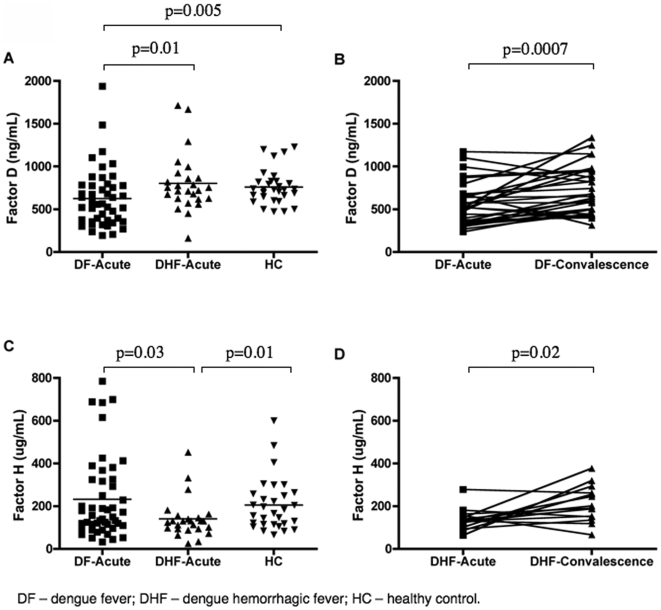
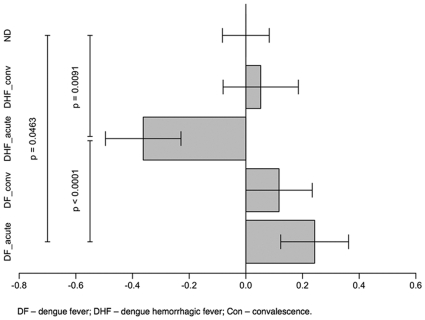
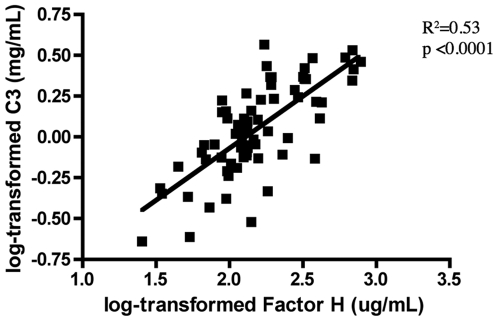
BACKGROUND: The complement system, a key component that links the innate and adaptive immune responses, has three pathways: the classical, lectin, and alternative pathways. In the present study, we have analyzed the levels of various complement components in blood samples from dengue fever (DF) and dengue hemorrhagic fever (DHF) patients and found that the level of complement activation is associated with disease severity. METHODS AND RESULTS: Patients with DHF had lower levels of complement factor 3 (C3; p = 0.002) and increased levels of C3a, C4a and C5a (p<0.0001) when compared to those with the less severe form, DF. There were no significant differences between DF and DHF patients in the levels of C1q, immunocomplexes (CIC-CIq) and CRP. However, small but statistically significant differences were detected in the levels of MBL. In contrast, the levels of two regulatory proteins of the alternative pathway varied widely between DF and DHF patients: DHF patients had higher levels of factor D (p = 0.01), which cleaves factor B to yield the active (C3bBb) C3 convertase, and lower levels of factor H (p = 0.03), which inactivates the (C3bBb) C3 convertase, than did DF patients. When we considered the levels of factors D and H together as an indicator of (C3bBb) C3 convertase regulation, we found that the plasma levels of these regulatory proteins in DHF patients favored the formation of the (C3bBb) C3 convertase, whereas its formation was inhibited in DF patients (p<0.0001). CONCLUSION: The data suggest that an imbalance in the levels of regulatory factors D and H is associated with an abnormal regulation of complement activity in DHF patients.
Overview
The claims and statistics of this paper haven’t been checked yet.
Free: it reads the open-access text and checks the first 5 claims that cite a source we can check. Create a free account to check every claim.
Integrity signals
Registry
Cites
Statistics
Figures
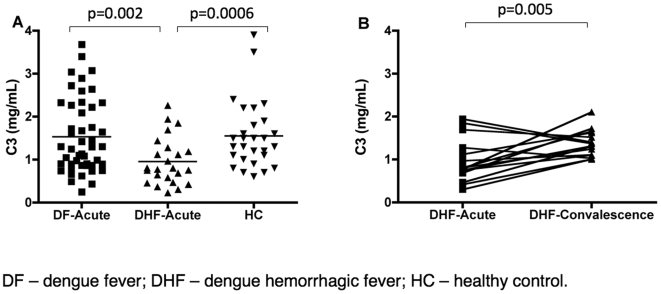
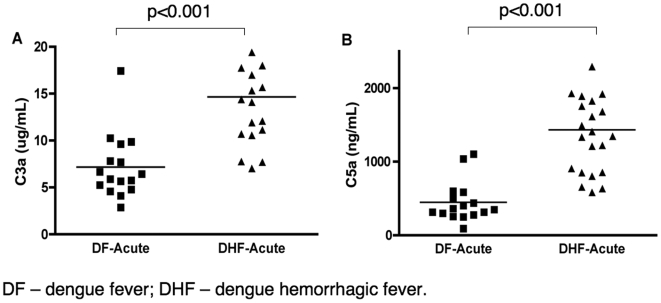
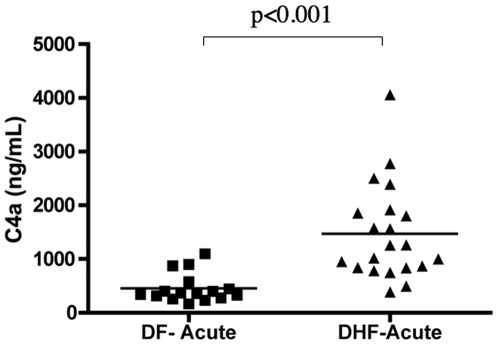
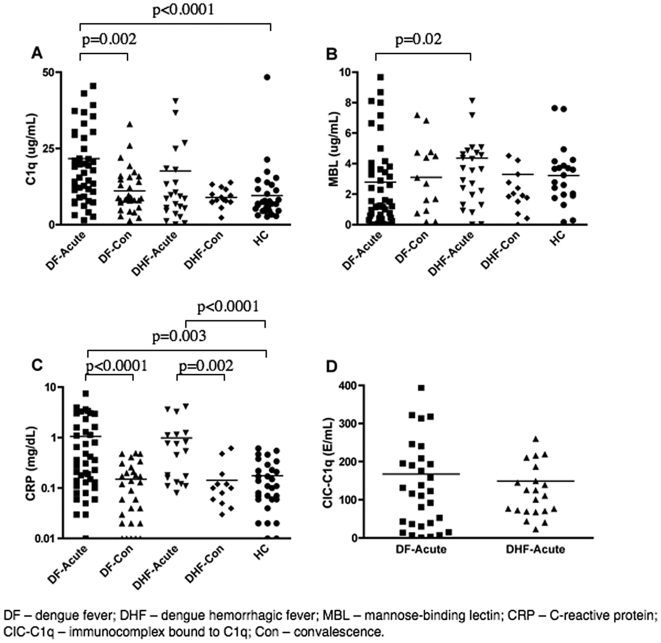
Verification
Claims the paper makes
The claims and statistics of this paper haven’t been checked yet.
Free: it reads the open-access text and checks the first 5 claims that cite a source we can check. Create a free account to check every claim.
Claims other papers make about this one
Each is checked against this paper’s own text: does it say what the citing paper says it does?
The source backs part of the claim, not all of it — or backs it for a different population, condition or comparison.
In the citing paper
“Observed level of C3a increase is potentially biologically relevant, since less than 1.5-fold increase of C3a is observed in acute phase of thrombotic thrombocytopenic purpura (form of TMA) in human (35). Three-fold C3a increase is observed in patients with dengue hemorrhagic fever compared to infected but not ill patients (36).”
From Pre-existing humoral immunity and complement pathway contribute to immunogenicity of adeno-associated virus (AAV) vector in human blood (2022) · cites this paper as [36]
Experimental — accuracy not yet measured
Self-check
Percentages, sums and reported differences re-computed from the paper’s own numbers.
The self-check needs the paper’s full text.
Citations
Cites
Walport, M. J. (2001) · New England Journal of Medicine · doi:10.1056/nejm200104053441406 · Cited by 2,927
Adipose tissue, adipokines, and inflammation
Fantuzzi, G. (2005) · Journal of Allergy and Clinical Immunology · doi:10.1016/j.jaci.2005.02.023 · Cited by 2,606 · cited 1×
“Factor D, also termed adipsin, is a rate limiting serine protease produced by adipocytes, monocytes, and macrophages [25].”
BackgroundWiklund, R. A., & Rosenbaum, S. H. (1997) · New England Journal of Medicine · doi:10.1056/nejm199710163371606 · Cited by 2,149
Lanciotti, R. S., Calisher, C. H., Gubler, D. J., Chang, G. J., & Vorndam, A. V. (1992) · Journal of Clinical Microbiology · doi:10.1128/jcm.30.3.545-551.1992 · Cited by 1,818
Isolation of a Singh's Aedes albopictus Cell Clone Sensitive to Dengue and Chikungunya Viruses
Igarashi, A. (1978) · Journal of General Virology · doi:10.1099/0022-1317-40-3-531 · Cited by 805
Avirutnan, P., Punyadee, N., Noisakran, S., Komoltri, C., Thiemmeca, S., Auethavornanan, K., Jairungsri, A., Kanlaya, R., Tangthawornchaikul, N., Puttikhunt, C., et al. (2006) · The Journal of Infectious Diseases · doi:10.1086/500949 · Cited by 509
Avirutnan, P., Malasit, P., Seliger, B., Bhakdi, S., & Husmann, M. (1998) · The Journal of Immunology · doi:10.4049/jimmunol.161.11.6338 · Cited by 377
Lai, C.-Y., Tsai, W.-Y., Lin, S.-R., Kao, C.-L., Hu, H.-P., King, C.-C., Wu, H.-C., Chang, G.-J., & Wang, W.-K. (2008) · Journal of Virology · doi:10.1128/jvi.00316-08 · Cited by 326
The alternative complement pathway revisited
Harboe, M., & Mollnes, T. E. (2008) · Journal of Cellular and Molecular Medicine · doi:10.1111/j.1582-4934.2008.00350.x · Cited by 316
Chung, K. M., Liszewski, M. K., Nybakken, G., Davis, A. E., Townsend, R. R., Fremont, D. H., Atkinson, J. P., & Diamond, M. S. (2006) · Proceedings of the National Academy of Sciences · doi:10.1073/pnas.0605668103 · Cited by 238
Research works printed but not linked: 3
- Nascimento EJM Braga-Net U Calzavara-Silva CE Gomes ALV Abath FGC Submited Gene expression profiling during acute febrile stage of dengue infection predicts the clinical outcome. Journal of Clinical Investigation
- Harboe M Mollnes TE 2008 The alternative complement pathway revisited. J Cell Mol Med PMC3865650 18419792
- Acioli-Santos B Pastor AF Nascimento EJM Calzavara-Silva CE Gomes ALV Submited Complement factor H promoter polymorphism (C-257T) induces high gene expression and dengue hemorrhagic fever protection. PNAS
Cited by
Muller, D. A., & Young, P. R. (2013) · Antiviral Research · doi:10.1016/j.antiviral.2013.03.008 · Cited by 572
“Although other viral proteins may contribute, secreted NS1 is likely to be the major viral antigen responsible for immune complex formation and an important trigger of complement activation (Avirutnan et al., 2006; Nascimento et al., 2009) (Fig.”
BackgroundImmune complement and coagulation dysfunction in adverse outcomes of SARS-CoV-2 infection
Ramlall, V., Thangaraj, P. M., Meydan, C., Foox, J., Butler, D., Kim, J., May, B., De Freitas, J. K., Glicksberg, B. S., Mason, C. E., et al. (2020) · Nature Medicine · doi:10.1038/s41591-020-1021-2 · Cited by 351
Pathogenesis of the Viral Hemorrhagic Fevers
Paessler, S., & Walker, D. H. (2013) · Annual Review of Pathology: Mechanisms of Disease · doi:10.1146/annurev-pathol-020712-164041 · Cited by 309
“Comparison between the complement levels of patients infected with dengue virus 3 who had uncomplicated dengue fever or DHF revealed that patients with the latter disease had decreased plasma concentrations of C3 and factor H and increased levels of C3a, C4a, C5a, mannose-binding ligand, and factor D (60).”
BackgroundPathogenesis of vascular leak in dengue virus infection
Malavige, G. N., & Ogg, G. S. (2017) · Immunology · doi:10.1111/imm.12748 · Cited by 285
Fc-Mediated Antibody Effector Functions During Respiratory Syncytial Virus Infection and Disease
van Erp, E. A., Luytjes, W., Ferwerda, G., & van Kasteren, P. B. (2019) · Frontiers in Immunology · doi:10.3389/fimmu.2019.00548 · Cited by 281
“In contrast, complement activation has also been suggested to contribute to disease severity in dengue virus (86, 87) and HIV infection (88, 89).”
BackgroundComplement and viral pathogenesis
Stoermer, K. A., & Morrison, T. E. (2011) · Virology · doi:10.1016/j.virol.2010.12.045 · Cited by 255
“In addition, DHF patients have been found to have higher levels of fD, which cleaves fB to yield the active (C3bBb) C3 convertase, and lower levels of fH, which inactivates the (C3bBb) C3 convertase, compared to patients with DF (Nascimento et al., 2009).”
BackgroundInfluentialDengue virus and the host innate immune response
Uno, N., & Ross, T. M. (2018) · Emerging Microbes & Infections · doi:10.1038/s41426-018-0168-0 · Cited by 251
Glasner, D. R., Puerta-Guardo, H., Beatty, P. R., & Harris, E. (2018) · Annual Review of Virology · doi:10.1146/annurev-virology-101416-041848 · Cited by 223
“Clinically dysregulated complement activation has been demonstrated in DHF patients, with higher levels of complement Factor D and lower levels of Factor H observed in DHF versus DF patients, suggesting formation of the C3 convertase and activation of complement (126).”
BackgroundA Physical Interaction Network of Dengue Virus and Human Proteins
Khadka, S., Vangeloff, A. D., Zhang, C., Siddavatam, P., Heaton, N. S., Wang, L., Sengupta, R., Sahasrabudhe, S., Randall, G., Gribskov, M., et al. (2011) · Molecular & Cellular Proteomics · doi:10.1074/mcp.m111.012187 · Cited by 175
“In addition, the levels of complement proteins, including C4, were altered in patients with severe DENV disease (95).”
BackgroundThe role of C5a in acute lung injury induced by highly pathogenic viral infections
Wang, R., Xiao, H., Guo, R., Li, Y., & Shen, B. (2015) · Emerging Microbes & Infections · doi:10.1038/emi.2015.28 · Cited by 170
Dengue Virus Infection: A Tale of Viral Exploitations and Host Responses
Nanaware, N., Banerjee, A., Bagchi, S. M., Bagchi, P., & Mukherjee, A. (2021) · Viruses · doi:10.3390/v13101967 · Cited by 223
“Moreover, the degree of complement activation by the DENV-NS1 protein is greater in DHF patients than in mild/intermediate Dengue Fever (DF) [73].”
BackgroundHatch, S., Endy, T., Thomas, S. J., Mathew, A., Potts, J., Pazoles, P., Libraty, D. H., Gibbons, R. V., & Rothman, A. L. (2011) · The Journal of Infectious Diseases · doi:10.1093/infdis/jir012 · Cited by 158
“Other factors, including the immunologic similarities of DENV epitopes, the virus inoculum and/or the magnitude of the viremia during primary or secondary infection, the virulence of the strain [22], and dysregulation of the complement system [23], could contribute to differences in disease severity.”
BackgroundPredicting outcome from dengue
Yacoub, S., & Wills, B. A. (2014) · BMC Medicine · doi:10.1186/s12916-014-0147-9 · Cited by 165
“The findings from a selection of representative studies are presented in Table 1 [58-68].”
BackgroundResultBiomarkers of severe dengue disease – a review
John, D. V., Lin, Y.-S., & Perng, G. (2015) · Journal of Biomedical Science · doi:10.1186/s12929-015-0191-6 · Cited by 122
“Complement activation and an increase in complement protein products correlate with severe dengue disease [47].”
BackgroundThe complement system: a gateway to gene–environment interactions in schizophrenia pathogenesis
Nimgaonkar, V. L., Prasad, K. M., Chowdari, K. V., Severance, E. G., & Yolken, R. H. (2017) · Molecular Psychiatry · doi:10.1038/mp.2017.151 · Cited by 112
Flavivirus infection—A review of immunopathogenesis, immunological response, and immunodiagnosis
Chong, H. Y., Leow, C. Y., Majeed, A. B. A., & Leow, C. H. (2019) · Virus Research · doi:10.1016/j.virusres.2019.197770 · Cited by 135
Garcia, C. C., Weston-Davies, W., Russo, R. C., Tavares, L. P., Rachid, M. A., Alves-Filho, J. C., Machado, A. V., Ryffel, B., Nunn, M. A., & Teixeira, M. M. (2013) · PLoS ONE · doi:10.1371/journal.pone.0064443 · Cited by 100
“On the other hand, anaphylatoxins like C3a and C5a, products of the CS cascade, are commonly involved in exacerbated inflammatory reactions that can cause direct harm to the host following infections [2,3,4].”
BackgroundInfluentialAutoimmunity in dengue pathogenesis
Wan, S.-W., Lin, C., Yeh, T., Liu, C., Liu, H., Wang, S., Ling, P., Anderson, R., Lei, H.-Y., & Lin, Y.-S. (2012) · Journal of the Formosan Medical Association · doi:10.1016/j.jfma.2012.11.006 · Cited by 98
“High levels of C3a and C5a have been detected in the sera from severely affected dengue patients.(70,71) C3a and C5a, the products of C3 and C5 cleavage, are anaphylotoxins, which promote chemotoxis of immune cells and contribute to inflammatory responses.”
BackgroundFuchs, A. G., Lin, T., Beasley, D. W. C., Stover, C. M., Schwaeble, W., Pierson, T. C., & Diamond, M. (2010) · Cell Host & Microbe · doi:10.1016/j.chom.2010.07.007 · Cited by 96
“C3 and C4 catabolism during secondary DENV infection correlates with disease severity Cell Ho (Bokisch et al., 1973; Nascimento et al., 2009).”
BackgroundNascimento, E. J. M., Braga-Neto, U., Calzavara-Silva, C. E., Gomes, A. L. V., Abath, F. G. C., Brito, C. A. A., Cordeiro, M. T., Silva, A. M., Magalhães, C., Andrade, R., et al. (2009) · PLoS ONE · doi:10.1371/journal.pone.0007892 · Cited by 89
“Some of the ‘‘markers’’ of dengue severity found on peripheral blood that were correlated with plasma leakage on DHF include several inflammatory cytokines, chemokines and adhesion molecules that are expressed at high levels [11,12,13,14,15,16,17], complement activation products [18,19], increased frequency of activat…”
BackgroundSelf-citationSmith, C. J., Ross, N., Kamal, A., Kim, K. Y., Kropf, E., Deschatelets, P., Francois, C., Quinn, W. J., Singh, I., Majowicz, A., et al. (2022) · Frontiers in Immunology · doi:10.3389/fimmu.2022.999021 · Cited by 86
“Three-fold C3a increase is observed in patients with dengue hemorrhagic fever compared to infected but not ill patients (36).”
BackgroundComplement Alternative Pathway׳s Activation in Patients With Lupus Nephritis
Song, D., Guo, W., Wang, F., Li, Y., Song, Y., Yu, F., & Zhao, M. (2017) · The American Journal of the Medical Sciences · doi:10.1016/j.amjms.2017.01.005 · Cited by 89
Severe Dengue Prognosis Using Human Genome Data and Machine Learning
Davi, C. C. M., Pastor, A. F., Oliveira, T., Neto, F. B. D. L., Braga-Neto, U., Bigham, A. W., Bamshad, M. J., Marques, E. T. A., & Acioli‐Santos, B. (2019) · IEEE Transactions on Biomedical Engineering · doi:10.1109/tbme.2019.2897285 · Cited by 99
“has been correlated with viral loads [3]–[5], circulating viral proteins [6], [7] and exacerbated complement activity [8]–[12].”
BackgroundSelf-citationComplement and platelets: Mutual interference in the immune network
Speth, C., Rambach, G., Würzner, R., Lass‐Flörl, C., Kozarcanin, H., Hamad, O. A., Nilsson, B., & Ekdahl, K. N. (2015) · Molecular Immunology · doi:10.1016/j.molimm.2015.03.244 · Cited by 87
Vuong, N. L., Duyen, H. T. L., Lam, P. K., Tam, D. T. H., Châu, N. V. V., Kính, N. V., Chanpheaktra, N., Lum, L. C. S., Pleités, E., Jones, N. K., et al. (2020) · BMC Medicine · doi:10.1186/s12916-020-1496-1 · Cited by 76
Current progress in dengue vaccines
Wan, S.-W., Lin, C., Wang, S., Chen, Y., Yeh, T., Liu, H., Anderson, R., & Lin, Y.-S. (2013) · Journal of Biomedical Science · doi:10.1186/1423-0127-20-37 · Cited by 73
“High levels of C3a and C5a have also been measured in dengue patients’ plasma [11,61].”
The Complement System in Flavivirus Infections
Conde, J. N., Silva, E. M., Barbosa, A. S., & Mohana‐Borges, R. (2017) · Frontiers in Microbiology · doi:10.3389/fmicb.2017.00213 · Cited by 82
“…serotypes can develop severe manifestations that are characteristic of dengue hemorrhagic fever (DHF) and dengue shock syndrome (DSS), such as vascular leakage, that can lead to hypovolemic shock, coagulopathy that can be accompanied by bleeding, organ impairment and death (Simmons et al., 2012).”
BackgroundEndothelial dysfunction in dengue virus pathology
Vervaeke, P., Vermeire, K., & Liekens, S. (2014) · Reviews in Medical Virology · doi:10.1002/rmv.1818 · Cited by 70
Dias, A. G., Atyeo, C. G., Loos, C., Montoya, M., Roy, V., Bos, S., Narvekar, P., Singh, T., Katzelnick, L. C., Kuan, G., et al. (2022) · Science Translational Medicine · doi:10.1126/scitranslmed.abm3151 · Cited by 70
Tan, Y. C. R. S., Song, D., Wu, L., Yu, F., & Zhao, M. (2013) · BMC Nephrology · doi:10.1186/1471-2369-14-63 · Cited by 68
“Detection of serum C1q levels was performed by modifying a previous ly de cribed method [18].”
Complement activation in Puumala hantavirus infection correlates with disease severity
Sane, J., Laine, O., Mäkelä, S., Paakkala, A., Jarva, H., Mustonen, J. T., Vapalahti, O., Meri, S., & Vaheri, A. I. (2011) · Annals of Medicine · doi:10.3109/07853890.2011.573500 · Cited by 64
“A recent study showed that alternative complement pathway deregulation correlates with the severity of DHF, and this may be linked to complement factor H dysfunction (26).”
BackgroundNew Insights into the Role of the Complement System in Human Viral Diseases
Ostrycharz, E., & Hukowska-Szematowicz, B. (2022) · Biomolecules · doi:10.3390/biom12020226 · Cited by 70
Marcos‐Jiménez, A., Sánchez‐Alonso, S., Alcaraz‐Serna, A., Esparcia, L., López‐Sanz, C., Sampedro-Nuñez, M. A., Mateu‐Albero, T., Sánchez‐Cerrillo, I., Martínez‐Fleta, P., Gabrie, L., et al. (2020) · European Journal of Immunology · doi:10.1002/eji.202048858 · Cited by 60
Silva, E. M., Conde, J. N., Allonso, D., Nogueira, M. L., & Mohana‐Borges, R. (2013) · PLoS ONE · doi:10.1371/journal.pone.0057514 · Cited by 52
Host genetics and dengue fever
de Carvalho, C. X., Cardoso, C. C., Kehdy, F. S. G., Pacheco, A. G., & Moraes, M. O. (2017) · Infection Genetics and Evolution · doi:10.1016/j.meegid.2017.11.009 · Cited by 52
Complement protein levels and MBL2 polymorphisms are associated with dengue and disease severity
Giang, N. T., Tong, H. V., Đỗ, Q., Hoan, N. X., Nghia, T. H., Nam, N. M., Hung, H. V., Anh, Đ. T., Mão, C. V., Sơn, H. A., et al. (2020) · Scientific Reports · doi:10.1038/s41598-020-71947-2 · Cited by 49
Nascimento, E. J. M., Hottz, E. D., García-Bates, T. M., Bozza, F. A., Marques, E. T. A., & Barratt‐Boyes, S. M. (2014) · Critical Reviews in Immunology · doi:10.1615/critrevimmunol.2014010212 · Cited by 52
Self-citationConroy, A. L., Gélvez, M., Hawkes, M., Rajwans, N., Tran, V., Liles, W. C., Villar, L. A., & Kain, K. C. (2015) · International Journal of Infectious Diseases · doi:10.1016/j.ijid.2015.07.027 · Cited by 53
Platelets in dengue infection: more than a numbers game
Quirino-Teixeira, A. C., Andrade, F. B., Pinheiro, M. B. M., Rozini, S. V., & Hottz, E. D. (2021) · Platelets · doi:10.1080/09537104.2021.1921722 · Cited by 70
“the platelet count during infection [43].”
Sharma, M., Glasner, D. R., Watkins, H. S., Puerta-Guardo, H. N., Kassa, Y., Egan, M. A., Dean, H. J., & Harris, E. (2019) · The Journal of Infectious Diseases · doi:10.1093/infdis/jiz081 · Cited by 47
Dengue Virus Induces Increased Activity of the Complement Alternative Pathway in Infected Cells
Cabezas, S., Bracho, G. G., Aloia, A. L., Adamson, P. J., Bonder, C. S., Smith, J. R., Gordon, D., & Carr, J. M. (2018) · Journal of Virology · doi:10.1128/jvi.00633-18 · Cited by 50
“described previously for FD (45) and shown here for FB and C3b.”
BackgroundHost genome polymorphisms and tuberculosis infection: What we have to say?
Khalilullah, S. A., Harapan, H., Hasan, N. A., Winardi, W., Ichsan, I., & Mulyadi, M. (2013) · Egyptian Journal of Chest Diseases and Tuberculosis · doi:10.1016/j.ejcdt.2013.12.002 · Cited by 45
He, Y., Xu, B., Song, D., Yu, F., Chen, Q., & Zhao, M. (2016) · American Journal of Reproductive Immunology · doi:10.1111/aji.12541 · Cited by 43
Elevated levels of vitamin D and deficiency of mannose binding lectin in dengue hemorrhagic fever
Alagarasu, K., Bachal, R. V., Bhagat, A. B., Shah, P. S., & Dayaraj, C. (2012) · Virology Journal · doi:10.1186/1743-422x-9-86 · Cited by 48
Dengue Virus Immunopathogenesis: Lessons Applicable to the Emergence of Zika Virus
Olagnier, D. P., Amatore, D., Castiello, L., Ferrari, M., Palermo, E., Diamond, M., Palamara, A. T., & Hiscott, J. B. (2016) · Journal of Molecular Biology · doi:10.1016/j.jmb.2016.04.024 · Cited by 42
Dengue virus and the complement alternative pathway
Carr, J. M., Falcón, S. C., Dubowsky, J. G., Hulme‐Jones, J., & Gordon, D. (2020) · FEBS Letters · doi:10.1002/1873-3468.13730 · Cited by 46
Marín-Palma, D., Sirois, C. M., Inchima, S. U., & Hernández, J. C. (2019) · PLoS ONE · doi:10.1371/journal.pone.0214245 · Cited by 42
Douradinha, B. G., McBurney, S. P., Cassemiro, K. M. S. D. M., Smith, A. P., Krishna, N. K., Barratt‐Boyes, S. M., Evans, J. D., Nascimento, E. J. M., & Marques, E. T. A. (2013) · Virus Research · doi:10.1016/j.virusres.2013.11.007 · Cited by 35
Self-citationRole of the complement system in antibody-dependent enhancement of flavivirus infections
Byrne, A. B., & Talarico, L. B. (2020) · International Journal of Infectious Diseases · doi:10.1016/j.ijid.2020.12.039 · Cited by 42
Host biomarkers distinguish dengue from leptospirosis in Colombia: a case–control study
Conroy, A. L., Gélvez, M., Hawkes, M., Rajwans, N., Liles, W. C., Villar, L. A., & Kain, K. C. (2014) · BMC Infectious Diseases · doi:10.1186/1471-2334-14-35 · Cited by 33
Role of Complement in Dengue Virus Infection: Protection or Pathogenesis?
Shresta, S. (2012) · mBio · doi:10.1128/mbio.00003-12 · Cited by 34
“between NS1 activity and complement activation (11) or an altered regulation of complement activation (12) in dengue patho-”
BackgroundThe complement system: A key player in the host response to infections
Jayaraman, A., Walachowski, S., & Bosmann, M. (2024) · European Journal of Immunology · doi:10.1002/eji.202350814 · Cited by 47
Dengue and the Lectin Pathway of the Complement System
Kraivong, R., Punyadee, N., Liszewski, M. K., Atkinson, J. P., & Avirutnan, P. (2021) · Viruses · doi:10.3390/v13071219 · Cited by 32
Ray, S., Srivastava, R., Tripathi, K., Vaibhav, V., Patankar, S., & Srivastava, S. (2012) · OMICS A Journal of Integrative Biology · doi:10.1089/omi.2012.0037 · Cited by 33
Hu, J., Mo, Y., Gao, Z., Wang, X., Gu, M., Liang, Y., Cheng, X., Hu, S., Liu, W., Liu, H., et al. (2016) · Medical Microbiology and Immunology · doi:10.1007/s00430-016-0461-2 · Cited by 32
Non-HLA gene polymorphisms and their implications on dengue virus infection
Harapan, H., Fajar, J. K., Wahyuniati, N., Anand, J. R., Nambaru, L., & Jamil, K. F. (2012) · Egyptian Journal of Medical Human Genetics · doi:10.1016/j.ejmhg.2012.08.003 · Cited by 32
Tan, G. K., Ng, J. K. W., Lim, A. H., Yeo, K. P., Angeli, V., & Alonso, S. (2011) · Annals of the Academy of Medicine Singapore · doi:10.47102/annals-acadmedsg.v40n12p523 · Cited by 25
Bachal, R. V., Alagarasu, K., Singh, A. P., Salunke, A., Shah, P. S., & Dayaraj, C. (2015) · Archives of Virology · doi:10.1007/s00705-015-2519-7 · Cited by 24
“Several studies have shown the involvement of complement factors in progression to DHF [11–13].”
BackgroundThomas, S. J., Endy, T. P., Rothman, A. L., & Barrett, A. D. T. (2015) · Elsevier eBooks · doi:10.1016/b978-1-4557-4801-3.00155-7 · Cited by 40
Transcriptomic immune profiles of human flavivirus‐specific T‐cell responses
Grifoni, A., Tian, Y., Sette, A., & Weiskopf, D. (2019) · Immunology · doi:10.1111/imm.13161 · Cited by 25
de Figueiredo, C. G. G., Cezar, R. D. D. S., Freire, N. M., Teixeira, V. G., Baptista, P. N., Cordeiro, M. T., do Carmo, R. F., Vasconcelos, L. R. S., & de Moura, P. M. M. F. (2016) · Human Immunology · doi:10.1016/j.humimm.2016.05.006 · Cited by 23
Self-citationPastor, A. F., Moura, L. R., Neto, J. W. D., Nascimento, E. J. M., Calzavara-Silva, C. E., Gomes, A. L. D. V., da Silva, A. M., Cordeiro, M. T., Braga-Neto, U., Crovella, S., et al. (2013) · Human Immunology · doi:10.1016/j.humimm.2013.05.005 · Cited by 26
“Factor H plasma determination Sandwich ELISA was used to measure plasma level of factor H during both acute and convalescent phases as previously described in [11].”
BackgroundMethodInfluentialSelf-citationPotential biomarkers for the clinical prognosis of severe dengue
da Silva, M. M. C., Gil, L. H. V. G., Marques, E. T. A., & Calzavara-Silva, C. E. (2013) · Memórias do Instituto Oswaldo Cruz · doi:10.1590/0074-0276108062013012 · Cited by 24
“In fact, using a cDNA microarray approach, we also reported that DHF patients had lower levels of mRNA coding for CFD compared with DF patients (Nascimento et al. 2009b), corroborating our results presented here.”
BackgroundMethodResultInfluentialSelf-citationPalm, F., Sjöholm, K., Malmström, J. A., & Shannon, O. (2018) · The Journal of Immunology · doi:10.4049/jimmunol.1800897 · Cited by 25
“In secondary dengue fever, the antiviral IgG formed in the primary infection generates immune complexes that can activate platelets (44) and the complement system (45), resulting in increased apoptosis and phagocytosis of platelets (46).”
BackgroundTanabe, I. S. B., dos Santos, E. C., Tanabe, E. L. L., de Souza, S. J. M., Santos, F. E. F., Taniele‐Silva, J., Ferro, J. F. G., de Lima, M. C., Moura, A. Á., Anderson, L., et al. (2019) · Transactions of the Royal Society of Tropical Medicine and Hygiene · doi:10.1093/trstmh/trz065 · Cited by 20
Marinho, C. F., de Azeredo, E. L., Torrentes‐Carvalho, A., Marins-Dos-Santos, A., Kubelka, C. F., de Souza, L. J., da Cunha, R. V., & de‐Oliveira‐Pinto, L. M. (2014) · PLoS ONE · doi:10.1371/journal.pone.0102014 · Cited by 22
“The role of the complement was confirmed by addition of heat-inactivated human serum or commercial C1q- or C3-depleted human sera, which decreased enhancing activities, thereby increasing the percentage of infected cells.”
InfluentialTargeting complement cascade: an alternative strategy for COVID-19
Pandian, S. R. K., Arunachalam, S., Deepak, V., Kunjiappan, S., & Sundar, K. (2020) · 3 Biotech · doi:10.1007/s13205-020-02464-2 · Cited by 20
“For instance, elevated levels of downstream components of C3 were observed in patients affected with dengue fever, dengue hemorrhagic fever (DHF), and dengue shock syndrome (Nascimento et al. 2009).”
BackgroundNew Proteomic Signatures to Distinguish Between Zika and Dengue Infections
Allgoewer, K., Maity, S., Zhao, A. S., Lashua, L. P., Ramgopal, M. N., Balkaran, B., Liu, L., Purushwani, S., Arévalo, M. T., Ross, T. M., et al. (2021) · Molecular & Cellular Proteomics · doi:10.1016/j.mcpro.2021.100052 · Cited by 21
“expressed proteins might link to the increased activity of the complement systems in DENV infections (43, 44).”
BackgroundNoninflammatory necrotizing vasculopathy in lupus nephritis: a single-center experience
Chu, H., Wu, L., Song, D., Yu, F., & Zhao, M. (2013) · Lupus · doi:10.1177/0961203313512391 · Cited by 17
Yamanaka, A., Tabuchi, Y., Mulyatno, K. C., Susilowati, H., Hendrianto, E., Soegijanto, S., & Konishi, E. (2012) · Microbes and Infection · doi:10.1016/j.micinf.2012.07.013 · Cited by 16
Molecular classification of outcomes from dengue virus -3 infections
Brasier, A. R., Zhao, Y., Wiktorowicz, J. E., Spratt, H. M., Nascimento, E. J. M., Cordeiro, M. T., Soman, K. V., Ju, H., Recinos, A., Stafford, S. J., et al. (2015) · Journal of Clinical Virology · doi:10.1016/j.jcv.2015.01.011 · Cited by 16
“The immunoglobulins, IgG-1, IgG and IGJ are differentially expressed in DHF, consistent with previous work identifying increased expression of plasmablasts in DHF [31–33].”
InfluentialSelf-citationNakamura, K., Kusama, K., Bai, R., Ishikawa, S., Fukushima, S., Suda, Y., & Imakawa, K. (2017) · PLoS ONE · doi:10.1371/journal.pone.0178442 · Cited by 14
Dengue fever ophthalmic manifestations: A review and update
Neto, F. D. L., Falcão, L. F. M., Moraes, E. C. D. S., David, J. P. F., Vieira‐Junior, A. D. S., Silva, C. C., de Sousa, J. R., Duarte, M. I. S., Vasconcelos, P. F. D. C., & Quaresma, J. A. S. (2023) · Reviews in Medical Virology · doi:10.1002/rmv.2422 · Cited by 17
“levels of C3 complement than patients who did not present with maculopathy.(10,40,66) Dot‐, blot‐, and flame‐shaped haemorrhages have also been associated with DF in a case series.”
BackgroundComplement and complement regulatory proteins are upregulated in lungs of COVID-19 patients
Ge, X., Yu, Z., Guo, X., Li, L., Ye, L., Ye, M., Yuan, J., Zhu, C., Hu, W., & Hou, Y. (2023) · Pathology - Research and Practice · doi:10.1016/j.prp.2023.154519 · Cited by 14
“The complement system can be activated quickly and strongly upon pathogen invasion via classical, lectin and/or alternative pathways [61], thus causing significant increase of complement activation products such as C3a, C5a, C3d and C5b-9 (MAC, membrane attack complex) in lung tissue [31,33,34, 49].”
BackgroundHost Immune Response to Dengue Virus Infection: Friend or Foe?
Dhole, P., Zaidi, A., Nariya, H. K., Sinha, S., Jinesh, S., & Srivastava, S. (2024) · Immuno · doi:10.3390/immuno4040033 · Cited by 18
“vascular hyperpermeability [125,132,133] suppression of the complement pathways [134 During DENV infection, the virus enters tissue-resident macrophages, monocytes, and Langerhans cells after an infected mosquito feeds on the host’s skin [139].”
In the Crosshairs: RNA Viruses OR Complement?
Kumar, N. A., Kunnakkadan, U., Thomas, S., & Johnson, J. B. (2020) · Frontiers in Immunology · doi:10.3389/fimmu.2020.573583 · Cited by 13
Falcón, S. C., Norbury, A. J., Hulme‐Jones, J., Klebe, S., Adamson, P. J., Rudd, P. A., Mahalingam, S., Ong, L. C., Alonso, S., Gordon, D., et al. (2021) · Journal of General Virology · doi:10.1099/jgv.0.001547 · Cited by 19
“Consistent with this, severe dengue is associated with increased activity of the complement AP, specifically an increase in circulating levels of the anaphylatoxins C3a and C5a [21, 22], an increase in factor D (FD) and a decrease in circulating FH [13].”
BackgroundResultInfluentialCorrelation between Complement Component Levels and Disease Severity in Dengue Patients in Indonesia
Yamanaka, A., Hendrianto, E., Mulyatno, K. C., Susilowati, H., Ginting, A. P., Sary, D. D., Soegijanto, S., & Konishi, E. (2013) · Japanese Journal of Infectious Diseases · doi:10.7883/yoken.66.366 · Cited by 14
“Some studies have also demonstrated that low complement activity (31) and downregulation of the alternative pathway (32) are associated with DHF, in contrast to most DF patients in whom complement activities are not significantly different from normal (33).”
BackgroundResultAssociation of FCN2 polymorphisms and Ficolin-2 levels with dengue fever in Vietnamese patients
Giang, N. T., Tong, H. V., Nghia, T. H., Hung, H. V., Anh, Đ. T., Nam, L. V., Mão, C. V., Giang, N. T., Thanh, L. Đ., Sơn, H. A., et al. (2020) · International Journal of Infectious Diseases · doi:10.1016/j.ijid.2020.02.029 · Cited by 12
Nascimento, E. J. M., Norwood, B., Kpamegan, E. P., Parker, A., Fernandes, J., Pérez-Guzmán, E. X., Tricou, V., Braun, R. P., Sharma, M., & Dean, H. J. (2022) · The Journal of Infectious Diseases · doi:10.1093/infdis/jiac476 · Cited by 11
“dysregulation of the alternative pathway (AP) has been associated with DENV pathogenesis [39–41], resulting in abnormal production of vasoactive proteins C3a and C5a and disturbance of hemodynamic homeostasis [39, 42].”
BackgroundSelf-citationHu, J., Gao, Z., Wang, X., Gu, M., Liang, Y., Liu, X., Hu, S., Liu, W., Liu, W., Chen, S., et al. (2016) · Medical Microbiology and Immunology · doi:10.1007/s00430-016-0489-3 · Cited by 11
Quinn, E., Cheong, A., Calvert, J., Higgins, G. D., Hahesy, T., Gordon, D., & Carr, J. M. (2018) · Tropical Medicine and Infectious Disease · doi:10.3390/tropicalmed3010006 · Cited by 15
“Similarly, elevated CRP has been reported in comparison to healthy controls, although CRP levels were still generally below 10 mg/mL [33].”
BackgroundThe Dynamic Relationship between Dengue Virus and the Human Cutaneous Innate Immune Response
Martí, M. M., Castanha, P. M. S., & Barratt‐Boyes, S. M. (2024) · Viruses · doi:10.3390/v16050727 · Cited by 15
Zheng, W., Yan, Q., Li, Z., Wang, X., Wu, P., Liao, F., Lao, Z., Jiang, Y. Q., Liu, X., Zhan, S., et al. (2022) · Frontiers in Immunology · doi:10.3389/fimmu.2022.892469 · Cited by 13
“The complement system is a significant component of the innate immune response (38), and is a double-edged sword that can act as the first line of defence against DENV infection, however, if over-activated, it can also enhance the severity of the disease (39).”
BackgroundDurán, A., Valero, N. J., Mosquera, J., Pons, H., Torres, M., Alcocer, S., & Castillo, J. L. (2012) · Journal of Clinical Virology · doi:10.1016/j.jcv.2012.11.007 · Cited by 10
Incomplete penetrance of CD46 mutation causing familial atypical hemolytic uremic syndrome
Bhatia, D., Khandelwal, P., Sinha, A. P., Hari, P., Cheong, H. I., & Bagga, A. (2015) · Pediatric Nephrology · doi:10.1007/s00467-015-3189-0 · Cited by 9
“Although pathogenesis of dengue involves activation of the classical complement pathway, alternative complement pathway dysregulation is also reported, as evidenced by transient depletion of CFH during the acute phase in patients with severe dengue relative to mild disease [18].”
BackgroundTranscriptome of the Aedes aegypti Mosquito in Response to Human Complement Proteins
Giraldo-Calderón, G. I., Calle-Tobón, A., Rozo-López, P., Colpitts, T. M., Park, Y., Rúa‐Uribe, G., & Londono-Renteria, B. L. (2020) · International Journal of Molecular Sciences · doi:10.3390/ijms21186584 · Cited by 8
“A recent study showed that in patients with severe DENV infection, there is a dysregulation of the complement activity leading to a significant decrease in hC3 and an increase in the anaphylatoxins hC3a, hC4a, and hC5a [26].”
Ramlall, V., Thangara, P. M., Tatonetti, N. P., & Shapira, S. D. (2020) · doi:10.21203/rs.3.rs-26451/v1 · Cited by 8
Park, J., Lee, Y., Lee, J., Kang, H., Kim, S., Kim, S., Kim, B. S., & Kim, D.-H. (2025) · Fish & Shellfish Immunology · doi:10.1016/j.fsi.2025.110224 · Cited by 7
Li, Q., Li, H., Shi, J., He, B., & Yu, F. (2019) · Lupus · doi:10.1177/0961203319860192 · Cited by 7
Ng, D. H. L., Ghosh, A., Jit, M., & Seneviratne, S. L. (2017) · Transactions of the Royal Society of Tropical Medicine and Hygiene · doi:10.1093/trstmh/trx075 · Cited by 7
Dysregulation of complement system in HELLP syndrome
Chen, S., Li, Z., He, Y., & Chen, Q. (2021) · Hypertension in Pregnancy · doi:10.1080/10641955.2021.1983593 · Cited by 7
Host factors and genetic polymorphisms influencing dengue infection
Mehak, M. A., Khan, M., & Razu, M. H. (2025) · Virus Research · doi:10.1016/j.virusres.2025.199623 · Cited by 7
Dengue fever as a rare cause of pulmonary embolism
Poletto, F., Cerruti, L., & Spiezia, L. (2020) · Journal of Thrombosis and Thrombolysis · doi:10.1007/s11239-020-02082-y · Cited by 6
[Immune responses and immunopathogenesis in infections with dengue virus].
Castro-Mussot, M. E., Machaín-Williams, C., Loroño-Pino, M. A., & Salazar, M. I. (2013) · PubMed · Cited by 6
Complement alternative pathway genetic variation and Dengue infection in the Thai population
Kraivong, R., Vasanawathana, S., Limpitikul, W., Malasit, P., Tangthawornchaikul, N., Botto, M., Screaton, G. R., Mongkolsapaya, J., & Pickering, M. C. (2013) · Clinical & Experimental Immunology · doi:10.1111/cei.12184 · Cited by 9
Li, Q., Song, D., Wang, F., Tan, Y. C. R. S., Yu, F., & Zhao, M. (2014) · The Scientific World JOURNAL · doi:10.1155/2014/212597 · Cited by 6
Zeba, A., Rajalingam, A., Sekar, K., & Ganjiwale, A. D. (2024) · VirusDisease · doi:10.1007/s13337-024-00885-8 · Cited by 4
“Low expression of these complement proteins results in abnormal activation of the complement cascade interfering with its homeostasis and triggering viral infections in DHF patients [38].”
Anshad, A. R., Saravanan, S., Murugesan, A., Vighnesh, R., Raju, S., Rajendran, K., Yong, Y. K., Larsson, M., & Shankar, E. M. (2026) · Frontiers in Immunology · doi:10.3389/fimmu.2025.1731011 · Cited by 3
Bharadwaj, P., & Ackerman, M. E. (2021) · Experientia supplementum · doi:10.1007/978-3-030-76912-3_18 · Cited by 3
Metadata
- Authors
- Nascimento, E. J. M., Silva, A. M., Cordeiro, M. T., Brito, C. A., Gil, L. H. V. G., Braga-Neto, U., & Marques, E. T. A.
- Affiliations
- Johns Hopkins University (US)
- Instituto Aggeu Magalhães (BR)
- Texas A&M University (US)
- Corresponding author
- Marques, Ernesto T. A.
- ORCID
- Venue
- PLoS ONE
- Publisher
- Public Library of Science (PLoS)
- Published
- 2009-08-26
- Volume
- 4
- Issue
- 8
- Pages
- e6782
- ISSN
- 1932-6203 (ISSN-L)
- PMC
- PMC2728508
- OpenAlex
- W1999543219
- Cited by
- 124
- References
- 51
- Citations by year
- 2026: 5 · 2025: 6 · 2024: 5 · 2023: 2 · 2022: 6 · 2021: 8 · 2020: 16 · 2019: 11 · 2018: 6 · 2017: 7 · 2016: 6 · 2015: 9 · 2014: 6 · 2013: 13 · 2012: 9
- FWCI
- 2.56
- Type
- journal article
- Language
- en
- Open access
- gold
- doi.org
- Locations
- PLoS ONE (publishedVersion, cc-by)
- PubMed Central (publishedVersion, cc-by)
- PubMed (publishedVersion)
- Americanae (AECID Library) (submittedVersion, other-oa)
- Arca - Repositório Institucional da Fiocruz (submittedVersion, other-oa)
- DOAJ (DOAJ: Directory of Open Access Journals) (submittedVersion, cc-by-sa)
- LA Referencia (Red Federada de Repositorios Institucionales de Publicaciones Científicas) (submittedVersion, other-oa)
- Funders
- Fundação Oswaldo Cruz
- National Institutes of Health
- National Institute of Allergy and Infectious Diseases (PDTIS RVR09-FIOCRUZ, RVR09-FIOCRUZ, U19AI056541)
- Topics
- Life Sciences › Immunology and Microbiology › Immunology › Complement system in diseases
- Health Sciences › Medicine › Public Health, Environmental and Occupational Health › Mosquito-borne diseases and control
- Health Sciences › Medicine › Hematology › Coagulation, Bradykinin, Polyphosphates, and Angioedema
- Keywords
- dengue hemorrhagic fever, dengue, alternative complement pathway, complement regulation, factor D, complement factor H, C3 convertase, complement activation, disease severity, complement proteins, mannose-binding lectin, complement C3
- MeSH terms
- Adolescent, Adult, Complement System Proteins, Complement Activation, Dengue, Enzyme-Linked Immunosorbent Assay, Female, Humans, Male, Middle Aged, Severity of Illness Index, Young Adult
About these checks
Registry, retraction, Cites and statistics results are computed, not judged, with one exception: a printed reference that no index lists is read once by a model before it counts as a citation error. Claims are extracted by a model and kept only when their quote appears verbatim in the text; each cited source is then checked, with a model’s help, for whether it says what the claim relies on. Those verdicts can be wrong — read the claim’s quote and the cited source before relying on one.
Statistics and arithmetic are recomputed, not judged.
Confidence bands are shown only for fields calibrated on our annotated test set. None is calibrated yet, so no band is shown.
What counts as a claim ›How we measure confidence ›How we check this ›
Are you an author, or do you see a problem with this page? Request a review
Data sources
Bibliographic data: Semantic Scholar, OpenAlex, Crossref.
Contains information from the Semantic Scholar Academic Graph Datasets, made available under the ODC Attribution License (ODC-BY 1.0).
Semantic Scholar’s data is described in: Kinney, R., et al. (2023). The Semantic Scholar Open Data Platform. arXiv:2301.10140.
