

Neuropeptide Y Knockout Mice Reveal a Central Role of NPY in the Coordination of Bone Mass to Body Weight
Open accessThe DOI matches its Crossref record; 30 of the 30 references it cites were found in a registry or an index.
Abstract
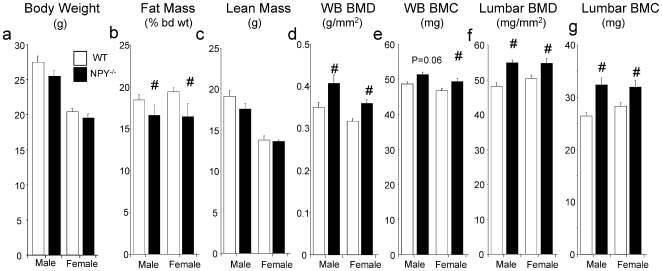
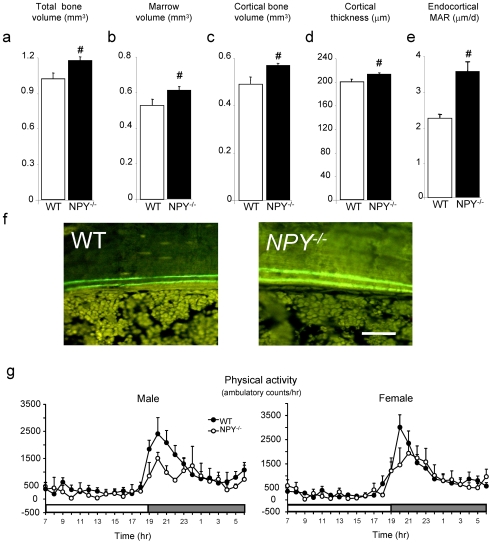
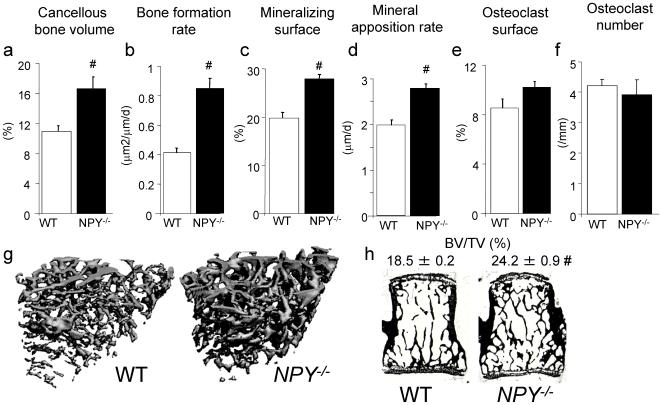
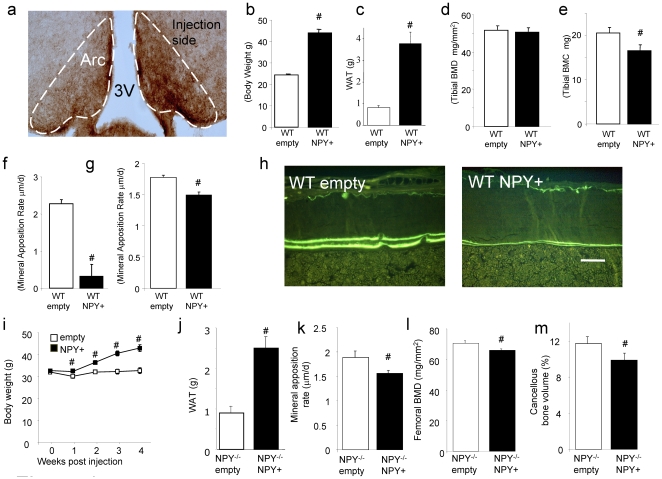
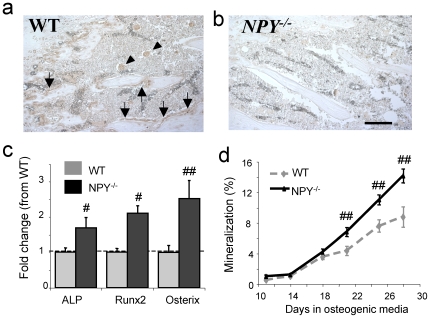
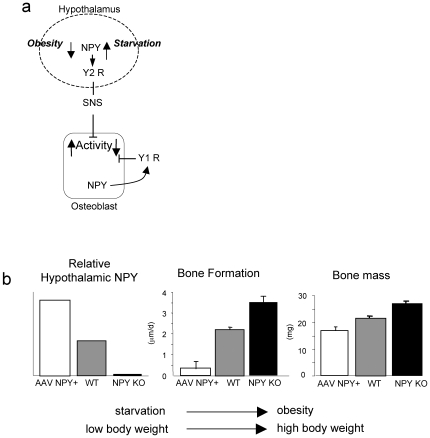
Changes in whole body energy levels are closely linked to alterations in body weight and bone mass. Here, we show that hypothalamic signals contribute to the regulation of bone mass in a manner consistent with the central perception of energy status. Mice lacking neuropeptide Y (NPY), a well-known orexigenic factor whose hypothalamic expression is increased in fasting, have significantly increased bone mass in association with enhanced osteoblast activity and elevated expression of bone osteogenic transcription factors, Runx2 and Osterix. In contrast, wild type and NPY knockout (NPY (-/-)) mice in which NPY is specifically over expressed in the hypothalamus (AAV-NPY+) show a significant reduction in bone mass despite developing an obese phenotype. The AAV-NPY+ induced loss of bone mass is consistent with models known to mimic the central effects of fasting, which also show increased hypothalamic NPY levels. Thus these data indicate that, in addition to well characterized responses to body mass, skeletal tissue also responds to the perception of nutritional status by the hypothalamus independently of body weight. In addition, the reduction in bone mass by AAV NPY+ administration does not completely correct the high bone mass phenotype of NPY (-/-) mice, indicating the possibility that peripheral NPY may also be an important regulator of bone mass. Indeed, we demonstrate the expression of NPY specifically in osteoblasts. In conclusion, these data identifies NPY as a critical integrator of bone homeostatic signals; increasing bone mass during times of obesity when hypothalamic NPY expression levels are low and reducing bone formation to conserve energy under 'starving' conditions, when hypothalamic NPY expression levels are high.
Overview
The claims and statistics of this paper haven’t been checked yet.
Free: it reads the open-access text and checks the first 5 claims that cite a source we can check. Create a free account to check every claim.
Integrity signals
Registry
Cites
Statistics
Figures
Verification
Claims the paper makes
The claims and statistics of this paper haven’t been checked yet.
Free: it reads the open-access text and checks the first 5 claims that cite a source we can check. Create a free account to check every claim.
Claims other papers make about this one
Each is checked against this paper’s own text: does it say what the citing paper says it does?
In the citing paper
“Thus the ob/ob mouse may be an accurate representation of the skeletal response to reduced leptin signaling, implicating both adrenergic and NPYmediated pathways in regulating hypocaloric responses in bone.”
From Effects of Leptin on the Skeleton (2018) · cites this paper as [103]
In the citing paper
“viral-mediated overexpression of NPY in the hypothalamus led to marked increases in food intake and in gains white adipose tissue mass”
From Effects of Leptin on the Skeleton (2018) · cites this paper as [103]
In the citing paper
“Hypothalamic NPY signaling is an important part of the central regulation of bone by leptin, most prominently in cortical bone, reducing bone mass in leptin-deficient states.”
From Effects of Leptin on the Skeleton (2018) · cites this paper as [103]
Self-check
Percentages, sums and reported differences re-computed from the paper’s own numbers.
The self-check needs the paper’s full text.
Citations
Cites
The Mouse Brain in Stereotaxic Coordinates
Paxinos, G. (2001) · Cited by 13,440
mouse brain in stereotaxic coordinates
Franklin, K. B. J., & Paxinos, G. (1997) · Cited by 3,258
Leptin Inhibits Bone Formation through a Hypothalamic Relay
Ducy, P., Amling, M., Takeda, S., Priemel, M., Schilling, A. F., Beil, F. T., Shen, J., Vinson, C., Rueger, J. M., & Karsenty, G. (2000) · Cell · doi:10.1016/s0092-8674(00)81558-5 · Cited by 2,077 · cited 3×
“Possible redundancy in the functions of NPY-like ligands may explain why initial examination of NPY deficient mice suggested no skeletal changes [12], a finding contradictory to experiments showing significant increases in bone mass following loss of NPYproducing neurons from the arcuate nucleus of the hypothalamus us…”
BackgroundResultLeptin Regulates Bone Formation via the Sympathetic Nervous System
Takeda, S., Elefteriou, F., Levasseur, R., Liu, X., Zhao, L., Parker, K. L., Armstrong, D., Ducy, P., & Karsenty, G. (2002) · Cell · doi:10.1016/s0092-8674(02)01049-8 · Cited by 1,735 · cited 1×
“activation of central, hypothalamic relays via efferent sympathetic nervous output which directly modulates osteoblast activity [1–3].”
BackgroundHildebrand, T., Laib, A., Müller, R., Dequeker, J., & Rüegsegger, P. (1999) · Journal of Bone and Mineral Research · doi:10.1359/jbmr.1999.14.7.1167 · Cited by 1,303
Glenn Stanley, B., Kyrkouli, S. E., Lampert, S., & Leibowitz, S. F. (1986) · Peptides · doi:10.1016/0196-9781(86)90149-x · Cited by 849 · cited 1×
“and energy homeostasis [4].”
Attenuation of the Obesity Syndrome of ob/ob Mice by the Loss of Neuropeptide Y
Erickson, J. C., Hollopeter, G., & Palmiter, R. D. (1996) · Science · doi:10.1126/science.274.5293.1704 · Cited by 801 · cited 1×
“Leptin down-regulates NPY expression in the hypothalamus and in this way reduces appetite and normalises energy expenditure [5].”
BackgroundY-receptor subtypes—how many more?
Blomqvist, A. G., & Herzog, H. (1997) · Trends in Neurosciences · doi:10.1016/s0166-2236(96)01057-0 · Cited by 529 · cited 1×
“Amongst the 5 known Y-receptors (Y1, Y2, Y4, Y5 and in certain species also Y6) [7,8], NPY mediates its effects on energy homeostasis via hypothalamic Y1 and Y2 receptors [6].”
BackgroundSelf-citationRelationships between fat and bone
Reid, I. R. (2008) · Osteoporosis International · doi:10.1007/s00198-007-0492-z · Cited by 475 · cited 1×
“Given the strong and positive association between increases in body weight and bone mass, in part due to mechanical effects of weight bearing [14], it is notable that tibial BMC was reduced by 19% (p,0.”
BackgroundRegional distribution of Y‐receptor subtype mRNAs in rat brain
Parker, R. M. C., & Herzog, H. (1999) · European Journal of Neuroscience · doi:10.1046/j.1460-9568.1999.00553.x · Cited by 411 · cited 1×
“In situ hybridisation was carried out as previously described with minor modifications [26] on 5 mm sections of decalcified sagittal section of the distal femur.”
MethodSelf-citation
Cited by
The contribution of bone to whole-organism physiology
Karsenty, G., & Ferron, M. (2012) · Nature · doi:10.1038/nature10763 · Cited by 537
“In broader terms this revealed for the first time a central control of bone mass; its existence has now been verified by other laboratories studying how neuropeptide Y or neuromedin U regulate bone mas”
ResultImpact of the Autonomic Nervous System on the Skeleton
Elefteriou, F. (2018) · Physiological Reviews · doi:10.1152/physrev.00014.2017 · Cited by 241
“In the CNS, increased level of NPY in the hypothalamus reduces bone mass and osteoblast activity (19, 21), whereas inhibition of central NPY signaling induces bone gain (22, 173).”
BackgroundEffects of Leptin on the Skeleton
Reid, I. R., Baldock, P. A., & Cornish, J. (2018) · Endocrine Reviews · doi:10.1210/er.2017-00226 · Cited by 215
Self-citationNerves in Bone: Evolving Concepts in Pain and Anabolism
Brazill, J. M., Beeve, A. T., Craft, C. S., Ivanusic, J. J., & Scheller, E. L. (2019) · Journal of Bone and Mineral Research · doi:10.1002/jbmr.3822 · Cited by 205
“NPY acts both centrally and peripherally to influence bone metabolism as deletion of NPY results in increased bone formation that is only partially rescued by re‐addition of NPY to the hypothalamus.((129)) Central control of bone metabolism mediated by NPY is through an inhibitory effect on Y2 expressing neurons; hypo…”
BackgroundNeuropeptide Y receptors: how to get subtype selectivity
Pedragosa-Badia, X., Stichel, J., & Beck-Sickinger, A. G. (2013) · Frontiers in Endocrinology · doi:10.3389/fendo.2013.00005 · Cited by 191
“…roles of NPY are decreased bone www.frontiersin.org February 2013 | Volume 4 | Article 5 | 1 “fendo-04-00005” — 2013/1/31 — 23:14 — page 2 — #2 formation (Baldock et al., 2009; Sousa et al., 2012), regulation of mood and anxiety disorders, the modulation of stress responses (Heilig, 2004), and…”
BackgroundThe multiple faces of autoimmune-mediated bone loss
Schett, G. A., & David, J. (2010) · Nature Reviews Endocrinology · doi:10.1038/nrendo.2010.190 · Cited by 148
“and locally via Y1R to decrease the number of osteoblast progenitors”
Bariatric surgery, bone loss, obesity and possible mechanisms
Brzozowska, M. M., Sainsbury, A., Eisman, J. A., Baldock, P. A., & Center, J. R. (2013) · Obesity Reviews · doi:10.1111/j.1467-789x.2012.01050.x · Cited by 128
“In light of the antiosteogenic effect of NPY, it has been postulated that NPY acts as a critical integrator of body weight and bone homeostatic signals; increasing bone mass during times of energy excess (and consequent obesity) when hypothalamic NPY expression levels are low, and reducing bone formation to conserve e…”
BackgroundSelf-citationThe Central Nervous System and Bone Metabolism: An Evolving Story
Dimitri, P., & Rosen, C. J. (2016) · Calcified Tissue International · doi:10.1007/s00223-016-0179-6 · Cited by 127
“This is associated with enhanced osteoblast activity and elevated expression of bone osteogenic transcription factors, Runx2 and Osterix [37, 38].”
BackgroundNeural regulation of bone and bone marrow
Maryanovich, M., Takeishi, S., & Frenette, P. S. (2018) · Cold Spring Harbor Perspectives in Medicine · doi:10.1101/cshperspect.a031344 · Cited by 114
Roles of leptin in bone metabolism and bone diseases
Chen, X., & Yang, T. (2015) · Journal of Bone and Mineral Metabolism · doi:10.1007/s00774-014-0569-7 · Cited by 126
“NPY-deficient mice appear to have increased bone mass associated with enhanced osteoblast activity [27].”
BackgroundThe crosstalk between bone remodeling and energy metabolism: A translational perspective
Karsenty, G., & Khosla, S. (2022) · Cell Metabolism · doi:10.1016/j.cmet.2022.04.010 · Cited by 113
Neuronal Induction of Bone‐Fat Imbalance through Osteocyte Neuropeptide Y
Zhang, Y., Chen, C., Liu, Y., Rao, S., Tan, Y., Qian, Y., Xia, K., Huang, J., Liu, X., Hong, C., et al. (2021) · Advanced Science · doi:10.1002/advs.202100808 · Cited by 133
New Roles of Carboxypeptidase E in Endocrine and Neural Function and Cancer
Cawley, N. X., Wetsel, W. C., Murthy, S. R. K., Park, J. J., Pacák, K., & Loh, Y. P. (2012) · Endocrine Reviews · doi:10.1210/er.2011-1039 · Cited by 124
“h, NPY plays a central role in bone remodeling (180).”
BackgroundBone Cell Bioenergetics and Skeletal Energy Homeostasis
Riddle, R. C., & Clemens, T. L. (2017) · Physiological Reviews · doi:10.1152/physrev.00022.2016 · Cited by 101
“sites of action as recapitulation of NPY expression in the hypothalamus was able to only partially rescue the phenotype of the null mouse (16).”
BackgroundShi, Y.-C., Lin, S., Wong, I. P. L., Baldock, P. A., Aljanova, A., Enriquez, R. F., Castillo, L., Mitchell, N. F., Ye, J.-M., Zhang, L., et al. (2010) · PLoS ONE · doi:10.1371/journal.pone.0011361 · Cited by 98
“In addition to effects on energy regulation, lack of Y2 receptors, notably hypothalamic Y2 signalling as in conditional hypothalamus-specific Y2 receptor deletion in mice, results in increased cortical and trabecular (cancellous) bone mass [29,30,31], suggesting a potential link between the central control of energy h…”
BackgroundSelf-citationOsteoblast specific Y1 receptor deletion enhances bone mass
Lee, N. J., Nguyen, A., Enriquez, R. F., Doyle, K. L., Sainsbury, A., Baldock, P. A. J., & Herzog, H. (2010) · Bone · doi:10.1016/j.bone.2010.10.174 · Cited by 104
“NPYimmunoreactive fibres [31], [32] and [33] and NPY protein [34] have been shown in bone tissue and it has also been shown that osteoblasts and osteocytes express NPY [11] and [12] as well as the Y1 receptor [10].”
BackgroundSelf-citationSkeletal interoception in bone homeostasis and pain
Lv, X., Gao, F., & Cao, X. (2022) · Cell Metabolism · doi:10.1016/j.cmet.2022.09.025 · Cited by 100
Interactions between central nervous system and peripheral metabolic organs
Zeng, W., Yang, F., Shen, W. L., Zhan, C., Zheng, P., & Hu, J. (2022) · Science China Life Sciences · doi:10.1007/s11427-021-2103-5 · Cited by 110
“Baldock et al. (2009) demonstrated that NPY acted as a negative regulator of bone metabolism.”
BackgroundCentral and peripheral mechanisms of the NPY system in the regulation of bone and adipose tissue
Shi, Y., & Baldock, P. A. J. (2011) · Bone · doi:10.1016/j.bone.2011.10.001 · Cited by 103
Self-citationPeptide YY Regulates Bone Remodeling in Mice: A Link between Gut and Skeletal Biology
Wong, I. P. L., Driessler, F., Khor, E. C., Shi, Y.-C., Hörmer, B., Nguyen, A. D., Enriquez, R. F., Eisman, J. A., Sainsbury, A., Herzog, H., et al. (2012) · PLoS ONE · doi:10.1371/journal.pone.0040038 · Cited by 86
“These models have clearly established that bone mass is under the control of the NPY system, indirectly via hypothalamic Y2 receptors [31] and NPY-ergic neurons [28], as well as directly via osteoblastic Y1 receptors [39,41].”
BackgroundMethodSelf-citationNeuro-bone tissue engineering: Multiple potential translational strategies between nerve and bone
Zhang, Z., Hao, Z., Xian, C., Fang, Y., Cheng, B., Wu, J., & Xia, J. (2022) · Acta Biomaterialia · doi:10.1016/j.actbio.2022.09.023 · Cited by 86
Hypothalamic regulation of bone
Drießler, F., & Baldock, P. A. J. (2010) · Journal of Molecular Endocrinology · doi:10.1677/jme-10-0015 · Cited by 102
“Moreover, NPY replacement in the hypothalamus of NPY null mice was only able to partially correct the bone anabolic phenotype (Baldock et al. 2009).”
BackgroundSelf-citationGut Microbiota and Bone Health
Quach, D., & Britton, R. A. (2017) · Advances in experimental medicine and biology · doi:10.1007/978-3-319-66653-2_4 · Cited by 88
Neuropeptide Y Attenuates Stress-Induced Bone Loss Through Suppression of Noradrenaline Circuits
Baldock, P., Lin, S., Zhang, L., Karl, T., Shi, Y., Driessler, F., Zengin, A., Hörmer, B., Lee, N., Wong, I., et al. (2014) · Journal of Bone and Mineral Research · doi:10.1002/jbmr.2205 · Cited by 81
“mass,((22,23,28)) in keeping with whole‐body energy conservation.”
BackgroundResultSelf-citationDissecting carboxypeptidase E: properties, functions and pathophysiological roles in disease
Ji, L., Wu, H., Qin, X., & Lan, R. (2017) · Endocrine Connections · doi:10.1530/ec-17-0020 · Cited by 93
Pregnancy and lactation, a challenge for the skeleton
Winter, E. M., Ireland, A., Butterfield, N. C., Haffner‐Luntzer, M., Horcajada, M.-N., Veldhuis‐Vlug, A. G., Oei, L., Colaianni, G., & Bonnet, N. (2020) · Endocrine Connections · doi:10.1530/ec-20-0055 · Cited by 87
Bone-to-Brain: A Round Trip in the Adaptation to Mechanical Stimuli
Gerosa, L., & Lombardi, G. (2021) · Frontiers in Physiology · doi:10.3389/fphys.2021.623893 · Cited by 76
Emerging roles of nerve‐bone axis in modulating skeletal system
Li, J., Zhang, Z., Tang, J., Hou, Z., Li, L., & Li, B. (2024) · Medicinal Research Reviews · doi:10.1002/med.22031 · Cited by 70
“100 Consistently, lineage ‐ specific knockout of NPY1R in osteoblasts and/or osteocytes increased both cancellous and cortical bone mass accrual without increasing mineralizing surface or osteoblast number in vivo.”
BackgroundLong-term Consequences of Traumatic Brain Injury in Bone Metabolism
Bajwa, N. M., Kesavan, C., & Mohan, S. (2018) · Frontiers in Neurology · doi:10.3389/fneur.2018.00115 · Cited by 72
“NPY and leptin share an inverse relationship, and recent studies suggest that NPY may mediate part of the skeletal phenotype in ob/ob mice (72, 73).”
BackgroundResultOsteoglycin, a novel coordinator of bone and glucose homeostasis
Lee, N. J., Ali, N. A., Zhang, L., Qi, Y., Clarke, I. M., Enriquez, R. F., Brzozowska, M. M., Lee, I. C., Rogers, M. J., Laybutt, D. R., et al. (2018) · Molecular Metabolism · doi:10.1016/j.molmet.2018.05.004 · Cited by 73
“Under conditions of negative energy balance, when hypothalamic NPY levels are high, NPY exerts a strong inhibitory tone on bone formation [4].”
BackgroundInfluentialSelf-citationDiet-induced adaptive thermogenesis requires neuropeptide FF receptor-2 signalling
Zhang, L., Ip, C. K., Lee, I.-C. J., Qi, Y., Reed, F., Karl, T., Low, J. K., Enriquez, R. F., Lee, N. J., Baldock, P. A., et al. (2018) · Nature Communications · doi:10.1038/s41467-018-06462-0 · Cited by 66
Self-citationArdeshirpour, L., Brian, S., Dann, P., VanHouten, J., & Wysolmerski, J. (2010) · Endocrinology · doi:10.1210/en.2010-0566 · Cited by 61
Brain to bone: What is the contribution of the brain to skeletal homeostasis?
Idelevich, A., & Baron, R. (2018) · Bone · doi:10.1016/j.bone.2018.05.018 · Cited by 64
Interoceptive regulation of skeletal tissue homeostasis and repair
Xiao, Y., Han, C., Wang, Y., Zhang, X., Bao, R., Li, Y., Chen, H., Hu, B., & Liu, S. (2023) · Bone Research · doi:10.1038/s41413-023-00285-6 · Cited by 70
“150 Mice overexpressing hypothalamus-speci fi c NPY show an anti-osteogenic phenotype, 151 while disruption of central NPY signaling increases bone mass accrual.”
BackgroundFranquinho, F., Liz, M. A., Nunes, A. F., Neto, E., Lamghari, M., & Sousa, M. M. (2010) · FEBS Journal · doi:10.1111/j.1742-4658.2010.07774.x · Cited by 65
Cawley, N. X., Yanık, T., Woronowicz, A., Chang, W., Marini, J. C., & Loh, Y. P. (2010) · American Journal of Physiology-Endocrinology and Metabolism · doi:10.1152/ajpendo.00516.2009 · Cited by 59
“Indeed, the NPY KO mouse as well as the NPY receptor KO (Y2 KO) mouse both result in increased bone formation (2, 3), demonstrating a significant role of NPY in bone resorption.”
BackgroundOsteoblastic Actions of the Neuropeptide Y System to Regulate Bone and Energy Homeostasis
Horsnell, H. L., & Baldock, P. A. J. (2016) · Current Osteoporosis Reports · doi:10.1007/s11914-016-0300-9 · Cited by 55
Self-citationYulyaningsih, E., Loh, K., Lin, S., Lau, J., Zhang, L., Shi, Y., Berning, B. A., Enriquez, R., Driessler, F., Macia, L., et al. (2014) · Cell Metabolism · doi:10.1016/j.cmet.2013.11.019 · Cited by 49
Self-citationHuang, S., Li, Z., Liu, Y., Gao, D., Zhang, X., Hao, J., & Yang, F. (2018) · Journal of Cellular Physiology · doi:10.1002/jcp.26502 · Cited by 51
“In NPY‐deficient mice, the bone volume of both trabecular and cortical bone increased with improved osteoblast activity (Baldock et al., 2009).”
BackgroundGu, X., Zhang, X., Hu, B., Zi, Y., & Li, M. (2016) · Neuropeptides · doi:10.1016/j.npep.2016.09.005 · Cited by 49
Neuropeptide Y and sex hormone interactions in humoral and neuronal regulation of bone and fat
Zengin, A., Zhang, L., Herzog, H., Baldock, P. A. J., & Sainsbury, A. (2010) · Trends in Endocrinology and Metabolism · doi:10.1016/j.tem.2010.02.004 · Cited by 55
Self-citationBone-specific overexpression of NPY modulates osteogenesis.
Matić, I. S., Matthews, B. G., Kizivat, T., Igwe, J. C., Marijanović, I., Ruohonen, S. T., Savontaus, E., Adams, D. J., & Kalajzić, I. (2012) · PubMed · Cited by 46
Neuronal hypothalamic regulation of body metabolism and bone density is galanin dependent
Idelevich, A., Sato, K., Nagano, K., Rowe, G. C., Gori, F., & Baron, R. (2018) · Journal of Clinical Investigation · doi:10.1172/jci99350 · Cited by 46
Bone: Another potential target to treat, prevent and predict diabetes
Liu, D., Mosialou, I., & Liu, J. (2018) · Diabetes, Obesity and Metabolism · doi:10.1111/dom.13330 · Cited by 46
Neuropeptide Y is a critical modulator of Leptin's regulation of cortical bone
Wong, I. P. L., Nguyen, A., Khor, E. C., Enriquez, R. F., Eisman, J. A., Sainsbury, A., Herzog, H., & Baldock, P. A. J. (2012) · Journal of Bone and Mineral Research · doi:10.1002/jbmr.1786 · Cited by 47
“These alterations in cancellous bone cell activities mirror that of NPY knockout mice relative to wild-type,((6)) and may reflect the supraphysiological reduction in NPY in NPYob/ob mice rather than a true correction to wild-type levels.”
BackgroundMethodResultSelf-citationSkeleton interoception regulates bone and fat metabolism through hypothalamic neuroendocrine NPY
Lv, X., Gao, F., Li, T. P., Xue, P., Wang, X., Wan, M., Hu, B., Chen, H., Jain, A., Shao, Z., et al. (2021) · eLife · doi:10.7554/elife.70324 · Cited by 45
NPY signalling in early osteoblasts controls glucose homeostasis
Lee, N. J., Nguyen, A., Enriquez, R. F., Luzuriaga, J., Bensellam, M., Laybutt, D. R., Baldock, P. A. J., & Herzog, H. (2015) · Molecular Metabolism · doi:10.1016/j.molmet.2014.12.010 · Cited by 45
Self-citationStrategies for promoting neurovascularization in bone regeneration
Li, X.-L., Zhao, Y., Li, M., An, Y.-X., Wu, F., Han, J.-Y., Han, J.-Y., Tay, F. R., 高木, 昭., Jiao, Y., et al. (2025) · Military Medical Research · doi:10.1186/s40779-025-00596-1 · Cited by 84
The Role of NPY in the Regulation of Bone Metabolism
Chen, Q., & Zhang, Y. (2022) · Frontiers in Endocrinology · doi:10.3389/fendo.2022.833485 · Cited by 48
Additive actions of the cannabinoid and neuropeptide Y systems on adiposity and lipid oxidation
Zhang, L., Lee, N. J., Nguyen, A., Enriquez, R., Riepler, S. J., Stehrer, B., Yulyaningsih, E., Lin, S., Shi, Y. C., Baldock, P., et al. (2009) · Diabetes Obesity and Metabolism · doi:10.1111/j.1463-1326.2009.01193.x · Cited by 45
Self-citationNiwczyk, O., Grymowicz, M., Szczęsnowicz, A., Hajbos, M., Kostrzak, A., Budzik, M. P., Maciejewska-Jeske, M., Bala, G., Smolarczyk, R., & Męczekalski, B. (2023) · International Journal of Molecular Sciences · doi:10.3390/ijms24076840 · Cited by 50
Interaction between the nervous and skeletal systems
Xu, J., Zhang, Z., Zhao, J., Meyers, C. A., Lee, S., Qin, Q., & James, A. W. (2022) · Frontiers in Cell and Developmental Biology · doi:10.3389/fcell.2022.976736 · Cited by 41
“Blockade of NPY enhanced bone mass (Baldock et al., 2009; Lee et al., 2010; Xie et al., 2020).”
Pleiotropic effects of incretins
Gupta, V. (2012) · Indian Journal of Endocrinology and Metabolism · doi:10.4103/2230-8210.94259 · Cited by 36
Glorie, L., D’Haese, P. C., & Verhulst, A. (2016) · Bone · doi:10.1016/j.bone.2016.08.009 · Cited by 39
Bone adaptation to mechanical loading in a mouse model of reduced peripheral sensory nerve function
Heffner, M. A., Genetos, D. C., & Christiansen, B. (2017) · PLoS ONE · doi:10.1371/journal.pone.0187354 · Cited by 36
“Furthermore, studies of genetic mouse models have shown that alterations to nerves can affect bone density [8, 9].”
BackgroundGao, S., Zhang, J., He, C., Meng, F., Bu, G., Zhu, G., Li, J., & Wang, Y. (2016) · General and Comparative Endocrinology · doi:10.1016/j.ygcen.2016.09.005 · Cited by 41
Neuropeptide Y modulates fracture healing through Y1 receptor signaling
Sousa, D. M., McDonald, M. M., Mikulec, K., Peacock, L., Herzog, H., Lamghari, M., Little, D. G., & Baldock, P. A. J. (2013) · Journal of Orthopaedic Research® · doi:10.1002/jor.22400 · Cited by 34
Self-citationHypothalamic control of bone metabolism
Sharan, K., & Yadav, V. K. (2014) · Best Practice & Research Clinical Endocrinology & Metabolism · doi:10.1016/j.beem.2014.04.003 · Cited by 40
Neuropeptide Y in the noradrenergic neurones induces obesity and inhibits sympathetic tone in mice
Vähätalo, L. H., Ruohonen, S. T., Mäkelä, S., Kovalainen, M., Huotari, A., Mäkelä, K. A., Määttä, J. A., Miinalainen, I., Gilsbach, R., Hein, L., et al. (2014) · Acta Physiologica · doi:10.1111/apha.12436 · Cited by 37
“2000) and NPY knockout mice have increased bone mass (Baldock et al. 2009) depicting the importance of NPY in the control of bone formation.”
BackgroundSchurman, C. A., Burton, J. B., Rose, J., Ellerby, L., Alliston, T. N., & Schilling, B. (2023) · Journal of Bone Metabolism · doi:10.11005/jbm.2023.30.1.1 · Cited by 35
“[104] NPY modulates bone and body mass in an endocrine fashion through ghrelin singling in the hypothalamus by controlling food intake.[105-107] Peripheral NPY may act directly on bone marrow mesenchymal stem/stromal cells (BMSCs)—osteoblastic precursors—to control osteogenesis and adipogenesis.”
Micellar nanomedicine of human neuropeptide Y
Kuzmis, A., Lim, S. B., Desai, E., Jeon, E., Lee, B.-S., Rubinstein, I., & Önyüksel, H. (2011) · Nanomedicine Nanotechnology Biology and Medicine · doi:10.1016/j.nano.2011.01.004 · Cited by 32
Central genes, pathways and modules that regulate bone mass
Quirós-González, I., & Yadav, V. K. (2014) · Archives of Biochemistry and Biophysics · doi:10.1016/j.abb.2014.06.005 · Cited by 38
Age-related regulation of bone formation by the sympathetic cannabinoid CB1 receptor
Deis, S., Srivastava, R. K., de Azúa, I. R., Bîndilă, L., Baraghithy, S., Lutz, B., Bab, I., & Tam, J. (2017) · Bone · doi:10.1016/j.bone.2017.12.018 · Cited by 33
Hong, S.-H., Tilan, J. U., Galli, S., Iżycka‐Świeszewska, E., Polk, T., Horton, M., Mahajan, A., Christian, D., Jenkins, S., Acree, R., et al. (2015) · Oncotarget · doi:10.18632/oncotarget.3345 · Cited by 38
“The effect of NPY is potent enough to trigger changes in skeletal development, as evidenced by increased bone density in NPY knockout mice [39].”
BackgroundNeuropeptide Y mediates glucocorticoid-induced osteoporosis and marrow adiposity in mice
Wang, F.-S., Lian, W., Weng, W., Sun, Y., Ke, H.-C., Chen, Y.-S., & Ko, J. (2016) · Osteoporosis International · doi:10.1007/s00198-016-3598-3 · Cited by 33
“femurs and abundant bone volume within lumbar vertebrae [9].”
BackgroundThe NPY System and its Neural and Neuroendocrine Regulation of Bone
Khor, E. C., & Baldock, P. A. J. (2012) · Current Osteoporosis Reports · doi:10.1007/s11914-012-0102-7 · Cited by 39
Self-citationEndocrine Regulation of Bone and Energy Metabolism in Hibernating Mammals
Doherty, A. H., Florant, G. L., & Donahue, S. W. (2014) · Integrative and Comparative Biology · doi:10.1093/icb/icu001 · Cited by 33
“In knockout mice, both NPY \ and Y2 \ receptor in the hypothalamus, cause an increase in the formation and mineralization of bone (Allison and Herzog 2006; Allison et al. 2007; Baldock et al. 2009).”
BackgroundSkeletal phenotype of the neuropeptide Y knockout mouse
Wee, N. K. Y., Sinder, B. P., Novak, S., Wang, X., Stoddard, C., Matthews, B. G., & Kalajzić, I. (2018) · Neuropeptides · doi:10.1016/j.npep.2018.11.009 · Cited by 29
“In addition, global deletion of NPY resulted in increased osteoblastic activity [16].”
BackgroundMethodInfluentialWu, J., Jiang, N., & Yu, B. (2020) · World Journal of Stem Cells · doi:10.4252/wjsc.v12.i9.986 · Cited by 29
Khor, E.-C., Yulyaningsih, E., Drießler, F., Kovačić, N., Wee, N. K. Y., Kulkarni, R. N., Lee, N. J., Enriquez, R. F., Xu, J., Zhang, L., et al. (2015) · Bone · doi:10.1016/j.bone.2015.12.011 · Cited by 27
“Whole body bone mineral density (BMD) and bone mineral content (BMC) were measured with mice ventral side down (head and tail inclusion), using a dedicated mouse dual energy X-ray absorptiometer (DXA) (Lunar Piximus II, GE Medical Systems, Madison, WI), as previously described [10].”
BackgroundMethodSelf-citationThe brain in bone and fuel metabolism
Wee, N. K. Y., Kulkarni, R. N., Horsnell, H. L., & Baldock, P. A. J. (2015) · Bone · doi:10.1016/j.bone.2015.10.020 · Cited by 26
Self-citationKhor, E.-C., Fanshawe, B., Qi, Y., Zolotukhin, S., Kulkarni, R. N., Enriquez, R. F., Purtell, L., Lee, N. J., Wee, N. K. Y., Croucher, P. I., et al. (2016) · PLoS ONE · doi:10.1371/journal.pone.0148155 · Cited by 26
Self-citationUncoupling protein-1 is protective of bone mass under mild cold stress conditions
Nguyen, A., Lee, N. J., Wee, N. K. Y., Zhang, L., Enriquez, R. F., Khor, E. C., Nie, T., Wu, D., Sainsbury, A., Baldock, P. A. J., et al. (2015) · Bone · doi:10.1016/j.bone.2015.05.037 · Cited by 28
Self-citationNeuromodulation of bone: Role of different peptides and their interactions (Review)
Wang, X., Xu, J., & Kang, Q. (2020) · Molecular Medicine Reports · doi:10.3892/mmr.2020.11670 · Cited by 29
“The autonomic nervous system regulates bone mass and the function of skeletal cells via connecting the central control (such as the sympathetic outflow from the hypothalamic neurons) and terminal recep‐ tors expressed on bone cells, and the innervation of sensory nerves subsequently nourishes the bones by secreting di…”
BackgroundUpdate on the Role of Neuropeptide Y and Other Related Factors in Breast Cancer and Osteoporosis
Lin, S., Li, Y., Sun, X., Chen, Q., Huang, S., Lin, S., & Cai, S. (2021) · Frontiers in Endocrinology · doi:10.3389/fendo.2021.705499 · Cited by 26
“The neuropeptides regulating bone metabolism primarily originate from the central nervous system, while some originate from the skeletal system; previous studies have confirmed the expression of NPY in osteoblasts and osteocytes (73, 74).”
Self-citationStructural basis for Y2 receptor-mediated neuropeptide Y and peptide YY signaling
Kang, H., Park, C., Choi, Y. K., Bae, J., Kwon, S., Kim, J., Choi, C., Seok, C., Im, W., & Choi, H. (2022) · Structure · doi:10.1016/j.str.2022.11.010 · Cited by 27
Neuropeptide Y Regulation of Energy Partitioning and Bone Mass During Cold Exposure
Wee, N. K. Y., Nguyen, A., Enriquez, R. F., Zhang, L., Herzog, H., & Baldock, P. A. J. (2020) · Calcified Tissue International · doi:10.1007/s00223-020-00745-9 · Cited by 22
Self-citationBone Injury and Repair Trigger Central and Peripheral NPY Neuronal Pathways
Alves, C. J., Alencastre, I. S., Neto, E., Ribas, J., Ferreira, S., Vasconcelos, D. M., Sousa, D. M., Summavielle, T., & Lamghari, M. (2016) · PLoS ONE · doi:10.1371/journal.pone.0165465 · Cited by 22
Yu, W. H., Zhu, C., Xu, W., Jiang, L., & Jiang, S. (2016) · International Journal of Molecular Sciences · doi:10.3390/ijms17122150 · Cited by 22
Central Neuronal Control of Bone Remodeling
Ochi, H., Baldock, P. A. J., & Takeda, S. (2018) · Wiley eBooks · doi:10.1002/9781119266594.ch131 · Cited by 22
Self-citationQi, Y., Fu, M., & Herzog, H. (2015) · Neuropeptides · doi:10.1016/j.npep.2015.09.009 · Cited by 22
Self-citationSternberg, Z. (2018) · NeuroMolecular Medicine · doi:10.1007/s12017-018-8481-2 · Cited by 20
Energy partitioning between fat and bone mass is controlled via a hypothalamic leptin/NPY relay
Lee, N. J., Qi, Y., Enriquez, R. F., Clarke, I. M., Ip, C. K., Wee, N. K. Y., Baldock, P. A. J., & Herzog, H. (2020) · International Journal of Obesity · doi:10.1038/s41366-020-0550-6 · Cited by 21
Self-citationEva, C. E., Oberto, A., Longo, A., Palanza, P., & Bertocchi, I. (2020) · Neuroscience & Biobehavioral Reviews · doi:10.1016/j.neubiorev.2020.09.020 · Cited by 23
Avian Neuropeptide Y: Beyond Feed Intake Regulation
Greene, E. S., Abdelli, N., Dridi, J. S., & Dridi, S. (2022) · Veterinary Sciences · doi:10.3390/vetsci9040171 · Cited by 31
“NPY has been shown to be highly expressed in the adrenal glands [13], white adipose tissue [14], and bone [15,16] among others, indicating the potential involvement of this neuropeptide in a wide range of physiological responses including adipogenesis, regulation of bone mass, and energy metabolism [17], locomotion [1…”
BackgroundThe role of sensory and sympathetic nerves in craniofacial bone regeneration
Assefa, F. (2023) · Neuropeptides · doi:10.1016/j.npep.2023.102328 · Cited by 25
Liang, H., Zeng, Y., Feng, Y., Wu, H., Gong, P., & Yao, Q. (2018) · Journal of Cellular Biochemistry · doi:10.1002/jcb.27998 · Cited by 22
“It has been shown that stimulating NPY signaling might attenuate the NE‐induced osteoclastogenesis and bone resorption, or inhibit the postsynaptic effect of NE on osteoblasts, thus favoring a high bone mass phenotype.(33,34) Indeed, previous studies have demonstrated that NPY suppressed the production of cAMP and RAN…”
ResultChronic Psychosocial Stress Impairs Bone Homeostasis: A Study in the Social Isolation Reared Rat
Schiavone, S., Morgese, M. G., Mhillaj, E., Bové, M., Giorgi, A. D., Cantatore, F. P., Camerino, C., Tucci, P., Maffulli, N., Cuomo, V., et al. (2016) · Frontiers in Pharmacology · doi:10.3389/fphar.2016.00152 · Cited by 28
“Thus a central role of this peptide in the coordination of bone mass and weight, in the control of osteoblast function and regulation of bone mass as well as in bone remodeling under chronic stress conditions has been demonstrated (Elefteriou, 2008; Baldock et al., 2009).”
BackgroundNeurological Regulation of the Bone Marrow Niche
Aerts‐Kaya, F., Ulum, B., Mammadova, A., Köse, S., Aydın, G., Korkusuz, P., & Uçkan, D. (2019) · Advances in experimental medicine and biology · doi:10.1007/5584_2019_398 · Cited by 21
Peripheral nerves in the tibial subchondral bone: the role of pain and homeostasis in osteoarthritis
Sun, Q., Li, G., Liu, D., Xie, W., Xiao, W., Li, Y., & Cai, M. (2022) · Bone and Joint Research · doi:10.1302/2046-3758.117.bjr-2021-0355.r1 · Cited by 21
Shipp, S. L., Cline, M. A., & Gilbert, E. R. (2016) · Adipocyte · doi:10.1080/21623945.2016.1208867 · Cited by 20
Zhang, Y., Jiao, Y., Li, Y., Tian, Q., Du, X., & Deng, Y. (2020) · Comparative Biochemistry and Physiology Part B Biochemistry and Molecular Biology · doi:10.1016/j.cbpb.2020.110508 · Cited by 21
Influence of Hormonal Appetite and Energy Regulators on Bone
Khor, E. C., Wee, N. K. Y., & Baldock, P. A. J. (2013) · Current Osteoporosis Reports · doi:10.1007/s11914-013-0157-0 · Cited by 22
“NPY deficiency in mice results in a high bone mass phenotype in both cancellous and cortical bone [67–69].”
Self-citationCornus officinalis: a potential herb for treatment of osteoporosis
Tang, X., Huang, Y., Fang, X., Tong, X., Qian, Y., Zheng, W., & Fu, F. (2023) · Frontiers in Medicine · doi:10.3389/fmed.2023.1289144 · Cited by 22
Bone disease in anorexia nervosa
Dede, A. D., Lyritis, G. P., & Tournis, S. (2014) · HORMONES · doi:10.1007/bf03401319 · Cited by 26
“In contrast, NPY over-expression in the arcuate nucleus leads to weight gain and tibial BMC reductions through a decrease in osteoblastic activity.(151) Moreover, NPY intracerebroventricular infusion induces bone loss.”
BackgroundThe Osteocyte Transcriptome: Discovering Messages Buried Within Bone
Wee, N. K. Y., Sims, N. A., & Morello, R. (2021) · Current Osteoporosis Reports · doi:10.1007/s11914-021-00708-5 · Cited by 16
The endogenous opioid dynorphin is required for normal bone homeostasis in mice
Baldock, P. A. J., Drießler, F., Lin, S., Wong, I. P. L., Shi, Y., Yulyaningsih, E., Castillo, L. E., Janmaat, S., Enriquez, R. F., Zengin, A., et al. (2012) · Neuropeptides · doi:10.1016/j.npep.2012.08.010 · Cited by 17
“…of dynorphin signaling leads to reduced expression of neuropeptide Y in the Arc (Sainsbury et al., 2007; Wittmann et al., 2009), which would be expected to result in a NPY-induced increase in bone mass and provide a mechanism for dynorphins action on bone (Baldock et al., 2005, 2009, 2002, 2006).”
BackgroundMethodSelf-citationDiet-induced obesity suppresses cortical bone accrual by a neuropeptide Y-dependent mechanism
Wee, N. K. Y., Enriquez, R. F., Nguyen, A., Horsnell, H. L., Kulkarni, R. N., Khor, E. C., Herzog, H., & Baldock, P. A. J. (2018) · International Journal of Obesity · doi:10.1038/s41366-018-0028-y · Cited by 15
“NPY has a well-established role in the regulation of obesity [37] and bone mass [38–40], as well as a coordinating role between bone and energy homoeostasis [28, 41].”
BackgroundResultSelf-citationLiang, T., Jin, Z., Lin, Y., Chen, Z., Li, Y., Xu, J., Yang, F., & Qin, L. (2025) · Military Medical Research · doi:10.1186/s40779-025-00600-8 · Cited by 24
“Research has shown that NPY knockout mice exhibited significantly increased bone mass, associated with transcriptional upregulation of runt-related transcription factor-2 and osterix in osteoblasts [27].”
p38α function in osteoblasts influences adipose tissue homeostasis
Rodríguez-Carballo, E., Gámez, B., Méndez‐Lucas, A., Sánchez‐Feutrie, M., Zorzano, A., Bartrons, R., Alcántara, S., Perales, J. C., & Ventura, F. (2014) · The FASEB Journal · doi:10.1096/fj.14-261891 · Cited by 16
“For example, the global deletion of NPY increased bone mass, and this effect could not be normalized through the replenishment of NPY in the hypothalamus (54).”
Background
Metadata
- Authors
- Baldock, P. A., Lee, N. J., Driessler, F., Lin, S., Allison, S., Stehrer, B., Lin, E.-J. D., Zhang, L., Enriquez, R. F., Wong, I. P. L., McDonald, M. M., During, M., Pierroz, D. D., Slack, K., Shi, Y. C., Yulyaningsih, E., Aljanova, A., Little, D. G., Ferrari, S. L., Sainsbury, A., Eisman, J. A., & Herzog, H.
- Affiliations
- Garvan Institute of Medical Research (AU)
- Georgetown University Medical Center (US)
- Children's Hospital at Westmead (AU)
- University of Auckland (NZ)
- University Hospital of Geneva (CH)
- Corresponding author
- Herzog, Herbert
- ORCID
- Venue
- PLoS ONE
- Publisher
- Public Library of Science (PLoS)
- Published
- 2009-12-22
- Volume
- 4
- Issue
- 12
- Pages
- e8415
- ISSN
- 1932-6203 (ISSN-L)
- PMC
- PMC2794533
- OpenAlex
- W2060955024
- Cited by
- 164
- References
- 29
- Citations by year
- 2026: 2 · 2025: 8 · 2024: 5 · 2023: 11 · 2022: 14 · 2021: 7 · 2020: 11 · 2019: 11 · 2018: 17 · 2017: 5 · 2016: 13 · 2015: 8 · 2014: 15 · 2013: 7 · 2012: 14
- FWCI
- 3.90
- Type
- journal article
- Language
- en
- Open access
- gold
- doi.org
- Locations
- PLoS ONE (publishedVersion, cc-by)
- PubMed Central (publishedVersion, cc-by)
- PubMed (publishedVersion)
- The Sydney eScholarship Repository (The University of Sydney) (submittedVersion)
- DOAJ (DOAJ: Directory of Open Access Journals) (submittedVersion, cc-by-sa)
- Archive ouverte UNIGE (University of Geneva) (submittedVersion, other-oa)
- Archive ouverte UNIGE (University of Geneva) (submittedVersion, cc-by)
- Funders
- Medical Research Council
- National Health and Medical Research Council (481355, 427638)
- Topics
- Life Sciences › Biochemistry, Genetics and Molecular Biology › Molecular Biology › Bone Metabolism and Diseases
- Health Sciences › Medicine › Orthopedics and Sports Medicine › Bone health and osteoporosis research
- Life Sciences › Neuroscience › Endocrine and Autonomic Systems › Regulation of Appetite and Obesity
- Keywords
- neuropeptide Y, bone mass, hypothalamus, energy homeostasis, obesity, osteoblasts, Runx2, Osterix, bone formation, fasting, body weight, AAV gene delivery
- MeSH terms
- Animals, Body Weight, Bone and Bones, Female, Hypothalamus, Male, Models, Biological, Neuropeptide Y, Organ Size, Osteogenesis, Phenotype, Signal Transduction, Mice, Knockout, Adiposity, Mice
About these checks
Registry, retraction, Cites and statistics results are computed, not judged, with one exception: a printed reference that no index lists is read once by a model before it counts as a citation error. Claims are extracted by a model and kept only when their quote appears verbatim in the text; each cited source is then checked, with a model’s help, for whether it says what the claim relies on. Those verdicts can be wrong — read the claim’s quote and the cited source before relying on one.
Statistics and arithmetic are recomputed, not judged.
Confidence bands are shown only for fields calibrated on our annotated test set. None is calibrated yet, so no band is shown.
What counts as a claim ›How we measure confidence ›How we check this ›
Are you an author, or do you see a problem with this page? Request a review
Data sources
Bibliographic data: Semantic Scholar, OpenAlex, Crossref.
Contains information from the Semantic Scholar Academic Graph Datasets, made available under the ODC Attribution License (ODC-BY 1.0).
Semantic Scholar’s data is described in: Kinney, R., et al. (2023). The Semantic Scholar Open Data Platform. arXiv:2301.10140.
