

Unique Flexibility in Energy Metabolism Allows Mycobacteria to Combat Starvation and Hypoxia
Open accessThe DOI matches its Crossref record; 49 of the 49 references it cites were found in a registry or an index.
Abstract
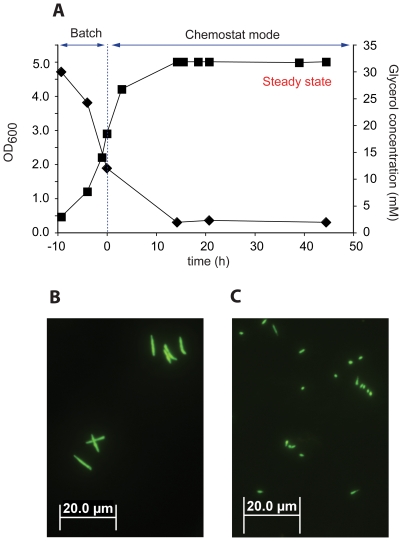
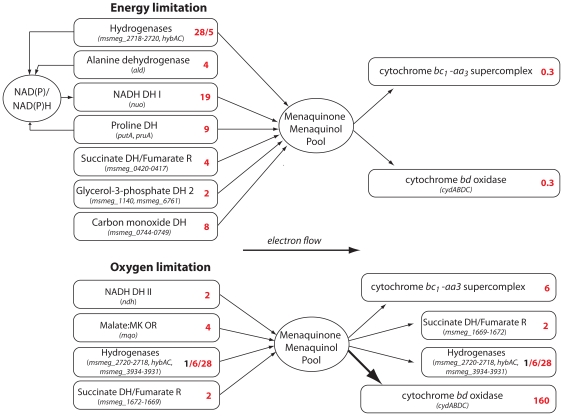
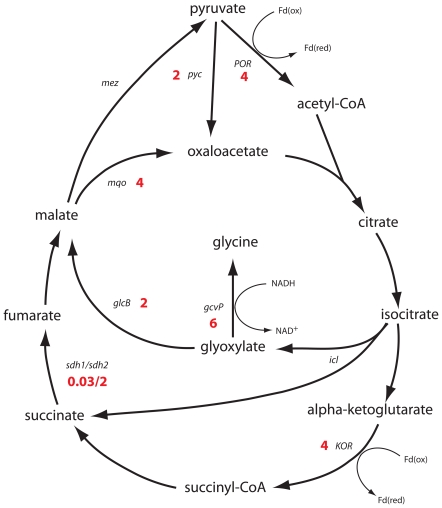
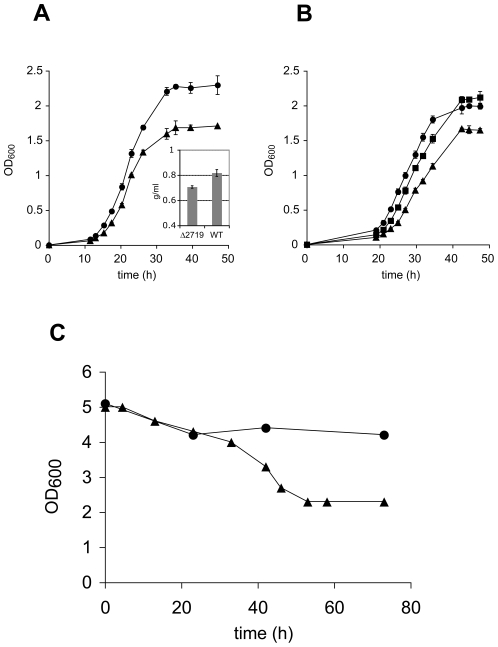
Mycobacteria are a group of obligate aerobes that require oxygen for growth, but paradoxically have the ability to survive and metabolize under hypoxia. The mechanisms responsible for this metabolic plasticity are unknown. Here, we report on the adaptation of Mycobacterium smegmatis to slow growth rate and hypoxia using carbon-limited continuous culture. When M. smegmatis is switched from a 4.6 h to a 69 h doubling time at a constant oxygen saturation of 50%, the cells respond through the down regulation of respiratory chain components and the F1Fo-ATP synthase, consistent with the cells lower demand for energy at a reduced growth rate. This was paralleled by an up regulation of molecular machinery that allowed more efficient energy generation (i.e. Complex I) and the use of alternative electron donors (e.g. hydrogenases and primary dehydrogenases) to maintain the flow of reducing equivalents to the electron transport chain during conditions of severe energy limitation. A hydrogenase mutant showed a 40% reduction in growth yield highlighting the importance of this enzyme in adaptation to low energy supply. Slow growing cells at 50% oxygen saturation subjected to hypoxia (0.6% oxygen saturation) responded by switching on oxygen scavenging cytochrome bd, proton-translocating cytochrome bc1-aa3 supercomplex, another putative hydrogenase, and by substituting NAD+-dependent enzymes with ferredoxin-dependent enzymes thus highlighting a new pattern of mycobacterial adaptation to hypoxia. The expression of ferredoxins and a hydrogenase provides a potential conduit for disposing of and transferring electrons in the absence of exogenous electron acceptors. The use of ferredoxin-dependent enzymes would allow the cell to maintain a high carbon flux through its central carbon metabolism independent of the NAD+/NADH ratio. These data demonstrate the remarkable metabolic plasticity of the mycobacterial cell and provide a new framework for understanding their ability to survive under low energy conditions and hypoxia.
Overview
The claims and statistics of this paper haven’t been checked yet.
Free: it reads the open-access text and checks the first 5 claims that cite a source we can check. Create a free account to check every claim.
Integrity signals
Registry
Cites
Statistics
Figures
Verification
Claims the paper makes
The claims and statistics of this paper haven’t been checked yet.
Free: it reads the open-access text and checks the first 5 claims that cite a source we can check. Create a free account to check every claim.
Claims other papers make about this one
Each is checked against this paper’s own text: does it say what the citing paper says it does?
The source backs part of the claim, not all of it — or backs it for a different population, condition or comparison.
In the citing paper
“M. smegmatis harbours three (designated Hyd1, 2 and 3) of the four hydrogenase complexes (16)”
From Energetics of Respiration and Oxidative Phosphorylation in Mycobacteria (2014) · cites this paper as [16]
Experimental — accuracy not yet measuredThe source backs part of the claim, not all of it — or backs it for a different population, condition or comparison.
In the citing paper
“Four different types of hydrogenases are found in mycobacteria and are annotated to be of the NiFe type.”
From Energetics of Respiration and Oxidative Phosphorylation in Mycobacteria (2014) · cites this paper as [16]
Experimental — accuracy not yet measuredThe source backs part of the claim, not all of it — or backs it for a different population, condition or comparison.
In the citing paper
“It has been shown that M. smegmatis can grow on proline as the sole carbon and energy source and also that PRODH is an important electron donor, under both energy-limiting conditions and hypoxia (7, 16).”
From Energetics of Respiration and Oxidative Phosphorylation in Mycobacteria (2014) · cites this paper as [16]
Experimental — accuracy not yet measuredThe source backs part of the claim, not all of it — or backs it for a different population, condition or comparison.
In the citing paper
“Hyd1, Hyd2 and Hyd3 are all soluble hydrogenases and found in mycobacteria of the slow-growing and fast-growing type, as well as pathogenic and non-pathogenic mycobacteria (16).”
From Energetics of Respiration and Oxidative Phosphorylation in Mycobacteria (2014) · cites this paper as [16]
Experimental — accuracy not yet measuredThe source backs part of the claim, not all of it — or backs it for a different population, condition or comparison.
In the citing paper
“Proline dehydrogenase is upregulated under both energy-limiting conditions and hypoxia (7, 16)”
From Energetics of Respiration and Oxidative Phosphorylation in Mycobacteria (2014) · cites this paper as [16]
Experimental — accuracy not yet measured
7 more claims about this paper
Create a free account to see every claim other papers make about this one.
Self-check
Percentages, sums and reported differences re-computed from the paper’s own numbers.
The self-check needs the paper’s full text.
Citations
Cites
Molecular Cloning: A Laboratory Manual
Sambrook, J., Fritsch, E., & Maniatis, T. (1989) · UCLA - Biblioteca de Ciencias de la Salud · Cited by 133,589
Molecular cloning: A laboratory manual
Deininger, P. (1990) · Analytical Biochemistry · doi:10.1016/0003-2697(90)90595-z · Cited by 84,682
Site-directed mutagenesis by overlap extension using the polymerase chain reaction
Ho, S. N., Hunt, H. D., Horton, R. M., Pullen, J. K., & Pease, L. R. (1989) · Gene · doi:10.1016/0378-1119(89)90358-2 · Cited by 7,399 · cited 1×
“The two products were fused by PCR-overlap extension [42], cloned into the SpeI site of the pPR23-derived [43] vector pX33 [41], creating pHyd2KO, and transformed into M.”
MethodTranscriptional Adaptation of Mycobacterium tuberculosis within Macrophages
Schnappinger, D., Ehrt, S., Voskuil, M. I., Liu, Y., Mangan, J. A., Monahan, I. M., Dolganov, G., Efron, B., Butcher, P. D., Nathan, C., et al. (2003) · The Journal of Experimental Medicine · doi:10.1084/jem.20030846 · Cited by 1,420 · cited 2×
“tuberculosis is regulated by other signals, in addition to low oxygen tension, because it was upregulated in resting as well as activated murine bone marrow macrophages [13].”
BackgroundBetts, J. C., Lukey, P. T., Robb, L. C., McAdam, R. A., & Duncan, K. (2002) · Molecular Microbiology · doi:10.1046/j.1365-2958.2002.02779.x · Cited by 1,395 · cited 1×
“low oxygen (Wayne model) [1], nutrient starvation [2] and extended stationary phase [3,4].”
BackgroundGenetic requirements for mycobacterial survival during infection
Sassetti, C. M., & Rubin, E. J. (2003) · Proceedings of the National Academy of Sciences · doi:10.1073/pnas.2134250100 · Cited by 1,354 · cited 1×
“Both hycP and hycQ (encoding for a possible hydrogenase components) were shown to be essential for optimal growth [34].”
BackgroundSnapper, S. B., Melton, R. E., Mustafa, S., Kieser, T., & Jr, W. R. J. (1990) · Molecular Microbiology · doi:10.1111/j.1365-2958.1990.tb02040.x · Cited by 1,237 · cited 1×
“Strains and Media Mycobacterium smegmatis strain mc(2)155 [39] was used in all experiments.”
MethodClassification and phylogeny of hydrogenases
Vignais, P. (2001) · FEMS Microbiology Reviews · doi:10.1016/s0168-6445(01)00063-8 · Cited by 1,189 · cited 1×
“Hydrogenases catalyze the reversible reaction: 2H + 2e(2) u H2 and represent the ideal mechanism to deal with fluctuations in energy and oxygen supply [27].”
BackgroundWayne, L. G., & Hayes, L. G. (1996) · Infection and Immunity · doi:10.1128/iai.64.6.2062-2069.1996 · Cited by 1,141 · cited 2×
“6% oxygen saturation and these values were chosen to be comparable with the oxygen tensions observed in the Wayne model [1] i.”
BackgroundMethodInhibition of Respiration by Nitric Oxide Induces a Mycobacterium tuberculosis Dormancy Program
Voskuil, M. I., Schnappinger, D., Visconti, K. C., Harrell, M. I., Dolganov, G. M., Sherman, D. R., & Schoolnik, G. K. (2003) · The Journal of Experimental Medicine · doi:10.1084/jem.20030205 · Cited by 966 · cited 2×
“Moreover, the transcription of the first genes of the hycP/hycQ - containing operon was shown to be upregulated during anaerobic adaptation in several studies and is thought to be part of the DevR/DevS regulon [4,6,9,32,33].”
Background
Cited by
Bactericidal mode of action of bedaquiline
Hards, K., Robson, J. R., Berney, M., Shaw, L., Bald, D., Koul, A., Andries, K., & Cook, G. M. (2015) · Journal of Antimicrobial Chemotherapy · doi:10.1093/jac/dkv054 · Cited by 226
Self-citationAtmospheric carbon monoxide oxidation is a widespread mechanism supporting microbial survival
Cordero, P. R. F., Bayly, K., Man Leung, P., Huang, C., Islam, Z. F., Schittenhelm, R. B., King, G. M., & Greening, C. (2019) · The ISME Journal · doi:10.1038/s41396-019-0479-8 · Cited by 221
Energetics of Respiration and Oxidative Phosphorylation in Mycobacteria
Cook, G. M., Hards, K., Vilchèze, C., Hartman, T., & Berney, M. (2014) · Microbiology Spectrum · doi:10.1128/microbiolspec.mgm2-0015-2013 · Cited by 212
“Rather, increased expression (15-fold) of the nuo operon in M. smegmatis was observed in a carbon-limited chemostat in response to a slowdown in growth rate (16).”
BackgroundInfluentialSelf-citationTrace gas oxidizers are widespread and active members of soil microbial communities
Bay, S. K., Dong, X., Bradley, J. A., Leung, P. M., Grinter, R., Jirapanjawat, T., Arndt, S. K., Cook, P. L. M., LaRowe, D. E., Nauer, P. A., et al. (2021) · Nature Microbiology · doi:10.1038/s41564-020-00811-w · Cited by 210
Islam, Z. F., Cordero, P. R. F., Feng, J., Chen, Y.-J., Bay, S. K., Jirapanjawat, T., Gleadow, R. M., Carere, C. R., Stott, M. B., Chiri, E., et al. (2019) · The ISME Journal · doi:10.1038/s41396-019-0393-0 · Cited by 182
“The findings made here are similar to those previously reported 434 for the actinobacterium Mycobacterium smegmatis [47, 57] and acidobacterium 435 Pyrinomonas methylaliphatogenes [31], both of which also shift from heterotrophic 436 respiration to atmospheric H2 oxidation in response to energy limitation, including 4…”
BackgroundResultRole of Proline in Pathogen and Host Interactions
Christgen, S. L., & Becker, D. F. (2019) · Antioxidants & Redox Signaling · doi:10.1089/ars.2017.7335 · Cited by 172
“tuberculosis and also appear to have an important role apart from proline utilization as a carbon and energy source (20, 21, 118, 201).”
BackgroundAn overview of new antitubercular drugs, drug candidates, and their targets
Bahuguna, A., & Rawat, D. S. (2020) · Medicinal Research Reviews · doi:10.1002/med.21602 · Cited by 170
Microbial oxidation of atmospheric trace gases
Greening, C., & Grinter, R. (2022) · Nature Reviews Microbiology · doi:10.1038/s41579-022-00724-x · Cited by 166
Albrethsen, J., Agner, J., Piersma, S. R., Højrup, P., Pham, T. V., Weldingh, K. N., Jiménez, C. R., Andersen, P. L., & Rosenkrands, I. (2013) · Molecular & Cellular Proteomics · doi:10.1074/mcp.m112.018846 · Cited by 162
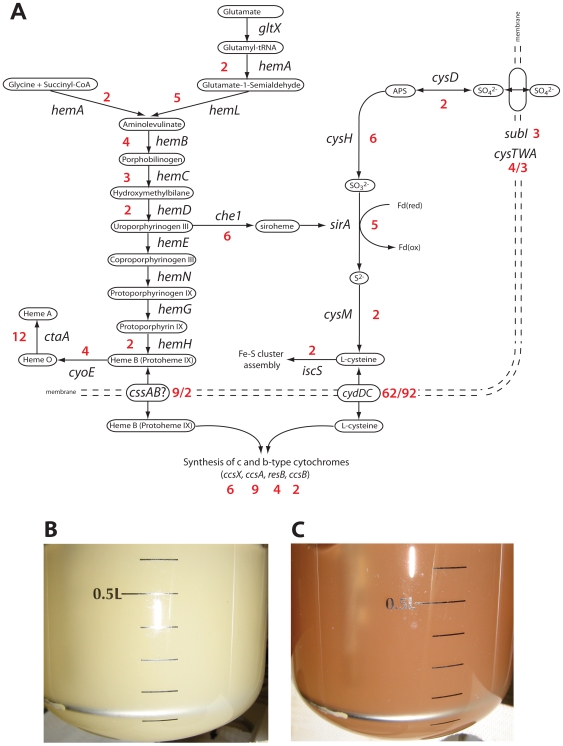
“The up-regulation of genes involved in the porphyrin biosynthesis pathway and transport was also observed under oxygen and carbon limitation (33).”
BackgroundGreening, C., Berney, M., Hards, K., Cook, G. M., & Conrad, R. (2014) · Proceedings of the National Academy of Sciences · doi:10.1073/pnas.1320586111 · Cited by 153
“The organism expresses three phylogenetically distinct [NiFe] hydrogenases, Hydrogenase-1 (Hyd1; MSMEG_2262-2263), Hydrogenase-2 (Hyd2; MSMEG_27192720), and Hydrogenase-3 (Hyd3; MSMEG_3928-3932) (19, 23).”
BackgroundMethodSelf-citationBerney, M., Berney‐Meyer, L., Wong, K., Chen, B., Chen, M., Kim, J., Wang, J., Harris, D., Parkhill, J., Chan, J., et al. (2015) · Proceedings of the National Academy of Sciences · doi:10.1073/pnas.1513033112 · Cited by 150
“Microarray analysis was performed as described previously (49) using arrays purchased from Microarrays Inc.”
MethodSelf-citationProbing the Interaction of the Diarylquinoline TMC207 with Its Target Mycobacterial ATP Synthase
Haagsma, A. C., Podasca, I., Koul, A., Andries, K., Guillemont, J., Lill, H., & Bald, D. (2011) · PLoS ONE · doi:10.1371/journal.pone.0023575 · Cited by 155
“TMC207 can be active in a broad range of physiological microenvironments Mycobacteria can persist in a mammalian host in ‘‘low energy’’ environments due to exceptional metabolic flexibility [36], e.”
BackgroundEnergetics of Pathogenic Bacteria and Opportunities for Drug Development
Cook, G. M., Greening, C., Hards, K., & Berney, M. (2014) · Advances in microbial physiology/Advances in Microbial Physiology · doi:10.1016/bs.ampbs.2014.08.001 · Cited by 150
Self-citationPersistence of the dominant soil phylum Acidobacteria by trace gas scavenging
Greening, C., Carere, C. R., Rushton-Green, R., Harold, L. K., Hards, K., Taylor, M. C., Morales, S. E., Stott, M. B., & Cook, G. M. (2015) · Proceedings of the National Academy of Sciences · doi:10.1073/pnas.1508385112 · Cited by 147
“Janssen PH, Yates PS, Grinton BE, Taylor PM, Sait M (2002) Improved culturability of soil bacteria and isolation in pure culture of novel members of the divisions Acidobacteria, Actinobacteria, Proteobacteria, and Verrucomicrobia.”
BackgroundInfluentialSelf-citationBerney, M., Greening, C., Conrad, R., Jacobs, W. R., & Cook, G. M. (2014) · Proceedings of the National Academy of Sciences · doi:10.1073/pnas.1407034111 · Cited by 142
“smegmatismc(2)155 (45) and derivedmutants (14, 15, 30)”
BackgroundInfluentialSelf-citationCook, G. M., Hards, K., Dunn, E. A., Heikal, A., Nakatani, Y., Greening, C., Crick, D. C., Fontes, F. L., Pethe, K., Hasenoehrl, E., et al. (2017) · Microbiology Spectrum · doi:10.1128/microbiolspec.tbtb2-0014-2016 · Cited by 145
Self-citationBorisov, V. B., Siletsky, S. A., Paiardini, A., Hoogewijs, D., Forte, E., Giuffrè, A., & Poole, R. K. (2021) · Antioxidants & Redox Signaling · doi:10.1089/ars.2020.8039 · Cited by 121
“tuberculosis and other mycobacteria (22, 33, 79, 127, 176, 296), and knockout of cytochrome bdwas found to impair mycobacterial growth at low O2 tensions (176, 296) and in the presence of H2O2 (212).”
ATP synthase in mycobacteria: Special features and implications for a function as drug target
Lü, P., Lill, H., & Bald, D. (2014) · Biochimica et Biophysica Acta (BBA) - Bioenergetics · doi:10.1016/j.bbabio.2014.01.022 · Cited by 132
“[19,21].”
Molecular Hydrogen Metabolism: a Widespread Trait of Pathogenic Bacteria and Protists
Benoit, S. L., Maier, R. J., Sawers, R. G., & Greening, C. (2020) · Microbiology and Molecular Biology Reviews · doi:10.1128/mmbr.00092-19 · Cited by 125
“Based on genetic studies in Mycobacterium smegmatis, the expression of their genes is induced during starvation and hypoxia, and they enhance survival by oxidizing H2 to subatmospheric levels (19, 45, 277, 278).”
BackgroundBay, S. K., Waite, D. W., Dong, X., Gillor, O., Chown, S. L., Hugenholtz, P., & Greening, C. (2021) · The ISME Journal · doi:10.1038/s41396-021-01001-0 · Cited by 123
Khan, M. Z., Bhaskar, A., Upadhyay, S., Kumari, P., Rajmani, R. S., Jain, P., Singh, A., Kumar, D., Bhavesh, N. S., & Nandicoori, V. K. (2017) · Journal of Biological Chemistry · doi:10.1074/jbc.m117.797563 · Cited by 120
“Expression of pknG has been shown to be up-regulated during hypoxia in both Mycobacterium smegmatis (19) and M.”
BackgroundAtmospheric Hydrogen Scavenging: from Enzymes to Ecosystems
Greening, C., Constant, P., Hards, K., Morales, S. E., Oakeshott, J. G., Russell, R. J., Taylor, M. C., Berney, M., Conrad, R., & Cook, G. M. (2014) · Applied and Environmental Microbiology · doi:10.1128/aem.03364-14 · Cited by 115
“Their upregulation was concurrent with the downregulation of primary dehydrogenases (34), suggesting that oxidation of atmospheric H2 partly compensates for the reduced oxidation of organic electron donors.”
BackgroundInfluentialSelf-citationTargeting bacterial energetics to produce new antimicrobials
Hards, K., & Cook, G. M. (2017) · Drug Resistance Updates · doi:10.1016/j.drup.2017.11.001 · Cited by 113
Self-citationA VapBC Toxin-Antitoxin Module Is a Posttranscriptional Regulator of Metabolic Flux in Mycobacteria
McKenzie, J. L., Robson, J. R., Berney, M., Smith, T. C., Ruthe, A. T., Gardner, P. P., Arcus, V. L., & Cook, G. M. (2012) · Journal of Bacteriology · doi:10.1128/jb.06790-11 · Cited by 112
“analysis was performed as previously described (6).”
Self-citationSuccinate Dehydrogenase is the Regulator of Respiration in Mycobacterium tuberculosis
Hartman, T., Weinrick, B., Vilchèze, C., Berney, M., Tufariello, J., Cook, G. M., & Jacobs, W. R. (2014) · PLoS Pathogens · doi:10.1371/journal.ppat.1004510 · Cited by 104
“smegmatis that shows a 2-fold increase in sdh2 transcripts but a 30-fold decrease of sdh1 transcripts [14].”
BackgroundMethodSelf-citationDual inhibition of the terminal oxidases eradicates antibiotic‐tolerant Mycobacterium tuberculosis
Lee, B. S., Hards, K., Engelhart, C. A., Hasenoehrl, E. J., Kalia, N. P., Mackenzie, J. S., Sviriaeva, E., Chong, S. M. S., Manimekalai, M. S. S., Koh, V. H., et al. (2021) · EMBO Molecular Medicine · doi:10.15252/emmm.202013207 · Cited by 97
“Even in conditions where oxygen or nutrients are scarce, the energy metabolism pathway remains essential in helping the pathogen adapt and survive (Rao et al, 2008; Berney & Cook, 2010; Gengenbacher et al, 2010).”
BackgroundSelf-citationConstant, P., Chowdhury, S. P., Hesse, L., Pratscher, J., & Conrad, R. (2011) · Applied and Environmental Microbiology · doi:10.1128/aem.00673-11 · Cited by 105
“smegmatis the ability to scavenge atmospheric H2 (5).”
BackgroundNovel, Oxygen-Insensitive Group 5 [NiFe]-Hydrogenase in Ralstonia eutropha
Schäfer, C., Friedrich, B., & Lenz, O. (2013) · Applied and Environmental Microbiology · doi:10.1128/aem.01576-13 · Cited by 105
“slower growth rates in continuous culture and reached lower optical densities in batch cultures compared to the wild-type strain (13).”
The Dormancy Regulator DosR Controls Ribosome Stability in Hypoxic Mycobacteria
Trauner, A., Lougheed, K. E. A., Bennett, M. H., Hingley-Wilson, S. M., & Williams, H. D. (2012) · Journal of Biological Chemistry · doi:10.1074/jbc.m112.364851 · Cited by 98
“tuberculosis, Rv0079, are induced during hypoxia (9, 61), and MSMEG_1878 is expressed more highly during carbon-limited conditions in M.”
BackgroundBedaquiline – The first ATP synthase inhibitor against multi drug resistant tuberculosis
Lakshmanan, M., & Xavier, A. S. (2013) · Journal of Young Pharmacists · doi:10.1016/j.jyp.2013.12.002 · Cited by 103
Janto, B., Ahmed, A., Ito, M., Liu, J., Hicks, D. B., Pagni, S. E., Fackelmayer, O. J., Smith, T., Earl, J. P., Elbourne, L. D. H., et al. (2011) · Environmental Microbiology · doi:10.1111/j.1462-2920.2011.02591.x · Cited by 99
“…to _01350), might further support growth under oxygen limiting conditions as hypothesized for the mycobacterial homologue of the hydrogenase (Berney & Cook, 2010).. Signaling related to energy sources—Analysis of the 33 chromosomal and 2 plasmid Two-Component Signaling systems (TCSs) (Table…”
BackgroundPecsi, I., Hards, K., Ekanayaka, N., Berney, M., Hartman, T., Jacobs, W. R., & Cook, G. M. (2014) · mBio · doi:10.1128/mbio.01093-14 · Cited by 92
“These observations raise the possibility that the reduction potential of the FAD is different in M. smegmatis Sdh1 and Sdh2, consistent with the enzymes functioning under different redox potentials.”
BackgroundResultSelf-citationA widely distributed hydrogenase oxidises atmospheric H2 during bacterial growth
Islam, Z. F., Welsh, C., Bayly, K., Grinter, R., Southam, G., Gagen, E. J., & Greening, C. (2020) · The ISME Journal · doi:10.1038/s41396-020-0713-4 · Cited by 90
Molecular hydrogen in seawater supports growth of diverse marine bacteria
Lappan, R. J., Shelley, G., Islam, Z. F., Leung, P. M., Lockwood, S., Nauer, P. A., Jirapanjawat, T., Ni, G., Chen, Y.-J., Kessler, A. J., et al. (2023) · Nature Microbiology · doi:10.1038/s41564-023-01322-0 · Cited by 91
Structural basis for bacterial energy extraction from atmospheric hydrogen
Grinter, R., Kropp, A., Venugopal, H., Senger, M., Badley, J., Cabotaje, P. R., Jia, R., Duan, Z., Huang, P. J., Stripp, S. T., et al. (2023) · Nature · doi:10.1038/s41586-023-05781-7 · Cited by 93
Self-citationRedox Biology of Tuberculosis Pathogenesis
Trivedi, A., Singh, N., Bhat, S. A., Gupta, P., & Kumar, A. (2012) · Advances in Microbial Physiology · doi:10.1016/b978-0-12-398264-3.00004-8 · Cited by 88
Regulation of proline metabolism in mycobacteria and its role in carbon metabolism under hypoxia
Berney, M., Weimar, M. R., Heikal, A., & Cook, G. M. (2012) · Molecular Microbiology · doi:10.1111/j.1365-2958.2012.08053.x · Cited by 76
“Microarray analysis was performed as described previously (Berney and Cook, 2010) using arrays provided by the Pathogen Functional Genomics Research Center (PFGRC) funded by the National Institute of Allergy and Infectious Diseases using protocols SOP# M007 and M008 from The Institute of Genomic Research (TIGR) (Hegde…”
BackgroundMethodInfluentialSelf-citationToxin-Antitoxin Systems of Mycobacterium smegmatis Are Essential for Cell Survival
Frampton, R. A., Aggio, R. B. M., Villas-Bôas, S. G., Arcus, V. L., & Cook, G. M. (2011) · Journal of Biological Chemistry · doi:10.1074/jbc.m111.286856 · Cited by 77
“Microarray Analysis—Samples of wild type and TA (RF105) cultures grown on LBT aerobically were harvested from cultures incubated for 1 and 5 days formicroarray analysis as described previously (43), and the arrays were performed as described previously (44).”
MethodSelf-citationKhdhiri, M., Hesse, L., Popa, M. E., Quiza, L., Lalonde, I., Meredith, L., Röckmann, T., & Constant, P. (2015) · Soil Biology and Biochemistry · doi:10.1016/j.soilbio.2015.02.030 · Cited by 75
“Instead of supporting autotrophic growth, the energy yield of the oxidation of atmospheric H 2 likely supports survival and mixotrophic metabolism of bacteria (Conrad, 1999; Berney and Cook, 2010; Constant et al., 2010, 2011b; Berney et al., 2014; Greening et al., 2015).”
Tiwari, A., Balázsi, G., Gennaro, M. L., & Igoshin, O. A. (2010) · Physical Biology · doi:10.1088/1478-3975/7/3/036005 · Cited by 73
“Moreover, upregulation of σ E expression has been observed in various stress conditions such as nutrient depletion, heat shock and exposure to oxidizing agents and detergents [10–12], all of which mimic persistenceinducing environmental changes.”
Consumption of atmospheric hydrogen during the life cycle of soil‐dwelling actinobacteria
Meredith, L., Rao, D. A., Bosak, T., Klepac‐Ceraj, V., Tada, K. R., Hansel, C. M., Ono, S., & Prinn, R. G. (2013) · Environmental Microbiology Reports · doi:10.1111/1758-2229.12116 · Cited by 72
“Mycobacterium smegmatis expresses the hydrogenase gene under starvation conditions and mutants lacking this hydrogenase have a reduced growth yield under these conditions (Berney and Cook, 2010).”
BackgroundBerney, M., Greening, C., Hards, K., Collins, D., & Cook, G. M. (2014) · Environmental Microbiology · doi:10.1111/1462-2920.12320 · Cited by 68
“Markerless deletions were carried out using the two-step method for integration and excision of the plasmid as described previously (Tran and Cook, 2005; Berney and Cook, 2010).”
BackgroundMethodInfluentialSelf-citationBistable responses in bacterial genetic networks: Designs and dynamical consequences
Tiwari, A., Ray, J. C. J., Narula, J., & Igoshin, O. A. (2011) · Mathematical Biosciences · doi:10.1016/j.mbs.2011.03.004 · Cited by 74
“Mycobacterial stress responses are triggered by various environmental conditions, such as nutrient or oxygen depletion, heat shock, and exposure to oxidizing agents [92–94].”
BackgroundThe Growth and Survival of Mycobacterium smegmatis Is Enhanced by Co-Metabolism of Atmospheric H2
Greening, C., Villas-Bôas, S. G., Robson, J. R., Berney, M., & Cook, G. M. (2014) · PLoS ONE · doi:10.1371/journal.pone.0103034 · Cited by 71
“Mycobacterium smegmatis mc(2)155 [10] and derived mutants [7,8]”
BackgroundMethodSelf-citationFarhana, A., Guidry, L., Ak, S., Singh, A., Hondalus, M. K., & Steyn, A. J. C. (2010) · Advances in microbial physiology/Advances in Microbial Physiology · doi:10.1016/b978-0-12-381045-8.00002-3 · Cited by 71
Comparative Genomics of the Dormancy Regulons in Mycobacteria
Gerasimova, A. V., Kazakov, A. E., Arkin, A. P., Dubchak, I. L., & Gelfand, M. S. (2011) · Journal of Bacteriology · doi:10.1128/jb.00179-11 · Cited by 69
Liot, Q., & Constant, P. (2015) · MicrobiologyOpen · doi:10.1002/mbo3.310 · Cited by 68
“This observation is in sharp contrast with M. smegmatis for which inactivation of HAH resulted in a decreased biomass yield characteristic to classical mixotrophic growth re-ported in knallgas bacteria (Berney and Cook 2010).”
MethodResultWu, M.-L., Gengenbacher, M., & Dick, T. (2016) · Frontiers in Microbiology · doi:10.3389/fmicb.2016.00947 · Cited by 51
“After 5 min of incubation in the dark, luminescence was measured (Tecan Infinite M200 Pro).”
BackgroundMethodSchmitz, R. A., Pol, A., Mohammadi, S. S., Hogendoorn, C., van Gelder, A. H., Jetten, M. S. M., Daumann, L. J., & den Camp, H. J. M. O. (2020) · The ISME Journal · doi:10.1038/s41396-020-0609-3 · Cited by 62
Hydrogen is a major lifeline for aerobic bacteria
Greening, C., Islam, Z. F., & Bay, S. K. (2021) · Trends in Microbiology · doi:10.1016/j.tim.2021.08.004 · Cited by 59
Mascolo, L., & Bald, D. (2019) · Progress in Biophysics and Molecular Biology · doi:10.1016/j.pbiomolbio.2019.11.002 · Cited by 59
Survival and rapid resuscitation permit limited productivity in desert microbial communities
Imminger, S., Meier, D. V., Schintlmeister, A., Legin, A. A., Schnecker, J., Richter, A. A., Gillor, O., Eichorst, S. A., & Woebken, D. (2024) · Nature Communications · doi:10.1038/s41467-024-46920-6 · Cited by 56
Schäfer, C., Bommer, M., Hennig, S. E., Jeoung, J., Dobbek, H., & Lenz, O. (2015) · Structure · doi:10.1016/j.str.2015.11.010 · Cited by 56
Integration of hydrogenase expression and hydrogen sensing in bacterial cell physiology
Greening, C., & Cook, G. M. (2014) · Current Opinion in Microbiology · doi:10.1016/j.mib.2014.02.001 · Cited by 55
Self-citationZhang, A. T., Montgomery, M. G., Leslie, A. G. W., Cook, G. M., & Walker, J. E. (2019) · Proceedings of the National Academy of Sciences · doi:10.1073/pnas.1817615116 · Cited by 52
“A key element of their survival is their ability to keep their respiratory chain energized and thereby to maintain their energy requirements by continuing to make ATP (62, 63).”
BackgroundSelf-citationKalia, N. P., Singh, S., Hards, K., Cheung, C., Sviriaeva, E. N., Banaei‐Esfahani, A., Aebersold, R. H., Berney, M., Cook, G. M., & Pethe, K. (2023) · Cell Reports · doi:10.1016/j.celrep.2023.112444 · Cited by 51
Self-citationReductive Stress: New Insights in Physiology and Drug Tolerance of Mycobacterium
Mavi, P. S., Singh, S., & Kumar, A. (2020) · Antioxidants and Redox Signaling · doi:10.1089/ars.2019.7867 · Cited by 50
“Evidently, genes involved in proline metabolism are induced upon exposure of mycobacterial cells to hypoxia (14).”
Aggregation of Nontuberculous Mycobacteria Is Regulated by Carbon-Nitrogen Balance
DePas, W. H., Bergkessel, M., & Newman, D. K. (2019) · mBio · doi:10.1128/mbio.01715-19 · Cited by 49
“It is well appreciated that carbon and nitrogen availability dictate the metabolic 285 and growth capacity of a cell (50, 51), and bacteria are able to coordinate carbon and 286 nitrogen metabolism through a variety of means (52).”
BackgroundKim, M.-S., Jang, J., Rahman, N. B. A., Pethe, K., Berry, E. A., & Huang, L.-S. (2015) · Journal of Biological Chemistry · doi:10.1074/jbc.m114.624312 · Cited by 48
“Recently, oxidative phosphorylation has been demonstrated as an effective target (2– 4), and efforts are under way to increase understanding of the mycobacterial energy-producing pathways (2, 3, 5).”
BackgroundKalia, N. P., Lee, B. S., Rahman, N. B. A., Moraski, G. C., Miller, M. J., & Pethe, K. (2019) · Scientific Reports · doi:10.1038/s41598-019-44887-9 · Cited by 47
Gong, H., Gao, Y., Zhou, X., Xiao, Y., Wang, W., Tang, Y., Zhou, S., Zhang, Y., Ji, W., Yu, L., et al. (2020) · Nature Communications · doi:10.1038/s41467-020-18011-9 · Cited by 42
Heme proteins in lactic acid bacteria
Baureder, M., & Hederstedt, L. (2013) · Advances in Microbial Physiology · doi:10.1016/b978-0-12-410515-7.00001-9 · Cited by 45
Knapp, G. S., Lyubetskaya, A., Peterson, M., Gomes, A. L. C., Ma, Z., Galagan, J. E., & McDonough, K. A. (2015) · Nucleic Acids Research · doi:10.1093/nar/gkv420 · Cited by 45
“It has been postulated that most mycobacteria harbor two succinate dehydrogenases because of their need to adapt to a range of environments (57).”
BackgroundAung, H. L., Berney, M., & Cook, G. M. (2014) · Journal of Bacteriology · doi:10.1128/jb.01771-14 · Cited by 45
“Under extreme carbon (glycerol) limitation in continuous culture, however, cydAB is upregulated 50-fold in response to hypoxia (3).”
BackgroundSelf-citationLife without water: how do bacteria generate biomass in desert ecosystems?
Bay, S. K., Ferrari, B. C., & Greening, C. (2018) · Microbiology Australia · doi:10.1071/ma18008 · Cited by 44
Chu, M., Bennett, P. J., Dolan, M. E., Hyman, M. R., Peacock, A. D., Bodour, A. A., Anderson, R. H., Mackay, D. M., & Goltz, M. N. (2018) · Groundwater Monitoring & Remediation · doi:10.1111/gwmr.12293 · Cited by 44
Cordero, P. R. F., Grinter, R., Hards, K., Cryle, M. J., Warr, C. G., Cook, G. M., & Greening, C. (2019) · Journal of Biological Chemistry · doi:10.1074/jbc.ra119.011076 · Cited by 44
Self-citationTerminal Respiratory Oxidases: A Targetables Vulnerability of Mycobacterial Bioenergetics?
Bajeli, S., Baid, N., Kaur, M., Pawar, G. P., Chaudhari, V. D., & Kumar, A. (2020) · Frontiers in Cellular and Infection Microbiology · doi:10.3389/fcimb.2020.589318 · Cited by 45
“Although the oxygen affinity of the mycobacterial CydAB has not been determined yet, it is known to be induced in response to hypoxia (Kana et al., 2001; Berney and Cook, 2010).”
BackgroundCossu, A., Sechi, L. A., Zanetti, S., & Rosu, V. (2012) · BMC Microbiology · doi:10.1186/1471-2180-12-87 · Cited by 43
“Common up-regulation of genes required for the synthesis of menaquinone in both experimental conditions along with the down-regulation of genes peculiar of the aerobic respiration, such as those for oxidative phosphorylation and synthesis of ubiquinone, corroborates this hypothesis since members of the menaquinone syn…”
BackgroundInfluentialMachová, I., Snášel, J., Zimmermann, M., Laubitz, D., Płociński, P., Oehlmann, W., Singh, M., Dostál, J., Sauer, U., & Pichová, I. (2014) · Journal of Biological Chemistry · doi:10.1074/jbc.m113.536748 · Cited by 42
Ray, A. E., Zhang, E., Terauds, A., Ji, M., Kong, W., & Ferrari, B. C. (2020) · Frontiers in Microbiology · doi:10.3389/fmicb.2020.01936 · Cited by 41
“…were also more variable than hhyL, reflecting the more widespread role of the high affinity hydrogenases in supplying maintenance energy to dormant microbial communities (Berney and Cook, 2010; Constant et al., 2010, 2011; Berney et al., 2014; Greening et al., 2015), as well as for reproduction.”
BackgroundYanofsky, D. J., Di Trani, J. M., Król, S., Abdelaziz, R., Bueler, S. A., Imming, P., Brzezinski, P., & Rubinstein, J. L. (2021) · eLife · doi:10.7554/elife.71959 · Cited by 40
Targeting the cytochrome oxidases for drug development in mycobacteria
Lee, B. S., Sviriaeva, E. N., & Pethe, K. (2020) · Progress in Biophysics and Molecular Biology · doi:10.1016/j.pbiomolbio.2020.02.001 · Cited by 43
Piché‐Choquette, S., Tremblay, J., Tringe, S. G., & Constant, P. (2016) · PeerJ · doi:10.7717/peerj.1782 · Cited by 40
Sellamuthu, S., Singh, M., Kumar, A., & Singh, S. K. (2017) · Expert Opinion on Therapeutic Targets · doi:10.1080/14728222.2017.1327577 · Cited by 41
Magombedze, G., Dowdy, D. W., & Mulder, N. (2013) · Frontiers in Bioengineering and Biotechnology · doi:10.3389/fbioe.2013.00004 · Cited by 40
“It implies that for the pathogen to have extended survival in the host in a state of latency, the pathogen must somehow evade or interfere with the immune surveillance and signaling pathways (Voskuil et al., 2003, 2004b; Bacon et al., 2004; Berney and Cook, 2010; Taneja et al., 2010).”
BackgroundQcrB in Mycobacterium tuberculosis: The new drug target of antitubercular agents
Bahuguna, A., Rawat, S., & Rawat, D. S. (2021) · Medicinal Research Reviews · doi:10.1002/med.21779 · Cited by 39
“Hence, the oxidative phosphorylation pathway emerged as a new target for antitubercular drugs.(19,21,22) InM.”
BackgroundSaw, W. G., Wu, M.-L., Ragunathan, P., Biuković, G., Lau, A., Shin, J. S., Harikishore, A., Cheung, C., Hards, K., Sarathy, J. P., et al. (2019) · Scientific Reports · doi:10.1038/s41598-019-53107-3 · Cited by 38
Self-citationSmall organic molecules targeting the energy metabolism of Mycobacterium tuberculosis
Urban, M., Šlachtová, V., & Brulíková, L. (2020) · European Journal of Medicinal Chemistry · doi:10.1016/j.ejmech.2020.113139 · Cited by 38
Xu, Y., Teng, Y., Dong, X., Wang, X., Zhang, C., Ren, W., Zhao, L., Luo, Y., & Greening, C. (2021) · Soil Biology and Biochemistry · doi:10.1016/j.soilbio.2021.108464 · Cited by 36
Defining the nitrogen regulated transcriptome of Mycobacterium smegmatis using continuous culture
Petridis, M., Benjak, A., & Cook, G. M. (2015) · BMC Genomics · doi:10.1186/s12864-015-2051-x · Cited by 35
“Chemostat bioreactors were prepared as previously described [23].”
MethodSelf-citationThe main pigment of the dormant Mycobacterium smegmatis is porphyrin
Nikitushkin, V. D., Shleeva, M. O., Zinin, A. I., Trutneva, K. A., Ostrovsky, D. N., & Kaprelyants, A. S. (2016) · FEMS Microbiology Letters · doi:10.1093/femsle/fnw206 · Cited by 33
Hernández, M., Vera‐Gargallo, B., Calabi-Floody, M., King, G. M., Conrad, R., & Tebbe, C. C. (2020) · Microorganisms · doi:10.3390/microorganisms8121880 · Cited by 33
Structure of mycobacterial respiratory complex I
Liang, Y., Plourde, A., Bueler, S. A., Liu, J., Brzezinski, P., Vahidi, S., & Rubinstein, J. L. (2023) · Proceedings of the National Academy of Sciences · doi:10.1073/pnas.2214949120 · Cited by 31
“However, Complex I has also been found to be important for virulence in M. tuberculosis (24, 40) and transcription of the nuoAN operon differs by more than 20-fold in M. smegmatis depending on the carbohydrate source in the bacterial growth medium (12).”
Ofori-Anyinam, B., Riley, A. J., Jobarteh, T., Gitteh, E., Sarr, B., Faal-Jawara, T. I., Rigouts, L., Senghore, M., Kehinde, A. O., Onyejepu, N., et al. (2020) · Tuberculosis · doi:10.1016/j.tube.2020.101899 · Cited by 30
Deciphering functional redundancy and energetics of malate oxidation in mycobacteria
Harold, L. K., Jinich, A., Hards, K., Cordeiro, A. A., Keighley, L. M., Cross, A., McNeil, M. B., Rhee, K. Y., & Cook, G. M. (2022) · Journal of Biological Chemistry · doi:10.1016/j.jbc.2022.101859 · Cited by 30
Self-citationHards, K., Adolph, C., Harold, L. K., McNeil, M. B., Cheung, C., Jinich, A., Rhee, K. Y., & Cook, G. M. (2019) · Progress in Biophysics and Molecular Biology · doi:10.1016/j.pbiomolbio.2019.11.003 · Cited by 30
Self-citationTermite gas emissions select for hydrogenotrophic microbial communities in termite mounds
Chiri, E., Nauer, P. A., Lappan, R. J., Jirapanjawat, T., Waite, D. W., Handley, K. M., Hugenholtz, P., Cook, P. L. M., Arndt, S. K., & Greening, C. (2021) · Proceedings of the National Academy of Sciences · doi:10.1073/pnas.2102625118 · Cited by 29
Regulation of heme biosynthesis via the coproporphyrin dependent pathway in bacteria
Aftab, H., & Donegan, R. K. (2024) · Frontiers in Microbiology · doi:10.3389/fmicb.2024.1345389 · Cited by 30
Microbial energy management—A product of three broad tradeoffs
McKinlay, J. B., Cook, G. M., & Hards, K. (2020) · Advances in microbial physiology/Advances in Microbial Physiology · doi:10.1016/bs.ampbs.2020.09.001 · Cited by 28
Self-citationMetabolic adaptation of Mycobacterium avium subsp. paratuberculosis to the gut environment
Weigoldt, M., Meens, J., Bange, F., Pich, A., Gerlach, G.-F., & Goethe, R. (2012) · Microbiology · doi:10.1099/mic.0.062737-0 · Cited by 28
An Unconventional Hexacoordinated Flavohemoglobin from Mycobacterium tuberculosis
Gupta, S., Pawaria, S., Lu, C., Hade, M. D., Singh, C., Yeh, S., & Dikshit, K. L. (2012) · Journal of Biological Chemistry · doi:10.1074/jbc.m111.329920 · Cited by 27
Simcox, B. S., Tomlinson, B. R., Shaw, L. N., & Rohde, K. H. (2023) · Frontiers in Cellular and Infection Microbiology · doi:10.3389/fcimb.2023.1144210 · Cited by 27
“cytochrome P450s in the RGMMsmeg but not in the SGMMtbwith the exception of only 2 cytochrome P450s (Sherman et al., 2001; Berney and Cook, 2010; Ortega Ugalde et al., 2019).”
BackgroundMarozava, S., Röling, W. F. M., Seifert, J., Küffner, R., von Bergen�, M., & Meckenstock, R. U. (2014) · Systematic and Applied Microbiology · doi:10.1016/j.syapm.2014.02.005 · Cited by 26
Developmental transcriptome of resting cell formation in Mycobacterium smegmatis
Wu, M.-L., Gengenbacher, M., Chung, J. C. S., Chen, S. L., Mollenkopf, H., Kaufmann, S. H. E., & Dick, T. (2016) · BMC Genomics · doi:10.1186/s12864-016-3190-4 · Cited by 25
“smegmatis in continuous cultures have been studied previously [22, 23].”
BackgroundResultPuffal, J., Mayfield, J. A., Moody, D. B., & Morita, Y. S. (2018) · Frontiers in Microbiology · doi:10.3389/fmicb.2018.03145 · Cited by 25
Energetics of Respiration and Oxidative Phosphorylation in Mycobacteria
Cook, G. M., Hards, K., Vilchèze, C., Hartman, T. E., & Berney, M. (2015) · ASM Press eBooks · doi:10.1128/9781555818845.ch20 · Cited by 24
Self-citationCossu, A., Sechi, L. A., Bandino, E., Zanetti, S., & Rosu, V. (2013) · Microbial Pathogenesis · doi:10.1016/j.micpath.2013.10.004 · Cited by 23
ATP synthesis driven by atmospheric hydrogen concentrations
Soom, S., Moning, S. U., Cook, G. M., Lingford, J. P., Kropp, A., Tran, S. L., Grinter, R., Greening, C., & von Ballmoos, C. (2025) · Proceedings of the National Academy of Sciences · doi:10.1073/pnas.2506353122 · Cited by 22
“…of H 2 by Huc is the rate limiting step, agreeing with our previous work showing strong upregulation and activity of high - affinity hydrogenases, together with the severe survival phenotypes when knocked out, under energy - limited (including glycerol - starved) conditions ( 9 , 10 , 41 ).”
Self-citationLagautriere, T., Bashiri, G., Paterson, N. G., Berney, M., Cook, G. M., & Baker, E. N. (2014) · Acta Crystallographica Section D Biological Crystallography · doi:10.1107/s1399004713034391 · Cited by 22
Self-citation
Metadata
- Authors
- Berney, M., & Cook, G. M.
- Affiliations
- University of Otago (NZ)
- Corresponding author
- Berney, Michael
- Cook, Gregory M.
- Venue
- PLoS ONE
- Publisher
- Public Library of Science (PLoS)
- Published
- 2010-01-07
- Volume
- 5
- Issue
- 1
- Pages
- e8614
- ISSN
- 1932-6203 (ISSN-L)
- PMC
- PMC2799521
- OpenAlex
- W2094205902
- Cited by
- 235
- References
- 49
- Citations by year
- 2026: 20 · 2025: 19 · 2024: 13 · 2023: 17 · 2022: 17 · 2021: 14 · 2020: 20 · 2019: 19 · 2018: 5 · 2017: 9 · 2016: 10 · 2015: 14 · 2014: 21 · 2013: 17 · 2012: 10
- FWCI
- 7.64
- Type
- journal article
- Language
- en
- Open access
- gold
- doi.org
- Locations
- PLoS ONE (publishedVersion, cc-by)
- Europe PMC (PubMed Central) (publishedVersion, cc-by)
- PubMed Central (publishedVersion, cc-by)
- PubMed (publishedVersion)
- DOAJ (DOAJ: Directory of Open Access Journals) (submittedVersion, cc-by-sa)
- Figshare (submittedVersion, cc-by)
- Funders
- National Science Foundation
- Schweizerischer Nationalfonds zur Förderung der Wissenschaftlichen Forschung
- Maurice Wilkins Centre for Molecular Biodiscovery
- National Institute of Allergy and Infectious Diseases
- Topics
- Health Sciences › Medicine › Infectious Diseases › Tuberculosis Research and Epidemiology
- Life Sciences › Biochemistry, Genetics and Molecular Biology › Genetics › Bacterial Genetics and Biotechnology
- Health Sciences › Medicine › Epidemiology › Mycobacterium research and diagnosis
- Keywords
- Mycobacterium smegmatis, hypoxia adaptation, metabolic plasticity, energy metabolism, starvation, hydrogenase, cytochrome bd, electron transport chain, F1FO-ATP synthase, NAD-dependent enzyme, carbon flux
- MeSH terms
- Citric Acid Cycle, Electron Transport, Energy Metabolism, Genes, Bacterial, Multigene Family, Glyoxylates, Oxygen, Signal Transduction, Gene Expression Regulation, Bacterial, Mycobacterium smegmatis
About these checks
Registry, retraction, Cites and statistics results are computed, not judged, with one exception: a printed reference that no index lists is read once by a model before it counts as a citation error. Claims are extracted by a model and kept only when their quote appears verbatim in the text; each cited source is then checked, with a model’s help, for whether it says what the claim relies on. Those verdicts can be wrong — read the claim’s quote and the cited source before relying on one.
Statistics and arithmetic are recomputed, not judged.
Confidence bands are shown only for fields calibrated on our annotated test set. None is calibrated yet, so no band is shown.
What counts as a claim ›How we measure confidence ›How we check this ›
Are you an author, or do you see a problem with this page? Request a review
Data sources
Bibliographic data: Semantic Scholar, OpenAlex, Crossref.
Contains information from the Semantic Scholar Academic Graph Datasets, made available under the ODC Attribution License (ODC-BY 1.0).
Semantic Scholar’s data is described in: Kinney, R., et al. (2023). The Semantic Scholar Open Data Platform. arXiv:2301.10140.
