

Unique Flexibility in Energy Metabolism Allows Mycobacteria to Combat Starvation and Hypoxia
Open accessThe DOI matches its Crossref record; 49 of the 49 references it cites were found in a registry or an index.
Abstract
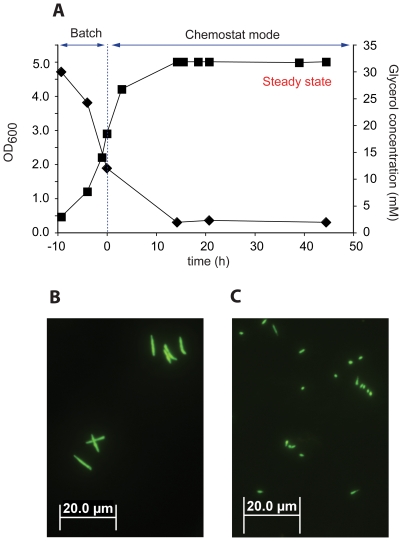
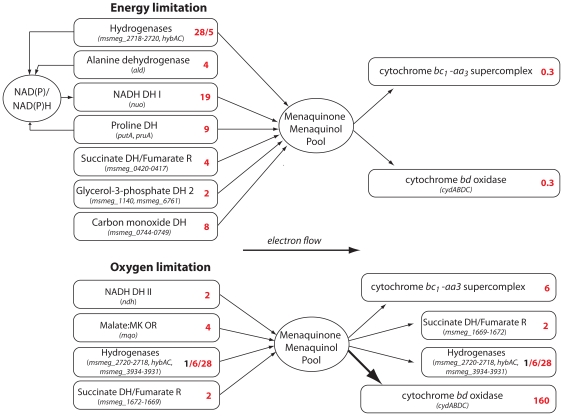
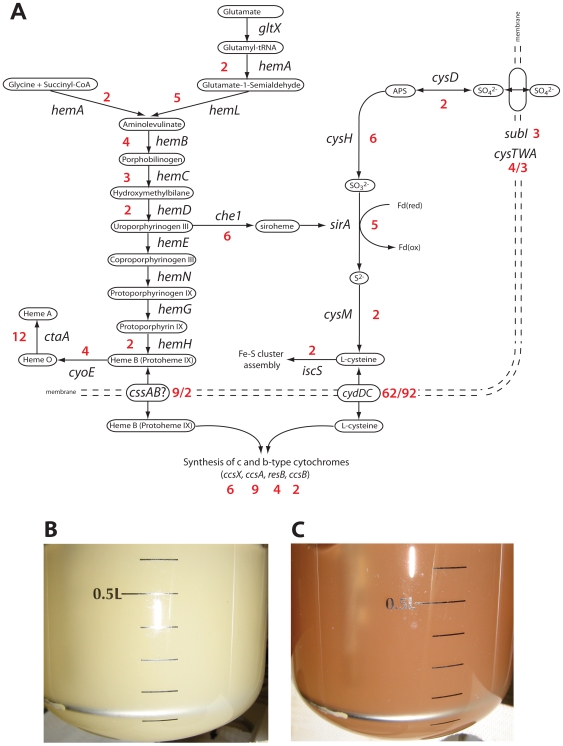
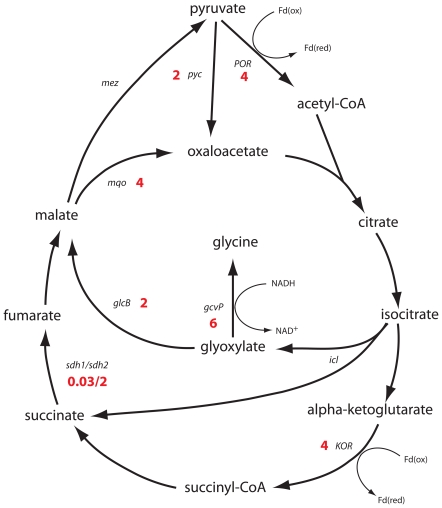
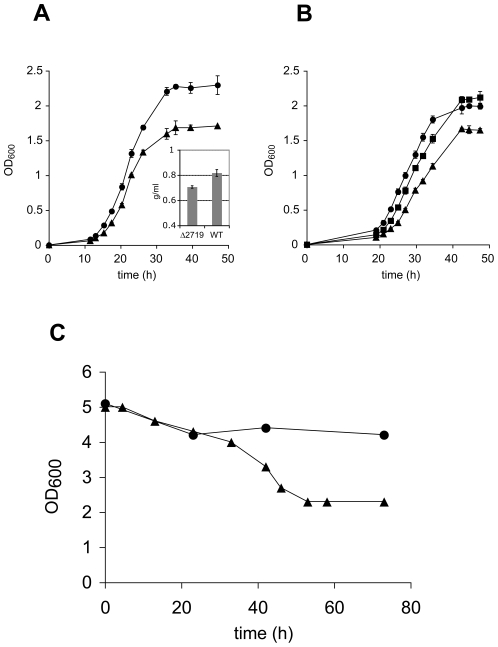
Mycobacteria are a group of obligate aerobes that require oxygen for growth, but paradoxically have the ability to survive and metabolize under hypoxia. The mechanisms responsible for this metabolic plasticity are unknown. Here, we report on the adaptation of Mycobacterium smegmatis to slow growth rate and hypoxia using carbon-limited continuous culture. When M. smegmatis is switched from a 4.6 h to a 69 h doubling time at a constant oxygen saturation of 50%, the cells respond through the down regulation of respiratory chain components and the F1Fo-ATP synthase, consistent with the cells lower demand for energy at a reduced growth rate. This was paralleled by an up regulation of molecular machinery that allowed more efficient energy generation (i.e. Complex I) and the use of alternative electron donors (e.g. hydrogenases and primary dehydrogenases) to maintain the flow of reducing equivalents to the electron transport chain during conditions of severe energy limitation. A hydrogenase mutant showed a 40% reduction in growth yield highlighting the importance of this enzyme in adaptation to low energy supply. Slow growing cells at 50% oxygen saturation subjected to hypoxia (0.6% oxygen saturation) responded by switching on oxygen scavenging cytochrome bd, proton-translocating cytochrome bc1-aa3 supercomplex, another putative hydrogenase, and by substituting NAD+-dependent enzymes with ferredoxin-dependent enzymes thus highlighting a new pattern of mycobacterial adaptation to hypoxia. The expression of ferredoxins and a hydrogenase provides a potential conduit for disposing of and transferring electrons in the absence of exogenous electron acceptors. The use of ferredoxin-dependent enzymes would allow the cell to maintain a high carbon flux through its central carbon metabolism independent of the NAD+/NADH ratio. These data demonstrate the remarkable metabolic plasticity of the mycobacterial cell and provide a new framework for understanding their ability to survive under low energy conditions and hypoxia.
Overview
The claims and statistics of this paper haven’t been checked yet.
Free: it reads the open-access text and checks the first 5 claims that cite a source we can check. Create a free account to check every claim.
Integrity signals
Registry
Cites
Statistics
Figures
Verification
Claims the paper makes
The claims and statistics of this paper haven’t been checked yet.
Free: it reads the open-access text and checks the first 5 claims that cite a source we can check. Create a free account to check every claim.
Claims other papers make about this one
Each is checked against this paper’s own text: does it say what the citing paper says it does?
The source backs part of the claim, not all of it — or backs it for a different population, condition or comparison.
In the citing paper
“M. smegmatis harbours three (designated Hyd1, 2 and 3) of the four hydrogenase complexes (16)”
From Energetics of Respiration and Oxidative Phosphorylation in Mycobacteria (2014) · cites this paper as [16]
Experimental — accuracy not yet measuredThe source backs part of the claim, not all of it — or backs it for a different population, condition or comparison.
In the citing paper
“Four different types of hydrogenases are found in mycobacteria and are annotated to be of the NiFe type.”
From Energetics of Respiration and Oxidative Phosphorylation in Mycobacteria (2014) · cites this paper as [16]
Experimental — accuracy not yet measuredThe source backs part of the claim, not all of it — or backs it for a different population, condition or comparison.
In the citing paper
“It has been shown that M. smegmatis can grow on proline as the sole carbon and energy source and also that PRODH is an important electron donor, under both energy-limiting conditions and hypoxia (7, 16).”
From Energetics of Respiration and Oxidative Phosphorylation in Mycobacteria (2014) · cites this paper as [16]
Experimental — accuracy not yet measuredThe source backs part of the claim, not all of it — or backs it for a different population, condition or comparison.
In the citing paper
“Hyd1, Hyd2 and Hyd3 are all soluble hydrogenases and found in mycobacteria of the slow-growing and fast-growing type, as well as pathogenic and non-pathogenic mycobacteria (16).”
From Energetics of Respiration and Oxidative Phosphorylation in Mycobacteria (2014) · cites this paper as [16]
Experimental — accuracy not yet measuredThe source backs part of the claim, not all of it — or backs it for a different population, condition or comparison.
In the citing paper
“Proline dehydrogenase is upregulated under both energy-limiting conditions and hypoxia (7, 16)”
From Energetics of Respiration and Oxidative Phosphorylation in Mycobacteria (2014) · cites this paper as [16]
Experimental — accuracy not yet measured
7 more claims about this paper
Create a free account to see every claim other papers make about this one.
Self-check
Percentages, sums and reported differences re-computed from the paper’s own numbers.
The self-check needs the paper’s full text.
Citations
Cites
Molecular Cloning: A Laboratory Manual
Sambrook, J., Fritsch, E., & Maniatis, T. (1989) · UCLA - Biblioteca de Ciencias de la Salud · Cited by 133,589
Molecular cloning: A laboratory manual
Deininger, P. (1990) · Analytical Biochemistry · doi:10.1016/0003-2697(90)90595-z · Cited by 84,682
Site-directed mutagenesis by overlap extension using the polymerase chain reaction
Ho, S. N., Hunt, H. D., Horton, R. M., Pullen, J. K., & Pease, L. R. (1989) · Gene · doi:10.1016/0378-1119(89)90358-2 · Cited by 7,399 · cited 1×
“The two products were fused by PCR-overlap extension [42], cloned into the SpeI site of the pPR23-derived [43] vector pX33 [41], creating pHyd2KO, and transformed into M.”
MethodTranscriptional Adaptation of Mycobacterium tuberculosis within Macrophages
Schnappinger, D., Ehrt, S., Voskuil, M. I., Liu, Y., Mangan, J. A., Monahan, I. M., Dolganov, G., Efron, B., Butcher, P. D., Nathan, C., et al. (2003) · The Journal of Experimental Medicine · doi:10.1084/jem.20030846 · Cited by 1,420 · cited 2×
“tuberculosis is regulated by other signals, in addition to low oxygen tension, because it was upregulated in resting as well as activated murine bone marrow macrophages [13].”
BackgroundBetts, J. C., Lukey, P. T., Robb, L. C., McAdam, R. A., & Duncan, K. (2002) · Molecular Microbiology · doi:10.1046/j.1365-2958.2002.02779.x · Cited by 1,395 · cited 1×
“low oxygen (Wayne model) [1], nutrient starvation [2] and extended stationary phase [3,4].”
BackgroundGenetic requirements for mycobacterial survival during infection
Sassetti, C. M., & Rubin, E. J. (2003) · Proceedings of the National Academy of Sciences · doi:10.1073/pnas.2134250100 · Cited by 1,354 · cited 1×
“Both hycP and hycQ (encoding for a possible hydrogenase components) were shown to be essential for optimal growth [34].”
BackgroundSnapper, S. B., Melton, R. E., Mustafa, S., Kieser, T., & Jr, W. R. J. (1990) · Molecular Microbiology · doi:10.1111/j.1365-2958.1990.tb02040.x · Cited by 1,237 · cited 1×
“Strains and Media Mycobacterium smegmatis strain mc(2)155 [39] was used in all experiments.”
MethodClassification and phylogeny of hydrogenases
Vignais, P. (2001) · FEMS Microbiology Reviews · doi:10.1016/s0168-6445(01)00063-8 · Cited by 1,189 · cited 1×
“Hydrogenases catalyze the reversible reaction: 2H + 2e(2) u H2 and represent the ideal mechanism to deal with fluctuations in energy and oxygen supply [27].”
BackgroundWayne, L. G., & Hayes, L. G. (1996) · Infection and Immunity · doi:10.1128/iai.64.6.2062-2069.1996 · Cited by 1,141 · cited 2×
“6% oxygen saturation and these values were chosen to be comparable with the oxygen tensions observed in the Wayne model [1] i.”
BackgroundMethodInhibition of Respiration by Nitric Oxide Induces a Mycobacterium tuberculosis Dormancy Program
Voskuil, M. I., Schnappinger, D., Visconti, K. C., Harrell, M. I., Dolganov, G. M., Sherman, D. R., & Schoolnik, G. K. (2003) · The Journal of Experimental Medicine · doi:10.1084/jem.20030205 · Cited by 966 · cited 2×
“Moreover, the transcription of the first genes of the hycP/hycQ - containing operon was shown to be upregulated during anaerobic adaptation in several studies and is thought to be part of the DevR/DevS regulon [4,6,9,32,33].”
Background
Cited by
Items 201–259 of 259
The adaptive response of mycobacterium avium to anoxia and nitric oxide
Pearl, J. E. (2012) · Portuguese National Funding Agency for Science, Research and Technology (RCAAP Project by FCT) · doi:10.34626/qmkv-t822
Physiological and functional characterisation of RafS, a ribosome associated factor of Mycobacteria
Keshavan, N. (2014) · Spiral (Imperial College London) · doi:10.25560/29353
Uncovering Mechanisms of Bistability and Ultrasensitivity in Bacterial Stress Response
Tiwari, A. (2013) · Rice Research Repository (Rice University)
Dikshit, K. L. (2016) · Wiley eBooks · doi:10.1002/9781119004813.ch94
Minireview: Applied and Environmental Microbiology
Greening, C., Constant, P., Hards, K., Morales, S. E., John, G. D., Russell, R. J., Taylor, M. C., Berney, M., Ralf, Cook, G. M., et al. (2014)
Self-citationFunctional analysis of the cydDC encoded ABC-type transporter in mycobacterium smegmatis
Moeketsi, M. R. (2017) · University of the Witwatersrand, Johannesburg Institutional Repository on DSpace (University of the Witwatersrand, Johannesburg)
Kumar, A. (2017) · DR-NTU (Nanyang Technological University) · doi:10.32657/10356/72805
Nucleoid gene regulation in mycobacteria
Steyn, N. L. (2017) · SUNScholar (Stellenbosch University)
Understanding antimicrobial and antiseptic resistance relationships in Staphylococcus aureus
Krause, A. (2019) · Otago University Research Archive (University of Otago)
Ion homeostasis in Mycobacterium smegmatis
Vercoe, M., & Blake, R. I. (2020) · Otago University Research Archive (University of Otago)
Investigating the Function of DNA Methylation in Mycobacterium smegmatis
Lemere, N. A. (2016) · Digital WPI
Sangeeta, S. T. (2021) · DR-NTU (Nanyang Technological University) · doi:10.32657/10356/152336
(2018) · Microbiology Australia · doi:10.1071/mav39n1
Romano, G. E. (2021) · Digital Library of Theses and Dissertations (Universidade de São Paulo) · doi:10.11606/d.42.2021.tde-18012022-171300
Structure and regulation of the mycobacterial F1-ATPase
Wong, C. F. (2022) · DR-NTU (Nanyang Technological University) · doi:10.32657/10356/163190
Graça, A. P., Nikitushkin, V. D., Ellerhorst, M., et al. (2024) · eLife · doi:10.7554/elife.97559.1.sa1
Graça, A. P., Nikitushkin, V. D., Ellerhorst, M., et al. (2024) · eLife · doi:10.7554/elife.97559.1.sa0
Graça, A. P., Nikitushkin, V. D., Ellerhorst, M., Vilhena, C., Klassert, T. E., Starick, A., Siemers, M., Al‐Jammal, W. K., Vilotijević, I., Slevogt, H., et al. (2024) · eLife · doi:10.7554/elife.97559.2
Graça, A. P., Nikitushkin, V. D., Ellerhorst, M., Vilhena, C., Klassert, T. E., Starick, A., Siemers, M., Al‐Jammal, W. K., Vilotijević, I., Slevogt, H., et al. (2025) · eLife · doi:10.7554/elife.97559.3.sa0
Mycobacterium Energy Metabolism as a Promising Target for Anti-TB Drugs
Kaur, B., Sharma, S., Chauhan, I., & Gupta, M. (2025) · Current Topics in Chemistry · doi:10.2174/0129504023342762250325065553
Soil trace gas oxidizers divergently respond to short- and long-term warmingPreprint
Nguyen-Dinh, T., Tláskal, V., Leung, P. M., Wutkowska, M., Nweze, J. A., Yla-Soininmaki, K., Kerttula, J., Dahl, M. B., Söllinger, A., Schmider, T., et al. (2025) · bioRxiv (Cold Spring Harbor Laboratory) · doi:10.1101/2025.11.18.689010
The development of a rapid diagnostic system for difficult to culture human pathogens
Talip, B. A. (2013) · Ulster University Research Portal (Ulster University)
Ray, A. E. (2022) · UNSWorks (University of New South Wales, Sydney, Australia) · doi:10.26190/unsworks/24349
Characterization of active microbial ecosystems in icy astrobiology analog cryo-environments.
O'Connor, B. (2025) · eScholarship@McGill (McGill) · doi:10.82308/34008
(2019) · Arizona State University Library Digital Repository (Arizona State University)
Clark, M., & Clark, M. (2023) · UA Campus Repository (The University of Arizona)
Medina Caro, D. J. (2025) · publish.UP (University of Potsdam) · doi:10.25932/publishup-69254
Serrano, A. R., Markham, S. A., Dolan, C. C., Arhouma, Z., Whitcomb, L. A., Schlink, D. M., Rose, L., Kostenkova, K., Jankowska, E., Davenport, A., et al. (2026) · Discover Bacteria. · doi:10.1007/s44351-026-00045-x
Decoding BDQ: Structural features, mechanistic action, and anti-TB Efficacy- A review
Gawande, S., Jawarkar, R. D., & Ingle, R. G. (2026) · In Silico Research in Biomedicine · doi:10.1016/j.insi.2026.100298
Chauhan, P., & Bruggeman, F. J. (2026) · FEMS Microbiology Letters · doi:10.1093/femsle/fnag048
“For instance, during the initial stages of infection, M. tuberculosis encounters nutrient-rich environments in the lung alveoli, whereas as the infection progresses and granuloma forms, they face a nutrient-limited environment (Berney and Cook 2010 , Chandra et al. 2022 ).”
O'Connor, B., Allen, D., Quinn, M., Kozey, M., Léveillé, R., & Whyte, L. G. (2026) · ISME Communications · doi:10.1093/ismeco/ycag105
Devlin, K. L., Lamichhane, G., Nelson, W. C., Lin, V., & Beatty, K. E. (2026) · mSystems · doi:10.1128/msystems.00564-26
“This result agrees with previous reports of transcriptional upregulation of the NDH-1 operon in Mab in response to artificial sputum (13) and in M. smegmatis under carbon-limited growth (81).”
van den Bergh, S. G., Chardon, I., Meima‐Franke, M., Rocha, G. S., Cheng, X., Raaijmakers, C. E., de Boer, W., & Bodelier, P. L. E. (2026) · FEMS Microbiology Ecology · doi:10.1093/femsec/fiag048
“…bacterial community has the capability for hydrogenogenic fermentation (Bay et al. 2021 ), and dominant soil microbes are known to activate fermentative hydrogen production to adapt to hypoxia as a strategy to survive under these low energy conditions (Berney and Cook 2010 , Berney et al. 2014 ).”
Meyer, M. D., Bergkessel, M., & DePas, W. H. (2026) · Journal of Bacteriology · doi:10.1128/jb.00076-26
“Cellular physiology and survival requirements differ between the two states, and in some bacteria like Pseudo monas aeruginosa , oxygen starvation more severely decreases ATP pools compared to carbon starvation (27, 31).”
Isaiah, A. R., Loots, D. T., Williams, A. A., Zaharie, S. D., van Furth, A. M., van der Kuip, M., & Mason, S. (2026) · Metabolomics · doi:10.1007/s11306-026-02511-8
“Mtb can survive in oxygen-deprived environments due to its high resilience without replicating (Berney & Cook, 2010).”
Rahman, S. A., Shaikh, F. U. A., Quadir, Z., Khair, S., & Sobuz, M. H. R. (2026) · Advanced Composites and Hybrid Materials · doi:10.1007/s42114-026-02013-0
Zhang, J., Zhang, Q., Xie, Y., Mi, H., Sun, H., Dzakpasu, M., & Wang, X. C. (2026) · Water Research · doi:10.1016/j.watres.2026.126769
Butler, R. E., Barber, J., Mayson, G., Wallis, G., & Stewart, G. R. (2026) · Frontiers in Microbiology · doi:10.3389/fmicb.2026.1882584
“MPY expression itself is induced during carbon limitation and slow growth in M. smegmatis (Berney and Cook, 2010), and during PBS starvation in M. tuberculosis (Betts et al., 2002; Sawyer et al., 2021; Sawyer and Cortes, 2022).”
Immanuel, S. R. C., Do, J., Peterson, E. J. R., Hunt, K. A., Kaur, A., Pan, M., Singh, A., Wu, W., Bhatt, A., & Baliga, N. S. (2026) · bioRxiv (Cold Spring Harbor Laboratory) · doi:10.64898/2026.09.10.750769
Carbon monoxide adaptation and utilisation in Cupriavidus necator
Wickham-Smith, C. (2020) · Nottingham ePrints (University of Nottingham)
Kim, Y., Lee, Y.-J., & Oh, J. (2026) · Journal of Bacteriology · doi:10.1128/jb.00361-26
“Expression of mprA , a member of the MprA regulon, is induced under hypoxic conditions in both M. tuberculosis and M. smegmatis (31, 32).”
Biophysical Characterisation of Proline Cycling Enzymes from Mycobacterium tuberculosis
McNeice, C. (2024) · Otago University Research Archive (University of Otago)
Roy, A., Sau, S., Agnivesh, P. K., Parida, K. K., & Kalia, N. P. (2026) · Biomedicine & Pharmacotherapy · doi:10.1016/j.biopha.2026.119984
Metabolic Adaptation in an Obligate Intracellular Pathogen: Ehrlichia chaffeensis
Sharma, A. K., Chauhan, I., & Ismail, N. (2026) · Springer eBooks · doi:10.1007/978-3-032-30306-6_5
Redox Cofactor Diversity in Biological Hydride Transfer Reactions
Stuteley, S. M., Aziz, A., Johnson-Winters, K. L., Fraaije, M. W., & Bashiri, G. (2026) · Biochemistry · doi:10.1021/acs.biochem.6c00578
cAMP receptor proteins in mycobacteria
Oh, J., Oh, Y., & Hwang, Y. (2026) · The Journal of Microbiology · doi:10.71150/jm.2607013
“Accordingly, these isoenzymes have been demonstrated to respond differentially to nutrient limitation, hypoxia, and respiratory inhibition (Aung et al., 2015; Berney and Cook, 2010; Pec-si et al., 2014).”
Human-origin Tuberculosis in Southeast Asian Bears: Epidemiological and Diagnostic Insights
Officer, K. (n.d.) · Murdoch University Research Portal
Metadata
- Authors
- Berney, M., & Cook, G. M.
- Affiliations
- University of Otago (NZ)
- Corresponding author
- Berney, Michael
- Cook, Gregory M.
- Venue
- PLoS ONE
- Publisher
- Public Library of Science (PLoS)
- Published
- 2010-01-07
- Volume
- 5
- Issue
- 1
- Pages
- e8614
- ISSN
- 1932-6203 (ISSN-L)
- PMC
- PMC2799521
- OpenAlex
- W2094205902
- Cited by
- 235
- References
- 49
- Citations by year
- 2026: 20 · 2025: 19 · 2024: 13 · 2023: 17 · 2022: 17 · 2021: 14 · 2020: 20 · 2019: 19 · 2018: 5 · 2017: 9 · 2016: 10 · 2015: 14 · 2014: 21 · 2013: 17 · 2012: 10
- FWCI
- 7.64
- Type
- journal article
- Language
- en
- Open access
- gold
- doi.org
- Locations
- PLoS ONE (publishedVersion, cc-by)
- Europe PMC (PubMed Central) (publishedVersion, cc-by)
- PubMed Central (publishedVersion, cc-by)
- PubMed (publishedVersion)
- DOAJ (DOAJ: Directory of Open Access Journals) (submittedVersion, cc-by-sa)
- Figshare (submittedVersion, cc-by)
- Funders
- National Science Foundation
- Schweizerischer Nationalfonds zur Förderung der Wissenschaftlichen Forschung
- Maurice Wilkins Centre for Molecular Biodiscovery
- National Institute of Allergy and Infectious Diseases
- Topics
- Health Sciences › Medicine › Infectious Diseases › Tuberculosis Research and Epidemiology
- Life Sciences › Biochemistry, Genetics and Molecular Biology › Genetics › Bacterial Genetics and Biotechnology
- Health Sciences › Medicine › Epidemiology › Mycobacterium research and diagnosis
- Keywords
- Mycobacterium smegmatis, hypoxia adaptation, metabolic plasticity, energy metabolism, starvation, hydrogenase, cytochrome bd, electron transport chain, F1FO-ATP synthase, NAD-dependent enzyme, carbon flux
- MeSH terms
- Citric Acid Cycle, Electron Transport, Energy Metabolism, Genes, Bacterial, Multigene Family, Glyoxylates, Oxygen, Signal Transduction, Gene Expression Regulation, Bacterial, Mycobacterium smegmatis
About these checks
Registry, retraction, Cites and statistics results are computed, not judged, with one exception: a printed reference that no index lists is read once by a model before it counts as a citation error. Claims are extracted by a model and kept only when their quote appears verbatim in the text; each cited source is then checked, with a model’s help, for whether it says what the claim relies on. Those verdicts can be wrong — read the claim’s quote and the cited source before relying on one.
Statistics and arithmetic are recomputed, not judged.
Confidence bands are shown only for fields calibrated on our annotated test set. None is calibrated yet, so no band is shown.
What counts as a claim ›How we measure confidence ›How we check this ›
Are you an author, or do you see a problem with this page? Request a review
Data sources
Bibliographic data: Semantic Scholar, OpenAlex, Crossref.
Contains information from the Semantic Scholar Academic Graph Datasets, made available under the ODC Attribution License (ODC-BY 1.0).
Semantic Scholar’s data is described in: Kinney, R., et al. (2023). The Semantic Scholar Open Data Platform. arXiv:2301.10140.
