

Unique Flexibility in Energy Metabolism Allows Mycobacteria to Combat Starvation and Hypoxia
Open accessThe DOI matches its Crossref record; 49 of the 49 references it cites were found in a registry or an index.
Abstract
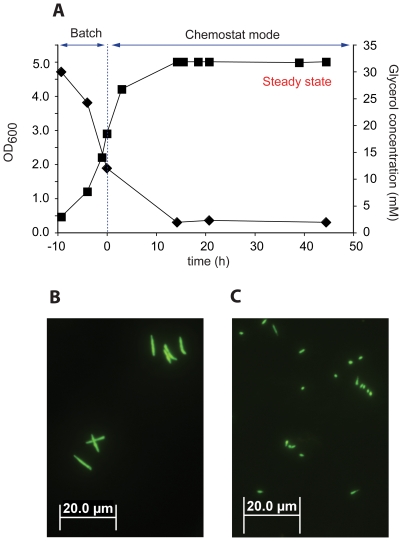
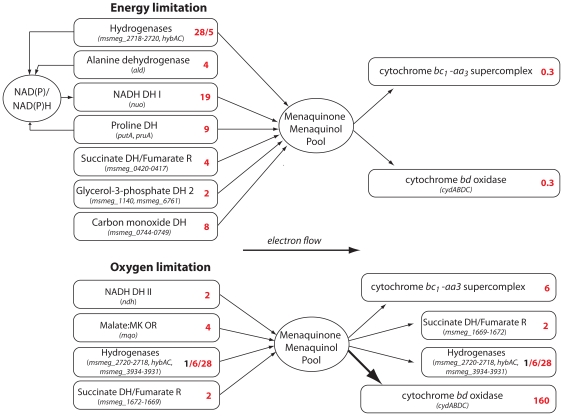
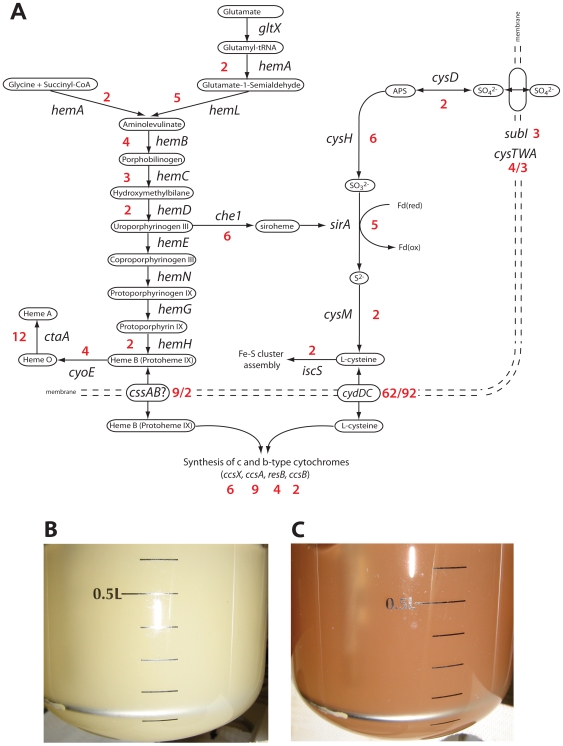
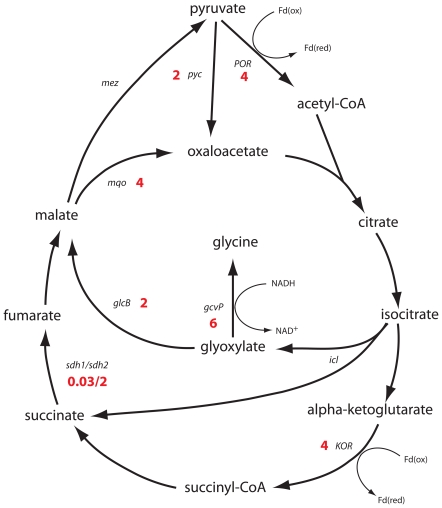
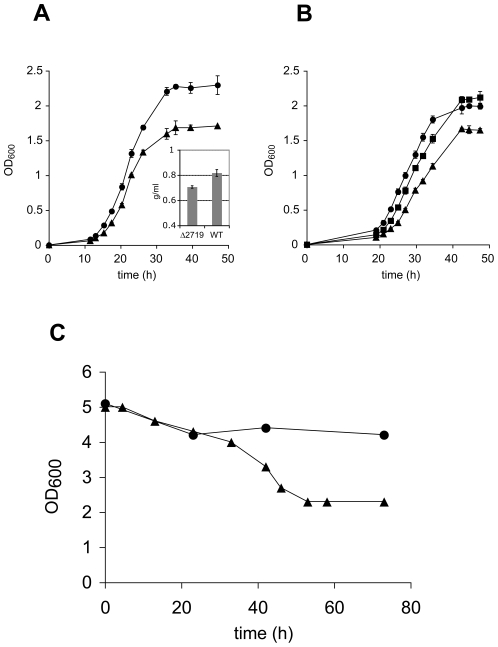
Mycobacteria are a group of obligate aerobes that require oxygen for growth, but paradoxically have the ability to survive and metabolize under hypoxia. The mechanisms responsible for this metabolic plasticity are unknown. Here, we report on the adaptation of Mycobacterium smegmatis to slow growth rate and hypoxia using carbon-limited continuous culture. When M. smegmatis is switched from a 4.6 h to a 69 h doubling time at a constant oxygen saturation of 50%, the cells respond through the down regulation of respiratory chain components and the F1Fo-ATP synthase, consistent with the cells lower demand for energy at a reduced growth rate. This was paralleled by an up regulation of molecular machinery that allowed more efficient energy generation (i.e. Complex I) and the use of alternative electron donors (e.g. hydrogenases and primary dehydrogenases) to maintain the flow of reducing equivalents to the electron transport chain during conditions of severe energy limitation. A hydrogenase mutant showed a 40% reduction in growth yield highlighting the importance of this enzyme in adaptation to low energy supply. Slow growing cells at 50% oxygen saturation subjected to hypoxia (0.6% oxygen saturation) responded by switching on oxygen scavenging cytochrome bd, proton-translocating cytochrome bc1-aa3 supercomplex, another putative hydrogenase, and by substituting NAD+-dependent enzymes with ferredoxin-dependent enzymes thus highlighting a new pattern of mycobacterial adaptation to hypoxia. The expression of ferredoxins and a hydrogenase provides a potential conduit for disposing of and transferring electrons in the absence of exogenous electron acceptors. The use of ferredoxin-dependent enzymes would allow the cell to maintain a high carbon flux through its central carbon metabolism independent of the NAD+/NADH ratio. These data demonstrate the remarkable metabolic plasticity of the mycobacterial cell and provide a new framework for understanding their ability to survive under low energy conditions and hypoxia.
Overview
The claims and statistics of this paper haven’t been checked yet.
Free: it reads the open-access text and checks the first 5 claims that cite a source we can check. Create a free account to check every claim.
Integrity signals
Registry
Cites
Statistics
Figures
Verification
Claims the paper makes
The claims and statistics of this paper haven’t been checked yet.
Free: it reads the open-access text and checks the first 5 claims that cite a source we can check. Create a free account to check every claim.
Claims other papers make about this one
Each is checked against this paper’s own text: does it say what the citing paper says it does?
The source backs part of the claim, not all of it — or backs it for a different population, condition or comparison.
In the citing paper
“M. smegmatis harbours three (designated Hyd1, 2 and 3) of the four hydrogenase complexes (16)”
From Energetics of Respiration and Oxidative Phosphorylation in Mycobacteria (2014) · cites this paper as [16]
Experimental — accuracy not yet measuredThe source backs part of the claim, not all of it — or backs it for a different population, condition or comparison.
In the citing paper
“Four different types of hydrogenases are found in mycobacteria and are annotated to be of the NiFe type.”
From Energetics of Respiration and Oxidative Phosphorylation in Mycobacteria (2014) · cites this paper as [16]
Experimental — accuracy not yet measuredThe source backs part of the claim, not all of it — or backs it for a different population, condition or comparison.
In the citing paper
“It has been shown that M. smegmatis can grow on proline as the sole carbon and energy source and also that PRODH is an important electron donor, under both energy-limiting conditions and hypoxia (7, 16).”
From Energetics of Respiration and Oxidative Phosphorylation in Mycobacteria (2014) · cites this paper as [16]
Experimental — accuracy not yet measuredThe source backs part of the claim, not all of it — or backs it for a different population, condition or comparison.
In the citing paper
“Hyd1, Hyd2 and Hyd3 are all soluble hydrogenases and found in mycobacteria of the slow-growing and fast-growing type, as well as pathogenic and non-pathogenic mycobacteria (16).”
From Energetics of Respiration and Oxidative Phosphorylation in Mycobacteria (2014) · cites this paper as [16]
Experimental — accuracy not yet measuredThe source backs part of the claim, not all of it — or backs it for a different population, condition or comparison.
In the citing paper
“Proline dehydrogenase is upregulated under both energy-limiting conditions and hypoxia (7, 16)”
From Energetics of Respiration and Oxidative Phosphorylation in Mycobacteria (2014) · cites this paper as [16]
Experimental — accuracy not yet measured
7 more claims about this paper
Create a free account to see every claim other papers make about this one.
Self-check
Percentages, sums and reported differences re-computed from the paper’s own numbers.
The self-check needs the paper’s full text.
Citations
Cites
Molecular Cloning: A Laboratory Manual
Sambrook, J., Fritsch, E., & Maniatis, T. (1989) · UCLA - Biblioteca de Ciencias de la Salud · Cited by 133,589
Molecular cloning: A laboratory manual
Deininger, P. (1990) · Analytical Biochemistry · doi:10.1016/0003-2697(90)90595-z · Cited by 84,682
Site-directed mutagenesis by overlap extension using the polymerase chain reaction
Ho, S. N., Hunt, H. D., Horton, R. M., Pullen, J. K., & Pease, L. R. (1989) · Gene · doi:10.1016/0378-1119(89)90358-2 · Cited by 7,399 · cited 1×
“The two products were fused by PCR-overlap extension [42], cloned into the SpeI site of the pPR23-derived [43] vector pX33 [41], creating pHyd2KO, and transformed into M.”
MethodTranscriptional Adaptation of Mycobacterium tuberculosis within Macrophages
Schnappinger, D., Ehrt, S., Voskuil, M. I., Liu, Y., Mangan, J. A., Monahan, I. M., Dolganov, G., Efron, B., Butcher, P. D., Nathan, C., et al. (2003) · The Journal of Experimental Medicine · doi:10.1084/jem.20030846 · Cited by 1,420 · cited 2×
“tuberculosis is regulated by other signals, in addition to low oxygen tension, because it was upregulated in resting as well as activated murine bone marrow macrophages [13].”
BackgroundBetts, J. C., Lukey, P. T., Robb, L. C., McAdam, R. A., & Duncan, K. (2002) · Molecular Microbiology · doi:10.1046/j.1365-2958.2002.02779.x · Cited by 1,395 · cited 1×
“low oxygen (Wayne model) [1], nutrient starvation [2] and extended stationary phase [3,4].”
BackgroundGenetic requirements for mycobacterial survival during infection
Sassetti, C. M., & Rubin, E. J. (2003) · Proceedings of the National Academy of Sciences · doi:10.1073/pnas.2134250100 · Cited by 1,354 · cited 1×
“Both hycP and hycQ (encoding for a possible hydrogenase components) were shown to be essential for optimal growth [34].”
BackgroundSnapper, S. B., Melton, R. E., Mustafa, S., Kieser, T., & Jr, W. R. J. (1990) · Molecular Microbiology · doi:10.1111/j.1365-2958.1990.tb02040.x · Cited by 1,237 · cited 1×
“Strains and Media Mycobacterium smegmatis strain mc(2)155 [39] was used in all experiments.”
MethodClassification and phylogeny of hydrogenases
Vignais, P. (2001) · FEMS Microbiology Reviews · doi:10.1016/s0168-6445(01)00063-8 · Cited by 1,189 · cited 1×
“Hydrogenases catalyze the reversible reaction: 2H + 2e(2) u H2 and represent the ideal mechanism to deal with fluctuations in energy and oxygen supply [27].”
BackgroundWayne, L. G., & Hayes, L. G. (1996) · Infection and Immunity · doi:10.1128/iai.64.6.2062-2069.1996 · Cited by 1,141 · cited 2×
“6% oxygen saturation and these values were chosen to be comparable with the oxygen tensions observed in the Wayne model [1] i.”
BackgroundMethodInhibition of Respiration by Nitric Oxide Induces a Mycobacterium tuberculosis Dormancy Program
Voskuil, M. I., Schnappinger, D., Visconti, K. C., Harrell, M. I., Dolganov, G. M., Sherman, D. R., & Schoolnik, G. K. (2003) · The Journal of Experimental Medicine · doi:10.1084/jem.20030205 · Cited by 966 · cited 2×
“Moreover, the transcription of the first genes of the hycP/hycQ - containing operon was shown to be upregulated during anaerobic adaptation in several studies and is thought to be part of the DevR/DevS regulon [4,6,9,32,33].”
Background
Cited by
Items 101–200 of 259
Reichlen, M. J., Leistikow, R. L., Scobey, M. S., Born, S. E. M., & Voskuil, M. I. (2017) · Journal of Bacteriology · doi:10.1128/jb.00320-17 · Cited by 23
Hwang, J., Yu, S.-I., Lee, B., & Lee, D.-H. (2020) · International Journal of Molecular Sciences · doi:10.3390/ijms21051787 · Cited by 22
“Recently, the glyoxylate cycle was also reported as having unique flexibility in energy metabolism in mycobacteria under oxygen-limiting condition [47].”
BackgroundAerobic hydrogen-oxidizing bacteria in soil: from cells to ecosystems
Fan, X., Zhang, X., Zhao, G., Zhang, X., Dong, L. H., & Chen, Y. (2022) · Reviews in Environmental Science and Bio/Technology · doi:10.1007/s11157-022-09633-0 · Cited by 22
“This was paralleled by the up-regulation of hydrogenases Hhy (group 1h) to maintain the flow of reducing equivalents to the electron transport chain during dormancy (Berney and Cook 2010).”
BackgroundHards, K., Rodriguez, S. M., Cairns, C., & Cook, G. M. (2019) · FEBS Letters · doi:10.1002/1873-3468.13330 · Cited by 21
Self-citationLamichhane-Khadka, R., Benoit, S. L., Miller, E. F., & Maier, R. J. (2014) · Infection and Immunity · doi:10.1128/iai.02611-14 · Cited by 21
Moopanar, K. R., Nyide, A. N. G., Senzani, S., & Mvubu, N. E. (2022) · Pathogens and Disease · doi:10.1093/femspd/ftac046 · Cited by 20
“…detected in cholesterol-rich minimal media might be due to the formation of small sized mycobacterial cells, as reported in nutrient-starved mycobacterial cells, that is caused by M. tuberculosis morphological plasticity (Berney and Cook 2010, Shleeva et al. 2011, Wu and Dick 2015, Wu et al. 2016).”
BackgroundUnderstanding TB latency using computational and dynamic modelling procedures
Magombedze, G., & Mulder, N. (2012) · Infection Genetics and Evolution · doi:10.1016/j.meegid.2012.09.017 · Cited by 20
Williams, K. J., Bryant, W. A., Jenkins, V. A., Barton, G. R., Witney, A. A., Pinney, J. W., & Robertson, B. D. (2013) · BMC Genomics · doi:10.1186/1471-2164-14-436 · Cited by 20
“smegmatis growth rate was reduced in conditions of low energy and hypoxia [16]; adaptation to low growth rate induced the expression of alternative primary dehydrogenases and hydrogenases for energy generation and unique pathways for scavenging carbon.”
BackgroundKinetic and Isotopic Characterization of l -Proline Dehydrogenase from Mycobacterium tuberculosis
Serrano, H., & Blanchard, J. S. (2013) · Biochemistry · doi:10.1021/bi400338f · Cited by 19
“Recently, the oxidation of L-proline has come under scrutiny for its possible protection of Mycobacterial cells under hypoxic conditions [3, 4].”
BackgroundOverexpression of Rv2788 increases mycobacterium stresses survival
Yan, S., Xu, M., Wang, R., Li, Q., Yu, Z., & Xie, J. (2016) · Microbiological Research · doi:10.1016/j.micres.2016.11.007 · Cited by 19
An update on ATP synthase inhibitors: A unique target for drug development in M. tuberculosis
Kelam, L. M., Wani, M. A., & Dhaked, D. K. (2023) · Progress in Biophysics and Molecular Biology · doi:10.1016/j.pbiomolbio.2023.04.009 · Cited by 19
A simple assay for inhibitors of mycobacterial oxidative phosphorylation
Harden, S. A., Courbon, G. M., Liang, Y., Kim, A. S., & Rubinstein, J. L. (2024) · Journal of Biological Chemistry · doi:10.1016/j.jbc.2023.105483 · Cited by 14
“NADH is oxidized by at least two different NADH dehydrogenases: the proton pumping respiratory Complex I as well as one or more nonproton pumping NDH-2 enzymes.”
BackgroundInfluentialAn Overview of Genetic Information of Latent Mycobacterium tuberculosis
Hamidieh, F., Farnia, P., Nowroozi, J., Farnia, P., & Velayati, A. A. (2020) · Tuberculosis & respiratory diseases · doi:10.4046/trd.2020.0116 · Cited by 18
Cook, G. M., Hards, K., Dunn, E. A., Heikal, A., Nakatani, Y., Greening, C., Crick, D. C., Fontes, F. L., Pethe, K., Hasenoehrl, E., et al. (2017) · ASM Press eBooks · doi:10.1128/9781555819569.ch14 · Cited by 19
Self-citationHuang, C., Sarkar, R., Hsu, T., Yang, C.-F., Chien, C.-H., Chang, W.-C., & Chiang, T. (2019) · Microbial Ecology · doi:10.1007/s00248-019-01467-8 · Cited by 18
“The flexibility in energy metabolism enables Mycobacterium to survive under extreme conditions [45].”
BackgroundNovel regulatory roles of cAMP receptor proteins in fast-growing environmental mycobacteria
Aung, H. L., Robson, J. R., Smith, L. J., Green, J., Berney, M., Cook, G. M., Sweeney, N. P., Buxton, R. S., & Dixon, L. L. (2014) · Microbiology · doi:10.1099/mic.0.000015 · Cited by 17
Self-citationInvolvement of Proline Oxidase (PutA) in Programmed Cell Death of Xanthomonas
Wadhawan, S., Gautam, S., & Sharma, A. K. (2014) · PLoS ONE · doi:10.1371/journal.pone.0096423 · Cited by 17
“PutA is significantly upregulated in Mycobacterium smegmatis and is preferentially used as an electron donor to the respiratory chain during energy limiting conditions [35].”
BackgroundAlanine dehydrogenases in mycobacteria
Jeong, J.-A., & Oh, J. (2019) · The Journal of Microbiology · doi:10.1007/s12275-019-8543-7 · Cited by 19
Structure and function of Mycobacterium-specific components of F-ATP synthase subunits α and ε
Bogdanović, N., Sundararaman, L., Kamariah, N., Tyagi, A., Bhushan, S., Ragunathan, P., Shin, J. S., Dick, T., & Grüber, G. (2018) · Journal of Structural Biology · doi:10.1016/j.jsb.2018.10.006 · Cited by 17
PhoH2 proteins couple RNA helicase and RNAse activities
Andrews, E. S. V., & Arcus, V. L. (2020) · Protein Science · doi:10.1002/pro.3814 · Cited by 16
Patil, V., & Jain, V. P. (2021) · Frontiers in Microbiology · doi:10.3389/fmicb.2021.722229 · Cited by 16
“Previous studies suggest that in Mycobacterium smegmatis during low growth rate and low air saturation (0.6%), the cytochrome bd oxidase complex is upregulated >50-fold, which exemplifies the importance of cytochrome bd at low O2 rates (Berney and Cook, 2010).”
BackgroundInfluentialRegulation of the ald Gene Encoding Alanine Dehydrogenase by AldR in Mycobacterium smegmatis
Jeong, J.-A., Baek, E.-Y., Kim, S. W., Choi, J., & Oh, J. (2013) · Journal of Bacteriology · doi:10.1128/jb.00482-13 · Cited by 16
“during long-term granulomatous infection in its host (5, 9, 10).”
BackgroundMcNeil, M. B., Cheung, C., Waller, N. J. E., Adolph, C., Chapman, C. L., Seeto, N. E. J., Jowsey, W. J., Li, Z., Hameed, H. M. A., Zhang, T., et al. (2022) · Frontiers in Cellular and Infection Microbiology · doi:10.3389/fcimb.2022.980844 · Cited by 15
“Because of the reduced efficiency but higher affinity, Cyt-bd functions predominantly under low oxygen conditions in vitro (Kana et al., 2001; Berney and Cook, 2010; Aung et al., 2014) and in vivo (Shi et al., 2005; Cai et al., 2021).”
BackgroundSelf-citationLin, D., Cui, Z., Chongsuvivatwong, V., Palittapongarnpim, P., Chaiprasert, A., Ruangchai, W., Ou, J., & Huang, L. (2020) · BMC Infectious Diseases · doi:10.1186/s12879-020-05189-y · Cited by 15
“itself to survive and metabolize in oxygen-deprived conditions [28].”
BackgroundXu, H., Tang, Y., Nie, Y., & Wu, X. (2022) · Environmental Microbiology · doi:10.1111/1462-2920.15928 · Cited by 16
Wang, X. M., Soetaert, K., Peirs, P., Kalai, M., Fontaine, V., Dehaye, J., & Lefèvre, P. (2015) · PLoS ONE · doi:10.1371/journal.pone.0123327 · Cited by 15
“The mechanisms behind this metabolic plasticity are mostly unknown [5].”
BackgroundPulido, P. A., Novoa‐Aponte, L., Villamil, N., & Soto, C. Y. (2014) · Current Microbiology · doi:10.1007/s00284-014-0632-6 · Cited by 15
“In this regard, the ATPase activity that is stimulated by Mg (basal) in plasma membrane vesicles diminishing approximately 30-40 % in response to hypoxia and DosR over-expression is most likely a consequence of the reduction of mycobacterial metabolism, which generates less efficient biological oxidation when electron…”
BackgroundBaril, X., & Constant, P. (2023) · FEMS Microbiology Ecology · doi:10.1093/femsec/fiad159 · Cited by 14
“…has been observed in various HOB isolates, including the model Ralstonia eutropha H16 switching between lithoautrotrophic and heter otr ophic gr owth (Sc hwartz et al. 2009 ) and the HA-HOB Mycobacterium smegmatis using a mixotrophic growth strategy (Berney and Cook 2010 , Greening et al. 2014 ).”
MethodFirrincieli, A., Zannoni, D., Donini, E., Dostálová, H., Rädisch, R., Iommarini, L., Turner, R. J., Busche, T., Pátek, M., & Cappelletti, M. (2022) · Applied and Environmental Microbiology · doi:10.1128/aem.02209-21 · Cited by 14
Structure of Mycobacterial NDH-2 Bound to a 2-Mercapto-Quinazolinone Inhibitor
Liang, Y., Bueler, S. A., Cook, G. M., & Rubinstein, J. L. (2025) · Journal of Medicinal Chemistry · doi:10.1021/acs.jmedchem.5c00049 · Cited by 13
Self-citationDavidge, K. S., & Dikshit, K. L. (2013) · Advances in microbial physiology/Advances in Microbial Physiology · doi:10.1016/b978-0-12-407693-8.00005-4 · Cited by 13
“…ranges from O2-rich to near anaerobic, and although all species are considered to have an obligate requirement of O2 for their life cycle (Berney & Cook, 2010; Park, Myers, & Marzella, 1992), paradoxically, the majority of them have the ability to grow and metabolise under hypoxia…”
BackgroundPetridis, M., Vickers, C. J., Robson, J. R., McKenzie, J. L., Bereza, M., Sharrock, A. V., Aung, H. L., Arcus, V. L., & Cook, G. M. (2016) · Journal of Molecular Biology · doi:10.1016/j.jmb.2016.09.009 · Cited by 12
Self-citationCarbon monoxide-oxidising Pseudomonadota on volcanic deposits
Dawson, R. A., Fantom, N., Martín-Pozas, T., Aguila‐Torres, P., King, G. M., & Hernández, M. (2025) · Environmental Microbiome · doi:10.1186/s40793-025-00672-y · Cited by 12
How nutrient starvation impacts the gut microbiome
Estrela, S., Long, J. Z., & Huang, K. C. (2025) · Nature Microbiology · doi:10.1038/s41564-025-02139-9 · Cited by 12
“Most studies of bacteria under starvation conditions have focused on a few model species such as Escherichia coli 2 and to some extent Bacillus subtilis 3 and Bacteroides thetaiotaomicron 4–9 , or on pathogens like Staphylococcus aureus 10 and Mycobacterium tuberculosis 11 .”
Buzzard, V., Thorne, D., Gil-Loaiza, J., Cueva, A., & Meredith, L. (2022) · PeerJ · doi:10.7717/peerj.12966 · Cited by 12
Telacebec (Q203): Is there a novel effective and safe anti-tuberculosis drug on the horizon?
Malík, I., Cizmárik, J., Kováč, G., Pecháčová, M., & Hudecová, L. (2021) · Česká a slovenská farmacie · doi:10.5817/csf2021-5-164 · Cited by 12
Narrandes, N. C., Machowski, E. E., Mizrahi, V., & Kana, B. D. (2015) · BMC Microbiology · doi:10.1186/s12866-015-0355-2 · Cited by 12
“Background Mycobacterium tuberculosis has an expanded genetic repertoire in several metabolic pathways, including those involved in energy metabolism, cell wall biosynthesis and DNA repair, a feature that is predicted to contribute to the enhanced metabolic responsiveness of this organism under stressful environmental…”
Rana, H. K., Singh, A. K., Kumar, R., & Pandey, A. K. (2023) · Naunyn-Schmiedeberg s Archives of Pharmacology · doi:10.1007/s00210-023-02679-z · Cited by 11
“Mycobacteria can survive even at low oxygen molecular tension in well-encapsulated lung cavities and macrophage endosomes, leading to resistance to traditional TB medicines (Berney and Cook 2010).”
Targeting the cytochrome bc1 complex for drug development in M. tuberculosis: review
Wani, M. A., & Dhaked, D. K. (2021) · Molecular Diversity · doi:10.1007/s11030-021-10335-y · Cited by 11
“However, under hypoxic conditions, the expression of mycobacterial cytochrome bc1-aa3 is either unchanged [70] or increased [71].”
BackgroundThe Mycobacterium tuberculosis H37Ra gene MRA_1916 causes growth defects upon down-regulation
Singh, K. S., & Singh, S. K. (2015) · Scientific Reports · doi:10.1038/srep16131 · Cited by 11
Islam, Z. F., Cordero, P. R. F., & Greening, C. (2019) · Frontiers in Microbiology · doi:10.3389/fmicb.2019.02749 · Cited by 11
“Similar findings have been made in Streptomyces avermitilis; the sole hydrogenase of this organism, Hhy, is exclusively expressed in exospores and strains lacking this enzyme exhibit severe survival defects (Constant et al., 2010; Liot and Constant, 2016).”
BackgroundInfluentialMetabolism of CO and H2 by pioneer bacteria in volcanic soils and the phyllosphere
Fantom, N., Dawson, R. A., Prondvai, E., Constant, P., King, G. M., Schäfer, H., & Hernández, M. (2025) · The ISME Journal · doi:10.1093/ismejo/wraf053 · Cited by 10
“In another study, M. smegmatis was shown to use H 2 and CO to meet its energy requirements under hypoxic and carbon limited conditions [61]; however, this is not always the case as the carboxydotroph Mycobacterium sp. JC1 grows mixotrophically using both CO and organic carbon with no inhibition of…”
Transition metal homoeostasis is key to metabolism and drug tolerance of Mycobacterium abscessus
Liu, Y., Murphy, K., Fernandes, N. J., Moore, R. E. T., Pennisi, I., Williams, R., Rehkämper, M., & Larrouy-Maumus, G. J. (2024) · npj Antimicrobials and Resistance · doi:10.1038/s44259-024-00042-7 · Cited by 10
Shleeva, M. O., Linge, I. A., Gligonov, I. A., Vostroknutova, G. N., Shashin, D. M., Tsedilin, A. M., Apt, A. S., Kaprelyants, A. S., & Savitsky, A. P. (2024) · Scientific Reports · doi:10.1038/s41598-024-51227-z · Cited by 10
“Because a significant amount of accumulated porphyrins in Mtb cells grown in the presence of ALA can be extracted with organic solvents/detergents, it is likely that these porphyrins are localized in cell membranes, as was found for M.smegmatis 15 .”
BackgroundInfluentialLauten, E. H., Pulliam, B., DeRousse, J., Bhatta, D. B., & Edwards, D. A. (2010) · Materials · doi:10.3390/ma3042684 · Cited by 9
“The upregulation of these [NiFe] hydrogenase related genes suggests a response to oxygen limitation ([NiFe] hydrogenases have been shown to be strongly upregulated in hypoxic conditions [17]).”
BackgroundAyabina, D. V., Hendon-Dunn, C. L., Bacon, J., & Colijn, C. (2016) · Journal of The Royal Society Interface · doi:10.1098/rsif.2016.0745 · Cited by 8
Kumar, S., Koehn, J. T., Juarrero, M. G., Crans, D. C., & Crick, D. C. (2020) · ACS Infectious Diseases · doi:10.1021/acsinfecdis.0c00312 · Cited by 10
Aerobic soil bacteria adapt to hypoxia by hybridizing fermentation with carbon storage
Gillett, D. L., Koralegedara, T., Hutchinson, T. F., Nguyen-Dinh, T., Watts, T. D., Solari, J., Mudaliyar, M., Jowsey, W. J., Athukorala, N., Wong, W. W., et al. (2026) · Proceedings of the National Academy of Sciences · doi:10.1073/pnas.2606389123 · Cited by 8
Self-citationKumar, S., Sega, S., Lynn-Barbe, J. K., Harris, D. L., Koehn, J. T., Crans, D. C., & Crick, D. C. (2023) · Pathogens · doi:10.3390/pathogens12091171 · Cited by 7
“tuberculosis [1,4,7,8], are restricted to pairs of monofunctional enzymes [12,13].”
BackgroundCox, R. A., & García, M. J. G. (2013) · PLoS ONE · doi:10.1371/journal.pone.0059883 · Cited by 7
“Both BCG-Pasteur and Msmeg were grown in carbon limited chemostats [11,12].”
BackgroundMethodInfluentialBadejo, A. C., Chung, W. H., Kim, N. S., Chai, J. C., Lee, Y. S., Jung, K. H., Kim, H. J., & Chai, Y. G. (2014) · PLoS ONE · doi:10.1371/journal.pone.0099464 · Cited by 7
“In mycobacteria, this flexible respiratory ability has been reported [2] and attributed to the presence of genes responsible for ATP generation by oxidative phosphorylation (Ubiquinone cytochrome b reductase complex and cytochrome c oxidase) and to genes encoding anaerobic terminal electron acceptors such as nitrate r…”
BackgroundMukherjee, A., Dandapat, P., Haque, M. Z., Mandal, S., Jana, P. S., Samanta, S., Pal, S., Das, A. K., Nanda, P. K., Bandyopadhyay, S., et al. (2023) · Animal Gene · doi:10.1016/j.angen.2023.200154 · Cited by 6
Identification of genes associated with persistence in Mycobacterium smegmatis
Joshi, H., Kandari, D., Maitra, S. S., Bhatnagar, R., & Banerjee, N. (2024) · Frontiers in Microbiology · doi:10.3389/fmicb.2024.1302883 · Cited by 6
“Further, under hypoxia, mycobacteria switch on hydrogenases to adapt and, like anaerobic bacteria, transfer electrons in the absence of exogenous electron acceptors through the unique electron carriers—ferredoxins (Berney and Cook, 2010).”
Baril, X., & Constant, P. (2025) · Letters in Applied Microbiology · doi:10.1093/lambio/ovaf061 · Cited by 5
Ellerhorst, M., Nikitushkin, V. D., Al‐Jammal, W. K., Gregor, L., Vilotijević, I., & Lackner, G. (2025) · Natural Product Reports · doi:10.1039/d5np00012b · Cited by 5
Oh, Y., & Oh, J. (2024) · Journal of Biological Chemistry · doi:10.1016/j.jbc.2024.105764 · Cited by 5
“It has been reported that expression of the SigF regulon is upregulated under hypoxic conditions in M. tuberculosis and M. smegmatis (15, 28 – 30).”
BackgroundCui, Z., Liu, J., Chang, Y., Lin, D., Luo, D., Ou, J., & Huang, L. (2021) · Medicine · doi:10.1097/md.0000000000027125 · Cited by 5
“However, it has shown remarkable metabolic flexibility, being able to survive and metabolize for a long time without oxygen.([32]) A study showed that M.”
Oh, Y., Lee, H., Ko, E.-M., Jeong, J.-A., Park, S. W., & Oh, J. (2023) · The Journal of Microbiology · doi:10.1007/s12275-023-00026-8 · Cited by 5
“In mycobacteria, it has been demonstrated that expression of the cydAB operon is induced under hypoxia (Aung et al., 2014; Berney & Cook, 2010; Kana et al., 2001; Shi et al., 2005).”
BackgroundInfluentialNarra, H. P., Alsing, J., Sahni, A., Montini, M., Zafar, Y., & Sahni, S. K. (2023) · International Journal of Molecular Sciences · doi:10.3390/ijms24044008 · Cited by 4
“A 50-fold upregulation of Mycobacterium cydAB was observed in hypoxia and extreme carbon-limiting conditions [42].”
BackgroundClearing the air: unraveling past and guiding future research in atmospheric chemosynthesis
Ray, A. E., Tribbia, D. Z., Cowan, D. A., & Ferrari, B. C. (2023) · Microbiology and Molecular Biology Reviews · doi:10.1128/mmbr.00048-23 · Cited by 4
“In cultivated taxa, the link between trace gas oxidation and microbial survival has been supported by the upregulation of these enzymes during nutrient starvation, particularly in late-stage exponential and stationary growth phases (26, 30, 34–36 ).”
BackgroundBalamurugan, M., Banerjee, R., Kasibhatla, S. M., Achalere, A., & Joshi, R. (2022) · Frontiers in Genetics · doi:10.3389/fgene.2022.800083 · Cited by 4
Metabolic Flexibility and Morphological Plasticity in Mycobacteria
Wu, M.-L., & Dick, T. (2015) · Future Microbiology · doi:10.2217/fmb.14.151 · Cited by 4
Respiration and Oxidative Phosphorylation in Mycobacteria
Berney, M., & Cook, G. M. (2014) · Advances in photosynthesis and respiration · doi:10.1007/978-94-017-8742-0_15 · Cited by 4
Self-citationPhysiological roles of the three [NiFe]-hydrogenases in Mycobacterium smegmatis
Greening, C. A. (2013) · Otago University Research Archive (University of Otago) · doi:10.13140/2.1.1381.1841 · Cited by 4
Graça, A. P., Nikitushkin, V., Ellerhorst, M., Vilhena, C., Klassert, T. E., Starick, A., Siemers, M., Al-Jammal, W. K., Vilotijevic, I., Slevogt, H., et al. (2025) · eLife · doi:10.7554/elife.97559.4 · Cited by 3
Lanni, A., Iona, E., Fattorini, L., Giannoni, F., & Iacobino, A. (2025) · Frontiers in Microbiology · doi:10.3389/fmicb.2025.1616149 · Cited by 3
“Non-replicating cultures were also reported for MAC (Lewis and Falkinham, 2015; Totani et al., 2017; Abukhalid et al., 2023) and Mycobacterium smegmatis (Dick et al., 1998; Berney and Cook, 2010; Drapal et al., 2016; Wu et al., 2016).”
Farnia, P., Velayati, A. A., Ghanavi, J., & Farnia, P. (2025) · Advances in experimental medicine and biology · doi:10.1007/978-3-031-96883-9_7 · Cited by 3
A breakthrough in the treatment of multidrug-resistant tuberculosis: A novel and effective approach
Pardeshi, V., Lokhande, T. N., Shelke, A. V., Tuse, T., Pawar, B., & Bonde, C. G. (2022) · Egyptian Journal of Chest Diseases and Tuberculosis · doi:10.4103/ecdt.ecdt_24_22 · Cited by 3
Xu, M., Liu, M., Liu, T., Pan, X., Ren, Q., Han, T., & Gou, L. (2024) · Microorganisms · doi:10.3390/microorganisms12061244 · Cited by 3
“Based on the genetics of M. smegmatis , which induce the expression of their genes during starvation and hypoxia, they improve survival by scavenging atmospheric H 2 [40,41].”
BackgroundUdou, T. (2013) · Journal of UOEH · doi:10.7888/juoeh.35.109 · Cited by 3
Neues zur Therapie der okulären Tuberkulose
Brönnimann, L. C., Zimmerli, S., & Garweg, J. G. (2020) · Der Ophthalmologe · doi:10.1007/s00347-020-01099-1 · Cited by 3
Electrochemical monitoring of the metabolic activity of mycobacteria in culture
Murillo, J. R., Ramírez, A.-S., Suárez, M. H., & Soto, C. Y. (2012) · Antonie van Leeuwenhoek · doi:10.1007/s10482-012-9727-x · Cited by 3
“functions to maintain viability inside macrophages by inducing changes in their metabolic activity (Voskuil 2004; Berney and Cook 2010).”
BackgroundMethodInfluentialThe Biology and Biochemistry of PhoH2 proteins
Andrews, E. S. V. (2013) · Research Commons (University of Waikato) · Cited by 3
Schäfer, C. (2014) · edoc Publication server (Humboldt University of Berlin) · doi:10.18452/17009 · Cited by 3
“In Folge der systematischen Ermittlung eines geeigneten Elektronenakzeptors für photometrische Assays (siehe Kapitel 3.6.1.1) wurde jedoch später festgestellt, dass NBT ein direkter Elektronenakzeptor der AH ist und PMS in der Aktivitätsfärbung nativer Gele demzufolge 3 ‒ Ergebnisse 39 nicht benötigt wird (Abbildung 3…”
BackgroundInfluentialFunctional genomic signatures predict microbial culturability across the tree of lifePreprint
Oduwole, I., Babjac, A., Royalty, T. M., Hibbs, M., Lloyd, K. G., Emrich, S., & Steen, A. D. (2025) · bioRxiv (Cold Spring Harbor Laboratory) · doi:10.1101/2025.08.18.670795 · Cited by 3
Cellular and molecular basis of atmospheric hydrogen and carbon monoxide oxidation in mycobacteria
CORDERO, P. R. (2021) · Figshare · doi:10.26180/13724599 · Cited by 3
Mycobacterial respiratory chain enzymes and growth are inhibited by decylubiquinone
Król, S. K., Kovaĺová, T., Janczak, M., Kalsum, S., Akber, M., Högbom, M., Brighenti, S., Ädelroth, P., & Brzezinski, P. (2025) · Communications Biology · doi:10.1038/s42003-025-09309-9 · Cited by 2
Macbeth, E. K., Rose, F. O. T., Cheung, C., Harbison-Price, N., Oliveira, D. M. P. D., Whyte, H. G., Walker, M. J., Hussein, M., Velkov, T., Neville, S. L., et al. (2026) · npj Antimicrobials and Resistance · doi:10.1038/s44259-026-00233-4 · Cited by 2
Self-citationStructural analysis of molybdopterin synthases from two mycobacterial pathogens
Wang, H., Chen, X., Zhang, W., Zhou, W., Liu, X., & Rao, Z. (2019) · Biochemical and Biophysical Research Communications · doi:10.1016/j.bbrc.2019.02.024 · Cited by 2
Energy Pathways in Mycobacterium Tuberculosis
Ganeshpurkar, A., Singh, R. P., Singh, M., Kumar, A., & Singh, S. K. (2023) · Integrated science · doi:10.1007/978-3-031-15955-8_25 · Cited by 2
Sonam, W., Liu, Y., & Ren, L. (2025) · Plants · doi:10.3390/plants14081190 · Cited by 1
Kim, N. D., Oh, Y., & Oh, J. (2025) · Journal of Bacteriology · doi:10.1128/jb.00429-25 · Cited by 1
“In contrast, the expression of the sdh2 operon is upregulated under hypoxic conditions, with SDH2 playing an essential role under such conditions (48, 63).”
Medina, D., Bartholomäus, A., García, A., Oses, R., Liebner, S., & Wagner, D. (2026) · Environmental Microbiome · doi:10.1186/s40793-025-00847-7 · Cited by 1
Santana, M. M., Delgado, J. A., Rosa, A. P., Cruz, C., & Gonzalez, J. M. (2026) · Frontiers in Microbiology · doi:10.3389/fmicb.2026.1754804 · Cited by 1
“…were significantly reduced compared to those of the wild type during growth on organic carbon sources, showing that M. smegmatis preferentially grows mixotrophi-cally by co-oxidizing organic electron donors and H 2 (Berney and Cook, 2010; Berney et al., 2014; Greening et al., 2014b).”
InfluentialKropp, A., Archer, J. D., Jespersen, M., Watts, T. D., Solari, J., Huang, C., Schittenhelm, R. B., Grinter, R., & Greening, C. (2026) · mSystems · doi:10.1128/msystems.01678-25 · Cited by 1
“We first compared the proteomic changes in the gylR mutant at exponential and stationary phases with previously published gene expression data from M. smegmatis grown in continuous culture with glycerol as the sole carbon source (39).”
Xing, S., Chen, F., Lu, J., Zhang, X., Zhao, X., He, J., Zou, W., & Li, X. (2026) · Bioresource Technology · doi:10.1016/j.biortech.2026.134934 · Cited by 1
Poddar, K., Tripathi, G., Khairnar, S. V., Srivastav, S., & Anand, A. (2026) · ACS Infectious Diseases · doi:10.1021/acsinfecdis.6c00483 · Cited by 1
On the stability of mycobacterial ribosomes during stasis
Trauner, A. (2010) · doi:10.25560/6377 · Cited by 1
地球規模の大気水素循環に重要な役割を果たす鍵微生物群の発見と生理生態学的特性: 超低濃度の水素を酸化可能な新規ヒドロゲナーゼをもつ植物共生放線菌
Kanno, M. (2017) · KAGAKU TO SEIBUTSU · doi:10.1271/kagakutoseibutsu.55.587 · Cited by 1
Multiomics Integration of Tuberculosis Pathogenesis
Lee, J. J., Sell, P., & Eoh, H. (2023) · Integrated science · doi:10.1007/978-3-031-15955-8_45 · Cited by 1
Uradi, S. (2023) · International Journal of Scientific Reports · doi:10.18203/issn.2454-2156.intjscirep20232515 · Cited by 1
Respiratory ATP synthesis as drug target for combating tuberculosis
Haagsma, A. C. (2012) · Digital Academic REpository of VU University Amsterdam (Vrije Universiteit Amsterdam) · Cited by 1
Nitrogen metabolism in Mycobacterium smegmatis
Petridis, M. (2015) · Otago University Research Archive (University of Otago) · Cited by 1
Lee, B. S. (2021) · DR-NTU (Nanyang Technological University) · doi:10.32657/10356/155550 · Cited by 1
Graça, A. P., Nikitushkin, V. D., Ellerhorst, M., Vilhena, C., Klassert, T. E., Starick, A., Siemers, M., Al‐Jammal, W. K., Vilotijević, I., Slevogt, H., et al. (2024) · eLife · doi:10.7554/elife.97559.1 · Cited by 1
Graça, A. P., Nikitushkin, V. D., Ellerhorst, M., Vilhena, C., Klassert, T. E., Starick, A., Siemers, M., Al‐Jammal, W. K., Vilotijević, I., Slevogt, H., et al. (2025) · eLife · doi:10.7554/elife.97559.3 · Cited by 1
Identification And Characterization Of Nutrient Transporters In Mycobacterium Smegmatis
Sho, M. (2011) · eCommons (Cornell University) · Cited by 1
Miller, C. H. (2013) · Open Access Victoria University of Wellington | Te Herenga Waka (Figshare) · doi:10.26686/wgtn.17004946.v1
Regulation of Cytochrome bd Expression in Mycobacterium smegmatis
Weimar, M. R. (2010) · Otago University Research Archive (University of Otago)
Physiological functions of the respiratory cytochrome bd and the CuA nitric oxide reductase (CuANor)
Al-Attar, S. (2015) · Data Archiving and Networked Services (DANS) · doi:10.4233/uuid:964acb85-00c8-4d32-a53f-8a9b71823500
Metadata
- Authors
- Berney, M., & Cook, G. M.
- Affiliations
- University of Otago (NZ)
- Corresponding author
- Berney, Michael
- Cook, Gregory M.
- Venue
- PLoS ONE
- Publisher
- Public Library of Science (PLoS)
- Published
- 2010-01-07
- Volume
- 5
- Issue
- 1
- Pages
- e8614
- ISSN
- 1932-6203 (ISSN-L)
- PMC
- PMC2799521
- OpenAlex
- W2094205902
- Cited by
- 235
- References
- 49
- Citations by year
- 2026: 20 · 2025: 19 · 2024: 13 · 2023: 17 · 2022: 17 · 2021: 14 · 2020: 20 · 2019: 19 · 2018: 5 · 2017: 9 · 2016: 10 · 2015: 14 · 2014: 21 · 2013: 17 · 2012: 10
- FWCI
- 7.64
- Type
- journal article
- Language
- en
- Open access
- gold
- doi.org
- Locations
- PLoS ONE (publishedVersion, cc-by)
- Europe PMC (PubMed Central) (publishedVersion, cc-by)
- PubMed Central (publishedVersion, cc-by)
- PubMed (publishedVersion)
- DOAJ (DOAJ: Directory of Open Access Journals) (submittedVersion, cc-by-sa)
- Figshare (submittedVersion, cc-by)
- Funders
- National Science Foundation
- Schweizerischer Nationalfonds zur Förderung der Wissenschaftlichen Forschung
- Maurice Wilkins Centre for Molecular Biodiscovery
- National Institute of Allergy and Infectious Diseases
- Topics
- Health Sciences › Medicine › Infectious Diseases › Tuberculosis Research and Epidemiology
- Life Sciences › Biochemistry, Genetics and Molecular Biology › Genetics › Bacterial Genetics and Biotechnology
- Health Sciences › Medicine › Epidemiology › Mycobacterium research and diagnosis
- Keywords
- Mycobacterium smegmatis, hypoxia adaptation, metabolic plasticity, energy metabolism, starvation, hydrogenase, cytochrome bd, electron transport chain, F1FO-ATP synthase, NAD-dependent enzyme, carbon flux
- MeSH terms
- Citric Acid Cycle, Electron Transport, Energy Metabolism, Genes, Bacterial, Multigene Family, Glyoxylates, Oxygen, Signal Transduction, Gene Expression Regulation, Bacterial, Mycobacterium smegmatis
About these checks
Registry, retraction, Cites and statistics results are computed, not judged, with one exception: a printed reference that no index lists is read once by a model before it counts as a citation error. Claims are extracted by a model and kept only when their quote appears verbatim in the text; each cited source is then checked, with a model’s help, for whether it says what the claim relies on. Those verdicts can be wrong — read the claim’s quote and the cited source before relying on one.
Statistics and arithmetic are recomputed, not judged.
Confidence bands are shown only for fields calibrated on our annotated test set. None is calibrated yet, so no band is shown.
What counts as a claim ›How we measure confidence ›How we check this ›
Are you an author, or do you see a problem with this page? Request a review
Data sources
Bibliographic data: Semantic Scholar, OpenAlex, Crossref.
Contains information from the Semantic Scholar Academic Graph Datasets, made available under the ODC Attribution License (ODC-BY 1.0).
Semantic Scholar’s data is described in: Kinney, R., et al. (2023). The Semantic Scholar Open Data Platform. arXiv:2301.10140.
