

Genetic Incorporation of Unnatural Amino Acids into Proteins in Mycobacterium tuberculosis
Open accessThe DOI matches its Crossref record; 19 of the 22 references it cites were found in a registry or an index.
Abstract
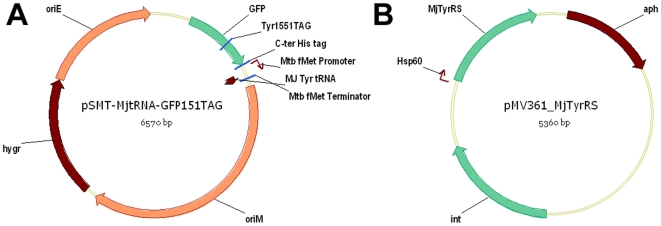
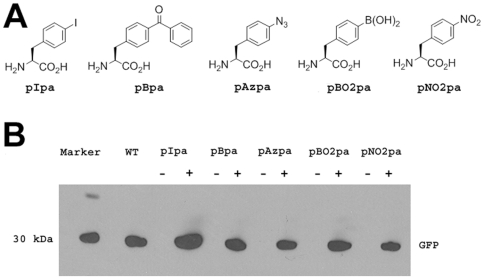
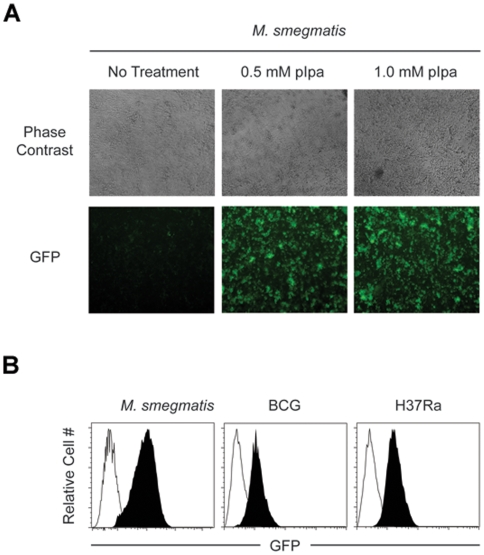
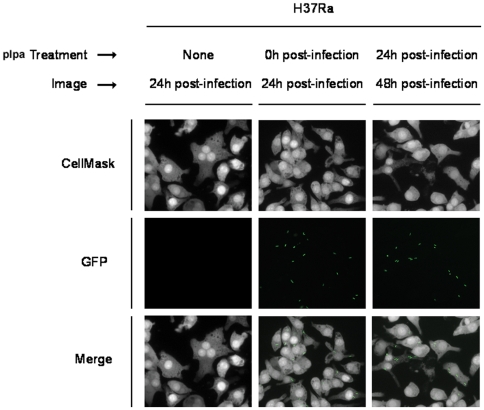
New tools are needed to study the intracellular pathogen Mycobacterium tuberculosis (Mtb), the causative agent of tuberculosis (TB), to facilitate new drug discovery and vaccine development. We have developed methodology to genetically incorporate unnatural amino acids into proteins in Mycobacterium smegmatis, BCG and Mtb, grown both extracellularly in culture and inside host cells. Orthogonal mutant tRNATyr/tyrosyl-tRNA synthetase pairs derived from Methanococcus jannaschii and evolved in Escherichia coli incorporate a variety of unnatural amino acids (including photocrosslinking, chemically reactive, heavy atom containing, and immunogenic amino acids) into proteins in response to the amber nonsense codon. By taking advantage of the fidelity and suppression efficiency of the MjtRNA/pIpaRS pair in mycobacteria, we are also able to use p-iodophenylalanine to induce the expression of proteins in mycobacteria both extracellularly in culture and inside of mammalian host cells. This provides a new approach to regulate the expression of reporter genes or mycobacteria endogenous genes of interest. The establishment of the unnatural amino acid expression system in Mtb, an intracellular pathogen, should facilitate studies of TB biology and vaccine development.
Overview
The claims and statistics of this paper haven’t been checked yet.
Free: it reads the open-access text and checks the first 5 claims that cite a source we can check. Create a free account to check every claim.
Integrity signals
Registry
Cites
Statistics
Figures
Verification
Claims the paper makes
The claims and statistics of this paper haven’t been checked yet.
Free: it reads the open-access text and checks the first 5 claims that cite a source we can check. Create a free account to check every claim.
Claims other papers make about this one
Each is checked against this paper’s own text: does it say what the citing paper says it does?
The cited source says what the claim attributes to it.
In the citing paper
“Identifying protein-protein interactions can provide enormous insight on protein function, as demonstrated by new in vivo proximity-labeling technologies.”
From Mycobacterium smegmatis: The Vanguard of Mycobacterial Research (2023) · cites this paper as [159]
Self-check
Percentages, sums and reported differences re-computed from the paper’s own numbers.
The self-check needs the paper’s full text.
Citations
Cites
Crystal Structure of the Aequorea victoria Green Fluorescent Protein
Ormö, M., Cubitt, A. B., Kallio, K., Gross, L. A., Tsien, R. Y., & Remington, S. J. (1996) · Science · doi:10.1126/science.273.5280.1392 · Cited by 2,242 · cited 1×
“protein [17].”
Expanding the Genetic Code of Escherichia coli
Wang, L., Brock, A., Herberich, B., & Schultz, P. G. (2001) · Science · doi:10.1126/science.1060077 · Cited by 1,499 · cited 2×
“coli), yeast, and mammalian cells [4,5,6,7,8,9,10,11,12,13].”
Self-citationVariation in protection by BCG: implications of and for heterologous immunity
Fine, P. E. M. (1995) · The Lancet · doi:10.1016/s0140-6736(95)92348-9 · Cited by 1,380 · cited 1×
“chemotherapies and a more efficacious TB vaccine remain illusive”
BackgroundAn Expanded Eukaryotic Genetic Code
Chin, J. W., Cropp, T. A., Anderson, J. C., Mukherji, M., Zhang, Z., & Schultz, P. G. (2003) · Science · doi:10.1126/science.1084772 · Cited by 820
Self-citationGlobal epidemiology of tuberculosis
Dye, C. (2006) · The Lancet · doi:10.1016/s0140-6736(06)68384-0 · Cited by 716
Addition of a photocrosslinking amino acid to the genetic code of Escherichia coli
Chin, J. W., Martin, A. B., King, D. S., Wang, L., & Schultz, P. G. (2002) · Proceedings of the National Academy of Sciences · doi:10.1073/pnas.172226299 · Cited by 704 · cited 1×
“coli), yeast, and mammalian cells [4,5,6,7,8,9,10,11,12,13].”
Self-citationAdding Amino Acids with Novel Reactivity to the Genetic Code of Saccharomyces Cerevisiae
Deiters, A., Cropp, T. A., Mukherji, M., Chin, J. W., Anderson, J. C., & Schultz, P. G. (2003) · Journal of the American Chemical Society · doi:10.1021/ja0370037 · Cited by 388 · cited 1×
“coli), yeast, and mammalian cells [4,5,6,7,8,9,10,11,12,13].”
Self-citationGenetic incorporation of unnatural amino acids into proteins in mammalian cells
Liu, W., Brock, A., Chen, S., Chen, S., & Schultz, P. G. (2007) · Nature Methods · doi:10.1038/nmeth1016 · Cited by 373 · cited 1×
“coli), yeast, and mammalian cells [4,5,6,7,8,9,10,11,12,13].”
Self-citationA Genetically Encoded Fluorescent Amino Acid
Wang, J., Xie, J., & Schultz, P. G. (2006) · Journal of the American Chemical Society · doi:10.1021/ja062666k · Cited by 319
Self-citationLee, H. S., Guo, J., Lemke, E. A., Dimla, R. D., & Schultz, P. G. (2009) · Journal of the American Chemical Society · doi:10.1021/ja904896s · Cited by 226
Self-citation
Research works printed but not linked: 1
- Harries AD Dye C 2006 Tuberculosis. Ann Trop Med Parasitol 100 415 431 16899146
Cited by
Therapeutic Peptides: Current Applications and Future Directions
Wang, L., Wang, N., Zhang, W., Cheng, X., Yan, Z., Shao, G., Wang, X., Wang, R., & Fu, C. (2022) · Signal Transduction and Targeted Therapy · doi:10.1038/s41392-022-00904-4 · Cited by 2,131
Adding New Chemistries to the Genetic Code
Liu, C. C., & Schultz, P. G. (2010) · Annual Review of Biochemistry · doi:10.1146/annurev.biochem.052308.105824 · Cited by 1,725
Self-citationDesigning logical codon reassignment – Expanding the chemistry in biology
Dumas, A., Lercher, L., Spicer, C. D., & Davis, B. G. (2015) · Chemical Science · doi:10.1039/c4sc01534g · Cited by 482
Playing with the Molecules of Life
Young, D. D., & Schultz, P. G. (2018) · ACS Chemical Biology · doi:10.1021/acschembio.7b00974 · Cited by 345
Self-citationMycobacterium smegmatis: The Vanguard of Mycobacterial Research
Sparks, I. L., Derbyshire, K. M., Jacobs, W. R., & Morita, Y. S. (2023) · Journal of Bacteriology · doi:10.1128/jb.00337-22 · Cited by 149
“(159, 160), or fuze the test protein to peroxidase to mediate biotinylation of nearby proteins”
BackgroundMethodologies for “Wiring” Redox Proteins/Enzymes to Electrode Surfaces
Yates, N. D. J., Fascione, M. A., & Parkin, A. (2018) · Chemistry - A European Journal · doi:10.1002/chem.201800750 · Cited by 162
At the Interface of Chemical and Biological Synthesis: An Expanded Genetic Code
Xiao, H., & Schultz, P. G. (2016) · Cold Spring Harbor Perspectives in Biology · doi:10.1101/cshperspect.a023945 · Cited by 144
“This strategy is also being used to create other vaccines—several pyrrolysine analogs have been incorporated into the surface protein of human hepatitis D virus, and MjTyrRS/tRNA has been used to encode a number of tyrosine analogs in Mycobacterium smegmatis and tuberculosis (Wang et al. 2010; Lin et al. 2013).”
BackgroundSelf-citationUpgrading aminoacyl-tRNA synthetases for genetic code expansion
Vargas-Rodriguez, O., Sevostyanova, A., Söll, D., & Crnković, A. (2018) · Current Opinion in Chemical Biology · doi:10.1016/j.cbpa.2018.07.014 · Cited by 92
Genetic Code Expansion: Recent Developments and Emerging Applications
Huang, Y., Zhang, P., Wang, H., Chen, Y., Liu, T., & Luo, X. (2024) · Chemical Reviews · doi:10.1021/acs.chemrev.4c00216 · Cited by 114
Therapeutic applications of genetic code expansion
Huang, Y., & Liu, T. (2018) · Synthetic and Systems Biotechnology · doi:10.1016/j.synbio.2018.09.003 · Cited by 85
“Mycobacterium tuberculosis (Mtb), which facilitated studies of tuberculosis (TB) vaccine development [131], increasing number of genetically modified organisms (GMOs) were developed.”
BackgroundSmolskaya, S. V., & Andreev, Y. A. (2019) · Biomolecules · doi:10.3390/biom9070255 · Cited by 88
“coli [5], Salmonella [60], Streptomyces venezuelae ATCC 15439 [61] and Mycobacterium tuberculosis [62].”
BackgroundGrammel, M., Zhang, M. M., & Hang, H. C. (2010) · Angewandte Chemie International Edition · doi:10.1002/anie.201002050 · Cited by 66
Therapeutic Applications of an Expanded Genetic Code
Sun, S. B., Schultz, P. G., & Kim, C. H. (2014) · ChemBioChem · doi:10.1002/cbic.201402154 · Cited by 59
Self-citationPerformance Analysis of Orthogonal Pairs Designed for an Expanded Eukaryotic Genetic Code
Nehring, S., Budiša, N., & Wiltschi, B. (2012) · PLoS ONE · doi:10.1371/journal.pone.0031992 · Cited by 58
“During the last decade, the Schultz group and others established o-pairs for the incorporation of a vast number of mostly Tyr analogs in different expression hosts [16,17,18,19,20,21,22,23].”
BackgroundGenetic-code-expanded cell-based therapy for treating diabetes in mice
Chen, C., Yu, G., Huang, Y., Cheng, W., Li, Y., Sun, Y. X., Ye, H., & Liu, T. (2021) · Nature Chemical Biology · doi:10.1038/s41589-021-00899-z · Cited by 58
Lopatniuk, M., Myronovskyi, M., & Luzhetskyy, A. N. (2017) · ACS Chemical Biology · doi:10.1021/acschembio.7b00359 · Cited by 41
Engineering aminoacyl-tRNA synthetases for use in synthetic biology
Krahn, N., Tharp, J. M., Crnković, A., & Söll, D. G. (2020) · The Enzymes · doi:10.1016/bs.enz.2020.06.004 · Cited by 40
“However, with such low suppression, MjtRNACUA would not compete well with the release factor and therefore it was presumed that endogenous protein expression was not significantly affected [127].”
BackgroundBiochemical analysis with the expanded genetic lexicon
Ai, H. (2012) · Analytical and Bioanalytical Chemistry · doi:10.1007/s00216-012-5784-2 · Cited by 38
“tuberculosis (MTB) for mechanism studies and vaccine development [50].”
BackgroundNon-Standard Genetic Codes Define New Concepts for Protein Engineering
Bezerra, A. R., Guimarães, A. R., & Santos, M. A. S. (2015) · Life · doi:10.3390/life5041610 · Cited by 44
“More than 100 unnatural amino acids have been incorporated into proteins of numerous organisms, such as Escherichia coli [13–15], Saccharomyces cerevisiae [13], mammalian cells [13,14], Shigella [15], Salmonella [15], Mycobacterium tuberculosis [16], Drosophila melanogaster [13], Caenorhabditis elegans [13,17], Bombyx…”
BackgroundTouchette, M. H., Van Vlack, E. R., Bai, L., Kim, J., Cognetta, A. B., Previti, M. L., Backus, K. M., Martin, D. W., Cravatt, B. F., & Seeliger, J. C. (2017) · ACS Infectious Diseases · doi:10.1021/acsinfecdis.6b00179 · Cited by 34
A modular synthesis of dithiocarbamate pendant unnatural α-amino acids
Saha, A., Baig, R. B. N., Leazer, J. L., & Varma, R. S. (2012) · Chemical Communications · doi:10.1039/c2cc32894a · Cited by 34
Transport of outer membrane lipids in mycobacteria
Touchette, M. H., & Seeliger, J. C. (2017) · Biochimica et Biophysica Acta (BBA) - Molecular and Cell Biology of Lipids · doi:10.1016/j.bbalip.2017.01.005 · Cited by 33
“This approach uses the incorporation of a photoreactive unnatural amino acid into proteins, which has been demonstrated in a proof-of-principle with GFP expressed in mycobacteria [121].”
MethodIncorporation of non-canonical amino acids into proteins in yeast
Wiltschi, B. (2016) · Fungal Genetics and Biology · doi:10.1016/j.fgb.2016.02.002 · Cited by 37
“coli) (Wang et al., 2010), mammalian cells (from yeast) (Liu et al.”
BackgroundA photo-cross-linking approach to monitor protein dynamics in living cells
Miyazaki, R., Akiyama, Y., & Mori, H. (2019) · Biochimica et Biophysica Acta (BBA) - General Subjects · doi:10.1016/j.bbagen.2019.03.003 · Cited by 32
Expanding the genetic code of Salmonella with non-canonical amino acids
Gan, Q., Lehman, B. P., Bobik, T. A., & Fan, C. (2016) · Scientific Reports · doi:10.1038/srep39920 · Cited by 35
“Together with this work, genetic code expansion has been successfully applied in several pathogens including Salmonella , Shigella , and Mycobacterium 49,50 , suggesting that it is promising to extend this strategy to other pathogens for broader applications.”
Building biomaterials through genetic code expansion
Sisila, V., Indhu, M., Radhakrishnan, J., & Ayyadurai, N. (2022) · Trends in biotechnology · doi:10.1016/j.tibtech.2022.07.003 · Cited by 27
Cellular Site-Specific Incorporation of Noncanonical Amino Acids in Synthetic Biology
Niu, W., & Guo, J. (2024) · Chemical Reviews · doi:10.1021/acs.chemrev.3c00938 · Cited by 32
Self-citationFranco, M., D’haeseleer, P., Branda, S. S., Liou, M. J., Haider, Y., Segelke, B. W., & El‐Etr, S. H. (2018) · Frontiers in Cellular and Infection Microbiology · doi:10.3389/fcimb.2018.00370 · Cited by 26
“The recent advancement of selective labeling methods that enable enrichment of bacterial proteins from coculture offers a new solution that overcomes these technical challenges (Ngo et al., 2009; Tanrikulu et al., 2009; Grammel et al., 2010; Wang et al., 2010).”
BackgroundGenetic‐Code‐Expansion Strategies for Vaccine Development
Fok, J. A., & Mayer, C. (2020) · ChemBioChem · doi:10.1002/cbic.202000343 · Cited by 23
Metabolic labeling probes for interrogation of the host–pathogen interaction
Ignacio, B. J., Bakkum, T., Bonger, K. M., Martin, N. I., & van Kasteren, S. I. (2021) · Organic & Biomolecular Chemistry · doi:10.1039/d0ob02517h · Cited by 19
An Engineered Rare Codon Device for Optimization of Metabolic Pathways
Wang, Y., Li, C., Khan, M. R. I., Wang, Y., Ruan, Y., Zhao, B., Zhang, B., Ma, X., Zhang, K., Zhao, X., et al. (2016) · Scientific Reports · doi:10.1038/srep20608 · Cited by 21
Genetic Code Expansion in Pseudomonas putida KT2440
He, X., Gao, T., Chen, Y., Liu, K., Guo, J., & Niu, W. (2022) · ACS Synthetic Biology · doi:10.1021/acssynbio.2c00325 · Cited by 15
Self-citationSplit aminoacyl-tRNA synthetases for proximity-induced stop codon suppression
Jiang, H.-K., Ambrose, N. L., Chung, C. Z., Wang, Y., Söll, D. G., & Tharp, J. M. (2023) · Proceedings of the National Academy of Sciences · doi:10.1073/pnas.2219758120 · Cited by 17
“To induce protein synthesis, an exogenous ncAA is provided—the o-aaRS attaches the ncAA onto the suppressor tRNA, which suppresses the in-frame stop codon, allowing full translation of the target gene (9–11, 14, 15).”
Genetic code expansion as a tool to study regulatory processes of transcription
Schmidt, M. J., & Summerer, D. (2014) · Frontiers in Chemistry · doi:10.3389/fchem.2014.00007 · Cited by 19
“REVIEW ARTICLE published: 25 February 2014 doi: 10.3389/fchem.2014.00007 Genetic code expansion as a tool to study regulatory processes of transcription”
MethodInfluentialSynthesis of post-translationally modified proteins
van Kasteren, S. I. (2012) · Biochemical Society Transactions · doi:10.1042/bst20120144 · Cited by 16
Tada, S., Andou, T., Suzuki, T., Dohmae, N., Kobatake, E., & Ito, Y. (2012) · PLoS ONE · doi:10.1371/journal.pone.0049235 · Cited by 10
Zhang, J. (2013) · PLoS ONE · doi:10.1371/journal.pone.0065128 · Cited by 16
“In order to obtain a single cell suspension for an infection assay, the following procedure was performed as previously described [54].”
MethodMaity, J., Honcharenko, D., & Strömberg, R. (2015) · Tetrahedron Letters · doi:10.1016/j.tetlet.2015.06.059 · Cited by 19
Weaver, J. B., & Boxer, S. G. (2018) · ACS Synthetic Biology · doi:10.1021/acssynbio.8b00100 · Cited by 11
Gohil, N., Bhattacharjee, G., & Singh, V. (2020) · Springer eBooks · doi:10.1007/978-981-15-0081-7_14 · Cited by 8
Incorporation of nonstandard amino acids into proteins: principles and applications
Wang, T., Liang, C., Xu, H., An, Y., Xiao, S., Zheng, M., Liu, L., & Nie, L. (2020) · World Journal of Microbiology and Biotechnology · doi:10.1007/s11274-020-02837-y · Cited by 10
Takahashi, H., Dohmae, N., Kim, K. S., Shimuta, K., Ohnishi, M., Yokoyama, S., & Yanagisawa, T. (2020) · PLoS ONE · doi:10.1371/journal.pone.0237883 · Cited by 10
Grammel, M., Zhang, M. M., & Hang, H. C. (2010) · Angewandte Chemie · doi:10.1002/ange.201002050 · Cited by 9
Veyron‐Churlet, R., & Locht, C. (2019) · Pathogens · doi:10.3390/pathogens8040173 · Cited by 6
“ore recent a roach consists of incor orating the -crosslinking nnat ral a ino aci p-benzoyl henylalanine, a e to the c lt re e i , via nonsense s ression in the seq ence of the protein under study [85].”
BackgroundMethodStadler, K. A., Becker, W., Darnhofer, B., Birner‐Gruenberger, R., & Zangger, K. (2022) · Amino Acids · doi:10.1007/s00726-022-03148-2 · Cited by 7
“The mutation of the surface residue Y151 to an amber stop codon (TAG) was stated in literature to not affect the fluorophore, protein stability or correct folding (Young et al. 2010; Gan et al. 2016; Wang et al. 2010).”
BackgroundChemical approaches to unraveling the biology of mycobacteria
Finin, P. M., Khan, R., Oh, S., Boshoff, H. I., & Barry, C. E. (2023) · Cell chemical biology · doi:10.1016/j.chembiol.2023.04.014 · Cited by 6
Liang, M., Yang, Y., Zhang, J., Sun, Y., Peng, H., Yi, H.-W., Wang, Q., & Gao, X. (2023) · Microbial Biotechnology · doi:10.1111/1751-7915.14358 · Cited by 5
“This strategy has hence been used to develop vaccines against human immunodeficiency virus, influenza, and tuberculosis (Fok & Mayer, 2020; Si et al., 2016; Wang et al., 2010).”
MethodZang, Q., Tada, S., Uzawa, T., Kiga, D., Yamamura, M., & Ito, Y. (2015) · Chemical Communications · doi:10.1039/c5cc04486c · Cited by 3
Britton, Z. T., London, T. B., Carrell, J. A., Dosanjh, B., Wilkinson, T., Bowen, M. A., Wu, H., Dall'acqua, W., Marelli, M., & Mazor, Y. (2018) · Protein engineering, design & selection : PEDS · doi:10.1093/protein/gzy032 · Cited by 5
Molecular reconstruction of a fungal genetic code alteration
Mateus, D. D., Paredes, J. A., Español, Y., de Pouplana, L. R., Moura, G. R., & Santos, M. A. S. (2013) · RNA Biology · doi:10.4161/rna.24683 · Cited by 5
Protein Building Blocks and the Expansion of the Genetic Code
Wiltschi, B. (2015) · Springer eBooks · doi:10.1007/978-3-319-22708-5_4 · Cited by 9
“O-pairs that had been evolved in these hosts could be successfully transferred to other prokaryotic and eukaryotic cells (Mukai et al. 2008; Wang et al. 2010; Young et al. 2009; Liu et al. 2007), which spared the tedious adaption of the selection procedure.”
BackgroundIncorporating Unnatural Amino Acids into Recombinant Proteins in Living Cells
Mitra, N. (2013) · Materials and Methods · doi:10.13070/mm.en.3.204 · Cited by 8
Monitoring the Assembly of a Secreted Bacterial Virulence Factor Using Site-specific Crosslinking
Pavlova, O. A., Ieva, R., & Bernstein, H. D. (2013) · Journal of Visualized Experiments · doi:10.3791/51217 · Cited by 2
3 Antibody Immobilization Chemistries for Nanosurfaces
Dixit, C. K., Ó’Fágáin, C., & O’Kennedy, R. J. (2016) · doi:10.1201/9781315366425-4 · Cited by 2
Genetic Code Expansion in Probiotics Enables the Secretion of Covalent Protein Drugs in Mice
Wang, K., Wu, Y., Shang, J. J., Bu, L., Hu, D., He, H., Wang, R., Mao, J., Yan, Y., Guan, J., et al. (2025) · Journal of the American Chemical Society · doi:10.1021/jacs.5c17978 · Cited by 1
PEGylated Antibodies and DNA in Organic Media and Genetic PEGylation
Tada, S., Abe, H., & Ito, Y. (2013) · ACS symposium series · doi:10.1021/bk-2013-1144.ch016 · Cited by 1
11 Nanobiosensing Platforms for in vivo Applications
Sharma, K. (2016) · doi:10.1201/9781315366425-12 · Cited by 1
Creation of Novel Functional Peptides by Mimicking Darwinian Evolution
Tada, S., Wei, W. A. N. G., Zha, L. I., Uzawa, T., & Yoshihiro, I. T. O. (2013) · KOBUNSHI RONBUNSHU · doi:10.1295/koron.70.317 · Cited by 1
Raber, S. D. (2015) · Lincoln (University of Nebraska) · Cited by 2
In Vivo Labeling Of A Model β-Clam Protein With A Fluorescent Amino Acid
Periasamy, M. (2010) · Scholarworks (University of Massachusetts Amherst) · doi:10.7275/1486975
Grumaz, S. (2014) · OPUS Publication Server of the University of Stuttgart (University of Stuttgart) · doi:10.18419/opus-2316
Wang, L., Huang, J., Yang, S., Huang, S., & Li, N. (2020) · Chinese Science Bulletin (Chinese Version) · doi:10.1360/tb-2020-0457 · Cited by 1
(2013) · Nachrichten aus der Chemie · doi:10.1002/nadc.201390088
Metadata
- Authors
- Wang, F., Robbins, S., Guo, J., Shen, W., & Schultz, P. G.
- Affiliations
- Scripps Research Institute (US)
- Genomics Institute of the Novartis Research Foundation (US)
- Corresponding author
- Schultz, Peter G.
- Venue
- PLoS ONE
- Publisher
- Public Library of Science (PLoS)
- Published
- 2010-02-22
- Volume
- 5
- Issue
- 2
- Pages
- e9354
- ISSN
- 1932-6203 (ISSN-L)
- PMC
- PMC2825273
- OpenAlex
- W2038147730
- Cited by
- 64
- References
- 22
- Citations by year
- 2025: 1 · 2024: 2 · 2023: 5 · 2022: 4 · 2021: 3 · 2020: 6 · 2019: 3 · 2018: 7 · 2017: 3 · 2016: 6 · 2015: 5 · 2014: 4 · 2013: 7 · 2012: 5
- FWCI
- 1.95
- Type
- journal article
- Language
- en
- Open access
- gold
- doi.org
- Locations
- PLoS ONE (publishedVersion, cc-by)
- PubMed Central (publishedVersion, cc-by)
- PubMed (publishedVersion)
- DOAJ (DOAJ: Directory of Open Access Journals) (submittedVersion, cc-by-sa)
- Figshare (submittedVersion, cc-by)
- Funders
- National Institutes of Health
- National Institute of General Medical Sciences (R01GM62159, R01GM062159)
- Topics
- Life Sciences › Biochemistry, Genetics and Molecular Biology › Molecular Biology › RNA and protein synthesis mechanisms
- Health Sciences › Medicine › Infectious Diseases › Tuberculosis Research and Epidemiology
- Life Sciences › Biochemistry, Genetics and Molecular Biology › Genetics › Bacterial Genetics and Biotechnology
- Keywords
- unnatural amino acids, site-specific incorporation, Mycobacterium tuberculosis, Mycobacterium smegmatis, BCG, tyrosyl-tRNA synthetase, amber codon suppression, intracellular pathogens, tuberculosis, Methanococcus jannaschii
- MeSH terms
- Animals, Azides, Base Sequence, Benzophenones, Boron Compounds, Cell Line, Genetic Engineering, Macrophages, Microscopy, Fluorescence, Molecular Sequence Data, Mutation, Mycobacterium tuberculosis, Phenylalanine, Plasmids, RNA, Transfer, Tyr, Transformation, Genetic, Tyrosine-tRNA Ligase, Methanococcus, Codon, Nonsense, Green Fluorescent Proteins
About these checks
Registry, retraction, Cites and statistics results are computed, not judged, with one exception: a printed reference that no index lists is read once by a model before it counts as a citation error. Claims are extracted by a model and kept only when their quote appears verbatim in the text; each cited source is then checked, with a model’s help, for whether it says what the claim relies on. Those verdicts can be wrong — read the claim’s quote and the cited source before relying on one.
Statistics and arithmetic are recomputed, not judged.
Confidence bands are shown only for fields calibrated on our annotated test set. None is calibrated yet, so no band is shown.
What counts as a claim ›How we measure confidence ›How we check this ›
Are you an author, or do you see a problem with this page? Request a review
Data sources
Bibliographic data: Semantic Scholar, OpenAlex, Crossref.
Contains information from the Semantic Scholar Academic Graph Datasets, made available under the ODC Attribution License (ODC-BY 1.0).
Semantic Scholar’s data is described in: Kinney, R., et al. (2023). The Semantic Scholar Open Data Platform. arXiv:2301.10140.
