

A Role for Fibrillar Collagen Deposition and the Collagen Internalization Receptor Endo180 in Glioma Invasion
Open accessThe DOI matches its Crossref record; 46 of the 46 references it cites were found in a registry or an index.
Abstract
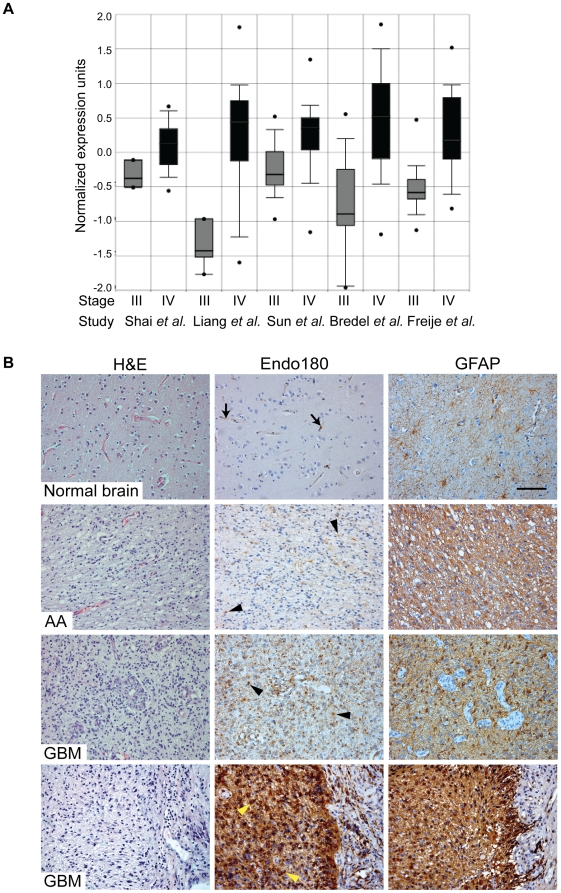
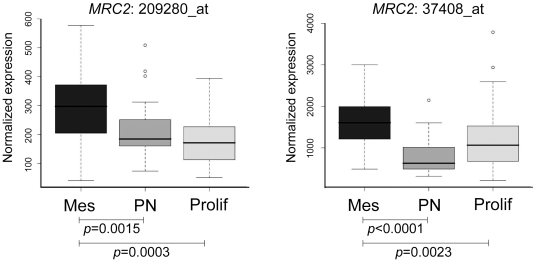
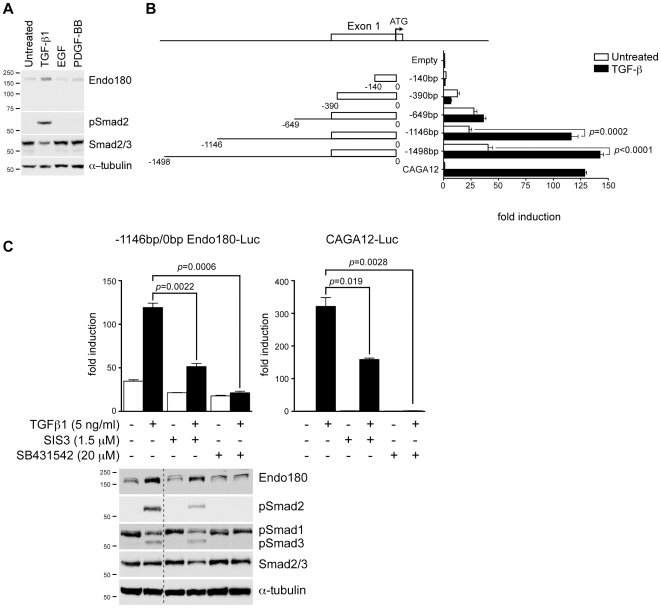
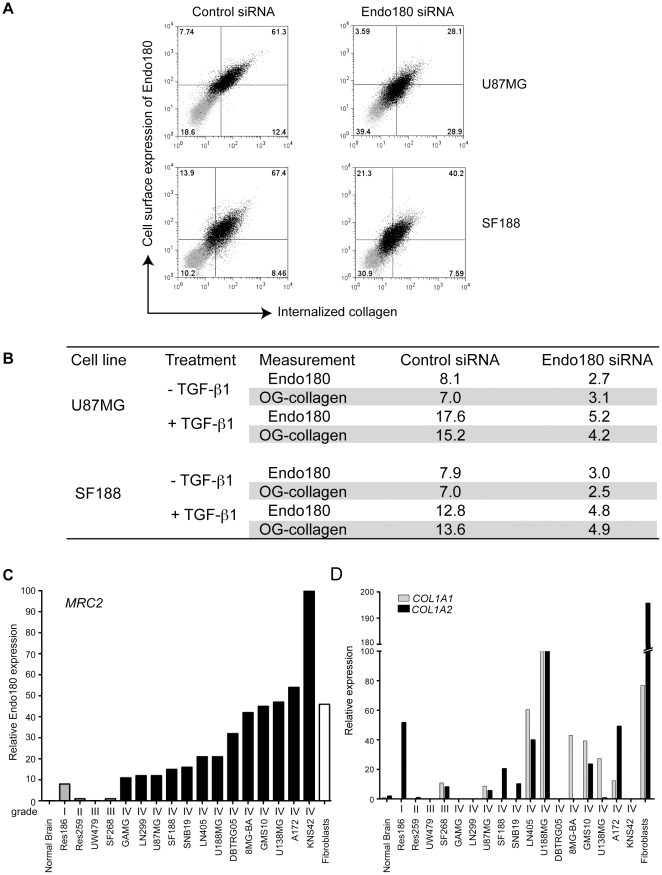
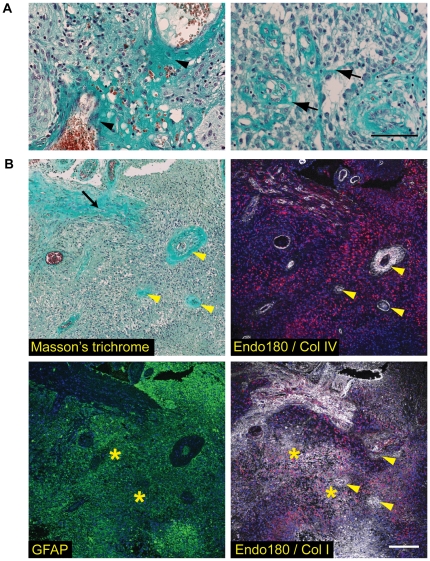
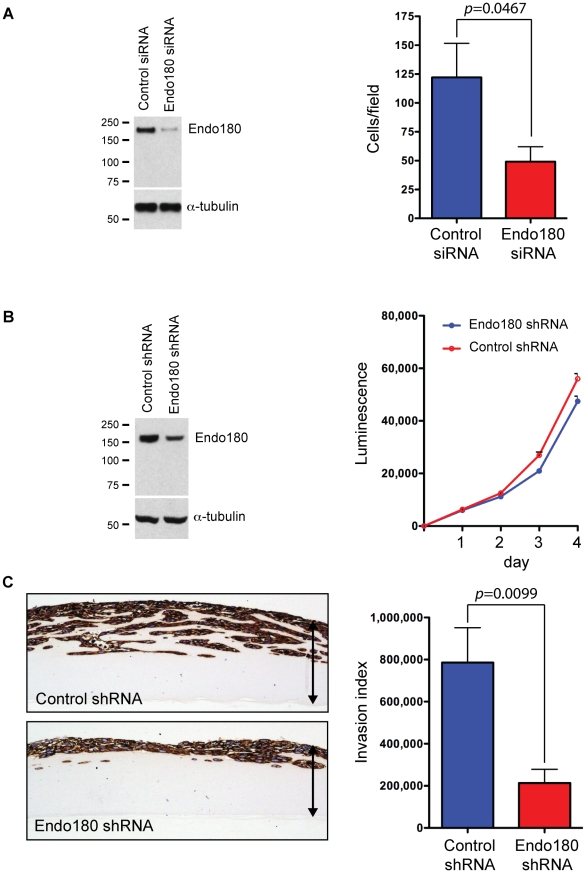
BACKGROUND: Glioblastoma multiforme (GBM, WHO grade IV) is the most common and most malignant of astrocytic brain tumors, and is associated with rapid invasion into neighboring tissue. In other tumor types it is well established that such invasion involves a complex interaction between tumor cells and locally produced extracellular matrix. In GBMs, surprisingly little is known about the associated matrix components, in particular the fibrillar proteins such as collagens that are known to play a key role in the invasion of other tumor types. METHODOLOGY/PRINCIPAL FINDINGS: In this study we have used both the Masson's trichrome staining and a high resolution multiple immunofluorescence labeling method to demonstrate that intratumoral fibrillar collagens are an integral part of the extracellular matrix in a subset of GBMs. Correlated with this collagen deposition we observed high level expression of the collagen-binding receptor Endo180 (CD280) in the tumor cells. Further, interrogation of multiple expression array datasets identified Endo180 as one of the most highly upregulated transcripts in grade IV GBMs compared to grade III gliomas. Using promoter analysis studies we show that this increased expression is, in part, mediated via TGF-beta signaling. Functionally, we demonstrate that Endo180 serves as the major collagen internalization receptor in GBM cell lines and provide the first evidence that this activity is critical for the invasion of GBM cells through fibrillar collagen matrices. CONCLUSIONS/SIGNIFICANCE: This study demonstrates, for the first time, that fibrillar collagens are extensively deposited in GBMs and that the collagen internalization receptor Endo180 is both highly expressed in these tumors and that it serves to mediate the invasion of tumor cells through collagen-containing matrices. Together these data provide important insights into the mechanism of GBM invasion and identify Endo180 as a potential target to limit matrix turnover by glioma cells and thereby restrict tumor progression.
Overview
The claims and statistics of this paper haven’t been checked yet.
Free: it reads the open-access text and checks the first 5 claims that cite a source we can check. Create a free account to check every claim.
Integrity signals
Registry
Cites
Statistics
Figures
Verification
Claims the paper makes
The claims and statistics of this paper haven’t been checked yet.
Free: it reads the open-access text and checks the first 5 claims that cite a source we can check. Create a free account to check every claim.
Self-check
Percentages, sums and reported differences re-computed from the paper’s own numbers.
The self-check needs the paper’s full text.
Citations
Cites
The 2007 WHO Classification of Tumours of the Central Nervous System
Louis, D. N., Ohgaki, H., Wiestler, O. D., Cavenee, W. K., Burger, P. C., Jouvet, A., Scheithauer, B. W., & Kleihues, P. (2007) · Acta Neuropathologica · doi:10.1007/s00401-007-0243-4 · Cited by 15,397 · cited 1×
“High-grade gliomas are the most common brain tumors in adults, and are characterized by their treatment-refractory nature and poor clinical outcome. They are classified into four grades as defined by the World Health Organization”
BackgroundErratum to: The 2007 WHO classification of tumours of the central nervous system
Louis, D. N., Ohgaki, H., Wiestler, O. D., Cavenee, W. K., Burger, P. C., Jouvet, A., Scheithauer, B. W., & Kleihues, P. (2007) · Zurich Open Repository and Archive (University of Zurich) · doi:10.5167/uzh-156115 · Cited by 4,442
Massagué, J. (2008) · Cell · doi:10.1016/j.cell.2008.07.001 · Cited by 3,907
ONCOMINE: A Cancer Microarray Database and Integrated Data-Mining Platform
Rhodes, D. R., Yu, J., Shanker, K., Deshpande, N., Varambally, R., Ghosh, D., Barrette, T., Pander, A., & Chinnaiyan, A. M. (2004) · Neoplasia · doi:10.1016/s1476-5586(04)80047-2 · Cited by 3,612 · cited 1×
“Bioinformatic analysis A profile search for glioblastoma was performed on the ONCOMINE database [44].”
MethodPhillips, H. S., Kharbanda, S., Chen, R., Forrest, W. F., Soriano, R. H., Wu, T. D., Misra, A., Nigro, J. M., Colman, H., Soroceanu, L., et al. (2006) · Cancer Cell · doi:10.1016/j.ccr.2006.02.019 · Cited by 3,143 · cited 4×
“Recently, Phillips and colleagues have described three prognostic subclasses of high-grade glioma: proneural, proliferative and mesenchymal [24].”
BackgroundMethodInfluentialDennler, S. (1998) · The EMBO Journal · doi:10.1093/emboj/17.11.3091 · Cited by 1,793 · cited 1×
“The pGL3 CAGA12-Luciferase reporter plasmid has been described previously [30].”
MethodRegulation of matrix biology by matrix metalloproteinases
Mott, J. D., & Werb, Z. (2004) · Current Opinion in Cell Biology · doi:10.1016/j.ceb.2004.07.010 · Cited by 1,104 · cited 1×
“Tumors need to remodel the ECM to physically expand and liberate latent growth factors [31,32].”
BackgroundNeuronal and glioma-derived stem cell factor induces angiogenesis within the brain
Sun, L., Hui, A.-M., Su, Q., Vortmeyer, A., Kotliarov, Y., Pastorino, S., Passaniti, A., Menon, J., Walling, J., Bailey, R., et al. (2006) · Cancer Cell · doi:10.1016/j.ccr.2006.03.003 · Cited by 877 · cited 6×
“First, interrogation of the ONCOMINETM microarray data revealed that within the 100 most highly upregulated genes in GBM compared to grade III tumors were fibrillar collagen genes and genes encoding collagen processing enzymes (Table S2).”
BackgroundInfluentialMolecular mechanisms of glioma invasiveness: the role of proteases
Rao, J. S. (2003) · Nature Reviews Cancer · doi:10.1038/nrc1121 · Cited by 847 · cited 1×
“This invasive process is characterized by adhesion of the tumor cells to locally produced extracellular matrix (ECM) components, cell locomotion and the ability of invading cells to remodel their local extracellular space [3,4].”
BackgroundGene Expression Profiling of Gliomas Strongly Predicts Survival
Freije, W. A., Castro-Vargas, F. E., Fang, Z., Horvath, S., Cloughesy, T., Liau, L. M., Mischel, P. S., & Nelson, S. F. (2004) · Cancer Research · doi:10.1158/0008-5472.can-04-0452 · Cited by 744 · cited 6×
“First, interrogation of the ONCOMINETM microarray data revealed that within the 100 most highly upregulated genes in GBM compared to grade III tumors were fibrillar collagen genes and genes encoding collagen processing enzymes (Table S2).”
BackgroundInfluential
Cited by
Molecular Mechanisms of Stress-Responsive Changes in Collagen and Elastin Networks in Skin
Aziz, J., Shezali, H., Radzi, Z., Yahya, N. A., Abu Kassim, N. H., Czernuszka, J., & Rahman, M. T. (2016) · Skin Pharmacology and Physiology · doi:10.1159/000447017 · Cited by 7,323
The extracellular matrix: A dynamic niche in cancer progression
Lu, P., Weaver, V. M., & Werb, Z. (2012) · Journal of Cell Biology · doi:10.1083/jcb.201102147 · Cited by 3,024
Hypoxia and the extracellular matrix: drivers of tumour metastasis
Gilkes, D. M., Semenza, G. L., & Wirtz, D. (2014) · Nature Reviews Cancer · doi:10.1038/nrc3726 · Cited by 1,520
The hypoxic tumour microenvironment
Petrova, V., Annicchiarico-Petruzzelli, M., Melino, G., & Amelio, I. (2018) · Oncogenesis · doi:10.1038/s41389-017-0011-9 · Cited by 1,019
The Role of Mechanical Forces in Tumor Growth and Therapy
Jain, R. K., Martin, J. D., & Stylianopoulos, T. (2014) · Annual Review of Biomedical Engineering · doi:10.1146/annurev-bioeng-071813-105259 · Cited by 1,044
“As has been already mentioned, in many tumors an accumulation of fibrillar collagen types I and III occurs presumably due to increased activity of tumorigenic factors, such as TGF-β, that might stiffen the extracellular matrix and induce fibrosis (32, 87).”
Dynamic interplay between the collagen scaffold and tumor evolution
Egeblad, M., Rasch, M. G., & Weaver, V. M. (2010) · Current Opinion in Cell Biology · doi:10.1016/j.ceb.2010.08.015 · Cited by 896
“Thus, collagen degradation by proteases, including cathepsins and MMPs, and uptake of the degraded collagen is important for cancer cell invasion [10,45, 46].”
BackgroundCollagen as a double-edged sword in tumor progression
Fang, M., Yuan, J., Peng, C., & Li, Y. (2014) · Tumor Biology · doi:10.1007/s13277-013-1511-7 · Cited by 580
Cancer-associated-fibroblasts and tumour cells: a diabolic liaison driving cancer progression
Cirri, P., & Chiarugi, P. (2012) · Cancer and Metastasis Reviews · doi:10.1007/s10555-011-9340-x · Cited by 519
“Indeed, many cancers are associated with desmoplasia, a fibrotic state characterized by an accumulation of type I and III collagens and by a degradation of type IV collagen [37, 38].”
BackgroundCancer associated fibroblasts: the dark side of the coin.
Cirri, P., & Chiarugi, P. (2011) · Europe PMC (PubMed Central) · Cited by 669
Activation of fibroblasts in cancer stroma
Räsänen, K., & Vaheri, A. (2010) · Experimental Cell Research · doi:10.1016/j.yexcr.2010.04.032 · Cited by 499
Fibrous nonlinear elasticity enables positive mechanical feedback between cells and ECMs
Hall, M. S., Alisafaei, F., Ban, E., Feng, X., Hui, C.-Y., Shenoy, V. B., & Wu, M. (2016) · Proceedings of the National Academy of Sciences · doi:10.1073/pnas.1613058113 · Cited by 360
Bone metastasis in prostate cancer: emerging therapeutic strategies
Sturge, J., Caley, M. P., & Waxman, J. (2011) · Nature Reviews Clinical Oncology · doi:10.1038/nrclinonc.2011.67 · Cited by 256
“Although the precise biological function of ENDO180 in adult bone is yet to be elucidated, its transcriptional regulation by the TGF-β1/TGF-βR1/SMAD2 and SMAD3 signaling axi”
BackgroundBiophysics of tumor microenvironment and cancer metastasis – a mini review
Emon, B., Bauer, J., Jain, Y., Jung, B., & Saif, T. (2018) · Computational and Structural Biotechnology Journal · doi:10.1016/j.csbj.2018.07.003 · Cited by 245
Glioblastoma Chemoresistance: The Double Play by Microenvironment and Blood-Brain Barrier
Da Ros, M., De Gregorio, V., Iorio, A. L., Giunti, L., Guidi, M., De Martino, M., Genitori, L., & Sardi, I. (2018) · International Journal of Molecular Sciences · doi:10.3390/ijms19102879 · Cited by 223
“Indeed, during tumorigenesis, an increase in collagen content is common [15,33], as well as an overexpression of other ECM components.”
BackgroundMicrofluidic modelling of the tumor microenvironment for anti-cancer drug development
Shang, M., Soon, R. H., Lim, C. T., Khoo, B. L., & Han, J. (2019) · Lab on a Chip · doi:10.1039/c8lc00970h · Cited by 227
Applications of Surface Modification Technologies in Nanomedicine for Deep Tumor Penetration
Li, Z., Shan, X., Chen, Z., Gao, N., Zeng, W., Zeng, X., & Mei, L. (2021) · Advanced Science · doi:10.1002/advs.202002589 · Cited by 218
Cancer chemotherapy resistance: Mechanisms and recent breakthrough in targeted drug delivery
Davodabadi, F., Sajjadi, S. F., Sarhadi, M., Mirghasemi, S., Nadali Hezaveh, M., Khosravi, S., Kamali Andani, M., Cordani, M., Basiri, M., & Ghavami, S. (2023) · European Journal of Pharmacology · doi:10.1016/j.ejphar.2023.176013 · Cited by 184
Role of Collagen Matrix in Tumor Angiogenesis and Glioblastoma Multiforme Progression
Mammoto, T., Jiang, A., Jiang, E., Panigrahy, D., Kieran, M. W., & Mammoto, A. (2013) · The American Journal of Pathology · doi:10.1016/j.ajpath.2013.06.026 · Cited by 193
Interstitial Flow in a 3D Microenvironment Increases Glioma Invasion by a CXCR4-Dependent Mechanism
Munson, J. M., Bellamkonda, R. V., & Swartz, M. A. (2013) · Cancer Research · doi:10.1158/0008-5472.can-12-2838 · Cited by 176
“This work was funded by the Fulbright Foundation to J.M. Munson; Ian's Friends Foundation to R.V. Bellamkonda; and the Swiss Cancer League (02114- 08-2007 and 2696-08-2010), Swiss National Science Foundation (31-135756), and the Swiss National Centre for Competence in Research Molecular Oncology to M.A. Swartz.”
BackgroundFrom transformation to metastasis: deconstructing the extracellular matrix in breast cancer
Kaushik, S., Pickup, M. W., & Weaver, V. M. (2016) · Cancer and Metastasis Reviews · doi:10.1007/s10555-016-9650-0 · Cited by 162
Cancer Stem Cells and Their Microenvironment: Biology and Therapeutic Implications
Lau, E. Y.-T., Ho, N. P.-Y., & Lee, T. K.-W. (2017) · Stem Cells International · doi:10.1155/2017/3714190 · Cited by 167
“For instance, various collagens, including collagen I, collagen II, collagen III, collagen V, and collagen IX, show increased deposition in the process of tumor formation [101].”
BackgroundThe Pathobiology of Collagens in Glioma
Payne, L. S., & Huang, P. H. (2013) · Molecular Cancer Research · doi:10.1158/1541-7786.mcr-13-0236 · Cited by 159
“Two studies independently identified Endo180 to be highly enriched in gene expression data of GBM versus lower grade astrocytomas or normal brain (5, 48).”
BackgroundMethodResultInfluentialVelez, D. O., Tsui, B., Goshia, T., Chute, C. L., Han, A., Carter, H., & Fraley, S. I. (2017) · Nature Communications · doi:10.1038/s41467-017-01556-7 · Cited by 144
Dense fibrillar collagen is a potent inducer of invadopodia via a specific signaling network
Artym, V. V., Swatkoski, S., Matsumoto, K., Campbell, C. B., Petrie, R. J., Dimitriadis, E. K., Li, X., Mueller, S. C., Bugge, T. H., Gucek, M., et al. (2015) · Journal of Cell Biology · doi:10.1083/jcb.201405099 · Cited by 126
“Fibrillar collagen, particularly collagen type I, is deposited densely in stroma adjacent to tumors (Zhu et al., 1995; Kauppila et al., 1998, 1999; van Kempen et al., 2008; Huijbers et al., 2010; Shields et al., 2012).”
BackgroundRemodeling Components of the Tumor Microenvironment to Enhance Cancer Therapy
Gkretsi, V., Stylianou, A., Papageorgis, P., Polydorou, C., & Stylianopoulos, T. (2015) · Frontiers in Oncology · doi:10.3389/fonc.2015.00214 · Cited by 123
The Non-phagocytic Route of Collagen Uptake
Madsen, D. H., Ingvarsen, S., Jürgensen, H. J., Melander, M. C., Kjøller, L., Moyer, A., Honoré, C., Madsen, C. A., Garred, P., Burgdorf, S., et al. (2011) · Journal of Biological Chemistry · doi:10.1074/jbc.m110.208033 · Cited by 118
Comba, A., Faisal, S. M., Dunn, P., Argento, A. E., Hollon, T. C., Al‐Holou, W. N., Varela, M. L., Zamler, D. B., Quass, G. L., Apostolides, P. F., et al. (2022) · Nature Communications · doi:10.1038/s41467-022-31340-1 · Cited by 131
Role of extracellular matrix in breast cancer development: a brief update
Jena, M. K., & Janjanam, J. (2018) · F1000Research · doi:10.12688/f1000research.14133.1 · Cited by 136
Zhu, Y., Li, X., Wang, L., Hong, X., & Yang, J. (2022) · Frontiers in Endocrinology · doi:10.3389/fendo.2022.988295 · Cited by 126
“Some other markers such as integrin4 (ITGB4) in triple-negative breast cancer (TNBC) (113), MCT4 in nasopharyngeal carcinoma (116), MCT1 and MCT4 in breast and bladder cancer (117, 118), ITGB2 in oral squamous carcinoma (OSCC) (119), MCT1, succinate dehydrogenase (SDH) and fumarate hydratase (FH) expression levels are…”
BackgroundInsidious Changes in Stromal Matrix Fuel Cancer Progression
Miles, F. L., & Sikes, R. A. (2014) · Molecular Cancer Research · doi:10.1158/1541-7786.mcr-13-0535 · Cited by 111
Rygiel, T. P., Stolte, E. H., Ruiter, T. E.-D., van de Weijer, M. L., & Meyaard, L. (2011) · Molecular Immunology · doi:10.1016/j.molimm.2011.09.006 · Cited by 106
Behavior of seeds and soil in the mechanism of metastasis: A deeper understanding
Mathot, L., & Stenninger, J. (2011) · Cancer Science · doi:10.1111/j.1349-7006.2011.02195.x · Cited by 110
A three-dimensional collagen scaffold cell culture system for screening anti-glioma therapeutics
Lv, D., Yu, S., Ping, Y., Wu, H., Zhao, X., Zhang, H., Cui, Y., Chen, B., Zhang, X., Dai, J., et al. (2016) · Oncotarget · doi:10.18632/oncotarget.10885 · Cited by 103
“Glioma tissues contain large amounts of fibrillary collagens [16], which are important ligands for activation of signal transduction networks required for glioma malignancy [17].”
BackgroundCellular landscaping of cisplatin resistance in cervical cancer
Bhattacharjee, R., Dey, T., Kumar, L., Kar, S., Sarkar, R., Ghorai, M., Malik, S., Jha, N. K., Vellingiri, B., Kesari, K. K., et al. (2022) · Biomedicine & Pharmacotherapy · doi:10.1016/j.biopha.2022.113345 · Cited by 93
Marino, S., Menna, G., Bonaventura, R. D., Lisi, L., Mattogno, P. P., Figà, F., Bilgin, L., D’Alessandris, Q. G., Olivi, A., & Pepa, G. M. D. (2023) · Cancers · doi:10.3390/cancers15061879 · Cited by 96
“Functionally, Endo180 (CD280), a collagenbinding receptor overexpressed in GBMs, serves as the major collagen internalization receptor in GBMs and is critical in glioma cell invasion into the ECM [28].”
BackgroundA Novel Functional Role of Collagen Glycosylation
Jürgensen, H. J., Madsen, D. H., Ingvarsen, S., Melander, M. C., Gårdsvoll, H., Patthy, L., Engelholm, L. H., & Behrendt, N. (2011) · Journal of Biological Chemistry · doi:10.1074/jbc.m111.266692 · Cited by 87
Hallal, S. M., Russell, B. P., Wei, H., Lee, M. Y. T., Toon, C. W., Sy, J. S., Shivalingam, B., Buckland, M. E., & Alexander, K. L. (2018) · PROTEOMICS · doi:10.1002/pmic.201800157 · Cited by 100
Gritsenko, P., Leenders, W., & Friedl, P. (2017) · Histochemistry and Cell Biology · doi:10.1007/s00418-017-1604-2 · Cited by 76
“2012), and upregulated in a subset of clinical gliomas in the tumor mass and perivascular regions (Huijbers et al. 2010; Payne and Huang 2013; Motegi et al. 2014).”
BackgroundThe collagen receptor uPARAP/Endo180 in tissue degradation and cancer (Review)
MELANDER, M. C., JÜRGENSEN, H. J., MADSEN, D. H., ENGELHOLM, L. H., & BEHRENDT, N. (2015) · International Journal of Oncology · doi:10.3892/ijo.2015.3120 · Cited by 81
“For example, treatment of the breast cancer cell line MCF-7, the U87MG glioma cell line and two prostate cancer cell lines with TGF-β resulted in upregulation of the collagen receptor (63-65) and the same was observed when using human gingival fibroblasts where both uPARAP/Endo180 protein expression and mRNA levels in…”
BackgroundResultInfluentialMechanical Cues Affect Migration and Invasion of Cells From Three Different Directions
Mierke, C. T. (2020) · Frontiers in Cell and Developmental Biology · doi:10.3389/fcell.2020.583226 · Cited by 84
Herrera-Perez, M., Voytik‐Harbin, S. L., & Rickus, J. L. (2015) · Tissue Engineering Part A · doi:10.1089/ten.tea.2014.0504 · Cited by 83
Gao, L., Chen, B., Li, J., Yang, F., Cen, X., Liao, Z., & Long, X. (2017) · PLOS ONE · doi:10.1371/journal.pone.0181346 · Cited by 76
Collective forces of tumor spheroids in three-dimensional biopolymer networks
Mark, C., Grundy, T. J., Strissel, P. L., Böhringer, D., Grummel, N., Gerum, R. C., Steinwachs, J., Hack, C. C., Beckmann, M. W., Eckstein, M., et al. (2020) · eLife · doi:10.7554/elife.51912 · Cited by 84
“Recent studies have shown that fibrillar collagens are an integral part of the locally produced extracellular matrix in glioblastomas ( Huijbers et al., 2010 ; Pointer et al., 2017 ).”
BackgroundRuiz-Garcia, H. J., Alvarado-Estrada, K., Schiapparelli, P. V., Quiñones‐Hinojosa, A., & Trifiletti, D. M. (2020) · Frontiers in Cellular Neuroscience · doi:10.3389/fncel.2020.558381 · Cited by 79
“As the glioma TME possesses a distinct ECM composition with a high proportion of fibrillary collagens when compared to normal brain parenchyma (Huijbers et al., 2010; Lv et al., 2016), 3D glioma cultures using 3D collagen scaffolds have been studied with interest.”
BackgroundZhang, W., Fulci, G., Buhrman, J. S., Stemmer-Rachamimov, A. O., Chen, J. W., Wojtkiewicz, G. R., Weissleder, R., Rabkin, S. D., & Martuza, R. L. (2011) · Molecular Therapy · doi:10.1038/mt.2011.187 · Cited by 78
Investigating the Mechanobiology of Cancer Cell–ECM Interaction Through Collagen-Based 3D Scaffolds
Liverani, C., Mercatali, L., Cristofolini, L., Giordano, E., Minardi, S., Porta, G. D., Vita, A. D., Miserocchi, G., Spadazzi, C., Tasciotti, E., et al. (2017) · Cellular and Molecular Bioengineering · doi:10.1007/s12195-017-0483-x · Cited by 80
Pope, W. B., Mirsadraei, L., Lai, A., Eskin, A., Qiao, J. X., Kim, H. J., Ellingson, B. M., Nghiemphu, P. L., Kharbanda, S., Soriano, R. H., et al. (2012) · American Journal of Neuroradiology · doi:10.3174/ajnr.a2917 · Cited by 72
“Fibrillar collagens have previously been shown to be abundant but variably expressed in the extracellular matrix of GBM.23 Collagen and other extracellular matrix proteins are Table 3: Univariate Cox modela”
InfluentialMannose Receptor 2 Attenuates Renal Fibrosis
López-Guisa, J. M., Cai, X., Collins, S., Yamaguchi, I., Okamura, D. M., Bugge, T. H., Isacke, C. M., Emson, C. L., Turner, S., Shankland, S. J., et al. (2011) · Journal of the American Society of Nephrology · doi:10.1681/asn.2011030310 · Cited by 72
Self-citationKumar, S., Kapoor, A., Desai, S., Inamdar, M. M., & Sen, S. (2016) · Scientific Reports · doi:10.1038/srep19905 · Cited by 82
Cancer immune exclusion: breaking the barricade for a successful immunotherapy
Bruni, S., Mercogliano, M. F., Mauro, F. L., Russo, R. I. C., & Schillaci, R. (2023) · Frontiers in Oncology · doi:10.3389/fonc.2023.1135456 · Cited by 79
Vehlow, A., Klapproth, E., Jin, S., Hannen, R., Hauswald, M., Bartsch, J. W., Nimsky, C., Temme, A., Leitinger, B., & Cordes, N. (2019) · Cell Reports · doi:10.1016/j.celrep.2019.02.096 · Cited by 74
“, 2012), which are expressed in brain tumors and are associated with patient prognosis (Huijbers et al., 2010; Pointer et al., 2017).”
BackgroundEpigenetic regulation of matrix metalloproteinases and their collagen substrates in cancer
Chernov, A. V., & Strongin, A. Y. (2011) · bmc · doi:10.1515/bmc.2011.017 · Cited by 69
“UPARAP mediates the invasion of GBM cells through collagen-containing matrices.”
BackgroundInfluentialTransforming growth factor-beta and its implication in the malignancy of gliomas
Roy, L.-O., Poirier, M.-B., & Fortin, D. (2014) · Targeted Oncology · doi:10.1007/s11523-014-0308-y · Cited by 71
FTIR spectro-imaging of collagens for characterization and grading of gliomas
Noreen, R., Moenner, M., Hwu, Y., & Petibois, C. (2012) · Biotechnology Advances · doi:10.1016/j.biotechadv.2012.03.009 · Cited by 72
“COL1A1 Up-regulated in 80% GBM (Huijbers et al., 2010; Kavsan et al., 2007) 7 (7) 11 >10”
BackgroundLugo-Cintrón, K. M., Ayuso, J. M., White, B. R., Harari, P. M., Ponik, S. M., Beebe, D. J., Gong, M. M., & Virumbrales-Muñoz, M. (2020) · Lab on a Chip · doi:10.1039/d0lc00099j · Cited by 64
Impairment of a distinct cancer-associated fibroblast population limits tumour growth and metastasis
Jungwirth, U., van Weverwijk, A., Evans, R. J., Jenkins, L., Vicente, D., Alexander, J. J., Gao, Q., Haider, S., Iravani, M., & Isacke, C. M. (2021) · Nature Communications · doi:10.1038/s41467-021-23583-1 · Cited by 64
Self-citationThe role of Allee effect in modelling post resection recurrence of glioblastoma
Neufeld, Z., von Witt, W., Lakatos, D., Wang, J., Hegedűs, B., & Czirók, A. (2017) · PLoS Computational Biology · doi:10.1371/journal.pcbi.1005818 · Cited by 69
Cancer immunotherapy based on blocking immune suppression mediated by an immune modulator LAIR-1
Xu, L., Wang, S., Li, J., Li, J., & Li, B. (2020) · OncoImmunology · doi:10.1080/2162402x.2020.1740477 · Cited by 67
“However, many tumor types overexpress collagens, and high level of collagen expression correlates with enhanced metastatic capacity and unfavorable clinical outcome.(15,16) Under the harsh conditions of the TME, by expressing extracellular matrix (ECM) collagens and transmembrane collagens, tumor cells or tumor stroma…”
BackgroundThe role of tumor microenvironment in collective tumor cell invasion
Wu, J., Sheng, S., Liang, X., & Tang, Y. (2017) · Future Oncology · doi:10.2217/fon-2016-0501 · Cited by 60
Chonan, Y., Taki, S., Sampetrean, O., Saya, H., & Sudo, R. (2017) · Integrative Biology · doi:10.1039/c7ib00091j · Cited by 63
Faisal, S. M., Comba, A., Varela, M. L., Argento, A. E., Brumley, E. K., Abel, C. C., Castro, M. G., & Lowenstein, P. R. (2022) · Frontiers in Oncology · doi:10.3389/fonc.2022.1005069 · Cited by 62
Datta, M., Chatterjee, S., Perez, E. M., Gritsch, S., Roberge, S., Duquette, M. A., Chen, I. X., Naxerova, K., Kumar, A. S., Ghosh, M., et al. (2023) · Proceedings of the National Academy of Sciences · doi:10.1073/pnas.2219199120 · Cited by 60
“Abnormally high ECM deposition is a key contributor; HA and fibrillar collagens are expressed several-fold higher in GBM than in normal brain tissues (26, 27).”
BackgroundMechanoregulation of Vascular Endothelial Growth Factor Receptor 2 in Angiogenesis
Miller, B., & Sewell-Loftin, M. K. (2022) · Frontiers in Cardiovascular Medicine · doi:10.3389/fcvm.2021.804934 · Cited by 60
Quantitative phase imaging reveals matrix stiffness-dependent growth and migration of cancer cells
Li, Y., Fanous, M. J., Kilian, K. A., & Popescu, G. (2019) · Scientific Reports · doi:10.1038/s41598-018-36551-5 · Cited by 54
Tumour–stroma crosstalk in the development of squamous cell carcinoma
Lim, Y. Z., & South, A. P. (2014) · The International Journal of Biochemistry & Cell Biology · doi:10.1016/j.biocel.2014.06.012 · Cited by 57
Yang, N., & Friedl, A. (2016) · PLoS ONE · doi:10.1371/journal.pone.0150132 · Cited by 63
“In many cancer types, abnormal deposition of ECM components, resulting in alterations in the biochemical properties of the ECM that promote cancer progression, has been observed [3,4].”
BackgroundSinha, S., Ayushman, M., Tong, X., & Yang, F. (2022) · Advanced Healthcare Materials · doi:10.1002/adhm.202202147 · Cited by 56
Complex Determinants in Specific Members of the Mannose Receptor Family Govern Collagen Endocytosis
Jürgensen, H. J., Johansson, K., Madsen, D. H., Porse, A., Melander, M. C., Sørensen, K. R., Nielsen, C., Bugge, T. H., Behrendt, N., & Engelholm, L. H. (2014) · Journal of Biological Chemistry · doi:10.1074/jbc.m113.512780 · Cited by 59
Chernov, A. V., Baranovskaya, S., Golubkov, V. S., Wakeman, D. R., Snyder, E. Y., Williams, R. M., & Strongin, A. Y. (2010) · Journal of Biological Chemistry · doi:10.1074/jbc.m109.088153 · Cited by 63
Multistage Nanoparticles for Improved Delivery into Tumor Tissue
Stylianopoulos, T., Wong, C., Bawendi, M. G., Jain, R. K., & Fukumura, D. (2012) · Methods in Enzymology · doi:10.1016/b978-0-12-391860-4.00006-9 · Cited by 50
“…growth factor-b (TGF-b), that might stiffen the extracellular matrix and induce fibrosis (Branton and Kopp, 1999; Brown et al., 2003; Butcher et al., 2009; Diop-Frimpong et al., 2011; Egeblad et al., 2010; Huijbers et al., 2010; Kauppila et al., 1998; McKee et al., 2006; Netti et al., 2000).”
BackgroundGerigk, M., Bulstrode, H. J. C. J., Shi, H., Tönisen, F., Cerutti, C., Morrison, G. M., Rowitch, D. H., & Huang, Y. Y. S. (2021) · Lab on a Chip · doi:10.1039/d1lc00271f · Cited by 57
The immunological effect of hyaluronan in tumor angiogenesis
Spinelli, F. M., Vitale, D. L., Demarchi, G., Cristina, C., & Alaniz, L. D. (2015) · Clinical & Translational Immunology · doi:10.1038/cti.2015.35 · Cited by 56
Jeanne, A., Untereiner, V., Perreau, C., Proult, I., Gobinet, C., Boulagnon‐Rombi, C., Terryn, C., Martiny, L., Brézillon, S., & Dedieu, S. (2017) · Scientific Reports · doi:10.1038/s41598-017-07043-9 · Cited by 51
The mechanical and pharmacological regulation of glioblastoma cell migration in 3D matrices
Kaphle, P., Li, Y., & Yao, L. (2018) · Journal of Cellular Physiology · doi:10.1002/jcp.27209 · Cited by 50
“The invasion of glioblastoma is a complex process based on the interactions between tumor cells and the ECM (Huijbers et al., 2010; Ma et al., 2012; Veeravalli & Rao, 2012).”
BackgroundA collagen-binding EGFR antibody fragment targeting tumors with a collagen-rich extracellular matrix
Liang, H., Li, X., Wang, B., Chen, B., Zhao, Y., Sun, J., Zhuang, Y., Shi, J., Shen, H., Zhang, Z., et al. (2016) · Scientific Reports · doi:10.1038/srep18205 · Cited by 52
Alhaider, A. A., Gader, A. G. M. A., Almeshaal, N., & Saraswati, S. (2013) · Apmis · doi:10.1111/apm.12199 · Cited by 49
MRC2 Expression Correlates with TGFβ1 and Survival in Hepatocellular Carcinoma
Gai, X., Tu, K., Lu, Z., & Zheng, X. M. (2014) · International Journal of Molecular Sciences · doi:10.3390/ijms150915011 · Cited by 49
“Therefore, it was demonstrated that TGFβ1 regulated MRC2 expression in HCC, which is consistent with the findings in prostate cancer [25] and glioblastoma multiforme [24].”
Cellular uptake of collagens and implications for immune cell regulation in disease
Jürgensen, H. J., van Putten, S., Nørregaard, K. S., Bugge, T. H., Engelholm, L. H., Behrendt, N., & Madsen, D. H. (2020) · Cellular and Molecular Life Sciences · doi:10.1007/s00018-020-03481-3 · Cited by 50
Microfluidics in Malignant Glioma Research and Precision Medicine
Logun, M. T., Zhao, W., Mao, L., & Karumbaiah, L. (2018) · Advanced Biosystems · doi:10.1002/adbi.201700221 · Cited by 49
Extracellular matrix endocytosis in controlling matrix turnover and beyond: emerging roles in cancer
Rainero, E. (2016) · Biochemical Society Transactions · doi:10.1042/bst20160159 · Cited by 45
“increased collagen internalisation and sustained invasion through fibrillar matrices [45].”
BackgroundLin, J., Jiang, L., Wang, X., Wei, W., Song, C., Cui, Y., Wu, X., & Qiu, G. (2021) · Journal of Oncology · doi:10.1155/2021/1406853 · Cited by 50
“2ough the crucial role of the PI3K/AKT signaling pathway in cell survival and tumorigenesis is well established in many cancer types including glioma [15, 28, 29], its involvement in cancer ECM-cell interactions has yet to be elucidated.”
BackgroundRetractedZhai, Q., Fan, J., Lin, Q., Liu, X., Li, J., Hong, R., & Wang, S. (2019) · PLoS ONE · doi:10.1371/journal.pone.0223325 · Cited by 49
“Breast cancer is a fibrotic/desmoplastic stroma cancer [5, 19], and tumor stroma percentage (TSP) or tumor-stroma ratio (TSR) has been recently reported to have prognostic value in patients with triple negative [20] and node-negative breast cancer [21].”
BackgroundIkenaga, N., Ohuchida, K., Mizumoto, K., Akagawa, S., Fujiwara, K., Eguchi, D., Kozono, S., Ohtsuka, T., Takahata, S., & Tanaka, M. (2012) · PLoS ONE · doi:10.1371/journal.pone.0040434 · Cited by 43
“Recently, Endo180 was found to be expressed in not only fibroblasts but also a subset of neoplasms including glioblastomas [13] and basal-like breast tumors [14].”
BackgroundIntegrin Inhibitor Suppresses Bevacizumab-Induced Glioma Invasion
Ishida, J., Onishi, M., Kurozumi, K., Ichikawa, T., Fujii, K., Shimazu, Y., Oka, T., & Date, I. (2014) · Translational Oncology · doi:10.1016/j.tranon.2014.02.016 · Cited by 43
“different types of collagen promote invasion of glioma [29,30]; in contrast, glycosylated chondroitin sulfate proteoglycans consisting ECMs inhibit invasion in glioma [31].”
BackgroundKoikawa, K., Ohuchida, K., Takesue, S., Ando, Y., Kibe, S., Nakayama, H., Endo, S., Abe, T., Okumura, T., Horioka, K., et al. (2017) · Cancer Letters · doi:10.1016/j.canlet.2017.10.010 · Cited by 46
Modeling Extracellular Matrix Reorganization in 3D Environments
Harjanto, D., & Zaman, M. H. (2013) · PLoS ONE · doi:10.1371/journal.pone.0052509 · Cited by 44
“Indeed, it has been recently shown that in glioblastoma multiforme, a highly metastatic type of brain tumor, cancer cells deposit fibrillar collagen, which is not typically found in brain ECM, to facilitate invasion [40].”
BackgroundScherzer, M. T., Waigel, S. J., Donninger, H., Arumugam, V., Zacharias, W., Clark, G., Siskind, L. J., Soucy, P. A., & Beverly, L. J. (2015) · PLoS ONE · doi:10.1371/journal.pone.0138065 · Cited by 48
“For instance, ECM accumulation by increased collagen deposition has been documented in many tumor cell types, including glioma, breast, and lung cancers [11, 12].”
BackgroundNielsen, C., van Putten, S. M., Lund, I. K., Melander, M. C., Nørregaard, K. S., Jürgensen, H. J., Reckzeh, K., Christensen, K. R., Ingvarsen, S., Gårdsvoll, H., et al. (2017) · Oncotarget · doi:10.18632/oncotarget.17883 · Cited by 41
“Cancer cells positive for this receptor are dominant in sarcomas [11, 12], GBM [13, 14] and subtypes of AML [15], and uPARAP positive cell lines derived from these cancers were demonstrated to be sensitive in vitro to our uPARAP-directed ADC in a target receptor specific manner (Figure 4, Figure 5…”
Long non-coding RNA and extracellular matrix: the hidden players in cancer-stroma cross-talk
D’Angelo, E., & Agostini, M. (2018) · Non-coding RNA Research · doi:10.1016/j.ncrna.2018.08.002 · Cited by 40
Han, S., Wang, Z., Liu, J., Wang, H., & Yuan, Q. (2021) · Biochemical Pharmacology · doi:10.1016/j.bcp.2021.114539 · Cited by 40
The Biological and Biomechanical Role of Transglutaminase-2 in the Tumour Microenvironment
Tempest, R., Guarnerio, S., Maani, R., Cooper, J., & Peake, N. (2021) · Cancers · doi:10.3390/cancers13112788 · Cited by 42
Vehlow, A., Klapproth, E., Storch, K., Dickreuter, E., Seifert, M., Dietrich, A., Bütof, R., Temme, A., & Cordes, N. (2017) · Oncotarget · doi:10.18632/oncotarget.17480 · Cited by 41
“First, type I collagen expression in extra- and intratumoral connective tissue may act as a pro-invasive guidance cue [52].”
BackgroundGuzman, A., Alemany, V. S., Nguyen, Y. T.-K., Zhang, C. R., & Kaufman, L. J. (2016) · Biomaterials · doi:10.1016/j.biomaterials.2016.11.014 · Cited by 38
Khan, Z. M., Munson, J. M., Long, T. E., Vlaisavljevich, E., & Verbridge, S. S. (2023) · Advanced Healthcare Materials · doi:10.1002/adhm.202300671 · Cited by 38
Thenuwara, G., Javed, B., Singh, B., & Tian, F. (2024) · Sensors · doi:10.3390/s24092865 · Cited by 43
Mechanical Stretching of Fibronectin Fibers Upregulates Binding of Interleukin-7
Franyuti, D. O., Mitsi, M., & Vogel, V. (2017) · Nano Letters · doi:10.1021/acs.nanolett.7b01617 · Cited by 38
C-type lectins facilitate tumor metastasis
Ding, D., Yao, Y., Zhang, S., Su, C., & Zhang, Y. (2016) · Oncology Letters · doi:10.3892/ol.2016.5431 · Cited by 36
Oraiopoulou, M., Tzamali, E., Tzedakis, G., Liapis, E., Zacharakis, G., Vakis, A. F., Papamatheakis, J. D., & Sakkalis, V. (2018) · Scientific Reports · doi:10.1038/s41598-018-34521-5 · Cited by 38
Transcriptome Profiling Reveals Matrisome Alteration as a Key Feature of Ovarian Cancer Progression
Mitra, S., Tiwari, K., Podicheti, R., Pandhiri, T. R., Rusch, D. B., Bonetto, A., Zhang, C., & Mitra, A. K. (2019) · Cancers · doi:10.3390/cancers11101513 · Cited by 42
“The deposition of collagen I, II and III is increased during cancer invasion and migration [42,43].”
BackgroundZarodniuk, M., Steele, A., Lü, X., Li, J., & Datta, M. (2023) · npj Genomic Medicine · doi:10.1038/s41525-023-00381-w · Cited by 35
Metadata
- Authors
- Huijbers, I. J., Iravani, M., Popov, S., Robertson, D., Al-Sarraj, S., Jones, C., & Isacke, C. M.
- Affiliations
- Institute of Cancer Research (GB)
- Corresponding author
- Isacke, Clare M.
- Venue
- PLoS ONE
- Publisher
- Public Library of Science (PLoS)
- Published
- 2010-03-22
- Volume
- 5
- Issue
- 3
- Pages
- e9808
- ISSN
- 1932-6203 (ISSN-L)
- PMC
- PMC2842440
- OpenAlex
- W2092459115
- Semantic Scholar
- 2c24277dca9c12900042a07e0bf469083eee9225
- Cited by
- 223
- References
- 46
- Citations by year
- 2026: 9 · 2025: 7 · 2024: 10 · 2023: 12 · 2022: 21 · 2021: 13 · 2020: 17 · 2019: 16 · 2018: 15 · 2017: 22 · 2016: 14 · 2015: 15 · 2014: 12 · 2013: 15 · 2012: 9
- FWCI
- 5.71
- Type
- journal article
- Language
- en
- Open access
- gold
- doi.org
- Locations
- PLoS ONE (publishedVersion, cc-by)
- PubMed Central (publishedVersion, cc-by)
- PubMed (publishedVersion)
- DOAJ (DOAJ: Directory of Open Access Journals) (submittedVersion, cc-by-sa)
- Figshare (submittedVersion, cc-by)
- Research Portal (King's College London) (submittedVersion, other-oa)
- Funders
- Royal Marsden NHS Foundation Trust
- Cancer Research UK
- National Institute for Health and Care Research
- Imperial College London
- Topics
- Health Sciences › Medicine › Oncology › Glioma Diagnosis and Treatment
- Life Sciences › Biochemistry, Genetics and Molecular Biology › Cell Biology › Cellular Mechanics and Interactions
- Life Sciences › Biochemistry, Genetics and Molecular Biology › Cancer Research › Protease and Inhibitor Mechanisms
- Keywords
- glioblastoma, glioma invasion, Endo180, extracellular matrix, TGF-beta signaling, matrix turnover
- MeSH terms
- Adult, Aged, Aged, 80 and over, Collagen, Female, Glioblastoma, Glioma, Humans, Male, Middle Aged, Neoplasm Invasiveness, Receptors, Mitogen, Signal Transduction, Gene Expression Regulation, Neoplastic, Transforming Growth Factor beta
About these checks
Registry, retraction, Cites and statistics results are computed, not judged, with one exception: a printed reference that no index lists is read once by a model before it counts as a citation error. Claims are extracted by a model and kept only when their quote appears verbatim in the text; each cited source is then checked, with a model’s help, for whether it says what the claim relies on. Those verdicts can be wrong — read the claim’s quote and the cited source before relying on one.
Statistics and arithmetic are recomputed, not judged.
Confidence bands are shown only for fields calibrated on our annotated test set. None is calibrated yet, so no band is shown.
What counts as a claim ›How we measure confidence ›How we check this ›
Are you an author, or do you see a problem with this page? Request a review
Data sources
Bibliographic data: Semantic Scholar, OpenAlex, Crossref.
Contains information from the Semantic Scholar Academic Graph Datasets, made available under the ODC Attribution License (ODC-BY 1.0).
Semantic Scholar’s data is described in: Kinney, R., et al. (2023). The Semantic Scholar Open Data Platform. arXiv:2301.10140.
