

Bias Due to Changes in Specified Outcomes during the Systematic Review Process
Open accessThe DOI matches its Crossref record; 12 of the 12 references it cites were found in a registry or an index.
Abstract
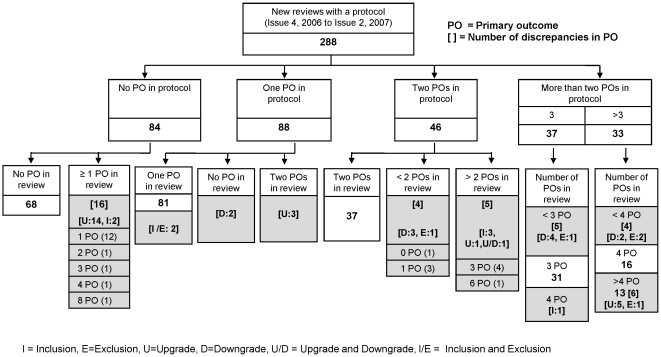
BACKGROUND: Adding, omitting or changing outcomes after a systematic review protocol is published can result in bias because it increases the potential for unacknowledged or post hoc revisions of the planned analyses. The main objective of this study was to look for discrepancies between primary outcomes listed in protocols and in the subsequent completed reviews published on the Cochrane Library. A secondary objective was to quantify the risk of bias in a set of meta-analyses where discrepancies between outcome specifications in protocols and reviews were found. METHODS AND FINDINGS: New reviews from three consecutive issues of the Cochrane Library were assessed. For each review, the primary outcome(s) listed in the review protocol and the review itself were identified and review authors were contacted to provide reasons for any discrepancies. Over a fifth (64/288, 22%) of protocol/review pairings were found to contain a discrepancy in at least one outcome measure, of which 48 (75%) were attributable to changes in the primary outcome measure. Where lead authors could recall a reason for the discrepancy in the primary outcome, there was found to be potential bias in nearly a third (8/28, 29%) of these reviews, with changes being made after knowledge of the results from individual trials. Only 4(6%) of the 64 reviews with an outcome discrepancy described the reason for the change in the review, with no acknowledgment of the change in any of the eight reviews containing potentially biased discrepancies. Outcomes that were promoted in the review were more likely to be significant than if there was no discrepancy (relative risk 1.66 95% CI (1.10, 2.49), p = 0.02). CONCLUSION: In a review, making changes after seeing the results for included studies can lead to biased and misleading interpretation if the importance of the outcome (primary or secondary) is changed on the basis of those results. Our assessment showed that reasons for discrepancies with the protocol are not reported in the review, demonstrating an under-recognition of the problem. Complete transparency in the reporting of changes in outcome specification is vital; systematic reviewers should ensure that any legitimate changes to outcome specification are reported with reason in the review.
Overview
The claims and statistics of this paper haven’t been checked yet.
Free: it reads the open-access text and checks the first 5 claims that cite a source we can check. Create a free account to check every claim.
Integrity signals
Registry
Cites
Statistics
Figures
Verification
Claims the paper makes
The claims and statistics of this paper haven’t been checked yet.
Free: it reads the open-access text and checks the first 5 claims that cite a source we can check. Create a free account to check every claim.
Claims other papers make about this one
Each is checked against this paper’s own text: does it say what the citing paper says it does?
The cited source says what the claim attributes to it.
In the citing paper
“Discrepant outcomes added or upgraded from secondary to primary at the review stage were more likely to be statistically significant than those outcomes that had not changed.”
From Preferred reporting items for systematic review and meta-analysis protocols (PRISMA-P) 2015 statement (2015) · cites this paper as [3]
The cited source says what the claim attributes to it.
In the citing paper
“Of 288 reviews with available protocols in a 2006/2007 cohort, 64 (22%) were observed to have at least one discrepant outcome with their completed reviews; only 4 described reasons for the change in the completed review [3].”
From Preferred reporting items for systematic review and meta-analysis protocols (PRISMA-P) 2015 statement (2015) · cites this paper as [3]
Self-check
Percentages, sums and reported differences re-computed from the paper’s own numbers.
The self-check needs the paper’s full text.
Citations
Cites
Liberati, A., Altman, D. G., Tetzlaff, J., Mulrow, C., Gøtzsche, P. C., Ioannidis, J. P. A., Clarke, M., Devereaux, P. J., Kleijnen, J., & Moher, D. (2009) · PLoS Medicine · doi:10.1371/journal.pmed.1000100 · Cited by 28,164 · cited 1×
“In addition, the recently published PRISMA (Preferred Reporting Items for Systematic Reviews and Meta-Analyses) statement has evolved to help ensure the clarity and transparency of reporting of systematic reviews [14].”
BackgroundSelf-citationSystematic Review of the Empirical Evidence of Study Publication Bias and Outcome Reporting Bias
Dwan, K., Altman, D. G., Arnaiz, J. A., Bloom, J., Chan, A.-W., Cronin, E., Decullier, E., Easterbrook, P. J., Von Elm, E., Gamble, C., et al. (2008) · PLoS ONE · doi:10.1371/journal.pone.0003081 · Cited by 1,546 · cited 1×
“. A systematic review of the empirical evidence of outcome reporting bias in trial primary outcomes found that 40–62% of studies have at least one primary outcome that was changed, introduced, or omitted and that outcomes that are statistically significant have higher odds of being fully reported (range of odds ratios…”
BackgroundSelf-citationKirkham, J. J., Dwan, K. M., Altman, D. G., Gamble, C., Dodd, S., Smyth, R., & Williamson, P. R. (2010) · BMJ · doi:10.1136/bmj.c365 · Cited by 1,133 · cited 3×
“As part of a larger project investigating the prevalence and impact of outcome reporting bias in randomised trials on systematic reviews [8], discrepancies between specified protocol and review outcomes were also assessed in 309 new reviews published on the Cochrane Library between Issue 4, 2006 and Issue 2, 2007.”
BackgroundSelf-citationEpidemiology and reporting characteristics of systematic reviews.
Moher, D., Tetzlaff, J., Tricco, A. C., Sampson, M., & Altman, D. G. (2007) · PLoS Medicine · doi:10.1371/journal.pmed.0040078 · Cited by 891 · cited 2×
“Only 11% of non-Cochrane therapeutic reviews in 2004 mentioned a protocol [3].”
BackgroundSelf-citationHiggins, J., Thompson, S., Deeks, J., & Altman, D. (2002) · Journal of Health Services Research & Policy · doi:10.1258/1355819021927674 · Cited by 755 · cited 1×
“[11] reported 28% (11/39) reviews with unpublished protocols in Issue 2 1999, while Silagy et al.”
BackgroundSelf-citationFrequency and reasons for outcome reporting bias in clinical trials: interviews with trialists
Smyth, R. M. D., Kirkham, J. J., Jacoby, A., Altman, D. G., Gamble, C., & Williamson, P. R. (2011) · BMJ · doi:10.1136/bmj.c7153 · Cited by 220
Self-citationBias in Meta-Analysis Due to Outcome Variable Selection Within Studies
Hutton, J. L., & Williamson, P. R. (2000) · Journal of the Royal Statistical Society Series C: Applied Statistics · doi:10.1111/1467-9876.00197 · Cited by 194 · cited 1×
“In an individual RCT, outcome reporting bias (ORB) has been defined as the selection for publication of a subset of the original recorded outcome variables based on the results [5].”
MethodSelf-citationPublishing Protocols of Systematic Reviews: Comparing What Was Done to What Was Planned
Silagy, C. A., Middleton, P., & Hopewell, S. (2002) · JAMA · doi:10.1001/jama.287.21.2831 · Cited by 188 · cited 3×
“These results show improvement over an 81% discrepancy rate reported for Cochrane reviews published in 2000 [6] and 47% for reviews published in 2005/06.”
BackgroundResultJournal of Health Services Research and Policy
(1996) · Physiotherapy · doi:10.1016/s0031-9406(05)66922-2 · Cited by 156
Shea, B., Moher, D., Graham, I., Pham, B., & Tugwell, P. (2002) · Evaluation & the Health Professions · doi:10.1177/0163278702025001008 · Cited by 110 · cited 1×
“systematic reviews are internationally recognised as among the best sources, if not the best source, of reliable up-to-date information on health care interventions [2,3].”
Background
Cited by
PRISMA-P Group, Moher, D., Shamseer, L., Clarke, M., Ghersi, D., Liberati, A., Petticrew, M., Shekelle, P., & Stewart, L. A. (2015) · Systematic Reviews · doi:10.1186/2046-4053-4-1 · Cited by 26,223
“Of 288 reviews with available protocols in a 2006/ 2007 cohort, 64 (22%) were observed to have at least one discrepant outcome with their completed reviews; only 4 described reasons for the change in the completed review [3].”
BackgroundShamseer, L., Moher, D., Clarke, M., Ghersi, D., Liberati, A., Petticrew, M., Shekelle, P., Stewart, L. A., & the PRISMA-P Group (2015) · BMJ · doi:10.1136/bmj.g7647 · Cited by 13,120
Increasing value and reducing waste: addressing inaccessible research
Chan, A.-W., Song, F., Vickers, A., Jefferson, T., Dickersin, K., Gøtzsche, P. C., Krumholz, H. M., Ghersi, D., & van der Worp, H. B. (2014) · The Lancet · doi:10.1016/s0140-6736(13)62296-5 · Cited by 887
A Survey on Power System Blackout and Cascading Events: Research Motivations and Challenges
Haes Alhelou, H., Hamedani-Golshan, M. E., Njenda, T. C., & Siano, P. (2019) · Energies · doi:10.3390/en12040682 · Cited by 643
PROSPERO: an international prospective register of systematic reviews
Wright, K. E. (2014) · Cited by 568
Pollock, A., & Berge, E. (2018) · International Journal of Stroke · doi:10.1177/1747493017743796 · Cited by 530
“For example, prior publication of a protocol will enable selective outcome reporting to be identified if this occurs within the final review.(88,89,91) Furthermore, publication is a key step to avoid research duplication andwaste, ensuring that other researchers are aware that the review is being completed.”
BackgroundRegistration of systematic reviews in PROSPERO: 30,000 records and counting
Page, M. J., Shamseer, L., & Tricco, A. C. (2018) · Systematic Reviews · doi:10.1186/s13643-018-0699-4 · Cited by 509
“some outcomes were omitted, others were downgraded from primary to secondary) [9].”
BackgroundAn international registry of systematic-review protocols
Booth, A., Clarke, M., Ghersi, D., Moher, D., Petticrew, M., & Stewart, L. (2011) · The Lancet · doi:10.1016/s0140-6736(10)60903-8 · Cited by 512
Sideri, S., Papageorgiou, S. N., & Eliades, T. (2018) · Journal of Clinical Epidemiology · doi:10.1016/j.jclinepi.2018.01.003 · Cited by 388
“Likewise, a comparison between a priori protocols of systematic reviews and the subsequent published reports found considerable discrepancies between them, which increased the likelihood of reporting statistically significant outcomes [6-9].”
MethodResultAlhelou, H. H., Hamedani-Golshan, M.-E., Zamani, R., Heydarian-Forushani, E., & Siano, P. (2018) · Energies · doi:10.3390/en11102497 · Cited by 349
Ge, L., Tian, J.-H., Li, Y.-N., Pan, J.-X., Li, G., Wei, D., Xing, X., Pan, B., Chen, Y.-L., Song, F.-J., et al. (2018) · Journal of Clinical Epidemiology · doi:10.1016/j.jclinepi.2017.10.012 · Cited by 322
“9 DISCUSSION Summary of finding Currently, most of methodological studies focused o n the transparency and selective reporting bias of outcomes of systematic reviews [11-13].”
BackgroundResearch Techniques Made Simple: Assessing Risk of Bias in Systematic Reviews
Drucker, A. M., Fleming, P., & Chan, A.-W. (2016) · Journal of Investigative Dermatology · doi:10.1016/j.jid.2016.08.021 · Cited by 314
“Reporting bias refers to the selective dissemination of research findings based on the nature of the results (Kirkham et al., 2010).”
BackgroundMethodPage, M. J., McKenzie, J. E., Kirkham, J., Dwan, K., Kramer, S., Green, S., & Forbes, A. (2014) · Cochrane Database of Systematic Reviews · doi:10.1002/14651858.mr000035.pub2 · Cited by 281
Self-citationde Vries, R. B. M., Hooijmans, C. R., Langendam, M. W., van Luijk, J., Leenaars, M., Ritskes‐Hoitinga, M., & Wever, K. E. (2015) · Evidence-based Preclinical Medicine · doi:10.1002/ebm2.7 · Cited by 264
“Moreover, it helps to minimize selection bias (for example, the retrospective adaptation of inclusion criteria) and selective outcome reporting (for example, the reporting of only those subgroups that displayed statistically significant differences) in the systematic review.(17) Lastly, it helps avoiding publication b…”
BackgroundEarly Prediction of Sepsis in the ICU Using Machine Learning: A Systematic Review
Moor, M., Rieck, B., Horn, M., Jutzeler, C. R., & Borgwardt, K. (2021) · Frontiers in Medicine · doi:10.3389/fmed.2021.607952 · Cited by 231
Du, S., Yuan, C., Xiao, X., Chu, J., Qiu, Y., & Qian, H. (2011) · Patient Education and Counseling · doi:10.1016/j.pec.2011.02.021 · Cited by 220
“This method may be fraught with danger because different primary outcomes may reflect different contents of interventions and, if these single trials are combined together, the pooled effects are difficult to be interpreted or generalized because there may be different emphasis on interventions for different trials [2…”
MethodJohnson, B. T., & Hennessy, E. A. (2019) · Social Science & Medicine · doi:10.1016/j.socscimed.2019.05.035 · Cited by 201
The problems with systematic reviews: a living systematic review
Uttley, L., Quintana, D. S., Montgomery, P., Carroll, C., Page, M. J., Falzon, L., Sutton, A., & Moher, D. (2023) · Journal of Clinical Epidemiology · doi:10.1016/j.jclinepi.2023.01.011 · Cited by 184
Brignardello-Petersen, R., Murad, M. H., Walter, S. D., McLeod, S., Carrasco-Labra, A., Rochwerg, B., Schünemann, H. J., Tomlinson, G., & Guyatt, G. H. (2019) · Journal of Clinical Epidemiology · doi:10.1016/j.jclinepi.2018.08.022 · Cited by 173
Registration of systematic reviews: PROSPERO
Chien, P. F., Khan, K. S., & Siassakos, D. (2012) · BJOG: An International Journal of Obstetrics & Gynaecology · doi:10.1111/j.1471-0528.2011.03242.x · Cited by 171
Guidance to best tools and practices for systematic reviews
Kolaski, K., Logan, L. R., & Ioannidis, J. P. A. (2023) · Systematic Reviews · doi:10.1186/s13643-023-02255-9 · Cited by 238
“The electronic records of most of these registry sites allow authors to update their protocols and facilitate transparent tracking of protocol changes, which are not unexpected during the progress of the review [139].”
Best Practice in Systematic Reviews: The Importance of Protocols and Registration
Editors, T. P. M. (2011) · PLoS Medicine · doi:10.1371/journal.pmed.1001009 · Cited by 160
“Other analyses [4,5] point to the existence of discrepancies between systematic review protocols and the published report, with one study [5] showing that the outcomes included in published systematic reviews may be biased toward ‘‘positive’’ findings.”
ResultCONSORT extension for reporting N-of-1 trials (CENT) 2015: Explanation and elaboration
Shamseer, L., Sampson, M., Bukutu, C., Schmid, C. H., Nikles, J., Tate, R., Johnston, B. C., Zucker, D., Shadish, W. R., Kravitz, R., et al. (2015) · BMJ · doi:10.1136/bmj.h1793 · Cited by 153
Self-citationEstarli, M., Barrera, E. S. A., Martínez-Rodríguez, R., Baladía, E., Durán‐Agüero, S., Camacho‐López, S., Kristian Buhring, B., Herrero-López, A., & Gil‐González, D. (2016) · Revista Española de Nutrición Humana y Dietética · doi:10.14306/renhyd.20.2.223 · Cited by 208
CONSORT extension for reporting N-of-1 trials (CENT) 2015: explanation and elaboration
Shamseer, L., Sampson, M., Bukutu, C., Schmid, C. H., Nikles, J., Tate, R., Johnston, B. C., Zucker, D., Shadish, W. R., Kravitz, R., et al. (2016) · Journal of Clinical Epidemiology · doi:10.1016/j.jclinepi.2015.05.018 · Cited by 143
Self-citationSarma, S., & Palcu, P. (2022) · Obesity · doi:10.1002/oby.23563 · Cited by 133
“For studies reporting multiple outcomes, the risk of bias assessment was conducted on the defined primary outcome of weight loss [34].”
BackgroundSubacromial decompression surgery for rotator cuff disease
Karjalainen, T., Jain, N. B., Page, C. M., Lähdeoja, T., Johnston, R. V., Salamh, P. A., Kavaja, L., Ardern, C. L., Agarwal, A., Vandvik, P. O., et al. (2019) · Cochrane Database of Systematic Reviews · doi:10.1002/14651858.cd005619.pub3 · Cited by 168
Surgery for rotator cuff tears
Karjalainen, T., Jain, N. B., Heikkinen, J., Johnston, R. V., Page, C. M., & Buchbinder, R. (2019) · Cochrane Database of Systematic Reviews · doi:10.1002/14651858.cd013502 · Cited by 165
Saldanha, I. J., Dickersin, K., Wang, X., & Li, T. (2014) · PLoS ONE · doi:10.1371/journal.pone.0109400 · Cited by 119
“using a cohort of Cochrane reviews [36] and by various investigators studying this issue in clinical trials [14], [17], [37]–[38].”
MethodVera-Badillo, F. E., Shapiro, R., Ocana, A., Amir, E., & Tannock, I. F. (2013) · Annals of Oncology · doi:10.1093/annonc/mds636 · Cited by 117
“It is good practice to design RCTs with no more than three outcomes for which hypothesis testing is planned [4].”
BackgroundKasparian, N. A., Kan, J. M., Sood, E., Wray, J., Pincus, H. A., & Newburger, J. W. (2019) · Early Human Development · doi:10.1016/j.earlhumdev.2019.104837 · Cited by 131
“The Cochrane Handbook for Systematic Reviews recommends pre-specifying primary and secondary outcomes in published protocols to safeguard against biases in outcome reporting.(69,70) Given the high prevalence of anxiety reported by parents of infants with life-threatening medical illness, anxiety was”
MethodMayo‐Wilson, E., Li, T., Fusco, N., Dickersin, K., & for the MUDS investigators (2018) · Research Synthesis Methods · doi:10.1002/jrsm.1277 · Cited by 114
“To prevent bias and to limit unnecessary work, you should prespecify in the systematic review protocol the outcomes and associated results for each outcome (ie, numerical estimates of treatment effects) that you will extract for your meta‐ analysis.(2,46,47) Outcomes in systematic reviews are often described at the le…”
How to reduce unnecessary duplication: use PROSPERO
Moher, D., Booth, A., & Stewart, L. (2014) · BJOG: An International Journal of Obstetrics & Gynaecology · doi:10.1111/1471-0528.12657 · Cited by 113
Juhl, C., Lund, H., Roos, E. M., Zhang, W., & Christensen, R. (2012) · Arthritis · doi:10.1155/2012/136245 · Cited by 104
“If the choice of PROs is based on which outcome measure reaches statistical significance, the corresponding meta-analytic estimates are likely to be biased [4, 5].”
BackgroundImpacts of Energy Storage System on Power System Reliability: A Systematic Review
Mohamad, F., & Teh, J. (2018) · Energies · doi:10.3390/en11071749 · Cited by 108
“Bias related to selective reporting outcome is a serious problem in systematic reviews [6,7].”
BackgroundTransparency and reproducibility of meta-analyses in psychology: A meta-review
Polanin, J. R., Hennessy, E. A., & Tsuji, S. (2020) · Perspectives on Psychological Science · doi:10.1177/1745691620906416 · Cited by 100
Hennessy, E. A., Johnson, B. T., & Keenan, C. (2019) · Applied Psychology: Health and Well-Being · doi:10.1111/aphw.12169 · Cited by 91
Systematic reviews with published protocols compared to those without: more effort, older search
Allers, K., Hoffmann, F., Mathes, T., & Pieper, D. (2017) · Journal of Clinical Epidemiology · doi:10.1016/j.jclinepi.2017.12.005 · Cited by 98
Resuming the discussion of AMSTAR: What can (should) be made better?
Wegewitz, U. E., Weikert, B., Fishta, A., Jacobs, A., & Pieper, D. (2016) · BMC Medical Research Methodology · doi:10.1186/s12874-016-0183-6 · Cited by 83
“The intention is to reduce the risk of bias related to selective reporting by stating a priori hypotheses and methods explicitly [18].”
BackgroundZakariya, M. Z., & Teh, J. (2022) · Electric Power Systems Research · doi:10.1016/j.epsr.2022.108928 · Cited by 91
Page, M. J., McKenzie, J. E., & Forbes, A. B. (2013) · Journal of Clinical Epidemiology · doi:10.1016/j.jclinepi.2012.10.010 · Cited by 79
Statins for the primary prevention of cardiovascular disease: an overview of systematic reviews
Byrne, P., Cullinan, J., Smith, A., & Smith, S. M. (2019) · BMJ Open · doi:10.1136/bmjopen-2018-023085 · Cited by 75
“36 Mora et al analysed the components of the composite outcome total CVD events in women in one large trial included in their review and found that women had a significant reduction in revascularisations and unstable angina but not in other components of the composite outcome, including stroke.”
BackgroundTricco, A. C., Cogo, E., Page, M. J., Polisena, J., Booth, A., Dwan, K. M., MacDonald, H. R., Clifford, T., Stewart, L. A., Straus, S. E., et al. (2016) · Journal of Clinical Epidemiology · doi:10.1016/j.jclinepi.2016.03.025 · Cited by 75
“Page 17 of 28 this is the same approach to other studies examinin g outcome reporting bias [4-7].”
BackgroundMethodResultInfluentialRamis, M., Chang, A., Conway, A., LIM, D. J., Munday, J., & Nissen, L. M. (2019) · BMC Medical Education · doi:10.1186/s12909-019-1698-4 · Cited by 90
“Modifications from original protocols are not uncommon [76, 77] however we acknowledge the impact this may have on certainty of the findings [76].”
BackgroundTsujimoto, Y., Tsujimoto, H., Kataoka, Y., Kimachi, M., Shimizu, S., Ikenoue, T., Fukuma, S., Yamamoto, Y., & Fukuhara, S. (2017) · Journal of Clinical Epidemiology · doi:10.1016/j.jclinepi.2017.02.008 · Cited by 71
Nawijn, F., Ham, W. H. W., Houwert, R. M., Groenwold, R. H. H., Hietbrink, F., & Smeeing, D. P. J. (2019) · BMC Emergency Medicine · doi:10.1186/s12873-019-0233-6 · Cited by 80
Boutron, I., Créquit, P., Williams, H. C., Meerpohl, J. J., Craig, J. C., & Ravaud, P. (2020) · Journal of Clinical Epidemiology · doi:10.1016/j.jclinepi.2020.01.024 · Cited by 70
Hansen, M. L., Hyttel-Sørensen, S., Jakobsen, J. C., Gluud, C. N., Kooi, E. M. W., Mintzer, J. P., de Boode, W. P., Fumagalli, M., Alarcón, A., Alderliesten, T., et al. (2022) · Pediatric Research · doi:10.1038/s41390-022-01995-z · Cited by 74
“To increase certainty, additional large-scale trials, focusing on lowering their risk of bias, are needed.”
Johnston, A. N. B., Park, J., Doi, S. A. R., Sharman, V., Clark, J. M., Robinson, J., & Crilly, J. L. (2017) · Clinical Therapeutics · doi:10.1016/j.clinthera.2016.12.003 · Cited by 67
“43 Our main outcome of interest was in-hospital mortality.”
Protocol registration improves reporting quality of systematic reviews in dentistry
dos Santos, M. B. F., Agostini, B. A., Bassani, R., Pereira, G. K. R., & Sarkis-Onofre, R. (2020) · BMC Medical Research Methodology · doi:10.1186/s12874-020-00939-7 · Cited by 61
Conforti, A., Esteves, S. C., Humaidan, P., Longobardi, S., D’Hooghe, T. M., Orvieto, R., Vaiarelli, A., Cimadomo, D., Rienzi, L. F., Ubaldi, F. M., et al. (2021) · Reproductive Biology and Endocrinology · doi:10.1186/s12958-021-00759-4 · Cited by 72
“rate from original trials to a primary outcome in metaanalyses inevitably leads to a Type I error [95].”
BackgroundUtomo, E., Groen, J., & Blok, B. F. M. (2014) · Cochrane Database of Systematic Reviews · doi:10.1002/14651858.cd004927.pub4 · Cited by 58
Dwan, K., Kirkham, J. J., Williamson, P. R., & Gamble, C. (2013) · BMJ Open · doi:10.1136/bmjopen-2013-002709 · Cited by 55
“This compares with 22% of reviews (64/288) that contained a discrepancy in at least one outcome measure in the main ORBIT study which looked at reviews covering all 50 Cochrane review groups.(2) However, this is confounded by the different publication date ranges of the reviews (assessed as up to date between 2006 and…”
ResultSelf-citationThe influence of the team in conducting a systematic review
Uttley, L., & Montgomery, P. (2017) · Systematic Reviews · doi:10.1186/s13643-017-0548-x · Cited by 54
Tesson, S., Butow, P. N., Sholler, G. F., Sharpe, L., Kovacs, A. H., & Kasparian, N. A. (2019) · Health Psychology · doi:10.1037/hea0000704 · Cited by 58
Bias in reporting of randomised clinical trials in oncology
Vera-Badillo, F., Napoleone, M., Krzyzanowska, M. K., Alibhai, S. M. H., Chan, A., Ocaña, A., Šeruga, B., Templeton, A. J., Amir, E., & Tannock, I. F. (2016) · European Journal of Cancer · doi:10.1016/j.ejca.2016.03.066 · Cited by 54
“Several papers have evaluated the frequency and characteristics of bias in the reporting of efficacy[1, 2, 8, 32, 42, 43], but these reports have tended to focus on heterogeneous medical conditions and not on cancer clinical trials.”
BackgroundLee, E. S., Koh, H. L., Ho, E. Q.-Y., Teo, S. H., Wong, F. Y., Ryan, B. L., Fortin, M., & Stewart, M. (2021) · BMJ Open · doi:10.1136/bmjopen-2020-041219 · Cited by 65
Farrand, P., & Woodford, J. (2015) · Annals of Behavioral Medicine · doi:10.1007/s12160-015-9689-0 · Cited by 45
Guidance to best tools and practices for systematic reviews
Kolaski, K., Logan, L. R., & Ioannidis, J. P. A. (2023) · JBI Evidence Synthesis · doi:10.11124/jbies-23-00139 · Cited by 63
Nutritional interventions for treating foot ulcers in people with diabetes
Moore, Z. E. H., Corcoran, M. A., & Patton, D. (2020) · Cochrane Database of Systematic Reviews · doi:10.1002/14651858.cd011378.pub2 · Cited by 77
Needle size for vaccination procedures in children and adolescents
Beirne, P. V., Hennessy, S., Cadogan, S. L., Shiely, F., Fitzgerald, T., & MacLeod, F. (2015) · Cochrane Database of Systematic Reviews · doi:10.1002/14651858.cd010720.pub2 · Cited by 50
Adherence to the PRISMA-P 2015 reporting guideline was inadequate in systematic review protocols
Frost, A. D., Hróbjartsson, A., & Nejstgaard, C. H. (2022) · Journal of Clinical Epidemiology · doi:10.1016/j.jclinepi.2022.07.002 · Cited by 44
Half of Cochrane reviews were published more than 2 years after the protocol
Andersen, M. Z., Gülen, S., Fonnes, S., Andresen, K., & Rosenberg, J. (2020) · Journal of Clinical Epidemiology · doi:10.1016/j.jclinepi.2020.05.011 · Cited by 42
Koensgen, N., Rombey, T., Allers, K., Mathes, T., Hoffmann, F., & Pieper, D. (2019) · Journal of Clinical Epidemiology · doi:10.1016/j.jclinepi.2019.02.012 · Cited by 34
Autogenic drainage for airway clearance in cystic fibrosis
McCormack, P., Burnham, P., & Southern, K. W. (2017) · Cochrane Database of Systematic Reviews · doi:10.1002/14651858.cd009595.pub2 · Cited by 47
Chapman, J., Qureshi, N., & Kai, J. (2013) · British Journal of General Practice · doi:10.3399/bjgp13x663064 · Cited by 34
Core outcomes measures in dental computer vision studies (DentalCOMS)
Büttner, M., Rokhshad, R., Brinz, J., Issa, J., Chaurasia, A., Uribe, S. E., Karteva, T., Chala, S., Tichý, A., & Schwendicke, F. (2024) · Journal of Dentistry · doi:10.1016/j.jdent.2024.105318 · Cited by 33
Pandis, N., Fleming, P. S., Worthington, H., Dwan, K., & Salanti, G. (2015) · PLOS ONE · doi:10.1371/journal.pone.0137667 · Cited by 30
“The primary review comparison was assumed for each review[19] according to the following hierarchy by selecting that which met the first of the following criteria: (1) an intervention comparison described in the protocol as the primary review comparison; (2) the first intervention comparison mentioned in the objective…”
BackgroundMethodSaldanha, I. J., Li, T., Yang, P., Owczarzak, J., Williamson, P. R., & Dickersin, K. (2017) · Journal of Clinical Epidemiology · doi:10.1016/j.jclinepi.2017.02.005 · Cited by 31
Self-citationPage, M. J., McKenzie, J. E., Dwan, K., Kirkham, J., Green, S., & Forbes, A. (2012) · Cochrane Database of Systematic Reviews · doi:10.1002/14651858.mr000035 · Cited by 30
Self-citationVeroniki, A. A., Antony, J., Straus, S. E., Ashoor, H. M., Finkelstein, Y., Khan, P. A., Ghassemi, M., Blondal, E., Ivory, J. D., Hutton, B., et al. (2018) · PLoS ONE · doi:10.1371/journal.pone.0198447 · Cited by 33
Herrera‐Gómez, F., del Aguila, W., Pedregosa, A. T., Adler, M., Padilla-Berdugo, R., Maurtua-Briseño-Meiggs, Á., Pascual, J., Pascual, M. A., Segundo, D. S., Heidt, S., et al. (2018) · International Immunopharmacology · doi:10.1016/j.intimp.2018.10.028 · Cited by 35
Social Media and Social Functioning in Psychosis: A Systematic Review
Bjørnestad, J. R., Hegelstad, W. T. V., Berg, H., Davidson, L., Joa, I., Johannessen, J. O., Melle, I. S., Stain, H. J., & Pallesen, S. (2019) · Journal of Medical Internet Research · doi:10.2196/13957 · Cited by 39
Autogenic drainage for airway clearance in cystic fibrosis
Burnham, P., Stanford, G. E., & Stewart, R. (2021) · Cochrane Database of Systematic Reviews · doi:10.1002/14651858.cd009595.pub3 · Cited by 33
Impact of Adverse Childhood Experiences in Young Adults and Adults: A Systematic Literature Review
Silva, C., Moreira, P., Moreira, D. S., Rafael, F., Rodrigues, A. S., Leite, Â. M. T., Lopes, S., & Moreira, D. S. (2024) · Pediatric Reports · doi:10.3390/pediatric16020040 · Cited by 37
“To combat bias related to changes in the specifications of the results during the review, we share the entire process of the systematic review [56].”
BackgroundOliveira, C. B., Elkins, M. R., Lemes, Í. R., Silva, D. D. O., Briani, R. V., Monteiro, H. L., de Azevedo, F. M., & Pinto, R. Z. (2017) · Brazilian Journal of Physical Therapy · doi:10.1016/j.bjpt.2017.09.009 · Cited by 26
“When the SR reported multiple intervention comparisons, we used the hierarchy reported by Kirkham et al.20 We selected the primary review comparison using the following criteria: (1) the intervention comparison described in the protocol as primary review comparison; (2) the first intervention comparison reported in th…”
MethodResultInfluentialGuidance to best tools and practices for systematic reviews1
Kolaski, K., Logan, L. R., & Ioannidis, J. P. A. (2023) · Journal of Pediatric Rehabilitation Medicine · doi:10.3233/prm-230019 · Cited by 50
“The electronic records of most of these registry sites allow authors to update their protocols and facilitate transparent tracking of protocol changes, which are not unexpected during the progress of the review [139].”
Guidance to best tools and practices for systematic reviews
Kolaski, K., Logan, L. R., & Ioannidis, J. P. A. (2023) · British Journal of Pharmacology · doi:10.1111/bph.16100 · Cited by 33
Yet another problem with systematic reviews: a living review update
Uttley, L., Weng, Y., & Falzon, L. (2024) · Journal of Clinical Epidemiology · doi:10.1016/j.jclinepi.2024.111608 · Cited by 27
Are orthodontic systematic reviews registered a priori in PROSPERO?
Sideri, S., Papageorgiou, S. N., & Eliades, T. (2017) · Journal of Orthodontics · doi:10.1080/14653125.2017.1370773 · Cited by 22
“Likewise, a comparison between a priori protocols of systematic reviews and the subsequent published articles found considerable discrepancies between them, which increased the likelihood of reporting statistically significant outcomes (Kirkham et al. 2010).”
ResultRuano, J., Gómez-García, F. J., Gay-Mimbrera, J., Aguilar-Luque, M., Fernández-Rueda, J. L., Fernández-Chaichio, J., Alcalde‐Mellado, P., Carmona-Fernández, P. J., Sanz-Cabanillas, J. L., Viguera-Guerra, I., et al. (2018) · Systematic Reviews · doi:10.1186/s13643-018-0709-6 · Cited by 22
“Furthermore, some studies have even looked at discrepancies between protocols and the final published reviews [4, 5].”
ResultGuidance to best tools and practices for systematic reviews
Kolaski, K., Logan, L. R., & Ioannidis, J. P. A. (2023) · BMC Infectious Diseases · doi:10.1186/s12879-023-08304-x · Cited by 27
“The electronic records of most of these registry sites allow authors to update their protocols and facilitate transparent tracking of protocol changes, which are not unexpected during the progress of the review [139].”
Do systematic reviews on pediatric topics need special methodological considerations?
Farid‐Kapadia, M., Askie, L. M., Hartling, L., Contopoulos‐Ioannidis, D. G., Bhutta, Z. A., Soll, R. F., Moher, D., & Offringa, M. (2017) · BMC Pediatrics · doi:10.1186/s12887-017-0812-1 · Cited by 27
“Systematic review protocols permit readers to determine whether unplanned decisions, not otherwise documented in a published protocol, were introduced including change of primary outcomes or reporting of statistically significant outcomes [12].”
BackgroundReporting clinical research: Guidance to encourage accurate and transparent research reporting
Simera, I., Kirtley, S., & Altman, D. G. (2012) · Maturitas · doi:10.1016/j.maturitas.2012.02.012 · Cited by 18
Self-citationNascimento, D., Almeida, M. P., Scola, L. F. C., Vanin, A., Oliveira, L., Costa, L., & Costa, L. (2021) · Journal of Clinical Epidemiology · doi:10.1016/j.jclinepi.2021.06.016 · Cited by 20
Summary of findings tables for communicating key findings of systematic reviews
Conway, A., Clarke, M. J., Treweek, S. P., Schünemann, H. J., Santesso, N. A., Morgan, R. L., Darragh, M., Maguire, L. K., & Devane, D. (2017) · Cochrane Database of Systematic Reviews · doi:10.1002/14651858.mr000044 · Cited by 20
Liu, D., Jin, J., Tian, J., & Yang, K. (2015) · PLOS ONE · doi:10.1371/journal.pone.0120911 · Cited by 17
“However, measures have since been taken to improve this process, such as reporting the reason for changing especially the specified outcomes[22], and it is clear that publication of protocols adds scientific credibility and improves research standards[23].”
BackgroundGuidance to Best Tools and Practices for Systematic Reviews
Kolaski, K., Logan, L. R., & Ioannidis, J. P. A. (2023) · JBJS Reviews · doi:10.2106/jbjs.rvw.23.00077 · Cited by 28
Revisitando las revisiones sistemáticas desde la perspectiva metodológica
Anguera, M. T. (2023) · RELIEVE - Revista Electrónica de Investigación y Evaluación Educativa · doi:10.30827/relieve.v29i1.27758 · Cited by 27
Ahmed, I., Adnan, M., Iqbal, S., Raza, A., Hassan, W., & Mohamed, S. E. G. (2024) · Results in Engineering · doi:10.1016/j.rineng.2024.103004 · Cited by 20
Tsujimoto, H., Kataoka, Y., Satō, Y., Banno, M., Tsujino-Tsujimoto, E., Sumi, Y., Sada, R. M., Fujiwara, T., Ohtake, Y., Kumasawa, J., et al. (2021) · BMC Medical Education · doi:10.1186/s12909-021-02538-6 · Cited by 16
“Changes in SR outcomes observed in published SRs may lead to a biased interpretation of SR results [9, 10].”
BackgroundCananzi, F., Biondi, A., Agnes, A., Ruspi, L., Sicoli, F., Pascale, S. D., Fumagalli, U., D’Ugo, D., Quagliuolo, V., & Persiani, R. (2022) · Journal of Gastrointestinal Surgery · doi:10.1007/s11605-022-05547-y · Cited by 16
Outcome reporting bias in Cochrane systematic reviews: a cross-sectional analysis
Shah, K., Egan, G., Huan, L., Kirkham, J. J., Reid, E. K., & Tejani, A. M. (2020) · BMJ Open · doi:10.1136/bmjopen-2019-032497 · Cited by 18
Self-citationWatt, J. A., Goodarzi, Z., Tricco, A. C., Veroniki, A. A., & Straus, S. E. (2017) · Systematic Reviews · doi:10.1186/s13643-017-0572-x · Cited by 16
Herrera‐Gómez, F., Asensio-González, M., González-López, A., & Alvarez, E. (2017) · Frontiers in Pharmacology · doi:10.3389/fphar.2017.00845 · Cited by 15
“, 2012), avoiding future changes which may be associated with reporting biases (Kirkham et al., 2010), and showing the suitability and non-duplicity of our analysis (Moher, 2013; Siontis et al.”
ResultAdventure therapy for child, adolescent, and young adult cancer patients: a systematic review
Chan, Y. T., Lau, H. Y., Chan, W. Y., Cheung, C. W., Lui, W., Chane-Thu, Y. S. J., Dai, W. L., To, K. C., & Cheng, H. (2020) · Supportive Care in Cancer · doi:10.1007/s00520-020-05642-3 · Cited by 21
Performance slumps in sport: A systematic review
Stead, J., Poolton, J., & Alder, D. B. (2022) · Psychology of sport and exercise · doi:10.1016/j.psychsport.2022.102136 · Cited by 21
Hansen, M. L., Hyttel-Sørensen, S., Jakobsen, J. C., Gluud, C. N., Kooi, E. M. W., Mintzer, J. P., de Boode, W. P., Fumagalli, M., Alarcón, A., Alderliesten, T., et al. (2021) · Systematic Reviews · doi:10.1186/s13643-021-01660-2 · Cited by 16
“First, the methodology is predefined and registered on PROSPERO before any literature search has been conducted, since this decreases the risk of selective outcome reporting bias of the systematic review [96, 97].”
MethodHu, K., Mei, F., Gao, Q., Zhao, L., Chen, F., Liu, Q., Suo, L., Ma, Y., Zhang, T., Zhang, W., et al. (2020) · bioRxiv (Cold Spring Harbor Laboratory) · doi:10.1101/2020.04.14.040865 · Cited by 14
Preregistration of Psychology Meta-Analyses: A Cross-Sectional Study of Prevalence and Practice
Sandoval‐Lentisco, A., Tortajada, M., López‐Nicolás, R., López-López, J. A., Wagenmakers, E., Sánchez‐Meca, J., & Hardwicke, T. E. (2025) · Advances in Methods and Practices in Psychological Science · doi:10.1177/25152459241300113 · Cited by 17
“…studies examining preregistration of primary studies (Bakker et al., 2020; Claesen et al., 2021; TARG Meta-Research Group & Collaborators, 2023; van den Akker et al., 2023) and systematic reviews in medicine (Kirkham et al., 2010; Page et al., 2014; Siebert et al., 2023; Tricco et al., 2016).”
Metadata
- Authors
- Kirkham, J. J., Altman, D. G., & Williamson, P. R.
- Affiliations
- University of Liverpool (GB)
- University of Oxford (GB)
- Corresponding author
- Kirkham, Jamie J.
- Venue
- PLoS ONE
- Publisher
- Public Library of Science (PLoS)
- Published
- 2010-03-22
- Volume
- 5
- Issue
- 3
- Pages
- e9810
- ISSN
- 1932-6203 (ISSN-L)
- PMC
- PMC2842442
- OpenAlex
- W1968982867
- Semantic Scholar
- f472619ec1e63671c5432c83dac6fdb1b333ae98
- Cited by
- 164
- References
- 12
- Citations by year
- 2026: 6 · 2025: 7 · 2024: 8 · 2023: 17 · 2022: 11 · 2021: 12 · 2020: 12 · 2019: 16 · 2018: 14 · 2017: 19 · 2016: 8 · 2015: 10 · 2014: 6 · 2013: 6 · 2012: 6
- FWCI
- 1.59
- Type
- journal article
- Language
- en
- Open access
- gold
- doi.org
- Locations
- PLoS ONE (publishedVersion, cc-by)
- PubMed Central (publishedVersion, cc-by)
- PubMed (publishedVersion)
- Research Explorer (The University of Manchester) (publishedVersion)
- RePEc: Research Papers in Economics (submittedVersion)
- DOAJ (DOAJ: Directory of Open Access Journals) (submittedVersion, cc-by-sa)
- Funders
- Medical Research Council
- Topics
- Social Sciences › Decision Sciences › Statistics, Probability and Uncertainty › Meta-analysis and systematic reviews
- Health Sciences › Nursing › Issues, ethics and legal aspects › Pharmaceutical industry and healthcare
- Social Sciences › Sociology and Political Science › Delphi Technique in Research
- Keywords
- risk of bias, reporting transparency, Cochrane Library, meta-analysis, selective outcome reporting
- MeSH terms
- Systematic Reviews as Topic, Humans, Periodicals as Topic, Publishing, Research Design, Risk, Meta-Analysis as Topic, Treatment Outcome, Publication Bias
About these checks
Registry, retraction, Cites and statistics results are computed, not judged, with one exception: a printed reference that no index lists is read once by a model before it counts as a citation error. Claims are extracted by a model and kept only when their quote appears verbatim in the text; each cited source is then checked, with a model’s help, for whether it says what the claim relies on. Those verdicts can be wrong — read the claim’s quote and the cited source before relying on one.
Statistics and arithmetic are recomputed, not judged.
Confidence bands are shown only for fields calibrated on our annotated test set. None is calibrated yet, so no band is shown.
What counts as a claim ›How we measure confidence ›How we check this ›
Are you an author, or do you see a problem with this page? Request a review
Data sources
Bibliographic data: Semantic Scholar, OpenAlex, Crossref.
Contains information from the Semantic Scholar Academic Graph Datasets, made available under the ODC Attribution License (ODC-BY 1.0).
Semantic Scholar’s data is described in: Kinney, R., et al. (2023). The Semantic Scholar Open Data Platform. arXiv:2301.10140.
