

Bias Due to Changes in Specified Outcomes during the Systematic Review Process
Open accessThe DOI matches its Crossref record; 12 of the 12 references it cites were found in a registry or an index.
Abstract
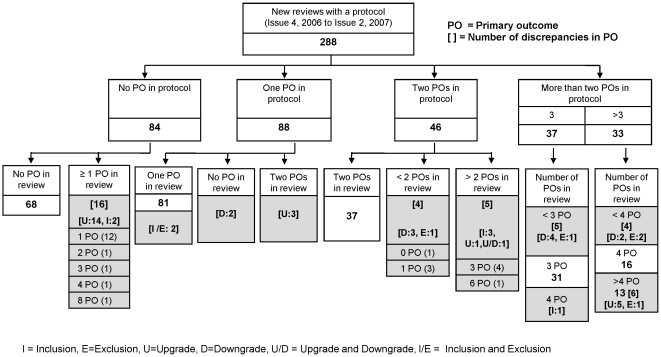
BACKGROUND: Adding, omitting or changing outcomes after a systematic review protocol is published can result in bias because it increases the potential for unacknowledged or post hoc revisions of the planned analyses. The main objective of this study was to look for discrepancies between primary outcomes listed in protocols and in the subsequent completed reviews published on the Cochrane Library. A secondary objective was to quantify the risk of bias in a set of meta-analyses where discrepancies between outcome specifications in protocols and reviews were found. METHODS AND FINDINGS: New reviews from three consecutive issues of the Cochrane Library were assessed. For each review, the primary outcome(s) listed in the review protocol and the review itself were identified and review authors were contacted to provide reasons for any discrepancies. Over a fifth (64/288, 22%) of protocol/review pairings were found to contain a discrepancy in at least one outcome measure, of which 48 (75%) were attributable to changes in the primary outcome measure. Where lead authors could recall a reason for the discrepancy in the primary outcome, there was found to be potential bias in nearly a third (8/28, 29%) of these reviews, with changes being made after knowledge of the results from individual trials. Only 4(6%) of the 64 reviews with an outcome discrepancy described the reason for the change in the review, with no acknowledgment of the change in any of the eight reviews containing potentially biased discrepancies. Outcomes that were promoted in the review were more likely to be significant than if there was no discrepancy (relative risk 1.66 95% CI (1.10, 2.49), p = 0.02). CONCLUSION: In a review, making changes after seeing the results for included studies can lead to biased and misleading interpretation if the importance of the outcome (primary or secondary) is changed on the basis of those results. Our assessment showed that reasons for discrepancies with the protocol are not reported in the review, demonstrating an under-recognition of the problem. Complete transparency in the reporting of changes in outcome specification is vital; systematic reviewers should ensure that any legitimate changes to outcome specification are reported with reason in the review.
Overview
The claims and statistics of this paper haven’t been checked yet.
Free: it reads the open-access text and checks the first 5 claims that cite a source we can check. Create a free account to check every claim.
Integrity signals
Registry
Cites
Statistics
Figures
Verification
Claims the paper makes
The claims and statistics of this paper haven’t been checked yet.
Free: it reads the open-access text and checks the first 5 claims that cite a source we can check. Create a free account to check every claim.
Claims other papers make about this one
Each is checked against this paper’s own text: does it say what the citing paper says it does?
The cited source says what the claim attributes to it.
In the citing paper
“Discrepant outcomes added or upgraded from secondary to primary at the review stage were more likely to be statistically significant than those outcomes that had not changed.”
From Preferred reporting items for systematic review and meta-analysis protocols (PRISMA-P) 2015 statement (2015) · cites this paper as [3]
The cited source says what the claim attributes to it.
In the citing paper
“Of 288 reviews with available protocols in a 2006/2007 cohort, 64 (22%) were observed to have at least one discrepant outcome with their completed reviews; only 4 described reasons for the change in the completed review [3].”
From Preferred reporting items for systematic review and meta-analysis protocols (PRISMA-P) 2015 statement (2015) · cites this paper as [3]
Self-check
Percentages, sums and reported differences re-computed from the paper’s own numbers.
The self-check needs the paper’s full text.
Citations
Cites
Liberati, A., Altman, D. G., Tetzlaff, J., Mulrow, C., Gøtzsche, P. C., Ioannidis, J. P. A., Clarke, M., Devereaux, P. J., Kleijnen, J., & Moher, D. (2009) · PLoS Medicine · doi:10.1371/journal.pmed.1000100 · Cited by 28,164 · cited 1×
“In addition, the recently published PRISMA (Preferred Reporting Items for Systematic Reviews and Meta-Analyses) statement has evolved to help ensure the clarity and transparency of reporting of systematic reviews [14].”
BackgroundSelf-citationSystematic Review of the Empirical Evidence of Study Publication Bias and Outcome Reporting Bias
Dwan, K., Altman, D. G., Arnaiz, J. A., Bloom, J., Chan, A.-W., Cronin, E., Decullier, E., Easterbrook, P. J., Von Elm, E., Gamble, C., et al. (2008) · PLoS ONE · doi:10.1371/journal.pone.0003081 · Cited by 1,546 · cited 1×
“. A systematic review of the empirical evidence of outcome reporting bias in trial primary outcomes found that 40–62% of studies have at least one primary outcome that was changed, introduced, or omitted and that outcomes that are statistically significant have higher odds of being fully reported (range of odds ratios…”
BackgroundSelf-citationKirkham, J. J., Dwan, K. M., Altman, D. G., Gamble, C., Dodd, S., Smyth, R., & Williamson, P. R. (2010) · BMJ · doi:10.1136/bmj.c365 · Cited by 1,133 · cited 3×
“As part of a larger project investigating the prevalence and impact of outcome reporting bias in randomised trials on systematic reviews [8], discrepancies between specified protocol and review outcomes were also assessed in 309 new reviews published on the Cochrane Library between Issue 4, 2006 and Issue 2, 2007.”
BackgroundSelf-citationEpidemiology and reporting characteristics of systematic reviews.
Moher, D., Tetzlaff, J., Tricco, A. C., Sampson, M., & Altman, D. G. (2007) · PLoS Medicine · doi:10.1371/journal.pmed.0040078 · Cited by 891 · cited 2×
“Only 11% of non-Cochrane therapeutic reviews in 2004 mentioned a protocol [3].”
BackgroundSelf-citationHiggins, J., Thompson, S., Deeks, J., & Altman, D. (2002) · Journal of Health Services Research & Policy · doi:10.1258/1355819021927674 · Cited by 755 · cited 1×
“[11] reported 28% (11/39) reviews with unpublished protocols in Issue 2 1999, while Silagy et al.”
BackgroundSelf-citationFrequency and reasons for outcome reporting bias in clinical trials: interviews with trialists
Smyth, R. M. D., Kirkham, J. J., Jacoby, A., Altman, D. G., Gamble, C., & Williamson, P. R. (2011) · BMJ · doi:10.1136/bmj.c7153 · Cited by 220
Self-citationBias in Meta-Analysis Due to Outcome Variable Selection Within Studies
Hutton, J. L., & Williamson, P. R. (2000) · Journal of the Royal Statistical Society Series C: Applied Statistics · doi:10.1111/1467-9876.00197 · Cited by 194 · cited 1×
“In an individual RCT, outcome reporting bias (ORB) has been defined as the selection for publication of a subset of the original recorded outcome variables based on the results [5].”
MethodSelf-citationPublishing Protocols of Systematic Reviews: Comparing What Was Done to What Was Planned
Silagy, C. A., Middleton, P., & Hopewell, S. (2002) · JAMA · doi:10.1001/jama.287.21.2831 · Cited by 188 · cited 3×
“These results show improvement over an 81% discrepancy rate reported for Cochrane reviews published in 2000 [6] and 47% for reviews published in 2005/06.”
BackgroundResultJournal of Health Services Research and Policy
(1996) · Physiotherapy · doi:10.1016/s0031-9406(05)66922-2 · Cited by 156
Shea, B., Moher, D., Graham, I., Pham, B., & Tugwell, P. (2002) · Evaluation & the Health Professions · doi:10.1177/0163278702025001008 · Cited by 110 · cited 1×
“systematic reviews are internationally recognised as among the best sources, if not the best source, of reliable up-to-date information on health care interventions [2,3].”
Background
Cited by
Items 101–163 of 163
Shen, J., Li, Y., Clarke, M. J., Du, L., Wang, L., & Zhong, D. (2013) · Journal of Evidence-Based Medicine · doi:10.1111/jebm.12022 · Cited by 13
Steps in the undertaking of a systematic review in orthopaedic surgery
Sambunjak, D., & Franić, M. (2011) · International Orthopaedics · doi:10.1007/s00264-011-1460-y · Cited by 14
“Any deviation from the protocol can introduce bias [20, 21], and must be addressed and justified in the final review.”
BackgroundProviding transparency in systematic review methods: The case for protocol registration
Booth, A. (2019) · Gerodontology · doi:10.1111/ger.12440 · Cited by 10
Farid‐Kapadia, M., Joachim, K. C., Balasingham, C., Clyburne-Sherin, A., & Offringa, M. (2017) · Systematic Reviews · doi:10.1186/s13643-017-0423-9 · Cited by 10
“This would need to be done for specified childhood subpopulations [20, 24], describing age-specific interventions [22, 25], comparators [26], and outcomes measures [3, 27, 28].”
BackgroundPublication trends of study protocols in rehabilitation
Jesus, T. S., & Colquhoun, H. L. (2018) · European Journal of Physical and Rehabilitation Medicine · doi:10.23736/s1973-9087.17.04858-4 · Cited by 11
Saunders, B., & Inzlicht, M. (2021) · International Journal of Psychophysiology · doi:10.1016/j.ijpsycho.2021.01.018 · Cited by 9
Evolution of international collaborative research efforts to develop non-Cochrane systematic reviews
Viguera-Guerra, I., Ruano, J., Aguilar-Luque, M., Gay-Mimbrera, J., Montilla, A., Fernández-Rueda, J. L., Fernández-Chaichio, J., Sanz-Cabanillas, J. L., Gómez‐Arias, P. J., García-Nieto, A. J. V., et al. (2019) · PLoS ONE · doi:10.1371/journal.pone.0211919 · Cited by 10
Design-based methods to influence the completeness of response to self-administered questionnaires
Healy, P., Edwards, P. J., Smith, V. A., Murphy, E., Newell, J., Burke, E., Meskell, P., Galvin, S., Lynn, P. J., Stovold, E. M., et al. (2018) · Cochrane Database of Systematic Reviews · doi:10.1002/14651858.mr000048 · Cited by 9
“Selective reporting bias refers to bias due to a tendency to under-report results based on the direction or statistical significance of those results (Kirkham 2010; Nelson 2014).”
BackgroundIdentifying Outcomes of Importance to Communication and Participation
Hill, S., Lowe, D. B., & McKenzie, J. E. (2011) · Wiley eBooks · doi:10.1002/9781444346855.ch4 · Cited by 10
Value of preclinical systematic reviews and meta-analyses in pediatric research
Romantsik, O., Bank, M., Menon, J. M. L., Malhotra, A. K., & Bruschettini, M. (2024) · Pediatric Research · doi:10.1038/s41390-024-03197-1 · Cited by 11
Fixed orthodontic retainers and periodontal health
Steegmans, P. A. J., & Reynders, R. M. (2020) · Evidence-Based Dentistry · doi:10.1038/s41432-020-0144-0 · Cited by 8
Yu, Y., Hardy, I. S., Sun, W., Fergusson, D. A., Zhou, Y., Feng, C. X., Ouyang, F., Marc, I., Fraser, W. D., & Dubois, L. (2021) · doi:10.22541/au.163251147.74307797/v1 · Cited by 9
Open Medicine endorses PROSPERO.
Palepu, A., Kendall, C., & Moher, D. (2011) · PubMed Central · Cited by 8
Adler, M., Herrera‐Gómez, F., Martín-García, D., Gavid, M., Alvarez, E., & Sangrador, C. O. (2020) · Pharmaceuticals · doi:10.3390/ph13050085 · Cited by 10
“This meta-analysis has been carried out according to a planned, registered, and prospectively updated systematic review protocol following current recommendations [31], as a clear signal of maintaining transparency in the systematic review process [32], avoiding future changes, which may be associated with reporting b…”
MethodHerrera‐Gómez, F., Monge-Donaire, D., Sangrador, C. O., Bustamante‐Munguira, J., Alamartine, É., & Alvarez, E. (2018) · Journal of Clinical Medicine · doi:10.3390/jcm7090262 · Cited by 9
“Our intention was to prevent changes that can cause reporting biases [58] and to guarantee that our analysis was not a duplicate of previous ones [59,60].”
BackgroundNeedle size for vaccination procedures in children and adolescents
Beirne, P. V., Shiely, F., Hennessy, S., Fitzgerald, T., & MacLeod, F. (2013) · Cochrane Database of Systematic Reviews · doi:10.1002/14651858.cd010720 · Cited by 8
Tatas, Z., Koutsiouroumpa, O., Seehra, J., Mavridis, D., & Pandis, N. (2023) · European Journal of Orthodontics · doi:10.1093/ejo/cjad031 · Cited by 7
Siebert, M., Caquelin, L., Madera, M., Acosta‐Dighero, R., Naudet, F., & Figuls, M. R. I. (2023) · PeerJ · doi:10.7717/peerj.16016 · Cited by 10
Methodological quality of systematic reviews on sepsis treatments: A cross-sectional study
Ho, L. T. F., Chen, X., Kwok, Y. L., Wu, X., Mao, C., & Chung, V. C. (2023) · The American Journal of Emergency Medicine · doi:10.1016/j.ajem.2023.12.001 · Cited by 6
Restrictive or responsive? Outcome classification and unplanned sub‐group analyses in meta‐analyses
Heesen, M. A., Klimek, M., & Hoeks, S. E. (2017) · Anaesthesia · doi:10.1111/anae.14078 · Cited by 7
“the conclusions of a significant proportion of systematic reviews [11].”
BackgroundInfluentialGuidance to best tools and practices for systematic reviews
Kolaski, K., Logan, L. R., & Ioannidis, J. P. A. (2023) · Acta Anaesthesiologica Scandinavica · doi:10.1111/aas.14295 · Cited by 11
“…to varying extents and have different requirements (Pieper & Rombey, 2022 records of most of these registry sites allow authors to update their protocols and facilitate transparent tracking of protocol changes, which are not unexpected during the progress of the review (Kirkham et al., 2010).”
BackgroundVaughn, K., Skinner, M., Vaughn, V., Wayant, C., & Vassar, M. B. (2018) · Journal of Hypertension · doi:10.1097/hjh.0000000000001870 · Cited by 6
“In absence of an accessible protocol, the assessment of selective reporting bias is limited, and allows for unmonitored deviation from original study designs by authors [50,51].”
BackgroundInconsistent Reporting Between Meta-analysis Protocol and Publication – A Cross-Sectional Study
Delgado, A. F., & Delgado, A. F. (2017) · Anticancer Research · doi:10.21873/anticanres.11928 · Cited by 4
Quality Assessment of Systematic Review of the Bariatric Surgery for Diabetes Mellitus
Jin, X., Wang, J., Li, X., An, P., Wang, H., Mao, W., Zhou, Q. X., Chen, Y., Wang, J., Chen, K., et al. (2019) · Journal of Diabetes Research · doi:10.1155/2019/9541638 · Cited by 5
“In 2010, the Cochrane SR found that changes to the original plan are biased and results can be misinterpreted [35].”
Ho, L. T. F., Cheung, Y. M. K., Choi, C. C. C., Wu, I. X., Mao, C., & Chung, V. C. (2024) · Journal of Dermatological Treatment · doi:10.1080/09546634.2024.2343072 · Cited by 5
“…such protocols, SR readers are likely to be prevented from comparing the review methodology and results presented in the publications to the original, planned approaches, providing reasonable grounds for them to suspect selective outcome reporting in the SRs and influencing evidence uptake (19).”
Lizaraso-Soto, F., Gutiérrez‐Abejón, E., Bustamante‐Munguira, J., Martín-García, D., Chimeno, M. M., Nava-Rebollo, Á., Maurtua-Briseño-Meiggs, Á., Fernández, D., Bustamante‐Munguira, E., de Paz, F. J., et al. (2021) · Frontiers in Medicine · doi:10.3389/fmed.2021.686729 · Cited by 5
“Prospective updating of the three systematic review protocols registered at the International Prospective Register of Systematic Reviews PROSPERO guarantees the transparency of all our methods and the entire analysis (65), confirming nonduplicity of the evaluation (66), and preventing the apparition of undesirable rep…”
MethodHussain, S., & Knight, S. R. (2016) · Clinical Transplantation · doi:10.1111/ctr.12837 · Cited by 4
Autogenic drainage for airway clearance in cystic fibrosis
Swaminathan, N., Robinson, K. A., & Ray, A. (2012) · Cochrane Database of Systematic Reviews · doi:10.1002/14651858.cd009595 · Cited by 6
Evolving trends in virtual reality rehabilitation for stroke in research publications
Bargeri, S., Baggio, M., Guida, S., Castellini, G., & Gianola, S. (2024) · Archives of Physiotherapy · doi:10.33393/aop.2024.3155 · Cited by 6
Aiyede, M., Lim, X. Y., Russell, A., Patel, R. P., Gueven, N., Howells, D. W., & Bye, N. (2022) · Journal of Neurotrauma · doi:10.1089/neu.2022.0020 · Cited by 3
“75 Overall, the studies we were able to find were generally of low quality (median four of 10) based on the mod-ified checklist from CAMARADES.”
Occupational therapy in multiple sclerosis
Kos, D., Eijssen, I. C. J. M., Bekkering, G. E., Coninck, L. D., O'Meara, C., Koen, M., & Hynes, S. M. (2023) · Cochrane Database of Systematic Reviews · doi:10.1002/14651858.cd015371 · Cited by 4
Immunomodulatory interventions for focal epilepsy
Panebianco, M., Walker, L. E., & Marson, A. G. (2023) · Cochrane Database of Systematic Reviews · doi:10.1002/14651858.cd009945.pub3 · Cited by 6
The Use of Metaanalysis in Pharmacoepidemiology
Berlin, J. A., Crowe, B. J., Xia, H. A., & Evans, S. J. W. (2019) · Wiley eBooks · doi:10.1002/9781119413431.ch36 · Cited by 6
Silva, F. M., Adegboye, A. R. A., Curioni, C. C., Gomes, F., Collins, G. S., Kac, G., Cook, J. A., Ismail, L. C., Page, M. J., Khandpur, N., et al. (2026) · Nutrition Reviews · doi:10.1093/nutrit/nuaf218 · Cited by 3
Improving the ACGIH threshold limit value (TLV) process
Smith, C. J., & Perfetti, T. A. (2018) · Toxicology Research and Application · doi:10.1177/2397847318801758 · Cited by 3
Reporting Guidelines: A Framework for Clarity and Transparency
Shamseer, L., & Moher, D. (2017) · Springer eBooks · doi:10.1007/978-981-10-7062-4_18 · Cited by 2
O’Mahony, A., Haseldine, C., Albers, B., Navarro, A. C., McCarthy, L.-J., Pollock, D., Presseau, J., & McHugh, S. (2025) · HRB Open Research · doi:10.12688/hrbopenres.14158.1 · Cited by 1
Tait, H., Blazek, K. D., Abdy, M. E., Jiang, I. W., Strippoli, G. F., Craig, J. C., & Tunnicliffe, D. J. (2025) · Kidney Medicine · doi:10.1016/j.xkme.2025.101152 · Cited by 2
“50 Although our study found improvements in most bias domains over time, it is important to emphasize that the proportion of trials reporting higher rates of low bias and decreased rates of unclear bias continues to grow.”
Submission declined: an analysis of reasons for rejection in JBI Evidence Synthesis
Hines, S. J., & Francis, E. M. (2026) · JBI Evidence Synthesis · doi:10.11124/jbies-25-00583 · Cited by 2
CASSAI, A. D., Dost, B., Asti, N., Bianco, A., Bisi, M., Curmaci, E., Giacon, T. A., Nardelli, M., & Tulgar, S. (2026) · Canadian Journal of Anesthesia/Journal canadien d anesthésie · doi:10.1007/s12630-026-03168-6 · Cited by 1
“1 Nevertheless, several studies have suggested that a substantial proportion of SRs are affected by several bias, such as outcome reporting bias, 2,3 which arises when the selection of reported outcomes is in fl uenced by the results, with the direct consequence of providing possible misleading…”
Effects of Vinegar/Acetic Acid Intake on Appetite Measures and Energy Consumption: Systematic Review
Hasan, F. O., Hamilton, K. P., Angadi, S. S., & Kranz, S. (2022) · Translational Journal of the American College of Sports Medicine · doi:10.1249/tjx.0000000000000205 · Cited by 1
“The risk of outcome reporting bias was assessed by comparing planned outcomes in the Methods section with reported outcomes to identify any missing outcomes (10,11).”
MethodProgabide add-on for refractory epilepsy
Zou, X., Wu, B., & Yuan, T. (2012) · Cochrane Database of Systematic Reviews · doi:10.1002/14651858.cd010158
Chan, A., Song, F., Vickers, A. J., Erson, T. J., Dickersin, K., Gøtzsche, P. C., Krumholz, H. M., Ghersi, D., & Worp, H. B. V. D. (2015)
Booth, A., & Jones-Diette, J. S. (2018) · Springer eBooks · doi:10.1007/978-3-319-78966-8_6
Moher, D., Shamseer, L., Clarke, M. J., Ghersi, D., Liberati, A., Petticrew, M. P., & Stewart, L. A. (2016) · Cited by 1
Anderson, L. N., Neil‐Sztramko, S., Álvarez, E., Jack, S. M., Thabane, L., Scott, F. E., & Apatu, E. (2022) · The Canadian Journal for the Scholarship of Teaching and Learning · doi:10.5206/cjsotlrcacea.2022.1.10670
Booth, A. (2016) · Springer eBooks · doi:10.1007/978-3-319-25655-9_6
Siebert, M. (2021) · MetArXiv (OSF Preprints) · doi:10.31222/osf.io/zdfu9
Misrepresentation of Scientific Figures
Leaphart, D. M., Cronley, A. C., & Brothers, T. E. (2022) · Springer eBooks · doi:10.1007/978-3-030-99680-2_15
Lee, Z. Y. (2023) · Medical Writing · doi:10.56012/ejyj3404
La hiperkalemia del enfermo cardio-renal: un obstáculo franqueable con nanofármacos
Soto, F. L. (2023) · UVaDOC UVaDOC University of Valladolid Documentary Repository (University of Valladolid) · doi:10.35376/10324/61102
Sobre el beneficio de tratar con inhibidores del complemento: Evaluación farmacométrica piloto
Guevara, C. M. B. (2024) · UVaDOC UVaDOC University of Valladolid Documentary Repository (University of Valladolid) · doi:10.35376/10324/69448
Survive or Thrive? 10th Graders' Parental Involvement and Its Influences on Early Adult Life
Zhu, P. (2022) · University of North Texas Digital Library (University of North Texas) · doi:10.12794/metadc1944324
Kritische Betrachtung von systematischen Reviews und Metaanalysen
Deichsel, A., Laky, B., Ackermann, J., Münch, L. N., Mathis, D. T., Eggeling, L., Merkely, G., Wafaisade, A., Kittl, C., Schüttler, K. F., et al. (2025) · Arthroskopie · doi:10.1007/s00142-025-00759-1
Methodological and Systematic Errors in Systematic Reviews in Health Domain: A Systematic Review
Azad, R. V., Riahinia, N., Azimi, A., & Baradaran, H. R. (2025) · Medical Journal of the Islamic Republic of Iran · doi:10.47176/mjiri.39.64 · Cited by 1
Methodological Quality of Systematic Reviews on Treatments for Liver Cancer: A Cross-sectional Study
Cheng, B., Wang, B. H., Zhong, C. C., Zhang, Y., Ho, F. F., & Chung, V. C. (2025) · Journal of Hepatocellular Carcinoma · doi:10.2147/jhc.s536964
“21 The trend shows that more SR protocols were registered on a protocol registration database, like PROSPERO (international prospective register of systematic reviews), which may support our findings that the SR was more likely to register a protocol if it was published recently.”
dos Santos, M. B. F., Agostini, B. A., Bassani, R., Pereira, G. K. R., & Sarkis-Onofre, R. (2020) · Figshare · doi:10.6084/m9.figshare.11972688
dos Santos, M. B. F., Agostini, B. A., Bassani, R., Pereira, G. K. R., & Sarkis-Onofre, R. (2020) · Figshare · doi:10.6084/m9.figshare.11972682
Tsujimoto, H., Kataoka, Y., Sato, Y., Banno, M., Tsujino-Tsujimoto, E., Sumi, Y., Sada, R., Fujiwara, T., Ohtake, Y., Kumasawa, J., et al. (2021) · Figshare · doi:10.6084/m9.figshare.13888822
Trends and gaps in obstetric RCTs: a systematic mapping review from January, 2013, to May, 2025
Li, W., Feng, Q., Spratt, W., Mol, B. W., Li, W., & Reddy, M. (2026) · The Lancet Obstetrics Gynaecology & Women s Health · doi:10.1016/s3050-5038(26)00074-9
Author adherence and experiences with PRISMA-P 2015: a cross-sectional study
Engmose, M. B., Chan, A., Dwan, K. M., Hinrichsen, C., Hróbjartsson, A., Moher, D., Page, M. J., Salazar, J., Shamseer, L., Stewart, L. A., et al. (2026) · Journal of Clinical Epidemiology · doi:10.1016/j.jclinepi.2026.112350
Ho, L. T. F., Yuen, K. W., Choi, C. C. C., Cheung, Y. M. K., Wu, X., & Chung, V. C. (2026) · JBI Evidence Synthesis · doi:10.11124/jbies-25-00425
Metadata
- Authors
- Kirkham, J. J., Altman, D. G., & Williamson, P. R.
- Affiliations
- University of Liverpool (GB)
- University of Oxford (GB)
- Corresponding author
- Kirkham, Jamie J.
- Venue
- PLoS ONE
- Publisher
- Public Library of Science (PLoS)
- Published
- 2010-03-22
- Volume
- 5
- Issue
- 3
- Pages
- e9810
- ISSN
- 1932-6203 (ISSN-L)
- PMC
- PMC2842442
- OpenAlex
- W1968982867
- Semantic Scholar
- f472619ec1e63671c5432c83dac6fdb1b333ae98
- Cited by
- 164
- References
- 12
- Citations by year
- 2026: 6 · 2025: 7 · 2024: 8 · 2023: 17 · 2022: 11 · 2021: 12 · 2020: 12 · 2019: 16 · 2018: 14 · 2017: 19 · 2016: 8 · 2015: 10 · 2014: 6 · 2013: 6 · 2012: 6
- FWCI
- 1.59
- Type
- journal article
- Language
- en
- Open access
- gold
- doi.org
- Locations
- PLoS ONE (publishedVersion, cc-by)
- PubMed Central (publishedVersion, cc-by)
- PubMed (publishedVersion)
- Research Explorer (The University of Manchester) (publishedVersion)
- RePEc: Research Papers in Economics (submittedVersion)
- DOAJ (DOAJ: Directory of Open Access Journals) (submittedVersion, cc-by-sa)
- Funders
- Medical Research Council
- Topics
- Social Sciences › Decision Sciences › Statistics, Probability and Uncertainty › Meta-analysis and systematic reviews
- Health Sciences › Nursing › Issues, ethics and legal aspects › Pharmaceutical industry and healthcare
- Social Sciences › Sociology and Political Science › Delphi Technique in Research
- Keywords
- risk of bias, reporting transparency, Cochrane Library, meta-analysis, selective outcome reporting
- MeSH terms
- Systematic Reviews as Topic, Humans, Periodicals as Topic, Publishing, Research Design, Risk, Meta-Analysis as Topic, Treatment Outcome, Publication Bias
About these checks
Registry, retraction, Cites and statistics results are computed, not judged, with one exception: a printed reference that no index lists is read once by a model before it counts as a citation error. Claims are extracted by a model and kept only when their quote appears verbatim in the text; each cited source is then checked, with a model’s help, for whether it says what the claim relies on. Those verdicts can be wrong — read the claim’s quote and the cited source before relying on one.
Statistics and arithmetic are recomputed, not judged.
Confidence bands are shown only for fields calibrated on our annotated test set. None is calibrated yet, so no band is shown.
What counts as a claim ›How we measure confidence ›How we check this ›
Are you an author, or do you see a problem with this page? Request a review
Data sources
Bibliographic data: Semantic Scholar, OpenAlex, Crossref.
Contains information from the Semantic Scholar Academic Graph Datasets, made available under the ODC Attribution License (ODC-BY 1.0).
Semantic Scholar’s data is described in: Kinney, R., et al. (2023). The Semantic Scholar Open Data Platform. arXiv:2301.10140.
