

Quorum Sensing and Virulence of Pseudomonas aeruginosa during Lung Infection of Cystic Fibrosis Patients
Open accessThe DOI matches its Crossref record; 54 of the 54 references it cites were found in a registry or an index.
Abstract
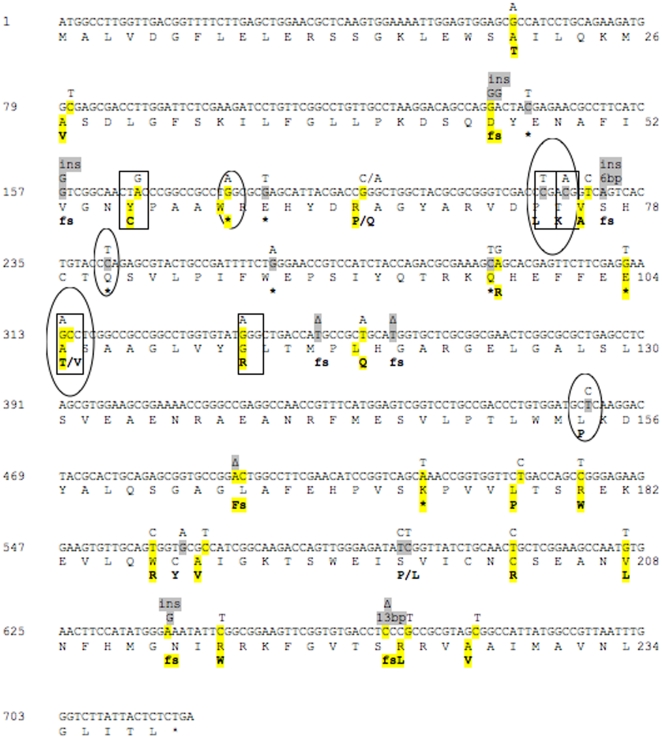
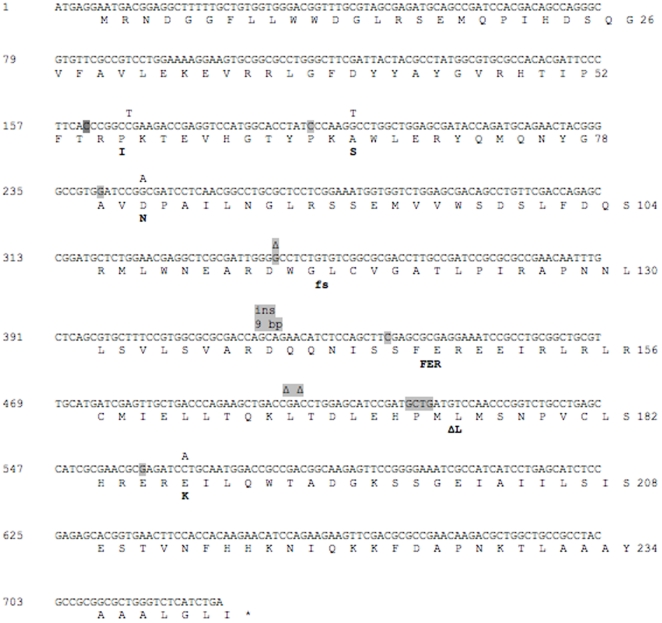
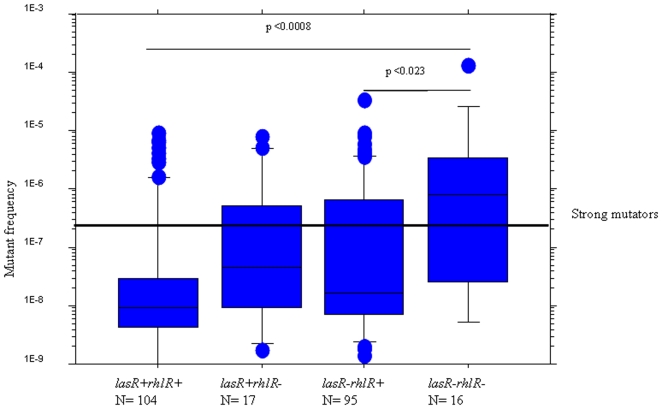
Pseudomonas aeruginosa is the predominant microorganism in chronic lung infection of cystic fibrosis patients. The chronic lung infection is preceded by intermittent colonization. When the chronic infection becomes established, it is well accepted that the isolated strains differ phenotypically from the intermittent strains. Dominating changes are the switch to mucoidity (alginate overproduction) and loss of epigenetic regulation of virulence such as the Quorum Sensing (QS). To elucidate the dynamics of P. aeruginosa QS systems during long term infection of the CF lung, we have investigated 238 isolates obtained from 152 CF patients at different stages of infection ranging from intermittent to late chronic. Isolates were characterized with regard to QS signal molecules, alginate, rhamnolipid and elastase production and mutant frequency. The genetic basis for change in QS regulation were investigated and identified by sequence analysis of lasR, rhlR, lasI and rhlI. The first QS system to be lost was the one encoded by las system 12 years (median value) after the onset of the lung infection with subsequent loss of the rhl encoded system after 17 years (median value) shown as deficiencies in production of the 3-oxo-C12-HSL and C4-HSL QS signal molecules respectively. The concomitant development of QS malfunction significantly correlated with the reduced production of rhamnolipids and elastase and with the occurrence of mutations in the regulatory genes lasR and rhlR. Accumulation of mutations in both lasR and rhlR correlated with development of hypermutability. Interestingly, a higher number of mucoid isolates were found to produce C4-HSL signal molecules and rhamnolipids compared to the non-mucoid isolates. As seen from the present data, we can conclude that P. aeruginosa and particularly the mucoid strains do not lose the QS regulation or the ability to produce rhamnolipids until the late stage of the chronic infection.
Overview
The claims and statistics of this paper haven’t been checked yet.
Free: it reads the open-access text and checks the first 5 claims that cite a source we can check. Create a free account to check every claim.
Integrity signals
Registry
Cites
Statistics
Figures
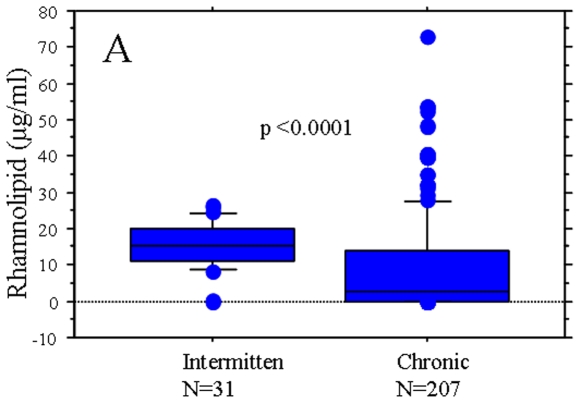
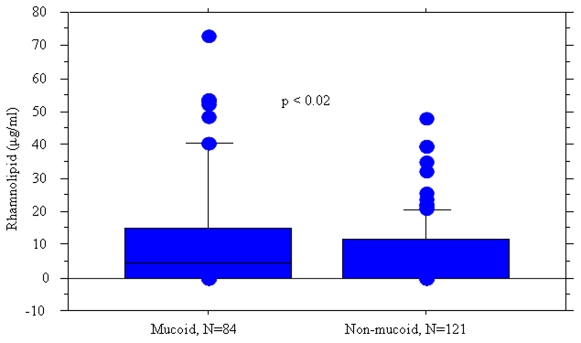
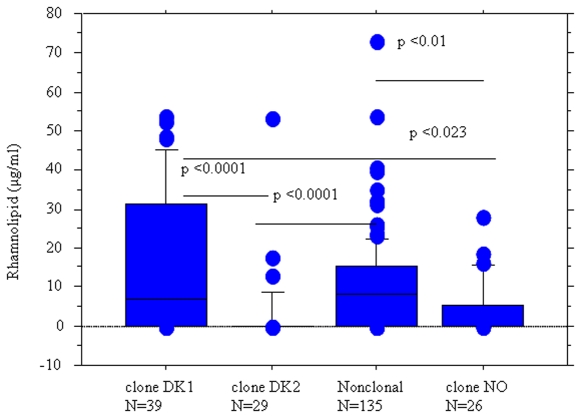
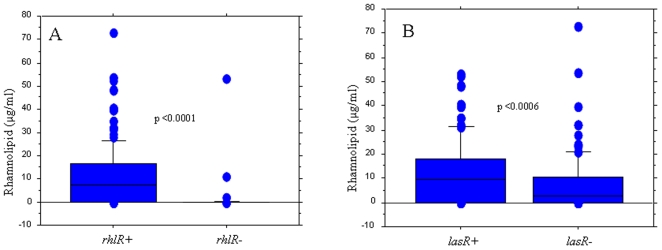
Verification
Claims the paper makes
The claims and statistics of this paper haven’t been checked yet.
Free: it reads the open-access text and checks the first 5 claims that cite a source we can check. Create a free account to check every claim.
Claims other papers make about this one
Each is checked against this paper’s own text: does it say what the citing paper says it does?
The source backs part of the claim, not all of it — or backs it for a different population, condition or comparison.
In the citing paper
“suggesting that these inhibitory molecules have a true role during pulmonary infections.”
From Aspergillus fumigatus and Aspergillosis in 2019 (2019) · cites this paper as [582]
Experimental — accuracy not yet measuredThe source backs part of the claim, not all of it — or backs it for a different population, condition or comparison.
In the citing paper
“Phenazines and rhamnolipids were detected in the sputum of cystic fibrosis patients at concentrations that impact the growth of A. fumigatus in vitro (572, 581, 582), suggesting that these inhibitory molecules have a true role during pulmonary infections.”
From Aspergillus fumigatus and Aspergillosis in 2019 (2019) · cites this paper as [582]
Experimental — accuracy not yet measuredIn the citing paper
“Phenazines and rhamnolipids were detected in the sputum of cystic fibrosis patients at concentrations that impact the growth of A. fumigatus in vitro (572, 581, 582), suggesting that these inhibitory molecules have a true role during pulmonary infections.”
From Aspergillus fumigatus and Aspergillosis in 2019 (2019) · cites this paper as [582]
Self-check
Percentages, sums and reported differences re-computed from the paper’s own numbers.
The self-check needs the paper’s full text.
Citations
Cites
Tenover, F. C., Arbeit, R. D., Goering, R. V., Mickelsen, P. A., Murray, B. E., Persing, D. H., & Swaminathan, B. (1995) · Journal of Clinical Microbiology · doi:10.1128/jcm.33.9.2233-2239.1995 · Cited by 8,204
Kovach, M. E., Elzer, P. H., Steven Hill, D., Robertson, G. T., Farris, M. A., Roop, R. M., & Peterson, K. M. (1995) · Gene · doi:10.1016/0378-1119(95)00584-1 · Cited by 3,350
Microbial pathogenesis in cystic fibrosis: mucoid Pseudomonas aeruginosa and Burkholderia cepacia
Govan, J. R. W., & Deretic, V. P. (1996) · Microbiological Reviews · doi:10.1128/mmbr.60.3.539-574.1996 · Cited by 1,812
High Frequency of Hypermutable Pseudomonas aeruginosa in Cystic Fibrosis Lung Infection
Oliver, A., Cantón, R., Campo, P., Baquero, F., & Blázquez, J. (2000) · Science · doi:10.1126/science.288.5469.1251 · Cited by 1,465
Genetic adaptation by Pseudomonas aeruginosa to the airways of cystic fibrosis patients
Smith, E. E., Buckley, D. G., Wu, Z., Saenphimmachak, C., Hoffman, L. R., D’Argenio, D. A., Miller, S. I., Ramsey, B. W., Speert, D. P., Moskowitz, S. M., et al. (2006) · Proceedings of the National Academy of Sciences · doi:10.1073/pnas.0602138103 · Cited by 1,319
Hentzer, M., Riedel, K., Rasmussen, T. B., Heydorn, A., Andersen, J. B., Parsek, M. R., Rice, S. A., Eberl, L., Molin, S., Høiby, N., et al. (2002) · Microbiology · doi:10.1099/00221287-148-1-87 · Cited by 1,050
Self-citationRegulation of las and rhl quorum sensing in Pseudomonas aeruginosa
Pesci, E. C., Pearson, J. P., Seed, P. C., & Iglewski, B. H. (1997) · Journal of Bacteriology · doi:10.1128/jb.179.10.3127-3132.1997 · Cited by 889
Cooperation and conflict in quorum-sensing bacterial populations
Diggle, S. P., Griffin, A. S., Campbell, G. S., & West, S. A. (2007) · Nature · doi:10.1038/nature06279 · Cited by 837
Pseudomonas aeruginosa biofilms in the respiratory tract of cystic fibrosis patients
Bjarnsholt, T., Jensen, P. Ø., Fiandaca, M. J., Pedersen, J., Hansen, C. R., Andersen, C. B., Pressler, T., Givskov, M., & Høiby, N. (2009) · Pediatric Pulmonology · doi:10.1002/ppul.21011 · Cited by 795
Self-citationCell-to-Cell Signaling and Pseudomonas aeruginosa Infections
Van Delden, C., & Iglewski, B. H. (1998) · Emerging Infectious Diseases · doi:10.3201/eid0404.980405 · Cited by 745
Cited by
Items 301–303 of 303
Popławski, T., Rachuna, J., Macieja, A., Przybyłowska-Sygut, K., Wąsik, S., Arabski, M., Majsterek, I., Bielski, R., Mencer, D. E., & Witczak, Z. J. (2026) · Molecules · doi:10.3390/molecules31224112
Manzenyuk, O. Y., Solomentsev, V. I., Mukhina, T. N., Firstova, V. V., Kоtov, M. A., Shemyakin, A. N., Yakimov, M. Y., & Solovyov, N. G. (2026) · BIOPHYSICS · doi:10.1134/s0006350926700429
Guénard, S. (2013) · theses.fr (ABES) · doi:10.70675/f33e3b39z71b5z43aez8519z6b0ae15d06a7
Metadata
- Authors
- Bjarnsholt, T., Jensen, P. Ø., Jakobsen, T. H., Phipps, R., Nielsen, A. K., Rybtke, M. T., Tolker-Nielsen, T., Givskov, M., Høiby, N., Ciofu, O., & the Scandinavian Cystic Fibrosis Study Consortium
- Affiliations
- University of Copenhagen (DK)
- Rigshospitalet (DK)
- Technical University of Denmark (DK)
- Corresponding author
- Ciofu, Oana
- ORCID
- Venue
- PLoS ONE
- Publisher
- Public Library of Science (PLoS)
- Published
- 2010-04-12
- Volume
- 5
- Issue
- 4
- Pages
- e10115
- ISSN
- 1932-6203 (ISSN-L)
- PMC
- PMC2853559
- OpenAlex
- W2069962023
- Cited by
- 261
- References
- 54
- Citations by year
- 2026: 10 · 2025: 11 · 2024: 13 · 2023: 10 · 2022: 24 · 2021: 16 · 2020: 13 · 2019: 22 · 2018: 18 · 2017: 19 · 2016: 16 · 2015: 16 · 2014: 21 · 2013: 21 · 2012: 16
- FWCI
- 6.90
- Type
- journal article
- Language
- en
- Open access
- gold
- doi.org
- Locations
- PLoS ONE (publishedVersion, cc-by)
- PubMed Central (publishedVersion, cc-by)
- PubMed (publishedVersion)
- DOAJ (DOAJ: Directory of Open Access Journals) (submittedVersion, cc-by-sa)
- Research at the University of Copenhagen (University of Copenhagen) (submittedVersion)
- Technical University of Denmark, DTU Orbit (Technical University of Denmark, DTU) (submittedVersion, cc-by)
- Funders
- Lundbeckfonden
- H. Lundbeck A/S
- Strategic Research Council
- Topics
- Life Sciences › Biochemistry, Genetics and Molecular Biology › Molecular Biology › Bacterial biofilms and quorum sensing
- Health Sciences › Medicine › Pulmonary and Respiratory Medicine › Cystic Fibrosis Research Advances
- Life Sciences › Agricultural and Biological Sciences › Plant Science › Plant Pathogenic Bacteria Studies
- Keywords
- Pseudomonas aeruginosa, quorum sensing, cystic fibrosis, chronic lung infection, virulence, mucoidy, Las system, Rhl system, rhamnolipids, elastase, 3-oxo-C12-HSL, C4-HSL, hypermutability
- MeSH terms
- Cystic Fibrosis, Genes, Bacterial, Glycolipids, Humans, Lung Diseases, Pseudomonas aeruginosa, Pseudomonas Infections, Time Factors, Virulence, Quorum Sensing
About these checks
Registry, retraction, Cites and statistics results are computed, not judged, with one exception: a printed reference that no index lists is read once by a model before it counts as a citation error. Claims are extracted by a model and kept only when their quote appears verbatim in the text; each cited source is then checked, with a model’s help, for whether it says what the claim relies on. Those verdicts can be wrong — read the claim’s quote and the cited source before relying on one.
Statistics and arithmetic are recomputed, not judged.
Confidence bands are shown only for fields calibrated on our annotated test set. None is calibrated yet, so no band is shown.
What counts as a claim ›How we measure confidence ›How we check this ›
Are you an author, or do you see a problem with this page? Request a review
Data sources
Bibliographic data: Semantic Scholar, OpenAlex, Crossref.
Contains information from the Semantic Scholar Academic Graph Datasets, made available under the ODC Attribution License (ODC-BY 1.0).
Semantic Scholar’s data is described in: Kinney, R., et al. (2023). The Semantic Scholar Open Data Platform. arXiv:2301.10140.
