

Differentiating Embryonic Stem Cells Pass through ‘Temporal Windows’ That Mark Responsiveness to Exogenous and Paracrine Mesendoderm Inducing Signals
Open accessThe DOI matches its Crossref record; 63 of the 63 references it cites were found in a registry or an index.
Abstract
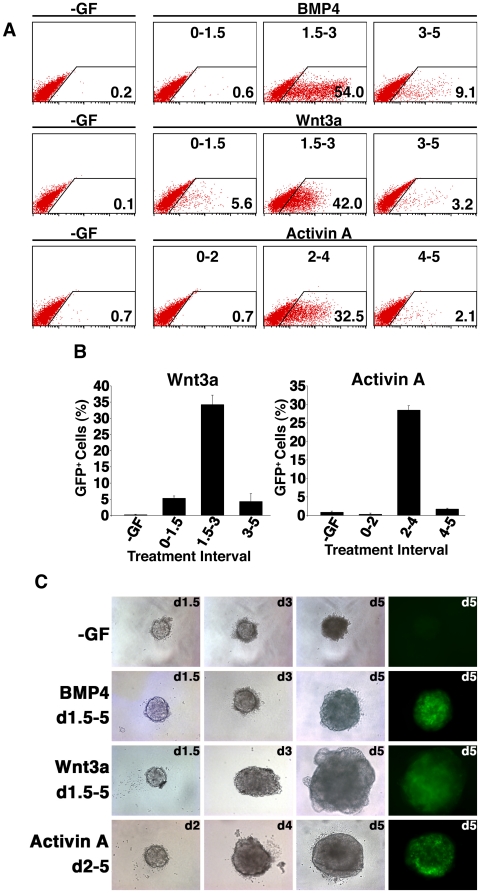
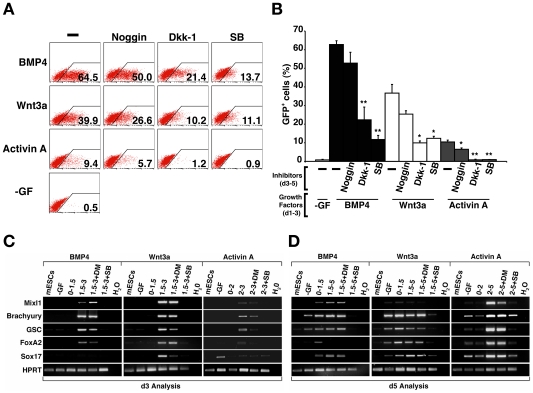
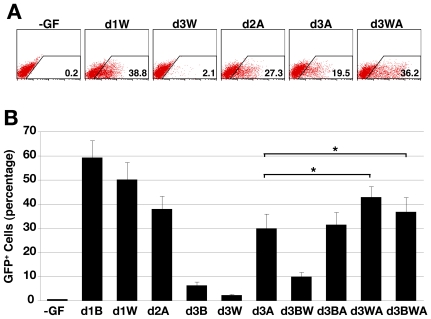
BACKGROUND: Mesendoderm induction during embryonic stem cell (ESC) differentiation in vitro is stimulated by the Transforming Growth Factor and Wingless (Wnt) families of growth factors. PRINCIPAL FINDINGS: We identified the periods during which Bone Morphogenetic Protein (BMP) 4, Wnt3a or Activin A were able to induce expression of the mesendoderm marker, Mixl1, in differentiating mouse ESCs. BMP4 and Wnt3a were required between differentiation day (d) 1.5 and 3 to most effectively induce Mixl1, whilst Activin A induced Mixl1 expression in ESC when added between d2 and d4, indicating a subtle difference in the requirement for Activin receptor signalling in this process. Stimulation of ESCs with these factors at earlier or later times resulted in little Mixl1 induction, suggesting that the differentiating ESCs passed through 'temporal windows' in which they sequentially gained and lost competence to respond to each growth factor. Inhibition of either Activin or Wnt signalling blocked Mixl1 induction by any of the three mesendoderm-inducing factors. Mixing experiments in which chimeric EBs were formed between growth factor-treated and untreated ESCs revealed that BMP, Activin and Wnt signalling all contributed to the propagation of paracrine mesendoderm inducing signals between adjacent cells. Finally, we demonstrated that the differentiating cells passed through 'exit gates' after which point they were no longer dependent on signalling from inducing molecules for Mixl1 expression. CONCLUSIONS: These studies suggest that differentiating ESCs are directed by an interconnected network of growth factors similar to those present in early embryos and that the timing of growth factor activity is critical for mesendoderm induction.
Overview
The claims and statistics of this paper haven’t been checked yet.
Free: it reads the open-access text and checks the first 5 claims that cite a source we can check. Create a free account to check every claim.
Integrity signals
Registry
Cites
Statistics
Figures




Verification
Claims the paper makes
The claims and statistics of this paper haven’t been checked yet.
Free: it reads the open-access text and checks the first 5 claims that cite a source we can check. Create a free account to check every claim.
Claims other papers make about this one
Each is checked against this paper’s own text: does it say what the citing paper says it does?
The source backs part of the claim, not all of it — or backs it for a different population, condition or comparison.
In the citing paper
“We believe enhanced differentiation at lower CHIR concentrations can be attributed to endogenous morphogen production due to the self-assembling conditions provided28–32.”
From Self-assembling human heart organoids for the modeling of cardiac development and congenital heart disease (2021) · cites this paper as [31]
Experimental — accuracy not yet measured
Self-check
Percentages, sums and reported differences re-computed from the paper’s own numbers.
The self-check needs the paper’s full text.
Citations
Cites
Takahashi, K., & Yamanaka, S. (2006) · Cell · doi:10.1016/j.cell.2006.07.024 · Cited by 26,673
Embryonic Stem Cell Lines Derived from Human Blastocysts
Thomson, J. A., Itskovitz-Eldor, J., Shapiro, S. S., Waknitz, M. A., Swiergiel, J. J., Marshall, V. S., & Jones, J. M. (1998) · Science · doi:10.1126/science.282.5391.1145 · Cited by 15,926
Establishment in culture of pluripotential cells from mouse embryos
Evans, M. J., & Kaufman, M. H. (1981) · Nature · doi:10.1038/292154a0 · Cited by 8,607
Martin, G. R. (1981) · Proceedings of the National Academy of Sciences · doi:10.1073/pnas.78.12.7634 · Cited by 5,746
Embryonic stem cell lines from human blastocysts: somatic differentiation in vitro
Reubinoff, B. E., Pera, M. F., Fong, C.-Y., Trounson, A., & Bongso, A. (2000) · Nature Biotechnology · doi:10.1038/74447 · Cited by 2,706
Derivation of pluripotent epiblast stem cells from mammalian embryos
Brons, I. G. M., Smithers, L. E., Trotter, M. W. B., Rugg-Gunn, P., Sun, B., Chuva de Sousa Lopes, S. M., Howlett, S. K., Clarkson, A., Ahrlund-Richter, L., Pedersen, R. A., et al. (2007) · Nature · doi:10.1038/nature05950 · Cited by 2,007
Myeloid leukaemia inhibitory factor maintains the developmental potential of embryonic stem cells
Williams, R. L., Hilton, D. J., Pease, S., Willson, T. A., Stewart, C. L., Gearing, D. P., Wagner, E. F., Metcalf, D., Nicola, N. A., & Gough, N. M. (1988) · Nature · doi:10.1038/336684a0 · Cited by 1,997
Bone morphogenetic protein-4 is required for mesoderm formation and patterning in the mouse.
Winnier, G., Blessing, M., Labosky, P. A., & Hogan, B. L. (1995) · Genes & Development · doi:10.1101/gad.9.17.2105 · Cited by 1,788
Murry, C. E., & Keller, G. (2008) · Cell · doi:10.1016/j.cell.2008.02.008 · Cited by 1,729
The induction of differentiation in teratocarcinoma stem cells by retinoic acid
Strickland, S., & Mahdavi, V. (1978) · Cell · doi:10.1016/0092-8674(78)90008-9 · Cited by 1,420
Research works printed but not linked: 1
- Askanazy M 1907 Die teratome nach ihrem bau, ihrem verlauf, ihren genese und im vergleich zum experimentellen teratoid. Verhandl Deutsch Pathol 11 39 82
Cited by
Pluripotency Factors in Embryonic Stem Cells Regulate Differentiation into Germ Layers
Thomson, M., Liu, S. J., Zou, L.-N., Smith, Z., Meissner, A., & Ramanathan, S. (2011) · Cell · doi:10.1016/j.cell.2011.05.017 · Cited by 542
Lewis-Israeli, Y. R., Wasserman, A. H., Gabalski, M. A., Volmert, B. D., Ming, Y., Ball, K. A., Yang, W., Zou, J., Ni, G., Pajares, N., et al. (2021) · Nature Communications · doi:10.1038/s41467-021-25329-5 · Cited by 536
Sturgeon, C. M., Ditadi, A., Awong, G., Kennedy, M., & Keller, G. (2014) · Nature Biotechnology · doi:10.1038/nbt.2915 · Cited by 467
Burridge, P. W., Thompson, S., Millrod, M. A., Weinberg, S., Yuan, X., Peters, A., Mahairaki, V., Koliatsos, V. E., Tung, L., & Zambidis, E. T. (2011) · PLoS ONE · doi:10.1371/journal.pone.0018293 · Cited by 417
Kennedy, M., Awong, G., Sturgeon, C. M., Ditadi, A., LaMotte-Mohs, R., Zúñiga-Pflücker, J. C., & Keller, G. (2012) · Cell Reports · doi:10.1016/j.celrep.2012.11.003 · Cited by 400
Lam, A. Q., Freedman, B. S., Morizane, R., Lerou, P. H., Valerius, M. T., & Bonventre, J. V. (2014) · Journal of the American Society of Nephrology · doi:10.1681/asn.2013080831 · Cited by 307
Minami, I., Yamada, K., Otsuji, T. G., Yamamoto, T., Shen, Y., Otsuka, S., Kadota, S., Morone, N., Barve, M., Asai, Y., et al. (2012) · Cell Reports · doi:10.1016/j.celrep.2012.09.015 · Cited by 248
Endothelial Progenitor Cells for the Vascularization of Engineered Tissues
Peters, E. B. (2018) · Tissue Engineering Part B: Reviews · doi:10.1089/ten.teb.2017.0127 · Cited by 171
Xu, X., Browning, V. L., & Odorico, J. S. (2011) · Mechanisms of Development · doi:10.1016/j.mod.2011.08.001 · Cited by 159
Faunes, F., Hayward, P., Descalzo, S. M., Chatterjee, S. S., Balayo, T., Trott, J., Christoforou, A., Ferrer-Vaquer, A., Hadjantonakis, A.-K., Dasgupta, R., et al. (2013) · Development · doi:10.1242/dev.085654 · Cited by 122
Teo, A. K. K., Ali, Y., Wong, K. Y., Chipperfield, H., Sadasivam, A., Poobalan, Y., Tan, E. K., Wang, S. T., Abraham, S., Tsuneyoshi, N., et al. (2012) · Stem Cells · doi:10.1002/stem.1022 · Cited by 117
Primitive Cardiac Cells from Human Embryonic Stem Cells
Hudson, J., Titmarsh, D., Hidalgo, A., Wolvetang, E., & Cooper-White, J. (2012) · Stem Cells and Development · doi:10.1089/scd.2011.0254 · Cited by 103
Kinney, M. A., Hookway, T. A., Wang, Y., & McDevitt, T. C. (2013) · Annals of Biomedical Engineering · doi:10.1007/s10439-013-0953-9 · Cited by 98
Cimetta, E., Cannizzaro, C., James, R., Biechele, T., Moon, R. T., Elvassore, N., & Vunjak-Novakovic, G. (2010) · Lab on a Chip · doi:10.1039/c0lc00033g · Cited by 88
Probing Embryonic Stem Cell Autocrine and Paracrine Signaling Using Microfluidics
Przybyla, L., & Voldman, J. (2012) · Annual Review of Analytical Chemistry · doi:10.1146/annurev-anchem-062011-143122 · Cited by 76
Understanding kidney morphogenesis to guide renal tissue regeneration
Little, M. H., Combes, A. N., & Takasato, M. (2016) · Nature Reviews Nephrology · doi:10.1038/nrneph.2016.126 · Cited by 61
Links between DNA Replication, Stem Cells and Cancer
Vassilev, A. P., & Depamphilis, M. (2017) · Genes · doi:10.3390/genes8020045 · Cited by 59
Cimetta, E., Sirabella, D., Yeager, K., Davidson, K., Simon, J., Moon, R. T., & Vunjak-Novakovic, G. (2013) · Lab Chip · doi:10.1039/c2lc40836h · Cited by 56
Generation of β cells from human pluripotent stem cells: Are we there yet?
Schiesser, J. V., & Wells, J. M. (2014) · Annals of the New York Academy of Sciences · doi:10.1111/nyas.12369 · Cited by 55
Self-citationGertow, K., Hirst, C. E., Yu, Q. C., Ng, E., Pereira, L. A., Davis, R. P., Stanley, E. G., & Elefanty, A. G. (2013) · Stem Cell Reports · doi:10.1016/j.stemcr.2013.04.002 · Cited by 52
Self-citationPrinciples for the design of multicellular engineered living systems
Aydin, O., Passaro, A. P., Raman, R., Spellicy, S. E., Weinberg, R. P., Kamm, R. D., Sample, M., Truskey, G. A., Zartman, J. J., Dar, R. D., et al. (2022) · APL Bioengineering · doi:10.1063/5.0076635 · Cited by 51
Titmarsh, D. M., Hudson, J. E., Hidalgo, A., Elefanty, A. G., Stanley, E. G., Wolvetang, E. J., & Cooper-White, J. J. (2012) · PLoS ONE · doi:10.1371/journal.pone.0052405 · Cited by 48
Self-citationDifferentiation of Definitive Endoderm from Mouse Embryonic Stem Cells
Kim, P. T. W., & Ong, C. J. (2012) · Results and problems in cell differentiation · doi:10.1007/978-3-642-30406-4_17 · Cited by 44
Generation and trapping of a mesoderm biased state of human pluripotency
Stavish, D., Böiers, C., Price, C. J., Frith, T. J. R., Halliwell, J. A., Saldana-Guerrero, I. M., Wray, J. P., Brown, J., Carr, J., James, C. T., et al. (2020) · Nature Communications · doi:10.1038/s41467-020-18727-8 · Cited by 38
Zhang, M., Xu, M., Zhou, Z., Zhang, K., Zhou, J. H., Yang, Z., Wang, Z., & Lu, M. (2014) · PLoS ONE · doi:10.1371/journal.pone.0095583 · Cited by 37
Studying Lineage Decision-Making In Vitro: Emerging Concepts and Novel Tools
Semrau, S., & van Oudenaarden, A. (2015) · Annual Review of Cell and Developmental Biology · doi:10.1146/annurev-cellbio-100814-125300 · Cited by 36
Pereira, L. A., Wong, M. S., Lim, S. M., Stanley, E. G., & Elefanty, A. G. (2012) · Developmental Biology · doi:10.1016/j.ydbio.2012.04.033 · Cited by 34
Self-citationPerspectives on the Use of Stem Cells for Autism Treatment
Siniscalco, D., Bradstreet, J. J., Sych, N., & Antonucci, N. (2013) · Stem Cells International · doi:10.1155/2013/262438 · Cited by 32
Boxman, J., Sagy, N., Achanta, S., Vadigepalli, R., & Nachman, I. (2016) · Scientific Reports · doi:10.1038/srep31623 · Cited by 30
β-cell replacement sources for type 1 diabetes: a focus on pancreatic ductal cells
Corritore, E., Lee, Y.-S., Sokal, E. M., & Lysy, P. A. (2016) · Therapeutic Advances in Endocrinology and Metabolism · doi:10.1177/2042018816652059 · Cited by 28
Chen, A. C. H., Lee, Y. L., Fong, S. W., Wong, C. C. Y., Ng, E. H. Y., & Yeung, W. S. B. (2017) · Cell and Tissue Research · doi:10.1007/s00441-017-2583-2 · Cited by 27
Microscale technologies for regulating human stem cell differentiation
Cimetta, E., & Vunjak‐Novakovic, G. (2014) · Experimental Biology and Medicine · doi:10.1177/1535370214530369 · Cited by 26
WNT9A Is a Conserved Regulator of Hematopoietic Stem and Progenitor Cell Development
Richter, J., Stanley, E. G., Ng, E., Elefanty, A. G., Traver, D. J., & Willert, K. (2018) · Genes · doi:10.3390/genes9020066 · Cited by 25
Self-citationThe role of Importin‐βs in the maintenance and lineage commitment of mouse embryonic stem cells
Sangel, P., Oka, M., & Yoneda, Y. (2014) · FEBS Open Bio · doi:10.1016/j.fob.2014.01.001 · Cited by 25
Rolling ES Cells Down the Waddington Landscape with Oct4 and Sox2
Iovino, N., & Cavalli, G. (2011) · Cell · doi:10.1016/j.cell.2011.05.027 · Cited by 24
Kim, N., Minami, N., Yamada, M., & Imai, H. (2016) · Reproductive Medicine and Biology · doi:10.1002/rmb2.12011 · Cited by 22
Bruveris, F., Ng, E. S., Stanley, E. G., & Elefanty, A. G. (2021) · Experimental Hematology · doi:10.1016/j.exphem.2021.08.006 · Cited by 22
Self-citationHuang, Y., Kaneko, K. J., Pan, H., & Depamphilis, M. (2015) · Stem Cells · doi:10.1002/stem.2092 · Cited by 21
Gaspari, E., Franke, A., Diaz, D. R., Zweigerdt, R., Roeder, I., Zerjatke, T., & Kempf, H. (2018) · Stem Cell Research · doi:10.1016/j.scr.2018.07.025 · Cited by 18
Development of Adaptive Construction Structure by Variable Geometry Truss
Inoue, F. (2008) · InTech eBooks · doi:10.5772/5543 · Cited by 18
Hudson, J. E., & Zimmermann, W. (2011) · Journal of Molecular and Cellular Cardiology · doi:10.1016/j.yjmcc.2011.06.011 · Cited by 14
Duelen, R., Gilbert, G., Patel, A. M., de Schaetzen, N., Waele, L. D., Roderick, H. L., Sipido, K. R., Verfaillie, C. M., Buyse, G., Thorrez, L., et al. (2017) · Stem Cells International · doi:10.1155/2017/4651238 · Cited by 12
Blotenburg, M., Bhardwaj, V., de Barbanson, B., Salmén, F., Zeller, P. J., & van Oudenaarden, A. (2024) · bioRxiv (Cold Spring Harbor Laboratory) · doi:10.1101/2024.05.09.593364 · Cited by 12
Turner, D. A., Glodowski, C. R., Alonso‐Crisostomo, L., Baillie‐Johnson, P., Hayward, P. C., Collignon, J., Gustavsen, C. R., Serup, P., Schröter, C., & Martinez-Arias, A. (2016) · bioRxiv (Cold Spring Harbor Laboratory) · doi:10.1101/051722 · Cited by 12
Yap, C., Goh, H. N., Familari, M., Rathjen, P. D., & Rathjen, J. (2014) · Journal of Cell Science · doi:10.1242/jcs.134502 · Cited by 12
In Vitro Microscale Models for Embryogenesis
Rico‐Varela, J., Ho, D., & Wan, L. Q. (2018) · Advanced Biosystems · doi:10.1002/adbi.201700235 · Cited by 9
Derivation of Insulin-Producing Beta-Cells from Human Pluripotent Stem Cells
Schiesser, J. V., Micallef, S. J., Hawes, S. M., Elefanty, A. G., & Stanley, E. G. (2014) · The Review of Diabetic Studies · doi:10.1900/rds.2014.11.6 · Cited by 9
Self-citationAdler‐Wailes, D. C., Kramer, J. A., & Depamphilis, M. (2016) · Stem Cells and Development · doi:10.1089/scd.2016.0260 · Cited by 9
Thalidomide induces apoptosis in undifferentiated human induced pluripotent stem cells
Tachikawa, S., Nishimura, T., Nakauchi, H., & Ohnuma, K. (2017) · In Vitro Cellular & Developmental Biology - Animal · doi:10.1007/s11626-017-0192-8 · Cited by 9
Regulation of pluripotent cell differentiation by a small molecule, staurosporine
Hughes, J. N., Wong, C. K. E., Lau, K. X., Rathjen, P. D., & Rathjen, J. (2014) · Differentiation · doi:10.1016/j.diff.2014.01.001 · Cited by 7
Vertti‐Quintero, N., Delahousse, C., Aristov, A. I., Traboulsi, T., Cossec, J., Baroud, C. N., & Sart, S. (2025) · Stem Cell Research & Therapy · doi:10.1186/s13287-025-04625-7 · Cited by 6
Inverse agonism of retinoic acid receptors directs epiblast cells into the paraxial mesoderm lineage
Russell, R. P., Fu, Y., Liu, Y., & Maye, P. F. (2018) · Stem Cell Research · doi:10.1016/j.scr.2018.05.016 · Cited by 5
Signaling dynamics during Vertebrate segmentation
Hubaud, A. (2016) · theses.fr (ABES) · doi:10.70675/3e224f29z216az47a5z848czfeede3c098a4 · Cited by 4
Recapitulating Development to Generate Kidney Organoid Cultures
Little, M. H., Takasato, M., Soo, J. Y.-C., & Forbes, T. A. (2017) · Springer eBooks · doi:10.1007/978-981-10-3768-9_11 · Cited by 2
Role of Stem Cells in Autistic Spectrum Disorder (ASD); Can it Change the Future?
Awais, R. M., Momin, I., Shazra, K., & Viraj, J. (2020) · International Journal of Science and Research Methodology · doi:10.25166/ijsrm.2020.v16i03.08 · Cited by 1
Varnum‐Finney, B., Heck, A. M., Srivatsan, S. R., Dozono, S., Wellington, R., Chankhunthod, A. B., Nourigat-Mckay, C., Dignum, T., Trapnell, C., & Hadland, B. (2024) · Research Square · doi:10.1101/2024.05.24.595249 · Cited by 1
Tesařová, L., Šimara, P., Stejskal, S., & Koutná, I. (2017) · Cellular Reprogramming · doi:10.1089/cell.2016.0042 · Cited by 1
Huang, T. (2014) · eScholarship@UMassChan · doi:10.13028/m26g63
The cell-secreted microenvironment : shaping embryonic stem cell self-renewal and differentiation
Przybyla, L. (2012) · DSpace@MIT (Massachusetts Institute of Technology)
Raad, F. S. (2016) · eDiss (Georg-August-Universität Göttingen) · doi:10.53846/goediss-5856
Miller, D. C. (2013) · Research Explorer (The University of Manchester)
Delaspre, F. (2011) · Repositori digital de la UPF (Universitat Pompeu Fabra)
Voie de signalisation WNT/ β-catenin et différenciation des cellules germinales chez les mammifères
Rolle, M. L. (2019) · theses.fr (ABES) · doi:10.70675/fe50a059z8f58z4591za5e0zd9c9260561e5
Directed Differentiation of Mesendoderm Derivatives from Embryonic Stem Cells
Gordillo, M., Kumar, R., Harma, K., & Evans, T. (2011) · InTech eBooks · doi:10.5772/13794
Retinoic Acid Receptor Signaling During Paraxial Mesoderm Differentiation of Pluripotent Stem Cells
Russell, R. P. (2018) · OpenCommons - UConn (University of Connecticut)
Establishing tools to investigate and guide early embryonic stem cell differentiation
Bera, A. N. (2012) · theses.fr (ABES) · doi:10.70675/f6295197ze213z469dz8587z69baa2bdea1a
Furfaro, F. (2019) · theses.fr (ABES) · doi:10.70675/56e48192z76c9z4db5za409z84b740c07630
Engineering the Myocardial Niche in a Microscale Self-assembling Tissue-mimetic in vitro Model
Thavandiran, N. (2012) · TSpace (University of Toronto)
Vila-Cejudo, M., & Universitat Autònoma de Barcelona. Departament de Biologia Cel·lular, D. F. I. D. (2017) · LA Referencia (Red Federada de Repositorios Institucionales de Publicaciones Científicas)
c-REL is a Transcriptional Target of Mesoderm Inducer in Xenopus Like 1 (MIXL1)
Raymond, A. (2013) · Digital Commons-TMC (Texas Medical Center)
Unlocking the potential of stem cell therapy for Autism: A new era in neurotherapeutics
Parveen, S., Ashwitha, R., Keerthana, T., Pushpa, G. S., & Chary, R. S. V. (2025) · International Journal of Research in Pharmacology & Pharmacotherapeutics · doi:10.61096/ijrpp.v14.iss1.2025.102-110
Metadata
- Authors
- Jackson, S. A., Schiesser, J., Stanley, E. G., & Elefanty, A. G.
- Affiliations
- Monash University (AU)
- Corresponding author
- Elefanty, Andrew G.
- Venue
- PLoS ONE
- Publisher
- Public Library of Science (PLoS)
- Published
- 2010-05-19
- Volume
- 5
- Issue
- 5
- Pages
- e10706
- ISSN
- 1932-6203 (ISSN-L)
- PMC
- PMC2873409
- OpenAlex
- W2078093070
- Cited by
- 67
- References
- 62
- Citations by year
- 2025: 1 · 2024: 2 · 2022: 1 · 2021: 2 · 2020: 2 · 2019: 1 · 2018: 5 · 2017: 7 · 2016: 8 · 2015: 2 · 2014: 10 · 2013: 6 · 2012: 9
- FWCI
- 3.25
- Type
- journal article
- Language
- en
- Open access
- gold
- doi.org
- Locations
- PLoS ONE (publishedVersion, cc-by)
- PubMed Central (publishedVersion, cc-by)
- PubMed (publishedVersion)
- DOAJ (DOAJ: Directory of Open Access Journals) (submittedVersion, cc-by-sa)
- Figshare (submittedVersion, cc-by)
- Minerva Access (University of Melbourne) (submittedVersion, cc-by)
- Funders
- Medical Research Council
- National Health and Medical Research Council
- Topics
- Life Sciences › Biochemistry, Genetics and Molecular Biology › Molecular Biology › Pluripotent Stem Cells Research
- Life Sciences › Biochemistry, Genetics and Molecular Biology › Molecular Biology › Developmental Biology and Gene Regulation
- Life Sciences › Biochemistry, Genetics and Molecular Biology › Cell Biology › Mesenchymal stem cell research
- Keywords
- embryonic stem cell differentiation, mesendoderm induction, temporal window, BMP4, Wnt3a, activin A, Mixl1, paracrine signaling, mouse embryonic stem cells
- MeSH terms
- Animals, Cell Differentiation, Embryo, Mammalian, Endoderm, Time Factors, Signal Transduction, Gene Expression Regulation, Developmental, Paracrine Communication, Activins, Intercellular Signaling Peptides and Proteins, Green Fluorescent Proteins, Wnt Proteins, Mice, Embryonic Stem Cells, Bone Morphogenetic Protein 4, Wnt3 Protein, Wnt3A Protein
About these checks
Registry, retraction, Cites and statistics results are computed, not judged, with one exception: a printed reference that no index lists is read once by a model before it counts as a citation error. Claims are extracted by a model and kept only when their quote appears verbatim in the text; each cited source is then checked, with a model’s help, for whether it says what the claim relies on. Those verdicts can be wrong — read the claim’s quote and the cited source before relying on one.
Statistics and arithmetic are recomputed, not judged.
Confidence bands are shown only for fields calibrated on our annotated test set. None is calibrated yet, so no band is shown.
What counts as a claim ›How we measure confidence ›How we check this ›
Are you an author, or do you see a problem with this page? Request a review
Data sources
Bibliographic data: Semantic Scholar, OpenAlex, Crossref.
Contains information from the Semantic Scholar Academic Graph Datasets, made available under the ODC Attribution License (ODC-BY 1.0).
Semantic Scholar’s data is described in: Kinney, R., et al. (2023). The Semantic Scholar Open Data Platform. arXiv:2301.10140.
