

Serum Dipeptidyl Peptidase-4 Activity in Insulin Resistant Patients with Non-Alcoholic Fatty Liver Disease: A Novel Liver Disease Biomarker
Open accessThe DOI matches its Crossref record; 24 of the 25 references it cites were found in a registry or an index.
Abstract
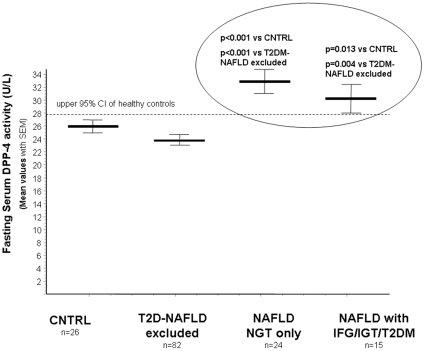
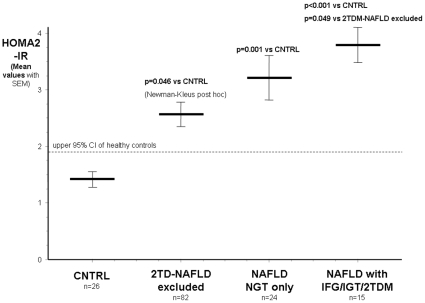
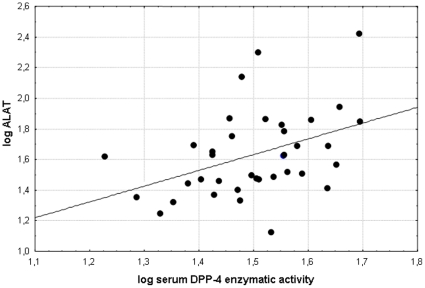
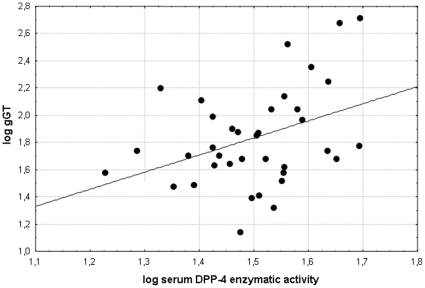
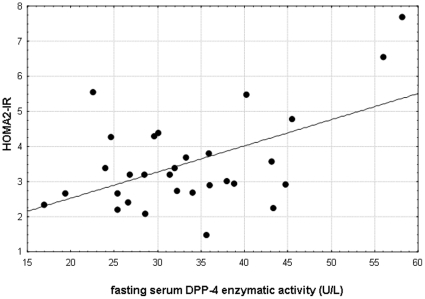
BACKGROUND: In a cross-sectional study we studied the fasting serum DPP-4 enzymatic activity (sDPP-4) and the insulin resistance index (HOMA2-IR) in gliptin naïve patients with type 2 diabetes and in non-alcoholic fatty liver disease (NAFLD) and in healthy controls (CNTRL). METHODS AND FINDINGS: sDPP-4 was measured by kinetic assay in 39 NAFLD (F/M:19/20, mean age: 47.42 yrs) and 82 type 2 diabetes (F/M:48/34, 62.8 yrs) patients and 26 (F/M:14/12, 35.3 yrs) controls. Definition of T2D group as patients with type 2 diabetes but without clinically obvious liver disease created non-overlapping study groups. Diagnosis of NAFLD was based on ultrasonography and the exclusion of other etiololgy. Patients in T2D and NAFLD groups were similarly obese. 75 g CH OGTT in 39 NAFLD patients: 24-NGT, 4-IGT or IFG ("prediabetes"), 11-type 2 diabetes. HOMA2-IR: CNTRL: 1.44; T2D-group: 2.62 (p = 0.046 vs CNTRL, parametric tests); NAFLD(NGTonly): 3.23 (p = 0.0013 vs CNTRL); NAFLD(IFG/IGT/type 2 diabetes): 3.82 (p<0.001 vs CNTRL, p = 0.049 vs 2TD group). sDPP-4 activity was higher in NAFLD both with NGT (mean:33.08U/L) and abnormal glucose metabolism (30.38U/L) than in CNTRL (25.89U/L, p<0.001 and p = 0.013) or in T2D groups (23.97U/L, p<0.001 and p = 0.004). Correlations in NAFLD among sDPP-4 and ALT: r = 0.4637,p = 0.0038 and gammaGT: r = 0.4991,p = 0.0017 and HOMA2-IR: r = 0.5295,p = 0.0026 and among HOMA2-IR and ALT: r = 0.4340,p = 0.0147 and gammaGT: r = 0.4128,p = 0.0210. CONCLUSIONS: The fasting serum DPP-4 activity was not increased in T2D provided that patients with liver disease were intentionally excluded. The high serum DPP-4 activities in NAFLD were correlated with liver tests but not with the fasting plasma glucose or HbA1C supporting that the excess is of hepatic origin and it might contribute to the speedup of metabolic deterioration. The correlation among gammaGT, ALT and serum DPP-4 activity and also between serum DPP-4 activity and HOMA2-IR in NAFLD strongly suggests that serum DPP-4 activity should be considered as a novel liver disease biomarker.
Overview
The claims and statistics of this paper haven’t been checked yet.
Free: it reads the open-access text and checks the first 5 claims that cite a source we can check. Create a free account to check every claim.
Integrity signals
Registry
Cites
Statistics
Figures
Verification
Claims the paper makes
The claims and statistics of this paper haven’t been checked yet.
Free: it reads the open-access text and checks the first 5 claims that cite a source we can check. Create a free account to check every claim.
Claims other papers make about this one
Each is checked against this paper’s own text: does it say what the citing paper says it does?
In the citing paper
“Moreover, serum DPP-4 activity and hepatic staining of DPP-4 are correlated with NASH grade but do not correlate with the fasting blood glucose concentration or glycosylated hemoglobin (HbA1c) [189,190].”
From Gut-pancreas-liver Axis as a target for treatment of NAFLD/NASH (2020) · cites this paper as [189]
Self-check
Percentages, sums and reported differences re-computed from the paper’s own numbers.
The self-check needs the paper’s full text.
Citations
Cites
Grundy, S. M., Bilheimer, D. W., Chait, A., Clark, L. T., Denke, M. A., Havel, R. J., Hazzard, W. R., Hulley, S. B., Hunninghake, D. B., Kreisberg, R. A., et al. (1993) · JAMA · doi:10.1001/jama.269.23.3015 · Cited by 27,947
Expert Panel on Detection, E. (2001) · JAMA: The Journal of the American Medical Association · doi:10.1001/jama.285.19.2486 · Cited by 26,011
Alberti, K. G. M. M., Eckel, R. H., Grundy, S. M., Zimmet, P. Z., Cleeman, J. I., Donato, K. A., Fruchart, J.-C., James, W. P. T., Loria, C. M., & Smith, S. C. (2009) · Circulation · doi:10.1161/circulationaha.109.192644 · Cited by 14,860
Use and Abuse of HOMA Modeling
Wallace, T. M., Levy, J. C., & Matthews, D. R. (2004) · Diabetes Care · doi:10.2337/diacare.27.6.1487 · Cited by 5,114 · cited 1×
“uk) due to the higher accuracy compared to the HOMA1 method.[13] Metabolic syndrome was both defined as proposed by the NCEP in ATPIII and as recently suggested by the AHA and IDF.”
MethodPrevalence of Hepatic Steatosis in An Urban Population in the United States: Impact of Ethnicity
Browning, J. D., Szczepaniak, L. S., Dobbins, R., Nuremberg, P., Horton, J. D., Cohen, J. C., Grundy, S. M., & Hobbs, H. H. (2004) · Hepatology · doi:10.1002/hep.20466 · Cited by 3,664 · cited 1×
“[5] The prevalence of fatty liver disease in a population based study was 34% over 90% of which was due to non-alcoholic causes (NAFLD) that is generally asymptomatic, frequently associated with obesity, type 2 diabetes and metabolic syndrome.[6,7]”
BackgroundAngulo, P., Hui, J. M., Marchesini, G., Bugianesi, E., George, J., Farrell, G. C., Enders, F., Saksena, S., Burt, A. D., Bida, J. P., et al. (2007) · Hepatology · doi:10.1002/hep.21496 · Cited by 3,203 · cited 1×
“Although only two out of 39 pts underwent liver biopsy that confirmed the clinical diagnosis and showed macrovesicular steatosis, we applied a non-invasive scoring system to evaluate fibrosis [12] and OGTT (75 gCH) to assess carbohydrate metabolism (except 9 patients with previously known diabetes) in NAFLD.”
MethodBedogni, G., Miglioli, L., Masutti, F., Tiribelli, C., Marchesini, G., & Bellentani, S. (2005) · Hepatology · doi:10.1002/hep.20734 · Cited by 1,263
Kieffer, T. J., McIntosh, C. H., & Pederson, R. A. (1995) · Endocrinology · doi:10.1210/endo.136.8.7628397 · Cited by 1,124
Tabák, A. G., Jokela, M., Akbaraly, T. N., Brunner, E. J., Kivimäki, M., & Witte, D. R. (2009) · The Lancet · doi:10.1016/s0140-6736(09)60619-x · Cited by 898 · cited 2×
“(Figure 5) As published recently by Tabak et al [20] using HOMA method the insulin sensitivity starts to decline earlier (based on his figuresapproximately 4 years before the diabetes onset) throughout the course in the development of type2 diabetes mellitus than the definitive impairment of the glucose tolerance.”
MethodCause-specific mortality in type 2 diabetes. The Verona Diabetes Study.
de Marco, R., Locatelli, F., Zoppini, G., Verlato, G., Bonora, E., & Muggeo, M. (1999) · Diabetes Care · doi:10.2337/diacare.22.5.756 · Cited by 405
Cited by
Metformin and the gastrointestinal tract
McCreight, L. J., Bailey, C. J., & Pearson, E. R. (2016) · Diabetologia · doi:10.1007/s00125-015-3844-9 · Cited by 733
“However, in vitro studies have yet to find a direct effect of metformin on the activity of DPP4 [58], suggesting that any effect of metformin on DPP4 activity may be indirect, possibly by influencing hepatic production of DPP4 [56, 64].”
BackgroundRöhrborn, D. (2015) · Frontiers in Immunology · doi:10.3389/fimmu.2015.00386 · Cited by 440
“Similarly, in patients with NAFLD, DPP4 activity in serum correlates with markers of liver damage, such as serum gamma-glutamyltranspeptidase and ALT levels, but do not correlate with fasting blood glucose levels and HbA1c values (156, 157).”
BackgroundPhysiology and Pharmacology of DPP-4 in Glucose Homeostasis and the Treatment of Type 2 Diabetes
Deacon, C. F. (2019) · Frontiers in Endocrinology · doi:10.3389/fendo.2019.00080 · Cited by 428
Treatment options for alcoholic and non-alcoholic fatty liver disease: A review
Singh, S., Osna, N. A., & Kharbanda, K. K. (2017) · World Journal of Gastroenterology · doi:10.3748/wjg.v23.i36.6549 · Cited by 257
Adipose Dipeptidyl Peptidase-4 and Obesity
Sell, H., Blüher, M., Klöting, N., Schlich, R., Willems, M., Ruppe, F., Knoefel, W. T., Dietrich, A., Fielding, B. A., Arner, P., et al. (2013) · Diabetes Care · doi:10.2337/dc13-0496 · Cited by 218
“Data from humans also indicate that the liver may be a primary source of DPP4 in addition to adipose tissue, because as patients with nonalcoholic fatty-liver disease (NAFLD) have higher circulating DPP4 activity than do controls (31).”
BackgroundJojima, T., Tomotsune, T., Iijima, T., Akimoto, K., Suzuki, K., & Aso, Y. (2016) · Diabetology & Metabolic Syndrome · doi:10.1186/s13098-016-0169-x · Cited by 202
“Non-alcoholic fatty liver disease (NAFLD) is now a common disease and has become a serious public health problem worldwide [1].”
BackgroundInfluentialNonalcoholic fatty liver disease as a metabolic disease in humans: A literature review
Cariou, B., Byrne, C. D., Loomba, R., & Sanyal, A. J. (2021) · Diabetes, Obesity and Metabolism · doi:10.1111/dom.14322 · Cited by 168
Circadian Rhythms in the Pathogenesis and Treatment of Fatty Liver Disease
Saran, A. R., Dave, S., & Zarrinpar, A. (2020) · Gastroenterology · doi:10.1053/j.gastro.2020.01.050 · Cited by 170
Dipeptidyl peptidase-4: A key player in chronic liver disease
Itou, M. (2013) · World Journal of Gastroenterology · doi:10.3748/wjg.v19.i15.2298 · Cited by 177
Elevated hepatic DPP4 activity promotes insulin resistance and non-alcoholic fatty liver disease
Baumeier, C., Schlüter, L., Saussenthaler, S., Laeger, T., Rödiger, M., Alaze, S. A., Fritsche, L., Häring, H.-U., Stefan, N., Fritsche, A., et al. (2017) · Molecular Metabolism · doi:10.1016/j.molmet.2017.07.016 · Cited by 159
“In line with this, human studies have shown associations of serum DPP4 with markers for liver damage (GGT and ALT) as well as hepatocyte fibrosis and apoptosis [12,35].”
Sitagliptin in patients with non-alcoholic steatohepatitis: A randomized, placebo-controlled trial
Joy, T. R., McKenzie, C. A., Tirona, R. G., Summers, K., Seney, S., Chakrabarti, S., Malhotra, N., & Beaton, M. D. (2017) · World Journal of Gastroenterology · doi:10.3748/wjg.v23.i1.141 · Cited by 152
Non-alcoholic fatty liver disease and type 2 diabetes mellitus: the liver disease of our age?
Firneisz, G. (2014) · PubMed · doi:10.3748/wjg.v20.i27.9072 · Cited by 147
Self-citationOhki, T., Isogawa, A., Iwamoto, M., Ohsugi, M., Yoshida, H., Toda, N., Tagawa, K., Omata, M., & Koike, K. (2012) · The Scientific World Journal · doi:10.1100/2012/496453 · Cited by 139
Miyazaki, M. (2011) · Molecular Medicine Reports · doi:10.3892/mmr.2011.707 · Cited by 134
“In patients with NAFLD, we found that hepatic DPP4 expression was negatively correlated with HOMA-IR, which was inconsistent with that of a previous report showing a positive correlation between serum DPP4 activity and HOMA2-IR in NAFLD patients (20).”
BackgroundResultInfluentialCD26/DPP4 Levels in Peripheral Blood and T Cells in Patients With Type 2 Diabetes Mellitus
Lee, S. A., Kim, Y. R., Yang, E. J., Kwon, E.-J., Kim, S. H., Kang, S. H., Park, D. B., Oh, B.-C., Kim, J., Heo, S. T., et al. (2013) · The Journal of Clinical Endocrinology & Metabolism · doi:10.1210/jc.2012-4288 · Cited by 116
“Additionally, in agreement with a previous report (35), our results suggest that fatty liver disease seems to be related to the increase in serum CD26/DPP4 activity in patients with T2DM, after adjustment for multiple factors.”
ResultGestational Diabetes Mellitus and Cardiovascular Risk after Pregnancy
Harreiter, J., Dovjak, G., & Kautzky-Willer, A. (2014) · Women's Health · doi:10.2217/whe.13.69 · Cited by 106
Aso, Y., Kato, K., Sakurai, S., Kishi, H., Shimizu, M., Jojima, T., Iijima, T., Maejima, Y., Shimomura, K., & Usui, I. (2019) · International Journal of Clinical Practice · doi:10.1111/ijcp.13335 · Cited by 96
Dipeptidyl peptidase-4 inhibitors: Novel mechanism of actions
Singh, A. K. (2014) · Indian Journal of Endocrinology and Metabolism · doi:10.4103/2230-8210.141319 · Cited by 101
Seghieri, M., Christensen, A. S., Andersen, A., Solini, A., Knop, F. K., & Vilsbøll, T. (2018) · Frontiers in Endocrinology · doi:10.3389/fendo.2018.00649 · Cited by 92
“It has been suggested that patients with NAFLD have lower concentrations of biologically active incretin hormones compared to healthy individuals, which may be a consequence of an increased degradation by dipeptidyl peptidase 4 (DPP-4) (the enzyme, which under normal conditions inactivates the incretin hormones) (29)…”
BackgroundHepatic DPP4 DNA Methylation Associates With Fatty Liver
Baumeier, C., Saussenthaler, S., Kammel, A., Jähnert, M., Schlüter, L., Hesse, D., Canouil, M., Lobbens, S., Caiazzo, R. J., Raverdy, V., et al. (2016) · Diabetes · doi:10.2337/db15-1716 · Cited by 89
“such as g-glutamyl transferase and alanine aminotransferase, with serum DPP4 levels (14), together with the increased hepatic expression of DPP4 in patients with hepatosteatosis, suggest that increased circulating DPP4 in NAFLD patients is of hepatic origin (15).”
BackgroundDipeptidyl Peptidase-4 Regulation of SDF-1/CXCR4 Axis: Implications for Cardiovascular Disease
Zhong, J., & Rajagopalan, S. (2015) · Frontiers in Immunology · doi:10.3389/fimmu.2015.00477 · Cited by 83
“Mediates MERS-CoV infection in the lung (21), kidney fibrosis (22) , diabetic nephropathy (23), intestinal growth (24) Hepatocytes Involved in lipogenesis (25) and liver damage (26) as monocytes differentiate into antigen-presenting cells as well as during T cell activation (12, 13) .”
BackgroundMolecular Interactions between NAFLD and Xenobiotic Metabolism
Naik, A., Belič, A., Zanger, U. M., & Rozman, D. (2013) · Frontiers in Genetics · doi:10.3389/fgene.2013.00002 · Cited by 72
“T2D patients with NAFLD have increased serum DPP-4 activity, an enzyme that inhibits incretins such as glucagon-like peptide 1 (GLP-1), and thus, reduced efficacy of sitagliptin (Firneisz et al., 2010; Iwasaki et al., 2012).”
BackgroundAroor, A. R., Habibi, J., Ford, D. A., Nistala, R., Lastra, G., Manrique, C., Dunham, M. M., Ford, K. D., Thyfault, J. P., Parks, E. J., et al. (2015) · Diabetes · doi:10.2337/db14-0804 · Cited by 76
“Plasma DPP-4 activity and expression of DPP-4 on various inflammation-promoting immune cells is increased in obesity and diabetes, raising the possibility that DPP-4 inhibition may reduce systemic and tissue inflammation (9,10).”
BackgroundAso, Y., Ozeki, N., Terasawa, T., Naruse, R., Hara, K., Suetsugu, M., Takebayashi, K., Shibazaki, M., Haruki, K., Morita, K., et al. (2011) · Translational research · doi:10.1016/j.trsl.2011.09.005 · Cited by 83
“A previous study showed that serum DPP4 activity is significantly higher in patients with nonalcoholic steatohepatitis (NASH) or nonalcoholic fatty liver disease (NAFLD) than in healthy control subjects.(27,28) This study showed a positive correlation between GGT and the change of HbA1c at 16 weeks from baseline in ou…”
BackgroundAlam, S., Ghosh, J., Mustafa, G., Kamal, M., & Ahmad, N. (2018) · Hepatic Medicine: Evidence and Research · doi:10.2147/hmer.s158053 · Cited by 72
Hwang, H.-J., Jung, T. W., Kim, B.-H., Hong, H. C., Seo, J. A., Kim, S. G., Kim, N. H., Choi, K. M., Choi, D. S., Baik, S. H., et al. (2015) · Biochemical Pharmacology · doi:10.1016/j.bcp.2015.08.098 · Cited by 72
Sitagliptin attenuates methionine/choline-deficient diet-induced steatohepatitis
Jung, Y., Choi, Y., Jung, G., Seo, H.-Y., Kim, H., Jang, B. K., Kim, J., Lee, I., Kim, M. K., & Park, K. (2014) · Diabetes Research and Clinical Practice · doi:10.1016/j.diabres.2014.04.028 · Cited by 77
“[13] Firneisz G, Varga T, Lengyel G, Feher J, Ghyczy D, Wichmann B, et al.”
BackgroundZou, L., Wang, P., Qian, X., Feng, L., Yu, Y., Wang, D., Jin, Q., Hou, J., Liu, Z., Ge, G., et al. (2016) · Biosensors and Bioelectronics · doi:10.1016/j.bios.2016.11.068 · Cited by 71
“…presence or altered level of DPP-IV in plasma can serve as a potential biomarker for early diagnosis and prognosis evaluation of many diseases, including cholestasis, non-alcoholic fatty liver disease and lung diseases (Perner et al., 1999; Firneisz et al., 2010; Sánchez-Otero et al., 2014).”
BackgroundWu, T., Thazhath, S. S., Bound, M. J., Jones, K. L., Horowitz, M., & Rayner, C. K. (2014) · Diabetes Research and Clinical Practice · doi:10.1016/j.diabres.2014.08.004 · Cited by 74
“[15] Firneisz G, Varga T, Lengyel G, Feher J, Ghyczy D, Wichmann B, et al.”
BackgroundResultGut-pancreas-liver Axis as a target for treatment of NAFLD/NASH
Svegliati-Baroni, G., Patrício, B., Lioci, G., Macedo, M. P., & Gastaldelli, A. (2020) · International Journal of Molecular Sciences · doi:10.3390/ijms21165820 · Cited by 66
Dipeptidyl Peptidase 4 (DPP4) as A Novel Adipokine: Role in Metabolism and Fat Homeostasis
Barchetta, I., Cimini, F. A., Dule, S., & Cavallo, M. G. (2022) · Biomedicines · doi:10.3390/biomedicines10092306 · Cited by 55
Qin, C., Zhao, L., Zhou, X., Zhang, H., Wen, W., Tang, L. V., Zeng, M., Wang, M.-D., Fu, G., Huang, S., et al. (2018) · Cancer Letters · doi:10.1016/j.canlet.2018.01.064 · Cited by 61
Liu, T., Ning, J., Wang, B., Dong, B., Li, S., Tian, X., Yu, Z., Peng, Y., Wang, C., Zhao, X., et al. (2018) · Analytical Chemistry · doi:10.1021/acs.analchem.7b04957 · Cited by 58
DPP-4 inhibitors in diabetic complications: role of DPP-4 beyond glucose control
Bae, E. J. (2016) · Archives of Pharmacal Research · doi:10.1007/s12272-016-0813-x · Cited by 62
“…experiments, in that DPP-4 activity in the serum and liver specimens correlates with the markers of liver damage, such as serum c-glutamyl transferase and alanine aminotransferase levels, but does not correlate with the fasting blood glucose concentrations and HbA1c levels (Firneisz et al. 2010).”
BackgroundFadini, G. P., Albiero, M., Menegazzo, L., de Kreutzenberg, S. V., & Avogaro, A. (2011) · Diabetes Obesity and Metabolism · doi:10.1111/j.1463-1326.2011.01550.x · Cited by 65
“[5] linked increased DPP-4 activity to the presence of NAFLD and it was found to correlate with liver enzymes and homeostasis model assessment - insulin resistance (HOMA-IR).”
BackgroundResultInfluentialDuvnjak, L. S., & Blaslov, K. (2016) · Diabetology & Metabolic Syndrome · doi:10.1186/s13098-016-0144-6 · Cited by 56
“, DPP-4 was recently proposed as a novel adipokine linking obesity to metabolic syndrome (MS) [45–47].”
BackgroundTsai, M.-T., Chen, Y.-J., Chen, C., Tsai, M., Han, C., Chen, Y., Mersmann, H. J., & Ding, S. (2017) · Journal of Nutrition · doi:10.3945/jn.116.240358 · Cited by 61
Williams, K., de Ribeiro, A. J. V., Prakoso, E., Veillard, A., Shackel, N. A., Brooks, B. A., Bu, Y., Cavanagh, E., Raleigh, J., McLennan, S. V., et al. (2014) · Journal of Diabetes · doi:10.1111/1753-0407.12237 · Cited by 53
“In NAFLD, serum DPP4 activity has been correlated with insulin resistance (HOMA-IR), liver transaminases and extent of hepatic steatosis and a collective score of NASH pathology graded by intensity of inflammation, hepatosteatosis and ballooning degeneration on liver biopsy.(5,8,35) We found no association of cDPP4 ac…”
BackgroundHigher Serum DPP-4 Enzyme Activity and Decreased Lymphocyte CD26 Expression in Type 1 Diabetes
Varga, T., Somogyi, A., Barna, G., Wichmann, B., Nagy, G., Rácz, K., Selmeci, L., & Firneisz, G. (2011) · Pathology & Oncology Research · doi:10.1007/s12253-011-9404-9 · Cited by 52
“[16])”
BackgroundResultInfluentialSelf-citationLiu, Y. (2014) · World Journal of Gastroenterology · doi:10.3748/wjg.v20.i27.9090 · Cited by 49
Sarkar, J., Nargis, T., Tantia, O., Ghosh, S. K., & Chakrabarti, P. (2019) · Frontiers in Endocrinology · doi:10.3389/fendo.2019.00505 · Cited by 49
Johansson, L., Hockings, P. D., Johnsson, E., Dronamraju, N., Maaske, J., Garcia‐Sanchez, R., & Wilding, J. P. H. (2020) · Diabetes, Obesity and Metabolism · doi:10.1111/dom.14004 · Cited by 41
Managing diabetes and liver disease association
Hamed, A. E., Elsahhar, M., Elwan, N. M., El-Nakeep, S. A. K., Naguib, M., Soliman, H. H., Aboubakr, A. A., Sholkamy, A. A., Sedrak, H. K., Assaad, S. N., et al. (2018) · Arab Journal of Gastroenterology · doi:10.1016/j.ajg.2018.08.003 · Cited by 47
Tsai, M.-T., Chen, C., Pan, Y., Wang, S.-H., Mersmann, H. J., & Ding, S. (2015) · Evidence-based Complementary and Alternative Medicine · doi:10.1155/2015/725379 · Cited by 42
Incretin based therapies: A novel treatment approach for non-alcoholic fatty liver disease
Blaslov, K. (2014) · World Journal of Gastroenterology · doi:10.3748/wjg.v20.i23.7356 · Cited by 38
Barchetta, I., Ceccarelli, V., Cimini, F. A., Barone, E., Sentinelli, F., Coluzzi, M., Chiappetta, C., Bertoccini, L., Tramutola, A., Labbadia, G., et al. (2020) · Journal of Endocrinological Investigation · doi:10.1007/s40618-020-01392-5 · Cited by 38
Incretin response in Asian type 2 diabetes: Are Indians different?
Singh, A. K. (2014) · Indian Journal of Endocrinology and Metabolism · doi:10.4103/2230-8210.146861 · Cited by 39
Clinical implications, diagnosis, and management of diabetes in patients with chronic liver diseases
Chung, W., Promrat, K., & Wands, J. R. (2020) · World Journal of Hepatology · doi:10.4254/wjh.v12.i9.533 · Cited by 36
Saxagliptin regulates M1/M2 macrophage polarization via CaMKKβ/AMPK pathway to attenuate NAFLD
Yang, Y., Lu, Y., Han, F., Chang, Y., Li, X., Han, Z., Xue, M., Cheng, Y., Sun, B., & Chen, L. (2018) · Biochemical and Biophysical Research Communications · doi:10.1016/j.bbrc.2018.07.090 · Cited by 36
Hussain, M., Babar, M. Z. M., Hussain, M. S., & Akhtar, L. (2016) · Pakistan Journal of Medical Sciences · doi:10.12669/pjms.326.11133 · Cited by 41
Potential Effect of DPP-4 Inhibitors Towards Hepatic Diseases and Associated Glucose Intolerance
Sharma, A., Virmani, T., Sharma, A., Chhabra, V., Kumar, G., Pathak, K., & Alhalmi, A. (2022) · Diabetes Metabolic Syndrome and Obesity · doi:10.2147/dmso.s369712 · Cited by 37
“As a result, hepatic DPP-4 expression in NAFLD could be linked to hepatic lipogenesis and liver damage.(133,134) In humans and rodents, a DPP-4 inhibitor has been shown to ameliorate hepatic steatosis.”
BackgroundDipeptidyl Peptidase-4 Inhibitors: A Systematic Review of Structure-Activity Relationship Studies
Bayanati, M., Rabbani, M. I. M., Kabiri, S. S., Sadegh, B. M. M., Rezaee, E., & Tabatabai, S. A. (2024) · Iranian journal of pharmaceutical research · doi:10.5812/ijpr-151581 · Cited by 37
“Importantly, sDPP-4 levels do not correlate with fasting blood glucose levels (67, 68).”
Chameroy, K. A., Frank, N., Elliott, S. B., & Boston, R. C. (2016) · Journal of Equine Veterinary Science · doi:10.1016/j.jevs.2016.01.009 · Cited by 36
Dietrich, C. G., Rau, M., Jahn, D., & Geier, A. (2017) · Expert Opinion on Drug Metabolism & Toxicology · doi:10.1080/17425255.2017.1314461 · Cited by 31
“Of interest for this class of antidiabetics as well as for the dipeptidylpeptidase (DPP)-4 inhibitors, serum DPP-4 activity was significantly elevated in NAFLD patients but not in patients with type 2 diabetes [110].”
BackgroundDipeptidyl peptidase-4 (DPP-4): Localization and activity in human and rodent islets
Liu, L., Omar, B. A., Marchetti, P., & Åhrén, B. (2014) · Biochemical and Biophysical Research Communications · doi:10.1016/j.bbrc.2014.09.096 · Cited by 33
Sinnathurai, P., Lau, W., de Ribeiro, A. J. V., Bachovchin, W. W., Englert, H., Howe, G. B., Spencer, D. G., Manolios, N., & Gorrell, M. D. (2016) · International Journal of Rheumatic Diseases · doi:10.1111/1756-185x.13031 · Cited by 28
Ahmed, R. H., Huri, H. Z., Al-Hamodi, Z. H., Salem, S. D., & Muniandy, S. (2015) · PLoS ONE · doi:10.1371/journal.pone.0140618 · Cited by 29
Significant elevation of serum dipeptidyl peptidase-4 activity in young-adult type 1 diabetes
Osawa, S., Kawamori, D., Katakami, N., Takahara, M., Sakamoto, F., Katsura, T., Yasuda, T., Kaneto, H., Matsuhisa, M., Matsuoka, T., et al. (2016) · Diabetes Research and Clinical Practice · doi:10.1016/j.diabres.2015.12.022 · Cited by 28
“[32] Firneisz G, Varga T, Lengyel G, Feher J, Ghyczy D, Wichmann B, et al.”
BackgroundAso, Y., Terasawa, T., Kato, K., Jojima, T., Suzuki, K., Iijima, T., Kawagoe, Y., Mikami, S., Kubota, Y., Inukai, T., et al. (2013) · Translational research · doi:10.1016/j.trsl.2013.07.011 · Cited by 27
Kan, H., Hyogo, H., Ochi, H., Hotta, K., Fukuhara, T., Kobayashi, T., Naeshiro, N., Honda, Y., Kawaoka, T., Tsuge, M., et al. (2015) · Hepatology Research · doi:10.1111/hepr.12552 · Cited by 26
Rohmann, N., Schlicht, K., Geisler, C., Hollstein, T., Knappe, C., Krause, L., Hagen, S., Beckmann, A., Seoudy, A. K., Wietzke, P., et al. (2020) · The Journal of Clinical Endocrinology & Metabolism · doi:10.1210/clinem/dgaa758 · Cited by 27
Asakawa, M., Mitsui, H., Akihisa, M., Sekine, T., Niitsu, Y., Kobayashi, A., Miyake, A., Hashimoto, N., Kawamura, M., & Ogawa, Y. (2015) · SpringerPlus · doi:10.1186/s40064-015-1135-z · Cited by 26
Valério, C. M., de Almeida, J. S., Moreira, R. O., Aguiar, L. B. S., Siciliano, P. D. O., de Carvalho, D. P., & Godoy‐Matos, A. F. (2017) · Diabetology & Metabolic Syndrome · doi:10.1186/s13098-017-0226-0 · Cited by 25
“[16] confirmed the increased activity of DPP4 in non-diabetic and diabetic patients with fatty liver disease.”
Zheng, T., Chen, B., Yang, L., Hu, X., Zhang, X., Liu, H., & Qin, L. (2017) · Metabolism · doi:10.1016/j.metabol.2017.04.012 · Cited by 23
Anti-diabetic drugs and NASH: from current options to promising perspectives
Smati, S., Canivet, C. M., Boursier, J., & Cariou, B. (2021) · Expert Opinion on Investigational Drugs · doi:10.1080/13543784.2021.1951701 · Cited by 22
Anoop, S., Misra, A., Bhatt, S. P., Gulati, S., Pandey, R. M., & Mahajan, H. (2017) · BMJ Open Diabetes Research & Care · doi:10.1136/bmjdrc-2017-000393 · Cited by 22
Dipeptidyl peptidase-4 activity is associated with urine albumin excretion in type 1 diabetes
Duvnjak, L. S., Perković, M. N., & Blaslov, K. (2016) · Journal of Diabetes and its Complications · doi:10.1016/j.jdiacomp.2016.08.022 · Cited by 20
Emerging Links between Nonalcoholic Fatty Liver Disease and Neurodegeneration
Kelty, T. J., Dashek, R. J., Arnold, W. D., & Rector, R. S. (2023) · Seminars in Liver Disease · doi:10.1055/s-0043-1762585 · Cited by 21
The metabolic syndrome influences the response to incretin-based therapies
Fadini, G. P., de Kreutzenberg, S. V., Gjini, R., & Avogaro, A. (2011) · Acta Diabetologica · doi:10.1007/s00592-011-0296-7 · Cited by 20
“alcoholic fatty liver disease [25] and obesity [26, 27], both of which are features of MS and insulin resistance.”
Duvnjak, L. S., Blaslov, K., Lovrenčić, M. V., & Čuča, J. K. (2016) · Diabetes Research and Clinical Practice · doi:10.1016/j.diabres.2016.09.013 · Cited by 19
“DPP-4 is the lymphocyte cell surface protein CD26, critical in T-cell biology as a marker of Tcell activation [24,26].”
BackgroundSakai, Y., Chen, G., Ni, Y., Zhuge, F., Xu, L., Nagata, N., Kaneko, S., Ota, T., & Nagashimada, M. (2020) · Endocrinology · doi:10.1210/endocr/bqaa139 · Cited by 20
Nádasdi, Á., Sinkovits, G., Bobek, I., Lakatos, B., Förhécz, Z., Prohászka, Z. Z., Réti, M., Arató, M., Cseh, G., Masszi, T., et al. (2022) · Biomarkers in Medicine · doi:10.2217/bmm-2021-0717 · Cited by 18
“Because non-alcoholic fatty liver disease (NAFLD) is highly prevalent in obesity and T2DM, which are established risk factors for severe clinical COVID-19 disease course [13], and higher serum DPP4 enzymatic activity has been reported in patients with NAFLD [14], we hypothesized that circulating DPP4 activity might be…”
BackgroundSelf-citationFurusawa, S., Nomoto, H., Yokoyama, H., Suzuki, Y., Tsuzuki, A., Takahashi, K., Miya, A., Kameda, H., Cho, K. Y., Takeuchi, J., et al. (2023) · Diabetes Obesity and Metabolism · doi:10.1111/dom.15393 · Cited by 19
“30 Insulin resistance in the liver may be present if glycaemic control is inadequate despite the use of DPP-4is.”
BackgroundChallenges in diagnosing and monitoring diabetes in patients with chronic liver diseases
Silva, T. E., Ronsoni, M. F., & Schiavon, L. D. L. (2017) · Diabetes & Metabolic Syndrome Clinical Research & Reviews · doi:10.1016/j.dsx.2017.12.013 · Cited by 17
Omolekulo, T. E., Michael, O. S., & Olatunji, L. A. (2018) · Biomedicine & Pharmacotherapy · doi:10.1016/j.biopha.2018.12.036 · Cited by 18
Gomez‐Cardona, E., Hernández-Domínguez, E. E., Velarde‐Salcedo, A. J., Pacheco, A.-B., Diaz-Gois, A., León‐Rodríguez, A. D., & de la Rosa, A. P. B. (2017) · Scientific Reports · doi:10.1038/srep46536 · Cited by 17
Blaslov, K., Bulum, T., & Duvnjak, L. S. (2015) · Medical Hypotheses · doi:10.1016/j.mehy.2015.03.007 · Cited by 14
“The results of recent experimental studies suggest an increased expression of DPP-4 in adipocytes of visceral fat and increased serum enzymes in patients with IR and T2DM [39,40].”
ResultGliptin therapy reduces hepatic and myocardial fat in type 2 diabetic patients
Kosi‐Trebotic, L., Thomas, A., Harreiter, J., Chmelík, M., Trattnig, S., & Kautzky‐Willer, A. (2017) · European Journal of Clinical Investigation · doi:10.1111/eci.12817 · Cited by 15
Sagara, M., Iijima, T., Kase, M., Kato, K., Sakurai, S., Tomaru, T., Jojima, T., Usui, I., & Aso, Y. (2021) · Journal of Diabetes and its Complications · doi:10.1016/j.jdiacomp.2021.107885 · Cited by 15
Elucidating the pathogenesis of adenosine deaminase 2 deficiency: current status and unmet needs
Tarrant, T. K., Kelly, S. J., & Hershfield, M. S. (2021) · Expert Opinion on Orphan Drugs · doi:10.1080/21678707.2021.2050367 · Cited by 15
Nem alkoholos zsírmájbetegség – a 2016. évi közös EASL–EASD–EASO klinikai ajánlás fényében
Nádasdi, Á., Somogyi, A., Igaz, P., & Firneisz, G. (2018) · Orvosi Hetilap · doi:10.1556/650.2018.31231 · Cited by 16
“Ajánlás [3] – „NAFLD-betegekben kötelező a diabetes szűrése éhomi vagy random vércukor- vagy HbA1c-értékmeghatározással (A1), és amennyiben elérhető, a standard 75 g OGTT- (orális glükóztolerancia-teszt) vizsgálattal a magas kockázatú csoportokban (B1).””
BackgroundInfluentialSelf-citationElevated liver enzymes are related to progression to impaired glucose tolerance in Japanese men
Oka, R., Aizawa, T., Yagi, K., Hayashi, K., Kawashiri, M., & Yamagishi, M. (2013) · Diabetic Medicine · doi:10.1111/dme.12345 · Cited by 12
Blaslov, K., Bulum, T., & Duvnjak, L. S. (2015) · Journal of Diabetes and its Complications · doi:10.1016/j.jdiacomp.2014.12.019 · Cited by 11
“) [16] determined serum DPP4 activity at fasting sate and after test meal in 41 T1DM, 87 T2DM patients and in 25 healthy volunteers.”
BackgroundMethodCord serum dipeptidyl‐peptidase 4 activity in gestational diabetes
Al‐Aissa, Z., Rosta, K., Hadarits, O., Harreiter, J., Zóka, A., Bancher‐Todesca, D., Patócs, A., Kiss, K., Sármán, B., Pusztai, P., et al. (2015) · European Journal of Clinical Investigation · doi:10.1111/eci.12397 · Cited by 11
Self-citationLi, J., Ma, M., Li, J., Xu, L., Song, D., Ma, P., & Fei, Q. (2023) · Analytical Chemistry · doi:10.1021/acs.analchem.3c02909 · Cited by 10
Kahraman, S., Altınova, A. E., Elgün, S., Yalçın, M. M., Yılmaz, B. A., Özkan, Ç., Aktürk, M., & Törüner, F. B. (2019) · Gynecological Endocrinology · doi:10.1080/09513590.2019.1581165 · Cited by 9
Effect of Saxagliptin, a Dipeptidyl Peptidase 4 Inhibitor, on Non-Alcoholic Fatty Liver Disease
Chen, L., Zhang, X., Zhang, L. R., & Zheng, D. (2020) · Diabetes Metabolic Syndrome and Obesity · doi:10.2147/dmso.s262284 · Cited by 9
Non-alcoholic fatty liver disease: time for changes
Yefimenko, T. I., & Mykytyuk, M. (2021) · INTERNATIONAL JOURNAL OF ENDOCRINOLOGY (Ukraine) · doi:10.22141/2224-0721.17.4.2021.237350 · Cited by 8
Duvnjak, L. S., Blaslov, K., Perković, M. N., & Čuča, J. K. (2016) · Endocrine · doi:10.1007/s12020-016-0899-4 · Cited by 7
Prognostic value of plasma DPP4 activity in ST-elevation myocardial infarction
Li, J., Chen, Y., Chen, W.-R., You, Q., Li, B., Zhou, H., Zhang, Y., & Han, T. (2017) · Cardiovascular Diabetology · doi:10.1186/s12933-017-0553-3 · Cited by 7
“These data support the hypothesis that DPP4 serum enzymatic activity originates from the liver and is linked to insulin resistance [25, 28].”
BackgroundLi, C., Zhao, L., Zhou, X., Wu, H., & Zhao, J. (2015) · Journal of Huazhong University of Science and Technology [Medical Sciences] · doi:10.1007/s11596-015-1433-2 · Cited by 9
Shinozaki, S., Tahara, T., Miura, K., Lefor, A. K., & Yamamoto, H. (2023) · Life · doi:10.3390/life13061327 · Cited by 6
“DPP-4 is expressed in the liver, and serum DPP-4 activity is elevated in NAFLD subjects compared to healthy controls [44].”
BackgroundOmolekulo, T. E., Michael, O. S., & Olatunji, L. A. (2018) · Naunyn-Schmiedeberg s Archives of Pharmacology · doi:10.1007/s00210-018-1569-2 · Cited by 6
Thioamide-based fluorescent sensors for dipeptidyl peptidase 4
Phan, H. A. T., Chang, Y., Eaton, S. A., & Petersson, E. J. (2024) · Chemical Communications · doi:10.1039/d4cc03309d · Cited by 5
Lee, J. Y., Jang, B. K., Song, M. K., Kim, H. S., & Kim, M. K. (2017) · Journal of Obesity & Metabolic Syndrome · doi:10.7570/jomes.2017.26.3.188 · Cited by 5
Zhou, H., Shi, T., Yan, J., Chen, X., Liao, L., Zhao, S., Fang, H., & Zhuang, R. (2017) · Experimental and Therapeutic Medicine · doi:10.3892/etm.2017.5128 · Cited by 5
“These findings suggest that ACNAC may have the effect of a DPPIV inhibitor in the treat-ment of NAFLD in young rats, which provides novel rationale for the use of NAC in studies of NAFLD/non-alcoholic steato-hepatitis in young rats, and provides theoretical knowledge for ideal pharmaceutical preparations for infants a…”
InfluentialOka, R., Yagi, K., Nakanishi, C., Konno, T., Kawashiri, M., Hayashi, K., Nohara, A., Inazu, A., & Yamagishi, M. (2014) · Journal of Atherosclerosis and Thrombosis · doi:10.5551/jat.21790 · Cited by 6
Firneisz, G., & Somogyi, A. (2012) · Translational research · doi:10.1016/j.trsl.2012.01.016 · Cited by 5
Self-citationBlaslov, K., Bulum, T., Knežević-Ćuća, J., & Duvnjak, L. S. (2014) · Clinical Biochemistry · doi:10.1016/j.clinbiochem.2014.10.006 · Cited by 4
“Itmight confirm that a part of DPP4 serum enzymatic activity originates from liver and that it is linked to IR as recently suggested by Firneisz et al. (2010) [19].”
BackgroundYamauchi, M., Tsuchiya, T., Takebayashi, K., Inukai, T., & Hashimoto, K. (2021) · Diabetology International · doi:10.1007/s13340-020-00485-z · Cited by 5
“A meta regression analysis also showed that the baseline BMI is significantly correlated with the HbA1c lowering efficacy of DPP-4 inhibitors [28], because obese patients should be under a situation with NAFLD or NASH, thereby with possibly high circulating DPP-4/ sCD26 concentrations.”
Background
Metadata
- Authors
- Firneisz, G., Varga, T., Lengyel, G., Fehér, J., Ghyczy, D., Wichmann, B., Selmeci, L., Tulassay, Z., Rácz, K., & Somogyi, A.
- Affiliations
- Semmelweis University (HU)
- Corresponding author
- Firneisz, Gábor
- Venue
- PLoS ONE
- Publisher
- Public Library of Science (PLoS)
- Published
- 2010-08-18
- Volume
- 5
- Issue
- 8
- Pages
- e12226
- ISSN
- 1932-6203 (ISSN-L)
- PMC
- PMC2923594
- OpenAlex
- W2012528744
- Cited by
- 121
- References
- 25
- Citations by year
- 2026: 3 · 2025: 2 · 2024: 4 · 2023: 4 · 2022: 6 · 2021: 7 · 2020: 8 · 2019: 4 · 2018: 11 · 2017: 15 · 2016: 15 · 2015: 12 · 2014: 12 · 2013: 8 · 2012: 3
- FWCI
- 4.20
- Type
- journal article
- Language
- en
- Open access
- gold
- doi.org
- Locations
- PLoS ONE (publishedVersion, cc-by)
- PubMed Central (publishedVersion, cc-by)
- PubMed (publishedVersion)
- DOAJ (DOAJ: Directory of Open Access Journals) (submittedVersion, cc-by-sa)
- Semmelweis University Repository (Semmelweis University) (submittedVersion)
- Funders
- Magyar Diabetes Társaság
- Hungarian Scientific Research Fund
- Topics
- Health Sciences › Medicine › Hepatology › Liver Disease Diagnosis and Treatment
- Life Sciences › Biochemistry, Genetics and Molecular Biology › Biochemistry › Peptidase Inhibition and Analysis
- Health Sciences › Medicine › Endocrinology, Diabetes and Metabolism › Diabetes Treatment and Management
- Keywords
- dipeptidyl peptidase IV, non-alcoholic fatty liver disease, insulin resistance, type 2 diabetes, HOMA-IR, liver disease biomarkers, alanine aminotransferase, gamma-glutamyl transferase, prediabetes, insulin resistance index, hepatic steatosis, liver fibrosis
- MeSH terms
- Adult, Aged, Diabetes Mellitus, Type 2, Fasting, Fatty Liver, Female, Humans, Insulin Resistance, Liver, Male, Middle Aged, Obesity, Biomarkers, Logistic Models, Case-Control Studies, Dipeptidyl Peptidase 4
About these checks
Registry, retraction, Cites and statistics results are computed, not judged, with one exception: a printed reference that no index lists is read once by a model before it counts as a citation error. Claims are extracted by a model and kept only when their quote appears verbatim in the text; each cited source is then checked, with a model’s help, for whether it says what the claim relies on. Those verdicts can be wrong — read the claim’s quote and the cited source before relying on one.
Statistics and arithmetic are recomputed, not judged.
Confidence bands are shown only for fields calibrated on our annotated test set. None is calibrated yet, so no band is shown.
What counts as a claim ›How we measure confidence ›How we check this ›
Are you an author, or do you see a problem with this page? Request a review
Data sources
Bibliographic data: Semantic Scholar, OpenAlex, Crossref.
Contains information from the Semantic Scholar Academic Graph Datasets, made available under the ODC Attribution License (ODC-BY 1.0).
Semantic Scholar’s data is described in: Kinney, R., et al. (2023). The Semantic Scholar Open Data Platform. arXiv:2301.10140.
