

Differences in muscle and adipose tissue gene expression and cardio-metabolic risk factors in the members of physical activity discordant twin pairs.
Open accessThe DOI matches its Crossref record; 41 of the 41 references it cites were found in a registry or an index.
Abstract
High physical activity/aerobic fitness predicts low morbidity and mortality. Our aim was to identify the most up-regulated gene sets related to long-term physical activity vs. inactivity in skeletal muscle and adipose tissues and to obtain further information about their link with cardio-metabolic risk factors. We studied ten same-sex twin pairs (age range 50-74 years) who had been discordant for leisure-time physical activity for 30 years. The examinations included biopsies from m. vastus lateralis and abdominal subcutaneous adipose tissue. RNA was analyzed with the genome-wide Illumina Human WG-6 v3.0 Expression BeadChip. For pathway analysis we used Gene Set Enrichment Analysis utilizing active vs. inactive co-twin gene expression ratios. Our findings showed that among the physically active members of twin pairs, as compared to their inactive co-twins, gene expression in the muscle tissue samples was chronically up-regulated for the central pathways related to energy metabolism, including oxidative phosphorylation, lipid metabolism and supportive metabolic pathways. Up-regulation of these pathways was associated in particular with aerobic fitness and high HDL cholesterol levels. In fat tissue we found physical activity-associated increases in the expression of polyunsaturated fatty acid metabolism and branched-chain amino acid degradation gene sets both of which associated with decreased 'high-risk' ectopic body fat and plasma glucose levels. Consistent with other findings, plasma lipidomics analysis showed up-regulation of the triacylglycerols containing the polyunsaturated fatty acids. Our findings identified skeletal muscle and fat tissue pathways which are associated with the long-term physical activity and reduced cardio-metabolic disease risk, including increased aerobic fitness. In particular, improved skeletal muscle oxidative energy and lipid metabolism as well as changes in adipocyte function and redistribution of body fat are associated with reduced cardio-metabolic risk.
Overview
The claims and statistics of this paper haven’t been checked yet.
Free: it reads the open-access text and checks the first 5 claims that cite a source we can check. Create a free account to check every claim.
Integrity signals
Registry
Cites
Statistics
Figures
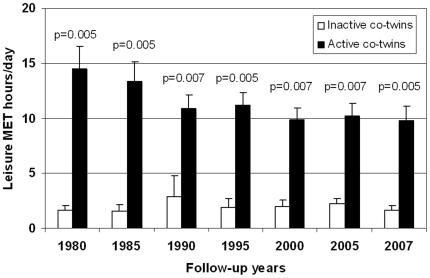
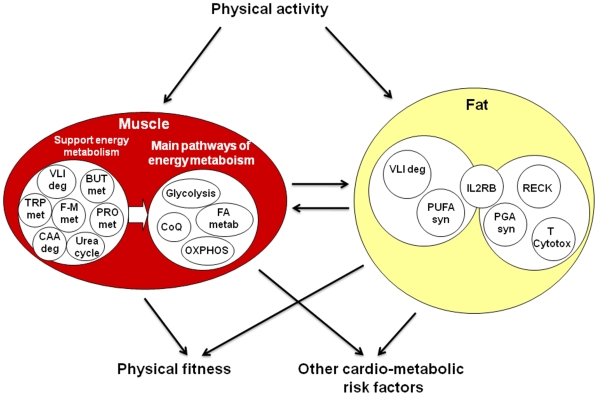
Verification
Claims the paper makes
The claims and statistics of this paper haven’t been checked yet.
Free: it reads the open-access text and checks the first 5 claims that cite a source we can check. Create a free account to check every claim.
Claims other papers make about this one
Each is checked against this paper’s own text: does it say what the citing paper says it does?
The cited source says what the claim attributes to it.
In the citing paper
“Leskinen et al. (2010) identified ten twin pairs meeting those criteria and found reliable differences in the degree of expression of genes in cells of muscles and other tissues consistent with the differences in maximum oxygen consumption and amount of fat.”
From Deliberate Practice and Proposed Limits on the Effects of Practice on the Acquisition of Expert Performance: Why the Original Definition Matters and Recommendations for Future Research (2019) · cites this paper as Leskinen et al., 2010
Self-check
Percentages, sums and reported differences re-computed from the paper’s own numbers.
The self-check needs the paper’s full text.
Citations
Cites
Subramanian, A., Tamayo, P., Mootha, V. K., Mukherjee, S., Ebert, B. L., Gillette, M. A., Paulovich, A., Pomeroy, S. L., Golub, T. R., Lander, E. S., et al. (2005) · Proceedings of the National Academy of Sciences · doi:10.1073/pnas.0506580102 · Cited by 53,625 · cited 4×
“ES, Enrichment score (the primary outcome of GSEA analysis); NOM p-value, Nominal p-value; FDR q-value, False discovery rate q-value doi:10.1371/journal.pone.0012609.t002 twins were found in 14 of the 215 lipids identified (Table 4).”
InfluentialMootha, V. K., Lindgren, C. M., Eriksson, K.-F., Subramanian, A., Sihag, S., Lehar, J., Puigserver, P., Carlsson, E., Ridderstråle, M., Laurila, E., et al. (2003) · Nature Genetics · doi:10.1038/ng1180 · Cited by 10,197 · cited 1×
“The mean centroid of each leading-edge subset was computed by normalizing the expression levels of all subset genes to a mean of zero (0) [36].”
A Direct Approach to False Discovery Rates
Storey, J. D. (2002) · Journal of the Royal Statistical Society Series B: Statistical Methodology · doi:10.1111/1467-9868.00346 · Cited by 5,603 · cited 4×
“ES, Enrichment score (the primary outcome of GSEA analysis); NOM p-value, Nominal p-value; FDR q-value, False discovery rate q-value doi:10.1371/journal.pone.0012609.t002 twins were found in 14 of the 215 lipids identified (Table 4).”
Influentialaffy—analysis of Affymetrix GeneChip data at the probe level
Gautier, L., Cope, L., Bolstad, B. M., & Irizarry, R. A. (2004) · Bioinformatics · doi:10.1093/bioinformatics/btg405 · Cited by 5,218 · cited 2×
“Initial data analyses were performed with R software environment for statistical computing (http://www.R-project.org), including Bioconductor development software (http://www.bioconductor.org).”
MethodExercise capacity and mortality among men referred for exercise testing
Myers, J., Prakash, M., Froelicher, V., Do, D., Partington, S., & Atwood, J. E. (2002) · New England Journal of Medicine · doi:10.1056/nejmoa011858 · Cited by 4,114
Newgard, C. B., An, J., Bain, J. R., Muehlbauer, M. J., Stevens, R. D., Lien, L. F., Haqq, A. M., Shah, S. H., Arlotto, M., Slentz, C. A., et al. (2009) · Cell Metabolism · doi:10.1016/j.cmet.2009.02.002 · Cited by 3,165 · cited 1×
“Dysregulated branched-chain metabolism may make an independent contribution to development of insulin resistance and glucose intolerance, ultimately leading to type 2 diabetes [25].”
BackgroundKodama, S. (2009) · JAMA · doi:10.1001/jama.2009.681 · Cited by 3,035
A Note on Robust Variance Estimation for Cluster‐Correlated Data
Williams, R. L. (2000) · Biometrics · doi:10.1111/j.0006-341x.2000.00645.x · Cited by 2,501
Biochemical Adaptations in Muscle
Holloszy, J. O. (1967) · Journal of Biological Chemistry · doi:10.1016/s0021-9258(18)96046-1 · Cited by 1,517
Genetics of gene expression and its effect on disease
Emilsson, V., Thorleifsson, G., Zhang, B., Leonardson, A. S., Zink, F., Zhu, J., Carlson, S., Helgason, A., Walters, G. B., Gunnarsdottir, S., et al. (2008) · Nature · doi:10.1038/nature06758 · Cited by 1,296
Research works printed but not linked: 1
- Holloszy JO 1967 Effects of exercise on mitochondrial oxygen uptake and respiratory enzyme activity in skeletal muscle. J Biol Chem 242 2278 2282 4290225
Cited by
Branched-chain amino acids in metabolic signalling and insulin resistance
Lynch, C. J., & Adams, S. H. (2014) · Nature Reviews Endocrinology · doi:10.1038/nrendo.2014.171 · Cited by 1,461
Comprehensive analysis of lipids in biological systems by liquid chromatography-mass spectrometry
Cajka, T., & Fiehn, O. (2014) · TrAC Trends in Analytical Chemistry · doi:10.1016/j.trac.2014.04.017 · Cited by 650
“Chiral LC and non-aqueous RPLC methods have also been used for separation of sn-positional isomers of TG [63,64].”
MethodRoberts, L. D., Boström, P., O’Sullivan, J. F., Schinzel, R. T., Lewis, G. D., Dejam, A., Lee, Y.-K., Palma, M. J., Calhoun, S., Georgiadi, A., et al. (2014) · Cell Metabolism · doi:10.1016/j.cmet.2013.12.003 · Cited by 643
Transcriptomic profiling of skeletal muscle adaptations to exercise and inactivity
Pillon, N. J., Gabriel, B. M., Dollet, L., Smith, J. A. B., Sardón Puig, L., Botella, J., Bishop, D. J., Krook, A., & Zierath, J. R. (2020) · Nature Communications · doi:10.1038/s41467-019-13869-w · Cited by 457
Physical Activity and Exercise in the Regulation of Human Adipose Tissue Physiology
Thompson, D., Karpe, F., Lafontan, M., & Frayn, K. (2012) · Physiological Reviews · doi:10.1152/physrev.00012.2011 · Cited by 402
“One study of twins who had differing levels of physical activity found that numerous genes in subcutaneous adipose tissue were differentially expressed (fatty acid biosynthesis, branched chain amino acid degradation, T cytotoxic pathways), but the inactive twins inevitably had significantly greater fat mass (151).”
BackgroundEricsson, K. A., & Harwell, K. W. (2019) · Frontiers in Psychology · doi:10.3389/fpsyg.2019.02396 · Cited by 370
Vanweert, F., Schrauwen, P., & Phielix, E. (2022) · Nutrition & Diabetes · doi:10.1038/s41387-022-00213-3 · Cited by 289
Long-term leisure-time physical activity and serum metabolome
Kujala, U. M., Mäkinen, V.-P., Heinonen, I., Soininen, P., Kangas, A. J., Leskinen, T. H., Rahkila, P., Würtz, P., Kovanen, V., Cheng, S., et al. (2013) · Circulation · doi:10.1161/circulationaha.112.105551 · Cited by 239
“In addition, 10 twin pairs free of diabetes mellitus and coronary heart disease volunteered another laboratory visit to give muscle (vastus lateralis) and abdominal subcutaneous adipose tissue needle biopsy samples for gene expression analyses after an overnight fast.(21) After clustering of genes expressed differenti…”
InfluentialSelf-citationSigruener, A., Kleber, M. E., Heimerl, S., Liebisch, G., Schmitz, G., & Maerz, W. (2014) · PLoS ONE · doi:10.1371/journal.pone.0085724 · Cited by 155
“This may reflect diet and/or physical activity of the patients, as it was shown that e.g. fish oil supplementation increased the relative amount of PUFA containing phospholipids and tryglycerides [39] and that physical activity leads to higher amounts of PUFA containing TGs [40].”
BackgroundDefects in muscle branched-chain amino acid oxidation contribute to impaired lipid metabolism
Lerin, C., Goldfine, A. B., Boes, T., Liu, M., Kasif, S., Dreyfuss, J. M., De Sousa-Coelho, A. L., Daher, G., Manoli, I., Sysol, J. R., et al. (2016) · Molecular Metabolism · doi:10.1016/j.molmet.2016.08.001 · Cited by 150
“The importance of environmental factors independent of DNA sequence has been underscored by studies of human monozygotic twins; obese [54] and less active [55] members of twin pairs have reduced BCAA gene expression, as compared with their non-obese cotwin.”
BackgroundEricsson, K. A. (2019) · Journal of Sports Sciences · doi:10.1080/02640414.2019.1688618 · Cited by 191
“Leskinen et al. (2010) examined 10 identical twin pairs with an age between 50 and 72 years of age and a discordant history of physical activity for over 30 years.”
BackgroundThe Older Finnish Twin Cohort — 45 Years of Follow-up
Kaprio, J. A., Bollepalli, S., Buchwald, J., Iso‐Markku, P., Korhonen, T., Kovanen, V., Kujala, U. M., Laakkonen, E. K., Latvala, A., Leskinen, T., et al. (2019) · Twin Research and Human Genetics · doi:10.1017/thg.2019.54 · Cited by 132
“…central pathways of energy metabolism and supportive metabolic pathways, especially those genes related to the processes of oxidative phosphorylation and branched-chain amino acid (BCAA) degradation, were upregulated among the physically active compared to inactive co-twins (Leskinen et al., 2010).”
Self-citationRole of Exercise in the Activation of Brown Adipose Tissue
Sanchez-Delgado, G., Martinez-Tellez, B., Olza, J., Aguilera, C. M., Gil, Á., & Ruiz, J. R. (2015) · Annals of Nutrition and Metabolism · doi:10.1159/000437173 · Cited by 117
Causes and consequences of obesity: the contribution of recent twin studies
Naukkarinen, J., Rissanen, A., Kaprio, J. A., & Pietiläinen, K. H. (2011) · International Journal of Obesity · doi:10.1038/ijo.2011.192 · Cited by 128
Self-citationSerum metabolic profiles in overweight and obese women with and without metabolic syndrome
Wiklund, P., Pekkala, S., Autio, R., Munukka, E., Xu, L., Saltevo, J. T., Cheng, S., Kujala, U. M., Alén, M., & Cheng, S. (2014) · Diabetology & Metabolic Syndrome · doi:10.1186/1758-5996-6-40 · Cited by 100
Self-citationPotential Role of Branched-Chain Amino Acid Catabolism in Regulating Fat Oxidation
Kainulainen, H., Hulmi, J. J., & Kujala, U. M. (2013) · Exercise and Sport Sciences Reviews · doi:10.1097/jes.0b013e3182a4e6b6 · Cited by 102
“Similarly, the transcriptomics of skeletal muscle and adipose tissue yielded upregulated mRNA expression signature of BCAA catabolism and fatty acid metabolism in active compared with inactive cotwins (24).”
BackgroundSelf-citationXiao, Q., Moore, S. C., Keadle, S. K., Xiang, Y.-B., Zheng, W., Peters, T. M., Leitzmann, M. F., Ji, B.-T., Sampson, J. N., Shu, X.-O., et al. (2016) · International Journal of Epidemiology · doi:10.1093/ije/dyw033 · Cited by 82
Comparison between cafeteria and high-fat diets in the induction of metabolic dysfunction in mice.
Higa, T. S., Spinola, A. V., Fonseca‐Alaniz, M. H., & Evangelista, F. S. (2014) · Europe PMC (PubMed Central) · Cited by 118
Hinterwirth, H. H., Stegemann, C., & Mayr, M. (2014) · Circulation Cardiovascular Genetics · doi:10.1161/circgenetics.114.000550 · Cited by 78
Ghaffari, M. H., Jahanbekam, A., Sadri, H., Schuh, K., Dusel, G., Prehn, C. P., Adamski, J., Koch, C., & Sauerwein, H. (2019) · Journal of Dairy Science · doi:10.3168/jds.2019-17114 · Cited by 84
“Based on human and laboratory animal studies, it is more likely that increased circulating BCAA is due to decreased expression and activity of BCAA catabolic enzyme in obesity (She et al., 2007; Pietiläinen et al., 2008; Leskinen et al., 2010), and thus, the elevated circulating levels of BCAA are probably a consequen…”
BackgroundWiklund, P., Zhang, X., Pekkala, S., Autio, R., Kong, L., Yang, Y., Keinanen-Kiukaanniemi, S. M., Alén, M., & Cheng, S. (2016) · Scientific Reports · doi:10.1038/srep24540 · Cited by 77
Metabolic Profiling of Total Physical Activity and Sedentary Behavior in Community-Dwelling Men
Fukai, K., Harada, S., Iida, M., Kurihara, A., Takeuchi, A., Kuwabara, K., Sugiyama, D., Okamura, T., Akiyama, M. O., Nishiwaki, Y., et al. (2016) · PLoS ONE · doi:10.1371/journal.pone.0164877 · Cited by 72
Muscle health and performance in monozygotic twins with 30 years of discordant exercise habits.
Bathgate, K. E., Bagley, J. R., Jo, E., Talmadge, R. J., Tobias, I. S., Brown, L. E., Coburn, J. W., Arevalo, J. A., Segal, N. L., & Galpin, A. J. (2018) · European Journal of Applied Physiology · doi:10.1007/s00421-018-3943-7 · Cited by 53
Physical Activity, Fitness, Glucose Homeostasis, and Brain Morphology in Twins
Rottensteiner, M., Leskinen, T., Niskanen, E. I., Aaltonen, S., Mutikainen, S., Wikgren, J., Heikkila, K. V., Kovanen, V., Kainulainen, H., Kaprio, J. A., et al. (2014) · Medicine & Science in Sports & Exercise · doi:10.1249/mss.0000000000000437 · Cited by 57
“Our future analyses on metabolomics and properties of skeletal muscle and fat tissues will increase our understanding of the complicated underlying mechanisms, some of which have already been investigated among older twins (16,18).”
BackgroundSelf-citationKujala, U. M., Peltonen, M., Laine, M. K., Kaprio, J. A., Heinonen, O. J., Sundvall, J., Eriksson, J. G., Jula, A. M., Sarna, S. J., & Kainulainen, H. (2016) · Frontiers in Medicine · doi:10.3389/fmed.2016.00057 · Cited by 47
“Similarly, the transcriptomics of skeletal muscle and adipose tissue yielded upregulated mRNA expression signature of BCAA catabolism and fatty acid metabolism in active compared to inactive co-twins (10).”
BackgroundSelf-citationGenetic determinants of voluntary exercise
Kelly, S. A., & Pomp, D. (2013) · Trends in Genetics · doi:10.1016/j.tig.2012.12.007 · Cited by 50
“, oxidative phosphorylation and lipid metabolism) were chronically up regulated [64].”
BackgroundAge and gender differences in ACE2 and TMPRSS2 expressions in oral epithelial cells
Peng, J., Sun, J., Zhao, J., Deng, X., Guo, F., & Chen, L. (2021) · Journal of Translational Medicine · doi:10.1186/s12967-021-03037-4 · Cited by 44
“At the same time, there are also individual differences and tissue differences in gene expression [36, 37].”
BackgroundThe Pathological Links between Adiposity and the Carpal Tunnel Syndrome
Oțelea, M. R., Nartea, R., Popescu, F. G., Covaleov, A., Mitoiu, B. I., & Nica, A. S. (2022) · Current Issues in Molecular Biology · doi:10.3390/cimb44060181 · Cited by 45
“Comparative studies in twins with different levels of physical activity showed significant differences in the IMAT area accompanying metabolic modifications of the oxidative phosphorylation and lipid metabolism [183].”
BackgroundIves, S. J., Zaleski, K. S., Slocum, C., Escudero, D., Sheridan, C., Legesse, S., Vidal, K., Lagalwar, S., & Reynolds, T. (2020) · Physiological Reports · doi:10.14814/phy2.14630 · Cited by 44
“While succinic acid, or the ester form, has been suggested to simulate insulinotropic action (Fahien & MacDonald, 2002; MacDonald & Fahien, 1988), and thus glucose uptake and eventual aerobic metabolism, few studies have explored this phenomenon.”
BackgroundMethodKujala, U. M., Jokelainen, J. J., Oksa, H. H., Saaristo, T., Rautio, N., Moilanen, L., Korpi-Hyövälti, E., Saltevo, J. T., Vanhala, M. J., NISKANEN, L. K., et al. (2011) · BMJ Open · doi:10.1136/bmjopen-2011-000292 · Cited by 49
“Physical activity improves serum lipid risk factor levels also via other mechanisms than reduction of body fat.(29) Reduced LDL levels are obviously associated with a reduced risk for cardiovascular events,(30) 31 although longer follow-ups are needed to see whether this is true in our participants.”
BackgroundSelf-citationLeskinen, T., Sipilä, S., Kaprio, J. A., Kainulainen, H., Alén, M., & Kujala, U. M. (2012) · AGE · doi:10.1007/s11357-012-9486-7 · Cited by 45
Self-citationPhysical activity, genes, and lifetime predisposition to chronic disease
Kujala, U. M. (2011) · European Review of Aging and Physical Activity · doi:10.1007/s11556-010-0077-2 · Cited by 47
Self-citationMacrophages on the run: Exercise balances macrophage polarization for improved health
Voskoboynik, Y., McCulloch, A. D., & Sahoo, D. (2024) · Molecular Metabolism · doi:10.1016/j.molmet.2024.102058 · Cited by 33
Balci, A., Badem, E. A., Yılmaz, A. E., Devrim-Lanpir, A., Akınoğlu, B., Kocahan, T., Hasanoğlu, A., Hill, L., Rosemann, T., & Knechtle, B. (2021) · Frontiers in Physiology · doi:10.3389/fphys.2021.625370 · Cited by 22
Kainulainen, H., Papaioannou, K., Silvennoinen, M., Autio, R., Saarela, J., Oliveira, B. M. S., Nyqvist, M., Pasternack, A. H., Hoen, P. A. C. ’., Kujala, U. M., et al. (2014) · Molecular and Cellular Endocrinology · doi:10.1016/j.mce.2014.10.001 · Cited by 29
“Enrichment of functionally related genes in three different gene set collections was first performed using a non-biased method by Gene Set Enrichment Analysis software (GSEA; Version 2.0) (57) as previously done in our laboratory (Leskinen et al 2010,Kivela et al 2010,Kujala et al 2013).”
BackgroundMethodInfluentialSelf-citationMitochondrial function in metabolic health: A genetic and environmental tug of war
Stephenson, E. J., & Hawley, J. A. (2013) · Biochimica et Biophysica Acta (BBA) - General Subjects · doi:10.1016/j.bbagen.2013.12.004 · Cited by 32
Leskinen, T., & Kujala, U. M. (2015) · Twin Research and Human Genetics · doi:10.1017/thg.2015.23 · Cited by 27
“…centroids of the most upregulated gene sets in adipose tissue among the active versus inactive twins often had high inverse correlations with visceral fat area, intramuscular fat area, serum triglyceride concentration level, fasting plasma glucose level, and HOMA index (see Leskinen et al., 2010).”
BackgroundMethodInfluentialSelf-citationiGEMS: an integrated model for identification of alternative exon usage events
Sood, S., Szkop, K. J., Nakhuda, A., Gallagher, I. J., Murie, C., Brogan, R. J., Kaprio, J. A., Kainulainen, H., Atherton, P. J., Kujala, U. M., et al. (2016) · Nucleic Acids Research · doi:10.1093/nar/gkw263 · Cited by 21
“Procedures for taking the muscle and adipose tissue biopsies were as before (42), with tissue samples taken after an overnight fast between 8 and 10 am under local anesthesia.”
Self-citationUen, W.-C., Hsieh, C.-H., Tseng, T., Jiang, S. S., Tseng, J., & Lee, S.-C. (2014) · Melanoma Research · doi:10.1097/cmr.0000000000000134 · Cited by 19
Muniandy, M., Velagapudi, V., Hakkarainen, A., Lundbom, J., Lundbom, N. M. I., Rissanen, A., Kaprio, J. A., Pietiläinen, K. H., & Ollikainen, M. (2018) · International Journal of Obesity · doi:10.1038/s41366-018-0132-z · Cited by 21
Self-citationKujala, U. M., Leskinen, T., Rottensteiner, M., Aaltonen, S., Ala‐Korpela, M., Waller, K. L., & Kaprio, J. A. (2022) · Scandinavian Journal of Medicine and Science in Sports · doi:10.1111/sms.14205 · Cited by 23
Self-citationHERITABILITY OF AEROBIC POWER OF INDIVIDUALS IN NORTHEAST BRAZIL
Alonso, L., de Souza, E. C., Oliveira, M. L. D., do Nascimento, L. F. E., & Dantas, P. M. S. (2014) · Biology of Sport · doi:10.5604/20831862.1120933 · Cited by 22
Hall, E. C. R., Semenova, E. A., Bondareva, E. A., Andryushchenko, L. B., Larin, A. K., Cięszczyk, P., Generozov, E. V., & Ahmetov, I. I. (2022) · Genes · doi:10.3390/genes13030397 · Cited by 16
“Physically active individuals demonstrate greater capacity to utilise BCAAs than sedentary populations [13], which is purportedly linked to higher mRNA expression of BCAA catabolism pathways [14].”
BackgroundInfluentialSabaratnam, R., Skov, V., Paulsen, S. K., Petersson, S. J., Kruse, R., Hansen, T. T., Halkier, C., Kristensen, J. M., Vind, B. F., Richelsen, B., et al. (2022) · Cells · doi:10.3390/cells11132005 · Cited by 15
“Moreover, only a few studies have performed transcriptional profiling of both adipose tissue and skeletal muscle to investigate mechanisms of insulin resistance in humans [20,21].”
BackgroundBranched-Chain Amino Acid Deprivation Decreases Lipid Oxidation and Lipogenesis in C2C12 Myotubes
Karvinen, S. M., Fachada, V., Sahinaho, U.-M., Pekkala, S., Lautaoja-Kivipelto, J. H., Mäntyselkä, S., Permi, P., Hulmi, J. J., Silvennoinen, M., & Kainulainen, H. (2022) · Metabolites · doi:10.3390/metabo12040328 · Cited by 16
“, low serum BCAA levels) is associated with higher fat oxidation, physical activity and leanness [4,5].”
BackgroundSelf-citationTangirala, S., & Patel, C. J. (2018) · Scientific Reports · doi:10.1038/s41598-017-18585-3 · Cited by 14
Branched-chain Amino Acid Catabolism by Brown Adipose Tissue
Carpentier, A. C. (2020) · Endocrinology · doi:10.1210/endocr/bqaa060 · Cited by 12
Zhuang, H., Karvinen, S. M., Törmäkangas, T., Zhang, X., Ojanen, X., Velagapudi, V., Alén, M., Britton, S. L., Koch, L. G., Kainulainen, H., et al. (2021) · GeroScience · doi:10.1007/s11357-021-00387-1 · Cited by 13
“Supporting this hypothesis, our previous studies have shown increased expression of the enzymes of BCAA catabolism in skeletal muscle of HCRs [24] and physically active humans [40].”
Self-citationPTPIP51: A New Interaction Partner of the Insulin Receptor and PKA in Adipose Tissue
Bobrich, M., Schwabe, S., Brobeil, A., Viard, M., Kamm, M., Mooren, F. C., Krüger, K., Tag, C., & Wimmer, M. A. (2013) · Journal of Obesity · doi:10.1155/2013/476240 · Cited by 15
“Hindawi Publishing Corporation Journal of Obesity Volume 2013, Article ID 476240, 7 pages http://dx.doi.org/10.1155/2013/476240”
BackgroundInfluentialFat oxidation at rest and during exercise in male monozygotic twins
Karppinen, J. E., Rottensteiner, M., Wiklund, P., Hämäläinen, K., Laakkonen, E. K., Kaprio, J. A., Kainulainen, H., & Kujala, U. M. (2019) · European Journal of Applied Physiology · doi:10.1007/s00421-019-04247-x · Cited by 10
Self-citationExercise in type 2 diabetes: The mechanisms of resistance and endurance training
Cheng, S., & Kujala, U. M. (2012) · Journal of sport and health science/Journal of Sport and Health Science · doi:10.1016/j.jshs.2012.05.002 · Cited by 12
Self-citationHigh-Density Lipoprotein Lipidomics and Mortality in CKD
Lidgard, B., Hoofnagle, A. N., Zelnick, L. R., de Boer, I. H., Fretts, A. M., Kestenbaum, B. R., Lemaître, R. N., Robinson‐Cohen, C., & Bansal, N. (2023) · Kidney Medicine · doi:10.1016/j.xkme.2023.100708 · Cited by 10
“Albumin-creatinine ratio, mg/g, median (IQR) 108 (16-692) 97 (19-574) 86 (16-630) 181 (12-1038)”
Muli, S., Brachem, C., Alexy, U., Schmid, M. C., Oluwagbemigun, K., & Nöthlings, U. (2023) · Nutrition & Metabolism · doi:10.1186/s12986-023-00742-3 · Cited by 8
“There is also circumstantial evidence linking physical activity with amino acid metabolism in the skeletal muscles, where higher levels of habitual leisure time physical activity were associated with an elevated branched-chain amino acids (BCAAs) catabolic processes [20] and reduced concentration of circulating BCAAs…”
BackgroundRajakumar, K., Yan, Q., Khalid, A. T., Feingold, E., Vallejo, A. N., Demirci, F. Y., & Kamboh, M. I. (2019) · Nutrients · doi:10.3390/nu11092016 · Cited by 9
Gene expression profiles in whole blood and associations with metabolic dysregulation in obesity
Cox, A. J., Zhang, P., Evans, T. J., Scott, R. J., Cripps, A. W., & West, N. P. (2017) · Obesity Research & Clinical Practice · doi:10.1016/j.orcp.2017.07.001 · Cited by 7
Zhang, X., Wiklund, P., Wu, N., Yang, Y., Zhuang, H., & Cheng, S. (2017) · Scientific Reports · doi:10.1038/s41598-017-14116-2 · Cited by 6
Lehti, M., Valkeinen, H., Sipilä, S., Perhonen, M. A., Rottensteiner, M., Pullinen, T., Pietiläinen, R., Nyman, K., Vehkaoja, A. T., Kainulainen, H., et al. (2020) · PubMed Central · Cited by 10
Self-citationUen, W.-C., Tseng, T., Wu, C.-P., & Lee, S.-C. (2022) · Aging · doi:10.18632/aging.204164 · Cited by 4
Imura, T. (2023) · European Journal of Applied Physiology · doi:10.1007/s00421-023-05165-9 · Cited by 4
A Dynamic Scale-Free Network Particle Swarm Optimization for Extracting Features on Multi-Omics Data
Li, H., Li, S., Shang, J., Liu, J., & Zheng, C.-H. (2018) · Journal of Computational Biology · doi:10.1089/cmb.2018.0185 · Cited by 3
“Several important metabolic pathways, such as ‘‘metabolic pathways,’’ ‘‘valine, leucine, and isoleucine degradation,’’ ‘‘glyoxylate and dicarboxylate metabolism,’’ and ‘‘propanoate metabolism,’’ are identified which are marked in bold in Table 5 (Leskinen et al., 2010; Chen et al., 2015).”
Laohavinij, W., & Mutirangura, A. (2015) · Asian Biomedicine · doi:10.5372/1905-7415.0904.415 · Cited by 2
“The exercise microarrays from GEO included GSE8479 for resistance exercise [11], GSE9103 for endurance exercise [32], GSE16907 for power training [33], and GSE20319 for physical activity [34]; the aging microarrays from GEO included GSE80 [35], GSE1428 [36], GSE8479 [11], GSE9103 [32], and GSE38718 [37].”
MethodWeight Loss and Branched Chain Amino Acids and Their Metabolites
Laferrère, B., Pietiläinen, K. H., & Boirie, Y. (2014) · Springer eBooks · doi:10.1007/978-1-4939-1914-7_20 · Cited by 2
Fachada, V., Silvennoinen, M., Sahinaho, U.-M., Rahkila, P., Kivelä, R., Hulmi, J. J., Kujala, U. M., & Kainulainen, H. (2023) · International Journal of Molecular Sciences · doi:10.3390/ijms24054282 · Cited by 4
“For further details on participant description and recruiting procedures, see Leskinen et al. (2009, 2010) [24,55].”
BackgroundMethodSelf-citationLeskinen, T. (2013) · Jyväskylä University Digital Archive (University of Jyväskylä) · Cited by 2
Self-citationKarvinen, S. M., Korhonen, T.-M. K., Kiviö, R., Lensu, S., Gajera, B., Britton, S. L., Koch, L. G., Nieminen, A. I., & Kainulainen, H. (2024) · Frontiers in Nutrition · doi:10.3389/fnut.2024.1450386 · Cited by 1
Self-citationHeart rate recovery after maximal and submaximal exercise
Karjalainen, P. (2012) · Jyväskylä University Digital Archive (University of Jyväskylä) · Cited by 3
Anttila, M. (2014) · Jyväskylä University Digital Archive (University of Jyväskylä)
Pajari, J. (2016) · Jyväskylä University Digital Archive (University of Jyväskylä)
Jafari, M., Fathi, M., & Pouryamehr, E. (2016) · DOAJ (DOAJ: Directory of Open Access Journals)
Physical activity and Lynch syndrome
Chakraborty, S. (2018) · Jyväskylä University Digital Archive (University of Jyväskylä)
Hall, E. C. R., Semenova, E. A., Bondareva, E. A., Larin, A. K., Generozov, E. V., & Ahmetov, I. I. (2022) · Preprints.org · doi:10.20944/preprints202201.0350.v1
“Physically active individuals demonstrate greater capacity to utilise BCAAs than sedentary populations [13], which is purportedly linked to higher mRNA expression of BCAA catabolism pathways [14].”
BackgroundInfluentialTwin studies of cardiorespiratory disease, daily cardiovascular activity and imaging
Tárnoki, Á. D., Willemsen, G. A. H. M., de Geus, E. J. C., & Tárnoki, D. L. (2022) · Elsevier eBooks · doi:10.1016/b978-0-12-821514-2.00042-8
Vanweert, F. (2023) · Research Publications (Maastricht University) · doi:10.26481/dis.20231117fv · Cited by 1
Peng, J., Sun, J., Zhao, J., Deng, X., Guo, F., & Chen, L. (2021) · Figshare · doi:10.6084/m9.figshare.15567517
Peng, J., Sun, J., Zhao, J., Deng, X., Guo, F., & Chen, L. (2021) · Figshare · doi:10.6084/m9.figshare.15567529
Metadata
- Authors
- Leskinen, T., Rinnankoski-Tuikka, R., Rintala, M., Seppänen-Laakso, T., Pöllänen, E., Alen, M., Sipilä, S., Kaprio, J., Kovanen, V., Rahkila, P., Orešič, M., Kainulainen, H., & Kujala, U. M.
- Affiliations
- University of Jyväskylä (FI)
- University of Helsinki (FI)
- VTT Technical Research Centre of Finland (FI)
- Corresponding author
- Kujala, Urho M.
- ORCID
- Venue
- PLoS ONE
- Publisher
- Public Library of Science (PLoS)
- Published
- 2010-09-16
- Volume
- 5
- Issue
- 9
- Pages
- e12609
- ISSN
- 1932-6203 (ISSN-L)
- PMC
- PMC2940764
- OpenAlex
- W2024256895
- Cited by
- 75
- References
- 41
- Citations by year
- 2024: 2 · 2023: 5 · 2022: 9 · 2021: 5 · 2020: 4 · 2019: 6 · 2018: 5 · 2017: 2 · 2016: 8 · 2015: 3 · 2014: 13 · 2013: 5 · 2012: 5
- FWCI
- 2.34
- Type
- journal article
- Language
- en
- Open access
- gold
- doi.org
- Locations
- PLoS ONE (publishedVersion, cc-by)
- PubMed Central (publishedVersion, cc-by)
- PubMed (publishedVersion)
- Jyväskylä University Digital Archive (University of Jyväskylä) (submittedVersion, cc-by)
- DOAJ (DOAJ: Directory of Open Access Journals) (submittedVersion, cc-by-sa)
- Figshare (submittedVersion, cc-by)
- Työväentutkimus Vuosikirja (submittedVersion)
- STM:n Hallinnonalan avoin julkaisuarkisto (Julkari) (submittedVersion)
- Funders
- Academy of Finland
- Suomen Kulttuurirahasto
- Juho Vainion Säätiö
- Topics
- Life Sciences › Biochemistry, Genetics and Molecular Biology › Genetics › Genetics and Physical Performance
- Health Sciences › Medicine › Physiology (medical) › Adipose Tissue and Metabolism
- Health Sciences › Medicine › Public Health, Environmental and Occupational Health › Physical Activity and Health
- Keywords
- physical activity, cardiorespiratory fitness, discordant twins, skeletal muscle gene expression, subcutaneous adipose tissue, cardiometabolic risk, oxidative phosphorylation, lipid metabolism, polyunsaturated fatty acid metabolism, branched-chain amino acid degradation, ectopic fat, HDL cholesterol, plasma lipidomics, triglycerides, energy metabolism
- MeSH terms
- Adipose Tissue, Aged, Energy Metabolism, Female, Finland, Gene Expression Regulation, Heart Diseases, Humans, Cholesterol, HDL, Male, Middle Aged, Motor Activity, Risk Factors, Twins, Cohort Studies, Muscle, Skeletal, Lipid Metabolism
About these checks
Registry, retraction, Cites and statistics results are computed, not judged, with one exception: a printed reference that no index lists is read once by a model before it counts as a citation error. Claims are extracted by a model and kept only when their quote appears verbatim in the text; each cited source is then checked, with a model’s help, for whether it says what the claim relies on. Those verdicts can be wrong — read the claim’s quote and the cited source before relying on one.
Statistics and arithmetic are recomputed, not judged.
Confidence bands are shown only for fields calibrated on our annotated test set. None is calibrated yet, so no band is shown.
What counts as a claim ›How we measure confidence ›How we check this ›
Are you an author, or do you see a problem with this page? Request a review
Data sources
Bibliographic data: Semantic Scholar, OpenAlex, Crossref.
Contains information from the Semantic Scholar Academic Graph Datasets, made available under the ODC Attribution License (ODC-BY 1.0).
Semantic Scholar’s data is described in: Kinney, R., et al. (2023). The Semantic Scholar Open Data Platform. arXiv:2301.10140.
