

The DOI matches its Crossref record; 51 of the 52 references it cites were found in a registry or an index.
Dysregulation of the mTOR Pathway Mediates Impairment of Synaptic Plasticity in a Mouse Model of Alzheimer's Disease
Open accessAbstract
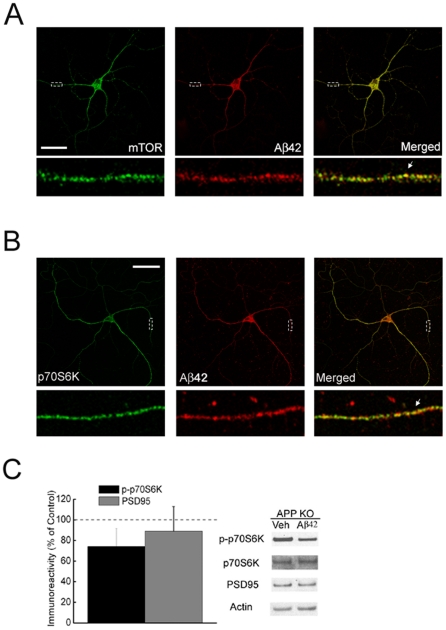
BACKGROUND: The mammalian target of rapamycin (mTOR) is an evolutionarily conserved Ser/Thr protein kinase that plays a pivotal role in multiple fundamental biological processes, including synaptic plasticity. We explored the relationship between the mTOR pathway and β-amyloid (Aβ)-induced synaptic dysfunction, which is considered to be critical in the pathogenesis of Alzheimer's disease (AD). METHODOLOGY/PRINCIPAL FINDINGS: We provide evidence that inhibition of mTOR signaling correlates with impairment in synaptic plasticity in hippocampal slices from an AD mouse model and in wild-type slices exposed to exogenous Aβ1-42. Importantly, by up-regulating mTOR signaling, glycogen synthase kinase 3 (GSK3) inhibitors rescued LTP in the AD mouse model, and genetic deletion of FK506-binding protein 12 (FKBP12) prevented Aβ-induced impairment in long-term potentiation (LTP). In addition, confocal microscopy demonstrated co-localization of intraneuronal Aβ42 with mTOR. CONCLUSIONS/SIGNIFICANCE: These data support the notion that the mTOR pathway modulates Aβ-related synaptic dysfunction in AD.
Overview
The claims and statistics of this paper haven’t been checked yet.
Run the check — free, no account needed. It reads the open-access text and checks the sources it cites.
Integrity signals
Registry
Cites
Statistics
Figures
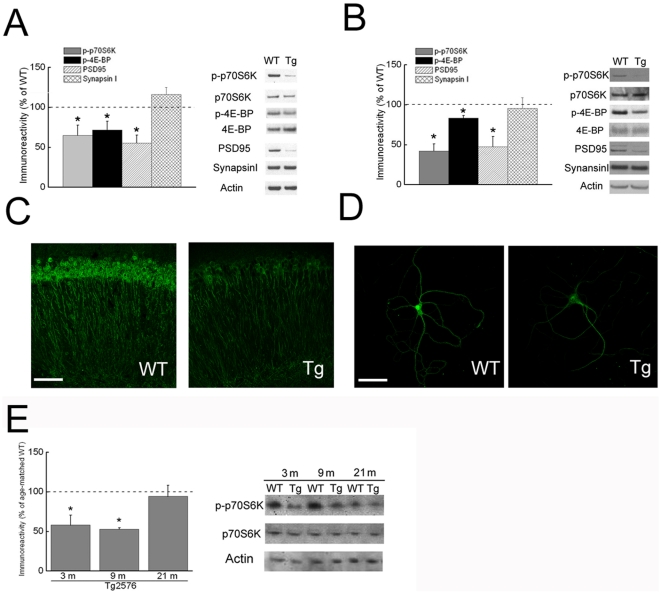
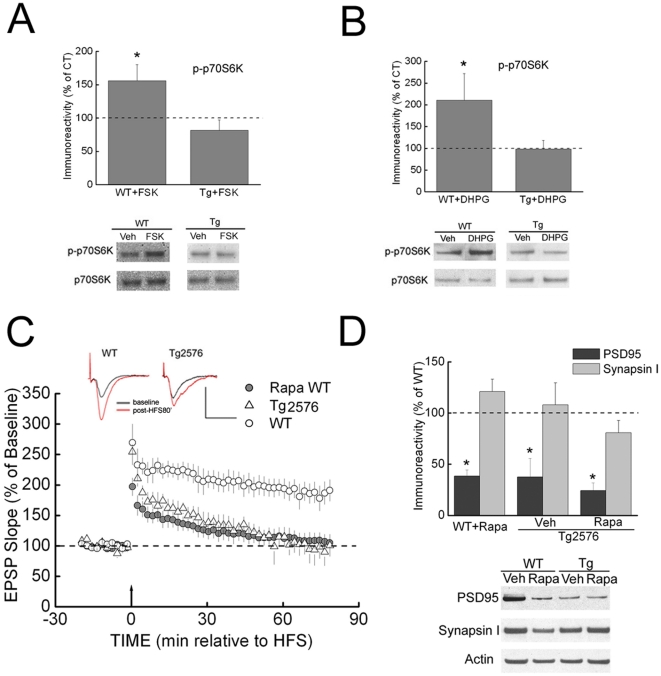
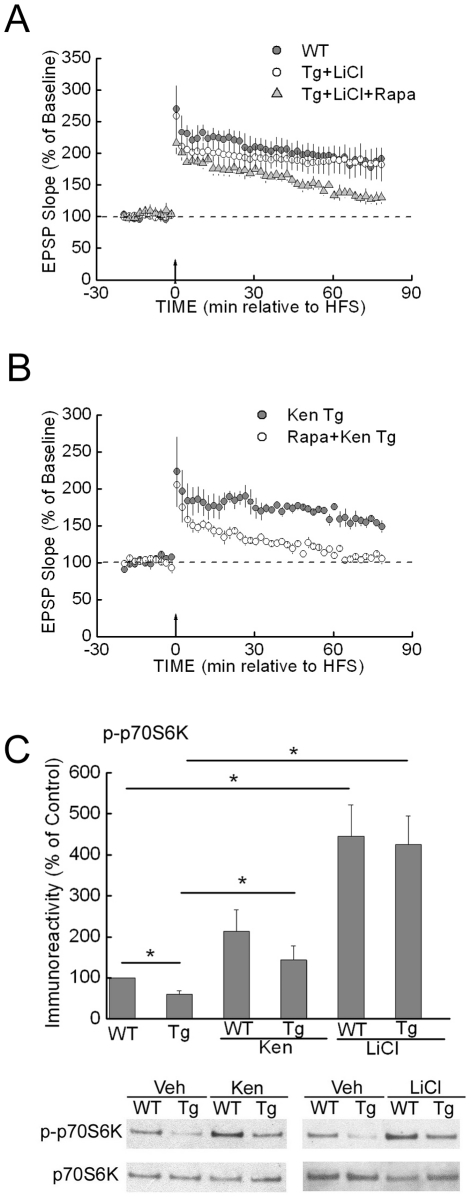
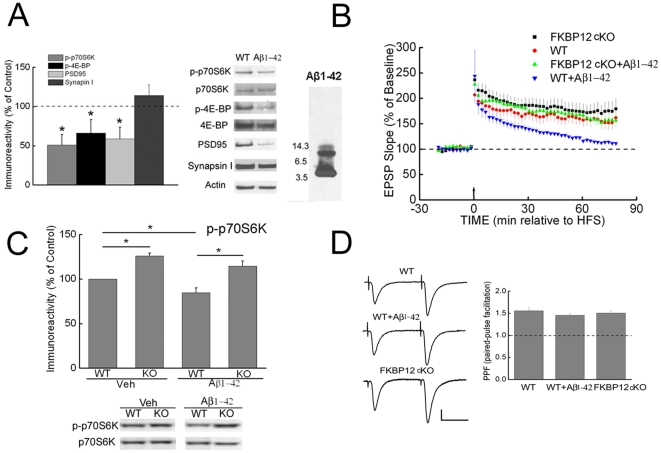
Verification
Claims the paper makes
The claims and statistics of this paper haven’t been checked yet.
Run the check — free, no account needed. It reads the open-access text and checks the sources it cites.
Claims other papers make about this one
Each is checked against this paper’s own text: does it say what the citing paper says it does?
In the citing paper
“mTOR activity, which is increased by Reelin signaling (92), is lower in AD mice (93).”
From Reelin: Neurodevelopmental Architect and Homeostatic Regulator of Excitatory Synapses (2017) · cites this paper as [93]
Self-check
Percentages, sums and reported differences re-computed from the paper’s own numbers.
The self-check needs the paper’s full text.
Citations
Cites
Soluble protein oligomers in neurodegeneration: lessons from the Alzheimer's amyloid β-peptide
Haass, C., & Selkoe, D. J. (2007) · Nature Reviews Molecular Cell Biology · doi:10.1038/nrm2101 · Cited by 4,744
Querfurth, H. W., & LaFerla, F. M. (2010) · New England Journal of Medicine · doi:10.1056/nejmra0909142 · Cited by 4,569
Correlative Memory Deficits, Aβ Elevation, and Amyloid Plaques in Transgenic Mice
Hsiao, K., Chapman, P., Nilsen, S., Eckman, C., Harigaya, Y., Younkin, S., Yang, F., & Cole, G. (1996) · Science · doi:10.1126/science.274.5284.99 · Cited by 4,210
Triple-Transgenic Model of Alzheimer’s Disease with Plaques and Tangles
Oddo, S., Caccamo, A., Shepherd, J. D., Murphy, M. P., Golde, T. E., Kayed, R., Metherate, R., Mattson, M. P., Akbari, Y., & LaFerla, F. M. (2003) · Neuron · doi:10.1016/s0896-6273(03)00434-3 · Cited by 4,126
Rapamycin fed late in life extends lifespan in genetically heterogeneous mice
Harrison, D. E., Strong, R., Sharp, Z. D., Nelson, J. F., Astle, C. M., Flurkey, K., Nadon, N. L., Wilkinson, J. E., Frenkel, K., Carter, C. S., et al. (2009) · Nature · doi:10.1038/nature08221 · Cited by 3,766
Prolonged Rapamycin Treatment Inhibits mTORC2 Assembly and Akt/PKB
Sarbassov, D. D., Ali, S. M., Sengupta, S., Sheen, J.-H., Hsu, P. P., Bagley, A. F., Markhard, A. L., & Sabatini, D. M. (2006) · Molecular Cell · doi:10.1016/j.molcel.2006.03.029 · Cited by 2,365
Ravikumar, B., Vacher, C., Berger, Z., Davies, J. E., Luo, S., Oroz, L. G., Scaravilli, F., Easton, D. F., Duden, R., O'Kane, C. J., et al. (2004) · Nature Genetics · doi:10.1038/ng1362 · Cited by 2,347
Guertin, D. A., Stevens, D. M., Thoreen, C. C., Burds, A. A., Kalaany, N. Y., Moffat, J., Brown, M., Fitzgerald, K. J., & Sabatini, D. M. (2006) · Developmental Cell · doi:10.1016/j.devcel.2006.10.007 · Cited by 1,467
Translational control of gene expression
Sonenberg, N., Hershey, J. W. B., & Mathews, M. B. (2000) · Cold Spring Harbor Laboratory eBooks · Cited by 1,379
Inoki, K., Ouyang, H., Zhu, T., Lindvall, C., Wang, Y., Zhang, X., Yang, Q., Bennett, C., Harada, Y., Stankunas, K., et al. (2006) · Cell · doi:10.1016/j.cell.2006.06.055 · Cited by 1,377
Cited by
Sorted by citations
Items 201–262 of 262
Cell Type‐Specific mTORC1 Signaling and Translational Control in Synaptic Plasticity and Memory
Huang, Z., Mahmood, N., Wiebe, S. A., Khoutorsky, A., Lacaille, J., & Sonenberg, N. (2025) · Journal of Neurochemistry · doi:10.1111/jnc.70281 · Cited by 10
Rana, A. K., Sharma, S., & Singh, D. (2020) · Comprehensive Psychoneuroendocrinology · doi:10.1016/j.cpnec.2020.100019 · Cited by 8
Haynes, K. A., Smith, T. K., Preston, C. J., & Hegde, A. N. (2015) · ACS Chemical Neuroscience · doi:10.1021/acschemneuro.5b00068 · Cited by 8
The mTOR Signaling Pathway in Neurodegenerative Diseases
Francois, A., Vérité, J., Bilan, A. R., Janet, T., Calon, F., Fauconneau, B., Paccalin, M., & Page, G. (2016) · Elsevier eBooks · doi:10.1016/b978-0-12-802733-2.00011-6 · Cited by 8
Developing BACE-1 inhibitors for FXS
Westmark, C. J., Berry‐Kravis, E., Ikonomidou, C., Yin, J. C. P., & Puglielli, L. (2013) · Frontiers in Cellular Neuroscience · doi:10.3389/fncel.2013.00077 · Cited by 8
Gong, J., Williams, D. M., Scholes, S., Assaad, S., Bu, F., Hayat, S. A., Zaninotto, P., & Steptoe, A. (2024) · medRxiv · doi:10.1101/2024.06.04.24308415 · Cited by 8
Sharma, A., Kumar, P., Islam, A., Bhardwaj, M., Kumar, V., & Prakash, H. (2025) · Toxicology in Vitro · doi:10.1016/j.tiv.2025.106110 · Cited by 7
Fernández‐Fernández, D., Dorner‐Ciossek, C., Kroker, K. S., & Rosenbrock, H. (2015) · Journal of Neuroscience Research · doi:10.1002/jnr.23701 · Cited by 7
Sharallah, O. A., Poddar, N. K., & Alwadan, O. A. (2024) · Ageing Research Reviews · doi:10.1016/j.arr.2024.102394 · Cited by 7
Granak, S., Tuckova, K., Kútna, V., Vojtěchová, I., Bajkova, L., Petrásek, T., & Ovsepian, S. V. (2022) · European Journal of Neuroscience · doi:10.1111/ejn.15864 · Cited by 7
mTOR Involvement in the Mechanisms of Memory
Giovannini, M. G., & Lana, D. (2016) · Elsevier eBooks · doi:10.1016/b978-0-12-802733-2.00018-9 · Cited by 7
Jv, T., Cw, R., Bolwell, C., & Ek, G. (2012) · Proceedings of the New Zealand Society of Animal Production · Cited by 6
Synaptopodin: a key regulator of Hebbian plasticity
Wu, P. Y., Inglebert, Y., & McKinney, R. A. (2024) · Frontiers in Cellular Neuroscience · doi:10.3389/fncel.2024.1482844 · Cited by 7
The Role of S6K1 in Aging and Alzheimer’s Disease: Mechanistic Insights and Therapeutic Potential
Oddo, S., Lanza, M., Casili, G., & Caccamo, A. (2025) · International Journal of Molecular Sciences · doi:10.3390/ijms26135923 · Cited by 6
Dysregulation of Neuronal Protein Synthesis in Alzheimer’s Disease
Ma, T. (2020) · Oxford University Press eBooks · doi:10.1093/oxfordhb/9780190686307.013.18 · Cited by 5
Self-citationRlip76 in ageing and Alzheimer’s disease: Focus on oxidative stress and mitochondrial mechanisms
Bandaru, M., Sultana, O. F., Islam, M. A., Alvir, R. V., & Reddy, P. H. (2024) · Ageing Research Reviews · doi:10.1016/j.arr.2024.102600 · Cited by 4
Jester, H. M., Nicol, N. I., Yang, Q., Zhang, Y., Suhocki, A., Zhou, X., Underwood, E. B., Pourhadi, H., Cheng, D., Lee, J., et al. (2025) · Molecular Psychiatry · doi:10.1038/s41380-025-03408-z · Cited by 4
Self-citationJhanji, M., Bhan, A., Arrowood, C. A., Yakout, D. W., Shroff, A., McManus, D., Gifford, H., Vacharasin, J. M., Lizarraga, S. B., Nazarko, T. Y., et al. (2025) · IUBMB Life · doi:10.1002/iub.70030 · Cited by 4
Kumar, P., Goettemoeller, A. M., Espinosa‐García, C., Tobin, B. R., Tfaily, A., Nelson, R. S., Natu, A., Dammer, E. B., Santiago, J. V., Malepati, S., et al. (2023) · bioRxiv (Cold Spring Harbor Laboratory) · doi:10.1101/2023.05.17.541038 · Cited by 4
Baldelli, G. F., & Buonsenso, D. (2025) · Children · doi:10.3390/children12121603 · Cited by 3
Lipina, T. V., Jekielek, M., Beregovoy, N. A., Starostina, M. V., Palomo, V., Pérez, D. I., Martínez, A., & Roder, J. (2016) · Opera medica et physiologica · Cited by 3
Querfurth, H. W., Lemere, C. A., Ciola, J., Havas, D., Xia, W., & Lee, H. K. (2025) · International Journal of Molecular Sciences · doi:10.3390/ijms26083473 · Cited by 2
From stress to Alzheimer’s: A circuit-based framework for prefrontal cognitive dysfunction
Yi, J. H. (2025) · Neuroscience Letters · doi:10.1016/j.neulet.2025.138424 · Cited by 3
Thomas, J., Lubaba, F., Subair, S., Mahin, A., Gopalakrishnan, A. P., Shivamurthy, P. B., Rajeev, A. C., & Raju, R. (2026) · OMICS A Journal of Integrative Biology · doi:10.1177/15578100251414655 · Cited by 2
Long-term potentiation in the brain: a synaptic memory mechanism
Moreno, A. R., & Paulsen, O. (2026) · Physiological Reviews · doi:10.1152/physrev.00028.2025 · Cited by 2
Wright, A. L., Weible, A. P., Estes, O. B., & Wehr, M. (2025) · Frontiers in Aging Neuroscience · doi:10.3389/fnagi.2025.1505908 · Cited by 2
Brinster, R., Scherer, D., & Bermejo, J. L. (2019) · Briefings in Bioinformatics · doi:10.1093/bib/bbz023 · Cited by 2
Ryan, K. C., Ashkavand, Z., Sarasija, S., Laboy, J. T., Samarakoon, R., & Norman, K. R. (2020) · Research Square · doi:10.21203/rs.3.rs-120594/v1 · Cited by 2
Cha, Y., Leszczynska, A., Kagalwala, M. N., & Ross, J. (2026) · Journal of dementia and Alzheimer's disease · doi:10.3390/jdad3020017 · Cited by 1
Wrasidlo, W., & Masliah, E. (2026) · Cells · doi:10.3390/cells15131177 · Cited by 1
Autophagy and Proteostasis: A Unifying Theory of Neurodegenerative Disease
Novack, J. P. (2017) · Journal of Restorative Medicine · doi:10.14200/jrm.2017.6.0102 · Cited by 1
Novel Therapeutic Targets for Treating Alzheimer’s Disease
Varshini, M. S., Kiran, A. V. V. V. R., Garikapati, K. K., Krishnamurthy, P. T., Patil, V. M., & Khaydarov, R. R. (2023) · Springer eBooks · doi:10.1007/978-981-99-2657-2_2 · Cited by 1
Insulin resistance and Alzheimer’s disease
Farooqui, A. A. (2020) · Elsevier eBooks · doi:10.1016/b978-0-12-819603-8.00006-7 · Cited by 1
Santamaría, A. J., Saraiva, P. M., Solano, J. P., & Guest, J. D. (2022) · Elsevier eBooks · doi:10.1016/b978-0-12-819835-3.00031-9 · Cited by 1
Yeast as a Model for Studying Aβ Aggregation, Toxicity and Clearance
Bharadwaj, P. (2011) · Australasian Journal of Paramedicine · Cited by 1
Faculty Opinions recommendation of JNK3 perpetuates metabolic stress induced by Aβ peptides.
Kodadek, T. J. (2012) · Faculty Opinions – Post-Publication Peer Review of the Biomedical Literature · doi:10.3410/f.717965605.793466623 · Cited by 1
Past, Present, and Future: The Behavioral Sciences.
Darley, J. G. (1971) · Contemporary Psychology · doi:10.1037/014015
Patel, N. T. (2014) · Human Biology
The role of mTor in the pathogenesis of tau-related pathologies in Alzheimer Disease
Tang, Z. (2014) · Figshare
Global Approaches to Understanding Protein Kinase Functions
Gorman, J. L., & Woodgett, J. R. (2015) · Wiley eBooks · doi:10.1002/9783527683031.ch1
Early translational changes in neurons in prion disease
Morgan, J. (2014) · Figshare
N-terminal beta amyloid fragments regulate nicotinic acetylcholine receptors
Lawrence, J. L. M. (2014) · ScholarSpace (University of Hawaii at Manoa)
Targeting Unselective Autophagy of Cellular Aggregates
Seneci, P. (2015) · Elsevier eBooks · doi:10.1016/b978-0-12-801944-3.00004-7
Metaplasticity Tunes Functional Plasticity in the Rodent Hippocampus
Li, Q. (2015) · Digitale Bibliothek Braunschweig (Verbundzentrale Göttingen (VZG)) · doi:10.24355/dbbs.084-201503260942-0
Wheeler, R. V. (2018) · DalSpace (Dalhousie University)
Vieira, J. D. A. (2020) · Digital Library of Theses and Dissertations (Universidade de São Paulo) · doi:10.11606/d.17.2020.tde-13022020-105842
Mammalian target of rapamycin complexes
Querfurth, H. W., & Lee, H. (2020) · Elsevier eBooks · doi:10.1016/b978-0-12-815868-5.00021-9
Effects of anle138b treatment on amyloid-β neurotoxicity
Thomas, C. (2020) · eDiss (Georg-August-Universität Göttingen) · doi:10.53846/goediss-8233
Divergence in Neuronal Calcium Dysregulation in Brain Aging and Animal Models of AD
Ghoweri, A. O. (2020) · UKnowledge (University of Kentucky) · doi:10.13023/etd.2020.521
Chen, C., Wei, J., Ma, X., Zhang, L., Nehme, A., Cui, Y., Ferguson, D., Qiu, S., & Bai, F. (2021) · Research Square · doi:10.21203/rs.3.rs-948437/v1
Mao, X. (2022) · MOspace Institutional Repository (University of Missouri) · doi:10.32469/10355/91609
MECHANISMS OF LONG TERM POTENTIATION IMPAIRMENT IN ALZHEIMER’S DESEASE
Mukhin, V. N., & Klimenko, V. M. (2014) · Medical academic journal · doi:10.17816/maj14142-51
Trends and Research Frontiers in Mammalian Target of Rapamycin and Alzheimer’s Disease
Ma, Z., Xiao, Z., Yang, Z., Huang, B., & Wang, X. (2026) · Molecular Neurobiology · doi:10.1007/s12035-026-05714-1
Mécanisme d’activation neuronale de mTORC1 et de son altération par le peptide amyloïde β
Khamsing, D. (2017) · theses.fr (ABES) · doi:10.70675/8081dbf0zf76bz43bdza502z6c0c6c419856
Cheung, N. (2026) · Journal of Alzheimer s Disease Reports · doi:10.1177/25424823261468711
Astrocytes instructively regulate neuronal translationPreprint
Liu, W., Schultz, C. C., Khan, E. A., Oliveira, M. M., Kalavai, S. V., Sheehan, C. J., Zhang, X., Sam, R., & Klann, E. (2026) · bioRxiv (Cold Spring Harbor Laboratory) · doi:10.64898/2026.07.27.741020
Self-citationCipriano, G. L., Anchesi, I., Floramo, A., Argento, V., Spinelli, S., Astorino, M. F., Calabrò, M., & Artimagnella, O. (2026) · Cells · doi:10.3390/cells15161433
Nicol, N. I., Li, T., Su, Q., Suhocki, A., Dunlap, E., 周雪艳, Jester, H. M., Swift, N. A., Underwood, E. B., Lee, J., et al. (2026) · Journal of Neurochemistry · doi:10.1111/jnc.70563
Self-citationFlying Spot En-Face OCT Imaging
Podoleanu, A. G. (2012) · Springer eBooks · doi:10.1007/978-1-4614-5176-1_18
Metadata
- Authors
- Ma, T., Hoeffer, C. A., Capetillo-Zarate, E., Yu, F., Wong, H., Lin, M. T., Tampellini, D., Klann, E., Blitzer, R. D., & Gouras, G. K.
- Affiliations
- Weill Cornell Medicine (US)
- New York University (US)
- Icahn School of Medicine at Mount Sinai (US)
- Corresponding author
- Gouras, Gunnar K.
- ORCID
- Venue
- PLoS ONE
- Publisher
- Public Library of Science (PLoS)
- Published
- 2010-09-20
- Volume
- 5
- Issue
- 9
- Pages
- e12845
- ISSN
- 1932-6203 (ISSN-L)
- PMC
- PMC2942840
- OpenAlex
- W2071279551
- Cited by
- 262
- References
- 52
- Citations by year
- 2026: 9 · 2025: 12 · 2024: 7 · 2023: 13 · 2022: 13 · 2021: 20 · 2020: 26 · 2019: 10 · 2018: 11 · 2017: 14 · 2016: 18 · 2015: 17 · 2014: 30 · 2013: 23 · 2012: 22
- FWCI
- 13.22
- Type
- journal article
- Language
- en
- Open access
- gold
- doi.org
- Locations
- PLoS ONE (publishedVersion, cc-by)
- PubMed Central (publishedVersion, cc-by)
- PubMed (publishedVersion)
- Communities in ADDI (University of the Basque Country) (submittedVersion, cc-by)
- DOAJ (DOAJ: Directory of Open Access Journals) (submittedVersion)
- Figshare (submittedVersion, cc-by)
- Hispana (submittedVersion, cc-by)
- Lund University Publications (Lund University) (submittedVersion)
- Funders
- National Institutes of Health (N S03400 7, AG‐09464, AG28174)
- National Institute on Aging (R01AG027140, AG09464, R01AG020729, K02AG028174, AG28174, AG027140, P01AG009464)
- National Institute of General Medical Sciences (R01GM054508, GM-054508)
- National Institute of Neurological Disorders and Stroke (R37NS034007, R01NS034007, R29NS034007, NS-034007)
- Topics
- Life Sciences › Neuroscience › Cellular and Molecular Neuroscience › Alzheimer's disease research and treatments
- Life Sciences › Neuroscience › Cellular and Molecular Neuroscience › Neuroscience and Neuropharmacology Research
- Life Sciences › Neuroscience › Neurology › Neuroinflammation and Neurodegeneration Mechanisms
- Keywords
- mTOR signaling, Alzheimer's disease, synaptic plasticity, amyloid-beta, amyloid-beta 42, long-term potentiation, glycogen synthase kinase-3, GSK-3 inhibitors, FKBP12, hippocampus, synaptic dysfunction, intraneuronal amyloid-beta
- MeSH terms
- Alzheimer Disease, Animals, Disease Models, Animal, Hippocampus, Humans, Mice, Inbred C57BL, Neuronal Plasticity, Peptide Fragments, Synapses, Signal Transduction, Amyloid beta-Peptides, Long-Term Potentiation, Mice, TOR Serine-Threonine Kinases
About these checks
Registry, retraction, Cites and statistics results are computed, not judged, with one exception: a printed reference that no index lists is read once by a model before it counts as a citation error. Claims are extracted by a model and kept only when their quote appears verbatim in the text; each cited source is then checked, with a model’s help, for whether it says what the claim relies on. Those verdicts can be wrong — read the claim’s quote and the cited source before relying on one.
Statistics and arithmetic are recomputed, not judged.
Confidence bands are shown only for fields calibrated on our annotated test set. None is calibrated yet, so no band is shown.
What counts as a claim ›How we measure confidence ›How we check this ›
Are you an author, or do you see a problem with this page? Request a review
