

Promoting Functional Health in Midlife and Old Age: Long-Term Protective Effects of Control Beliefs, Social Support, and Physical Exercise
Open accessThe DOI matches its Crossref record; 91 of the 97 references it cites were found in a registry or an index.
Abstract
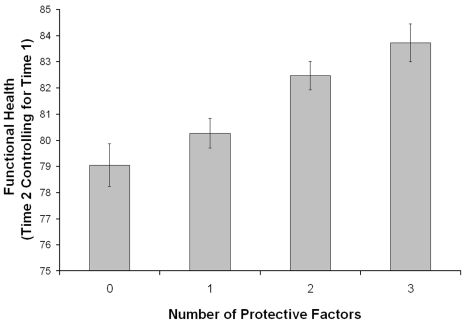
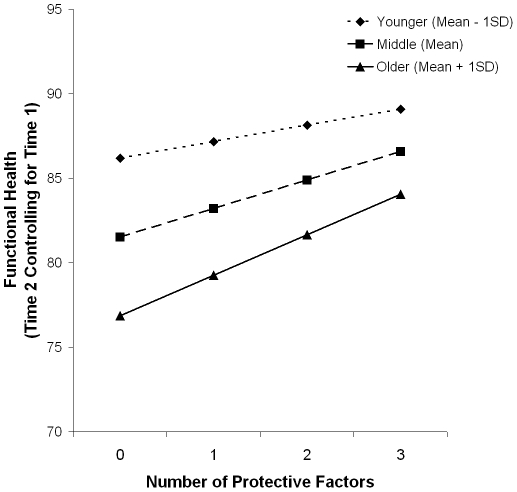
BACKGROUND: Previous studies have examined physical risk factors in relation to functional health, but less work has focused on the protective role of psychological and social factors. We examined the individual and joint protective contribution of control beliefs, social support and physical exercise to changes in functional health, beyond the influence of health status and physical risk factors in middle-aged and older adults. Given that functional health typically declines throughout adulthood, it is important to identify modifiable factors that can be implemented to maintain functioning, improve quality of life, and reduce disability. METHODOLOGY/PRINCIPAL FINDINGS: We conducted a national longitudinal study, Midlife in the United States (MIDUS), with assessments in 1995-1996 and 2004-2006, and 3,626 community-residing adults, aged 32 to 84, were included in the analyses. Functional health (Physical Functioning subscale of the SF-36) and protective factors were measured at both occasions. While controlling for socio-demographic, health status, and physical risk factors (large waist circumference, smoking, and alcohol or drug problems), a composite of the three protective variables (control beliefs, social support, and physical exercise) at Time 1 was significantly related to functional health change. The more of these factors at Time 1, the better the health maintenance over 10 years. Among middle-aged and older adults, declines in health were significantly reduced with an increased number of protective factors. CONCLUSION/SIGNIFICANCE: Age-related declines in health were reduced among those with more protective factors up to a decade earlier in life. Modifiable psychological, social, and physical protective factors, individually and in the aggregate, are associated with maintenance of functional health, beyond the damaging effects of physical risk factors. The results are encouraging for the prospect of developing interventions to promote functional health and for reducing public health expenditures for physical disability in later life.
Overview
The claims and statistics of this paper haven’t been checked yet.
Free: it reads the open-access text and checks the first 5 claims that cite a source we can check. Create a free account to check every claim.
Integrity signals
Registry
Cites
Statistics
Figures
Verification
Claims the paper makes
The claims and statistics of this paper haven’t been checked yet.
Free: it reads the open-access text and checks the first 5 claims that cite a source we can check. Create a free account to check every claim.
Claims other papers make about this one
Each is checked against this paper’s own text: does it say what the citing paper says it does?
In the citing paper
“Of course, factors associated with cognitive reserve such as education are also associated with engagement in health-promoting behaviors that may further protect the individual against both depression and cognitive decline128.”
From Psychobiological factors of resilience and depression in late life (2019) · cites this paper as [128]
Self-check
Percentages, sums and reported differences re-computed from the paper’s own numbers.
The self-check needs the paper’s full text.
Citations
Cites
(1992) · PubMed · Cited by 33,716
The MOS 36-ltem Short-Form Health Survey (SF-36): I. Conceptual Framework and Item Selection
Ware, J. E., & Sherbourne, C. D. (1992) · Medical Care · doi:10.1097/00005650-199206000-00002 · Cited by 30,033 · cited 1×
“This measure was based on seven items from the Physical Functioning subscale from the SF-36 Health Survey (α reliability = .90 at Time 1; α reliability = .92 at Time 2)”
MethodApplied Multiple Regression/Correlation Analysis for the Behavioral Sciences
Cohen, P., Cohen, P., West, S. G., & Aiken, L. S. (2014) · Psychology Press eBooks · doi:10.4324/9781410606266 · Cited by 20,737
Social Relationships and Health
House, J. S., Landis, K. R., & Umberson, D. (1988) · Science · doi:10.1126/science.3399889 · Cited by 7,073 · cited 2×
“Among these factors, control beliefs [28–31], social support [16,25,32,33,34,35,36,37] and physical exercise [12,38,39,40,41,42,43] are consistently identified as predictors of functional health.”
BackgroundFrom social integration to health: durkheim in the new millennium
Berkman, L. F., Glass, T., Brissette, I., & Seeman, T. E. (2000) · Social Science & Medicine · doi:10.1016/s0277-9536(00)00065-4 · Cited by 4,821 · cited 2×
“Among these factors, control beliefs [28–31], social support [16,25,32,33,34,35,36,37] and physical exercise [12,38,39,40,41,42,43] are consistently identified as predictors of functional health.”
BackgroundKahn, R. L. (1998) · Cited by 4,295
Handbook of the Psychology of Aging
(2016) · Elsevier eBooks · doi:10.1016/c2012-0-07221-3 · Cited by 3,394
Measuring Functioning and Well-Being: The Medical Outcomes Study Approach
Stewart, A., & Ware, J. (1992) · doi:10.7249/cb361 · Cited by 2,689
(2003) · JAMA · doi:10.1001/jama.289.23.3106 · Cited by 1,870 · cited 1×
“Moreover, a variety of studies have shown that control beliefs [44], social support [45,46] and physical exercise [47] are modifiable and thus can be subject to interventions to reduce disability and improve functional health.”
BackgroundMcEwen, B. S. (2008) · European Journal of Pharmacology · doi:10.1016/j.ejphar.2007.11.071 · Cited by 1,864 · cited 1×
“, stress hormones [82], inflammation [83], allostatic load [84]} that may be involved in linking the protective factors to health.”
Background
Research works printed but not linked: 1
- Antonucci TC Birditt KS Akiyama H 2009 Convoys of social relations: An interdisciplinary approach. Bengtson VL Silverstein M Putney NM Gans D The handbook of theories of aging. 2nd ed New York Springer Publishing Company 247 260
Cited by
Lachman, M. E., Teshale, S., & Agrigoroaei, S. (2015) · International Journal of Behavioral Development · doi:10.1177/0165025414533223 · Cited by 463
“In MIDUS, we found that a combination of multiple adaptive factors (e.g. sense of control, physical exercise, social support) is protective in reducing 10-year declines in cognitive and functional health (Agrigoroaei & Lachman, 2011; Lachman & Agrigoroaei, 2010).”
BackgroundSelf-citationThe relationship between attitudes to aging and physical and mental health in older adults
Bryant, C., Bei, B., Gilson, K., Komiti, A., Jackson, H., & Judd, F. (2012) · International Psychogeriatrics · doi:10.1017/s1041610212000774 · Cited by 251
“…may serve to highlight the benefits of older adults remaining socially connected for as long as possible, and this is supported by a recent study by Lachman and Agrigoroaei (2010), as well as the findings of the Nurses’ Health Study (Michael et al., 2001), which emphasizes the importance of social…”
ResultThe circadian clock in cancer development and therapy
Fu, L., & Kettner, N. M. (2013) · Progress in Molecular Biology and Translational Science · doi:10.1016/b978-0-12-396971-2.00009-9 · Cited by 251
Psychobiological factors of resilience and depression in late life
Laird, K. T., Krause, B., Funes, C., & Lavretsky, H. (2019) · Translational Psychiatry · doi:10.1038/s41398-019-0424-7 · Cited by 229
Manning, L. K., Carr, D. C., & Kail, B. L. (2016) · The Gerontologist · doi:10.1093/geront/gnu068 · Cited by 196
“While chronic conditions are associated with higher levels of ADL and IADL impairment, people with greater psychosocial resources (e.g., social support, physical activity, and locusts of control) tend to experience fewer ADL and IADL limitations (Lachman & Agrigoroaei, 2010).”
BackgroundLachman, M. E., Lipsitz, L., Lubben, J., Castaneda-Sceppa, C., & Jette, A. M. (2018) · Innovation in Aging · doi:10.1093/geroni/igy007 · Cited by 191
“…uthor M anuscript A uthor M anuscript solving strategies, are more anxious, ruminate more, are less task focused, and adopt fewer health promoting behaviors such as exercise, in part because they assume their efforts will not make a difference (Cotter & Lachman, 2010; Lachman & Agrigoroaei, 2010).”
BackgroundSelf-citationHarlow, S. D., Burnett‐Bowie, S. M., Greendale, G. A., Avis, N. E., Reeves, A. N., Richards, T. R., & Lewis, T. T. (2022) · Women s Midlife Health · doi:10.1186/s40695-022-00073-y · Cited by 151
Relationships Among Self-perception of Aging, Physical Functioning, and Self-efficacy in Late Life
Tovel, H., Carmel, S., & Raveis, V. H. (2017) · The Journals of Gerontology Series B · doi:10.1093/geronb/gbx056 · Cited by 176
Perceived control reduces mortality risk at low, not high, education levels.
Turiano, N. A., Chapman, B. P., Agrigoroaei, S., Infurna, F. J., & Lachman, M. (2014) · Health Psychology · doi:10.1037/hea0000022 · Cited by 114
Self-citationPuterman, E., & Epel, E. (2012) · Social and Personality Psychology Compass · doi:10.1111/j.1751-9004.2012.00465.x · Cited by 106
“Our multisystem resiliency model builds on previous studies by Lachman and colleagues (Agrigoroaei & Lachman, 2011; Lachman & Agrigoroaei, 2010).”
MethodBrothers, A. F., & Diehl, M. K. (2016) · Journal of Aging and Physical Activity · doi:10.1123/japa.2016-0039 · Cited by 129
“…a general sense of control over the environment is a valuable resource for adaptation, resilience and well-being in later life (Diehl & Hay, 2010; Rodin, 1986), as well as for promoting and preserving health and physical functioning (Gerstorf, Röcke, & Lachman, 2011; Lachman & Agrigoroaei, 2010).”
Stéphan, Y., Boiché, J. C. S., Canada, B., & Terracciano, A. (2013) · British Journal of Psychology · doi:10.1111/bjop.12056 · Cited by 125
Infurna, F. J., Ram, N., & Gerstorf, D. (2013) · Developmental Psychology · doi:10.1037/a0031041 · Cited by 109
“…more control over one’s life is protective against declines in physical functioning (Caplan & Schooler, 2003; Gerstorf, Röcke, & Lachman, 2011; Lachman & Agrigoroaei, 2010; Seeman, Unger, McAvay, & Mendes de Leon, 1999), progression of disease burden (Infurna, Gerstorf, & Zarit, 2011;…”
BackgroundLinking perceived control, physical activity, and biological health to memory change.
Infurna, F. J., & Gerstorf, D. (2013) · Psychology and Aging · doi:10.1037/a0033327 · Cited by 90
Infurna, F. J., & Mayer, A. (2015) · Psychology and Aging · doi:10.1037/a0039050 · Cited by 93
“Over a longer period of 10 years, reporting higher levels of perceived control (combined mastery and constraints items) were protective against accruing functional limitations (Lachman & Agrigoroaei, 2010).”
BackgroundInfurna, F. J., & Gerstorf, D. (2014) · Health Psychology · doi:10.1037/a0030208 · Cited by 81
General self-efficacy and mortality in the USA; racial differences
Assari, S. (2017) · Journal of Racial and Ethnic Health Disparities · doi:10.1007/s40615-016-0278-0 · Cited by 81
Latimer, C. S., Searcy, J. L., Bridges, M. T., Brewer, L. D., Popović, J., Blalock, E. M., Landfield, P. W., Thibault, O., & Porter, N. M. (2011) · PLoS ONE · doi:10.1371/journal.pone.0026812 · Cited by 80
“Nevertheless, exercise benefits both genders [2,4–6,75] and these studies show that an exercise regimen implemented at mid-age can reverse markers of unhealthy brain aging.”
Assari, S. (2016) · Archives of Medical Science · doi:10.5114/aoms.2016.59740 · Cited by 72
“Such beliefs also reflect lower symptoms [18], better wellbeing [18], and higher physical functioning [18, 19].”
BackgroundHardships of the Great Recession and health: Understanding varieties of vulnerability
Kirsch, J. A., & Ryff, C. D. (2016) · Health Psychology Open · doi:10.1177/2055102916652390 · Cited by 73
“Perceived control and mastery over one’s environment are viewed as essential components of health and wellbeing, especially among Americans and those from other Western cultures (Lachman and Agrigoroaei, 2010).”
BackgroundPhysical activity and negative affective reactivity in daily life
Puterman, E., Weiss, J., Beauchamp, M. R., Mogle, J., & Almeida, D. M. (2017) · Health Psychology · doi:10.1037/hea0000532 · Cited by 65
Lachman, M. E., & Agrigoroaei, S. (2012) · Memory & Cognition · doi:10.3758/s13421-011-0140-x · Cited by 65
“Low perceived control may be considered a risk factor for poor functioning in later life, and the deleterious processes may begin early in midlife (Lachman & Agrigoroaei, 2010), which raises the potential for intervention and prevention.”
Self-citationPuterman, E., Epel, E. S., Lin, J., Blackburn, E. H., Gross, J. J., Whooley, M. A., & Cohen, B. E. (2013) · Brain Behavior and Immunity · doi:10.1016/j.bbi.2013.05.008 · Cited by 61
“…et al., 2010), healthy emotional regulation (Kiecolt-Glaser et al., 2002; Kinnunen et al., 2005), physical activity (Goldhammer et al., 2005; Leeuwenburgh and Heinecke, 2001), and good sleep quality (Prather et al., 2009; Simpson and Dinges, 2007) have lower levels of these harmful…”
Varieties of Resilience in MIDUS
Ryff, C., Friedman, E., Fuller‐Rowell, T., Love, G., Miyamoto, Y., Morozink, J., Radler, B., & Tsenkova, V. (2012) · Social and Personality Psychology Compass · doi:10.1111/j.1751-9004.2012.00462.x · Cited by 60
“Lachman and Agrigoroaei (2010) used a composite of three protective variables (control beliefs, social support, physical exercise) to predict change in functional health over time.”
MethodZautra, A., Davis, M. C., Reich, J. W., Sturgeon, J. A., Arewasikporn, A., & Tennen, H. A. (2012) · Journal of Psychotherapy Integration · doi:10.1037/a0029573 · Cited by 66
Early Life Stress and Physical and Psychosocial Functioning in Late Adulthood
Alastalo, H., von Bonsdorff, M. B., Räikkönen, K., Pesonen, A.-K., Osmond, C., Barker, D. J. P., Heinonen, K., Kajantie, E., & Eriksson, J. G. (2013) · PLoS ONE · doi:10.1371/journal.pone.0069011 · Cited by 58
“Other factors including socioeconomic status and health behaviours are also known to be associated with health [2,9,33,34].”
BackgroundInfurna, F. J., & Okun, M. A. (2015) · Developmental Psychology · doi:10.1037/a0039530 · Cited by 63
“For example, perceived control is more strongly protective against declines in physical health in old age compared to midlife (e.g., Infurna, Gerstorf, & Zarit, 2011; Lachman & Agrigoroaei, 2010).”
BackgroundHahn, E. A., & Lachman, M. E. (2015) · Aging, Neuropsychology, and Cognition · doi:10.1080/13825585.2014.888391 · Cited by 54
“The sample has been described in greater detail elsewhere (Lachman & Agrigoroaei, 2010; Radler & Ryff, 2010).”
Self-citationSocial Comparisons of Health and Cognitive Functioning Contribute to Changes in Subjective Age
Hughes, M. L., & Lachman, M. E. (2016) · The Journals of Gerontology Series B · doi:10.1093/geronb/gbw044 · Cited by 63
“…the main respondents and a subpopulation of twins, all analyses were reexamined as multilevel models, with family ID as a random effect predicting the intercept to account for potential nonindependence in the data set, in accordance with past work (Lachman & Agrigoroaei, 2010; Human et al., 2013).”
ResultSelf-citationBarbosa, K. T. F., Costa, K. N. D. F. M., Pontes, M. D. L. D. F., Batista, P. S. D. S., de Oliveira, F. M. R. L., & Fernandes, M. D. G. M. (2017) · Texto & Contexto - Enfermagem · doi:10.1590/0104-07072017002700015 · Cited by 53
Zilioli, S., Imami, L., & Slatcher, R. B. (2016) · Psychoneuroendocrinology · doi:10.1016/j.psyneuen.2016.09.025 · Cited by 51
Robinson, S. A., Bisson, A. N., Hughes, M. L., Ebert, J., & Lachman, M. E. (2019) · Psychology & Health · doi:10.1080/08870446.2018.1539487 · Cited by 48
“Two items from the original scale were omitted as they directly referred to physical exercise, one of our predictors (α = .79; see Lachman & Agrigoroaei, 2010).”
MethodSelf-citationMidlife Predictors of Health-Related Quality of Life in Older Women
Avis, N. E., Colvin, A. B., Bromberger, J. T., & Hess, R. (2018) · The Journals of Gerontology Series A · doi:10.1093/gerona/gly062 · Cited by 54
Beyond “Use It or Lose It”: The Impact of Engagement on Cognitive Aging
Stine‐Morrow, E. A. L., & Manavbasi, I. E. (2022) · Annual Review of Developmental Psychology · doi:10.1146/annurev-devpsych-121020-030017 · Cited by 56
Barha, C. K., & Liu-Ambrose, T. Y. L. (2020) · The FASEB Journal · doi:10.1096/fj.202000857r · Cited by 50
Perceived control and cognition in adulthood: The mediating role of physical activity.
Robinson, S. A., & Lachman, M. E. (2018) · Psychology and Aging · doi:10.1037/pag0000273 · Cited by 50
“For example, Lachman and Agrigoroaei (2010) found that the age-related declines in functional health were attenuated by one’s level of perceived control, among other protective factors such as social support and physical activity.”
Self-citationHow Much Do Sources of Happiness Vary Across Countries? A Review of the Empirical Literature
Stavrova, O. (2019) · KZfSS Kölner Zeitschrift für Soziologie und Sozialpsychologie · doi:10.1007/s11577-019-00612-y · Cited by 46
Future Orientation and Health Among Older Adults: The Importance of Hope
Barnett, M. D. (2014) · Educational Gerontology · doi:10.1080/03601277.2014.898496 · Cited by 48
“Control beliefs, social support, and physical exercise appear to be protective factors against health problems (Lachman & Agrigoroaei, 2010).”
BackgroundSharif, R., Mayes, M. D., Nicassio, P. M., González, E. B., Draeger, H. T., McNearney, T. A., Estrada-Y-Martin, R. M., Nair, D. K., Reveille, J. D., Arnett, F. C., et al. (2011) · Seminars in Arthritis and Rheumatism · doi:10.1016/j.semarthrit.2011.01.002 · Cited by 41
Prolonged marital stress is associated with short‐lived responses to positive stimuli
Lapate, R. C., van Reekum, C. M., Schaefer, S. M., Greischar, L. L., Norris, C. J., Bachhuber, D. R. W., Ryff, C. D., & Davidson, R. J. (2014) · Psychophysiology · doi:10.1111/psyp.12203 · Cited by 38
“At both baseline (MIDUS I) and longitudinal follow-up (MIDUS II), participants reported their experienced levels of marital stress on a 6-item scale (cf. Block, He, Zaslavsky, Ding, & Ayanian, 2009; Lachman & Agrigoroaei, 2010; Lachman, Rocke, Rosnick, & Ryff, 2008; South & Krueger, 2008).”
BackgroundThe Challenge and Opportunity to Diagnose Parkinson's Disease in Midlife
Kilzheimer, A., Hentrich, T., Burkhardt, S., & Schulze-Hentrich, J. M. (2019) · Frontiers in Neurology · doi:10.3389/fneur.2019.01328 · Cited by 49
“In addition, supportive social relationships and positive control beliefs in midlife support functional health and cognitive skills and curtail agerelated health decline (55, 56).”
BackgroundEnacted Support and Well-Being: A Test of the Mediating Role of Perceived Control
Chen, Y., & Feeley, T. H. (2012) · Communication Studies · doi:10.1080/10510974.2012.674619 · Cited by 46
“…on two subscales from the MIDUS sense-of-control scale, namely personal mastery (e.g., ‘‘I can do just about anything I really set my mind to’’) and perceived constraints (e.g., ‘‘I have little control over the things that happen to me’’) (Lachman & Agrigoroaei, 2010; Lachman & Prenda, 2004).”
BackgroundLiu, Y., & Lachman, M. E. (2020) · Research on Aging · doi:10.1177/0164027520963613 · Cited by 42
“As motivation and social engagement are key factors for sustained healthy behavior (Lachman & Agrigoroaei, 2010; Lachman et al., 2018), the study results suggest that even virtual group-based walking using a smart phone app has the potential to increase physical activity.”
BackgroundSelf-citationPerceived Social Support and Physical Activity Among Patients With Coronary Artery Disease
Won, M. H., & Son, Y. (2016) · Western Journal of Nursing Research · doi:10.1177/0193945916678374 · Cited by 46
Düzel, S., Voelkle, M. C., Düzel, E., Gerstorf, D., Drewelies, J., Steinhagen‐Thiessen, E., Demuth, I., & Lindenberger, U. (2016) · Gerontology · doi:10.1159/000441493 · Cited by 39
Mitchell, U. A., Ailshire, J., Brown, L., Levine, M. E., & Crimmins, E. M. (2016) · The Journals of Gerontology Series B · doi:10.1093/geronb/gbw031 · Cited by 55
“…control buffers the negative effects of stress on health (Pudrovska, Schieman, Pearlin, & Nguyen, 2005), protects against declines in health and physical functioning (Infurna & Mayer, 2015; Lachman & Agrigoroaei, 2010), and is associated with lower mortality risk (Infurna, Ram, & Gerstorf, 2013).”
BackgroundResilience and Aging: Research and Practice
Lavretsky, H. (2014) · Project Muse (Johns Hopkins University) · Cited by 55
Pathways to Aging: The Mitochondrion at the Intersection of Biological and Psychosocial Sciences
Picard, M. A. (2011) · Journal of Aging Research · doi:10.4061/2011/814096 · Cited by 42
“, emotional links with family and friends) contribute to better maintenance of functional capacity with aging [83].”
BackgroundMesa-Fernández, M., Padilla, J. P., Nunes, C., & Álvarez-Dardet, S. M. (2019) · Ciência & Saúde Coletiva · doi:10.1590/1413-81232018241.35302016 · Cited by 105
Russo, C., Giannotti, C., Signori, A., Cea, M., Murialdo, R., Ballestrero, A., Scabini, S., Romairone, E., Odetti, P. R., Nencioni, A., et al. (2018) · Oncotarget · doi:10.18632/oncotarget.26147 · Cited by 37
“Lower perceived social support is generally associated with higher depressive symptoms and lower quality of life [30, 31], especially in cancer patients compared to the general population [30, 32].”
BackgroundMilte, C. M., Luszcz, M. A., Ratcliffe, J., Masters, S. C., & Crotty, M. (2014) · Geriatrics and gerontology international/Geriatrics & gerontology international · doi:10.1111/ggi.12281 · Cited by 35
Smith, R. S., Weihs, K. L., Alkozei, A., Killgore, W. D. S., & Lane, R. D. (2018) · Psychosomatic Medicine · doi:10.1097/psy.0000000000000661 · Cited by 39
Lee, B., Lawson, K. M., Chang, P.-J., Neuendorf, C., Dmitrieva, N., & Almeida, D. M. (2015) · Journal of Leisure Research · doi:10.1080/00222216.2015.11950370 · Cited by 38
“…with physical activity based on theory and past research—such as higher levels of education, household income, and smaller waist circumference—have been found to be associated with higher levels of physical activity reported using this scale (Choi et al., 2010; Lachman & Agrigoroaei, 2010).”
MethodDixon, R. A., & Lachman, M. E. (2019) · American Psychological Association eBooks · doi:10.1037/0000143-009 · Cited by 40
Self-citationMusich, S. A., Wang, S. S., Slindee, L. B., Kraemer, S., & Yeh, C. S. (2019) · Geriatric Nursing · doi:10.1016/j.gerinurse.2019.10.008 · Cited by 38
Johannessen, A., Engedal, K., & Thorsen, K. (2016) · International Journal of Qualitative Studies on Health and Well-Being · doi:10.3402/qhw.v11.30535 · Cited by 45
“During every stage of the study, we focused on securing what Lincoln and Guba (1990) called a ‘‘credibility’’ and ‘‘trustworthiness’’ of the findings.”
BackgroundAiling Voters Advance Attractive Congressional Candidates
Zebrowitz, L. A., Franklin, R. G., & Palumbo, R. (2015) · Evolutionary Psychology · doi:10.1177/147470491501300102 · Cited by 31
“This measure has been validated in previous research that demonstrated a relationship to objective indicators of disability (Syddall, Martin, Harwood, Cooper, and Aihie Sayer, 2009), as well as a sensitivity to various health protective factors (Lachman and Agrigoroaei, 2010).”
ResultHu, B., & Li, L. (2018) · The Journals of Gerontology Series B · doi:10.1093/geronb/gby107 · Cited by 32
“Empirical studies have been conducted in the US to investigate the disability-related outcomes of social support which includes emotional support, financial support, and informal care (Everard et al., 2000; Greenglass et al., 2006; Lachman & Agrigoroaei, 2010; Taylor & Lynch, 2004).”
BackgroundNegative Aspects of Close Relationships as Risk Factors for Cognitive Aging
Liao, J., Head, J. A., Kumari, M., Stansfeld, S. A., Kivimäki, M., Singh‐Manoux, A., & Brunner, E. J. (2014) · American Journal of Epidemiology · doi:10.1093/aje/kwu236 · Cited by 32
Turner, S. G., & Hooker, K. A. (2020) · The International Journal of Aging and Human Development · doi:10.1177/0091415020981883 · Cited by 31
“…control beliefs are also included in Diehl and Wahl’s (2010) distal psychological antecedents, and are associated with optimal aging processes (Lachman & Agrigoroaei, 2010), with, for example, self- efficacy associated with possible selves predicting psychological well- being in later life…”
BackgroundBayán-Bravo, A., Pérez‐Tasigchana, R. F., Sayón-Orea, C., Martínez‐Gómez, D., López‐García, E., Rodríguez‐Artalejo, F., & Guallar‐Castillón, P. (2017) · PLoS ONE · doi:10.1371/journal.pone.0170513 · Cited by 29
Choi, E., Tang, F., Kim, S., & Turk, P. (2016) · The International Journal of Aging and Human Development · doi:10.1177/0091415016657557 · Cited by 26
“It is well known that functional health tends to decline with age (Crimmins, Hayward, & Saito, 1994; Lachman & Agrigoroaei, 2010).”
BackgroundMusich, S. A., Wang, S. S., Schaeffer, J. A., Kraemer, S., Wicker, E. R., & Yeh, C. S. (2020) · Geriatric Nursing · doi:10.1016/j.gerinurse.2020.09.007 · Cited by 25
Lee, W., Chen, L., Peng, L., Chiou, S.-T., & Chou, P. (2016) · Medicine · doi:10.1097/md.0000000000004661 · Cited by 33
“2, Linong St., Beitou Dist., Taipei City, Taiwan (e-mail: pschou@ym.edu.tw).”
BackgroundCognitive reserve modulates mental health in adulthood
Porricelli, D., Tecilla, M., Pucci, V., Rosa, E. D., Mondini, S., & Cappelletti, M. (2024) · Aging Clinical and Experimental Research · doi:10.1007/s40520-024-02776-w · Cited by 31
“People aged between 40 and 60 years are often neglected in these studies, on the ground that more informative and larger changes are observable when comparing young to older adults [62, 63].”
BackgroundKim, S. J., & Hur, M. (2019) · Psychiatry Investigation · doi:10.30773/pi.2019.04.25.2 · Cited by 26
Education, Perceived Control, and Volunteering
Son, J., & Wilson, J. (2017) · Sociological Forum · doi:10.1111/socf.12377 · Cited by 29
Diehl, M. K., Rebok, G. W., Roth, D. L., Nehrkorn-Bailey, A. M., Rodriguez, D., Tseng, H., & Chen, D. (2023) · The Journals of Gerontology Series B · doi:10.1093/geronb/gbad130 · Cited by 32
Puvill, T., Kusumastuti, S., Lund, R., Mortensen, E. L., Slaets, J. P. J., Lindenberg, J., & Westendorp, R. G. J. (2019) · PLoS ONE · doi:10.1371/journal.pone.0224421 · Cited by 28
“[10,11] It is also not known whether such a modifying role of psychosocial factors might change over the lifespan.[12] Older age spans more than 30 years, and what holds true for the youngest old may not hold true for the oldest old.”
BackgroundStowell, E., Zhang, Y., Castaneda‐Sceppa, C., Lachman, M. E., & Parker, A. G. (2019) · Proceedings of the ACM on Human-Computer Interaction · doi:10.1145/3359232 · Cited by 29
“Since intrinsic motivation, enjoyment, and social support are key factors for sustained healthy behavior [45, 89], exergaming may have the potential to decrease attrition and increase adherence to PA programs [75].”
BackgroundSelf-citationWister, A., Li, L., & Mitchell, B. A. (2021) · The International Journal of Aging and Human Development · doi:10.1177/00914150211040451 · Cited by 27
“Furthermore, this phase of the life course can have a prolonged and significant impact on the aging process itself in later life in terms of health and well-being outcomes (Chassin et al., 2010; Lachman & Agrigoroaei, 2010).”
BackgroundKroemeke, A., & Gruszczyńska, E. (2016) · PLoS ONE · doi:10.1371/journal.pone.0161328 · Cited by 22
“Although some research indicates that received support is positively related to quality of life [10,11], depression [12,13], and distress [14], other research indicates that these relations can be negative [15,16].”
BackgroundLinked lives and convoys of social relations
Webster, N. J., Antonucci, T. C., & Ajrouch, K. J. (2022) · Advances in Life Course Research · doi:10.1016/j.alcr.2022.100502 · Cited by 26
The association of pain locus of control with pain outcomes among older adults
Musich, S. A., Wang, S. S., Slindee, L. B., Kraemer, S., & Yeh, C. S. (2019) · Geriatric Nursing · doi:10.1016/j.gerinurse.2019.04.005 · Cited by 25
The association of psychological protective factors with caregiver mental health outcomes
Musich, S. A., Wang, S. S., Kraemer, S., & Yeh, C. S. (2023) · Geriatric Nursing · doi:10.1016/j.gerinurse.2023.01.020 · Cited by 27
Co-morbidity and predictors of health status in older rural breast cancer survivors
Azuero, A., Benz, R. L., McNees, P., & Meneses, K. (2014) · SpringerPlus · doi:10.1186/2193-1801-3-102 · Cited by 18
“…(http://creativecommons.org/licenses/by/4.0), which permits unrestricted use, distribution, and reproduction in any medium, provided the original work is properly credited. health status, and reduced risk of physical and mental illness (Lachman & Agrigoroaei 2010; Seeman 2000; White et al. 2009).”
BackgroundInfluentialChapter 5 Cognitive Resilience in Adulthood
Stine‐Morrow, E. A. L., & Chui, H. C. (2012) · Annual Review of Gerontology and Geriatrics · doi:10.1891/0198-8794.32.93 · Cited by 27
“Cognitive resilience is a multidimensional process in which resources assembled through the life span buffer against late life threats to cognitive health (Lachman & Agrigoroaei, 2010).”
BackgroundChanges in Sense of Control in the Second Half of Life: Results from a 5-Year Panel Study
Slagsvold, B., & Sørensen, A. (2013) · The International Journal of Aging and Human Development · doi:10.2190/ag.77.4.b · Cited by 22
“…is found to predict health outcomes over quite long periods of time (9 years or more) (Gerstorf, Rocke, & Lachman, 2011; Infurna, Gerstorf, & Zarit, 2011; Lachman & Agrigoroaei, 2010) and predict disability and mortality over a 14 year period (Infurna, Gerstorf, Ram, Schupp, & Wagner, 2011).”
BackgroundReceipt of emotional support among rural South African adults
Jennings, E. A., Mkhwanazi, N., & Berkman, L. F. (2018) · Ageing and Society · doi:10.1017/s0144686x18001526 · Cited by 19
“…poor physical and mental health, and mortality (Berkman and Syme, 1979; Prince et al., 1997; Berkman et al., 2004; Cacioppo et al., 2006; Cornwell and Waite, 2009; Hawkley and Cacioppo, 2010; Hawkley et al., 2010; Holt-Lunstad et al., 2010; Lachman and Agrigoroaei, 2010; Kim et al., 2016).”
BackgroundLin, X. Y., Zhang, L., Yoon, S., Zhang, R., & Lachman, M. E. (2023) · The Gerontologist · doi:10.1093/geront/gnad028 · Cited by 19
Self-citationKhoury, H. T. T., & Sá-Neves, Â. C. (2014) · Revista Brasileira de Geriatria e Gerontologia · doi:10.1590/1809-9823.2014.13012 · Cited by 17
Infurna, F. J., Mayer, A., & Anstey, K. J. (2017) · Psychology and Health · doi:10.1080/08870446.2017.1341513 · Cited by 21
“…in perceived control are protective against declines in cognitive functioning (Infurna & Gerstorf, 2013; Windsor & Anstey, 2008), well-being (Infurna & Mayer, 2015; Windsor & Anstey, 2010), onset of functional limitations (Caplan & Schooler, 2003; Lachman & Agrigoroaei, 2010; *Corresponding author.”
BackgroundLachman, M. E., & Schiloski, K. A. (2024) · Journal of Psychosomatic Research · doi:10.1016/j.jpsychores.2024.111957 · Cited by 16
“The present study supports previous research which suggests that there are important modifiable psychological attitudes and social factors that have protective effects against physical problems and poor health [14,42,43].”
Self-citationDisparities in mental health, social support and coping among individuals with mobility impairment
Na, L., & Singh, S. (2020) · Disability and health journal · doi:10.1016/j.dhjo.2020.101047 · Cited by 18
Broken Bodies, Broken Spirits: How Poor Health Contributes to A Cynical Worldview
Stavrova, O., & Ehlebracht, D. (2019) · European Journal of Personality · doi:10.1002/per.2183 · Cited by 17
Towards a neurocomputational account of social controllability: From models to mental health
Na, S., Rhoads, S. A., Yu, A. N. C., Fiore, V. G., & Gu, X. (2023) · Neuroscience & Biobehavioral Reviews · doi:10.1016/j.neubiorev.2023.105139 · Cited by 19
Social Support and Strain Across Close Relationships: A Twin Study
Kutschke, J., Bengtson, M., Seeman, T. E., & Harris, J. R. (2018) · Behavior Genetics · doi:10.1007/s10519-018-9899-x · Cited by 19
“…the factors that simultaneously and inversely influence social support and strain, and the factors that operate independently, then this could help the inform prevention and intervention strategies for behavior change and healthier aging (Lachman and Agrigoroaei 2010; Tesdahl and Gesell 2015).”
BackgroundFactors Associated With 10-Year Declines in Physical Health and Function Among Women During Midlife
Solomon, D. H., Colvin, A. B., Lange-Maia, B. S., Derby, C., Dugan, S., Jackson, E. A., Ruppert, K. M., Karvonen-Gutierrez, C. A., Santacroce, L. M., Strotmeyer, E. S., et al. (2022) · JAMA Network Open · doi:10.1001/jamanetworkopen.2021.42773 · Cited by 17
A Cultural Perspective on Functional Limitations and Well-Being
Choi, J. H., Miyamoto, Y., & Ryff, C. D. (2020) · Personality and Social Psychology Bulletin · doi:10.1177/0146167220905712 · Cited by 18
“Studies have shown that those who perceive they have more control over outcomes report better mental and physical health, as well as better well-being (Infurna & Mayer, 2015; Lachman & Agrigoroaei, 2010; Lachman et al., 2011; Rizza et al., 2017).”
BackgroundPerceived control and reactivity to acute stressors: Variations by age, race and facets of control
Wen, J., & Sin, N. L. (2021) · Stress and Health · doi:10.1002/smi.3103 · Cited by 22
Muhammad, T., Kumar, P. P., & Srivastava, S. (2022) · BMC Public Health · doi:10.1186/s12889-022-14215-4 · Cited by 22
Wolff, J. K., Lindenberger, U., Brose, A., & Schmiedek, F. (2014) · The Journals of Gerontology Series B · doi:10.1093/geronb/gbu085 · Cited by 16
Lyu, J., & Agrigoroaei, S. (2016) · The International Journal of Aging and Human Development · doi:10.1177/0091415016669147 · Cited by 17
“Furthermore, there is increasing evidence from empirical studies that the quality of social relations is associated with better physical and mental health outcomes (Agrigoroaei & Lachman, 2011; Hatch, 2005; Lachman & Agrigoroaei, 2010; Umberson & Montez, 2010).”
BackgroundSelf-citationDembo, R. S., Huntington, N., Mitra, M., Rudolph, A. E., Lachman, M. E., & Seltzer, M. M. (2021) · Social Science & Medicine · doi:10.1016/j.socscimed.2021.114623 · Cited by 19
“Frequency of physical exercise ranged from (1) never to (6) several times a week (Lachman and Agrigoroaei, 2010).”
BackgroundSelf-citationLiu, M., McGonagle, A. K., & Fisher, G. G. (2017) · Work Aging and Retirement · doi:10.1093/workar/waw035 · Cited by 17
The development of perceived control
Infurna, F. J., & Infurna, C. J. (2017) · Elsevier eBooks · doi:10.1016/b978-0-12-804674-6.00015-6 · Cited by 18
Park, C. L. (2014) · Revista Pistis Praxis · doi:10.7213/revistapistispraxis.06.001.ds01 · Cited by 13
Social Activities and Cognitive Functioning Across Mid- and Late Life: Evidence From China
Yu, C., & Barr, A. B. (2025) · The Gerontologist · doi:10.1093/geront/gnaf014 · Cited by 14
“Healthy behaviors (Chan et al., 2018; Sabia et al., 2012) and supportive social relationships (Lachman & Agrigoroaei, 2010) during midlife are known to predict better cognitive function.”
Construction of Productive Ageing: Biological, Psychological and Environmental Factors
Strizhitskaya, O. Y., & Petrash, M. D. (2022) · Counseling Psychology and Psychotherapy · doi:10.17759/cpp.2022300102 · Cited by 11
“Одним из важнейших результатов такой многолетней работы стало доказательство того, что ухудшение когнитивных функций в пожилом возрасте — хотя и распространенный, но далеко не единственно возможный тренд развития когнитивных функций [23].”
Vorobeľová, L., Falbová, D., & Čerňanová, V. C. (2023) · Menopause The Journal of The North American Menopause Society · doi:10.1097/gme.0000000000002277 · Cited by 14
Metadata
- Authors
- Lachman, M. E., & Agrigoroaei, S.
- Affiliations
- Brandeis University (US)
- Corresponding author
- Lachman, Margie E.
- Venue
- PLoS ONE
- Publisher
- Public Library of Science (PLoS)
- Published
- 2010-10-11
- Volume
- 5
- Issue
- 10
- Pages
- e13297
- ISSN
- 1932-6203 (ISSN-L)
- PMC
- PMC2952603
- OpenAlex
- W2048543091
- Cited by
- 173
- References
- 97
- Citations by year
- 2026: 6 · 2025: 7 · 2024: 10 · 2023: 16 · 2022: 11 · 2021: 9 · 2020: 13 · 2019: 13 · 2018: 17 · 2017: 8 · 2016: 17 · 2015: 6 · 2014: 16 · 2013: 8 · 2012: 9
- FWCI
- 7.63
- Type
- journal article
- Language
- en
- Open access
- gold
- doi.org
- Locations
- PLoS ONE (publishedVersion, cc-by)
- PubMed Central (publishedVersion, cc-by)
- PubMed (publishedVersion)
- RePEc: Research Papers in Economics (submittedVersion)
- Brandeis Institutional Repository (submittedVersion, cc-by)
- Digital Access to Libraries (submittedVersion, other-oa)
- DOAJ (DOAJ: Directory of Open Access Journals) (submittedVersion, cc-by-sa)
- Figshare (submittedVersion, cc-by)
- Funders
- U.S. Department of Veterans Affairs
- John D. and Catherine T. MacArthur Foundation
- Stanford Center on Longevity
- National Institutes of Health (5r01ag032271-02)
- Center for Advanced Study in the Behavioral Sciences, Stanford University
- National Institute on Aging (P01-AG 20166, R01 AG17920, R01AG017920, R01-AG-032271, PO1 AG20166, AG17920, AG 20166, P01AG020166)
- Center for Advanced Study, University of Illinois at Urbana-Champaign
- Topics
- Health Sciences › Medicine › Public Health, Environmental and Occupational Health › Aging, Health, and Disability
- Social Sciences › Health › Health disparities and outcomes
- Social Sciences › Psychology › Developmental and Educational Psychology › Aging and Gerontology Research
- Keywords
- functional health, physical function, control beliefs, social support, physical activity, protective factors, midlife, older adults, age-related health decline, physical risk factors, disability, quality of life, MIDUS
- MeSH terms
- Activities of Daily Living, Aged, Female, Health Status, Humans, Internal-External Control, Male, Middle Aged, Surveys and Questionnaires, Risk Factors, Social Support, Exercise
About these checks
Registry, retraction, Cites and statistics results are computed, not judged, with one exception: a printed reference that no index lists is read once by a model before it counts as a citation error. Claims are extracted by a model and kept only when their quote appears verbatim in the text; each cited source is then checked, with a model’s help, for whether it says what the claim relies on. Those verdicts can be wrong — read the claim’s quote and the cited source before relying on one.
Statistics and arithmetic are recomputed, not judged.
Confidence bands are shown only for fields calibrated on our annotated test set. None is calibrated yet, so no band is shown.
What counts as a claim ›How we measure confidence ›How we check this ›
Are you an author, or do you see a problem with this page? Request a review
Data sources
Bibliographic data: Semantic Scholar, OpenAlex, Crossref.
Contains information from the Semantic Scholar Academic Graph Datasets, made available under the ODC Attribution License (ODC-BY 1.0).
Semantic Scholar’s data is described in: Kinney, R., et al. (2023). The Semantic Scholar Open Data Platform. arXiv:2301.10140.
