

Natural Plant Sugar Sources of Anopheles Mosquitoes Strongly Impact Malaria Transmission Potential
Open accessThe DOI matches its Crossref record; 31 of the 33 references it cites were found in a registry or an index.
Abstract
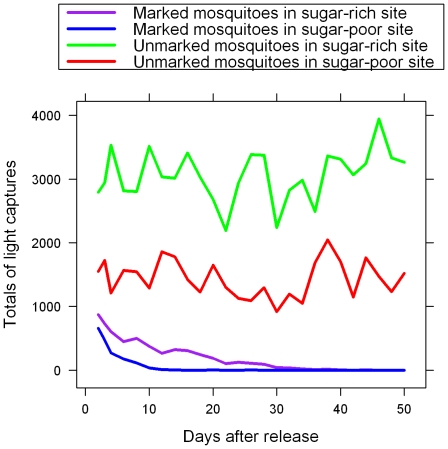
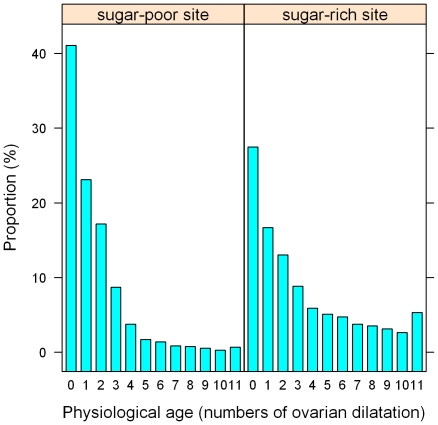
An improved knowledge of mosquito life history could strengthen malaria vector control efforts that primarily focus on killing mosquitoes indoors using insecticide treated nets and indoor residual spraying. Natural sugar sources, usually floral nectars of plants, are a primary energy resource for adult mosquitoes but their role in regulating the dynamics of mosquito populations is unclear. To determine how the sugar availability impacts Anopheles sergentii populations, mark-release-recapture studies were conducted in two oases in Israel with either absence or presence of the local primary sugar source, flowering Acacia raddiana trees. Compared with population estimates from the sugar-rich oasis, An. sergentii in the sugar-poor oasis showed smaller population size (37,494 vs. 85,595), lower survival rates (0.72 vs. 0.93), and prolonged gonotrophic cycles (3.33 vs. 2.36 days). The estimated number of females older than the extrinsic incubation period of malaria (10 days) in the sugar rich site was 4 times greater than in the sugar poor site. Sugar feeding detected in mosquito guts in the sugar-rich site was significantly higher (73%) than in the sugar-poor site (48%). In contrast, plant tissue feeding (poor quality sugar source) in the sugar-rich habitat was much less (0.3%) than in the sugar-poor site (30%). More important, the estimated vectorial capacity, a standard measure of malaria transmission potential, was more than 250-fold higher in the sugar-rich oasis than that in the sugar-poor site. Our results convincingly show that the availability of sugar sources in the local environment is a major determinant regulating the dynamics of mosquito populations and their vector potential, suggesting that control interventions targeting sugar-feeding mosquitoes pose a promising tactic for combating transmission of malaria parasites and other pathogens.
Overview
The claims and statistics of this paper haven’t been checked yet.
Free: it reads the open-access text and checks the first 5 claims that cite a source we can check. Create a free account to check every claim.
Integrity signals
Registry
Cites
Statistics
Figures
Verification
Claims the paper makes
The claims and statistics of this paper haven’t been checked yet.
Free: it reads the open-access text and checks the first 5 claims that cite a source we can check. Create a free account to check every claim.
Claims other papers make about this one
Each is checked against this paper’s own text: does it say what the citing paper says it does?
The cited source says what the claim attributes to it.
In the citing paper
“As recently described [23], the environments of the two oases are very similar except for the availability of sugar sources.”
The cited source says what the claim attributes to it.
In the citing paper
“As demonstrated in a recent comparative study of An. sergentii in sugar-rich and sugar-poor oases in Israel, the availability of natural plant sugar sources affects mosquito fitness, population dynamics, and malaria vector capacity [23].”
Self-check
Percentages, sums and reported differences re-computed from the paper’s own numbers.
The self-check needs the paper’s full text.
Citations
Cites
R: A Language and Environment for Statistical Computing
R Core Team (2025) · doi:10.32614/r.manuals · Cited by 352,181
Direct microdetermination of sucrose
van Handel, E. (1968) · Analytical Biochemistry · doi:10.1016/0003-2697(68)90317-5 · Cited by 729
Auclair, J. L. (1963) · Annual Review of Entomology · doi:10.1146/annurev.en.08.010163.002255 · Cited by 506 · cited 1×
“Sugar content in these alternative plant tissue sources is frugal, as compared to high concentrations (20– 60%) in nectar and honeydew [32,33,34].”
BackgroundStatics and dynamics of malaria infection in Anopheles mosquitoes.
(2004) · Malaria Journal · doi:10.1186/1475-2875-3-13 · Cited by 473 · cited 1×
“It is well documented that the effects of interventions on the mosquito survival rates are extremely important [30].”
BackgroundKilleen, G. F., Smith, T. A., Ferguson, H. M., Mshinda, H., Abdulla, S., Lengeler, C., & Kachur, S. P. (2007) · PLoS Medicine · doi:10.1371/journal.pmed.0040229 · Cited by 408 · cited 1×
“, bednets and source reduction of aquatic habitats, can significantly affect population dynamics and the vectorial capacity of pathogen transmitting mosquitoes [8,9,10].”
BackgroundEcology: A Prerequisite for Malaria Elimination and Eradication
Ferguson, H. M., Dornhaus, A., Beeche, A., Borgemeister, C., Gottlieb, M., Mulla, M. S., Gimnig, J. E., Fish, D., & Killeen, G. F. (2010) · PLoS Medicine · doi:10.1371/journal.pmed.1000303 · Cited by 374 · cited 3×
“Vector ecology has been reiterated as the key for the development of much-needed new approaches beyond LLINs and IRS for controlling malaria vector species and locally eliminating malaria parasite transmission [6].”
BackgroundInfluentialHow to make evolution-proof insecticides for malaria control
Read, A. F., Lynch, P. A., & Thomas, M. B. (2009) · PLoS Biology · doi:10.1371/journal.pbio.1000058 · Cited by 288 · cited 1×
“Nevertheless, scale-up applications of LLINs and IRS inevitably lead to development of insecticide resistance and do not suffice to sustain long-term control effects [3,4].”
BackgroundMüller, G. C., Beier, J. C., Traore, S. F., Toure, M. B., Traore, M. M., Bah, S., Doumbia, S., & Schlein, Y. (2010) · Malaria Journal · doi:10.1186/1475-2875-9-210 · Cited by 239
Self-citationKilleen, G. F., McKenzie, F. E., Foy, B. D., Schieffelin, C., Billingsley, P. F., & Beier, J. C. (2000) · The American journal of tropical medicine and hygiene · doi:10.4269/ajtmh.2000.62.535 · Cited by 220 · cited 2×
“2 - 4 days [23], our estimation was weighted average to take into account the variation of individual mosquitoes.”
BackgroundSelf-citationPost‐secretory determinants of sugar concentration in nectar
CORBET, S. A., WILLMER, P. G., BEAMENT, J. W. L., UNWIN, D. M., & PRŶS‐JONES, O. E. (1979) · Plant, Cell & Environment · doi:10.1111/j.1365-3040.1979.tb00084.x · Cited by 209 · cited 1×
“Sugar content in these alternative plant tissue sources is frugal, as compared to high concentrations (20– 60%) in nectar and honeydew [32,33,34].”
Background
Research works printed but not linked: 3
- WHO 2004 Global strategic framework for integrated vector management. WHO/CDS/CPE/PVC/2004 10 1 12
- Zohary M Orshansky G 1949 Structure and ecology of the vegetation in the Dead Sea region of Palestine. Palest J Bot 4 177 206
- Van Handel E 1972 The detection of nectar in mosquitoes. Mosq News 32 458
Cited by
Characterizing, controlling and eliminating residual malaria transmission
Killeen, G. F. (2014) · Malaria Journal · doi:10.1186/1475-2875-13-330 · Cited by 506
Burkett-Cadena, N. D., & Vittor, A. Y. (2018) · Basic and Applied Ecology · doi:10.1016/j.baae.2017.09.012 · Cited by 201
Flies and Flowers III: Ecology of foraging and pollination
Inouye, D. W., Larson, B. M. H., Ssymank, A., & Kevan, P. G. (2015) · Journal of Pollination Ecology · doi:10.26786/1920-7603(2015)15 · Cited by 213
“It is important to understand the ecology of floral foraging by Diptera because their access to nutritional resources at flowers is so critical to their fitness (Magnarelli & Anderson 1977; Haslett 1989a; Gu et al. 2011;).”
BackgroundBeier, J. C., Müller, G. C., Gu, W., Arheart, K. L., & Schlein, Y. (2012) · Malaria Journal · doi:10.1186/1475-2875-11-31 · Cited by 199
“Both sites covered areas of about 5 ha, included small fresh-water springs surrounded by dense non-flowering vegetation which was largely grazed out by camels and donkeys with no visible plant sugar sources during the period of field experiments [23,24].”
BackgroundInfluentialSelf-citationNyasembe, V. O., Teal, P. E. A., Mukabana, W. R., Tumlinson, J. H., & Torto, B. (2012) · Parasites & Vectors · doi:10.1186/1756-3305-5-234 · Cited by 154
“As such, the availability of sugar sources in the local environment is a major determinant regulating survival, the dynamics of mosquito populations and their vector potential [15,16].”
BackgroundAtriplex halimus L.: Its biology and uses
Walker, D. J., Lutts, S., Sánchez‐García, M., & Corréal, E. (2013) · Journal of Arid Environments · doi:10.1016/j.jaridenv.2013.09.004 · Cited by 158
Traore, M. M., Junnila, A., Traore, S. F., Doumbia, S., Revay, E. E., Kravchenko, V. D., Schlein, Y., Arheart, K. L., Gergely, P., Xue, R., et al. (2020) · Malaria Journal · doi:10.1186/s12936-020-3132-0 · Cited by 138
“These results are in agreement with previous studies [28, 45].”
ResultSelf-citationMoore, S. (2006) · CRC Press eBooks · doi:10.1201/9781420006650.ch14 · Cited by 116
Saab, S. A., zu Dohna, H., Nilsson, L. K. J., Onorati, P., Nakhleh, J., Terenius, O., & Osta, M. A. (2020) · Scientific Reports · doi:10.1038/s41598-020-60075-6 · Cited by 111
Qualls, W. A., Müller, G. C., Traore, S. F., Traore, M. M., Arheart, K. L., Doumbia, S., Schlein, Y., Kravchenko, V. D., Xue, R., & Beier, J. C. (2015) · Malaria Journal · doi:10.1186/s12936-015-0819-8 · Cited by 117
“Similar results have been obtained in one study in Israel where anopheline populations were controlled for >6 weeks after ATSB application to vegetation [15].”
ResultSelf-citationVolatile phytochemicals as mosquito semiochemicals
Nyasembe, V. O., & Torto, B. (2013) · Phytochemistry Letters · doi:10.1016/j.phytol.2013.10.003 · Cited by 104
“Sugar also plays an important role in the early stages of adult development and, in nature, the availability and abundance of sugar sources determine the frequency of sugar feeding (Van Handel et al., 1994; Martinez-Ibarra et al., 1997; Gu et al., 2011).”
BackgroundLittle, E., Biehler, D. D., Leisnham, P. T., Jordan, R., Wilson, S., & LaDeau, S. L. (2017) · Journal of Medical Entomology · doi:10.1093/jme/tjx103 · Cited by 114
Müller, G. C., Junnila, A., Traore, M. M., Traore, S. F., Doumbia, S., Sissoko, F., Dembélé, S. M., Schlein, Y., Arheart, K. L., Revay, E. E., et al. (2017) · Malaria Journal · doi:10.1186/s12936-017-1878-9 · Cited by 104
“This is in agreement with a previous study [23], in southern Israel, that found that Anopheles sergentii in a sugar-poor oasis, i.”
ResultSelf-citationHost plant forensics and olfactory-based detection in Afro-tropical mosquito disease vectors
Nyasembe, V. O., Tchouassi, D. P., Pirk, C. W. W., Sole, C. L., & Torto, B. (2018) · PLoS neglected tropical diseases · doi:10.1371/journal.pntd.0006185 · Cited by 98
Sissoko, F., Junnila, A., Traore, M. M., Traore, S. F., Doumbia, S., Dembélé, S. M., Schlein, Y., Traore, A., Gergely, P., Xue, R., et al. (2019) · PLoS ONE · doi:10.1371/journal.pone.0214170 · Cited by 90
“concluded that the availability of sugar sources in the local environment affects mosquito 99 longevity and thus it is a key regulator of mosquito population dynamics and therefore, of their 100 vectorial capacity [15, 26].”
BackgroundSelf-citationPeyton, J., Martinou, A. F., Pescott, O. L., Demetriou, M., Adriaens, T., Αριανούτσου, Μ., Bazos, I., Bean, C. W., Booy, O., Botham, M. S., et al. (2019) · Biological Invasions · doi:10.1007/s10530-019-01961-7 · Cited by 102
Implications of diet on mosquito life history traits and pathogen transmission
Carvajal-Lago, L., Ruiz‐López, M. J., Figuerola, J., & la Puente, J. M. (2021) · Environmental Research · doi:10.1016/j.envres.2021.110893 · Cited by 98
Thongsripong, P., Hyman, J. M., Kapan, D. D., & Bennett, S. N. (2021) · Annals of the Entomological Society of America · doi:10.1093/aesa/saab011 · Cited by 99
Khallaayoune, K., Qualls, W. A., Revay, E. E., Allan, S. A., Arheart, K. L., Kravchenko, V. D., Xue, R., Schlein, Y., Beier, J. C., & Müller, G. C. (2013) · Environmental Entomology · doi:10.1603/en13119 · Cited by 84
Self-citationMalaria Parasites Produce Volatile Mosquito Attractants
Kelly, M., Su, C., Schaber, C., Crowley, J. R., Hsu, F., Carlson, J. R., & John, A. R. O. (2015) · mBio · doi:10.1128/mbio.00235-15 · Cited by 83
Conley, A. K., Fuller, D. O., Haddad, N., Hassan, A. N., Gad, A. M., & Beier, J. C. (2014) · Parasites & Vectors · doi:10.1186/1756-3305-7-289 · Cited by 85
“The EVI provides a measure of photosynthetic activity or landscape greenness and hence captures vegetation features such as leaf area, canopy cover, sugar resources that may provide resting sites and alternate food sources for this vector species [48-50].”
BackgroundSelf-citationPlant-Mediated Effects on Mosquito Capacity to Transmit Human Malaria
Hien, D. F. D. S., Dabiré, R. K., Roche, B., Diabaté, A., Yerbanga, R. S., Cohuet, A., Yaméogo, B. K., Gouagna, L., Hopkins, R. J., Ouédraogo, G. A., et al. (2016) · PLoS Pathogens · doi:10.1371/journal.ppat.1005773 · Cited by 85
Plant-sugar feeding and vectorial capacity
Stone, C., & Foster, W. A. (2013) · Wageningen Academic Publishers eBooks · doi:10.3920/978-90-8686-744-8_3 · Cited by 88
Would the control of invasive alien plants reduce malaria transmission? A review
Stone, C., Witt, A., Walsh, G. C., Foster, W. A., & Murphy, S. T. (2018) · Parasites & Vectors · doi:10.1186/s13071-018-2644-8 · Cited by 80
“, mosquitoes would live longer and greater populations would be sustained [64].”
BackgroundMonitoring population and environmental parameters of invasive mosquito species in Europe
Petrić, D. V., Bellini, R., Scholte, E., Rakotoarivony, L., & Schaffner, F. (2014) · Parasites & Vectors · doi:10.1186/1756-3305-7-187 · Cited by 87
“Consequently, this type of research can be done in the laboratory, by rearing the target species [14,17,34-38], or in the field [39], typically deriving the data from mark-releaserecapture (MRR) trials [13,15,18,40-46].”
BackgroundJunnila, A., Revay, E. E., Müller, G. C., Kravchenko, V. D., Qualls, W. A., Xue, R., Allen, S. A., Beier, J. C., & Schlein, Y. (2015) · Acta Tropica · doi:10.1016/j.actatropica.2015.09.006 · Cited by 77
“This is important because the vailability of sugar sources in the local environment is a key factor n regulating most aspects of mosquito biology and therefore their ector potential (Gu et al., 2011).”
Self-citationNyasembe, V. O., Teal, P. E. A., Sawa, P., Tumlinson, J. H., Borgemeister, C., & Torto, B. (2014) · Current Biology · doi:10.1016/j.cub.2013.12.022 · Cited by 73
“Although nectar feeding is known to play a critical role in the survival of malaria vectors [11, 12], this is the first study to demonstrate possible physiological adjustment of P.”
Wang, M., An, Y., Gao, L., Dong, S., Zhou, X., Feng, Y., Wang, P., Dimopoulos, G., Tang, H., & Wang, J. (2021) · Cell Reports · doi:10.1016/j.celrep.2021.108992 · Cited by 71
“Studies have shown that the diversity of natural plants affects the capacity of Anopheles mosquitoes to transmit Plasmodium parasites (Ebrahimi et al., 2018; Gu et al., 2011; Hien et al., 2016).”
Nıkbakhtzadeh, M. R., Terbot, J. W., Otienoburu, P. E., & Foster, W. A. (2014) · Journal of Vector Ecology · doi:10.1111/jvec.12113 · Cited by 64
“…vectorial capacity in two ways: by extending survival (Okech et al. 2003, Gary and Foster 2001, 2004, Impoinvil et al. 2004, Manda et al. 2007a, Gu et al. 2011, Stone et al. 2012), and by either reducing biting frequency (Gary and Foster 2001, Braks et al. 2006, Stone et al. 2012) or…”
BackgroundThe Invasive American Weed Parthenium hysterophorus Can Negatively Impact Malaria Control in Africa
Nyasembe, V. O., Cheseto, X., Kaplan, F., Foster, W. A., Teal, P. E. A., Tumlinson, J. H., Borgemeister, C., & Torto, B. (2015) · PLoS ONE · doi:10.1371/journal.pone.0137836 · Cited by 61
Analysis and Optimization of a Synthetic Milkweed Floral Attractant for Mosquitoes
Otienoburu, P. E., Ebrahimi, B., Phelan, P. L., & Foster, W. A. (2012) · Journal of Chemical Ecology · doi:10.1007/s10886-012-0150-6 · Cited by 58
“Sugar feeding by mosquitoes has a significant influence on dispersal (Hocking, 1953; Magnarelli, 1977) and vectorial capacity (Gary and Foster, 2001; Gu et al., 2011), and, contrary to long-held conjecture, is required by both males and females throughout the adult stage (Downes, 1958; Yuval, 1992;…”
BackgroundStone, C., Jackson, B. T., & Foster, W. A. (2012) · American Journal of Tropical Medicine and Hygiene · doi:10.4269/ajtmh.2012.12-0123 · Cited by 62
Revay, E. E., Schlein, Y., Tsabari, O., Kravchenko, V. D., Qualls, W. A., De-Xue, R., Beier, J. C., Traore, S. F., Doumbia, S., Hausmann, A., et al. (2015) · Acta Tropica · doi:10.1016/j.actatropica.2015.06.018 · Cited by 62
“Increased knowledge of mosquito feeding-habits and preferences has enabled targeting the vectors by using attractive toxic sugar bait (ATSB) – a mixture of sugar and oral insecticide dissolved in water, which was initially sprayed on plants known to be highly-attractive to local mosquito populations (Müller and Schlei…”
BackgroundSelf-citationEcological niche modeling of mosquito vectors of West Nile virus in St. John’s County, Florida, USA
Sallam, M. F., Xue, R., Pereira, R. M., & koehler, P. G. (2016) · Parasites & Vectors · doi:10.1186/s13071-016-1646-7 · Cited by 64
Variation in energy reserves and role of body size in the mating system ofAnopheles gambiae
Maïga, H., Dabiré, R. K., Lehmann, T., Tripet, F., & Diabaté, A. (2012) · Journal of Vector Ecology · doi:10.1111/j.1948-7134.2012.00230.x · Cited by 53
Muema, J. M., Bargul, J. L., Njeru, S. N., Onyango, J. O., & Imbahale, S. S. (2017) · Parasites & Vectors · doi:10.1186/s13071-017-2122-8 · Cited by 55
Olson, M. F., Garcia-Luna, S., Juarez, J. G., Martin, E. M., Harrington, L. C., Eubanks, M. D., Badillo-Vargas, I. E., & Hamer, G. L. (2020) · Journal of Medical Entomology · doi:10.1093/jme/tjaa005 · Cited by 48
Schwarz, D., Spitzer, S. M., Thomas, A. C., Kohnert, C. M., Keates, T. R., & Acevedo‐Gutiérrez, A. (2018) · Ecology and Evolution · doi:10.1002/ece3.4474 · Cited by 51
Fikrig, K., Peck, S., Deckerman, P., Dang, S., Fleur, K. S., Goldsmith, H., Qu, S., Rosenthal, H., & Harrington, L. C. (2020) · PLoS neglected tropical diseases · doi:10.1371/journal.pntd.0008244 · Cited by 49
Qualls, W. A., Müller, G. C., Khallaayoune, K., Revay, E. E., Zhioua, E., Kravchenko, V. D., Arheart, K. L., Xue, R., Schlein, Y., Hausmann, A., et al. (2015) · Parasites & Vectors · doi:10.1186/s13071-015-0671-2 · Cited by 44
Self-citationLobo, N. F., Achee, N. L., Grieco, J. P., & Collins, F. H. (2017) · Cold Spring Harbor Perspectives in Medicine · doi:10.1101/cshperspect.a025643 · Cited by 51
“Sugars derived from plants are an integral component of mosquito nutrition and provide energy for survival, flight, and enhance fecundity and vectorial capacity (Nayar and Sauerman 1971, 1975a,b; Foster 1995; Briegel 2003; Gu et al. 2011).”
BackgroundBassène, H., Niang, E. H. A., Fenollar, F., Doucouré, S., Faye, O., Raoult, D., Sokhna, C., & Mediannikov, O. (2020) · Scientific Reports · doi:10.1038/s41598-020-64163-5 · Cited by 48
Attraction of Female Aedes aegypti (L.) to Aphid Honeydew
Peach, D. A. H., Gries, R. M., Young, N., Lakes, R., Galloway, E., Alamsetti, S. K., Ko, E., Ly, A., & Gries, G. (2019) · Insects · doi:10.3390/insects10020043 · Cited by 45
“Plant sugar also enhances the vectorial capacity of mosquitoes [20,21].”
BackgroundChadee, D. D., Sutherland, J. M., & Gilles, J. R. L. (2013) · Acta Tropica · doi:10.1016/j.actatropica.2013.09.019 · Cited by 40
Natural malaria infection reduces starvation resistance of nutritionally stressed mosquitoes
Lalubin, F., Delédevant, A., Glaizot, O., & Christe, P. (2013) · Journal of Animal Ecology · doi:10.1111/1365-2656.12190 · Cited by 40
Cui, G., Zhong, S., Zheng, T., Li, Z., Zhang, X., Li, C., Hemming‐Schroeder, E., Zhou, G., & Li, Y. (2021) · Parasites & Vectors · doi:10.1186/s13071-021-05081-x · Cited by 44
“The current extent of our understanding is that adult mosquitoes’ primary food source is flower/leaf nectar, and female mosquitoes need protein (usually from a blood meal source) before they can lay eggs [62, 63].”
BackgroundEbrahimi, B., Jackson, B. T., Guseman, J., Przybylowicz, C. M., Stone, C., & Foster, W. A. (2017) · Journal of Applied Ecology · doi:10.1111/1365-2664.13001 · Cited by 40
“blood- feedings, being significantly longer in the nectar- poor oasis (Gu et al., 2011).”
BackgroundSallam, M. F., Michaels, S., Riegel, C., Pereira, R. M., Zipperer, W. C., Lockaby, B. G., & koehler, P. G. (2017) · International Journal of Environmental Research and Public Health · doi:10.3390/ijerph14080892 · Cited by 39
Liu, B., Gao, X., Ma, J., Jiao, Z., Xiao, J., & Wang, H. (2018) · International Journal of Environmental Research and Public Health · doi:10.3390/ijerph15091848 · Cited by 37
“Mosquitoes get sugar supplements mainly from fruits and nectar [73].”
BackgroundMng'ong'o, F. C., Sambali, J., Sabas, E., Rubanga, J., Magoma, J., Ntamatungiro, A. J., Turner, E. L., Nyogea, D., Ensink, J. H. J., & Moore, S. (2011) · PLoS ONE · doi:10.1371/journal.pone.0025927 · Cited by 41
“The authors demonstrated that mosquito survival was enhanced so that a greater proportion of mosquitoes survive long enough for the malaria parasite to develop, and the period between blood feeding events was shortened increasing the probability that they are infected or infect a human when blood-feeding [33].”
BackgroundNtamatungiro, A. J., Mayagaya, V., Rieben, S., Moore, S., Dowell, F. E., & Maia, M. F. (2013) · Parasites & Vectors · doi:10.1186/1756-3305-6-298 · Cited by 33
“This is essential for interventions that require an evaluation of their impact on the survival of wild mosquito populations and for the development of life shortening vector control strategies such as slow acting insecticides such as clorophenapyr, new biological control agents like Wolbachia and entopathogenic fungi…”
BackgroundQualls, W. A., Xue, R., Revay, E. E., Allan, S. A., & Müller, G. C. (2012) · Acta Tropica · doi:10.1016/j.actatropica.2012.07.004 · Cited by 33
Self-citationEnvironmental Drivers of Vector-Borne Diseases
Shocket, M. S., Anderson, C. B., Caldwell, J. M., Childs, M. L., Couper, L., Han, S., Harris, M., Howard, M. E., Kai, M. P., MacDonald, A. J., et al. (2020) · Oxford University Press eBooks · doi:10.1093/oso/9780198853244.003.0006 · Cited by 41
Stone, C., Jackson, B. T., & Foster, W. A. (2012) · Malaria Journal · doi:10.1186/1475-2875-11-3 · Cited by 32
“But how the abundance of sugar-bearing plants and the accessibility of blood hosts in an environment affects the decision to feed on either sugar or blood is currently not well understood, even though it pertains to malaria epidemiology through its effects on vectorial capacity [4,5].”
BackgroundFeeding frequency and survival of Anopheles gambiae in a rice‐growing area in Ghana
Charlwood, J. D., Tomás, E. V. E., Egyir-Yawson, A., Kampango, A., & Pitts, R. J. (2011) · Medical and Veterinary Entomology · doi:10.1111/j.1365-2915.2011.00987.x · Cited by 29
“Mark–release–recapture experiments tend towards age-independent estimates (exponential fits of population declines being as good as other fits) (Gillies, 1961) and, in a recent extensive study in an isolated oasis, although not mentioned by the authors, the survival of Anopheles sergentii determined both by dissection…”
ResultBlocking the evolution of insecticide‐resistant malaria vectors with a microsporidian
Koella, J. C., Saddler, A., & Karacs, T. P. S. (2011) · Evolutionary Applications · doi:10.1111/j.1752-4571.2011.00219.x · Cited by 26
“…mosquitoes) is low (6.6% of the larvae in a West African population of A. gambiae (Andreadis 2007)), a combination of continually distributing the spores to larval sites, infecting the adults through sugar baits (Gu et al. 2011) and auto-dispersal during oviposition, may maintain high prevalence.”
BackgroundResultInfluentialCharlwood, J. D. (2011) · Journal of Vector Ecology · doi:10.1111/j.1948-7134.2011.00179.x · Cited by 26
“Plant sugar is an important food source for females and is mandatory for males (Gu et al. 2011).”
BackgroundEcology and Behavior of Anopheles arabiensis in Relation to Agricultural Practices in Central Kenya
Muturi, E. J., MWANGANGI, J. M., Beier, J. C., Blackshear, M., Wauna, J. O., Sang, R. C., & Mukabana, W. R. (2013) · Journal of the American Mosquito Control Association · doi:10.2987/13-6328r.1 · Cited by 25
Self-citationPaksa, A., Sedaghat, M. M., Vatandoost, H., Yaghoobi‐Ershadi, M. R., Moosa‐Kazemi, S. H., Hazratian, T., Sanei-Dehkordi, A., & Oshaghi, M. A. (2019) · Journal of arthropod-borne diseases · doi:10.18502/jad.v13i1.933 · Cited by 34
“Plants provide energy for mosquitoes, As a result, survival rate increased and longevity of the mosquito longer than the extrinsic incubation period of parasite, therefore the incidence of disease increases (61-62).”
BackgroundNunes, R. D., Ventura‐Martins, G., Moretti, D., Medeiros‐Castro, P., dos Santos, C. R., Filho, C. R. D. O. D., Bittencourt-Cunha, P. R., Martins-Cardoso, K., Cudischevitch, C. O., Menna‐Barreto, R. F. S., et al. (2016) · PLoS neglected tropical diseases · doi:10.1371/journal.pntd.0005034 · Cited by 27
Zhu, L., Qualls, W. A., Marshall, J. M., Arheart, K. L., Deangelis, D. L., McManus, J. W., Traore, S. F., Doumbia, S., Schlein, Y., Müller, G. C., et al. (2015) · Malaria Journal · doi:10.1186/s12936-015-0555-0 · Cited by 23
“Population size and daily survival rates of anopheline mosquitoes are higher in natural sugar rich areas than in natural sugar poor areas [7,8].”
BackgroundMethodSelf-citationBilgo, E. M., Vantaux, A., Sanon, A., Ilboudo, S., Dabiré, R. K., Jacobs‐Lorena, M., & Diabaté, A. (2018) · Malaria Journal · doi:10.1186/s12936-018-2516-x · Cited by 26
Benedict, M. Q., Charlwood, J. D., Harrington, L. C., Lounibos, L. P., Reisen, W. K., & Tabachnick, W. J. (2018) · Vector-Borne and Zoonotic Diseases · doi:10.1089/vbz.2017.2152 · Cited by 26
“Dispersal out of the study area cannot be distinguished from mortality and so it is useful to have independent estimates to support either estimate as was done by Gillies and Wilkes (1965), Charlwood (1986), and more recently by Gu et al. (2011).”
ResultRelative contributions of various endogenous and exogenous factors to the mosquito microbiota
Bogale, H. N., Cannon, M. V., Keita, K., Camara, D., Barry, Y., Keïta, M., Coulibaly, D. M., Kone, A. K., Doumbo, O. K., Thera, M. A., et al. (2020) · Parasites & Vectors · doi:10.1186/s13071-020-04491-7 · Cited by 21
Sugar‐feeding behaviour and longevity of E uropean C ulicoides biting midges
Kaufmann, C. A., Mathis, A., & Vorburger, C. (2014) · Medical and Veterinary Entomology · doi:10.1111/mve.12086 · Cited by 23
“Seasonal and environmental factors have been shown to influence sugar intake behaviour in mosquitoes (Bidlingmayer & Hem, 1973; Spencer et al., 2005; Gu et al., 2011).”
BackgroundInfluentialUrbán, P., Ranucci, E., & Fernàndez‐Busquets, X. (2015) · Nanomedicine · doi:10.2217/nnm.15.174 · Cited by 22
“Plant nectar is an important, carbohydrate-rich nutrient source that provides essential energy for flight and, for some mosquito species, overwintering [90,91].”
BackgroundDo avian malaria parasites reduce vector longevity?
la Puente, J. M., Gutiérrez‐López, R., & Figuerola, J. (2018) · Current Opinion in Insect Science · doi:10.1016/j.cois.2018.08.001 · Cited by 21
Airs, P. M., Kudrna, K. E., & Bartholomay, L. C. (2019) · Acta Tropica · doi:10.1016/j.actatropica.2019.01.005 · Cited by 22
Yalla, N., Polo, B., McDermott, D. P., Kosgei, J. J., Omondi, S., Agumba, S., Moshi, V., Abong’o, B., Gimnig, J. E., Harris, A. F., et al. (2023) · PLoS ONE · doi:10.1371/journal.pone.0286679 · Cited by 19
“The energy gained from sugar meals is necessary to drive dispersal and mosquito survivorship [30].”
BackgroundChen, Z., & Kearney, C. M. (2015) · Acta Tropica · doi:10.1016/j.actatropica.2015.03.010 · Cited by 20
Sharma, A., Reyes, J. B., Borgmeyer, D., Ayala-Chavez, C., Snow, K., Arshad, F., Nuss, A. B., & Gulia-Nuss, M. (2020) · Scientific Reports · doi:10.1038/s41598-020-63050-3 · Cited by 17
Killeen, G. F., Kiware, S. S., Seyoum, A., Gimnig, J. E., Corliss, G. F., Stevenson, J. C., DRAKELEY, C. J., & Chitnis, N. (2014) · Malaria Journal · doi:10.1186/1475-2875-13-338 · Cited by 15
“Given the widespread dependence of mosquitoes upon sugar [21,65,66], many important vector populations probably use it at similarly high rates, especially when infected with malaria parasites [68].”
BackgroundDieng, H., Satho, T., Abang, F. B., Meli, N. K. K. B., Ghani, I. A., Nolasco-Hipólito, C., Hakim, H., Miake, F., Ahmad, A. H., Noor, S., et al. (2017) · Acta Tropica · doi:10.1016/j.actatropica.2017.01.022 · Cited by 22
Biological properties of selected Amaranthaceae halophytic species: A review
Todorović, M., Zlatić, N. M., Bojović, B., & Kanjevac, M. (2022) · Brazilian Journal of Pharmaceutical Sciences · doi:10.1590/s2175-97902022e21229 · Cited by 14
Chapter 7: Behavioural ecology of plant-mosquito relations
Foster, W. A. (2022) · Wageningen Academic Publishers eBooks · doi:10.3920/978-90-8686-932-9_7 · Cited by 17
Schlein, Y., & Müller, G. C. (2012) · Acta Tropica · doi:10.1016/j.actatropica.2012.06.007 · Cited by 14
Self-citationInnovative approaches to exploit host plant metabolites in malaria control
Torto, B. (2019) · Pest Management Science · doi:10.1002/ps.5460 · Cited by 13
Glucose transporter GLUT1 influences Plasmodium berghei infection in Anopheles stephensi
Wang, M., & Wang, J. (2020) · Parasites & Vectors · doi:10.1186/s13071-020-04155-6 · Cited by 13
Yu, B.-T., Huang, S.-Q., Ding, Y.-M., Fouad, H., Li, H., & Mo, J. (2017) · Journal of Asia-Pacific Entomology · doi:10.1016/j.aspen.2017.06.010 · Cited by 14
Paré, P. S. L., Hien, D. F. D. S., Youba, M., Yerbanga, R. S., Cohuet, A., Gouagna, L., Diabaté, A., Ignell, R., Dabiré, R. K., Gnankiné, O., et al. (2024) · Ecology and Evolution · doi:10.1002/ece3.11187 · Cited by 14
“…of Anopheles gambiae sensu lato, the primary vector of the malaria parasite, Plasmodium falciparum , in Africa, through their impacts on the lifespan, susceptibility to pathogens, and reproductive output of individual mosquitoes (Ebrahimi et al., 2018 ; Gu et al., 2011; Hien et al., 2016 ).”
BackgroundQualls, W. A., Steck, M. R., Weaver, J. R., Zhang, Y., Xue, R., & Sallam, M. F. (2021) · Wetlands Ecology and Management · doi:10.1007/s11273-021-09816-6 · Cited by 13
The food of life: which nectar do mosquitoes feed on?—An evidence-based meta-analysis
Herreros-Moya, E., Sinka, M. E., Harris, A. F., Entwistle, J., Martin, A. C., & Willis, K. J. (2025) · Environmental Entomology · doi:10.1093/ee/nvaf009 · Cited by 10
“…al. 2003, Gary Jr and Foster 2004, Impoinvil et al. 2004, Müller and Schlein 2006, Manda et al. 2007a, Schlein and Müller 2008, Müller et al. 2010, Gu et al. 2011, Beier et al. 2012, Stone et al. 2012, Qualls et al. 2013, Yu et al. 2016, Sissoko et al. 2019, Nyasembe et al. 2021), and there are…”
Supplementing Blood Diet With Plant Nectar Enhances Egg Fertility in Stomoxys calcitrans
Tawich, S. K., Bargul, J. L., Masiga, D. K., & Getahun, M. N. (2021) · Frontiers in Physiology · doi:10.3389/fphys.2021.646367 · Cited by 9
“Plant nectar feeding in mosquitoes is well studied and reported to be essential as it increases their lifespan and reproductive capacity and contributes to disease transmission (Foster, 1995; Gary and Foster, 2001; Gu et al., 2011).”
BackgroundIdentifying mosquito plant hosts from ingested nectar secondary metabolites
Cooper, A., Malmgren, L., Hawkes, F. M., Farrell, I. W., Hien, D. F. D. S., Hopkins, R. J., Léfèvre, T., & Stevenson, P. C. (2025) · Scientific Reports · doi:10.1038/s41598-025-88933-1 · Cited by 10
Yu, B.-T., Ding, Y.-M., Hu, Y., Tian, J., Song, X.-G., Li, Z., & Mo, J. (2018) · Journal of Medical Entomology · doi:10.1093/jme/tjy161 · Cited by 8
Olfactory preferences and chemical differences of fruit odors for Aedes aegypti mosquitoes
Leon-Noreña, M., Tauxe, G. M., & Riffell, J. A. (2025) · Journal of Experimental Biology · doi:10.1242/jeb.250305 · Cited by 8
“…and females utilizing sources of nutrients from floral, fruit and extrafloral sources throughout their lives (Bradshaw et al., 2018; Brantjes and Leemans, 1976; Foster, 1995; Gu et al., 2011; Jhumur et al., 2007; Lahonde ̀ re et al., 2020; Okech et al., 2003; Peach and Gries, 2016; Yuval, 1992).”
Manipulation by Plasmodium Parasites of Anopheles Mosquito Behavior and Human Odors
Sanford, T. C., & Dave Shutler, A. (2022) · Acta Parasitologica · doi:10.1007/s11686-022-00621-6 · Cited by 7
“Male and female mosquitoes are generally nectarivorous [7, 8], but, during maturation of eggs, females require proteinrich blood meals.”
BackgroundZappia, S. P. W., & Roitberg, B. D. (2012) · Journal of Vector Ecology · doi:10.1111/j.1948-7134.2012.00214.x · Cited by 8
“Sugar availability has been linked to longer lifespan (Straif and Beier 1996, Gary and Foster 2001, Gary and Foster 2004), increased insemination rates by males (Stone et al. 2009), and is relevant to management of malaria (Gu et al. 2011).”
BackgroundInsights into malaria vectors–plant interaction in a dryland ecosystem
Kinya, F., Milugo, T. K., Mutero, C. M., Wondji, C. S., Torto, B., & Tchouassi, D. P. (2024) · Scientific Reports · doi:10.1038/s41598-024-71205-9 · Cited by 8
Attractive targeted sugar baits series in Malaria Journal
Steketee, R. W. (2025) · Malaria Journal · doi:10.1186/s12936-025-05309-6 · Cited by 6
“…earlier studies of the remaining burden of outdoor and daytime malaria transmission [4, 5], of mosquito biting and sugar feeding behaviour [6–8], of earlier smaller studies showing promising effects on entomologic outcomes [9–12], and on modelled estimates suggesting that ATSBs might be…”
Crop protection practices and risks associated with infectious tropical parasitic diseases
Ratnadass, A., & Martin, T. (2022) · The Science of The Total Environment · doi:10.1016/j.scitotenv.2022.153633 · Cited by 5
Vector Control: Some New Paradigms and Approaches
Duchet, C., Allan, R. J., & Carnevale, P. (2013) · InTech eBooks · doi:10.5772/56258 · Cited by 6
“Recent studies on sugar feeding behavior of Anopheles [63-73] have been conducted in order “to optimize strategies for malaria vector control in Africa using attractive toxic sugar bait methods” [74] and to develop a new approach for mosquito control [75-78].”
BackgroundMoosa‐Kazemi, S. H., Etemadi, Y., Sedaghat, M. M., Vatandoost, H., Mokhayeri, H., & Kayedi, M. H. (2022) · Journal of arthropod-borne diseases · doi:10.18502/jad.v15i4.10504 · Cited by 7
“As a result, the survival rate will increase and the longevity of mosquitoes will be longer than the extrinsic incubation period of the parasite, therefore the incidence of disease increases (26, 27).”
BackgroundVilliard, A. S., & Gaugler, R. R. (2015) · Journal of Medical Entomology · doi:10.1093/jme/tjv030 · Cited by 6
Arum, S. O., Weldon, C. W., Orindi, B., Tigoi, C., Mulwa, F., Landmann, T., Tchouassi, D. P., Affognon, H., & Sang, R. C. (2016) · Parasites & Vectors · doi:10.1186/s13071-016-1601-7 · Cited by 7
“Some researchers have also found that mosquitoes often use plants as sources of sugar [34–36], which may also account for observed differences in resting preference.”
BackgroundOke, C. E., O’Donnell, A. J., Schneider, P., & Reece, S. E. (2024) · Frontiers in Malaria · doi:10.3389/fmala.2024.1481816 · Cited by 4
Nıkbakhtzadeh, M. R. (2023) · Journal of Medical Entomology · doi:10.1093/jme/tjad077 · Cited by 5
Branham, E. J., Nelson, I. E., Rochlin, I., Widmer, T. D., Byers, N. M., Müller, G. C., Faraji, A., & Bibbs, C. S. (2025) · Arthropod-Plant Interactions · doi:10.1007/s11829-025-10151-3 · Cited by 5
“Studies in fragmented landscapes suggest that Anopheles mosquitoes living in lush, sugar-rich sites have larger population sizes with higher survival rates and shorter gonotrophic cycles than mosquitoes in sparse, sugar-poor areas (Gu et al. 2011).”
InfluentialSelf-citationBiting time of day in malaria mosquitoes is modulated by nutritional status
Oke, C. E., Rund, S. S. C., Machani, M. G., Mohammed, A. R., Akuamoah-Boateng, Y., Afrane, Y. A., & Reece, S. E. (2025) · Malaria Journal · doi:10.1186/s12936-025-05550-z · Cited by 4
“Mosquitoes are likely to vary in their nutritional status because the type and abundance of sugar sources available to mosquitoes varies across habitats and seasons [25, 30], and vector control tools such as ITNs can limit access to protein rich blood meals [31].”
Nelson, I. E., Baker, K. A., Faraji, A., White, G. S., & Bibbs, C. S. (2024) · Parasites & Vectors · doi:10.1186/s13071-024-06169-w · Cited by 3
“For general carbohydrate detection, cold anthrone reactions were prepared according to Nunes et al. [20], with mosquitoes handled using procedures from Gu et al. [21].”
Method
Metadata
- Authors
- Gu, W., Müller, G., Schlein, Y., Novak, R. J., & Beier, J. C.
- Affiliations
- University of Alabama (US)
- Hebrew University of Jerusalem (IL)
- University of Alabama at Birmingham (US)
- University of Miami (US)
- Corresponding author
- Gu, Weidong
- Venue
- PLoS ONE
- Publisher
- Public Library of Science (PLoS)
- Published
- 2011-01-20
- Volume
- 6
- Issue
- 1
- Pages
- e15996
- ISSN
- 1932-6203 (ISSN-L)
- PMC
- PMC3024498
- OpenAlex
- W1982736581
- Semantic Scholar
- 0e1cf6dc9c43781be5efa453540d3c4c8776d9b4
- Cited by
- 128
- References
- 33
- Citations by year
- 2026: 5 · 2025: 13 · 2024: 8 · 2023: 4 · 2022: 6 · 2021: 7 · 2020: 9 · 2019: 6 · 2018: 9 · 2017: 11 · 2016: 4 · 2015: 13 · 2014: 7 · 2013: 10 · 2012: 10
- FWCI
- 10.07
- Type
- journal article
- Language
- en
- Open access
- gold
- doi.org
- Locations
- PLoS ONE (publishedVersion, cc-by)
- PubMed Central (publishedVersion, cc-by)
- PubMed (publishedVersion)
- DOAJ (DOAJ: Directory of Open Access Journals) (submittedVersion, cc-by-sa)
- Funders
- Bill and Melinda Gates Foundation (47302)
- Topics
- Health Sciences › Medicine › Public Health, Environmental and Occupational Health › Malaria Research and Control
- Health Sciences › Medicine › Public Health, Environmental and Occupational Health › Mosquito-borne diseases and control
- Life Sciences › Agricultural and Biological Sciences › Insect Science › Insect behavior and control techniques
- Keywords
- Anopheles sergentii, malaria vectors, floral nectar, Acacia raddiana, mosquito population dynamics, vectorial capacity, gonotrophic cycle, mosquito survival
- MeSH terms
- Acacia, Animals, Anopheles, Feeding Behavior, Malaria, Mosquito Control, Plants, Population Dynamics, Carbohydrate Metabolism
About these checks
Registry, retraction, Cites and statistics results are computed, not judged, with one exception: a printed reference that no index lists is read once by a model before it counts as a citation error. Claims are extracted by a model and kept only when their quote appears verbatim in the text; each cited source is then checked, with a model’s help, for whether it says what the claim relies on. Those verdicts can be wrong — read the claim’s quote and the cited source before relying on one.
Statistics and arithmetic are recomputed, not judged.
Confidence bands are shown only for fields calibrated on our annotated test set. None is calibrated yet, so no band is shown.
What counts as a claim ›How we measure confidence ›How we check this ›
Are you an author, or do you see a problem with this page? Request a review
Data sources
Bibliographic data: Semantic Scholar, OpenAlex, Crossref.
Contains information from the Semantic Scholar Academic Graph Datasets, made available under the ODC Attribution License (ODC-BY 1.0).
Semantic Scholar’s data is described in: Kinney, R., et al. (2023). The Semantic Scholar Open Data Platform. arXiv:2301.10140.
