

The DOI matches its Crossref record; 72 of the 75 references it cites were found in a registry or an index.
Human Antimicrobial Peptide LL-37 Inhibits Adhesion of Candida albicans by Interacting with Yeast Cell-Wall Carbohydrates
Open accessAbstract
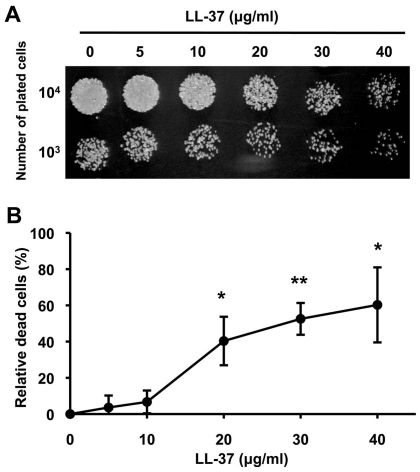
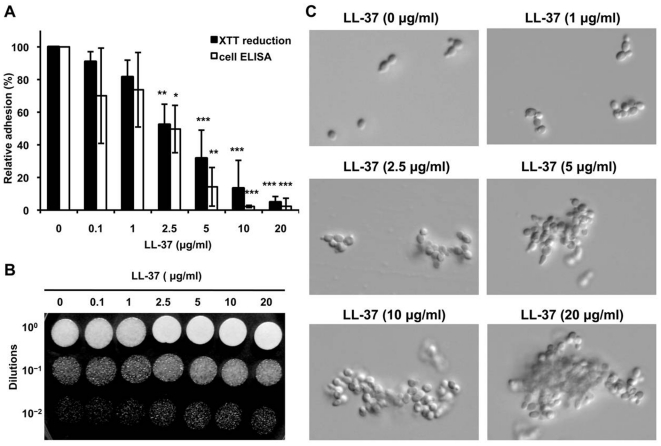
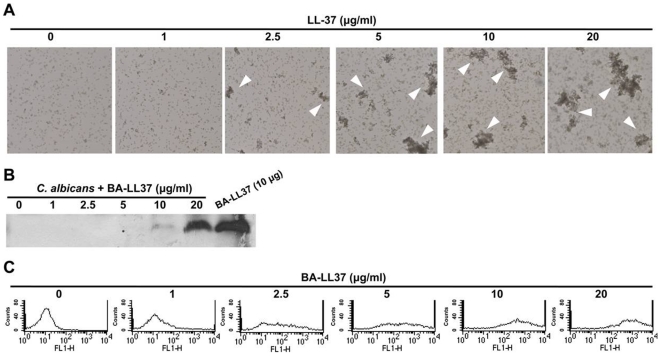
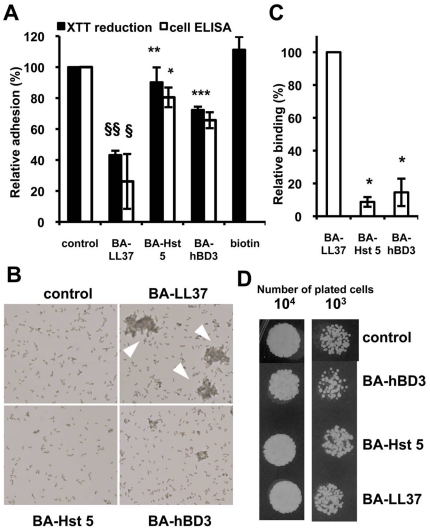
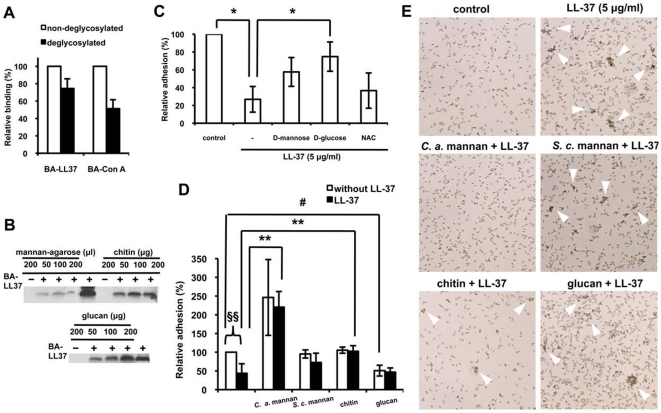
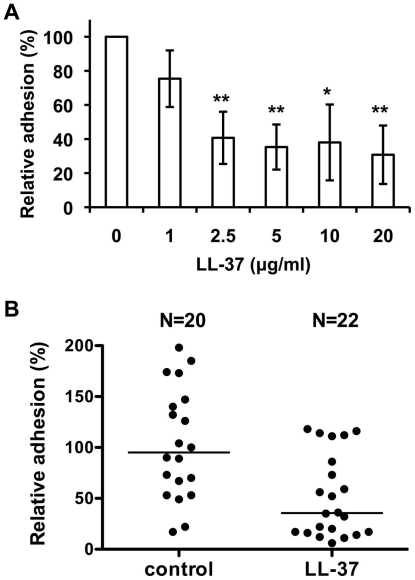
Candida albicans is the major fungal pathogen of humans. Fungal adhesion to host cells is the first step of mucosal infiltration. Antimicrobial peptides play important roles in the initial mucosal defense against C. albicans infection. LL-37 is the only member of the human cathelicidin family of antimicrobial peptides and is commonly expressed in various tissues and cells, including epithelial cells of both the oral cavity and urogenital tract. We found that, at sufficiently low concentrations that do not kill the fungus, LL-37 was still able to reduce C. albicans infectivity by inhibiting C. albicans adhesion to plastic surfaces, oral epidermoid OECM-1 cells, and urinary bladders of female BALB/c mice. Moreover, LL-37-treated C. albicans floating cells that did not adhere to the underlying substratum aggregated as a consequence of LL-37 bound to the cell surfaces. According to the results of a competition assay, the inhibitory effects of LL-37 on cell adhesion and aggregation were mediated by its preferential binding to mannan, the main component of the C. albicans cell wall, and partially by its ability to bind chitin or glucan, which underlie the mannan layer. Therefore, targeting of cell-wall carbohydrates by LL-37 provides a new strategy to prevent C. albicans infection, and LL-37 is a useful, new tool to screen for other C. albicans components involved in adhesion.
Overview
The claims and statistics of this paper haven’t been checked yet.
Run the check — free, no account needed. It reads the open-access text and checks the sources it cites.
Integrity signals
Registry
Cites
Statistics
Figures
Verification
Claims the paper makes
The claims and statistics of this paper haven’t been checked yet.
Run the check — free, no account needed. It reads the open-access text and checks the sources it cites.
Claims other papers make about this one
Each is checked against this paper’s own text: does it say what the citing paper says it does?
The source backs part of the claim, not all of it — or backs it for a different population, condition or comparison.
In the citing paper
“Glucans are major cell wall components in fungi and exoglucanases are involved in cell wall modification, cell adhesion, and killer toxin resistance (Adams 2004; Jiang et al. 1995; Tsai et al. 2011; Xu et al. 2013).”
From Biocontrol yeasts: mechanisms and applications (2019) · cites this paper as Tsai et al. 2011
Experimental — accuracy not yet measured
Self-check
Percentages, sums and reported differences re-computed from the paper’s own numbers.
The self-check needs the paper’s full text.
Citations
Cites
Antimicrobial peptides of multicellular organisms
Zasloff, M. (2002) · Nature · doi:10.1038/415389a · Cited by 8,457
Antimicrobial peptides: pore formers or metabolic inhibitors in bacteria?
Brogden, K. A. (2005) · Nature Reviews Microbiology · doi:10.1038/nrmicro1098 · Cited by 5,829
Antimicrobial and host-defense peptides as new anti-infective therapeutic strategies
Hancock, R. E. W., & Sahl, H. (2006) · Nature Biotechnology · doi:10.1038/nbt1267 · Cited by 4,301
Jenssen, H., Hamill, P., & Hancock, R. E. W. (2006) · Clinical Microbiology Reviews · doi:10.1128/cmr.00056-05 · Cited by 2,605
AMPed up immunity: how antimicrobial peptides have multiple roles in immune defense
Lai, Y., & Gallo, R. L. (2009) · Trends in Immunology · doi:10.1016/j.it.2008.12.003 · Cited by 1,322
The structure and synthesis of the fungal cell wall
Bowman, S. M., & Free, S. J. (2006) · BioEssays · doi:10.1002/bies.20441 · Cited by 1,320
Odds, F. C. (1979) · Medical Entomology and Zoology · Cited by 1,297
Gillum, A. M., Tsay, E. Y. H., & Kirsch, D. R. (1984) · Molecular and General Genetics MGG · doi:10.1007/bf00328721 · Cited by 1,253
Candida albicans Secreted Aspartyl Proteinases in Virulence and Pathogenesis
Naglik, J. R., Challacombe, S. J., & Hube, B. (2003) · Microbiology and Molecular Biology Reviews · doi:10.1128/mmbr.67.3.400-428.2003 · Cited by 1,179
Cathelicidins, multifunctional peptides of the innate immunity
Zanetti, M. (2004) · Journal of Leukocyte Biology · doi:10.1189/jlb.0403147 · Cited by 988
Cited by
Sorted by citations
Items 101–176 of 176
Jiang, L., Fang, M., Tao, R., Yong, X., & Wu, T. (2019) · Journal of Oral Pathology and Medicine · doi:10.1111/jop.12889 · Cited by 16
Innate immunity to Candida albicans
Kiyoura, Y., & Tamai, R. (2015) · Japanese Dental Science Review · doi:10.1016/j.jdsr.2014.12.001 · Cited by 16
Zeidan, M. B., Carmona, L., Zara, S., & Marcos, J. F. (2013) · Applied and Environmental Microbiology · doi:10.1128/aem.01647-13 · Cited by 16
Current and Emergent Control Strategies for Medical Biofilms
Khan, M. S., Ahmad, I., Sajid, M., & Cameotra, S. S. (2014) · Springer series on biofilms · doi:10.1007/978-3-642-53833-9_7 · Cited by 15
Decoding LL-37: Structure and antimicrobial mechanisms against microbial threats
Neshani, A., Zare, H., Ghiasi, N. S., Karimi, M. A., & Bafghi, M. H. (2025) · Infection Genetics and Evolution · doi:10.1016/j.meegid.2025.105853 · Cited by 14
Recent advances in peptoids as promising antimicrobial agents to target diverse microbial species
Gao, Y., Cui, J., Cao, S., Guo, J., Liu, Z., & Long, S. (2024) · European Journal of Medicinal Chemistry · doi:10.1016/j.ejmech.2024.116982 · Cited by 14
Wang, Y., Huang, S.-H., Lan, C., & Chen, B.-S. (2012) · PLoS ONE · doi:10.1371/journal.pone.0035339 · Cited by 16
Self-citationHost Defense Peptides as Templates for Antifungal Drug Development
Basso, V., Tran, D. Q., Ouellette, A. J., & Selsted, M. E. (2020) · Journal of Fungi · doi:10.3390/jof6040241 · Cited by 14
The immune responses to different Uropathogens call individual interventions for bladder infection
Li, L., Li, Y., Yang, J., Xie, X. P., & Chen, H. (2022) · Frontiers in Immunology · doi:10.3389/fimmu.2022.953354 · Cited by 16
Molecular Mechanisms of Resistance to Antifungals in Candida albicans
Ruiz‐Baca, E., Arredondo-Sánchez, R. I., Corral-Pérez, K., López-Rodríguez, A., Meneses‐Morales, I., Ayala‐García, V. M., & Martínez-Rocha, A. L. (2021) · Infectious diseases · doi:10.5772/intechopen.96346 · Cited by 15
Antifungal Activity of Mammalian Serum Amyloid A1 against Candida albicans
Gong, J., Wu, J., Ikeh, M. A. C., Li, T., Zhang, Y., Bing, J., Nobile, C. J., & Huang, G. (2019) · Antimicrobial Agents and Chemotherapy · doi:10.1128/aac.01975-19 · Cited by 13
The role of Mss11 in Candida albicans biofilm formation
Tsai, P.-W., Chen, Y.-T., Yang, C., Chen, H.-F., Tan, T.-S., Lin, T.-W., Hsieh, W., & Lan, C. (2014) · Molecular Genetics and Genomics · doi:10.1007/s00438-014-0846-0 · Cited by 13
Self-citationCandida albicans Hom6 is a homoserine dehydrogenase involved in protein synthesis and cell adhesion
Tsai, P.-W., Chien, C.-Y., Yeh, Y.-C., Tung, L., Chen, H., Chang, T., & Lan, C. (2016) · Journal of Microbiology Immunology and Infection · doi:10.1016/j.jmii.2016.03.001 · Cited by 13
Self-citationKittichaiworakul, R., Taya, S., Chariyakornkul, A., Chaiyaso, T., & Wongpoomchai, R. (2021) · Biomolecules · doi:10.3390/biom11050734 · Cited by 11
Ma, Q., Pradhan, A., Leaves, I., Hickey, E., Roselletti, E., Dambuza, I. M., Larcombe, D. E., de Assis, L. J., Wilson, D., Erwig, L. P., et al. (2024) · The Cell Surface · doi:10.1016/j.tcsw.2024.100128 · Cited by 9
Memariani, M., Memariani, H., Poursafavi, Z., & Baseri, Z. (2022) · International Journal of Peptide Research and Therapeutics · doi:10.1007/s10989-022-10401-5 · Cited by 9
Lin, G.-Y., Chang, C., & Lan, C. (2020) · Microorganisms · doi:10.3390/microorganisms8020299 · Cited by 10
Self-citationShepardson, K. M., & Cramer, R. A. (2013) · Current Opinion in Microbiology · doi:10.1016/j.mib.2013.03.003 · Cited by 11
Immunomodulatory Effects of the Tobacco Defensin NaD1
Finkina, E. I., Bogdanov, I. V., Shevchenko, O. V., Fateeva, S. I., Ignatova, A. A., Баландин, С. В., & Ovchinnikova, T. V. (2024) · Antibiotics · doi:10.3390/antibiotics13111101 · Cited by 9
The Role of Sfp1 in Candida albicans Cell Wall Maintenance
Chang, C.-K., Yang, M.-C., Chen, H., Liao, Y.-L., & Lan, C. (2022) · Journal of Fungi · doi:10.3390/jof8111196 · Cited by 9
Self-citationProperties of biofilms developed on medical devices
Puiu, R. A., Dolete, G., Ene, A.-A., Nicoară, B., Vlăsceanu, G. M., Holban, A. M., Grumezescu, A. M., & Bolocan, A. (2016) · Elsevier eBooks · doi:10.1016/b978-0-08-100382-4.00002-2 · Cited by 10
Structure-activity relationship study of the antimicrobial CRAMP-derived peptide CRAMP20-33
Winderickx, S., Brucker, K. D., Bird, M., Windmolders, P., Meert, E. M. K., Cammue, B. P. A., & Thevissen, K. (2018) · Peptides · doi:10.1016/j.peptides.2018.08.013 · Cited by 9
Antibacterial capacity and mechanism of the metabolites from two vaginal Lactobacillus strains
Meng, J., Dong, P.-P., Xin, X.-G., Meng, Y., Ding, C., & Xi, J. (2025) · Food Bioscience · doi:10.1016/j.fbio.2025.105838 · Cited by 8
Exploring the Therapeutic Potential of Scorpion-Derived Css54 Peptide Against Candida albicans
Park, J., Kim, H., Kang, D. D., & Park, Y. (2024) · The Journal of Microbiology · doi:10.1007/s12275-024-00113-4 · Cited by 9
Short communication: Algicide activity of antimicrobial peptides compounds against Prototheca bovis
Sperotto, V. R., Denardi, L. B., Weiblen, C., Jesus, F. P. K., Dorneles, M. R., Ianiski, L. B., & Santurio, J. M. (2021) · Journal of Dairy Science · doi:10.3168/jds.2020-18171 · Cited by 8
Impact of the host microbiota on fungal infections: New possibilities for intervention?
Chow, E. W. L., Pang, L. M., & Wang, Y. (2023) · Advanced Drug Delivery Reviews · doi:10.1016/j.addr.2023.114896 · Cited by 9
LL37, a human antimicrobial peptide with immunomodulatory properties
Ramos, R. R., Domingues, L., & Gama, M. (2011) · Portuguese National Funding Agency for Science, Research and Technology (RCAAP Project by FCT) · Cited by 8
Zambom, C. R., da Fonseca, F. H., & Garrido, S. S. (2020) · Microorganisms · doi:10.3390/microorganisms8071024 · Cited by 8
Differentially-expressed genes in Candida albicans exposed to ε-poly-l-lysine
Ye, R.-S., Zhang, Z., Xu, H., Xu, F., Aguilar, Z. P., Xiong, Y., Zeng, Z., & Wei, H. (2013) · Biotechnology Letters · doi:10.1007/s10529-013-1319-y · Cited by 7
Ghodsi-Moghadam, B., & Asoodeh, A. (2018) · International Journal of Peptide Research and Therapeutics · doi:10.1007/s10989-018-9754-1 · Cited by 7
Formation, Resistance, and Pathogenicity of Fungal Biofilms: Current Trends and Future Challenges
Aguilar-Marcelino, L., Al‐Ani, L. K. T., Soares, F. E. D. F., Moreira, A. L. E., Téllez‐Téllez, M., Castañeda-Ramírez, G. S., Acosta-Urdapilleta, M. D. L., Dı́az-Godı́nez, G., & Pineda-Alegría, J. A. (2021) · Fungal biology · doi:10.1007/978-3-030-60659-6_18 · Cited by 7
Chopra, Marotta, F., Kumari, A., Bishier, M. P., He, F., Zerbinati, N., Agarwal, C. S., Naito, Y., Tomella, C., Sharma, A., et al. (2013) · PubMed · Cited by 6
Yeast as plant growth promoter and biocontrol agent
Kapoor, D., & Karnwal, A. (2020) · Elsevier eBooks · doi:10.1016/b978-0-12-821394-0.00017-2 · Cited by 6
Ding, K., Shen, P., Xie, Z., Wang, L., & Dang, X. (2021) · Comparative Biochemistry and Physiology Part C Toxicology & Pharmacology · doi:10.1016/j.cbpc.2021.109243 · Cited by 6
Rapid Formation of Peptide/Lipid Coaggregates by the Amyloidogenic Seminal Peptide PAP248-286
Vane, E. W., He, S., Maibaum, L., & Nath, A. (2020) · Biophysical Journal · doi:10.1016/j.bpj.2020.07.029 · Cited by 4
Candida albicans Commensalism and Human Diseases
Chen, C., & Huang, X. (2018) · Springer eBooks · doi:10.1007/978-1-4939-7534-1_10 · Cited by 4
Agarwal, R., Biswas, K., Agrawal, A., Shankar, N. N., Kundu, S., Roy, D., Son, D., Harikishore, A., Yennamalli, R. M., Lee, D., et al. (2025) · Journal of Biological Chemistry · doi:10.1016/j.jbc.2025.110743 · Cited by 3
Oral Innate Immunity and the Role of Oral Epithelial Cells
Nittayananta, W. (2025) · Advances in experimental medicine and biology · doi:10.1007/978-3-032-03176-1_2 · Cited by 4
Effect of SDS and CTAB on Derivatives of Antimicrobial Peptides Arenicin and LL-37
Dannehl, C., Travkova, O. G., & Brezesinski, G. (2012) · Chemistry Letters · doi:10.1246/cl.2012.1178 · Cited by 3
Host-Fungal Interactions: Pathogenicity versus Immunity
Tavanti, A., Naglik, J. R., & Osherov, N. (2012) · International Journal of Microbiology · doi:10.1155/2012/562480 · Cited by 4
Eimer, W. A., Kumar, D. K. V., Shanmugam, N. K. N., Washicosky, K. J., Rodriguez, A. S., György, B., Breakefield, X. O., Tanzi, R. E., & Moir, R. D. (2018) · SSRN Electronic Journal · doi:10.2139/ssrn.3155923 · Cited by 3
Bachelot, Y., Solomatina, A., & Figge, M. T. (2025) · npj Systems Biology and Applications · doi:10.1038/s41540-025-00559-1 · Cited by 3
Mies, K., Hermes, G., Beckers, J., Mörgelin, M., Simon, M., Ruegamer, T., Jantsch, J., Klatt, A. R., Streichert, T., & Elezagic, D. (2026) · Frontiers in Cellular and Infection Microbiology · doi:10.3389/fcimb.2026.1756518 · Cited by 2
Vitamin D–AMP axis in host defense against fungal infections
Akimbekov, N. S., Digel, I., Sakhanova, S., Tastambek, K. T., Sherelkhan, D. K., & Razzaque, M. S. (2026) · Frontiers in Nutrition · doi:10.3389/fnut.2026.1807743 · Cited by 2
Lin, F., Zhang, P., Xu, X., Chen, C., Zhang, X., Liu, Y., Li, C., & Fu, Q. (2025) · Comparative Immunology Reports · doi:10.1016/j.cirep.2025.200213 · Cited by 2
Zhang, P., Chen, C., Lin, F., Xu, X., Zhang, X., Liu, Y., Li, C., Cui, P., & Fu, Q. (2025) · International Journal of Biological Macromolecules · doi:10.1016/j.ijbiomac.2025.143153 · Cited by 2
Preventing Adhesion on Medical Devices
Teixeira, P., & Gomes, F. (2015) · Pan Stanford eBooks · doi:10.1201/b18095-16 · Cited by 2
A pilot study on ultrashort peptide with fluconazole: A promising novel anticandidal combination
Darwish, R. M., & Salama, A. H. (2023) · Veterinary World · doi:10.14202/vetworld.2023.1284-1288 · Cited by 2
Marena, G. D., Carvalho, G. C., Magalhães, M. H. C., Figueiredo, J., Ramos, D. H., Nosanchuk, J. D., & Taborda, C. P. (2026) · Journal of Fungi · doi:10.3390/jof12030162 · Cited by 1
AMPlified Defense: Antimicrobial Peptides During Candida albicans Infection
Ernst, J. F., & Swidergall, M. (2017) · Springer eBooks · doi:10.1007/978-3-319-50409-4_10 · Cited by 1
Bacterial Antimicrobial Peptides: A Potential Alternative to Antibiotics
Kumari, S., & Kumari, A. (2024) · Springer eBooks · doi:10.1007/978-3-031-67515-7_2 · Cited by 1
Wong, S. S. W., Dellière, S., Lepas, M., & Aimanianda, V. (2025) · Advances in experimental medicine and biology · doi:10.1007/978-3-031-85340-1_9 · Cited by 2
Vitamin D and Human Innate Immunity
Jo, E., Shin, D., & Modlin, R. L. (2012) · Oxidative stress and disease · doi:10.1201/b13714-14 · Cited by 1
Fungal Recognition and Host Defense Mechanisms
Dambuza, I. M., Levitz, S. M., Netea, M. G., & Brown, G. D. (2017) · ASM Press eBooks · doi:10.1128/9781555819583.ch43 · Cited by 1
Fragments of the Human Antimicrobial LL-37 and their Interaction with Model Membranes
Dannehl, C. (2013) · publish.UP (University of Potsdam)
Muvva, S. J. R. (2019) · Figshare
Leib, D., & Patel, C. D. (2019) · F1000 - Post-publication peer review of the biomedical literature · doi:10.3410/f.733616566.793562712
Evaluating the Antiviral Activities of Human Cathelicidin LL-37 Peptide Against Rotavirus in Vitro
Hosseini, Z., Ataei‐Pirkooh, A., Najafi, M. B. H., & Yavarmanesh, M. (2019) · The Journal of Qazvin University of Medical Sciences · doi:10.32598/jqums.23.3.214
New Immunological Technique for Diagnosis of Candida albicans Infection
Hassan, R. (2020) · Aalborg Academy Journal of Medical Sciences · doi:10.32441/aajms.3.2.10
Alfonso, G. G. C., & Ladino, Y. (2019)
Recent Advances in Antimicrobial Peptides to Improve Fish Health
Priyam, M., Bhat, R. A., & Kumar, N. (2021) · Springer eBooks · doi:10.1007/978-981-16-5195-3_8
Bajwa, T., & Sharma, R. K. (2021) · Journal of Bacteriology and Mycology · doi:10.26420/jbacteriolmycol.2021.1188
(2021) · Elsevier eBooks · doi:10.1016/b978-0-12-816983-4.00003-1
Wang, K., Chen, F., Bai, Y., Wang, X., Zhang, W., Zhang, C., & Peng, H. (2026) · Chinese Science Bulletin (Chinese Version) · doi:10.1360/csb-2025-5460
Influence of the microbiota on Candida albicans gastrointestinal colonization in healthy individuals
Delavy, M. (2023) · theses.fr (ABES) · doi:10.70675/da5a2f9dz2e64z4e1fz9280z36a010c349be
Gopal, R., Paul, S., Jalal, I. M., Ishida, H., & Vogel, H. J. (2026) · International Journal of Molecular Sciences · doi:10.3390/ijms27114823
Antifungal peptides for biofilm disruption: Mechanisms, design strategies, and translational outlook
Saini, Y., Wani, M. Y., & Hameed, S. (2026) · Microbial Pathogenesis · doi:10.1016/j.micpath.2026.108601
Role of antimicrobial peptide-based biomaterials in respiratory tract infections control
Tahmasebi, H., Khazaei, M., & Arabestani, M. R. (2026) · BMC Microbiology · doi:10.1186/s12866-026-05110-8
Insights on molecular drivers of phenotypic plasticity in Candidozyma auris
Solanki, S., Singh, B., Mathur, K., Asif, S., Francis, A., Gangwar, G., Thakur, A. S., & Puria, R. (2026) · World Journal of Microbiology and Biotechnology · doi:10.1007/s11274-026-05085-8
Wan, J., Zhu, X., Zheng, J., Li, B., Zhang, R., Zang, F., 胡毅平, Chen, Y., Wang, Z., Yang, K., et al. (2026) · Virulence · doi:10.1080/21505594.2026.2712727
Fayed, B. (2026) · Current Microbiology · doi:10.1007/s00284-026-05105-8
Fungal Esophagitis: Molecular Insights Into Pathogenesis and Emerging Antifungal Strategies
Papantoniou, K., Pastras, P., Aggeletopoulou, I., & Triantos, C. K. (2026) · Frontiers in Bioscience-Landmark · doi:10.31083/fbl50241
Ryan, L. K., Griffiths, I. M., ‘Emily’, U., Gao, D., Figgins, E. L., Sørensen, K., Lin, J. S., Molchanova, N., Kirshenbaum, K., Barron, A. E., et al. (2026) · ACS Infectious Diseases · doi:10.1021/acsinfecdis.6c00525
Ribonucleases in infectious diseases
Anguita, R. (2026) · Elsevier eBooks · doi:10.1016/b978-0-443-27312-4.00005-5
Peptide G3 Suppresses Hyphal Development in Candida albicans by Disrupting β-1,3-Glucan
Zhang, Y., Zhang, Y., Gu, C., Zhang, X., Jiang, X., Fan, X., Xu, H., & Chen, C. (2026) · Langmuir · doi:10.1021/acs.langmuir.6c02457
Dual Peptide Modification via Isopeptide Bonding and Lipidation Boosts Antifungal Activity
Hur, D. B., Wani, N. A., Stolovicki, E., Kluzek, M., Abramson, J., & Shai, Y. (2026) · Journal of Medicinal Chemistry · doi:10.1021/acs.jmedchem.6c01856
Metadata
- Authors
- Tsai, P.-W., Yang, C.-Y., Chang, H.-T., & Lan, C.-Y.
- Affiliations
- National Tsing Hua University (TW)
- Animal Technology Institute Taiwan (TW)
- China Medical University (TW)
- Corresponding author
- Chang, Hao-Teng
- Lan, Chung-Yu
- Venue
- PLoS ONE
- Publisher
- Public Library of Science (PLoS)
- Published
- 2011-03-14
- Volume
- 6
- Issue
- 3
- Pages
- e17755
- ISSN
- 1932-6203 (ISSN-L)
- PMC
- PMC3056723
- OpenAlex
- W2167693400
- Cited by
- 175
- References
- 75
- Citations by year
- 2026: 15 · 2025: 9 · 2024: 10 · 2023: 10 · 2022: 13 · 2021: 16 · 2020: 13 · 2019: 10 · 2018: 11 · 2017: 7 · 2016: 12 · 2015: 12 · 2014: 11 · 2013: 12 · 2012: 10
- FWCI
- 10.94
- Type
- journal article
- Language
- en
- Open access
- gold
- doi.org
- Locations
- PLoS ONE (publishedVersion, cc-by)
- PubMed Central (publishedVersion, cc-by)
- PubMed (publishedVersion)
- DOAJ (DOAJ: Directory of Open Access Journals) (submittedVersion)
- Funders
- National Science Council
- China Medical University
- Topics
- Life Sciences › Immunology and Microbiology › Microbiology › Antimicrobial Peptides and Activities
- Health Sciences › Medicine › Infectious Diseases › Antifungal resistance and susceptibility
- Life Sciences › Immunology and Microbiology › Applied Microbiology and Biotechnology › Antimicrobial agents and applications
- Keywords
- LL-37, cathelicidin, antimicrobial peptides, Candida albicans, fungal adhesion, mannan, cell wall carbohydrates, chitin, glucan, yeast aggregation, oral epithelial cells, urinary bladder, mucosal protection, fungal infection prevention
- MeSH terms
- Epidermal Cells, Adhesiveness, Animals, Urinary Bladder, Candida albicans, Cell Wall, Epidermis, Humans, Polystyrenes, Protein Binding, Antimicrobial Cationic Peptides, Carbohydrate Metabolism, Microbial Viability, Mice, Cathelicidins
About these checks
Registry, retraction, Cites and statistics results are computed, not judged, with one exception: a printed reference that no index lists is read once by a model before it counts as a citation error. Claims are extracted by a model and kept only when their quote appears verbatim in the text; each cited source is then checked, with a model’s help, for whether it says what the claim relies on. Those verdicts can be wrong — read the claim’s quote and the cited source before relying on one.
Statistics and arithmetic are recomputed, not judged.
Confidence bands are shown only for fields calibrated on our annotated test set. None is calibrated yet, so no band is shown.
What counts as a claim ›How we measure confidence ›How we check this ›
Are you an author, or do you see a problem with this page? Request a review
