

The DOI matches its Crossref record; 72 of the 75 references it cites were found in a registry or an index.
Human Antimicrobial Peptide LL-37 Inhibits Adhesion of Candida albicans by Interacting with Yeast Cell-Wall Carbohydrates
Open accessAbstract
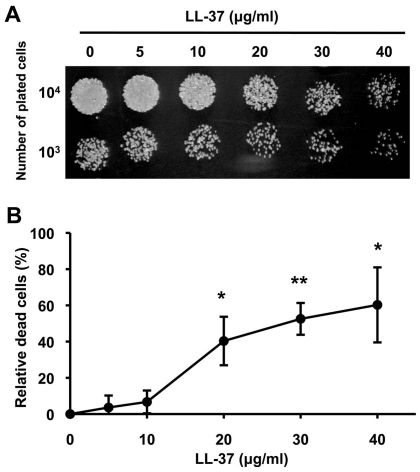
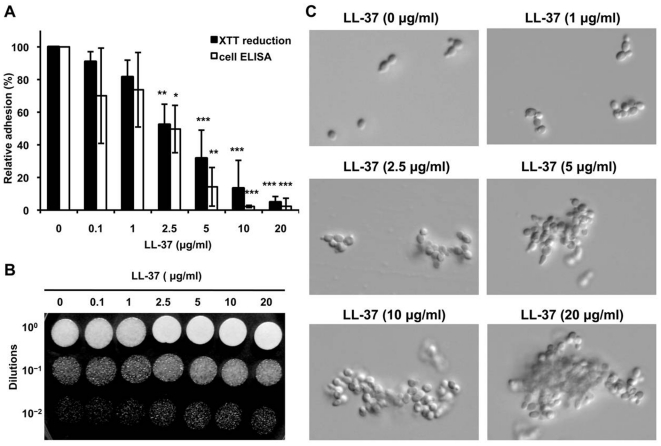
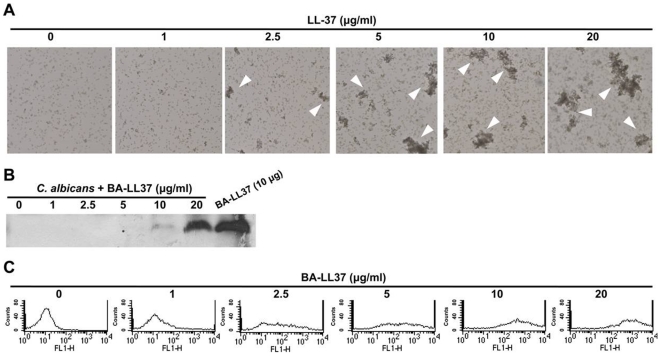
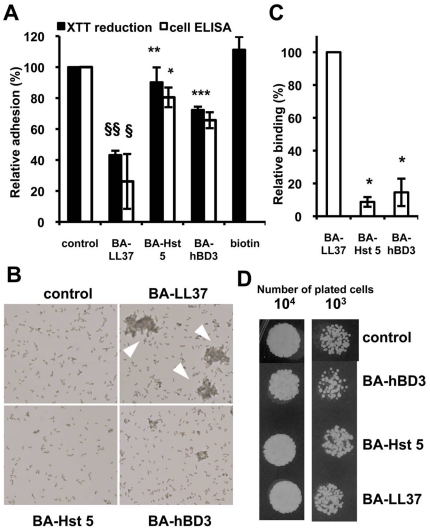
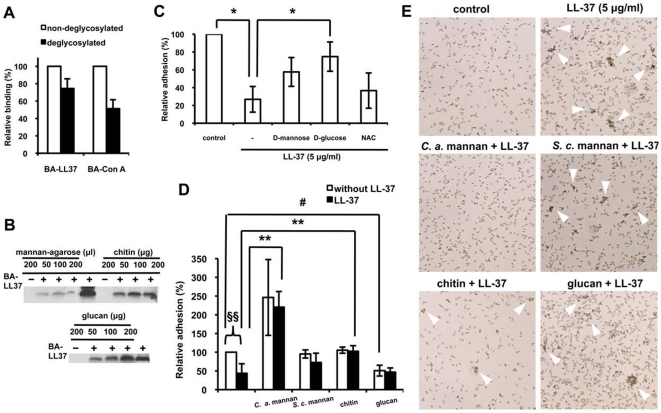
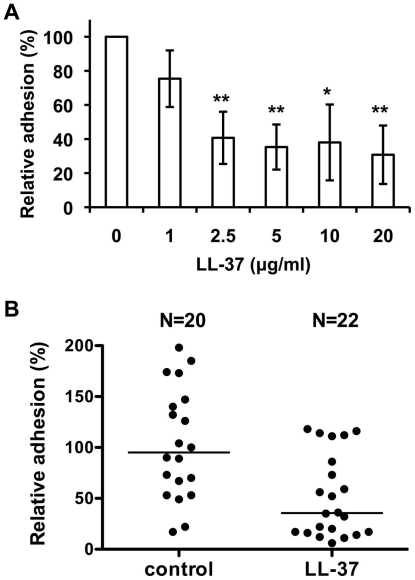
Candida albicans is the major fungal pathogen of humans. Fungal adhesion to host cells is the first step of mucosal infiltration. Antimicrobial peptides play important roles in the initial mucosal defense against C. albicans infection. LL-37 is the only member of the human cathelicidin family of antimicrobial peptides and is commonly expressed in various tissues and cells, including epithelial cells of both the oral cavity and urogenital tract. We found that, at sufficiently low concentrations that do not kill the fungus, LL-37 was still able to reduce C. albicans infectivity by inhibiting C. albicans adhesion to plastic surfaces, oral epidermoid OECM-1 cells, and urinary bladders of female BALB/c mice. Moreover, LL-37-treated C. albicans floating cells that did not adhere to the underlying substratum aggregated as a consequence of LL-37 bound to the cell surfaces. According to the results of a competition assay, the inhibitory effects of LL-37 on cell adhesion and aggregation were mediated by its preferential binding to mannan, the main component of the C. albicans cell wall, and partially by its ability to bind chitin or glucan, which underlie the mannan layer. Therefore, targeting of cell-wall carbohydrates by LL-37 provides a new strategy to prevent C. albicans infection, and LL-37 is a useful, new tool to screen for other C. albicans components involved in adhesion.
Overview
The claims and statistics of this paper haven’t been checked yet.
Run the check — free, no account needed. It reads the open-access text and checks the sources it cites.
Integrity signals
Registry
Cites
Statistics
Figures
Verification
Claims the paper makes
The claims and statistics of this paper haven’t been checked yet.
Run the check — free, no account needed. It reads the open-access text and checks the sources it cites.
Claims other papers make about this one
Each is checked against this paper’s own text: does it say what the citing paper says it does?
The source backs part of the claim, not all of it — or backs it for a different population, condition or comparison.
In the citing paper
“Glucans are major cell wall components in fungi and exoglucanases are involved in cell wall modification, cell adhesion, and killer toxin resistance (Adams 2004; Jiang et al. 1995; Tsai et al. 2011; Xu et al. 2013).”
From Biocontrol yeasts: mechanisms and applications (2019) · cites this paper as Tsai et al. 2011
Experimental — accuracy not yet measured
Self-check
Percentages, sums and reported differences re-computed from the paper’s own numbers.
The self-check needs the paper’s full text.
Citations
Cites
Antimicrobial peptides of multicellular organisms
Zasloff, M. (2002) · Nature · doi:10.1038/415389a · Cited by 8,457
Antimicrobial peptides: pore formers or metabolic inhibitors in bacteria?
Brogden, K. A. (2005) · Nature Reviews Microbiology · doi:10.1038/nrmicro1098 · Cited by 5,829
Antimicrobial and host-defense peptides as new anti-infective therapeutic strategies
Hancock, R. E. W., & Sahl, H. (2006) · Nature Biotechnology · doi:10.1038/nbt1267 · Cited by 4,301
Jenssen, H., Hamill, P., & Hancock, R. E. W. (2006) · Clinical Microbiology Reviews · doi:10.1128/cmr.00056-05 · Cited by 2,605
AMPed up immunity: how antimicrobial peptides have multiple roles in immune defense
Lai, Y., & Gallo, R. L. (2009) · Trends in Immunology · doi:10.1016/j.it.2008.12.003 · Cited by 1,322
The structure and synthesis of the fungal cell wall
Bowman, S. M., & Free, S. J. (2006) · BioEssays · doi:10.1002/bies.20441 · Cited by 1,320
Odds, F. C. (1979) · Medical Entomology and Zoology · Cited by 1,297
Gillum, A. M., Tsay, E. Y. H., & Kirsch, D. R. (1984) · Molecular and General Genetics MGG · doi:10.1007/bf00328721 · Cited by 1,253
Candida albicans Secreted Aspartyl Proteinases in Virulence and Pathogenesis
Naglik, J. R., Challacombe, S. J., & Hube, B. (2003) · Microbiology and Molecular Biology Reviews · doi:10.1128/mmbr.67.3.400-428.2003 · Cited by 1,179
Cathelicidins, multifunctional peptides of the innate immunity
Zanetti, M. (2004) · Journal of Leukocyte Biology · doi:10.1189/jlb.0403147 · Cited by 988
Cited by
Sorted by citations
Kumar, D. K. V., Choi, S. H., Washicosky, K. J., Eimer, W. A., Tucker, S., Ghofrani, J., Lefkowitz, A., McColl, G., Goldstein, L. E., Tanzi, R. E., et al. (2016) · Science Translational Medicine · doi:10.1126/scitranslmed.aaf1059 · Cited by 971
Eimer, W. A., Vijaya Kumar, D. K., Navalpur Shanmugam, N. K., Rodriguez, A. S., Mitchell, T., Washicosky, K. J., György, B., Breakefield, X. O., Tanzi, R. E., & Moir, R. D. (2018) · Neuron · doi:10.1016/j.neuron.2018.06.030 · Cited by 674
Immune defence against Candida fungal infections
Netea, M. G., Joosten, L. A. B., van der Meer, J. W. M., Kullberg, B.-J., & van de Veerdonk, F. L. (2015) · Nature Reviews Immunology · doi:10.1038/nri3897 · Cited by 642
Biocontrol yeasts: mechanisms and applications
Freimoser, F. M., Rueda-Mejia, M. P., Tilocca, B., & Migheli, Q. (2019) · World Journal of Microbiology and Biotechnology · doi:10.1007/s11274-019-2728-4 · Cited by 462
Activation of HIF-1α and LL-37 by commensal bacteria inhibits Candida albicans colonization
Fan, D., Coughlin, L. A., Neubauer, M. M., Kim, J., Kim, M. S., Zhan, X., Simms-Waldrip, T. R., Xie, Y., Hooper, L. V., & Koh, A. Y. (2015) · Nature Medicine · doi:10.1038/nm.3871 · Cited by 426
Antimicrobial Peptides as Potential Alternatives to Antibiotics in Food Animal Industry
Wang, S., Zeng, X., Yang, Q., & Qiao, S. (2016) · International Journal of Molecular Sciences · doi:10.3390/ijms17050603 · Cited by 431
Influence of saliva on the oral microbiota
Marsh, P. D., Do, T., Beighton, D., & Devine, D. A. (2016) · Periodontology 2000 · doi:10.1111/prd.12098 · Cited by 381
Santos, G. C. D. O., Vasconcelos, C. C., Lopes, A. J. O., Cartágenes, M. D. S. D. S., Filho, A. K. D. B., do Nascimento, F. R. F., Ramos, R. M., Pires, E. R. R. B., de Andrade, M. S., Rocha, F. M. G., et al. (2018) · Frontiers in Microbiology · doi:10.3389/fmicb.2018.01351 · Cited by 381
Roscetto, E., Contursi, P., Vollaro, A., Fusco, S., Notomista, E., & Catania, M. R. (2018) · Scientific Reports · doi:10.1038/s41598-018-35530-0 · Cited by 276
Hoefs, S., Mogavero, S., & Hube, B. (2016) · The Journal of Microbiology · doi:10.1007/s12275-016-5514-0 · Cited by 251
Cathelicidin LL-37: An Antimicrobial Peptide with a Role in Inflammatory Skin Disease
Reinholz, M., Ruzicka, T., & Schauber, J. (2012) · Annals of Dermatology · doi:10.5021/ad.2012.24.2.126 · Cited by 242
Antimicrobial Peptides: a New Frontier in Antifungal Therapy
Cesare, G. B. D., Cristy, S. A., Garsin, D. A., & Lorenz, M. C. (2020) · mBio · doi:10.1128/mbio.02123-20 · Cited by 248
Oral Cavity and Candida albicans: Colonisation to the Development of Infection
Patel, M. (2022) · Pathogens · doi:10.3390/pathogens11030335 · Cited by 209
Perspectives for clinical use of engineered human host defense antimicrobial peptides
Pachón-Ibáñez, M. E., Smani, Y., Pachón, J., & Sánchez-Céspedes, J. (2017) · FEMS Microbiology Reviews · doi:10.1093/femsre/fux012 · Cited by 159
Jorge, P., Lourenço, A. M. G., & Pereira, M. O. (2012) · Biofouling · doi:10.1080/08927014.2012.728210 · Cited by 161
Interplay between Candida albicans and the Antimicrobial Peptide Armory
Swidergall, M., & Ernst, J. F. (2014) · Eukaryotic Cell · doi:10.1128/ec.00093-14 · Cited by 138
Defensins: antifungal lessons from eukaryotes
Silva, P. M. D. S., Gonçalves, S. N., & Santos, N. C. (2014) · Frontiers in Microbiology · doi:10.3389/fmicb.2014.00097 · Cited by 126
Membrane-Interacting Antifungal Peptides
Struyfs, C., Cammue, B. P. A., & Thevissen, K. (2021) · Frontiers in Cell and Developmental Biology · doi:10.3389/fcell.2021.649875 · Cited by 128
From infection to immunotherapy: host immune responses to bacteria at the bladder mucosa
Ingersoll, M. A., & Albert, M. L. (2013) · Mucosal Immunology · doi:10.1038/mi.2013.72 · Cited by 122
Aspergillus-Associated Airway Disease, Inflammation, and the Innate Immune Response
Chotirmall, S. H., Al‐Alawi, M., Mirković, B., Lavelle, G., Logan, P. M., Greene, C. M., & McElvaney, N. G. (2013) · BioMed Research International · doi:10.1155/2013/723129 · Cited by 117
Candida albicans Interactions with Mucosal Surfaces during Health and Disease
Nikou, S.-A., Kichik, N., Brown, R., Ponde, N., Ho, J., Naglik, J., & Richardson, J. (2019) · Pathogens · doi:10.3390/pathogens8020053 · Cited by 103
Nimrichter, L., de Souza, M. M., Poeta, M. D., Nosanchuk, J. D., Joffe, L. S., Tavares, P. D. M., & Rodrigues, M. L. (2016) · Frontiers in Microbiology · doi:10.3389/fmicb.2016.01034 · Cited by 93
CandidaBiofilms and the Host: Models and New Concepts for Eradication
Tournu, H., & Dijck, P. V. (2011) · International Journal of Microbiology · doi:10.1155/2012/845352 · Cited by 94
Msb2 Shedding Protects Candida albicans against Antimicrobial Peptides
Szafranski-Schneider, E., Swidergall, M., Cottier, F., Tielker, D., Román, E., Plá, J., & Ernst, J. F. (2012) · PLoS Pathogens · doi:10.1371/journal.ppat.1002501 · Cited by 88
Bioactive Peptides Against Fungal Biofilms
Oshiro, K. G. N., Rodrigues, G. R., Monges, B. E. D., Cardoso, M. H. E. S., & Franco, O. L. (2019) · Frontiers in Microbiology · doi:10.3389/fmicb.2019.02169 · Cited by 85
Simon, D., Page, B., Vogel, M., Bussmann, C., Blanchard, C., Straumann, A., & Simon, H. (2017) · Allergy · doi:10.1111/all.13244 · Cited by 77
Rapid evolution of an adaptive multicellular morphology of Candida auris during systemic infection
Bing, J., Guan, Z., Zheng, T., Ennis, C. L., Nobile, C. J., Chen, C., Chu, H., & Huang, G. (2024) · Nature Communications · doi:10.1038/s41467-024-46786-8 · Cited by 74
Adherence of Candida sp. to host tissues and cells as one of its pathogenicity features.
Modrzewska, B., & Kurnatowski, P. (2015) · PubMed · Cited by 74
Rąpała‐Kozik, M., Bocheńska, O., Zawrotniak, M., Wolak, N., Trebacz, G., Gogól, M., Ostrowska, D., Aoki, W., Ueda, M., & Kozik, A. (2015) · Infection and Immunity · doi:10.1128/iai.00023-15 · Cited by 72
Effects of Dimerization on the Structure and Biological Activity of Antimicrobial Peptide Ctx-Ha
Lorenzón, E. N., Cespedes, G. F., Vicente, E. F., Nogueira, L. G., Bauab, T. M., Castro, M. S., & Cilli, E. M. (2012) · Antimicrobial Agents and Chemotherapy · doi:10.1128/aac.06262-11 · Cited by 71
Morici, P., Fais, R., Rizzato, C., Tavanti, A., & Lupetti, A. (2016) · PLoS ONE · doi:10.1371/journal.pone.0167470 · Cited by 73
Scarsini, M., Tomasinsig, L., Arzese, A., D’Este, F., Oro, D., & Skerlavaj, B. (2015) · Peptides · doi:10.1016/j.peptides.2015.07.023 · Cited by 70
Brucker, K. D., Delattin, N., Robijns, S., Steenackers, H. P. L., Verstraeten, N., Landuyt, B., Luyten, W. H. M. L., Schoofs, L., Dovgan, B., Fröhlich, M., et al. (2014) · Antimicrobial Agents and Chemotherapy · doi:10.1128/aac.03045-14 · Cited by 66
Luo, X., Li, J., Huang, H., Duan, J., Dai, R., Tao, R., Yang, L., Hou, J., Jia, X., & Xu, J. (2019) · Frontiers in Immunology · doi:10.3389/fimmu.2019.00283 · Cited by 64
Responses of Candida albicans to the human antimicrobial peptide LL-37
Tsai, P.-W., Cheng, Y.-L., Hsieh, W., & Lan, C. (2014) · The Journal of Microbiology · doi:10.1007/s12275-014-3630-2 · Cited by 63
Self-citationThe Interactions Between Candida albicans and Mucosal Immunity
Zhou, Y., Cheng, L., Lei, Y. L., Ren, B., & Zhou, X. (2021) · Frontiers in Microbiology · doi:10.3389/fmicb.2021.652725 · Cited by 66
Antimicrobial Peptides with Anti-Candida Activity
Perez-Rodriguez, A., Eraso, E., Quindós, G., & Mateo, E. (2022) · International Journal of Molecular Sciences · doi:10.3390/ijms23169264 · Cited by 64
The Novel Candida albicans Transporter Dur31 Is a Multi-Stage Pathogenicity Factor
Mayer, F. L., Wilson, D., Jacobsen, I. D., Miramón, P., Große, K., & Hube, B. (2012) · PLoS Pathogens · doi:10.1371/journal.ppat.1002592 · Cited by 62
Significance and Diagnostic Role of Antimicrobial Cathelicidins (LL-37) Peptides in Oral Health
Khurshid, Z., Naseem, M., Asiri, F. Y. I., Mali, M., Khan, R. S., Sahibzada, H. A., Zafar, M. S., Moin, S. F., & Khan, E. (2017) · Biomolecules · doi:10.3390/biom7040080 · Cited by 65
McDonough, L., Mishra, A. A., Tosini, N., Kakade, P., Penumutchu, S., Liang, S.-H., Maufrais, C., Zhai, B., Taur, Y., Belenky, P. A., et al. (2021) · mBio · doi:10.1128/mbio.02878-21 · Cited by 59
Ma, H., Zhao, X., Yang, L., Su, P., Fu, P., Peng, J., Yang, N., & Guo, G. (2020) · Infection and Drug Resistance · doi:10.2147/idr.s250278 · Cited by 61
Candida albicans Mucin Msb2 Is a Broad-Range Protectant against Antimicrobial Peptides
Swidergall, M., Ernst, A. M., & Ernst, J. F. (2013) · Antimicrobial Agents and Chemotherapy · doi:10.1128/aac.00862-13 · Cited by 56
Physiological Roles of Monomeric Amyloid-β and Implications for Alzheimer’s Disease Therapeutics
Jeong, H., Shin, H., Hong, S., & Kim, Y. S. (2022) · Experimental Neurobiology · doi:10.5607/en22004 · Cited by 59
Potential Use of Antimicrobial Peptides as Vaginal Spermicides/Microbicides
Tanphaichitr, N., Srakaew, N., Alonzi, R. C., Kiattiburut, W., Kongmanas, K., Zhi, R., Li, W., Baker, M. A., Wang, G., & Hickling, D. R. (2016) · Pharmaceuticals · doi:10.3390/ph9010013 · Cited by 57
Candidalysin Is a Potent Trigger of Alarmin and Antimicrobial Peptide Release in Epithelial Cells
Ho, J., Wickramasinghe, D. N., Nikou, S.-A., Hube, B., Richardson, J. P., & Naglik, J. R. (2020) · Cells · doi:10.3390/cells9030699 · Cited by 57
Lorenzón, E. N., Sanches, P. R. D. S., Nogueira, L. G., Bauab, T. M., & Cilli, E. M. (2013) · Amino Acids · doi:10.1007/s00726-013-1475-3 · Cited by 53
Study of Candida albicans and its interactions with the host: A mini review
Tsai, P.-W., Chen, Y.-T., Hsu, P., & Lan, C. (2013) · Biomedicine · doi:10.1016/j.biomed.2012.12.004 · Cited by 53
Self-citationInnate Inspiration: Antifungal Peptides and Other Immunotherapeutics From the Host Immune Response
Mercer, D. K., & O'Neil, D. A. (2020) · Frontiers in Immunology · doi:10.3389/fimmu.2020.02177 · Cited by 50
Akbari, F., & Kjellerup, B. V. (2015) · Pathogens · doi:10.3390/pathogens4030457 · Cited by 52
Chang, H.-T., Tsai, P.-W., Huang, H.-H., Liu, Y.-S., Chien, T.-S., & Lan, C.-Y. (2012) · Biochemical Journal · doi:10.1042/bj20111454 · Cited by 52
Self-citationAdaptation of Candida Albicans to Commensalism in the Gut
Prieto, D., Correia, I., Plá, J., & Román, E. (2016) · Future Microbiology · doi:10.2217/fmb.16.1 · Cited by 51
Antimicrobial peptides for bone tissue engineering: Diversity, effects and applications
Hao, Z., Chen, R., Chai, C., Wang, Y., Chen, T., Li, H., Hu, Y., Feng, Q., & Li, J. (2022) · Frontiers in Bioengineering and Biotechnology · doi:10.3389/fbioe.2022.1030162 · Cited by 47
Tsai, P.-W., Yang, C., Chang, H., & Lan, C. (2011) · PLoS ONE · doi:10.1371/journal.pone.0021394 · Cited by 47
Self-citationGalleria mellonella lysozyme induces apoptotic changes in Candida albicans cells
Sowa-Jasiłek, A., Zdybicka‐Barabas, A., Stączek, S., Wydrych, J., Skrzypiec, K., Mak, P., Deryło, K., Tchórzewski, M., & Cytryńska, M. (2016) · Microbiological Research · doi:10.1016/j.micres.2016.10.003 · Cited by 47
Rosacea: The Blessing of the Celts – An Approach to Pathogenesis Through Translational Research
Melnik, B. C. (2015) · Acta Dermato Venereologica · doi:10.2340/00015555-2220 · Cited by 47
Human serum inhibits adhesion and biofilm formation in Candida albicans
Ding, X., Liu, Z., Su, J., & Yan, D. (2014) · BMC Microbiology · doi:10.1186/1471-2180-14-80 · Cited by 50
Amyloid peptides with antimicrobial and/or microbial agglutination activity
Chen, D., Liu, X., Chen, Y., & Lin, H. (2022) · Applied Microbiology and Biotechnology · doi:10.1007/s00253-022-12246-w · Cited by 44
Fungal Recognition and Host Defense Mechanisms
Dambuza, I. M., Levitz, S. M., Netea, M. G., & Brown, G. D. (2017) · Microbiology Spectrum · doi:10.1128/microbiolspec.funk-0050-2016 · Cited by 45
Host Defence against Bacterial Biofilms: “Mission Impossible”?
Hänsch, G. M. (2012) · ISRN Immunology · doi:10.5402/2012/853123 · Cited by 46
OmpA Binding Mediates the Effect of Antimicrobial Peptide LL-37 on Acinetobacter baumannii
Lin, M.-F., Tsai, P.-W., Chen, J.-Y., Lin, Y.-Y., & Lan, C. (2015) · PLoS ONE · doi:10.1371/journal.pone.0141107 · Cited by 42
Self-citationNovel Strategies in the Prevention and Treatment of Urinary Tract Infections
Lüthje, P., & Brauner, A. (2016) · Pathogens · doi:10.3390/pathogens5010013 · Cited by 45
Innate immunity and the role of the antimicrobial peptide cathelicidin in inflammatory skin disease
Roby, K. D., & Nardo, A. D. (2013) · Drug Discovery Today Disease Mechanisms · doi:10.1016/j.ddmec.2013.01.001 · Cited by 40
Alanine Scanning Studies of the Antimicrobial Peptide Aurein 1.2
Migoń, D., Jaśkiewicz, M., Neubauer, D., Bauer, M., Sikorska, E., Kamysz, E., & Kamysz, W. (2018) · Probiotics and Antimicrobial Proteins · doi:10.1007/s12602-018-9501-0 · Cited by 39
Hsu, C.-M., Liao, Y.-L., Chang, C.-K., & Lan, C. (2021) · International Journal of Molecular Sciences · doi:10.3390/ijms221910633 · Cited by 40
Self-citationTrevisan, E., Vita, F., Medic, N., Soranzo, M. R., Zabucchi, G., & Borelli, V. (2014) · Inflammation · doi:10.1007/s10753-014-9951-9 · Cited by 38
Plichta, J. K., Droho, S., Curtis, B. J., Patel, P., Gamelli, R. L., & Radek, K. A. (2014) · Critical Care Medicine · doi:10.1097/ccm.0000000000000309 · Cited by 37
Delattin, N., Brucker, K. D., Craik, D. J., Cheneval, O., Fröhlich, M., Veber, M., Girandon, L., Davis, T. R., Weeks, A. E., Kumamoto, C. A., et al. (2014) · Antimicrobial Agents and Chemotherapy · doi:10.1128/aac.01274-13 · Cited by 39
Fei, W., Wang, Z., & Tang, J. (2023) · Gut Pathogens · doi:10.1186/s13099-023-00559-8 · Cited by 38
Pathophysiological microenvironments in oral candidiasis
Jørgensen, M. R. (2024) · Apmis · doi:10.1111/apm.13412 · Cited by 42
Candida Pathogenicity and Interplay with the Immune System
Valand, N., & Girija, U. V. (2021) · Advances in experimental medicine and biology · doi:10.1007/978-3-030-67452-6_11 · Cited by 38
Peptide-Based Biomaterials for Bone and Cartilage Regeneration
Kapat, K., Kumbhakarn, S., Sable, R., Gondane, P., Takle, S., & Maity, P. P. (2024) · Biomedicines · doi:10.3390/biomedicines12020313 · Cited by 33
Svensson, D., & Nilsson, B. (2025) · Inflammation Research · doi:10.1007/s00011-025-02005-8 · Cited by 32
Rodríguez-Castaño, G. P., Rosenau, F., Ständker, L., & Firacative, C. (2023) · Pharmaceutics · doi:10.3390/pharmaceutics15030789 · Cited by 33
Anti-Candida activity of spent culture filtrate of Lactobacillus plantarum strain LR/14
Sharma, A., & Srivastava, S. (2013) · Journal de Mycologie Médicale · doi:10.1016/j.mycmed.2013.11.001 · Cited by 31
Wanmakok, M., Orrapin, S., Intorasoot, A., & Intorasoot, S. (2018) · Gene · doi:10.1016/j.gene.2018.05.106 · Cited by 30
An antifungal protein from Ginkgo biloba binds actin and can trigger cell death
Gao, N., Wadhwani, P., Mühlhäuser, P., Liu, Q., Riemann, M., Ulrich, A. S., & Nick, P. (2015) · PROTOPLASMA · doi:10.1007/s00709-015-0876-4 · Cited by 29
Keshri, A. K., Rawat, S. S., Chaudhary, A., Sharma, S. H., Kapoor, A., Mehra, P., Kaur, R., Mishra, A., & Prasad, A. (2024) · International Journal of Antimicrobial Agents · doi:10.1016/j.ijantimicag.2024.107398 · Cited by 33
Karkowska‐Kuleta, J., Smolarz, M., Seweryn-Ozog, K., Satała, D., Zawrotniak, M., Wronowska, E., Bocheńska, O., Kozik, A., Nobbs, A. H., Gogól, M., et al. (2021) · Cells · doi:10.3390/cells10102736 · Cited by 31
Bleackley, M. R., Dawson, C. S., Payne, J. A. E., Harvey, P. J., Rosengren, K. J., Quimbar, P., Garcia‐Ceron, D., Lowe, R. G. T., Bulone, V., van der Weerden, N. L., et al. (2019) · The Cell Surface · doi:10.1016/j.tcsw.2019.100026 · Cited by 27
Psoriasin, a novel anti-Candida albicans adhesin
Brauner, A., Alvendal, C., Chromek, M., Stopsack, K. H., Ehrström, S., Schröder, J., & Bohm‐Starke, N. (2018) · Journal of Molecular Medicine · doi:10.1007/s00109-018-1637-6 · Cited by 28
Lima, S. M. D. F., Freire, M. S., Gomes, A. L. O., Cantuária, A. P. D. C., Dutra, F. P., Magalhães, B. S., Sousa, M. G. C., Migliolo, L., de Almeida, J. A., Franco, O. L., et al. (2017) · Peptides · doi:10.1016/j.peptides.2017.07.005 · Cited by 28
Adaptation of Candida albicans During Gastrointestinal Tract Colonization
Mishra, A. A., & Koh, A. Y. (2018) · Current Clinical Microbiology Reports · doi:10.1007/s40588-018-0096-8 · Cited by 27
LECT2 Is a Novel Antibacterial Protein in Vertebrates
Hu, Y., Ma, Z.-Y., Wu, C., Wang, J., Zhang, Y., & Zhang, X. (2022) · The Journal of Immunology · doi:10.4049/jimmunol.2100812 · Cited by 25
Antifungal properties of cathelicidin LL-37: current knowledge and future research directions
Memariani, M., & Memariani, H. (2023) · World Journal of Microbiology and Biotechnology · doi:10.1007/s11274-023-03852-5 · Cited by 25
Management of Candida Biofilms: State Of Knowledge and New Options for Prevention and Eradication
Bujdáková, H. (2016) · Future Microbiology · doi:10.2217/fmb.15.139 · Cited by 27
Shannon, A. H., Adelman, S. A., Hisey, E. A., Potnis, S. S., Rozo, V., Yung, M., Li, J. Y., Murphy, C. J., Thomasy, S. M., & Leonard, B. C. (2022) · Frontiers in Microbiology · doi:10.3389/fmicb.2022.857735 · Cited by 23
Wang, X. (2021) · Infectious diseases · doi:10.5772/intechopen.87410 · Cited by 22
Wongkaewkhiaw, S., Taweechaisupapong, S., Thanaviratananich, S., Bolscher, J. G. M., Nazmi, K., Anutrakunchai, C., Chareonsudjai, S., & Kanthawong, S. (2020) · PLoS ONE · doi:10.1371/journal.pone.0243315 · Cited by 22
Chen, S.-Y., Chang, C.-K., & Lan, C. (2023) · Microbiology Spectrum · doi:10.1128/spectrum.02551-23 · Cited by 22
Self-citationSoluble mediators in anti-fungal immunity
Dellière, S., Wong, S. S. W., & Aimanianda, V. (2020) · Current Opinion in Microbiology · doi:10.1016/j.mib.2020.05.005 · Cited by 21
In Vitro Antifungal Activity of LL-37 Analogue Peptides against Candida spp.
Pinilla, G., Coronado, Y. T., Chaves, G., Muñoz, L., Jeannette Navarrete, O., Salazar, L. M., Taborda, C. P., & Muñoz, J. E. (2022) · Journal of Fungi · doi:10.3390/jof8111173 · Cited by 23
Sreelakshmi, K. P., Madhuri, M., Swetha, R., Rangarajan, V., & Roy, U. (2024) · World Journal of Microbiology and Biotechnology · doi:10.1007/s11274-024-03908-0 · Cited by 24
Chen, X., Ji, S., Si, J., Zhang, X., Wang, X., Guo, Y. X., & Zou, X. (2020) · Molecular Medicine Reports · doi:10.3892/mmr.2020.11629 · Cited by 21
Luo, X., Wu, W., Feng, L., Treves, H., & Ren, M. (2021) · International Journal of Molecular Sciences · doi:10.3390/ijms222111363 · Cited by 21
Singh, S., Singh, S., & Kumar, A. (2022) · Microbiology Spectrum · doi:10.1128/spectrum.01658-22 · Cited by 20
Interaction between the antimicrobial peptide Aurein 1.2 dimer and mannans
Lorenzón, E. N., Piccoli, J. P., & Cilli, E. M. (2014) · Amino Acids · doi:10.1007/s00726-014-1832-x · Cited by 18
Synthetic mucus biomaterials for antimicrobial peptide delivery
Yang, S., & Duncan, G. A. (2023) · Journal of Biomedical Materials Research Part A · doi:10.1002/jbm.a.37559 · Cited by 16
Muselius, B., Roux‐Dalvai, F., Droit, A., & Geddes‐McAlister, J. (2023) · Journal of the American Society for Mass Spectrometry · doi:10.1021/jasms.3c00114 · Cited by 19
Song, P., Peng, G., Yue, H., Ogawa, T., Ikeda, S., Okumura, K., Ogawa, H., & Niyonsaba, F. (2022) · Journal of Clinical Immunology · doi:10.1007/s10875-022-01267-9 · Cited by 16
Jian, S., Yang, K., Zhang, L., Zhang, L., Xin, Z., Wen, C., He, S., Deng, J., & Deng, B. (2023) · Food Frontiers · doi:10.1002/fft2.209 · Cited by 16
Metadata
- Authors
- Tsai, P.-W., Yang, C.-Y., Chang, H.-T., & Lan, C.-Y.
- Affiliations
- National Tsing Hua University (TW)
- Animal Technology Institute Taiwan (TW)
- China Medical University (TW)
- Corresponding author
- Chang, Hao-Teng
- Lan, Chung-Yu
- Venue
- PLoS ONE
- Publisher
- Public Library of Science (PLoS)
- Published
- 2011-03-14
- Volume
- 6
- Issue
- 3
- Pages
- e17755
- ISSN
- 1932-6203 (ISSN-L)
- PMC
- PMC3056723
- OpenAlex
- W2167693400
- Cited by
- 175
- References
- 75
- Citations by year
- 2026: 15 · 2025: 9 · 2024: 10 · 2023: 10 · 2022: 13 · 2021: 16 · 2020: 13 · 2019: 10 · 2018: 11 · 2017: 7 · 2016: 12 · 2015: 12 · 2014: 11 · 2013: 12 · 2012: 10
- FWCI
- 10.94
- Type
- journal article
- Language
- en
- Open access
- gold
- doi.org
- Locations
- PLoS ONE (publishedVersion, cc-by)
- PubMed Central (publishedVersion, cc-by)
- PubMed (publishedVersion)
- DOAJ (DOAJ: Directory of Open Access Journals) (submittedVersion)
- Funders
- National Science Council
- China Medical University
- Topics
- Life Sciences › Immunology and Microbiology › Microbiology › Antimicrobial Peptides and Activities
- Health Sciences › Medicine › Infectious Diseases › Antifungal resistance and susceptibility
- Life Sciences › Immunology and Microbiology › Applied Microbiology and Biotechnology › Antimicrobial agents and applications
- Keywords
- LL-37, cathelicidin, antimicrobial peptides, Candida albicans, fungal adhesion, mannan, cell wall carbohydrates, chitin, glucan, yeast aggregation, oral epithelial cells, urinary bladder, mucosal protection, fungal infection prevention
- MeSH terms
- Epidermal Cells, Adhesiveness, Animals, Urinary Bladder, Candida albicans, Cell Wall, Epidermis, Humans, Polystyrenes, Protein Binding, Antimicrobial Cationic Peptides, Carbohydrate Metabolism, Microbial Viability, Mice, Cathelicidins
About these checks
Registry, retraction, Cites and statistics results are computed, not judged, with one exception: a printed reference that no index lists is read once by a model before it counts as a citation error. Claims are extracted by a model and kept only when their quote appears verbatim in the text; each cited source is then checked, with a model’s help, for whether it says what the claim relies on. Those verdicts can be wrong — read the claim’s quote and the cited source before relying on one.
Statistics and arithmetic are recomputed, not judged.
Confidence bands are shown only for fields calibrated on our annotated test set. None is calibrated yet, so no band is shown.
What counts as a claim ›How we measure confidence ›How we check this ›
Are you an author, or do you see a problem with this page? Request a review
