

Molecular Crowding Defines a Common Origin for the Warburg Effect in Proliferating Cells and the Lactate Threshold in Muscle Physiology
Open accessThe DOI matches its Crossref record; 48 of the 49 references it cites were found in a registry or an index.
Abstract
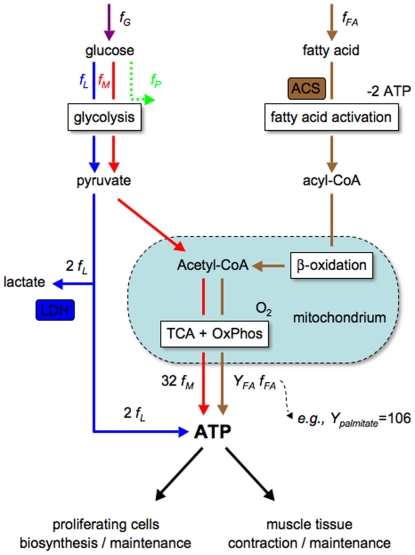
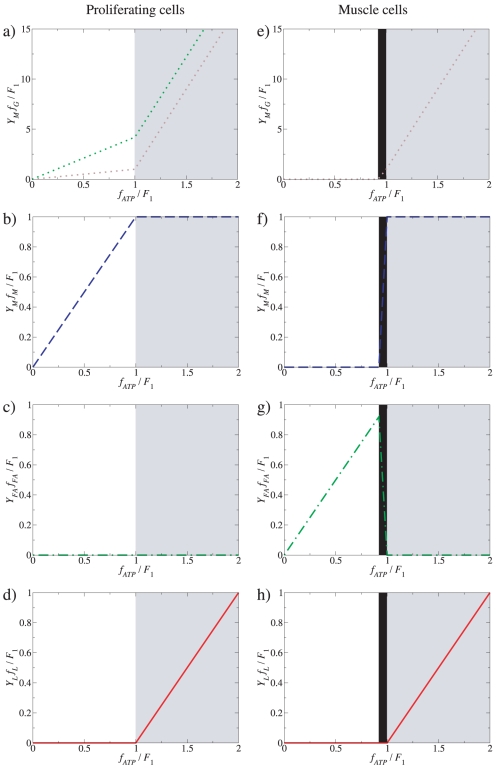
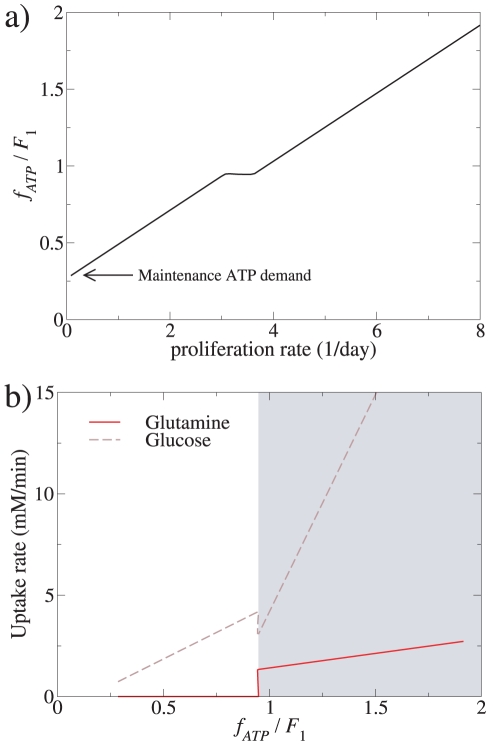
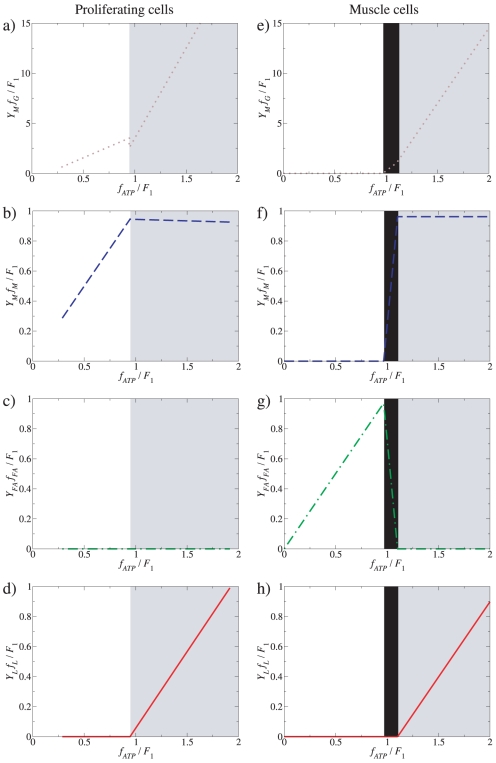
Aerobic glycolysis is a seemingly wasteful mode of ATP production that is seen both in rapidly proliferating mammalian cells and highly active contracting muscles, but whether there is a common origin for its presence in these widely different systems is unknown. To study this issue, here we develop a model of human central metabolism that incorporates a solvent capacity constraint of metabolic enzymes and mitochondria, accounting for their occupied volume densities, while assuming glucose and/or fatty acid utilization. The model demonstrates that activation of aerobic glycolysis is favored above a threshold metabolic rate in both rapidly proliferating cells and heavily contracting muscles, because it provides higher ATP yield per volume density than mitochondrial oxidative phosphorylation. In the case of muscle physiology, the model also predicts that before the lactate switch, fatty acid oxidation increases, reaches a maximum, and then decreases to zero with concomitant increase in glucose utilization, in agreement with the empirical evidence. These results are further corroborated by a larger scale model, including biosynthesis of major cell biomass components. The larger scale model also predicts that in proliferating cells the lactate switch is accompanied by activation of glutaminolysis, another distinctive feature of the Warburg effect. In conclusion, intracellular molecular crowding is a fundamental constraint for cell metabolism in both rapidly proliferating- and non-proliferating cells with high metabolic demand. Addition of this constraint to metabolic flux balance models can explain several observations of mammalian cell metabolism under steady state conditions.
Overview
The claims and statistics of this paper haven’t been checked yet.
Free: it reads the open-access text and checks the first 5 claims that cite a source we can check. Create a free account to check every claim.
Integrity signals
Registry
Cites
Statistics
Figures
Verification
Claims the paper makes
The claims and statistics of this paper haven’t been checked yet.
Free: it reads the open-access text and checks the first 5 claims that cite a source we can check. Create a free account to check every claim.
Claims other papers make about this one
Each is checked against this paper’s own text: does it say what the citing paper says it does?
The cited source says what the claim attributes to it.
In the citing paper
“Overflow metabolism occurs in several organisms, including E. coli (Van Hoek & Merks, 2012), S. cerevisiae (Van Hoek et al, 1998), and cancer cells (Vazquez & Oltvai, 2011).”
From Improving the phenotype predictions of a yeast genome‐scale metabolic model by incorporating enzymatic constraints (2017) · cites this paper as Vazquez & Oltvai, 2011
In the citing paper
“Similar results were observed using variations of the approach in lactate‐producing cancerous human cells (the Warburg effect) (Shlomi et al, 2011; Vazquez & Oltvai, 2011) and in ethanol‐producing Saccharomyces cerevisiae cells (the Crabtree effect) (Van Hoek & Merks, 2012; Nilsson & Nielsen, 2016).”
From Improving the phenotype predictions of a yeast genome‐scale metabolic model by incorporating enzymatic constraints (2017) · cites this paper as Vazquez & Oltvai, 2011
Self-check
Percentages, sums and reported differences re-computed from the paper’s own numbers.
The self-check needs the paper’s full text.
Citations
Cites
Understanding the Warburg Effect: The Metabolic Requirements of Cell Proliferation
Vander Heiden, M. G., Cantley, L. C., & Thompson, C. B. (2009) · Science · doi:10.1126/science.1160809 · Cited by 16,197
Warburg, O. (1956) · Science · doi:10.1126/science.123.3191.309 · Cited by 13,425 · cited 1×
“even under normal oxygen saturation (aerobic glycolysis) concomitant with mitochondrial oxidative phosphorylation (OxPhos), is a metabolic phenotype displayed by most cancer cells [1].”
BackgroundDeBerardinis, R. J., Mancuso, A., Daikhin, E., Nissim, I., Yudkoff, M., Wehrli, S., & Thompson, C. B. (2007) · Proceedings of the National Academy of Sciences · doi:10.1073/pnas.0709747104 · Cited by 2,622 · cited 1×
“This prediction is in agreement with empirical observations indicating the activation of glutaminolysis as another major feature of the Warburg effect [30,31,32,33] and with the result of a recent genome-scale metabolic model of mammalian cell metabolism [24].”
ResultGao, P., Tchernyshyov, I., Chang, T.-C., Lee, Y.-S., Kita, K., Ochi, T., Zeller, K. I., De Marzo, A. M., Van Eyk, J. E., Mendell, J. T., et al. (2009) · Nature · doi:10.1038/nature07823 · Cited by 2,124
Wise, D. R., DeBerardinis, R. J., Mancuso, A., Sayed, N., Zhang, X.-Y., Pfeiffer, H. K., Nissim, I., Daikhin, E., Yudkoff, M., McMahon, S. B., et al. (2008) · Proceedings of the National Academy of Sciences · doi:10.1073/pnas.0810199105 · Cited by 2,001 · cited 1×
“This prediction is in agreement with empirical observations indicating the activation of glutaminolysis as another major feature of the Warburg effect [30,31,32,33] and with the result of a recent genome-scale metabolic model of mammalian cell metabolism [24].”
ResultEndurance exercise performance: the physiology of champions
Joyner, M. J., & Coyle, E. F. (2008) · The Journal of Physiology · doi:10.1113/jphysiol.2007.143834 · Cited by 1,307 · cited 1×
“In particular, the lactate threshold is a well known feature of muscle physiology, whereby muscle cells switch to partial anaerobic glucose catabolism when their contraction activity, and their corresponding ATP demand for converting chemical energy to mechanical work exceeds certain intensity [10,11], even when oxyge…”
BackgroundMuscular Exercise, Lactic Acid, and the Supply and Utilization of Oxygen
Hill, A. V., & Lupton, H. (1923) · QJM · doi:10.1093/qjmed/os-16.62.135 · Cited by 997
Glutaminase 2, a novel p53 target gene regulating energy metabolism and antioxidant function
Hu, W., Zhang, C., Wu, R., Sun, Y., Levine, A., & Feng, Z. (2010) · Proceedings of the National Academy of Sciences · doi:10.1073/pnas.1001006107 · Cited by 862 · cited 1×
“This prediction is in agreement with empirical observations indicating the activation of glutaminolysis as another major feature of the Warburg effect [30,31,32,33] and with the result of a recent genome-scale metabolic model of mammalian cell metabolism [24].”
ResultAMP-Activated Protein Kinase – Development of the Energy Sensor Concept
Hardie, D. G., Hawley, S. A., & Scott, J. W. (2006) · The Journal of Physiology · doi:10.1113/jphysiol.2006.108944 · Cited by 813 · cited 1×
“Also, in contrast to proliferating cells, anabolic processes are downregulated in heavily working muscles leading to decreased demand for biosynthetic precursors [15].”
BackgroundFundamentals of Biochemistry: Life at the Molecular Level
Voet, D., Voet, J. G., & Pratt, C. W. (2005) · Works - Scholarship, Research, & Creative Expression (Swarthmore College) · Cited by 632
Cited by
Effects of Molecular Crowding on the Structures, Interactions, and Functions of Nucleic Acids
Nakano, S.-I., Miyoshi, D., & Sugimoto, N. (2014) · Chemical Reviews · doi:10.1021/cr400113m · Cited by 567
Increased demand for NAD(+) relative to ATP drives aerobic glycolysis
Luengo, A., Li, Z., Gui, D. Y., Sullivan, L. B., Zagorulya, M., Do, B. T., Ferreira, R., Naamati, A., Ali, A., Lewis, C. A., et al. (2021) · Molecular Cell · doi:10.1016/j.molcel.2020.12.012 · Cited by 547
Sánchez, B. J., Zhang, C., Nilsson, A., Lahtvee, P., Kerkhoven, E. J., & Nielsen, J. (2017) · Molecular Systems Biology · doi:10.15252/msb.20167411 · Cited by 466
“…in a self-replicator model (Molenaar et al, 2009; Berkhout et al, 2013), E. coli (Vazquez et al, 2008; O’Brien et al, 2013; Basan et al, 2015; Peebo et al, 2015), cancer cells (Shlomi et al, 2011; Vazquez & Oltvai, 2011), and S. cerevisiae (Van Hoek & Merks, 2012; Nilsson & Nielsen, 2016).”
BackgroundMethodFan, J., Kamphorst, J. J., Mathew, R., Chung, M. K., White, E., Shlomi, T., & Rabinowitz, J. D. (2013) · Molecular Systems Biology · doi:10.1038/msb.2013.65 · Cited by 428
“4 mmole/ml cells/h (Supplementary Figure 7) (Vazquez and Oltvai, 2011).”
BackgroundInfluentialThe PI3K/Akt Pathway and Glucose Metabolism: A Dangerous Liaison in Cancer
Fontana, F., Giannitti, G., Marchesi, S., & Limonta, P. (2024) · International Journal of Biological Sciences · doi:10.7150/ijbs.89942 · Cited by 280
“Finally, it has been recently postulated that the Warburg effect might result from molecular crowding, a common limitation to overall metabolism in rapidly proliferating cells [12].”
BackgroundTedeschi, P. M., Markert, E. K., Gounder, M., Lin, H., Dvorzhinski, D., Dolfi, S. C., Chan, L. L.-Y., Qiu, J., DiPaola, R. S., Hirshfield, K. M., et al. (2013) · Cell Death & Disease · doi:10.1038/cddis.2013.393 · Cited by 260
“As noted by Warburg, a significant portion of the consumed glucose is converted to lactate, which is then excreted to the extracellular medium.4 The glycolysis flux can also be diverted from the glycolysis intermediate 3-phosphoglycerate toward serine synthesis, as first demonstrated in lymphomas.5 More recently, it h…”
InfluentialSelf-citationModeling cancer metabolism on a genome scale
Yizhak, K., Chaneton, B., Gottlieb, E., & Ruppin, E. (2015) · Molecular Systems Biology · doi:10.15252/msb.20145307 · Cited by 183
“…several GSMM studies have looked into alterations in central metabolism that are common among tumors, such as aerobic glycolysis (the Warburg effect) and enhanced biomass production and proliferation (Resendis-Antonio et al , 2010; Folger et al , 2011; Shlomi et al , 2011; Vazquez & Oltvai, 2011).”
BackgroundMethodThe metabolic demands of cancer cells are coupled to their size and protein synthesis rates
Dolfi, S. C., Chan, L. L.-Y., Qiu, J., Tedeschi, P. M., Bertino, J. R., Hirshfield, K. M., Oltvai, Z. N., & Vazquez, A. (2013) · Cancer & Metabolism · doi:10.1186/2049-3002-1-20 · Cited by 176
Self-citationRegulation of Cellular Metabolism and Hypoxia by p53
Humpton, T. J., & Vousden, K. H. (2016) · Cold Spring Harbor Perspectives in Medicine · doi:10.1101/cshperspect.a026146 · Cited by 137
Metabolic Trade-offs in Yeast are Caused by F1F0-ATP synthase
Nilsson, A., & Nielsen, J. (2016) · Scientific Reports · doi:10.1038/srep22264 · Cited by 137
Genome scale metabolic modeling of cancer
Nilsson, A., & Nielsen, J. (2016) · Metabolic Engineering · doi:10.1016/j.ymben.2016.10.022 · Cited by 128
Shimizu, K., & Matsuoka, Y. (2018) · Biotechnology Advances · doi:10.1016/j.biotechadv.2018.12.007 · Cited by 96
The evolution of genome-scale models of cancer metabolism
Lewis, N. E., & Abdel-Haleem, A. M. (2013) · Frontiers in Physiology · doi:10.3389/fphys.2013.00237 · Cited by 87
“Using another model of ATP production, Vazquez and colleagues demonstrated that the Warburg effect may result from molecular crowding in proliferating cells (Vazquez et al., 2010; Vazquez and Oltvai, 2011).”
Vazquez, A., Markert, E. K., & Oltvai, Z. N. (2011) · PLoS ONE · doi:10.1371/journal.pone.0025881 · Cited by 87
“Previous models have assumed a constant protein concentration and have not taken into account the self-consistent need to synthesize all the proteins in enzyme complexes and ribosomes [14,15].”
BackgroundInfluentialSelf-citationMevalonate Pathway Regulates Cell Size Homeostasis and Proteostasis through Autophagy
Miettinen, T. P., & Björklund, M. (2015) · Cell Reports · doi:10.1016/j.celrep.2015.11.045 · Cited by 93
“Changes in proteostasis are well known to play key roles in several neurodegenerative diseases (Frake et al., 2015), which also are associated with Rab11 function (Richards et al., 2011) and metabolic changes (Vazquez, 2013; Vazquez and Oltvai, 2011).”
BackgroundLimits of aerobic metabolism in cancer cells
Fernandez-de-Cossio-Diaz, J., & Vazquez, A. (2017) · Scientific Reports · doi:10.1038/s41598-017-14071-y · Cited by 78
“Simulations of genome scale models of mammalian cell metabolism also predict the utilization of glutamine at high proliferation rates (19, 20).”
BackgroundMacromolecular crowding explains overflow metabolism in cells
Vazquez, A., & Oltvai, Z. N. (2016) · Scientific Reports · doi:10.1038/srep31007 · Cited by 75
Self-citationNRF2 and Mitochondrial Function in Cancer and Cancer Stem Cells
Panieri, E., Pinho, S., Afonso, G. J. M., Oliveira, P. J., Cunha‐Oliveira, T., & Saso, L. (2022) · Cells · doi:10.3390/cells11152401 · Cited by 75
“Other explanations include that it allows for a faster ATP production despite being less efficient than through respiratory pathways [52], or that it is due to molecular crowding [53].”
BackgroundMüller, S., Regensburger, G., & Steuer, R. (2013) · Journal of Theoretical Biology · doi:10.1016/j.jtbi.2013.11.015 · Cited by 73
MAZZIO, E. A., Boukli, N. M., Rivera, N., & Soliman, K. F. A. (2012) · Cancer Science · doi:10.1111/j.1349-7006.2012.02206.x · Cited by 68
J. Casson, R., P. M. Wood, J., Han, G., Kittipassorn, T., J. Peet, D., & Chidlow, G. (2016) · Investigative Opthalmology & Visual Science · doi:10.1167/iovs.15-17962 · Cited by 56
“In fact, recent mathematical modeling that accounts for space limitations within the cell (and the large volume occupied by mitochondria relative to glycolytic enzymes) finds that a high glycolytic rate optimizes ATP production when glucose is abundant.(35) This finding explains the presence of the Warburg effect with…”
BackgroundA Flux Balance of Glucose Metabolism Clarifies the Requirements of the Warburg Effect
Dai, Z., Shestov, A. A., Lai, L., & Locasale, J. W. (2016) · Biophysical Journal · doi:10.1016/j.bpj.2016.07.028 · Cited by 56
Genome‐scale metabolic models applied to human health and disease
Cook, D. J., & Nielsen, J. (2017) · WIREs Systems Biology and Medicine · doi:10.1002/wsbm.1393 · Cited by 65
“Even in cancer, FBA (without imposition of constraints) has been unable to describe large metabolic behaviors such as the Warburg effect.(56,57) Recently, cFBA has emerged as a tool to address these inconsistencies between model simulations and biology.”
MethodMathematical models of cancer metabolism
Markert, E. K., & Vázquez, A. (2015) · Cancer & Metabolism · doi:10.1186/s40170-015-0140-6 · Cited by 42
“The line represents the median behaviour and the error bars the 90 % confidence intervals. a) Glucose uptake. b) Lactate excretion. c) Glutamine uptake. d) Pyruvate carboxylase. e) Glycinine cleavage. f) FTHFL. Sum of the reverse FTHFL flux of the cytosolic and mitochondrial enzymes shown above, the analysis of gene e…”
BackgroundInfluentialComplex I is bypassed during high intensity exercise
Nilsson, A., Björnson, E., Flockhart, M., Larsen, F. J., & Nielsen, J. (2019) · Nature Communications · doi:10.1038/s41467-019-12934-8 · Cited by 44
Overlap Concentration and the Effect of Macromolecular Crowding on Citrate Synthase Activity
Wilcox, X. E., Ariola, A., Jackson, J. R., & Slade, K. M. (2020) · Biochemistry · doi:10.1021/acs.biochem.0c00073 · Cited by 37
Computational Modeling of Human Metabolism and Its Application to Systems Biomedicine
Aurich, M. K., & Thiele, I. (2015) · Methods in molecular biology · doi:10.1007/978-1-4939-3283-2_12 · Cited by 43
Noncanonical Structures and Their Thermodynamics of DNA and RNA Under Molecular Crowding
Sugimoto, N. (2014) · International review of cytology · doi:10.1016/b978-0-12-800046-5.00008-4 · Cited by 39
Ng, R. H., Lee, J. W., Baloni, P., Diener, C., Heath, J. R., & Su, Y. (2022) · Frontiers in Oncology · doi:10.3389/fonc.2022.914594 · Cited by 35
Nakano, S., Kitagawa, Y., Miyoshi, D., & Sugimoto, N. (2014) · FEBS Open Bio · doi:10.1016/j.fob.2014.06.009 · Cited by 32
“This is an open access article under the CC BY-NC-ND license (http://creativecommons.org/licenses/by-nc-nd/3.0/).”
BackgroundInfluentialLagziel, S., Lee, W. D., & Shlomi, T. (2019) · BMC Biology · doi:10.1186/s12915-019-0669-x · Cited by 33
Resource allocation explains lactic acid production in mixed‐culture anaerobic fermentations
Regueira, A., Rombouts, J. L., Wahl, A., Mauricio‐Iglesias, M., Lema, J. M., & Kleerebezem, R. (2020) · Biotechnology and Bioengineering · doi:10.1002/bit.27605 · Cited by 34
“…overflow (acetate excretion in aerobic conditions) in bacteria (Zeng & Yang, 2019) or lactate production by cancer or red blood cells in humans (Vazquez & Oltvai, 2011) were correctly reproduced by integrating the resource allocation theory in the metabolic models (Goelzer & Fromion, 2011;…”
MethodApplying systems biology methods to the study of human physiology in extreme environments
Edwards, L. M., & Thiele, I. (2013) · Extreme Physiology & Medicine · doi:10.1186/2046-7648-2-8 · Cited by 34
Microbial inefficient substrate use through the perspective of resource allocation models
Regueira, A., Lema, J. M., & Mauricio‐Iglesias, M. (2021) · Current Opinion in Biotechnology · doi:10.1016/j.copbio.2021.01.015 · Cited by 31
“[9] C u re n t O p in io n in B io te c h n o lo g y 2 0 2 1 , 6 7 :1 3 0 – 1 4 0”
BackgroundInfluentialThermodynamics-based Metabolite Sensitivity Analysis in metabolic networks
Kiparissides, A., & Vassily Hatzimanikatis, A. (2016) · Metabolic Engineering · doi:10.1016/j.ymben.2016.11.006 · Cited by 25
Pérez-Fernández, B. A., Fernández-de-Cossio-Díaz, J., Boggiano-Ayo, T., León, K., & Mulet, R. (2021) · Biotechnology and Bioengineering · doi:10.1002/bit.27704 · Cited by 27
“…of new enzymes, needed to catalyze many intracellular reactions, consumes limited resources, including amino acids, energy, cytosolic or membrane space (for enzymes located on membranes), ribosomes, all of which can be modeled as generic enzyme costs (Molenaar et al., 2009; Vazquez & Oltvai, 2011).”
BackgroundDifferential Incorporation of Glucose into Biomass during Warburg Metabolism
Chen, Y.-J., Huang, X., Mahieu, N. G., Cho, K., Schaefer, J., & Patti, G. J. (2014) · Biochemistry · doi:10.1021/bi500763u · Cited by 23
Bascetin, R., Laurent-Issartel, C., Blanc‐Fournier, C., Vendrely, C., Kellouche, S., Carreiras, F., Gallet, O., & Leroy‐Dudal, J. (2020) · Biomaterials · doi:10.1016/j.biomaterials.2020.120610 · Cited by 23
Vázquez, A. (2013) · PLoS ONE · doi:10.1371/journal.pone.0063822 · Cited by 24
“where ci is the nutrient import cost associated with the uptake reaction i, ai = vi/keff,i are the crowding coefficients of metabolic enzymes (enzyme molar volume/enzyme effective turnover)[34], aR = vR/kR is the ribosome crowding coefficient (ribosome molar volume/protein synthesis rate per ribosome), and aM,ATP = vs…”
BackgroundMechanistic modeling of aberrant energy metabolism in human disease
Sangar, V., Eddy, J. A., Simeonidis, E., & Price, N. D. (2012) · Frontiers in Physiology · doi:10.3389/fphys.2012.00404 · Cited by 26
“Vazquez and Otalvi later argued that the cell instead switches to aerobic glycolysis because, for rapidly dividing cells, ATP demand is high and aerobic glycolysis provides higher ATP yield per volume density (Vazquez and Oltvai, 2011).”
BackgroundČuperlović‐Culf, M., Culf, A. S., Touaibia, M., & Lefort, N. (2012) · Future Oncology · doi:10.2217/fon.12.121 · Cited by 22
Kumar, L., Yadav, S. K., Kushwaha, B., Pandey, A., Sharma, V., Verma, V., Maikhuri, J. P., Rajender, S., Sharma, V. L., & Gupta, G. (2016) · Biology of Reproduction · doi:10.1095/biolreprod.115.137752 · Cited by 22
“In fact, it has been demonstrated for muscle cells that during low metabolic activity (low ATP demand), OxPhos is more efficient than glycolysis, while when ATP demands are high, glycolysis with concomitant lactate secretion becomes highly efficient and the preferred pathway for energy [33].”
BackgroundBuppajarntham, S., Junpaparp, P., & Kue‐A‐Pai, P. (2013) · The American Journal of Emergency Medicine · doi:10.1016/j.ajem.2013.01.038 · Cited by 16
“Warburg effect in lymphomawith orwithout hypoglycemia has mortality rate as high as 75% [2], and treatment of choice is cytoreduction by chemotherapy to decrease anaerobic respiration and lactic acid production [2–4].”
BackgroundThe return of metabolism: biochemistry and physiology of glycolysis
Grüning, N., Agostini, F., Caldana, C., Hartl, J., Heinemann, M., Keller, M. A., Krüsemann, J. L., Lamperti, C., Linster, C. L., Lindner, S. N., et al. (2025) · Biological reviews/Biological reviews of the Cambridge Philosophical Society · doi:10.1111/brv.70104 · Cited by 23
Chen, X., Li, F., Li, X., Otto, M., Chen, Y., & Siewers, V. (2024) · Metabolic Engineering · doi:10.1016/j.ymben.2024.11.010 · Cited by 14
The Proteome of a Healthy Human during Physical Activity under Extreme Conditions
Larina, I. M., Иванисенко, В. А., Николаев, Е. Н., & Григорьев, А. И. (2014) · Acta Naturae · doi:10.32607/20758251-2014-6-3-66-75 · Cited by 19
Electrochemical sensing monitoring of blood lactic acid levels in sweat during exhaustive exercise
Ma, G. (2023) · International Journal of Electrochemical Science · doi:10.1016/j.ijoes.2023.100064 · Cited by 14
Garland, J. M. (2017) · Critical Reviews in Oncology/Hematology · doi:10.1016/j.critrevonc.2017.06.004 · Cited by 13
Computational approaches for understanding energy metabolism
Shestov, A. A., Barker, B., Gu, Z., & Locasale, J. W. (2013) · WIREs Systems Biology and Medicine · doi:10.1002/wsbm.1238 · Cited by 14
“56 More recently, the work of Vazquez and Oltvai was extended to include a genome-scale model along with enzyme solvent-capacity constraints, which was able to show significant correlations between fluxes and expression in the NCI-60 cell line panel, as well as predicting an intermediate state in…”
BackgroundIncluding glutamine in a resource allocation model of energy metabolism in cancer and yeast cells
Ewald, J., He, Z., Dimitriew, W., & Schuster, S. (2024) · npj Systems Biology and Applications · doi:10.1038/s41540-024-00393-x · Cited by 14
Grunt, T. W., & Heller, G. (2023) · Progress in Biophysics and Molecular Biology · doi:10.1016/j.pbiomolbio.2023.05.004 · Cited by 11
Resource allocation in metabolic networks: kinetic optimization and approximations by FBA
Müller, S., Regensburger, G., & Steuer, R. (2015) · Biochemical Society Transactions · doi:10.1042/bst20150156 · Cited by 10
Shen, F., Li, J., Zhu, Y., & Wang, Z. (2016) · Journal of Bioinformatics and Computational Biology · doi:10.1142/s0219720016440017 · Cited by 7
Phogat, P., Bansal, A., Nain, N., Khan, S., Saso, L., & Kukreti, S. (2025) · BioMolecular Concepts · doi:10.1515/bmc-2025-0053 · Cited by 6
NAD+ as a Target for Cancer Treatment
Helman, T. J., & Braidy, N. (2023) · Springer eBooks · doi:10.1007/978-3-030-80962-1_269-1 · Cited by 4
Leung, H. Y., Sze, S. C., & Ko, K. M. (2024) · Chinese Medicine · doi:10.4236/cm.2024.152002 · Cited by 3
Using mathematics in MRI data management for glioma assesment
Perrillat-Mercerot, A., Guillevin, C., Miranville, A., & Guillevin, R. (2019) · Journal of Neuroradiology · doi:10.1016/j.neurad.2019.11.004 · Cited by 2
The effects of Mitogenic and Metabolic cues on clathrin-mediated endocytosis
Santos, R. C. D. (2021) · doi:10.32920/ryerson.14638659 · Cited by 1
Li, R., Hu, L., Zhou, R., Zhou, J., Yang, J., Wang, M., & Sun, J. (2025) · Journal of Biological Chemistry · doi:10.1016/j.jbc.2025.110298 · Cited by 1
“For example, it also occurs in many rapidly dividing cells such as highly active muscle contractions (6).”
Impact of life origins on metabolismPreprint
Vázquez, A. (2024) · bioRxiv (Cold Spring Harbor Laboratory) · doi:10.1101/2024.06.07.597902 · Cited by 1
“I have pushed forward the idea that molecular crowding, a natural outcome of confinement, limits cell metabolism [12, 13, 14, 15, 16].”
BackgroundZhou, Y. (2011) · D-Scholarship@Pitt (University of Pittsburgh) · Cited by 1
Analysis and Modeling of Metabolism of Cancer
Čuperlović‐Culf, M., Morin, P., & Lefort, N. (2013) · Lecture notes in computational vision and biomechanics · doi:10.1007/978-94-007-5890-2_4
Abstracts from the 3rd Conference on Aneuploidy and Cancer: Clinical and Experimental Aspects
Cornish-Bowden, A. J., Cornish-Bowden, A. J., Rasnick, D., Heng, H. H., Horne, S. D., Abdallah, B. Y., Liu, G., Ye, C. J., Bloomfield, M., Vincent, M. D., et al. (2017) · Molecular Cytogenetics · doi:10.1186/s13039-017-0320-x
“The almost negligible effects of altering the activities of single genes can be easily understood in terms of metabolic control analysis, an approach to metabolic regulation introduced by Henrik Kacser and Jim Burns in 1973 [10].”
Thermodynamic and stoichiometric constraint-based inference of metabolic phenotypes
Leupold, K. E. S. (2018) · University of Groningen research database (University of Groningen / Centre for Information Technology)
NAD+ as a Target for Cancer Treatment
Helman, T. J., & Braidy, N. (2025) · Springer eBooks · doi:10.1007/978-3-032-00771-1_269
Nucleic acid conformation and biofunction in a macromolecular crowding environment
Zhao, C., & Qu, X. (2026) · Elsevier eBooks · doi:10.1016/b978-0-443-44921-5.00016-x
Pérez-Fernández, B. A., Calzadilla, L., & Mulet, R. (2026) · Biochemical Engineering Journal · doi:10.2139/ssrn.7267114
Ji, W., Chen, Z., Yue, X., Ma, Z., Liu, Z., Yang, D., Sun, N., Ma, R., Qiao, Z., Chen, J., et al. (2026) · Frontiers in Cell and Developmental Biology · doi:10.3389/fcell.2026.1936095
Genetic therapies for Parkinson's disease: The dawn of precision medicine
Saad, H. A., Almarsafy, R. K., Mohammed, D. H., & Hefnawy, M. T. (2026) · Elsevier eBooks · doi:10.1016/b978-0-443-54032-5.00001-2
Metadata
- Authors
- Vazquez, A., & Oltvai, Z. N.
- Affiliations
- University of Pittsburgh (US)
- ORCID
- Oltvai, Zoltán N.
- Venue
- PLoS ONE
- Publisher
- Public Library of Science (PLoS)
- Published
- 2011-04-29
- Volume
- 6
- Issue
- 4
- Pages
- e19538
- ISSN
- 1932-6203 (ISSN-L)
- PMC
- PMC3084886
- OpenAlex
- W2103091465
- Cited by
- 70
- References
- 49
- Citations by year
- 2026: 4 · 2025: 4 · 2024: 5 · 2023: 3 · 2022: 2 · 2021: 3 · 2020: 4 · 2019: 3 · 2018: 2 · 2017: 5 · 2016: 9 · 2015: 5 · 2014: 4 · 2013: 11 · 2012: 3
- FWCI
- 2.28
- Type
- journal article
- Language
- en
- Open access
- gold
- doi.org
- Locations
- PLoS ONE (publishedVersion, cc-by)
- Europe PMC (PubMed Central) (publishedVersion, cc-by)
- PubMed Central (publishedVersion, cc-by)
- PubMed (publishedVersion)
- D-Scholarship@Pitt (University of Pittsburgh) (acceptedVersion)
- DOAJ (DOAJ: Directory of Open Access Journals) (submittedVersion, cc-by-sa)
- Funders
- National Institutes of Health
- National Institute of Allergy and Infectious Diseases (U01AI070499)
- Topics
- Life Sciences › Biochemistry, Genetics and Molecular Biology › Cancer Research › Cancer, Hypoxia, and Metabolism
- Life Sciences › Biochemistry, Genetics and Molecular Biology › Molecular Biology › Microbial Metabolic Engineering and Bioproduction
- Life Sciences › Biochemistry, Genetics and Molecular Biology › Molecular Biology › Metabolism, Diabetes, and Cancer
- Keywords
- macromolecular crowding, Warburg effect, aerobic glycolysis, lactate threshold, muscle physiology, cell proliferation, fatty acid oxidation, glucose utilization, mitochondrial oxidative phosphorylation, glutaminolysis, ATP yield
- MeSH terms
- Adenosine Triphosphate, Animals, Energy Metabolism, Glucose, Glycolysis, Humans, Metabolism, Models, Biological, Muscles, Oxidative Phosphorylation, Oxygen, Solvents, Time Factors, Models, Statistical, Lactic Acid, Cell Proliferation
About these checks
Registry, retraction, Cites and statistics results are computed, not judged, with one exception: a printed reference that no index lists is read once by a model before it counts as a citation error. Claims are extracted by a model and kept only when their quote appears verbatim in the text; each cited source is then checked, with a model’s help, for whether it says what the claim relies on. Those verdicts can be wrong — read the claim’s quote and the cited source before relying on one.
Statistics and arithmetic are recomputed, not judged.
Confidence bands are shown only for fields calibrated on our annotated test set. None is calibrated yet, so no band is shown.
What counts as a claim ›How we measure confidence ›How we check this ›
Are you an author, or do you see a problem with this page? Request a review
Data sources
Bibliographic data: Semantic Scholar, OpenAlex, Crossref.
Contains information from the Semantic Scholar Academic Graph Datasets, made available under the ODC Attribution License (ODC-BY 1.0).
Semantic Scholar’s data is described in: Kinney, R., et al. (2023). The Semantic Scholar Open Data Platform. arXiv:2301.10140.
