

Fur Activates the Expression of Salmonella enterica Pathogenicity Island 1 by Directly Interacting with the hilD Operator In Vivo and In Vitro
Open accessThe DOI matches its Crossref record; 85 of the 85 references it cites were found in a registry or an index.
Abstract
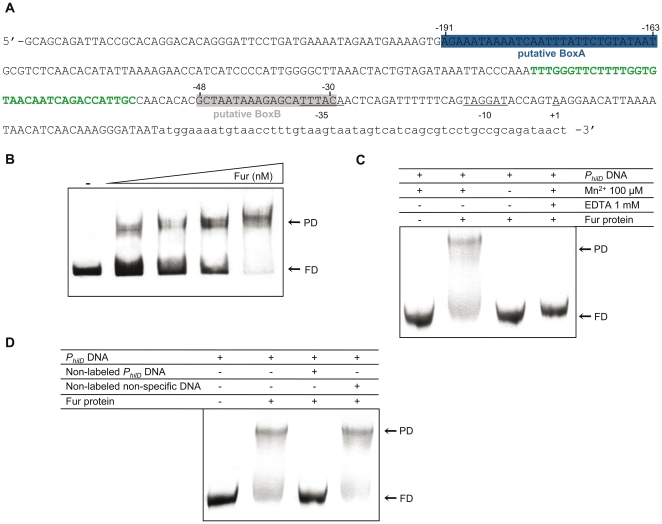
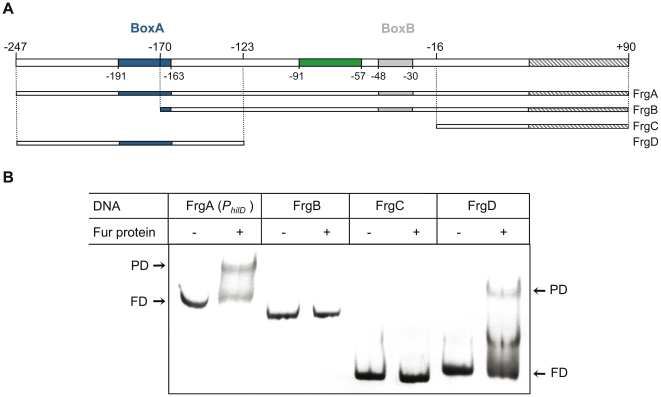
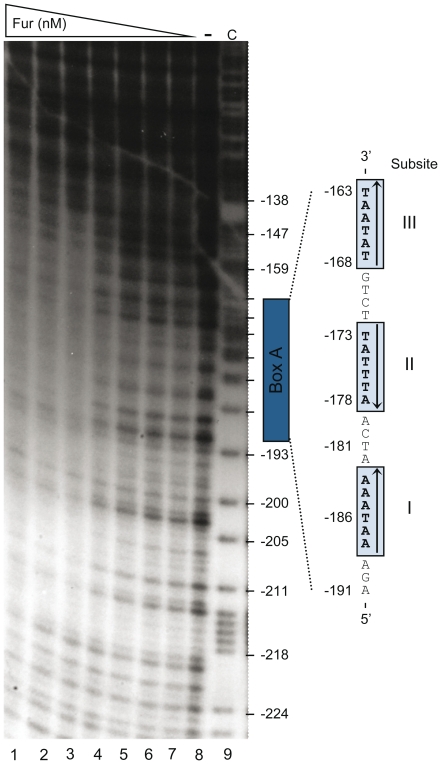
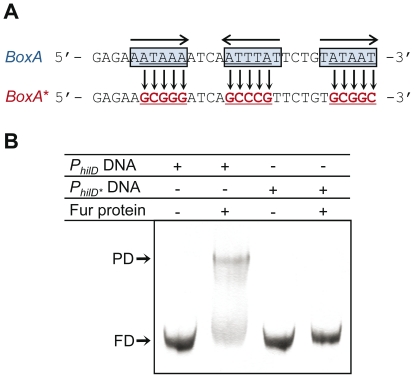
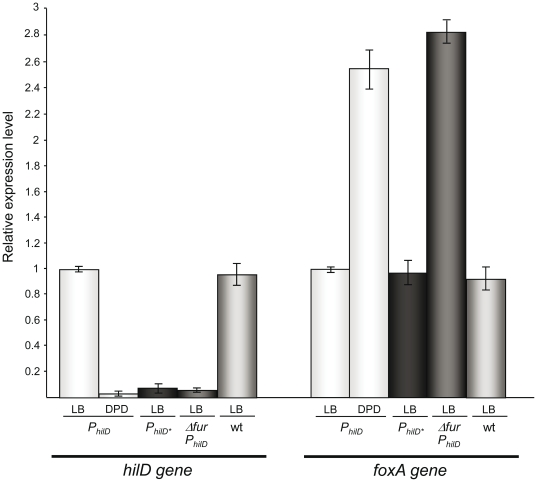
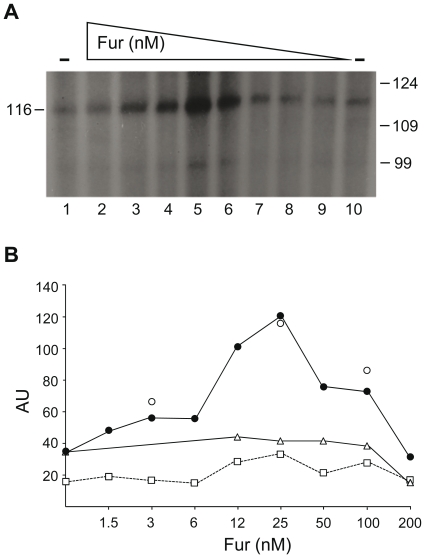
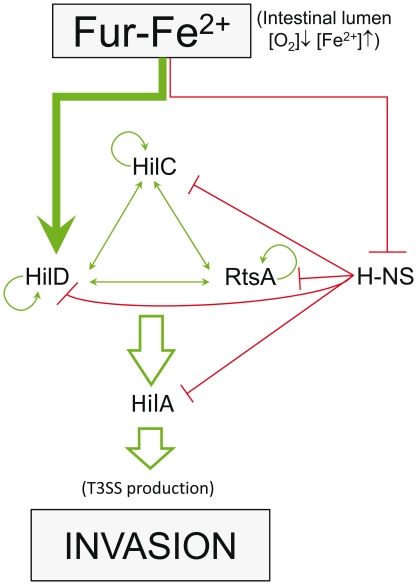
Previous studies have established that the expression of Salmonella enterica pathogenicity island 1 (SPI1), which is essential for epithelial invasion, is mainly regulated by the HilD protein. The ferric uptake regulator, Fur, in turn modulates the expression of the S. enterica hilD gene, albeit through an unknown mechanism. Here we report that S. enterica Fur, in its metal-bound form, specifically binds to an AT-rich region (BoxA), located upstream of the hilD promoter (P(hilD)), at position -191 to -163 relative to the hilD transcription start site. Furthermore, in a P(hilD) variant with mutations in BoxA, P(hilD*), Fur·Mn(2+) binding is impaired. In vivo experiments using S. enterica strains carrying wild-type P(hilD) or the mutant variant P(hilD*) showed that Fur activates hilD expression, while in vitro experiments revealed that the Fur·Mn(2+) protein is sufficient to increase hilD transcription. Together, these results present the first evidence that Fur·Mn(2+), by binding to the upstream BoxA sequence, directly stimulates the expression of hilD in S. enterica.
Overview
The claims and statistics of this paper haven’t been checked yet.
Free: it reads the open-access text and checks the first 5 claims that cite a source we can check. Create a free account to check every claim.
Integrity signals
Registry
Cites
Statistics
Figures
Verification
Claims the paper makes
The claims and statistics of this paper haven’t been checked yet.
Free: it reads the open-access text and checks the first 5 claims that cite a source we can check. Create a free account to check every claim.
Claims other papers make about this one
Each is checked against this paper’s own text: does it say what the citing paper says it does?
The cited source says what the claim attributes to it.
In the citing paper
“Besides controlling the expression of genes directly involved in iron homeostasis, Fur regulation extends to other fundamental pathways, such as nitrate/nitrite respiration, 76 acid tolerance response, 77 and virulence – including the Type 3 secretion system encoded by Salmonella pathogenicity island‐1. 78 , 79 , 80”
From The battle for iron in enteric infections (2020) · cites this paper as [78]
Self-check
Percentages, sums and reported differences re-computed from the paper’s own numbers.
The self-check needs the paper’s full text.
Citations
Cites
One-step inactivation of chromosomal genes in Escherichia coli K-12 using PCR products
Datsenko, K. A., & Wanner, B. L. (2000) · Proceedings of the National Academy of Sciences · doi:10.1073/pnas.120163297 · Cited by 14,782 · cited 2×
“pKD4 bla FRT Kan FRT PS1 PS2 oriR6K [60]”
BackgroundMethodA new method for sequencing DNA.
Maxam, A. M., & Gilbert, W. (1977) · Proceedings of the National Academy of Sciences · doi:10.1073/pnas.74.2.560 · Cited by 7,922
Advanced Bacterial Genetics: A Manual for Genetic Engineering
Davis, R. W., Botstein, D., & Roth, J. R. (1980) · Cold Spring Harbor Laboratory eBooks · Cited by 3,065
The Global Burden of Nontyphoidal Salmonella Gastroenteritis
Majowicz, S. E., Musto, J., Scallan, E., Angulo, F. J., Kirk, M., O’Brien, S. J., Jones, T. F., Fazil, A., & Hoekstra, R. M. (2010) · Clinical Infectious Diseases · doi:10.1086/650733 · Cited by 2,442 · cited 1×
“important pathogens associated with food-borne illness worldwide [1,2].”
BackgroundIron Metabolism in Pathogenic Bacteria
Ratledge, C., & Dover, L. G. (2000) · Annual Review of Microbiology · doi:10.1146/annurev.micro.54.1.881 · Cited by 1,539 · cited 1×
“Normally, free Fe is scarce inside the host due its sequestration by several different cellular mechanisms [25,27].”
BackgroundThe locus of sequence-directed and protein-induced DNA bending
Wu, H.-M., & Crothers, D. M. (1984) · Nature · doi:10.1038/308509a0 · Cited by 1,433 · cited 1×
“The majority of transcriptional activators, upon binding to their cognate upstream element adjacent to the core RNAP sites, either drive the recruitment of the latter to the target promoter or alter the conformation of the promoter DNA to facilitate RNAP loading”
BackgroundWeinberg, E. D. (1978) · Microbiological Reviews · doi:10.1128/mmbr.42.1.45-66.1978 · Cited by 1,254
A small RNA regulates the expression of genes involved in iron metabolism in Escherichia coli
Massé, E., & Gottesman, S. (2002) · Proceedings of the National Academy of Sciences · doi:10.1073/pnas.032066599 · Cited by 1,154 · cited 1×
“coli Fur has also an indirect positive effect on some genes by repressing the expression of the rhyB [40].”
BackgroundSchaible, U. E., & Kaufmann, S. H. E. (2004) · Nature Reviews Microbiology · doi:10.1038/nrmicro1046 · Cited by 945
Bacterial Iron Sources: From Siderophores to Hemophores
Wandersman, C., & Delepelaire, P. (2004) · Annual Review of Microbiology · doi:10.1146/annurev.micro.58.030603.123811 · Cited by 930 · cited 1×
“Normally, free Fe is scarce inside the host due its sequestration by several different cellular mechanisms [25,27].”
Background
Cited by
Transcriptional regulation by Ferric Uptake Regulator (Fur) in pathogenic bacteria
Troxell, B., & Hassan, H. M. (2013) · Frontiers in Cellular and Infection Microbiology · doi:10.3389/fcimb.2013.00059 · Cited by 500
“In vitro transcription assays with H. pylori norB regulatory sequences (Delany et al., 2004) and S. Typhimurium hilD regulatory sequences (Teixido et al., 2011) demonstrate an active Fur-Fe2+ binding to a FBS (signified with a green box) that promotes increased binding of the RNAP (signified with a…”
BackgroundMethodInfluentialFillat, M. F. (2014) · Archives of Biochemistry and Biophysics · doi:10.1016/j.abb.2014.01.029 · Cited by 329
Nutritional iron turned inside out: intestinal stress from a gut microbial perspective
Kortman, G. A. M., Raffatellu, M., Swinkels, D. W., & Tjalsma, H. (2014) · FEMS Microbiology Reviews · doi:10.1111/1574-6976.12086 · Cited by 291
“The expression of T3SS-1, which includes invasion genes, is regulated by the action of multiple genes and regulators.”
BackgroundInfluentialKortman, G. A. M., Boleij, A., Swinkels, D. W., & Tjalsma, H. (2012) · PLoS ONE · doi:10.1371/journal.pone.0029968 · Cited by 195
“Nevertheless, other studies have shown that T3SS is induced by iron through the ferric uptake regulator (Fur) [25,26,27].”
BackgroundGolubeva, Y. A., Sadik, A. Y., Ellermeier, J. R., & Slauch, J. M. (2011) · Genetics · doi:10.1534/genetics.111.132779 · Cited by 163
“However, Teixido et al. (2011) propose that Fur acts directly at the hilD promoter.”
BackgroundColgan, A. M., Kröger, C., Diard, M., Hardt, W.-D., Puente, J. L., Sivasankaran, S. K., Hokamp, K., & Hinton, J. C. D. (2016) · PLOS Genetics · doi:10.1371/journal.pgen.1006258 · Cited by 128
Yang, B., Feng, L., Wang, F., & Wang, L. (2015) · Nature Communications · doi:10.1038/ncomms7592 · Cited by 103
Zinc-dependent regulation of zinc import and export genes by Zur
Choi, S.-H., Lee, K.-L., Shin, J.-H., Cho, Y.-B., Cha, S., & Roe, J. (2017) · Nature Communications · doi:10.1038/ncomms15812 · Cited by 95
Troxell, B., Fink, R. C., Porwollik, S., McClelland, M., & Hassan, H. M. (2011) · BMC Microbiology · doi:10.1186/1471-2180-11-236 · Cited by 72
“, HilA and HilD) [38,39].”
Iron Transport and Metabolism in Escherichia, Shigella, and Salmonella
Mey, A. R., Gómez-Garzón, C., & Payne, S. M. (2021) · EcoSal Plus · doi:10.1128/ecosalplus.esp-0034-2020 · Cited by 83
“island 1 is regulated by the binding of Fur at the hilD promoter (22, 23).”
BackgroundMouslim, C., & Hughes, K. T. (2014) · PLoS Pathogens · doi:10.1371/journal.ppat.1003987 · Cited by 74
Salmonella Vaccines: Conduits for Protective Antigens
Clark‐Curtiss, J. E., & Curtiss, R. (2017) · The Journal of Immunology · doi:10.4049/jimmunol.1600608 · Cited by 75
“HilD is a transcriptional regulator of hilA, which encodes the main transcriptional activator of genes in Salmonella pathogenicity island (SPI)-1, and SPI-1 gene products facilitate invasion (50, 105).”
BackgroundDostal, A., Gagnon, M., Chassard, C., Zimmermann, M. B., O'Mahony, L., & Lacroix, C. (2014) · PLoS ONE · doi:10.1371/journal.pone.0093549 · Cited by 65
“However, several Salmonella virulence factors are positively regulated by Fe, such as type III secretion system [8,10,11].”
BackgroundThe battle for iron in enteric infections
Sousa Gerós, A., Simmons, A., Drakesmith, H., Aulicino, A., & Frost, J. N. (2020) · Immunology · doi:10.1111/imm.13236 · Cited by 58
Troxell, B., Petri, N., Daron, C., Pereira, R., Mendoza, M., Hassan, H. M., & Koci, M. D. (2015) · Applied and Environmental Microbiology · doi:10.1128/aem.02622-15 · Cited by 66
“The reduction in PrtsA and PhilD activation was consistent with earlier data, which showed that Fur regulated SPI-1 by controlling hilD expression when the hilD gene was present (35, 37).”
ResultRegulatory principles governing Salmonella and Yersinia virulence
Erhardt, M., & Dersch, P. (2015) · Frontiers in Microbiology · doi:10.3389/fmicb.2015.00949 · Cited by 71
“Sensing Intestinal Stimuli by Two-Component”
BackgroundManganese and Zinc Regulate Virulence Determinants in Borrelia burgdorferi
Troxell, B., Ye, M., Yang, Y., Carrasco, S. E., Lou, Y., & Yang, X. F. (2013) · Infection and Immunity · doi:10.1128/iai.00507-13 · Cited by 54
Mapping the Regulatory Network for Salmonella enterica Serovar Typhimurium Invasion
Smith, C., Stringer, A. M., Mao, C., Palumbo, M. J., & Wade, J. T. (2016) · mBio · doi:10.1128/mbio.01024-16 · Cited by 59
“In contrast, several transcription factors positively or negatively regulate SPI-1 genes by controlling hilD transcription independently of H-NS (e.g., Fur) (37, 38), or by controlling HilD translation (e.g., SirA and CsrA) (39) or activity (e.g., HilE and FliZ) (40, 41).”
BackgroundLeclerc, J.-M., Dozois, C. M., & Daigle, F. (2013) · Microbiology · doi:10.1099/mic.0.064329-0 · Cited by 51
“Recently, a link between Fur and the Salmonella pathogenicity island 1 (SPI-1) genes necessary for invasion has been demonstrated (Ellermeier & Slauch, 2008; Teixidó et al., 2011; Troxell et al., 2011b).”
BackgroundInfluentialGiaouris, E. D., Samoilis, G., Chorianopoulos, N., Ercolini, D., & Nychas, G. E. (2013) · International Journal of Food Microbiology · doi:10.1016/j.ijfoodmicro.2012.12.023 · Cited by 50
“…regulator of gene expression, it also ultimately coordinates intracellular iron levels withmany other cellular processes, including the expression of S. entericapathogenicity island1 (SPI1) and the control of nitrate/nitrite respiration by sensing cellular redox status (Teixidó et al., 2010, 2011).”
González, A., Angarica, V. E., Sancho, J., & Fillat, M. F. (2014) · Nucleic Acids Research · doi:10.1093/nar/gku123 · Cited by 56
“Despite Fur-mediated direct activation as been observed in several heterotrophic bacteria (20,21,24,74), little is known about the mechanism or mechanisms by which Fur proteins function to directly activate gene transcription.”
BackgroundVergnes, A., Viala, J. P. M., Ouadah-Tsabet, R., Pocachard, B., Loiseau, L., Méresse, S., Barras, F., & Aussel, L. (2016) · Cellular Microbiology · doi:10.1111/cmi.12680 · Cited by 44
“More recently, Campoy and colleagues proposed a different model in which Fur would bind upstream of the hilD promoter and directly stimulate the expression of hilD (Teixidó et al., 2011).”
BackgroundInfluentialBaron, F., Bonnassié, S., Alabdeh, M., Cochet, M., Nau, F., Guérin‐Dubiard, C., Gautier, M., Andrews, S. C., & Jan, S. (2017) · Frontiers in Microbiology · doi:10.3389/fmicb.2017.00829 · Cited by 50
“SPI1 is induced by iron in a Fur-dependent fashion (Teixidó et al., 2011) suggesting that the down regulation of the SPI1 genes observed here is due to the low iron concentration of egg white and consequent regulation change mediated by Fur.”
InfluentialGomes, A. É. I., Pacheco, T., dos Santos, C. D. S., Pereira, J. A., Ribeiro, M. L., Darrieux, M., & Ferraz, L. F. C. (2021) · Frontiers in Microbiology · doi:10.3389/fmicb.2020.601921 · Cited by 53
Ferric Uptake Regulator (FUR) protein: properties and implications in cyanobacteria
Kaushik, M. S., Singh, P. K., Tiwari, B., & Mishra, A. K. (2015) · Annals of Microbiology · doi:10.1007/s13213-015-1134-x · Cited by 43
“Secondly, Fur may recruit the RNA polymerase at the promoter of target genes, thereby enhancing transcription (Browning and Busby 2004), and thirdly, it was proposed that the binding of an activator may alter DNA morphology, making the promoter sequence free for the binding of RNA polymerase (Browning and Busby 2004;…”
Nisco, N. J. D., Rivera‐Cancel, G., & Orth, K. (2018) · mBio · doi:10.1128/mbio.02122-17 · Cited by 40
Expanding the Role of FurA as Essential Global Regulator in Cyanobacteria
González, A., Bes, M. T., Peleato, M. L., & Fillat, M. F. (2016) · PLoS ONE · doi:10.1371/journal.pone.0151384 · Cited by 50
“When Fur boxes are located far upstream of the transcription start site, Fur might activate gene expression by altering DNAmorphology allowing or enhancing RNA polymerase binding [5].”
BackgroundPalmer, A. D., Kim, K., & Slauch, J. M. (2019) · Journal of Bacteriology · doi:10.1128/jb.00264-19 · Cited by 40
“Fur apparently lowers the threshold of HilD required for activation (11) by binding well upstream of the start site of transcription and influencing H-NS repression (77).”
BackgroundMechanisms of Virulence Reprogramming in Bacterial Pathogens
Zhou, J., Ma, H., & Zhang, L. (2023) · Annual Review of Microbiology · doi:10.1146/annurev-micro-032521-025954 · Cited by 38
Sarvan, S., Butcher, J., Stintzi, A., & Couture, J.-F. (2018) · BioMetals · doi:10.1007/s10534-018-0120-8 · Cited by 30
Wang, S., Yang, D., Wu, X., Yi, Z., Wang, Y., Xin, S., Wang, D., Tian, M., Li, T., Qi, J., et al. (2019) · Infection and Immunity · doi:10.1128/iai.00562-19 · Cited by 41
Vishwakarma, V., Pati, N. B., Chandel, H. S., Sahoo, S. S., Saha, B., & Suar, M. (2012) · PLoS ONE · doi:10.1371/journal.pone.0052043 · Cited by 35
“Alteration in expression of SPI1 proteins by direct interaction with the hilD operator and hilA regulator is another activity from fur [16,17].”
BackgroundLópez‐Garrido, J., & Casadesús, J. (2012) · PLoS ONE · doi:10.1371/journal.pone.0030499 · Cited by 38
Kim, K., Golubeva, Y. A., Vanderpool, C. K., & Slauch, J. M. (2018) · Molecular Microbiology · doi:10.1111/mmi.14174 · Cited by 37
“This regulation requires both the hilD promoter and HilD protein and is likely the result of Fur affecting H-NSdependent repression of hilD transcription (Lavrrar et al., 2002; Olekhnovich and Kadner, 2006; 2007; Ellermeier and Slauch, 2008; Teixido et al., 2011; Troxell et al., 2011).”
BackgroundLiu, Q., Hu, Y., Li, P., & Kong, Q. (2019) · Frontiers in Veterinary Science · doi:10.3389/fvets.2019.00005 · Cited by 34
“For example, the bacterial ferritin gene bfrB in Pseudomonas aeruginosa and the hilD virulence factor in S. Typhimurium are both activated by Fe2+Fur (38, 39).”
BackgroundŁaniewski, P., Mitra, A., Karaca, K., Khan, A., Prasad, R., Curtiss, R., & Roland, K. L. (2014) · Clinical and Vaccine Immunology · doi:10.1128/cvi.00310-14 · Cited by 30
“6 10(7) 1/16 (6) 2/16 (12) 3/16 (19) 15/16 100 Oral 2.”
Bai, H. T., Zhou, D., Zhang, X., Cao, Y., Xiao, X., Zhang, Y., & Yu, Y. (2021) · International Journal of Food Microbiology · doi:10.1016/j.ijfoodmicro.2021.109189 · Cited by 25
Becerra, G., Merchán, F., Blasco, R., & Igeño, M. I. (2014) · Journal of Biotechnology · doi:10.1016/j.jbiotec.2014.03.030 · Cited by 26
Choi, E., Kim, H., Lee, H., Nam, D., Choi, J., & Shin, D. (2014) · Infection and Immunity · doi:10.1128/iai.01625-13 · Cited by 27
“positively controls expression of the SPI-1 genes (15, 16).”
BackgroundTobe, T., Yen, H., Takahashi, H., Kagayama, Y., Ogasawara, N., & Oshima, T. (2014) · PLoS ONE · doi:10.1371/journal.pone.0101582 · Cited by 27
“In Salmonella, Fur directly targets the hilD promoter and activates its transcription [34].”
BackgroundPivotal Role of Iron in the Regulation of Cyanobacterial Electron Transport
González, A., Sevilla, E., Bes, M. T., Peleato, M. L., & Fillat, M. F. (2016) · Advances in microbial physiology/Advances in Microbial Physiology · doi:10.1016/bs.ampbs.2016.02.005 · Cited by 26
Pinochet-Barros, A., & Helmann, J. D. (2020) · Journal of Bacteriology · doi:10.1128/jb.00697-19 · Cited by 23
“Salmonella enterica (46), and Neisseria meningitidis (47).”
Yersiniabactin is a quorum-sensing autoinducer and siderophore in uropathogenic Escherichia coli
Heffernan, J. R., Wildenthal, J. A., Tran, H. D., Katumba, G. L., McCoy, W. H., & Henderson, J. P. (2024) · mBio · doi:10.1128/mbio.00277-23 · Cited by 33
Iron homeostasis of cyanobacteria: advancements in siderophores and metal transporters
Fresenborg, L., Graf, J., Schätzle, H., & Schleiff, E. (2020) · Elsevier eBooks · doi:10.1016/b978-0-12-819311-2.00007-3 · Cited by 23
Structural basis of Streptomyces transcription activation by zinc uptake regulator
Xu, Y., Wang, Y., Liu, G., Deng, Z., Lin, S., & Zheng, J. (2022) · Nucleic Acids Research · doi:10.1093/nar/gkac627 · Cited by 20
“In the case of Fur-activated genes, the Fur-box sequence is located −100 to −200 bp upstream of the TSS (53).”
BackgroundGrassmann, A. A., Zavala-Alvarado, C., Bettin, E. B., Picardeau, M., Benaroudj, N., & Caimano, M. J. (2021) · PLoS Pathogens · doi:10.1371/journal.ppat.1009078 · Cited by 17
Sarasa‐Buisan, C., Guío, J., Broset, E., Peleato, M. L., Fillat, M. F., & Sevilla, E. (2021) · Environmental Microbiology · doi:10.1111/1462-2920.15552 · Cited by 22
“S2) (Ledala et al., 2007; Gao et al., 2008; Teixido et al., 2011).”
Long-Distance Effects of H-NS Binding in the Control of hilD Expression in the Salmonella SPI1 Locus
Kalafatis, M., & Slauch, J. M. (2021) · Journal of Bacteriology · doi:10.1128/jb.00308-21 · Cited by 15
FoxR is an AraC ‐like transcriptional regulator of ferrioxamine uptake in Salmonella enterica
Saldaña‐Ahuactzi, Z., & Knodler, L. A. (2022) · Molecular Microbiology · doi:10.1111/mmi.14970 · Cited by 11
Li, J., Wu, Z., Hou, Y., Zhang, Y., & Zhou, Y. (2023) · Frontiers in Microbiology · doi:10.3389/fmicb.2022.1099611 · Cited by 15
Transcriptional and Post-transcriptional Regulatory Mechanisms Controlling Type III Secretion
Volk, M., Vollmer, I., Heroven, A. K., & Dersch, P. (2019) · Current topics in microbiology and immunology · doi:10.1007/82_2019_168 · Cited by 16
Switching off Bacterial Flagellar Biogenesis by YdiU-Mediated UMPylation of FlhDC
Ma, Y., Yue, Y., Jia, H., Song, N., Zhai, L., Wang, W., Li, C., & Li, B. (2022) · mBio · doi:10.1128/mbio.00249-22 · Cited by 11
Das, C., Dutta, A., Rajasingh, H., & Mande, S. S. (2013) · Gut Pathogens · doi:10.1186/1757-4749-5-28 · Cited by 12
“In this case, HilD was subjected to positive regulation by four nodes (SirA-BirA, HilC, RtsA and Fur) along with self activation [11,14,43,44].”
Interplay between Fur and HNS in controlling virulence gene expression in Salmonella typhimurium
Prajapat, M. K., & Saini, S. (2012) · Computers in Biology and Medicine · doi:10.1016/j.compbiomed.2012.09.005 · Cited by 11
Study in the iron uptake mechanism of Pasteurella multocida
Shen, X., Guan, L., Zhang, J., Xue, Y., Si, L., & Zhao, Z. (2025) · Veterinary Research · doi:10.1186/s13567-025-01469-0 · Cited by 10
“When the Fur-box is positioned around − 100 bp upstream of the transcription start point, Fur can enhance RNA polymerase aggregation at the − 10 bp and − 35 bp regions of DNA, hence activating DNA transcription [82, 90] (Figure 4B).”
Huang, K., Wang, Y.-H., Chien, K., Janapatla, R. P., & Chiu, C. (2016) · Scientific Reports · doi:10.1038/srep37642 · Cited by 9
Role of Fur on cyanide tolerance of Pseudomonas pseudoalcaligenes CECT5344
Becerra, G., Blasco, R., Quesada, A., Merchán, F., & Igeño, M. I. (2011) · Biochemical Society Transactions · doi:10.1042/bst20110706 · Cited by 7
Curtiss, R. (2015) · Elsevier eBooks · doi:10.1016/b978-0-12-415847-4.00064-1 · Cited by 6
“Based on the report by Teixido et al. (2011) that Fur activates expression of hilD and thus SPI-1 genes to increase invasion, it follows that overexpression of fur at the time of mucosal immunization could increase colonization of MALT.”
(Re)-definition of the holo- and apo-Fur direct regulons of Helicobacter pylori
Vannini, A., Pinatel, E., Costantini, P. E., Pelliciari, S., Roncarati, D., Puccio, S., Bellis, G. D., Scarlato, V., Peano, C., & Danielli, A. (2024) · Journal of Molecular Biology · doi:10.1016/j.jmb.2024.168573 · Cited by 8
Deciphering FUR-regulated gene networks in Klebsiella pneumoniae using FUR knockout mutant
Joshi, P., Maindolia, R., Dhakre, D., Patel, T., & Gajjar, D. U. (2024) · The Microbe · doi:10.1016/j.microb.2024.100201 · Cited by 4
Host Neuroendocrine Stress Hormones Driving Bacterial Behaviour and Virulence
Karavolos, M. H., & Khan, C. M. A. (2013) · Heat shock proteins · doi:10.1007/978-94-007-6787-4_25 · Cited by 2
Interplay between Rho, H-NS, spurious transcription, and Salmonella gene regulation
Slauch, J. M. (2022) · Proceedings of the National Academy of Sciences · doi:10.1073/pnas.2211222119 · Cited by 2
Contrôle de la virulence deSalmonella entericapar la machinerie de biogenèse des centres Fe-S
Carreaux, A., de Saint-Leger, S. D. C., Kouidri, Y., & Golinelli‐Cohen, M. (2017) · médecine/sciences · doi:10.1051/medsci/20173306015 · Cited by 2
Ryu, K., Biswas, D., & Ahn, J. (2014) · Archives of Microbiology · doi:10.1007/s00203-014-0959-1 · Cited by 2
“HilD are also regulated by the Fur-Fe2+ complex present in the intestinal lumen (Teixido et al. 2011).”
Attenuated Salmonella for Oral Immunization
Roland, K. L., Kong, Q., & Jiang, Y. (2019) · Elsevier eBooks · doi:10.1016/b978-0-12-811924-2.00022-5 · Cited by 3
Acid Adaptive Mechanisms of Campylobacter jejuni in the Gastrointestinal Tract
Askoura, M. (2015) · uO Research (University of Ottawa) · doi:10.20381/ruor-2806 · Cited by 1
A vas homeosztázis, oxidatív mutagenezis és az antibiotikum rezisztencia evolúciójának kapcsolata
Méhi, O. (2014) · SZTE Repository of Dissertations (University of Szeged) · doi:10.14232/phd.2395
Phenotypic and Genotypic Investigation of Persistent Staphylococcus aureus Bacteraemia Isolates
Richards, R. (2015) · Figshare
Iron-sulfur Cluster Biogenesis and Iron Homeostasis in Escherichia coli
Yang, J. (2018) · Louisiana State University · doi:10.31390/gradschool_dissertations.4722
Grassmann, A. A., Zavala-Alvarado, C., Bettin, E. B., Picardeau, M., Benaroudj, N., & Caimano, M. J. (2020) · bioRxiv (Cold Spring Harbor Laboratory) · doi:10.1101/2020.11.05.369660
(2020) · Wiley eBooks · doi:10.1002/9781119309697.ref
Sahoo, P. R., Kumar, A., Pashupathi, M., Sahoo, J. R., Behera, P., & Saxena, M. (2025) · Current Microbiology · doi:10.1007/s00284-025-04609-z
sRNA-controlled iron-sparing response in Staphylococci
Coronel‐Tellez, R. H. (2021) · theses.fr (ABES) · doi:10.70675/5b8238b7z4e5ez44d9za2a5z92e6bb344194
Contrôle de la résistance aux antibiotiques par des ARN régulateurs
Baussier, C. (2023) · theses.fr (ABES) · doi:10.70675/f49c0a6bz58a5z4e8fz8691z0e7220d5adab
Liu, W., Cai, J., Huang, Y., Li, T., Gong, F., Yan, L., Wang, J., Liu, Y., Li, R., Wang, M., et al. (2026) · Cell Reports · doi:10.1016/j.celrep.2026.117858
Metadata
- Authors
- Teixidó, L., Carrasco, B., Alonso, J. C., Barbé, J., & Campoy, S.
- Affiliations
- Universitat Autònoma de Barcelona (ES)
- Universidad de Oviedo (ES)
- Consejo Superior de Investigaciones Científicas (ES)
- Corresponding author
- Campoy, Susana
- Venue
- PLoS ONE
- Publisher
- Public Library of Science (PLoS)
- Published
- 2011-05-06
- Volume
- 6
- Issue
- 5
- Pages
- e19711
- ISSN
- 1932-6203 (ISSN-L)
- PMC
- PMC3089636
- OpenAlex
- W2060074020
- Cited by
- 75
- References
- 85
- Citations by year
- 2026: 1 · 2025: 2 · 2024: 3 · 2023: 3 · 2022: 4 · 2021: 7 · 2020: 5 · 2019: 5 · 2018: 4 · 2017: 4 · 2016: 6 · 2015: 7 · 2014: 11 · 2013: 6 · 2012: 4
- FWCI
- 4.78
- Type
- journal article
- Language
- en
- Open access
- gold
- doi.org
- Locations
- PLoS ONE (publishedVersion, cc-by)
- PubMed Central (publishedVersion, cc-by)
- PubMed (publishedVersion)
- Dipòsit Digital de Documents de la UAB (Universitat Autònoma de Barcelona) (submittedVersion, cc-by)
- Consultation of the Doctoral Thesis Database (TESEO) (Ministerio de Educación, Cultura y Deporte) (submittedVersion, cc-by-nc-nd)
- LA Referencia (Red Federada de Repositorios Institucionales de Publicaciones Científicas) (submittedVersion, cc-by)
- DOAJ (DOAJ: Directory of Open Access Journals) (submittedVersion, cc-by-sa)
- Figshare (submittedVersion, cc-by)
- Funders
- Generalitat de Catalunya
- Topics
- Life Sciences › Biochemistry, Genetics and Molecular Biology › Genetics › Bacterial Genetics and Biotechnology
- Life Sciences › Immunology and Microbiology › Microbiology › Escherichia coli research studies
- Life Sciences › Agricultural and Biological Sciences › Food Science › Salmonella and Campylobacter epidemiology
- Keywords
- Fur protein, Salmonella enterica, pathogenicity island 1, transcriptional activation, ferric uptake regulator, transcriptional regulation, epithelial invasion
- MeSH terms
- Bacterial Proteins, Base Sequence, DNA, Bacterial, Iron, Manganese, Models, Biological, Molecular Sequence Data, Mutation, Operator Regions, Genetic, Protein Binding, RNA, Messenger, Transcription, Genetic, Gene Expression Regulation, Bacterial, DNA Footprinting, Salmonella enterica, Genomic Islands
About these checks
Registry, retraction, Cites and statistics results are computed, not judged, with one exception: a printed reference that no index lists is read once by a model before it counts as a citation error. Claims are extracted by a model and kept only when their quote appears verbatim in the text; each cited source is then checked, with a model’s help, for whether it says what the claim relies on. Those verdicts can be wrong — read the claim’s quote and the cited source before relying on one.
Statistics and arithmetic are recomputed, not judged.
Confidence bands are shown only for fields calibrated on our annotated test set. None is calibrated yet, so no band is shown.
What counts as a claim ›How we measure confidence ›How we check this ›
Are you an author, or do you see a problem with this page? Request a review
Data sources
Bibliographic data: Semantic Scholar, OpenAlex, Crossref.
Contains information from the Semantic Scholar Academic Graph Datasets, made available under the ODC Attribution License (ODC-BY 1.0).
Semantic Scholar’s data is described in: Kinney, R., et al. (2023). The Semantic Scholar Open Data Platform. arXiv:2301.10140.
