

In Vitro Surfactant Structure-Toxicity Relationships: Implications for Surfactant Use in Sexually Transmitted Infection Prophylaxis and Contraception
Open accessThe DOI matches its Crossref record; 62 of the 64 references it cites were found in a registry or an index.
Abstract
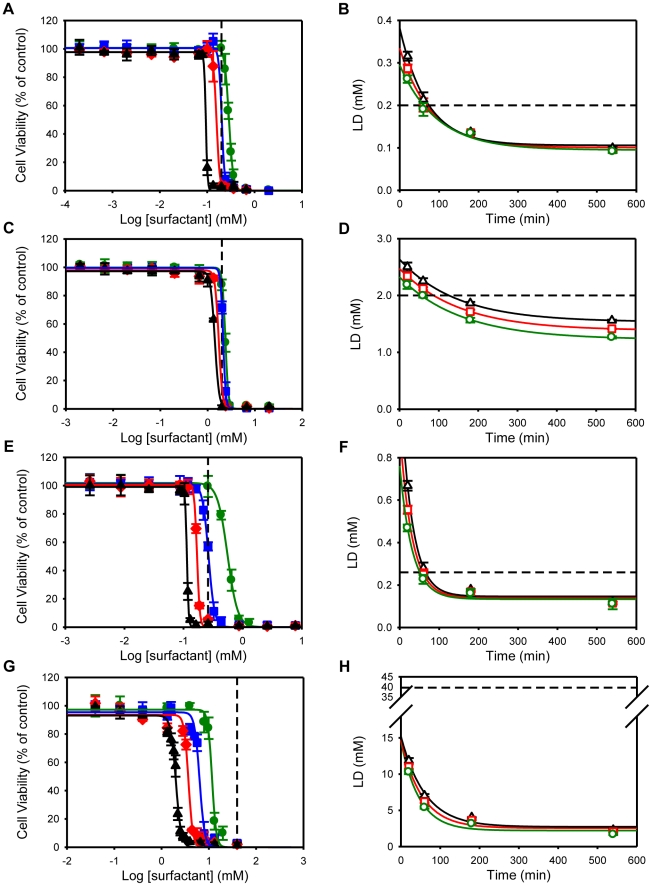
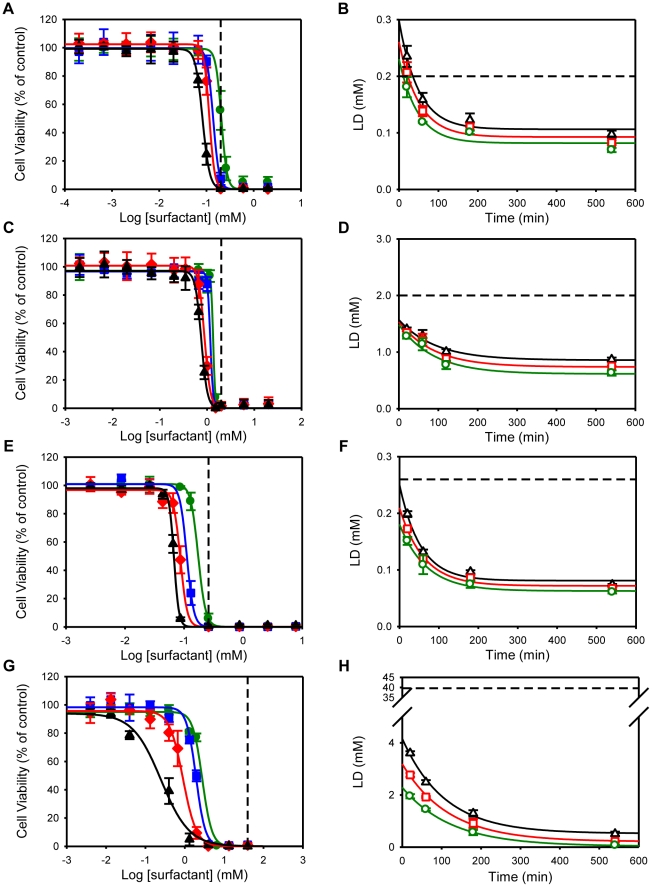
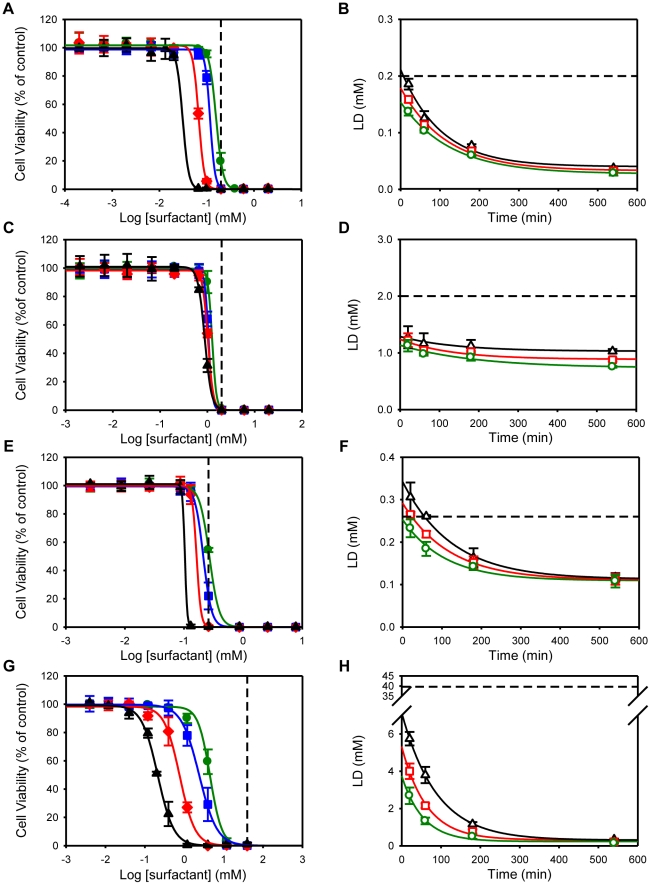
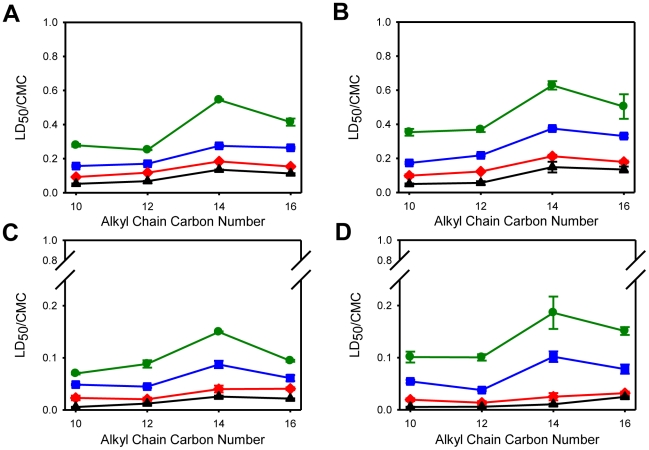
BACKGROUND: The need for woman-controlled, cheap, safe, effective, easy-to-use and easy-to-store topical applications for prophylaxis against sexually transmitted infections (STIs) makes surfactant-containing formulations an interesting option that requires a more fundamental knowledge concerning surfactant toxicology and structure-activity relationships. METHODOLOGY/PRINCIPAL FINDINGS: We report in vitro effects of surfactant concentration, exposure time and structure on the viability of mammalian cell types typically encountered in the vagina, namely, fully polarized and confluent epithelial cells, confluent but non-polarized epithelial-like cells, dendritic cells, and human sperm. Representatives of the different families of commercially available surfactants--nonionic (Triton X-100 and monolaurin), zwitterionic (DDPS), anionic (SDS), and cationic (C(n)TAB (n = 10 to 16), C(12)PB, and C(12)BZK)--were examined. Triton X-100, monolaurin, DDPS and SDS were toxic to all cell types at concentrations around their critical micelle concentration (CMC) suggesting a non-selective mode of action involving cell membrane destabilization and/or destruction. All cationic surfactants were toxic at concentrations far below their CMC and showed significant differences in their toxicity toward polarized as compared with non-polarized cells. Their toxicity was also dependent on the chemical nature of the polar head group. Our results suggest an intracellular locus of action for cationic surfactants and show that their structure-activity relationships could be profitably exploited for STI prophylaxis in vaginal gel formulations. The therapeutic indices comparing polarized epithelial cell toxicity to sperm toxicity for all surfactants examined, except C(12)PB and C(12)BZK, does not justify their use as contraceptive agents. C(12)PB and C(12)BZK are shown to have a narrow therapeutic index recommending caution in their use in contraceptive formulations. CONCLUSIONS/SIGNIFICANCE: Our results contribute to understanding the mechanisms involved in surfactant toxicity, have a predictive value with regard to their safety, and may be used to design more effective and less harmful surfactants for use in topical applications for STI prophylaxis.
Overview
The claims and statistics of this paper haven’t been checked yet.
Free: it reads the open-access text and checks the first 5 claims that cite a source we can check. Create a free account to check every claim.
Integrity signals
Registry
Cites
Statistics
Figures
Verification
Claims the paper makes
The claims and statistics of this paper haven’t been checked yet.
Free: it reads the open-access text and checks the first 5 claims that cite a source we can check. Create a free account to check every claim.
Claims other papers make about this one
Each is checked against this paper’s own text: does it say what the citing paper says it does?
The source backs part of the claim, not all of it — or backs it for a different population, condition or comparison.
In the citing paper
“they found that cytotoxicity is intracellular in origin at low QAC concentrations; abnormality or damage of intracellular biochemical processes are involved in lieu of membrane disintegration or cell lysis.”
From Quaternary ammonium-based biomedical materials: State-of-the-art, toxicological aspects and antimicrobial resistance (2017) · cites this paper as [374]
Experimental — accuracy not yet measured
Self-check
Percentages, sums and reported differences re-computed from the paper’s own numbers.
The self-check needs the paper’s full text.
Citations
Cites
The Hydrophobic Effect: Formation of Micelles and Biological Membranes
Tanford, C. (1991) · Medical Entomology and Zoology · Cited by 3,327
Rescigno, M., Urbano, M., Valzasina, B., Francolini, M., Rotta, G., Bonasio, R., Granucci, F., Kraehenbuhl, J.-P., & Ricciardi-Castagnoli, P. (2001) · Nature Immunology · doi:10.1038/86373 · Cited by 2,553 · cited 1×
“[37] have demonstrated that dendritic cells can open the tight junctions between epithelial cells, send dendrites outside the epithelium and directly sample bacteria without leaving the lamina propria.”
BackgroundModel Systems, Lipid Rafts, and Cell Membranes
Simons, K., & Vaz, W. L. C. (2004) · Annual Review of Biophysics and Biomolecular Structure · doi:10.1146/annurev.biophys.32.110601.141803 · Cited by 1,670
Log-Logistic Analysis of Herbicide Dose-Response Relationships
Seefeldt, S. S., Jensen, J. E., & Fuerst, E. P. (1995) · Weed Technology · doi:10.1017/s0890037x00023253 · Cited by 1,359 · cited 2×
“The cell viability dose-response curves were fitted to a four parameter sigmoid equation [24,25] through computer-assisted curve fitting (SigmaPlotH 11.”
MethodBiomembranes: molecular structure and function
(1989) · Choice Reviews Online · doi:10.5860/choice.27-0304 · Cited by 1,226
Biomembranes: Molecular Structure and Function
Gennis, R. B. (1989) · Springer Advanced Texts in Chemistry · doi:10.1007/978-1-4757-2065-5 · Cited by 1,021
MDCK (Madin-Darby Canine Kidney) Cells: A Tool for Membrane Permeability Screening
Irvine, J. D., Takahashi, L., Lockhart, K., Cheong, J., Tolan, J. W., Selick, H. E., & Grove, J. R. (1999) · Journal of Pharmaceutical Sciences · doi:10.1021/js9803205 · Cited by 980 · cited 1×
“[17,21,22,23].”
WHO LABORATORY MANUAL FOR THE EXAMINATION OF HUMAN SEMEN AND SPERM‐CERVICAL MUCUS INTERACTION
(1996) · International Journal of Andrology · doi:10.1111/j.1365-2605.1996.tb00454.x · Cited by 901
Initial Events in Establishing Vaginal Entry and Infection by Human Immunodeficiency Virus Type-1
Hladik, F., Sakchalathorn, P., Ballweber, L., Lentz, G., Fialkow, M., Eschenbach, D., & McElrath, M. J. (2007) · Immunity · doi:10.1016/j.immuni.2007.01.007 · Cited by 498 · cited 2×
“Non-polarized cells, in particular dendritic cells, have previously been identified as the primary sites of viral infection in the vagina [3,34,35,36].”
BackgroundUtilizing R Software Package for Dose-Response Studies: The Concept and Data Analysis
Knezevic, S. Z., Streibig, J. C., & Ritz, C. (2007) · Weed Technology · doi:10.1614/wt-06-161.1 · Cited by 497
Research works printed but not linked: 3
- World Health Organization 2007 Global Stratergy for the Prevention and Control of Sexually Transmitted Infections: 2006-2015. Breaking the Chain of Transmission. Geneva, Switzerland WHO Press
- Finkel R Cubeddu LX Clark MA 2009 Pharmacology. 4 ed. Baltimore, MD Lippincott Williams & Wilkins 33 34
- Simoncic B Span J 1998 Thermodynamics of micellization of n-alkylpyridinium chlorides: a potentiometric study. Acta Chimica Slovenica 45 143 152
Cited by
Items 101–141 of 141
Wang, G., Qiao, Q., Jia, W., Ruan, Y., An, K., Jiang, W., Zhou, X., & Xu, Z. (2024) · Chinese Chemical Letters · doi:10.1016/j.cclet.2024.110130 · Cited by 6
Sunnapu, O., Ravipati, P., Srinath, P., Kalita, S., Bhat, P. P., Harshitha, S. R., Sekar, K., Vemula, P. K., & Mahato, M. (2020) · Bulletin of Materials Science · doi:10.1007/s12034-020-02089-4 · Cited by 6
Melotti, M., Paqui, M. S. S., Amorim, A. L., de Paula, C. P., Rocha, M. C., Malavazi, I., da Cunha, A. F., Santana, F. S., Ribeiro, R. R., Gariani, R. A., et al. (2021) · New Journal of Chemistry · doi:10.1039/d0nj00895h · Cited by 5
Glycerol monolaurate nanocapsules for biomedical applications: in vitro toxicological studies
Lopes, L. Q. S., de Oliveira, P. S. B., Filho, W. P. D. S., Vaucher, R. D. A., Giongo, J. L., Sagrillo, M. R., & Santos, R. C. V. (2019) · Naunyn-Schmiedeberg s Archives of Pharmacology · doi:10.1007/s00210-019-01663-w · Cited by 7
Klevan, C., Casas, C. G., Allen, O. V., Mukai, K., LeBlanc, T., Shukla, A., & Pennell, K. D. (2026) · Journal of Hazardous Materials · doi:10.1016/j.jhazmat.2026.141023 · Cited by 5
Lau, S. H., & Chang, Y. (2024) · Chemosphere · doi:10.1016/j.chemosphere.2024.142538 · Cited by 4
Surfactants as antimicrobial nanocoatings for medical devices and implants
Negi, S. (2024) · Elsevier eBooks · doi:10.1016/b978-0-323-95756-4.00001-4 · Cited by 6
Bezold, E. L., Young, A. L. E., Jaworski, C. J., Minbiole, K. P. C., Sanchez, C. A., & Wuest, W. M. (2025) · ACS Omega · doi:10.1021/acsomega.5c03308 · Cited by 4
Alfaiate, M. I., Santos, R. A., Silva, A. F., Sousa, A. P., Almeida‐Santos, T., Gendron, C., Jabbour, V., Mas, Y., Verrière, F., Ramalho‐Santos, J., et al. (2021) · The European Journal of Contraception & Reproductive Health Care · doi:10.1080/13625187.2021.1900563 · Cited by 4
“studies [8,9] have, in fact, suggested cationic compounds”
MethodResultInfluentialPDE concept for controlling cleaning agent residues in pharmaceuticals– A critical analysis
Araya, S., Pfister, T., Gromek, K., Hawkins, W., Thomsen, S. T., Clemann, N., Faltermann, S., & Wiesner, L. (2021) · Regulatory Toxicology and Pharmacology · doi:10.1016/j.yrtph.2021.105095 · Cited by 5
Sable, A. A., Nayak, M., Kumar, S., Kunwar, A., & Barik, A. (2025) · Journal of Pharmaceutical Sciences · doi:10.1016/j.xphs.2025.103701 · Cited by 3
Hammond, M., Ke, Q., Deshwal, A., Simon, C. M., & Bain, A. (2026) · Langmuir · doi:10.1021/acs.langmuir.5c06514 · Cited by 4
Ultrasmall Nanocapsules Obtained by Controlling Ostwald Ripening
Doan‐Nguyen, T. P., Jiang, S., Koynov, K., Landfester, K., & Crespy, D. (2021) · Angewandte Chemie · doi:10.1002/ange.202103444 · Cited by 3
Sookkhee, S., Manonuek, S., Apichartpiyakul, C., & Sakonwasun, C. (2022) · Chiang Mai University Journal of Natural Sciences · doi:10.12982/cmujns.2022.015 · Cited by 3
Forouz, F., Mohammed, Y., Nejad, H. S. A. S., Roberts, M. S., & Grice, J. E. (2023) · EXCLI journal · doi:10.17179/excli2023-6072 · Cited by 11
Egorova, E. M., & Kaba, S. I. (2018) · Zhurnal «Patologicheskaia fiziologiia i eksperimental`naia terapiia» · doi:10.25557/0031-2991.2018.04.269-272 · Cited by 3
Schuh, L., dos Santos, B. M., Romera, L. F., Chang, L. F. D. A., Leal, C., de Andrade, S. G. M., Silveira, A. P., Santos, M.-K. M. S., Radicchi, M. A., Gris, E. F., et al. (2025) · Scientific Reports · doi:10.1038/s41598-025-25123-z · Cited by 2
“Given the cytotoxicity risk associated with higher surfactant levels, NaDES was increased to 50% 17 , which preserved PDI and significantly enhanced colloidal stability (Fig.”
Wang, J., Li, X., Xu, J., Li, H., Wu, H., Wang, R., Shao, Y., Zhou, Y., Yao, X., 杜来玲, et al. (2026) · Ecotoxicology and Environmental Safety · doi:10.1016/j.ecoenv.2026.120515 · Cited by 3
Magnetic Surfactants: Introduction, Chemistry, and Properties
Mansoor, A., Jamal, A., Masood, A. B., & Ali, M. (2023) · ACS symposium series · doi:10.1021/bk-2023-1447.ch001 · Cited by 2
Rodrigues, A. C. D. S. S., Paz, I. A., do Nascimento, N. R. F., Oliveira, G. D. F. S., Gondim, A. C. S., Lopes, L. G. D. F., & Sousa, E. H. S. (2025) · International Journal of Pharmaceutics · doi:10.1016/j.ijpharm.2025.125695 · Cited by 2
Kaba, S. I., & Egorova, E. M. (2020) · Nanotechnologies in Russia · doi:10.1134/s1995078020040059 · Cited by 2
Phase Separation Phenomena in Drug Systems
Naqvi, A. Z., & KABIR‐UD‐DIN, K. (2016) · Wiley eBooks · doi:10.1002/9781119075691.ch69 · Cited by 2
Chen, T., Huang, W., Zhang, Y., Dong, Y., Fu, B., & Li, H. (2023) · Water Air & Soil Pollution · doi:10.1007/s11270-023-06778-8 · Cited by 2
“As shown in Line D, surfactant can damage cell membranes (Vehapi & Özçimen, 2021) or cause microbial damage in a concentration-dependent manner (Inácio et al., 2011), possibly resulting in high desorption rate and low biodegradation rate.”
BackgroundMetal Oxide Doping Modulates the Performances of Copper Oxide Nanoparticular Biocides
Pepłowska, K., Huotari, J., Czechowska, K., Vitipon, M., Collin‐Faure, V., Chartier-Garcia, E., Hryniszyn, A., Kurylak, W., Mazur, J., Salo, S., et al. (2026) · Nanomaterials · doi:10.3390/nano16100576 · Cited by 1
“For the toxicity toward animal cells, it has been described that CTAB is not cytotoxic up to millimolar concentrations [59,60].”
Application of Magnetic Surfactants in the Removal of Pollutants and Microbes
Kotun, B. C., Adewara, O. A., Adebayo-Olajide, T. C., Ayedun, J. S., Oyetunji, O. E., Iyiola, C. O., & Ogunbanwo, S. T. (2023) · ACS symposium series · doi:10.1021/bk-2023-1447.ch005 · Cited by 2
A Review of Conductivity of Conductive Polymers; Polyaniline (Pani) and its Nanocomposites
Assem, H. D., Agyei, M. S., Tamakloe, R. Y., & Nkum, R. K. (2024) · European journal of applied sciences · doi:10.14738/aivp.122.16704 · Cited by 1
Vecstaudža, D., Kļaviņš, M., Muter, O., & Rutkis, R. (2015) · Material Science and Applied Chemistry · doi:10.1515/msac-2015-0014 · Cited by 1
“It has been reported previously, that toxicity of surfactants often correlates with their CMC; this indicates that the toxicity is related to destabilization and/or destruction of cell membrane [11].”
BackgroundInfluentialKaba, S. I., & Egorova, E. M. (2019) · Nauchno-prakticheskii zhurnal «Patogenez» · doi:10.25557/2310-0435.2019.04.64-68 · Cited by 1
Decellularised veins as a scaffold for in situ vascular tissue engineering
Sulaiman, N. S. (2019) · Bristol Research (University of Bristol)
Understanding of 2D human hair keratin platforms for cell culture applications
Tan, B. Y. (2020) · DR-NTU (Nanyang Technological University) · doi:10.32657/10356/143096 · Cited by 1
Lim, H., Yong, S., Phang, Y., Cheng, H. C., & Alitheen, N. B. (2020) · doi:10.21203/rs.3.rs-116419/v1
Some Methodological Aspects in Studies of Metal Nanoparticles’ Toxicity towards Cultured Cells
Egorova, E. M., & Kaba, S. I. (2021) · IntechOpen eBooks · doi:10.5772/intechopen.95471 · Cited by 1
A microelectric cell sensing technique for in vitro assessment of ocular irritation
Moe, B., Berezowski, K. L., Huang, D. Y., Dey, I., Xie, L. P., Ling, Z.-C., & Kinniburgh, D. W. (2021) · Toxicology in Vitro · doi:10.1016/j.tiv.2021.105124 · Cited by 2
Foam-based microbially-induced calcite precipitation
Ceccaldi, M., Menuisier, C., Langlois, V. J., Guéguen, M., Péchaud, Y., Grande, D., Vincent-Bonnieu, S., & Pitois, O. (2025) · JCIS Open · doi:10.1016/j.jciso.2025.100145
Yamanobe, H., Hakozaki, S., Saito, Y., Yabuki, K., Saito, T., Sakai, T., Kobayashi, S., Shimizu, T., Saito, R., Yamauchi, N., et al. (2025) · Journal of Pure and Applied Microbiology · doi:10.22207/jpam.19.4.27
Porous and hybrid silica from biocompatible systems : application to drug release
Cervantes-Martinez, C. V. (2019) · theses.fr (ABES) · doi:10.70675/bb63adf9z590az4c1dz98d5zf94996f8bf91
Fabrication et optimisation de bioelectrodes abiotiques pour biopiles à glucose implantables
Ghodhbane, M. (2021) · theses.fr (ABES) · doi:10.70675/4c8b3801zb000z4840za7a8zcb61ae77d7d1
Shafiei, M., Zarenezhad, E., Alipanah, H., Karimian, H., Ranjbar, R., & Osanloo, M. (2026) · BMC Complementary Medicine and Therapies · doi:10.1186/s12906-026-05422-2 · Cited by 1
“This was further verified by the negligible biological activity observed in the blank nanoemulsion (Tween 20 in water), confirming that the potent effects are attributable to the encapsulated essential oils rather than the surfactant vehicle [35, 36].”
Nanosizing of Drugs to Improve the Apparent Dissolution and Bioavailability
Yalamanda, V., Joshi, V. M., Patel, R. V., & Benival, D. M. (2026) · Methods and principles in medicinal chemistry · doi:10.1002/9783527850761.ch3
Metadata
- Authors
- Inácio, Â. S., Mesquita, K. A., Baptista, M., Ramalho-Santos, J., Vaz, W. L. C., & Vieira, O. V.
- Affiliations
- Centro de Neurociências e Biologia Celular (PT)
- University of Coimbra (PT)
- Corresponding author
- Vieira, Otília V.
- Venue
- PLoS ONE
- Publisher
- Public Library of Science (PLoS)
- Published
- 2011-05-16
- Volume
- 6
- Issue
- 5
- Pages
- e19850
- ISSN
- 1932-6203 (ISSN-L)
- PMC
- PMC3095630
- OpenAlex
- W2065011148
- Cited by
- 141
- References
- 64
- Citations by year
- 2026: 6 · 2025: 10 · 2024: 8 · 2023: 12 · 2022: 10 · 2021: 14 · 2020: 15 · 2019: 18 · 2018: 7 · 2017: 7 · 2016: 11 · 2015: 9 · 2014: 3 · 2013: 5 · 2012: 4
- FWCI
- 2.10
- Type
- journal article
- Language
- en
- Open access
- gold
- doi.org
- Locations
- PLoS ONE (publishedVersion, cc-by)
- PubMed Central (publishedVersion, cc-by)
- PubMed (publishedVersion)
- Portuguese National Funding Agency for Science, Research and Technology (RCAAP Project by FCT) (submittedVersion, other-oa)
- DOAJ (DOAJ: Directory of Open Access Journals) (submittedVersion, cc-by-sa)
- Portuguese National Funding Agency for Science, Research and Technology (RCAAP Project by FCT) (submittedVersion)
- Funders
- Fundação para a Ciência e a Tecnologia (PTDC/BIA-BCM/112138/2009, SFRH/BD/46078/2008, SFRH/BD/38397/2007, PTDC/SAU-MII/66285/2006, /2009)
- Topics
- Physical Sciences › Chemistry › Physical and Theoretical Chemistry › Surfactants and Colloidal Systems
- Life Sciences › Immunology and Microbiology › Applied Microbiology and Biotechnology › Antimicrobial agents and applications
- Physical Sciences › Environmental Science › Environmental Chemistry › Environmental Chemistry and Analysis
- Keywords
- surfactant toxicity, structure-activity relationship, contraceptive agents, cationic surfactants, sperm toxicity, vaginal epithelial cells, dendritic cells, critical micelle concentration, polar head groups, therapeutic index, Triton X-100, monolaurin, sodium deoxycholate
- MeSH terms
- Cell Membrane, Contraception, Demography, Female, Humans, Ions, Male, Micelles, Sexually Transmitted Diseases, Structure-Activity Relationship, Surface-Active Agents, Vaginal Creams, Foams, and Jellies, Cell Line, Tumor, Hydrophobic and Hydrophilic Interactions, Drug-Related Side Effects and Adverse Reactions
About these checks
Registry, retraction, Cites and statistics results are computed, not judged, with one exception: a printed reference that no index lists is read once by a model before it counts as a citation error. Claims are extracted by a model and kept only when their quote appears verbatim in the text; each cited source is then checked, with a model’s help, for whether it says what the claim relies on. Those verdicts can be wrong — read the claim’s quote and the cited source before relying on one.
Statistics and arithmetic are recomputed, not judged.
Confidence bands are shown only for fields calibrated on our annotated test set. None is calibrated yet, so no band is shown.
What counts as a claim ›How we measure confidence ›How we check this ›
Are you an author, or do you see a problem with this page? Request a review
Data sources
Bibliographic data: Semantic Scholar, OpenAlex, Crossref.
Contains information from the Semantic Scholar Academic Graph Datasets, made available under the ODC Attribution License (ODC-BY 1.0).
Semantic Scholar’s data is described in: Kinney, R., et al. (2023). The Semantic Scholar Open Data Platform. arXiv:2301.10140.
