

The DOI matches its Crossref record; 39 of the 39 references it cites were found in a registry or an index.
Biological Surface Coating and Molting Inhibition as Mechanisms of TiO2 Nanoparticle Toxicity in Daphnia magna
Open accessAbstract
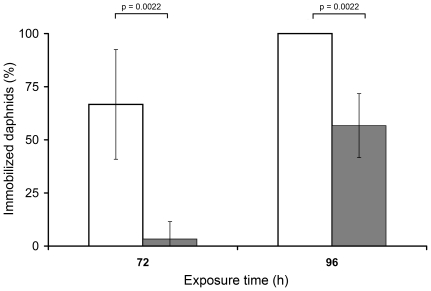
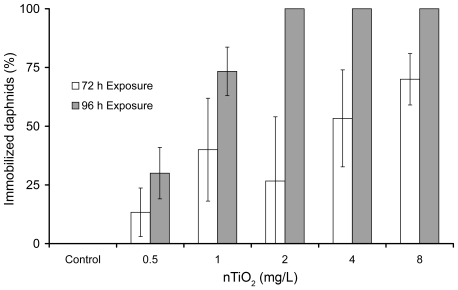
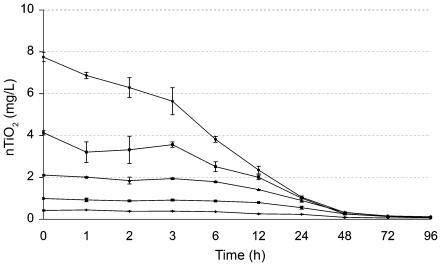
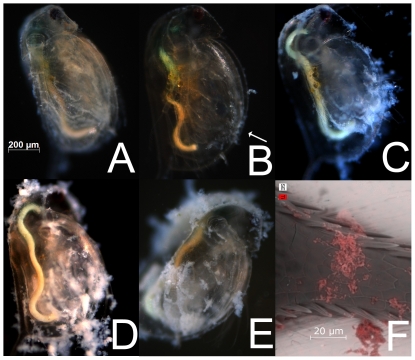
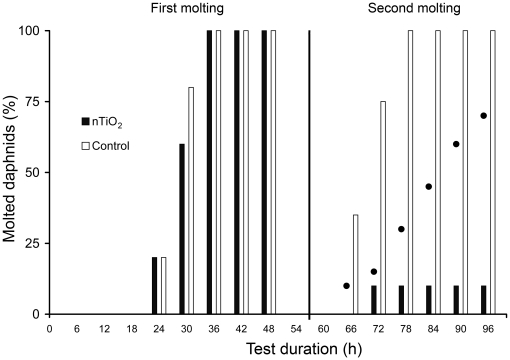
The production and use of nanoparticles (NP) has steadily increased within the last decade; however, knowledge about risks of NP to human health and ecosystems is still scarce. Common knowledge concerning NP effects on freshwater organisms is largely limited to standard short-term (≤48 h) toxicity tests, which lack both NP fate characterization and an understanding of the mechanisms underlying toxicity. Employing slightly longer exposure times (72 to 96 h), we found that suspensions of nanosized (∼100 nm initial mean diameter) titanium dioxide (nTiO(2)) led to toxicity in Daphnia magna at nominal concentrations of 3.8 (72-h EC(50)) and 0.73 mg/L (96-h EC(50)). However, nTiO(2) disappeared quickly from the ISO-medium water phase, resulting in toxicity levels as low as 0.24 mg/L (96-h EC(50)) based on measured concentrations. Moreover, we showed that nTiO(2) (∼100 nm) is significantly more toxic than non-nanosized TiO(2) (∼200 nm) prepared from the same stock suspension. Most importantly, we hypothesized a mechanistic chain of events for nTiO(2) toxicity in D. magna that involves the coating of the organism surface with nTiO(2) combined with a molting disruption. Neonate D. magna (≤6 h) exposed to 2 mg/L nTiO(2) exhibited a "biological surface coating" that disappeared within 36 h, during which the first molting was successfully managed by 100% of the exposed organisms. Continued exposure up to 96 h led to a renewed formation of the surface coating and significantly reduced the molting rate to 10%, resulting in 90% mortality. Because coating of aquatic organisms by manmade NP might be ubiquitous in nature, this form of physical NP toxicity might result in widespread negative impacts on environmental health.
Overview
The claims and statistics of this paper haven’t been checked yet.
Run the check — free, no account needed. It reads the open-access text and checks the sources it cites.
Integrity signals
Registry
Cites
Statistics
Figures
Verification
Claims the paper makes
The claims and statistics of this paper haven’t been checked yet.
Run the check — free, no account needed. It reads the open-access text and checks the sources it cites.
Claims other papers make about this one
Each is checked against this paper’s own text: does it say what the citing paper says it does?
In the citing paper
“MPs may also adhere directly to organisms (Dabrunz et al., 2011;Cole et al., 2013).”
From Studies of the Effects of Microplastics on Aquatic Organisms: What Do We Know and Where Should We Focus Our Efforts in the Future? (2018) · cites this paper as Dabrunz et al., 2011
Self-check
Percentages, sums and reported differences re-computed from the paper’s own numbers.
The self-check needs the paper’s full text.
Citations
Cites
Toxic potential of materials at the nanolevel
Nel, A., Xia, T., Mädler, L., & Li, N. (2006) · Science · doi:10.1126/science.1114397 · Cited by 9,324 · cited 3×
“Another possible reason for a higher toxicity of nano sized particles is the higher rate of formation of reactive oxygen species as a result of the higher reactivity [2].”
BackgroundGottschalk, F., Sonderer, T., Scholz, R. W., & Nowack, B. (2009) · Environmental Science & Technology · doi:10.1021/es9015553 · Cited by 2,388 · cited 1×
“085 mg/L nTiO2, which are well below those implicated in environmental risks [11].”
BackgroundSize‐Dependent Cytotoxicity of Gold Nanoparticles
Pan, Y., Neuß, S., Leifert, A., Fischler, M., Wen, F., Simon, U., Schmid, G., Brandau, W., & Jahnen‐Dechent, W. (2007) · Small · doi:10.1002/smll.200700378 · Cited by 1,881 · cited 1×
“[26] found that gold NP of around 1 nm caused a higher toxicity to human and mouse cell lines than gold particles about 15 fold larger and attributed these findings to different uptake kinetics.”
BackgroundHeinlaan, M., Ivask, A., Blinova, I., Dubourguier, H., & Kahru, A. (2008) · Chemosphere · doi:10.1016/j.chemosphere.2007.11.047 · Cited by 1,547
Ritz, C., & Streibig, J. C. (2005) · Journal of Statistical Software · doi:10.18637/jss.v012.i05 · Cited by 1,456 · cited 1×
“EC50 values were calculated using the drc package [21].”
MethodBrunner, T. J., Wick, P., Manser, P., Spohn, P., Grass, R. N., Limbach, L. K., Bruinink, A., & Stark, W. J. (2006) · Environmental Science & Technology · doi:10.1021/es052069i · Cited by 1,385 · cited 1×
“intrinsic toxic potential of titanium itself [34], it is likely that acute”
BackgroundStability and Aggregation of Metal Oxide Nanoparticles in Natural Aqueous Matrices
Keller, A. A., Wang, H., Zhou, D., Lenihan, H. S., Cherr, G. N., Cardinale, B. J., Miller, R. J., & Ji, Z. (2010) · Environmental Science & Technology · doi:10.1021/es902987d · Cited by 1,369
Toxicity of nanoparticles of CuO, ZnO and TiO2 to microalgae Pseudokirchneriella subcapitata
Aruoja, V., Dubourguier, H., Kasemets, K., & Kahru, A. (2008) · The Science of The Total Environment · doi:10.1016/j.scitotenv.2008.10.053 · Cited by 1,261
The ecotoxicology and chemistry of manufactured nanoparticles
Handy, R. D., von der Kammer, F., Lead, J. R., Hassellöv, M., Owen, R., & Crane, M. (2008) · Ecotoxicology · doi:10.1007/s10646-008-0199-8 · Cited by 915 · cited 2×
“However, for nanomaterials, particle size and particle surface characteristics appear to be at least as important as the available dose in driving the extent of potential toxic effects [14].”
BackgroundHandy, R. D., Owen, R., & Valsami‐Jones, E. (2008) · Ecotoxicology · doi:10.1007/s10646-008-0206-0 · Cited by 890
Research works printed but not linked: 1
- RD Handy, 2008, The ecotoxicology of nanoparticles and nanomaterials: current status, knowledge gaps, challenges, and future needs., Ecotoxicology, 17, 315, 10.1007/s10646-008-0206-0 · DOI
Cited by
Sorted by citations
de Sá, L. C., Oliveira, M., Ribeiro, F., Rocha, T. L., & Futter, M. N. (2018) · Science of The Total Environment · doi:10.1016/j.scitotenv.2018.07.207 · Cited by 1,316
Nanoparticles in the environment: where do we come from, where do we go to?
Bundschuh, M., Filser, J., Lüderwald, S., McKee, M. S., Metreveli, G., Schaumann, G. E., Schulz, R., & Wagner, S. (2018) · Environmental Sciences Europe · doi:10.1186/s12302-018-0132-6 · Cited by 913
“The acute toxicity of TiO2 NP and Fe3O4 NP in daphnids, for instance, was attributed to a physical inhibition of moulting, ultimately inducing death [155, 156].”
BackgroundUptake and effects of microplastic textile fibers on freshwater crustacean Daphnia magna
Jemec, A., Horvat, P., Kunej, U., Bele, M., & Kržan, A. (2016) · Environmental Pollution · doi:10.1016/j.envpol.2016.10.037 · Cited by 619
“magna revealed some new hazardous effects on daphnids that were not revealed in the 48 h exposure period (Dabrunz et al., 2011).”
BackgroundResultNano-plastics in the aquatic environment
Mattsson, K., Hansson, L., & Cedervall, T. (2015) · Environmental Science Processes & Impacts · doi:10.1039/c5em00227c · Cited by 621
Rehse, S., Kloas, W., & Zarfl, C. (2016) · Chemosphere · doi:10.1016/j.chemosphere.2016.02.133 · Cited by 508
Toxicity of various silver nanoparticles compared to silver ions in Daphnia magna
Asghari, S., Johari, S. A., Lee, J. H., Kim, Y. S., Jeon, Y. B., Choi, H. J., Moon, M.-C., & Yu, I. J. (2012) · Journal of Nanobiotechnology · doi:10.1186/1477-3155-10-14 · Cited by 320
Lin, D., Ji, J., Long, Z., Yang, K., & Wu, F. (2012) · Water Research · doi:10.1016/j.watres.2012.05.035 · Cited by 230
Coll, C., Notter, D. A., Gottschalk, F., Sun, T., Som, C., & Nowack, B. (2015) · Nanotoxicology · doi:10.3109/17435390.2015.1073812 · Cited by 218
“Other low data points, such as Dabrunz et al. (2011), Clement et al. (2013), and Zhu et al. (2010), used TiO2 in the anatase form for their experiments.”
Schaumann, G. E., Philippe, A., Bundschuh, M., Metreveli, G., Klitzke, S., Rakcheev, D., Grün, A. Y., Kumahor, S. K., Kühn, M., Baumann, T., et al. (2014) · The Science of The Total Environment · doi:10.1016/j.scitotenv.2014.10.035 · Cited by 201
C. elegans as a tool for in vivo nanoparticle assessment
Gonzalez-Moragas, L., Roig, A., & Laromaine, A. (2015) · Advances in Colloid and Interface Science · doi:10.1016/j.cis.2015.02.001 · Cited by 182
Toxicity and Accumulation of Cu and ZnO Nanoparticles inDaphnia magna
Xiao, Y., Vijver, M. G., Chen, G., & Peijnenburg, W. J. G. M. (2015) · Environmental Science & Technology · doi:10.1021/acs.est.5b00538 · Cited by 168
“For example, Dabrunz et al. (2011) found that adsorbed NPs caused mortality through reducing the molting rate of D. magna.”
BackgroundTran, T. K., Nguyen, M., Lin, C., Hoang, T., Nguyen, T. C., Lone, A. M., Khedulkar, A. P., Gaballah, M. S., Singh, J., Chung, W., et al. (2023) · The Science of The Total Environment · doi:10.1016/j.scitotenv.2023.169331 · Cited by 159
NanoE-Tox: New and in-depth database concerning ecotoxicity of nanomaterials
Juganson, K., Ivask, A., Blinova, I., Mortimer, M., & Kahru, A. (2015) · Beilstein Journal of Nanotechnology · doi:10.3762/bjnano.6.183 · Cited by 157
Ciacci, C., Canonico, B., Bilaničová, D., Fabbri, R., Cortese, K., Gallo, G., Marcomini, A., Pojana, G., & Canesi, L. (2012) · PLoS ONE · doi:10.1371/journal.pone.0036937 · Cited by 143
A review on potential neurotoxicity of titanium dioxide nanoparticles
Song, B., Liu, J., Feng, X., Wei, L., & Shao, L. (2015) · Nanoscale Research Letters · doi:10.1186/s11671-015-1042-9 · Cited by 157
Aquatic Ecotoxicity Testing of Nanoparticles—The Quest To Disclose Nanoparticle Effects
Skjolding, L. M., Sørensen, S. N., Hartmann, N. B., Hjorth, R., Hansen, S. F., & Baun, A. (2016) · Angewandte Chemie International Edition · doi:10.1002/anie.201604964 · Cited by 144
Aquatic Ecotoxicity of Microplastics and Nanoplastics: Lessons Learned from Engineered Nanomaterials
Rist, S., & Hartmann, N. B. (2017) · The handbook of environmental chemistry · doi:10.1007/978-3-319-61615-5_2 · Cited by 139
“In algae [46]; in algae [47]; in fish [48]; in algae [49]; in fish embryos [50]; in crustaceans [51]; in fish [52]; in algae [53]; in algae [7]; in crustaceans [54]; in crustaceans [51]; in echinoderms [55], bivalves [56–58] and fish [59]; in polychaetes [60], echinoderms [55], bivalves [56–58, 61] and fish [62–64]; i…”
BackgroundMa, S., & Lin, D. (2012) · Environmental Science Processes & Impacts · doi:10.1039/c2em30637a · Cited by 128
Pakrashi, S., Dalai, S., Prathna, T. C., Trivedi, S., Myneni, R., Raichur, A. M., Chandrasekaran, N., & Mukherjee, A. (2013) · Aquatic Toxicology · doi:10.1016/j.aquatox.2013.01.018 · Cited by 128
“Various mode of actions involved in nanoparticle induced algal oxicity proposed can be summarized as (i) surface chemical interctions (Dabrunz et al., 2011; Sadiq et al., 2011), (ii) oxidative stress nduced cell death (Armelao et al.”
BackgroundRosenfeldt, R. R., Seitz, F., Schulz, R., & Bundschuh, M. (2014) · Environmental Science & Technology · doi:10.1021/es405396a · Cited by 127
Nanoparticles in aquatic systems
Delay, M., & Frimmel, F. H. (2011) · Analytical and Bioanalytical Chemistry · doi:10.1007/s00216-011-5443-z · Cited by 121
Nasser, F., Constantinou, J. K., & Lynch, I. (2019) · PROTEOMICS · doi:10.1002/pmic.201800412 · Cited by 117
Cañas‐Carrell, J. E., Qi, B., Li, S., Maul, J. D., Cox, S. B., Das, S., & Green, M. J. (2011) · Journal of Environmental Monitoring · doi:10.1039/c1em10497g · Cited by 108
Microalgal ecotoxicity of nanoparticles: An updated review
Nguyen, M. K., Moon, J., & Lee, Y. (2020) · Ecotoxicology and Environmental Safety · doi:10.1016/j.ecoenv.2020.110781 · Cited by 109
Effects of nanoparticles in fresh waters: risks, mechanisms and interactions
Bundschuh, M., Seitz, F., Rosenfeldt, R. R., & Schulz, R. (2016) · Freshwater Biology · doi:10.1111/fwb.12701 · Cited by 103
Interaction of Silver Nanoparticles with Biological Surfaces of Caenorhabditis elegans
Kim, S. W., Nam, S., & An, Y. (2011) · Ecotoxicology and Environmental Safety · doi:10.1016/j.ecoenv.2011.10.023 · Cited by 102
“A previous study reported that coating of the surface of Daphnia magna by TiO2 nanoparticles caused a molting disruption, resulting in mortality (Dabrunz et al., 2011).”
BackgroundThe coating makes the difference: Acute effects of iron oxide nanoparticles on Daphnia magna
Baumann, J., Köser, J., Arndt, D., & Filser, J. (2014) · The Science of The Total Environment · doi:10.1016/j.scitotenv.2014.03.023 · Cited by 100
Li, S., Pan, X., Wallis, L. K., Fan, Z., Chen, Z., & Diamond, S. A. (2014) · Chemosphere · doi:10.1016/j.chemosphere.2014.03.058 · Cited by 94
“The differences in surface attachment might originate from the differences in particle/organisms surface charge, particle agglomerate size and structure, filtering apparatus, particle/organisms surface areas, and particle-biomolecular interactions (Kumar, 2009; Dabrunz et al., 2011).”
BackgroundKim, S. W., & An, Y. (2012) · Applied Microbiology and Biotechnology · doi:10.1007/s00253-012-4153-6 · Cited by 94
“These results were similar to the “biological surface coating” ofDaphnia. magna exposed to TiO2 NPs in a previous study (Dabrunz et al. 2011).”
MethodResultEmerging trends in nanoparticle toxicity and the significance of using Daphnia as a model organism
Liu, Z., Malinowski, C. R., & Sepúlveda, M. S. (2021) · Chemosphere · doi:10.1016/j.chemosphere.2021.132941 · Cited by 86
Artells, E., Issartel, J., Auffan, M., Borschneck, D., Thill, A., Tella, M., Brousset, L., Rose, J., Bottero, J., & Thiéry, A. (2013) · PLoS ONE · doi:10.1371/journal.pone.0071260 · Cited by 85
“magna exposed to nC60, TiO2 and Ag NPs [35,36,48] and Ceriodaphnia dubia exposed to Quantum Dots [49]).”
Wu, Q., Wang, W., Li, Y., Li, Y., Ye, B., Tang, M. X., & Wang, D. (2012) · Journal of Hazardous Materials · doi:10.1016/j.jhazmat.2012.10.013 · Cited by 84
“nia magna, and the activity of an antioxidant enzyme superoxide dismutase increased in 1 mg/L TiO2-NPs exposed marine abalone [42,43].”
BackgroundSalieri, B., Righi, S., Pasteris, A., & Olsen, S. I. (2014) · The Science of The Total Environment · doi:10.1016/j.scitotenv.2014.09.107 · Cited by 83
“…it is proved that the effect concen- trations (e.g. EC50) for nanoparticles is influenced by several aspects (Li et al., 2014; Seitz et al., 2013; Dabrunz et al., 2011; Gottschalk et al., 2013) as: the crystalline structure of nano-TiO2, the treatments of the sample to test (i.e. filtered or…”
BackgroundMethodInfluentialJacobasch, C., Völker, C., Giebner, S., Völker, J., Alsenz, H., Potouridis, T., Heidenreich, H., Kayser, G., Oehlmann, J., & Oetken, M. (2014) · Environmental Pollution · doi:10.1016/j.envpol.2013.12.008 · Cited by 74
“environmental conditions influencing the ecosystem (Fent, 2007; Nowack and Bucheli, 2007). For surface water and WWTPs effluent the most frequent values of predicted environmental concentrations of nTiO2 were determined with 0.021 mg/L and 4.28 mg/L, respectively (Gottschalk et al., 2009). Mueller and Nowack (2008) ca…”
BackgroundInfluentialWhy are nanomaterials different and how can they be appropriately regulated under REACH?
Schwirn, K., Tietjen, L., & Beer, I. (2014) · Environmental Sciences Europe · doi:10.1186/2190-4715-26-4 · Cited by 74
“Furthermore, scientists observed mechanical stress onto aquatic organisms as well as influences on the reproduction of invertebrates like earth worms [15,16].”
BackgroundCupi, D., Hartmann, N. B., & Baun, A. (2016) · Ecotoxicology and Environmental Safety · doi:10.1016/j.ecoenv.2015.12.028 · Cited by 74
Feswick, A., Griffitt, R. J., Siebein, K. N., & Barber, D. S. (2013) · Aquatic Toxicology · doi:10.1016/j.aquatox.2013.01.002 · Cited by 73
Phototoxicity of TiO2 nanoparticles to a freshwater benthic amphipod: Are benthic systems at risk?
Li, S., Wallis, L. K., Ma, H., & Diamond, S. A. (2013) · The Science of The Total Environment · doi:10.1016/j.scitotenv.2013.07.059 · Cited by 73
“, mycosporinelike amino acids, MAAs) (Dabrunz et al., 2011; Dunlap and Yamamoto, 1995; McClintock and Karentz, 1997).”
Wang, T., & Liu, W. (2022) · Environmental Science Nano · doi:10.1039/d2en00052k · Cited by 69
“36 Moreover, after 21 d of exposure, the longevity, growth, and reproduction of D. magna decreased significantly with increasing Al 2 O 3 NP concentration from 6.25 to 25 mg L − 1 .”
InfluentialPolydimethyl siloxane nanocomposites: Their antifouling efficacy in vitro and in marine conditions
Sankar, G. G., Sathya, S., Murthy, P. S., Das, A., Pandiyan, R., Venugopalan, V. P., & Doble, M. (2015) · International Biodeterioration & Biodegradation · doi:10.1016/j.ibiod.2015.05.022 · Cited by 66
“As the nanoparticles are embedded in the PDMS matrix and there is very little leaching taking place, only those organisms which come in to contact with the substratum get affected, and hence impact due to environmental release is minimal (Dabrunz et al., 2011).”
BackgroundDalai, S., Pakrashi, S., Chandrasekaran, N., & Mukherjee, A. (2013) · PLoS ONE · doi:10.1371/journal.pone.0062970 · Cited by 64
Carl, C., Poole, A. B., Vucko, M. J., Williams, M. R., Whalan, S., & de Nys, R. (2012) · Biofouling · doi:10.1080/08927014.2012.728588 · Cited by 64
“2012) and adhesion of aggregates to aquatic organisms (Dabrunz et al. 2011) is low because the nanoparticles are incorporated into the PDMS matrix.”
BackgroundNanoparticle toxicity in Daphnia magna reproduction studies: The importance of test design
Seitz, F., Bundschuh, M., Rosenfeldt, R. R., & Schulz, R. (2012) · Aquatic Toxicology · doi:10.1016/j.aquatox.2012.10.015 · Cited by 63
Fate, transport, and toxicity of nanoparticles: An emerging pollutant on biotic factors
Mishra, S., & Sundaram, B. (2023) · Process Safety and Environmental Protection · doi:10.1016/j.psep.2023.04.037 · Cited by 63
Lekamge, S., Miranda, A. F., Ball, A. S., Shukla, R., & Nugegoda, D. (2019) · PLoS ONE · doi:10.1371/journal.pone.0214398 · Cited by 62
Trinh, T. X., Seo, M., Yoon, T. H., & Kim, J. (2022) · NanoImpact · doi:10.1016/j.impact.2022.100383 · Cited by 62
Nano-pollution: Why it should worry us
Jan, N., Majeed, N., Ahmad, M., Lone, W. A., & John, R. (2022) · Chemosphere · doi:10.1016/j.chemosphere.2022.134746 · Cited by 64
Assessing the ecotoxicity of metal nano-oxides with potential for wastewater treatment
Nogueira, V. I. J. O., Lopes, I., Rocha‐Santos, T., Rasteiro, M. G., Abrantes, N., Gonçalves, F. J. M., Soares, A. M. V. M., Duarte, A. C., & Pereira, R. (2015) · Environmental Science and Pollution Research · doi:10.1007/s11356-015-4581-9 · Cited by 61
“Dabrunz et al. (2011) ob-”
BackgroundJovanović, B. (2015) · Environmental Toxicology and Chemistry · doi:10.1002/etc.2891 · Cited by 61
“In fact, surface attachment of nano-TiO2 to Cladocera carapace has been observed in previous studies [18,19], and the inner wall of the carapace is a major site of respiratory gas exchange for Cladocera [20].”
BackgroundAdam, N., Leroux, F. R., Knapen, D., Bals, S., & Blust, R. (2014) · Environmental Pollution · doi:10.1016/j.envpol.2014.06.037 · Cited by 59
Nanoparticle Surface Affinity as a Predictor of Trophic Transfer
Geitner, N. K., Marinakos, S. M., Guo, C., O’Brien, N., & Wiesner, M. R. (2016) · Environmental Science & Technology · doi:10.1021/acs.est.6b00056 · Cited by 59
Abdel‐Latif, H. M. R., Dawood, M. A. O., Menanteau‐Ledouble, S., & El‐Matbouli, M. (2020) · Ecotoxicology and Environmental Safety · doi:10.1016/j.ecoenv.2020.110776 · Cited by 56
Noß, C., Dabrunz, A., Rosenfeldt, R. R., Lorke, A., & Schulz, R. (2013) · PLoS ONE · doi:10.1371/journal.pone.0080960 · Cited by 57
Zheng, M., Lü, J., & Zhao, D. (2017) · The Science of The Total Environment · doi:10.1016/j.scitotenv.2017.12.018 · Cited by 56
Baumann, J., Sakka, Y., Bertrand, C., Köser, J., & Filser, J. (2013) · Environmental Science and Pollution Research · doi:10.1007/s11356-013-2094-y · Cited by 56
“The standard test duration of 48 h can underestimate the toxic effects of NMs. Dabrunz et al. (2011) have already shown increased toxicity and changed modes of action of TiO2 nanoparticles in a prolonged acute test with daphnids.”
BackgroundResultInfluentialWu, F., Bortvedt, A., Harper, B. J., Crandon, L. E., & Harper, S. L. (2017) · Aquatic Toxicology · doi:10.1016/j.aquatox.2017.06.021 · Cited by 56
Selmani, A., Ulm, L., Kasemets, K., Kurvet, I., Erceg, I., Barbir, R., Pem, B., Santini, P., Marion, I. D., Vinković, T., et al. (2020) · Chemosphere · doi:10.1016/j.chemosphere.2020.126265 · Cited by 55
Magro, M., Liguoro, M. D., Franzago, E., Baratella, D., & Vianello, F. (2018) · Scientific Reports · doi:10.1038/s41598-018-31483-6 · Cited by 54
Understanding the ecological impacts of nanoparticles: risks, monitoring, and mitigation strategies
Alizadeh, M., Qarachal, J. F., & Sheidaee, E. (2025) · Nanotechnology for Environmental Engineering · doi:10.1007/s41204-024-00403-7 · Cited by 54
Emergent Properties and Toxicological Considerations for Nanohybrid Materials in Aquatic Systems
Saleh, N. B., Afrooz, A. R. M. N., Bisesi, J. H., Aich, N., Plazas‐Tuttle, J., & Sabo‐Attwood, T. (2014) · Nanomaterials · doi:10.3390/nano4020372 · Cited by 52
Singh, A. K. (2016) · Elsevier eBooks · doi:10.1016/b978-0-12-801406-6.00008-x · Cited by 53
Surfactants decrease the toxicity of ZnO, TiO2 and Ni nanoparticles to Daphnia magna
Oleszczuk, P., Jośko, I. N., & Skwarek, E. (2015) · Ecotoxicology · doi:10.1007/s10646-015-1529-2 · Cited by 51
“Dabrunz et al. (2011) demonstrated that after a few hours most of nano-TiO2 sink to the bottom of the test beakers.”
BackgroundResultInfluentialRegulatory adequacy of aquatic ecotoxicity testing of nanomaterials
Hjorth, R., Skjolding, L. M., Sørensen, S. N., & Baun, A. (2017) · NanoImpact · doi:10.1016/j.impact.2017.07.003 · Cited by 50
“Case in point, in crustaceans, adsorption of CeO2, Pt and TiO2 MNs on the exoskeleton, cuticle and antenna is reported to influence mobility, molting, and swimming velocity (Artells et al., 2013; Cupi et al., 2015; Dabrunz et al., 2011; Gaiser et al., 2011; Noss et al., 2013).”
BackgroundRosenfeldt, R. R., Seitz, F., Senn, L., Schilde, C., Schulz, R., & Bundschuh, M. (2015) · Environmental Science & Technology · doi:10.1021/es506243d · Cited by 48
Lai, R. W. S., Kang, H.-M., Zhou, G., Yung, M. M. N., He, Y. L., Ng, A. M. C., Li, X.-Y., Djurišić, A. B., Lee, J., & Leung, K. (2021) · Environmental Science & Technology · doi:10.1021/acs.est.1c01300 · Cited by 48
Yang, Z., Lü, K., Chen, Y., & Montagnes, D. J. S. (2012) · PLoS ONE · doi:10.1371/journal.pone.0032285 · Cited by 47
“magna has been used to reveal the unexpected toxicity of fatty acids on zooplankton [40], the chronic toxicity of NOx to the crustacean [36], and the toxicity of nanoparticles on freshwater organisms [41].”
BackgroundSeitz, F., Lüderwald, S., Rosenfeldt, R. R., Schulz, R., & Bundschuh, M. (2015) · PLoS ONE · doi:10.1371/journal.pone.0126021 · Cited by 45
“In other words, the relatively high ecotoxicity of 0 and 1 d aged particles can be associated with a potentially higher share of small sized nTiO2 in the water phase (see [11,28]) when compared to longer aging periods.”
BackgroundSeitz, F., Rosenfeldt, R. R., Schneider, S., Schulz, R., & Bundschuh, M. (2014) · The Science of The Total Environment · doi:10.1016/j.scitotenv.2014.06.092 · Cited by 44
Role of molting on the biodistribution of CeO2 nanoparticles within Daphnia pulex
Auffan, M., Bertin, D., Chaurand, P., Paillès, C., Dominici, C., Rose, J., Bottero, J., & Thiéry, A. (2013) · Water Research · doi:10.1016/j.watres.2012.11.063 · Cited by 44
How to consider engineered nanomaterials in major accident regulations?
Nowack, B., Mueller, N. C., Krug, H. F., & Wick, P. (2014) · Environmental Sciences Europe · doi:10.1186/2190-4715-26-2 · Cited by 44
“8 [61]; other values (in mg/l): 1 [56], 3.”
Monitoring the Fate and Transformation of Silver Nanoparticles in Natural Waters
Furtado, L. M., Bundschuh, M., & Metcalfe, C. D. (2016) · Bulletin of Environmental Contamination and Toxicology · doi:10.1007/s00128-016-1888-2 · Cited by 44
Zhang, Y.-Q., Dringen, R., Petters, C., Rastedt, W., Köser, J., Filser, J., & Stolte, S. (2016) · Environmental Science Nano · doi:10.1039/c5en00222b · Cited by 43
Nasser, F., Davis, A., Valsami‐Jones, E., & Lynch, I. (2016) · Nanomaterials · doi:10.3390/nano6120222 · Cited by 43
Bundschuh, M., Englert, D., Rosenfeldt, R. R., Bundschuh, R., Feckler, A., Lüderwald, S., Seitz, F., Zubrod, J. P., & Schulz, R. (2019) · Scientific Reports · doi:10.1038/s41598-019-52096-7 · Cited by 42
AKSAKAL, F. İ. (2020) · Comparative Biochemistry and Physiology Part C Toxicology & Pharmacology · doi:10.1016/j.cbpc.2020.108830 · Cited by 42
Lai, R. W. S., Yung, M. M. N., Zhou, G., He, Y. L., Ng, A. M. C., Djurišić, A. B., Shih, K., & Leung, K. (2020) · Environmental Science Nano · doi:10.1039/d0en00467g · Cited by 42
Bundschuh, M., Seitz, F., Rosenfeldt, R. R., & Schulz, R. (2012) · PLoS ONE · doi:10.1371/journal.pone.0048956 · Cited by 41
“00 mg/L treatment were verified weekly by inductively coupled plasma mass spectrometry [9].”
BackgroundMethodInfluentialLi, L., Xu, M., Mu, H., Wang, W., Sun, J., He, J., Qiu, J., & Luan, T. (2019) · Environmental Science & Technology · doi:10.1021/acs.est.9b00251 · Cited by 41
Nasser, F., & Lynch, I. (2019) · Safety Science · doi:10.1016/j.ssci.2019.05.045 · Cited by 41
Park, S., Woodhall, J. W., Ma, G., Veinot, J. G. C., Cresser, M. S., & Boxall, A. B. A. (2013) · Nanotoxicology · doi:10.3109/17435390.2013.818173 · Cited by 39
“…ecotoxicity studies follow traditional test method guidelines such as those developed by the Organisation for Economic Co-operation and Development (OECD) or U.S. Environmental Protection Agency (EPA) (e.g. Dabrunz et al. 2011; Wiench et al. 2009; Lovern & Klaper 2006; Rogers et al. 2010).”
BackgroundMethodFood web effects of titanium dioxide nanoparticles in an outdoor freshwater mesocosm experiment
Jovanović, B., Bezirci, G., Çağan, A. S., Coppens, J., Levi, E. E., Oluz, Z., Tuncel, E., Duran, H., & Beklioğlu, M. (2016) · Nanotoxicology · doi:10.3109/17435390.2016.1140242 · Cited by 39
“, 2012) and zooplankton (Dabrunz et al., 2011) has been described as the”
BackgroundInfluentialChitosan-silver nanocomposites in goldfish aquaria: A new perspective in Lernaea cyprinacea control
Abu‐Elala, N. M., Attia, M. M., & Abd‐Elsalam, R. M. (2017) · International Journal of Biological Macromolecules · doi:10.1016/j.ijbiomac.2017.12.133 · Cited by 39
The Toxicity of Nanoparticles to Organisms in Freshwater
Lekamge, S., Ball, A. S., Shukla, R., & Nugegoda, D. (2018) · Reviews of Environmental Contamination and Toxicology · doi:10.1007/398_2018_18 · Cited by 40
Different modes of TiO2 uptake by Ceriodaphnia dubia: Relevance to toxicity and bioaccumulation
Dalai, S., Iswarya, V., Bhuvaneshwari, M., Pakrashi, S., Chandrasekaran, N., & Mukherjee, A. (2014) · Aquatic Toxicology · doi:10.1016/j.aquatox.2014.04.002 · Cited by 37
“23% at 16, 32 and 64 g/mL respectively), which is probably due to bigger size of the particle aggregates (Dabrunz et al., 2012; Zhao and Wang, 2012).”
BackgroundBehavior and chronic toxicity of two differently stabilized silver nanoparticles to Daphnia magna
Sakka, Y., Skjolding, L. M., Mackevica, A., Filser, J., & Baun, A. (2016) · Aquatic Toxicology · doi:10.1016/j.aquatox.2016.06.025 · Cited by 37
“Attachment to the carapax has been reported for several NPs with different core materials and coatings (Asghari et al., 2012; Baumann et al., 2014a; Bozich et al., 2014; Dabrunz et al., 2011; Zhao and Wang, 2012).”
BackgroundInfluentialHansen, S. F., Sørensen, S. N., Skjolding, L. M., Hartmann, N. B., & Baun, A. (2017) · Environmental Sciences Europe · doi:10.1186/s12302-017-0111-3 · Cited by 37
Toxicity of Zn-Fe Layered Double Hydroxide to Different Organisms in the Aquatic Environment
Koba, O., Ölmez-Hancı, T., Arslan‐Alaton, I., Arefi-Oskoui, S., Khataee, A., Kobya, M., & Orooji, Y. (2021) · Molecules · doi:10.3390/molecules26020395 · Cited by 37
“As has been reported previously, NMs can be agglomerated into microscopic particles in a high ionic strength medium as in the present case, inducing a change in their morphology and instability in surface properties [51].”
BackgroundInfluentialSize matters – The phototoxicity of TiO2 nanomaterials
Wyrwoll, A., Lautenschläger, P., Bach, A. D., Hellack, B., Dybowska, A. D., Kuhlbusch, T. A. J., Hollert, H., Schäffer, A., & Maes, H. M. (2015) · Environmental Pollution · doi:10.1016/j.envpol.2015.10.035 · Cited by 37
Effects of nano-TiO2 in combination with ambient UV-irradiation on a leaf shredding amphipod
Bundschuh, M., Zubrod, J. P., Englert, D., Seitz, F., Rosenfeldt, R. R., & Schulz, R. (2011) · Chemosphere · doi:10.1016/j.chemosphere.2011.07.060 · Cited by 36
Castro, G. B., Bernegossi, A. C., Felipe, M. C., & Corbi, J. J. (2020) · Journal of Environmental Science and Health Part A · doi:10.1080/10934529.2020.1756656 · Cited by 38
“[69] We observed that polyethylene microplastic did not cause a change in the molting process, which could be caused by ingestion or interaction of the microparticles with the body surface of the organisms, causing a rupture of the molting process, as observed when the species was exposed to TiO2 NPs [70] and Fe2O3 NP…”
BackgroundGalhano, V., Hartmann, S., Monteiro, M. S., Zeumer, R., Mozhayeva, D., Steinhoff, B., Müller, K., Prenzel, K., Kunze, J., Kuhnert, K.-D., et al. (2020) · Aquatic Toxicology · doi:10.1016/j.aquatox.2020.105404 · Cited by 35
Li, L., Sillanpää, M., & Schultz, E. (2017) · Journal of Nanoparticle Research · doi:10.1007/s11051-017-3916-5 · Cited by 35
“This adhesion phenomenon has been previously described by Baun et al. (2008) and Dabrunz et al. (2011).”
BackgroundLi, S., Wallis, L. K., Diamond, S. A., Ma, H., & Hoff, D. J. (2014) · Environmental Toxicology and Chemistry · doi:10.1002/etc.2583 · Cited by 34
“, mycosporine-like amino acids) [25–27].”
Titanium dioxide nanoparticles detoxify pirimicarb under UV irradiation at ambient intensities
Seitz, F., Bundschuh, M., Dabrunz, A., Bandow, N., Schaumann, G. E., & Schulz, R. (2011) · Environmental Toxicology and Chemistry · doi:10.1002/etc.1715 · Cited by 34
Kim, J., Lee, S., Kim, C.-M., Seo, J., Park, Y., Kwon, D., Lee, S.-H., Yoon, T. H., & Choi, K. (2014) · Ecotoxicology and Environmental Safety · doi:10.1016/j.ecoenv.2014.01.002 · Cited by 33
Rosenfeldt, R. R., Seitz, F., Zubrod, J. P., Feckler, A., Merkel, T., Lüderwald, S., Bundschuh, R., Schulz, R., & Bundschuh, M. (2015) · Aquatic Toxicology · doi:10.1016/j.aquatox.2015.05.011 · Cited by 32
Significance of particle size and charge capacity in TiO2 nanoparticle-lipid interactions
Vakurov, A. V., Brydson, R., Ugwumsinachi, O., & Nelson, A. L. (2016) · Journal of Colloid and Interface Science · doi:10.1016/j.jcis.2016.03.045 · Cited by 32
“Toxicology and Environmental Health Science 3 1-6 [8] Dabrunz A Duester L Prasse C Seitz F Rosenfeldt R Schilde C Schaumann G E Schulz R”
BackgroundIndividual and binary toxicity of anatase and rutile nanoparticles towards Ceriodaphnia dubia
Iswarya, V., Bhuvaneshwari, M., Chandrasekaran, N., & Mukherjee, A. (2016) · Aquatic Toxicology · doi:10.1016/j.aquatox.2016.08.007 · Cited by 31
Li, D., Chen, H., Bi, R., Xie, H., Zhou, Y., Luo, Y., & Xie, L. (2017) · Chemosphere · doi:10.1016/j.chemosphere.2017.10.022 · Cited by 31
Ciocan, C. M., Kristová, P., Annels, C., Derjean, M., & Hopkinson, L. (2020) · Marine Pollution Bulletin · doi:10.1016/j.marpolbul.2020.111559 · Cited by 32
Metadata
- Authors
- Dabrunz, A., Duester, L., Prasse, C., Seitz, F., Rosenfeldt, R., Schilde, C., Schaumann, G. E., & Schulz, R.
- Affiliations
- University of Koblenz and Landau (DE)
- Technische Universität Braunschweig (DE)
- Corresponding author
- Schulz, Ralf
- Venue
- PLoS ONE
- Publisher
- Public Library of Science (PLoS)
- Published
- 2011-05-27
- Volume
- 6
- Issue
- 5
- Pages
- e20112
- ISSN
- 1932-6203 (ISSN-L)
- PMC
- PMC3103543
- OpenAlex
- W1971246481
- Cited by
- 208
- References
- 38
- Citations by year
- 2026: 4 · 2025: 4 · 2024: 7 · 2023: 9 · 2022: 12 · 2021: 10 · 2020: 14 · 2019: 15 · 2018: 17 · 2017: 13 · 2016: 26 · 2015: 22 · 2014: 22 · 2013: 13 · 2012: 14
- FWCI
- 12.45
- Type
- journal article
- Language
- en
- Open access
- gold
- doi.org
- Locations
- PLoS ONE (publishedVersion, cc-by)
- PubMed Central (publishedVersion, cc-by)
- PubMed (publishedVersion)
- DOAJ (DOAJ: Directory of Open Access Journals) (submittedVersion, cc-by-sa)
- Topics
- Physical Sciences › Environmental Science › Health, Toxicology and Mutagenesis › Environmental Toxicology and Ecotoxicology
- Physical Sciences › Materials Science › Materials Chemistry › Nanoparticles: synthesis and applications
- Physical Sciences › Environmental Science › Pollution › Microplastics and Plastic Pollution
- Keywords
- titanium dioxide nanoparticles, nanoparticle toxicity, Daphnia magna, molting inhibition, particle size effects, freshwater zooplankton, ecotoxicology, long-term exposure
- MeSH terms
- Animals, Daphnia, Dose-Response Relationship, Drug, Particle Size, Suspensions, Time Factors, Titanium, Water, Molting, Nanoparticles
About these checks
Registry, retraction, Cites and statistics results are computed, not judged, with one exception: a printed reference that no index lists is read once by a model before it counts as a citation error. Claims are extracted by a model and kept only when their quote appears verbatim in the text; each cited source is then checked, with a model’s help, for whether it says what the claim relies on. Those verdicts can be wrong — read the claim’s quote and the cited source before relying on one.
Statistics and arithmetic are recomputed, not judged.
Confidence bands are shown only for fields calibrated on our annotated test set. None is calibrated yet, so no band is shown.
What counts as a claim ›How we measure confidence ›How we check this ›
Are you an author, or do you see a problem with this page? Request a review
