

The DOI matches its Crossref record; 39 of the 39 references it cites were found in a registry or an index.
Biological Surface Coating and Molting Inhibition as Mechanisms of TiO2 Nanoparticle Toxicity in Daphnia magna
Open accessAbstract
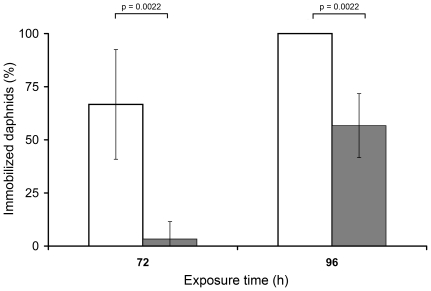
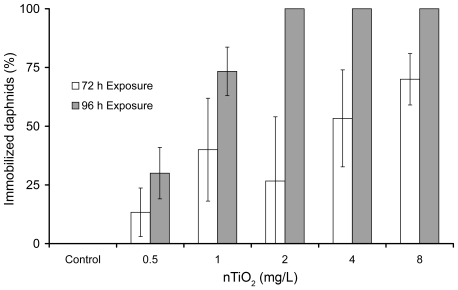
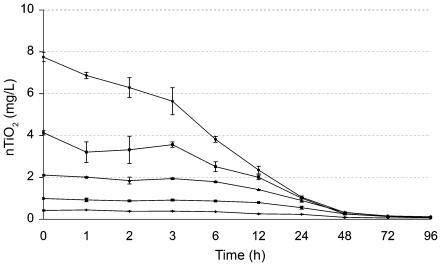
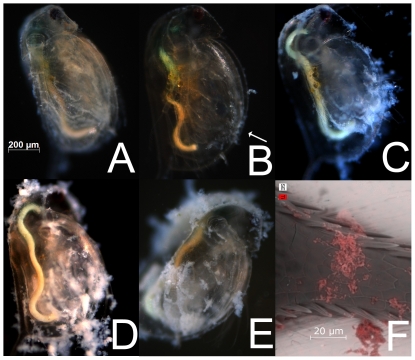
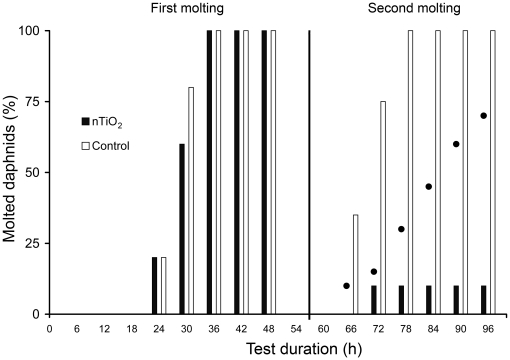
The production and use of nanoparticles (NP) has steadily increased within the last decade; however, knowledge about risks of NP to human health and ecosystems is still scarce. Common knowledge concerning NP effects on freshwater organisms is largely limited to standard short-term (≤48 h) toxicity tests, which lack both NP fate characterization and an understanding of the mechanisms underlying toxicity. Employing slightly longer exposure times (72 to 96 h), we found that suspensions of nanosized (∼100 nm initial mean diameter) titanium dioxide (nTiO(2)) led to toxicity in Daphnia magna at nominal concentrations of 3.8 (72-h EC(50)) and 0.73 mg/L (96-h EC(50)). However, nTiO(2) disappeared quickly from the ISO-medium water phase, resulting in toxicity levels as low as 0.24 mg/L (96-h EC(50)) based on measured concentrations. Moreover, we showed that nTiO(2) (∼100 nm) is significantly more toxic than non-nanosized TiO(2) (∼200 nm) prepared from the same stock suspension. Most importantly, we hypothesized a mechanistic chain of events for nTiO(2) toxicity in D. magna that involves the coating of the organism surface with nTiO(2) combined with a molting disruption. Neonate D. magna (≤6 h) exposed to 2 mg/L nTiO(2) exhibited a "biological surface coating" that disappeared within 36 h, during which the first molting was successfully managed by 100% of the exposed organisms. Continued exposure up to 96 h led to a renewed formation of the surface coating and significantly reduced the molting rate to 10%, resulting in 90% mortality. Because coating of aquatic organisms by manmade NP might be ubiquitous in nature, this form of physical NP toxicity might result in widespread negative impacts on environmental health.
Overview
The claims and statistics of this paper haven’t been checked yet.
Run the check — free, no account needed. It reads the open-access text and checks the sources it cites.
Integrity signals
Registry
Cites
Statistics
Figures
Verification
Claims the paper makes
The claims and statistics of this paper haven’t been checked yet.
Run the check — free, no account needed. It reads the open-access text and checks the sources it cites.
Claims other papers make about this one
Each is checked against this paper’s own text: does it say what the citing paper says it does?
In the citing paper
“MPs may also adhere directly to organisms (Dabrunz et al., 2011;Cole et al., 2013).”
From Studies of the Effects of Microplastics on Aquatic Organisms: What Do We Know and Where Should We Focus Our Efforts in the Future? (2018) · cites this paper as Dabrunz et al., 2011
Self-check
Percentages, sums and reported differences re-computed from the paper’s own numbers.
The self-check needs the paper’s full text.
Citations
Cites
Toxic potential of materials at the nanolevel
Nel, A., Xia, T., Mädler, L., & Li, N. (2006) · Science · doi:10.1126/science.1114397 · Cited by 9,324 · cited 3×
“Another possible reason for a higher toxicity of nano sized particles is the higher rate of formation of reactive oxygen species as a result of the higher reactivity [2].”
BackgroundGottschalk, F., Sonderer, T., Scholz, R. W., & Nowack, B. (2009) · Environmental Science & Technology · doi:10.1021/es9015553 · Cited by 2,388 · cited 1×
“085 mg/L nTiO2, which are well below those implicated in environmental risks [11].”
BackgroundSize‐Dependent Cytotoxicity of Gold Nanoparticles
Pan, Y., Neuß, S., Leifert, A., Fischler, M., Wen, F., Simon, U., Schmid, G., Brandau, W., & Jahnen‐Dechent, W. (2007) · Small · doi:10.1002/smll.200700378 · Cited by 1,881 · cited 1×
“[26] found that gold NP of around 1 nm caused a higher toxicity to human and mouse cell lines than gold particles about 15 fold larger and attributed these findings to different uptake kinetics.”
BackgroundHeinlaan, M., Ivask, A., Blinova, I., Dubourguier, H., & Kahru, A. (2008) · Chemosphere · doi:10.1016/j.chemosphere.2007.11.047 · Cited by 1,547
Ritz, C., & Streibig, J. C. (2005) · Journal of Statistical Software · doi:10.18637/jss.v012.i05 · Cited by 1,456 · cited 1×
“EC50 values were calculated using the drc package [21].”
MethodBrunner, T. J., Wick, P., Manser, P., Spohn, P., Grass, R. N., Limbach, L. K., Bruinink, A., & Stark, W. J. (2006) · Environmental Science & Technology · doi:10.1021/es052069i · Cited by 1,385 · cited 1×
“intrinsic toxic potential of titanium itself [34], it is likely that acute”
BackgroundStability and Aggregation of Metal Oxide Nanoparticles in Natural Aqueous Matrices
Keller, A. A., Wang, H., Zhou, D., Lenihan, H. S., Cherr, G. N., Cardinale, B. J., Miller, R. J., & Ji, Z. (2010) · Environmental Science & Technology · doi:10.1021/es902987d · Cited by 1,369
Toxicity of nanoparticles of CuO, ZnO and TiO2 to microalgae Pseudokirchneriella subcapitata
Aruoja, V., Dubourguier, H., Kasemets, K., & Kahru, A. (2008) · The Science of The Total Environment · doi:10.1016/j.scitotenv.2008.10.053 · Cited by 1,261
The ecotoxicology and chemistry of manufactured nanoparticles
Handy, R. D., von der Kammer, F., Lead, J. R., Hassellöv, M., Owen, R., & Crane, M. (2008) · Ecotoxicology · doi:10.1007/s10646-008-0199-8 · Cited by 915 · cited 2×
“However, for nanomaterials, particle size and particle surface characteristics appear to be at least as important as the available dose in driving the extent of potential toxic effects [14].”
BackgroundHandy, R. D., Owen, R., & Valsami‐Jones, E. (2008) · Ecotoxicology · doi:10.1007/s10646-008-0206-0 · Cited by 890
Research works printed but not linked: 1
- RD Handy, 2008, The ecotoxicology of nanoparticles and nanomaterials: current status, knowledge gaps, challenges, and future needs., Ecotoxicology, 17, 315, 10.1007/s10646-008-0206-0 · DOI
Cited by
Sorted by citations
Items 101–200 of 208
Sub-lethal effects of nanoplastics upon chronic exposure to Daphnia magna
Pikuda, O., Dumont, E. R., Matthews, S., Xu, E. G., Berk, D., & Tufenkji, N. (2022) · Journal of Hazardous Materials Advances · doi:10.1016/j.hazadv.2022.100136 · Cited by 33
Kalčíková, G., Roy, R., Klun, B., Rozman, U., Marolt, G., Skalar, T., Feckler, A., & Bundschuh, M. (2023) · Chemosphere · doi:10.1016/j.chemosphere.2023.138628 · Cited by 31
Variation in regional risk of engineered nanoparticles: nanoTiO 2 as a case study
Parker, N., & Keller, A. A. (2019) · Environmental Science Nano · doi:10.1039/c8en01079j · Cited by 29
Kalčíková, G., Englert, D., Rosenfeldt, R. R., Seitz, F., Schulz, R., & Bundschuh, M. (2013) · Environmental Pollution · doi:10.1016/j.envpol.2013.11.028 · Cited by 29
Gutierrez, M. F., Ale, A., Andrade, V., Bacchetta, C., Rossi, A., & Cazenave, J. (2021) · Water Environment Research · doi:10.1002/wer.1637 · Cited by 29
“However, it is possible that this effect quickly disappears in recovery phases, as it was demonstrated in D. magna (neonates ≤ 6 h) exposed to TiO2 NP (Dabrunz et al., 2011).”
BackgroundLee, Y. H., Kim, M., Lee, Y., Wang, C., Yun, S. C., & Lee, J. (2023) · Journal of Hazardous Materials · doi:10.1016/j.jhazmat.2023.132026 · Cited by 28
Meng, Z., Recoura-Massaquant, R., Chaumot, A., Stoll, S., & Liu, W. (2022) · The Science of The Total Environment · doi:10.1016/j.scitotenv.2022.158763 · Cited by 28
“…observed that not only a large amount of black matter accumulated in the intestine of D. magna, but also a high tendency to bind to organic surfaces, resulting in a large number of small flocs on D. magna as a “biological surface coating” as indicated by Dabrunz et al. (Dabrunz et al., 2011) (Fig.”
BackgroundFilser, J., Arndt, D., Baumann, J., Geppert, M., Hackmann, S., Luther, E. M., Pade, C., Prenzel, K., Wigger, H., Arning, J., et al. (2012) · Nanoscale · doi:10.1039/c2nr31652h · Cited by 28
Seitz, F., Rosenfeldt, R. R., Müller, M., Lüderwald, S., Schulz, R., & Bundschuh, M. (2016) · Nanotoxicology · doi:10.1080/17435390.2016.1222458 · Cited by 25
“Each acute toxicity test was carried out as described in detail in the OECD guideline 202 (OECD, 2004) with an elongated study duration of 96 h, as recommended for nanoparticle testing (Dabrunz et al., 2011).”
BackgroundMethodResultInfluentialApplication of Semiconductor Nanoparticles for Removal of Organic Pollutants or Dyes From Wastewater
Nayna, O. K., & Tareq, S. M. (2018) · Elsevier eBooks · doi:10.1016/b978-0-12-813902-8.00013-7 · Cited by 24
Wang, W., Yang, Y., Yang, L., Luan, T., & Lin, L. (2021) · Ecotoxicology and Environmental Safety · doi:10.1016/j.ecoenv.2021.112491 · Cited by 23
Borase, H. P., Muley, A. B., Patil, S. V., & Singhal, R. S. (2019) · Environmental Toxicology and Pharmacology · doi:10.1016/j.etap.2019.02.013 · Cited by 23
Galhano, V., Zeumer, R., Monteiro, M. S., Knopf, B., Meisterjahn, B., Soares, A. M. V. M., Loureiro, S., Schlechtriem, C., & Lopes, I. (2022) · The Science of The Total Environment · doi:10.1016/j.scitotenv.2022.156079 · Cited by 22
Liu, L., Fan, W., Lu, H., & Xiao, W. (2015) · Scientific Reports · doi:10.1038/srep11121 · Cited by 22
The ecotoxicology of titanium dioxide nanoparticles, an important engineering nanomaterial
Du, J., Xu, S., Zhou, Q., Li, H., Fu, L., Tang, J., & Jin, M. (2019) · Toxicological & Environmental Chemistry Reviews · doi:10.1080/02772248.2019.1693572 · Cited by 22
“For example, Dabrunz et al. (2011) showed that nano-TiO2 ( 100 nm) was significantly more toxic than non-nanosized TiO2 ( 200nm) prepared from the same stock suspension in Daphnia magna at nominal concentrations of 3.8mg/L (72- h EC50) and 0.73mg/L (96-h EC50).”
BackgroundArze, A. R., Manier, N., Châtel, A., & Mouneyrac, C. (2020) · Nanotoxicology · doi:10.1080/17435390.2020.1808106 · Cited by 17
Boyd, A., Choi, J. Y., Ren, G., How, Z. T., El‐Din, M. G., Tierney, K. B., & Blewett, T. A. (2022) · Journal of Hazardous Materials · doi:10.1016/j.jhazmat.2022.130598 · Cited by 21
Novak, S., Kokalj, A. J., Hočevar, M., Godec, M., & Drobne, D. (2018) · Ecotoxicology and Environmental Safety · doi:10.1016/j.ecoenv.2018.01.007 · Cited by 21
Humic acid mediated toxicity of faceted TiO2 nanocrystals to Daphnia magna
Lu, Y., Zhang, H., Wang, H., Ma, N., Sun, T., & Cui, B. (2021) · Journal of Hazardous Materials · doi:10.1016/j.jhazmat.2021.126112 · Cited by 21
Effect of different shapes of Nano-Cu2O and humic acid on two-generations of Daphnia Magna
Ahmed, I., Zhang, B., Muneeb-Ur-Rehman, M., & Fan, W. (2020) · Ecotoxicology and Environmental Safety · doi:10.1016/j.ecoenv.2020.111274 · Cited by 20
Lüderwald, S., Schell, T., Newton, K., Salau, R., Seitz, F., Rosenfeldt, R. R., Dackermann, V., Metreveli, G., Schulz, R., & Bundschuh, M. (2019) · Aquatic Toxicology · doi:10.1016/j.aquatox.2019.04.016 · Cited by 19
Protein profiling as early detection biomarkers for TiO2 nanoparticle toxicity in Daphnia magna
Sá–Pereira, P., Diniz, M., Moita, L., Pinheiro, T., Mendonça, E., Paixão, S. M., & Picado, A. (2018) · Ecotoxicology · doi:10.1007/s10646-018-1907-7 · Cited by 18
Palladium Nanoparticles: Is There a Risk for Aquatic Ecosystems?
Lüderwald, S., Seitz, F., Seisenbaeva, G. A., Kessler, V. G., Schulz, R., & Bundschuh, M. (2016) · Bulletin of Environmental Contamination and Toxicology · doi:10.1007/s00128-016-1803-x · Cited by 18
“This longer residence time is most likely attributable to the smaller particles in ASTM soft (*76 nm), relative to ASTM hard (*570 nm), causing a higher acute toxicity than the larger counterparts, which was also shown for titanium dioxide NPs (Dabrunz et al. 2011).”
BackgroundMethodInfluentialGulyas, H. (2016) · Journal of Advanced Chemical Engineering · doi:10.4172/2090-4568.1000108 · Cited by 18
“Concentrations of TiO2 particles with about 100 nm diameter as low as 2 mg L-1 led to immobilization of Daphnia magna, while 200 nm TiO2 particles were less toxic [89].”
BackgroundDisaggregation of gold nanoparticles by Daphnia magna
Mattsson, K., Aguilar, R., Torstensson, O., Perry, D., Bernfur, K., Linse, S. S., Hansson, L., Åkerfeldt, K. S., & Cedervall, T. (2018) · Nanotoxicology · doi:10.1080/17435390.2018.1485982 · Cited by 18
“Moreover, the size of nanoparticles has been shown to play an important role with respect to toxicity (Blinova et al. 2010; Dabrunz et al. 2011), which is also the case regarding the exposure time of the organism to the particles (Zhu, Chang, and Chen 2010; Dabrunz et al. 2011).”
BackgroundWang, X., Li, F., Teng, Y., Ji, C., & Wu, H. (2023) · The Science of The Total Environment · doi:10.1016/j.scitotenv.2023.162103 · Cited by 18
Effects of nanoparticles on Daphnia magna population dynamics
Gökçe, D., Köytepe, S., & Özcan, İ. (2018) · Chemistry and Ecology · doi:10.1080/02757540.2018.1429418 · Cited by 17
Jorge, C. L., Sohmen, U., Özkan, A., Gulyas, H., & Otterpohl, R. (2014) · Advances in Materials Science and Engineering · doi:10.1155/2014/602495 · Cited by 15
Synthesis, characterization, and ecotoxicity of CeO2 nanoparticles with differing properties
Alam, B., Philippe, A., Rosenfeldt, R. R., Seitz, F., Dey, S., Bundschuh, M., Schaumann, G. E., & Brenner, S. A. (2016) · Journal of Nanoparticle Research · doi:10.1007/s11051-016-3613-9 · Cited by 15
“All acute toxicity tests were conducted according to the OECD guideline 202 (2004), while considering a study elongation from 48 to 96 h, as recommended for the toxicity testing of nanoparticles (Dabrunz et al. 2011).”
MethodLüderwald, S., Dackermann, V., Seitz, F., Adams, E., Feckler, A., Schilde, C., Schulz, R., & Bundschuh, M. (2019) · The Science of The Total Environment · doi:10.1016/j.scitotenv.2019.01.282 · Cited by 14
Feckler, A., Rosenfeldt, R. R., Seitz, F., Schulz, R., & Bundschuh, M. (2014) · Environmental Pollution · doi:10.1016/j.envpol.2014.09.022 · Cited by 13
Rosenfeldt, R. R., Seitz, F., Haigis, A.-C., Höger, J., Zubrod, J. P., Schulz, R., & Bundschuh, M. (2015) · Environmental Toxicology and Chemistry · doi:10.1002/etc.3325 · Cited by 13
Nuclear microscopy as a tool in TiO2 nanoparticles bioaccumulation studies in aquatic species
Pinheiro, T., Moita, L., Silva, L. R., Mendonça, E., & Picado, A. (2013) · Nuclear Instruments and Methods in Physics Research Section B Beam Interactions with Materials and Atoms · doi:10.1016/j.nimb.2012.12.049 · Cited by 13
Microplastic fiber-induced transgenerational epigenetic disruption impairs fitness in Daphnia magna
Shim, B. S., Yoon, H. M., An, J.-H., Chen, Q., Kim, G. J., Lee, J., Park, H. G., & Lee, Y. H. (2025) · Aquatic Toxicology · doi:10.1016/j.aquatox.2025.107579 · Cited by 12
Masseroni, A., Fossati, M., Ponti, J., Schirinzi, G. F., Becchi, A., Saliu, F., Soler, V., Collini, M., Torre, C. D., & Villa, S. (2023) · Environmental Pollution · doi:10.1016/j.envpol.2023.123107 · Cited by 12
“In the literature, it is reported that the adhesion of nanoparticles (TiO 2 and SiO 2 ) to the external surface of D. magna can be considered a possible mode of inflicting physical nanoparticle toxicity (Dabrunz et al., 2011).”
Nanoparticle-Induced Ecotoxicological Risks in Aquatic Environments
Banerjee, A., & Roychoudhury, A. (2018) · Elsevier eBooks · doi:10.1016/b978-0-12-811488-9.00007-x · Cited by 11
Degenkolb, L., Leuther, F., Lüderwald, S., Philippe, A., Metreveli, G., Amininejad, S. M., Vogel, H. J., Kaupenjohann, M., & Klitzke, S. (2019) · The Science of The Total Environment · doi:10.1016/j.scitotenv.2019.134387 · Cited by 11
“The conducted experiments were generally based on the OECD guideline 202 (OECD 2004), with a prolonged test duration to 96 h, as recommended for testing nanoparticulate substances (Dabrunz et al., 2011).”
MethodZhou, T., Fan, W., Liu, Y., & Wang, X. (2018) · Environmental Science Nano · doi:10.1039/c7en01028a · Cited by 12
COMPARATIVE ECOTOXICITY OF THE NANO Ag, TiO2 AND ZnO TO AQUATIC SPECIES ASSEMBLAGES
(2015) · Applied Ecology and Environmental Research · doi:10.15666/aeer/1302_325338 · Cited by 10
Schulze-Hennings, U., Brückner, I., Gebhardt, W., Groteklaes, M., Blöß, S. P., Wett, M., Linnemann, V., Montag, D., & Pinnekamp, J. (2017) · Water and Environment Journal · doi:10.1111/wej.12272 · Cited by 10
“This is of importance, because titanium dioxide nanoparticles are potentially toxic for organisms in rivers and river banks (Dabrunz et al. 2011).”
BackgroundBunmahotama, W., Vijver, M. G., & Peijnenburg, W. J. G. M. (2022) · Environmental Toxicology and Chemistry · doi:10.1002/etc.5322 · Cited by 10
“…relationship data on D. magna immobilization were retrieved from 20 reports: Briffa et al. (2018), Cui et al. (2017), Cupi et al. (2016), Dabrunz et al. (2011), Heinlaan et al. (2008), Kim et al. (2017), Lee et al. (2012), Ma et al. (2012), Newton et al. (2013), Oleszczuk et al.…”
Lüderwald, S., Meyer, F., Gerstle, V., Friedrichs, L., Rolfing, K., Schreiner, V. C., Bakanov, N., Schulz, R., & Bundschuh, M. (2020) · Environmental Toxicology and Chemistry · doi:10.1002/etc.4851 · Cited by 9
Boyd, A., Myers, S. P., Luu, I., Snihur, K. N., Alessi, D. S., Freitag, K., & Blewett, T. A. (2021) · The Science of The Total Environment · doi:10.1016/j.scitotenv.2021.150986 · Cited by 9
Hurel, C., Bignon, C., Said-mohamed, C. S., Amigoni, S., Devers, T., & Guittard, F. (2018) · Environmental Science and Pollution Research · doi:10.1007/s11356-018-2251-4 · Cited by 9
A Review on Ecotoxicity of Zinc Oxide Nanoparticles on Freshwater Algae
Bhuvaneshwari, M., Iswarya, V., Chandrasekaran, N., & Mukherjee, A. (2018) · Springer eBooks · doi:10.1007/978-3-030-05144-0_10 · Cited by 9
Jemec, A., Milivojević, T., Drobne, D., Sepčić, K., & Glavan, G. (2016) · Acta Biologica Slovenica · doi:10.14720/abs.59.1.15698 · Cited by 8
“The adsorption of TiO2 NM on crustaceans Daphnia magna (Dabrunz et al. 2011) and algae (Aruoja et al.”
BackgroundSalieri, B., Pasteris, A., Baumann, J., Righi, S., Köser, J., D’Amato, R., Mazzesi, B., & Filser, J. (2015) · Environmental Science and Pollution Research · doi:10.1007/s11356-014-4005-2 · Cited by 8
“2009), exposure mode (Suttiponparnit et al. 2011; Dabrunz et al. 2011; Seitz et al. 2013), as to the duration of exposure (Zhu et al.”
BackgroundKokalj, A. J., Novak, S., Talaber, I., Kononenko, V., Mali, L. B., Vodovnik, M., Žegura, B., Eleršek, T., Kalčíková, G., Gotvajn, A. Ž., et al. (2019) · Environmental Science Nano · doi:10.1039/c8en01119b · Cited by 8
Metal Oxide Nanoparticle Toxicity in Aquatic Organisms: An Overview of Methods and Mechanisms
Parsons, J. G., Alcoutlabi, M., & Dearth, R. K. (2021) · Nanotechnology in the life sciences · doi:10.1007/978-3-030-65792-5_5 · Cited by 7
Llaneza, V., Rodea‐Palomares, I., Zhou, Z., Rosal, R., Fernández‐Piñas, F., & Bonzongo, J. J. (2016) · Journal of Nanoparticle Research · doi:10.1007/s11051-016-3541-8 · Cited by 7
“toxicity responses of exposed organisms (Dabrunz et al. 2011; Warheit et al. 2007).”
BackgroundInfluentialJenne, A., Soong, R., Gruschke, O. G., Bastawrous, M., Monks, P., Moloney, C., Brougham, D. F., Busse, F., Bermel, W., Courtier‐Murias, D., et al. (2022) · Magnetic Resonance in Chemistry · doi:10.1002/mrc.5315 · Cited by 7
Weil, M., Meißner, T., Springer, A., Bundschuh, M., Hübler, L., Schulz, R., & Duis, K. (2016) · Aquatic Toxicology · doi:10.1016/j.aquatox.2016.10.028 · Cited by 7
Aquatische Ökotoxizität von Nanopartikeln – Versuche zur Aufklärung von Nanopartikeleffekten
Skjolding, L. M., Sørensen, S. N., Hartmann, N. B., Hjorth, R., Hansen, S. F., & Baun, A. (2016) · Angewandte Chemie · doi:10.1002/ange.201604964 · Cited by 7
Miniaturizing Nanotoxicity Assays in Daphnids
Kakavas, D., Panagiotidis, K., Rochfort, K. D., & Grintzalis, K. (2024) · Animals · doi:10.3390/ani14142046 · Cited by 6
Brahmchari, R. K., Kumari, P., Kumar, S., Sharma, R., Prasad, K. P., Srivastava, P., & Raman, R. P. (2023) · Indian Journal of Fisheries · doi:10.21077/ijf.2023.70.3.132524-14 · Cited by 6
“A few studies have shown the adsorption of nanoparticles to the exoskeleton of aquatic invertebrates (Dabrunz et al., 2011; Asghari et al., 2012); however, the mechanism of interaction between the nanoparticles and the cuticle is still not clear.”
BackgroundEffect of different surface functional groups of graphene on oxidative stress in Daphnia magna
Yao, H., Li, X., Zhang, L., Huang, Y. X. R., Luo, T., & Chen, J. (2018) · Chinese Science Bulletin (Chinese Version) · doi:10.1360/n972018-00960 · Cited by 6
Metal Nanoparticles in Surface Waters – a Risk to Aquatic Organisms
Tomczyk-Wydrych, I. (2019) · Bezpieczeństwo i Technika Pożarnicza · doi:10.12845/sft.51.3.2019.5 · Cited by 6
Utazi, E. B., Oyewole, O. A., Yakubu, J. G., Yetu, T. P., Omoregie, I. P., Adetunji, C. O., Mathew, J. T., Igiku, V., Eniola, K. I. T., & Yerima, M. B. (2024) · doi:10.1002/9781394211548.ch8 · Cited by 6
Hernández-Pedraza, M., Alvarado-Flores, J., Silva-Briano, M., Adabache-Ortíz, A., & Rico‐Martínez, R. (2025) · Environmental Toxicology and Pharmacology · doi:10.1016/j.etap.2025.104661 · Cited by 5
de Lucca, G. M., Freitas, E. C., & Melão, M. D. G. G. (2018) · Water Air & Soil Pollution · doi:10.1007/s11270-018-3964-1 · Cited by 5
“In the literature, not surprisingly, the use of nontarget species results in a wide variety of responses (EC50) in acute toxicity tests with TiO2 NPs (Amiano et al. 2012; Clément et al. 2013; Dabrunz et al. 2011; Griffitt et al. 2008; Zhu et al. 2010a, b).”
BackgroundNematode surface functionalization with hydrogel sheaths tailored in situ
Mubarok, W., Nakahata, M., Kojima, M., & Sakai, S. (2022) · Materials Today Bio · doi:10.1016/j.mtbio.2022.100328 · Cited by 5
“Recent advances in encapsulation technology have allowed the modification of cell surfaces with various materials, for instance, mammalian cells with hydrogels [1], yeast with iron nano-shells [2], and Chlorella and Daphnia magna with titanium oxide shells [3,4].”
BackgroundNano-immobilized flumequine with preserved antibacterial efficacy
Bortoletti, M., Molinari, S., Fasolato, L., Ugolotti, J., Tolosi, R., Venerando, A., Radaelli, G., Bertotto, D., Liguoro, M. D., Salviulo, G., et al. (2020) · Colloids and Surfaces B Biointerfaces · doi:10.1016/j.colsurfb.2020.111019 · Cited by 5
Subchronic Effects of Ectoine on Survival, Growth and Physiological Parameters of Daphnia Magna
Zofia, B. A. S. (2015) · Journal of Aquaculture Research & Development · doi:10.4172/2155-9546.1000352 · Cited by 5
“Moulting A lack of food and toxic effects induced by some chemicals may inhibit growth of neonates and thereby decrease moulting frequency [39-42].”
BackgroundLlaneza, V., Rodea‐Palomares, I., Zhou, Z., Rosal, R., Fernández‐Piñas, F., & Bonzongo, J. J. (2016) · Journal of Nanoparticle Research · doi:10.1007/s11051-016-3604-x · Cited by 5
Fate and biological effects of titanium dioxide nanoparticles in the aquatic environment
Li, L. (2017) · Työväentutkimus Vuosikirja · Cited by 5
Masseroni, A., Federico, L., & Villa, S. (2024) · Heliyon · doi:10.1016/j.heliyon.2024.e40065 · Cited by 4
“This can lead to alterations in the molting behaviour as a possible pathway for physical nanoparticle toxicity [59,60].”
Roy, R., Kandrapu, V. K., Kempter, L., Islam, R., Kalčíková, G., Schulz, R., & Bundschuh, M. (2022) · Nanotoxicology · doi:10.1080/17435390.2022.2027538 · Cited by 4
Toxicity Tests and Bioassays for Aquatic Ecotoxicology of Engineered Nanomaterials
Schmidt, S. I., Kühnel, D., & Kokalj, A. J. (2019) · CRC Press eBooks · doi:10.1201/9781315158761-4 · Cited by 4
Nanotechnology From Engineers to Toxicologists
Anwar, W., & Khitab, A. (2019) · International Journal of Applied Nanotechnology Research · doi:10.4018/ijanr.2019070101 · Cited by 4
Nanomaterialien: Auswirkungen auf Umwelt und Gesundheit
TA-SWISS (2013) · vdf Hochschulverlag AG an der ETH Zürich eBooks · doi:10.3218/3560-5 · Cited by 4
Roy, R., Lüderwald, S., Maknoon, A. A. A., Metreveli, G., Schulz, R., & Bundschuh, M. (2020) · Environmental Science and Pollution Research · doi:10.1007/s11356-020-11578-2 · Cited by 4
“All comparisons discussed in this paper are based on 48 h Cu EC50 values, as effects caused by Cu after 24 h, 72 h and 96 h of exposure were either low (24 h) or already disguised by nTiO2 toxicity (72 h and 96 h) (Dabrunz et al. 2011).”
MethodYu, Y., Liu, X., Gong, W., Liu, G., Cheng, D., Huaying, B., & Gao, D. (2014) · RSC Advances · doi:10.1039/c4ra04775c · Cited by 4
Boyd, A., Lummer, C., Mehta, D., Uhrig, R. G., & Blewett, T. A. (2025) · Environmental Pollution · doi:10.1016/j.envpol.2025.126934 · Cited by 3
Lüderwald, S., Davies, J., Fernandes, T. F., Praetorius, A., Sergent, J., Tatsi, K., Tell, J. G., Timmer, N., & Wagner, S. (2024) · Environmental Science Nano · doi:10.1039/d4en00056k · Cited by 3
“42 and 43)).”
BackgroundSharan, A., & Nara, S. (2024) · Biocatalysis and Agricultural Biotechnology · doi:10.1016/j.bcab.2024.103111 · Cited by 3
Umweltauswirkungen künstlich hergestellter Nanomaterialien
Greßler, S., & Nentwich, M. (2014) · Springer eBooks · doi:10.1007/978-3-7091-1405-6_2 · Cited by 3
Toxicity of Titanium Dioxide Nanoparticles on Brain
Shao, L., & Song, B. (2016) · Elsevier eBooks · doi:10.1016/b978-0-12-804598-5.00005-2 · Cited by 3
A review of the toxicity of nanoparticles to Daphnia magna
Yi, H. U., Wang, Y., & Lin, D. (2017) · Chinese Science Bulletin (Chinese Version) · doi:10.1360/n972017-00476 · Cited by 3
Zhao, J. L., Xu, L., Yin, S., Li, Y., Wang, Z., Hou, R., Yao, H., Dai, Y., & Liu, Z. (2018) · Chinese Science Bulletin (Chinese Version) · doi:10.1360/n972018-00021 · Cited by 3
Utazi, E. B., Oyewole, O. A., Yakubu, J. G., Yetu, T. P., Omoregie, I. P., Adetunji, C. O., Mathew, J. T., Igiku, V., Eniola, K. I. T., & Yerima, M. B. (2024) · doi:10.1002/9781394234769.ch63 · Cited by 3
Zarria-Romero, J. Y., & Ramos‐Guivar, J. A. (2024) · International Journal of Molecular Sciences · doi:10.3390/ijms25147542 · Cited by 2
“Another study found that exposure to TiO 2 NPs caused the interruption of molting [52].”
BackgroundNanotoxicity: A Mechanistic Approach
Gupta, I. R., Gaikwad, S. C., Ingle, A. P., Kon, K. V., Durán, N., & Rai, M. (2015) · CRC Press eBooks · doi:10.1201/b18654-20 · Cited by 2
NANOBIOTECHNOLOGY AS A PROSPECTIVE APPROACH FOR SAFE ENVIRONMENTAL REMEDIATION - A REVIEW
Kumari, A., & Sobha, K. (2013) · International Journal of Pharma and Bio Sciences · Cited by 2
Greßler, S., & Nentwich, M. (2012) · doi:10.1553/ita-nt-027en · Cited by 2
Charde, M. S., Ingole, P. V., Welankiwar, A. S., Kumar, J., & Chakole, R. D. (2014) · International Journal of Pharmacological Research · doi:10.7439/ijpr.v4i2.95 · Cited by 2
Toxicity of Engineered Nanoparticles to Aquatic Invertebrates
Cupi, D., Sørensen, S. N., Skjolding, L. M., & Baun, A. (2016) · doi:10.1002/9781119275855.ch19 · Cited by 2
Nyckees, D., de Vega, R. G., Sittinger, R., Clases, D., & Freitak, D. (2026) · Environmental science and pollution research international · doi:10.1007/s11356-025-37388-y · Cited by 1
“There have been few studies that investigated the toxicological effect of TiO 2 NPs, providing evidence of detrimental consequences on terrestrial and aquatic animals (Federici et al. 2007; Dabrunz et al. 2011; Libralato et al. 2013; Wang et al. 2013, 2019).”
Habineza, E., Karimova, G., Cao, Z., Kifle, D., Jung, J., & Na, J. (2026) · Ecotoxicology · doi:10.1007/s10646-026-03064-1 · Cited by 1
Ecotoxicity Studies of Photoactive Nanoparticles Exposed to Ultraviolet Light
Kim, S.-W., Lee, W.-M., Shin, Y.-J., & An, Y. (2012) · 대한환경공학회지 · doi:10.4491/ksee.2012.34.1.063 · Cited by 1
Guo, Z., Xu, L., Wang, W., Chen, W., Ma, C., Zhang, F., Ma, L., Liu, Z., & Ma, K. (2023) · Scientific Reports · doi:10.1038/s41598-023-37626-8 · Cited by 1
Risks and Preventive Measures of Nanotechnology
Anwar, W., & Khitab, A. (2017) · IGI Global eBooks · doi:10.4018/978-1-5225-1798-6.ch065 · Cited by 1
At the end of the life cycle of carbon nanotubes : an ecotoxicological point of view
Simon, A., & Hollert, H. (2014) · RWTH Publications (RWTH Aachen) · Cited by 1
Nasser, F. (2018) · University of Birmingham Institutional Research Archive (University of Birmingham) · Cited by 1
Toxicity assessment of engineered nanoparticles
Pu, Y. (2017) · theses.fr (ABES) · doi:10.70675/e06ad0e6zd5edz4820z9822z1c65a533222a · Cited by 1
Avaliação da toxicidade aguda de fotocatalisadores de nióbio em Daphnia magna e Artemia salina
Scherbate, V. G. (2014) · Portuguese National Funding Agency for Science, Research and Technology (RCAAP Project by FCT)
Filser, J., & Köser, J. (2014) · World Review of Science Technology and Sustainable Development · doi:10.1504/wrstsd.2014.062386
Risks and Preventive Measures of Nanotechnology
Anwar, W., & Khitab, A. (2016) · Advances in civil and industrial engineering book series · doi:10.4018/978-1-5225-0344-6.ch008
Greßler, S., & Nentwich, M. (2012) · doi:10.1553/ita-nt-027
The Importance of Exposure Dose in Communicating the Ecotoxicology of Engineered Nanomaterials
Duster, T. A. (2015) · ACS symposium series · doi:10.1021/bk-2015-1207.ch008
Wyrwoll, A., Schäffer, A., & Hollert, H. (2015) · RWTH Publications (RWTH Aachen)
Metadata
- Authors
- Dabrunz, A., Duester, L., Prasse, C., Seitz, F., Rosenfeldt, R., Schilde, C., Schaumann, G. E., & Schulz, R.
- Affiliations
- University of Koblenz and Landau (DE)
- Technische Universität Braunschweig (DE)
- Corresponding author
- Schulz, Ralf
- Venue
- PLoS ONE
- Publisher
- Public Library of Science (PLoS)
- Published
- 2011-05-27
- Volume
- 6
- Issue
- 5
- Pages
- e20112
- ISSN
- 1932-6203 (ISSN-L)
- PMC
- PMC3103543
- OpenAlex
- W1971246481
- Cited by
- 208
- References
- 38
- Citations by year
- 2026: 4 · 2025: 4 · 2024: 7 · 2023: 9 · 2022: 12 · 2021: 10 · 2020: 14 · 2019: 15 · 2018: 17 · 2017: 13 · 2016: 26 · 2015: 22 · 2014: 22 · 2013: 13 · 2012: 14
- FWCI
- 12.45
- Type
- journal article
- Language
- en
- Open access
- gold
- doi.org
- Locations
- PLoS ONE (publishedVersion, cc-by)
- PubMed Central (publishedVersion, cc-by)
- PubMed (publishedVersion)
- DOAJ (DOAJ: Directory of Open Access Journals) (submittedVersion, cc-by-sa)
- Topics
- Physical Sciences › Environmental Science › Health, Toxicology and Mutagenesis › Environmental Toxicology and Ecotoxicology
- Physical Sciences › Materials Science › Materials Chemistry › Nanoparticles: synthesis and applications
- Physical Sciences › Environmental Science › Pollution › Microplastics and Plastic Pollution
- Keywords
- titanium dioxide nanoparticles, nanoparticle toxicity, Daphnia magna, molting inhibition, particle size effects, freshwater zooplankton, ecotoxicology, long-term exposure
- MeSH terms
- Animals, Daphnia, Dose-Response Relationship, Drug, Particle Size, Suspensions, Time Factors, Titanium, Water, Molting, Nanoparticles
About these checks
Registry, retraction, Cites and statistics results are computed, not judged, with one exception: a printed reference that no index lists is read once by a model before it counts as a citation error. Claims are extracted by a model and kept only when their quote appears verbatim in the text; each cited source is then checked, with a model’s help, for whether it says what the claim relies on. Those verdicts can be wrong — read the claim’s quote and the cited source before relying on one.
Statistics and arithmetic are recomputed, not judged.
Confidence bands are shown only for fields calibrated on our annotated test set. None is calibrated yet, so no band is shown.
What counts as a claim ›How we measure confidence ›How we check this ›
Are you an author, or do you see a problem with this page? Request a review
