

Effects of 16 Genetic Variants on Fasting Glucose and Type 2 Diabetes in South Asians: ADCY5 and GLIS3 Variants May Predispose to Type 2 Diabetes
Open accessThe DOI matches its Crossref record; 19 of the 19 references it cites were found in a registry or an index.
Abstract
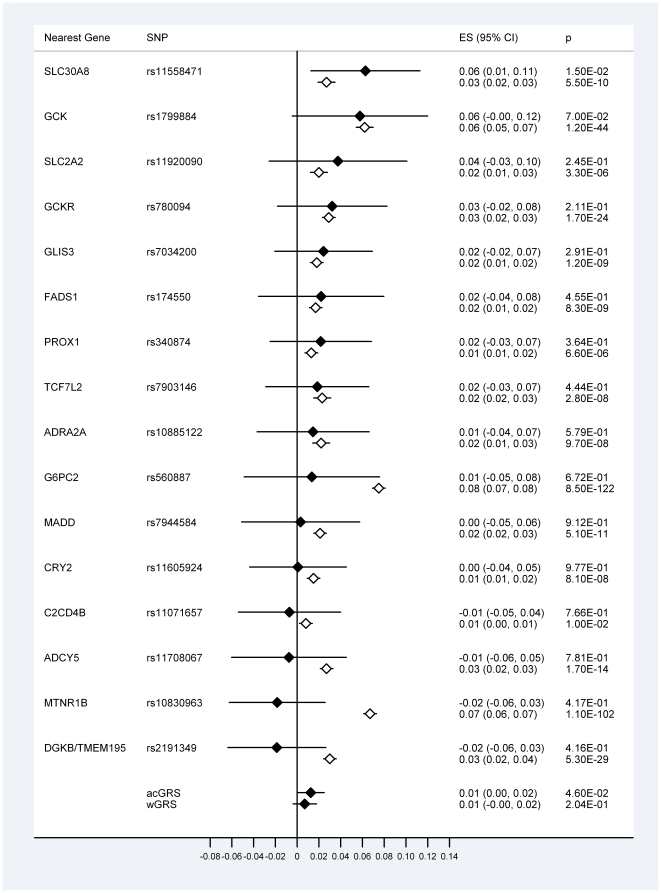
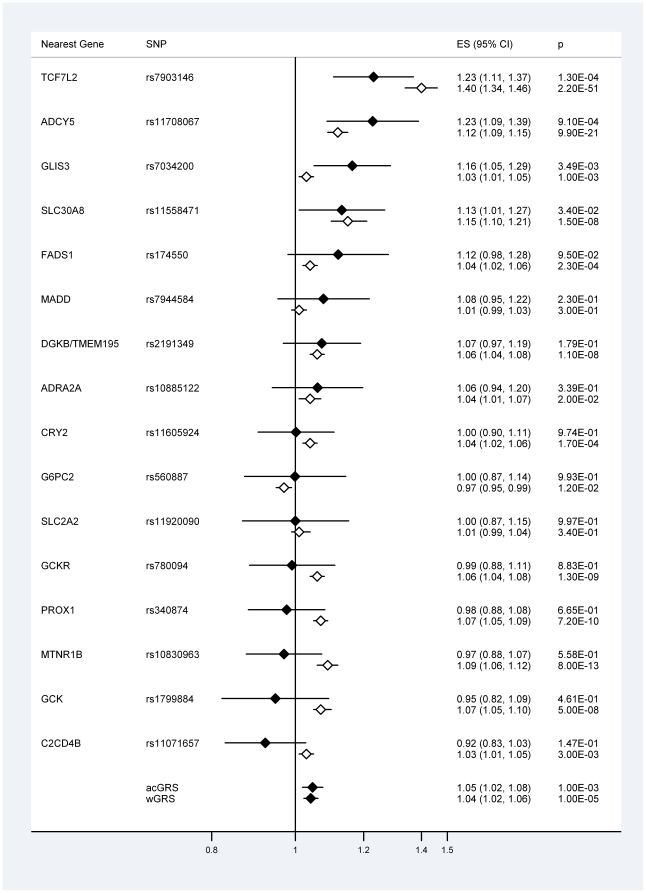
BACKGROUND: The Meta-Analysis of Glucose and Insulin related traits Consortium (MAGIC) recently identified 16 loci robustly associated with fasting glucose, some of which were also associated with type 2 diabetes. The purpose of our study was to explore the role of these variants in South Asian populations of Punjabi ancestry, originating predominantly from the District of Mirpur, Pakistan. METHODOLOGY/PRINCIPAL FINDINGS: Sixteen single nucleotide polymorphisms (SNPs) were genotyped in 1678 subjects with type 2 diabetes and 1584 normoglycaemic controls from two Punjabi populations; one resident in the UK and one indigenous to the District of Mirpur. In the normoglycaemic controls investigated for fasting glucose associations, 12 of 16 SNPs displayed β values with the same direction of effect as that seen in European studies, although only the SLC30A8 rs11558471 SNP was nominally associated with fasting glucose (β = 0.063 [95% CI: 0.013, 0.113] p = 0.015). Of interest, the MTNR1B rs10830963 SNP displayed a negative β value for fasting glucose in our study; this effect size was significantly lower than that seen in Europeans (p = 1.29×10(-4)). In addition to previously reported type 2 diabetes risk variants in TCF7L2 and SLC30A8, SNPs in ADCY5 (rs11708067) and GLIS3 (rs7034200) displayed evidence for association with type 2 diabetes, with odds ratios of 1.23 (95% CI: 1.09, 1.39; p = 9.1×10(-4)) and 1.16 (95% CI: 1.05, 1.29; p = 3.49×10(-3)) respectively. CONCLUSIONS/SIGNIFICANCE: Although only the SLC30A8 rs11558471 SNP was nominally associated with fasting glucose in our study, the finding that 12 out of 16 SNPs displayed a direction of effect consistent with European studies suggests that a number of these variants may contribute to fasting glucose variation in individuals of South Asian ancestry. We also provide evidence for the first time in South Asians that alleles of SNPs in GLIS3 and ADCY5 may confer risk of type 2 diabetes.
Overview
The claims and statistics of this paper haven’t been checked yet.
Free: it reads the open-access text and checks the first 5 claims that cite a source we can check. Create a free account to check every claim.
Integrity signals
Registry
Cites
Statistics
Figures
Verification
Claims the paper makes
The claims and statistics of this paper haven’t been checked yet.
Free: it reads the open-access text and checks the first 5 claims that cite a source we can check. Create a free account to check every claim.
Claims other papers make about this one
Each is checked against this paper’s own text: does it say what the citing paper says it does?
The source backs part of the claim, not all of it — or backs it for a different population, condition or comparison.
In the citing paper
“Human ADCY5 polymorphisms have been associated with metabolic diseases including diabetes and obesity”
From Physiological roles of mammalian transmembrane adenylyl cyclase isoforms (2022) · cites this paper as [170]
Experimental — accuracy not yet measured
Self-check
Percentages, sums and reported differences re-computed from the paper’s own numbers.
The self-check needs the paper’s full text.
Citations
Cites
Haploview: analysis and visualization of LD and haplotype maps
Barrett, J. C., Fry, B., Maller, J., & Daly, M. J. (2005) · Bioinformatics · doi:10.1093/bioinformatics/bth457 · Cited by 14,525
The International HapMap Project
†The International HapMap Consortium, Genotyping centres: Baylor College of Medicine and ParAllele BioScience, Gibbs, R. A., Belmont, J. W., Hardenbol, P., Willis, T. D., Yu, F., Chinese HapMap Consortium, Yang, H., Ch'ang, L.-Y., et al. (2003) · Nature · doi:10.1038/nature02168 · Cited by 6,057
New genetic loci implicated in fasting glucose homeostasis and their impact on type 2 diabetes risk
DIAGRAM Consortium, Dupuis, J., GIANT Consortium, Global BPgen Consortium, Anders Hamsten on behalf of Procardis Consortium, the MAGIC investigators, Langenberg, C., Prokopenko, I., Saxena, R., Soranzo, N., et al. (2010) · Nature Genetics · doi:10.1038/ng.520 · Cited by 2,166 · cited 11×
“Three of the six variants most strongly associated with fasting glucose in the MAGIC study [1](MTNR1B rs10830963, DGKB/TMEM195 rs2191349 and ADCY5 rs11708067) have negative b-values in the current study (Figure 1), and this disparity reached statistical significance for the MTNR1B variant.”
InfluentialPurcell, S., Cherny, S. S., & Sham, P. C. (2003) · Bioinformatics · doi:10.1093/bioinformatics/19.1.149 · Cited by 2,057
Twelve type 2 diabetes susceptibility loci identified through large-scale association analysis
The MAGIC investigators, Voight, B. F., The GIANT Consortium, Scott, L. J., Steinthorsdottir, V., Morris, A. P., Dina, C., Welch, R. P., Zeggini, E., Huth, C., et al. (2010) · Nature Genetics · doi:10.1038/ng.609 · Cited by 1,761 · cited 1×
“6610(28)) with type 2 diabetes, fasting glucose levels and HOMA-B (a measure of b-cell function) but is not associated with HOMA-IR (a measure of insulin resistance) [1,12].”
BackgroundThe Type 1 Diabetes Genetics Consortium, Barrett, J. C., Clayton, D. G., Concannon, P., Akolkar, B., Cooper, J. D., Erlich, H. A., Julier, C., Morahan, G., Nerup, J., et al. (2009) · Nature Genetics · doi:10.1038/ng.381 · Cited by 1,746
Gauderman, W. J., Morrison, J., & Morrison, W. M. (2006) · Medical Entomology and Zoology · Cited by 595
Senée, V., Chelala, C., Duchatelet, S., Feng, D., Blanc, H., Cossec, J.-C., Charon, C., Nicolino, M., Boileau, P., Cavener, D. R., et al. (2006) · Nature Genetics · doi:10.1038/ng1802 · Cited by 376 · cited 1×
“Rare functional mutations within the GLIS3 gene lead to a syndrome of neonatal diabetes and congenital hyperthyroidism [16], and the rs7020673 SNP within the gene is robustly associated with type 1 diabetes [17].”
BackgroundIntegrating ethics and science in the International HapMap Project
The International HapMap Consortium, & Foster, M. W. (2004) · Nature Reviews Genetics · doi:10.1038/nrg1351 · Cited by 330
Variants in ADCY5 and near CCNL1 are associated with fetal growth and birth weight
The Genetic Investigation of ANthropometric Traits (GIANT) Consortium, Freathy, R. M., The Meta-Analyses of Glucose and Insulin-related traits Consortium (MAGIC), The Wellcome Trust Case Control Consortium (WTCCC), the Early Growth Genetics (EGG) Consortium, Mook-Kanamori, D. O., Sovio, U., Prokopenko, I., Timpson, N. J., Berry, D. J., et al. (2010) · Nature Genetics · doi:10.1038/ng.567 · Cited by 255 · cited 1×
“In addition, a SNP within the ADCY5 gene (rs9883204), in LD with the variant investigated in this study, is associated with foetal growth and birth weight [13].”
Background
Cited by
Habib, A. M., Richards, P., Cairns, L. S., Rogers, G. J., Bannon, C. A. M., Parker, H. E., Morley, T. C. E., Yeo, G. S. H., Reimann, F., & Gribble, F. M. (2012) · Endocrinology · doi:10.1210/en.2011-2170 · Cited by 386
Melatonin in type 2 diabetes mellitus and obesity
Karamitri, A., & Jockers, R. (2019) · Nature Reviews Endocrinology · doi:10.1038/s41574-018-0130-1 · Cited by 268
Dessauer, C. W., Watts, V. J., Ostrom, R. S., Conti, M., Dove, S., & Seifert, R. (2017) · Pharmacological Reviews · doi:10.1124/pr.116.013078 · Cited by 201
“Numerous studies have linked ADCY5 gene polymorphisms to altered glucose metabolism, diabetes, and obesity (Barker et al., 2011; Rees et al., 2011; Wagner et al., 2011; Windholz et al., 2011; Holstein et al., 2013; Ng et al., 2013; Hodson et al., 2014; Knigge et al., 2015).”
BackgroundThe Elevated Susceptibility to Diabetes in India: An Evolutionary Perspective
Wells, J. C. K., Pomeroy, E., Walimbe, S. R., Popkin, B. M., & Yajnik, C. S. (2016) · Frontiers in Public Health · doi:10.3389/fpubh.2016.00145 · Cited by 155
“Most risk-alleles appear to exert similar directions and magnitudes effects in European and South Asian populations (17, 18), but it is important to consider whether this applies universally, and whether the frequency of such risk-alleles varies between populations.”
BackgroundADCY5 Couples Glucose to Insulin Secretion in Human Islets
Hodson, D. J., Mitchell, R. K., Marselli, L., Pullen, T. J., Gimeno Brias, S., Semplici, F., Everett, K. L., Cooper, D. M. F., Bugliani, M., Marchetti, P., et al. (2014) · Diabetes · doi:10.2337/db13-1607 · Cited by 147
“ADCY5 is a Ca 2+ -inhibited Type III adenylate cyclase (19;20) and risk allele carriers present with elevated fasting glucose (21), but not impaired insulinogenic index or AUCinsulin/glucose 2 h post-oral glucose load (22-25).”
BackgroundMonogenic Diabetes: What It Teaches Us on the Common Forms of Type 1 and Type 2 Diabetes
Yang, Y., & Chan, L. (2016) · Endocrine Reviews · doi:10.1210/er.2015-1116 · Cited by 153
Physiological roles of mammalian transmembrane adenylyl cyclase isoforms
Ostrom, K. F., LaVigne, J. E., Brust, T. F., Seifert, R., Dessauer, C. W., Watts, V. J., & Ostrom, R. S. (2022) · Physiological Reviews · doi:10.1152/physrev.00013.2021 · Cited by 131
Genetics of Type 2 Diabetes: Insights into the Pathogenesis and Its Clinical Application
Sun, X., Yu, W., & Hu, C. (2014) · BioMed Research International · doi:10.1155/2014/926713 · Cited by 111
Membrane Melatonin Receptors Activated Cell Signaling in Physiology and Disease
Nikolaev, G., Robeva, R. N., & Konakchieva, R. (2021) · International Journal of Molecular Sciences · doi:10.3390/ijms23010471 · Cited by 114
Jetten, A. M. (2018) · Cellular and Molecular Life Sciences · doi:10.1007/s00018-018-2841-9 · Cited by 95
Yang, Y., Chang, B. H., & Chan, L. (2012) · EMBO Molecular Medicine · doi:10.1002/emmm.201201398 · Cited by 72
“Recent genome-wide association studies (GWAS) in adult populations identified GLIS3 as a candidate gene for type 1 diabetes (Barrett et al, 2009), and as a gene that is associated with type 2 diabetes (Cho et al, 2012; Dupuis et al, 2010; Liu et al, 2011; Rees et al, 2011).”
BackgroundVenkatachalapathy, P., Padhilahouse, S., Sellappan, M., Subramanian, T., Kurian, S. J., Miraj, S. S., Rao, M., Raut, A. A., Kanwar, R. K., Singh, J., et al. (2021) · Pharmacogenomics and Personalized Medicine · doi:10.2147/pgpm.s329787 · Cited by 80
Emerging roles of GLIS3 in neonatal diabetes, type 1 and type 2 diabetes
Wen, X., & Yang, Y. (2016) · Journal of Molecular Endocrinology · doi:10.1530/jme-16-0232 · Cited by 72
Roman, T. S., Cannon, M. E., Vadlamudi, S., Buchkovich, M. L., Wolford, B. N., Welch, R. P., Morken, M. A., Kwon, G. J., Varshney, A., Kursawe, R., et al. (2017) · Diabetes · doi:10.2337/db17-0464 · Cited by 61
Beta cell connectivity in pancreatic islets: a type 2 diabetes target?
Rutter, G. A., & Hodson, D. J. (2014) · Cellular and Molecular Life Sciences · doi:10.1007/s00018-014-1755-4 · Cited by 67
“23 for the major A-allele [147].”
Memon, M. S., Arain, Z. I., Naz, F., Zaki, M., Kumar, S., & Burney, A. A. (2013) · Journal of Diabetes Research · doi:10.1155/2013/539361 · Cited by 61
“Type 2 diabetes mellitus in South Asian, when comparing with European individuals, is 4- to 6-fold more prevalent [8].”
BackgroundSelf-citationXia, Q., Chen, Z.-X., Wang, Y.-C., Ma, Y.-S., Zhang, F., Che, W., Fu, D., & Wang, X.-F. (2012) · PLoS ONE · doi:10.1371/journal.pone.0050107 · Cited by 60
Wang, X.-F., Lin, X., Li, D.-Y., Zhou, R., Greenbaum, J., Chen, Y.-C., Zeng, C.-P., Peng, L.-P., Wu, K.-H., Ao, Z.-X., et al. (2017) · Journal of the Neurological Sciences · doi:10.1016/j.jns.2017.07.044 · Cited by 59
“Based on the published literature and our results, 26 SNPs and corresponding genes are associated with T2D and have been previously reported, including those in PROX1 (rs340835) [37], IGF2BP2 (rs7651090) [38],WFS1 (rs734312) [39], CDKAL1 (rs10946403/rs7741604/rs10484634/rs1012635) [28,40–42], JAZF1 (rs849135) [43], KL…”
The Krüppel-Like Protein Gli-Similar 3 (Glis3) Functions as a Key Regulator of Insulin Transcription
ZeRuth, G., Takeda, Y., & Jetten, A. M. (2013) · Molecular Endocrinology · doi:10.1210/me.2013-1117 · Cited by 60
Scoville, D. W., Kang, H. S., & Jetten, A. M. (2020) · Pharmacology & Therapeutics · doi:10.1016/j.pharmthera.2020.107632 · Cited by 60
Wang, H., Liu, L., Zhao, J., Cui, G., Chen, C., Ding, H., & Wang, D. W. (2013) · PLoS ONE · doi:10.1371/journal.pone.0067665 · Cited by 54
GLIS1-3: emerging roles in reprogramming, stem and progenitor cell differentiation and maintenance
Scoville, D. W., Kang, H. S., & Jetten, A. M. (2017) · Stem Cell Investigation · doi:10.21037/sci.2017.09.01 · Cited by 60
“In addition, a number of GWAS studies have linked SNPs in GLIS3 to Type 2 diabetes (63-66), Type 1 diabetes (24,67), and with abnormal β-cell function (25,68-70).”
BackgroundHong, K., Chung, M., & Cho, S. B. (2014) · Molecular Genetics and Genomics · doi:10.1007/s00438-014-0885-6 · Cited by 39
“Notably, GLIS3 was a novel locus that was identified by MAGIC and has been replicated repeatedly in Han Chinese (Liu et al. 2011) and South Asians (Rees et al. 2011).”
BackgroundSohani, Z. N., Deng, W. Q., Paré, G., Meyre, D., Gerstein, H. C., & Anand, S. S. (2014) · Diabetologia · doi:10.1007/s00125-014-3354-1 · Cited by 41
“However, we informally compared adjusted estimates reported in the study with our unadjusted allelic OR and found the adjustment to make little difference; for example, the OR for GCKR rs780094 in the primary report [55] was 0.”
GLIS3 binds pancreatic beta cell regulatory regions alongside other islet transcription factors
Scoville, D. W., Lichti-Kaiser, K., Grimm, S. A., & Jetten, A. M. (2019) · Journal of Endocrinology · doi:10.1530/joe-19-0182 · Cited by 34
New insights from monogenic diabetes for “common” type 2 diabetes
Tallapragada, D. S. P., Bhaskar, S., & Chandak, G. R. (2015) · Frontiers in Genetics · doi:10.3389/fgene.2015.00251 · Cited by 35
“Recent studies identified few other monogenic diabetes loci likeHNF1A, HNF1B, GCK, PDX1, GLIS3, WFS1, PAX4, and LMNA which harbor variants associated with T2D risk (Sidransky, 2006; Sandhu et al., 2007; Wegner et al., 2007; Voight et al., 2010; Rees et al., 2011; Cho et al., 2012).”
BackgroundVatner, S. F., Pachon, R. E., & Vatner, D. E. (2015) · Oxidative Medicine and Cellular Longevity · doi:10.1155/2015/250310 · Cited by 33
“The clinical genome wide association studies have identified single nucleotide polymorphisms (SNPs) in the ADCY5 gene associated with increased type 2 diabetes risk [137], which is the inverse of AC5 inhibition and therefore consistent with our findings.”
ResultTargeting adipocytic discoidin domain receptor 2 impedes fat gain while increasing bone mass
Yang, X., Li, J., Zhao, L., Chen, Y., Cui, Z., Xu, T., Li, X., Wu, S., & Zhang, Y. (2021) · Cell Death and Differentiation · doi:10.1038/s41418-021-00887-9 · Cited by 30
Adenylyl Cyclase Type 5 Deficiency Protects Against Diet-Induced Obesity and Insulin Resistance
Ho, D., Zhao, X., Yan, L., Yuan, C., Zong, H., Vatner, D. E., Pessin, J. E., & Vatner, S. F. (2015) · Diabetes · doi:10.2337/db14-0494 · Cited by 28
“However, not all of these studies were consistent; whereas some suggest that ADCY5 is protective for diabetes (54,55,57), others found that ADCY5 impairs glucose and insulin metabolism (56,58).”
ResultMTNR1B Genetic Variability Is Associated with Gestational Diabetes in Czech Women
Vejražková, D., Lukášová, P., Vaňková, M., Včelák, J., Bradnová, O., Cirmanová, V., Andělová, K., Krejčí, H., & Bendlová, B. (2014) · International Journal of Endocrinology · doi:10.1155/2014/508923 · Cited by 26
“While some studies have observed association of the rs10830963 allele G with increased FPG [30, 31], other studies focused on FPG testing made on Asians have not pointed to this SNP [32, 33].”
ResultStructure of adenylyl cyclase 5 in complex with Gβγ offers insights into ADCY5-related dyskinesia
Yen, Y., Li, Y., Chen, C.-L., Klose, T., Watts, V. J., DESSAUER, C. W., & Tesmer, J. J. G. (2024) · Nature Structural & Molecular Biology · doi:10.1038/s41594-024-01263-0 · Cited by 24
“Multiple SNPs have been identified in human ADCY5 and are linked to various disorders such as diabetes 25 , obesity 26 and central nervous system disorders 27 (Fig.”
Wakil, S. M., Ram, R., Muiya, N. P., Andres, E., Mazhar, N., Hagos, S., Alshahid, M., Meyer, B. F., Morahan, G., & Dzimiri, N. (2016) · Clinical Genetics · doi:10.1111/cge.12761 · Cited by 24
Gao, C., Langefeld, C. D., Ziegler, J. T., Taylor, K. D., Norris, J. M., Chen, Y. I., Hellwege, J. N., Guo, X., Allison, M., Speliotes, E. K., et al. (2017) · Obesity · doi:10.1002/oby.22074 · Cited by 21
“Previous studies have shown that this gene is associated with diabetes in multiple ethnicities (24,25).”
Pilot GWAS of caries in African-Americans shows genetic heterogeneity
Orlova, E., Carlson, J. C., Lee, M. K., Feingold, E., McNeil, D. W., Crout, R. J., Weyant, R. J., Marazita, M. L., & Shaffer, J. R. (2019) · BMC Oral Health · doi:10.1186/s12903-019-0904-4 · Cited by 21
Jeong, D., Karim, M. E., Wong, S., Wilton, J., Butt, Z. A., Binka, M., Adu, P., Bartlett, S., Pearce, M., Clementi, E., et al. (2021) · BMJ Open Diabetes Research & Care · doi:10.1136/bmjdrc-2021-002145 · Cited by 21
Sun, X., Xiao, X., Zhang, Z., Liu, Y., Xu, T., Zhu, X., Zhang, Y., Wu, X., Li, W., Zhang, H., et al. (2015) · Chinese Medical Journal · doi:10.4103/0366-6999.160489 · Cited by 18
Cardiometabolic disease in South Asians: A global health concern in an expanding population
Das, A., Ambale‐Venkatesh, B., Lima, J. A. C., Freedman, J. E., Spahillari, A., Das, R., Das, S., Shah, R. V., & Murthy, V. L. (2016) · Nutrition Metabolism and Cardiovascular Diseases · doi:10.1016/j.numecd.2016.08.001 · Cited by 20
“Studies from the Pakistanis at home and abroad demosntrate genetic variation in or near KCNQ1, JAZF1, IRS1, KLF14, CHCHD9 and DUSP9, GLIS3 and ADCY5 are associated with an increased type 2 diabetes risk [142,143].”
BackgroundMolecular mechanisms of β-cell dysfunction and death in monogenic forms of diabetes
Caballero, L. S., Gorgogietas, V. A., Arroyo, M. N., & Igoillo‐Esteve, M. (2021) · International review of cytology · doi:10.1016/bs.ircmb.2021.02.005 · Cited by 17
Association of the ADRA2A polymorphisms with the risk of type 2 diabetes: A meta-analysis
Chen, X., Liu, L., He, W., Lu, Y., Ma, D., Du, T., Liu, Q., Chen, C., & Yu, X. (2013) · Clinical Biochemistry · doi:10.1016/j.clinbiochem.2013.02.004 · Cited by 18
Shi, Y., Li, Y., Wang, J., Wang, C., Fan, J., Zhao, J., Yin, L., Liu, X., Zhang, D., & Li, L. (2017) · PLoS ONE · doi:10.1371/journal.pone.0181232 · Cited by 16
Assessment of genetic risk of type 2 diabetes among Pakistanis based on GWAS-implicated loci
Sabiha, B., Bhatti, A., Fan, K.-H., John, P. C. L., Aslam, M., Ali, J., Feingold, E., Demirci, F. Y., & Kamboh, M. I. (2021) · Gene · doi:10.1016/j.gene.2021.145563 · Cited by 17
HisCoM-GGI: Hierarchical structural component analysis of gene–gene interactions
Choi, S., Lee, S., Kim, Y., Hwang, H., & Park, T. (2018) · Journal of Bioinformatics and Computational Biology · doi:10.1142/s0219720018400267 · Cited by 15
Genetic aetiology of glycaemic traits: approaches and insights
Wheeler, E., Marenne, G., & Barroso, I. (2017) · Human Molecular Genetics · doi:10.1093/hmg/ddx293 · Cited by 13
“More focused replication and fine-mapping efforts have also been carried out in African Americans (51–53), Asian populations (54,55) and an admixed Mexican population (56).”
BackgroundSperling, M. A. (2014) · Elsevier eBooks · doi:10.1016/b978-1-4557-4858-7.00018-4 · Cited by 12
Characterizing the genetic risk for Type 2 diabetes in a Malaysian multi‐ethnic cohort
Abdullah, N., Murad, N. A. A., Attia, J., Oldmeadow, C. J., Hanif, E. A. M., Syafruddin, S. E., Jalal, N. A., Ismail, N., Ishak, M., Jamal, R., et al. (2015) · Diabetic Medicine · doi:10.1111/dme.12735 · Cited by 11
Genetic Polymorphisms and Zinc Status: Implications for Supplementation in Metabolic Diseases
Virgili, F., Ambra, R., McCormack, J. M., Simpson, E. E. A., Ciarapica, D., Barnaba, L., Azzini, E., & Polito, A. (2018) · Current Pharmaceutical Design · doi:10.2174/1381612824666181016155903 · Cited by 12
“Similar results were also found in the Asian population [193-195].”
ResultHoard, T. M., Yang, X. P., Jetten, A. M., & ZeRuth, G. (2018) · Heliyon · doi:10.1016/j.heliyon.2018.e00709 · Cited by 11
“Genome-wide association studies have further identified GLIS3 as a risk locus for both type 1 and 2 diabetes as well as Alzheimer’s disease (Boesgaard et al., 2010; Cho et al., 2012; Cruchaga et al., 2013; Hu et al., 2010; Liu et al., 2011; Rees et al., 2011; Santin and Eizirik, 2013).”
BackgroundHwang, L., Cuéllar-Partida, G., Yengo, L., Zeng, J., Toivonen, J., Arvas, M., Beaumont, R. N., Freathy, R. M., Moen, G.-H., Warrington, N. M., et al. (2024) · Nature Communications · doi:10.1038/s41467-024-53495-9 · Cited by 9
Common genetic variants in ADCY5 and gestational glycemic traits
Lin, R., Yuan, Z., Zhang, C., Ju, H., Sun, Y., Huang, N., Chen, L., & Li, J. (2020) · PLoS ONE · doi:10.1371/journal.pone.0230032 · Cited by 11
“Three studies were conducted in Asians, two in Chinese Han [26, 27] and one in South Asians of Punjabi ancestry [28].”
BackgroundDommel, S., Hoffmann, A., Berger, C., Kern, M., Klöting, N., Kannt, A., & Blüher, M. (2021) · International Journal of Molecular Sciences · doi:10.3390/ijms22094353 · Cited by 11
“Adenylyl cyclase type 5 (ADCY5) has been identified as candidate gene for an increased risk to develop type 2 diabetes (T2D) in a genome-wide association study [1].”
BackgroundInfluentialWei, J., Wu, Y., Zhang, X., Sun, J., Li, J., Li, J., Yang, X., & Qiao, H. (2022) · Oncology Letters · doi:10.3892/ol.2022.13327 · Cited by 8
“In addition, ADCY5 has been reported in numerous types of tumors, such as glioma (19), prostate cancer (20) and lung cancer (21), and is involved in neovascularization and inflam‐ matory infiltration (22).”
BackgroundGoyal, Y., Verma, A. K., Kumar, S., Bhatt, D., Ahmad, F., & Dev, K. (2022) · Gene Reports · doi:10.1016/j.genrep.2022.101655 · Cited by 5
Self-citationA replication study of 49 Type 2 diabetes risk variants in a Punjabi Pakistani population
Zia, A., Wang, X., Bhatti, A., Demirci, F. Y., Zhao, W., Rasheed, A., Samuel, M., Kiani, A. K., Ismail, M., Zafar, J., et al. (2015) · Diabetic Medicine · doi:10.1111/dme.13012 · Cited by 5
Welter, M., Frigeri, H. R., Rea, R. R., de Souza, E. M., Alberton, D., Picheth, G., & Rego, F. G. D. M. (2015) · Archives of Endocrinology and Metabolism · doi:10.1590/2359-3997000000006 · Cited by 4
Domínguez-Cruz, M. G., Muñoz, M. D. L., Totomoch-Serra, A., García‐Escalante, M. G., Valadéz-González, N., Pinto-Escalante, D. D. C., & Díaz-Badillo, Á. (2016) · Journal of Advances in Medicine and Medical Research · doi:10.9734/bjmmr/2016/28660 · Cited by 5
Aguilera-Venegas, I.-G., Mora-Peña, J.-D.-S., Velázquez-Villafaña, M., Gónzalez-Domínguez, M.-I., Barbosa‐Sabanero, G., Gomez-Zapata, H.-M., & Lazo-de-la-Vega-Monroy, M.-L. (2021) · Endocrine · doi:10.1007/s12020-021-02799-7 · Cited by 4
“In line with this function, rs11708067 in ADCY5 has been associated with increased risk of T2DM [22, 23], lower conversion of proinsulin to insulin [24], and reduced HOMA-B [17] in adults.”
BackgroundMonogenic Diabetes Mellitus: Neonatal Diabetes and Maturity-Onset Diabetes of the Young
Greeley, S. A. W., McCauley, M. K., Philipson, L. H., & Sperling, M. A. (2021) · Elsevier eBooks · doi:10.1016/b978-0-323-62520-3.00010-5 · Cited by 4
da Costa, S. K. S., Almeida, J. A., Pires, L. V., Brandão‐Lima, P. N., Rogero, M. M., & Mendes-Netto, R. S. (2022) · Biological Trace Element Research · doi:10.1007/s12011-022-03337-w · Cited by 3
“This SNP has been shown to have a positive association with the regulation of glucose homeostasis [8, 11] and necessary to evaluate the influence of this SNP on other cardiometabolic markers, especially in postmenopausal women, who are more susceptible to metabolic changes and no study assessment these aspects this po…”
BackgroundA zebrafish model system for drug screening in diabetes
Mathews, B. (2019) · University Library of Skövde (University of Skövde) · Cited by 5
Duarte, G. C. K., Assmann, T. S., de Souza, B. M., & Crispim, D. (2021) · Meta Gene · doi:10.1016/j.mgene.2021.100898 · Cited by 2
Shui, L., Liu, Q., Liu, X., Bai, H., Wu, Y., Sheng, Y., He, G., & Fan, P. (2025) · BMC Pregnancy and Childbirth · doi:10.1186/s12884-025-08436-9 · Cited by 1
“…reported to be related to impaired fasting glucose, β-cell dysfunction, and T2D [11, 13], with the A allele or AA genotype exhibiting an elevated risk of T2D among the Chinese population [16, 17], South Asians [15], and a slightly or borderline increased risk in Europeans [18] and Japanese [32].”
A demographic study on causes of hepatitis transitions among the agricultural community
Sana, B., Manan, A. H., Khan, H., Bashir, M. A., Nisar, M. S., Samiullah, K., Aziz, I., Farooq, M., Noreen, A., Yasoob, T. B., et al. (2022) · Journal of King Saud University - Science · doi:10.1016/j.jksus.2022.102085 · Cited by 1
Grieve, L. M., Rani, A., & ZeRuth, G. (2024) · Islets · doi:10.1080/19382014.2024.2344622 · Cited by 1
Applying rule classifiers in predicting trait from genetic variants
Mutalib, S., Abdul-Rahman, S., & Mohamed, A. (2012) · IEEE-EMBS Conference on Biomedical Engineering and Sciences · doi:10.1109/iecbes.2012.6498197
“Variants Population KCNQ1 T2D in Pakistani [11] Malaysia[12-13] Indian and US in South Asians [14] Chinese, Malays, and Asian-Indians in Singapore [15] Han Chinese [16] East Asian and European populations [17] CDKAL1 Chinese, Malays, and Asian-Indians in Singapore [15] Gestational Diabetes Mellitus in a Cohort of Mala…”
BackgroundPrevalence of Type 2 Diabetes Mellitus in patients with Chronic Liver Disease
Islam, M. K., Chowdhury, M. K., Ahasan, H. N., & Biswas, P. K. (2017) · Journal of Medicine · doi:10.3329/jom.v18i2.33681
Roman, T. S. (2016) · Carolina Digital Repository (University of North Carolina at Chapel Hill) · doi:10.17615/8r6k-hr09
Un caso clínico de la enfermedad de Glässer's en lechones recién destetados
González, J. L. L., & Valverde, M. L. R. (2008) · Avances en tecnología porcina
Nawar, N., Alam, B., Faisal, A.-R. M., Khan, S. M., Hosen, M. I., & Shekhar, H. U. (2023) · Research Square · doi:10.21203/rs.3.rs-2883067/v1
Khan, Z., Ahmad, W., Zaman, M. A., Khan, I., Haroon, M., Khan, H. A., Ullah, I., & Zafar, W. (2024) · The Professional Medical Journal · doi:10.29309/tpmj/2024.31.05.8060
Cross-Sectional Analysis of SNPs and Lifestyle Factors Associated with Obesity in Malay AdultsPreprint
Ng, P. Y., Yanasegaran, K., Kandikatti, S., Chua, E. W., Nawi, A. M., Talib, A. K. A. A., & MANAF, M. R. H. A. (2025) · Research Square · doi:10.21203/rs.3.rs-8157789/v1
INVESTIGATION OF THE GENETIC ARCHITECTURE OF CARDIOMETABOLIC DISEASE
Gao, C. (2017) · WakeSpace Scholarship (Wake Forest University) · Cited by 1
An analysis and projection of diabetes prevalence in East England region
Xie, Y., Anjum, N., Pierscionek, B. K., Kiran, M., Partac, M., & Wang, Y. (2026) · BMC Public Health · doi:10.1186/s12889-026-26433-1
“Genetic susceptibility affects glucose metabolism and insulin sensitivity, with higher prevalence observed in certain ethnic groups, including South Asian populations [4, 5].”
Balashova, M. S., Mutallibzoda, S., Velina, D. A., Klein, E., Chernyavskaya, O., Posnova, G. V., Karamnova, N. S., & Nikitin, I. A. (2026) · Экспериментальная и клиническая гастроэнтерология · doi:10.31146/1682-8658-ecg-244-12-51-61
Legueux-Cajgfinger, Y. (2021) · theses.fr (ABES) · doi:10.70675/d65c888bz60b4z411bz880ezadcfa9488565
Interpretable deep survival analysis of Alzheimer’s disease via metabolic genetic variants
Goo, S., Lee, S. E., Jungwoo, C., Jung, S., & Yun, H.-Y. (2026) · Bioinformatics · doi:10.1093/bioinformatics/btag213
Genetic and epigenetic landscape of type 2 diabetes mellitus
Patil, P. C., Surve, S., Kaleem, M., Kayali, A., & Bachhav, R. S. (2026) · Elsevier eBooks · doi:10.1016/b978-0-443-33590-7.00012-5
Lenin, A., & Rajayan, J. S. (2026) · Frontiers in Endocrinology · doi:10.3389/fendo.2026.1871527
“Pharmacological augmentation of GLIS3 transcriptional activity or gene therapy approaches targeting beta-cell GLIS3 expression could theoretically protect against ER stress-mediated beta-cell failure (37).”
Pharmacogenomics in Type 2 Diabetes Mellitus and Metabolic Disorders
Selvarajan, S., George, M., & Srinivasamurthy, S. K. (2013) · Springer eBooks · doi:10.1007/978-81-322-1184-6_25
Metadata
- Authors
- Rees, S. D., Hydrie, M. Z. I., O'Hare, J. P., Kumar, S., Shera, A. S., Basit, A., Barnett, A. H., & Kelly, M. A.
- Affiliations
- Heart of England NHS Foundation Trust (GB)
- Baqai Institute of Diabetology and Endocrinology (PK)
- University of Warwick (GB)
- Corresponding author
- Rees, Simon D.
- Venue
- PLoS ONE
- Publisher
- Public Library of Science (PLoS)
- Published
- 2011-09-20
- Volume
- 6
- Issue
- 9
- Pages
- e24710
- ISSN
- 1932-6203 (ISSN-L)
- PMC
- PMC3176767
- OpenAlex
- W2150088795
- Cited by
- 78
- References
- 19
- Citations by year
- 2026: 5 · 2025: 2 · 2024: 4 · 2023: 2 · 2022: 4 · 2021: 12 · 2020: 2 · 2019: 4 · 2018: 5 · 2017: 8 · 2016: 6 · 2015: 7 · 2014: 7 · 2013: 5 · 2012: 4
- FWCI
- 3.19
- Type
- journal article
- Language
- en
- Open access
- gold
- doi.org
- Locations
- PLoS ONE (publishedVersion, cc-by)
- Europe PMC (PubMed Central) (publishedVersion, cc-by)
- PubMed Central (publishedVersion, cc-by)
- PubMed (publishedVersion)
- Warwick Research Archive Portal (University of Warwick) (acceptedVersion)
- RePEc: Research Papers in Economics (submittedVersion)
- DOAJ (DOAJ: Directory of Open Access Journals) (submittedVersion, cc-by-sa)
- University of Birmingham Research Portal (University of Birmingham) (submittedVersion, other-oa)
- Funders
- Eli Lilly and Company
- Diabetes UK (07/0003512)
- Topics
- Life Sciences › Biochemistry, Genetics and Molecular Biology › Genetics › Genetic Associations and Epidemiology
- Life Sciences › Biochemistry, Genetics and Molecular Biology › Genetics › Diabetes and associated disorders
- Life Sciences › Biochemistry, Genetics and Molecular Biology › Genetics › Genetic Mapping and Diversity in Plants and Animals
- Keywords
- fasting blood glucose, genetic variants, South Asian populations, ADCY5, GLIS3, MTNR1B, SLC30A8, TCF7L2, single nucleotide polymorphisms, genetic association
- MeSH terms
- Adenylyl Cyclases, Asia, Blood Glucose, Demography, Diabetes Mellitus, Type 2, DNA-Binding Proteins, Fasting, Female, Humans, Male, Middle Aged, Repressor Proteins, Transcription Factors, Trans-Activators, Genetic Predisposition to Disease, Polymorphism, Single Nucleotide, White People, Asian People
About these checks
Registry, retraction, Cites and statistics results are computed, not judged, with one exception: a printed reference that no index lists is read once by a model before it counts as a citation error. Claims are extracted by a model and kept only when their quote appears verbatim in the text; each cited source is then checked, with a model’s help, for whether it says what the claim relies on. Those verdicts can be wrong — read the claim’s quote and the cited source before relying on one.
Statistics and arithmetic are recomputed, not judged.
Confidence bands are shown only for fields calibrated on our annotated test set. None is calibrated yet, so no band is shown.
What counts as a claim ›How we measure confidence ›How we check this ›
Are you an author, or do you see a problem with this page? Request a review
Data sources
Bibliographic data: Semantic Scholar, OpenAlex, Crossref.
Contains information from the Semantic Scholar Academic Graph Datasets, made available under the ODC Attribution License (ODC-BY 1.0).
Semantic Scholar’s data is described in: Kinney, R., et al. (2023). The Semantic Scholar Open Data Platform. arXiv:2301.10140.
