

Small Molecule Inhibitors of the Candida albicans Budded-to-Hyphal Transition Act through Multiple Signaling Pathways
Open accessThe DOI matches its Crossref record; 66 of the 66 references it cites were found in a registry or an index.
Abstract
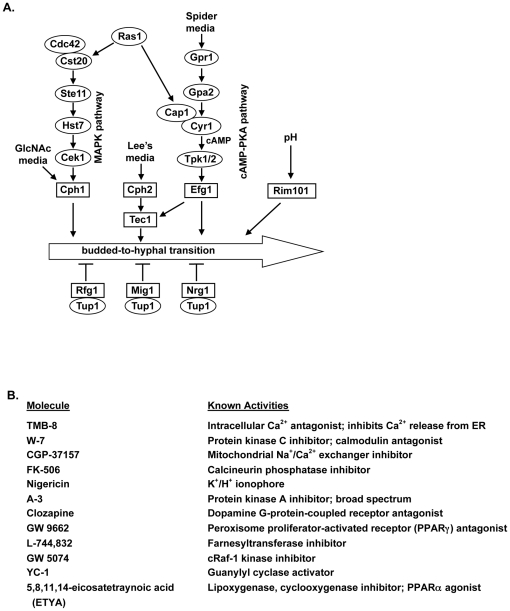
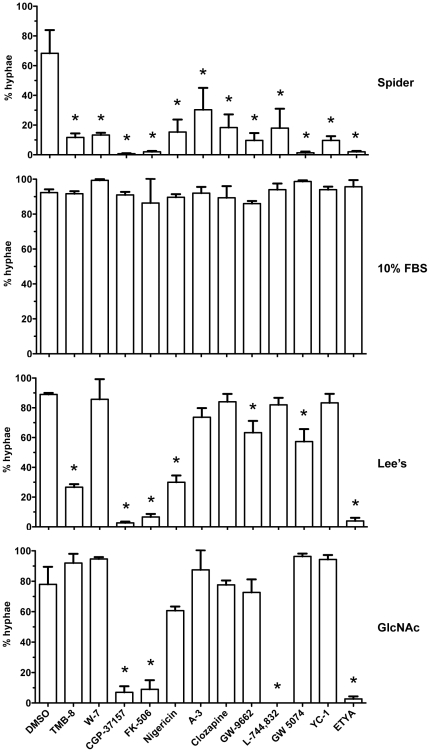
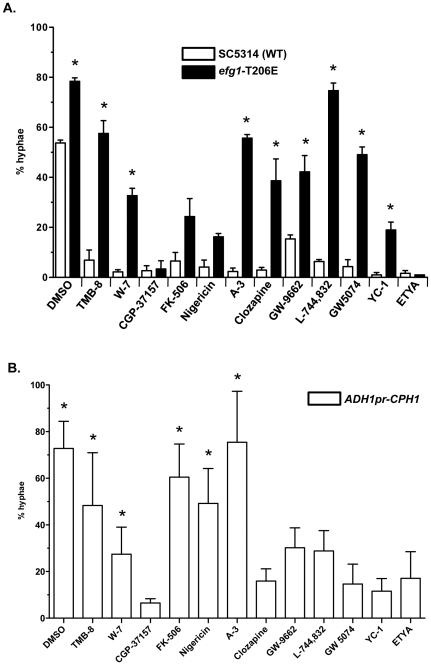
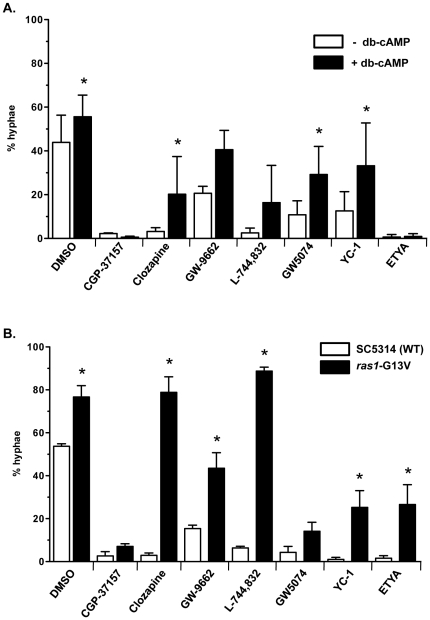
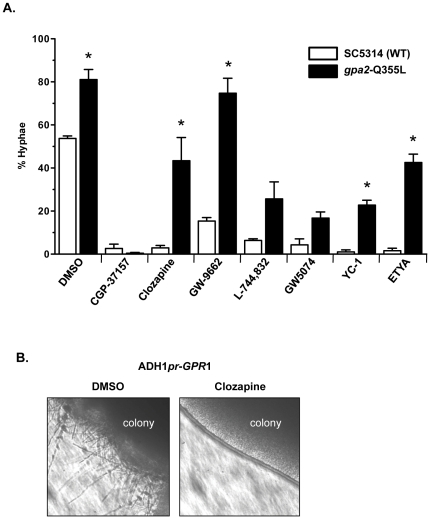
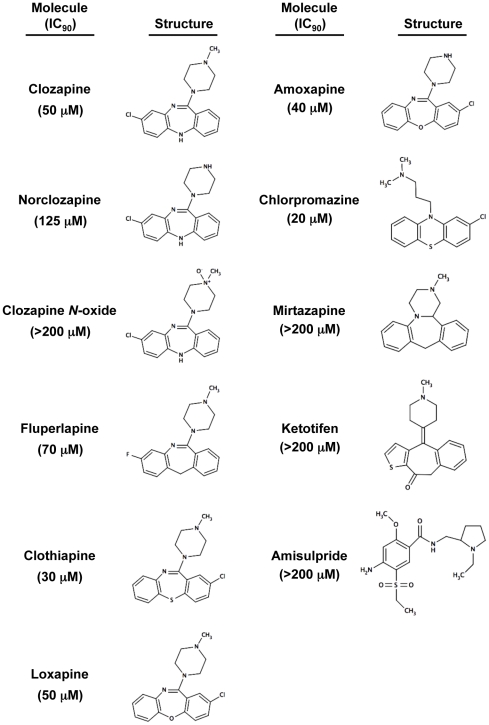
The ability of the pathogenic yeast Candida albicans to interconvert between budded and hyphal growth states, herein termed the budded-to-hyphal transition (BHT), is important for C. albicans development and virulence. The BHT is under the control of multiple cell signaling pathways that respond to external stimuli, including nutrient availability, high temperature, and pH. Previous studies identified 21 small molecules that could inhibit the C. albicans BHT in response to carbon limitation in Spider media. However, the studies herein show that the BHT inhibitors had varying efficacies in other hyphal-inducing media, reflecting their varying abilities to block signaling pathways associated with the different media. Chemical epistasis analyses suggest that most, but not all, of the BHT inhibitors were acting through either the Efg1 or Cph1 signaling pathways. Notably, the BHT inhibitor clozapine, a FDA-approved drug used to treat atypical schizophrenia by inhibiting G-protein-coupled dopamine receptors in the brain, and several of its functional analogs were shown to act at the level of the Gpr1 G-protein-coupled receptor. These studies are the first step in determining the target and mechanism of action of these BHT inhibitors, which may have therapeutic anti-fungal utility in the future.
Overview
The claims and statistics of this paper haven’t been checked yet.
Free: it reads the open-access text and checks the first 5 claims that cite a source we can check. Create a free account to check every claim.
Integrity signals
Registry
Cites
Statistics
Figures
Verification
Claims the paper makes
The claims and statistics of this paper haven’t been checked yet.
Free: it reads the open-access text and checks the first 5 claims that cite a source we can check. Create a free account to check every claim.
Claims other papers make about this one
Each is checked against this paper’s own text: does it say what the citing paper says it does?
In the citing paper
“Among the Y-H inhibitors identified in the study by Midkiff et al, the lowest MICY-H is 20 µM for 1×10⁴ cells [46], which is much higher than the SM21 MICY-H (0.98 µM for 1×10⁶ CFUs/ml).”
From In Vitro and In Vivo Activity of a Novel Antifungal Small Molecule against Candida Infections (2014) · cites this paper as [46]
Self-check
Percentages, sums and reported differences re-computed from the paper’s own numbers.
The self-check needs the paper’s full text.
Citations
Cites
The mechanisms of action of PPARs
Berger, J., & Moller, D. E. (2002) · Annual Review of Medicine · doi:10.1146/annurev.med.53.082901.104018 · Cited by 2,659
The mechanism of action of cyclosporin A and FK506
Schreiber, S. L., & Crabtree, G. R. (1992) · Immunology Today · doi:10.1016/0167-5699(92)90111-j · Cited by 2,127
Nosocomial Bloodstream Infections in United States Hospitals: A Three‐Year Analysis
Edmond, M. B., Wallace, S. E., McClish, D. K., Pfaller, M. A., Jones, R. N., & Wenzel, R. P. (1999) · Clinical Infectious Diseases · doi:10.1086/520192 · Cited by 1,387
Uncovering Molecular Mechanisms Involved in Activation of G Protein-Coupled Receptors
Gether, U. (2000) · Endocrine Reviews · doi:10.1210/edrv.21.1.0390 · Cited by 1,263
Gillum, A. M., Tsay, E. Y. H., & Kirsch, D. R. (1984) · Molecular and General Genetics MGG · doi:10.1007/bf00328721 · Cited by 1,251
Quorum Sensing in the Dimorphic Fungus Candida albicans Is Mediated by Farnesol
Hornby, J. M., Jensen, E. C., Lisec, A. D., Tasto, J. J., Jahnke, B., Shoemaker, R., Dussault, P., & Nickerson, K. W. (2001) · Applied and Environmental Microbiology · doi:10.1128/aem.67.7.2982-2992.2001 · Cited by 983
Keller, H., Dreyer, C., Medin, J., Mahfoudi, A., Ozato, K., & Wahli, W. (1993) · Proceedings of the National Academy of Sciences · doi:10.1073/pnas.90.6.2160 · Cited by 948
Signal Transduction Cascades Regulating Fungal Development and Virulence
Lengeler, K. B., Davidson, R. C., D'souza, C., Harashima, T., Shen, W.-C., Wang, P., Pan, X., Waugh, M., & Heitman, J. (2000) · Microbiology and Molecular Biology Reviews · doi:10.1128/mmbr.64.4.746-785.2000 · Cited by 915
Lee, K. L., Buckley, H. R., & Campbell, C. C. (1975) · Medical Mycology · doi:10.1080/00362177585190271 · Cited by 788
Suppression of Hyphal Formation in Candida albicans by Mutation of a STE12 Homolog
Liu, H., Köhler, J., & Fink, G. R. (1994) · Science · doi:10.1126/science.7992058 · Cited by 786
Research works printed but not linked: 2
- [3]Brown AJP 2002 Expression of growth form-specific factors during morphogenesis in Candida albicans. 87 93 Candida and Candidiasis, ed Calderone RA (ASM Press, Washington, D.C.)
- [8]Brown AJP 2002 Morphogenetic signaling pathways in Candida albicans. 95 106 Candida and Candidiasis, ed Calderone RA (ASM Press, Washington, D.C.)
Cited by
Mechanistic Understanding of Candida albicans Biofilm Formation and Approaches for Its Inhibition
Atriwal, T., Azeem, K., Husain, F. M., Hussain, A., Khan, M. N., Alajmi, M. F., & Abid, M. (2021) · Frontiers in Microbiology · doi:10.3389/fmicb.2021.638609 · Cited by 201
Targeting Candida albicans filamentation for antifungal drug development
Vila, T., Romo, J. A., Pierce, C. G., McHardy, S. F., Saville, S. P., & Lopez-Ribot, J. L. (2017) · Virulence · doi:10.1080/21505594.2016.1197444 · Cited by 174
“subsequent evaluation of their activity in different hyphal-inducing media indicated that some of the inhibitors may act through multiple signaling pathways.(63) The group also performed chemical epistasis analyses to pro-”
BackgroundPierce, C. G., & Lopez-Ribot, J. L. (2013) · Expert Opinion on Drug Discovery · doi:10.1517/17460441.2013.807245 · Cited by 158
“albicans filamentation and subsequently demonstrated that some of these inhibitors act through different signaling pathways [59,60].”
Tackling Fungal Resistance by Biofilm Inhibitors
Wu, S., Wang, Y., Liu, N., Dong, G., & Sheng, C. (2017) · Journal of Medicinal Chemistry · doi:10.1021/acs.jmedchem.6b01203 · Cited by 132
Membrane of Candida albicans as a target of berberine
Zorić, N., Kosalec, I., Tomić, S., Bobnjarić, I., Jug, M., Vlainić, T., & Vlainić, J. (2017) · BMC Complementary and Alternative Medicine · doi:10.1186/s12906-017-1773-5 · Cited by 130
“Morphogenetic transition is a phenomenon which occurs in response to external stimuli including elevated temperature or pH, nitrogen and/or carbon starvation, and the presence of the host macrophages [20].”
BackgroundFazly, A., Jain, C., Dehner, A. C., Issi, L., Lilly, E. A., Ali, A., Cao, H., Fidel, P. L., P. Rao, R., & Kaufman, P. D. (2013) · Proceedings of the National Academy of Sciences · doi:10.1073/pnas.1305982110 · Cited by 112
“Cells constitutively overexpressing the G protein-coupled receptor Gpr1 become hyperfilamentous on solid Spider media by PKA stimulation (26, 28), and we observed that filastatin blocked hyphal morphogenesis in these cells (Fig.”
BackgroundInfluentialRegulation of Candida albicans Hyphal Morphogenesis by Endogenous Signals
Kornitzer, D. (2019) · Journal of Fungi · doi:10.3390/jof5010021 · Cited by 106
“Candidiasis is currently responsible for an estimated 700,000 annual deaths worldwide [15].”
BackgroundIn Vitro and In Vivo Activity of a Novel Antifungal Small Molecule against Candida Infections
Wong, S. S. W., Kao, R. Y. T., Yuen, K. Y., Wang, Y., Yang, D., Samaranayake, L. P., & Seneviratne, C. J. (2014) · PLoS ONE · doi:10.1371/journal.pone.0085836 · Cited by 107
“Among the Y-H inhibitors identified in the study by Midkiff et al, the lowest MICY-H is 20 mM for 1610 4 cells [46], which is much higher than the SM21 MICY-H (0.”
BackgroundAlizarin and Chrysazin Inhibit Biofilm and Hyphal Formation by Candida albicans
Manoharan, R. K., Lee, J., Kim, Y., & Lee, J. (2017) · Frontiers in Cellular and Infection Microbiology · doi:10.3389/fcimb.2017.00447 · Cited by 101
“Recently, attempts have been made to identify small molecules that modulate hyphal formation by C. albicans (Midkiff et al., 2011; Grald et al., 2012; You et al., 2013).”
BackgroundVirulence and Biofilms As Promising Targets in Developing Antipathogenic Drugs Against Candidiasis
Khan, M. S., Alshehrei, F. M., Alghamdi, S., Bamaga, M. A., Althubiani, A. S., & Alam, M. Z. (2020) · Future Science OA · doi:10.2144/fsoa-2019-0027 · Cited by 72
Wong, S. S. W., Samaranayake, L. P., & Seneviratne, C. J. (2014) · Drug Discovery Today · doi:10.1016/j.drudis.2014.06.009 · Cited by 65
You, J., Du, L., King, J. B., Hall, B. E., & Cichewicz, R. H. (2013) · ACS Chemical Biology · doi:10.1021/cb400009f · Cited by 64
Chemical inhibitors of Candida albicans hyphal morphogenesis target endocytosis
Bar-Yosef, H., Vivanco Gonzalez, N., Ben-Aroya, S., Kron, S. J., & Kornitzer, D. (2017) · Scientific Reports · doi:10.1038/s41598-017-05741-y · Cited by 58
Li, Z., Tu, J., Han, G., Liu, N., & Sheng, C. (2020) · Journal of Medicinal Chemistry · doi:10.1021/acs.jmedchem.0c01763 · Cited by 63
Impact of Environmental Conditions on the Form and Function of Candida albicans Biofilms
Daniels, K. J., Park, Y., Srikantha, T., Pujol, C., & Soll, D. R. (2013) · Eukaryotic Cell · doi:10.1128/ec.00127-13 · Cited by 59
Matsuda, Y., Cho, O., Sugita, T., Ogishima, D., & Takeda, S. (2018) · Mycopathologia · doi:10.1007/s11046-018-0259-4 · Cited by 58
Hyphal growth in Candida albicans does not require induction of hyphal-specific gene expression
Naseem, S., Araya, E., & Konopka, J. B. (2015) · Molecular Biology of the Cell · doi:10.1091/mbc.e14-08-1312 · Cited by 43
“Since then, it has been widely used as a potent inducer of the transition from budding to filamentous growth (Biswas et al., 2007; Davis-Hanna et al., 2008; Midkiff et al., 2011; Konopka, 2012).”
BackgroundSecreted Aspartyl Proteases Family: A Perspective Review on the Regulation Of Fungal Pathogenesis
Kulshrestha, A., & Gupta, P. (2023) · Future Microbiology · doi:10.2217/fmb-2022-0143 · Cited by 48
Antifungal Activity of Oleuropein against Candida albicans—The In Vitro Study
Zorić, N., Kopjar, N., Bobnjarić, I., Horvat, I., Tomić, S., & Kosalec, I. (2016) · Molecules · doi:10.3390/molecules21121631 · Cited by 46
“For the test, we used complex media containing 10% serum, which is the most potent inducer of the hyphal morphological state [13].”
BackgroundMethodNew strategic insights into managing fungal biofilms
Borghi, E., Morace, G., Borgo, F., Rajendran, R., Sherry, L., Nile, C. J., & Ramage, G. (2015) · Frontiers in Microbiology · doi:10.3389/fmicb.2015.01077 · Cited by 44
“Therefore, it is interesting to speculate that the observed effects on C. albicans budded-to-hyphal transition in the study of Midkiff et al. (2011) may be in fact due to clozapine acting upon a putative C. albicans cholinergic receptor homologous to human muscarinic receptors.”
Kaşkatepe, B., Erdem, S. A., Öztürk, Ş., Öz, Z. S., Subasi, E., Koyuncu, M., Vlainić, J., & Kosalec, I. (2022) · Molecules · doi:10.3390/molecules27030663 · Cited by 43
“albicans unicellular blastospores to budding cells, and this transition is mediated by the cAMP-dependent protein kinase (cAMP-PKA) pathway [59].”
BackgroundFrom Biology to Drug Development: New Approaches to Combat the Threat of Fungal Biofilms
Pierce, C. G., Srinivasan, A., Ramasubramanian, A. K., & Lopez-Ribot, J. L. (2015) · Microbiology Spectrum · doi:10.1128/microbiolspec.mb-0007-2014 · Cited by 43
“albicans; the identified inhibitors likely inhibit multiple signaling pathways involved in filamentation, many of which also regulate biofilm formation (61, 62).”
BackgroundBiatriosporin D displays anti-virulence activity through decreasing the intracellular cAMP levels
Zhang, M., Chang, W., Shi, H., Zhou, Y., Zheng, S., Li, Y., Li, L., & Lou, H. (2017) · Toxicology and Applied Pharmacology · doi:10.1016/j.taap.2017.03.004 · Cited by 40
Promising immunotherapeutic targets for treating candidiasis
Feng, Z., Lu, H., & Jiang, Y. (2024) · Frontiers in Cellular and Infection Microbiology · doi:10.3389/fcimb.2024.1339501 · Cited by 33
“Sap9 governs the growth of hyphae and the formation of bio fi lms in C. albicans utilizing a cAMP-dependent pathway that encompasses a newly identi fi ed G protein-coupled receptor, Gprl, as well as the G proteins Gpa2 and Ras2, adenylyl cyclase (AC), cyclic AMP (cAMP), and cAMP-dependent protein kinase (PKA) (Midkiff e…”
BackgroundInfluentialDiscovery of simplified sampangine derivatives as novel fungal biofilm inhibitors
Liu, N., Zhong, H., Tu, J., Jiang, Z., Jiang, Y., Jiang, Y., Jiang, Y., Li, J., Zhang, W., Wang, Y., et al. (2017) · European Journal of Medicinal Chemistry · doi:10.1016/j.ejmech.2017.10.043 · Cited by 25
Farh, M. E.-A., Abdellaoui, N., & Seo, J. (2021) · Frontiers in Microbiology · doi:10.3389/fmicb.2021.672661 · Cited by 21
Mechanisms of Azole Potentiation: Insights from Drug Repurposing Approaches
Xiong, J., Lu, H., & Jiang, Y. (2025) · ACS Infectious Diseases · doi:10.1021/acsinfecdis.4c00657 · Cited by 20
Mannich base limits Candida albicans virulence by inactivating Ras-cAMP-PKA pathway
Rajasekharan, S. K., Kamalanathan, C., Ravichandran, V., Ray, A. K., Satish, A. S., & Mohanvel, S. K. (2018) · Scientific Reports · doi:10.1038/s41598-018-32935-9 · Cited by 20
Minocycline Inhibits Candida albicans Budded-to-Hyphal-Form Transition and Biofilm Formation
Kurakado, S., Takatori, K., & Sugita, T. (2017) · Japanese Journal of Infectious Diseases · doi:10.7883/yoken.jjid.2016.369 · Cited by 20
“Inhibition of the bud-to-hypha transition: The spider medium, N-acetylglucosamine (GlcNAc) medium, and Lee’s medium were used for hyphal induction (10,11).”
BackgroundMethodInfluentialThe Spectrum of Berberine Antibacterial and Antifungal Activities
Kosalec, I., Jembrek, M. J., & Vlainić, J. (2022) · Springer eBooks · doi:10.1007/978-3-030-83504-0_7 · Cited by 19
17β-Estradiol inhibits estrogen binding protein-mediated hypha formation in Candida albicans
Kurakado, S., Kurogane, R., & Sugita, T. (2017) · Microbial Pathogenesis · doi:10.1016/j.micpath.2017.05.038 · Cited by 17
Sato, T., Hoshida, H., & Akada, R. (2020) · BioMed Research International · doi:10.1155/2020/7245782 · Cited by 13
Hypha essential genes in Candida albicans pathogenesis of oral lichen planus: an in-vitro study
He, H., Wang, Y., Fan, Y., Li, C., & Han, J. (2021) · BMC Oral Health · doi:10.1186/s12903-021-01975-5 · Cited by 13
“albicans through regulating EFG1 to alter phase morphology [27], which might be potentially positive clues or basis for researches on susceptive drugs according to resistant genes.”
BackgroundShort-Term Probiotic Administration Increases Fecal-Anti Candida Activity in Healthy Subjects
Angelis, M. D., Scagnolari, C., Oliva, A., Cavallari, E. N., Celani, L., Santinelli, L., Innocenti, G. P., Borrazzo, C., Ceccarelli, G., Vullo, V., et al. (2019) · Microorganisms · doi:10.3390/microorganisms7060162 · Cited by 8
From Biology to Drug Development: New Approaches to Combat the Threat of Fungal Biofilms
Pierce, C. G., Srinivasan, A., Ramasubramanian, A. K., & Lopez-Ribot, J. L. (2015) · ASM Press eBooks · doi:10.1128/9781555817466.ch19 · Cited by 8
Inhibition of morphological transition and hyphae extension in Candida spp. by occidiofungin
Kumpakha, R., & Gordon, D. M. (2022) · Journal of Applied Microbiology · doi:10.1111/jam.15425 · Cited by 7
Preventing Candida albicans biofilm formation using aromatic-rich piperazines
Simon, G., Bérubé, C., Paquet-Côté, P.-A., Grenier, D., & Voyer, N. (2020) · Bioorganic & Medicinal Chemistry · doi:10.1016/j.bmc.2020.115810 · Cited by 3
Cámpora, F., Pava-Gómez, B. E., Vázquez, D., Sortino, M. A., Svetaz, L. A., Mangione, M. I., Suárez, A. G., Sarotti, A. M., Matassini, C., Cardona, F., et al. (2026) · ChemMedChem · doi:10.1002/cmdc.70357 · Cited by 2
“In C. albicans , the transition from yeast to hyphae is mainly orchestrated by the cAMP/PKA and the MAPK cascades [53].”
New holistic approach for the management of biofilm‐associated infections by myco‐metabolites
Ghosh, S., Nag, M., Lahiri, D., Sarkar, T., Pati, S., Joshi, S. J., & Ray, R. R. (2022) · Journal of Basic Microbiology · doi:10.1002/jobm.202200047 · Cited by 2
Fungal Forces in Mental Health: Microbial Meddlers or Function Fixers?
Severance, E. G. (2022) · Current topics in behavioral neurosciences · doi:10.1007/7854_2022_364 · Cited by 2
Evaluating Candida albicans biofilm formation and novel antifungal treatment
Sherry, L. (2014) · Enlighten: Theses (The University of Glasgow) · Cited by 2
Identification and characterization of novel putative virulence factors in Candida albicans
Issi, L. (2014) · Digital WPI · Cited by 2
de Dios, C. M. H. (2013) · Tesis Doctorals en Xarxa (Consorci de Serveis Universitaris de Catalunya)
Molecular Targets for Anticandidal Chemotherapy
Milewski, S. (2017) · Springer eBooks · doi:10.1007/978-3-319-50409-4_21
Antifungalni i antigenotoksični učinci oleuropeina
Zorić, N. (2017) · Repozitorij Farmaceutsko-biokemijskog fakulteta (Sveučilišta u Zagrebu)
Insilico Analysis of pathogenic genes as a major rescue of Candida albicansPreprint
JADHAV, V. (2022) · Research Square · doi:10.21203/rs.3.rs-2057050/v1
Osmani, A. E. (2013) · Spectrum Research Repository (Concordia University)
Inhibition of Candida albicans virulation factors with oleuropein and hydroxytyrosol
Bobnjarić, I. (2017) · Repozitorij Farmaceutsko-biokemijskog fakulteta (Sveučilišta u Zagrebu)
Évaluation du potentiel antimicrobien de composés inspirés de peptides
Simon, G. (2019) · Corpus Université Laval (Université Laval)
Shah, D., Martoliya, Y., Mathivathanan, S., Shrivastava, A., Asthana, S., & Varahan, S. (2026) · ACS Infectious Diseases · doi:10.64898/2026.04.23.720332
Metadata
- Authors
- Midkiff, J., Borochoff-Porte, N., White, D., & Johnson, D. I.
- Affiliations
- University of Vermont (US)
- Corresponding author
- Johnson, Douglas I.
- Venue
- PLoS ONE
- Publisher
- Public Library of Science (PLoS)
- Published
- 2011-09-26
- Volume
- 6
- Issue
- 9
- Pages
- e25395
- ISSN
- 1932-6203 (ISSN-L)
- PMC
- PMC3180447
- OpenAlex
- W2142795151
- Cited by
- 44
- References
- 65
- Citations by year
- 2026: 2 · 2025: 1 · 2024: 1 · 2023: 1 · 2022: 5 · 2021: 4 · 2020: 4 · 2019: 2 · 2018: 2 · 2017: 9 · 2016: 2 · 2015: 4 · 2014: 2 · 2013: 5
- FWCI
- 0.91
- Type
- journal article
- Language
- en
- Open access
- gold
- doi.org
- Locations
- PLoS ONE (publishedVersion, cc-by)
- PubMed Central (publishedVersion, cc-by)
- PubMed (publishedVersion)
- DOAJ (DOAJ: Directory of Open Access Journals) (submittedVersion, cc-by-sa)
- Funders
- U.S. Department of Agriculture
- Topics
- Life Sciences › Biochemistry, Genetics and Molecular Biology › Molecular Biology › Fungal and yeast genetics research
- Health Sciences › Medicine › Infectious Diseases › Antifungal resistance and susceptibility
- Health Sciences › Medicine › Infectious Diseases › Fungal Infections and Studies
- Keywords
- Candida albicans, hyphal growth, small molecule inhibitors, clozapine, carbon limitation, antifungal drug targets, virulence
- MeSH terms
- Antifungal Agents, Candida albicans, Clozapine, Methionine, Signal Transduction, Gene Expression Regulation, Fungal, Hyphae
About these checks
Registry, retraction, Cites and statistics results are computed, not judged, with one exception: a printed reference that no index lists is read once by a model before it counts as a citation error. Claims are extracted by a model and kept only when their quote appears verbatim in the text; each cited source is then checked, with a model’s help, for whether it says what the claim relies on. Those verdicts can be wrong — read the claim’s quote and the cited source before relying on one.
Statistics and arithmetic are recomputed, not judged.
Confidence bands are shown only for fields calibrated on our annotated test set. None is calibrated yet, so no band is shown.
What counts as a claim ›How we measure confidence ›How we check this ›
Are you an author, or do you see a problem with this page? Request a review
Data sources
Bibliographic data: Semantic Scholar, OpenAlex, Crossref.
Contains information from the Semantic Scholar Academic Graph Datasets, made available under the ODC Attribution License (ODC-BY 1.0).
Semantic Scholar’s data is described in: Kinney, R., et al. (2023). The Semantic Scholar Open Data Platform. arXiv:2301.10140.
