

Molecular Identification of Bacteria in Tracheal Aspirate Fluid from Mechanically Ventilated Preterm Infants
Open accessThe DOI matches its Crossref record; 51 of the 52 references it cites were found in a registry or an index.
Abstract
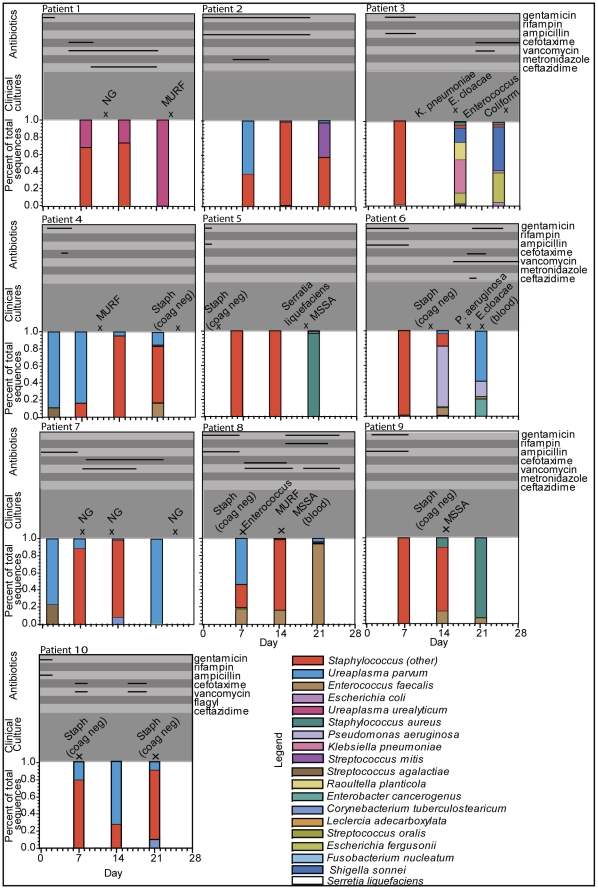
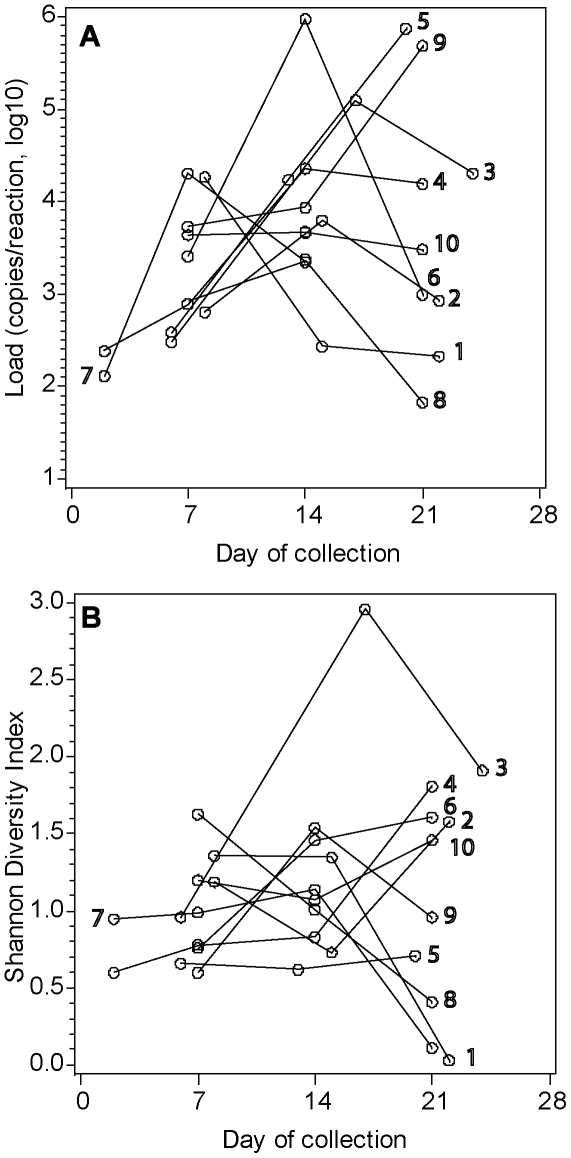
BACKGROUND: Despite strong evidence linking infections to the pathogenesis of bronchopulmonary dysplasia (BPD), limitations of bacterial culture methods have precluded systematic studies of airway organisms relative to disease outcomes. Application of molecular bacterial identification strategies may provide new insight into the role of bacterial acquisition in the airways of preterm infants at risk for BPD. METHODS: Serial (within 72 hours, 7, 14, and 21 days of life) tracheal aspirate samples were collected from 10 preterm infants with gestational age ≤34 weeks at birth, and birth weight of 500-1250 g who required mechanical ventilation for at least 21 days. Samples were analyzed by quantitative real time PCR assays for total bacterial load and by pyrosequencing for bacterial identification. RESULTS: Subjects were diagnosed with mild (1), moderate (3), or severe (5) BPD. One patient died prior to determination of disease severity. 107,487 sequences were analyzed, with mean of 3,359 (range 1,724-4,915) per sample. 2 of 10 samples collected <72 hours of life contained adequate bacterial DNA for successful sequence analysis, one of which was from a subject exposed to chorioamnionitis. All other samples exhibited bacterial loads >70copies/reaction. 72 organisms were observed in total. Seven organisms represented the dominant organism (>50% of total sequences) in 31/32 samples with positive sequences. A dominant organism represented>90% of total sequences in 13 samples. Staphylococcus, Ureaplasmaparvum, and Ureaplasmaurealyticum were the most frequently identified dominant organisms, but Pseudomonas, Enterococcus, and Escherichia were also identified. CONCLUSIONS: Early bacterial colonization with diverse species occursafter the first 3 days of life in the airways of intubated preterm infants, and can be characterized by bacterial load and marked species diversity. Molecular identification of bacteria in the lower airways of preterm infants has the potential to yield further insight into the pathogenesis of BPD.
Overview
The claims and statistics of this paper haven’t been checked yet.
Free: it reads the open-access text and checks the first 5 claims that cite a source we can check. Create a free account to check every claim.
Integrity signals
Registry
Cites
Statistics
Figures
Verification
Claims the paper makes
The claims and statistics of this paper haven’t been checked yet.
Free: it reads the open-access text and checks the first 5 claims that cite a source we can check. Create a free account to check every claim.
Claims other papers make about this one
Each is checked against this paper’s own text: does it say what the citing paper says it does?
In the citing paper
“These studies showed that the LRT microbiota of premature infants is dominated by pathogenic Staphylococcus spp.78,79, Ureaplasma spp.79 or Acinetobacter spp.77, which highlights the lack of complexity in these developing bacterial communities.”
From The microbiota of the respiratory tract: gatekeeper to respiratory health (2017) · cites this paper as [79]
In the citing paper
“As LRT sampling is particularly challenging in young infants (Box 1), current data on the composition and development of the neonatal LRT microbiota is limited to samples from intubated prematurely born infants77,78,79.”
From The microbiota of the respiratory tract: gatekeeper to respiratory health (2017) · cites this paper as [79]
Self-check
Percentages, sums and reported differences re-computed from the paper’s own numbers.
The self-check needs the paper’s full text.
Citations
Cites
Naïve Bayesian Classifier for Rapid Assignment of rRNA Sequences into the New Bacterial Taxonomy
Wang, Q., Garrity, G. M., Tiedje, J. M., & Cole, J. R. (2007) · Applied and Environmental Microbiology · doi:10.1128/aem.00062-07 · Cited by 19,885
Pruesse, E., Quast, C., Knittel, K., Fuchs, B. M., Ludwig, W., Peplies, J., & Glockner, F. O. (2007) · Nucleic Acids Research · doi:10.1093/nar/gkm864 · Cited by 6,668 · cited 1×
“We used a BLAST database containing bacterial isolates identified in the Silva ARB database (version 104) to assign species names [24].”
MethodApplied and Environmental Microbiology
(2018) · Applied and Environmental Microbiology · doi:10.1128/eissn.1098-5336 · Cited by 5,297
Chimeric 16S rRNA sequence formation and detection in Sanger and 454-pyrosequenced PCR amplicons
Haas, B. J., Gevers, D., Earl, A. M., Feldgarden, M., Ward, D. V., Giannoukos, G., Ciulla, D., Tabbaa, D., Highlander, S. K., Sodergren, E., et al. (2011) · Genome Research · doi:10.1101/gr.112730.110 · Cited by 3,473 · cited 1×
“Sequences identified as potential chimeras by ChimeraSlayer [22] were also removed from the dataset.”
MethodNorthway, W. H., Rosan, R. C., & Porter, D. Y. (1967) · New England Journal of Medicine · doi:10.1056/nejm196702162760701 · Cited by 3,013
Cani, P. D., Possemiers, S., Van de Wiele, T., Guiot, Y., Everard, A., Rottier, O., Geurts, L., Naslain, D., Neyrinck, A., Lambert, D. M., et al. (2009) · Gut · doi:10.1136/gut.2008.165886 · Cited by 2,518 · cited 1×
“Some have shown that microbiota of limited diversity and relative absence of commensal organisms are associated with increased inflammation, barrier permeability, and disease status [46,47].”
BackgroundNadkarni, M. A., Martin, F. E., Jacques, N. A., & Hunter, N. (2002) · Microbiology · doi:10.1099/00221287-148-1-257 · Cited by 1,938
Disordered Microbial Communities in Asthmatic Airways
Hilty, M., Burke, C., Pedro, H., Cardenas, P., Bush, A., Bossley, C., Davies, J., Ervine, A., Poulter, L., Pachter, L., et al. (2010) · PLoS ONE · doi:10.1371/journal.pone.0008578 · Cited by 1,824 · cited 4×
“Molecular methods have contradicted the traditional theory that human lower airways are sterile by demonstrating that the lungs of healthy older children and adults are rich with microbial flora [9,10], and that traditional culture methods are not adequate to investigate the contribution of microbial communities to di…”
BackgroundInfluentialExposure to Environmental Microorganisms and Childhood Asthma
Ege, M. J., Mayer, M., Normand, A.-C., Genuneit, J., Cookson, W. O. C. M., Braun-Fahrländer, C., Heederik, D., Piarroux, R., & von Mutius, E. (2011) · New England Journal of Medicine · doi:10.1056/nejmoa1007302 · Cited by 1,529
Infernal 1.0: inference of RNA alignments
Nawrocki, E. P., Kolbe, D. L., & Eddy, S. R. (2009) · Bioinformatics · doi:10.1093/bioinformatics/btp157 · Cited by 1,436
Cited by
The microbiota of the respiratory tract: gatekeeper to respiratory health
Man, W. H., de Steenhuijsen Piters, W. A. A., & Bogaert, D. (2017) · Nature Reviews Microbiology · doi:10.1038/nrmicro.2017.14 · Cited by 1,384
“78, 79 , Ureaplasma spp.”
BackgroundLung microbiome: new insights into the pathogenesis of respiratory diseases
Li, R., Li, J., & Zhou, X. (2024) · Signal Transduction and Targeted Therapy · doi:10.1038/s41392-023-01722-y · Cited by 434
“157 Nevertheless, Lohmann et al. reported that in 25 preterm infants, microbial DNA was detected in all tracheal aspirates inhaled instantly after intubation on the fi rst day at birth.”
BackgroundGut microbiota, immune development and function
Bengmark, S. (2013) · Pharmacological Research · doi:10.1016/j.phrs.2012.09.002 · Cited by 262
“Most recent studies of microbiota have tended to focus on microbiota in individuals with airway diseases, such those with asthma [179,180], cystic fibrosis (CF) [181,182], obstructive lung disease (COPD) [183,184], mechanically ventilated preterm infants [185], whith less information being available regarding normal m…”
BackgroundThe Airway Microbiome at Birth
Lal, C. V., Travers, C., Aghai, Z. H., Eipers, P., Jilling, T., Halloran, B., Carlo, W. A., Keeley, J., Rezonzew, G., Kumar, R., et al. (2016) · Scientific Reports · doi:10.1038/srep31023 · Cited by 192
“(%) 0 (0) 5 (22) 2 (11) Symptomatic patent ductus arteriosus, no.”
BackgroundComposition and dynamics of the respiratory tract microbiome in intubated patients
Kelly, B. J., Imai, I., Bittinger, K., Laughlin, A., Fuchs, B. D., Bushman, F. D., & Collman, R. G. (2016) · Microbiome · doi:10.1186/s40168-016-0151-8 · Cited by 189
“In one of these subjects (subject 2, who was neutropenic), the single dominant taxon was U. parvum, an organism not amenable to routine culture but which has been described as a pulmonary pathogen in neonates [38] [39] [40] .”
Background
Metadata
- Authors
- Mourani, P. M., Harris, J. K., Sontag, M. K., Robertson, C. E., & Abman, S. H.
- Affiliations
- University of Colorado Anschutz (US)
- Colorado School of Public Health (US)
- University of Colorado Boulder (US)
- Corresponding author
- Mourani, Peter M.
- Venue
- PLoS ONE
- Publisher
- Public Library of Science (PLoS)
- Published
- 2011-10-10
- Volume
- 6
- Issue
- 10
- Pages
- e25959
- ISSN
- 1932-6203 (ISSN-L)
- PMC
- PMC3189942
- OpenAlex
- W2052321613
- Cited by
- 78
- References
- 52
- Citations by year
- 2025: 3 · 2024: 11 · 2023: 1 · 2022: 9 · 2021: 6 · 2020: 6 · 2019: 11 · 2018: 9 · 2017: 6 · 2016: 4 · 2015: 5 · 2014: 3 · 2012: 4
- FWCI
- 1.90
- Type
- journal article
- Language
- en
- Open access
- gold
- doi.org
- Locations
- PLoS ONE (publishedVersion, cc-by)
- Europe PMC (PubMed Central) (publishedVersion, cc-by)
- PubMed Central (publishedVersion, cc-by)
- PubMed (publishedVersion)
- DOAJ (DOAJ: Directory of Open Access Journals) (submittedVersion, cc-by-sa)
- Funders
- National Institutes of Health (5r01hl085703-05, RR025780, HL085703)
- National Heart, Lung, and Blood Institute (R01-HL085703)
- National Center for Research Resources (RR-025780, S10RR021021, K23 RR021021, UL1RR025780)
- Colorado Clinical and Translational Sciences Institute (UL1-RR025780)
- Topics
- Health Sciences › Medicine › Pulmonary and Respiratory Medicine › Neonatal Respiratory Health Research
- Health Sciences › Medicine › Pediatrics, Perinatology and Child Health › Neonatal and Maternal Infections
- Health Sciences › Medicine › Critical Care and Intensive Care Medicine › Nosocomial Infections in ICU
- Keywords
- bronchopulmonary dysplasia, preterm infants, tracheal aspirate, mechanical ventilation, bacterial identification, bacterial load, Staphylococcus, Ureaplasma, Pseudomonas, chorioamnionitis, bacterial diversity, pathogenesis
- MeSH terms
- Anti-Bacterial Agents, Bacteria, Bronchopulmonary Dysplasia, Drug Administration Schedule, Female, Humans, Infant, Newborn, Male, Respiration, Artificial, Risk, RNA, Bacterial, RNA, Ribosomal, Suction, Trachea, Premature Birth, Metagenome, Bacterial Load
About these checks
Registry, retraction, Cites and statistics results are computed, not judged, with one exception: a printed reference that no index lists is read once by a model before it counts as a citation error. Claims are extracted by a model and kept only when their quote appears verbatim in the text; each cited source is then checked, with a model’s help, for whether it says what the claim relies on. Those verdicts can be wrong — read the claim’s quote and the cited source before relying on one.
Statistics and arithmetic are recomputed, not judged.
Confidence bands are shown only for fields calibrated on our annotated test set. None is calibrated yet, so no band is shown.
What counts as a claim ›How we measure confidence ›How we check this ›
Are you an author, or do you see a problem with this page? Request a review
How to cite
Cite CoChat for the checks on this page, and the paper for its own findings.
- This page
- CoChat. (2026). Citation check: Molecular Identification of Bacteria in Tracheal Aspirate Fluid from Mechanically Ventilated Preterm Infants. https://app.cochat.ai/papers/10.1371/journal.pone.0025959
- The paper
- Mourani, P. M., Harris, J. K., Sontag, M. K., Robertson, C. E., & Abman, S. H. (2011). Molecular Identification of Bacteria in Tracheal Aspirate Fluid from Mechanically Ventilated Preterm Infants. PLoS ONE. https://doi.org/10.1371/journal.pone.0025959
Data sources
Bibliographic data: Semantic Scholar, OpenAlex, Crossref.
Contains information from the Semantic Scholar Academic Graph Datasets, made available under the ODC Attribution License (ODC-BY 1.0).
Semantic Scholar’s data is described in: Kinney, R., et al. (2023). The Semantic Scholar Open Data Platform. arXiv:2301.10140.
