

Molecular Identification of Bacteria in Tracheal Aspirate Fluid from Mechanically Ventilated Preterm Infants
Open accessThe DOI matches its Crossref record; 51 of the 52 references it cites were found in a registry or an index.
Abstract
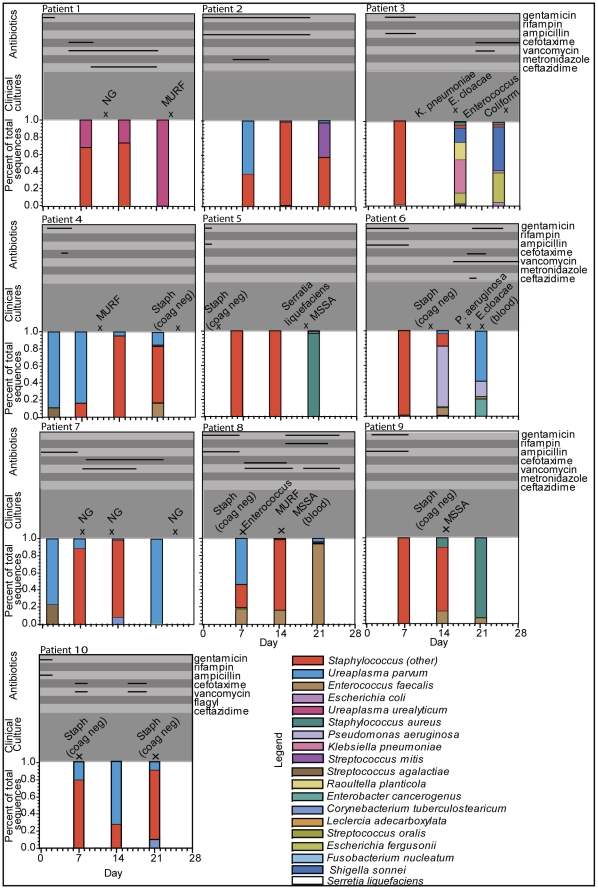
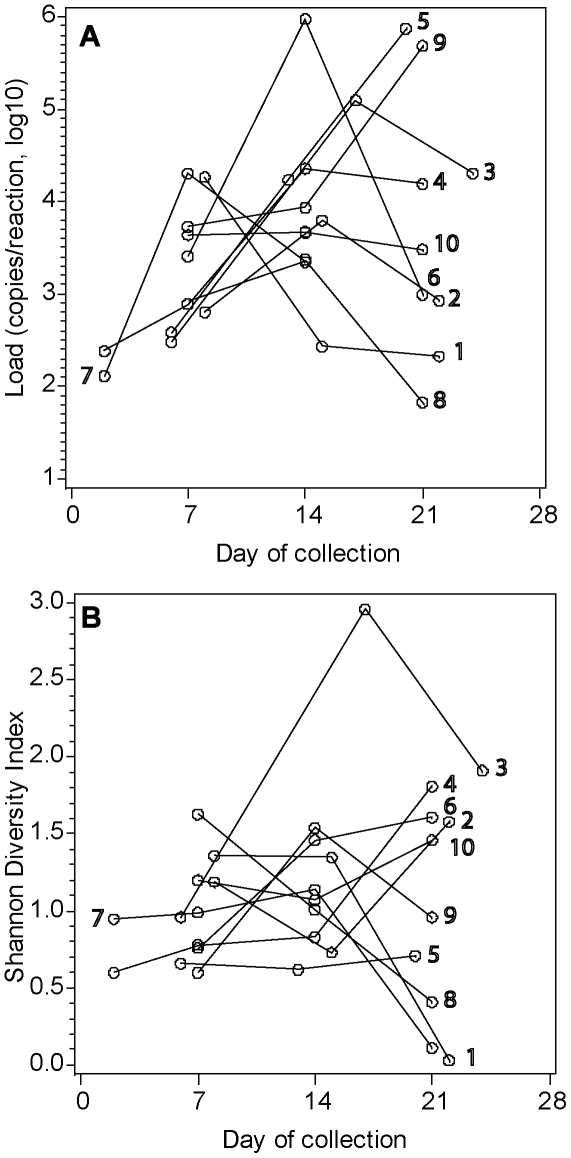
BACKGROUND: Despite strong evidence linking infections to the pathogenesis of bronchopulmonary dysplasia (BPD), limitations of bacterial culture methods have precluded systematic studies of airway organisms relative to disease outcomes. Application of molecular bacterial identification strategies may provide new insight into the role of bacterial acquisition in the airways of preterm infants at risk for BPD. METHODS: Serial (within 72 hours, 7, 14, and 21 days of life) tracheal aspirate samples were collected from 10 preterm infants with gestational age ≤34 weeks at birth, and birth weight of 500-1250 g who required mechanical ventilation for at least 21 days. Samples were analyzed by quantitative real time PCR assays for total bacterial load and by pyrosequencing for bacterial identification. RESULTS: Subjects were diagnosed with mild (1), moderate (3), or severe (5) BPD. One patient died prior to determination of disease severity. 107,487 sequences were analyzed, with mean of 3,359 (range 1,724-4,915) per sample. 2 of 10 samples collected <72 hours of life contained adequate bacterial DNA for successful sequence analysis, one of which was from a subject exposed to chorioamnionitis. All other samples exhibited bacterial loads >70copies/reaction. 72 organisms were observed in total. Seven organisms represented the dominant organism (>50% of total sequences) in 31/32 samples with positive sequences. A dominant organism represented>90% of total sequences in 13 samples. Staphylococcus, Ureaplasmaparvum, and Ureaplasmaurealyticum were the most frequently identified dominant organisms, but Pseudomonas, Enterococcus, and Escherichia were also identified. CONCLUSIONS: Early bacterial colonization with diverse species occursafter the first 3 days of life in the airways of intubated preterm infants, and can be characterized by bacterial load and marked species diversity. Molecular identification of bacteria in the lower airways of preterm infants has the potential to yield further insight into the pathogenesis of BPD.
Overview
The claims and statistics of this paper haven’t been checked yet.
Free: it reads the open-access text and checks the first 5 claims that cite a source we can check. Create a free account to check every claim.
Integrity signals
Registry
Cites
Statistics
Figures
Verification
Claims the paper makes
The claims and statistics of this paper haven’t been checked yet.
Free: it reads the open-access text and checks the first 5 claims that cite a source we can check. Create a free account to check every claim.
Claims other papers make about this one
Each is checked against this paper’s own text: does it say what the citing paper says it does?
In the citing paper
“These studies showed that the LRT microbiota of premature infants is dominated by pathogenic Staphylococcus spp.78,79, Ureaplasma spp.79 or Acinetobacter spp.77, which highlights the lack of complexity in these developing bacterial communities.”
From The microbiota of the respiratory tract: gatekeeper to respiratory health (2017) · cites this paper as [79]
In the citing paper
“As LRT sampling is particularly challenging in young infants (Box 1), current data on the composition and development of the neonatal LRT microbiota is limited to samples from intubated prematurely born infants77,78,79.”
From The microbiota of the respiratory tract: gatekeeper to respiratory health (2017) · cites this paper as [79]
Self-check
Percentages, sums and reported differences re-computed from the paper’s own numbers.
The self-check needs the paper’s full text.
Citations
Cites
Naïve Bayesian Classifier for Rapid Assignment of rRNA Sequences into the New Bacterial Taxonomy
Wang, Q., Garrity, G. M., Tiedje, J. M., & Cole, J. R. (2007) · Applied and Environmental Microbiology · doi:10.1128/aem.00062-07 · Cited by 19,885
Pruesse, E., Quast, C., Knittel, K., Fuchs, B. M., Ludwig, W., Peplies, J., & Glockner, F. O. (2007) · Nucleic Acids Research · doi:10.1093/nar/gkm864 · Cited by 6,668 · cited 1×
“We used a BLAST database containing bacterial isolates identified in the Silva ARB database (version 104) to assign species names [24].”
MethodApplied and Environmental Microbiology
(2018) · Applied and Environmental Microbiology · doi:10.1128/eissn.1098-5336 · Cited by 5,297
Chimeric 16S rRNA sequence formation and detection in Sanger and 454-pyrosequenced PCR amplicons
Haas, B. J., Gevers, D., Earl, A. M., Feldgarden, M., Ward, D. V., Giannoukos, G., Ciulla, D., Tabbaa, D., Highlander, S. K., Sodergren, E., et al. (2011) · Genome Research · doi:10.1101/gr.112730.110 · Cited by 3,473 · cited 1×
“Sequences identified as potential chimeras by ChimeraSlayer [22] were also removed from the dataset.”
MethodNorthway, W. H., Rosan, R. C., & Porter, D. Y. (1967) · New England Journal of Medicine · doi:10.1056/nejm196702162760701 · Cited by 3,013
Cani, P. D., Possemiers, S., Van de Wiele, T., Guiot, Y., Everard, A., Rottier, O., Geurts, L., Naslain, D., Neyrinck, A., Lambert, D. M., et al. (2009) · Gut · doi:10.1136/gut.2008.165886 · Cited by 2,518 · cited 1×
“Some have shown that microbiota of limited diversity and relative absence of commensal organisms are associated with increased inflammation, barrier permeability, and disease status [46,47].”
BackgroundNadkarni, M. A., Martin, F. E., Jacques, N. A., & Hunter, N. (2002) · Microbiology · doi:10.1099/00221287-148-1-257 · Cited by 1,938
Disordered Microbial Communities in Asthmatic Airways
Hilty, M., Burke, C., Pedro, H., Cardenas, P., Bush, A., Bossley, C., Davies, J., Ervine, A., Poulter, L., Pachter, L., et al. (2010) · PLoS ONE · doi:10.1371/journal.pone.0008578 · Cited by 1,824 · cited 4×
“Molecular methods have contradicted the traditional theory that human lower airways are sterile by demonstrating that the lungs of healthy older children and adults are rich with microbial flora [9,10], and that traditional culture methods are not adequate to investigate the contribution of microbial communities to di…”
BackgroundInfluentialExposure to Environmental Microorganisms and Childhood Asthma
Ege, M. J., Mayer, M., Normand, A.-C., Genuneit, J., Cookson, W. O. C. M., Braun-Fahrländer, C., Heederik, D., Piarroux, R., & von Mutius, E. (2011) · New England Journal of Medicine · doi:10.1056/nejmoa1007302 · Cited by 1,529
Infernal 1.0: inference of RNA alignments
Nawrocki, E. P., Kolbe, D. L., & Eddy, S. R. (2009) · Bioinformatics · doi:10.1093/bioinformatics/btp157 · Cited by 1,436
Error-correcting barcoded primers for pyrosequencing hundreds of samples in multiplex
Hamady, M., Walker, J. J., Harris, J. K., Gold, N. J., & Knight, R. (2008) · Nature Methods · doi:10.1038/nmeth.1184 · Cited by 1,310 · cited 1×
“DNA sequencing was performed using barcoded primers (27F– 338R) compatible with the Roche 454 pyrosequenceras previously reported [18].”
MethodSelf-citationChildhood Asthma after Bacterial Colonization of the Airway in Neonates
Bisgaard, H., Hermansen, M. N., Buchvald, F., Loland, L., Halkjaer, L. B., Bønnelykke, K., Brasholt, M., Heltberg, A., Vissing, N. H., Thorsen, S. V., et al. (2007) · New England Journal of Medicine · doi:10.1056/nejmoa052632 · Cited by 1,005 · cited 2×
“Neonatal oropharyngeal colonization with Streptococcus pneumoniae, Moraxella catarrhalis, Haemophilusinfluenzae, or a combination of these organisms, but not colonization with Staphylococcusaureus, was significantly associated with persistent wheeze in childhood [8].”
Backgroundde La Serre, C. B., Ellis, C. L., Lee, J., Hartman, A. L., Rutledge, J. C., & Raybould, H. E. (2010) · American Journal of Physiology-Gastrointestinal and Liver Physiology · doi:10.1152/ajpgi.00098.2010 · Cited by 949 · cited 1×
“Several diseases have been associated with changes in composition and diversity of these microbial communities [43,44,45].”
BackgroundDiGiulio, D. B., Romero, R., Amogan, H. P., Kusanovic, J. P., Bik, E. M., Gotsch, F., Kim, C. J., Erez, O., Edwin, S., & Relman, D. A. (2008) · PLoS ONE · doi:10.1371/journal.pone.0003056 · Cited by 798 · cited 1×
“[7], premature exposure and colonization of the neonatal respiratory tract by bacteria may impact the neonatal immune response, increase the risk for early and late infections, and contribute to the subsequent development of BPD.”
BackgroundAirway microbiota and bronchial hyperresponsiveness in patients with suboptimally controlled asthma
Huang, Y. J., Nelson, C. E., Brodie, E. L., DeSantis, T. Z., Baek, M. S., Liu, J., Woyke, T., Allgaier, M., Bristow, J., Wiener-Kronish, J. P., et al. (2011) · Journal of Allergy and Clinical Immunology · doi:10.1016/j.jaci.2010.10.048 · Cited by 696
The Pediatric Infectious Disease Journal
&NA; (1991) · The Pediatric Infectious Disease Journal · doi:10.1097/00006454-199103000-00037 · Cited by 560
Yang, L., Lu, X., Nossa, C. W., Francois, F., Peek, R. M., & Pei, Z. (2009) · Gastroenterology · doi:10.1053/j.gastro.2009.04.046 · Cited by 490 · cited 1×
“Several diseases have been associated with changes in composition and diversity of these microbial communities [43,44,45].”
BackgroundThe Role of Intestinal Microbiota in the Development and Severity of Chemotherapy-Induced Mucositis
van Vliet, M. J., Harmsen, H. J. M., de Bont, E. S. J. M., & Tissing, W. J. E. (2010) · PLoS Pathogens · doi:10.1371/journal.ppat.1000879 · Cited by 436 · cited 1×
“Several diseases have been associated with changes in composition and diversity of these microbial communities [43,44,45].”
BackgroundSafety, Reliability, and Validity of a Physiologic Definition of Bronchopulmonary Dysplasia
Walsh, M. C., Wilson-Costello, D., Zadell, A., Newman, N., & Fanaroff, A. (2003) · Journal of Perinatology · doi:10.1038/sj.jp.7210963 · Cited by 429
Van Marter, L. J., Dammann, O., Allred, E. N., Leviton, A., Pagano, M., Moore, M., & Martin, C. (2002) · The Journal of Pediatrics · doi:10.1067/mpd.2002.121381 · Cited by 364 · cited 1×
“Both prenatal and postnatal sources of inflammation, including infection, may directly disrupt lung growth [4] and predispose infants to BPD [5,6].”
BackgroundInflammation and bronchopulmonary dysplasia: A continuing story
Speer, C. P. (2006) · Seminars in Fetal and Neonatal Medicine · doi:10.1016/j.siny.2006.03.004 · Cited by 317 · cited 1×
“Both prenatal and postnatal sources of inflammation, including infection, may directly disrupt lung growth [4] and predispose infants to BPD [5,6].”
BackgroundKotecha, S., Wilson, L., Wangoo, A., Silverman, M., & Shaw, R. J. (1996) · Pediatric Research · doi:10.1203/00006450-199608000-00010 · Cited by 260 · cited 1×
“Although pro-inflammatory cytokines have been associated with the development of BPD and adverse outcomes [30,31,32], variable assessments of the proinflammatory response, and lack of context specificity (identification of all aspects of the perinatal milieu contributing to disease) have precluded the use of cytokines…”
BackgroundInflammation and bronchopulmonary dysplasia
Speer, C. P. (2003) · Seminars in Neonatology · doi:10.1016/s1084-2756(02)00190-2 · Cited by 232 · cited 1×
“Inflammation of the developing lung from these interventions and other causes is a predominate theory underlying thepathogenesisof BPD [2,3].”
BackgroundBronchopulmonary dysplasia and inflammatory biomarkers in the premature neonate
Bose, C. L., Dammann, C. E. L., & Laughon, M. M. (2008) · Archives of Disease in Childhood - Fetal and Neonatal Edition · doi:10.1136/adc.2007.121327 · Cited by 205 · cited 1×
“Inflammatory injury disrupts lung growth in part by production of pro-inflammatory cytokines [29].”
BackgroundSpeer, C. P. (2009) · Neonatology · doi:10.1159/000209301 · Cited by 177 · cited 1×
“These findings are important because early respiratory infection and inflammation have been shown to impair alveolar development [27] and contribute to the development of BPD [28].”
BackgroundInflammatory mediators and bronchopulmonary dysplasia.
Groneck, P., & Speer, C. P. (1995) · Archives of Disease in Childhood - Fetal and Neonatal Edition · doi:10.1136/fn.73.1.f1 · Cited by 171
Jónsson, B., Tullus, K., Brauner, A., Lü, Y., & Noack, G. (1997) · Archives of Disease in Childhood Fetal & Neonatal · doi:10.1136/fn.77.3.f198 · Cited by 163 · cited 1×
“Although pro-inflammatory cytokines have been associated with the development of BPD and adverse outcomes [30,31,32], variable assessments of the proinflammatory response, and lack of context specificity (identification of all aspects of the perinatal milieu contributing to disease) have precluded the use of cytokines…”
BackgroundContribution of inflammation to lung injury and development
Kallapur, S. G., & Jobe, A. H. (2006) · Archives of Disease in Childhood - Fetal and Neonatal Edition · doi:10.1136/adc.2004.068544 · Cited by 163
Frank, D. N. (2009) · BMC Bioinformatics · doi:10.1186/1471-2105-10-362 · Cited by 161 · cited 2×
“Sequence analysis Sequence data (fasta and quality files) were assigned to samples by bar code and screened for low level quality defects (short sequences ,150 nt in length, .1 sequence ambiguity, best read with quality $20 over a 10 nt moving window) by the software program BARTAB [20].”
MethodBallard, H. O., Shook, L. A., Bernard, P. A., Anstead, M., Kuhn, R. J., Whitehead, V. L., Grider, D., Crawford, T. N., & Hayes, D. (2010) · Pediatric Pulmonology · doi:10.1002/ppul.21352 · Cited by 116 · cited 1×
“Although earlier trials of erythromycin treatment for the treatment of Ureaplasma in preterm infants failed to show benefit [35,36,37,38], a recent trial of azithromycin treatment revealed a significant reduction in the endpoint of BPD or death in the subgroup of patients who were found to be colonized or infected wit…”
ResultRandomised trial of erythromycin on the development of chronic lung disease in preterm infants
Lyon, A., McColm, J. R., Middlemist, L., Fergusson, S., McIntosh, N., & Ross, P. W. (1998) · Archives of Disease in Childhood Fetal & Neonatal · doi:10.1136/fn.78.1.f10 · Cited by 110
Harris, J. K., Sahl, J. W., Castoe, T. A., Wagner, B. D., Pollock, D. D., & Spear, J. R. (2010) · Applied and Environmental Microbiology · doi:10.1128/aem.02585-09 · Cited by 97
Self-citationRole of Ureaplasma Species in Neonatal Chronic Lung Disease: Epidemiologic and Experimental Evidence
Viscardi, R. M., & Hasday, J. D. (2009) · Pediatric Research · doi:10.1203/pdr.0b013e31819dc2f9 · Cited by 94 · cited 1×
“The presence of Ureaplasma in the respiratory tract of preterm infants, even without signs of infection, has been associated with a pro-inflammatory response and an increased risk for BPD [34].”
BackgroundDimmitt, R. A., Staley, E. M., Chuang, G., Tanner, S. M., Soltau, T. D., & Lorenz, R. G. (2010) · Journal of Pediatric Gastroenterology and Nutrition · doi:10.1097/mpg.0b013e3181e1a114 · Cited by 92 · cited 1×
“Some have shown that microbiota of limited diversity and relative absence of commensal organisms are associated with increased inflammation, barrier permeability, and disease status [46,47].”
BackgroundUreaplasma urealyticum colonization, prematurity and bronchopulmonary dysplasia
Wm, V. W., Brus, F., Okken, A., & Kimpen, J. L. L. (1997) · European Respiratory Journal · doi:10.1183/09031936.97.10040886 · Cited by 92 · cited 1×
“clear recognition of the potential pathological impact of other bacteria, such as Ureaplasma, Mycoplasma, and Chlamydia, as causes of perinatal infection that may increase the risk for the subsequent development of BPD [11,12,13,14].”
BackgroundZemanick, E. T., Wagner, B. D., Sagel, S. D., Stevens, M. J., Accurso, F. J., & Harris, J. K. (2010) · PLoS ONE · doi:10.1371/journal.pone.0015101 · Cited by 87 · cited 1×
“We have validated the reproducibility of this assay in comparable airway samples from children with cystic fibrosis [17].”
MethodSelf-citationBronchoalveolar inflammation following airway infection in preterm infants with chronic lung disease
Groneck, P., Schmale, J., Soditt, V., Stützer, H., Götze‐Speer, B., & Speer, C. P. (2001) · Pediatric Pulmonology · doi:10.1002/ppul.1055 · Cited by 80 · cited 1×
“While antenatal and postnatal infections, hyperoxia, and mechanical ventilation have garnered much attention as inflammation provoking stimuli, the possible impact of airway colonization on the development of BPD is less clear and has generated contradictory results [33].”
ResultInfernal 1.0: inference of RNA alignments
Nawrocki, E. P., Kolbe, D. L., & Eddy, S. R. (2009) · Bioinformatics · doi:10.1093/bioinformatics/btp326 · Cited by 70
da Silva, O., Gregson, D. B., & Hammerberg, O. (1997) · The Pediatric Infectious Disease Journal · doi:10.1097/00006454-199704000-00006 · Cited by 60 · cited 1×
“clear recognition of the potential pathological impact of other bacteria, such as Ureaplasma, Mycoplasma, and Chlamydia, as causes of perinatal infection that may increase the risk for the subsequent development of BPD [11,12,13,14].”
BackgroundFrank, D. N. (2008) · BMC Bioinformatics · doi:10.1186/1471-2105-9-420 · Cited by 59 · cited 1×
“Shannon diversity and Chao1 were computed, using rarefaction (100 replicates) to compensate for differences in number of sequences per sample, using the biodiv functionality contained within the XplorSeq Toolkit [25,26].”
MethodBaier, R. J., Loggins, J., & Kruger, T. E. (2003) · BMC Pediatrics · doi:10.1186/1471-2431-3-10 · Cited by 54
Iles, R., Lyon, A., Ross, P. W., & McIntosh, N. (1996) · Acta Paediatrica · doi:10.1111/j.1651-2227.1996.tb14067.x · Cited by 51 · cited 1×
“clear recognition of the potential pathological impact of other bacteria, such as Ureaplasma, Mycoplasma, and Chlamydia, as causes of perinatal infection that may increase the risk for the subsequent development of BPD [11,12,13,14].”
BackgroundCayabyab, R. G., Jones, C. A., Kwong, K. Y. C., HENDERSHOTT, C., Lecart, C., Minoo, P., & Ramanathan, R. (2003) · The Journal of Maternal-Fetal & Neonatal Medicine · doi:10.1080/jmf.14.3.205.211 · Cited by 46 · cited 1×
“Although pro-inflammatory cytokines have been associated with the development of BPD and adverse outcomes [30,31,32], variable assessments of the proinflammatory response, and lack of context specificity (identification of all aspects of the perinatal milieu contributing to disease) have precluded the use of cytokines…”
BackgroundWaites, K. B., Sims, P. J., Crouse, D. T., GEERTS, M. H., Shoup, R., HAMRICK, W. B., Duffy, L. B., & Cassell, G. H. (1994) · The Pediatric Infectious Disease Journal · doi:10.1097/00006454-199404000-00008 · Cited by 43 · cited 1×
“Although earlier trials of erythromycin treatment for the treatment of Ureaplasma in preterm infants failed to show benefit [35,36,37,38], a recent trial of azithromycin treatment revealed a significant reduction in the endpoint of BPD or death in the subgroup of patients who were found to be colonized or infected wit…”
ResultNeonatal Ureaplasma urealyticum colonization and chronic lung disease
Jónsson, B., Karell, A.-C., Ringertz, S. H., Rylander, M., & Faxelius, G. (1994) · Acta Paediatrica · doi:10.1111/j.1651-2227.1994.tb13174.x · Cited by 41 · cited 1×
“Although earlier trials of erythromycin treatment for the treatment of Ureaplasma in preterm infants failed to show benefit [35,36,37,38], a recent trial of azithromycin treatment revealed a significant reduction in the endpoint of BPD or death in the subgroup of patients who were found to be colonized or infected wit…”
ResultRole of Ureaplasma urealyticum and Chlamydia trachomatis in lung disease in low birth weight infants
Garland, S. M., & BOWMAN, E. D. (1996) · Pathology · doi:10.1080/00313029600169134 · Cited by 40 · cited 1×
“clear recognition of the potential pathological impact of other bacteria, such as Ureaplasma, Mycoplasma, and Chlamydia, as causes of perinatal infection that may increase the risk for the subsequent development of BPD [11,12,13,14].”
BackgroundLi, P., & Hotamışlıgil, G. S. (2010) · Nature · doi:10.1038/4641287a · Cited by 30 · cited 1×
“Rapidly accumulating evidence demonstrates that microbial communities play an important role in human physiology [41,42].”
BackgroundStressmann, F. A., Connett, G. J., Goss, K. C. W., Kollamparambil, T. G., Patel, N., Payne, M. S., Puddy, V., Legg, J. P., Bruce, K. D., & Rogers, G. B. (2010) · Journal of Perinatal Medicine · doi:10.1515/jpm.2010.026 · Cited by 25 · cited 1×
“Our results, together with a previous report [40] suggest that microbial communities are present early in the lower airways of intubated preterm infants.”
ResultMicrobiome Analysis in the Esophagus
Suerbaum, S. (2009) · Gastroenterology · doi:10.1053/j.gastro.2009.06.017 · Cited by 16 · cited 1×
“Rapidly accumulating evidence demonstrates that microbial communities play an important role in human physiology [41,42].”
BackgroundExposure to Environmental Microorganisms and Childhood Asthma
Khardori, N. M. (2011) · Yearbook of Medicine · doi:10.1016/j.ymed.2011.08.030 · Cited by 9
Inflammatory Mechanisms in Bronchopulmonary Dysplasia
Speer, C. P. (2009) · CRC Press eBooks · doi:10.3109/9781420076929-10 · Cited by 1
Cited by
The microbiota of the respiratory tract: gatekeeper to respiratory health
Man, W. H., de Steenhuijsen Piters, W. A. A., & Bogaert, D. (2017) · Nature Reviews Microbiology · doi:10.1038/nrmicro.2017.14 · Cited by 1,384
“78, 79 , Ureaplasma spp.”
BackgroundLung microbiome: new insights into the pathogenesis of respiratory diseases
Li, R., Li, J., & Zhou, X. (2024) · Signal Transduction and Targeted Therapy · doi:10.1038/s41392-023-01722-y · Cited by 434
“157 Nevertheless, Lohmann et al. reported that in 25 preterm infants, microbial DNA was detected in all tracheal aspirates inhaled instantly after intubation on the fi rst day at birth.”
BackgroundGut microbiota, immune development and function
Bengmark, S. (2013) · Pharmacological Research · doi:10.1016/j.phrs.2012.09.002 · Cited by 262
“Most recent studies of microbiota have tended to focus on microbiota in individuals with airway diseases, such those with asthma [179,180], cystic fibrosis (CF) [181,182], obstructive lung disease (COPD) [183,184], mechanically ventilated preterm infants [185], whith less information being available regarding normal m…”
BackgroundThe Airway Microbiome at Birth
Lal, C. V., Travers, C., Aghai, Z. H., Eipers, P., Jilling, T., Halloran, B., Carlo, W. A., Keeley, J., Rezonzew, G., Kumar, R., et al. (2016) · Scientific Reports · doi:10.1038/srep31023 · Cited by 192
“(%) 0 (0) 5 (22) 2 (11) Symptomatic patent ductus arteriosus, no.”
BackgroundComposition and dynamics of the respiratory tract microbiome in intubated patients
Kelly, B. J., Imai, I., Bittinger, K., Laughlin, A., Fuchs, B. D., Bushman, F. D., & Collman, R. G. (2016) · Microbiome · doi:10.1186/s40168-016-0151-8 · Cited by 189
“In one of these subjects (subject 2, who was neutropenic), the single dominant taxon was U. parvum, an organism not amenable to routine culture but which has been described as a pulmonary pathogen in neonates [38] [39] [40] .”
Background
Metadata
- Authors
- Mourani, P. M., Harris, J. K., Sontag, M. K., Robertson, C. E., & Abman, S. H.
- Affiliations
- University of Colorado Anschutz (US)
- Colorado School of Public Health (US)
- University of Colorado Boulder (US)
- Corresponding author
- Mourani, Peter M.
- Venue
- PLoS ONE
- Publisher
- Public Library of Science (PLoS)
- Published
- 2011-10-10
- Volume
- 6
- Issue
- 10
- Pages
- e25959
- ISSN
- 1932-6203 (ISSN-L)
- PMC
- PMC3189942
- OpenAlex
- W2052321613
- Cited by
- 78
- References
- 52
- Citations by year
- 2025: 3 · 2024: 11 · 2023: 1 · 2022: 9 · 2021: 6 · 2020: 6 · 2019: 11 · 2018: 9 · 2017: 6 · 2016: 4 · 2015: 5 · 2014: 3 · 2012: 4
- FWCI
- 1.90
- Type
- journal article
- Language
- en
- Open access
- gold
- doi.org
- Locations
- PLoS ONE (publishedVersion, cc-by)
- Europe PMC (PubMed Central) (publishedVersion, cc-by)
- PubMed Central (publishedVersion, cc-by)
- PubMed (publishedVersion)
- DOAJ (DOAJ: Directory of Open Access Journals) (submittedVersion, cc-by-sa)
- Funders
- National Institutes of Health (5r01hl085703-05, RR025780, HL085703)
- National Heart, Lung, and Blood Institute (R01-HL085703)
- National Center for Research Resources (RR-025780, S10RR021021, K23 RR021021, UL1RR025780)
- Colorado Clinical and Translational Sciences Institute (UL1-RR025780)
- Topics
- Health Sciences › Medicine › Pulmonary and Respiratory Medicine › Neonatal Respiratory Health Research
- Health Sciences › Medicine › Pediatrics, Perinatology and Child Health › Neonatal and Maternal Infections
- Health Sciences › Medicine › Critical Care and Intensive Care Medicine › Nosocomial Infections in ICU
- Keywords
- bronchopulmonary dysplasia, preterm infants, tracheal aspirate, mechanical ventilation, bacterial identification, bacterial load, Staphylococcus, Ureaplasma, Pseudomonas, chorioamnionitis, bacterial diversity, pathogenesis
- MeSH terms
- Anti-Bacterial Agents, Bacteria, Bronchopulmonary Dysplasia, Drug Administration Schedule, Female, Humans, Infant, Newborn, Male, Respiration, Artificial, Risk, RNA, Bacterial, RNA, Ribosomal, Suction, Trachea, Premature Birth, Metagenome, Bacterial Load
About these checks
Registry, retraction, Cites and statistics results are computed, not judged, with one exception: a printed reference that no index lists is read once by a model before it counts as a citation error. Claims are extracted by a model and kept only when their quote appears verbatim in the text; each cited source is then checked, with a model’s help, for whether it says what the claim relies on. Those verdicts can be wrong — read the claim’s quote and the cited source before relying on one.
Statistics and arithmetic are recomputed, not judged.
Confidence bands are shown only for fields calibrated on our annotated test set. None is calibrated yet, so no band is shown.
What counts as a claim ›How we measure confidence ›How we check this ›
Are you an author, or do you see a problem with this page? Request a review
Data sources
Bibliographic data: Semantic Scholar, OpenAlex, Crossref.
Contains information from the Semantic Scholar Academic Graph Datasets, made available under the ODC Attribution License (ODC-BY 1.0).
Semantic Scholar’s data is described in: Kinney, R., et al. (2023). The Semantic Scholar Open Data Platform. arXiv:2301.10140.
