

The Role of Stimulus Salience and Attentional Capture Across the Neural Hierarchy in a Stop-Signal Task
Open accessThe DOI matches its Crossref record; 57 of the 57 references it cites were found in a registry or an index.
Abstract
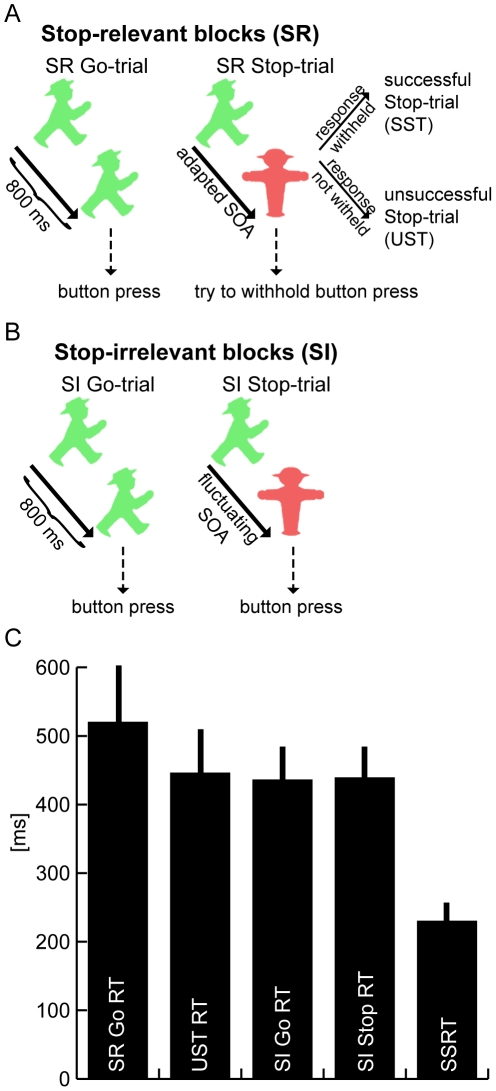
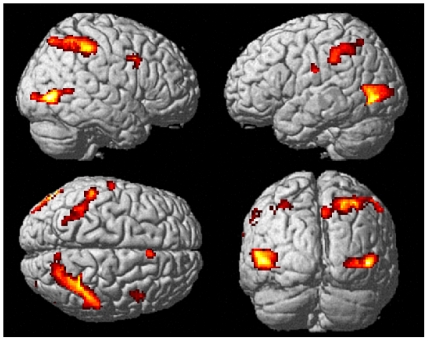
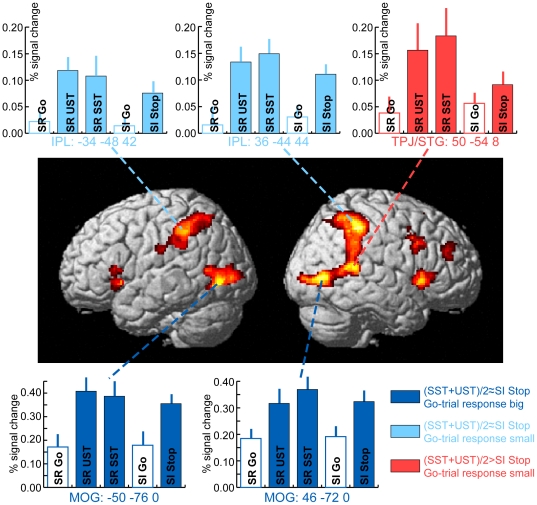
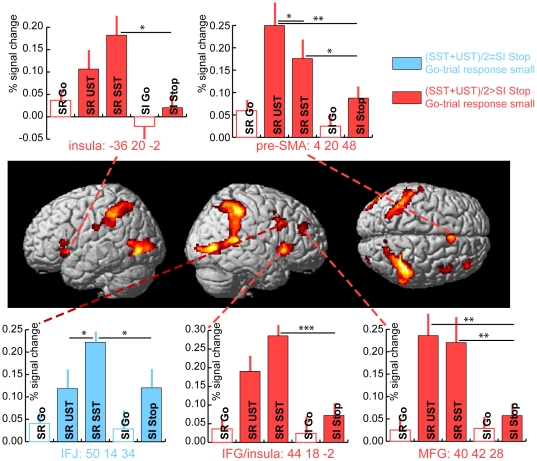
Inhibitory motor control is a core function of cognitive control. Evidence from diverse experimental approaches has linked this function to a mostly right-lateralized network of cortical and subcortical areas, wherein a signal from the frontal cortex to the basal ganglia is believed to trigger motor-response cancellation. Recently, however, it has been recognized that in the context of typical motor-control paradigms those processes related to actual response inhibition and those related to the attentional processing of the relevant stimuli are highly interrelated and thus difficult to distinguish. Here, we used fMRI and a modified Stop-signal task to specifically examine the role of perceptual and attentional processes triggered by the different stimuli in such tasks, thus seeking to further distinguish other cognitive processes that may precede or otherwise accompany the implementation of response inhibition. In order to establish which brain areas respond to sensory stimulation differences by rare Stop-stimuli, as well as to the associated attentional capture that these may trigger irrespective of their task-relevance, we compared brain activity evoked by Stop-trials to that evoked by Go-trials in task blocks where Stop-stimuli were to be ignored. In addition, region-of-interest analyses comparing the responses to these task-irrelevant Stop-trials, with those to typical relevant Stop-trials, identified separable activity profiles as a function of the task-relevance of the Stop-signal. While occipital areas were mostly blind to the task-relevance of Stop-stimuli, activity in temporo-parietal areas dissociated between task-irrelevant and task-relevant ones. Activity profiles in frontal areas, in turn, were activated mainly by task-relevant Stop-trials, presumably reflecting a combination of triggered top-down attentional influences and inhibitory motor-control processes.
Overview
The claims and statistics of this paper haven’t been checked yet.
Free: it reads the open-access text and checks the first 5 claims that cite a source we can check. Create a free account to check every claim.
Integrity signals
Registry
Cites
Statistics
Figures
Verification
Claims the paper makes
The claims and statistics of this paper haven’t been checked yet.
Free: it reads the open-access text and checks the first 5 claims that cite a source we can check. Create a free account to check every claim.
Claims other papers make about this one
Each is checked against this paper’s own text: does it say what the citing paper says it does?
The source backs part of the claim, not all of it — or backs it for a different population, condition or comparison.
In the citing paper
“In summary, the studies (e.g., 31, 32, 37, 40, 45, 56, 57, 66–68, 73, 88, 97, 99, 104, 105, 113, 116, 117, 140) collectively reveal a complex network of brain regions, including the pre-SMA, IFG, parietal cortex, basal ganglia, other frontal cortex, as well as visual areas and the cerebellum, which cooperate during response inhibition in the SST (see Figure 2).”
From Neural mechanisms underlying cognitive inflexibility in obsessive-compulsive disorder: a review (2026) · cites this paper as [37]
Experimental — accuracy not yet measured
Self-check
Percentages, sums and reported differences re-computed from the paper’s own numbers.
The self-check needs the paper’s full text.
Citations
Cites
Control of goal-directed and stimulus-driven attention in the brain
Corbetta, M., & Shulman, G. L. (2002) · Nature Reviews Neuroscience · doi:10.1038/nrn755 · Cited by 12,881 · cited 4×
“example a role in attentional shifting [30].”
InfluentialSaliency, switching, attention and control: a network model of insula function
Menon, V., & Uddin, L. Q. (2010) · Brain Structure and Function · doi:10.1007/s00429-010-0262-0 · Cited by 5,592 · cited 1×
“In addition to an attentional account of the function of the IFG, the ubiquity of its activation across different tasks might also relate to recent accounts that assign more global control functions to this area (for recent reviews, see [41,42]).”
Circular analysis in systems neuroscience: the dangers of double dipping
Kriegeskorte, N., Simmons, W. K., Bellgowan, P. S. F., & Baker, C. I. (2009) · Nature Neuroscience · doi:10.1038/nn.2303 · Cited by 2,696 · cited 1×
“Defining ROIs on the basis of this contrast enabled quantitative comparisons between the Stop-relevant and Stop-irrelevant Stop-trials in these regions, because the ROI selection was not biased in favor of either of those conditions [39].”
On the ability to inhibit thought and action: a theory of an act of control
Logan, G. D., & Cowan, W. B. (1984) · Psychological Review · doi:10.1037/0033-295x.91.3.295 · Cited by 2,590
Inhibitory Processes in Attention, Memory and Language
Carr, T. H., & Dagenbach, D. (1994) · Medical Entomology and Zoology · Cited by 2,364
Event-Related fMRI: Characterizing Differential Responses
Friston, K. J., Fletcher, P., Josephs, O., Holmes, A., Rugg, M. D., & Turner, R. (1998) · NeuroImage · doi:10.1006/nimg.1997.0306 · Cited by 2,029
Stop-signal inhibition disrupted by damage to right inferior frontal gyrus in humans
Aron, A. R., Fletcher, P. C., Bullmore, E. T., Sahakian, B. J., & Robbins, T. W. (2003) · Nature Neuroscience · doi:10.1038/nn1003 · Cited by 1,771
On the ability to inhibit simple and choice reaction time responses: A model and a method.
Logan, G. D., Cowan, W. B., & Davis, K. A. (1984) · Journal of Experimental Psychology: Human Perception and Performance · doi:10.1037/0096-1523.10.2.276 · Cited by 1,542
Response inhibition in the stop-signal paradigm
Verbruggen, F., & Logan, G. D. (2008) · Trends in Cognitive Sciences · doi:10.1016/j.tics.2008.07.005 · Cited by 1,373 · cited 1×
“This network includes the inferior frontal gyrus (IFG; especially the frontal operculum extending into the insula) and the pre-supplementary motor area (pre-SMA), which in turn interacts with the basal ganglia and the thalamus (for reviews see [4,5,10]).”
The role of the right inferior frontal gyrus: inhibition and attentional control
Hampshire, A., Chamberlain, S. R., Monti, M. M., Duncan, J., & Owen, A. M. (2010) · NeuroImage · doi:10.1016/j.neuroimage.2009.12.109 · Cited by 1,327 · cited 3×
“, [22,23]), it is possible that the role of this brain area in response inhibition may be relatively indirect, which would be counter to most earlier notions that identified it as being critical for this function.”
Cited by
Open vs. Closed Skill Sports and the Modulation of Inhibitory Control
Wang, C.-H., Chang, C.-C., Liang, Y.-M., Shih, C.-M., Chiu, W.-S., Tseng, P., Hung, D. L., Tzeng, O. J. L., Muggleton, N. G., & Juan, C.-H. (2013) · PLoS ONE · doi:10.1371/journal.pone.0055773 · Cited by 347
Disentangling common and specific neural subprocesses of response inhibition
Sebastian, A., Pohl, M. F., Klöppel, S., Feige, B., Lange, T., Stahl, C., Voss, A., Klauer, K. C., Lieb, K., & Tüscher, O. (2013) · NeuroImage · doi:10.1016/j.neuroimage.2012.09.020 · Cited by 193
“Yet, it might also be involved in attentional processing of a stop-signal (Boehler et al., 2011; Dodds et al., 2011; Hampshire et al., 2010; Sharp et al., 2010).”
BackgroundSebastian, A., Jung, P., Krause-Utz, A., Lieb, K., Schmahl, C., & Tüscher, O. (2014) · Frontiers in Human Neuroscience · doi:10.3389/fnhum.2014.00698 · Cited by 156
“Activation in the IFJ during behavioral inhibition has rather been linked to attentional processes than to inhibitory functioning (Chikazoe et al., 2008; Verbruggen et al., 2010; Boehler et al., 2011).”
BackgroundHsu, C. L., Best, J. R., Davis, J. C., Nagamatsu, L. S., Wang, S., Boyd, L. A., Hsiung, G. R., Voss, M. W., Eng, J. J., & Liu-Ambrose, T. (2018) · British Journal of Sports Medicine · doi:10.1136/bjsports-2016-096846 · Cited by 139
Reward prospect rapidly speeds up response inhibition via reactive control
Boehler, C. N., Schevernels, H., Hopf, J., Stoppel, C. M., & Krebs, R. M. (2014) · Cognitive Affective & Behavioral Neuroscience · doi:10.3758/s13415-014-0251-5 · Cited by 124
Self-citationSalinas, E., & Stanford, T. R. (2013) · Journal of Neuroscience · doi:10.1523/jneurosci.3977-12.2013 · Cited by 109
“Under these conditions, only one area, the presupplementary motor area, displayed significantly higher activation that could be interpreted as related to inhibitory control, consistent with other results (Stuphorn and Schall, 2006; Aron, 2011; Boehler et al., 2011).”
ResultFunctional connectivity in inhibitory control networks and severity of cannabis use disorder
Filbey, F., & Yezhuvath, U. (2013) · The American Journal of Drug and Alcohol Abuse · doi:10.3109/00952990.2013.841710 · Cited by 83
“inferior frontal and medial frontal cortical areas as well as basal ganglia regions, such as the caudate nucleus (13,14).”
BackgroundSwann, N. C., Tandon, N., Pieters, T. A., & Aron, A. R. (2013) · Cerebral Cortex · doi:10.1093/cercor/bhs245 · Cited by 80
“Hampshire et al. 2010; Sharp et al. 2010; Boehler et al. 2011; Chatham et al. 2012), both of these, although perhaps in dissociable subregions (Chikazoe et al. 2009a; Chikazoe, 2010; Verbruggen et al. 2010; Levy and Wagner, 2011), as well as other possible accounts such as a violation of…”
BackgroundSebastian, A., Jung, P., Neuhoff, J., Wibral, M., Fox, P. T., Lieb, K., Fries, P., Eickhoff, S. B., Tüscher, O., & Mobascher, A. (2016) · Brain Structure and Function · doi:10.1007/s00429-015-0994-y · Cited by 77
“2011), most investigations employing response inhibition tasks with ac trials are in line with our results (Boehler et al. 2011; Cai et al. 2011, Chikazoe et al. 2009).”
InfluentialLeveraging User-Generated Content for Product Promotion: The Effects of Firm-Highlighted Reviews
Yi, C., Jiang, Z. (., Li, X., & Lu, X. (2019) · Information Systems Research · doi:10.1287/isre.2018.0807 · Cited by 72
“Prior research suggests that salient stimuli can arouse users' attention automatically and thereby affect their information acquisition behavior (Boehler et al. 2011; Jarvenpaa 1990).”
BackgroundPuiu, A. A., Wudarczyk, O. A., Goerlich, K. S., Votinov, M., Herpertz‐Dahlmann, B., Turetsky, B. I., & Konrad, K. (2018) · Neuroscience & Biobehavioral Reviews · doi:10.1016/j.neubiorev.2018.04.016 · Cited by 97
“The rIFG has been found to be involved in general attentional processes implicating salience detection (Boehler et al., 2011) and risk-aversion (Christopoulos et al., 2009).”
Wu, T., Chen, C., Spagna, A., Wu, X., Mackie, M., Russell‐Giller, S., Xu, P., Luo, Y., Liu, X., Hof, P. R., et al. (2019) · The Journal of Comparative Neurology · doi:10.1002/cne.24804 · Cited by 75
ADHD and ASD: distinct brain patterns of inhibition-related activation?
Albajara Sáenz, A., Septier, M., Van Schuerbeek, P., Baijot, S., Deconinck, N., Defresne, P., Delvenne, V., Passeri, G., Raeymaekers, H., Salvesen, L., et al. (2020) · Translational Psychiatry · doi:10.1038/s41398-020-0707-z · Cited by 62
Effects of Working Memory Demand on Neural Mechanisms of Motor Response Selection and Control
Barber, A. D., Caffo, B. S., Pekar, J. J., & Mostofsky, S. H. (2013) · Journal of Cognitive Neuroscience · doi:10.1162/jocn_a_00394 · Cited by 48
Isolating response inhibition in the brain: Parietal versus frontal contribution
Kolodny, T., Mevorach, C., & Shalev, L. (2016) · Cortex · doi:10.1016/j.cortex.2016.12.012 · Cited by 51
Towards a model-based cognitive neuroscience of stopping – a neuroimaging perspective
Sebastian, A., Forstmann, B. U., & Matzke, D. (2018) · Neuroscience & Biobehavioral Reviews · doi:10.1016/j.neubiorev.2018.04.011 · Cited by 44
“…fi ed stop-signal tasks have been utilized to disentangle the neural correlates of stopping from brain activity associated with the attentional capture of an infrequent, salient signal (e.g., Boehler et al., 2011a; Cai et al., 2011; Chikazoe et al., 2009; Majid et al., 2012; Sebastian et al., 2016).”
Nikolaou, K., Critchley, H., & Duka, T. (2013) · PLoS ONE · doi:10.1371/journal.pone.0076649 · Cited by 45
“Recent fMRI studies [34,35,36,37,38,39] have helped delineate distinct roles for the IFG and pre-SMA in SST and Go/No-Go task performance: The IFG is activated during the control of motor responses and successful stopping, but also more generically in response to presentations of infrequent visually-salient stimuli, a…”
BackgroundMethodManza, P., Hu, S., Chao, H. H., Zhang, S., Leung, H., & Li, C. R. (2016) · NeuroImage · doi:10.1016/j.neuroimage.2016.04.055 · Cited by 42
“Boehler et al. (2011)modified the SST so that in one version of the task, stop signals appeared but were irrelevant.”
Lavallee, C. F., Herrmann, C. S., Weerda, R., & Huster, R. J. (2014) · PLoS ONE · doi:10.1371/journal.pone.0096159 · Cited by 35
“Others have investigated the role of stop-signal relevance [17], how preparation influences the inhibition processes [18,19], as well as probability effects in the stop-signal paradigm [20,21].”
BackgroundTask-rest modulation of basal ganglia connectivity in mild to moderate Parkinson’s disease
Müller‐Oehring, E. M., Sullivan, E. V., Pfefferbaum, A., Huang, N. C., Poston, K. L., Bronte-Stewart, H. M., & Schulte, T. (2014) · Brain Imaging and Behavior · doi:10.1007/s11682-014-9317-9 · Cited by 38
“…may not necessarily indicate differences in anatomical connectivity, and the reduced basal ganglia–cortical connectivity during rest was not restricted to motor cortical regions but involved prefrontal, parietal and extrastriate cortices as well (Boehler et al. 2011; van Nuenen et al. 2012).”
Sebastian, A., Rössler, K., Wibral, M., Mobascher, A., Lieb, K., Jung, P., & Tüscher, O. (2017) · Journal of Neuroscience · doi:10.1523/jneurosci.1476-17.2017 · Cited by 31
“Since ROI analyses should be performed only in truly active regions (Kriegeskorte et al., 2009), we used a t-contrast thresholded at pFWE 0.001 that tested the average of stopping and attentional capture against simple going (Boehler et al., 2011) independent of the strategy applied.”
MethodInfluentialDing, J., Wang, Y.-M., Wang, C., Uquillas, F. D., He, Q., Li, C., & Zou, Z. (2020) · Frontiers in Behavioral Neuroscience · doi:10.3389/fnbeh.2020.00119 · Cited by 31
Winter, W., & Sheridan, M. A. (2014) · Developmental Science · doi:10.1111/desc.12168 · Cited by 33
Messel, M. S., Raud, L., Hoff, P. K., Skaftnes, C. S., & Huster, R. J. (2019) · Neuropsychologia · doi:10.1016/j.neuropsychologia.2019.107220 · Cited by 29
Neuronal dynamics of signal selective motor plan cancellation in the macaque dorsal premotor cortex
Giarrocco, F., Bardella, G., Giamundo, M., Fabbrini, F., Brunamonti, E., Pani, P., & Ferraina, S. (2020) · Cortex · doi:10.1016/j.cortex.2020.09.032 · Cited by 29
O’Connor, D. A., Upton, D. J., Moore, J., & Hester, R. (2015) · Journal of Cognitive Neuroscience · doi:10.1162/jocn_a_00695 · Cited by 27
“, 2010) or represented and enforced (Boehler et al., 2011) with equivalent weighting.”
BackgroundResultInfluentialSebastian, A., Konken, A. M., Schaum, M., Lieb, K., Tüscher, O., & Jung, P. (2020) · Journal of Neuroscience · doi:10.1523/jneurosci.1681-20.2020 · Cited by 26
The effect of task complexity on the neural network for response inhibition: An ALE meta-analysis
Aziz-Safaie, T., Müller, V. I., Langner, R., Eickhoff, S. B., & Cieslik, E. C. (2024) · Neuroscience & Biobehavioral Reviews · doi:10.1016/j.neubiorev.2024.105544 · Cited by 28
“This led us to assume that increased convergence for no-go (vs. go) trials in the lateral parts of the occipital cortex may be due to increased visual attention to the specific characteristics of the rare and salient no-go stimuli (cf. also Boehler et al., 2011).”
Happer, J. P., Wagner, L. C., Beaton, L. E., Rosen, B. Q., & Marinković, K. (2021) · NeuroImage · doi:10.1016/j.neuroimage.2021.117837 · Cited by 23
On stopping yourself: Self-relevance facilitates response inhibition
Golubickis, M., Persson, L. M., Falbén, J. K., & Macrae, C. (2021) · Attention, Perception, & Psychophysics · doi:10.3758/s13414-021-02248-7 · Cited by 16
Aberrant Salient and Corticolimbic Connectivity in Hypersexual Parkinson's Disease
Mata‐Marín, D., Pineda‐Pardo, J. A., Molina, J. A., Vela, L., Alonso‐Frech, F., & Obeso, I. (2021) · Brain Connectivity · doi:10.1089/brain.2020.0868 · Cited by 17
“The right IFG is a key hub of the SN and CEN with established roles in inhibitory control (Aron et al., 2014; Maizey et al., 2020; Rae et al., 2015) and attentional orienting to relevant stop-related stimuli (Boehler et al., 2011; Hampshire et al., 2010; Sharp et al., 2010).”
Dimensional bias and adaptive adjustments in inhibitory control of monkeys
Ghasemian, S., Vardanjani, M. M., Sheibani, V., & Mansouri, F. A. (2021) · Animal Cognition · doi:10.1007/s10071-021-01483-7 · Cited by 13
Using subjective expectations to model the neural underpinnings of proactive inhibition
Pas, P., du Plessis, S., van den Munkhof, H. E., Gladwin, T. E., & Vink, M. (2019) · European Journal of Neuroscience · doi:10.1111/ejn.14308 · Cited by 12
Cholinergic modulation of stimulus-driven attentional capture
Boucart, M., Michael, G. A., Bubbico, G., Ponchel, A., Waucquier, N., Deplanque, D., Deguil, J., & Bordet, R. (2015) · Behavioural Brain Research · doi:10.1016/j.bbr.2015.01.024 · Cited by 9
Evidence for selective adjustments of inhibitory control in a variant of the stop signal task
Xu, K. Z., Mayse, J. D., & Courtney, S. M. (2018) · Quarterly Journal of Experimental Psychology · doi:10.1177/1747021818768721 · Cited by 6
Cortical Contributions to Attentional Orienting and Response Cancellation in Action Stopping
Kemp, S. A., Salomoni, S. E., Bazin, P., Pash, L., George, R. J. S., & Hinder, M. R. (2026) · Psychophysiology · doi:10.1111/psyp.70397 · Cited by 6
Inomata, K., Suzuki, M., Hoshi, M., & Kurahashi, M. (1990) · PubMed · Cited by 3
Cognitive Control Strategies Derive From Dimension Reliability
Alexander, W. H. (2026) · Neural Computation · doi:10.1162/neco.a.1513 · Cited by 3
Cognitive Control of Choices and Actions
Heathcote, A., Verbruggen, F., Boehler, C. N., & Matzke, D. (2024) · Springer eBooks · doi:10.1007/978-3-031-45271-0_14 · Cited by 1
Self-citationBedir, D., Reinhardt, P., Winterer, G., & Zacharias, N. (2022) · OSF Preprints (OSF Preprints) · doi:10.31219/osf.io/vm7wb · Cited by 2
Neural mechanisms underlying cognitive inflexibility in obsessive-compulsive disorder: a review
Guo, W., Neo, P. S.-H., & McNaughton, N. (2026) · Frontiers in Psychiatry · doi:10.3389/fpsyt.2026.1795436
“Go/ No-Go dACC, dlPFC, IFG, PCu, CN, putamen, Thalamus 5,7,69,37,59,62 , Right OFC 59,62,69 .”
Sánchez-Sarmiento, P., Giraldo-Huertas, J. J., & Quiroz‐Padilla, M. F. (2013) · Dialnet (Universidad de la Rioja) · Cited by 1
LuoYi, X., Zhao, C., & Huang, L. (2020) · Advances in intelligent systems and computing · doi:10.1007/978-3-030-49829-0_54
Gaining Control: Neural Basis of Proactive Inhibition
Pas, P. (2021) · Utrecht University Repository (Utrecht University) · doi:10.33540/862
Zhu, H., Ye, L., Zhang, L., Si, B., Zhou, Y., Wu, X., & Chen, A. (2026) · Brain Structure and Function · doi:10.1007/s00429-026-03084-x
“…activity: a VBM and resting-state functional connectivity study Due to the fact that attentional capture of salient stimuli pre-cedes the implementation of response inhibition, attentional modulations of this process can largely predict the subsequent response outputs (Boehler et al. 2009, 2011).”
Bielski, K., Wichary, S., Nȩcka, E., & Senderecka, M. (2026) · Scientific Reports · doi:10.1038/s41598-026-42784-6
“Taking into account previous studies, the role of the right supramarginal gyrus might be related to attentional reorienting 52 and proactive inhibition 53 .”
Seeing race, stopping action: neural dynamics of face-based inhibitory control
Benedetti, V., de Lissa, P., Gavazzi, G., Giovannelli, F., Caldara, R., & Viggiano, M. P. (2026) · NeuroImage · doi:10.1016/j.neuroimage.2026.121856
Similitudes et différences entre le TDAH et le TSA, illustrées par l’étude du défaut d’inhibition
Septier, M. (2019) · theses.fr (ABES) · doi:10.70675/22fe83c2z678fz4b7ezac95z1af4554dfcbf
Metadata
- Authors
- Boehler, C. N., Appelbaum, L. G., Krebs, R. M., Chen, L.-C., & Woldorff, M. G.
- Affiliations
- Duke University (US)
- Corresponding author
- Boehler, Carsten N.
- Venue
- PLoS ONE
- Publisher
- Public Library of Science (PLoS)
- Published
- 2011-10-17
- Volume
- 6
- Issue
- 10
- Pages
- e26386
- ISSN
- 1932-6203 (ISSN-L)
- PMC
- PMC3195690
- OpenAlex
- W2054810290
- Cited by
- 48
- References
- 57
- Citations by year
- 2026: 6 · 2024: 2 · 2022: 1 · 2021: 5 · 2020: 5 · 2019: 4 · 2018: 4 · 2017: 2 · 2016: 2 · 2015: 2 · 2014: 6 · 2013: 6 · 2012: 2
- FWCI
- 2.27
- Type
- journal article
- Language
- en
- Open access
- gold
- doi.org
- Locations
- PLoS ONE (publishedVersion, cc-by)
- Europe PMC (PubMed Central) (publishedVersion, cc-by)
- PubMed Central (publishedVersion, cc-by)
- PubMed (publishedVersion)
- Ghent University Academic Bibliography (Ghent University) (submittedVersion, other-oa)
- DOAJ (DOAJ: Directory of Open Access Journals) (submittedVersion, cc-by-sa)
- DukeSpace (Duke University) (submittedVersion, cc-by-nc-nd)
- Funders
- Deutsche Forschungsgemeinschaft (BO 3345/1-1)
- National Institutes of Health (R01-NS051048)
- National Institute of Mental Health (R01MH060415)
- National Institute of Neurological Disorders and Stroke (R01NS051048)
- Topics
- Life Sciences › Neuroscience › Cognitive Neuroscience › Neural and Behavioral Psychology Studies
- Life Sciences › Neuroscience › Cognitive Neuroscience › Neurobiology of Language and Bilingualism
- Life Sciences › Neuroscience › Cellular and Molecular Neuroscience › Neurotransmitter Receptor Influence on Behavior
- Keywords
- stimulus salience, attentional capture, stop-signal task, response inhibition, cognitive control, task relevance, top-down attention, temporoparietal cortex, frontal cortex, basal ganglia, neural hierarchy, occipital cortex
- MeSH terms
- Attention, Behavior, Brain, Brain Mapping, Female, Humans, Magnetic Resonance Imaging, Male, Nerve Net, Physical Stimulation, Task Performance and Analysis, Young Adult
About these checks
Registry, retraction, Cites and statistics results are computed, not judged, with one exception: a printed reference that no index lists is read once by a model before it counts as a citation error. Claims are extracted by a model and kept only when their quote appears verbatim in the text; each cited source is then checked, with a model’s help, for whether it says what the claim relies on. Those verdicts can be wrong — read the claim’s quote and the cited source before relying on one.
Statistics and arithmetic are recomputed, not judged.
Confidence bands are shown only for fields calibrated on our annotated test set. None is calibrated yet, so no band is shown.
What counts as a claim ›How we measure confidence ›How we check this ›
Are you an author, or do you see a problem with this page? Request a review
Data sources
Bibliographic data: Semantic Scholar, OpenAlex, Crossref.
Contains information from the Semantic Scholar Academic Graph Datasets, made available under the ODC Attribution License (ODC-BY 1.0).
Semantic Scholar’s data is described in: Kinney, R., et al. (2023). The Semantic Scholar Open Data Platform. arXiv:2301.10140.
